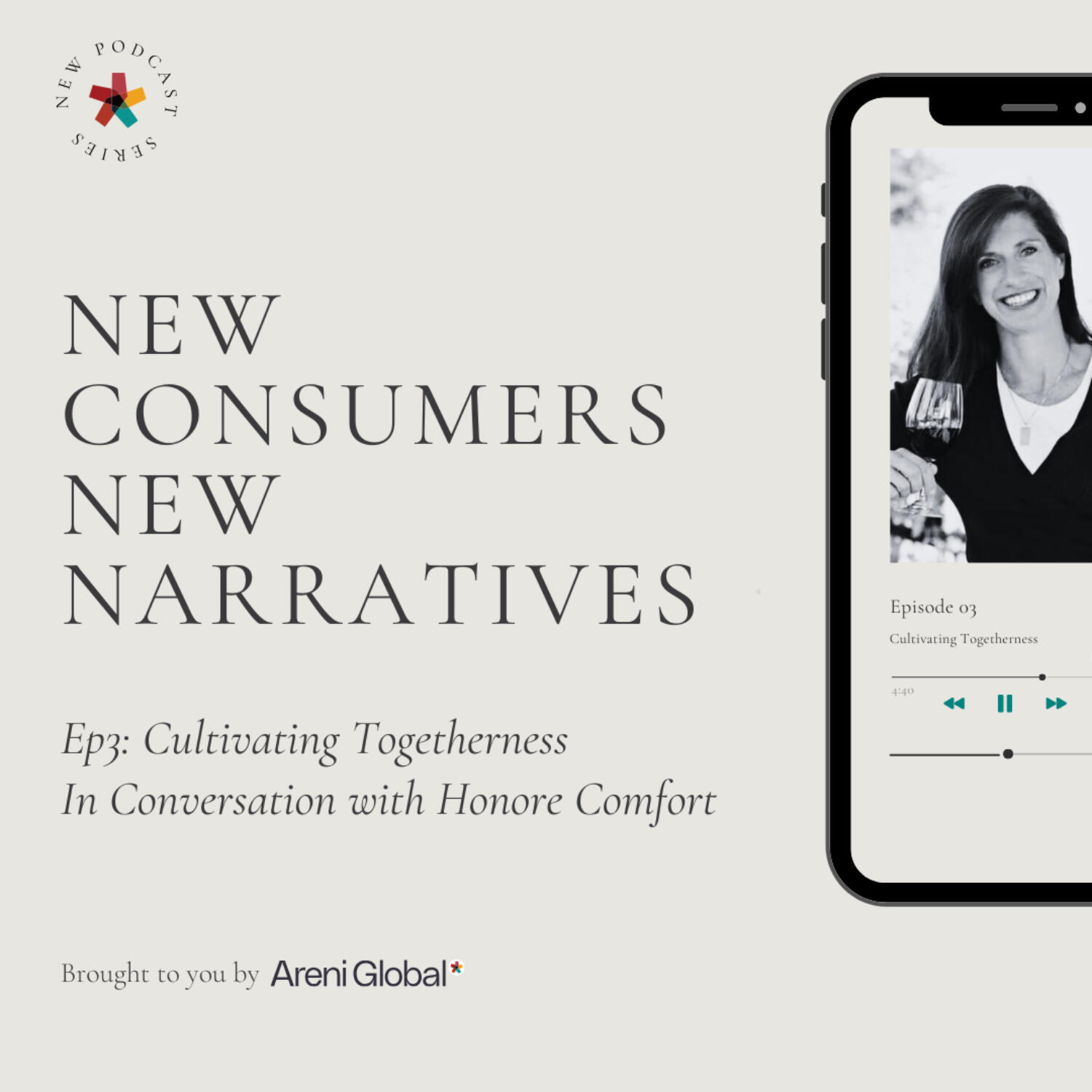
NCNN Ep3 Cultivating Togetherness: In Conversation with Honore Comfort
72m 36s
The fine wine industry faces a critical challenge as younger generations (Gen Z and Millennials) show declining interest in wine, driven by a complex marketplace and fundamental generational shifts. In response, the Wine Institute conducted a 2024 study to understand these "zillennials," focusing on their values, behaviors, and relationship with wine. The research involved 42 diverse participants, including both wine enthusiasts (catalysts) and those losing interest (lapsers), through in-depth interviews and focus groups. Key insights reveal that wine lacks "cultural energy" and fails to connect meaningfully with digital natives, who prioritize authenticity, community, and personal fulfillment. The study highlights a systemic disconnect between traditional wine marketing and what younger consumers seek: genuine storytelling, inclusivity, and experiences that foster togetherness. To address this, the Wine Institute produced a short film, "Cultivating Togetherness," summarizing actionable engagement strategies for the wine trade. The podcast episode explores these findings, emphasizing the need for the sector to adapt its narratives and marketing to build lifelong relationships with future consumers, ensuring wine remains relevant in a rapidly evolving cultural landscape.
Any sector that wants to stay relevant must invest in the future consumers and fine wine is no exception. But everywhere you look now, people are reevaluating their relationship and attachment to alcohol, wine and food and redefining our current understanding of luxury, lifestyle and success. What does this all mean for us as an industry and as an individual brand? How can the fine wine sector engage with new generation of consumers in a meaningful way in such a changing environment? At Arrini Global we believe that complex questions require in-depth research. I am Pauline Vika, the co-founder and executive director of Arrini Global and in this new podcast series, New Consumers, New Narratives, I meet marketing industry legends, speak with academics and researchers and push the doors of private member clubs. Come with me as we discuss the best possible ways for our industry to invest in its future. What do millennials want? What do they seek? How do they think about wine and what can the wine industry do about this? In this third episode of New Consumers, New Narratives, we meet Honeckon Foot, the vice president of international marketing at the Wine Institute, the collective body representing the California wine trade. In 2024, the Wine Institute commissioned a big study aiming to understand the minds of the zilenials, the clever contraction of Jens Edd, at least the ones that are all enough to legally drink, and millennials. While acknowledging that this cohort is very diverse, the study focused on understanding the key points, making these demographics so different from other age groups and how these differences impact the way they see and think about wine. In the first part of this podcast, Honeck and I dissect the result of the study and talk about the concept of connection of Nisha and wine's lack of cultural energy and how that impedes our capacity to engage with younger cohorts. And this is in Americans know how to tell a good story. In the second part of the podcast, we discuss cultivating togetherness, the Wine Institute short film, Aim That The Wine Trade, summarising the major levers of engagement I lighted by the study. The message here is very powerful in moving and I deeply encourage you to listen to this episode right to the end, knowing that it could be a great source of inspiration for our industry. So, Honeck, I'm very excited to have you today and I'm very much looking forward to the conversation that we are going to have. But before we go and we dive deep into the matter, can you tell us just about your role in and what are your responsibilities at the California Wine Institute? Oh, thank you so much, Pauline. It's such a pleasure to be here with you and really looking forward to our conversation today. So, with Wine Institute, I'm the Vice President of International Marketing and in this role, I have responsibility for helping to develop the brand for California wines on a global basis. And really what that means is focused on building awareness, elevating the image and increasing the value of California wines. In addition to all of that, I also run the California Wines Export Program and that is a program that is funded predominantly by the United States Department of Agriculture in an effort to support the export of U.S. agricultural products. And with those funds, we host and lead marketing programs in more than 30 countries around the world supporting California wines. So this project and some of the things we're going to be talking about today really fall into the category of how to raise awareness and build understanding for not only California wines, but really also as part of that, extending and developing interest in the wine category overall with a specific segment of our future consumers. And congratulations on the capstone program, by the way, because I've just read that you are nominated for a video at Wine Paris. And that's one of the reasons we are going to see each other in a couple of weeks if you are in Paris and Wine Paris. Yes, come and toast. Yes, absolutely. Well, we have our fingers crossed. And it was really an honor truly to be a finalist and the other programs and being considered as potentially worthy of recognition with these other remarkable wine education programs that are being led around the world. That's truly one of the highest compliments. So we're thrilled and appreciative and we'll see how the results are. So although the capstone program is amazing, this is not why we are meeting today and what I wanted to discuss with you because one of the other things that you've done lately is that in September of 2024. So you just had, and you shared the result of a big exploration of the zilenios, what you call the zilenios. I love that term, which are the legal drinking age gen Z and the millennial consumers. And we had the occasion to discuss the first result of that study when we had our event at El Sinkie. We had 15 minutes to talk about something that took you months to study. So I thought that deserved a full conversation. So can you tell us a bit more about first what triggered the need for this study and the origin of the project? Yeah, absolutely. This really stemmed from conversation that was happening at the leadership level of wine institute exactly a year ago. And so as we all recall, 2023 was a very challenging year in the global wine industry. And we still hadn't seen the final numbers at this point. But the conversation was really centered around this, the growing headwinds that it was becoming evident, the wine sector as a whole needed to deal with. And across multiple fronts. And one of the key challenges was recognizing the decline in engagement around wine with younger consumers. The leadership of wine institute, wine institute is a member-led organization. We have a board that is representative of wineries of all sizes across all regions across the state. And it's led by a team of six officers. And so we were in conversation with the officers. And they essentially asked wine institute saying, look, our community is basically in crisis here. There are many different factors that we need to address. Wine institute, we need you to get involved and see what we can do to help support our members as we're going through these challenging times. So from the marketing perspective, we started to dig in and we recognized that while the organization, our member wineries were working to address sales directly with their current customers, what we could do would be to look ahead 5, 10, 15 years to our future consumers. And we were seeing, you know, all of us were looking at the same data, right, seeing this decline in, or rather a slowing growth rate and a slowing adoption rate into the wine category with younger consumers. And so we asked our members if that was, you know, this was a valuable place for us to focus our efforts and attention. They said, yes, absolutely. And it's amazing. And that's one of the reason why I like California so much is that you decided this in December 2023 in by September 2024. You had the results and just that resilience and that capacity to act quickly. I can't tell you how much I envy that for a French person who has worked with Chenille Baudese and I'm not throwing anyone under the bus. But you know, it's quite remarkable for me. Thank you. I mean, it was, I will tell you it was, it was fast and furious and part of that was because it was the, we all felt the need and we were all looking for some insight, some actions, some actionable insight and things that we could start doing now. And this has been a bit of a process and was we, you know, talk about this a little bit more. Every step along the way has led to another insight and then this project, honestly, it continues growing. One of the things that we talk about here in California all the time was the Golden Gate Bridge. It's painted with a certain type of paint to protect it from the fog that rolls in every day. And so they basically paint the entire bridge and when they get to one end, they realize they have to start again. Yeah. So yeah, this project is sort of like that. It's like we never ending project. But before I'm going to ask you in a second how, you know, how it was conducted in some element of methodology. But first, you know, one of the things that are here on that side of the pond quite often is, oh, we hear about, you know, young people not being interested in wine, but it's actually, it was actually the same average generation because wine is not a drink for, you know, young people that's something that comes with, you know, being a, consider yourself as an adult. So maybe not when you're 20, but more like you, you know, when you consider yourself an adult, also being 35, however, all the other things that we do.
you are. So that, you know, we'll just have to wait. Nobody was drinking wine at 20. So they will just be coming consumers in another 10 years, like every generation before them. But I remember talking to you about this in Helsinki and you strongly disagree with that statement. So can we address this one first? Well, I wouldn't say that I disagree with the statement that people come into wine a little later as they begin to mature. But I will point out that there are two critical and generational shifts that we see today that we haven't seen previously. And the first is that the market place in which wine now operates is dramatically more complex. For example, when I came into wine, it was basically wine beer and spirits. And spirits was pretty nominal. There were not RTDs. There wasn't hard celtzer. There wasn't this remarkable range of choices and options from which to choose. So wine, just by the very nature of the marketplace, wine has a smaller share of voice, smaller share of mind. We have so much more to compete with. And it's very distinctive. The second critical piece in all of this is this micro generation that we're talking about. These zelenials are fundamentally different from any generation that has come before them. And that's because they are described as their termed digital natives, meaning that they have grown up with in a digital world with access to the internet. They have cell phones, etc. The rest of us that are older, we're termed, or what's called digital immigrants. We have come into this digital world. We've learned to use and adapt to technology. And while we use it every day, the relationship is very, very different. So these digital natives, the whole, they're approached to the world, the way they engage with each other, the way they get information, share information, socialize, all of that is fundamentally different. And the way that they relate to and go through the process of learning about, discovering, and then ultimately purchasing something like wine is very different. And as a category, wine is very good at telling our story. And we've been doing it for the most part in roughly the same ways. Of course, we've adapted and we've added on it. Everyone is on social media. But there are some fundamental differences that in order to truly engage this audience, and not just now, but setting them up to fall in love with wine and become lifelong wine consumers like us, we need to learn now to how to engage with them. And actually, I'm just realizing that because I know that I forgot to ask them, but what I forgot to ask you about the main objectives of this study and what you were trying to find out. Sure, before I ask you them, yeah. Yeah, great, great question. Well, our main objective is to really understand how wine can build a lifelong relationship with these consumers. We can't afford to run the risk of not engaging them. We need to start now to plant the seeds, begin to develop the relationship. We all understand people come into wine gradually at some point. Many are introduced to it through their friends or through their family at different points along the way. But it does, it takes time. We start at one point and then we sort of move our way up and through. So if we, and as we, as we're looking at engagement rates relative to sort of previous levels with similar age cohorts, again, the engagement is declining. And that's what we're concerned about. So, so yeah, it was, it was mostly, so if I, if I can summarize, it's a study that wanted to find out what Jen said and, well, there's a little, so we're thinking about wine and, and in what type of occasion they will buy or their motivation. No, I think it's, it's, it's broader than that because we were recognizing. And as we got into it, we started to see that there is essentially a systemic disconnect between the way the wine sector as a whole engages with our audience and what this age cohort is looking for. Now we're also basing this on the fact that future consumers, next generations are going to be more similar to Zelenials than they are to previous age cohorts. So if we as a category can learn to do a better job of engaging with consumers, telling our story, showing that wine is a sector for them and that they're going to, they have a place in it and that they're welcome. We want them to come and be a part of wine. Then we're doing a better job of setting ourselves up for building and developing our future audience. We all see our audiences are aging out, right? We're thrilled to see that finally millennials are coming more into wine. We're seeing increasing, purchasing and consumption rates there. However, as we look long term, we need to secure our future proof for wine. That's really the focus here. The other objective is to, for us to dig in, do the work, gain the insights, put this together, share back with the wine community, tools and the strategy and the thinking behind it so that as a category we can learn to show up differently. We can learn to market a little bit differently to this audience because that is what they're asking for. Tell us a bit about the methodology, practically what type of questions did you ask and whom did you ask them to? The first thing we did is we started by a broad-based review of existing industry research. We needed to dig into the data. Make certain that we were starting from an informed position which we did. We then reached out to the marketing insights groups. Many of our wine institute members who have some very sophisticated marketing teams that were already doing a lot of work in this space and we asked them, "What have you seen? What have you learned? Let's not recreate the wheel here. Share with us what you already have." They were incredibly generous. We had some robust discussions. We also zeroed in on better understanding global consumer trends. The forces that were shaping the direction and response of consumers on a broader basis. We then also quickly realized that it was vital that we get the voice of this audience into the research and we started by asking our zillennial consumers directly about themselves the way they see the world, how they see themselves in it, and then where and how does wine fit in. We worked with, so this was back in March of 2024 and we started working with a gentleman, Paul Peterson. He has a company called Coinjar Research. He's based in Petaluma in Northern California, part of Sonoma County in one country. Paul has a methodology that he uses where he identifies with any category in which he's doing research, whether it's breakfast cereal or running shoes or automotive, that there are people that he's termed as catalysts. They are people who are particularly passionate about that product or that sector and as such they're very knowledgeable about it. They're highly engaged. They love to talk about it, share it with their friends, family, and so we identified and screened for finding a group of these catalysts around wine. We evenly divided our total study and we had 42 participants. They were evenly divided between Generation Z and early millennial. It was from age 21, so legal drinking age here in the US, age 21, up to age 40. We also screened for geographic diversity, racial, ethnic diversity, also urban, suburban, ex-urban. We really were striving to capture a diverse slice of this audience. Then within that we identified both catalysts, so those that are engaged with wine and enjoy it and are passionate about it. Then the other half of the group we described as potential lapsing consumers, those who don't have a relationship with wine or used to drink wine but aren't drinking it as much anymore. They've turned towards something else. What we wanted to do is understand the difference between these two groups. What has made these catalytics so interested and engaged with? What is it about wine that they're connected to? How could we potentially move the lapses more towards catalytics? That was the whole focus. We spent more than 60 hours speaking with these individuals on a one-on-one basis. It was very in depth and for qualitative research having a group of 42 across the US, across all these different groups is quite robust. We did both individual interviews.
where we had one-on-one conversations, we gave our participants homework, they came prepared to really talk about themselves, their lives, the world, their habits, their preferences, all of those things. We then put them together in focus groups of eight, and we, again, we kept them separated by age categories, and that's where we really started to talk more deeply. And it was fascinating watching the whole dynamic overall. It was super. It was amazing. At times it was depressing, I was thinking, "Yeah, well. " No, because the conversations went dark pretty quickly when we asked them about the world, the hopes for the future, and I can imagine. But at the same time, they were remarkably optimistic. There's this sense of, even though times are tough, and that was the first thing that they would lead with, there was also this consistent sense of, "But I know I can do whatever I want to do, or I can lead the life I want to lead, if I just work a little harder, get a second job focused, stay committed." There was always the sense of, it was all within their grasp. It was just a matter of getting there, regardless. If they were talking about buying a house, getting married, having kids, getting their kids in the news, whatever their focus on their life was, achieving that best life, as they called it, as this consistent and driving force, it's really important to them. So we're going to talk about the results in a second. But before we do so, I've got to address my big elephant in the room, because this podcast is part of the series, new consumers, new narrative. And one of the things that I'm trying to personally determine for myself through that series of podcasts is the interest and the limitation of generational marketing, of segmenting your consumers or your audience through age, because there's also a lot to be said in both the pros and cons of doing so and the risks that you take when you put too much emphasis on generation, for example. So I would very much like to have your take on this is, do you think, I mean, how much do you think generational marketing is important? Is this result only going to be part of what you are going to do, or do you think it's such a key that it should be central to wine companies if I can express myself like this? Yeah, no, great question. I think that really what we're focused on, we all recognize that there is a psychographic that really ties in and shows the propensity for consumers to engage with wine. There are lifestyle interests that are the strong indicators of having that engagement and interest in wine and sort of where wine fits in. There are people who are interested in travel, international travel, food and cooking, gardening, interest in the natural world, engaging, entertaining, all of those things go hand in hand with how we enjoy and share wine. So that is really at the core. The reason why age demographic matters in this sense is because the emergence of technology can really be tied to a date, to a time, right? And that smartphones in particular have such a dramatic impact on society and how we engage that we can really tie it back to that. And it has translated through into the mindset of these consumers. However, however, we're using that and the zillennial consumers are at the center of the bull's eye for us in this initiative because we recognize how important it is that we figure it out, how we communicate with them. At the same time, still on the rest of that target are the other consumer groups. So age is a handy point of entry for talking about consumers. But by no means is it the defining aspect of it. So all along the way, we have continued to test and engage and make certain that the things that we're talking about and how we present wine resonate equally well with older millennials, with Gen X and also with boomers. We don't want to lose anyone along the way. Now the other thing that's interesting about this, though, is that the more we understand about these younger consumers and how they're different, can help shape what we do. And for those that are involved in media, in particular in terms of digital media, the ability to finally target your consumer with a specific message is so much more advanced today. So it is possible to engage and connect directly with a specific consumer segment through a range of digital media. This is well beyond just Instagram, but thinking about podcasts and digital audio, streaming music, streaming video, all of these things were able to really zero in and connect directly with people through the channels that they're interested in. Yeah, I think we're going to agree at a lot of point because I've seen some of the results of the study and some of the outputs that I've put out there and I've read them and I think there's a lot of this that could apply to other generations too. And I guess it's back to the marketing 101, which is the message can be rather similar, I guess the purpose would be similar, but the drive will be similar, but then maybe the where and where you are going to engage with those consumers and the fine tuning of those messages might be slightly different between generations. And just also the last questions before I promise to the audience, we're going to go into the results, but because you know talking about the wine consumer can be as sometimes misleading as talking about wine because there's so much diversity in wine, just like there's so much diversity in people and in consumers. Do you think the results that we are going to talk about are going to apply to every category, every price category of wine? Or is it more relevant, you know, I mean again coming from the fine wine place, will it be as relevant for the top of the category that it is for the rest? Yes, I would say. In a simple word, yes, at the same time our goal is to share the insights and so that regardless of which segment of wine you're working in, whether it's price related, whether it's just your brand positioning, whether it's your region, you can pick and choose what's most relevant, but you'll see, you know, as we've been working through this, we've been very mindful of making certain that we take the insights, but then we bring them back into the world of wine and recognizing there is no one size fits all. But there are pieces of information and nuggets that can be applied to your consumer communications, your direct to consumer communications, how you present your wines, even just thinking about how we show up at events, at activities. Starting from a different perspective, a lot of this is about, you know, turning the lens and looking back at ourselves as wine marketers and recognizing, you know what, there are things that we can do just a little bit differently that can make us much more visible and appealing to a brighter. So if I summarize, you studied all the research that was out there on the wine and that generation, you've conducted workshop, you've done hours of interviews, what did you find? What were the biggest insights coming out from this study? So it was interesting because we went into it thinking, okay, we're going to uncover some big juicy insight and that's going to be it and that'll be the silver bullet. And we actually, as we were going through this qualitative research, we started to get a little frustrated because when, while we learned a lot about our consumers, our, you know, customer group and the way that they saw the world, when we started asking them about wine, what we were hearing back from them was almost exactly what we know the wine category has been saying for years. And they were sharing back with us that they have a very positive perception of wine. That wine is about sharing with others and celebrating a special occasion. It belongs at the dinner table. Coming over for dinner, you make certain that you've got a good bottle of wine. If you're going over to someone's house, you show up with a bottle of wine. It's, I mean, it was so interesting. And it's not the same that, you know, sent it coming over with a bottle of wine.
you're not sending the same message. - Exactly, exactly. But at the same time, then they would say, however, and they're like, yeah, we get all of that. And that's great. But it's just not for me yet. It's just not for me right now, because my life is so busy. It's so crazy, wine is expensive. It's confusing. A lot of the classic things that we heard. So we realize as we're listening to this, and we listen to them, first describe their world. But then as they were describing their reaction to that world, they started to really zero in on the key values and the things that were most important to them. And a few things really rose to the top. Number one was because of the remarkable demands that they're feeling in terms of financial pressure and also time pressure. And those two things go very much hand in hand. It was interesting in the research, almost all of the participants that we spoke with, in addition to their regular full-time job or career, most of them also had a side gig. They were doing something else on the side to just make a little bit more money because they're feeling this incredible sense of financial pressure. That then creates even more pressure on them in terms of time. And so their available time has really gone away. And they miss that. And what has been sacrificed is quality time that they're spending with their friends and their family and that opportunity to connect in a real way. They rely heavily on their technologies. They don't take their social media away. They're not looking for that because it's critical and central to how they live their lives. But they also see that what they're sacrificing is that quality time together. So they're not spending as much time with the people that they care about in person as they want to. Would they want to? Because one of the things we've been reading about and hearing about is also that kind of relationship takes so much effort and I can't even be bothered to create a relationship. Did you have those kind of reaction in your bubble? Not as much what they were saying to us was that they wanted relationships and they realized that just trying to do it digitally was just not satisfying enough. And they're struggling with that. It's interesting here in the States we're saying a real drop off in decline on dating apps. And it's because this generation is moving away from them and recognizing that that is not the way to actually connect and find someone in a meaningful way. They're trying all sorts of things in order to find that, you know, dining clubs are huge, running clubs are huge ways to engage with-- and do the things that you like to do with other people who also like to do it, that's really central. So their response to the pressures of the world were really shaping the way that they engage. And another thing is that because they're feeling the world is polarized, they're surrounded by negativity. It's very challenging. They are actively seeking things that are fun and funny and light and optimistic. They want this sense of optimism. So it started to become very clear when they were talking about the things that they're looking for in their lives, that they don't have enough of, or that they actively seek out. It became evident that wine can't-- because the way that wine is different from spirits, spear, RTDs, et cetera-- that wine can dovetail really nicely with a lot of these things. So it became-- it was almost ironic how what they were describing they didn't have enough of in their life, like opportunity to really engage and connect and have fun with their friends in a genuine and meaningful way is exactly the types of experiences that wine lends itself to. You sit down and open a bottle with friends. You enjoy it over dinner. It's that face-to-face moment. It's very different from going out for cocktails or having drinks before you go to the club or sharing a bunch of beers after-- And I remember the story we discussed in Helsinki is that you had a group of young consumers, of young people looking at a table. And that table had-- everyone had a different drinks and cocktails and ready to drink and beer. And another table only had a bottle of wine. And that the-- can you tell us what the feedback of-- Yes, so it was so interesting because she was describing-- yeah, as you said, being the restaurant. And she said, when you see the table where everyone's sitting around there and they've got a bottle of wine in the center of it, and the three of us, the researchers, are like, oh no, here it comes. What is she going to say? And she said, you know that everyone at the wine table is having an amazing time. They're talking, they're laughing. They're all sharing the same thing. And it was so interesting. We heard this over and over and over again, that the importance of wine coming in a bottle and that you open the bottle and you share the same bottle with everybody, that just unifies-- To that-- --and creates the sense of inclusion. And that's very important with this audience. And that that's part of wine's natural appeal. The other thing that we heard again, over and over again, is that wine is so appealing because it is lower alcohol. And the whole approach is to enjoy it and savor it over time and also generally with food. And they value that. They see that as an opportunity. We even heard many of our respondents say directly, oh, well, I choose wine because it's not as strong from an alcohol perspective. So that is important. And they're aware of that. And they engage in that. So again, just another opportunity. And so following the qualitative research that we did, and we had several key insights. And we really dug into this. And coming out of it, we built what we basically described as a positioning platform for wine. And one of the researchers, really, are partner crime on this project, Mark Barton, who-- he was a founder of an agency originally based in London or it's still based in London called Eat Big Fish. He's based in California now. He's been working very closely with me on this. And he's one of the architects of what a strategy approach called the Challenger brand approach. And creating a Challenger narrative, which is really a way to tell a story about your brand or your category that challenges the preconceived notions and presents sort of a fresh take. And every Challenger narrative is essentially that. It's a story that you're telling and engaging with consumers. And you have to-- every good story has a monster, right? And they have to start by slaying that monster. And within our Challenger narrative, the monster that we're talking about is what we've termed this idea of connection amnesia. And that these younger consumers are losing that ability to connect face to face and losing a sense of value of why it's so important. And there's a lot in society that's reinforcing that. And that we have an opportunity here to help work against that. I listen to very quick things before we go back to our conversation. This podcast series is part of a larger, really global research project. And we have a whole series of articles and publication in the pipeline. So don't forget to subscribe to our newsletter at erini.global to be the first to read them. I'll put all the links in the show notes. And if you like what you've heard so far, please do subscribe to the erini podcast channel on any of the platforms that you are listening this episode on. And give us a call rating. It really helps. The more subscribers we have, the more resources we can get to continue our exploration. But back to the episode now. - So that was the first big insight, the connection amnesia, which is really a powerful one. And almost a hopeful one, as you were saying, because we've got a lot to answer to that monster. And the second one, also I remember from our conversation, was that a wine lax cultural energy can be addressed? - Yes, it's one. - Yes. And we've really identified that, and this came out of a lot of our conversations, where of course everyone in the workshops that we did was, they're clearly aware of wine. They're aware of wines, qualities, and attributes. But it is definitely not a part of their world. We lack salient or this cultural energy. And a lot of that is because of the way that wine traditionally communicates. We communicate directly, and we do it well, but we communicate with those that are already in the space and already in the category. And following the very traditional norms of the things that we do with wine maker dinners and consumer tastings. And that worked because the result is, even the youngs, the story we've been telling for years. So there's still a place for this, I suppose, but what you are saying is that there's a need for something else on the table.
- Top of that. - In addition, right, which is how, and it's because of the way that these consumers engage with the world where they get their information, who they like to get information from, and how that works. And then the third key insight that's come out of all this, because following our qualitative research, we then wanted to take these insights and the learnings that we gained, and apply them back to a larger segment. So we're working with another team called Vittoria. These are two guys that are based up in the Pacific Northwest. They previously both worked for widening Kennedy. They now have their own agency, and they are the way they describe themselves as connection planners. Then they developed connection strategies. A lot of this was previously media strategies, but it's more than that. And it starts with first really understanding your consumer audience, and understanding not just the media that they consume, but how, when and why, and how that intertwines with their lifestyle and their interests. And so we started by, we worked with a platform called UGov, which is a global database of consumers. And we zeroed in on the US, because it's the largest wine consuming market in the world. Therefore, it's also the most diverse, the most complex. We're able to get the biggest slice of consumers that fall into this category, knowing that a lot of the insights would apply globally. But that ultimately, as we put this to work in other markets, we'd need to tune for local market variables. We understand that. But we started just with the age segment of 21 to 40, that's over 92 million individuals here in the US. We then zeroed in based on household income, between 40,000 and 150,000. We wanted to tie in with that. We also screened for making certain that they're in the beverage alcohol category, that that's part of their life. And then we screened for relative interest. And this comes back to these things that classically tie in with wine, like cooking, experiencing new food and cuisines, passionate about traveling, gardening, reading, all of those things. That got us to a segment of 9.7 million consumers. We then looked more deeply into that consumer set to understand who they are, what they do, how they engage with media, and it was fascinating. What came out of this is that, clearly, they are culturally savvy, experienced seekers that really value a deep, immersive social engagement with the things that they like to do, that is both physical and digital. And this is hugely important. It isn't one or the other. And they are style conscious, they're really curious. They want to learn, they want to know what's going on, what's current, what's next. They love food and cuisine. They are very focused on having an active lifestyle and being engaged with love to travel. They love comedy and music and all of these things. They are also very focused on content creators. They love to get their information from those that are deeply engaged in the stuff that they're interested in. Yeah. So some of this isn't new, but what's different. So for example, food and beverage, and food and beverage culture is hugely important to these younger consumers. Just like it has been, and there's a strong correlation, as we've been saying all along between wine and food and beverage, what's different about this group is how they engage. They're not happy just sitting down and reading their copy of Bon Appetit magazine. They want to be hands on. They want to go behind the scenes when they travel, they want to go on food tours and meet the chefs or the wine makers or the people that are doing the cool things, making kombucha, raising the animals, farmers, all of that. And so when we looked at some of these key trends, where this group overindexes, for example, just within food and beverage, they are 52% more likely to enjoy cooking at home than average individuals. They are 224% more likely to attend food festivals and events and engage. They want to go and be their lives. So it's this high level of engagement. And then they look for that with their online content creators as well. Yeah, I guess the challenge will be because also they are short for time and they're busy and they all over the place. And it's like, how do they, how do you make your event? How do you create events and experience that they will prioritize? And for those of them that want prioritize this event, how can you still make them part of the experience only digitally, I suppose? Well, I think there are a couple of things that we can learn from this. The first is looking at the places that they are engaging and learning from them. So here's a great example. There's a website called Tasty. And Tasty focuses on their self-description of snack-sized videos about food and cooking. They're all 60 seconds. They're this whole target audience. They're visually appealing. They're quick. They're active. They're high energy. But they also deliver really great information. That's the kind of, as we look at that. And within the wine category, we can easily do that. We have great characters and personalities. I mean, is there any category that has more personalities than wine? I've known it. Yeah. I've known it certain, right? So that's just an example of how we could model after that. Another great example is we are very good at doing events and participating in events. And we will always continue to do that. But let's step outside the norm and perhaps consider a broader set of events and activities where wine can show up and be a part of it. So for example, one of the big trends right now here in the US are night markets. And we're seeing them everywhere. And they're very much focused on food and creators and beverage. Wine isn't necessarily showing up there. And that's a great opportunity. I had this fun insight this year of a port producer saying, you know what, this year is the first time we participate in a Christmas market because we never really thought about it. Well, it's the perfect place for us to be. You know, that's where people want to actually drink port because it's called a new one spice. Exactly. And it was like, it really, really worked really well. I mean, it was just we never really thought about it that way before. Yeah. Sometimes it's just. So this is, you know, when it's easy to say, well, wine just needs to show up where they are. Right? That's easy. But what does that really mean? And how can we actually do that? And how can we do that in ways that are relevant for high end, very small producers and maybe more accessible, broad based brands? So that's what we're focused on now within this whole project is going to the next level and peeling back the next layer. And then sharing these insights and information back with our author. And that question of the where is so central, right? Because again, we had so many insight this year about the wealthiest part of the young generation, you know, the, the, the sons and daughters of the 0.1%. So really the one that are able to buy the top end of the wines on a regular level if they want it because they have the financial means. And the insight that we had is like they, they kind of go in similar places that the previous generation went, but not exactly, you know, there was so go to the Alps, but not really in the exact same clubs. And they don't want the same thing that, you know, we talked about a group of very wealthy, I would say kids because they were 25. So they, you know, that's, yeah, all the same kids. And they, they went for like four days with maybe 15 of them and 36 bottle of wine and they only drank 16 of them. Like there's something that was more about moderation and they spent half of their day playing chess, which is something like this is definitely not how we have party, you know, back when I was 25. And this leads me to some of the, you know, one of my biggest insight of last year is the emergence, the rapid emergence, because it's been, it's been here for a couple of years, but of what, what's been called low energy events. So of course, there will still be, you know, place for big nights out where you spend two hours putting makeup on and, you know, your shoes on and going to big restaurants and fancy dinners and places that are noisy and fun. But there's also so many things that we've heard about the needs for really low energy, like events where you can turn up the way you are dressed and where it's going to be quieter and you can really talk to people and basically do more or less what you would have done at home.
but your flat is too small to accommodate your friends. So you just need a place to go and be relaxed. And I don't think with that good in terms of the wine world, you know, of course there's exception. But when I see, for example, what in-board as a retailer's are doing in terms of portfolio tasting in London, I think it's fantastic and that has its place. But there's not that many offers of our smaller groups, more casual, comfortable kind of cozy events. They could also be added up to this in order of probably meeting them where they are. Yeah, yeah. And I think that, yes, I agree that there are so many opportunities and different opportunities for wine and wine brands and producers to step into the world, either physical or digital where these consumers are spending their time and where their attention is focused. And some of it is doing what we have done. But a lot of this is just starting from the standpoint of, well, maybe we think a little bit differently. And what we see our role in all of this is for us to dig in and the more we can understand about these consumers, their values, their habits, their interests, then the places and the ways that they follow and engage those interests, that's all valuable information for us as communicators and wine marketers to apply in the ways that work for our own brands and working them into our communications. I mean, we're not expecting anyone to do a wholesale change in their approach and how they go to market. But I do think that for those that want to build and start to connect with a younger audience or even just a broader audience, having information about what the channels are and how consumers can engage with them is incredibly valuable. And also, a long, a long line. So part of this, of course, is developing the insights. We have also, at the same time, been developing our own new creative, that is basically digital communications, that is designed to connect with these consumers. It's bright, colorful, fun, high energy, very different from what you see presented out there from a wine perspective. And we will be using that as well as putting together a complete digital strategy, putting this to work in some of the international markets where we operate, where targeting the spring will be launching a full campaign in Canada and using that as a test market and tracking both pre and post consumer awareness perception and intent to purchase within wine, working with our partners up in that market, getting results to then bring back into this conversation and share it with the wine community. Because of course, the action that you can take on those results are two levels for you, is what you can work with your wineries so that they can do on their own. But there's also the collective part of taking actions on, again, building awareness for wines of California with a slide adaptation on the look of it, on the channels that you are going to be using. And I'm also just a question that I forgot to ask at the beginning, but you kind of just answer it just checking. But you've done this study in the US, but you are using the results of the study. You think these results of those studies can orientate some of your strategy abroad, so not just in the local market. Yes, and the very first step, and we're doing this right now, is we're actually doing a UGov study in Canada to basically do a comparison of the audience segment and testing how they index against many of the same lifestyle habits and we're also tracking their media usage and doing it in a comparison to see where do they align? Are there any things we need to be aware of where they don't align? We know there will be, and how do we tune for that? We're also with the digital communications, we'll be starting to run those in some of our Asia markets, Hong Kong, Singapore, right off the bat, and then we'll be developing a similar test in Japan to, again, see within the Japanese market, which aspects of our insights remain consistent and where do we need to tune and adjust? But we also developed our creative because we believe in our getting early feedback that it will have a strong appeal within that market and sort of their culture and approach as well. So can you tell us a bit how can you illustrate how these campaigns will be different? Like how did you use some of the insights to build a different campaign? And. Well, absolutely. So first and foremost, it starts from the perspective of having a conversation with the audience about wine and making certain that we are, we've developed a ton of voice that's fun, fresh, approachable, witty, direct, but simple. And we also recognize that it needed to look very different. So when it comes across on their Instagram feeds or in their digital ecosphere, as I describe it, where our consumer lives that we want to connect with, it doesn't look like everything else that they're seeing. It's the lack of cultural energy that you're addressing, I suppose, something more dynamic, and yeah. Exactly. And so we've actually identified it and are working with an illustrator. The illustrator, he's a really talented guy. His name is Nick Stokes. And he did all of the stage graphics and merchandise and all of the graphics for the recent global Harry Styles tour. And so his style that he's brought into this is energetic. It's fresh, it's colorful and it's bold. So, and I will say that's just one piece because we're approaching this from, and this is another really important thing that is critical, is to embrace an integrated platform of communication, right? So not just relying on Instagram or meta, but also engaging and creating content and messages specifically for YouTube. And TikTok, we're also looking at and we'll be engaging with podcasts and digital audio and streaming audio and the places where because this audience is so engaged in music and entertainment and all these sort of different aspects. - All the above. - Yeah, so what I suppose as well, you can put together. - And one of the other, and this is really important, so the third key insight with this segment is the idea of community validation is central to how they engage. And that's what they're looking for and participating in on their phones, in their streams, on their threads, all the time. That's where they're learning about new things. That's where they're testing. Like, hey, this is cool. I did this, I discovered this. You guys should discover it and then the feedback that you get. What you put out there, how you present your profile in all of its dynamics is central. And making certain that wine is presented in a way and in the places where we become a part of the way they see themselves in the world, that sort of at the heart of it. So that notion of community validation and how wine becomes a part of that cycle and process is really important. - I think the notion of fun is really important. It's one of the notions that I think we've lost the most in the wine world. And we've intellectualized a lot of things for good reason and with a good result, regardless of what people think, complexity has value in the world of wine. But I think it's time that we can reconnect, we can reconnect, intellect and fun. And you use the word witty and I think that's really one of the key in the tone of voice. 'Cause it's not to dump things or to simplify things, but actually to make it intelligently clever. And I think that's a tone of voice that could work really well for wine and something that we forgot. We forgot to have fun in many, many instances. So Anna, as we arrived to the last part of our interview, I really want to focus on something. I mean, I've been admiring the work that you've been doing in the marketing department for years and I've been to some amazing events for wines of California, some very bold choices of events as well. But one of my favorite piece of content, I would say, for the lack of a better word that you've put out there recently, is the film that you produced as a result of the study and actually explain and articulate some of the big, what's that stake for us in the wine world based on what you've learned? So I would just would like to take a minute for the audience to listen. So it's a film but of course, well,
only being audio. Let's listen to it and then we'll discuss it quickly after. Hello. We're the ones you're looking for, right? It's nice to meet you, wine. Here's a question. Where have you been? Because we'll tell you where we've been. We've been everywhere. We're young, put together careerists, TikTok influencers, side hustlers, community organizers, novice investors, yoga goddesses, amateur therapists, makeup mavens, lift drivers, climate activists, online business entrepreneurs, even frugal moms. Welcome to our #ModernLife. You're not in our world enough wine. You're not in our conversations, not in our social feeds, basically not in our lives. There are lots of reasons, but here's the thing, wine. You're needed here. See what's missing in all the craziness of our modern world, our moments of true connection, the ones that are warm and human. We're losing touch with each other, and it's isolating and lonely in anxiety and inducing. We imagine wine could say a lot about this. So say it, please tell us that wine is a social thing, that it's complicated and complex, just like we are. Show up on our phones, have a conversation with us. Because what we need now more than ever are reasons to get together. All of us, in person, in bars, in restaurants, backyards, living rooms, wherever. Make us want to share a bottle and just be with each other. Because being with friends is good for the soul, and that's something wine knows a lot about. So I must admit, I guess that's why American do things so beautifully, right? It's full of emotion. It makes me almost cry every time. Like I feel so connected with a message, and it works really well, and it states some simple fact that we've been ignoring for too long. What was the intent of the film? Because this is not a consumer-focused film. This is for us, right? This is for the trade. Yeah, the goal was really to take some of these more complex ideas and things that we've discovered, and sort of this whole notion, and convey to our colleagues in the wine sector, why, and how important it is for us to reach out, to think a little bit differently, in order to connect with these consumers, and that what they're looking for is exactly what wine has to offer, and that rather than, I mean, there was just, oh my gosh, at the beginning of this year in 2024, there was this pervasive sense of doom around the wine category, right? It was just, it was tough, and we were all starting to feel, we're only reading challenging news out there, and we wanted to share a ray of hope, which is like, hey, wait a minute, wine is different. For all the reasons that we know, right? Wine is grown, it's made, it's expressive of place, it's creative, it's distinctive, it's only made once a year, it's all of these things that make it so special, and that we have something special to offer, to an audience that's seeking it. And also the hope that maybe younger consumers are drinking less, but it's not because they don't like us anymore. So you know, get out there and do something. Exactly. And it's, again, it isn't about drink more wine, that isn't it. It's about wine has an opportunity to bring something into your life that you're seeking. Wine is a compliment to a lot of the things that you're looking for, and for us in the wine sector to remember that, and to stay focused on that, and to lean into that, that that's an opportunity to approach our communications a little differently, and ensure that the audience that we want to reach has an opportunity to learn that. And you know, I love one of the things that we heard and that we saw right away, and we started talking with these consumers, is there a wonderful complexity and that, and that they lean into that. That's important and valuable to them. They don't want to be in a box. And oh my gosh, wine lives in that space too. And we embrace our diversity, our complexity. There is literally a wine for everyone out there. As long as we can have occasion, yeah, for every occasion, as long as we can help them find it, and we are part of that equation. We connect with them. And so this film was really intended to inspire us and remind us of the role that we play and that we are relevant, and that we are a compliment to what young people are looking for in their lives, and it's a natural fit. So thank you for sharing all those inspiration, and I really hope that this film and so many of the other things that you've said will inspire people. And again, renew some of the hopes because I agree with you. There's a lot of doom there when there's a lot of positive too. Yeah, I think just to convey that our goal in doing this is to help all of us learn how to better engage with our, you know, future consumers are those that we want to build a relationship with wine. And we're in this, as we always say, we're, we work in wine because we love it. And because the people that do this are so interesting. And, and we are committed to helping our community as a whole, our wine community as a whole, have some access to information that they, and insights, they might not be able to get otherwise. And while we know that a lot of the larger wine companies are very much focused on how to connect with younger consumers, that information doesn't always trickle down. And that's what we're trying to do. And if we can collectively shift the narrative around wine and engage with these consumers and, and help them fall in love with wine, just like we did, that's our goal. And I guess, I guess my, one of my takeaways, you just said, you know, we love wine because people are so interesting. And it's funny because it's just hit me when we say that we usually think the people that make wine or sound wine are interesting, but we never extend that to the consumers. And what, you know, one of the things that this film also, you know, made me realized is, gosh, those consumers are super interesting as well. Like they're doing so many things. So I guess that's just that, that kind of slightly slight change of mindset. So, Anna, thank you very much. As you were saying, you, one of your goal is to share those results and help wine as a category. So I know that O'Reene is going to catch up with you regularly on some of the results because you, you very generously offer to, you know, keep us updated on this so that we can share to, to the rest of the world and to the rest of our community. So thank you very much for this. And thank you, thank you for your time. Pauline, thank you so much. This has been great having this conversation with you. I was flattered to be invited and to be able to sit down and talk with you about some of this work that we're doing. And thank you for sharing it and with the O'Reene community. And it really has been not only a pleasure and it's always fun to sit down and have a really, an honor to be invited to really say. And I see you seeing Paris in February. Yes. I look forward to seeing you and hopefully many of you listeners as well. Bye Anna. Bye Pauline. Thank you. You've been listening to new consumers, new narratives, a podcast series produced by O'Reene Global is think tank dedicated to the future of fine wine. O'Reene Global helps wineries, distributors and retailers to understand how the world is changing and how that creates risk to be managed and opportunities to be seized. What risks, what opportunities, well be sure to visit our website, O'Reene.Global and subscribe to our newsletter and follow us on social media so you don't miss any of our reports, events and analysis. Until next time, cheers. [BLANK_AUDIO]
[BLANK_AUDIO] [BLANK_AUDIO] [BLANK_AUDIO] [BLANK_AUDIO] [BLANK_AUDIO] [BLANK_AUDIO]
Podcast Summary
Key Points:
The fine wine sector must invest in future consumers (Gen Z and Millennials) to stay relevant, as these groups are redefining luxury and lifestyle.
The Wine Institute commissioned a 2024 study on "zillennials" (legal drinking age Gen Z and Millennials) to understand their declining engagement with wine and identify actionable insights.
Key findings include a systemic disconnect between wine marketing and younger consumers, who are digital natives with different information-sharing and socializing habits.
The study used qualitative research with 42 participants (catalysts and lapsing consumers) across diverse demographics, involving interviews, homework, and focus groups.
Younger consumers seek connection and cultural energy, but wine lacks this appeal; they are optimistic yet face a complex marketplace with more beverage choices.
The Wine Institute created a short film ("Cultivating Togetherness") summarizing engagement levers, aiming to inspire the wine trade to adapt its storytelling and marketing.
Summary:
The fine wine industry faces a critical challenge as younger generations (Gen Z and Millennials) show declining interest in wine, driven by a complex marketplace and fundamental generational shifts. In response, the Wine Institute conducted a 2024 study to understand these "zillennials," focusing on their values, behaviors, and relationship with wine. The research involved 42 diverse participants, including both wine enthusiasts (catalysts) and those losing interest (lapsers), through in-depth interviews and focus groups.
Key insights reveal that wine lacks "cultural energy" and fails to connect meaningfully with digital natives, who prioritize authenticity, community, and personal fulfillment. The study highlights a systemic disconnect between traditional wine marketing and what younger consumers seek: genuine storytelling, inclusivity, and experiences that foster togetherness. To address this, the Wine Institute produced a short film, "Cultivating Togetherness," summarizing actionable engagement strategies for the wine trade.
The podcast episode explores these findings, emphasizing the need for the sector to adapt its narratives and marketing to build lifelong relationships with future consumers, ensuring wine remains relevant in a rapidly evolving cultural landscape.
FAQs
The study was triggered by a challenging year in 2023 for the global wine industry and a recognized decline in engagement with younger consumers. The Wine Institute's leadership asked for help to address the crisis and look ahead to future consumers.
The study involved 42 participants aged 21 to 40, evenly divided between Gen Z and early millennials, with diverse backgrounds. It included one-on-one interviews, homework assignments, and focus groups, totaling over 60 hours of conversation.
A catalyst is a person who is particularly passionate and knowledgeable about wine, highly engaged, and likely to share their interest with others. The study compared catalysts to potential lapsing consumers to understand what drives engagement.
Zillennials are digital natives who engage with the world differently than digital immigrants. They face a more complex marketplace with more drink options, and their ways of discovering and purchasing wine are fundamentally different from earlier generations.
The main objective was to understand how wine can build a lifelong relationship with younger consumers and to secure the industry's future by learning to engage them effectively now.
Despite feeling times are tough, zillennials are remarkably optimistic and believe they can achieve their 'best life' through hard work and commitment. Achieving that best life is a consistent and driving force for them.
Chat with AI
Loading...
Pro features
Go deeper with this episode
Unlock creator-grade tools that turn any transcript into show notes and subtitle files.
 PodcastTranscript AI