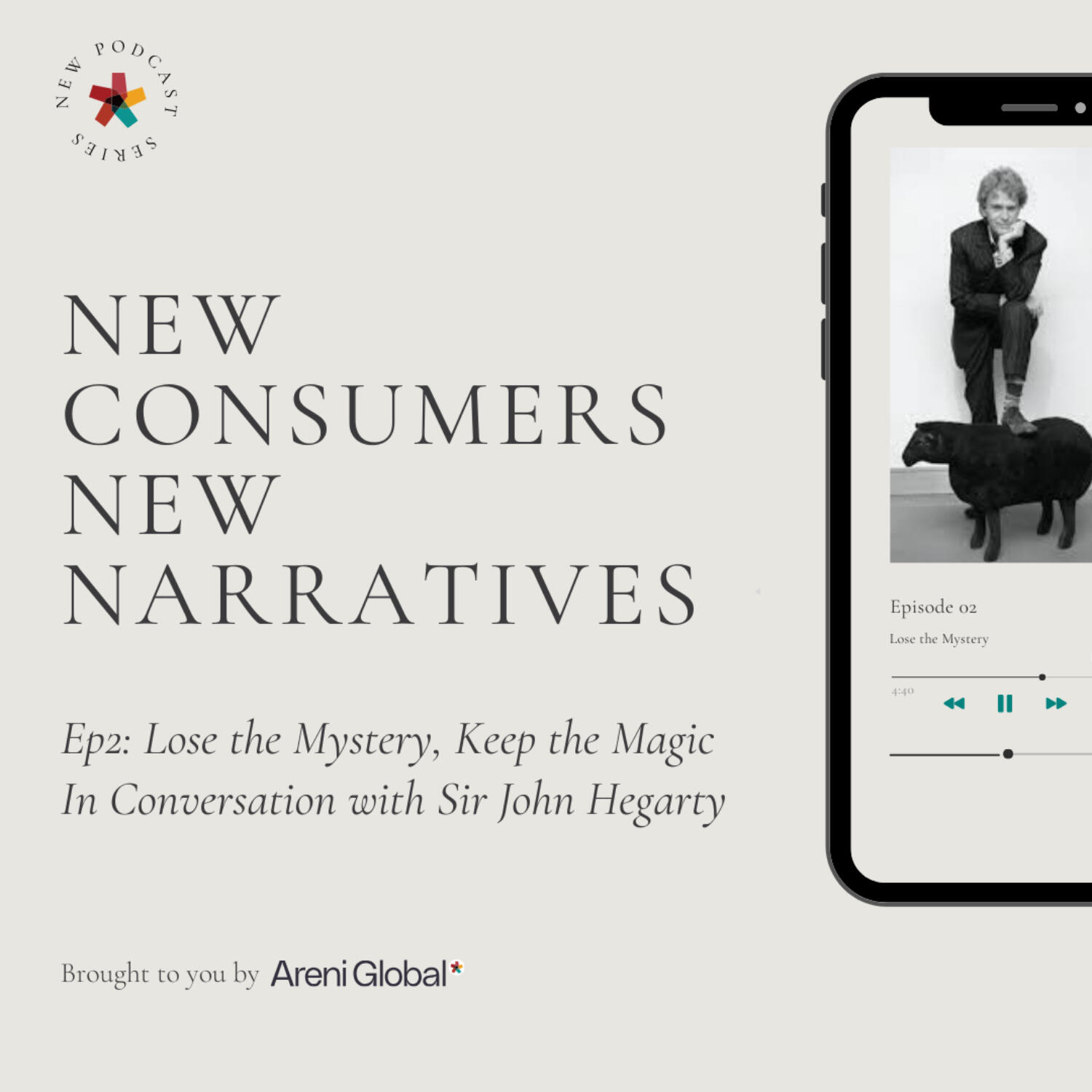
NCNN Ep2: Lose the Mystery, Keep the Magic: In Conversation with Sir John Hegarty
77m 51s
In this podcast episode, Paulin Vika interviews advertising legend Sir John Hagarty about how the fine wine sector can connect with new consumers. Hagarty, co-founder of iconic agencies and a biodynamic wine producer, argues that the industry’s biggest challenge is its complexity. He stresses that wine communication must simplify—using grape varieties as a starting point rather than obscure regions—to avoid intimidating potential buyers. While he champions product quality as paramount, he notes that many winemakers undervalue marketing, relying on the assumption that excellence alone will sell. Hagarty contrasts marketing (market analysis) with advertising (inspiring communication) and warns that the wine world’s fragmented market, dominated by supermarkets focusing on value, prevents consumers from exploring finer wines. He advocates for transparency, such as labeling grape varieties and organic practices, to build trust and curiosity. Ultimately, he calls for a balance: lose the mystery but keep the magic, making wine accessible without losing its allure. This approach, he believes, will help the industry attract younger generations and thrive in a changing cultural landscape where alcohol consumption is being reevaluated.
Any sector that wants to stay relevant must invest in the future consumers, and fine wine is no exception. But everywhere you look now, people are re-evaluating their relationship and attachment to alcohol, wine and food, and redefining our current understanding of luxury, lifestyle and success. What does this all mean for us as an industry, and as individual brands? How can the fine wine sector engage with new generation of consumers in a meaningful way in such a changing environment? At a really global, we believe that complex questions require in-depth research. I am Paulin Vika, the co-founder and executive director of a really global, and in this new podcast series, new consumers, new narratives, I meet marketing industry legends, speak with academics and researchers, and push the doors of private member clubs, come with me as we discuss the best possible ways for our industry to invest in its future. After all, as I was a guest today once said, if the founders of the French Revolution were able to reduce their slogan to three words, Liberté et Galette et Fraternité, and the Romans built an entire empire on another three, Benny Vidi Vici, why do we need so many more to start cap food when our case wine? If we are really failing at communication and advertising in the wine world, are we failing because we lack talent and creativity, or are we failing because we just don't have enough money to build and execute creative campaigns? In this second episode of new consumers, new narratives, we meet industry legend and creativity hall of fame Sir John Hagarty. Sir John was a founding member of Sat Shien Sat Shien before partnering up with Nigel Buggle and John Bartel to create the famous BBA Gegemcy that gave us, amongst many, many others, the Lviv London ad, the Lynx campaign, and of course the iconic Johnny Walker keep walking. So, what would it take for wine companies to come up with some really, really compelling ideas that would inspire a whole new generation of consumers to think about wine in a new, more attractive way? Well, let's find out. Well, John, thank you so much for being here. I can't thank you enough for spending this amount of time with us and sharing your insights and your knowledge. We have a fascinating conversation ahead of us. But the first question is a very basic one, but how do you define what to do and maybe why you wake up in the morning? What drives you? Oh, what drives me? Oh, that's. Well, the thing that drives me is constantly being curious. I think in life one has got to be constantly curious. But I think if you've had a, you know, being brought up in a creative world and you know, I went to art school, from art school to design school, the great thing creativity teaches you is to be constantly interested, constantly fascinated by what's going on around you. Because those things affect the way you feel and think and then affect the work if you're doing it that you then produce. So being connected to the world is very, very important for anybody involved in the creative world, whatever it is you're doing, whatever aspect of creativity you're employed to do, being connected fundamentally important. So that's what gets me up in the morning. And how, you know, what do you do in a very few sentences? Because you do say what? Well, I suppose you're talking to me mostly because at my time in advertising, I spent, you know, something like 50 years in the advertising industry, I helped found Sarche and Sarche in 1970 than a European agency in '73 and then my own agency with two other wonderful partners, John Bartlett and Nigel Bogall in 1982 and that was called Bartlett Bogall, Haguecy of which I am the Haguecy. And now we tell that into a very, very successful agency. We eventually had nine offices around the world, worked on brands like Levi's and Aldi and Johnny Walker and British Airways and Unilever and big, big, big brands like that. And hopefully did work that people were inspired by and talked and talked about and created value for our brands. So that was that was my experience in advertising, but I was on the creative side. People often, you know, they often get referred to as an advertising executive, which kind of is slightly odd, was I was far from being an executive. I was a creative director, creating the work and also directing it. So that's what I was doing and I left the advertising industry in 2014, found it the garage here in Soho that same year and garage is an early stage investment company helping people get their their ideas up off the ground and hopefully creating a success out of those. So we found them fun, a bit like Dragon's Dead, we find them funding and then guide them, help them with building their brand, which of course we have the value of resides. And for the last three years we've been developing talks on creativity, getting people with businesses to understand the value of creativity and that's of course called the business of creativity. And we're going to talk a bit more about it later and maybe So that's what I'm doing. Yeah, and maybe you created this because you could have you've seen a declining creativity, at least how people use it. But before we dive deep into this, I know that you also have a connection to the to the world of wine. What connects you to the world of wine? Well, what connects me to the world of wine I own of Injard in the middle of what? In France, that's our AOC. We've had that since my wife and I since 2002, 2003 was our first vintage. Thank you very much. The hottest vintage for about 100 years. Great way to be, so great start in the world of wine. We produce 80% red, 20% white. Obviously classic grape varieties without region and granache, syrup, carrying on with adria, sandso. And then on the white side we have granache, blonde, clavet, russain and masa. But we're sort of, as I say, 80%. We have 15 hectares under wine. And we went organic in 2008 and then 2010. Yes, 2010, we were biodynamic. So we've been farming biodynamic for the past 14 years. And how do you, if I'm not too curious, but how do you distribute your wine? Are you involved in the selling part of it as well? We set it throughout the world, obviously, where we distribute a lot through France, in the UK, where we're with wanderlust wines, which is wonderful. That's brilliant. But we're a classic distribution. Yeah, classic distribution. Yeah, we sell very well for some reason. One of our little brands called Open Now does incredibly well in Japan. So that's, it's always bizarre. But we only produce about, you know, I always say, because we're very much a biodynamic vineyard. We produce about 35, 40,000 bottles a year. So not huge, but enough to, you know, you've got to sell it. And this year, sadly, in 2024, harvest was down about 50%. Yeah. Because of the heat and lack of rain and all the usual things that farmers talk about too much rain, depending where you were. And then you had mildew. And yeah, it was tough here. And I'll see it. I'm a farmer. I'm a farmer basically. And I behave exactly like a farmer. Say all the things that farmers are always complaining about the weather. Never happy. Well, you know, that's the reality. But that's a good common ground, you know, that's a common point with people all around the world. So in other, you know, in other contexts that have heard you've been introduced as a marketing legend and as an advertising legend. And so that led me to the question, like maybe what title does fit you best in the sense that, you know, how would you define the differences between marketing and advertising? Well, first of all, my family would say, what's all this legend stuff? That's the first thing they would say. But in terms of the different between marketing and advertising, it comes from the words always look at the word, the word tells you marketing comes from the word market to understand the market, to try and anticipate its needs, to try and make sure you're serving it, the goods and products that it wants. That's what marketing does. Advertising is communicating with your audience and it comes from the Latin word, advertire, meaning to turn towards. So you're trying to get people to pay attention to what it is you're saying. So those are the two branches, so to speak, of the communications industry. One is
understanding the market, you know, what's happening in the market, what things are going on, and advertising is communicating with your audience in a way that they can be inspired by, remember, or understand all the things that advertising has to do. And you've once said I've heard you said marketing is not needed if you make an exceptional product, somehow marketing is most useful when it comes to selling the average. So focus on making something exceptional and then work out on how to communicate it best. And that made me react to many different ways, first of all, because as a plinth and dedicate to the future of fine wine, we spend a lot of time trying to define what fine could mean in different context. And there are some cultures like France, for example, that would differentiate fine wine versus luxury wine through their use of marketing. So luxury wines need marketing to get sold at that price, but fine wine because they're inherently beautiful, aesthetic, exceptional, they need to sell themselves, almost trying to sell them will be improper. So we just have to tell people we do it, but also they could also find us. And the second thing that it made me questions, because I can really relate with that statement. But what happens if you not that great? And so you chose not to use marketing. And like, do you have to choose? Do you have to know if you're great first? How does that reconcile? Actually, I go back to the beginning of that question. Why am I kind of being critical of marketing? I'm not, I'm a bit extreme in my points of view on occasion. The point I was trying to make was we spend often too much time talking about the marketing of a product rather than the quality of the product. And I always explain, I used to be in client meetings when I'd sold the creative work, and I'd politely have to stay there to listen to them to talk about the rest of their business, so that I showed interest and helped sell the work. And so often, I'd be listening to a client talking about their sales and things I'm going particularly well in the northeast, and maybe we should do a bit of unpack promotion and maybe our distribution isn't quite right. All those kind of things that affect marketing. And I'd be sitting there thinking nobody's actually said, why don't we make a better product? And I think the danger in the world we're in is we focus so much on the marketing, and not enough on the quality of the product. Get the quality of the product absolutely brilliant, as best as you can make it. And then talk about now how are we going to sell that to people? How are we going to communicate that to people? And so that's really the point I was trying to make. And I think the danger, as I've said, is that we get over obsessed about marketing rather than obsessed about the quality of the product. So what's about the wine world, at least in my opinion, might be the reverse, is that we care so much about the quality of the product, because we put so much energy into making the best wine that we can, that we sometimes actually undervalue marketing. And because, you know, talk to any wine makers, they will tell you they're wine's great. Or at least they will be proud in some way of the wine they are making. So I'm actually wondering, do we think too much that we're too good? Like, or. Well, I think there is first of all a problem in the wine world is that they don't really appreciate how to communicate to people. And, you know, I've given a talk on this and it's called, you know, lose the mystery, keep the magic. And as an industry, we do our best to keep people out. We make it very, very confusing to buy wine, regions, great varieties, years, all of the things that make it hard to purchase wine and open doors to people. So I would say the wine world has to simplify kind of how it presents its product. Yes, make the product as brilliantly as you possibly can, make the best product you possibly can. I think we don't communicate enough the different between organic and non-organic. I don't think we communicate sufficiently the difference between irrigated and non-irrigated. There are things that we could be doing that make people make a choice, helps them make a choice. You know, you do that in other foods. Why don't you do it in wine? So of course the easy way in for anybody in the world of wine is to do it through great variety. Talk about great varieties. Regions then follows. But if you start with great variety, if you go, well, you've tried Cabernet Sauvignon, now try it, not from France, but try it from America, try Cabernet, and the personality of America changes the way Cabernet Sauvignon. And so you begin to interest people in a way which kind of they understand. They understand ingredients. You know, every chef will talk about ingredients, but we don't. We almost, you know, hide it. You know, a number of times I pick up a bottle of wine. Well, it's forbidden in France. You can't put it on your head. And it doesn't tell me and I go, well, now, why do all great varieties these are? And because there are so many regions in the world, doing it through region, yes, is important, but it comes second to doing it through great variety. And that's the one thing I would say, for instance, we tell people on the front of our bottles, you know, what great variety is. And in fact, we distribute our very, very top wine through fine and rare, our black night. But we tell people that it's a syrup and carrying it. We actually tell people. And so many fine wines don't do that. And it just makes it confusing. And the people think that everybody has to answer, nobody likes to look stupid. Yeah. You don't expand a market by making people feel foolish. And you know, you're in the wine industry. You are, I bet when you go out for dinner and you're in a restaurant and people know you're in the wine industry, Pauline, I bet when it comes to the the wine list, it gets put into your hands because, oh, no, I don't want to do that. And so I think we have to think about how do we get people into wine? How do we get them to kind of expand, explore and develop their tastes? Do you think, because this, I mean, we particularly focus on fine wine for many reasons, the one being we believe in thought leadership. And if you are sitting at the top of the pyramid, you need to lead the way in so many of the conversation. But when it comes to fine wine, it's almost a separate, you know, market when you think about some of the best wines out there that might reach some of the best price. You know, wine is not just wine, as we were saying before, it can be many things. It can be an agricultural product, but it can also be a luxury item. It can come into very, very different subcategory. So when it comes to the top of a segment, however, we chose to define it, do they have to do this, do they have the same responsibility when it comes to communication with the consumers? Well, probably not. The very top, but most people don't come in at the top. They come in down below and they gradually, they gradually go upwards and then they experiment, they go up, they go up, they go up. I mean, nobody starts with, you know, an 82 Chevrolet Blanc as their first one. So they're very nice. But, you know, they'll start with a very simple wine that a friend has bought for them. And then if that friend said, well, this is, Sarah is one of the classic grape varieties. Oh, that's nice. I try. That's right. Next time I might try a Sarah. And then you go, there are other grape varieties you could try. And so they gradually move up. Now, as you gain knowledge, you don't really have to worry too much at the very, very top about kind of, you know, those things because you've gone through the process. It's a bit like, you know, when you first drive a car, you know, you'll want to know all the aspects of the car, what mileage it does, things like that. And then if you're lucky, I could argue, and you move up through the value of cars, you get to a Ferrari. You don't talk about its mileage consumption because you've gone beyond that. Yeah, all of the sudden, you've never really cared from the first place. You're just wealthier than most people. Well, there's that. You know, you might start poor and do well in business. And then you've been, you've been, you know, you've bought a more and more expensive car. I guess the question that I was trying to articulate is, what we see in to be very simplistic is like three category of wine segment at the very side. The entry level, the wines that are the cheapest in price and not the easiest, you know, to access because they're in supermarkets. You see that every day, you see them every day shopping. It doesn't require particular effort to be in front of those wines. And then there are the final lines that, you know, you will need to buy through in the UK fine wine merchants or that you need to access through different kind of roads. And then there everything else in the middle. And in that, everything else in the middle category, my own experiences have met so many times why makers that do genuinely think that they make extremely qualitative wines, which they do. They're once,
are really good, but they're good. But there's so many other good people that I think sometimes they forget how much to come back to that difference between marketing and advertising. I think sometimes people have a bit too much of a nigo when it comes to their wine and think that just because they're really good in their context, that's going to make them successful in a bigger context. Which was then my question, do you have to choose a strategy that would highly focus on marketing or that will highly focus on advertising depending on your understanding of your own quality? - Well, you're asking the, I mean, the way most brands were. I mean, I'll answer it in a different way. When I worked in advertising, a client would often come in for what we call a credential's presentation. They would be from an industry and they'd come in, they talk about their industry. And so often, I'm not. They would say, of course, our industry isn't like everybody else's industry. And you go, oh yes it is. It's amazingly similar. You won't be able to, but all analogies break down. The wine industry, I would argue, is a completely different industry. You know, think about it. No brand leaders, so nobody's leading the market. A market that thinks eight pounds is about as much as you should spend on a bottle of wine doesn't understand quality or the heritage. Doesn't understand it. And I don't know what that is. And to a large extent, even when tasting a great wine, they may not like it. So you've got a very, very complicated market to go back to my car analogy. If I parked a Ferrari outside your front door, you wouldn't walk out and go, oh my God, no, terrible looking car. I'm sure you'd look at it and go, amazing, it may not be for me, but you'd recognize quality. Our problem is we're a very, very complex market. And nobody's leading it, nobody's driving it. Certainly in the UK, something like 90% of sales go through a supermarket. A supermarket is not that interested in expanding your knowledge. They just want to give you a value wine that satisfies you. So in a way, we're in a world where everybody's driven, I use the car analogy a lot, where everybody's driven a Ford Escort. But nobody has got into a Ferrari or a Jaguar or a BMW. So they never ex. Or F1 car. Or F1. So they never experience better. They experience okay. And I think that's what wine is. And it's like with food, you know, it isn't when, until somebody gives you a beautiful plate of food, you go, wow, I didn't realize you could do that with tomatoes. I've eaten tomato before. So we experience in other markets, the trouble in the wine market is you don't get to that extra. - Would you say, 'cause there might be jumping ahead of the conversation, but would you say it's the same for spirits? - No, because you've got in spirit, you've got brands that drive, you know, so you've got Johnny Walker or you've got, you know, B-feet a gin or whoever it might be. And then you get craft gins and then you get. So people are able to navigate it, but you walk into a wine store. I mean, you're surrounded with choice and confusion. - So why don't you think we don't have wine brands? - Well, because we don't, we, you know, there aren't big enough people making good wine to actually command a market and drive it. So. - It's a scale thing. - It's a scale thing, you know, we just don't have it. It's a very, very, a very, very kind of. So a divided world that we live in, it's fractured, a fractured boat. I mean, there are something like over a million vineyards in the world. - Well, yeah, yeah, well, I mean, we all very much painfully aware of like how fractured, but it was also, you know, one of the. I'll give that question for later 'cause otherwise it's not gonna make too much sense. - So that's why I say you've sort of got to simplify it and you've got to kind of make it easy for people to go, this is an expression of, you know, Grinache that isn't like somebody else's and until people on the bottle, how many bottles of wine do you pick up where they explain what it is that they've done and why? What you get on the back is even nothing. Or you get some piece of information that says, we're passionate about wine. Well, of course you're passionate about wine, that's why you're bloody well making it, you know. It's a nonsense word to use. We don't give people real pieces of information so they can make decisions. We make this wine organically. Most wine isn't for Ghani. We don't irrigate, we let nature take its course. So you're giving me choices, we don't do it. - So we'll talk a bit later about this 'cause I had some questions about that, but before jumping into it, I just wanna say on communication for a bit because as you've described, it's not our forte, you know, marketing, but also the advertising communication part. From your experience, what other. When you are in a business which is about communicating about greatness and quality, what's the best way to do that? Can you give us an example of how you assess your quality? - Well, the best way to do it is you start from the product and you look at why is this product better? What makes this product better? And then you advertise that in a way which captures people's imagination. You do it with emotion, you do it with story telling, you know, when we worked on Levi's the great famous 501 campaign, we took all aspects of the gene, how it was made, the stitching, double stitched, how, you know, you could wash it and wash it and wash it and we did communication around those issues but wrapped in an emotional story that captures people's imagination. So that's the way you create great advertising. The brands at the heart of the communication and something intriguing about it that you turn into a story that makes it come alive for people. - So I guess that's the last part that we don't do well in wine because, you know, I've noted the key learnings from that Levi campaign that you've mentioned before but it's used your heritage to sell the future. We use our heritage like we can talk about the past and the fact that it's been like this in tradition, we know how to do this, make it relevant today and make the product the hero. And about the wine world, I would argue that what you did, the work that you've done for the genes, believe I, you know, telling everything about how that product was made, that's how we communicate about wine. It's everything about how it was made, when it was picked, the type of extraction that it got but I guess where we lack really our weakness is we don't make that intriguing and into a story 'cause it seems we have good base but still we can't really make it interesting for people. - No, we can't because we individually, we don't have enough money, we don't have the budget. But regions could, so for instance, I'm my region within the Longot-Rusion is the Minivar. Now why haven't the Minivar created communication about the Minivar and what makes it special and why you should look for a wine from the Minivar? They don't do that. And what they do is they do various trade shows, they don't try and expand the market, they don't try and get people to understand why you should try a wine from this region, what makes it special, why is it good? What do we look for in a Minivar wine? All they do is they judge the wines and say yes, this is okay as a Minivar wine. They don't communicate what makes that special. - Or not well enough for sure when you speak. - And not well enough. - And one year or eight in a French supermarket. - For instance, I'm now in the Longot-Rusion. That's our major wine region. Now, 25 years ago I was reading an article by Eric Casimov, the wine writer in the New York Times. - Yes, I know him well, yeah. - And he described the Longot-Rusion as the most exciting wine region in the world because of the diversity of offerings that it had. Now, why hasn't the Longot-Rusion adopted that? Why haven't they got a campaign to say the Longot-Rusion, the most exciting wine region in the world? So that people can go when they buy a bottle of wine and they go to a dinner party, they can put the bottle on the table and say, I bought a bottle of wine from the Longot-Rusion. Why? Because it is the most exciting wine region in the world. What would everybody around that table say? They'd go, oh, that's interesting. I'd like to try that. Why is that? And it could explain it on the bottle. But we don't do it. What we do is we have a completely meaningless communication with an audience. We don't drive our region. And so our region where I am, for instance, is left with good value. - Yeah. And so-- - And so-- - It's never gonna grow. - And so you bring a very interesting point that I think not a lot of industry have tried to think about their industries, but I think that's a big deal.
there couldn't find one that actually the power, a lot of the power reside in collective brands. And so soft brands that can be regional, that can be, you know, Shardonnay, this Shardonnay association around the world of Pinot Noct, we know that Pinot Noct, and Cabinay for example are soft brands that command higher price, right? If you wanna sell your wine at a higher price for more than a hundred pounds, look at the secondary market and see how many are made outside of Pinot Noct, and Cabinay and, you know, Shardonnay. So, can you think of another industry that we have collective brandings like this, and should we invest in this more? - No, I can't, and that's why I said the wine industry is almost like any other industry because there is so diversified, which in many ways is its strength, but also its weakness. So you have to look at how do I create for the region I am within an opportunity for people within it to sell their product because they individually can't afford to do it, but the region could, the region could be doing a campaign, you know, the Longodot Roushion about, as I said, taking Asimov's line and going, the most exciting, exciting one region. - And we know that it's quite important. When we ask, so we've worked on the fine wine definition with the trade asking them their definition, then we also ask consumers how they understood the concept of fine wine to see there was an iticotomy between the two. And in all the countries we've studied France, the UK, the US, Hong Kong and China, Japan, and Singapore so far. And we've asked people, you know, what kind of attributes does a wine need to be fine? And the fact that it needs to come from a well-known region is almost in the top, is always on the top three, and it varies depending on the country then, but the region of origin, the better of the worse because we've been, you know, marketing them through that notion of origin. It's been our safeguarding, and it's a protectionist kind of notion, right? It's also, it's unique because you can't make this fine house where it's actually really valuable. It's been adopted by the consumers, while the need that kind of soft brand of the region, and that's why burgundy is doing so well, or champagne is doing so well, they have globally images that scream quality more than good value. So I've also, sorry, I'm quoting you a lot from different podcasts, but I've listened to so many of them to prepare for the interview. But you said, you were talking about great advertising campaign, gave an argument, it's actually giving an argument to the opposite team, and at the time of the podcast, you gave the example of the big back control of the brexities, when the remaining camp didn't have anything to counter, or like make America great again, or yes, we can, you know, that kind of, that's an argument, you know, that even if you disagree, you can quote, and you had that idea, which I thought was genius, like why didn't they do it? But, you know, the remaining camp should have come up with, was that power control is nothing? So what I took from this is like, advertising is about finding this profound idea that resonates with what people really want and need. So of course, power control, what do they really need or want, like status? - I think with wine, what they want to, what they need is that they've made a great decision, and that's why, you know, you've got to be very courageous in a sense if you're going to, I'm using it, I keep using this analogy, but just for the sake of it, if you're going to some friends for dinner and you've bought a Bulgarian red, now I know that Bulgaria makes some great wines, so it's not there, but what will your friends think? They'll probably think, "Oh, John's just gone out and bought a cheap Bulgarian wine "because they have no concept of Bulgarian." So the region has to give credence to your purchase. It has to be, when you put it on the table, it has to say something about you. Because a gift says something about you, beautiful flowers, a box of chocolates, whatever it might be, that gift says something about you. So you've got to remember that's what somebody's doing. But even when they're buying it for themselves, it's saying something about themselves. You know, when I get into my, my Audi and I drive it, it says something about me, I know it does, and I'm pleased with what it says about me. So even when you're buying wine for yourself, you're constantly reminding people of why you've made a good decision and not bought something from somewhere else. Now, champagne doesn't have to worry, because it's had, I don't know, 300 years of, we're about celebration, we have bubbles and it's celebration. So it's all bottles of champagne, we're going to celebrate. But what does your bottle of wine say about you when you put it on the table? And that's where a region should be coming up with a point of view that says, what it says about you is, as I've said, it's not my line, as you most like, this is exciting. Oh, on to an exciting person for buying an exciting wine. Oh, that's very good. Unless, again, I guess we have to make a difference for those wines sitting at the top that have become brand either through time or through a bigger budget than others have become too bad blonde or like, no, no. I mean, that express also that there will be recognized through the intrinsic value, either financial money value, financial re-value or quality value, right? It's a generational business at the moment, isn't it? It takes, it's like three generations before you can kind of begin to go, oh, this is a wine that people should suit. Yeah, 40 years. Seek out, because it's, you know, well, you know, what are the industries, wait three generations before they can become accepted? We need to get a chance of quality to become. Yeah, so none. I mean, you know, Tesla, the motor car, is like 15 years old and it's now the most valuable car brand in the world. I listen to you very quick things before we go back to our conversation. This podcast series is part of a larger, a really global research project and we have a whole series of articles and publication in the pipeline. So don't forget to subscribe to our newsletter at arini.global to be the first to read them. I'll put all the links in the show notes. And if you like what you've heard so far, please do subscribe to the Arini podcast channel on any of the platforms that you are listening this episode on and give us a cool rating. It really helps. The more subscribers we have, the more resources we can get to continue our exploration. But back to the episode now. I was thinking of one of my favorite ads and not the Penfold watch. My favorite wine ad of all time is Penfold that is, you know, fine never walked on the moon. We're not fine away extraordinary. Yeah, I found that that was amazing. But when it comes to car, the Renault is best had that, so is best was one of the first, how do you say in English? Almost like a van like a car where you can sit seven people. That's right. Yes, the people move. Yeah, and so it was one of the first one. I must have been like something like 10 years old. So it was a really long time ago. And they came up with that line like is see Le Vrer luxe c'est il espace. So what if the real luxury was space, having space, space, exploration. And I thought that was genius. And it, you know, that line stayed with me for 30 years. And I thought maybe what if, you know, can time, for example, be a hell married for wine in terms of, you know, the fact that it takes time and it's a counter intuitive term, you know, everything is long term, everything takes time in a world that lasts of time. And also connection maybe because it's a world that lacks more and more connection when wine is connecting the element together, but also the people together. Could that be really what people need? Like just like the take back control kind of thing? Well, it could be, I mean, I've always thought, you know, when you open a good bottle of wine, you're opening a time machine. You go back in time. Yeah. Because, you know, if I'm opening a bottle of wine from 2020, I am opening what happened in that year geographically. Because if the wine does reflect its teller, as we all know, then it is a story of that year. So, you know, you go back, you know, it could be a lovely thing for wine to just say you could go back in time. You can go back in time. The only problem, unless you go back in time, probably with, you know, that you can consume, listening to a piece of music maybe or watching an old movie with a glass of wine, you can go back in time and enjoy it. So it could be, you know, a way of thinking about wine. But again, that observation you said about the espace came from, a lovely thought of it, should we redefine what luxury is, luxury is space. And that was a lovely observation. It came out of the product. It had more space. And so you've got to think about wine. What is actually wine offering? What is it actually doing? Is it about conversation? Is it about, you know, do you link it to food? Do you just accept that it is about food? And that's how you should link it. It makes any meal taste better. You know, why don't you?
you eat better and eat well with a glass of wine. I mean, there are lots of ways you could come in it, but nobody is seriously, you see the problem we have for you, and there's no overall body that goes, "This is what we're going to do for wine," in the way that the whiskey market has. We did with Johnny Walker with Keep Walking or the car market does, but they're big markets, and they redefine how you think about motoring. We don't have the budget to get people to redefine how they think about wine. So you have to start very small and hopefully grow. So that's the perfect segue, and I'll try to remember all the other questions that I wanted to ask you to follow this one, but let's go on the budget, because you know, one of the big questions, like, "Okay, we suck. We're not really good at this, and one of my big question is always, are we not good at this because we're simply not good enough, or because we're not profitable enough to have the budget, we don't have enough budget?" And you've said, "If you can't outspend them, outthink them." And from my experience, I've met some very creative, very intelligent people, but they're always limited by the size of their marketing, but I mean, you can't, at one point, you can be really creative, but at one point, you know, a pound is a pound and a dollar is a dollar. So what does it take to have those creative campaigns? Like, what's the minimum budget that you need to do? The Johnny Walker campaign, and you totally rethink the way you market whiskey? Well, you're at a joint meeting. Well, you need to, you know, in a way, you can do it with a very small budget. You can do it with, it is about the power of the idea that matters. And I think in today's world, where you've got social media, and it's easy to get a message out there, it's as the power of the idea that is going to be transformative. You know, in the previous world of communication, you know, television was very expensive, newspapers were expensive, you know, all of those things were expensive, but actually you could start in social media with a brilliant idea about wine, a brilliant idea about the long-adot Rusya and the men of. whatever it is. And then let that catch on. I mean, you know, in my talk recently on the Business of Creativity, I interviewed wonderful guy, Mike, who founded Liquid Death, the water company. And he's basically selling water, but he called it Liquid Death. And he talked about how they went into bars, how they got their distribution, how people would walk around with a can. If they weren't drinking, they just didn't want to walk around with a boring bottle of Evia. They wanted to walk around with something that was a conversation stopper. So he called his product Liquid Death, so everybody would stop and go, "Oh, why are you. Oh, that. What is that you're drinking?" "Is it poison?" And he made that person look great. "Oh, I'm drinking Liquid, it's water. It's spring water." But God's sake. But he branded it in such a way that people talked about it. We've got to think about wine, obviously, that is what they did, about how do we talk about wine that actually captures people's imagination? And nobody's really done that. No region has done it. Individual brand, individual vineyards can't afford to do it. They don't have the expertise. But as I said, the Longodot Rusional as a group could do it, you know, possibly the men of one, they're within that. But they don't have people who think imaginatively about the problem that they've got to solve. And they don't go, "This is what we're going to do." And start small. You know, I always say, "Revolution started the edges and they work in. They don't start with a million pound budget. They can start with a very small idea and it catches fire. It's the genius of a great idea is that it gets passed on. And that's what we need in the wine world and we don't have it. We don't have people who think like that. And the regents could be the people who do that." Well, and there's many reasons. But again, one of the argument will be coming back to money is that people that thinks like this are expensive people. So it might not be the campaign, but it might be, I mean, there would be a perfect segue to talk more about creativity then. Yeah. But you know, creative people are desperate to come up with great ideas for great products. They love it. It isn't expensive. It needs clarity of thinking. It needs opportunity for those creative people to create something that they could be proud of. And that can add to their portfolio. It's like an actor. Actors will do small little parts in the theatre that pay them hardly anything because it adds to their credibility as an actor. Creative people think the same way. They don't need, you know, $100,000 to do a campaign. If you say to them, I want you to create a campaign for wine that really is going to capture people's imagination. Here's the brief. Here's what it is. And we've only got this amount of money to do it. You'd have people queuing at your door to do it. Then of course, you've got to have, then you've got, sorry, I finished. Then you've got to have somebody who could judge the idea, but it's not all ideas are great. And that does require a bit of sense and a bit of knowledge. But it isn't about money. It's about the will to do it. What would be a comfortable budget, though, for average size company in wine? Well, honestly, that is how long is the piece of strength? It's how much money have you got? How much money have you got? And then we'll talk about it. Because I can create something very, very simple today with AI technology with all the things that are open to you, a really stunning campaign. If you said to me, John, here's 50,000 euros, I want you to come up with a brilliant idea and execute it and put it out there. I mean, can you tell you, are you saying to me that the long ago, not really, John, in a regional, yeah, no, no, they don't. No, I'm just thinking because I was hoping you were going to tell us that our issue was money, when actually it's just we're not given enough at creativity. So I don't know which one is worth. But not good at creativity is worse because creativity solves problems. Yes, money can solve problems, but a great idea solves problems. And that's what we've got to get people to understand. We need people who think imaginatively about wine and who go, right, the issue is this, let's do that and see it as a challenge. And you could say to creative people, I'll give you a year's supply of wine. You still have them queuing out to do it. So let's talk more about creativity then. Because that's again, if that's what we're lacking, that's what we need to study a bit more. Back to my definition question, but what would be your definitions of creativity? Well, my definition of creativity is it's a very simple one. And some people say you can't define creativity, which of course I say is nonsense. The first thing you have to accept is that we are all creative. That's what separates us from the animal kingdom. A dog doesn't get up in the morning and think about the meaning of life. We get up in the morning and think about maybe not every morning, the meaning of life. What am I doing? What am I going to do? How am I going to change things? That's us being creative. That's us employing our creative thoughts. So if you accept that and you go, right, we're all creative. So how do I define creativity? Now, before I do that, most people, when you say define creativity, they go, oh, it's taking a number of disparate things, putting them together to make me look at something afresh. And I say, that's very good, but that's the process of creativity. What is the philosophical heart of creativity? So the philosophical heart of creativity is it is an expression of self. That's what creativity is. Now, I always say with this, now before everybody go, oh, I'm not sure about that, John, how many times have you heard a film director, a writer, a painter talking about their new work and the phrase they will use more than almost any other phrase is what I want to the say was this. And that's that's that's very similar with fine wine because one of the, you know, one of the five pillars that we've defined is the, the wine makers vision, you know, fine wine doesn't happen by mistake. It's an expression of truth. It's an expression of what people understand to be the best they can do. And the nuance is in how people understand what being the best means or what doing the best means. But I will take 10 minutes to try and define what fine wine is, but I can tell you straight away what a fine wine maker is, is someone that has a vision to create the best they can do and to have that purpose. And that's that's really at the core. That's where I think in that part that wide making can be close to a knot. It's also a science. It's also many other things. But in this way, in that expression of self, just like why make your creative in some ways, express creativity every day and making wine. Absolutely. So once you understand that, then creativity is an expression of you. What you feel. Now, obviously, you know, some people earn their living by being creative. Other people are just, we are all creative
some people learn they're living by just in the same way. We can all sing. I can assure you you do not want to hear me sing. But some of us can sing and perform at Madison Square Garden or the Royal Albert Hall or wherever it would be. So we can all do these things. What you can do is you can hone your ability to be more creative. You can learn how to be more creative just as you can learn how to sing better. You may not go to the Albert Hall but you can all learn how to be better. But the first thing is to understand one you are creative. Two, the creative is an expression of yourself, your feelings, your emotion. That's what separates you from the animal kingdom as I constantly say. So you know the way you dress, the way you think, the places you go on holiday, the food you eat, the kind of films you watch. What do you think? All these things are driven by your creative self. Understanding that is part of what makes your life and gives your life more meaning. So that's why creativity is fundamentally important who we are and what we are and getting people to recognize that. Because they go, you know, I spend my life when I was in advertising and you know we'd be talking about ideas and people would say, oh John you're creative so you decide and I'd go no no no no no no no we're all creative. It's just I own my living by doing it and here's my advice. This is what I would do. So that's the important thing about creativity. It is the very essence of life and it drives culture. It drives everything about us. It drives business. It drives what we do, what we feel, what we think. And yet people can't define it. They don't know that they are creative. They don't accept they are. And how do you reconcile this when you are creative at a service of a brand? So you know you've got your own personal individual expression of self but you also serving an external entity which is a brand that needs to answer to the consumers. So how do you balance that kind of data, imagination? How do you reconcile all of this? Well, well, all creative people have to do that. If you're if you're employed by a brand you say, well if I was advertising and making this, this is how I would do it. Yes, you listen to your client, you say, but you say, this is how I would do it. And you're either right or you're wrong. You know, I mean all artists who are commissioned throughout history had to do this. You know, in Michelangelo was asked to paint the Sistine Chapel ceiling and the Sistine, he had to go, well, this is how I would do it. This is my way of expressing my belief in God and the church. So he understand what the product is about. Yeah, I understand. This is a product, but his job, sell the church. He had a job to do. It wasn't, oh, just go and paint some pictures on the wall of the Sistine Chapel. He was given a direct brief like Michelangelo or like Leonardo da Vinci and the last supper. You know, he had to make people look at that in a way which made them go, wow, and he brought his way of doing it. And even if you're working for a supermarket, you know, you're still advertising that supermarket, how you feel it should be advertised. Now, if you've got no understanding of how to kind of mold your thinking to help that brand, then you're not going to be very successful just as Michelangelo had to understand what the brief was from the church. So this, this, this, this center self is still fundamentally important even when you're being commissioned. So it's not that you just, you know, relinquish all responsibility. You can't, you can't create like that. You have to say, well, what do I think? Do I like this? You know, it was your first judge of your own work. So we all, we all creative, but you can still learn to be better and to process it and to make it. Yeah. But I think we've gone through a period of very left brain thinking over the last 20 years. It's happened before this, you know, in the 50s. It was all very scientific and I think a revolution will come when it will change the way people realize that they've got to create empathy. The logic is up, fine up to a point. But actually, what you have to do is create empathy and creativity is about creating empathy, getting you to understand the value of something over and above its rational self. And that's what creativity and brilliant are doing. And it may, it lifts your spirits. It makes you feel better. It encourages you to think. It does all kinds of things that the world right now needs. And we have, where technology is driving us all into ghettos, you know, into echo chambers. Creativity does the opposite. It brings us together. It wants to embrace us all. You know, a writer doesn't write a book and say, well, I don't want many people to read this. So what does many people as possible to read it? And that's what creativity teaches you. And that's why I think today the world needs more creativity and understanding of creativity and understanding of its value. That's technology is driving us apart. Creativity pulls us together. So is that fair? Would it be fair to say that marketing relies on data, but creativity relies on imagination? Creating marketing sort of a sense data. I mean, data is one of those emotional words. Yeah, but you were talking about scientific and probably fast. Data is just knowledge. Data is knowledge. You know, knowledge of the past. People are going on holiday. More people are reaching our home. That's knowledge. And that's what data gives you. Then when you've got that data, you go, now what do I do? Yeah. But you know, we have to remember no data went into that. Into your phone. Yeah, you're showing a phone. Yeah. None at all. In fact, Nokia had all the data in the world and they said, make it smaller, smaller, smaller. We're a long game, the iPhone. And it changed the way we thought about phones. So data is good, but it also can be misleading. It can lead you down the wrong track. So you were also mentioning earlier, you know, someone who writes a book wants a book to be read by many people and not wanted to be put in niche. And somehow that makes me think about, you know, advertising when I was a kid, which was all those publicity on television that everybody was watching and then connected you as a generation because everyone who grew up in the same years as me, if you give them a line of like 10 advertising, we would like have the same laugh because we would exactly remember those lines of them. And even if you don't buy the product, it's a part of your generational culture because you grew up with those messages. Versus maybe digital marketing, which is finding your niche and being visible just by the people that you want to be visible by. So do we need to oppose those ones like if a brand, why in brand, it's difficult to imagine a mass campaign advertising, like television anyway. And in many countries, it would be forbidden by law anyway. But what's the value of those big outreach campaign versus the value of digital marketing and the segmentation of your audience? Well, well, you've got to do both. It's called persuasion and promotion. Most digital advertising is promotion by this because of that. Whereas persuasion is saying, you're wonderful. You know, you should think about us and it expands your market. So it makes your promotional idea more valuable. The trouble today is people have forgotten the value of persuasion and they've just done promotion because they can measure it. Yeah. Instantly measure it. And we're in a world where we want to measure everything. And of course, you can't measure certain things, but people don't want to hear that. But it will change. The pendulum will swing back. You know, I always use this example point that, you know, the greatest brand ever is the Catholic Church. The greatest brand ever can see. I won't go through my logic of it. And I always tell people, you know, that when Jesus, if you read the Bible, Jesus sort of stands on the mount. And what does it say? He talked to the masses. It doesn't say in the Bible, Jesus stood on the mount and he spoke to 18 to 24-year-olds with a disposable income of 24 shepherds a week. No, it said he spoke to the masses. He was converting. And a brand is like that. You are converting partly and promoting. And we've forgotten the conversion. And even if you don't buy the product, you are still part of its value. And there's a great line. And I always quoted a thousand times. I'll quote it again here. A brand is made not just by the people who buy it, but also by the people who know about it. So, even though I don't particularly like champagne, I know if somebody brings out some champagne, I know, oh, it's celebration. That's a brand. That's why champagne can charge, what it can charge, and a still one. That's a collective brand. Yeah. And it's a collective understanding of what it is. Even though I may not drink it. And that's
That's exactly what luxury product, what Jean-Louis Capfair described at the equation of dreams, but how many people need to know your brands in order to buy your brands? Because also the more people know your brands, the more you know builds up the desirability towards that brand. Of course. And if all you're doing is talking to people who might buy your brand, you're not expanding your market. How do you know where they are? Well, I was going to move on to that question because the bell episode is part of a series that's called New Consumers' New Narrative because if there's something that the Wine World is really afraid of at the moment is to be totally irrelevant to the next generation of consumers and to the younger people out there. And there's always, you know, I've always wondered to what extent was generational marketing relevant or generational advertising relevant because I mean, listening to you and if your goal is to find profound ideas that resonates almost with everyone like our profound nature and common ground that we can find like, you know, connections through time, connection through power, status, everyone wants this regardless of the age. But does generational differences matter? I'm slightly wary of this thing of generational differences. I think what you have is attitudinal differences and you have people who have an expensive attitude, they have people who have a conservative attitude. So I think it's very dangerous if you look at kind of youth marketing. Of course there are certain things that, you know, youth will do that older people won't do but you've got to be very, very careful if you dissect your market in that way and especially with wine, you know, because, you know, a 21-year-old can be drinking wine and a 81-year-old can be drinking wine. So you've got a very broad market. You've got to talk to people. I mean, that's again what creativity does. It is brilliant at bringing people in, bringing everybody in an interesting and distinctive way. And you might say, oh, I can see this is talking to a younger audience, but it's doing so in a way which I can enjoy. And that's the clever thing that a great idea does. It embraces people. It doesn't exclude people. And I guess the question that might be more relevant to generational differences is the where to advertise? Well, yes, then you get to down to kind of exactly. Well, you might say, well, look, I'm going to kind of start in social media. I'm going to go on, I don't know, whatever it might be, wherever you can go if it's wine you're promoting in somewhere or another. Of course, you do that. Just in the 40 years ago, you decide, shall I be in a colour magazine sort of buy in a newspaper, same all those debates, principles remain, practices change. So you have to decide where is this going, but I think the value of what you create can almost run anywhere. And that's what makes a great piece of communication. In the sense of, I can see a great movie in a little cinema around the corner from me, or I can go into a big multiplex and see it on a big, wide screen. It is still a great idea and the idea carries through. So I think the focus should be on producing an inspiring idea. Then work out where to run it. Then work out that. And the most important thing is an inspiring idea. An inclusive message. I mean, the great advertising throughout history has always done that. Nike built its brand on actually talking to athletic people, but even people who weren't interested in sport, enjoyed their advertising, understood it. And actually, if they did go out and buy a pair of sports shoes, they'd go and buy a pair of Nike's. But I wanted to spend a minute to talk about the Johnny Walker campaign, because the keep walking one is quite extraordinary. And the way you explain in how you came up with that, because again, you expressed so much more in that little sentence. Can you tell us a bit more about it? Yeah, we started working with Johnny Walker in 1999. So this was the turn of the century. They came to us at BBA and said, look, whiskey is in decline. We really need a great idea to reengage the audience. We've been speaking for a while. Yes, we've been. And so we said, well, it's interesting, isn't it? And we looked at the whole market. And a brilliant planner came up with that thought. And he said, look, I've looked at whiskey advertising. And it always is kind of presented as a drink you have when you're celebrating success in some way. So the advertising showed people on the back of luxury yachts or in a penthouse or in a beautiful estate in the countryside. And he said, success isn't a place. Success is a constant journey. Truly successful people never stop. They keep going. And from that, we got to keep walking very, very quickly. Now the irony, that's that great insight. All right. That great insight gave us keep walking. Keep walking, you know, hadn't been created before because of nobody having that insight. It had been called Johnny Walker for over 180 years. It had a striding man for almost 100 years. They never got to keep walking because they didn't have that simple insight that yes, you drink whiskey when you want to toast success, but actually success isn't a place. It's a journey. And that gets you to keep walking and it gets you to kind of aspiration. And so you create a whole series of ads around I want to inspire. I keep walking. And the rest is history and it turned the market around and made Johnny Walker very successful. It's a fabulous campaign. And just just because again, I'm always very concerned when we talk about advertisement and communication when it comes to alcohol product because coming from France and having one of the no strictest laws in advertising when it comes to alcohol, which is also for, you know, if I want to find excuse for my country, maybe one of the reasons that it. You know, people got less creative. Maybe because the minute they were creative, they couldn't do anything because of the reason. So instead of trying to think outside the box and just stop being creative and went to very, very, you know, save kind of messages and just talk about facts and not talk about emotion because it's kind of forbidden in France and in many media. But how I fitted were you in this campaign? So either by your legal environment, but also maybe by, you know, knowing the fact that you were promoting alcohol and maybe you had a sense of responsibility in that way. Well, I think, you know, in anything with alcohol, you've got to respect that there is a drink responsibility element to it. But I don't think I've never thought making something mysterious is ever going to be advantageous to suppressing it. It's never going to, I mean, you know, nobody advertises drugs. But yeah, you know, the world is a wash with them. I think advertising helps you define things and helps you respect what it is. So I always view advertising as a force for good. It's very negative to think, oh, it's just going to irresponsible to advertise alcohol. As I say, people consume vast amounts of drugs and I've never seen an ad for cocaine. Yeah. They're sniffing it out there nostrils like there's no tomorrow. I think advertising is. I mean, it's part of the popular culture and although we don't have an advertisement, we have Hollywood films. So. Yeah. Well, you can argue that. But I mean, even without that, it's kind of, you know, it's. So I think, I think, you know, and it's core advertising is information. And I think giving people sensible information and valued information helps their decision-making process. And I think, you know, so I have no qualms about advertising, kind of, you know, an alcohol product, but I do so in a responsible way. And I guess that my point was also, you know, people use, I mean, again, to take France as an example, but use the Louis Vance of four people who don't know the Louis Vance, the date back from 1991. So it's been around for 30 years now a bit more. And, you know, forbids you to talk about alcohol. You can't do on TV. You can do on radio. You can do on print, but it has to be just about the facts. It can't be emotionally. You can't have the person holding a glass of wine smiling because if they're smile, it's going to, you know, people will understand that they were going to make them happy. So they've used this to say, well, we suck at it and we only talk about the grapes of variety and the yields because that's the only thing we're allowed to. Yeah. Well, maybe, you know, maybe that can be a lack of creativity. And I've been meaning to ask you, because you've said right at the beginning that wine should drop the mistreatment, the mystery, but keep the magic. And I've been willing to ask you to expend on the
since the beginning and I think it's the perfect time as we enter the very last minutes of the podcast. Yeah, well it's kind of I think wine is a very very difficult market, a very difficult category to get into. It's full of mystery. Regions I don't understand them, I've got to understand the names, I've got to understand, you know, years, things like that, lots of mystery around it. And nobody expands a market by making it mysterious. They expand a market by helping people understand it. I understand that. And then what you want to do is keep the magic, because wine is magical. So I say lose the mystery, keep the magic and help people understand it, help give people an entrance point, give people a door they can go through to go, I'd like to understand wine, because they said very early on, nobody in life wants to look stupid. And wine makes me look stupid. So you know, it makes me look as I don't know what I'm talking about, I'm not cultured, I don't understand it, you're stupid. Could that be contouring to it for luxury brands when luxury marketing is just don't explain yourself. You don't have to explain. Yeah, but you see you're talking at the very very top point. Okay, so again, very, very top. I'm talking at somebody going in and buying a bottle of wine in the UK here for 12 or 14 pounds. No, so I'm really trying to recon, is it, and that makes a lot of sense, because that was going to my question, like do luxury wines have to advertise themselves the same way? Well, they create this luxury by putting it in exceptional packaging and they give it a different meaning, a difference from fine wine, fine wine is wine that has been brilliantly made. And it's about the product, luxury brands are about the luxury, about the surroundings you put it in. It is luxury. So if fine wine is this, does it still have to explain to people? I mean, is explanations still needed? It depends, it depends on how you're going to get people into your market and they won't come in at the top. They'll come in at the bottom or they'll come in at a price they can afford. So you've got to give them messages, got to give them tools to navigate that way. And as they go in, they will then go up and they'll progress up that triangle. And one day, they might get to the top where they go, yes, I would now like to try a bottle of 1982 Chevrolet block if I can ever afford it. Yeah, I guess that's where the distortion, that's where I can see some distortion in the wine world is that again, having an introspective reality check where your brand is and the brands in wine that don't have to explain themselves are really, really little numbers that you can count them. Probably there will be under 30 brands in the world that don't need to explain themselves for the rest of the brands who probably millions. Despite the fact that you might be super expensive, you might not be able to take the classic luxury stand off, I don't have to explain myself. I'm just, you know, Shaval Blanc. Yeah, sure. I think the last thing I would say too is because in the wine world, the word brand has become so kind of devalued. Well, it's extremely negative depending on where you are. Yeah. Okay, stop using the word brand and start using the word reputation. Okay. What kind of reputation would you like? Good wine, interesting wine, accessible one, distinctive one, engaging one. So stop, that's all brand is, it's reputation and people buy things from people they like, they buy people from, they buy things from people with a good reputation, the one that they can trust, one that they relate to. So stop using the word brand and use the word reputation. That's a good advice because then what would you like your reputation to be? Amazing. I think that's one of my personal takeaways, one. Just we have five, five more minutes and thank you so much for being so generous with your time. But we, this is the last conversation of the year, we will enter a new year in a couple of days. What surprised you the most in 2024? What surprised me the most? Oh, that's a good question. I think it constantly reminds you is you can't predict what's going to happen tomorrow. So you can open a bottle of wine and go back in time and enjoy the predictions of those years. And I guess, you know, going back to part about a conversation, that's why data is important, but it's not everything. Data change, the past, the past. Yeah. What are you looking forward to the most in 2025? Well, that's again a big question. I would love to use the word peace. Because, you know, when we have peace, people buy more wine, they enjoy more wine. Well, it's actually, they go out more and they have a more wonderful time. So I would like to see more peace in the world. So not talking about war, but talking about crisis. So I forgot to ask you this and that's a good segue. Is there a way we could think that maybe we need to be more creative in a time of crisis? And you've said, never waste a good crisis. Isn't a crisis the time to be particularly creative? It is indeed because again, creativity is about ideas and ideas can solve the world's problems. And I've witnessed how great ideas solve all kinds of problems. And that's what we've got to understand. And as I said before, creativity tries to bring us together. Creativity creates community. Technology drives us apart. And we just got to recognize what technology, I'm not against technology, but we've got to recognize what it's doing. If we don't apply creativity to it, then we're losing the value of that technology where creativity will bring us together. The first, the most important thing is for you to understand creativity. And the standard is the most wonderful gift that you've been given. Now, how can I employ that gift? We all have it. Some can use it more than others, just in the way that I've said before, we can all sing. Some can sing better than others. Understanding it is the first step towards knowing how to use it. The last word of advice for the wine trade as we enter this new year? For the wine trade, create accessibility. Okay. So, yeah, bets are accessible. That's what you wrote. All right. Well, thank you, John. It's been fascinating to have you. Thank you so much. Lovely, porting, lovely talking to you. And you have a wonderful Christmas. You too. And I have a great one. All right. Lovely talking to you. Bye. You've been listening to new consumers, new narratives, a podcast series produced by Aurel Global is think tank dedicated to the future of fine wine. Aurel Global helps wineries, distributors and retailers to understand how the world is changing and how that creates risk to be managed and opportunities to be seized. What risks, what opportunities? Well, be sure to visit our website, Aurel.global and subscribe to our newsletter and follow us on social media so you don't miss any of our reports, events and analysis. Until next time, cheers.
Podcast Summary
Key Points:
The fine wine industry must engage new generations by simplifying communication and demystifying wine, focusing on grape varieties over regions.
Sir John Hagarty emphasizes that exceptional product quality should come before marketing, but the wine world often undervalues effective communication.
He criticizes the wine industry for being confusing (e.g., labeling practices) and failing to make consumers feel welcome, which limits market expansion.
Hagarty distinguishes between marketing (understanding the market) and advertising (communicating to inspire), noting that luxury wines at the top need less marketing, but entry-level and mid-tier wines require clarity.
The wine market is fragmented with no dominant brand leaders, making it hard for consumers to progress from basic to fine wines, unlike other luxury goods where quality is immediately apparent.
Summary:
In this podcast episode, Paulin Vika interviews advertising legend Sir John Hagarty about how the fine wine sector can connect with new consumers. Hagarty, co-founder of iconic agencies and a biodynamic wine producer, argues that the industry’s biggest challenge is its complexity. He stresses that wine communication must simplify—using grape varieties as a starting point rather than obscure regions—to avoid intimidating potential buyers.
While he champions product quality as paramount, he notes that many winemakers undervalue marketing, relying on the assumption that excellence alone will sell. Hagarty contrasts marketing (market analysis) with advertising (inspiring communication) and warns that the wine world’s fragmented market, dominated by supermarkets focusing on value, prevents consumers from exploring finer wines. He advocates for transparency, such as labeling grape varieties and organic practices, to build trust and curiosity.
Ultimately, he calls for a balance: lose the mystery but keep the magic, making wine accessible without losing its allure. This approach, he believes, will help the industry attract younger generations and thrive in a changing cultural landscape where alcohol consumption is being reevaluated.
FAQs
It explores how the fine wine industry can engage with a new generation of consumers by discussing marketing, creativity, and communication strategies with industry legends and experts.
Sir John Hagarty is a creativity hall of fame inductee who co-founded advertising agencies like Saatchi & Saatchi and Bartle Bogle Hegarty, creating iconic campaigns for brands like Levi's, Johnny Walker, and British Airways. He later founded the investment company Garage Soho.
He co-owns a biodynamic vineyard in Châteauneuf-du-Pape, France, producing about 35,000–40,000 bottles annually, and has been farming biodynamically since 2010.
Marketing comes from 'market' and involves understanding and anticipating market needs. Advertising comes from the Latin 'advertire' meaning 'to turn towards' and focuses on communicating with an audience to inspire or inform them.
He suggests simplifying wine presentation—like labeling grape varieties clearly—to make it less confusing for consumers, while still preserving the allure and quality of the product.
He argues the industry makes wine buying confusing with regions, grape varieties, and vintages, and fails to communicate key differentiators like organic or biodynamic practices, which alienates new consumers.
Chat with AI
Loading...
Pro features
Go deeper with this episode
Unlock creator-grade tools that turn any transcript into show notes and subtitle files.
 PodcastTranscript AI