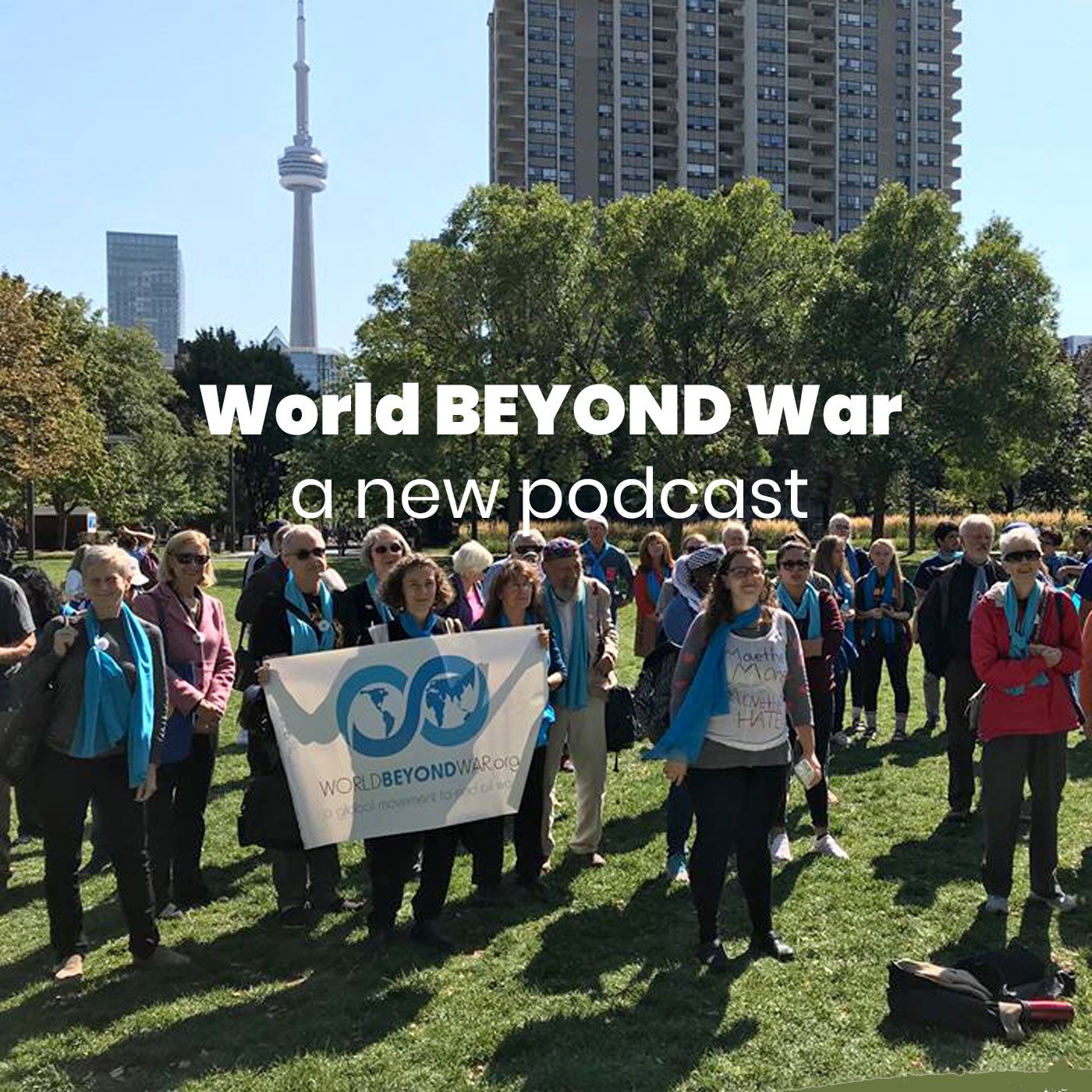
In this episode of the World Beyond War podcast, host Mark Elliott Stein interviews Nazir Ahmad Yosofi, founder of the Afghanistan chapter of World Beyond War. Yosofi describes his birth in 1985 during the Soviet invasion of Afghanistan, a period of intense conflict that led to his family’s displacement to Pakistan and Iran, where he faced denied educational opportunities. His father, an agricultural graduate and environmentalist, inspired him through projects like greening the desert in Nimroz province and building a zoo. Yosofi’s activism began with environmental work in Iran, later shifting to education after moving to India. In 2022, he reopened Jamaldin Afghan High School for Afghan refugees in India, graduated mostly female students, and organized events like Gandhi and Bachchahan Friendship Week. He contrasts the Soviet invasion, which fostered patriotism, with subsequent civil war and US intervention, which created ethnic divisions and economic ruin. Yosofi argues that global military spending—$14 trillion annually—dwarfs peace investments, perpetuating war. He calls for a global shift toward peace, quoting philosophers like Allama Iqbal and Saadi Shirazi to stress human interconnectedness. The chapter’s work includes translating non-violence communication courses into Persian and celebrating cultural festivals. Yosofi’s story underscores how personal experience with war drives his commitment to building a transnational anti-war movement.
[Music] This is World Beyond War. A new podcast. [Music] Welcome to Episode 48 of the World Beyond War podcast. I'm Mark Elliott Stein, and I've been part of the World Beyond War organization for several years. Some people may wonder what exactly a group like World Beyond War does, and in fact a lot of what we do involves building a global anti-war movement, transnational, available in multiple languages reaching all to every part of the planet. One way we do this is through our chapters in different parts of the world, and today's guest is a very special one. Nazir Ahmad Yosofi was born in Afghanistan in 1985. He has devoted his life to a serious study of the problems of war and the need to end it. In 2021 he founded the Afghanistan chapter of World Beyond War, which is based in Hamburg, Germany, and that's why I have an opportunity to speak to Nazir right now. Hello Nazir. Hello Mark. Thank you so much for having me. I would like to thank Gerita also, that inaugurated Afghanistan chapter in 2021. It's a privilege to be part of World Beyond War, because it is promoting a global culture of peace and work towards elimination of war. This is a global non-violence movement in the war. It's a great movement, great work, and I'm happy to be part of it. Yes, since 2021 we have done many things with the World Beyond War. It has been a platform and as a source of encouragement to continue what we are doing. And in 2022 we established, reestablished, said Jamaldin Afghan High School, which was closed after the collapse of Afghan government. We opened the door for over 300 students in India for the refugees who could not get education elsewhere. So we reopened it and then we graduated the batch of students, mostly girl. And now they are studying at the universities. And then further we celebrated for the first time the Gandhi and Bhatchahan Friendship Week. And also made a documentary out of that in Persian language, which is with the embassy in this school. And also we celebrated the International Day of Nauros, which is celebrated in 15 countries. And also we have a comprehensive article, research article on Nauros, how different cultures, different countries celebrating this festival. And also we were part of our peace move, which was on June 26, 2022. And where we said no to war and years to cooperation. And similarly our chapters did many other things. For example, we started a course with the Gandhi Bhatchahan, with the Gandhi Smriti and Dashan Samit in India teaching around 100 Afghan teachers and students in India and other part of the world about non violence communication. And we also translated the whole course in Persian language for other to access. So there are so many things that the time will not permit me to explain what we did after becoming part of the what beyond war. Well, we're so glad to have you. The first thing you said is you thanked Greta. You're talking about Greta Zaro who has really been part of World Beyond War as long as I have, which is several years. She is the person who keeps our chapter program running. And anybody who's listening, please do go to World Beyond War and look at our map of chapters and affiliates. And you'll see why it is so important that World Beyond War is a global organization. In my opinion, we're not going to end war any other way. If each of groups of activists are working in national silos, and I'm only working with other so-called Americans, and you're only working with other people from Afghanistan or other people in Germany or Europe, we're not going to do it. We have to work together and it's a pleasure to work together and it's a pleasure to meet you. So you have done a lot of really special things. You have a you have a unique background before you tell us about the schools that you've built and the education that you help people get. Let's start at the beginning. You were born in 1985 in Afghanistan. Now for me, I'm here in Brooklyn, New York. When I hear the word Afghanistan, I barely even have a mental picture. Can you can you sort of paint me a picture of where you grew up? Thank you so much for all kind words. Yes, I born on 25th December 1985 amidst the invasion of Afghanistan by the Soviet Union. And it was not a very fortunate time to see the invasion. And then we lived to civil war in the Taliban and then we forced to displace within the country and then we forced to go to the neighboring countries. So my education got disturbed apart from mentally and other pressures. My education got severely impacted. But then with the hope of better life and education, we went to Pakistan, but they're also at the time. More than education was denied and then when we went to Iran and Iran also, it was I was denied the right to have formal education and Iran in school. So all the tanks goes to my father that he tried to teach us at home or some other teachers to teachers. So when we went to when I was in Afghanistan and in Pakistan, it's the environment was not that much green, but then we went to Iran and we saw it so much green and beautiful. And my activism started with greenery. So we with the environment. So when we came when when I was in Iran, then we tried to in 1999 and 2000, 2002, 3, we tried to green our province. So we brought so many seeds and all and then we green the started with greenery and our province. Then people copied the same thing. So now everyone has a garden. It's like tell me about Nimrods. What is it like to be there? Yes, Nimrods literally means half day because it is a desert area and sometimes it goes above 50 degree, the temperature. It's very hot. And we have very less rain and it is and then we have some fresh water coming from north of Afghanistan to that area, but then some water is going to Iran. But now people are trying to make it again because there was seven years of drought. Now we have some fresh water coming down and then people started again, greening the. So when you say green greening you're referring to actually greening a desert right is that what it is and that's the exceptional thing that involves irrigation. So this this was actually a formative experience for you then. Yes, because my father studied from he graduated from Kabul University from agriculture department. So he he is very good into all and he is the only one who made the zoo, not the garment, but he individually he made a very big zoo in garden. Wow. So for the schools and universities to come and then have functions and programs. So and then when and then also I tried to I also send jujuba plant is a plant which is adoptable in places like Nimrods. We took it from India and India also they're experimenting how to green some desert area in India. So so we are also trying to green those area with jujuba plant. It's a it's a very adaptable to the temperature and and and and and salty water. And it's very commercially very a viable product like the oil is very expensive and it has market in Europe. So I explained that and then also when when I came to India in 2007 to 10 for my higher education, then I you know I got the idea that to let's work on education.
then I went back home because as I told you, I was denied more than education. - Yeah, well actually before we get to India, can we stay with, can we stay in where we were before? Because I want to take our time and go slowly through each of these. So, you know, I'd like to stay around 1985. Actually, first I want to ask you mentioned that your father had built a zoo. So, was your father an exceptional person? Tell me about your family background. - Oh yes. My father is exceptional because he's coming from a very poor family, but he tried to contribute to the society a lot. He did his degree from Kabul University in agriculture, then he did his masters from Kiev, Ukraine. - Right. - And from Kiev, Ukraine. - Yeah. - How interesting. - And then he tried, he built, he worked in environment, and then he built many factories combining the Pakistan, China and Iran system bringing a system together for producing bricks for building, because in 2003, we did not have such things. And then he tried to produce mineral water, then also, then many other companies like Ice Factory and then also invited other companies from Iran to come and produce their, he has so many projects to do, but he always says that I work as a worship for me, and age is a number. So, he has been a teacher for me and an inspiration, and a friend also. - Wow. - So, we have just on many issues, loose of the time. - That is really nice to hear. - Can you tell me, you mentioned that when you were born in 1985, the Soviet invasion of Afghanistan was obviously the crisis that surrounded your childhood. Now, as I understand it, I don't know much about this period, and that's good, because our listeners also probably don't know much. So, it's good that I don't know much. The first thing I want to ask is, as I remember it, I thought the invasion was around 1979 or 1980, or what can, you know, before you were born. So, I was kind of surprised to hear you say that in 1985, it was still the biggest crisis, because I suppose in my ignorance, you know, here in America, I did not know what was going on in Afghanistan in 1985. I thought the war was five years old at that time. Can you tell me what I don't know about this war? - Yes. About war, you know, and it is your right. It started in 1979, but it finished in 1991. It continued, but I was born in midst of the war. - Right in the middle of it. - Actually, it was not that much intensive. But it slowly got intensive, because then what happened, the Mujahideen got support and weapons and all, then they started fighting the Russians. So, slowly, slowly, it got intensified. By 1985, it was okay, still okay, but then '86, '87, it got worse. And then by 1990, then Russia withdraw from Afghanistan. So, war is something, you're right, if someone is going through, then it's different. I can have different understanding of the war, because if you see today, if we talk about war, according to World Economic Forum in 2021, they said that the conflict and violence cost the world 14 trillion per year. So, and then it is equal to, it is equal to $5 per every person every day. So, it means if we end the war throughout the world, it means every person will have $5. - Huh. - So, and then how much we are spending on peace or peace activities? It is in the same year, it was $15 billion. Imagine, $15 billion is equal to 0.12. - Yeah. - It's not even one person that we are spending on peace activities or keeping. - Absolutely. - So, imagine when the world is enlisting so much on military, on violence. So, then what we expect, if we spend more on peace and peace activities, then we will see world everywhere. Now, we see war everywhere because our spending is on war, our motivation, thinking, people are working in the factories for military. So, that mentality, now we have is more warrior mentality, a violence mentality because the spending, because the people are involved in military production and all this. This is, and then it will, it's not like case of Afghanistan, the invasion of Afghanistan by Soviet Union. And then all countries directly or indirectly, they are, they are invading other countries. They are trying to suppress other countries or minorities within the country. - Even if there is no war invasion, but still you see people are suffering within the countries, all over the world. Because we are not spending anything on peace activities or, you know, on peace related initiatives. So, this is, well, obvious. - That's very much aligned with world beyond war's whole message, which we really try to emphasize the positive benefits of peace. And we hear, in the United States, we hear so often about the jobs that are created by war. In fact, the United States military is basically a jobs program. It's too bad that we can't hire people and pay people to help the world instead of cause mayhem and death. What would you say is the cultural context that you understood of war when you were inside it? In other words, every war, as you're saying, every war is an economic imperative. Unfortunately, every war is a profit motive. Unfortunately, on the human level though, every war is a confrontation with your, with other human beings that inserts violence where there should be happy coexistence. So, what I'd like to ask you about, and this is both, I'm talking about both the Soviet war in Afghanistan and the United States war in Afghanistan. What is the cultural context of that war, as you understand? What is it that touches people's hearts to make them fight wars? It's not just money, you know, if we do understand that wars are profitable, but people fight wars because there's some cultural imperative. How would you describe that having lived inside it? Thank you so much. It's really a nice question, and I would like to answer. War is, if I can describe it as a darkness, war is not only impacting the infrastructure of a country, it's impacted the environment, the humans, the animals, and also culturally, which is not visible. If we take the case of Afghanistan, you see the last 40 years of war changed the culture of the people. The culture is different from now. If we compare the Afghan culture in 19, 20, 30, 40, 50, it is, it was much open, much better, which we cannot compare that tolerance, that coexistence, which was existed back then with the last 40 years of war, after the invasion, so we cannot compare it. Now, the people compete with each other.
reasonably they are they do not like each other they do not intermanger and then all of them want a different country they just want to divide on the basis of the ethnic group because the war is created that mentality everyone want something for them there's all the everyone is more more list they're depressed they are poor you you will not believe the Afghanistan as so rich it has it has more than a trillion treasures people are walking on but because of the war despite of having all the natural resources and then people are poor people are suffering and this is the result of the war and here I would like to say that one person Alama Eqbal Lahuri philosopher and poet said that he says that peace does not mean surrounding or compromising on principles but rather finding common ground and mutual respect I like that would you would you please send me the name of that philosopher I'd like to know yeah yeah he's Alama Eqbal Lahuri so I mean even now together there is a war with Ukraine so if our leaders set together and then and then make understanding that okay so let's end this suffering this war because there because the war is impacting it's in Europe but it's impacting us for as a country like Afghanistan it's well we feel the impact enough Afghanistan Ukraine war Ukraine war but some people said no it is Ukraine war what should we do but it is not true there is another poet Sadbishi Razee from 13th century Iranian poet he says that his poem is human beings are members of a whole creation of one essence in soul if one member is afflicted with pain other members will uneasy remain if you have no sympathy for a human pain the name of human you cannot retain I mean we are interconnected it is not it is yeah it is not that we think that okay this is not my war this is not his war but it is impacting directly or indirectly and similarly Jidu Krishna Modi another philosopher Indian philosopher he says that we are not separated from from the world we are the world and our problem are the world's problem so I absolutely I couldn't agree more with with all of these things and in fact you know I open this episode by emphasizing that world beyond war is a global organization and one of the hardest things from my point of view is is simply getting people to have a world view you know to look at themselves in the mirror and see a planet because we you know we are the representatives we are making decisions on behalf of an entire planet what I have observed from the study of war is that war generates hatred war war war makes future coexistence less possible because the after effects of war is feeling number one that your ethnic group or your cultural group has been victimized and deserves to get revenge secondly being proud of your ancestors who wore uniforms and carried weapons and saying well my ancestors did this so it must be my Dharma to do this as well which is you know clearly not a good way of thinking but I think is certainly in the United States that's very prevalent many people here in the United States and I think it's a real war because they have pictures of their parents in uniform you know that's their images of their parents and you know it even makes me think that your father was a piece builder your father was a you know somebody who who gave to the world and maybe that helped you give to the world so war is a legacy of hatred and I think it's a darkness what I always emphasize is that war is contagious you know war causes people to catch war to fight war wars so I mean I see very much in a zoo that you are focused on a positive message and I am too as well at the same time you have seen you have experienced so much more so if you don't mind I want to stay in the conflict zone with you a little more and you know it's easier for me I can find more people to talk to me about solutions but what what I'm really curious is that growing up in a war zone did not inviter you did not did not did not make you feel hopeless so I want to I I wonder again if you can help me understand during your young childhood your homeland was ravaged by a war with the Soviet Union you then experienced the United States war after 2001 you also you know and when I say experience you were often in other parts of the world but still representing this culture how do you compare the Soviet Afghanistan war then there was the Taliban period then there was the United States war you lived through you lived through really through more horror than many of us how do you how do you understand all of these as a in context with each other does that question make any sense yes yes I I lived the Soviet invasion of Afghanistan and the civil war and then the Taliban regime and then also I was there in the last 20 years during the invasion of Afghanistan by the United States or inter or military intervention what we call it it doesn't matter but it was an intervention so all this four four five era in Afghanistan was different for example this this Soviet invasion of Afghanistan impacted the Afghan people differently because that invasion infused patriotism in Afghans to save our country from invasion in that and and and and yeah this one problem was this that infused so much patriotism at the same time brought the people together right so but then with the withdrawal with the withdrawal then because there were so many groups attacking the Soviets so then why the problem was after the the withdrawal there was a vacuum and then there was a complete overpower between the different groups and may I slow you down here so what we're talking about is when the Soviet Union collapsed basically the Soviet Union ceased to exist how did how was that experienced in Afghanistan you were in Afghanistan you were in a war with the Soviet Union and suddenly your adversary your invader suddenly ceases to exist that's how I understand it what what was it did the war suddenly end you said there was a vacuum did that vacuum occur suddenly yeah yes the vacuum was suddenly because in 1991 when the Soviet withdrawal 1992 there was a civil war literally the Galbidin on the one side and Galbidin Hickmet on the one side and Rabbanyan on the other side they they were just dropping bombs on each other the war yeah the war was on the Soviet but then now it came we were in Kabul so we were in the center of the Kabul Macrion so from there they were bombarding or firing with the rockets and from there so we were in the midst I want to understand I want to understand this was there any hope or as a result of the war
effort to unify the country without a civil war, because it's so tragic that, against Afghanistan was invaded, and then your adversary disappeared, one would think that that would be a good outcome for Afghanistan, but instead Afghanistan then collapsed into civil war. Was there at that time a hope that the country could stay together without a civil war or was civil war absolutely inevitable? There was, of course, there was a hope, there was a hope in international community, there was a hope with an Afghanistan that with the withdrawal of the Soviet Union, Afghanistan will have its independence, it will have a peaceful, again come to peace in coexistence, but the problem is the problem existed because our neighboring countries did not like a unified and peaceful Afghanistan, because initially there was between international states like the Soviet and the United States fighting on this land and then when their fight is over, so the Soviet and the United States went their way. Now it was time for the neighbor and regional players to play, so then for them, I mean it did not serve there, of course the whole blame will go on our Afghan leaders, because as I said when there is war, the psyche of the people, including the leader changes, then because they were for years and years, then when war is finished they still want to fight, even the enemy is not existed, the enemy is not there, but still because for many years they liked and they enjoyed fighting, fighting, now there is no fight, now they start fighting with each other. Yes, that is the darkness that you spoke of. If I may I just want to interject something, and by the way I think you can tell and listeners of this podcast know I consider this study of history very important, but sometimes I wonder here in the United States why we had a civil war, why we needed to have a civil war to end slavery, I don't know how much you've studied the United States, but between 1861 and 1865, we had a civil war to end slavery, other countries ended slavery without a civil war. It's actually a really bizarre mistake to think that you need to fight a civil war and kill tens of thousands of people to end slavery, even Russia ended, served them in 1863, England had ended slavery long ago, what's the answer, why did we have a civil war? Well, it was because we had had the so-called Mexican war, a generation earlier, and the Mexican war had been a huge success, and there were so many soldiers in the United States in the south and in the north who had just had a great time in the Mexican war, and these were the soldiers and the generals who created and fought the civil war, and for them it's because war was their occupation, so that is making me think of what you said when you said there was a tendency, a habit to go to war, when you raise a society of soldiers, you know, in generals and war profiteers, that war is going to be the only thing to fill the vacuum with, so yes, oh my god, I would like to know, and by the way, I would love to talk to you for 10 hours, I would love to do 10 episodes with you, but I can't, so we'll have to go more quickly, how did you experience September 11th, 2001? What was your experience of that day? Or what happened after that day? Because to me, I almost am embarrassed to say this to you, but for many Americans, they didn't hear the name Afghanistan until September 11th, 2001, many Americans barely knew Afghanistan existed until September 11th, so I'd like to know what your experience of that and everything that happened after was? September 11 was a shocking for us and for the world, so it was really shocking for in two ways, one, a superpower with the advanced technologies, how it was possible that that small organization can, you know, attack the superpower. I mean, this was shocking, and secondly, of course, it was shocking that how is it possible that they are going to kill innocent people? I mean, there was war always, but not in this way, I mean, going killing innocent people, but this was really shocking for us, but at the same time, if I say most of Afghans who were in different countries, they could not go to their country, there was a hope that now the US, well, you will, US will come and then we will get our country back, because there's a kind of mix of feelings that, okay, it was not good that happened, but now at least people understand that, what we are suffering, what we are going through. What did you think of the Taliban government? And what did people think about it? Was it a popular government? What I hear you saying is that after 2001, there was actually a positive hope that United States intervention would help the Afghanistan government. That's what I'm getting. And do you know that that is very surprising to me? Because I am here in 2023, I am so used to seeing the damage that the United States does around the world, you know, from Iraq to the Middle East, that the idea that the United States would be helping. So there is a lot of pro-American sentiment there, there is a lot of positive feeling towards the influence America could have had, or there was back in 2001. You know, the Afghans always resisted the intervention or invasion, whether it was the Soviet or any other in the past invasions, but this time the Afghans supported the US and its allies and Afghanistan because the government was not a popular government in Afghanistan. It was a tie of the regime because people were not able to live their life, no education, no work, no development. There were so much restrictions on their movement, speech, even what they want to do. So this for the first time, there was no resistance at all from the Afghan population against the intervention. So you understand when there was no resistance, it means in a way the Afghan people welcomed this intervention. But why the problem, but in the last 20 years we did development, democracy, human right, woman right, freedom of speech in media, participation of women in different sectors of the government. But again, the war lords last time also war with each other. This time also in last 20 years they did not come together. They did not come together understanding and working for the future of their country. So all of them were thinking about their own benefits, and this created a problem and ended again the same way happened in 1990s. Were you hopeful that it would be a success? It's funny that I asked the same question about an earlier war. So here I am asking the same question again, but was there hope? Yes, there was so much hope that this time it will be a success and it was a hope among the international community. Everyone was thinking that yeah, this time because Afghanistan did a lot of progress on different sectors. For example, in terms of free speech in media it was relatively more open than our neighboring countries. And in terms of
of women and parliament was more if we compared it to the neighboring countries. And in terms of development, it was fast growing. We had the economy was growing. The education was very good. And I mean, it was a shock. It was sudden. No one thought that something like this may happen because everything was all right. Yeah. Suddenly, everything got reversed. I mean, now it will take another 10 years to bring it back to the position of 2021. Because the whole system collapsed. What is your positive hope for the country of Afghanistan? What is the best thing that can happen for this country? The positive thing for Afghanistan to happen, there are many things can be happened. For example, many countries went through hard times. If we take example of India, India was invaded by Arabs and then by the United Kingdom, British Empire and France as well. France, Portugal. But then the Indians, what they did, they always went over like invaded the country. All of them, they stayed there. They cooperated, they learned the language, they learned the technology or the system. And then slowly, slowly build up on that. And today, you see India is a very successful country. And in terms of economy, it's the fifth largest economy in the world. In terms of, it's a self-sufficient country. But in our country, in Afghanistan, when the government is changing, for example, last time in 1990s, all people fled, went to other countries. And then there was a little bit peace, everyone came back. Now again, there is a problem, everyone is going out. So in this way, we cannot make positive changes because you need to stay, whether it's like enemies entering your country, whether they're wrong people in the power. But if you stay there, if you work, if you contribute slowly, slowly, slowly, the problem will solve. But if you live, I mean, you have an issue with yourself and then you say, "Okay, you ignore. It will not go away." But you need to sit, you need to hear what Equalauri said that you need, you must cultivate peace within yourself before extended to the world. So absolutely. So this is what Afghans do not understand that, "Okay, set, start working, start contributing." And one day, your country will have progress, your country will have less issues. But this is what our people, we do not understand, unfortunately. What is the work you're doing right now? Right now, I'm working on a project re-assisting European Development Assistance in Afghanistan from 2016 to 23. And is this in the context of European Union or Europe? European Union and Kimimba states that were seriously engaged in Afghanistan. Yeah. So this is a very important project. Sure. It will help the policymakers and also fill their gap in the literature. And also, at the same time, I'm trying to publish my book. Did my PhD on European Development Assistance in Afghanistan with a special reference to Germany. So that is also in the pipeline to be published. And at the same time, I'm trying to interview many people who were engaged in the Development Assistance in Afghanistan and the European Development Assistance to understand what was the issues with the Development Assistance because we need to know the perspective of the Afghanic admissions and practitioners, as well as the European to understand some listens to make Development Assistance more positive in the future. Is there a particular message of your work about the ways this can be made better? Yes. See, the Development Assistance can help a country when you provide it to the nation for strengthening its institutions, then the government function. But when you outsource the services and you do not, and you bypass the institutions, then what happened, then the government will remain weak, even in the eyes of its citizens. So you cannot expect the government machinery to work properly if it does not have the resources to run services, if the services run by others outsource. Absolutely. Then of course it will remain ineffective. So this was the case with Afghanistan. What are you talking about, like financial education, healthcare? Yes. For example, before 2021, there were so many NGOs providing healthcare, education, vocational training and other things. But with the collapse, all the NGOs got closed and then because the government, even before was not able to do the things, now it's done. It's stopped. Yes. So this was the mistake of the government, as well as the Development Assistance that it should have been more with the government because it is like this when you give fish to someone, to you feed him for a day. If you teach him how to fish, then you made his life. So when you outsource the services which government should do, so one day you do not know when it's there to give that service. So the government already not able to do. So it's the collapse. And this is a very familiar story. And interestingly, as I understand it, when the United States went in with mixed intentions in 2001, that what we were trying to teach, the idea was to teach how to fish, but somehow it devolved into an interconnected series of outsourced relationships, I guess. Because I thought, you know, like what you're saying is something that I think many people would intuitively agree with. And yet the European powers and the United States screwed it up. Tell me about when you do the work you're doing, are you interacting with other people from your background or from Central Asia? Are you interacting with diplomats? Are you interacting with educators? What do you do on a day-to-day basis? Yes, thank you. Now right now I'm working on European Development Policy. So in our institute, we do not have those who are working on this area. But I am trying to find people from similar to my background from other institutions. Yes, I am interacting with academicians and experts on European Development Policy, as well as diplomats, which is part of my research project. So I think because I'm new to this place, I'm trying to find as many people as possible to find them, discuss with them, interview them and collaborate with them on similar issues. So it may take a few more months to find my way out. But still there's so many things to explore here. I'm trying to learn the language and trying to understand different institutions. So in here, do you speak many languages? Yes, I speak Derri, which is similar to Persian and Pashto, Balochie, Hindi, English, and a little German. I'm trying to learn German. I have read about your inspiration.
inspirations and some of your inspirations are exactly the same as mine. I'm including two big names Mahandas Gandhi and Martin Luther King If you ever ask me about my inspirations those names will show up very quickly and I saw in the biography you sent me that That is true of you as well. What what are your other inspirations? Yes, thank you my inspirations One is Han Abdelrafar Han He in Europe people call it prophet of peace He Says that the only solution is love and non-violence I have his code without it He says the only solution is love and non-violence Without it humanity will not survive He says that non-violence is the weapon of a strong strong people use non-violence weak people use violence so And and and he always He said that I am the servant of God so he He focused on education on peace on development on how and how many in coexistence and he established these Madga organization like what we have what beyond war that to end the backwardness electricity and Bringing peace in the community and he said we need to give our one hour of time just to to Social work. That's why I am part of the inspiration come from This his organization that he said we need to give at least one hour of our time to society and social work. That's why I'm part of What beyond world that I'm so grateful to him then Thank you so much. And then of course Molana Jalaldin Berbalhi Rumi from Afghanistan. He He has been in inspiration He says that you are not a drop in the ocean You are entire drop in the house. Yes. You're in your entire ocean and a drop Yes, you're talking about you you you you're talking about Rumi. Yes. Yes. You had used a longer name. I didn't really use your speaking of Rumi. Yes Say that again You are not a what is that not you are not a drop in the ocean? You are entire ocean and a drop. Oh my god. I love that in other words. We are a microcosm You are There is yeah, so it's kind of you and I you and I are on different parts of the world But we're very like-minded. I also I think about these types of concepts a lot So I have delved into the concept of the collective self, you know Carl Jung is Carl Jung part of your world the psychologist Carl Jung yeah You know to me Carl Jung and what Rumi said That's sort of my my window into it Having a lot of experience with psychology the idea that the human soul is is a collective soul within a single body We have the bodies of individuals, but our soul isn't necessarily limited to the physical Presence of our body, you know again that that phrase we are the world Which and it's a funny thing you had used that phrase I had a previous guest once a young woman From New Zealand who said that the song we are the world inspired her so much that she became a peace activist So it's funny to hear you use the phrase we are the world to That's what Rumi was saying so yes. Thank you for reminding us that the great poet Rumi Yeah, was it was it was an afghanis was he in Afghanistan? Yes Molana Jeladin Belchy Rumi was an Afghan and also Han Abdul Gaffar Khan profit of peace. He is an Afghan and And and I have how I'm connecting Rumi is the same with With another thing like for example, we say that Helping one person may not change the world Okay, so sometimes we think that okay if I help some one person it will not change the world But But if you change if you help one person you change the whole world for that person Yes Love it. Yeah, so this is what I'm trying to sometimes what I'm trying to do I understand that a small things that I'm doing I'm not changing the whole world But I'm at least changing the world for a few people that is what I'm satisfied For example, I wrote a book for the Afghan youth. Okay book. I did a get it to Afghan youth It may not change the whole the youth in the whole world, but at least it will change Few Afghan youth so I should do that we should not think sometimes people say Yeah, and that okay if I do this so what what is the difference if I if I do some social work what make the difference Or if we work for peace what what is the difference but One by one if we if we all think this way that okay as a person I'm helping one changing the world for that one person and then collectively if we all think Then one day the world will be a better place So true so true. I I love the messages you bring Nazir you you really have a lot to say How how are you received where you are how how does it when you say things like this in your everyday life What type of response do you get? Yeah, I Get good responses. I mean for me This place is like like heaven people are so nice when you say this place. What is this place? My workplace the city that I'm here in Hamburg People the environment it's it's it's the the environment is so clean No pollution so I started running and then I run a whole marathon Marathon man, I hold a marathon because the weather is so good and you breathe fresh air so And people are so nice so kind the environment in the office outside It's really I'm enjoying my my my life first I mean it's it's a first-time experience in my last 35 37 years Well being in Hamburg is different to you then it's a whole different world Well, you know by the way Viewers can't see when when we speak across across the ocean We see each other's faces even though we're only showing audio on the podcast and I see this this very beautiful smile on your face and I know it's real at the same time I have to keep up bring keep on bringing up these these tragic things about war and one thing that occurs to me is that Hamburg the city you're in was Was completely devastated by Fire bombing one of the worst fire bombings. I mean Hamburg like Dresden like Hiroshima Like Tokyo like Nagasaki was completely destroyed in war and rebuilt Does that I'm talking about World War two obviously um That Hamburg was one of the first cities to be destroyed by aerial bombing Does that come into your you know and again when I see the smile on your face I don't even want to bring this up and remove the smile from your face and yet this is an anti-war podcast I can't to speak to somebody in Hamburg without asking Because the legacy of that Do you feel the legacy of that? Yes, I went to Lubek There is a small city Close to Hamburg. It was destroyed totally destroyed and people could not return to their Place Even after six six seven years and it's totally rebuilt When when I was there to Lubek and I saw uh And I saw that okay this rebuild and and and some memories and And I saw some pictures that people were not allowed to come to their place because it was totally destroyed It reminded me of bombardment of of of of of 1992 1990 We then a rocket came to our house Hopefully we we one minute before the rocket we came down and Yeah, so it's it's always been something when a question is coming about this or when I see such places that bombard it so the whole Pictures and imagination and the way the thing
that I've been through to the war, it will refresh and you would get this time sometimes. Yeah, it is, it is sad to see that everywhere I go, I see that yeah, there was war. It's, it's not a good feeling. Well, you know, I want to, I want to say how, how much I appreciate you allowing me to ask my sometimes naive questions. You know, by the way, I, I had never experienced a bombing firsthand, except for one day of my life, which was September 11th, 2001, that was the only time I ever saw an act of war. You have seen many, many days of your life have been surrounded by acts of war. I would like to just ask as somebody who's come to world beyond war, only in the past couple of years, and as somebody who has seen so much in your life, what do you think of the world's anti-war movement? Are we effective? Are we, you know, what do you think of the anti-war movement as it stands right now? I think as we said, there are so many organizations around the world working for making violence and making war. So it is always good that at least we should have some organizations such as what we are to say that this thing is wrong. The war is wrong. The war is destructive. And then at least the war beyond war movement is, is a global movement for peace. And, and I really appreciate what what beyond war is doing because it's not only, it's not only at one level. We have conferences, advocacy, research, training, podcasts, conferences, books, publications, and, and then conversations. And then you have chapters in different countries. And then you support when there is, and then people discuss on some issues, for example, awareness among the people, it's, it's, it's really impactful because people might not know that a simple thing, for example, if you take changing your food habit, how much impactful it is for the environment. So most of the people today do not know the cost of the war. Most of the people do not know how much you are spending on peace activities, how much time you're, investing on peace activities when our investment mind and everything, all the time we think about war, violence, then how you think the result will be peace. So it's impossible. But Al-Britainstein said that it is, you cannot do the same thing and expect different results. It's not possible. We, in which the whole journey on war, military and violence, but then we expect that there should be peace among the country, there should be peace among the people. How is it possible? When I said that we are spending, not spending one percent of the budget that is spent on war, we are not doing it on peace. So 99% 100% is on war, military, violence. Then we expect that there should be peace among the people, co-existence. It's not possible. It's not possible. And then you see thousands of organizations for working on military, nuclear and all. But then we don't have organization working on peace, on coexistence, on culture, on environment, on many things. We don't have. So this is what I say that it's great that we have this war beyond war. It's still it's a draw. We are not going to change the whole world. But we are changing the world for a few people who are understanding, who are knowing what is going wrong around the world. This is what I like about this. And I think when the past we had so many great people movements, for example, Martin Luther King. If you remember on 28 August 1963, he come with his speech, I have a dream. And then you had Mahatma Gandhi in India promoting non-violence. And then you had Nelson Mandela in Africa. But now we are not having such great people, such great human. So now at least I'm happy that such organizations like World Beyond War and such other organizations such as World Beyond War are doing something. Otherwise, we are going to end the whole world. Yes. We're going to end their human existence. Yes. So this is what we need to do. This is our responsibility to at least, if we do not have budget, if we cannot make a huge impact, at least we should start from zero. Because it's only planet that we have. I mean, if we this mentality, we go to another planet, I'm sure we are going to do the same thing in that planet as well. Right. We have no right to try to reach other planets when we're busy destroying this one. Yeah, I also wanted to say, you know, what you said about the relative size. Or what when you mentioned this, I thought of the relative size of World Beyond War to the size of the world's militaries is like, as Rumi said, a drop of the ocean to the entire ocean. I mean, the annual budget of World Beyond War compared to the annual budget of the United States military or the world militaries is like a drop in the ocean compared to the ocean. But I do hope as Rumi said, we are a drop of the ocean that contains the whole ocean. But we need to, we need to save the ocean. The ocean is draining itself. So we're we're a pretty important drop in the ocean here, you and me and all of us we work with. Yes. Really true, really true. There are so many things to discuss. This environment is degrading every day on on daily basis, where 200 species are extending, you know, and we are producing plastic never before. I mean, it's over consumption of plastic, which is danger for for air, for underground, for species in the oceans. So the small habits, if we change small habits, then we we positively bring impact for the environment, changing the plastic using you, not using the plastic or not be consuming simply not consuming meat. It's bring a huge benefit for the environment. For example, when you 60% of the greenhouse gases, it comes from production of meat. Yes, beef especially. Yes. So and and then there's so many awareness that we should tell the people, for example, if you eat one kg of meat, it means you consumed 15,000 liters of fresh water. Because for one kg of beef, you you need to give 15,000 of liter of fresh water to produce that. And then you need to give so much food and nutrients, when cages to produce, I don't exact amount to produce one kg. So small changes in your habit, food habit or plastic habit you reduce using plastic or a small thing that you, for example, you do not, you reduce the population, the world is overpopulated. And when we have more population, we make more deforestation, because we need to make houses, we need to make more houses and when we need to more services, so everything is interconnected. But people say, they're independent, there is nothing independent here in this in this world, nothing independent. Everything is interconnected. Everything that, okay, this is first US first, America first, it's not possible. It's not possible. Absolutely. It is it is illusion that sometimes people say that I want to be independent. Then I say, how is it possible? Some, we have some people that they go to the jungle that, okay, I'm independent, I'm in a jungle, not dependent on anything. But I say, still you are dependent, even if you're in jungle.
They said, "How? I said, you're using the shadow of the tree. You're using the fruit or whatever. You are dependent. You cannot be independent." I love it. If we realize, if we understand that we cannot be independent, it is interdependence. The whole universe, not the humans, not the countries, not the globe, the whole universe, or universes, all are interconnected. Yes. If we have this realization, I think we understand, we respect, we don't see any difference between you, me, this, that, because everything is connected and we are one. Well, Nazier, I can't think of better words to end this interview with. I agree from the depths of my heart that we are interconnected. And that's why you and I are talking and that's why people are listening. We are trying to nurture these interconnections and build something together. So thank you so much for talking to me. Is there anything that we haven't talked about that we should, I'm sure there's a lot that we haven't talked about that we should, but is there anything you'd like to make sure we say before we conclude? Yes, if you allow me, I'll say one from Nelson Mandela that he said that no one won't hating another person because of color, background, religion, or whatever. People are taught to hate and if they can learn to hate, they can be taught to love. For love comes more naturally to the heart, to the human heart than its opposite. So it is really amazing if we work on promoting love, harmony, coexistence, understanding that we are connected and then it will grow, the circle. Otherwise, the world is going in a wrong direction, I think. Thank you so much Nazir, these words are exactly the words we need to hear and this is the message world beyond war is all about. Thank you so much for being a part of it. And I hope we'll see you at our, you know, more of our webinars and events, I think you really have something to contribute. Thank you for being our chapter leader. Thank you so much. [Music] [Music] [Applause] Thanks so much for listening to today's podcast. Our podcast is now available on iTunes, Google Play, Spotify, SoundCloud, and Stitcher. Don't forget to give us a rating. Visit worldbjohnwar.org to learn more about the social and environmental impacts of the war machine and get involved in the movement for a world beyond war.
Podcast Summary
Key Points:
World Beyond War is a global anti-war movement with chapters worldwide, aiming to eliminate war and promote peace.
Nazir Ahmad Yosofi founded the Afghanistan chapter in 2021, based in Hamburg, Germany, and highlights his work in education and peacebuilding.
Yosofi’s early life was shaped by the Soviet invasion of Afghanistan (1979-1991), civil war, Taliban rule, and the US-led intervention, leading to displacement and disrupted education.
His father, an agricultural graduate and environmentalist, inspired him through projects like greening deserts and building a zoo in Nimroz province.
Yosofi’s activism began with environmental efforts in Iran and later focused on education, including reopening a high school for Afghan refugees in India and teaching non-violence communication.
War has devastated Afghanistan’s culture, economy, and social fabric, fostering hatred and division, while global military spending far exceeds investment in peace.
Yosofi emphasizes interconnectedness, quoting philosophers to argue that war’s impacts are global and that peace requires mutual respect and common ground.
Summary:
In this episode of the World Beyond War podcast, host Mark Elliott Stein interviews Nazir Ahmad Yosofi, founder of the Afghanistan chapter of World Beyond War. Yosofi describes his birth in 1985 during the Soviet invasion of Afghanistan, a period of intense conflict that led to his family’s displacement to Pakistan and Iran, where he faced denied educational opportunities. His father, an agricultural graduate and environmentalist, inspired him through projects like greening the desert in Nimroz province and building a zoo.
Yosofi’s activism began with environmental work in Iran, later shifting to education after moving to India. In 2022, he reopened Jamaldin Afghan High School for Afghan refugees in India, graduated mostly female students, and organized events like Gandhi and Bachchahan Friendship Week. He contrasts the Soviet invasion, which fostered patriotism, with subsequent civil war and US intervention, which created ethnic divisions and economic ruin.
Yosofi argues that global military spending—$14 trillion annually—dwarfs peace investments, perpetuating war. He calls for a global shift toward peace, quoting philosophers like Allama Iqbal and Saadi Shirazi to stress human interconnectedness. The chapter’s work includes translating non-violence communication courses into Persian and celebrating cultural festivals.
Yosofi’s story underscores how personal experience with war drives his commitment to building a transnational anti-war movement.
FAQs
World Beyond War is a global organization that builds a transnational anti-war movement available in multiple languages, aiming to eliminate war and promote a global culture of peace.
The Afghanistan chapter, founded in 2021, reopened Jamaldin Afghan High School for over 300 refugees, celebrated peace events like Gandhi and Bachchan Friendship Week, and offered non-violence communication courses to Afghan teachers and students.
Nazir Ahmad Yosofi, born in Afghanistan in 1985, is the founder of the Afghanistan chapter of World Beyond War and an activist focused on ending war and promoting peace through education and environmental work.
Nazir's education was severely disrupted by the Soviet invasion, civil war, and Taliban rule, forcing him to move to Pakistan and Iran, where he was denied formal schooling until his father taught him at home.
Over 40 years of war changed Afghan culture from being open and tolerant to one where people are depressed, divided by ethnicity, and lack mutual respect, despite the country's natural wealth.
Nazir's father, an agriculture graduate from Kabul University, built a zoo, greened desert areas, and inspired Nazir through his dedication to work and community, teaching him the value of peace and environment.
Chat with AI
Loading...
Pro features
Go deeper with this episode
Unlock creator-grade tools that turn any transcript into show notes and subtitle files.
 PodcastTranscript AI