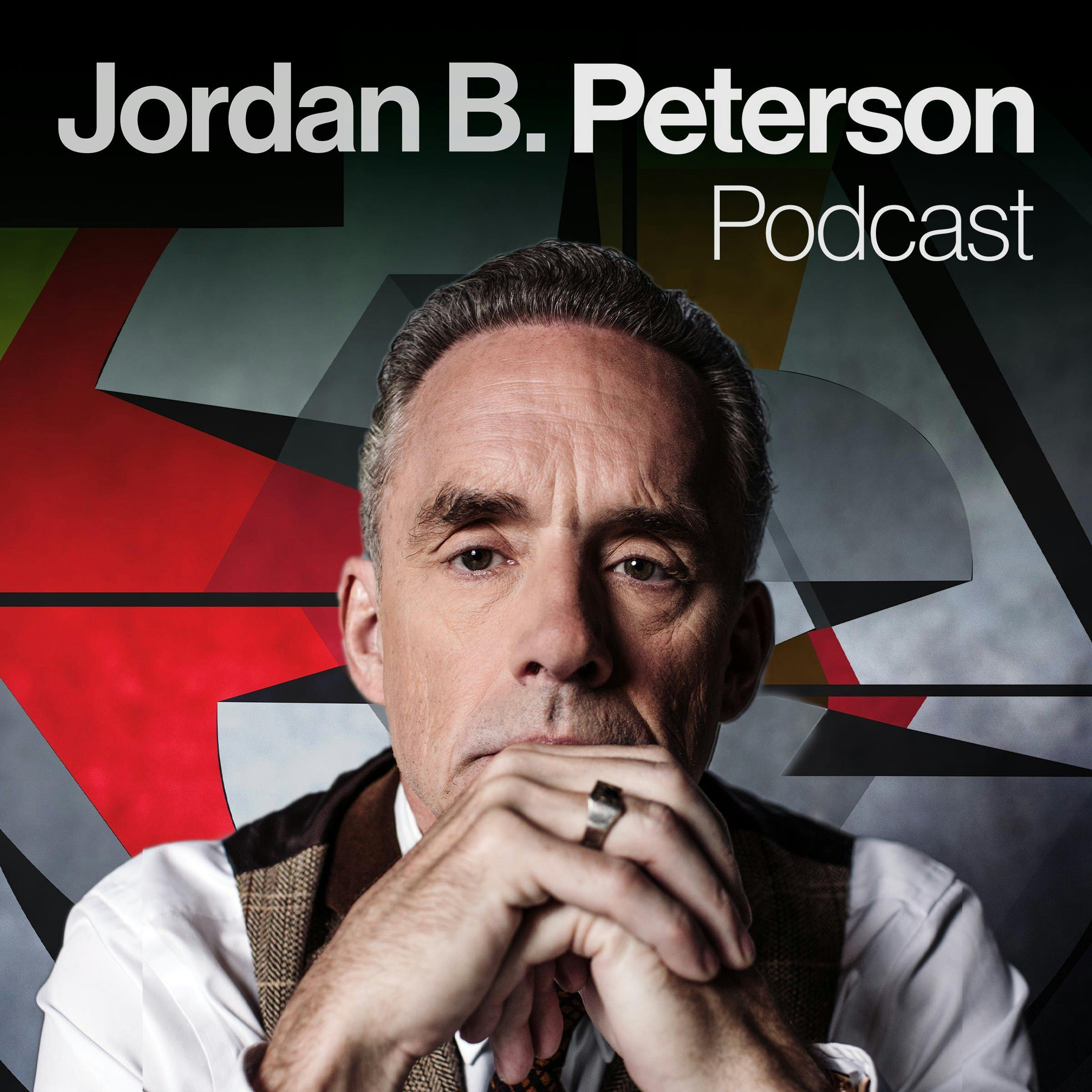
572. Navigating Education, Ideology, and Children | Answer the Call
59m 35s
The podcast explores the declining quality of public education, arguing it has become ideologically driven and ineffective, often failing to foster critical thinking or moral development. Homeschooling is presented as a more empowering alternative, allowing parents to nurture their children’s social and intellectual growth through personalized, values-based education. Key strategies include exposing children to diverse political and philosophical ideas, encouraging open dialogue, and observing school environments for ideological bias. Education is reframed not as passive information delivery but as a dynamic process requiring motivational framing and deep engagement—especially in art and critical thinking. Importantly, the discussion highlights that intelligence (IQ) is largely stable over time and not significantly improved by early cognitive training; instead, physical health, nutrition, and character development are more impactful. Ultimately, the episode emphasizes that true education must cultivate moral clarity, resilience, and the ability to think independently—skills that prepare children to navigate complex cultural environments like the “woke” mainstream without unquestioning compliance. The conversation concludes with a call for parents to take responsibility, evaluate institutions critically, and prioritize holistic, character-based education over rote learning.
what if a few minutes with God could change the direction of your entire day with pray.com you can begin each morning with powerful daily prayers inspiring Bible stories and messages created to strengthen your faith whether you need peace encouragement or a fresh start pray.com helps you make prayer part of your everyday life. Download the pray.com app today. Is it education or is it child warehousing? The answer is mostly it's child warehousing. I think that the K-12 education system has become is an irredeemably corrupt likely how do I raise my children with strong critical thinking and moral clarity in the cultural environment where awokeness pretty much became cultural hegemony most of the time people who are educating have no idea have no idea what literatures for you're gonna be able to motivate teach people if that's how shallow your knowledge is what you're doing as a teacher often is setting the motivational frame and dramatizing this grips me this is important it's vital here's why that's the world manifesting itself in accordance with your interest. Hey it's Michaela and I'm back with my dad for answer the call where we take live questions from you guys and dad mainly answers them but I'll pipe in from time today. Today we're talking about a topic that should matter to everyone how do we navigate the modern education system so this should be spicy. Up first we have Joshua and Florida. Hey Joshua I good to talk to you guys both of you we have been homeschooling our older son since 2020 he's almost 10 now I'm super happy with the results but I'm kind of biased and very close to it and I was wondering if you could perhaps steal man the case of sending sending him to a traditional style school maybe now maybe when he's older just so I can be more honestly doing the cost benefit analysis it's not about me it's about him. Well you are already at least to some degree considering him in the equation because you said that he's an avid you implied that he was an avid and and satisfied participant in what is happening and so that's a certain amount of objective evidence let let's say assuming that you have other observers who agree and that might be your wife what I would wonder immediately is does he have peers and friends and is he participating in anything that's part of the broader social contract outside the family extracurricular well exactly exactly and like the only potential benefit to him going into the dismal school system is that he meets people his own age he starts to socialize with his peers and you can assess whether he can conduct himself in the broader social world like your role as a parent right from the beginning is to help your child encourage your child to become maximally socially desirable and I don't mean obsessed with popularity I mean the sort of person that other people rely on and open doors to and your concern which is valid is that because you're so close to the situation and you're his father and you enjoy what you're doing which I think would be a good thing is that you might be biased in your evaluation of his progress well the way to test that is to see how he does in the broader world with his peers with other adults with with social organizations that you have no part of he could get that with sports he could get that with clubs he could get that with a friendship group like there's lots of social organizations that aren't the school he could get that with church so the first question I'd have for you is how do you think he's doing socially he's doing well but the only problem with that is it means that it's like a full-time job for me to make sure that he's got access to a co-op and to temple and to the chess club and different camps over the summer but that's fine it's it's my job I do want to get out of the business of being in the middle of setting up everything and encouraging him too much because he's almost 10 he's at some point you have to figure it out for yourself he has a phone number without internet access and he's got to be pushed out of the nest and like look you call these kids you you go over to their house I'll show you how to get there that sort of thing hey I've got nothing to say about that except yeah do that but you know you're you're okay so basically what you're reporting is that he seems to be interested in and in principle thriving in these other social communities but that that's an additional demand on your time an organizational demand and you'd like to turn that over to him over the next few years well that is what you should do so that that seems just fine to me well there isn't anything about what you've said so far that raises red flags for me you know I don't think we're the people to argue on the other side of things either that sounds like a way better ideal than public school yeah I guess the last thing I would ask you is what makes you think that he is progressing educationally at least the rate he would in an ordinary school which is a pretty damn low-bought bar let's say but you know how are you informing yourself with regards to his academic progress because I know exactly what he's able to do with the subjects that I do have time to spend with him and I see what a lot of things he likes to do with his own time which is watch YouTube science videos and read biology books and that sort of thing right and that's being prompted at all of course he doesn't have internet access so he's asking me to can I see this video can I see that video yeah you you hit the nail on the head it really is just the social aspect to it he's the type of kid who probably needs a lot of time with kid to figure out how to deal with other people who are different yep yep well that's so so look it sounds to me like you're focusing on the appropriate concerns and that you're happy your son is happy you want to turn more responsibility over to him great the what you the amount of responsibility you want to turn over to your kids is all that they can handle but no more than that and that's the best compliment you can give them because basically what you're saying is look kid you can do this and because you can you should I'm not going to take it from you and that'll also free you up to do the things with him that only you can do you know it isn't obvious that you should be serving as his scheduling guide you know for the next five years when it appears that you have better things to do with your time that would be more efficient for him to anyways there wasn't anything in what you said that raises any red flags for me the issue is can he make the transition from the homeschooled environment to the broader world and you seem to be facilitating that and that's the issue to concentrate on over the next you have years to do it he's only 10 also school doesn't necessarily help you transition to the real world either no right right right definitely yeah I would have killed for homeschooling I can remember in grade four sitting getting in trouble for reading at my desk because the quality of reading from that teacher was so poor that I was reading at my desk or counting the dots in the ceiling tiles to figure out how many dots that were on the ceiling yes I'm fully I'm fully conversant with with that degree of staggering boredom did you ever make a pile of eraser shavings just to see how high the pile could go anyway but I got in trouble a lot for reading behind I that just you get in trouble for reading yeah I know it's like I'm reading faster than you yeah I read it again oh my gosh yeah I know there's a there's the voice of a teacher hates children learning what about the spelling books where you have to do the exercises we had the spelling but you had to the exercises are like 15 pages of exercises which would brutal for somebody who already knew how to read but I got really fast at it because you had to do it yeah thank goodness that's only you think that's a life when you're little it's a long time it's a long time and it takes what two hours a day to in theory I doubt it even takes two hours to homeschool kids to teach them as mostly if you think about school as child care then you can wrap your head around it more that it's child care set up under an education facade then you're like oh okay that makes sense but if you're like no this is education then it doesn't really make sense yeah yeah definitely the problem with Facebook Google and others so-called free services is that they aren't really free at all you pay for them by letting huge tech companies record your activity and sell it to advertisers as the saying goes if the product is free you're not the customer you are the product the digital version of you is being bought and sold by Facebook's real customers and who are they you never They can be marketers who want to sell you something, lobbyists who want to change your mind about gun control or even-
even foreign governments who wanna influence how you vote. If you don't wanna be a product that's bought and sold, you need to start protecting your privacy online. And the way that I do that is with ExpressVPN. If you don't protect your online privacy, your internet service provider can see every website you visit. Third party data brokers can collect logs from apps and websites tracking your activity through your IP address to build an incredibly detailed profile of you. But when our hosts and production teams use ExpressVPN, 100% of their online activity is reratted through secure encrypted servers. That means their ISP has no record of activity and nothing to sell. ExpressVPN also hides their IP addresses so data brokers can't track them or assemble any profiles about them. Just like that, you're no longer a product to be sold. Just one click and you're connected. And tech experts at CNET and the Verge agree that ExpressVPN is the number one VPN. We partnered with ExpressVPN because we want all our viewers to have access to this important privacy protection. Which is why right now you can get an extra four months free when you go to expressvpn.com/jordan. That's EXPREssvpn.com/jordan to get an extra four months totally free. - Next caller, we have Jake and Wisconsin. - Hey, Jake. - Hello, Dr. Peterson. I was wondering between the homeschooling movement speaking to the system of schooling not really being the best for children. And I don't know what to do in compared to a previous statement that you've made that the institute should not be abandoned. So that's the conservative conundrum, I suppose, is that it's a mistake to destroy all intermediary institutions, right? That's generally the radicals dream. Having said that, you're left with the issue of what you do when institutions have become corrupt. And I think that the education system, the K through 12 education system, has become, is it irredeemably corrupt, likely? - Maybe not actin. - Right, right, right. - He talked about not to draw. I did my TED talk actually with Matt. - Yeah. - You know, which is funny. But actin might be an option. - Yeah, well, there are developing institutions that are producing education systems that seem to be intelligent variants. - Right, so I guess what you hope is that, and this is something the United States is particularly good at. The America is remarkable in its ability to revitalize its institutions through relatively radical conceptual and entrepreneurial transformation. And I think that is happening on the educational landscape. I mean, we're obviously trying to do that with Peterson Academy at the higher end of the education system. I think there are institutions acting academy as a good example, that are models for how education could proceed. I've watched Catherine Burble saying in the UK, her school, which is very different from the actin schools, is an absolute bloody miracle. The children there are thriving. It's a very authority-based, structured learning environment that makes tremendous challenging demands on the kids, and they're learning at a rate that I've just never seen anywhere, including high-level graduate seminars. So I guess my attitude towards the institutions is that as they become corrupt, increasing discernment is necessary. You know, when I went to school, I can't say that I was particularly thrilled with the course of my education, K through 12, but I could at least say of my teachers that they weren't actively trying to demand me. And now we're in a situation where the incompetence, which has risen substantially over the last 30 years in the education environment, is magnified by this insane ideological corruption that's truly pathological. So what do we need? Well, we don't want to throw the baby out with the bath water, do we? We want to be discerning in our analysis of institutional structure and do ever more to separate the wheat from the chaff. That's a lot to ask of parents because it's very difficult to do something like assess the quality of an entire education system. But when institutional trust has been damaged, there's no other alternative, but to take the responsibility on for yourself and be more perspicacious in your assessment of your children's educational opportunities. It's also complicated, isn't it, by the fact that there are all these new technologies that we just don't know what to do with. I mean, I've been using the large language models as research tools for about, well, since they came out and I use them a lot. And they're insanely informative. And it's the case, for example, that you can ask an LLM like Chauchy PT to set you up with a training program for a foreign language and it will communicate with you at your level. Well, we have no idea what the possibilities there are. I suspect it's not going to be long before children have a educational tutor that's privatized, that's an AI that knows exactly what they know and then teaches them at the edge of their zone of proximal development. - It exists. - Yeah. - There's schools opening up in Texas here, I don't know, those are the places I'm paying attention to. But they're based on what Elon Musk was suggesting for children, but it's not run by Elon Musk. I can't remember the name of the school, but one just opened here. And it's two hours of AI learning. And it's an AI teacher that teaches kids at their skill level. And then the rest of the day is more entrepreneurial and venture ventures and then public speaking and things, which is exactly what people should probably do. - Yeah, that and some play. Well, in Longberg. Lauren Longberg has pointed out that the introduction of relatively low cost computation devices, iPads, let's say, that are, I believe his analysis was in third world countries. An hour a day, very, very inexpensive, produces a three year improvement in learning over the course of one year. So we have no idea how challenged children are going to be to learn by teaching systems that will be optimized at their level of skill. - I think practically too, if you're looking for a school, because you, I don't know, don't have time to homeschool or don't want to homeschool, you can take tours of these schools and you can pick up pretty easily if they're completely overrun with ideological teachers because you take a tour and you look at the posters, look at the art the kids are doing, if there's equity anywhere, then you know that the school's a problem. You can go to their website, you can look up, like what are their policies on equity and things? If it's, it'll be plastered everywhere 'cause they don't keep it a secret 'cause they're proud of it. So if you find a school and you don't see it anywhere, chances are that's a more conservative school or just not as ideological school. So you can go in tour places and it pops out, really, but I think everyone's gonna be learning by AI, yeah. - Let's talk life insurance. You probably have some, but do you know what you're actually paying and what you're covered for? Most people pay too much for too little. Plus if you get coverage through work and lose your job, you could suddenly have zero protection. That's where select quote comes in. They make it simple for you to get the right coverage at the right price. For over four decades, select quote has helped more than two million Americans secure over 700 billion in life insurance coverage by doing what they do best, shopping for you so you save. Their license agents work entirely for you comparing policies from top rated carriers in just 15 minutes to find the perfect fit for your health and budget completely free of charge. Whether you need same debt coverage of up to $2 million without a medical exam or you have pre-existing conditions like high blood pressure, diabetes or heart disease, select quote partners with providers who offer specialized policies designed for your unique situation. With life insurance rates at today's historic lows, visit selectquote.com and let their licensed agents help you find the right policy for your life and budget. They shop, you save. Get the right life insurance for you, for less and save more than 50% at selectquote.com/peedersen. Save more than 50% on term life insurance at selectquote.com/peedersen today to get started. That's selectquote.com/peedersen. - Okay, on the line now is Oaxana in California. - Hi. - Hi. - Thank you so much for having me. So I immigrated to Bay Area 12 years ago and I have two sons, they're 10 and 12 and I homeschool them. And my question is how do I raise my children with strong critical thinking and moral clarity in the cultural environment like Bay Area where walkeness pretty much became cultural hegemony because I'm worried that they will rebel against our family beliefs eventually during teenage years and I really don't want them to do that of course. And I want them to become intellectually open and morally grounded as adults. - How old are they? - 10 and 12. - What sort of conversations do you have around the dinner table? - Well, first of all, we always reflect back on the day and we talk a lot about the positive things that happened to us, that's our tradition. And we do go into downs of the day And I pretty much do the critic method of asking them more questions.
and hearing how they think out loud. That's one of the things we do is conversations with questions. Do you introduce, I mean, I can imagine since you've already set up that structure, do you introduce an analysis or a discussion of current affairs? Like if you ask them, find something that appears to be a hot, I don't know how much internet they access they have or access to newspapers, you know, pick an issue that appears relevant and let's and tell me what you think about it. Let's discuss it. I mean, you're concerned about the woke ideology and fair enough. So then you could imagine that what you need to do is to provide them with an understanding of the woke ideology. And so maybe that would be like 30 points. Obviously a system like Grock could help with that initial analysis and then you could use those as topics of conversation and contrast points. I mean, really what you're trying to do is to teach them the axioms of political thought and to assess them critically. And I think your best bet with that would be to introduce them to the entire range of political thought from, you know, libertarian to Marxist. And then they, like, then they know the whole landscape. They're not going to run across anything that comes as a shock. You know, when I was relatively young, 13, I had a librarian in my hometown who was the wife of the local member of the legislature who happened to be a socialist. He was the only one in Alberta out of like 200. And people voted for him because he was actually a good man. And this woman, Sandy Naughtley was her name. She introduced me to a lot of classic literature or well, Huxley. She really solsionates and she really showed me the literary world. But she also had me read Anne Rand and Atlas Shrugged, which is much obviously much more conservative than libertarian. You know, and when I asked her why she did that, she said she thought I would be intelligent enough to see through it. And but but the point was she despite her commitment to what was really a working class socialism at the time rather than a progressive socialism, let's say she wanted to expose me to the whole range of political thought. Well, that's an inoculation. Well, you seem like a sophisticated person. Where are you from? I'm from Russia originally. I was born in Soviet Union 1987. So I didn't really catch much of the Soviet times. Right. Well, my experience with with Eastern Europeans, broadly speaking, is that they've been they or their families were bit pretty hard by the socialist worldview and have a certain amount of skepticism about it that's well-wanted. You're in a good position to educate your sons. You just start doing that. Educate them politically. Make them sophisticated thinkers. And then then they'll be ready when the shallow won't nonsense comes their way. I don't see that you there's there's no way of dealing with that except to prepare them and they're old enough and your family seems sophisticated enough so you could do an excellent job of that. Then they're ready, you know, and they can recognize it too. So Mick. Yeah. What I started so my kids are a bit younger. I have a seven-year-old and then two tiny beings. I just bought I don't know if you've heard of the Tuttle Twins. The Tuttle Twins are so good. I love their books. They have graphic novels and then they have some shorter books for I think I feel like graphic novels you could start around like six or something but then they have education for kids and it's pretty much libertarian education. I think it's hilarious. I think it's a really easy fun way to teach kids about political perspective. Now it's kind of biased in the way that I'm already biased so I'm totally fine with giving it to my kid because I think it's true but just as a practical like tool to use, Tuttle Twins is great. And what age do you think they're optimized for? Well Scarlett, she's seven so she's reading the graphic novels but I think you could read them older too. And then they have actual history books and things and so that could be 10 and 12. I would love those and they teach a lot. They teach about American historical figures, history, political ideologies, economy, yeah. Well that touches on the broader issue too. A political education is a cultural education and that's a historical education and so to really, the way you fortify your children against ideology is to educate them and you educate them by providing them with the tradition and by teaching them to think critically and there's absolutely no reason for you not to push that hard and make them ready fighters and to do that even, you want to steal man the arguments that you're concerned about too. I mean to the degree that the progress of ethos has anything to say, it does have a grounding in compassion and hypothetically a concern for those that occupy the lower strata of the socioeconomic distribution and there are things to be said in favor of the truly oppressed and marginalized so to speak. So that's worth walking through because your kids also have to understand why those arguments are put forward and how compassion can be weaponized and corrupted while masquerading as virtue. These are very hard things to manage properly but there's no reason to assume they can't do it. One of the things you did well because I went to an alternative middle school, an art public art high school and then an art university and it was super progressive before progressiveism was everywhere and when I went to university I think because of how I grew up because you didn't really push things on us, I read everything that I was skeptical about. So I was like, okay feminism, what exactly is feminism? And I read a whole bunch of pro-feminist books and a whole bunch of anti-feminist books and then I just decided what felt more true. So I think as long as your kids can well critically think, look at all the information and then figure out what's true, they'll be prepared for it. Well and part of the way that you teach people to think critically is to have them argue both sides of a position. And some of their friends are too, that's like probably, you got this weird family that's interceding, maybe then your kids shouldn't be best friends with that family's kid. Well you have to keep an eye on your kids' friends but I think the best thing to do is to fortify them because you can't be watching what your kids are doing all the time, especially as they become older teenagers. You have to prepare them to contend with the world and if they're able to think and to think critically then they can defend themselves and then you don't have to worry too much about what snake pits they wander into. I know I had some pretty stupid friends. I wandered into a bunch of snake pits for a long time. Well I think that's a universal human experience when you're a teenager. It's like whoa what was happening back then. This is what happens before your prefrontal cortex grows in. It's wild times. Every day thousands of women across the country face unexpected pregnancies feeling completely alone and overwhelmed. The reality is tough about one and four pregnancies currently ends in abortion which means over 3,000 lives lost daily. But there's real hope through pre-born network clinics. They offer free ultrasounds and that moment when a mother sees her baby for the first time it changes everything. Over 350,000 babies have been saved through this work and it doesn't stop there. Mothers are being introduced to Jesus, getting practical support and choosing life. Like Valeria who didn't think she deserved to have a child until she found a pre-born clinic. Now she has a beautiful daughter who's already bringing life to others. This happens every day which is why monthly support is so critical. Just $28 a month can help save a life and help restore what truly is a gift from God. Dial pound 250 and save the keyword baby. That's pound 250 baby. Or go to preborn.com/jordan. That's preborn.com/jordan. Let's rescue a generation. One heartbeat at a time. Okay our next caller is Amy in Connecticut. Good evening Jordan. How are you? So my question has to do with art education. I'm an art educator and I've noticed a lot of the students that are in the school are very disengaged, unmotivated, don't want to be in school. And in the art room it's a different story because there's a lot more creativity. How can we transform education? There's been a lot in the past from Serkin Robinson and some of your own comments that art is the bedrock of culture itself that I believe was from your Beyond Order book. How can we transform education and address this critical problem of disengagement in education? Well my experience in school was and this included university was that it was often the case that the teachers who were attempting to impart information actually had no idea whatsoever why what they were teaching was good for anything. I especially remember that mathematics because I would ask the [BLANK_AUDIO]
why I needed to know this, and they didn't know. Well, my natural response to that was, well, if you don't know what it's good for, why should I be interested in it? Now, there's some arrogance in that, obviously, because you could say, well, you know, when you're 12 or 13, you should listen to adults because they might know something more than you do, and sometimes that's true. But it's also incumbent on educators to set the motivational frame. And so many people who teach art think about it as decoration. They have no idea what they're doing, and they can't tell the students why it's important. Well, it's the realm of the imagination. It's where creative ideas come from. It's where you develop skill and taste. It's how you make your environment beautiful. It's how you indicate to others that you're sophisticated. It's how you learn to see beauty in the world so that you can guide you upward. Why would you want to be guided upward? Well, you want to be guided downward and suffer madly and end up in something approximating hell, or do you want to see beauty back into you and learn to establish a relationship with it? And you need to, like 13-year-olds, 14-year-olds, new university students, they have a facade of cynicism, but it's pretty shallow. They don't know enough to really be cynical. It's a test in some ways. Why should I care about this? It takes effort. Well, that's a reasonable question. Like, if it takes effort, why shouldn't I just fritter away my time? Now, if you have a serious discussion with your students, at least some of them might listen. It's like, what are the things that make life worthwhile in the midst of suffering? Well, beauty is one of those. That's for sure. You want everything to be hideous and ugly and chaotic. How is that going to work out for you? So it's very important. Look, human beings are inclined to work toward a goal when they see value in the goal. That's how our nervous systems are set up. And so you have to frame the educational endeavor within the confines of a story that indicate that the goal is worth the effort. And you can't just take that for granted. And that means you have to know yourself. And most of the time, people who are educating, have no idea. They have no idea what literature is for. They have no idea what poetry is for. They have no idea why it would be useful to memorize it. They don't know why you should write. They don't know why they teach mathematical equations. And they think art is for decoration. Well, you're not going to be able to motivate and teach people if that's how shallow your knowledge is. So why is art a burning concern? Well, that's the first discussion that you need to have with the kids. And that's true for every topic. It's like, look, kid, you need to know this because if you don't know it, you're going to suffer stupidly and end up in a bad place. And if you do know it, pathways will open up to you that you can hardly imagine. And so you're going to be like a clueless, melformed, cynical, shallow lump who can't communicate knows nothing or you're going to sharpen yourself to hell up and make your way through the world effectively. Right? If it's genuinely an education issue, it's a intense spiritual and practical concern. And that has to be caught. You know, I went to Harvard and I did a talk in front of the students. And this was at Harvard 10 years ago, probably. I told them, you know, that thousands of people had been working for like 600 years to find them and offer them a stellar opportunity. And that much was being invested in them and much was being demanded in them and that they had an ethical responsibility to be appreciative of the investment that had been made in them to sharpen themselves to hell up and to get out there in the world and do something useful. Like, two dozen of them came up to me afterward and said, I wish they would have told us that when we first came to university, it's like, well, that should have been the first day. And then this sort of thing happens at places like Hillsdale, because Larry Arn who runs Hillsdale, he does tell the students that. And they have a 1% dropout rate, as opposed to the 40% dropout rate that characterizes most institutions. You got to get the motivational frame right. And to do that, you have to know why you're doing. Why are you pursuing this specialization? And why should people care? And if you don't know, your students aren't going to care. Yeah. I think practically speaking, too, we probably have to be pickier about teachers. Because most teachers aren't good. So how are you going to go into a private school or a public school and get a good quality education if the teachers are no good? And I don't even think that's a training problem. Well, it's also because, as we pointed out earlier, is it education or is it child warehousing? Yes. And the answer is, mostly it's child warehousing. And then you might say, well, who are the students who are most likely to become teachers? And it's not like they're picking the cream of the crop. Why? Because they actually don't care. You come across some good teachers and then you remember them forever. Yeah, that's for sure. But I can remember like two. Yep, two. Which is better than zero, I guess, none throughout my university days. Which is pretty sad. But that's part of the reason we made Peterson Academy. Where they're all great. Yeah. But we went through, I mean, it's tricky to find good teachers. We went through thousands and thousands seriously of professors. And we're like, these are the good guys. And our math teacher, because in calculus, I had this problem. I was like, why do I need to know these equations? And he's like, it doesn't matter, memorize them. He's like, OK, so you don't even know how they came up with these. If I knew how they came up with the equation and understood it to the basic level, I could remember it. Otherwise, I'm just memorizing it. And I'm going to forget it after the exam. The people who teach that way are people who learned what they learned by memorizing it. They think that's how you learn things. Which is as soon as you remember something else, you forget the last thing. Yeah, yeah, yeah. It's useless. Yeah. But our professor, the math guy, I'm so impressed with. He explains why I was like, we need someone to explain why you need trigonometry. Why do you need it? I didn't really, I couldn't really do statistics till I understood why everything was structured in the matter that it was structured. I needed to know why. And did you learn that on your own? Oh, yeah, completely. Yeah, so for my statistics, this was year one university, which was a health nightmare. And I skipped everything. And on the final exam, I was cramming. And so I learned everything myself from the textbook. I got an A. I ended up with a D in the course. And I was like, should have done that. At the beginning of the course. Instead of at the end of the course, because I ace the final. That was my statistics experience. But I had to Google everything. I used like Khan Academy and things to really learn. Yeah, yeah. There's a great book called History of Statistical Thought. I can't, unfortunately, I can't remember the name of the author, but that was extremely useful. But yeah, it's hard to find a good teacher and a good teacher has to. Well, a really great teacher. Yeah, fair enough. A great teacher acts out a moral commitment to the topic. You know, a huge part of what you're doing as a teacher isn't imparting information. Books do that more effectively. What you're doing as a teacher often is setting the motivational frame and dramatizing the process of being engaged with students. Oh, yeah. That's so true. Yeah. Yeah. Well, that's why it's a lecture theater. Right? You're acting out a commitment to the enterprise. And you're dramatizing it. You say, look, this grips me. This is important. It's vital. Here's why. This will change your life. Yeah. Yeah. Yeah. Protect you from the pit and orient you upward. Yeah. And so, and you better get that right. The pit is deep. Right. So, so pay attention. Or else. Right. Well, then people think, oh, maybe there's something here. Yeah. And that can be any topic if you get somebody asking that. It is. Well, every, every phenomenon. Phenomenon means, it's from phanus thigh. It means to shine forth. So every phenomenon is a worthy target of inquiry. And some will grip you and some won't. And what they're doing when they grip you is shining forth. That's the world manifesting itself in accordance with your interest. And so something will grip you, right? It'll shine forth. That's what happens when you find someone attractive, for example, or something strikes you as beautiful or interesting. So that's the shining forth. So what that shining forth is is the deep reality underneath your surface perception, thinking itself, known, glimmering. And then that's what the burning bush is. And the Moses story. And then if you pay attention to that phenomenon and you investigate it deeply, you go down the rabbit hole to the bottom of all things. And you see where everything's connected. That's where the animating spirit of the world resides. So that's what happens when Moses steps off the beaten path to investigate the burning bush, like the living phenomenon. He concentrates intensely until he gets to the bottom of something. And when he gets to the bottom of something, that transforms him into a leader. Now he can speak truth to power. Now he can free the slaves from there.
their what complacency and irresponsibility, and now we can specify the promised land. That's what you're doing when you're gripped by a topic, and the grip is the revelation of a deeper reality beyond the surface appearance, and that's what you're trying to convey to your students. It's like most of what you see in the world is the facade of your assumption and ignorance. There's something deep there, and if you could only see it, and if you made contact with it, then it would change you and everything else. That's right. That's how the world is structured. And you can see more of that at PetersandAcademy.com. Shopify powers millions of businesses worldwide supporting everyone from established brands to entrepreneurs just starting their journey. You can create your professional storefront effortlessly with Shopify's extensive library of customizable templates designed to reflect your brand's unique identity. Boost your productivity with Shopify's AI power tools that craft compelling products, descriptions, engaging headlines, and even enhance your product's photography, all with just a few clicks. Plus, you can market your business like a pro without hiring a team. Easily, develop and launch targeted email campaigns and social media content that reaches customers wherever they spend their time online or offline. If that's not enough, Shopify offers expert guidance on every aspect of commerce from inventory management to international shipping logistics to seamless, return processing. If you're ready to sell, you're ready for Shopify. Sign up for your $1 per month trial period and start selling today at Shopify.com/jbp. Go to Shopify.com/jbp again that's Shopify.com/jbp. And our final guest today is a prerecorded message from Carl from Alberta. Ah, Alberta. To set up my question, I have four kids and spend years as a sculptor. What engages me is sharing challenging experiences and seeing growth. Following your podcast, you indicated IQ is most malleable before adulthood sets in. Going forward, what would be the best experiences I could provide for the boys in our youth program? Now, once behind this, I have a hard time thinking there isn't some path that can develop one's intelligence, after all, we humans have added substantially. And if you're on a spiritual plane, time isn't the issue. Progression or rate of progression is what I'd like to tap into. As a dad, the family and even those in the community should come along for the ride. But how could I do that best? Okay, so there's a number of questions there. There's a question about IQ. There's a question about motivation for mentorship. And then there's a question about optimal development. Is IQ most malleable before adulthood? Is that something you can even change? Well, you can certainly suppress it. Yeah. Diet, et cetera. Great. Well, diet and insufficient information. The issue, the problem is to some degree, is that there's enough information in the world that's accessible to everyone so that a limit on information isn't the issue with regard to IQ development. There's more than enough information for everyone at every level of intelligence to be to have. Was that an issue before? Well, I mean, there's still the world. Yes, true. But yes, it was an issue before, I would say, because you could be in an informationally impoverished environment. I mean, it's complicated because the problem is, is that when you're more intelligent, say, by nature, you investigate things and discover more complexity in them, right? So if you're curious enough, there's no limited environment. You rely on your own imagination. And we don't really know how to increase IQ. We don't know. There were all sorts of companies, 10 years ago, there was a company that was advertising continually, these cognitive exercises that I remember the name of the company. But it's vanished. This happens repeatedly that companies pop up and they say, we have this set of cognitive exercises that will keep your IQ intact and develop it. Then they do the research and they find that if you practice the little exercise, you get way better at it, but it doesn't generalize. Just can't believe how solid a finding that is. People have tried for a very long time and it's peculiar because what you might think, there is a general cognitive ability that's corrected for age, that's IQ. It's very easy to derive an IQ estimate. One of the things you can do, for example, you could take 100 multiple choice questions about random topics and you could administer them, let's say, to 100 people and you could rank order them in terms of how many questions you get right and you could correct that for age and that would be IQ. That's how easy it is. It's very robust phenomenon. You might assume that because there's a general, if you're prone to get one question right, you're prone to get all of them right. So there's that general tendency. You might think that because there's a general tendency, you could practice a variety of different cognitive tasks and that practice would generalize and it would increase that general ability. Nope. That is not works. Now you can decrease IQ by putting people in information, informationally poor environments and through malnutrition, through abuse, but there's no evidence that I know of that. You can reliably increase IQ with time. I'll give you an example of this. So there was a huge program in the United States to start in the 1960s, which was supported by conservatives and liberals alike called Head Start. And I think Head Start still operates. The idea was that you could take kids in relatively deprived socioeconomic environments and you could put them in school earlier and in an enriched environment and that would give them a Head Start and the consequences of that cognitive Head Start would multiply as they progress. So you get in early, sort things out, cognitively, like motivate reading development, the benefits will accrue and multiply across time, the kids will gain a Head Start. No. That isn't what happened. No. What happened was that the kids who went to Head Start did do better than their age matched and socioeconomic matched peers who didn't go to Head Start, but the differences disappeared by grade five or grade six. So there was no improvement in cognitive function. Now there is a variety of reasons for that, which we won't go into. There were some behavioral improvements. It was likely because some of the kids were taken out of extremely pathological families, right? Less abuse. Yeah, yeah, right. That's right, that's right. And girls were less likely to get pregnant who had gone to Head Start in adolescence. And the kids in general were more likely to graduate. But there was no improvement in cognitive function. And that was really saddening, right? Because it was a good hypothesis, like the idea that you could get a leap ahead early seems so obvious that you'd think it was incontrovertible. It just happens not to be true. Yeah, not to. So get way off-kilter here. But we know psychedelics improve openness to experience, but they haven't seen any changes in cognitive ability. No. That's also odd. Well, I think it's partly because you can make it look. If you have a hierarchy, which means you're faster at processing, and you can process more bits of information, so to speak, you can hold more ideas and manipulate them simultaneously. That's part of the element of general cognitive ability. You're faster, and you have a, you can juggle more. Okay. Creativity is positively associated with IQ, but it has an additional element, which is the improbability of the ideational connections you make. So the more creative you are, the bigger the leaps between ideas. Now, you can get so creative that you're manic and incoherent, right? But, and that would be the. You're connecting everything. Yeah, exactly. Exactly. It's connecting. Yeah. Yeah. Right. Psychedelics do appear to increase that trait openness, that ability to make more distal connections, and also attraction to aesthetic experience, because that's part of openness. But I've seen no evidence whatsoever that they have an, an enhancing effect on intelligence. It's proved very, very, very difficult to increase IQ, very, no one's done it. No one's done it. I bet if you got rid of brain fog associated with diet, well, I'm going to say that. Well, no, no, no, no. Look, look. Um, breast fed babies have an IQ advantage. There is evidence. Long term? Yeah. Oh, my gosh. That's horrifying. Are you serious? Well, it's in keeping with it. Your brain is a very demanding metabolic organ. If you optimize its function, it's going to work better. That seems to have accruing benefits from birth onward. If you don't get enough to eat, and you're stunted in your development physically, you saw this with populations all around the world who never got enough to eat. So the men would grow up and be five foot two.
five foot three instead of the full six feet. They might be if they had enough to eat. That's associated with intellectual stunting. The best and the best way to protect your IQ as you age isn't to do cognitive exercises. It's actually to optimize your nutrition and to do physical exercises. You know, the brain is a very physical organ and optimized health is the best adjunct to increased cognitive ability. So yeah, and so I don't think I said, as the questioner indicated, I don't believe I said that IQ is most malleable when you're young. It might be most malleable downward, but it's a very IQ is very stable. Cross time. Very. And it's perverse phenomena. So here's an example. If you take twins, identical twins separated at birth and you test them repeatedly for IQ as the age, what you'd expect is that their IQs would get more different as their experiences diverge. That isn't what happens. What happens is that as they age, their IQs get more similar until regardless of how they were raised by the time they're 60, if you test one twin and the other, they're so similar that it's like you test the same person twice. So identical. What's the point of doing anything then? Just to play devil's advocate here. Well, there's lots of things about development that aren't specifically associated with processing speed. You know, so no, that's a good question. And to some degree, this questioner was asking that question, right? He focused on intellectual development, which probably wasn't appropriate. Probably, and I don't, I think he knows this. He said that he really found motivation in challenging young people to develop themselves. Yeah. Okay. Progress. Yeah, but that doesn't mean they're getting smarter in the IQ sense. It might easily mean that their character is developing and they're becoming wiser, right? And then that they're developing, you know, a body of practical, specific, useful information. IQ is most correlated with how fast you learn something. You can learn something slower and still learn it, right? So what you're hoping for when you're educating people is more character development on the moral side. Agreed. Yeah. And so and his pleasure in challenging kids and putting them on the edge and developing them is actually a reflection should be more accurately a reflection of concern with character rather than with intelligence per se, right? You can have high IQ and have poor moral character. That's for sure. Yes, absolutely. See that all over America. We certainly do. And vice versa, you can be a very good person whose there's no correlation between morality and intelligence. Like literally none. If you think about conscientiousness and agreeableness as the moral categories, it's tricky. Conscientiousness is associated with industriousness and orderliness. Conscientious people can keep long term contracts. They tend to abide by their word. The correlation between conscientiousness and IQ is zero. Zero. Right? Which is quite remarkable. You know, it's not what you'd expect, but it happens to be the case. There's no correlation like agreeableness is trickier because agreeable people are compassionate and polite and it's easy to think about that as virtuous, but disagreeable people who are competitive and critical. That's also a virtue. But there's also no correlation between agreeableness and intelligence. So character and intelligence are not the same thing and it's more appropriate to evaluate the quality of a person so tricky because intelligence is so helpful because you're faster. You're faster and broader and so in a head-to-head competition between two people of equal character, the more intelligent person is going to move quicker and that's a rough fact and it's like it's a brutal fact of nature. But like also who cares, you can't do anything about it, so move on. You maximize what you have at your disposal. There are other virtues. First of all, intelligence isn't a virtue. It's a responsibility, it's a gift and it's a gift that if misuse brings immense cost, like Lucifer mythologically is the spirit of the intellect gone wrong. Right? So like high intelligence can be a very destructive force and a curse. Right? It's associated with pride, for example, in the mythological world. So lots of people who are smart are very proud of themselves for being smart. That's a very bad idea. First of all, they didn't earn it. And they're probably not that smart. Well, you know, in the greater scheme of like God. Yeah. Yeah, yeah. Well, there is that to consider. Well, on that note, thank you all for watching and listening today. We'll be back with more episodes. I quite enjoy these, of answer the call soon. Hit the subscribe and notify button so you don't miss an episode because sometimes YouTube is tricky with Dad's channel. Talk to you guys soon. Do you have a question you'd like us to explore? Share it with us at the link in the video's description and let's face life's challenges together. What if a few minutes with God could change the direction of your entire day with pray.com? You can begin each morning with powerful daily prayers, inspiring Bible stories, and messages created to strengthen your faith. Whether you need peace, encouragement, or a fresh start, pray.com helps you make prayer part of your everyday life. Download the ThePray.com app today.
Podcast Summary
Key Points:
The modern K–12 education system is increasingly seen as corrupted by ideological influence, lacking genuine critical thinking and moral clarity, often reducing education to "child warehousing" rather than meaningful learning.
Homeschooling is presented as a viable alternative, especially for children who thrive in personalized, values-driven environments, with strong emphasis on developing social skills, independence, and critical thinking through diverse extracurriculars.
Parents are encouraged to become discerning evaluators of schools by observing content, values, and teaching methods—such as checking for ideological bias in art, literature, or classroom materials—and to prioritize institutions that foster intellectual and moral growth.
Critical thinking and moral grounding are best developed through exposure to a wide range of political and philosophical ideas, including libertarian, Marxist, and socialist perspectives, to help children recognize and resist ideological manipulation.
Art and creativity are highlighted as essential for engagement in education, with teachers who fail to understand the value of art or other subjects undermining motivation and student interest.
There is limited evidence that IQ can be reliably increased through cognitive exercises or early intervention programs; instead, optimal nutrition, physical health, and a nurturing environment are more impactful for long-term cognitive development.
Character development—such as conscientiousness and agreeableness—is more strongly linked to moral behavior than intelligence, and true wisdom involves both moral clarity and practical, real-world experience.
Summary:
The podcast explores the declining quality of public education, arguing it has become ideologically driven and ineffective, often failing to foster critical thinking or moral development. Homeschooling is presented as a more empowering alternative, allowing parents to nurture their children’s social and intellectual growth through personalized, values-based education. Key strategies include exposing children to diverse political and philosophical ideas, encouraging open dialogue, and observing school environments for ideological bias.
Education is reframed not as passive information delivery but as a dynamic process requiring motivational framing and deep engagement—especially in art and critical thinking. Importantly, the discussion highlights that intelligence (IQ) is largely stable over time and not significantly improved by early cognitive training; instead, physical health, nutrition, and character development are more impactful. Ultimately, the episode emphasizes that true education must cultivate moral clarity, resilience, and the ability to think independently—skills that prepare children to navigate complex cultural environments like the “woke” mainstream without unquestioning compliance.
The conversation concludes with a call for parents to take responsibility, evaluate institutions critically, and prioritize holistic, character-based education over rote learning.
FAQs
While the K-12 education system has shown signs of ideological corruption and poor teacher knowledge, some institutions are emerging as effective alternatives. The key is discernment—parents should evaluate schools critically by observing their values, policies, and teaching methods.
Expose them to a wide range of political and philosophical ideas—from libertarianism to Marxism—so they can evaluate different perspectives. Encourage open, respectful dialogue and teach them to question assumptions, which builds intellectual independence and moral resilience.
Homeschooling allows for personalized education and strong parental involvement. The key benefit is fostering social development through extracurriculars, clubs, and peer interactions outside of school, which helps children adapt to broader social environments.
AI tutors tailored to a child’s skill level show promise, especially in personalized learning. However, they are not a complete replacement—human interaction, moral development, and critical thinking remain essential components of education.
Art fosters creativity, beauty appreciation, and critical thinking. It provides a motivating alternative to disengaged learning and helps students see the value of imagination and aesthetic experience in daily life.
There's no strong evidence that cognitive exercises or early programs like Head Start significantly increase IQ over time. IQ remains stable across life, and improvements in learning or character are more reliable than gains in raw intelligence.
Chat with AI
Loading...
Pro features
Go deeper with this episode
Unlock creator-grade tools that turn any transcript into show notes and subtitle files.
 PodcastTranscript AI