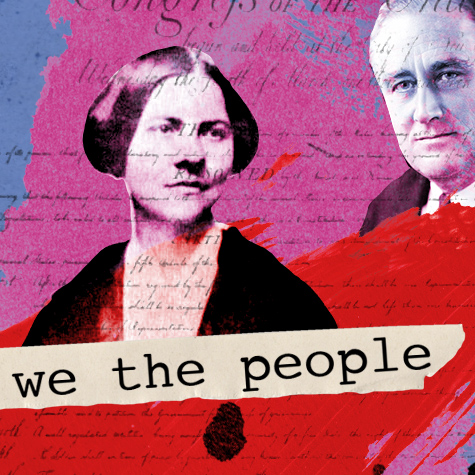
In 1895, Wong Kim Ark, a 22-year-old born in San Francisco to Chinese immigrants, was barred from re-entering the United States under the Chinese Exclusion Act. His case challenged the interpretation of the 14th Amendment, which grants citizenship to all persons born on U.S. soil. This amendment, ratified after the Civil War to secure rights for formerly enslaved people, became central to defining American identity through birthright, regardless of parental origin. The Constitution initially delegated immigration policy to Congress, leading to laws like the 1790 Naturalization Act, which restricted citizenship to "free white persons." By the late 19th century, anti-Chinese sentiment culminated in the 1882 Chinese Exclusion Act, the first U.S. law banning a specific ethnic group. Wong Kim Ark's detention and subsequent Supreme Court case tested whether the 14th Amendment applied to children of immigrants. The ruling ultimately affirmed birthright citizenship, cementing the principle that place of birth, not ancestry, determines American citizenship, thereby reinforcing the nation's identity as a country of immigrants despite periods of exclusionary policy.
It's 1895 and waves are slapping against a groaning steamship, the Coptic, docked in San Francisco Bay. There's a young man named Wang Kim Ark, only 22 years old, confined below deck. He stuck on board because when he went to get off the ship, after a long trip back to the US from China, the customs collector in San Francisco must have said, "You're Chinese. You're not allowed onto US oil." The commissioner was enforcing a nationwide exclusion act that banned all Chinese workers from entering the United States. It was the first time America had any ban of this kind. "Well, no, I'm actually American," Wang Kim Ark said. "My parents are Chinese, but I was born right here in San Francisco. See, here are my papers. I'm a citizen, and I'm just coming home. That doesn't make you an American," the collector said, "Doesn't matter that you're born here. Your parents are Chinese, so you're Chinese, and you can't come in." But was the customs collector right? The question, whether citizenship is the birthright of anyone born in the United States would go to the courts. And while it did, Wang Kim Ark is left here, rocking out on the choppy waters of the bay, waiting for a judge to decide whether he's American and can disembark. At the same time, on the other side of America, waves are laughing around a colossal statue fixed in New York Harbor. It was a recent gift from France to the United States, celebrating the country's founding principles of life, liberty, and the pursuit of happiness. Wang Kim Ark would never see the statue of liberty. But there she was immense and demovable. Welcoming immigrants to her shores with the promise, "Here, you are free." I'm Lilian Cunningham with The Washington Post, and this is Constitutional. We the people of the United States, in order to form a more perfect union, establish justice, ensure domestic tranquility, remove the general welfare, and secure the blessings of the city, do ordain and establish this Constitution for the United States of America. All persons born or naturalized in the United States, and subject to the jurisdiction thereof, are citizens of the United States, and of the state wherein they reside. That's the first line of the 14th Amendment. It was primarily designed to give former slaves citizenship after the Civil War, but that particular language about how everyone born on U.S. soil is considered a citizen would also come to profoundly shape immigration to America. It would mean that the children of undocumented immigrants could automatically have citizenship in America. It would mean that the children of banned immigrant groups could automatically have citizenship in America. It would mean that no matter where your parents were from, or how they got here, or how much any given administration wanted them excluded, if you were born on this soil, this earth, you were American. However, open or closed, our borders have been over American history, whatever the tides of inclusion and exclusion, that constitutional reality would ultimately enshrine and preserve the idea of America as a nation of immigrants, and the powerful but little-known story of Wankim Ark marks the moment it really became the law of the land. Questions about the value of immigration, though, were debated as far back as the founding of the country in 1776. The founders made clear in their letter to the King of England that immigration was important to them. It was actually one of the main issues they had with the king, that he was trying to block people from immigrating to America. So you might expect that when the framers had the chance to draft their own constitution about 10 years later, they would carve into the document a grand law protecting and defining immigration to the United States, especially since of the 39 men who signed the Constitution - seven were immigrants themselves, including really influential voices at the convention like Alexander Hamilton, who was born in the West Indies, and James Wilson, who was born in Scotland. At the time of the drafting of the U.S. Constitution, the United States is already very much both an immigrant and a settler nation. Erika Lee is a professor of history at the University of Minnesota and director of the Immigration History Research Center. I use that word settler very deliberately because immigrants not only served a purpose for the United States in that they were helping to settle this land, land that in many ways was in the process of being taken from Native Americans, but they were also the beginning of what we would understand as immigrants, people fleeing persecution in search of a better future for themselves and hopefully for later generations. But at the time of our nation's founding, both of those impulses were important and really vital to how we would then welcome and also be suspicious of immigrants. And one of the main questions that the founding fathers and others were really grappling with was how to define we the people and how to legislate that. And so it turns out that at the Constitutional Convention, there's actually a real range of views. Some delegates see a great value in promoting immigration, but others say, "Yeah, we want some immigrants," but we're a bit worried that having a ton of people from all different backgrounds will make it harder for this young nation to develop a strong and distinct identity of its own. Benjamin Franklin was famously very suspicious of German immigrants in particular in Pennsylvania. He's alarmed at the way in which they're not assimilating that they're hurting together, creating their own institutions, reading their own German language newspapers, and that especially the second generation was not assimilating either. Concerns like these infuse the delegates' discussions at the convention. There are really different visions of what this republic was going to look like and how immigrants would fit into it. Lucy Salier is a history professor at the University of New Hampshire, specializing in immigration law. But this was a nation that could absorb many different peoples, and what held them together were common political principles. Others were not so sure what it would take to transform people who were coming from very different governmental systems, from monarchies, how they would be transformed into self-governing citizens. The framers ultimately decided not to write into the Constitution a firm immigration policy, or a definition of who gets to be a citizen. Instead, they simply wrote into Article 1, Section 8, that, quote, "The Congress shall have the power to establish a uniform rule of naturalization." And what that meant was, basically, it's up to Congress to decide what the requirements are to become an American citizen if you weren't born here. The delegates also mentioned immigration in the sections of the Constitution that detail who can hold office in America. There is a lot of debate at the time about office holding. Should anybody be able to serve as president, or as a senator, or as a representative and the House of Representatives, they are radically naturalized Americans, and so those are people who are born abroad, come here and decide to become a citizen. They take an oath of allegiance. Theoretically, naturalized citizens and native born citizens were supposed to be equal. But there was still this sort of suspicion that native born citizens were going to be more American somehow. Because of this concern, the framers put in the Constitution that you need to live in the United States for seven years after becoming a citizen before you can serve in the House of Representatives. And for nine years before you can serve in the Senate, then they take an even firmer line for the presidency. They write that only people born in America can be president, which is still true to this day. So you still see this bit of a distrust, a concern about how long does it take people from abroad from other countries to become American and to rule and serve an office in the interest of the nation. Now that said, when George Washington became president, three of his Supreme Court appointees were immigrants, and four of the first six treasury secretaries in this country were immigrants as well. So by and large, the Constitution leaves much of the decisions about immigration to future government leaders to solve as they see fit. But interestingly, even though the Constitution gives Congress the authority to decide the rules of citizenship, it doesn't actually say anything about whether Congress has the right to regulate who comes into this country or whether Congress has the right to kick people out. Yet sure enough, almost immediately, Congress starts passing laws along those lines. Revolutions and wars have broken out across Europe in the 1790s in the very first years of this new American nation. So we have refugees from France, from Britain, from Ireland, and the Federalist raised the alarm that what dangerous ideas might these exiles be bringing with them? Maybe spies or terrorists might be slipping in with the legitimate refugees. So amid this immigrant fear, under our second president, John Adams, we see the passage of laws called the Alien and Sedition Acts. The Alien Acts really strengthen the hand of Congress and President. The Acts authorize the President to deport any dangerous aliens and it allowed the executive to incarcerate enemy aliens during time of war. So this created a big debate over, well, is this constitutional? Around this time, Congress also took up that task of formalizing the rules for becoming a US citizen. In 1790, it passed the First Naturalization Act, which declared that in order to become a citizen, you had to be a free white person. And this law is really fascinating. Professor Erika Lee again. On the one hand, it's revolutionary, it's extremely inclusionary. It allows for any free white male to become a naturalized citizen of the United States. And within a global context, this is not the norm in terms of how nations allow so many people at such a low bar to become a member of the nation. But of course, on the other hand, it's extremely exclusionary as a more diverse groups of immigrants from all over the world start coming to the United States. One of the automatic questions is, "Are they white?" That's really striking, I think, for modern ears that you had to be white to become an American citizen. But it was a requirement that had huge ramifications throughout American history. And we would have a race requirement for naturalization until 1952 when Congress finally repeals that. So it led to the question, "Well, whose white are Syrians white, are people from India, are Chinese?" The answer for so much of the country's history was no, they aren't white. And so no such people can't ever apply for citizenship if they move to America. Others where we come back to the story of Wong Kim Ark, roughly 100 years after the writing of the Constitution. His parents were Chinese, and they came to America in the late 1800s, part of a wave of immigrants who sailed from China to toil in the American West, in strenuous jobs laying down iron railroad tracks, or descending into gold mines, or making fabrics in the garment industry. They knew they could never become US citizens because of the race requirement. But at the time, they were allowed to immigrate here temporarily to work, though the work was unforgiving and discrimination was widespread. Chinese immigrants are present in North and South America as early as the 1600s, but mass migration doesn't really begin until 1849 through the early 1850s with the California gold rush. And so when Chinese immigrants start coming, they're automatically treated very differently than the others. They're discriminated against with punitive housing policies and other taxes that really only apply to the businesses like Laundries, that they are involved in their driven out from the gold mines, driven out from towns and cities. So from the 1850s up through the 1880s, this is a period of rampant anti-Chinese sentiment. But many industrialists, especially the railroad barons, are dependent on Chinese immigrant labor. The opportunity to build the Trans-Colonel Railroad the first time that the United States would be linked by rail in the 1860s leads many capillaries to search for really large pools of labor. And so they send labor recruiters to China to recruit tens of thousands of workers to come and build the railroad. And it's horrible work. They're paid less than their white counterparts. And when the railroad is completed, they're still here in the United States looking for other work. Yet in 1873, the year of Wang Kim-Ark's birth, a financial panic hit, and then a horrible depression swept across the country. It left Americans poor and out of work, and amid that loss, some people searched for a place to turn their blame. And the blame landed increasingly on Chinese workers. The Chinese were actually not a huge number of immigrants at the time. By 1880, there were about 105,000 Chinese immigrants living in the United States. They constitute 2% of the total immigrant population. So it's somewhat of a puzzle why the Chinese are singled out. There were roughly 7 million immigrants in America, and the majority were from Ireland and Germany. But in some ways, the Chinese workers and immigrants become the scapegoat of the white working men's movement. These are workers who are themselves quite vulnerable in this boom in Boston economy. And increasingly, they blame their woes on Chinese workers, who they say work for less money. They don't need as much money to live on, and they argue they cannot compete with Chinese workers. This long-standing stir of racial discrimination against Chinese combined with the economic recession and a new turning point in national politics where the West is becoming important for the first time in terms of its electoral votes leads to a broadening of the anti-Chinese movement, not just amongst disgruntled white workers, but across the political spectrum. The hate-mongering grew so strong that in 1882, Congress passed the Chinese Exclusion Act, signed by President Chester Arthur. It put into place a ban on Chinese workers coming to the United States. Now the Constitution never explicitly gave Congress the authority to pass immigration bans. But Congress had said a precedent early on when it passed those alien and sedition acts. The Chinese Exclusion Act, though, goes much further. It is the first time in U.S. history that we single out a group for exclusion. It explicitly bans Chinese laborers from coming into the United States. So it's extraordinarily restrictive at a time when all other groups are coming in mostly without restrictions. 1882, the act goes into effect. In that same year, the Statue of Liberty's arm, just her arm, clasping her torch, is on display in Madison Square Park in New York City, waiting for the rest of her body to be complete. The irony was clear at the time to a young student, Song Song Bo, who a couple years into the ban submitted a letter to a New York newspaper that said, "That statue represents Liberty holding a torch, which lights the passage of those of all nations who come into this country. But are the Chinese allowed to come?" As for the Chinese who are here, are they allowed to enjoy Liberty as men of all other nationalities enjoy it? Are they allowed to go about everywhere free from the insults, abuse, assaults, wrongs, and injuries, from which men of other nationalities are free? When the 14th Amendment was passed after the Civil War, it declared that being born in the United States makes you an American citizen. And that amendment marked the first time in U.S. history that a formal definition of citizenship was actually cemented in the Constitution itself. So a question arises with this Chinese exclusion ban. What happens if your parents are Chinese, but you were born in the United States? Does this relatively new 14th Amendment apply to you? Are you indeed an American citizen? This becomes the question at the heart of the Wong Kim Ark Supreme Court case. So Wong Kim Ark was born in San Francisco in 1873. His parents were longtime residents of the city. His father was named Wong C. Ping and his mother was Wee Lee. His family lived in San Francisco's Chinatown, the oldest Chinatown in the entire United States, and his father worked as a merchant there on Sacramento Street. It wasn't exactly the place Chinese immigrants chose to live in San Francisco though. It was the only place they were legally allowed to live. So a life in Chinatown in the 1890s would have been highly segregated. There were only a few streets where it was safe to wander around after dark. And while they were raising their son, this is a time of virulent anti-Chinese sentiment in the 1870s, 1880s, they returned to China. But their son, Wong Kim Ark, remains in the United States. He gets a job working as a restaurant cook in San Francisco. It's one of the only jobs that those of Chinese descent would be hired for at the time. And by 1894, at only about 21 years old, and alone in America without his parents, he decides to go visit them in China. He spends several months there and then returns by ship to America in August of 1895. Even though the Chinese Exclusion Act had been in place for twelve years by now, banning new Chinese workers from entering the United States, Wong Kim Ark thought that he should be able to return because he was born in America. He wasn't a Chinese national immigrating here to seek work. He was, he thought, a U.S. citizen. Wong Kim Ark is kind of unlucky because in the 1890s, the U.S. federal government is a little frustrated, and especially the immigration officials who are guarding the gate in San Francisco, the ones who are really bearing the brunt of enforcing immigration law. An immigration law that really wasn't that well thought out. And they're facing a lot of pressure from the American public, which had thought that the Exclusion Act would have solved their Chinese problem, but they see that there are still Chinese immigrants in the United States, and the guy at the head of the immigration service at this time is a man named John Wise. He's a collector of customs for San Francisco. And he had been involved in the anti-Chinese movement for decades, and he decides to make a test case out of Wong Kim Ark. And he excludes him. He bars him from re-entering the United States and orders that he be returned to China. So this is why, as you now know, he gets back on the Coptic, the steamship that had ferried him here from China, and sits in San Francisco Bay. When he's transferred to another ship, the gay leg, then another ship, the Pay King. In the meantime, Wong Kim Ark has hired a lawyer to challenge the fact that he's being detained. And for four months, as his case goes before the Federal District Court in San Francisco, he sits on these ships, awaiting his fate, rocking back and forth. His lawyer goes before the judge, and argues that Wong Kim Ark's right to enter the United States should be crystal clear. He was born in America, and therefore he's a citizen under the wording of the 14th Amendment. But part of the complication is, since that amendment was originally passed to give citizenship to newly freed slaves, the courts haven't actually yet confirmed or appelled that it also applies to immigrants' children who are born here. For the legal system, this case really starts to examine, carefully, this question of U.S. citizenship, how do we determine how a U.S. citizen is made? Is it by the principle of where a person is born, or is it by blood? Because of the government's interest at the time in excluding Chinese people from the country, it hopes that forcing the court to consider this test case of Wong Kim Ark will cement into law an interpretation of the 14th Amendment that says, "Nope, the language about being born on U.S. soil making you a U.S. citizen, that doesn't apply in such cases like Wong Kim Ark whose parents were immigrants banned from citizenship." But the government's plan here doesn't work. The judge William Marrow rules in Wong Kim Ark's favor. He says that he doesn't find the 14th Amendment quite logical, but yes, because Wong Kim Ark was born on U.S. soil, he is therefore a U.S. citizen under the Constitution, and he should be allowed back into his home country. But the federal government still thinks the ruling is wrong, and it appeals it all the way to the Supreme Court in 1897. The U.S. government had been arguing that Wong Kim Ark, although born in the United States, essentially had inherited his citizenship from his parents, who were aliens, barred from naturalized citizenship because they were Chinese, and also the argument preceded in such a way that said that Chinese were in particular an unassumable race that even if they spent a long time in the United States, they still held a loyalty to the Emperor of China and would always and forever be alien. Well, the Supreme Court justices don't quite buy that. The Supreme Court upholds Wong Kim Ark's case using what lawyers call that slippery slope argument. Now, what would happen if we adopted that rule? It's not just the children of Chinese immigrants who would be denied citizenship, but children of other immigrants, you know, English, Irish, German, French, Russian, Italian, their children would also not be recognized as citizens. And what kind of nation would you have then that they posited? In the opinion, Justice Horus Gray writes that the children of foreigners are indeed subject to the jurisdiction of the country they're born into. He says their citizenship derives from the place of their birth, not from their blood. And furthermore, he says, "A law of Congress, such as the Chinese exclusion ban, cannot override the Constitution's meaning," or, quote, "impaire its effect." They decide to rule in Wong Kim Ark's favor, settling the question once and for all. This idea of automatically making birthright citizens simply because they had one toe on U.S. soil. This is something that is still being debated today. But it's applicability to someone like Wong Kim Ark, whose parents were ineligible to become U.S. naturalized citizens because of their race and because of our laws, was still deemed a birthright U.S. citizen is really important. And it has had a legacy for generations of Americans. A parallel case in our contemporary society is the status of children of undocumented immigrants who cannot become naturalized citizens, but who give birth to children in the United States. Those children are still considered citizens of the United States because of the Wong Kim Ark decision. By the time Wong Kim Ark's case was decided in 1898, the Statue of Liberty was complete and had been standing at her post in New York Harbor for more than a decade. The U.S. population was a bit shy of 80 million at the time, and 10 million of those were immigrants. Many in this rising tide of immigration entered the country through Ellis Island, looking up at this enormous statue, but not all. There was no statue of Liberty on the Pacific Ocean, bordering San Francisco, and in many ways that absence of a welcoming symbol really does reflect our divergent responses to immigration. Not just between Europeans and Asians, and of course Ellis Island is known as the island of hope, but also the island of tears, so certainly the immigrant experience for European immigrants is absolutely not one that is all positive, many faced a lot of discrimination as well. But I think it's instructive to think about the different ways in which we have welcomed certain immigrants, we have turned away other immigrants. What is our nation's relationship to immigration? Why is it so complicated? And are we doing things the best way possible? The Wong-Kimarks case essentially settled the question about birthright citizenship and said a lasting precedent for children of foreigners who are born in this country. The Chinese Exclusion Acts carried on. They carried on for decades and decades and decades. The strategy of the story is that for Wong-Kimarks, it allowed him to come into the country for sure, but he was by no means an equal citizen in the United States. I went back to look at his immigration file every time that he went back and forth to China to visit his parents, for example, and he eventually got married to someone in China and had children born over there. And he would go back and forth, he made two or three trips through the course of his lifetime. And here he is, the face of this landmark U.S. Supreme Court case establishing the principal of birthright citizenship for all. But every time he left the country and every time he re-entered the country, he still had to go through a barrage of humiliating interrogations. And he even had to fill out this form that was titled "Application of a Legged U.S. citizen for reentry into the United States." And I can see from this immigration file and the passport photos that he attaches to each one of these applications. He's getting older, he's getting more tired, he still has to answer these questions. The Chinese Exclusion Act, which was originally passed in 1882, was supposed to last only 10 years, but it kept getting renewed. And in fact, the requirements for entry are tightened, Chinese immigrants are required to register and to carry their documentation with them at all time to show their legal residence in the United States. And then in 1902, the law is extended again and made permanent in 1904. And by that time, we are starting to exclude more immigrants. So in 1882, when we exclude the Chinese, we also exclude lunatics and polygamous and anarchists after Chinese exclusion is made permanent. We ban Japanese laborers in 1907. We ban South Asians, but really all Asians as part of the Asiatic Bard Zone in the 1917 Immigration Act. In 1924, we close the gates completely to all Asian immigrants through the Immigration Act of that year. In 1931, Wang Kim-Ark makes one last trip to China. He's 58 years old, tired, and the Chinese Exclusion Act is still in place in this country. He steps once again onto a boat, heading west from San Francisco Bay, and he never returns. The Chinese Exclusion ban lasted all the way until 1943, when America wanted ally support from China during World War II. President Roosevelt and many lawmakers realize that it's highly hypocritical for the United States to turn to China and say, "You are our ally, we fight alongside you in this evil war against Japan, but we just don't want any of your people to come to the United States." And in 1943, Madame Shanghai Shack, who is wife of General Shanghai Shack, leader of Nationalist China, tours the United States, goes all around the country, and is hosted by President Roosevelt and Eleanor. She addresses both houses of Congress, they love her, and after her tour, FDR signed the repeal of the Exclusion Act, and he says that the Exclusion Act was a historic mistake and signs this law repealing them. It also allows for the first time Chinese immigrants to become naturalized citizens, so this is huge. The catch is that by that time the United States immigration laws are really based on the strict national origins quotas, and the quota for China is only 105 persons a year. So even though we've done away with the Exclusion Act, we're only allowing into the country 105 persons a year. Starting in 1917, Congress passed an immigration act that would severely restrict immigration to America. And Woodrow Wilson vetoed it, but it was later signed into law by President Warren Harding, and then in an even more restrictive form by President Calvin Coolidge in 1924. The law established quotas for how many people were allowed visas to the United States from each different country, and it was designed specifically to heavily favor entry of immigrants from the British Isles, and to more or less make it impossible for anyone not from Western Europe to come to America. In 1952, some of those restrictions loosened. The requirement that an immigrant be white in order to be naturalized was dissolved. And more, though still not many, Asians and Eastern Europeans were allowed to immigrate to the United States. The U.S. government also started taking into account skill sets and family relationships when allocating visas, a practice it still does today. However, a quota system for immigrants from different nations still existed. It would take until 1965, when President Lyndon Johnson signed the Immigration and Nationality Act, for America to finally eliminate race, national origin, and ancestry as a basis for deciding who can come into this country. President Lyndon Johnson signed the Immigration and Nationality Act, into law, outside. There are photos of that day, their greenie, and the sky looks pastel blue. And he had these remarks. It does repair a very deep and painful flaw in the fabric of American justice. It corrects a cruel and enduring wrong in the conduct of the American nation. The 1965 Immigration Act is one of those landmark immigration laws that ends one era and begins another. So this is part of the Civil Rights Movement, LBJ considers this law, in addition to the Civil Rights Act and the Voting Rights Act, part of his great society reforms, part of his administration's response to the Civil Rights Movement. It ends the decades-long system of discriminatory national origins quotas that had been put into place in 1924, and which had really closed the gates to all Asian immigration. It also, however, has an exclusionary side of it that we don't often talk about. It places restriction on immigration from the Western hemisphere for the first time. And it also affirms bands on homosexual immigrants that had been in place for decades as well. So it is on the one hand part of our Civil Rights Immigration legislation by banning discrimination and immigration law. It ushers in the mass migration from Asia, from Latin America, from Africa that has transformed the United States in the past 50 years, however, by placing restrictions on the Western Hemisphere for the first time, it also initiates a massive rise in undocumented immigration. And thus, new questions about immigration would persist in the decades to come. The United States would wrestle with the constitutionality of travel bands for particular groups of people, and with deportations and how much to prioritize visas for certain skilled workers, and how to treat undocumented children who have been in America most of their lives. These questions don't look all that different from ones that the framers wrestled with 230 years ago. Their questions ultimately about loyalty and national security and assimilation that surface with each new wave of immigration. And yet there are moments like Wong Kim Mark's case when at least some questions find resolution. Ever since his case, we have cemented into the constitution a clearer and more expansive definition of what makes someone American. It carved a pathway to citizenship through birthright that over time would secure the blessings of liberty for immigrants' children in America, meaning that no matter what wins of prejudice or fear push against one generation, there would be some shelter for the next. In laws, however, still enormously shape the country's composition in any given era. Just as the framers wrote, it is still Congress that gets to decide who can be a citizen if you're not born here. That's why this act that President Johnson signed into law in 1965 was a powerful turning point. As with Wong Kim Mark's case, it marked an expansion of who we the people can be and where we the people can be from. Johnson signed that Immigration and Nationality Act at the foot of the statue of liberty. The New York skyline behind him on a not too distant shore. Far above him was her torch, raised 300 feet into the sky, and the chains of bondage broken at the base of her robe. And just inside the Statue of Liberty's pedestal, near where Johnson was signing that bill, was a plaque added there in 1903. It bears the words of Emma Lazarus' poem The New Colossus, and the poem goes, not like the brazen giant of Greek fame, with conquering limbs astride from land to land. Here at our seawashed, sunset gates shall stand a mighty woman with a torch, whose flame is the imprisoned lightning, and her name, Mother of Exiles. From her beacon hand glows worldwide welcome, her mild eyes command the air-bridged harbor that twin cities frame. Keep ancient lands your storied pomp, Christy with silent lips. Give me your tired, your poor, your huddled masses, yearning to breathe free. The wretched refuse of your teaming shore. Into these, the homeless, tempest tossed to me, I lift my lamp beside the golden door. When Johnson signed that law and assured in our modern era of immigration policy in America, it was a clear October day, wave steep blue and a bit choppy in the harbor. The poem just inside the Statue. The Statue, silent and tall, and beyond the Statue of Liberty, the boat starting the water bobbed and swayed, heading through the shifting tides. Many thanks to this week's guests, Eric Ali, a history professor at the University of Minnesota and director of the Immigration History Research Center, and Lucy Salier, a history professor at the University of New Hampshire. Erica wrote the book, The Making of the Asian America, a history, and Lucy wrote the book, laws harsh as tigers, Chinese immigrants, and the shaping of modern immigration law. Thanks also to their universities for studio use. Life and Drum Music is by Otheturner and the rising star, Fife and Drum Band. Special thanks to Sharday Thomas and the rest of the Turner family for its use. Our theme music and additional compositions are by Ryan and Hayes Holiday. The original artwork for our podcast is by Michelle Thompson, and Ted Muldoon is my producer here at the Washington Post for this podcast. If you like the show, we'd really appreciate if you'd rate and review us on whatever platform you're listening to this. And of course, if you want more info about the series, you can go to WashingtonPost.com/constitutional. As a thank you for listening to Constitutional, the post is giving listeners $100 off on a one-year all-access digital subscription to the Washington Post. It's at wapo.st/podcastoffer to redeem it, that's wapo.st/podcastoffer. Thank you again for listening and stay tuned next week for another episode of Constitutional. The holidays may be over, but smart savings can still continue. Right now, you can unlock your first six months of access to the Washington Post for just $0.50 a week. After that, it's $14 every four weeks. You can cancel any time. You'll get unlimited access online and in our app to trusted journalism that helps you make sense of what's happening now and what's ahead. If staying informed is one of your goals for the year, this post-holiday sale is the perfect place to start. Go to washingtonpost.com/subscribe and begin the year informed. That's washingtonpost.com/subscribe.
Podcast Summary
Key Points:
Wong Kim Ark, born in San Francisco to Chinese parents, was denied re-entry to the U.S. in 1895 under the Chinese Exclusion Act, challenging the birthright citizenship principle of the 14th Amendment.
The 14th Amendment, initially designed to grant citizenship to formerly enslaved people, established that anyone born on U.S. soil is a citizen, a concept that profoundly shaped American immigration.
The U.S. Constitution originally left immigration and naturalization rules to Congress, which early on enacted racially restrictive laws, like the 1790 Naturalization Act requiring whiteness for citizenship.
The Chinese Exclusion Act of 1882 was the first U.S. law to ban a specific ethnic group, reflecting intense anti-Chinese sentiment and economic scapegoating, setting the stage for Wong Kim Ark's legal battle.
Wong Kim Ark's Supreme Court case ultimately affirmed birthright citizenship, ensuring that children of immigrants, regardless of their parents' status or origin, are U.S. citizens if born in the country.
Summary:
In 1895, Wong Kim Ark, a 22-year-old born in San Francisco to Chinese immigrants, was barred from re-entering the United States under the Chinese Exclusion Act. S. soil.
This amendment, ratified after the Civil War to secure rights for formerly enslaved people, became central to defining American identity through birthright, regardless of parental origin. S. law banning a specific ethnic group.
Wong Kim Ark's detention and subsequent Supreme Court case tested whether the 14th Amendment applied to children of immigrants. The ruling ultimately affirmed birthright citizenship, cementing the principle that place of birth, not ancestry, determines American citizenship, thereby reinforcing the nation's identity as a country of immigrants despite periods of exclusionary policy.
FAQs
The Wong Kim Ark case established that birthright citizenship is guaranteed by the 14th Amendment, meaning anyone born on U.S. soil is a citizen regardless of their parents' nationality or immigration status.
It was the first U.S. law to ban a specific ethnic group from immigrating, prohibiting Chinese laborers from entering the United States and reflecting widespread anti-Chinese sentiment at the time.
The 14th Amendment states that all persons born or naturalized in the United States are citizens, originally aimed at granting citizenship to formerly enslaved people but later applying to all born on U.S. soil.
The Naturalization Act of 1790 restricted citizenship to 'free white persons,' creating a racial barrier that wasn't fully repealed until 1952, shaping immigration and citizenship policies for over a century.
Chinese immigrants faced discrimination due to economic competition, racial prejudice, and scapegoating during recessions, leading to exclusionary laws like the Chinese Exclusion Act.
The Constitution gave Congress the power to establish naturalization rules but did not explicitly define immigration policy, leaving decisions to future laws and creating ongoing debates over inclusion and exclusion.
Chat with AI
Loading...
Pro features
Go deeper with this episode
Unlock creator-grade tools that turn any transcript into show notes and subtitle files.
 PodcastTranscript AI