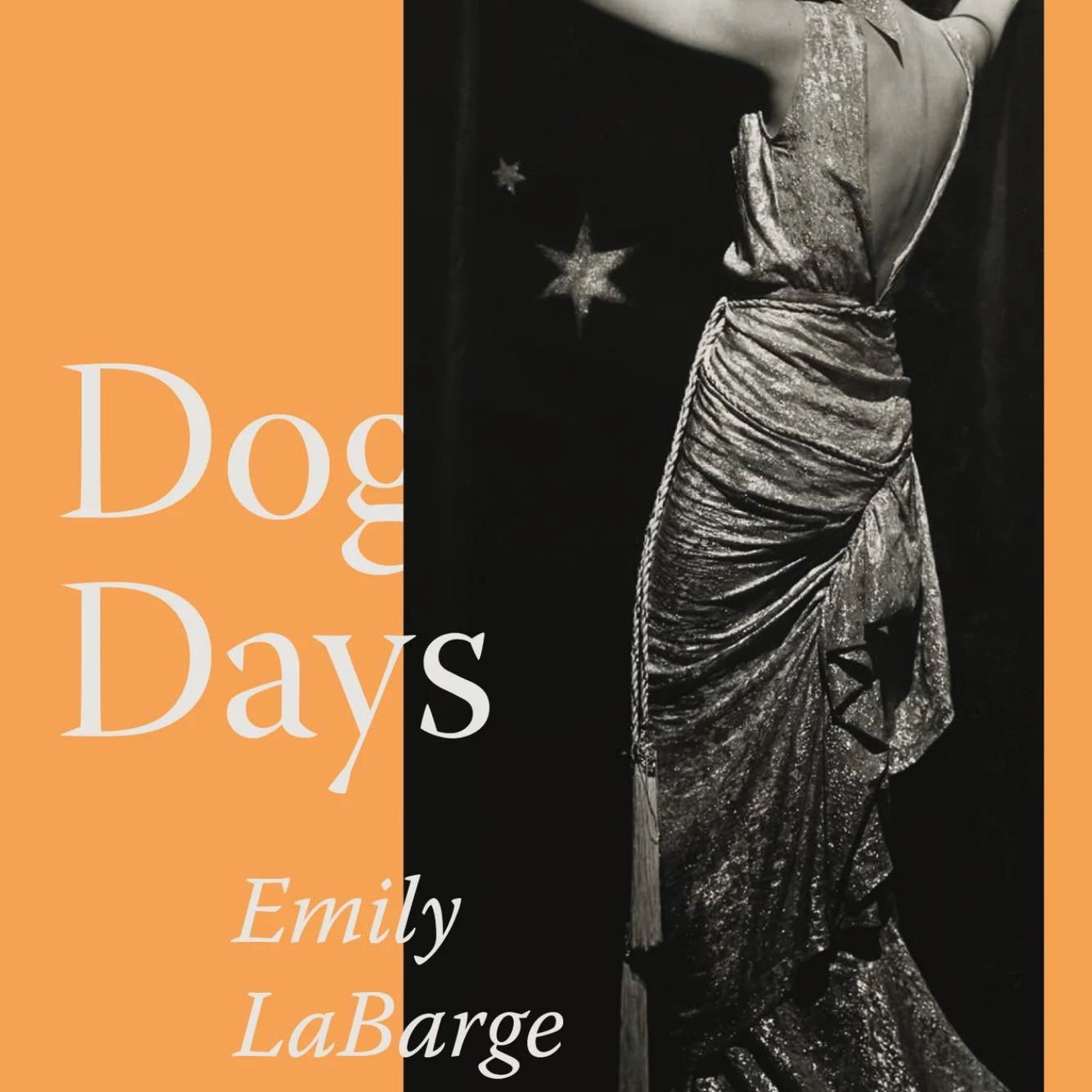
Narrative Amid Trauma: Emily LaBarge in conversation
from The Shakespeare and Company Interview
52m 5s
Emily LeBarge's "Dog Days" originates from a 2009 hostage incident in the Caribbean, but the book is less about the event than its indelible psychological mark. LeBarge uses the experience to investigate how trauma resists coherent narrative, weaving literary references into a tapestry that challenges memoir conventions. She describes feeling forced to produce different versions of the story for practical purposes—police, insurance, therapists—which compounded her sense of fragmentation. Rather than achieving clarity, she found the event impossible to assimilate into a life story, leading to a persistent feeling of living in a "half afterlife" after nearly dying. This awareness stripped away her previous naivety about the world's violence, offering a more authentic but unsettling view of reality. LeBarge also critiques early therapy sessions that emphasized retelling the story, which retraumatized her by making her relive the experience somatically. The book ultimately argues that trauma's meaning is not fixed but evolves, and that understanding requires resisting the urge to impose a singular narrative. Through erudite yet emotionally raw prose, "Dog Days" becomes a meditation on the limits of language, the relational nature of recovery, and the existential questions that arise when one confronts mortality. LeBarge's work is both a personal account and a broader inquiry into how we make sense of life's most difficult moments.
[Music] Emily LeBarge's dog days is rooted in the hours during Christmas 2009, when she and her family were held hostage while on holiday in the Caribbean. This quite unsurprisingly left a profound mark on her psyche, and it's the exact nature of this mark, its shape, its size, its depth, its indelibility or otherwise, rather than the event itself that is the grist of this extraordinary book. For LeBarge's determined to understand this mark, perhaps at first to be rid of it, but then an increasingly for the sake of understanding itself, and indeed as a means of investigating the very limits of our capacity to understand, or to tell a coherent story about our lives. Dog Days is an honest and courageous book. It manages to be both emotionally raw and exquisitely erudite, while also refusing to ever take shelter behind its erudition. When the words or ideas of other writers are used in the text, and they are, repeatedly, they are woven in like threads in a tapestry of LeBarge's own making. Dog Days is a work of nonfiction that struggles against the customs of the genre, either by refusing them outright, or by trying them on and finding them wanting. In this way, Dog Days is exciting and unique and unsettling in you. A book that not only rewires the reader's view of the text, but also of the world itself. Emile LeBarge, welcome to the Shakespearean Company podcast. Hello, thank you so much for having me. So, I'm very conscious with my first question that it's actually quite a tricky question to pose, and a tricky one to answer given the context of the book, because you spend so much time in the book looking at different ways of telling the story. And looking at different versions, there's the kind of the version that you tell your friends when they ask, or maybe the version that you tell a psychoanalyst, or the version that you're presenting us in the books. With that kind of consciousness of that in mind, when I do ask with my first question, would you just be able to give us, let's say perhaps the podcast version of the events, just so listeners know where we are. Is that something I guess, first of all, that you're comfortable doing and if so, would you be able to do it for us please. Yeah, no problem. Basically, the short version is what's on the back of the book, and what you said in your intro is that in 2009, I was on holiday with my family at Christmas. We had this sort of custom of I'm from Ottawa. It's incredibly cold and very snowy. And my parents decided when I was 15 or something that they just really didn't want to celebrate Christmas in the traditional way, no gifts, whatever I think my mom was tired of cooking and everyone disappearing to read all their books the day after and go hang out with their friends and the holiday thing over. So we developed this custom of going going away for the holidays. And then in 2009, which was many years after we had started doing this. We had you could call it a hostage taking some people have to find it and keep that being which I suppose it also ends. It's like in forced confinement or home invasion. Anyway, it was a sort of gang of local criminals broken to the house and held us there for around eight hours. And then left, fortunately, no one was seriously harmed, but obviously the experience in itself was confused and terrifying to say the least. And that's for me it's the beginning of the book, but it's not the end of the book. I think as you said, the idea of working against genre conventions was really important to me with this whenever I give like a little blur by always say that's where it starts, but then the book really I think I hope goes somewhere much more vast. Yeah, absolutely. And I think we get a sense immediately in the way that you were talking about that you just described it as confusing. And then you also tried on kidnapping hostage taking home invasion. And that's reflects a little bit. I think the immediate sense you had after the event of the way you talk about it is struggling to understand what happened or to give a name to what happened or to come to an understanding of what happened. Did you at that moment when in the weeks and months after it did you expect that confusion to subside to that you would be able to essentially give a narrative to what had happened to you to come to an understanding of what happened to you always it always a sense that this thing was almost almost impossible to understand impossible to describe. I think very much the latter, although you're in between many expectations, social and cultural and then also psychological, right? Like I think we live through narratives and narratives that we encounter also tells us how to understand the things that happened in our lives, right? Those is kind of reflexive relationship and that's I think why stories and writing a narrative are important because there's this kind of circular understanding that's produced between literature and narrative and what's happening inside people's brains on the one hand I understood the requirements to be able to say yeah what had happened right if you're seeing a therapist or an insurance company or trying to get a new passport or try to travel without a passport it is strange things where you're reproducing the story for really practical purposes that you can't hold against the situation so you're forced into this recitation of narrative but it never really felt like it fit. And I think this question of trauma being kind of unassumable to narrative I think was probably my predominant experience and I didn't particularly like the kind of therapy sessions I had in the beginning, which I thought oh well this was pretty traumatic I guess I shouldn't go speak to someone there was a real emphasis on integrating what had happened into a kind of life narrative and I found that to be very distressing as an idea and untrue and I think that's what I thought was the most important thing to do is to get a new perspective. And true and I think that was when I started to distrust the idea of being able to put something into language although of course that is basically what we have yeah that's the book ended up being very much about that but and I think the longer it went on the more this the more it took on this kind of protracted sense that it was this other place or this other thing or this other experience that was living alongside what I had to do in daily life so almost like the narrative was like driven into two individuals yeah and I think I don't think that's an experience that necessarily everybody has a one's response to trauma is different but certainly for me that inability to grasp like a kind of story or a meeting right because we want stories to have a kind of purpose and that's quite absent I think from from the sick parents for me and for many personal experiences the writing is what kind of makes the meaning but it in daily life your smile yeah it didn't happen for any reason that I know of I feel true when this I might curse to something but I'd like to go down that road to dwell on the idea of narrative and trauma a little bit later but before we do I want to pick up on something you said like obviously I never really considered this before reading your book but in a sense it's obvious but yeah this as soon as this event takes place and as you just said there you are required to give an account of it I had to give different accounts of it to different people so you've got the police you've got the insurance company you've got the embassy or the consulate you've got friends and family you've got all of this kind of stuff and I wonder do you think in a way that sort of that fracturing of narrative and that lack of understanding could have been in some way a result of having to immediately generate different stories for different people and for different needs like in a set if you had been given the space or the time or whatever that would have meant to process it to integrate it in your own way do you think that kind of fracturing would have been compounded in the same way who knows is what's his name the wolf boy like the wild boy if ever on or whatever right who knows what it would have been like but I think one of the main things that I realized long after is that you know trauma doesn't happen to individuals like or it happens to individuals but it's relational because you existed the world with other people and you have relationships with other people be they formal or informal or familial and to have a story you have to hear somebody you someone has to hear it or listen to you or you have to be speaking to a kind of audience so you know the reality is that there are these kind of shifting receivers which you know adds to confusion but also I think is the reality of recovering to that the world around you is part of your understanding of the world so I don't think it's possible to deal with it in isolation and in a way that's one of the big projects of the book is that I was allergic to the idea of the possibility of a singular narrative you know that this could simply be my story or that it couldn't begin an end with the event and then how I felt about it at the end because the longer you live the more things refract and I think trying to deal with something alone as if it's like an exceptional event that doesn't involve anybody else is a pretty hard way to live in the world and I think for me to make work although obviously we can think of amazing works of fiction or memoir that kind of mind this that that route but it just wasn't something that I yeah that I wanted to do yeah one of I guess one of the difficulties as well that you talked about processing and understanding it in relation to the world around you one thing we get repeatedly early on and but it does is injures throughout the book is the idea that you felt that you were living in a world that had changed as well there was because of just the fact that what had happened
to you, you don't realize now that such a thing could happen in the world. It's seen that it wasn't only your life that have been reconfigured, but almost the sort of the very physical nature of the world itself and the possibilities that the world contained. And that seems to be like a profoundly sort of distressing, extra element to take away from that experience. Yeah, and of course, it has these strange other undersides that awareness because of course, you realize that other people have had these kinds of experiences and other people live in this kind of broken world. And the world we live in is filled with violence and cruelty. We read the newspaper every day and you can't believe if you tried to imagine many of the stories that we read, it would be very difficult to get through the day. So there was also this kind of added sense that we're all walking around with this cognitive dissonance about the world. Whereas the reality really is something else. And many people encounter it or touch that kind of dark side of the life we live in, but actually that they're could joined. And we have these shields to protect us and help us survive in the day to day. But the reality is much much more difficult. But there's so many parts to that question. It's is that would you rather not know? Do I mean, how do you deal with that understanding? Does it also teach you something about the world? Is it teach you something about other people? I think with the book, I was very interested doing research about trauma and PTSD that for some people, one of their symptoms was new avenues of linguistic experience or relational understandings of the world, making connections between things. So there's also this kind of, no, does it give you some sort of potential understanding of the way things are that's hidden otherwise? Is there some kind of creative or like, existentially important aspect to that experience? Yeah. I think I was always flipping around all of these questions like, oh, was I an idiot not to think that the world was like this? Have I actually been affected by something profound that leaves me isolated and I wish that not happened? Do I have a choice about those things? So there's all of these kind of braided implications about being a person in the world in a bigger way and the kind of pact that you have with reality and what you make of it. It's such a fascinating tension between the sort of is it doesn't have had like this lead to a sort of a disintegration with the world or an or a greater integration? Have you has avail been taken away and you're you're living in a more authentic world? What I think you don't, you don't spend a great deal of time on, but you do refer to a couple of times is as well like from a point of view, a political point of view and a point of view of a postcolonial point of view as well. Like you you have this sense, okay, there's a Canadian, you're also a former, a former British colony, but there was definitely this sense of, oh yeah, so almost like what have we, was I, will we slightly blink at thinking that we could step into this other world? This other existence and not expect to encounter some of the reflected violence in a way. Yeah, I think that's this ethical and moral question about traveling to any place as a tourist where people are living in privation, but the tourist economy is thriving. So there's this massive golf between those who are usually white Western individuals visiting from elsewhere. Of course, at the same time, most people living on this island weren't going around, sort of wholesome horses. There's like an autonomy to individuals who live in all kinds of circumstances. So I really wanted to leave. I think it's important to acknowledge those questions because that's the contents of what happened, but also unaware it is that this basically could have happened in a place. And I think this aspect of, excuse me, one of the people involved being like the son of a police officer, and there's this kind of local enforcement corruption, those things are complicated and also made it quite generic in something an experience. Yeah. So we were saying about the possibility that this experience might have torn away a veil, given you a more kind of sense of the kind of authentic sense of the world, but it also led to this feeling which I've had utterly fascinating that I suppose we can't really say is true because you're still very much here, but this sense that you had in some way died or had in some way experienced what it might be like to die. So at a moment you, you quote, or you paraphrase, paraphrase Freud and you say that like he said that it's impossible to imagine our own death. And whenever we attempt to do, we can perceive that we are in fact still present as spectators. And yet something about your experience seemed to belive that belief in Freud as well. They seemed really this quite profound experience that, okay, you're still alive, but that you at least come to some sort of knowledge about what it might be to die. Yeah. And then also, you know, when someone holds a gun to your head, you're like, well, I'm going to die. Yeah, unimaginable. I just don't even Yeah. And on our a theory, the longer this experience went on, the more horrible my imagination of what was going to happen before we were eventually killed became. So it's this kind of it's common in like hostage takings or, you know, what we like some of like psychological torture, effectively, right? Putting a hood over someone's head and making them wait for many hours is what happens in kind of torture situations. This sort of documentaries about Northern Ireland and stuff. And you're finding yourself on holiday thinking going through the same kind of psychological experience, whether it's intended or not by the people who were involved, these are strange tactics that you wonder, what do these people think that they were doing? This kind of question about humanity, right? And it's also the other side of the world that you think about it. And after being an experience like that, but in this moment of really anticipating in a deep way, your death, and then somehow they're being for the aftermath, I think that was really profoundly what I felt. So it's like almost both sides of that Freudian statement then became true. And I think that's PTSD is pathologically defined brush with near death, right? That life-friending situation, obviously, there are many kinds of traumas, but I think that's what makes it unique is that people are very close to dying or feeling like they have died or their life is over and then have to recover. And I think that fear is obviously something that I could never have imagined. It doesn't leave you. It's like kind of this death feeling that sort of followed me around, which is also like Freud said, the kind of ultimate unassumable event. But somehow you have knowledge of it, you're living in a kind of half afterlife or something. That sounds it's such a unique experience. And just listening to you talk about it, like I could theoretically understand what you're saying, like this, it makes perfect sense to me. And yet I also have to acknowledge that I can't feel it in a sense. Like I would you do, I think everything you can in the book to give us a sense of what it might be like. But I think there's an almost unbreachable barriers to really get a sense of what that might be like. And you just put me in mind of what you said very near the beginning of our conversation that you, your experiences with therapy soon after the event were dissatisfying in some way or didn't, didn't have the effect you might have hoped that they did. Is there a sense and maybe that comes from Freud as well that sort of with therapy, it's almost too theoretical like the therapist kind of occupies the position which I've just described with myself occupying a kind of understanding what you're saying, but not having experienced it. Does that perhaps leave a barrier for the for the effectiveness of therapy? Maybe I don't know, there are many therapists are different or there's different schools of thought. And I think a live therapist probably have an experienced what they're, I'm going to say clients, that's not the right word, but I know, I know, lizanz or whatever have experienced. I think that I did not have people who understood how to treat serious trauma. I think I had people who wanted to talk about my family background and how to tell this story and how to retell the story. But when I started reading it, I found it traumatic in, in the sense that reinforced the experience. And as, and of course, I didn't know at the time, but I read later when I was doing a lot of research for this book to find out about trauma in general, but other people's experiences and what similarities and differences there are because I think trauma opens a door into these other bigger traumas that are not shared or similar, but hold some of the same questions. And I found in reading vessel vendor coax book, The Body Keeps the Score, which is not very well known that they find that people with PTSD mostly veterans or people who've been sort of experiences extreme violence, that when they recount what has happened somatically, they feel like they're experiencing it again. So if you're sitting with a therapist and they say, Oh, we have to keep talking about this story. So you could piece it back together. And you're sitting there actually feeling like it's happening to you again. It re inscribes itself in your body and your mind to rather than allowing. I think I just wasn't, I didn't have a good match with, and I didn't have an understanding of what it was that I needed because he's tech. I was 25. I didn't have very much money. I was in a bunch of different jobs. I just didn't understand what would make it better. I suspect that in commensurate match between me and the people I was talking to probably made me feel like there was nobody who could understand.
it or help. Because I think I didn't want to be like, Oh, what was my suppose with like, I wanted to be like, what do I do now that the world is this different place? Right. What do I do about my relationship to God or I'm believing God this, what do I do? About the fact that I feel like forsaken, right? That I feel separate from other people. And how do I go on with this kind of new knowledge? And if I don't think anybody can tell you that anyway, it's not like someone could be. Well, here's a book. And I will help you figure it out. There were just all of these kind of missing things that I didn't really understand who to turn to. And ultimately, I turned to letter turn art and to writing and those things that helped me understand in less straightforward, but also very human ways. What I could do with what the experience and what had happened in some ways. Yeah. It's funny because I was just about to say, because you say they can't say, here's a book that will help you. And yet that big part of this book is talking about the books, the artists, the films that ultimately did help you. But these were not books necessarily that you were given and told, this is something you should read or even things that are necessarily overtly connected to the kind of experience you had. Obviously, you are a writer and I'm assuming it comes across a very before you were writer, you were a reader. And we did it as sense. Do you think that was the sort of the inevitable response to what you'd experienced was to ultimately find your way to literature and find yourself to the writers. However, obliquely had something to say to you. Yeah, I do think so. And also I was a viewer like a big part of my work is ready about art and looking at art and part of my kind of like academic background as well. And so I think many of us look to the earth to see different versions of how people see the world and live through the world. And I think it's so might survive the human condition. And I think that can be from like escapist science fiction literature or fantasy to crime and punishment or something like that. There's a whole world of experiences there to entertain, provide solace, give information, some of the books that are mentioned in my book were things that I had been reading since I was a teenager. Amy, have Paul Lloyd Moore, Alice Monroe, who's now shrouded in her own kind of trauma narrative, Julie Hayden, Joan Didian, people who's understanding of the world had probably already shaped how I thought about language and how to tell stories to make characters to look at the world. And then they threw the writing and assembling of these kind of what I've been thinking of as fellow travelers artists, filmmakers and writers started to grow as a library of I guess also proxies, right? There's sense that you know, ecstastically working through David Lynch allows me to say things in a lot more interesting way than where I simply saying I was scared to death. So there's a sense that you know, what happened to me in so far as it's a story or not is only so interesting what you make of it on the page, I think is different. And I had learned through my love of literature and art, but also through contemporary discussions of auto theory, right, like the sense that you turn to other texts to understand the world and the book that you're reading is understanding itself as it's happening. Those ideas were really important to me, both personally and creatively intellectually. So those my kind of tendencies are also intertwined with the kind of creative ambition of the work that I wanted to make as well. Yeah, the thing that kept coming back to me while reading and the way that you refer to writers and the way that you deploy writers and artists was the closing proposition of thick and stine's tractators and that of which we cannot speak must be passed over in silence. And it's not quite that because you are speaking of the event, but I have the sense that with each of the with each of the references you give us each of the things that you cite, it's almost like you're constructing a shape around what you experience. So you're describing things from different angles and allowing the reader to get a sense of, again, not void at the heart, but the kind of the potentially inherently undescribable thing. After heart of what you experienced. Yeah, that's really interesting. It's almost like I think it on maybe on the first page, I talk about like the chalk outline why I had I only just thought of you guys out when you were describing it this way, though, then it's like the kind of negative space at the heart of the book is, you know, the burden of subjectivity that it's like this kind of empty body where you can see the chalk outline because everything else behind it is full now. And I think that's one way of looking at it that these kind of proxy essays that talk about David Lynch is a wonderful life. Well, it's with Bashir, Joan Mitchell, whatever that they are standins or proxies for things I didn't want to say, but also that they flesh out the world outside of the self in ways that. Yeah, I think alleviate this kind of burden of subjectivity that's at the heart of so much memoir. And I think sometimes asked questions that are unanswerable of selfhood or the expectation that subjectivity is the thing that carries you through a kind of trauma memoir from beginning to end that there are these kind of milestones of realization about the self rather than about the world or about other things in the world. So I think in a way, I hope that they're doing lots of different things. But yeah, I think maybe the individual and what the individuals role is the thing that ends up being the negative space, maybe. Yeah. And this is something I haven't quite fully articulated this thought. But one thing that I found really interesting as well is the kind of I guess the rate at which you are referencing or quoting or talking about certain things. So there might be times when you're spend quite a long time with one particular work of art or one particular artist or writer. Other times when you're there was no references to and other times when it's really quite several references to different people from different directions per page. And there was something about that which I was also put in mind of where at a moment you talk about the burning feeling of I like. And it really gave me a sense of and again, maybe as a somebody who often engages with the world through books as well. Like that sense of how almost the sort of yet the desperation sometimes with which we turn to books looking for resolution. So there are moments when yeah, like that we feel a certain calmness and then at moments of let's say, I don't know heightened anxiety or heightened frenzy suddenly there seems a more yeah like this thing. Okay, I have to keep going. I have to find and I thought that was really. It struck me as a very honest way to portray the relationship between art and self or art and trauma rather than keeping it as a very kind of modulated pace throughout. Yeah, I think that yeah, I love that observation actually. But if we've all read a book or watched a film or seen art, I have a particular points in our lives where resonates really powerfully in the new revisiting a couple of years left or in your like, this is not so profound. And it's like that something had speak to you in a really urgent way when you need it. And then of course the meaning can change later. And that's really liberating. And I think that kind of voracious, ferocious reading is also this this practice of reading and writing where reading produces writing produces more thought takes you through so many things. It's like when you're reading the book and you end up taking like tons of notes and it takes ages to get through three pages or whatever. It's producing all these thoughts that you wouldn't have if you didn't go through the process of reading. Yes. So to me, that kind of intimate relationship with turning to other works is not just to understand things that are in those works, but to have that experience of producing ideas like it's like sentences produce other sentences in your own writing. You can't anticipate what you'll think if you don't do the reading. Yeah. And I think also to me, the kind of movement varying in the book is like my commitment to the essay is like an irregular form. And I think there are many literary essays in which they're very modulated at the pace is very even. Those can be very beautiful. I think as you said in some parts of the book, things are very even and take their time. But in other places, I wanted the essay, the essayistic quality to reflect the quality of mind that I'm talking about. So in that sense, I wanted to use that form for what it's best at, which is holding lots of things together. They don't really belong together, but making the reader understand or have some kind of experience of the kinds of relationships. Maybe they're rapid fire. Maybe they slightly abut each other. Maybe they're awkward at time. Maybe they're smooth and loose. And that those are all different versions of thinking. And I think the essays is one of the best forms for that, because it allows you to break off, think and frank, and have long passages. And so I think this question of form and its relationship to thought is also vastly important to me into the book. Yeah, and that brings me onto something I did want to talk about, which is the
fact of writing about it at all, because what you've just said there seems and having read the book seems to be, have be a kind of a very hard one position on your part, a very hard one understanding of what you want to do. So there is a moment in the book where you say, no way will I ever write this story. And then we get the, you take us through different attempts. You say there was, there's a tidy melancholic essay abandoned after I had to admit to myself that it was beautiful, but untrue. There's a straight narrative so long and boring that I don't even want to write it. There's a patchwork of braid, a weave, a meander. And this is, this we're in 2025 now. This happened in 2009. So this is 16 years between the, the trigger event for the book and the book coming out. What's there a moment when you got a sense that it was working? Like, away you, you felt, okay, the book, I'm onto something I've got the, I've got the way of doing it, or did it arrive in a more kind of piecemeal way and I'd always surprise you by the final form. Both of those things, I think like most writers, I had moments all through it where I thought, this is awesome. You know, you range and then the next day, it's because they don't, well, I know, I've done the next day, I would look into you like, oh my God, this was terrible. Oh, who would everyone to read this? I can't write. This is this joke by partner and I have that eventually one of us will come out of our studies, be like, I've forgotten how to write completely. Everyone has that feeling and it changes and sometimes you think you're a genius, sometimes you think you better like just retire work, working a bike shop or something. It, I think one of the reasons that it took me so long was that when this happened, I did not think of myself as a writer. I was, I had just finished a master's. I was sitting in modern contemporary art. I was working in art gallery. I wrote press releases for the gallery. I wrote a lot of stuff on my own, but I had no ambition to be a writer and the question of therefore what to do with this experience was another question. It was like a human question. Even though my mom is a writer and she's always, everything is grist for the male. No, seriously, like when I was a kid once, then my parents were out in the morning. I was watching TV and someone called and left this like really swearing message on our answering machine completely about how my mom had put her mom in one of her stories and she was going to sue her or something. Like I've always understood that life is really what you make your work out of to really send. There's some things that I wouldn't write about my life for other people's. But for a long time, I think this question of what to do with this information, which is one of the questions I come back to again in the book, I think changed when my like vocation and my work changed and I'm someone who over the past 10 years had, I've done a lot of different kinds of writing and this many of them come from the place of sort of nonfiction or criticism. We're always leaning on your understanding of the world to look at what's around you and it's sort of to feel like this crazy thing that I was not acknowledging in some way, either to myself, not that I needed like a readership for it, but that there was this like unspoken of in my writerly life experience that had shaped me in a huge way person. And so I thought maybe five years ago, I thought, oh, I'm going to write an essay. I'll just write an essay and it will be about film and in some wonderful life and this kind of time travel that happens in it and is trying to death, non death and this event. And I started to applaud at O and it was like pretty obvious to be quite quickly that it could not be just an essay. I'm a person who likes to structure things really elaborately in advance with numbered sections and I have 50 sections and I was thinking, oh, it's obvious, this obviously can't be an essay. And so I thought I guess that I will start writing this as a book because all of these kind of extra narrative details started coming up. I wanted to write this essay about poetry about the moon. I wanted to write a section about fixed short fiction writers whose character is we're meaningful to being and it just started getting longer and longer. And so I thought, well, I'm going to sit down and write it and it will be an I structure and restructure to have all these graphs with stuff in different colors. And I had a first section and a second section and a third section and once I finished the first, I thought, okay, this works. But it was easier because the narrative through line is the event itself and between there's this discussion of kind of other cultural forms which happens in a slightly more fragmented or experimental way and happens as the book progresses. And I thought that I would do the second part in the same way with this kind of narrative through line that was chronology of what I was doing. Yeah. It was so boring. Because the event is narratively interesting, what then became more interesting was like the psychological experience. So I had to re-evaluate completely what I thought I would do for the second section and turn it into kind of this discussion of symptoms, right? Like omnia or kind of revenge fantasies or this feeling of being dead, this cotard's delusion, cap breast syndrome or periodolia, with these kind of seeing things. And that became the kind of structuring function. And then I thought the end would be this kind of meta narrative about writing the book. But once I started it, it also didn't work. So every time I finished a section, and I guess this relates to what I was just saying about like writing, producing writing and writing, producing experiences and understanding that you couldn't have had or couldn't have anticipated. It's each time I finished a section, I was now in a different book because I would kind of a different person or had a different understanding. And that's not to say that the book was like cathartic or anything to write, but it's just like time passes and the work of thinking and the work of evaluating in a way as a critic your own life and what's actually interesting to put in a book. And what you make work on the page versus what is empathically interesting to discuss with someone on the human level, those were all like things I could not have anticipated when I thought I had my structure all locked down and then I would just be able to write through it. I could do that for an essay or an art review, but it was just impossible to hold this thing which kept moving every time. To that extent, I don't think I could have written it at an earlier stage. I don't think I had the ability as a writer, but also I don't think I had the space intellectually as a person. Or surely it took a long time to understand what would be worth making into a book. And I think that's fine. I can discuss it with people just like other people can discuss their lives, but no one wants to read that. Do you know what I mean? A kind of Vivian Gornick thing that I think of a lot. It's not what happened to the writer that's interesting and what they needed to make of it. And I really believe that. And so the question is like, who cares? What matters about this? How can we make it matter? Is that project of all writing records? Yes, subject matter. It's very easy from a kind of reader's point of view and an interview's point of view, because I did an introduction talk about stretching the limits of the form and creating something new, which I think very much you do. But I'm curious to know if you felt like you were doing that when you when you wrote the book. Because I know what it's like when you're on the kind of the inside of these things. And sometimes you do what you have to do. And you don't necessarily know that you're doing something you are interesting until it's pointed out to you. But then at the same time, there are moments when in your book where you feel a kind of consciousness of it, again, as somebody who would work with like books and things. So for example, you use you bar things out, you use X's where there are things which are perhaps unsable. You even used like the TK to come through your hand of the publishers. So when you were writing, did you have a sense of the yeah, the struggle against the more or less accepted form of essays or narrative nonfiction or it is said to do that kind of surprise you by the end of like quite what a radical form it had taken. Maybe both. Unlike I think I read pretty broadly. I work in me arts. So there's a lot of art writing, which it don't like as a term, but I don't because they don't really know it in pieces. It's a short hand for a lot of experimental work that has to do with the relationship between the visual and the textual and I think sometimes they can look like poetry or not really good poetry. Or but there's like a space or experiment that I think is very familiar to me because I work in that field much more than I work in literary literary essay or literary fiction. Yeah. Which isn't to say that those forms don't also hold a lot of experiment. I think I felt in good keeping having read people like. Magnenelsson, our current re-image, you know, or in Carson, these people who are doing a lot of work against the form. And in some ways, I think I thought more about kind of narrative structure, about the structure of the book as a whole more than as difficult and challenging rather than I thought about things on the sentence level as being audacious is actually what I was just in Dublin last week to do my last event with Marco Cone, all the wonderful Irish writer. And he said this sentence where you say I heard them in coming. I did. I did not. I did. He was like, that's so audacious. And it was like that's something that never occurred to me as being unusual because I just couldn't remember. That's the point of that. But then I think it depends on the reader in terms of what they fine.
unusual. So in a way I had this sense of a really broad readership who made of encountered all kinds of forms across all kinds of genres and maybe in my head I was more aware of the kind of cultural like marketing problems. Right. So yeah, which is I think people are such smart readers. I think people can understand a lot of things and that's something my my teacher as well. I actually tell the master's program and I talk a lot with my students about form and structure and experiment and how you can ask people to understand more or that people won't understand different things if they never have the chance to read it. So my investment in like a thinking reader was huge but I think I was aware that commercially I was working against expectations of what a memoir is of what do you see what I mean? Like I think there's this real void between what people think they can publish and what how people describe things in sort of press releases or publishing terms versus what people are actually capable of reading and understanding or being like I didn't understand that that's fine. Weird. That was a weird experience. I think my sense of wanting to remake those things was so committed to the fact that we need more of that so that we can understand our lines back to ourselves greater complexity. Does that make sense? It does make perfect sense. Yeah. Yeah. We are running a little bit out of time but I did say we come back to this idea of trauma and narrative and I suppose that maybe that's where we can broadly finish on. So first you should put the subject of trauma but you've used it throughout this talk and with I guess relative ease. But again I think this is something which comes across as part one in the like there's a sense that certain moments in the book that you're not even sure whether you have a right to use trauma about what happened to you in this experience. I get from an external perspective being how it hosted. I've got against your head. I'd be interested just to hear you talk a little bit about that sort of as we say in the French at the moment of Dick Hick where you out comfortable to talk about what you had been through as an experience of trauma. I'm not sure why it took me so long to think of that way. I guess just because no one was like killed or seriously injured or raped like these kind of things that we look to dramatically as a moment of irrevocable wounding whereas it was like this kind of psychological experience and fear and threat of death that I just thought oh well I guess like it wasn't that bad which I think is and I think I say in the book at one point it had not occurred to me to use the word victim for a very long time possibly for obvious reasons and that it's a complex term to use because you feel like it takes away like a kind of agency all of a sudden you're a kind of passive even though you have no choice of being it's a complex word. So I think it's a mentality of well I survived it wasn't so bad you can't tell I'm not like missing an arm or something like that I can see that people have been through much more significant to me significant traumas you know that there's a massive difference between someone who's held hostage in Afghanistan for three years or something versus first so there's we live in a society of talking about trauma is relative but also I think we have to compare the severity even if we can't compare the individual subjective pain that people experience from events of great greater and smaller magnitude. So I think there's this like question of doubt that most people who've been through a trauma experience that is also compounded by like the fact that there's no place for it to be processed or to discuss like you someone dies you have a funeral right there there are life traumas that everyone goes through where there are much more obvious sort of codified cultural or social rituals around how to deal with that whereas I think even someone having a terrible car accident and surviving but living with this kind of psychotic experience afterwards or someone being really seriously ill there's I think this kind of use of the word trauma a lot is often used to stand in for things that we can't describe properly that that actually have no real place in our society no real like language or discourse properly to support them yeah I think that makes it hard because you have people describing things as traumas that are can see more trivial to people who've been through like really serious things like going to war and seeing their friends head blown off or something but I think it points to this fact that we don't have enough ways to discuss these like really painful experiences that are subterranean because it's easier if we don't acknowledge them be the violence of state inflicted poverty versus so there's this whole spectrum that I couldn't also place myself on because I had to acknowledge that it was this really unusual experience there in between all of these narratives and I think one point in the book I I talk about must be a veteran or an analyst who deals with post-COVID trauma saying what we call unspeakable is actually just like nasty no one wants to hear it and I think that's true of a great spectrum of things yeah that probably doesn't totally answer what you're asking but it's like there are all of these different slices that I couldn't understand and I was also comparing myself to other people and tried to understand where I fit in these relational experiences and I think it's also the doubt of the writer right that doubt of does this matter is also what I'm doing when I was sitting at the page so there's this kind of doubling of why do I feel this way yeah yeah it's interesting these are about there's not the equivalent of a few draw and I wonder if and again this we just got this is a little bit lacking in some way but I wonder if that kind of at least on the personal level for those who are able to do it with their experiences like finding the narrative in a sense because I'm no matter if you know last year and one of the things that was part of the funeral was essentially telling the story of the life of the person who had just passed in from where he was born right up to his family job in his retirement all of that kind of stuff at a certain sort of officializing of his story in at that moment of his funeral and inviting us to like observe in a sense that story and perhaps in a certain way to accept that as well as the kind of the official story and so maybe that's a psychological point of view that narrative that we are encouraged to produce from traumatic events is maybe it comes from a similar sort of place but then of course a difficulty arrives when as we discussed the if for whatever reason that doesn't work for you because of the event itself because of the cut-eyed person you are because of the way you apprehend the world then yeah then does does that leave you bereft in a way yeah or that you have to accept that part of the story will always be that you don't remember parts of the story right yeah you don't have a sense of where to fill in the gaps of things that are missing whereas you you're understanding of cause and effect is scrambled and a sense of before and after how do you have a morning ritual for the grief of someone you used to be who you actually don't know if that's even very different from you maybe it's identical to who you are now but you've lost a sense of a narrative thread that's continuous I think like this sense of rupture makes it very hard I think the quality of the experience that you're and expected to recall is so often images, flashes, salons, things that actually don't fit into an understanding of narratives yeah just to finish and I'm very conscious when I'm about to ask this question that it could be interpreted as imposing something of a narrative arc on the interview so I would to be very clear that I'm not I'm not doing that but at the moment you did say it wasn't necessarily cathartic writing writing the book and you do reckon with the the idea of I think at a moment you say autobiographical narratives a part of a compulsion to resolve the unresolvable I suppose to finish I'm just curious to hear what it means to you in relation to the experience now having written the book so I think back to when I interviewed Carlo the Knauska years ago and asked him whether this is free to visit page memoir was it anyway cathartic it was a very terrible no no not at all so there was nothing to do with catharsis you said you said a similar thing so is there but is there any change psychologically from a point of view of your relation to the event itself now that the book is complete and it's out and it exists if you like it should also preface that this by saying I don't have a proof of with narrative or I think like we've been talking about narrative as if it's one thing but obviously when you when you replace it with something else that also becomes narrative right there's this question of the book not knowing what form to take but like the book is the for it takes right so I think there's I feel like I should say I'm not anti-narratives I think there's so much space of between it so I'm happy also for a narrative arc the interview but I think when I was talking earlier about books or texts that understand themselves as they progress which we might call auto theory but could also be the essay could also be kinds of French theory continental theory that
were familiar with the kind of Roland Barth switch. Arca writing, the notes is the thing is the thing, right? There's so many different versions of this. But I guess for me, this book is like really just, I didn't make anything better. But of course, it's now part of my life and having lived through the writing of the book, just produce new and different thoughts and having readers and having conversation and speaking about what happened, but also the book itself as a work in itself has been extremely interesting because that's also part of my kind of relational fabric. And so I think the sense of it having been this like hidden thing, but I had no form for it, no shape for it's not like it's made it better or make it go away. Our lives are our lives. We can only do so much about that. But it has made me think differently about it. And that's all that I could ask for. But you go into one side and you come out the other and it's not like you come to a conclusion, but you'll keep living in something different now. And I think that's the best experience of writing and hopefully reading as well. Yeah. That feels like the perfect place on which to leave it. I hope to come across in this conversation that I think top days is a truly extraordinary book. It's available, of course, from Shakespeare and company, from a bricks and more to store from online store and from your independent local independent bookstore, wherever that may be Emily LeBarre. Thank you so much for joining us today. Thank you so much. Adam, thank you. Thank you for listening to the Shakespearean to company podcast. If you've enjoyed this conversation, it would be great if you could help us spread the word by reviewing or raising us in your favorite app or just by sending the link to your friends. Production of this podcast is all done in has here at Shakespearean Company Paris. Our music is by Alex Freiman, whose album Play a Gentle is available to buy or stream wherever you listen. We'll be back soon. Until then, take care and thanks again for listening.
Podcast Summary
Key Points:
Emily LeBarge's book "Dog Days" is based on her family being held hostage in the Caribbean in 2009, but focuses on the psychological aftermath rather than the event itself.
The book explores the limits of narrative and language in understanding trauma, rejecting conventional memoir structures.
LeBarge struggled with the pressure to create a coherent story for different audiences (police, therapists, friends) and found this fracturing of narrative distressing.
The experience gave her a sense of having died or touched death, leading to a profound existential shift and a more authentic but painful awareness of the world's violence.
LeBarge critiques traditional trauma therapy, which she found retraumatizing by forcing retelling, and instead emphasizes the need for new ways to approach such experiences.
Summary:
Emily LeBarge's "Dog Days" originates from a 2009 hostage incident in the Caribbean, but the book is less about the event than its indelible psychological mark. LeBarge uses the experience to investigate how trauma resists coherent narrative, weaving literary references into a tapestry that challenges memoir conventions. She describes feeling forced to produce different versions of the story for practical purposes—police, insurance, therapists—which compounded her sense of fragmentation.
Rather than achieving clarity, she found the event impossible to assimilate into a life story, leading to a persistent feeling of living in a "half afterlife" after nearly dying. This awareness stripped away her previous naivety about the world's violence, offering a more authentic but unsettling view of reality. LeBarge also critiques early therapy sessions that emphasized retelling the story, which retraumatized her by making her relive the experience somatically.
The book ultimately argues that trauma's meaning is not fixed but evolves, and that understanding requires resisting the urge to impose a singular narrative. Through erudite yet emotionally raw prose, "Dog Days" becomes a meditation on the limits of language, the relational nature of recovery, and the existential questions that arise when one confronts mortality. LeBarge's work is both a personal account and a broader inquiry into how we make sense of life's most difficult moments.
FAQs
'Dog Days' is a nonfiction book by Emily LeBarge that explores her experience of being held hostage with her family in the Caribbean in 2009, focusing on the psychological impact and the struggle to understand and narrate trauma.
She finds the event confusing and difficult to fit into a single narrative, as it resists easy labels like 'kidnapping' or 'home invasion,' and she questions the ability of language to fully capture traumatic experiences.
The book refuses a straightforward, singular narrative, instead weaving in other writers' ideas and exploring multiple versions of the story, highlighting the limits of storytelling and genre norms.
She found early therapy sessions distressing because they emphasized integrating the trauma into a life narrative, which felt untrue and reinforced the experience, rather than helping her process it.
It shattered her sense of safety, making her aware of the world's hidden violence and cruelty, and she felt she had gained a knowledge of death that followed her, like living in a 'half afterlife.'
Yes, it touches on the ethical questions of being a Western tourist in a place with economic disparity and local corruption, acknowledging the complex backdrop of the hostage situation.
Chat with AI
Loading...
Pro features
Go deeper with this episode
Unlock creator-grade tools that turn any transcript into show notes and subtitle files.
 PodcastTranscript AI