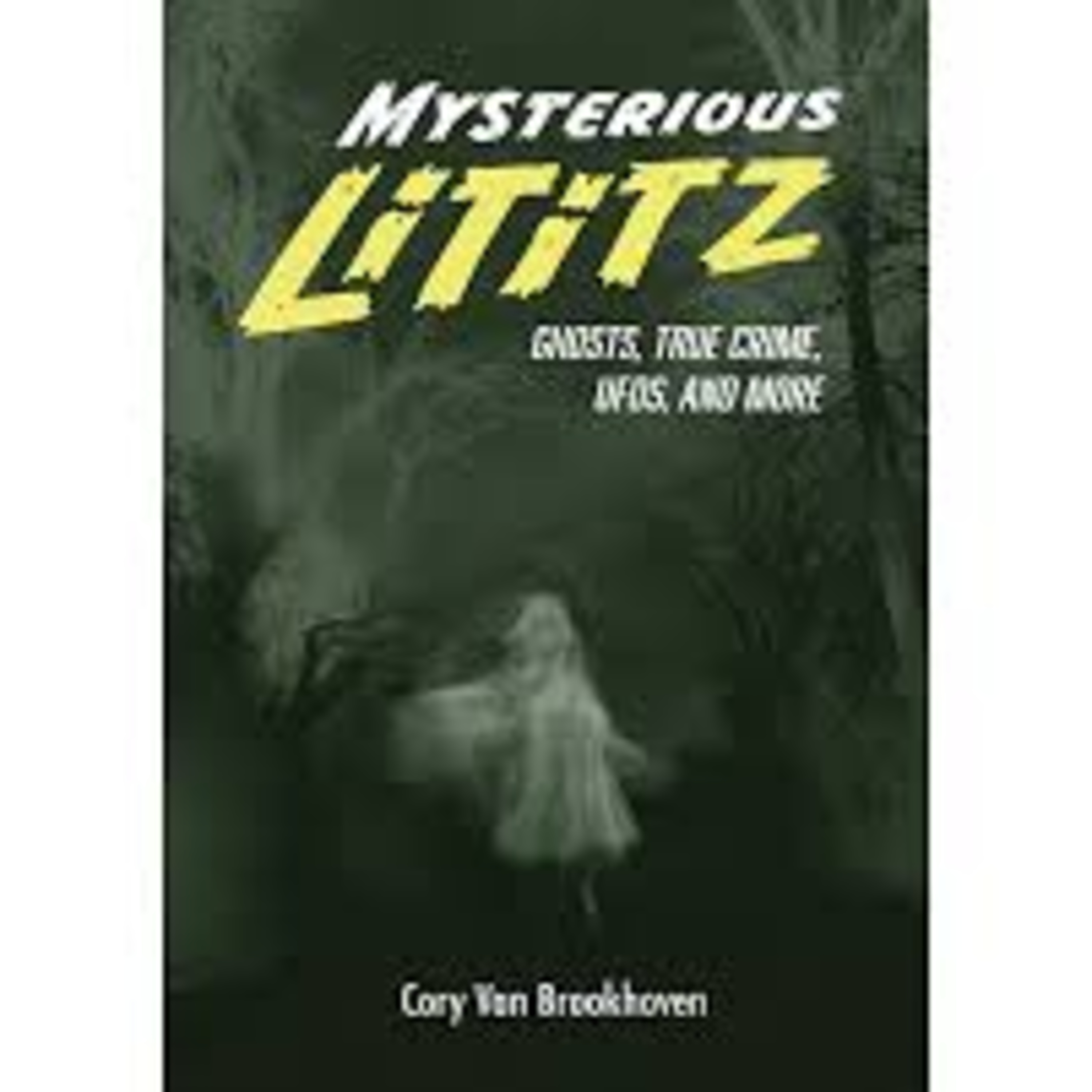
Alan Bishop presents the 2025 edition of the Distiller’s Aminac, a comprehensive, hand-written calendar combining distilling practices, astrology, folk magic, and Hoosier mythology. Designed for enthusiasts of the paranormal and agricultural traditions, it features original contributions from distilling experts and includes unique elements like a circular format and a focus on folk sayings. The Aminac is available in digital and physical formats, with the physical copy shipped directly to customers and optionally autographed. This release follows a successful 2024 edition and reflects Bishop’s passion for blending practical distilling with esoteric storytelling. The episode then shifts to a deep dive into Littits, Pennsylvania, where Cory Van Brookhaven, president of the Littits Historical Foundation, shares verified ghost stories, true crime cases, and UFO encounters drawn from local newspapers and firsthand accounts. These narratives, including tales of a cursed cemetery, the bottomless pit, and the tragic "Romeo and Juliet" double suicide, are presented with historical accuracy and sensitivity, respecting privacy by omitting personal names and using vague locations. A key theme is the preservation of local folklore and traditions, such as powwow magic and old recipes, which are still practiced in the community. The stories reflect a rich, uncorporatized small-town heritage, where history, mystery, and spirituality are deeply intertwined. The conversation highlights the importance of preserving oral histories through books and community archives, especially in rural areas where such traditions are fading. Bishop and Van Brookhaven both emphasize the authenticity and cultural value of these stories, with Van Brookhaven noting that many residents still believe in them, even if they seem unbelievable today. The episode concludes with a call for more small-town historical documentation, suggesting that such stories could restore a sense of connection to place and history for future generations.
This is Alan Bishop, the alchemist of Indiana's Black Force.
Hey, if you're a fan of Distiller's Talk, or the one piece of the time Distilling Institute,
or our other show, if you have ghosts, you have everything, and have a general interest
in distillation, agricultural-centric activities, and/or astrology, the paranormal-high-strangeness,
14, and all of those categories of interests.
We've got something really cool for you.
Last year, we set out to create the world's very first ever practical Distiller's Aminac
with the 2024 edition.
This year, we've expanded on that with the 2025 edition, with multiple original articles
by myself, as well as other contributors, such as Wayne Herbert from Ozark Stillworks
and Christopher Conrad from Bad Motivator, amongst many other contributors.
This year, I actually hand-wrote all of the calendar pages and created a unique circular
calendar, specifically for Distiller's of a bit more Heather than Bents.
Listen, if you want to plan out your distillations for the following year, and you want to contribute
to the world's first Distilling Aminac ever, and if you're at all interested in folk-magic
folk sayings, and like, or more type reading, the 2025 practical Distiller's Aminac is the
book for you.
It's available now, only at the alchemistcabinet.com in the warehouse.
Go over and put in your order today.
And since the new year has already started, we've decided to make this really practical
for you guys.
So we bundled this as a digital and a physical edition.
So the digital copy is yours, the minute that you actually buy the Aminac.
The physical copy will come mail directly to your house from us once we have those physical
copies in hand.
It is currently at the publisher, and it can be autographed if you so choose to have it
be as such.
Guys, I really appreciate all your support.
The Aminac is by far my biggest passion project and something I truly love, and I hope
you guys will support it.
Love y'all, later.
The world is a confusing place filled with all manner of sparkling illusions, of lesser
magic, and hucksters of all stripes, who strive to cloud our consciousness and repress our
inherent curiosity, to subvert our thoughts and shatter our dreams.
The sad Carnival Barkers seek to turn the sacred to the profane, and use our most basal
and carnal human emotions against us.
If you feel that you're being lied to on the daily, and let us stray from what you know
to be primal truth, it's because you are.
Can any of us that consider ourselves spiritual beings truly look around at the Carnival Barkers,
the performers, the sad clowns and the caged animals, and believe even momentarily that
any of this is as it should be, my name is Alan Bishop.
The alchemist of Indiana's Black Forest, the keeper of the blue flame, the stiller,
farmer, storyteller, author, reenactor, tinker, and your host of.
If you have ghosts, you have everything.
If you notice the world grows stranger daily, that something is out of focus, that spirits
are stray, the veil, if it exists at all any more, is paper thin.
The frequencies both higher and lower, bent and broken, are immortal souls trapped in a
physical prison that doubles as a soul school, something is coming.
Are you ready?
Join us as we lift the veil of ISIS and reach with us into the ether.
On if you have ghosts, you have everything.
Hey guys, welcome back to a brand new episode of If You Have Ghost You Have Everything.
And tonight, really, really cool episode, I think, I have an author of a book about one
of my favorite towns, Littits, Pennsylvania, so it's called Mysterious Littits, and it's
Cory Van Brookhaven, I'll get that out eventually.
But before we get to the interview and we get talking about Littits and Mysterious Littits,
the book, et cetera, I want to remind everybody, if you're at all interested in the practical
of the Stillers Almanac, the 2025 edition is available now at the Optimus Cabinet.com.
It's much like a Distillers Almanac, it's got all the astrological charts and all that
stuff in there, all the daily stuff.
There's a lot of Hoosier mythology, Hoosier folk magic, general folk magic.
There's a little bit of fairy tale stuff in there, some old folk sayings, things like that
and of course distilling related articles and agricultural centric articles with contributions
from several other people in the distilling industry.
So go out and get you a copy of that and help me feed myself, you know.
So there's that whole thing, but all that sort of out of the way.
So I am a huge fan of Littits, Pennsylvania, Eric Wolf, who we've had on the show in
the past.
My brother, as I call him, we're very, very close.
We have a very cool distilling project going on that we call Wolf and Wilson, where we've
taken an old late 1700s proto-mashable for a rye whiskey from Pennsylvania and recreated
that and then also done some modern spins on it.
And I fell in love with Littits the first time I went there just because, I don't know,
if you imagine sort of an East Coast sort of picture-esque sort of town, that's exactly
what Littits is.
But it's not, it doesn't seem to be illusionary in any way, shape or form, it's the first
place I've ever been where the crossing guards actually go, they're way to wave at you.
And I've never seen that before.
So and even being from the small town I'm from, that's not necessarily a thing that happens
here in Hoosier land as it were.
So I love going out there, I love spending time out there, I love the history out there.
It's one of the only places I know of that you can, you know, I go talk to Eric or I go
talk to his dad, Jim, and you know, they're talking about all the old distilleries that
were out there.
And they're like, oh yeah, the ruins of that one are right down the road, we can go check
that out and go capture Yeast or whatever.
So Littits is beautiful, it's quaint, it's full of talent and apparently full of mysteries.
And our guest Cory here is here to tell us all about those mysteries.
And I think he would be best served to kind of introduce himself and tell you exactly
who he is.
Yeah, thank you.
So my name is Cory Vembroke Kovan, as you said.
And I'm the president of the Littits Historical Foundation, which is our town's historical
society.
I joined the society in 2008 and worked my way up to vice president.
Then in 2013, worked my way up to president and effective January 2nd, 2023.
They were foolish enough to hire me full time with pay.
So I must be doing a good job.
I oversee everything.
I mean, we're very much a tourist town. We're not a large town.
We have a population of just about under 10,000 people.
We have a lot of historic buildings.
We have a lot of great restaurants and parks and a lot of great events.
So my job is to oversee two historic buildings.
We have an event space where we have outdoor, it's an outdoor event space.
We have outdoor concerts.
We have weddings there.
And I have a staff of about 45 people or so, if you can believe it.
And that's comprised of board members.
We are a nonprofit.
So there's a board, directors.
We have an army of event volunteers.
We have a gift shop.
We have about a dozen tour guides that we pay.
We have a part-time archivist that we pay.
So I oversee anything from fundraising to scheduling to developing and maintaining tours,
making sure every day runs smoothly.
Answer questions, put out fires.
Sometimes I'll jump in at the desk and help bring up gift shop sales and sort of wearing
all the hats and for a small nonprofit, that also means, you know, as they say, chief
bottle washer and toilet scrubber.
So no job is below me, trust me.
That's a great staff for a historic foundation or a historical society.
Yes, so we're very lucky and we know that we're in a very unique position.
Being a historic town, a lot of our visitors are of course tourists.
So you know, that's what drives our dollars for the most part every day.
So we give a variety of all different kinds of tours.
We do a walking tour of Main Street.
We do a ghost tour of Main Street.
We do a, you were talking about Eric Wolfe and Jim Wolfe at Stolen Wolf.
We do a whiskey and history tour with them.
We did 16 of those from March until October of last year.
And we have 16 planned for this year, for 2025.
We also do a departed spirits tour in conjunction with the Linus Moravian Church.
We do a guided house tour of the 1792 Jewellern House.
So yeah, we're busy.
I mean, at any given day on a
during the week, there might be three, four tours going
in three, four directions.
So it's a lot to juggle.
Again, being a tourist town, we're also very seasonal,
even though our museum and gift shop are open year round,
and we give indoor tours year round,
our busiest time of year is May till about the end of October.
So right now, we're talking about this,
we're talking now in January.
January is a slow month because of the winter and the weather.
But that's sort of the time of the year
where I can not kick back, but to take a breath,
plan the year out, get everything lined up,
and March 16th is when we start outdoor tours.
Sometimes that could be a little chilly.
So we kind of, as the weather gets warmer,
as we go into April and then May, by the time we hit May,
it's we're going full blast.
So January and Port of February, like I said,
are the months that I sit down and kind of map out
the whole year, figure out if I have to hire anyone new,
expand on our programs, we do four lectures
at the Liddett's Library.
So I book all the guest speakers for that.
So yeah, they absolutely keep me busy.
- That sounds like it, yeah, I'm going to have to get over there
and check out some of the tours
and check out the Historical Foundation sometime.
Anyways, without a doubt, so I will plan that into my trips,
but you forgot one of the most important parts.
You guys have pretzels.
- Yes, of course, so we're also known as the town
that has the oldest commercial pretzel bakery in the nation.
And that was started in 1861 by a gentleman
named Julius Sturgis and the become,
I mean, we get visitors from all over the world
and they come to Liddett's for different things.
We're only a couple doors down from the pretzel house.
So that certainly helps us and we like to think,
we help them too, because we're finding when people come
to Liddett's for the very first time,
typically, or at least a lot of times,
they stop into the local historical society.
Every time you visit a town,
you want to learn about that town's history.
And while they're stopping in to visit with us
and learn about our town, they want to know,
well, what else is there to do?
Where can I eat?
Is there anything special going on today?
Any kind of event or any kind of, I don't know,
special thing that we should know about?
So we also kind of act as ambassadors of our town.
I mean, you never know when someone walks in our door,
if they're going to be from two streets over
or another country or five states over.
So just to give you an idea about that,
in our historical society last year,
we welcomed over 91 hundred visitors
from 48 states and 34 countries.
Wow.
Not that came to Liddett's,
just that came through our door in our museum.
So that's impressive.
That's real impressive.
Yeah, and you also got a man, I can't believe I forgot
the name of it, the. - Wilbur Truffle?
- Well, you also got that big good shop there in town
that does coffee and everything too.
What is the name of that?
- Well, there's Ziggs, there's Doci Doe.
- Doci Doe, that's it, yeah, oh man.
I just need to write them a check
before I come down next time,
just to pay for the whole week.
- Yeah.
- It's a problem.
It's a problem.
- Well, and you know, that's a thing too.
I mean, I always tell our staff
that when people ask what's your favorite place,
where's a great place to get a coffee?
Where's a good place to get beer?
Just give them your favorites.
Don't tell them what you think they want to know.
I mean, where can I get a slice of pizza?
I mean, tell them your favorites and it's great.
And you might get three or four different choices.
So, yeah, we try to spread the love too.
I mean, it's kind of nice that we don't. I mean, obviously everyone has their favorites.
You like Doci Doe and as do I, but we're good about,
and not always talking about the exact same things.
- Absolutely.
- Who's there?
Because people might come in and say,
well, we were here last year and we really like Doci Doe,
but we want to try somewhere new.
And so that's pretty cool too.
So we try to spread the love.
- Yeah, I think that's one of the things
that I love about Let It's Too, as a real quick aside is,
it seems to be one of the very few American towns
that has not just been corporatized by everything
that is industrial corporate America.
I like that, I prefer that.
And I think because of that,
you guys have held on to a sense of character
and a sense of history in a way that a lot of places haven't.
And I think to some degree that's true of Pennsylvania
in general too, is one of the things that Eric and I talk
about all the time is the way that things that were carried
by the Germans from Pennsylvania into Indiana,
whether they be Moravian or they be Anabaptist
or they just be common folk.
Indiana doesn't hold on to those folk,
hasn't held on to those folk traditions
and as authentic of a manner,
and a good example would be,
and we'll talk about this a little bit more
than one of the chapters in the book,
would be with powwow magic, right?
Out here, no one has a hex on their barn
because if you said that,
someone would be very angry that you called it a hex.
It's a barn quilt, right?
And they don't remember where it came from or what it is,
but it's a hex and I make sure to point it out
to them every chance I get, but yeah.
And I'm sure that as time goes on,
there's, that's part of the point
of having a historical foundation, right?
Make sure those things sort of live on
so that people don't forget about them,
but it's sometimes hard for sure,
but you have written a fantastic book
that can be, you can set down and read this in a day,
two days, I've literally read it a couple of times now,
went through and bookmarked it several times.
Great, great stories in here that are easily digestible,
nothing too heavy for anybody,
nothing too, not, you know, not rated R,
there's, there may be a passage or two that's PG-13
and content as far as what happened historically,
but that's part of things.
And I'm very curious how you got interested
in the ghosts, the true crime, UFOs, and more there
and lititz and what drew you to writing this book.
- Right, so this is my fourth book
and my last book came out in 2011.
So I thought, I'm overdue here
and I really need to scratch the itch
and one thing that's always fascinated me
is a good ghost story.
And lititz, like you were just talking about,
being an old town, being very much an authentic town
with any small town, with any historic town like lititz,
you're gonna have your share of ghost stories,
of tales of the unexpected, unexplained phenomenon,
things like that.
So I did a lot of research.
I also wrote for the newspaper back in between 2018 and 2020,
the lititz record expressed a newspaper.
So some of the stories that are in the book
originally came from those newspaper articles
which I kinda rehashed and rewrote and updated and so forth.
So I gathered up all these stories.
On top of that, I did a lot of research.
On top of that, I talked to a lot of people.
And the first question is, well,
I have all these tales.
Is it enough for a book?
And is it gonna be more than just ghost stories?
Because as you said, it also has to deal
with true crime and UFOs.
I thought, well, I have a handful of true crime stories.
I have a couple good stories on UFO sightings,
but not enough for a book for those topics.
So why don't I just kind of combine them all together
and spooky stories, you know, UFOs and true crime
kinda fits into that and tales of murder and so forth
and bootlegging and organized crime and prohibition
and all that.
Why not just kind of wrap that up into one book
and call it mysterious lititz
with the subtitle Ghost True Crime UFOs and more.
So it's kinda all in composing.
Another thing I made sure that I did was,
and to me, this is very important.
And I think it's just the right thing to do.
All the stories that are in the book are,
first of all, are true.
And what I mean, true, it's either first hand accounts
or things that actually happened
or things that were published in the newspaper.
Some of the stories certainly have maybe been exaggerated
and some of the stories from the 1800s,
but these are all actual accounts of things
that supposedly happened and were documented.
But what I was getting at was it was very important to me
to get the permission of the business owners
or the building owners of the businesses
and buildings that I talk about.
You'll notice in the book, I don't use any actual names.
I might name the location of the business,
but I'll say, for example, the husband and wife team
that owns the business have noticed these things.
I haven't said Tim and Mary Smith, you know.
Sometimes they didn't want their names mentioned,
but you can mention the business.
Other times, don't mention the business,
don't mention our names, but kind of give hints
and kind of kick around the location
so people can kind of put it together.
- Yeah.
- To answer a question that you were going to,
that I think you were going to ask a couple of minutes ago,
as far as some of the things that weren't in the book,
Yes, there's probably a. out a half a dozen stories that didn't make the book. And the reason being is I was kind
of disappointed, but I also understood. I went to every business and you know sometimes in
some cases they knew about the stories and sometimes they you know they told them to me.
Other times if they were a newer business owner they had no idea that this happened at this
building or so so I saw a permission and sometimes unfortunately it was a no a hard no. Most of the
times thankfully it was a yes hence the book but there were times where people just said no please
don't mention us please don't mention our business and I respected that so yeah there's probably like
I said about a half dozen really good stories that just weren't published so that is what it is.
There's still time for people to say yes. Yeah and maybe they'll be a part two book but
you know so you know to me that was really important to me being born and raised in
Lidditz too I know these people outside of just a business setting so I respected that again lucky
for me most people kind of embraced it and you have two philosophies at play here you have
some of the business owners that really love the stories and you know share it openly and freely
with their customers and they feel it's a draw other business owners are like yeah that definitely
happened yeah I definitely heard about that but I think that's bad publicity for for our business
so that was a no go so there's definitely you know two sides well and two little two little
sides here that are interesting I mean you know you mentioned riding for the newspaper and also
going back to the newspaper articles and what a treasure trove newspapers are and and definitely
worn unfortunately you know sort of dying out nowadays which is going to be sad for future
historic researchers when they have to comb through social media and see how badly people lie
about themselves yeah yeah as opposed to having a third party right something about them oh my gosh
I never thought of it that way I mean back check back checking and research is is you know is key
for sure absolutely you know and there's a long history of books like that being written here in
Washington County Indiana we have a what I call the Bible of Washington County history there's
there's really three of them but the one that I love the most is the hardest one to get and it's
called pioneer pickings and what it literally was I tell you this is I think you would really like it
gentlemen who wrote it he owned the Salem Democrat he had a pretty shady background involved
with the Knights of the Golden Circle and what eventually became the KKK the treason and Indian
trial etc but the one thing that he did that was truly great was he ran a newspaper column that
was called pioneer pickings and he later took pioneer pickings and turned that into a book called
pioneer pickings big huge thick heavy duty volume and it's where he would go back and he would
interview in the 1860s anyone who was born or was still alive or was still alive from the time period
from 1806 up through about 1830 and get all those firsthand accounts and it's just it's just an
absolutely absolutely wonderful wonderful book the second aside I don't remember so I guess
it wasn't that important I know there was something in there that was important but I don't
remember what it was I'll probably it probably pop in there in a little bit but I went through and
as I read and read through several things marked some of the stories that I really really enjoyed
in here and I'm always up for a good lost cemetery story right because there's there's so many of
those throughout the countryside different places and they get covered up and I really really
enjoyed that and and I was only thinking to myself you know having grown up with a little bit of
folk magic in my family like gotta get somebody out there with dowsing rods you gotta get somebody
out there to dows and see if they can find something but that being said I'd love to hear what
some of your favorites from the book are well the one you mentioned about I think you're talking
about the lost cemetery of Trichardberg out in the countryside like you said that's that is an
incredible wild story which that was one of the ones that was in the newspaper the local newspaper
here in the in the late 1800s and it wasn't just a small blurb in one issue that story was sort
of perpetuated throughout I think across over about a month's time because people were writing
about it asking about where this lost cemetery was and then people were writing back saying I don't
live here anymore I'm now in Chicago but I get I get the local paper and here's what I know about
the cemetery and somebody else contributed in other story so this kind of went on for several weeks
and it's just a crazy story about not just the lost cemetery but a cursed cemetery there's
several people that committed suicide during the funeral for one of the folks that committed suicide
the horse that was pulling the casket you know during the the cemetery or you know digging the grave
the next morning it is said that the horse hung itself in this in the stall in its stall just crazy
cursed area to to this day as far as I know there's no real evidence that has been found in that
area of any kind of cemeteries or stones but you know that cemetery is so old that it could be
long gone and just like I say in the book it is indeed a lost cemetery I mean we may or may not
know or we may not may or may not know any find any actual proof but why would they
particular area and say okay here's a cemetery you know why would all these people contribute
their thoughts and stories to this particular area there has to be there has to be something to
that it's not just it's not just a tall tale I mean why are all people it's sort of like you know
UFO sightings why why is everyone describing the same exact thing is it you know even before this
is all of course pre internet this is going on for many many many decades so I think there's
something to to that cemetery I would suspect there is two and the first thing that came to my
mind when I read that story so here in southern Indiana and this may have been true in Pennsylvania
too depending on the time period but there was a time period here in southern Indiana where if you
committed suicide they would not give you a gravestone they just they would not give you a gravestone
it didn't matter in fact one of the one of the moon channers from the early 1920s our researcher
Bailey bowling it took me years to find his grave because there was no gravestone for him because
he had committed suicide by shooting himself in a cave and there are still for years I was on
the cemetery commission here in Washington county kind of officially unofficially but
we would get calls about gravestites that people were finding on property with no gravestones and
sometimes gravestone is missing you have another story in here with a gravestone that's that's found
at a house yeah and I've seen that before too where it was part of a foundation of a house right
and it it was an old stone that had washed out of the river somewhere and some I just said well
that'll make a good foundation stone for something but and the guy did have a new stone but
yeah there there are cases of people not getting gravestones because they were so much shame associated
with the idea of suicide so and it immediately brought that brought that up for sure and I
thought that was really interesting there was also the the story in the book that you know involving
graves with the the spot in the cellar if you and I know I'm asking you about your favorite
stories too but I was getting excited about some of the ones I read but yeah of course that I'll let
you sort of expound on that because I thought it was interesting that there's no real like resolve we
still don't know what that was for so that's the end of suitor grave I think you're talking about
right yep yeah so so the backstory there is a lot of people are probably familiar with the name John
suitor a gold was discovered on his land during the gold rush in recent years he's become sort
of a polarizing character well what you may not know is he let he he lived the last nine years of
his life in litus Pennsylvania and there's sort of a long story as to what he was doing in
litus long story short was two things he wanted to live close to his granddaughter that attended
the girls school down the street from where he lived but also moving from California to to
Pennsylvania was able to allow him to travel to Washington DC back and forth to sort of lobby
for money that he felt he was owed you know the government took his land during the gold rush like
I said due to what's you know eminent domain and he sort of fought that for a large part of his
life so that's sort of like the longer story there but anyway the takeaway is like I said him and
his wife lived their last years out in litus their house still stands it's it's a retail store now
their house still stands and his wife Anna who died one year after him there's a mysterious grave
stone down in the basement of one of the older 1700s buildings and litus and it's in the shape
of of a tomb down there so it's sort of like a shape of a coffin which is cut out under you know
on the bottom of the floor on on the floor and on the top of this uh crypt I'll call it it's written
and a Sutter a NNA as you T T E R and the thing is definitely old and you know so the question
remade is she buried down there no we know she's buried with John Sutter in the Liddith Maravian
Cemetery
maybe about a thousand yards from from that location but the question remains
you know it's such a random name why would someone pick her and it's kind of
etch her name on the top of this tomb there's nothing in the tomb it's not
super deep it's maybe about two feet deep they did prob it they didn't find any
remains they didn't find anything and it's in the quarter it's in the corner of
this old basement this dirty dusty basement so yeah I mean it's such a weird
random thing and again it's like why her you know that there's got to be a
story if it was a prankster they they would have put somebody else's name
there that's more obvious or more widely known so absolutely absolutely
yeah before I mentioned anymore of my favorites because I kind of interrupted
you there I do apologize please I'd love to hear a couple couple more the ones
that you're really into oh I mean they're all my I it was such a blast putting
this book together and and writing it and I had a really good friend of mine who
edited it for me and talking to all these folks and as I did these book signings
last year the book came out in May of 2024 and I think I did about 14 or 15
book signings last year and I would do these book signings and and one of my
favorite parts of this journey was people would come up to me they they bought
the book previously or I had just given a program on the book and then I did a
book signing they'd come up to me they were locals and they'd say hey you know
my house is haunted here what here's what happened so you know we were talking
earlier about hey maybe they'll be of volume two maybe there will be it was
great to hear these these folks stories yeah but yeah I mean geez I have so
many favorites I love the the the bottomless pit story which isn't necessarily a
ghost story but that's another example of something that was written about
many times in the newspaper I know my grandfather who has passed away he grew up
born and raised in litus and he knew of the bottomless pit and that's sort of a
thing that was passed down from generation to generation the pit still
exists it's still there after all these years and I mean to kind of give your
listeners an idea of what we're talking about it's it's this hole along the
side of a country road road next to an Amish farm where supposedly through the
years people have put major appliances in there and put fishing line down there
with a sinker and it's never hit bottom those things are true some of the
things that might be exaggerated or you know the one of the tales is a cow
fell in there and came out in Australia or all these other kind of you know so
some of these tales start out accurate and you know you hear things I guess
that could happen and then they start to get a little bit funky and out there
but the bottomless pit is again another great example of there's really no
answer it's something more than just a sinkhole we know that for sure but
yeah I have no explanation but that's one of my favorite stories I thought
that was great too because especially the the person talked about being afraid
even drive by it yeah because you can imagine like you know your dad your
grandpa right you're acting up as a kid and you know well you know you don't
end up in the bottomless pit or you know you might end up in China or you might
end up in Australia you know me who knows so being that the pit is still there
I know of people like I said in my book that refused to drive down that road
let alone drive down it when it's snowy and icy because God forbid they lose
control their car or truck or SUV ends up in the pit and they're never heard or
seen from again that's still a real thing now part of that is you know maybe
fable that's been passed down that their grandparents or their parents told
them about but you know maybe they're just superstitious I don't know but I
mean this is a real tangible thing that and that's another place where
I don't give the location I don't give the street name God forbid you
somebody plays around there I mean worst case scenario they might fall in and
drown I mean it has water so I mean I I tried to in those types of stories in
the books I tried to be very vague as to the location it's funny going back to
when I did these book signings and presentations last year I would I would the
bottomless pit is one that's in my PowerPoint and I talk about the bottomless
pit and some of the older residents of town that are there you know watching my
program they said oh I knew all about the bottomless pit my grandpa talked me
told me about that and so it's not just me I mean a lot of residents know about
these things so another favorite story of mine in the book has to do with Harry
Thaw who came from a very wealthy family out in Pittsburgh and he went to a
private boys school in Lidditz and long story short he had some mental illness
and he ended up murdering Stanford White who was a very famous architect he
murdered Stanford White at close range with a gun on the rooftop of the
Madison Square Garden in New York City and he was eventually put to trial and
his trial was known as the trial of the century so long before OJ Simpson's
trial which were a lot of us are familiar with this was known as the trial of
the century and it was a hung jury so it went to court again he was finally
convicted spent some time in jail finally got out and was in and out of prison
his whole life eventually you know he's now passed on he got involved with the
young young lady a model her name was Evelyn Nezbit you can look that up she
was a very very famous cover girl he was a lot older than her he fell in love
with her rumor has it that she had some sort of affair with Stanford White and
that made Harry Thaw very very jealous again I mean this is a whole chapter in
the book I'm sort of paraphrasing here Thaw and Evelyn Nezbit eventually get
married he you know just just beats her and tortures her and just treats her
horribly and she's trying to get out of the marriage somehow eventually she
does get out of the marriage so it's a whole long story so again you know I
mentioned this but the connection there is he Harry Thaw the murder victim or
excuse me the murderer attended school here in in Liddett's as a young boy and
he even back then he was a troubled boy and as a matter of fact his school
teacher Abraham Rankie Beck testified against him in in the second trial so
and that trial I mean yeah that trial I mean again the way newspapers were they
covered everything and that was almost I mean that was a national story so
almost every major newspaper in America covered the Harry Thaw trial yeah I
also I remembered what the other side was now that I was going to get to which
was the thing that I've run into here researching distillation history and
Southern Indiana is you know the the Knights of Golden Circle what became KKK
they were big in the Temperance Movement they were involved in the in the state
government here unfortunately and so later on in history long short of it is they
would they would treat distillers much like they would minorities and burn
crosses in a yard try to get them out of business whatever but I'm created so
much shame that I have ran into this and I wonder if you have this too because
you were talking about business owners etc but what I ran into here was
families that would get mad now bear in mind my family's not from here my
families all from Eastern Kentucky so and they came here in the 40s but
because of that I don't have those deep roots here so for me as a researcher it's
kind of fun because I don't have any shame that I can uncover about my family
up here right but I have had people get very angry at bringing up you know your
grandpa was at the stiller all my grandpa wouldn't have done anything like
that but well I have tax records I mean but but I get it you know I you have
to you have to tread carefully these are your neighbors and your friends you
don't want to you don't want to hurt their feelings so I didn't know if you
ran into any of that with any of these families or anything either yeah I mean
I certainly did like I said I mean those stories didn't make the book it's a
shame but I respected that and I still think it's still a pretty good book
it's a great book thank you yeah it is just what it is I mean to me again being
born and raised here it was important to me to get the buy-in from from the
families or the business owners who experience things so I just kind of let
the cards fall where it may thankfully most people were were very supportive and
very receptive and and and like I said I mean there were situations where oh
yeah you I'll tell you everything just don't mention my name or here's what's
going on but don't mention my business exactly but you can kind of you
know sort of hint around and and I think what most people can can put
two and two together, but I don't want my husband to find out, or I don't think my wife will be happy,
but it's okay if you don't say our name, but say that it's on Main Street somewhere,
you know what I mean? And honestly, I mean, reading between the lines there, I get what they're trying
to say, you know, you do enough research. It's not like we have a population of a million people.
You kind of look at the description of what I'm talking about and figure what street it's on,
and I think most people can kind of put the pieces together, and that was completely fine with
everyone, so. Well, I do two things in here that I also absolutely loved was, you did the section,
the art of powwow. I am a huge into folk magic practices. You know, that's all sort of having
a little bit of resurgence right now. In fact, there are some new additions of, oh, what's it called,
the long lost companion that a long lost friend, yeah, long lost friend, yeah, that have just
recently come out. And and also the cunning man's handbook from England, there's a new addition
of that as well. So those things are sort of, you know, at the tipy top of certain people's interest
at the moment, for sure. And I noticed in this in that section that you did that you also had a
book there at the foundation that was a book worth having. I may have to may have to make a donation.
You guys get some scans of that bad book. I would love love to look through that. I saw that
also had apple wine recipes and ginger beer recipes. Yeah, that's that's right at my alley. I
would I would love to be able to take a look at that one of these days. So yeah, we have we have a
pretty pretty impressive archives and collection. It's always so much fun going through that. And
and that book that you're referring to, I mean, you're right. Some of these books, you know, weren't
they were just passed down from family to member to family member. They were recipe books. There
could be little adoodles are drawing in it. There could be recipes for things. And then you turn a
page and now here's how to remove a war next page. Here's how to make blackberry brandy next page.
Here's how to make root beer. And you never know what you're going to see page to page. I mean,
it's kind of a catch all. And again, these these these books, as you know, were passed down from
generation to to generation. And yeah, I mean, that that was another fun section putting together
involving powwow. The picture in the book, the one chapter is on powwow is is of my great great
grandma who practiced. Wow. Yeah. So they say it's it's it's you know, it's in my blood line.
And I've never explored it. I would maybe someday like to see if I have that gift.
But they say that's it has to be passed down from one family member to the next. I guess you can
learn it as well. But it's a little bit more prolific if if it's if it's in your blood.
Yeah. Those those little folk remorse like that. I love that kind of stuff. Even even the more even
the older more esoteric ritualized stuff like it does not anything that I'm going to get into
personally. But I love reading them. I love researching them. And the more, you know, I prefer
the ones that are the handwritten ones. I think that there's something just inherently
authentic and amazing that any of that stuff even even still exists. But I had I told Eric
earlier, when I saw that in here, I went back over the book. I said, man, you got you got to get
down there and go see there might be recipes in there that we can use for our next project, man.
That's right. So that's right. Which brings me to the next thing with recipes. You have a section
in here on the hot backer distillery. So I don't know if Eric told you or not, but we actually we
we may have harvested some yeast from that that site. Oh, that's great. No, he didn't. Yeah. Yeah,
I'm trying to remember what the name of the other distillery was ever two that we got yeast from.
But yeah, we got that to use in our project. You know, it's it's whatever yeast is
their predominant environment, but because there was a distillery there, it's alcohol tolerant yeast.
The stuff we captured is alcohol tolerant. So it's at least more than likely a descendant of
whatever was there in the environment. So that's great. That's fascinating. Yeah.
The other one that I really loved, of course, it makes sense that I would was the Hannah
Heatherley story in there. And a really cool thing about that. I'm sure you probably already
know this, but the, you know, she was she was kind of a at least known locally as a little bit
of a witch, but also practice powwow and a clairvoyant. But you had mentioned her doing treasure hunting.
And yes, a lot of people don't realize that that a lot of those old grimoires were specifically
about calling on powers that be usually lesser powers in solomonic magic demons usually to
reveal the sight of hidden treasure. And yeah, yeah, that's that's another one of my favorite stories
in the book. That thing is that chapter is so crazy and so wild. It's hard to believe.
Apparently it did happen. It was documented again several times in the in the newspaper.
The local newspaper. That story also was published in so many other national newspapers around
the country, as I mentioned in my book. So yeah, these treasure hunters thought that there was gold
buried somewhere in the outskirts of litus. So they hired this witch or this powwow practitioner,
Hannah, Hannah Heatherley to help them find it. And the long story short, you know, spoiler alert,
they never did find the treasure. They they dug all these different holes at different times of
the day and night and did prayers and did all kinds of things to help the treasure rise out of
the ground and all these spells and chants and prayers and nothing ever materialized. But like you
said, that was a real thing. I mean, people were just it was a different time. And even when you
read how people wrote newspaper articles back then, they didn't hold anything back. I mean,
when they talked about a murder or somebody getting maimed by machinery, I mean, they went into
gory details. Oh, this person's limbs were ripped apart. And it just a different style of writing
that you could not do today, at least in in a newspaper. But yeah, that that story about Hannah
Heatherley, I mean, you could probably write a whole chapter just on her because, you know, she lived
by herself. She was sort of misunderstood. And people like you said, referred to her to her
as the local witch. She did powwow, which back then was a lot more controversial. People didn't
understand it. People associated it with the devil or black magic. They didn't know or realize
that true powwow practitioners always had a Bible handy. They always prayed. But yeah, that,
you know, that's definitely that that that that was that was a blast putting that story together.
And as I was writing it, I'm thought, okay, I'm putting this together based on the research I found.
But once people read this and read how some of the crazy things that they did, they're not going
to believe that this actually probably happened. So it's such a those subjects are so interesting.
Anyways, because you're right. They don't they don't believe those things happen. But it even talks
the way that, you know, some of the spirituality was was at that time. The religion was at that time
that with certain groups, whether they be cunning folk or they be powwowers or they be
in the solomonic magic. The the idea was that, you know, whatever these whatever these forces are,
you have faith in God and then you have control over these forces. And some of these forces have
been here for a long time. They saw stuff put away by crooks and criminals and then you could find
it. Yeah. All that treasure hunting topic is I think it and and and some of the grimoire stuff has
become popular to because to some degree for better or worse. There's still this sort of mystery
around Mormonism. And now the Mormon Church has moved to be a little bit more open about what
the roots really are and what they were acknowledged to be up until, you know, into the 20th century.
But, you know, no, no treasure hunting using grimoires and spiritual forces literally no Mormonism.
It doesn't happen without that. And I think I think that that story has driven some of this a little
bit where people are like, oh, well, what else is is out there that has foundations that I didn't know
about, you know, and I think that I think that now is the time that those stories are starting to
finally gain some traction again. I think too that, you know, whether it be podcasts like what I'm
doing or podcasts that go in the spirituality and all that sort of stuff, I think too there's
there's a little bit of, oh, almost a modern somewhere in between the spiritualist movement and
the new thought movement seems to be at the forefront of society at this point in time for some
reason. I'm not entirely sure what's causing that, but it's definitely there. So one of the other
ones I love, so I love the the meravian connections, obviously, and that's such a big part of
litates. The buildings there are absolutely beautiful and the use of the of the how I forgot what
it was called the the brother's hall. The brother's house. Yeah, the brother's house as as a hospital as
well as the the soldiers that were buried and lost for quite some time because they were in an
unmarked grave and and those getting moved back. That was believe it or not, and I'm sure Eric
probably told me but I'm so overwhelmed looking at everything there and thinking about everything there
that it just slipped my mind, but I thought
that story, the resolution of that story, with litids having the cemetery, basically already ready,
as well as the story of the soldiers marching down the street. That was, man, that's a great story
considering the upcoming celebration in the next couple of years. Yeah, for sure. Both of those
stories are pretty creepy, especially the one. When I was writing the story about the soldiers
walking down the street, this was a town just east of litids called Rossville. It's a smaller town.
It still has a litids address. That gave me goosebumps from that one out. Every time I read that
story or think about it, it still kind of gives me goosebumps. There might be a direct correlation,
like you said, because the person that witnessed that through their her window,
saw revolutionary war soldiers marching down the street. Just west down the street three miles
was a revolutionary war hospital. There's got to be some connection there for sure.
Oh, I absolutely. Yeah, I think there definitely was. I had recently done an episode about
the wildhunt and imagining the wildhunt, but then going back and thinking about these revolutionary
war soldiers walking down the streets with all their battle wounds, ghostly apparition, and
yeah, yeah, that'll give you cold chills without a doubt, man. Just absolutely phenomenal
stuff. I think you've done a great job and I hope there is a part two. I absolutely hope there is.
You know, I wish that there was some incentive for every small town in America to have a book
like this and there to be a database. How much history do we not have as Americans, as U.S. citizens?
Because we don't live in the right geographic region, we don't have access to newspapers, etc.
And yes, we have the historical societies, but it's so hard to get younger people to go to
the historical societies. And more so than that, not have it in a very easily digestible form.
Your book has done that in my opinion better than any of the ones I've ever seen that are
trying to do something similar as far as it being. Thank you. Approachable. So I really,
really enjoyed it. I also enjoyed, I don't want to get the name of it wrong, I got to find it here,
was it the Romeo and Juliet? Oh gosh. Yeah, that was, so there's. Enjoy it is not the right word.
Right, not quite Romeo and Juliet. That was the Dockardy double murder, double suicide.
So that's, I'm glad you brought that story up. That's another favorite in my book. And I know I've
said that about several stories that we talked about now. That chapter almost didn't make it
in. I had an entire chapter on something that I had to take out because of the last minute,
the folks that I talked to changed their mind and said, please, whatever you do, don't publish
anything about this story. Don't mention, you know, so I thought, oh, okay, well, they changed
their mind. I respect that. So I, I, I took that entire chapter out of the book. And I thought,
okay, is the book going to be smaller now? Or is there something that I can find that I can put
in to sort of make the book the same length that I was hoping for? And I just happen to be going
through old newspapers, you know, you can do that online now, which is amazing and so much fun.
You go down so many rabbit holes. And I read about this double suicide right here in Littitz.
And I had prior to kind of stumbling upon that story. I knew nothing about it. I never heard
about it. So, you know, obviously I took a deep dive and read everything I could on it and
pulled up all different kinds of records online. And, and, you know, wrote a story about it,
wrote a chapter about it. And so that chapter was the very last chapter to go in the book. And,
it was a last minute insert, if you will, because I had to take out one that, as I mentioned,
someone changed their mind on. And it ended up being, you know, like I said, I have these
book signings. Sometimes people read the book ahead of time and bring their book in for me to sign.
And they all, a lot of times are like, oh my god, that Romeo and Juliet story is crazy. And I said,
yeah, and guess what? It almost didn't make it in. And here's why. So, yeah, thank you for mentioning
that. That is, it, it's tragedy. I mean, it's, it's sad. Not all the, not all the tales in the book,
obviously, based on the subject matter. Most of these stories don't have a happy ending.
That was a terrible sad tragic ending. And, again, I don't want to give, give it away fully,
you know, case your readers want to pick up a book and read the story for themselves.
Absolutely. Just think of the classic Romeo and Juliet story. And you'll have a good
foundation of what that chapter is about. Yes, yeah. And with a crazy code at that.
Yeah, for sure, for sure. Yeah. And there's another example of, of, you know, when that murder happened,
and it was published in all these local newspapers, they went into grizzly, gory detail,
which I tried not to do in my book. I mean, I, I rewrote things and sort of tamed it down a little
bit because I want, even though some of these chapters have to do with murder and death,
I, I'd say that it's the book. And I kind of hesitate when I say this, but it is for all ages.
Yeah, I've been, I've been to some book signings where parents are there with their kids.
The kids are 12, 13, 14. And they buy a book. And I sign it for them. And the kids very excited.
And I'm thinking just kind of, oh boy, you know, well, you know, sometimes, sometimes what you
don't say and what they don't see is scarier than what's really there, too. So there's exactly.
And I'm thinking, okay, well, the parents find it for the, the kids. So that's on them. Like,
you know, it's not like some, you know, so, well, you had also, you had also mentioned that you
had written some other books. And I'm curious what all, what all of us you've written.
Yeah. So my first book came out in 2005. It is now out of print. It was on a local strongman
who lived in Leicester County. His name was Jack Fasig. He stood over seven feet tall and weighed
over 300 pounds. He was like, actually wrote two books on him one in 2005, one in 2006. And
a lot of tall tales around his life. He was developed. Dictorian of his class. He was a hermit. He
was misunderstood. Very strong. He would display tremendous feats of strength throughout the town,
sort of like the town character. He could recite Shakespeare. He could recite the entire Gettysburg
address. Aside from speaking English, he also could speak fluent Pennsylvania Dutch, which is
sort of a dine language here in Leicester County. He was a circus strongman. He was a professional
boxer. So his story really fascinated me. And we were talking about, you know, perhaps a sequel to
this mysterious Liddett's book. The reason I have two books on on Jack Fasig is because I wrote the
first book. I thought that was going to be it. Did book signings. And at these book signings,
people would come up to me with all different kinds of stories and give me photos that I didn't
know existed. And boom, the next year I had part two. So those were fun to put together. Then
in 2011, I just had to interrupt real quick here. But you know, there's a there's a trilogy of
books in there. I don't know if you realize this or not. But you need the third part of that needs to
be about Jim Wolfe. Oh, I know. I know. Another character of Leicester County. Yep. Yep. Yep.
Yeah. Yeah. Yeah. You got to get that in there. It's got to happen sometimes. Somebody's
somebody's got to start a start the biography now because it's going to be about 3,000 pages.
We know when we when we do our history tours with stolen wolf, it's a two hour tour. The folks
get a walking tour. And then they go down to stolen wolf and do a sampling. And Jim gives the
tours. Like he we take groups down there of about 16 people and they do tastings and then they get
a tour of the distillery. And they just love him. And you know, he's very knowledgeable certainly
in his own right. But he's a great storyteller, great with people. And you know, like I said,
the tour is two hours. But because stolen wolf, you know, after the tour, after the tasting,
people hang out and have drinks and buy some of their, you know, things and he just hangs out
with them for another couple of hours. So yeah. So those were the first two books. The third book
came out in 2011. It was part of Arcadia Publishing's Images of America series, which is a national book.
Run of books. I'll say you I'm sure you've seen them in in your local Barnes and Noble and
Walmart. Carries them in Target. My book was on Warwick Township, which you've probably heard
and familiar with. So if you think of litids, there's two parts of litids. There's the downtown
area, which is known as litids burrow.
And then there's the township which is the farmland and the outskirts and the towns like Rossville and Burnerville and these small towns, which I have, you know, stories into my book, my mysterious Lyditz book.
So all the non-downtown area of Lyditz is known as Warwick Township.
So my book focused on those small hamlets, those small towns, businesses, history of course, residents who live there.
Those books, those images of America series books are very photo-heavy.
There's basically a big, big old photo on each page and the caption at the bottom is like one or two sentences.
And then at the beginning of each chapter, there's history on that particular hamlet.
So that's more of a photo-heavy book.
So it's more of a photo book than it is something like mysterious Lyditz where there's a lot more words and most of the chapters have one or two pictures.
I'm going to have to track that down as well, for sure.
Yeah, yeah, just type in images of America Warwick Township.
It came out in 2011. I had to think there for a minute.
So mysterious Lyditz is my fourth book. I'm not committed to anything right now. I am kicking around a few ideas of if I should do a book this year in 2025 or not.
I self-published my first, second, and fourth book, my most recent book. Self-publishing I really enjoyed. I published it through Amazon, mysterious Lyditz I should say. That was just a great thing.
I kind of prefer that. I mean, with my Warwick Township book, I work with an agent, which is a national company. And there's pluses and minuses with working with an agent versus doing it yourself, for sure.
But I think I think I'll say if I do do a book this year, it'll most likely be self-published again. You just have more control. I think you have more control. Not that I do it for monetary gain, but you know, that's a part of it too.
You don't hurt. You can set your own prices. You can buy books cheaper and sell them for whatever you want to. It's more out of pocket, certainly. Again, there's pluses and minuses for both.
Well, you know, a book worth having has got a great title. And if it had a forward to it in some commentary. Yeah. And who knows. I mean, there might be a mysterious Lyditz volume too. I have several presentations and book signings coming up this year in 2025.
So you never know who might surface at those signings with stories and maybe some photos. And I mean, sure, if I can get enough stories, combine those with the stories that I wasn't able to publish in the first volume, maybe people will come around and change their mind.
There could potentially be a volume too. I mean, I'm not planning on it now, but you never know. Yeah, fantastic. And we'll definitely have you back when you do any of those sort of things for sure. Thank you. Thank you. Absolutely. No, I can't recommend this book enough. And you know, I know we've talked about Eric Wolf on here several times, but I'm going to mention this too.
Still in Wolf whiskey is getting a lot of really good attention right now. And Eric is definitely a product of the place where he's from.
And if you want to know more about that place, if you're in the whiskey sphere in the whiskey world whatsoever, this is a great book to have to sort of give you a little, little interesting background to some of the deeper darker resources recesses of that area.
So get a copy of it. And if you're at all into ghost stories, paranormal UFOs, that sort of stuff, also a fantastic book. And we'll have links to the book as well in the show notes.
And anything else you want us to link to, we can link to all three of the books if you'd like as well. So.
But man, it's, it's been great having you on here, Corey. And I really hope you do make a sequel to this because I will, I will definitely be purchasing that. And thank you. I appreciate that.
Yeah, it's, I mean, looking back, it's a, it's a lot of time and effort. It's a blast. You don't, like I mentioned, you don't do these things for the money, making a little bit of money on each book is great.
But, you know, an Eric Eric Wolf and Jim will tell you the same thing. You do it. This, this comes from, you know, the heart. And this comes for the love of your community and your town and local history.
You know, those guys, they give so much to their business, as you know, and being born and raised in litids. I mean, you know, they just, everything just comes right, right from our hearts. They, they really do.
We just have the best intentions in mind. And we just want to preserve history. That's, that's where it comes down to. I mean, these things are certainly rewarding. And like I said, a lot of fun to put together.
But it, it's just, you got to look at the bigger picture. I mean, your preserving history, your putting stories out there that may not have ever been published. Maybe things that people forgot about or didn't know they existed. And if my books can be a lasting legacy.
For what? I'm trying to save and preserve. Then, hey, I've done my job. Absolutely. You've done it. You've done a phenomenal job of it for sure. So, thank you. And I look forward to meeting you in person when I get back out there and digging through, digging through some of the archives out there, hopefully.
Sure. Yeah. Let me know when you're kind of, we'll try to, we'll try to arrange something for sure. Yeah, we'll do. And make sure you, you have Eric, let you have a little sample that Wolf and Wilson stuff we've been working on.
So, so Cory, real quick, for we wrap everything up here. Where can people find you, find your books and all that sort of stuff?
Yeah. So, if they're local to Pennsylvania, we sell my book at, actually, most of my books at the Litteth Historical Foundation's gift shop. If they're not local and they don't plan to come to Lancaster County, Pennsylvania, if they can't get here, go to Amazon and search mysterious Litteths.
And you can order my book right from Amazon. And they will ship it right to your door. Unfortunately, there's no way for me to sign copies that Amazon ships to you.
So, if you attend one of my book signings or if you get to Litteths and I happen to be at the Historical Foundation when you purchase your book, I will happily sign it for you, which only lessons the value of the book.
Well played, sir. Well played. So, what about the Historical Foundation? Where can they find that online?
Yeah. So, Litteths Historical Foundation.com. We're also very active on social media. I mean, we're on all the socials. We're on Facebook, of course. We're on Blue Sky. We're on Threads. We're on X formally Twitter. We're on LinkedIn.
Last, I checked we have over 11,000 followers on Facebook. We have over 5,000 followers on Instagram. So, just follow us. You can catch up with all our events or happenings. We have about 35 events throughout the year. Now, that doesn't count whiskey tours or tours. That's just events that we have fundraisers, concerts, doesn't count the weddings, obviously, because they're booked by the couples.
So, we do about 35 events per year. So, we're very busy. We like to think that we have something for everyone. We have a Family Funday coming up February 17th, Family Funday at the Museum. Kids are off school. It's President's Day.
We have a lot of events throughout the town that are big and have a big draw. We have a really famous Fourth of July celebration or one of the oldest Fourth of July celebrations in the nation.
In February, we have something called the Fire and Ice Festival, which is across 10 days. They have ice sculptures up and down the streets. And they have food trucks and live music. The stores are open late. And it's one big party. And that's always, I mean, attended by just thousands and thousands of people.
We have the Craft Show, which is in August. It's usually the second Saturday in August. They close down Maine and Broad, which is our two main streets downtown. And as far as I know, it's the largest outdoor craft show in the nation.
That brings an average of 20 to 30 people, 20 to 30,000 people through the town on that Saturday. So, you think, okay, the size of those events, all those people coming in from out of town.
Or even if they're local, let's just say a half of them come from out of town or even a third. Well, guess what? They're looking for a place to stay. They're looking for a place to eat.
They're looking for other things to do besides the event that they're here for. So, that's part of the reason you kind of circling back to what we were talking about the beginning of the show.
That's what brings people into Liddets. I mean, it's not just our history, which is great. We have a very unique history and a great little town, but it's also our events, our bigger events that bring in so many people from across the United States and across the world.
Absolutely, absolutely. And I, I'm easy to find because I'm out there doing things and probably talking way too much, but I made the one piece of time to stilling institute on YouTube.
One piece of time, Sacred and Prophane podcast, wherever you get your podcast.
podcast and the the stillers talk podcast where your podcast as well as at old homestead DC.com and the alchemist cabinet.com see I got too many things I'm going to have to
just automate that somehow but uh. yeah you're like me we don't we don't sleep right
when people ask me to. No no there's no time for that for sure. Right.
Of course it was a pleasure I'm going to end the recording here and look forward to
having you again. Alright thank you Alan I appreciate it.
Podcast Summary
Key Points:
Alan Bishop has released the 2025 practical edition of the Distiller’s Aminac, a unique calendar blending distilling, astrology, Hoosier folklore, and folk magic, with contributions from experts like Wayne Herbert and Christopher Conrad.
The Aminac is hand-written, circular, and designed for enthusiasts of the paranormal, agricultural distilling, and esoteric traditions, available as both digital and physical editions with optional autographing.
The show features Cory Van Brookhaven, president of the Littits Historical Foundation, who shares stories of ghosts, true crime, UFOs, and local folklore from the historic town of Littits, Pennsylvania, emphasizing verified accounts and respectful consent from residents.
Summary:
Alan Bishop presents the 2025 edition of the Distiller’s Aminac, a comprehensive, hand-written calendar combining distilling practices, astrology, folk magic, and Hoosier mythology. Designed for enthusiasts of the paranormal and agricultural traditions, it features original contributions from distilling experts and includes unique elements like a circular format and a focus on folk sayings. The Aminac is available in digital and physical formats, with the physical copy shipped directly to customers and optionally autographed.
This release follows a successful 2024 edition and reflects Bishop’s passion for blending practical distilling with esoteric storytelling. The episode then shifts to a deep dive into Littits, Pennsylvania, where Cory Van Brookhaven, president of the Littits Historical Foundation, shares verified ghost stories, true crime cases, and UFO encounters drawn from local newspapers and firsthand accounts. These narratives, including tales of a cursed cemetery, the bottomless pit, and the tragic "Romeo and Juliet" double suicide, are presented with historical accuracy and sensitivity, respecting privacy by omitting personal names and using vague locations.
A key theme is the preservation of local folklore and traditions, such as powwow magic and old recipes, which are still practiced in the community. The stories reflect a rich, uncorporatized small-town heritage, where history, mystery, and spirituality are deeply intertwined. The conversation highlights the importance of preserving oral histories through books and community archives, especially in rural areas where such traditions are fading.
Bishop and Van Brookhaven both emphasize the authenticity and cultural value of these stories, with Van Brookhaven noting that many residents still believe in them, even if they seem unbelievable today. The episode concludes with a call for more small-town historical documentation, suggesting that such stories could restore a sense of connection to place and history for future generations.
FAQs
It's the world's first practical Distiller's Almanac, featuring astrological charts, folk magic, Hoosier mythology, old folk sayings, and distilling-related articles from contributors like Wayne Herbert and Christopher Conrad.
It is available exclusively at alchemistcabinet.com, with both digital and physical editions offered.
Yes, the physical copy can be autographed if you choose to have it.
It features a hand-written, circular calendar designed specifically for distillers with a strong interest in folk magic, the paranormal, and agricultural traditions.
It includes astrological charts, folk sayings, Hoosier folklore, fairy tales, and articles on distillation and agricultural practices.
Yes, the content is designed to be accessible and family-friendly, though some chapters deal with darker topics like murder and ghost stories.
Chat with AI
Loading...
Pro features
Go deeper with this episode
Unlock creator-grade tools that turn any transcript into show notes and subtitle files.
 PodcastTranscript AI