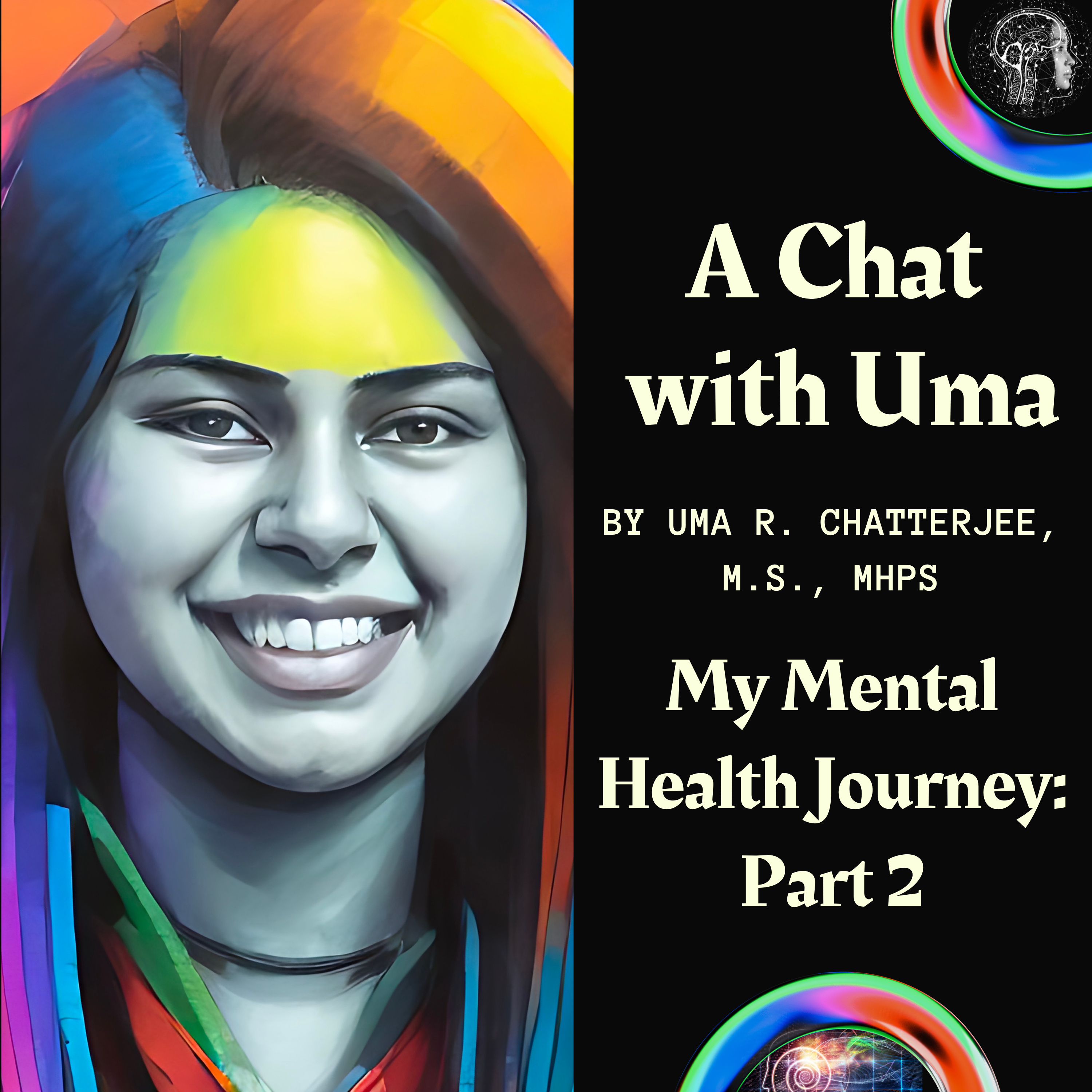
In part two of her mental health journey, the host reflects on her transition from high school to college between ages 18 and 23. Despite early successes in debate and law—including winning a national Supreme Court competition and meeting Ruth Bader Ginsburg—she struggled profoundly with severe mental illness (OCD, depression, PTSD, eating disorders) and physical conditions (Hashimoto’s, fibromyalgia). She chose to attend the University of Texas at Dallas to stay near her caregivers, but college proved disastrous. Without external accountability, she barely attended classes, often lying in dark rooms for days, eating little, and only working to avoid homelessness. She sought help at the school counseling center, using 12 free therapy sessions annually and seeing a psychiatrist. However, therapy focused on perceived social deficits and possible autism, while her deeper trauma and illnesses were not fully addressed. The episode highlights the gap between her innate capabilities and her inability to function due to untreated conditions, setting the stage for further challenges in part three, which will cover ages 18 to 23, including a traumatic therapist relationship.
(upbeat music) - Hello and welcome to a chat with Uma, with me, your host, Uma R. Chatterjee. On this podcast, I bring together all of my roles as a neuroscientist, researcher, board certified mental health peer specialist, mental health advocate, community builder, and a survivor with lived experience to bring you honest and unfiltered conversations exploring our true human experiences in their fullest form. Every week, I'm bringing you conversations bridging the gap on all things neuroscience, psychology, mental health, lived experience, advocacy, psychedelics, and more. This is a space for raw unfiltered truth to truly explore ourselves for who we are and how we are. I cannot wait to connect with you, answer all of your questions and co-create this with you. Welcome to a chat with Uma. Hello, my beautiful friends. It's so good to be with you here another week. If you have gotten this far and you are listening to episode three of this podcast, then thank you so much because it's still surreal that this is even happening and this is coming to life. I have been in such shock and have been so blown away. I keep saying this every week, but it's still so surreal and I just need y'all to know how grateful I am that you show up every week and take the time to share a space with me and hear my perspective, parts of my story, and just accept me for better for worse with your heart and with open arms. And I hope that ultimately, so far this podcast has served as a space for you to just take a breath and relax and just allow yourself to feel more seen and heard through the permission that you hopefully feel to just own your experiences, all of them, and to just be honest with yourself and with the people around you, because that's everything. That's why I'm doing this. So I'm so happy that you're here and I'm really skydded, scared and excited in the words of Glenn and Doyle, one of my favorite humans. I'm just skydded to continue on with part two of my mental health journey. So if you're just tuning in and you have not heard part one, which is the episode before this of my mental health journey, as well as really my full story, which is episode one, I'd recommend tuning into those two first because they kind of build upon each other to build a framework for everything to come. And part two of my mental health story won't really make as much sense if you don't have the background from part one. So I will link those episodes in the show notes, or you can just go to the podcast and go to the episodes before this. But if you have caught up and you made it to this point, then strap in and let's dig into part two of my mental health journey with all of the same values and ways of navigating this conversation with all of the transparency, honesty, openness, reflection and curiosity that I can possibly bring to this conversation and everything we do on the show. That's what I strive to do. I'll be talking in a linear fashion, giving kind of a timeline of progressions of things, but also there are things that are happening at the same time. So I'll do my best to talk about them both in a linear way, but then circle back to other aspects and tie in everything going together to just paint the fullest picture because I believe that every part that I'm gonna share with you matters from the different intersectional identities I hold and how they play to role to the interplay of my own dynamics and my own experiences with the outside people who I was interacting with and those experiences, how they ultimately shaped everything that transpired from a confluence of internal and external factors coming together. And I'm just gonna go there and be as honest as I can because with everything that comes from sharing this, all of the pain and reliving and fear and all of it, there's just so much more good in my opinion, so much more support and so much more ultimate positivity that comes from talking about this because I wish more than anything that I could have heard anyone talking about these things before, during, through everything I was going through, I can only imagine how much I could have been saved from. Had I known any of this or had I heard any of this in such honesty, especially from someone who held any identity that I did, that was inaccessible to, that was not represented, didn't have a voice, didn't speak up for all the reasons, I just wish that I had some things. I hope this is that for you. And for anyone who has gone through anything similar or the same about the things that I've talked about or anyone who's just gone through an analogous depth of pain in suffering unnecessarily, I just hope that this is a space for you to feel validated and seen and reflected and given space to own and experience all that comes up for you in reflecting on your own experiences. And just knowing that you're not alone, as always, if nothing else, I just hope you feel that you're not alone through hearing this. In addition to everything that the last episode covers and all of the background and pre-frames that you can just carry on from the last episode and listen to it if you haven't, I'll also just re-include the disclaimer that this is all simply my experience. It has lived experience. None of this is medical advice. None of this is professional advice. None of this constitutes any sort of professional or mental health relationship with me as a mental health peer specialist. This is just my lived experience and any sort of guidance that I might share is only to be taken as education and for you to reflect upon your own journey and to navigate choices with yourself, your trusted loved ones, and your own providers. So, okay, all right, here we go. Part two of my mental health journey. Part one, again, covered zero to 18. Really, before I ever received any sort of consistent treatment from a professional, I really set the framework for everything to come in today's episode, which is part two, which is gonna cover 18 to 23 because there's actually going to be a part three to this episode. It was initially just two parts, but as I really figured out everything I was going to share here, I realized that this had to have a part three because of the depth and nuance and frankly the number of things that happened and all of the lessons and reflections that I really want to share through this. So, part two today will cover 18 to 23 from transitioning out of high school into college and having proper access to consistent treatment for the first time all the way to 23 where we're really talking about a very traumatic and abusive therapist relationship I was in and how I started navigating my way out of that. So, welcome to part two. So, to pick up where we left off, we're 18 years old and I had just gotten by through the end of high school by the skin of my teeth. I was functioning at the bare minimum level kind of at the intersection of as humanly little as I needed to do to get by, but doing enough to get by so that I was safe enough to not be in complete disarray in chaos given still being on some level in my home with my caregivers or at least dependent legally on my caregivers. I had been mostly financially independent 'cause I had started working at 15 for many reasons but a huge part of it was forced upon me and also then I kind of owned it and used it to be as financially independent as possible so that I could have as much agency within the scope of still being a dependent under 18 person. So, I turned 18 and transitioning out of high school into college was an interesting time. One of the really only things I had going for me throughout high school other than bare minimum performance while still doing all the advanced classes,
is just by relying on my innate capabilities and not having the bandwidth to do anything. The one thing I really had going for me by mostly sheer look was that I believed that I was going to be a lawyer if I had to do anything with myself. And outside of the financial motivations that I had in my teenage self to become a lawyer just to like get out of my situation and become somewhat financially independent, I also wanted to become a lawyer because I was very, very passionate about social justice issues, particularly with the LGBT community at the time and keep in mind this is around 2010 to 2014 when I was in high school. So it was really at a point of tension where it still wasn't so normalized to be an advocate and be accepting, but it also wasn't not normalized if that makes sense. So I was just very active in my activism and my advocacy. So I figured by becoming a lawyer, I could make a difference and I could advocate in a legal sense because it felt like a huge amount of issues that were coming were from the legalities around the identities and choices people made from their identities. So that in combination with just I guess my innate talking skills because hello I talk a lot ironically since I didn't talk till I was four, but anyway I talk a lot. I seem to be able to make some shit make sense when I talk even though I didn't really know what I was talking about in high school. I basically was on the debate team and I did a lot with the debate team and that was kind of one of the only things that I really succeeded at in high school amongst how much dysfunction I was experiencing because honestly it was just easy and it also gave me plenty of excuses to have to leave the house. So I was doing debate and I was doing law stuff and it got to point that even my senior year I did this constitutional law competition and I competed in the Supreme Court National Competition basically taking on a Supreme Court case and acting as an attorney with a partner and arguing one side versus the other and I ended up getting to the final round and then me and my partner ended up winning the entire national competition and we're flown out to D.C. to be awarded by Supreme Court Justice Ruth Bader Ginsburg which is such a random part of my past that now you know about you can google it and you'll see my little self with her. It's really cool but that's just to illustrate the point that I figured if I my life was going in any direction to be able to make enough money to get out and also to be able to fund the cult which was like a huge dynamic going on figuring out a way to become the most useful to the cult because that's how we were in addition to think either we needed to make a lot of money and be successful so that we could then give that to the cult and expedite the process of cleansing ourselves of material desire and getting to the divine world. I hope you hear the absurdity coming through when I'm saying that that's why I'm laughing. Just trying to give you the thought process I was in at the time or trying to convince myself to be in at least and with that I was trying to get into whatever the best pre-law program I could find would be given that we are tension if I had a lot of success on one hand with competitions and debate and those things but I also had pretty subpar grades even though I was in advanced classes. I actually had pretty great standardized test scores like the SAT and ACT and PSAT and stuff because it just utilized more of my innate capabilities rather than having to put forth a lot of effort so I wasn't makes bag academically depends on what vantage point you looked at and me through but new list of say I ended up getting into American University in Washington D.C. with a huge scholarship not a full scholarship but a huge scholarship and I really thought until the end of senior year that I was going to be going there. At the same time though I couldn't really see a reality of actually being able to move there and do the thing and I just had an overwhelming feeling like I couldn't really do it and in retrospect I think there's a lot of reasons why I felt that way but largely so there was just a part of me that knew I was so sick and moving across the country having to be financially independent at a private university that is that highly ranked and that competitive when I barely knew how to get by as is was probably not a great idea and on top of that I kind of started realizing that my passion for law was really a combination of one I was seemingly okay at something so I was kind of clinging to it two it was easy enough for me at the time because it was just me mostly bullshitting if I'm being honest and getting away with it and getting rewarded for it and three because I wanted to make a difference which was very valid from the social justice issues and perspectives that I was coming from but I realized that most of the issues that were happening were actually not necessarily legally driven so much as socially driven such that at that point most of the issues I was really concerned about were resolved enough legally it was more so when I was perceiving was the social attitudes were really fucked by people who had not come around or had not gotten educated about it so working for the ACLU wasn't like really going to change as much about the issues I cared about so much as just being a better person and working on social awareness and bridging gaps with that way so all of those things I think it's mostly again knowing that it wasn't gonna work out and I was really fucked and I couldn't really see a future for myself and then justifying it in my 18 year old brain is there's no point of doing this, cause me like at the end of senior year to decide I'm not going to American plus I didn't think I could financially handle it even with the scholarship because I was gonna be completely on my own so instead I decided to go to the University of Texas at Dallas which was 20 minutes away from my caregiver's house and I was definitely gonna move out and be financially independent but I wasn't leaving an area even though I didn't like the area I wasn't just leaving an area going somewhere new and completely baseless in terms of knowing where to go for things and taking care of myself like to me taking care of myself and being more completely independent at least I was more familiar with what was around me for better or for worse so I went to UTTD I started there August of 2014 like right after I graduated high school like the normal traditional path and from the get go it was horrible it was in this because now I was in a position where I had nobody watching over me so I didn't have that sense of as much fear and accountability of needing to get out of bed at some point and go to school like I didn't high school because the alternative was I was going to get very much punished in all forms so because I didn't have that fear anymore because I was in charge of my own adult self my body gave into what was going on which was I was in the absolute throes of horrific mental illness and physical illness all the things that of course we went into more detail in the last episode but just to review severe severe OCD severe major depressive disorder just in an unending episode severe anxiety social anxiety both complex PTSD and single event PTSD for multiple events panic disorder I was very much suicidal experiencing chronic suicidal ideation I was so overwhelmed by my sensory processing disorder I was in the throes of bulinia and my dermatomania skin picking and trekketolomania hair picking you know I still had no awareness or support for most of those things and also my neurodiversity and unverbal learning disability all of that right and it's important to mention that I was also going through very long standing and severe physical illnesses that were rendering you completely useless to the things like Hashimoto's thyroiditis and Hyderodonitis superativa and Vibramialgia very very severe fibromyalgia polycystic ovarian syndrome just complete dysfunction of my body and my brain the whole thing right so I'm 18 I have nothing to motivate me other than my intense fear of being completely broke so the only thing I could really get myself to do most of the time was go work so that I could pay my bills and I could make sure I'm
not going to be homeless, like I was so constantly afraid of, like constantly. So basically for two years, I was at UTT, I was so tired. I tried to go to class and it was a combination of I just could not pay attention or retain information. And I was also in the throes of OCD whenever I went into class because I was so afraid of missing anything that a professor said. I never really learned how to take notes and I never learned how to like synthesize and distilled on information and learn things because hello, I didn't do any of it the last four years plus from middle school to high school. I'm truly not exaggerating. I did not learn anything. So that actually comes up a lot now because knowledge gaps from those times, things people just know that I just don't know. So that's really interesting. But anyway, I would go to class and I was so afraid of missing anything that I would be in the cycle of I would hear them say something and I would have to compulsively write every single word they said down. And obviously by doing that, I would then other things they said and I'd freak out. And then I would panic that I'm not going to learn anything and I would be just stuck in this complete obsessive, afraid mode and doing compulsions to try to ameliorate that. And then ultimately I just started recording all of my classes because I figured then I could just go home and I could transcribe it. But in the process, it was so exhausting. I could not sustain it. Also, I had barely any energy to begin with. So real quick, I would give up on most classes. So school was not happening. I was just working and I just still shudder thinking about my freshman year and the dorms and my sophomore year and an apartment where I would just be in the dark for days because sometimes I didn't have work for a few days and those days I would literally just be in my room in the dark. I didn't even have the energy to close a blind sometimes. So it was just, you ever have that experience where you're in a room and it's dark and the blinds are open, which is even weirder and it just feels wrong. Like that was the level of which like I couldn't do anything. I would just be in my dark room. I'd go days without eating anything except for crackers. Maybe go to the bathroom. Definitely not shower. Definitely not see anybody. It was horrible. I couldn't do anything except work. Sometimes. And simultaneously throughout those two years I so simultaneously during those two years at ETT from 18 to 20. I also almost immediately started going to the school counseling center because I did know that I had severe issues. I at the very least had depression and anxiety and I wanted to kill myself. So I took advantage of what was available, which at the time was 12 sessions per year. I believe covered by the school which helped me with my lack of financial capability and my lack of general access or knowledge of how to get adequate care. And also there is a psychiatrist on staff there. So I was able to see both of them. So I went into the therapy situation like literally every week telling the therapist why I felt like I had a lot of problems. And actually most of what I would talk about at the beginning was about social stuff because I honestly started thinking that I might be on the autism spectrum because of the way it is stereotypically portrayed. And the fact that there is stereotypically a social deficit again. This is just what I had perceived at the time. This is not based on the actual representation of what the autism spectrum actually looks like and symptoms beyond the stereotype. At the time I felt that I was very socially isolated from even people in my dorm and my roommates and people around me and I just couldn't fully connect to them. Probably because there's something wrong with me and I knew that they made fun of me a lot. And I felt like I just missed social cues and was too strange for people. And so I just was trying to figure out what that was. I would come in and I talk about that a lot and I was constantly told that I'm not on the autism spectrum and then I would talk about my depression and how I felt. And it's really interesting because I really battled getting actual help and being honest about my symptoms because everything was qualified with something to the effective. I shouldn't even be here. I'm not starving in Africa. Therefore what's wrong with me? I'm so spoiled and I'm so entitled. And this is a waste of everyone's time. So there was a lot of trying to get through that which I don't think we ever quite got through. And to be honest looking back, the therapy was mostly just engaging in compulsions because I was too busy doubting everything happening and not being able to sit in uncertainty. And I was just avoiding any sort of feeling. And I think that that therapist was many things to me. She was the first person I consistently saw for two years because what happened was she was an intern at the time because a lot of people who practice at universities are because it's free. They're doing it as interns for their actual licensing. So she was a student intern and she needed for her graduation to take one person as a long time client. So she decided to take me because I clearly needed a lot of help. And when I got out of that for seeing here for almost two years was the first form of a consistent therapist and a consistent person really to see once a week. And just at least start vocalizing what I could put words to and what I had access to at the time. And I am really grateful for the safety and support I felt from her. And at the same time, there's definitely not an identification or understanding of the most of the things that I actually had at the time that I was clearly exhibiting. And that there's so many reasons for that. Most therapists in general are not trained properly on so many conditions that are not of the status quo beyond anxiety and depression. And I have many other conditions. I also didn't have the language to elicit said symptoms and speak it. So that's there's a combination of a lack of awareness to dig or to notice things on their own. And I didn't explicitly come saying that I have obsessions and I'm doing compulsions and I have PTSD probably and I even experienced trauma. I mean, I didn't even recognize or verbalize once in those two years that I've been sexually abused because I had just been gaslit to believe that that wasn't the case. I really didn't have words for what that was at the time and I didn't reflect on it because it was too painful and I had no safe place to be able to do so. I didn't think too much at all that I threw up multiple times a week or that I was in a cult because I didn't know I was in a cult. I just didn't know a lot of things and honestly I wasn't going to and it's easy for me to shame myself now looking back but I had no awareness. And there was no one to catch it for me including the professionals who were seeing me every week. So basically two years of not really helpful therapy except at least sort of feeling like there was someone who cared about me, although with all of the baggage and trauma I have and had, I generally qualified it and did not really let myself fully accept the nuance but still caring relationship because it was really easy for me to justify any care she gave me as it was transactional and she was doing it because she had to and because she was filming it because she was a therapist in turn so she had to fill all our sessions. That's another thing. Her supervisor didn't catch any of it either so it was a it was a mess of not just a lack of experience but also supervisors not being trained on our condition. So that is such a reason why we need advocacy and awareness and further education but I digress. No, I don't digress actually. It's part of the story that's part of the point of why I do anything I do and why I'm talking about this because that illustrates such a lack of awareness and as we go on I will continue to illustrate three precautions of the very systemic problems in psycho education even on and especially on the clinician side. All of that was happening for two years and circling back. I couldn't really fully accept that I was being supported and I hated myself so much that it was really easy to find reasons why she and excuses for why she was kind to me because she had to be because she because I was her job because she was being watched because she felt bad for me because I was such a pathetic case. Like whatever excuse I could come up with I did so it didn't really heal anything relationally but there's a part of me that felt cared for on some level and I still look back and feel that care even though there's a lot of nuance and other things that I feel other ways about like the lack of diagnosis and lack of proper.
treatment. At the same time, during those two years, I was also seeing the psychiatrist, who basically with him, I worked on trying different antidepressants, SSRIs, in particular, and different dosages, figuring out what could work for me and nothing really seemed to work no matter how much I tried. Also, maybe more equally, if not more notably, we started working on my anxiety and my panic attacks because I was able to identify those. And we started first with a beta blocker to try to help with at least the physical effects of the panic and anxiety because I was still performing intermittently at the time. I was in an ocapelotime for about half a year and I was also just doing little gigs and competitions with Western music because that was still a thing for me, which we'll talk about how that evolved. But I would just have horrific panic attacks and it would impact my performance hugely. And so it's kind of funny because of that, because of the fact that it impacted my performance and I might not win awards and do as well, that motivated me to want to get the anxiety under control rather than because I didn't want to suffer because looking back, I guess I believed I deserved a suffer. So anyway, with the psychiatrist, we first started with beta blockers and they did help with the physical part. But the caveat, the fucked up part, was the mess with my hearing and here's a thing. I have perfect pitch. So every sound that I hear, I catalog and I know if it's different. So I started noticing after taking it that I every sound would sound wrong. My computer buzzing, my car alarm, my microphone, my microwave beeping. And then of course, people talking and of course music, the music I heard, the music I played, the music I sang, it was all half a step lower. And most people, like almost everybody would be like, what are you talking about? If you're listening to this, you probably have no idea what I'm talking about. But if you happen to have perfect pitch, then you know that I could hear everything. And obviously, if I'm using this for music, I definitely can't have that happening. So beta blockers, per per annal, specifically was thrown out. And instead, I got put on Xanax, which very quickly became a diet of Xanax because it just numbed me out and helped me sleep when I couldn't sleep because I would be in this constant state of either I'm sleeping all the time or I'm in bed, but I can't stop thinking. It was just constant cycles. So anytime I was in anxiety, panic, Xanax, and it would just have me become a robot. So I became very dependent on that. And that's basically what the two years look like until I got to the point where I realized towards the final semester of my second year, that I had a 1.83 GPA. And this was not going to work out. And I couldn't do it. That's what I believed at least. I firmly believed I can't do this. I'm too stupid. I'm not capable. I need to go figure out something else. So I left UTD after my sophomore year and I left and immediately jumped to music school because the one thing I felt like I could actually do without any effort and accepting that how I was was a foregone conclusion. And that, you know, I was just useless and fucked up and I was going to live this way or not was I could do music. I could sing. It took me no effort. I could write songs. That was really easy. Yeah, I had debilitating panic attacks. Even so though, I still ended up winning competitions and even doing subpar for myself. I still seemed to succeed by other people's metrics and was getting auditions, getting shows. So I decided I guess I'm not capable of anything other than music. So I'm just going to try to go make music work. And I left UTD. I left that therapist and that psychiatrist. I continued for a few months on the medication with what I had and then it just felt like I couldn't do anything. It wasn't helping me. So I stopped. I also didn't have proper access to medical care after leaving UTD. So I didn't really have a way of getting more medication that I knew of. And I was just so sick, so debilitated and so confused. And I thought that that was my life figured I would just go to music school and try to make that work. So I started doing that. Oh, and I should also mention that I figured that the medication would probably harm whatever little I thought I could do with music because I couldn't really feel any emotions. And that doesn't really go well with writing songs and being honest when I'm performing, especially when so much of the feedback was that they felt so much emotion come through when I sang from competitions and stuff. So, you know, again, in this productivity line of being tied to myself esteem with music, I couldn't risk that with medication. So for all those reasons and a lack of access, I stopped. So right after I left UTD, took the summer, worked like 70 hours a week, somehow, as sick as I was. And then I started music school. It's also important to note that as I started music school is when I officially started my relationship with my now husband. I mean, we had known each other and it's been, I mean, I had been in love with him for a while, like a year and a half, but we both weren't really in a place to be in a relationship. And then we made it work. And I started living with him as I was doing music school. And the reason I bring that up is because that started becoming the point where a lot of my symptoms and a lot of my behaviors that I wasn't really fully aware of to be divergent or perhaps maladaptive or just straight up weird came to light. So here I am 20, starting music school, also working at Starbucks, which is important because of how it let it therapy. And with my new partner, he at the time traveled for work like a lot. So there were many stretches of times where I was alone for days, weeks, sometimes even months. And then there would be times where he would be back. And so there's constant ebb and a flow of either being completely alone or being with him. And so that really came into play and showing me some of my strange habits because when he was away, I would be so afraid of possibly keeping the lights on and spending so much money through an electric bill that I would end up homeless and broke that I would compulsively turn off all the lights and just sit in the dark every night by myself with my phone flashlight. And those are one of the flashbacks that I still have and still just bring me so much sadness for that person just living in that fear and that literal darkness. I started noticing that that was weird because when he was around, I didn't do that. I did do other weird stuff, but I didn't do that because that I realized off the top of my head would probably be odd to do with a person to turn the lights off and suggest that we use our flashlights. So the part of my brain that could see some level of logic, although in OCD, the logic never overrides the fear. It just can coexist, which is sometimes the greater clusterfuck because when you still act on your obsessions and do compulsions, even though you do have the logical part of your brain that is telling you and show you why it's a logical and then you still act on it, the amount of shame that comes from that, it's inexplicable to someone who hasn't experienced it because it's like, how can I not just listen to myself and act upon things? Is something possessing me? Am I fundamentally broken? And if you don't know what OCD is, you don't have treatment and you don't understand the physiology and the fear response and the overriding, then it's a clusterfuck. But needless to say, when I started experiencing the dissonance between how I would act by myself versus how I would act with him, I started noticing that there was some weird shit and I would tell him about it sometimes, depending on how much shame I had around it. So that was a light. And then the stuff that would happen when he was around that I didn't really find to be weird were the things that then he would reflect to me were, you know, in the most nonjudgmental and kind yet still concerned and confused way. He told me like, if he used more than one paper towel ever, I would get very afraid and frozen and upset that perhaps we would end up homeless if he kept using too many paper towels. Or if he dare ever bought anything that was name brand from the grocery store instead of store brand to the point where he was not allowed to buy anything. It had to be me because I could do it right and I would get the proper correct things and he wouldn't in a way that if he'd
did go then somehow we would go broke. Again, that was a huge thing for me at the time. Also, if you ever left a light on in a room that we weren't, I could not tolerate it. I had to go turn it off because I, and it was just overtaken me and I could not be present and nothing could happen and I was constantly watching him for anything you could possibly do to make us go broke at any moment. Which, yeah, we weren't rolling in money, but we were not in a place where we were going to go broke from any given bill, perhaps a financial bill or some sort of car accident or something like that. So just to make that clear, we were not teetering on being broke and in fact, I would hoard money, the little money I did make to make sure that wasn't the case for years. So this was a logical, but nonetheless, I would be doing that. And at the time, I was working at Starbucks and as an employee benefit, I had some sessions of free therapy just covered by Starbucks by an approved provider who was ever in network with that benefit. And so I started seeing this guy. He was a licensed therapist. And basically, all I would do in those sessions was talk about my fears of what was out of my control without using those words. I was more so just talking about the things that really bothered me that I didn't know how to properly deal with because obviously me trying to control my partner would not be great. And I did receive the feedback and the repercussions of trying to control my partner. So I went in trying to work on being controlling. And it was never, ever, ever identified in maybe those six months of sessions that there was anything maladaptive other than maybe I'm just being controlling because I don't want my partner to leave me. So useless therapy. And if I had to label what that was, it was talk therapy and maybe a little bit of traditional cognitive behavioral therapy. Nothing that made a difference for me at all because there was no proper diagnosis and proper treatment of anything. So that happened. And then around 21. So I stopped seeing that provider because it was just useless. And I ran out of sessions. Then around 21. So maybe like a year into living with my partner and being a music school. Which by the way, music school was going fine because it was I didn't have to do anything and use my brain. I had natural, perfect pitch so I could kind of just record stuff and answer questions on theory using my ears and not put forth a whole lot of effort. I did struggle with doing assignments and typing things out, but I got by enough with my natural capability. So that was going fine. So a year into this relationship and whatnot. A notable point of things starting to sort of shift with all of it. This complete lack of awareness and just kind of floating through misery with no understanding and no help was this moment about a year in. Where so my partner and I had made mashed potatoes for dinner at the previous night. And there was just this rule I had that we needed to split the food down evenly even if I partner ate more because of eating disorder for me and also just eating less because some people eat more, some people eat less. Nonetheless, the food had to be split down the middle and I had to have exactly half of it allotted to me. And it's not even that I even set it out loud. It's just that's what I expected and I made happen. Maybe sometimes I set it out loud too, but it was just a very irrational rule and looking back that rule that compulsion came from the obsession fear that if I did not have half the food allotted to me, then I would go starve. And you know, that's very much entwined with the actual experiences I had growing up as we talked about in the last episode with actually being starved and the abuse I encountered with that and the food, the lack of access to food oftentimes and also than the bulimia and the disordered eating. But in the context of this, all of the trauma fed into an irrational obsession belief that I needed to have half the food a lot of to me and if not, then I was going to starve and I was being deprived, I was being abused, whatever. So we made mashed potatoes that past night. I ate far less than my partner did and all of the leftovers were put in the fridge. And so in my mind, my very disordered mind, I thought that my part had to be whatever I didn't eat plus half, so basically half of the total that was eaten, right? Except it's all just one container. And so I went to work, I went to Starbucks the next morning and then after that I came back for lunch and I went into the fridge expecting all of my mashed potatoes that I had been entitled to from the past day and lo and behold, my partner had eaten lunch before me and ate a good amount of the mashed potatoes, not all of it, but more than what was in my mind his allotted half. And so I'm judging myself by saying I stupid as it sounds, I'm watching that happen because if anybody understands irrational fear and OCD and trauma then they understand that this was not rational and this was coming from a far deeper place than mashed potatoes, but I saw that I asked if he had eaten it, he said yes innocently because there was nothing to feel guilty about in a rational person's mind. And I lost it, like, and I don't mean it in an angry way, I meant it in a I went into full blown panic just this deeply, deeply panicked place of I'm going to be starved and I'm not going to have enough food and I got completely wronged and I just it was so wild and there's a part of me watching myself go through this. I went into the other rooms, I could just hide this very strange reaction I was having and I was just sobbing and I was just shaking and I wasn't so much fear, like something so bad happened and there's a part of my brain that was like how is this happening over mashed potatoes? It doesn't even make any sense, but again the disorder doesn't make sense, so I had this moment of clarity where I was experiencing all of that and I realized there's something deeply wrong and I need help. I started googling things and OCD came up and I also had this thought that it might be OCD because it felt compulsive, although at the time I was very much steeped in the stigma and misrepresentation of OCD, so I really thought it was people who just like cleaned all the time and washed their hands a lot, so you know that's why I'd gone years thinking I didn't have OCD, but then this felt compulsive, like if I didn't do it I couldn't function and so I started reflecting in I remember I was sitting in the closet because whenever I'd have breakdowns like this and my partner was around at the time we lived in a one-bedroom apartment, so there wasn't many places I could go like hide, so I'd go into the closet in the bedroom and I would just like have my freak out and I was sitting in the freak out closet for a while and I was just starting to think of a lot of things I did compulsively and I'll mention physically compulsively because I had no concept of mental compulsions at the time. I started noticing and I thought maybe I should go see if I have OCD, so I went and made sure I could use more of the Starbucks benefit and this time because I had such a shitty experience with the past therapist I thought maybe if I saw a psychologist it would make a difference and at the time I thought psychologist meant someone with a PhD so I was looking for anyone desperately in my approved benefits provider thing from Starbucks who had a PhD and I found one person who had a PhD that should have been her ed flag but I went for it and I decided to make an appointment with her and I showed up and I told her what I was experiencing and I told her I think I have OCD she pulled out her DSM and she read everything about OCD she said does this feel like you are doing this I said yes and then she said do you want to take a test to see if you have OCD? I said sure and I took my first Y box and I filled it out based on this newfound perception of what I thought was going on with me and the physical compulsions I was doing and she read set assessment and was like yes you have OCD what are we going to do about it? Here's the kicker this therapist told me that the very simple solution to what I was going through was a few things number one she operated from a faith-based framework which should have been a red flag but keep in mind I'm still like freshly out of the cold not realizing I was ever in a cold I'm deeply traumatized by a lot of things I've been to authority I'm desperate I also have OCD and latch on to magical thinking so if I'm told to do something I will try it in the fear that I'm going to fuck myself if I don't at the time a lot of fucked up stuff right so faith-based framework essential oils traditional cognitive behavioral therapy and psychodynamic therapy and art therapy in some her solution was oh I just need to distract myself from my thoughts so that I don't have to act on them which is what people cognitive behavioral therapy do and
And for anything leftover, we just need to look at why I'm having those thoughts so that I can figure out the real reason I had the thoughts and deal with that, so I won't have the thoughts anymore. And then of course, essential oils to help regulate my system and distract myself and faith-based framework to surrender to a higher power so that I can feel safer and just know that there's a reason for everything. So for those of you who don't have context for the perceived annoyance and anger and laughable nature that's coming out of how I'm talking about this, it's because all of those things are inaccurate, not evidence-based for OCD and harmful to OCD. There is a gold standard treatment for OCD and that is called Exposure and Response Prevention Therapy, ERP. And it is a subset of cognitive behavioral therapies, it is done very differently than traditional cognitive behavioral therapy. It's kind of opposing actually sometimes. So here's the thing, this is what this part of my story should illustrate to you. Most therapists do not understand OCD and if they do, they usually understand what they think OCD is from a very physical perspective. If they can get past the stigma of thinking that OCD is a quirk, then the next step is they think it's OCD, but it's a physical disorder and you just need to regulate your system and you're going to be all good. And they implement very incorrect but very basic treatments that they're taught in school to treat most generic disorders. And when I say generic, I mean the most commonly shown up disorders like depression and anxiety. And what basically happened is that all of that made my OCD worse, but I thought it's supposed to be working. So I one told her that I was getting better because I was bending to authority and thought I would be doing something wrong if it wasn't going better. And two, really what I was doing was trying to just, in the framework that I thought I understood OCD, which was I had physical compulsions to repeating thoughts, I would just try not to do the compulsions. And so what I was doing was a white knuckleing through them. I would have the urges and I would just try not to do them. And I thought treatment and recovery was just not doing them. So that went on for a while. And also compulsively trying to find the reasons for my fears as if there was always going to be some sort of deep reason from my past, some sort of experience I formerly had that caused this behavior pattern, which is incorrect. It's not what happens in OCD, but most clinicians are not trained on it properly and they fuck clients over. I'm not even holding back. I'm not really fucking people over. This is so common and this happened multiple times in the future so I'll get to that, but I'm just starting here. This happens so often to people with OCD to the point where it takes 14 to 17 years to get a proper diagnosis and proper treatment. And in that time people suffer so much that they often die by suicide or end up in horrible, horrible, fats of self-medication to try to figure out what's going on. They just suffer silently and I did too. But we think we're getting help because we're seeing a professional. And the kicker of all of this, by the way, is I thought because this person had a PhD to their psychologist. They weren't. They were a licensed counselor, not saying therapists or any worse or better than psychologists, but she really held on to the doctor part and branded herself as a psychologist in reality. She was a licensed professional counselor and then got her PhD in art therapy by an institution that is not actually recognized as a therapy school. It's not certified. So people can call themselves doctors sometimes and they get some sort of doctoral degree from any sort of university, but it's not actually part of the American Psychological Association. It's not accredited. So just know that that's another lesson to take from this. So anyway, I saw her for, I don't remember, like nine months to a year and then stopped in the name of insurance, but really just felt like I wasn't getting anything out of it and I figured, okay, I have a hold on my OCD. I'm just not going to do compulsions. And it's important to note that there was no talk, of course, because she didn't know anything about mental compulsions. So I didn't know anything about them. She didn't know anything about them. So all we were working on were physical compulsions to begin with. So I thought my OCD was getting better because I was just basically sitting on my hands and not doing physical compulsions and spoiler alert or wasn't, but we'll get to that. So I stopped seeing that person at 22, like early 22 and then made close to end of 22. I got diagnosed with cancer and I mean, that's a whole thing, but the parts relevant to this whole mental health experience is that, well, number one, I had to like ditch everything about my life to go into cancer treatment. So that was a lot. And I figured maybe it'd be good to have a therapist for that because I was going to max out my medical benefits anyway. So I might as well have a therapist. It's really how I thought. And also I was in a very, let's just say like a very unhealthy work situation. I wasn't at Starbucks anymore at that time. I was working as an executive assistant in a situation that just really wasn't healthy for me. And I was having a hard time leaving that job and navigating, you know, the cancer diagnosis and whatnot. So I figured I could try to get some help with that. So I found a psychologist close by to me who was in my benefits and I decided to go start seeing her. This was again end of 22. And as I started seeing her, it was like right before I was going to have to go through surgery and everything like that. And upon intake, you know, what I gave her as extensive of a history as I could in this much perspective as I could about my situation. Of course, there was immediate fires to put out given like I was going through cancer at 22. And I was in a very unhealthy toxic work situation. So those were the fires I thought I was dealing with at the moment. But of course with the intake I gave her the background I did have on myself and at the time what I thought I had the picture I had of myself at the time clinically was that I had OCD, depression, anxiety, and panic disorder and suicidal ideation. So as she assessed me at the beginning, she immediately came to the conclusion that I have PTSD and see that part is accurate. But what transpired after that was not only do I have PTSD, but I probably don't even have OCD or depression or really most things. It's all trauma and it's all probably coming from experiences I had growing up and the lessons I learned from them and how I've been coping with my trauma. So her framework was entirely trauma and most likely other things weren't true. So she really only thought I had PTSD. And her approach was psychodynamic therapy with, you know, traditional CBT sprinkled in, but psychodynamic. But that is, again, is going into every experience or problem you have and looking for the core reason why and the core reason being what memory or what trigger you have, what belief you form from that memory, oftentimes in childhood, from attachment to your family, but nonetheless finding the core memory and then understanding that your fear comes from a memory and memory is not reality and working to not act from that memory anymore. And again, I'm giving the spoiler alert that that is not only unhelpful to OCD, but it's actively harmful because it becomes a compulsion because OCD fears, obsessions don't come from logic. Yes, they can intersect from fears of things that have actually happened. There is a whole thing of coma, PTSD, no CD that I do my research on that we'll get into at some point, but it doesn't legitimize the way one with OCD has the fear and it does compulsions. Simply resolving the fear from a trauma lens does not resolve the OCD. So it's actually very inaccurate and a lot of times also just to be clear, that is the intersection of PTSD or trauma in OCD, but also people have OCD and don't have those things. And I do have a great number of obsessions because anything can be an obsession. If you have a fear, it can become an obsession. I have tons of things that are not related to trauma that have no reason that are just because I have an OCD brain and when I have an intrusive thought or what if thought it sticks in my brain and I do compulsions or I have done compulsions to try to get rid of set obsessions and resolve them. So basically psychodynamic therapy is horrible for OCD. Let's make that very clear. So traditional CBT does not work because it does not work to help someone tolerate the obsessions and not do compulsions. It just gives them compulsions to do to tolerate the thought and also tries to get people to not think about the thought and doesn't work, but that's a whole other thing. Anyway, I then entered into the situation where I'm getting really harmful therapy but thinking that now I found someone who's getting more to what I need and also I was just in a horrible place. I was going through cancer treatment. I then, as you've heard in my full story, I lost my voice and was dealing with the complete identity crisis of that and not being able to work and not knowing what to do with my life. And I was just. in such a broken, broken place. I lost the one thing that I got any self-esteem or purpose for, and I really thought there was no point to me continuing to live. And I was in such pain. Everything was crashing down. At the same time, I was finally starting to receive some clarity about my physical state of being. And starting treatments for things outside of the cancer because cancer happened to warrant fault-copyriensive examinations of my body for the first time ever. Again, this is all my full story, so I'm just zipping through that part and getting to the mental health relevant parts. But there was a part of my well-being that was helped through getting proper physical health treatment, including getting the proper amount of thyroid hormone for the first time in my life, because ironically, the cancer showed that I had had not an immune disease my whole life, and I did not have the proper thyroid. And so by getting cancer, I had to then get my thyroid removed and start getting proper thyroid, so that helped my functioning to a degree. It helped my well-being to a degree. Also starting to calm down my body comprehensively from all the inflammation and autoimmune diseases it was going through, and also just being seen and taken care of more comprehensively for the first time. So it was a weird time. So basically, I was in a situation where I was really confused. A lot of things were going on. I was like, going through little treatment and my brain wasn't working properly. And I'm in this situation with a therapist, a psychologist, who I trust to help me. And I'm not exaggerating when I tell you that what that whole situation became was that I didn't want to talk about myself. So I would start every session asking her how she was doing. And then like 90% of the situation became her talking about herself to the point that I learned the names, like the actual full names of not only her child and her husband, but her sister, her uncle, her parents, her sister's husband, her sister's husband's family. And literally I knew everything about this person's life. I learned about things I shouldn't know. Like, you know, confidential legal things happening, arrests, domestic abuse in people in her family's lives. Things deeply intimate about her and her husband. And again, none of this was to illustrate any points to me to relate back to therapy with me. It was straight up just talking to me, also just knowing all the medications she was on. It was to the point that I started learning about things not even just about her family, not just very confidential things that were illegal to tell me, but then I started learning about other people around the area. Like she started telling me about diagnoses and the personal business of other psychologists and therapists in the area as a way of gossiping and a way of trying to talk down about them, like literally naming them. Like faculty members at universities around here and just other psychologists and just the most confidential information, not to mention her own patients. It was so horrific. It, in some, was just a completely unethical and horrible situation where I was paying her and coming to therapy and avoiding talking about myself by asking how she was doing and then hearing everything about her life that I wasn't supposed to know. And there was no therapy being dispensed after a while. And this went on for like a year and a half 'cause I didn't know what I was doing. I mean, again, it's really easy for me to look back and feel guilty and shame myself for, oh, why did you ask her how she was doing? Why did you do that? Why did you cause that? But that was not my fault. That was not my fault at all. If that's my MO to avoid my feelings and avoid talking about myself, then it's the clinician's job to turn that back around and notice that and to get us on track. So that never happened and it became a very strange dynamic. To the point, we were seeing each other outside of therapy and talking about things professionally and collaboration that we can do and just things that were completely unethical. And I was just in a very strange dynamic because it was a power dynamic and I really thought she was, I mean, she was my therapist giving me therapy and that wasn't the case. Now, something interesting that happened so I saw her for a year and a half, but half a year in. I was watching a Grey's Anatomy episode and I watched something about EMDR therapy in relation to PTSD, which she told me that's the only thing I had. There's a part of my intuition, in or knowing the executive function part of my brain, critical thinking, whatever you want to call it, the thing that was very quiet, but there. That was telling me that just talking to her every week, especially not talking about myself was probably not gonna help me with as much as I was struggling. So maybe I should try this EMDR thing 'cause it seems really cool. So what's interesting is I just knew that if I told my current therapist that I was gonna maybe look for someone to do EMDR with in addition to what I was doing with her, that I would be talked out of it or that she would feel weird about it. Like I felt really guilty about it, which you can call OCD Moral Scrupulosity. I told myself that I was just being paranoid, but also in retrospect, I also knew what she was gonna do about that. So I didn't tell her that I was going to seek out an EMDR therapist. I just figured I'd do it on the side and not tell her. So I found an EMDR psychologist near me who happened to take my insurance and decided to start seeing her at the beginning of 2020. So when I was 23, half a year out from starting to see the last therapist and half a year out from the bulk of my cancer treatment and my friends, I'm actually realizing as I put this part of my mental health journey part two together that if I were to continue and finish out the story in this episode, it would add at least another hour, if not two hours to it, because there is so much to unpack from what happens from here in terms of getting into EMDR therapy, starting with a new therapist in conjunction with my abusive therapist, getting out of the abusive therapy situation, realizing the extent of my OCD and the treatment I had not received, starting all of OCD treatment going through a few OCD therapists in the various reasons that comorbidity with PTSD, working through EMDR and the religious trauma and what did and did not work based on my comorbidities and going through extensive psychological treatment and just bringing it all together to talk about where I am now. So in order to give all of that dejustice, I am actually going to do a part three to finish this whole story out. So part two has covered everything from starting, more consistent treatment and navigating all of the dynamics and misdiagnoses and incorrect treatment and having to advocate for my own access and diagnoses and proper treatment and getting to a point of being in a very abusive therapy situation and part three will cover how I got out of that and how I navigated getting more evidence-based treatment and what's come since then. So stay tuned for part three next week and I also know that there's gonna be so much to share on the extensive psychological testing I've gone through and all the missing pieces that were really filled in and how that all played out because there's so many lessons, there's so many things that I wish I knew in going into that process. So I really wanna talk about it here for anyone else who needs it and really just take time at the end of everything to reflect on and distill down the lessons that I would hope for people to take on their own mental health journeys and advocating for themselves and navigating treatment and providers and red flags and their own internal fears of doubting their intuition because their disorders might be very loud versus picking up on red flags and doing what's best for them, even if they don't trust themselves, there's just so much to share. So we'll wrap it up here for part two and part three will come next Monday. There's a new episode of the show every Monday and I cannot wait to join you again and hopefully ring more resolve at hope to the story as well as just honesty about where I am now and the non-binary, non-linear nature of growth and healing and evolving and existing. I just hope that this finds you with so much solidarity and care and you navigating whatever it is you're experiencing and the depths of whatever it is that comes up for you that might not be a safe to share. Just know that this is a safe space for everything and I really, really appreciate y'all holding me in honesty and vulnerability as I put all of this together out there for y'all to hear. It's not easy and it's so worth it and y'all make it worth it, the love and care and support you give me. So thank y'all so much for joining me today. I'm really excited to see you next week and if you are loving the podcast so far and the space that we're creating together, it would mean the world to me. If you could subscribe to the show wherever you listen to your podcasts and if you could leave a rating and review for the show, it would really help to show others who are looking for a safe space that this is a place for vulnerability and authenticity and curiosity and a safe place for them to land.
their sure experiences so that we can grow in community and be with each other in solidarity and love. So it would mean the world if you could support the show that way and please send the show to anyone who you think could use this space to engage with their own experiences and to create conversation with you and whoever you love in an honest and open way and anyone who needs some support on the mental health journey we're here for you. And I'm just so grateful you spend this time with me so I will see you next time on a chat with Uma.
Podcast Summary
Key Points:
The host introduces her podcast as a space for honest conversations about neuroscience, psychology, mental health, lived experience, advocacy, and psychedelics.
She expresses gratitude to listeners and continues part two of her mental health journey, covering ages 18 to 23.
In high school, she succeeded in debate and law competitions, winning a national Supreme Court competition and being awarded by Ruth Bader Ginsburg, but struggled academically due to severe mental and physical illnesses.
She chose to attend the University of Texas at Dallas over American University due to financial concerns and a feeling she was too sick to move away.
During college, she experienced debilitating mental health issues (e.g., OCD, depression, PTSD, eating disorders) and physical conditions (e.g., Hashimoto’s, fibromyalgia), leading to academic failure and social isolation.
She attended school counseling and saw a psychiatrist, but therapy focused on social struggles and possible autism, while her underlying issues remained unaddressed.
Summary:
In part two of her mental health journey, the host reflects on her transition from high school to college between ages 18 and 23. Despite early successes in debate and law—including winning a national Supreme Court competition and meeting Ruth Bader Ginsburg—she struggled profoundly with severe mental illness (OCD, depression, PTSD, eating disorders) and physical conditions (Hashimoto’s, fibromyalgia). She chose to attend the University of Texas at Dallas to stay near her caregivers, but college proved disastrous.
Without external accountability, she barely attended classes, often lying in dark rooms for days, eating little, and only working to avoid homelessness. She sought help at the school counseling center, using 12 free therapy sessions annually and seeing a psychiatrist. However, therapy focused on perceived social deficits and possible autism, while her deeper trauma and illnesses were not fully addressed.
The episode highlights the gap between her innate capabilities and her inability to function due to untreated conditions, setting the stage for further challenges in part three, which will cover ages 18 to 23, including a traumatic therapist relationship.
FAQs
The podcast explores neuroscience, psychology, mental health, lived experience, advocacy, and psychedelics through honest and unfiltered conversations.
She brings her roles as a neuroscientist, researcher, mental health peer specialist, advocate, community builder, and survivor with lived experience.
Part Two covers ages 18 to 23, from transitioning into college to experiencing a traumatic therapist relationship and starting to navigate out of it.
She realized she was too sick to move across the country and handle financial independence, and her passion for law shifted toward social awareness rather than legal advocacy.
She struggled with severe mental illness, physical illness, inability to attend classes, obsessive note-taking, and spent days in the dark without eating or showering.
She used the school counseling center for 12 therapy sessions per year and saw a psychiatrist on staff.
Chat with AI
Loading...
Pro features
Go deeper with this episode
Unlock creator-grade tools that turn any transcript into show notes and subtitle files.
 PodcastTranscript AI