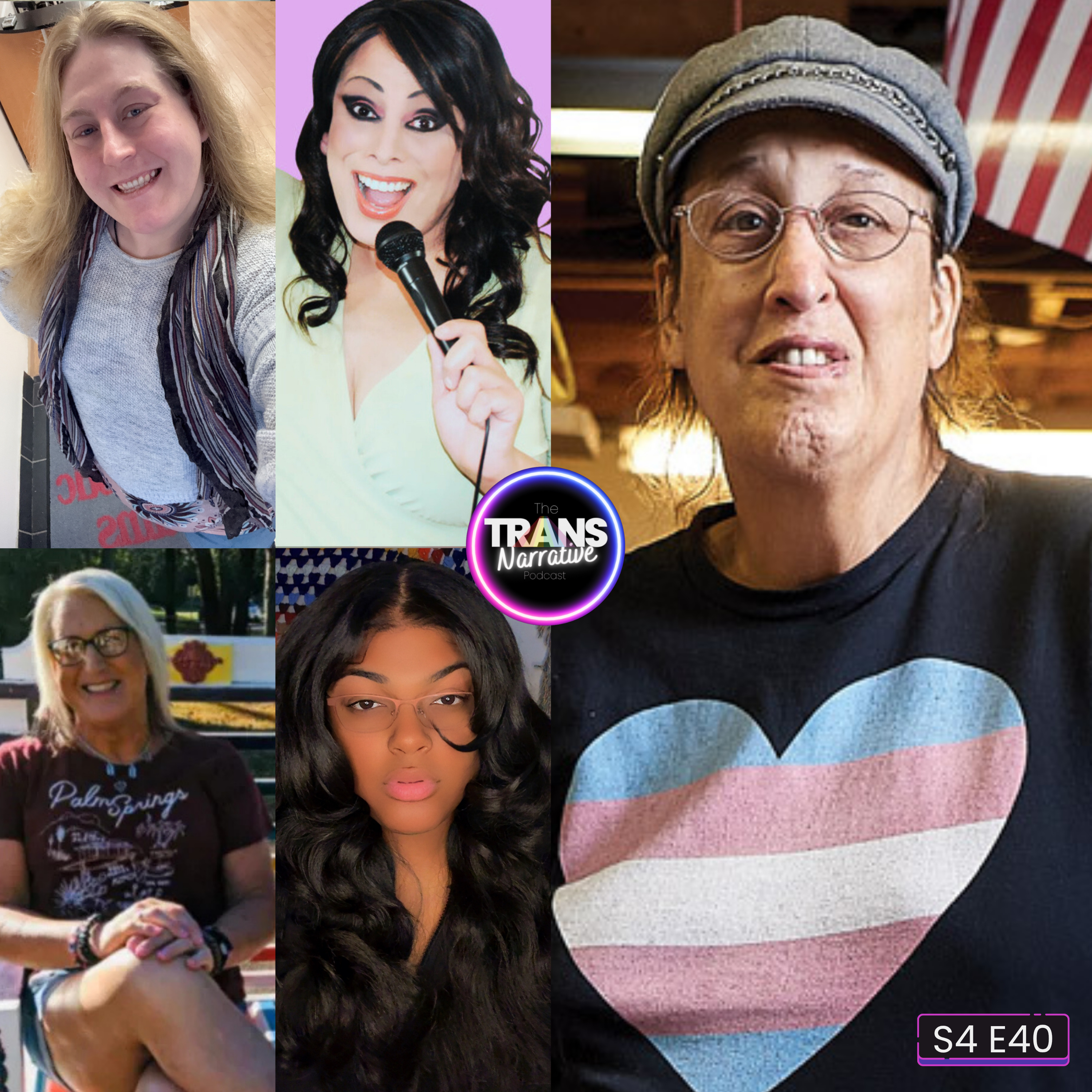
Hi everyone, welcome back to the Translator Podcast. I'm Caroline.
On today's episode, we're joined by Monica Helms, a trailblazing activist, author,
and veteran best known as the creator of The Trans Flag. A Navy veteran in lifelong advocate,
Monica has dedicated decades to advocating transgender visibility and equality.
From founding the Trains Gender American Veterans Association,
to preserving LGBTQRIB+ history through storytelling and organizing,
her work has helped shape the modern Trains Rights Movement.
Make as many friends as you can, because a cold day in hell when we disappear,
because we ain't going anywhere, we are here, we are queer, and we, and some of us,
dream beer. In this conversation, we explore Monica's journey through service,
activism, and legacy, co-identity, courage, and community, have guided her life's mission,
and what it means to build symbols that stand the test of time.
Oh my God! Guess who it is, everyone? It's Jordan Braxton.
Hi, Jordan. It's her gonna be back with you.
Hi, Caroline. How are you doing? It's good to be back.
It's good to have you and joining as guest co-host, it's Castle of Sikas.
Little low. I'm excited to be here today.
It's so good to have you and joining us.
Another guest co-host, it's Tessa White. Hi, Tessa. Welcome back.
Thanks, Caroline. It's nice to be here, and I'm really excited about this episode.
Yes, and joining as our very special guest, it's Monica Helms. Hi, Monica.
Hello, everybody. Hey, Monica, all of you.
It's, it's wonderful to be here. Thank you very much, Caroline.
Oh, it's my pleasure. It's an honor to have you here with us on the Transnarrative podcast.
I'm so delighted to have Jordan and Taz and Taz.
We're, we're joined. We have a little extra co-host today.
I'm really happy to have this space and and these trying times to have all of us together
and in this space to share. So it's so good to have you here.
Thank you for taking time, Monica. I really appreciate it.
Yes, yes. I was a little sleepy today, but I got through it and I was able to make it.
Well, we glad you're here just to see your beautiful face and and you know, we want our audience to
to get to know you better. So why not just kick it off with tell us about the day you were born
and what that was like. Did your parents tell you if the stars are out? Was it was the sun shining?
What's your zodiac sign and and what was it like growing up? We're going to hear the backstory
behind Monica Hale. What's your back story? Okay, I was born in Salter South Carolina and the doctor
when he got me out and he smacked my ass and he said it's a boy and of course he didn't know.
So that was that was my first entry into the world finding out that I was misgendered from birth.
And of course my parents raised me as a boy and there was some things I like doing as a boy too.
So it wasn't what know that bad, you know, I wasn't totally worried about it, but I do remember in age five
praying to God that turned me into a girl. Now I was raised Catholic and for Catholics, you know,
you pray to God for stuff, you know, it's like ordering on Amazon. You know, the thing was though
it took God 41 years to answer my prayer. So I guess for God though, that might be overnight delivery.
So I was a I grew up and like I said, I enjoyed being a boy in a lot of ways doing the stuff.
So I was probably more like a tomboy instead of a boy because inside something was telling me that
I wasn't exactly what I was supposed to be. Well, tell us what stuff did you like to do when you're
a little boy? Oh, like back then it was cowboys and Indians and you know, chasing and playing
cars in the dirt and all the climbing trees and doing all kinds of stuff. And I used into model rockets,
I launched a lot of model rockets. So that was my life there back then. And then my father,
my father was in the air for us. So we were living in Phoenix most of the time, but we got,
he got transferred to Germany for three and a half years. So I got to go over to Germany and
we seen, you know, we went to Netherlands and Belgium and Luxembourg and France and all kinds of
really cool places that I was old enough at the time because I was like, I started there at age 10
and so I really enjoyed the stuff. And I would go exploring out in the, we were living out in this
village and I was, I'd go out exploring and sometimes I'd come up find stuff, you know, like a
burdock shell or I even found a, a sword, a bandit sword. And you know, it was, it was interesting.
And came back to Phoenix and grew up, you know, in high school and I was basically kind of a nerd
in a lot of ways, ways that I enjoyed like trying to make movies with my dad's, the camera, eight millimeter
camera. And I got interested in that. And then 1970, my, my draft number was low. And so I didn't
want to go to Vietnam. So what I did was I said, well, I'll try, I'll join the Navy because
might be safer there. And then I joined and then I went into nuclear power training to the submarines.
And that was, that was interesting. But, but it was a job, you know, it was not like, oh,
we're really exciting. I'm on a submarine day. No, wasn't that way. You know, you're in the military,
you're working at a job. And I, I feel that it was the fact that I was on submarines
was what gave me a lot of my independent thinking because you had, you had trippy to eat trained
on how to protect things on a submarine case. If you're there in the first person there for a fire
or a flooding, you got to know what to do. You know, you have to think for yourself. And so that
was very helpful for me. And so I will stop at that point. Okay. And some guys.
That question really quick was they had a horrible admiral that was in charge of the nuclear subprogram back
then. Jim, what I'm talking about. Oh, yeah, uh, uh, Rick over. Rick over. Oh my gosh. He was not
really as horrible as you might think. He was very strict, though. I had a friend after I got out
of the Navy. I had a, and started my transition. I was actually living with another trans submarine
sailor who was a cook. And she even spent time as a cook for, uh, have a Rick over. That's just,
you knew all of his, his, uh, things. But yeah, he was, he was, uh, kind of scary.
Well, you know, I, I did research on you. And, uh, of course, after I've read all about you,
you know, I had to wear my USMC shirt. I'm a jarhead. But I am completely infatuated with nuclear
submarines. And nobody knows this about me. And I'm a super nerd when it comes to the Iowa class
battleships, especially like, you know, the New Jersey and, um, um, the Missouri. And there's,
there's two others, the Iowa and the Wisconsin. But yeah, I'm a real nerd with that stuff. And on top
of that, I might have been with a couple of the Navy boys back in the day. So anyway, I'm just,
I'm so honored to have you here. And, uh, it's always nice to see other veterans that are here as
well. Yep. That's some readers. They go deeper and stay longer. That's what I hear. So,
Monca, let me ask you this, like, when we, when you look back on your military experience and how does
that influence your perspective on you kind of touched on those on, on your discipline and your
community and, and yourself, how did, how did that time in the military help shape who you are?
Well, it, uh, it really, um, got me tougher and thinking about things. My willpower was a little
stronger. I was able to go through things and, uh, that, that I would not have been able to go
through if I wasn't, uh, one didn't have the training that I did. So, I was very happy that, uh, that I
had that. And later on in my life, I realized how special it was to be on a submarine, um, even though
during the time, it was just, like I said, a job in, you know, you just had to do your job. But I did spend
six different times, uh, how did see 70 days, um, and I don't want to say straight because I don't do
anything straight. What, what summaries were you on? I'm dying to know. Well, I'm wearing a shirt that
says Francis Scott Key, which is, uh, a boomer. It had 16 missiles. And we, uh, we even, um, tested, uh,
the new Poseidon missile system. And we had a perfect lunch for that. And before we went there,
we went, uh, we had a swim call in the Bahamas. And so here we are on a summary big deck,
big flat deck. And people are coming out and they brought out stuff to cook hot dogs and
and hamburgers and, and people are jumping off the fair water planes, which I, I did too. That was fun.
We had one really stupid guy, though. He, he decided to swim underneath the submarine and come
back at the other side. Now that's 33 feet now. So he went there. He got back his nose was bleeding,
but he, he made it. But I, he wasn't one of the brighter, uh, bulbs in the tube.
As they say in Oklahoma, bless his heart.
In Georgia, where I was from originally. Yeah, I spent, I spent 25, 25 years in Georgia.
That was after I transitioned though. So I spent, uh, the last part of the 20th century
in, uh, in Arizona. And that's where, uh, I created the flag.
So let me ask you this, you know, you, it said you're, you've grown up, uh, you, you,
you spent some time living in Germany, uh, you said around 10 years old, if I'm not mistaken.
And I'm curious how, how did growing up in Germany, at least part of your life, shape your world
view? And that must have been what, during the Cold War, the early period of the Cold War. So
how did, how did that influence your, your view of the world? We got there in 1961. And I think
that was, while we were there, the Russians started building the wall. And so my dad was on, on a work
at the base. Uh, this, his, his base was not any, had nothing to do with the, uh, uh, the flyovers
to, uh, take, uh, supplies to, uh, Berlin. But, um, his, he, he, there were always, um,
lurk for various things that were taking place. And, uh, I was able to see things that, uh, as,
as a kid, as a, a young kid that could, could remember it all, see things that I would, uh,
I've never gotten to see if my father wasn't in, uh, in Germany. I, I got to see, uh, the Eiffel Tower
and climbed to the top of that and stood, stood where Galileo stood to do his, his gravity experiment.
And, uh, I, I was at, um, the, uh, Coliseum in Rome and we went, uh, went to Venice. And so, you
know, I got to see things that a lot of people, you know, would be, oh, man, I'm going to go see that,
you know, all right. That's how my bucket list. And, and, uh, it was really nice to look back at that
and go, wow, I got to see all that stuff. That would, uh, be difficult for other people.
But that was, uh, that time of Germany was very, um, happy time as far as I'm concerned.
Did you happen to see any trans people in your travels abroad with your family back then?
No. Okay. Yeah. Not that I would, not that I would have noticed, you know, this was in the,
this was in the 60s. Uh, we got there in 61 and left in 63. So, uh, I thought maybe, maybe you would have
seen a couple in the Netherlands. No. But yeah. So that's interesting. What was that like culturally,
you know, going from being exposed to, you know, German, French, Italian, to then, you know,
returning back in your teenage years to, to Phoenix, Arizona. Well, I, I felt more, um, culturally,
enhanced or, you know, learning how to speak German and, uh, various things. And of course, I was,
uh, I, I was, uh, attracted to girls. So that kind of kept me from, you know, figuring out my,
my own self because, and, you know, after I transitioned, anyway, I started, I started dating girls. So,
so it's always something I would, uh, the, the gender I was attracted to all the time. And, uh, so that was,
it was a, uh, fun time of Germany, yes. I do remember the one sad time I was, we didn't have a
television, but we had the radio. And we were listening to the radio on November 22nd,
1963. That was the day that Kennedy was assassinated. And it was, it was a big deal. Uh, they were,
they were definitely put on a word at that time. So, uh, but I remember telling my mom, mom, mom,
the president got shot. And so, so you're back in Arizona, 1963, you're then, you know, well did,
in '63, we had one more place to go to before we went back to Arizona.
To Kansas, Wichita, Kansas. And thank God I'm not in Kansas anymore.
You moved to my neck in the woods. Yes, Kansas is a little suspect now. So, yeah. So you moved to
Kansas. Tell me what was your experience like in Kansas? Well, I was more of a teenager now. Uh,
I was more attracted to, to girls, but never got any kind of, got anywhere with any of them.
You know, I was, like I said, I was a nerd most of the time. My, uh, my favorite thing to do in,
and, uh, junior high was, uh, drafting, which actually helped me get a job later on in life.
And, uh, so it was interesting. It was flat. And I rode my bicycle all over the place because
I could do that except the wind was always in my, running against me. So, uh, it was tough,
but I did okay, and it made it through. And then in 66, we made it to, uh, uh, back to Arizona,
to house that my parents were renting out. And, uh, you know, I got to start high school and,
and, uh, it was a really interesting getting back and having to paint the fence and all this stuff.
So, uh, Makah had a question. Um, so I'm frankly in the military during a time that was very different
than, um, you and Tess' time in the military, where, um, it just was not really something that, uh,
was acceptable. Um, and, you know, I'm grateful for people like you guys because I wouldn't have been
able to come out while I was serving in the military. Um, if it wasn't for people like you once you
guys got out, you know, started advocating for people like me. Um, what would you say? It wasn't like
being in the military while knowing and feeling that, uh, something was off, something was different.
And, um, you know, when you were thinking about what I really want to do is transition.
Well, I, I got back. It was more like cross-dressing was what I was doing. Uh, and I, I kind of
thought that I might have been a heterosexual cross-dress, but, uh, that's not, that's not the case.
And, uh, I was, I even helped form, uh, a chapter of Tri-S in, uh, Arizona. And, uh, it was like six of us
did form this chapter, Alpha Zeta. And, uh, all six of us ended up transitioning. So it was very
interesting to see, but, um, you know, there was one person in that, in this group that, uh, finally
realized that she needed to transition the first person. And so she tells, she's telling me all this
stuff, uh, about why she needed to transition. And she was putting together all the pieces of my
puzzle in my brain that told me, well, you, you got a transition too. You need to do this.
But I was in a situation with two sons and a wife who wasn't very happy with me cross-dressing.
And so transitioning would, would have been a tough thing to do when it, it didn't take up 10 years
later when I finally started doing it. What was this? What was this? What year was that? What year,
era was that going on? Hey, 1987's when I realized I needed to transition. And it didn't take me to,
it took me till '97 before I actually did it. So, uh, speaking of Arizona, um, and since I have been
gleaming over at my trans flag, I'm just sitting right above my bed. Um, so when was it? And
like, what was the feeling that you had about when you were asked to make the trans flag? What were your
thoughts on how you were going to get there? And, uh, why did you, um, fill as though that that was like
the right thing to do because I know being asked a question like that must have been daunting to make,
you know, flag that would later become one of the most recognizable, you know, flags for the
trans community. And what got you there? Well, it was a little different than people,
somebody asked me and I was sitting there at one time, having dinner with, uh, the person who created
the bisexual pride fund. And that was Michael Page. And he, uh, we were talking it. He said, you know,
the trans community could use a flag too. And I, we talked about different things. And he said,
now you want to keep it simple because the least amount of stitches the cheaper it is to make and
the cheaper it is to sell. So, uh, it was like two weeks later, I woke up one morning and the image of
the flag popped in my mind. So I got up and I drew it out. I said, oh, I like that. So I
contacted the people that, uh, created a bisexual flag. And they're, and they sent me some swatches.
I picked the swatches and called them back. So these are the ones I want. And, uh, so a week later,
I had the first trans flag. And, uh, it was, uh, it was 1999 in, uh, Arizona. And, uh, I started
showing it around everybody. And I didn't think the disc was going to be something the whole community
would use. I made this for myself. This was my version of what I felt like as a trans person. And, uh,
so the, uh, but, you know, I can, like I said, I kept taking it around the places, pride for AIDS,
and, uh, you know, marches and protests and all kinds of things. And, uh, people started asking
where can they get on it. And I sent them to the place where I got my fat first flag. And, uh,
then I, all of a sudden, I started seeing the flag all over the country, you know, various places.
And then in 2013, I started seeing the flag in other countries and other places in the world.
And I go, oh my god, this is getting on. And I got the original. I need to find a place to put it.
And, uh, now I have a place where I put it. I don't want to make it public,
because it's part of the national community. And so I don't want any particular person to go looking
for it and get rid of it. So, uh, but I did find a place. It is at this moment safe. Uh, they are
taking care of it for me. Make sure it doesn't get, get taken away. And, uh,
so that's, that's the whole story of the flag. So, um, like I still remember the first time I ever saw
a trans flag, um, back then, I just thought I might have been, um, you know, just a gay feminine boy.
And I had told my mom that and, uh, she was, I actually lived in a very, like, I guess, um, very
liberal bubble, you could say, because my mom was a dragon. Um, and she took me to this place called
Listen, which, um, you know, if anybody doesn't know is a, uh, group for a young LGBTQ plus people. Um,
and they're, I remember looking through all the little buttons they had and, uh, the trans flag. And
right next to the trans flag was, you know, she, her pronouns on a button. And that was like one of the
first times where I kind of thought like that, that may have been, um, where my life was headed. And
what seemed most uncomfortable for me is, and, you know, your flag was part of that. So, I really have to
thank you, um, in your memoir, uh, more than just a flag, uh, you talk about history, advocacy, and
your own personal growth. Uh, what motivated to tell you, uh, for you to tell that story now?
So, what did I say that again? What the last, uh, what motivated you to tell your story now?
Oh, well, I was actually thinking of writing my story in, in 20 2005.
And I started writing a bunch of stuff and, uh, I didn't like the direction it was going.
And I, uh, I saved a lot of that. And then, then later on, I said, you know, I, I went through a lot of
other things that, that I needed to talk about. And, and I figured, if I talk about how I started off
life and, uh, you know, what, what, uh, motivated me throughout the times and, and the things that I learned,
as, you know, I, I learned, um, I learned to be a lesbian, I guess, and part of my life. And it was, um,
you know, all the different things that I went through, I was able to see what's, what made it,
and what made that situation good or bad or otherwise. So I, I did some bad things in my life
that I recall, but I didn't stop talking about them. Um, and, uh, so I, I wanted people to know that
you can go through a lot of things in your life. And then still come up to the, the, the part where you
say that you need to transition. And, but the thing is, once you do that transition, life is not over.
And there are many people that wrote books about going to train through transition. And then
end it there. Now we want to know what they did afterwards. So I know I wrote about all the stuff
that I did afterwards. And the things that I went through and people I met and stuff. So it was, um,
it was important for me to write all that now. And there was, I figured some people might get, uh,
be able to see that, you know, it takes a lot of things to happen to get you through to where you
got to go. And, uh, that was part of the reason that I wrote the book that I did afterwards.
There is a lot of things that we have to go through to get to where we're going, especially in,
in the world that we, we haven't negotiated through in our years. And I have a question for you,
but I first need to tell you, you know, I was Oklahoma City pride president for five years in a row.
And somebody asked me what my most memorable experience was. And it was truly seen
are younger trans people and they always will take that trans flag and turn it into a cape.
And it just was one of the most endearing moments that replayed itself over and over and over again
for me. And, you know, when I was a big time activist and out there, and I remember carrying the
trans flag. And here I am talking to the person who decided, I just like can't even believe it.
But thank you. I just want to say thank you for giving that to all of us. I've held on to that
dearly through the years. But do you have a question? Is it you that started the Transgender Veterans
Association? Transgender American Veterans Association, yes. In 2003. In 2003. And how did all that
come about? Well, what happened? My friend Angela Breitfeather and I were on this Yahoo group,
where there was transgender veterans. But they like to say that they were transsexual veterans
because they didn't feel that anybody that doesn't get a surgery, this was not, you know, qualified.
Angela and I were there anyway. And so people started to talk in about the issues that they faced
at the various VA's that they went to. And this one trans man said that he went to
the VA in Washington DC. And they totally turned it down because he was trans. So he drove 60 miles
north to Baltimore. And they treated him well. And we're going what the heck is wrong? And we found
that there was some law that was, you know, misinterpreted. And, you know, so we needed to change
that law. We needed to allow transgender people to be treated equally in the VA. Now, of course,
at that time, you know, all veterans were not being treated very well. But we wanted to be treated
just as crappy as everybody else. That was real important. And so we've created transgender
American Veterans Association. And we went through all the things that you needed to do, you know,
five or one C-3 and elected officers and all kinds. I was elected president. And the
thing was we kept going and lobbying Congress and doing things that we had to try to get people to
understand that this was not, is not right, that trans people needed to be treated equally
and respectfully because they're veterans. And it was like eight and a half years after we
created Tava that the VA came out with a directive that said, told all the facilities how to
treat trans people better and equally. And the day after we got that happened, we got emails from
trans veterans saying that it worked, that they were now being treated better at the VA. And so
basically we may have saved some lives for that. And that's one of the big things that I was
happy about. Well, and I owe you a huge thank you. When I transitioned, I was living in New England and
moved to Oklahoma City. And it was the Oklahoma City VA who had a transgender group there.
And I was still scared of that to transition. But I went to that group called transitions
at the Oklahoma City VA. And it is there that I found the courage to go ahead and fully transition
after that. And just as up to date with what's going on, the VA just enacted a rule that they have
removed the word transgender or the letter T from LGBT with any of their literature that they have
or on their websites, they just recently removed that. So we really had it really, really good for a
long time. And of course with the administration that's in power right now, that's what they've recently
done. Yeah, I know about that. I know how much they seem to hate trans people for some reason.
You know, and yet, you know, they're calling us terrorists. Yeah, right. Sure. This group of people,
were the ones that get it getting terrorized. So far, there has been 51 trans people killed in the
United States since the last transgender day of reverence. And, you know, so it's getting worse.
Yes. So yes. And I have to everyone's giving you your flowers for the flag. And yes, I have to give you
flowers also because when I was debating on whether I was going to even come out as trans or, you know,
go from that positive gay trans person, I look at the flag a lot. And I have one Lord. I am so proud
to be trans. I talk about trans joy all the time. And I've taken the flag and I told you this when
I met you before. And I have it all over not only in my office, but in our reception room and our
medical rooms, wherever you can get a service at my company, we have it there. So they trans people
know that they are welcome. They are seeing it. So you, without even knowing it, you help me become
the activist and the advocate that I am, which I want to know this future generation, how do you
see what do you want the future generation of trans people and veterans to learn about your life?
Well, I want people to know that when I first started working towards
helping veterans and helping trans people, I said, I'm not doing this for me. I'm doing this for future
people. I actually told my friends that and they and now those people are here. There are there are
trans people that are younger than the trans flag that are that grew up with it in their lives,
in their because the parents knew exactly what it was that the child needed. And so it's
very helpful that when people see the flag like where you're in your facility and they see that flag
and they go, I'm welcome here. They see it in a crowd and they go, they know some of my people are
here and it's very wonderful to know that the flag has become something that people rally around.
That they use and martyne and pride and everything that it is, is very wonderful to see that.
And I didn't realize that I would have done something like that in my life. It's like it still
amazes me that that happened to the thing that I created. And so I've seen it in on every continent,
including Antarctica. I have seen it on mountain tops, but not ever since yet. It's worked there
and working on it. And there is one place that I want to see it, of course, not in this administration,
but later on, I want to see it in the International Space Station. The rainbow flag has been there,
but the trans flag is not. And that's something I want to see after before I
for our passway or. So for me, as a, you know, as a trans woman who is currently still in the military and
won't be come December, because that's when I'm supposed to be getting out, but well,
what would you say to people who are like me who are currently in and who are currently
getting kicked out for being who we are and we can't change who we are. And even if we could
me, where I am in my life right now, I love myself too much to not change.
What would you say to all the trans people who are currently being kicked out under this administration
for doing a job that me, you and Tess have all done and I'm pretty sure, you know, love doing.
What would you say to them? Well, when Trump came in in 2016, he eventually got a band of trans people
in the military and then Biden came in and brought us back. Now Trump's back in, but he isn't going to
live forever. He isn't going to stay as president forever. He is not going to be the final say of the
United States. Trans people will be back in the military. When his administration is long dead and
gone and we will be doing our job protecting the country like we always have. So I know it's tough
going through it now, but it don't be it won't last forever. And you will still be old enough to
re-enlist after he's gone. And I want to know when that day happens that you make it back in.
And how will your friends will be the same? Yeah, and it's a crying shame too because the
the trans veterans that I've seen out there, the trans military members take that job so serious
and they try to just keep it way above and beyond what the normal expectation is to really really
set a good example out there. And everyone on the screen right now is so sick and tired of this
tug of war like you were saying going from Biden letting us back in to Trump pulling us back out
again. And I mean, it just makes everybody's head spin. But I mean, there's no doubt about it. We
have become the political pawns of this entire block of history. And I just can't figure it out
because trans people are some of the greatest people I've ever met my whole life. And speaking of
which is there anything we can do to help with the Trans American Veterans Association so we can
get the word out. And like, what can we do to help out to be able to push our own agenda again?
Is there anything you envision we can do to help? Well, there is, you know, lobbying, but right now
anything that you do to keep this in mind, anything that you do to make them know that your trans
could be dangerous for you at this time. They're working on all kinds of things to eradicate our people.
And you have to be, you know, today is supposed to been a no Kings March day. A lot of things
were supposed to happen. And I hope that there's a lot of us. I know there's a lot of us out there.
I'm sure that we'll see crowds with trans flags in. And so you just have to continue being on the
right side of history. Yes. Fighting where you can fight. And do your job like you, you always have
to make things right. It's very tough. There was a survey done a few years ago that it showed that
trans people joined the military twice as much as non-trans people in the United States.
There were, it's like 10% of Americans joined the military, 20% of trans people joined the military.
That's incredible. I love to hear that. And so, Harry, so I'm like, you're not trans people.
What's that? The military, the military think is, if I'm not mistaken, was the largest employer for
the trans community. Yeah, it was. But it will be again. Yes. And you mentioned the no Kings March.
I have to be on mute because a no Kings March is in for St. Louis is going right by my apartment building
right now. And they're out there beating the drones. And yeah, it's going right by it. That's
just so coincidental that you said that it's going right. You can probably hear the sirens
and everybody in the background chanting. But yes, it's going right by my apartment right now.
And I'm pretty sure I can tell you there are trans flags in there because some of my
friends are there and some of our supporters of the St. Louis trans community are out there
were flags and trust me, each time we have any marches of protests or rallies here in St. Louis,
there's always trans flags available. And we owe all that to you. See how same it was in
in Atlanta when I lived there, always any kind of marches or anything like that. Trans
flags were always available shown. And so yeah, so shout out to everybody in St. Louis. Thank you.
Shout out to everyone at the New Kings protest route this weekend and throughout the weeks coming
and all the protests going forward. You know, it's it's it's you know in in in light of the hostility
in the setbacks that we're currently facing. How what strategies, Samonica help help us maintain
resilience as we're as we're fighting against, you know, our dear beloved administration.
I'm getting there was a one thing I thought was was interesting was that you know they they were
talking about taking guns away from trans people. And then the NRA stepped in and said no, we won't let
that happen. You know, so it's like, whoa, cool. You know, the NRA is as Cuban us let us be gun owners.
And I was a gun owner when I was in the States. And you know, now they're talking about trying to
get a list of all the people that are gun owners too. So they can know who who is who's got the guns
in the United States. So it looks like the Republicans are coming for your guns, not the Democrats.
And that and you know, that is obviously ridiculous. I'm a I'm a retired police officer too.
But but I do want I this kind of plays into it. It's funny how the NRA the NRA kind of stuck up for
for us trans people on that issue. But I have reached moments where I felt like
sometimes all is lost. We we've lost the war, you know, as far as trans people goes. And then I
bring myself back out of it. And I really start to pay attention to the actual support that we get
out there. We are supported by celebrities, sports figures, musicians. And especially in a public
view, we have so much support out there. And I really feel a shift that's happening lately. That is
turning back into into our favor as far as, you know, people just acknowledging that we have a right
to exist and to leave us the hell alone. What do you think about that support that we get? You
must see it too. I mean, if we could just put aside all the negativity, have you noticed all the
support that we are getting out there? I am noticing that people stepping up and and talking
against J.K. Rawlings and people doing various things that, you know, say it like
Pedro Pascal has a transistor. He's very supportive of her. Other people have trans relatives.
You would not believe how many Congress people have some form of trans relatives in their in their
life. Today, even Republicans, although they don't say anything, but the Democrats, a lot of you go,
you walk down the halls of their offices and you see trans flags every once in a while outside
their office. It's so beautiful. And those people are still there. And it will be a cold day in hell
when when we disappear because we ain't going anywhere. We are here. We are queer. And we
in some of us drink beer. Amen, sister. Amen.
So, I had another question. For on the opposite side of people who are, you know, starting to speak
out in things of that nature, you know, because of this current administration, you know, the uptick
in people who are using this current administration to push their hate has increased. We have people
like Nick Fuentes, you know, before he was, you know, shot a Charlie Kirk, you know, just all these
people who are kind of prominent in the Republican space have used this kind of administration to
push an ideology that we're not who we say we are. And it's all fake and things of that nature.
What do you have to say to people like that and people who maybe are listening to people like
Nick Fuentes and are saying things like, oh, well, if they say it, then it must be true. How do you
combat, I guess, the things that they're saying that are misguided because of their own ignorance?
Well, I look at these people and the only reason they're doing what they're doing is to kiss Trump's butt.
They want to have, you know, him like them. So they start saying all the shit that he says and that
means, oh, you're one of us. So I like you and I'll treat you good. And it's like, it's basically
trying to see power. Everything, anything that does wrong, they're going to try to fit a trans
issue into it. They, they tried to work their asses off to get trans people involved in
Charlie Kirk's death. And they couldn't do it as much as they tried. And some people still believe
that trans people are the reason why Charlie Kirk got killed. He got killed because he was a stupid
idiot. You know, and other stupid idiots going, well, I don't like that stupid idiot. I think I'll
get rid of him because that's what we do here in the Republican Party. Excuse me.
So it's, it's more of a game, you know, we've been here since the dawn of time.
There are, there are evidence that in Egypt and in Rome and all kinds of stuff of trans people
existing. The, the Vikings were also very big with their women were treated equally. And some of them
were probably female to male trans, but they got to be the male that they wanted to be because
that was how it was in the Vikings. And so consequently, we've been around, we ain't going anywhere.
We're still going to be around when, when Trump is, is den buried. And we will be around to be
able to go over and become his grave. I can't wait. And the thing is, and to think that they wanted,
well, that they still want to institutionalize us, it just kills me, you know. Retire police
officer, former United States Marine, you were in the Navy. We have people on this panel veterans,
people in very important positions. And, you know, some of us were trusted with national security.
And, you know, I was a police sniper and I watched over two of our United States presidents
with a sniper rifle in my hand. And they want to now institutionalize me because I'm transgender.
I just never heard of such a bunch of bullshit in my life. And there's people that buy into it,
you know. I just, what is, what can you say if I can fire you up a little bit over that? What can
you say just to reassure our people that, that the real crazy ones is not us, it's them. Like,
what can you say to make our people feel better about that? Well, first of all, I want to give you
an idea of a cartoon that I saw. There's a Trump in his, in Vance, sitting up, standing on the balcony
of the White House. And here is a missile coming in. And Trump says, who's supposed to be firing
against that missile? And, and Vance says, well, we had a transverse and that was. So,
and what I, I say that this administration is, is digging a hole so deep
with not only just us, but with other things that they're doing that's, that's virtually
stupid. But they're digging a hole so deep that a lot of their people like farmers that voted for
them. Now they're, the farmers are going out of business because of the tariffs. You know,
there are a lot of people that are getting shocked by the fact that what they voted for
is now in the process of killing them, taking away their health care
and doing things that that will make their lives worse, making the water more polluted, air more polluted,
cut tearing down national forests for wood. You know, it's like, if this was not
2025, I'd say it's 1984 because it sure sounds like a lot of stuff that, that it's happening,
that we, we should have been warned about, but it didn't happen in 1984,
that's happening today. Right. Speaking of 1984, it kind of sounds like that novel,
by Orwell 1984, that, that, that, that we're living through. But, you know, I know we've talked about
a lot of doom and gloom. And one thing I like to talk about, which I don't think people talk about
enough is trans joy. What joy do we have being trans people? I always talk about trans as beautiful.
I tell them I'm the happiest I've ever been in my life when I look at the trans flag,
I feel trans joy. So Monica, what is trans joy to you? Well, my wife, darling,
we've been together since 2009. And we're, and she's, she's the most wonderful
trans person in my life. She's, she makes my life happy just by beginning who she is. And I cannot
see myself without, without her, you know, if anything happened to her, I would, I would probably pass
away real quick, because, because I'd be so sad. And so joy is also the fact that I can
see somebody that I want to be, look at the mirror and say, I'm happy with what I see, except for
I'm too fat now. And, and other things, you know, just the fact that we got, we got two cats that are
there are wonderful. They, they love us both. And they can be couple of knuckleheads at times
finding each other. But, you know, it's just the, the life that I'm living at this moment of time
is what makes me happy. We went to a, a fruit vegetable market that was huge.
All kinds of fruits and vegetables that you could think of, stuff, some of the stuff that you're
going, well, wait a minute, can you, you can get that in Costa Rica? And we, we bought several things
and didn't spend very much money. That was, that was very nice. This being who I am and being
able to do what I want to do. And hopefully I can help others come here too. If they, if they
need to, and if they're able to, then, and that would be something else that I'd be happy to do.
Jordan, could I share my trans joy from yesterday with you?
So, I own a heat and air company here in Oklahoma City. I had a grueling day yesterday. It was
cover with sweat from seven into morning on. It's 430 in the afternoon and one of the owners
from our gateclubs in Oklahoma City called their air conditioner wasn't working. So I go over there
and I'm right on the edge of the main road working beside this building. My head's on a swivel.
We've had some incidents going on in our gate district. My head's on a swivel. Not sure, you know,
just trying to look out for crazies coming at me. And then my friends start going by and honking
their horn. And I'm out there with my booty shorts on and my tight t-shirt. Somebody else, I had a
nice latent squirrel. And I just sat there as dog tiredness. I was as dirty nasty sweaty as I was.
I was so happy. And so just happy to be in my skin as a trans female yesterday going through that
and realizing that we do have a lot of trans joy in this world. And, you know, as much as
people try to take that from us, we can never let them do it. Because when we get down to the end
of the day and we think about it, life being a trans person is a million times better than what it
would have been like staying as a man. So yeah, that was a great question, Jordan. And I loved your
answer, Monica. I was asked, people, what is their trans joy? Because I think a lot of this,
well, first of all, we have just a lot of stupid assholes in the world. But, you know, I don't think
there's, you know, for all these every day, and I tell my therapist this one day, I want to go 24
hours without hearing trans bad. I just want to hear it. Just leave. I'm exhausted from every day,
trans bad, trans bad, trans bad. Well, trans not bad. Trans is beautiful. You know, so I just
always want to talk about trans joy. I don't want it taught to be, you know, doom and gloom. Like,
you know, we're approaching November. November is trans awareness month. And we're going to have
trans day of visibility. And I don't want that to be about the 51. Yes, we're going to honor the 51
people that have, you know, been unalives since the last, since the last year. But it's also spread
a little joy in there. Absolutely. A little joy in there. Let's, and let's take our flag and let's
let's fly our flag high every year for the last 11 years. Our city hall has flown our trans flag
from November 1st to November 30th. And I've always put that ceremony on because I want people
in St. Louis to know that we're here. We're proud and we're not going anywhere. I also say we should
use that old saying we use in the 80s, Monica. We're here. We're queer. Get used to it.
Mm-hmm. And we should modify that. We're here. We're trans. Get used to it.
Okay. I, um, I like what Monica said. We're here. We're queer and some of us drink beer.
You know, Monica, looking across your life from childhood to military to creating the trans flag
and advocating for trans veterans. What has been the guiding principle or through line in your life?
My guiding principle is, I guess, um, I know how much of a jerk I could be. I know how much
of a, a person that demands stuff. I've been in that situation enough. I know how those
things are. And it's like, now, I know that I could, that, that could happen in my life.
What is the alternative? The alternative is to be nice to people, be helpful if you can. Do what
you can to make sure that the trans community is going to continue to be very helpful to other
trans people, the new trans people that are coming along, that they have to be there for them.
And I have to be there for them as well. I have to put aside my, my ego, which I do have. And, uh,
you know, help people. And that's the thing. So you know, you all know now that, that I can be an
egotistical person because, because I say so, I know myself. It's, uh, it's all about me.
My, my pronouns are me and I. That's because I'm self-centered. It's like, isn't that?
So I will do what I can to help people because I don't like my alternative, uh, my dark,
the dark side. I don't, I don't like going to the dark side. I feel that speaking of helping others,
you know, what's currently the project or what's next on the horizon or what's, what,
what are you, what are you working on right now? Um, oh, oh, well, since I like to do video work.
And what I do is I, uh, we go places, you know, or nature and other things, uh, and, uh, I shoot
like 30 minute, 30 second clips. And then I take those clips, I make sure I edit them properly. And,
then, uh, I send them to four different, uh, stock footage companies. And sometimes I, uh,
I get some money back from it. Not a lot. But, you know, I, I, I guess, you know, the, the old
thing is that if you throw enough, uh, you know, what against the wall, something's bound to stick.
So I've, I've got thousands of video clips of places we went to, uh, Grand Canyon, Yellowstone,
all kinds of places in Georgia. They're beautiful. And, uh, and I'm doing it here in, in Costa Rica.
And so my, my thing now is to put together some videos that we took, uh, process them and send them off
to, uh, the, uh, uh, uh, the stock footage companies. And hopefully I get to make a little more money
that way. And I, I enjoy doing video work. It's very, uh, satisfying to me to do a, uh,
catch something that you don't normally catch. And here in Costa Rica, we can get all kinds of
creatures and birds and, and all kinds of things here. So, uh, I'm ready for it. But it's the rainy season
right now. And so I got a wait till it's, uh, till it's the dry season before we can get out some
places to have some fun. You know, our podcast, uh, The Transnarrative has played in 75 countries.
And I think that that's incredible. Speaking, if you could, um, and here now, you know, what would
you like to say to the global trans community? If you, if you could, in one sentence, what would you say
to the world? Make as many friends as you can because many times your own family will not
support you. But if you have many friends, you have that support that you need. You have your
made family. And so create as many as much friendship as you can. So that would help you get through
the tough times. It has helped me.
I have one more question to ask, uh, Monica. So I, I look at people in the trans community,
who have, you know, just provided so much for, you know, younger people like me and for
many years to come, people after me. And I see that and it makes me want to, you know,
further that help and, um, help in any way I can. So I get on take talk and post videos about
why it is that we live in this country and fight back against people who don't, you know, um, respect us.
But I think there are some people in our community who may be wondering why, why should I be the one
to, uh, you know, fight when, you know, maybe they're thinking it's not worth it or nothing will come
for it, uh, come from it. What do you say to those people and what would be your call to action
for other trans people like myself, young and who are just coming into the community of why they need
to, uh, you know, advocate for ourselves and advocate for the community. What would be your call
to action? It comes from your heart. You, you have skills that other people don't have. Use those
skills to your advantage. If it's TikTok, great. That's a very good, uh, medium. But for those people,
everybody has a different, uh, different, uh, skill that they could use to, I had different skills
that I were able to use. And now, each one of you has a skill that, it's something that you like
to do, but you could point it towards, uh, helping trans people. Um, like Caroline's got the, uh, the
pod and, uh, everything, you know, we all do our thing. I created a, uh, a new Facebook page group
called, uh, Gender Freedom Costa Rica. So that way I can, uh, get people that are trans that are either
thinking to come into Costa Rica or already here to, to help everybody and let them know what it
takes to come here and how it, uh, how, what, what they have to go through. And so that's, that's my new,
new direction when it comes to activism. And I, I would say, do what, do what you do? That's, that's
best. And work it towards the trans community. Put it, put it there. And that would be very helpful.
That would be very. And so, Kaz, keep doing what you are doing because you may think it's not doing any
good, but you don't know. There's always that one person that sees, sees your video and knows, oh,
that I could do this or I can it. You know, you can, you don't know who you're touching out there.
But keep trying. Keep doing it. Thank you, Monica. Thank you, Monica.
You're welcome.
Sorry, I was just mesmerized by what you just said. I was like, yeah, I don't think I can follow that
up with a question or anything. I'm just like that. Ta-da. That was it. Thank you for coming and
playing in the game. That was beautiful. Another meeting coming up. Another meeting coming up. Okay,
when in a couple minutes. Oh, okay. You got another meeting. Yeah. Okay.
What was nice to meet you, Monica. It's really been an honor to get. It was great to see you again.
Yeah, it's great to see you all of you. And Jordan, again, yes, it was good. I appreciate
Caroline putting this together for us. It's won't work.
Well, Monica, you know, it's been a pleasure having you on. It's a great honor and I'm just,
I'm blessed and grateful to share this space. And you know, speaking of trans joy, this,
this is trans joy coming together week after week and hearing the stories of the trans community
and honoring our lives, preserving our stories and telling our and telling our narrative. So,
you know, and for those that are listening and want to participate and have their voices heard,
please email us at
[email protected]. That's
[email protected]. We'll get
your voice on the show. We're going into season five next year. Can't wait for that. Jordan,
let me be exciting. So, Cass Phillips, thank you so much for taking time today. Being here with us,
I really appreciate it. Thank you. It was the highlight of my week. And Tessa White, thank you so
much for taking time to be here with us. Well, thank you, sweetheart. I appreciate it.
Jordan. Hey, it's so good to have you. Thanks for finally being here with us.
Thank you for inviting me and Tessa. It's always a pleasure seeing you, Olgael and Monica,
she's good seeing you again and I'm very sweetie. How are you doing? Hopefully I'll see y'all soon.
I'm sure our past across in some conference or something. Oh, yeah. Yeah. And then Cass, I just want
to say it is so refreshing to meet you. I love when I'm introduced and meet and young and younger
trans women. It gives me hope that our fight and struggle and the spread of joy will continue.
I'm going to give you flowers, even though I just met you. Thank you for coming and thank you,
Caroline, for always welcoming and making this a welcome in space so we can all share our stories
because right now our stories are so important. That's right. Thank you. Well, thank you. Thank you,
everyone. Monica, now as we depart and carry on throughout our week and what's the message that
you'd like to leave with us to carry into our hearts? Love always wins out. And if you love yourself,
you win out. So stay good to each other and have a wonderful life.
You and I, we got ourselves in our community. You and me, we can accomplish anything we set our minds to.
Our souls will shine through. With our light, we will fight for each other. I'll always stand beside you.
Through the storm and through any weather, we go strong. When we stand together, live our truth. We know
long we're faking, moving towards our liberation. Dreams we're chasing, we can make it through. We'll be just fine.
Every day, every conversation and every game. All our voices come from the distant day.
Open your heart, you are free to be. So beautiful.
 PodcastTranscript AI