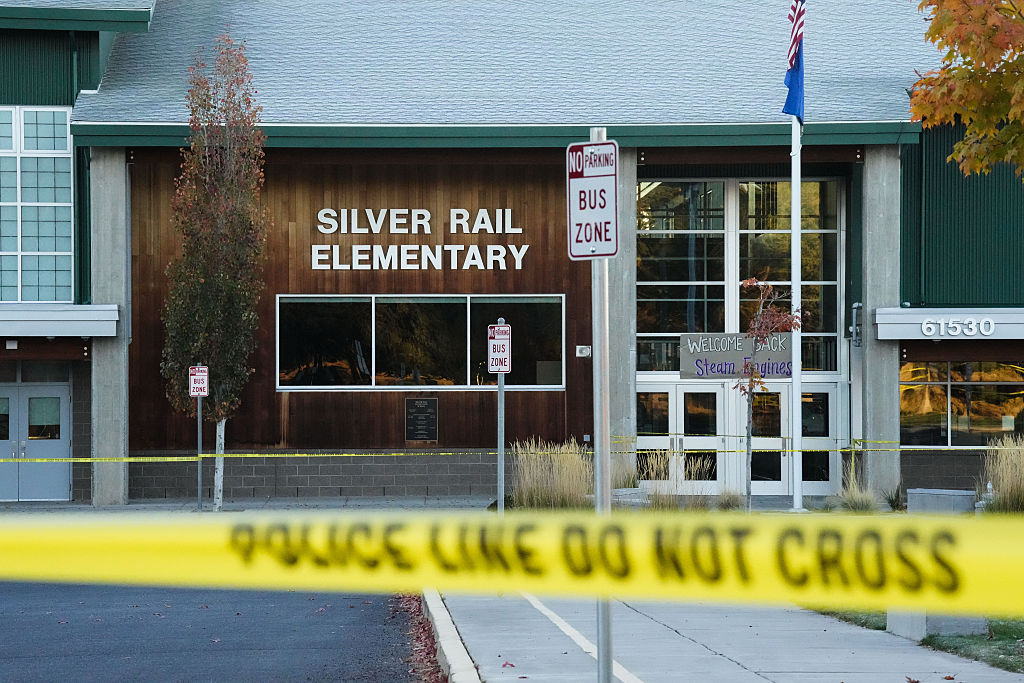
A tragic school shooting in Bend, Oregon, where three children and a teacher were killed, underscores a profound moral crisis. The perpetrator, a 16-year-old with a history of special needs, committed a calculated, evil act that transcends rational explanation, revealing the moral clarity and existential horror of human evil. This event highlights the Christian conviction that objective moral truth exists, grounded in God’s creation and reflected in human conscience. The public’s intense desire for answers reflects our inherent moral and rational capacity as beings made in God’s image. In contrast, the rise of violent crime reduction through death squads in Venezuela illustrates that order without justice—such as rule of the streets—is not the rule of law and can enable human suffering. Meanwhile, the global issue of forced organ harvesting, involving China, Nigeria, and Latin American cartels, exposes a systematic violation of human dignity. Christian ethics emphasize that while organ transplants are a medical miracle, they must be conducted with absolute respect for life, and thus require ethical oversight and legal protections. The bipartisan support for legislation like the Stop Forced Organ Harvesting Act—passed 406 to 1 in the House—signals a growing moral consensus. These events collectively affirm that a moral universe, rooted in divine order, demands not only justice and truth but also accountability, dignity, and the rule of law as essential to human flourishing.
It's Monday, October 19, 2026. I'm Albert Moeller, and this is The Briefing, a daily
analysis of news and events from a Christian worldview. Of course, at the end of last week,
the nation was once again grieved with a killing in a school. In this case, three children were
killed in a school in Bend, Oregon. A 16-year-old boy was the shooter in this case, a former special
needs student. And by the way, a lot is not yet known about him and about all the circumstances.
Two others, including one student and another teacher, were badly wounded. But one teacher
and three children aged 5, 8, and 11 were killed. So we're looking at an undisguised tragedy. The
tragedy is right before our eyes, and virtually everybody recognizes it for what it is. This was
a horrifying act. It was an evil act. It was undertaken by a boy, a 16-year-old,
who
got a gun and climbed a fence and then shot through the door in such a way that he could
gain entrance clearly for the purpose of committing a mass murder. And there is more to the story.
There was one teacher who fought back and at least partly disabled or distracted the boy from being
able to shoot others. And then there was the father of a student at the school who went in
and had a gun and was licensed to carry a gun and use that gun. He had seen the boy climb the fence
and the boy had taken shots at him in his vehicle. And so you can do the math.
If that man had not been there with the gun, knowing how to use it, and had that teacher not
sought to disarm the boy and stop the murderous rampage, there's no telling what the death toll
might have been. It is an unmitigated tragedy. But as in the case of so many other just undeniable
tragedies, it's a tragedy that is horrible and could be even worse.
So I do want to point to something that is worthy of our attention here,
and that's moral clarity. When moral clarity exists, we ought to affirm it, understand it.
We ought to recognize it.
We ought to recognize that this is an important thing. We live in an age in which there are many
people who are denying any kind of objective morality, any objective or ontological right
and wrong. Instead, everything's supposed to be a value judgment, and thus it's variable.
It's a social construct, and thus it's political. You just go down the list. But when something like
this happens, virtually everyone acknowledges this is just evil. There is a word that is necessary
here. Evil is not enough, but anything less than evil is even more not enough. It's even more
efficient. And so that kind of moral clarity points to something, and I think as Christians,
we understand here are two things it points to. Number one, the reality, the ontological reality
of a moral world by God's creation. And secondly, the fact that we are moral creatures made in God's
image, and we are the creature who cannot not make moral judgments. And even though after the fall,
many of our moral judgments are wrong, they are askew, the fact is that on something like this,
there's just about universal moral clarity. And that was true.
And so many of the most horrifying incidents of the 20th century, frankly, also all the way back
to the Bible. So we do need to recognize, Christians need to recognize the immediacy
and the clarity of the moral judgments that were made here. That's evidence of the universe that
God, the holy God, creator God of the universe, it's evidence of the moral truth he has embedded
in creation. But there's something else here I want us to note. The headline in the article that
ran on Sunday from the New York Times, the headline was,
School Shooting Has Heroes and Pain, But Few Answers. Okay, so there's another dimension to
this. There is grief, undeniable grief. There's overwhelming grief. There is fear. There is
absolute anger. But there is also present in the midst of this an absolute hunger for answers.
Why? That's the big question. Why? Why did this 16-year-old boy do this? What was in his heart?
What was in his intention? How did that happen?
And of course, there's so many other questions. How did he get the gun? How did he come up with
a plan? Did he talk to anybody about this? There are all kinds of questions. I want us to see that
too as evidence of the imago dei, of the image of God. The fact that our conscience demands answers
to specific questions in order that we can try to understand even this, that's also evidence of two
things. Number one, the fact that God gave us this rational capacity. And number two,
that rational capacity has moral limits.
Okay, so let me say that there's a category here we don't use very often, but let's just think
about it for a moment. The term surd. Let's just spell it S-U-R-D. Sometimes you see a variant
absurd. Something is absurd. What does that mean? Well, absurd, the term probably emerged,
first of all, in the mathematical world, referring to an irrational number or an irrational formula,
something that is just simply, well, it boggles the imagination. It defies the imagination.
So what's the square root of two? Now, you can work on that all you want, but you're not going
to come up with a satisfying answer. So way back when, and this goes probably back to the medieval
period, there were those who used the term surd for something that simply is irrational, can't be
explained. In moral terms, it's more likely to say it's absurd. And the word absurd, well, it appeared,
we're told, for the first time in the English language in the 16th century, and it's believed
that it was borrowed from France, which, after all, makes a kind of sense. So, you know, it's
absurd sense about absurdity. And so you look at this and you recognize it's moral behavior. It's
an historical occurrence. It's a human element that is also beyond rational explanation. It
defies a rational explanation. So here we are on a quandary. The Christian worldview
honors the quandary. It honors the paradox, the predicament. We have an insatiable need
for answers to questions. Most importantly, the question, why? At the same time, we're looking
at an act of evil that can never be explained adequately in rational terms, because it is,
by definition, morally an irrational act. It's worse than irrational. It's evil. But still,
you understand, it's important for us to see, it's important for us to define the terms such that
when you look at a mass murder like this, a calculated intentional mass murder, the killing
of children, it just underlines the fact that human evil goes beyond any rational explanation.
I don't care what diagnosis a psychologist, psychiatrist,
or anybody is going to come up with. Still, it doesn't make moral sense. It is important for us
to recognize that as human beings made as moral creatures, made in the image of God, we're moral
creatures. We crave understanding. We crave a morally satisfying understanding. We believe
on many things that if you just understand what's behind something, you'll at least be a long way
towards understanding the thing. But when it comes to this thing, I just want to warn us, we need
properly to understand that the darkness and evil of the human heart is beyond rational explanation.
The darkness and evil of human sin is literally and horrifyingly absurd. It's going to be very
interesting to see how this investigation progresses, and especially the huge questions
like where did he get the gun? How did all this happen? Those are going to demand law enforcement
investigation, but you know it will never be satisfying in terms of the internal questions,
in terms of this boy's motivations, and what kind of evil
was actually in his heart. Unfortunately, it leapt from his heart into space, time, and history
in a school with little children and teachers. All right, all of this in our context is now going
to shift to the rule of law. And we need to recognize, we talked about this before, the rule
of law is a unique achievement. It is one of the clearest signs of the presence of civilization.
And when it comes to the rule of law, some very interesting developments. One of them is Brett
Stevens wrote a piece,
entitled Western Civ Lessons for Team Trump. And he's saying that there are basically three pillars
upon which Western civilization rests. And I think he probably wrote this in light of the fact that
there was a lot of publicity, and I'm a part of that publicity, giving attention to a very historic
speech given by Secretary of State Marco Rubio just days ago in Athens about the defense of
Western civilization. I join him in wanting to see Western civilization defended. And I often
disagree with Brett Stevens on much that he writes, but I do think that there's a lot of
I think the three points he makes about civilization are important. He says there's
civic lessons. And not only that, I think there's a profound truth behind what he's writing here.
He says, at base, civilization rests on three pillars. He says the first is the quest for truth.
And he goes immediately to the Psalms, where the psalmist writes,
Behold, thou desirest truth in the inward parts, and in the hidden part thou shalt make me to know
wisdom. The second thing he says that is required for Western civilization, it is the worth and
dignity of every human being created by God in our image, in our likeness. That's God speaking,
created in the image of God. And this is astounding, isn't it? I mean, this appears in the
New York Times editorial page, a very clear affirmation of what we talk about almost every
day on the briefing. There's an affirmation here they put into print. It's an opinion piece, but
still they put it into print, affirming the worth and dignity of every human being created by God
or in his image. All right. So he goes on and says, it's an immense idea. It sacralizes human life.
It enjoins us not to sacrifice children or murder brothers or strangers or kill except for self
defense. It establishes a basis of equality between rich and poor, clever and dumb, strong
and weak. And he goes on. So that's the second, he says, number one, the quest for truth. Number
two, the worth and dignity of every human being. And then the last, he says, is the rule of law.
And he then describes that as law that stands above the community.
convenience of the privileged and the caprice of the powerful.
often talk about the same thing, the fact that the rule of law is a massive civilizational
achievement. And sometimes I think people in the United States, people in Western nations,
and even people who use the term the rule of law don't recognize what it is. I think Brett
Stevens is onto something when he says the rule of law is the application of law without fear or
favor. It's above the convenience of the privileged and the caprice of the powerful. That's certainly
true. But the rule of law also means that the law is understood to be something in truth that
pre-exists human beings. We are bringing our laws in compliance with a moral law.
Stevens doesn't go so far on that. I just want to say that the rule of law, I believe, only lasts
if those laws correspond in a very basic and foundational way to the law of God,
the law that he's embedded in nature, the natural law, creation order, all the rest.
But in order to make the law of God, the law of God, the law of God, the law of God,
I actually want to turn away from this to something very, very different that appears
in the same paper. Here's a headline. Caracas is eerily safe. Death squads saw to it.
Okay. Here's another front page article that should have our attention because it affirms
something that the Times has no clue they're affirming. Now, what they are doing, what they're
saying is that the homicide rate in Caracas, Venezuela and other basic, well, other nations,
other cities in Venezuela, yes, but also other cities in Central and South America,
that the rate of violent crime has been going down. And it is not because of the effectiveness
of courts and police and all the rest, but rather that there is basically a criminal
enforcement system now on the streets. As they say here, death squads saw to it. Now, sometimes
the article in the Times makes the assertion that on the part of some countries, the government is
complicit in the death squads. But you also have other situations in which it's militias,
families of organized crime, and so on. And so, as I say here, death squads saw to it. Now,
they also are seeing to it that the crime rate goes down. And yet, this is not the rule of law.
This is the rule of the streets by more powerful criminal syndicates and by sometimes even
government authorized or recognized or allowed death squads. And they are bringing the crime
rate down, not through arrests and trials and all the rest, but rather through simply having
death squads that say, if we decide you're too much trouble, you disappear in a hurry.
Now, I raise this just to say, you know, we are moral creatures. We live in a moral universe.
And people who live in a disrupted moral universe, they want that moral universe to work.
They want the rules to be in place. They want to be safe. And by the way, these articles make
very clear investigative reports that it was so bad that even back in the day of BlackBerrys and
early flip phones, there was the danger on the streets of so many of these cities just having
criminal gangs knock you off in order to take your flip phone or your BlackBerry. And not to
mention now in the more advanced technological age, you are really looking at massive criminal
syndicates, gangs that have taken over many of the streets. And here's the thing. Eventually,
even criminal syndicates need a moral order in place. For those of you who know, there was a
very interesting glimpse into this that fascinated Americans and still fascinates Americans. Mario
Puzo's series of The Godfather and then eventually a trilogy of movies. The last one is not as good
as the first two, but the second one is a trilogy of movies. And the third one is a trilogy of movies.
The first two, The Godfather and The Godfather Part Two, they really show how the Sicilian mafia
operating in New York in particular, how it eventually brought its certain order and its
certain form of morality, even to the amoral world or the evil world of criminal conspiracy.
And of course, many Americans know that the word omerta as the moral code that is enforced within
or was historically enforced within these criminal syndicates. And they were even divided into
families and loyalty. They had a moral code. It was a very clear moral code. And those who
transgressed that moral code, well, they found themselves in a lot of trouble, just like the
story here. The news report here refers to the streets of Caracas, Venezuela today. Safer, on the
one hand, a certain order in place, which people appreciate. But in this case, it's not an order
brought about by the rule of law, but rather by force and by criminal conspiracy or by government
and let's just say that's not good. It just affirms the fact that order isn't always the rule
of law. Order may be evidence of a very, let's just say, criminally inspired, criminally enforced
order. It does point to the fact that human beings crave order in society. And one of the sad lessons
of human history is that sometimes there will be leaders who will use that to their own evil ends.
They will promise order. As Mussolini famously was credited, the trains ran on time. That comes at a
great cost.
Let's just remember that the rule of order is not always the rule of law. The rule of law
does require deep civilizational commitments. The law is the evidence of it, not just the
foundation of it. All right, next I'm going to shift to the issue of forced organ harvesting.
Robert P. George, the McCormick Professor of Jurisprudence at Princeton University,
one of the most important thinkers in the Christian world, and offering just enormous
wisdom in this piece. It's published at the Washington Post. He begins by writing,
more than 170,000 solid organ transplants are performed each year, yet that constitutes less
than 10% of global demand. He continues, and I quote, nefarious actors have long been keen to
fill the gap through what international law describes as coercion, deception, and abuse of
power, or of a position of vulnerability. The organ trade, he says, quote, is estimated to
generate between $840 million and $1.7 billion annually. Now, I think Professor George is exactly
right. Most Americans don't know that. They don't know that. They don't know
what he describes as the most egregious examples of forced organ harvesting. He mentions the example
of communist China with the Uyghur Muslims and others. It is rumored and indeed testified to
and documented that there has been this kind of organ harvesting from them. He goes on and writes,
quote, the practice is a reality in many other parts of the world as well. He says Britain's
first successful prosecution for organ trafficking took place only in 2023. He says now,
Lagos State in southwest Nigeria has, quote, enacted an organ harvesting prohibition law in
2024 in part because of threats of ritual harvesting and human sacrifice. Now, it is
international. He also, in the next paragraph, says closer to us, Latin American cartels are,
quote, getting involved in the illegal organ trade. He says that came to light just last year.
At the end, he writes, quote, according to intelligence officials, these infants were
exchanged for roughly $14,000 a year. He says that's not true. He says
$14,000 each. It's just a horrible thing. One cartel, quote, allegedly performing cesarean
sections, killing the mothers to harvest their organs and sell the babies to families
in the United States. So this is one of the darkest stories we could imagine.
I think it's really important that Professor George has written the article,
and he has a lot of experience in this kind of thing. For one thing, he was chairman of the
U.S. Commission on International Religious Freedom, working with the State Department
on this issue. It says something else that the Washington Post ran the article. So let me just
tell you.
Here's a very interesting thing about the mainstream media. A part of the rules by which
they operate is that they will not run a piece they do not believe is credible and is documented.
So in other words, they're going to make sure there is a thing behind this argument and authority
and wisdom in terms of making the case. And so this article was only written by Professor George.
It was published in the Washington Post. He goes on saying that at least some,
I might wonder, in Congress in particular, quote, why Americans should care about violations of human
rights in other countries. And then he responds by saying the answer to that issue is in our own
Declaration of Independence and in our Constitution. It's also, of course, referenced in what's known
as the Universal Declaration of Human Rights, which, by the way, is not as universal as the
authors of the statement hoped it would be. What I mean is it has not brought about
a universal recognition of the rightness of these commitments and human dignity,
and the right of persons, let's just say, not to be killed for their organs or to have their
organs forcibly removed. Now, one of the things we know is that organ transplantation is one of
the medical miracles of our time. I've certainly been thinking about this lately in terms of a
particular case in which it is just absolutely wonderful and it's just God's providence. It's
a great blessing that an organ was made available. And of course, there is the moral
quandary that that comes at the loss of someone else, but it is still good. And Christian
understand that it is good that out of death can come a real gift of life. And so that's something
we can bless. And it's something we certainly bless, especially when it's someone we know.
But there are plenty of issues we need to think about in this. For one thing,
the organization that has certified regionally, state by state or with groups of states,
of the process whereby these organs are procured and all the rest here in the state of Kentucky,
the organization that was involved in this has basically now been decertified because of what are
accusations of breaking the rules. On August the 5th of this year, and I'm reading from the direct
statement from the Department of Health and Human Services, quote, the U.S. Department of Health and
Human Services today began the decertification of Network for Hope, the federally designated
organ procurement organization serving Kentucky parts of Indiana, Ohio, West Virginia, after
multiple federal reviews found persistent patient safety failures despite extensive oversight. And
despite Network for Hope having been provided repeated opportunities to correct them, these
failures put prospective organ
donors and patients awaiting life-saving transplants at risk.
end quote. Okay, so a part of what's going on here is the question about whether or not human
beings were actually dead when the organs, and rightly declared dead, when the organs were
removed. There are all kinds of issues that are involved here, and it just points to the fact that
we were talking about the rule of law in a moral universe. It comes down to how in the world you
would appropriately put together the structures that will bring good out even of the death of
someone, but that means that you do not set up circumstances in which you're more likely to gain
access to more organs because more people die, and that's under circumstances that, as we say,
now you bring an organized crime. In many parts of the world, this is really becoming
a very evil process, and I think Professor George is exactly right. He is not calling for an end
to organ transplantation. He instead is saying, number one,
there aren't enough organs made available. That creates a supply and demand issue that has brought
the attention of organized crime right down to criminal gangs and what amounts to murder in order
to obtain organs, and also, as he mentions in this article, sometimes babies as well. It is very
interesting. Once again, we talked in the beginning about the presence of a moral consensus where
everybody looks at this and says, this is a big moral question. When it comes to organ transplantation,
saving a life is an outstandingly moral and righteous thing to do, and organ transplantation,
in terms of modern medicine, it's almost unimaginable how much good it can do and has
done. At the same time, the rules have to be followed, and those rules have to be right,
and they have to be put in place in order to affirm human dignity at both ends of the transplant
equation. I mentioned that there is consensus, more consensus than you might think on these issues,
it's not an issue that immediately divides the right from the left, but it is an issue in which
Christians have a unique investment. We have a unique take on this, a unique commitment to this.
We need to make clear, because of our understanding of the dignity and sanctity of every single human
life, and thus when National Public Radio, you know, generally pretty much on the cultural left
on so many of these things, when it runs an article that brings attention to some of the
concerns about the agencies that are obtaining these organs, the one here that had been operating
in Kentucky in particular, here's a headline, this is from NPR, National Public Radio, quote,
horrifying mistake to take organs from a living person was averted, witnesses say, and for
instance, this article tells us that in one case in Richmond, Kentucky, two doctors refused to
participate in the organ retrieval because they disagreed with the declaration that the patient
was dead. One of the procuring surgeons said, quote, I'm out of it, I don't want to have
anything to do with it.
Someone else went on to say it was very chaotic, everyone was just very upset.
Okay, so this is just another reminder, as at the beginning, we live in a moral universe because
God, who is, after all, the Holy One, He has established, He has created the entire universe
as a reflection of His glory, and the moral knowledge that He has implanted within creation
is something we cannot not know.
And thus, when you look at this thing, the goodness of organ transplantation and saving a life, you
cannot not know.
You cannot not know that as good.
But the danger and the moral context and the moral urgency of making certain that this is done the
right way in terms of obtaining these organs, that's also something we cannot not know.
And evidence of that is found in the fact that when you look at various media sources coming
from different worldviews, they all tend to understand this bottom line fact, how it's done
is morally important.
We as Christians understand why.
It is inevitably so.
And by the way, Professor George points to the fact that in May of 2025, the U.S. House considered
H.R. 1503, legislation known as the Stop Forced Organ Harvesting Act, initiated by Representative
Chris Smith, Republican in New Jersey, as he explains, quote, the proposal, which passed by a
vote of 406 to 1, how's that, 406 to 1, affirms that it will be U.S. policy, quote, to combat
international trafficking in persons for purposes of the removal of organs and to hold accountable
anyone implicated in the process.
He says the bill now awaits a vote in the Senate where it has stalled for months, I think, at least
in part.
Professor George has offered this article as a way of increasing some pressure on the U.S.
Senate to get over the stalling and to pass the legislation.
Oh, and remember that vote in the House?
406 to 1.
That tells you something.
We need 100 to 0 in the United States Senate and soon.
Thanks for listening to The Briefing.
For more information, go to my website at albertmuller.com.
You can follow me on X or Twitter.
By going to x.com forward slash albertmuller.
For information on the Southern Baptist Theological Seminary, go to spts.edu.
For information on Boyce College, just go to boycecollege.com.
I'll meet you again tomorrow for The Brief.
Podcast Summary
Key Points:
A mass school shooting in Bend, Oregon, resulted in the deaths of three children and a teacher, with a 16-year-old former special needs student as the perpetrator, highlighting a profound moral tragedy.
The incident underscores universal moral clarity—people recognize the act as evil, not merely a social construct—affirming the existence of objective moral truth rooted in God’s creation.
The event reveals a deep human need for understanding the perpetrator’s motives, reflecting the moral and rational capacity given to humans as beings made in God’s image.
Human evil, especially in deliberate mass murder, is described as morally absurd—beyond rational explanation, defying comprehension and indicating the limits of human reason in grasping evil.
Western civilization’s foundations—truth, human dignity, and the rule of law—are affirmed in public discourse, especially in major media, as essential to moral order.
In contrast, violent crime reduction in places like Caracas, Venezuela, is achieved through death squads and criminal enforcement, not the rule of law, exposing that order does not equate to justice.
Forced organ harvesting, especially in China and by Latin American cartels, is revealed as a global human rights crisis, driven by organized crime and violating human dignity.
The Christian worldview insists that organ transplantation, while life-saving, must be conducted with strict ethical boundaries to protect human life and sanctity, and legislation like the Stop Forced Organ Harvesting Act is urgently needed.
Summary:
A tragic school shooting in Bend, Oregon, where three children and a teacher were killed, underscores a profound moral crisis. The perpetrator, a 16-year-old with a history of special needs, committed a calculated, evil act that transcends rational explanation, revealing the moral clarity and existential horror of human evil. This event highlights the Christian conviction that objective moral truth exists, grounded in God’s creation and reflected in human conscience.
The public’s intense desire for answers reflects our inherent moral and rational capacity as beings made in God’s image. In contrast, the rise of violent crime reduction through death squads in Venezuela illustrates that order without justice—such as rule of the streets—is not the rule of law and can enable human suffering. Meanwhile, the global issue of forced organ harvesting, involving China, Nigeria, and Latin American cartels, exposes a systematic violation of human dignity.
Christian ethics emphasize that while organ transplants are a medical miracle, they must be conducted with absolute respect for life, and thus require ethical oversight and legal protections. The bipartisan support for legislation like the Stop Forced Organ Harvesting Act—passed 406 to 1 in the House—signals a growing moral consensus. These events collectively affirm that a moral universe, rooted in divine order, demands not only justice and truth but also accountability, dignity, and the rule of law as essential to human flourishing.
FAQs
A 16-year-old former special needs student opened fire at a school, killing three children aged 5, 8, and 11, and injuring two others, including a teacher. The shooter climbed a fence and shot through a door to gain entry, and one teacher fought back, helping to stop the rampage.
It reflects an undeniable moral clarity that evil exists beyond rational explanation, pointing to God’s created moral order and the image of God in humans, who are capable of making moral judgments even after the fall.
In moral terms, 'absurd' refers to evil actions that defy rational explanation—such as a calculated mass murder of children—which, though not fully understood, are recognized as morally irrational and beyond human comprehension.
The three pillars are the quest for truth, the worth and dignity of every human being created in God’s image, and the rule of law, which stands above the convenience of the powerful or the caprice of individuals.
The reduction of violent crime in Caracas is attributed to death squads and criminal enforcement, not the rule of law. This shows that order can result from force and criminal syndicates, not from justice and legal systems, highlighting that order is not always moral or lawful.
He warns that organ harvesting occurs globally, including in China and Nigeria, through coercion and abuse of power, and highlights that such practices violate human dignity and are a serious moral issue.
Chat with AI
Loading...
Pro features
Go deeper with this episode
Unlock creator-grade tools that turn any transcript into show notes and subtitle files.
 PodcastTranscript AI