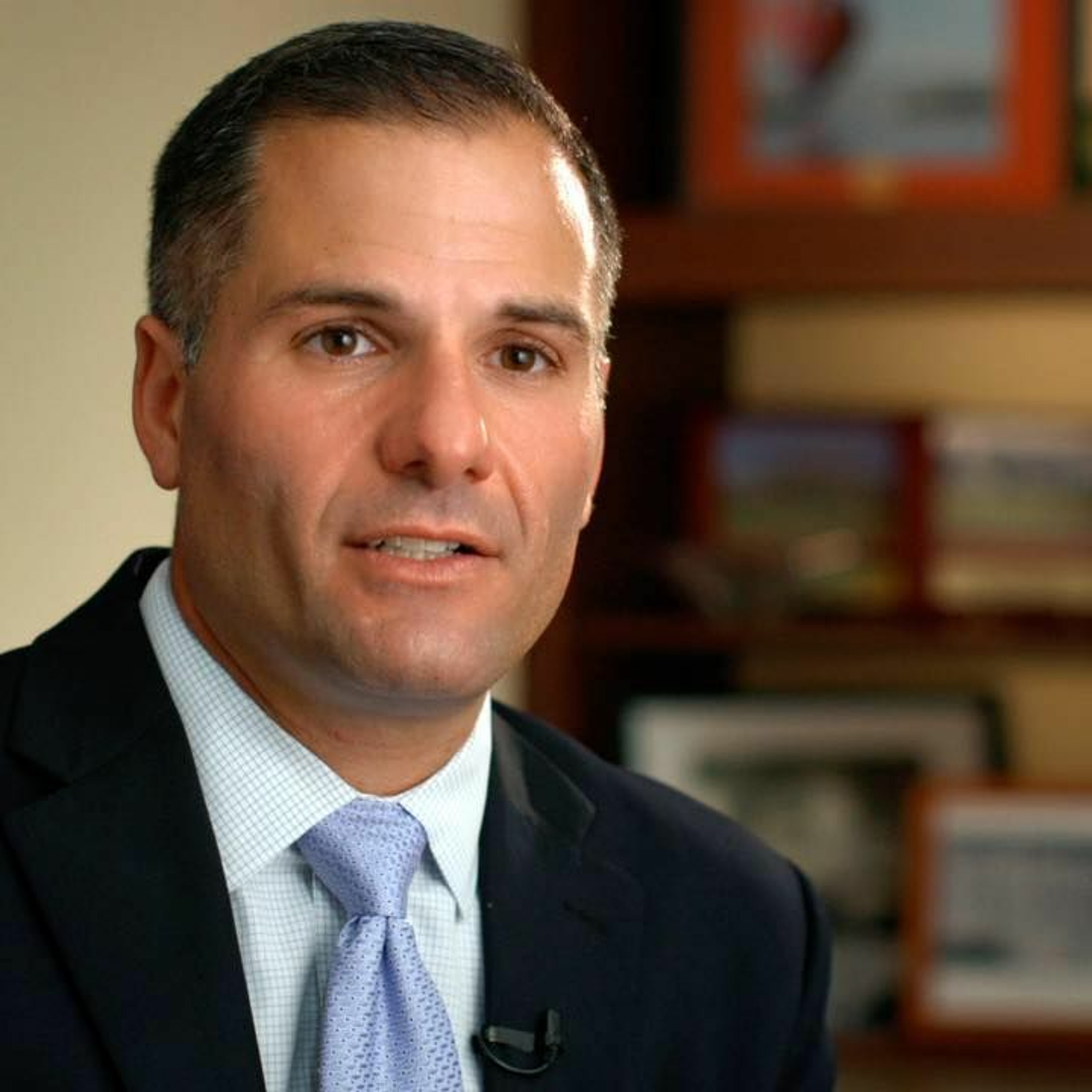
This week, County Executive Molinaro discuss some new health initiatives coming to the Hudson Valley. Also, why is "The West Wing" on if his favorite shows?"
Transcription
2835 Words, 15527 Characters
[Music] Welcome back after taking a couple weeks off for summer. Welcome to the season premiere of The Mark My Words Podcast. It does, it feels like it is a season premiere, like we're starting off the new television season. Exactly, I mean, you know, we get the middle and the Goldbergs next week and you get us this week. Fair enough, that works. I like that. I, of course, am brought again. As you hear, I'm joined by the touches kind of executive Mark Marlonaro. Welcome. Thank you. It's nice to be back on the air. Yeah, so how was your summer? I'm actually very, very good. A lot of family time and certainly a lot of exciting things going on in Duchess County. So I am, I'm sorry to see the summer coming to an end, but I am happy to see my kids go back to school. But actually speaking of one of those exciting things, I know you would say to your state of the county this year how you wanted to make sure that Duchess was the healthiest county in the state. And I, as luck would have it because we scheduled to record this before you announced the press conference today. Duchess County recognized that healthy community 50s, members and healthiest cities and counties challenge it, challenge it. What is that? What does that mean? So we are and have been selected by the National Association of Counties, along with the Etna Foundation as one of the 50 finalists across the state of New York. With an effort to become a healthy city, healthy county. In the case of Duchess, this is not only our goal within the next decade to be the healthiest county in the state of New York, but this is a very specific program that we've put forth. Etna and Neko are funding the next stage of this effort, which is to take microgreens. These are highly nutritious, very densely nutritious, small, if you will, greens that are grown in indoor gardens in the city of Piquipsi, so taking a former office space and turning it into a microgreens garden and taking this very nutritious option and bringing it to two vulnerable populations. In America, the most vulnerable populations as it relates to access to quality and nutritious foods or seniors and youth. Certainly those at the lower end of the income scale have more difficult access to quality food, and we're taking these microgreens, which are being grown and harvested in the city of Piquipsi by individuals who are formerly incarcerated. So this is part of transition programming where we're teaching new skills and helping people transition back into the community. And we're taking these nutritious options and we're bringing them to after-school programs in the city to one of the city of Piquipsi elementary schools and to our senior lunch program where we'll provide this nutritious option and then monitor and catalog progress and collect the data to prove that this kind of infusion of healthy food options can produce great outcomes for populations that you often have limited access to quality food homegrown in their own community. The thing I like best about this and we're going to be discussing things differently a little later and I know when you say think differently, it's specifically you're talking about when it comes to kids overcoming disabilities, but you can really apply think differently to everything and in this case it's like how we provide food. Yes what is and we know this nationwide there are too many in particular young people and seniors who are living in poverty who don't have access to quality food options and because of that are forced to make choices that you know don't provide them the greatest health outcomes. Now this is a goal just again to be able to to grow the product in the inner city in a way that is effective and efficient to employ individuals who need job skills in order to re-enter the community, re-enter the workforce from from jail or prison setting and in this case provide this nutritious option to these populations and to prove that by providing this as an alternative as a healthy choice, we can improve healthy outcomes and it is in an area and with a population that at too often is too high at risk and we think that this is not only going to be a great effort in Duchess but it's a model that we think can open the door for other other communities and other efforts like it and we're hopeful that Duchess County qualifies for the second round. We were selected as one of 50 in the first round and we hope to be selected for the second round to make this a broader effort but it is all part of our effort in Duchess to produce healthier outcomes and to be the healthiest county in the state of New York. And that's producing healthier outcomes on the positive end. Yes. Unfortunately on the negative end and I remember a couple years ago it came out in the news I think it was John Bon Jovi's daughter had overdosed and heroin in college and I remember thinking well that's a random drug for someone to be overdosing on in 2000 and we'll say 14 but I still don't understand how it came back so hard but I know there's been a major problem with heroin use in New York and in this country and I know you took part in and we're at the Pekipsi journal held the forum yesterday if you could talk a little about that. Well Duchess County has seen far too many overdoses as it relates to drug addiction and drug abuse and we've been organizing our efforts to really respond to opiate heroin addiction and abuse but last night the Pekipsi journal did host day forum really to vet this in an open way and to talk about what the challenges are. Now I want to say this up front the issue of opiate and heroin abuse and addiction is the public health health crisis of our day. It is the public health crisis of our day and it's reached epidemic levels and there are far too many people who are dying because of it. Now in an effort to limit the amount of prescription drugs that end up in the hands of individuals who are feeding an addiction, heroin grew as a cheaper option and what has occurred now is that you have this sadly this broad access to both opiate prescription drugs, pain killers and access to cheaper heroin than had been in the past and it's feeding this addiction and the dialogue that occurred out of this forum it was very very useful. It's conversations that we've heard time and time again from families, from individuals who have lost family members from from addicts who are in recovery and other service providers but it really continues to focus what needs to be a multi-layered response. You know we have to be focused on law enforcement, we have to be engaged in prevention, we have to be sure that we have intervention services and that we're helping people through a recovery and treatment. The problem is there are public policies that just aren't sufficient to providing the right assistance for the right period of time and addiction and we have to combat the stigma. Addiction is a mental health issue that needs to be confronted as a mental health issue. No one chooses to be addicted to drugs so in Duchess we've been training law enforcement, every police officer on the street will have crisis intervention training so that they're prepared to deal with mental health crises, they're prepared to deal with addiction, those who are dealing with and in the throes of addiction. We're building a crisis stabilization center where we'll be able to provide short-term treatment, detox and stabilization for individuals. It'll be one of a kind in the state of New York. We're building a transition center that within it will be for those who are incarcerated, we'll provide intense detox and recovery assistance to help transition people back out into the community but there are areas that are still we still have great need. The amount of drugs and that can be prescribed and for the period of time they can be prescribed and the access to prescription drugs has to be confronted by state and federal regulators and lawmakers. The fact that there are not enough long-term detox and recovery beds and programs either in existence and or supported by either health insurance, private insurance or the government has to be confronted. You cannot say to someone who's in the throes of addiction that they get 72 hours of recovery and then they're on their own. There needs to be a all-out response to this and I think by building the coalitions within communities and working at multiple layers within government we can address it but it is the public health crisis of our day and we are losing too many people. Say someone's listening to this podcast right now who either has a problem or has someone in the family who has a problem and isn't sure we had a turn. What can they do? Well in Duchess County you know we encourage people to do one of two things. If they if there is if they are in a serious medical emergency always dial 911. If there is a serious health crisis where someone is really at risk always dial 911 and we'll respond. Now we also operate a 24-hour day, 7-day week helpline and I'd ask people to go online and Google Duchess County helpline and you can download either the app. You can see the phone number and we have mental health professionals available 24 hours a day, 7 days a week on the other end of the phone or the text to provide direct assistance and we can dispatch your mobile intervention team. We have mental health professionals available. We go out into the community respond to needs and we can we can help assist and by the end of this year we'll have our stabilization built, stabilization center built where in fact we you can walk in. It can as an addict to someone who's a family member of someone who's dealing with the demons of addiction. You can just walk in the door no questions asked and we'll try to assess the situation. Provide a safe place to stabilize and try to link them up the individual up with longer-term care and assistance. So in an emergency dial 911 and I'd encourage people to visit Duchess County helpline and you can download the app and find the information to be able to reach just 24 hours a day, 7 days a week. And while the podcast took a couple weeks off, you definitely didn't take a couple weeks off and out of all this thing you've been busy doing, the statewide thing differently started to take off. I know you were in Troy and there are a couple other things that if you could just recap the past couple weeks of thinking differently. Right now think differently is our genuine call to action. A challenge to every resident, to every business, every community organization that do we have it within ourselves to treat every individual of every ability with the respect, the assistance and the support that they deserve and this thing differently campaign has been embraced throughout Duchess County. We've gotten great buy-in from from the community. We were announced the appointment of the first in the state deputy commissioner for special needs within Duchess County government. Tony Sheriffella is working as the point of contact in Duchess County to help organize our services for those with special needs to help highlight the challenges and the obstacles facing those with special needs and really to advocate for families and individuals of every ability. At the same time we've asked thanks to the Association, New York State Association of Counties communities across the state to embrace think differently. To date we have 35 municipalities across the state that have adopted our think differently resolutions and the city of Troy the first in the state to do so. We had to think differently for them there with great dialogue and they're often running and the best part about think differently is it is about just thinking and coming up with new ways that fit your community, your business in order to address and assist those with special needs. At the same time we'll be attending the New York State Association of Counties conference where we'll be presenting on think differently and trying to really offer ideas and the next steps for municipalities to engage in think differently and find ways within their community to encourage their residents to embrace every individual, every neighbor of every ability. And just a wrap up on a personal note because I know we talk a little about you love the exec brown band last podcast. Yes I did by the way I did. This week we just started doing what we're going to call West Wing Wednesdays because like most political junkies you are a big fan of the West Wing. I am. If you could talk a little about that and no I will not put you on the spot and have you draw comparisons to the presidential race. Please don't although I would offer to you that we should have more president Bartlett's in the world. I was a West Wing fan. I remain a West Wing fan. I watch House of Cards and I enjoy it but West Wing is sort of that inspirational version of what we would want government to feel like to be like in many ways. There are characters that embody the great amount of hopefulness within government and of course for me President Bartlett spoke the way. I would want my leaders to speak and we thought you and I thought this would be a nice way just to remind people not only the great television series but you know I think we would all benefit if we had more elected leaders who really strive to be a little bit more like those characters on television. They're imperfect make bad decisions but but always seemingly trying to do better and to do the work of public service for the right reasons and I just think that we could use a little bit of that in our lives these days. And I also think one of the most brilliant parts of the show is that I mean let's be honest you know you and I aren't a different side of the aisle than President Bartlett or President Santos. But watching the show I mean it didn't. There are a lot of TV shows where you feel like you know almost like you know you're being insulted or it's just gets like too political or too preachy. I've never got that watching a single episode of the West Wing. No it's true and and you felt like you know first was I mean let's say this is a good TV show it was a quality TV show I mean it was fast acting you got enough information to feel like you're watching an intelligent program at the same time you didn't feel like these were people talking down at you and you didn't by the way finish watching the show and think oh I have to shower and clean up I felt too you know I feel like I hope that isn't the way government works. So I mean you know it is it's an it's an aspirational version of American government and I can only tell you that I just you know for me it's you know in particular the president Martin Sheen who I got to meet when I was in the state assembly spoke with a voice that I would want my president to speak with and in some ways I say with total lack of humility spoken a way that I often would would like to speak like. Well let's leave it there kind of executive thank you. Thank you. Thank you to everyone for listening. Actually I'll give you any closing thoughts. No I listen we're good let's let's start off the fall with you know a little bit talk of that and we'll be we'll be on together real soon I'm sure. We can talk about you know politics or something next time. Yeah maybe maybe maybe a little bit. Yeah. But thank you if I've been listening for Mark my words I can follow Facebook Twitter Instagram iTunes and we'll talk to you soon.
Podcast Summary
Key Points:
Summary:
Chat with AI
Loading...
Pro features
Go deeper with this episode
Unlock creator-grade tools that turn any transcript into show notes and subtitle files.
 PodcastTranscript AI