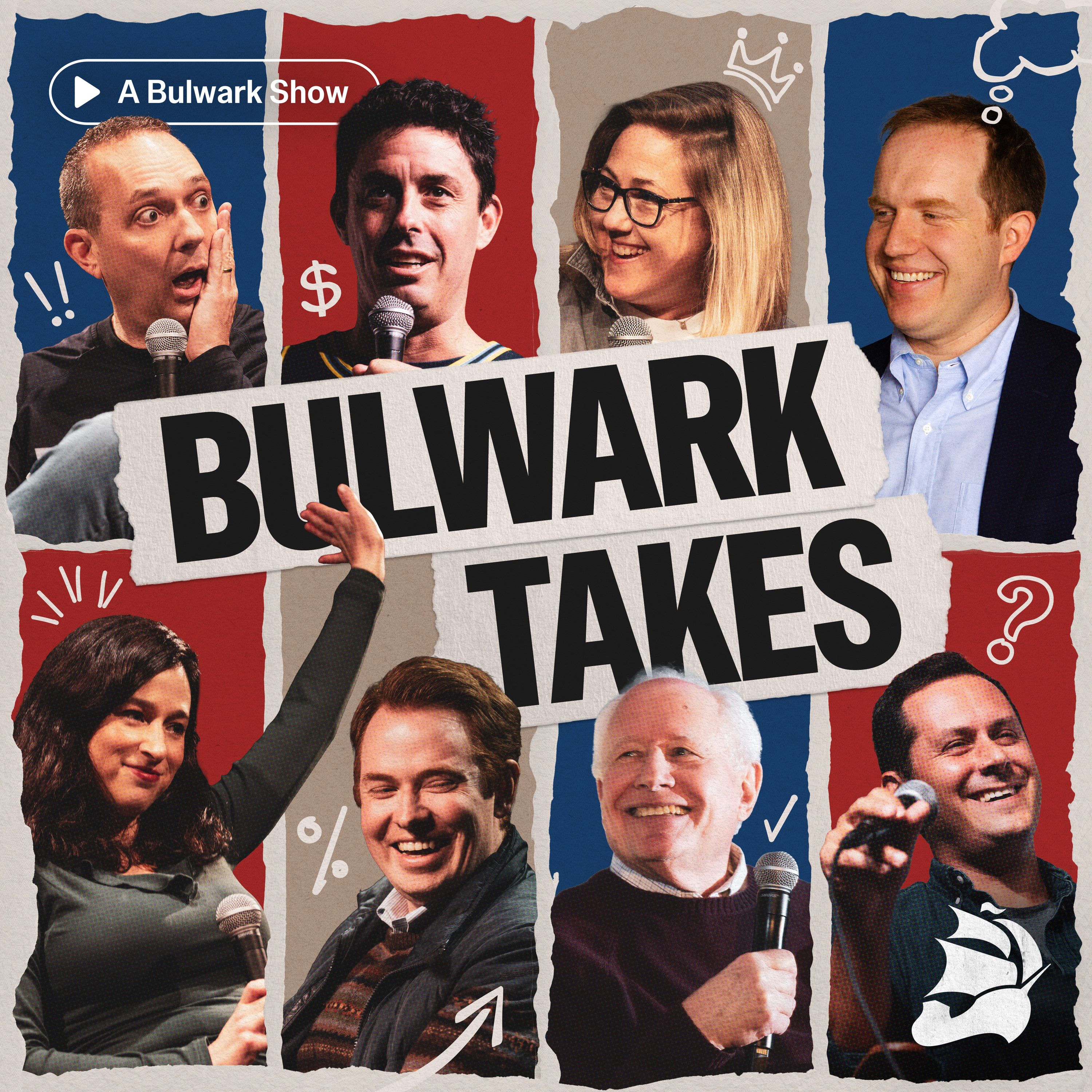
Mike Rogers’s Interview Goes From Laughable to Repulsive
26m 45s
The interview with Michigan Republican candidate Mike Rogers on Meet the Press highlights a pattern of evasion and deflection. When asked about his alignment with Donald Trump’s agenda, Rogers neither directly addresses the question nor offers a clear stance, instead resorting to attacks on the media and deflecting with vague or misleading statements. His refusal to answer questions about tariffs—particularly those that have significantly damaged Michigan’s auto manufacturing sector—demonstrates a strategic avoidance of economic accountability. The discussion also centers on the baseless and inflammatory attacks on opponent Abdul Al-Sayed, falsely linking him to the Muslim Brotherhood and Sharia law, which are not supported by evidence. These claims are amplified by misleading political ads, reflecting a broader trend of Islamophobic rhetoric in the Republican campaign. While Rogers once acknowledged the complex nature of international alliances, he now dismisses such nuance in favor of fear-based messaging. This behavior reveals a fundamental contradiction: despite claiming to represent conservative values, his actions align more closely with Trump’s populist and divisive tactics. Michigan voters, already wary of Trump’s trade policies, are likely to see this as a sign of political dishonesty. The episode illustrates how Republican candidates in swing states often prioritize image over substance, using manufactured controversies to avoid direct engagement with policy or accountability. Ultimately, the interview underscores a troubling political dynamic where truth is sacrificed for partisan gain.
Hey, everyone. I'm Catherine Rampell, economics editor here at the bulwark joined by my colleague and friend Jonathan Kohn who knows all things health care and also all things Michigan. We're here to talk today about this disaster of an interview that microaggers gave on Meet the Press. Microaggers, of course, is running as the Republican candidate for Senate in Michigan. And Jonathan has done reporting from all over the state about how that race is shaping up. And I would say the main takeaways from this interview today are basically that he could not answer questions about his relationship vis-a-vis Trump and how much he supported the Trump agenda or did not. And kind of when in doubt he decided to either filibuster or punt to Islamophobia in some fashion. So let's get into all of that Jonathan. The first thing I think I want to play for our viewers and listeners is the very introduction of this interview. Tell me if you can spot anything that seems a little awry. Is a vote for you, a vote for the Trump agenda? I'm apologizing. I'm having some difficulty in my earpiece, but I is a vote for you. I'm not sure. I tell you what a vote for me is. It's a great day for the state of Michigan. We've lived under all the policies that the Democrats have just talked about, even on your show, about bringing down prices. For the last eight years, we've had Democrats control our state, both of the U.S. Senate seats and a Lansing Michigan. We have the highest utility rates in the Midwest. We have the highest auto insurance rates in the country. Yeah. So, you know, oh, I'm sorry. I can't hear you. I'm going into a tunnel. Sorry, my signal is bad. Yeah. What do you make of the fact that right off the bat, he just pretended he couldn't hear the question rather than answer it? Yeah. I mean, look, I have no idea. Maybe there was some kind of technical failure. I did watch the rest of Meet the Press. Nobody else seemed to have any technical problems. I would have assumed that was the look. He was, I know the studio where he was filming at, they, they, they, they, they, it's a local studio. They do this all the time. I would be surprised if for Meet the Press. There was that sudden interruption. But, you know, who knows? Maybe there was, even if there was a real interruption. This was such a metaphor for the way he's run this whole campaign, which is he is desperate, desperate to avoid saying he supports the Trump agenda, because of course, it's deeply unpopular here as it is everywhere. And in some ways, it's worse than we can talk about why. But, you know, he's got the same dilemma as every Republican, which is, you know, you can try to distance yourself from the Trump agenda. But if you do anything, it sounds smacks of actually criticizing Trump. Number one, you risk alienating his, his most devoted followers. But more important, you risk alienating him and he'll take it out on you. So this is the dilemma. And of course, you know, it's fun for us to make fun of it. But there's a message here, which is the whole point of this election, a big part of this is, do you want somebody who's going to be a check on Donald Trump? And if the guy, this candidate can't say he opposes Trump, you know, here other times, what are the chances he's going to oppose Trump if he gets elected in Washington? Yeah. And this was not the only time when he struggled to answer basic questions about his relationship with Donald Trump. And you can tell it's, it's difficult for Republican candidates to sort of wash the stink of Trumpism off of themselves when they are running in these midterms. Let's play what he said when he was asked the basic question of whether he considers himself a mega Republican. Congressman, we're almost out of time. So let me just ask you a big picture. Do you consider yourself to be a mega Republican? Listen, I'm going to tell you this is, I get you guys on the national press, but this is a little bit disgusting to me. You know what you don't cover? The chairman of the Democrat Party just came out and said he cannot, the former chairman, sorry, he cannot vote for Abdul. The, the current senators, follow but I'm, Congressman, I'm asking you about you. I'm just asking about you. This is important. This is important. No, I'm not answering my question. Yeah. And then there's another time when Christian Walker also again asks him about whether he's a mega Republican. He again doesn't answer this goes on and on and on. And look, it's kind of pitiful at this point, but it's completely understandable for the reasons that you laid out that Republicans don't want to be associated with Trump, with the Trump agenda because all of the above are very unpopular. But on the other hand, if they come right out and say that in any kind of public forum, they are putting a target on their backs. Yeah. And look, here's the irony, right? When you're talking about microodgers specifically, is microodgers served in Congress representing Michigan from, I'm going to get the years wrong here, but it was roughly two, in the early 2000s through mid 2000 teens. And back then, he was a fairly mainstream generic Republican of the era, pro business, kind of a go-along, get on a guy, pretty good on national security, had national security credentials, et cetera, which he does. He, by the way, you know, FBI, you know, that is actually his background. And, you know, when early, early, you know, he condemned Trump for January six. And then all of a sudden, he decided, no, I want a future in Michigan politics. Now I got a hug Trump. I got a, you know, now broadgers is an election denier, right? He's like, he's questioning, I don't think I really lost the election in 2024, when two years ago, and he ran for this Senate. And so now he is a macro Republican, or at least he acts like a macro Republican. He's certainly not going to say he's not a macro Republican. So the old microodgers, maybe wasn't a macro Republican. The new one acts talks like one, whether he really is. And then I, I don't know if you caught it, you probably did catch it, if our viewers didn't catch it. Notice, notice what he did, right? He didn't just sort of deny it. He immediately goes, I'm going to attack the press. This is you, the reporters, you know, supporting Abdul Alseid. You guys are disgusting, which to me is sort of showing, if anything, it's like, look, I can be mega too, because that's the favorite Donald Trump mega trick is to beat up on the reporters. Yeah, what better signal that he is, in fact, a mega Republican that he models himself after Donald Trump than to berate the press and to, you know, wine and cry that it's unfair when they ask him questions. It's disgusting when they ask him pretty basic questions. Like, do you, you know, consider yourself a mega Republican, which of course is on the ballot this year, you know, clearly top of wine for voters. But I imagine that part of the reason why the Trump agenda and one's views of the Trump agenda are so important in the state of Michigan is that the Trump agenda has been particularly hard on the state of Michigan through tariffs, right? You have tons and tons of tariffs on the inputs that go into auto manufacturing as well as other kinds of manufacturing, steel, aluminum, copper, et cetera. You have threats of tariffs or actually executed tariffs on Canada, and there's a lot of cross-border trade that Michigan businesses are reliant on. You know, cross-border trade with Canada, parts of cars might cross six or seven times before they ultimately make it into the finished product of the automobile. So all of that, I imagine, is pretty poisonous if you are a candidate running in 2026 in Michigan. And just as an example of that, Christian Walker also asked microtures about this tariff agenda. Let's take a listen to that exchange. If you were elected, would you vote to repeal some of President Trump's tariffs? Well, again, the best way to do this is walk in and say, can we work this out? And I'll give you a great example how I've done that. I'm not even in office yet. I've been trying to get Canadian trash from coming across our border and dumping in our landfills for over a decade. And I left Congress in 2014, we still couldn't quite get it done. Called the administration said, we need some help on these Canadian tariffs. But if you're going to tariff anything, tariff this trash is filling up our landfills from what the third largest land mass country in the world. And guess what? They announced this week that they were going to tariff those trash trucks. That's what you get when you send somebody back who can work with the president. You know, the automobile portion of these Canadian tariffs worries me a little bit. And we're going to go back and work through those issues to get some relief, to make sure that it's good for Michigan, not bad for Michigan. There are other tariffs, because this is what I think people don't hear is the fact that we have the Chevrolet Silverado being built in Mexico. By next year they've announced it's coming back to Michigan. Why? Because of those tariffs that are based on getting reshoring of manufacturing back in the United States. That's huge for us. It's a multi-billion dollar investment right here in Michigan. The Detroit diesel is adding a third shift. They haven't done that in a couple of decades because of reshoring opportunities coming back. These small fabricators around the state actually getting more work, because companies want to operate here and manufacturing to try to avoid what they've had as a free ride in the trade negotiations. So there's some good
and there's some things we have to work on. - So Jonathan, how do you think that the voters of Michigan will hear that answer? - I mean, I think the voters of Michigan are not happy about these tariffs. And Mike Rogers knows that, right? 'Cause he went from supporting them, saying they were masterful and saying Canadians, where we should be having this trade world Canada because they've been a poor trading partner. To now, he's sort of walked that back now. He's got an ad out where he's sitting in a bar with a hockey game on, you know, a bat, you know, saying, oh, you know, we shouldn't be beating up on Canada and we need to get rid of these tariffs. So he understands these are deeply unpopular. But I mean, just listen to his answer, right? I mean, the question was, will you revoke to repeal these? He doesn't even answer 'cause we're back to Probs Square One where we were at the top. He will not, you know, take on Trump directly. And we all know, it starts when it comes to like tariffs with Trump feels so strongly about, you can't, you know, the idea that he's gonna go into the Oval Office and sweet talk, terror, you know, Trump into, you know, winding them back, no, I mean, you have to vote against them and he's obviously not gonna do it. And, you know, if that thing about the Silverado that he mentioned, you know, if you know the full story, there is such a great example of what you were just talking about Catherine and the way tariffs work. So what he's referring to, there's the fact that there's GM several like builds this Silverado big pickup truck and they have now announced they're gonna be building more of them here, reassuring them. And this is, you know, supposedly a victory for the Trump tariffs. True, it does sound like Trump tariff policies are part of the reason GM has decided to bring Silverado trucks back here. But, you know, it's one truck. And it's a very, you know, it's not unique, but it's a unusual example in the fact that, you know, high end trucks like that, big company like GM, that is the one kind of product they can afford to bring back and ramp up production here pretty easily and absorb the cost because it's so expensive. Overall, these tariffs are hurting GM. They're hurting Ford. They, GM has said that they're gonna lose between $2.5 and $3.5 billion this year on tariffs. That's in their SEC filing. This is what they're telling investors. That is, you know, their look at the number. So this is hurting GM. And GM in a lot of ways is better positioned to weather the tariffs because, you know, when we talk about the auto industry and you were talking about how the parts, you know, they crossed the bridge or the tunnel, you know, the bridge, three, four, five, six times. It's not just Ford and GM. It's all these medium, small businesses, suppliers. And a lot of these small suppliers, these small businesses, unlike GM, they can't just move operations around quickly and change who they're where they're getting their material from. They tend to have one single contract. And if tariffs bring up the cost of their products, it's really gonna hammer them. And it is hammering them. You're hearing from those small businesses, those small suppliers, those medium sized businesses, they are really getting crushed. And this is hurting Michigan's economy. Michigan does know this. And that is why the tariffs are unpopular. - I think it's interesting though, that, you know, in the last few days, Donald Trump has indicated that he would claw back some of the tariffs that are affecting the main economy, main the state, that in order to boost Susan Collins who is also at risk of losing that seat. So, like it is possible for a politician, a Republican politician to say, "I don't like tariffs X, Y, and Z." And here's how I'm going to get Donald Trump to peel them back. Instead, you have Mike Rogers here, again, not answering the question about if he gets elected to the Senate, would he vote to repeal some of these tariffs? Instead, his answer is actually, I have used my influence to put in place more tariffs over the garbage trucks or whatever. So, he doesn't even pretend that he's going to wield whatever political influence he has to try to claw back some of these really economically destructive tariffs as his potential colleague, Susan Collins, appears to have done. Anyway, you know, I don't know who's advising him to make these kinds of comments, but that's the best he has to offer. Elsewhere, in this interview, Mike Rogers and Kristen Walker, the host, discussed the kind of gross Islamophobic attacks on Mike Rogers' opponent, Abdul Al Sayed, as it relates to unfounded accusations that he has some kind of affinity for a membership in the Muslim Brotherhood. Let's play that. - Yes. - Congressman, he has denied and denounced the Muslim Brotherhood and denied any ties to them. - No, no, no, no. - For context, I just want to-- - He just missed the question. - He just missed the question. - No, he did not, Kristen. - No, he did not. - He did it, and then there's me in an interview with me, he said he had no ties with the Muslim Brotherhood. - He won't answer a local newspaper, no. - Let me, let's talk about the 2012 letter. - No, he should be held accountable. - Okay, let's talk about that 2012 letter. I want to give folks some context. - I get it. - I get it. - This is when I get you guys to defend this guy. - No. - I think it's unbelievable that he will not hold him accountable. - We have held him accountable. We've asked him hard questions. - What do you think? America ought to look like. - Once again, Kristen Walker is trying to confront mic Rogers with some of the best icky, at worst, bigoted attacks that have been made on his opponent, Abdul Al-Sayed, and mic Rogers' response is again, to attack the media. And then let's play the second part of that exchange as well. - Let me just give some context to the 2012 letter that you're talking about. Egyptians were rising up against a brutal dictatorship, Al-Sayed, as you said, he joined that letter which supported the protesters against Egypt's dictator, not the Muslim Brotherhood as a group, but this is what you said Congressman in 2012. I want to put up what you said at the time. - Gosh. - Do I think there are moderate Muslim Brotherhood individuals? We are going to have to reach out to and talk to, yes, but we are going to have to watch it carefully. Do you acknowledge that at the time in 2012, you were willing to work with some moderate members as you said of the Muslim Brotherhood? - No, that is so much out of. I wish you had done this for Abdul Al-Sayed. That would have been a great interview, but what you're doing now is trying to twist this thing to defend your position for letting him lie to you in the American public and the citizens of Michigan. Here, let me tell you what that was about. I'm happy to talk to you about what that was about. So what happened was we had relationships where Israel and Egypt had relationships in their intelligence services that the Muslim Brotherhood was trying to undo. And what that would have meant is more violence in the region. So as Chairman of the Intelligence Committee, I say we're going to have to find a way to try to not sever that relationship which they did, by the way. And so listen, when you talk about the Muslim Brotherhood as an ideology, it's a political group. Five Muslim countries have banned the Muslim Brotherhood because they're so extreme. And Abdul Al-Sayed not only has family relations which he lied about, he not only had his own letter that he said supporting them, including purging the press. I don't know about you, but you should probably be concerned about that. And secondly-- But I want to ask about your words. I mean, you don't want to deny your words. Wait a minute, wait a minute, I got it. You're trying to defend a dual, I understand that. Other part of that is the Muslim Brotherhood only one candidate in the country that they support a primary win. One, Abdul Al-Sayed. Do you want me to say reference to? ought to be a factor in this. So you take his way he thinks, the way he supported them. And by the way, the Muslim Brotherhood immediately started making women as second class citizens. I think that's an issue. I mean, that's just not consistent with American value. So yeah, can you follow what he's even saying here because I cannot? Unfortunately, I can because I'm going down these rabbit holes. So, okay, let's start with stipulate a few things. Which is, Abdul Al-Sayed has made his views on foreign policy on Israel, on Iran, in the Middle East. Part of his campaign, he has said he wants to sit on the foreign-- he wants to have a voice in foreign policy in the Senate. Interrogating those views, asking about them, asking, for example, why, you know, when asked, he said, he didn't want to say whether Iran was more dangerous to American and Israel. Totally fair game. Those are substantive questions, lots of room for disagreement, lots of reasons a voter might honestly hear that and say, I don't want that guy in the Senate. So that is, you know, to question that, to debate that fair game. I don't think anybody who's serious about this would deny that. But what's going on here is, you know, they are-- what Rogers and his supporters are doing is something much different, you know, on the sort of dialing it all the way to 10. You hear, you know, Donald Trump, you know, referring to Al-Sayed as a G-Hotest, you know, calling him a terrorist, right out right. And to back that up, there's all of these associations. And basically, there are several different things getting kind of mixed up here. And, you know, to be fair, to Rogers and to Welker, it's hard to do this in the context of a TV interview. You really want a whiteboard. I mean, only have to think-- - What's the red strings, yeah. - Red strings, you know, the guy-- What's the meme, you know, the guy with the thing and the whatever and the whatever, like, that's what you really need for this? Because there's a bunch of different things going on, you know,
there's the story of his mother, his biological mother, who worked for an Islamic charity when she was in the United States, that was later. And I wanna be very careful what I say here 'cause this is in false legal proceedings. I don't, yeah, I'm doing this off the top of my head, but it was involved in some findings and possible relationships to groups that may have funded terrorists in the Middle East. There's a story about whether her mother, when she was in Egypt, she's Egyptian, it was part of the Muslim brotherhood. There was a tweet from Abdul's half sister suggesting as much which he got asked about. At one point you have that. You have donations to him from a lot of people who in turn gave money to organizations like CAIR Care, which is Civil Rights Organization for Muslim Americans. And you kind of go down this list and there's sort of, the Republican cases, all of the Abdul is sort of associated with all these people and they are all terrorist supporters and Abdul is denying this and lying about it. That's what Rogers is basically saying here, but when you actually start to go down these rabbitles and again, you're welcome to do it. It will take up more of your time than you can possibly believe. What you find is at every single stage, it's guilt by association, it's insinuation, that's not, you know, no verified, et cetera. You know, on the stories that involve his mother and his sister, the key fact, which he has said several times now and was known before all of this, that his parents got divorced when he was three years old. His mother went back to Egypt. He has does not have a particularly close relationship with her, the half-sister is, you know, from her. And he was raised here in the United States by his father who then remarried and his grandparents who, if you've seen the ads, they're sort of famous now that kind of gone viral. The ads of, you know, who was spooky, Abdul Al Sayed, he's our grandson and you know, it's his very sort of, you know, wholesome, you know, looking couple. And, you know, he did, in fact, deny, you know, it roger's like, he never denied, no, he did denied. He was, I look, I think some of his answers to these questions, you know, it was very clear he was trying to steer the conversation away and, you know, you can decide for yourself why he was trying to do that. Was that because he was hiding something? Was that because he wants to talk about the price of gas, both whatever, people can make up their own lines with that. - You're talking about El Sayed at this point. - Yes, El Sayed, yes, sorry. I see, see, this is what happens. You get into the rabbit hole. Now I need the whiteboard with the string or whatever. But, you know, at the end of the day, this, you know, what the Republicans and rogers in the sports are doing are trying to sort of use all this sort of, you know, there's this appearance of he's around these people who then may have connections. So these people who may have given money to this group that may have found his way, terrorists. And therefore he is a terrorist or at least a terrorist sympathizer. And that's by the way, where the thing that she, if you were paying attention, following the question, she asks him about something that Roger said in 2012, where Rogers at that point serving, you know, in Congress said, we may have to actually work with some people in the Muslim Brotherhood, which is of course this large diffuse movement, you know, across the world. And Rogers is basically saying, look, you know, the Muslim Brotherhood, it has some, you know, it has a history associated with political violence. And you know, Hamas is one of its offshoots. On the other hand, like it's a very diverse movement. It's independent, you know, in the complex world of foreign relations sometimes, you might want to reach out and work with some of these people. Many of them are not violent, you know, because in the particular time and moment of, you know, Egyptian power changing, it makes sense to work with these people. And, you know, that was an acknowledgement of Mike Rogers 2012 that this is a complex story with ambiguity and sometimes you're making common cause with people you don't really like or you don't fully agree with because, frankly, world politics is complicated this way. Which is, you know, a proper way to look back at what El Sayed said and wrote back then. And he may have been right or wrong. Rogers may have been right or wrong. The point is, you know, it was perfectly, you know, well within the mainstream of debate. Mike Rogers of 2012 understood that. Mike Rogers of 2026 either doesn't understand that or wants to pretend he doesn't understand that in order to score political points. Yeah, the whole issue just gets flattened into this guy is scary because he's Muslim. And therefore, that's the, that's the main thing you should know about him, that he's Muslim and through all of this skilled by association, he wants to bring Sharia law or what have you. To Michigan, you actually had a nice newsletter about this recently and today or yesterday where you talked about some of these really gross ads falsely portraying Bill El Sayed as wanting to bring Sharia law to Michigan. But yeah, that's how I see a lot of these kinds of exchanges that when pressed, when cornered, people like Mike Rogers cannot answer pretty basic questions about the Trump agenda and where they view it, where they stand relative to the Trump agenda. And so they pivot to, well, you're just defending the other guy and by the way, he's scary and maybe a terrorist. Anything else about this exchange that we haven't talked about? No, I don't think so. I mean, you mentioned the ads that are running now. I mean, some of the ads that are running are just, I mean, wow, you know, that they have, you know, El Sayed wants to bring Sharia law to the United States, which is not true and there's no evident. Nothing to suggest that. And the irony, you know, is, you know, if you were looking at the two political parties and saying there's a party here that seems to be intent on imposing its faith or part of its faith or chance, you know, bringing its, you know, religion into the public sphere. I wouldn't say it's the Democrats. I might say it's the Republicans. And, you know, maybe that's a topic worth exploring in some more detail. That is certainly the message that people like Pete Hexeth have decided to amplify about the importance of highlighting the Christian roots of this country and making sure that our military just as an example prioritizes Christian faith. All right, well, Jonathan Kohn, thanks so much for your time today. Thanks everyone for watching. For more great conversations about the political interviews of the day and other news leading into the midterms, you can find us at TheBullwork.com. Make sure to like, subscribe, and follow us there as well as on YouTube or wherever you get your podcasts.
Podcast Summary
Key Points:
Mike Rogers failed to answer basic questions about his relationship with the Trump agenda, instead deflecting or attacking the media when pressed.
His refusal to address tariffs—particularly those harming Michigan’s auto and manufacturing industries—reveals a core political dilemma: avoiding direct criticism of Trump while maintaining plausible deniability.
Rogers falsely links Abdul Al-Sayed to the Muslim Brotherhood and Islamophobia, using guilt by association and unverified claims to discredit a major opponent.
The attacks on Al-Sayed are rooted in false narratives, including fabricated connections to terrorism and Sharia law, which have been amplified by misleading political ads.
Rogers’ 2012 comment about working with moderate Muslim Brotherhood members reflects a nuanced understanding of international politics, but he now dismisses it as evidence of extremism.
The interview underscores a broader Republican strategy
Michigan voters are increasingly aware that tariffs, especially those targeting Canadian trade, are harming small businesses and local supply chains.
The inability of Rogers to clearly define his opposition to Trump’s policies suggests a lack of genuine policy alternatives, raising concerns about his effectiveness in Washington.
Summary:
The interview with Michigan Republican candidate Mike Rogers on Meet the Press highlights a pattern of evasion and deflection. When asked about his alignment with Donald Trump’s agenda, Rogers neither directly addresses the question nor offers a clear stance, instead resorting to attacks on the media and deflecting with vague or misleading statements. His refusal to answer questions about tariffs—particularly those that have significantly damaged Michigan’s auto manufacturing sector—demonstrates a strategic avoidance of economic accountability.
The discussion also centers on the baseless and inflammatory attacks on opponent Abdul Al-Sayed, falsely linking him to the Muslim Brotherhood and Sharia law, which are not supported by evidence. These claims are amplified by misleading political ads, reflecting a broader trend of Islamophobic rhetoric in the Republican campaign. While Rogers once acknowledged the complex nature of international alliances, he now dismisses such nuance in favor of fear-based messaging.
This behavior reveals a fundamental contradiction: despite claiming to represent conservative values, his actions align more closely with Trump’s populist and divisive tactics. Michigan voters, already wary of Trump’s trade policies, are likely to see this as a sign of political dishonesty. The episode illustrates how Republican candidates in swing states often prioritize image over substance, using manufactured controversies to avoid direct engagement with policy or accountability.
Ultimately, the interview underscores a troubling political dynamic where truth is sacrificed for partisan gain.
FAQs
He repeatedly avoided answering direct questions about his relationship with Donald Trump and the Trump agenda, instead deflecting by attacking the media or making unsubstantiated claims about his opponent, Abdul Al-Sayed.
Because openly opposing Trump's tariffs would be politically risky, as they are deeply unpopular in Michigan, especially among auto manufacturers and small suppliers who rely on cross-border trade.
No, he did not. Instead, he either changed the subject, blamed reporters, or made vague statements about working with the administration without offering clear positions on key policies.
He claimed it showed openness to working with some moderate members of the Muslim Brotherhood, but he later dismissed the context, using it to imply that his opponent, Abdul Al-Sayed, is a threat due to his affiliations.
He accused the media of unfairly targeting his opponent, Abdul Al-Sayed, and used guilt-by-association arguments to suggest he has ties to extremist groups, despite no verified evidence.
It reflects his refusal to address the economic harm caused by Trump’s tariffs, instead promoting a false narrative that he has already used influence to counter them, which misrepresents the actual impact on Michigan businesses.
Chat with AI
Loading...
Pro features
Go deeper with this episode
Unlock creator-grade tools that turn any transcript into show notes and subtitle files.
 PodcastTranscript AI