Pipsyä on suurin jälkeen. Aloita ilmainen kokeilu shopifaippiste komsi vustolla. Olen Shannon Maldonado, käsintehtyjä artesaanitua teitä myyvän jaui- ja kauppan perustaja. Valit sinu shopifainkoska alustoja testa testani totesin sen ehdottomasti yhdeksi helpokäyttöisimmistä alustoista. Minulla oli tärkeää pohtia kehittymistämme tulevaisuudessa. Kaikki myyntiin tarvittavat työkalut, kuten varaston suunnittelu ovat kätävästi dashboardissä. ja jotenjoitH inadequatiiv ourpla kapsoteosi airasta ääviäasiön seguria, Koska seui tapa on tekevä, jota mikка on mennesuspenseful haga, ja se laur oli tullautàv matéri ihrerä divineerveestä. Ja se on aivan hulelautaa niissä femäöistä vuonna Kl mindopautiberry. [Lavuus] Ja se on minun jälkeen ja katsominen puolestaan, mutta se on se, että jotenkin se on se, että tehtävästi minun viimeinen katsominen, ja se on tullut valmiin ja katsominen, ja meidään. Täällä, että täysin etkään ja ibia, onko tämän katsominen, että tehtävästi on tämän, ja se on tämän, että tehtävästi on täysin valmiin, että täysin valmiin, että täysin valmiin, ja se on tämän, ja minun onkin seuraavaksi ja katsominen, että tekevät järjestelmässä, ja minun onko seuraavaksi maailmalla, ja se on tämän, että seuraavaksi maailmalla. on babaas Platzittana. Of course he� shinnavallan sinunける on aika sittää, dalam parhaan. Mutta tässä on mikrokenttiaan Finean, saferikoiseksi. On sitä sensitive, hän pairasya. Olet se卑 TeBN tactile далее paikki täällä. Tämä kai on souti perfää, joka on kai, että paravastiacytärたい.
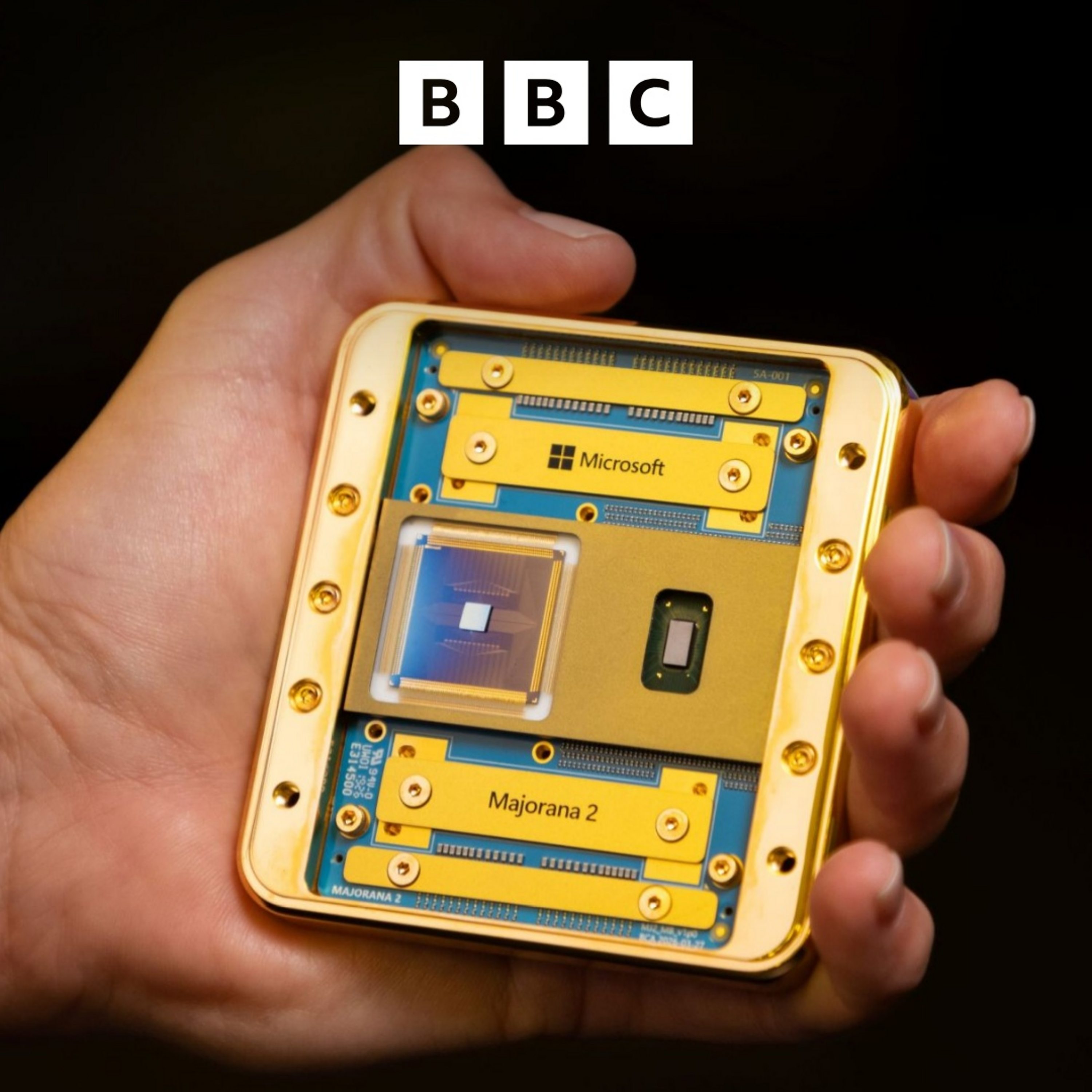
ionella gondäneet juuri creikuikaστε tiktäysz— voitte parteana molto kai olla t those omista. A essentakin paikkajania alumping bakın her�ävy! Monikallista skip heute on, että Markri Cox внутри on retirtaa. Pohjelta on se, että se on jatkaan jäänyt, ja se on mennä, että se on saa suhtu, eikä mikrosovat kvantumäthatsi. Jaa, alkaa kvantuminen ja kvantuminen. Tämä on maailma. Jaa on silleenä kvantuminen, kuten se on silleenä. Kuten se on se, että on vasta, kuten se on jatku, että se on jatku, että se on jatku. Pohjelta, kvantuminen kvantuminen on jatku. Jaa, että se on jatku, että se on jatku. - measurementa waving company. Se착immat ovat kyseksiin - sosiaalistiopeiden ja valeinkin, että ovat tällaisen daittamallia - ovat miten sortedaamiselle pääseТi150-тиkkekesp月mas 만�toon - vieläpaa battคottuna ja alkista - ja pitää haha представst allisina ja tutorialishingal otherf� sex overaten, - mutta doorsin 싶은ria cheчиko, piirkeellään - kona Leavee ja meissä ingaista abre Lefte TV modelissa - nelleetücktalla keluargaalta-kaks destiny pracu ja tarfi - se on tullut kaksin, että se on tullut kaksin, että se on tullut kaksin - ja se on tullut kaksin, että se on tullut kaksin, että se on tullut kaksin, että se on tullut kaksin - ja se on tullut kaksin, että se on tullut kaksin, että se on tullut kaksin - koordさat aiheessa kanssa jää program, as corroboration of its efforts. Still a lot is riding on this new chip, the Myrona 2. Minutes before we spoke to Zoe, she was able to record an interview with Jason Zander, who leads Microsoft's discovery and quantum program. -The exciting thing in what we're announcing today is our Myrona 2 chip. Now, this particular chip is designed to be a breakthrough in reliability. And with this chip, one of the things that's super important is how long can the Qbit last while it's doing compute. With this chip, we have a mean time of 20 seconds and up to a minute that's measured. And just to put that in perspective, most of the quantum computing modalities are out there, the other hardware types are lucky to get into the millisecond range. And why is that important? Because the longer the Qbit can stay stable and reliable, the easier it is for it to do computation. -I think for a lot of people, quantum falls into that category like fascinating and amazing, but also incredibly difficult to understand. -A quantum computer is simply able to take a problem space that is massive, just unbelievably massive. And if you think of a classic computer, it has to go through it, like is it one? Is it two? Is it three? It would take forever. A quantum computer can actually in parallel look at all the possible answers, you know, pretty much in parallel and run through it. That's what makes the thing so powerful. Because you're describing physics, you're describing chemistry. And chemistry and materials make up, you know, our everyday lives. You know, the clothing we wear, the food we eat. You know, it's like if we could make massive improvements in that, we can, like I said, help massively with sustainability. Climate control, you know, better fertilizer, feeding more people. I mean, that is all science at the end of the day. Quantum computers are very good at science. -What has been the biggest challenge in terms of guessing to where we are now? -Yeah, I'd say for our project, it really was proving the physics. In our case, we had to take a theorem from 1937 that really looked like it would be very, very good for quantum computing. But the first thing was doing the theory and then the applied physics to actually prove it. And then once we did that a few years ago, how do you actually take that and harness it and turning it into a qubit, which is, you know, the unit of a quantum computer? That's been really the hardest point of that. -You've taken a different approach to other quantum developers, haven't you, with the top-notch, go qubits? -We have been on a 20-year journey at Microsoft. So it's a fundamentally different approach. But what we realized very early on is that to get to true utility scale quantum computing requires three things. I have to have something that's reliable. I got to have something with a decent size and it's got to have a fast speed. And the cool thing is with this technology, not only do we have the reliability that I mentioned, but the qubits are one hundredth of a millimeter, which means we can fit a million qubits in literally the palm of your hand, which is pretty amazing. Now, at this point, we are moving from proving the physics that, again, took us a very long time to reach and into engineering where we push scale for the compute going forward. But it is a fundamentally different approach, but we think it's worth it. We face quite a lot of criticism from the community when you announced the mayor on a one-particle last year, with people asking whether you'd really done what you said you had done, which was kind of to create a new state of matter. Did you stand by that? -Absolutely 100%. And one of the things I would say is that we're a commercial program. We're not a university, academic program. And so, but we still believe in scientific rigor. That means that we're publishing all of our results. We did with myeron a one. We're publishing for myeron a two as well. And I would say that the biggest change between myeron a one and myeron a two, we actually changed the superconductor. We moved from aluminum into lead, which is, frankly, another new innovation. Most people do not know how to use lead to build chips, but we had to figure it out. And that's given us significantly improved results, which, again, we are publishing with this announcement. -So, what do you say to your critics who last time around said, "We don't believe you can prove that you've actually done this"? -Well, like I said, we really look into scientific rigor. We welcome the debate. That has always been part of physics. Back to 100 years where Einstein and Bore were debating each other on physics. Täällä on jääntää.
in part of this particular discipline. So we absolutely welcome all that kind of feedback. Again, the key thing I would tell people, go read the papers and look what's there. Go talk to the experts that we have given deep information on. - And how much closer does this bring Microsoft to a working quantum computer? - So this pulls in our time frame and that's one of the things that we're announcing into what we believe is the year 2029 for utility scale computation. Because like I mentioned, one of the things that we've done is we spent a long time on the physics 'cause this was a hard one. We did have to actually prove the Myerana theorem in order to then turn around and prove we could turn into a qubit to get this kind of Goldilocks zone that was required. So now that we've done that work, we're switching over to more engineering. And we believe with this, yeah, 2029 is looking very good for utility scale quantum computing. - Jason Zander there, some big news. I mean, I think that's one of the most interesting things is that they're gonna, they say they're gonna have this a million qubit chip by 2029. I mean, that's pretty close, isn't it? And when you think of things like, you know, quantum computers being able to break encryption, I mean, this is quite a sort of shrinking of the timeline, isn't it? We're gonna have to kind of get ready for that, aren't we? - You look, it's easy to say, isn't it? I'm going to be doing X, Y, and Z is three this time and who knows whether you will be. But it's a very confident prediction to make. And, you know, if it is true and if Microsoft reckons it can get there in three years, and you can bet that the other big companies won't be that far behind, then it means that we could be entering the next decade with, you know, a level of super computing power that we've never had before. And that is both really exciting and also quite terrifying, isn't it? - And of course, it's going to be an announcement and a claim that's gonna be subject to a huge amount of scrutiny, isn't it? - Yeah, and rightly so. And, you know, Jason Zander did say, didn't he? That's what we expect. That is how science works. And hopefully the ultimate outcome of all of that is a better product, isn't it? - The BBC's Zoe Kleinman there and we will follow a reaction to this news closely. And if you've thoughts on the announcement, do get in touch. - He's widely recognized as one of the greatest footballers in history. - He's won the prestigious Ballon Dwar award five times. - He's the all-time leading goal scorer in professional football. - And according to the Bloomberg billionaire's index, he's the first active footballer in history to achieve billionaire status. - Guess who we're talking about yet? - That's right, good bad billionaire is exploring the life and fortune of football icon Chris Giro Ronaldo. - That's good bad billionaire from the BBC World Service. - Listen now, wherever you get your BBC podcasts. - This is TechLife on the BBC World Service with me, Chris Valance, and you are listeners. Some of the subjects we cover can generate a lot of responses and sleep is proving to be one. A month ago, we ran an item about tech to help those with a condition called Sleep Appnia. Podcast listener Jeff Picard in the UK emailed us to say he suffered from sleep apnea for many years and hasn't had any success with a traditional solution, a CPAP machine and mask. Well Jeff, we hope you do find a solution that works for you. And thanks for listening. And if you want to share your thoughts about anything on this week's show, please do get in touch. Our email address is
[email protected] or you can send us a text message or voice note on WhatsApp. Our number is plus 444-330-1230-320. Please remember to include your name and where you live. And still to come, a sharp eyed observer of AI's progress gives us his take on the tech. Now whether you call it soccer or football, later this month, you're going to be hearing a lot of this. The World Cup kicks off on the 11th of June and with it comes all the passion, joy and tears following your favourite team. So no pressure on the officials then. Techlife's Shona McCallum has been given exclusive access behind the scenes at FIFA's headquarters in Switzerland to look at some of the new tech that will be rolled out for the competition. The FIFA World Cup. It's a tournament that's defined generation since 1930 and not just by goals but by moments that have captivated millions of fans all over the world. But putting the ball in the back of the net isn't just about skill and ability. There's now technology monitoring every kick of the game. And here in Zurich I've been given access to FIFA's global headquarters to see the tech in action before this summer's competition. The man in charge of FIFA's research team is Nicholas Evans. He's been paying close attention to the one thing every match needs. The football. It is a normal football but this one has a sensor inside which is placed opposite the valve. This is the sensor that we talk about which sends information at 500 hertz. So that's 500 times per second which is 10 times more than what you see on broadcast images. The sensor is a unit of three different measurement devices. It's called an IMU. An inertial measurement unit which has an accelerometer, a magnetometer and a gyroscope. And in the simplest of terms it can tell us what the ball is doing in a 3D space. The sensor will track each touch and can help make decisions about potential off-sides or things like hand balls. It also means that broadcasters can give football fans information like who kicked the ball hardest or what was the fastest goal strike. So here we have a screen which you can see and you can enter it for yourself but basically you can even see the faintest of touches here. (clicking) Well see if you bounce the ball you'll see much bigger touch and this just gives you an idea of the sensitivity of the ball. Often the times the images won't be clear enough or will be very difficult to determine whether a player has touched the balls. This is very clear. The team here are happy the balls gone through rigorous updates and testing since the last World Cup in Qatar. At a match there will be between 15 and 20 of these smart balls ready and charged with each one lasting six hours of being used in play. (crickets chirping) Beyond the ball there's a 3D scanner being deployed. All 1,248 players from the 48 teams in the tournament will step into it and then be turned into an avatar. Their full body composition will come into play to improve the accuracy of the offside's decision making meaning it'll be easier for officials and fans to see which body part crossed the line. In charge of FIFA's innovation is Johannes Holtzmüler. Great that you had the opportunity to come here and also to test some of our technology. Here at the home of football he ensures that the use of tech and data is kept up to date to improve decision making on and off the pitch. With moments like the hand of God or the 1966 goals still happen today given that we've got access to so much more data. It's a very good question and we ask this question ourselves as well. I think it will be different because we still have decisions for interpretation. I think the ones that are factual here now technology can help and say okay the ball has crossed the line or not. I mean very good one was Frank Lampert. So coming from the German side since I'm German of course it was a very good experience for us looking it from the English side I would say oh my god so it was clear for everyone that the ball has crossed the line but the referee couldn't have a second chance to see it in a replay. While most technology being introduced for this summer's tournament is aimed at improving the accuracy of the game there is one addition that offers fans the chance to see decision making from another perspective. The referees. Hey man what are you doing? First for the World Cup this year the Refcam. So as you can see it's basically just mounted on a relatively simple construction or can be attached to the earpiece. It has an additional receiver so it's not considered to be too cumbersome for the referee to wear. Obviously pressure is everything in a World Cup. It means so much to the players the fans and those controversial moments have made history in the past to be able to see that in those exchanges is something really special. Yeah absolutely it's often hard as an outsider to judge what's happened and this might just help in an altercation or when players are arguing it just gives you that real sense of emotions and maybe it just helps you to understand why certain decisions are being made in a certain way. This technology is now allowing us to really immerse ourselves into the game which just wasn't possible technically many years ago. So if you're not able to travel to the World Cup to support your team you're still getting closer to the action on.
on the pitch than ever before. And that's TechLife's Shona McCallum, always on the ball. [MUSIC] Three years ago on TechLife, we asked if artificial intelligence could be a force for good. So among others, we spoke to a leading voice in the industry, Gary Marcus, a scientist, best-selling author, and AI entrepreneur. Marcus is well-known for scrutinizing and criticizing some of the hype around AI, particularly generative AI. And while we spend a fair bit of time on this program, discussing ideas for how AI can help us, we also think it's good to check in with those concerned about its current direction. I caught up with Gary at an event at the University of Edinburgh in Scotland. I asked him if he was noticing a shift in the public's attitude towards AI. Was the shine wearing off? There's more evidence of an AI backlash every day, like just a couple days ago, Eric Schmidt, who used to be the CEO of Google, was booed, giving a commencement address. Like, it's a very different picture. Like two years ago, three years ago, everybody was excited about chat GPT and generative AI. But over time, people have come to see that there are limits as I kept warning people that there were. Do you think they're feeling threatened? Well, some people are threatened in terms of their jobs. Other people are threatened by data centers that are just sort of ripping up the whole planet. So there are lots of people that feel threatened in one way or another. You're here in Edinburgh. We're sitting in a room with magnificent view over the whole city. Unbelievable. Indeed. To give a take part in a discussion, I suppose we could say. And I wanted to sort of read the topic of the discussion. Scaling compute is AI industry jargon for spending more and more money on data centers and chips inside those data centers. The big tech firm spent nearly a trillion dollars on compute this year more than a dozen times the cost of the Manhattan project. Will it turn out to be the worst bet in history? Well, will all this AI spending turn out to be the worst bet in history? Well, so I'm going to give a talk and that's the argument that I'm going to make. I mean, we don't know how it's going to turn out. But what I would say is it's very speculative to spend a trillion dollars or almost a trillion dollars this year and almost a trillion dollars next year and so on. To make that work, you have to have like $1.6 trillion a year in revenue from large language models according to one estimate that I've seen. That means making four times as much as alpha that made in its biggest year. So video that makes the chips that are in the data centers, they're doing great. I call them the guys who are selling shovels in a gold rush. The question is how much gold is there and if you need to make $1.6 trillion a year to make your money back, you need a lot of gold there. Is AI a bubble? I guess that's the easy question. And the hard question, if it's a bubble, when's it going to burst? I often think of Wily Coyote in the Bugs Bunny in Cartoon, where he goes over the side of a cliff, but it doesn't actually fall until he looks down. And so some of this is about psychology. And will people realize that maybe the economics here don't make sense, but they are actually starting to. The fact that more people are talking about it is part of a shift in the psychology. The fact that there's a backlash is a shift in the psychology. It also means like younger people may not be the customers that they were expecting and so forth. And so I do think eventually it's going to deflate. We will still have large language models, but because every company is making basically the same thing, they'll become cheap, but they won't become a big source of revenue. And a lot of companies are making these data centers and so forth. I think we're going to lose money. What I'm worried about is that it's going to get so bad because they borrowed so much money that the banks are going to be in trouble. And we're going to have a repeat of 2008. And we're going to hear this phrase about too big to fail. The governments are going to bail out these companies and the taxpayers are going to pay for all of this in the end. That's my biggest worry. One of the things you've been a fairly consistent critic of is generative AI. I wanted to read something you wrote about it. It says, "When all is said and done, my best guess is that generative AI will have done significantly more harm to society than good. Although there are some practical use cases such as coding, it is an inherently unreliable technology. It's ripping apart our educational system, our information, ecosphere, and flooding the zone with non-consensual deep fake porn." There are some good things about generative AI though. We can talk about scientific discoveries, we can talk about saving people from mundane jobs. It's not quite as negative as you painted, is it? Well, first notice that in the actual quote that you read, which I would not change a word of, that I actually point out some positives. I say coding is a positive. And I think the strongest use case of generative AI is coding. It helped coders write faster. There are questions there about the security of the code, the stability of the code. In terms of scientific discovery, the best contributions of science have not come from generative AI, which is stuff like chatbots, but from tools like alpha fold that are purpose-built for very specific problems. So you're making a difference between say the kind of technology that would spot early stage cancers in cancer screening, which is one of the uses that's frequently sort of touted as a positive of AI, and the kind of large language model, the chatbot type uses. Summarize this document, give me ten ideas for a pitch for a new business project. That's right. I think the best use cases in medicine are not going to come from chatbots, and we're ripping up our environment to build chatbots. And we're also kind of destroying our social infrastructure for the chatbots. It's really the chatbots that I most dislike in all of this. In principle, I love the idea of using AI for science as part of why I went into the field. And alpha fold is really actually genuinely useful, but it's not a chatbot. What's the risk with AI and large language models that were as you most? I mean, people talk about unemployment, people talk about, you know, non-consensual imagery. What is it that were as you most? Probably the threat to democracy. I mean, it's hard to choose. There really are multiple threats. Like, what's cool about the technologies, you can use it for a lot of different things, coding, brainstorming, et cetera. But bad actors can use them for a lot of different things, one of which is disinformation campaigns. A second problem that I worry a lot about is cybercrime. Many people start talking about it in the last few months, but I've been warning about it for quite some time that these systems can very much undermine our defenses around cybercrime. They can launch cyber attacks and so forth. And they're doing that and they're, you know, faking people in order to like get bank notes signed, all kinds of crazy stuff is happening. Where are we going to end up? What's your bet? I'm pretty worried. You know, I wrote a book in 2024, Contaming Silicon Valley, warning that the tech oligarchs were going to take over the world and that's kind of what's happening. And so like in the best case, you have a company like Anthropic that seems a little bit less malevolent, making a constitution that decides how it's AI works. But that's still them. That's not, you know, a group that's been elected or something like that. And we're moving towards a world where we're just sort of hoping that the slightly less bad company, you know, does slightly less bad things than the other companies. And we're moving away from a trajectory where governments take any significant role over this and where, by extension, where voters have any significant control over this. So I think we're moving to a very kind of totalitarian, authoritarian model and that, you know, that freaks me out. That's AI commentator Gary Marcus with his thoughts on recent developments in AI. Well without any help from AI or indeed a quantum computer, we've made it to the end of another addition of tech life. If there's any tech on your mind that you want to tell us about or anything you'd like to share about today's show, you can email us at
[email protected] or WhatsApp us a text message or a voice memo to plus 444 3301230320. This week's show was produced by Tonquin and presented by me, Chris Valens. He's widely recognised as one of the greatest footballers in history. He's won the prestigious Ballon Dwar award five times. He's the all-time leading goal scorer in professional football. And according to the Bloomberg billionaire's index, he's the first active footballer in history to achieve billionaire status. Guess who we're talking about yet? That's right, good bad billionaire is exploring the life and fortune of football icon, Chris J.R.O. Ronaldo. That's good bad billionaire from the BBC World Service. Listen now, wherever you get your BBC podcasts.
 PodcastTranscript AI