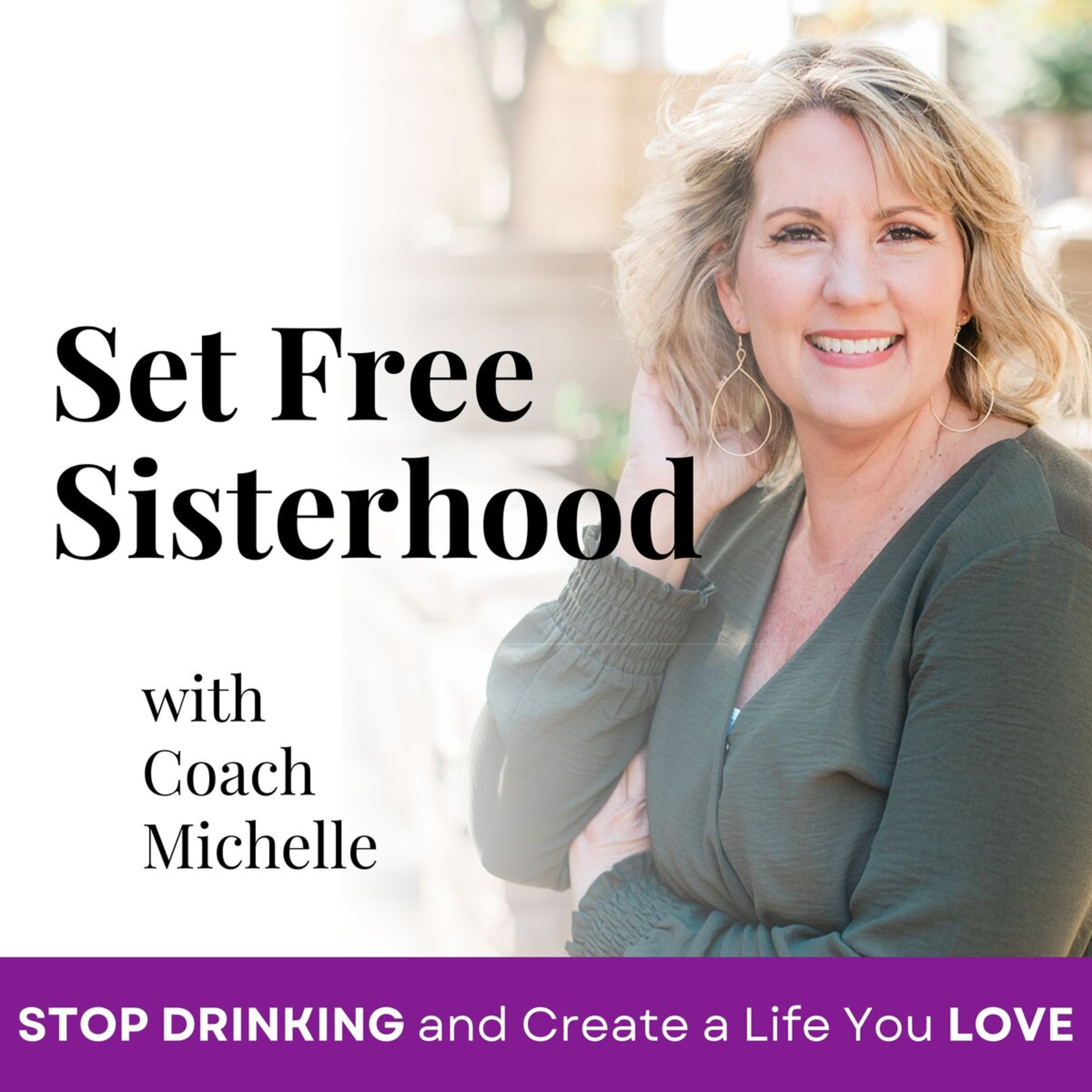
In this episode of "The Hats We Wear," host Beth Hachifano interviews transformational coach Michelle Porterfield, who specializes in helping women overcome overdrinking. Michelle shares her personal journey, explaining that her own decision to become alcohol-free after recognizing it as a maladaptive coping mechanism led her to coaching. She differentiates her approach from traditional alcoholism treatment, focusing instead on the emotional and situational triggers behind drinking, such as stress or relationship struggles.
Michelle discusses how coaching shifted her from an advice-giving mindset to one of active listening and inquiry, improving her interactions both professionally and personally, especially with her children. She notes that many women struggle in silence due to societal acceptance of drinking, fearing judgment if they admit it’s a problem. Her method involves fostering self-honesty, addressing underlying issues like control or fear, and developing tailored strategies for a life without reliance on alcohol. The conversation underscores the importance of awareness, self-compassion, and supportive guidance in creating sustainable change.
You're listening to the hats we wear, I'm Beth Hachifano. This is the podcast where guests talk about the hats they wear, the struggles and joys they encounter while wearing those hats, and how they've navigated through and overcome the struggles. My hope is you will be able to connect with their struggle and realize that you too can overcome. Thank you for listening. Welcome back to the hats we wear. Today I'm happy to have Michelle Porterfield with me. She's going to talk about the hats she wears, the joys and struggles of those hats, and how she's navigated through the struggles. Thanks for joining me today, Michelle. Thank you, Beth. I'm glad to be here. Absolutely. So what hats are you currently wearing? Yeah. So there's many, right? We're talking about identities. Mm-hmm. Yeah. Mom, I am a employee, I am an entrepreneur, I'm a girlfriend, daughter, um, lots and lots of things, right? So in a coach, that's what I do now, primarily, and coaching hats. They have to come on and off a good bit, don't you agree? I do. What kind of coach are you? I am a transformational coach for women to help them stop over drinking and create a life that they love and enjoy. Oh, I love that, to stop over drinking. How would led you down the coaching path, how did you, how did you decide that you wanted to be a coach? It was my own personal journey. I started hearing about personal development and a network marketing company years ago, which is so cool because I find those companies are really helpful for that and sometimes people grow when they stay with them and sometimes they move on and do other things, but they're usually have a really healthy framework on mindset and originally it started with, oh, I can actually manage my thoughts or they're not all true. This started cracking open this idea of that I had more control than I thought I did. However, one of my identities that is not always serving, but my protective part, like you and I know inside of our community, was control. So it's kind of flipping it for me and then that opened up this space of recognizing that I was letting alcohol control me. Not as an alcoholic, I do not connect with that and neither do my clients. It's more of there was this thing that worked for us to help us get out of our heads and it just became sort of our common coping mechanism. And then once I started removing it, I started exploring this world of personal development. That's when I found my mentor, Sean Smith and started following him and here we are today three years later from meeting him, but over five years alcohol free. I love that. And you know what I especially love that you just said is, and it is so, so true. You don't have to be an alcoholic to have a problem with alcohol. If you're using it for some purpose, so if it's a coping mechanism, so you don't have to be a raging alcoholic to say, well, I'm using this in a way that's not serving me right now. And I absolutely, I think a lot of people can resonate with that. You know, the weekend Friday night, oh, it's Friday night, let's get our drink on. You know, I think a lot of people can probably resonate with that. They're not drinking every night, but they're drinking to release the stress or to cope. So I applaud you for that. That network marketing company, I just want to roll back for a second. Is that where you, is that where you were working for a network marketing company? Well, I had a, I've always, I've always been a multi just, I love learning and I love growing. And so I've always just had something in addition to my job. I've been a hairstylist for over 20 years. And so I've always wanted to explore what other options are out there as far as, you know, learning more income or just learning more. And so that's kind of where that space was in my life in the beginning. Okay. All right. So did you find there were any, as you were moving into this coaching role, what did you find, what kind of shifts did you find happening within yourself that were positive as a result? Yeah, a lot. Too many delists, right? So as a hairdresser, I've always loved listening and loving on women. This has been something I've been doing for a long time. Even before that, I was a waitress for many, many years. I'm very, I love people. I'm very extroverted. I like to get to know people. However, for the majority of my life, it was more about advice giving, right? I'm just able to, because I love to research and learn, it was just an opportunity to go, oh, tell people about things. So one of the main shifts that happened inside of coaching was really recognizing that, first of all, I don't know all the answers. And my recommendations or advice might be absolutely wrong for her. And so it really shifted me into being more of a listener and investigator of people. And it really creates more of a calming sense inside of me because there's no pressure in knowing the right things or making sure I help this person. It's more of really opening up and giving them space. It's just helped me with my, just pretty much anything. In every area of my life, I have grown because of learning not only how to coach, but learning more about myself and the parts of me that have been trying to serve me, but we call self-sapotage. And then just really helping me develop inside of who do I want to be as a woman and as I grow. And how can I show up with my other hats to the best of mobility as a mom and a friend. Things like that. Yeah. Did you find that putting on this coaching hat, did that affect your mom hat like for the better or I can't imagine for the worst, but like doing this development work on yourself. Do you feel like that impacted your kids as well? Well, actually, this is funny how this goes because anytime when you're learning something it's that, let me just, I'm so excited about this. Let me give it to everyone and those everyone's might not want that. So actually at first, there's definitely some times that it didn't go so well because I was probably too, too over helping and let me show you this and let me tell you this and I have their teams now, but, you know, younger kids are like, I have no, first of all, I don't know what you're trying to say and, you know, I didn't ask. So a huge part was me, too, so much of it was the self-discovery of learning. Even though I can, I have this ability and this desire to help people help my children. People are not able to be helped until they choose to be. Yeah, even our children. And so one of the big things that's helped me as a mom is just recognizing because they're again that part of me, the hat that I wore so long in my life is controlling part of me. She brought that much, very much into her parenting with her girls, especially. I had to learn to ask when my kids wanted to express because what I started seeing was if I asked them, "Hey, am I just listening or am I helping?" And giving them the opportunity to choose, it changed everything. I'd imagine it would, yeah. Versus me just kind of go in and because my nature is to find solutions. That's how I'm wired. I'm really, really good at it. And it doesn't serve me always and it doesn't serve other people if they're not really looking for that. I kind of can come across bossy and annoying. So that's been a huge part for me as a parent, it's just to really be more secure inside of me and knowing that my kids have their own individual individuality and sometimes they just want to vent and release and sometimes they were like, "No, mom, I need some help." And it's helped me so much. We have a much better relationship now. And it's such a simple question, am I listening or am I helping? What do you need from me? And not for nothing, it's important to remember that our kids have to learn their own lessons. And it's not our right to take their lessons away just because we're uncomfortable with seeing them suffer. Yeah. Boy, it's true though, right? I mean, sometimes they have to learn the lesson themselves in order to really embody it so that they don't go back and do, keep doing the same thing over and over again, which a lot of us do. If we don't learn the lesson, we're going to keep bumping up against it until we learn it. Yeah. So good. And as someone who is controlling it was probably, I love that you found coaching because it gave you probably, I'm assuming, let me know if I'm not right, it gave you a certain amount of freedom. Oh, absolutely. You know, away from, you know, control is nothing but fear to begin with. You know, we're afraid. That's why we want to control. And they kind of realize, well, I don't really have control to begin with, so let me just see what I can do. It's all pretend. And I think a lot of mom struggle with this, you know, a lot of my clients do. This idea that, you know, and I see it a lot inside of relationships, you know, it's part of my story is since, since, not necessarily connected to being alcohol free, but since getting out from under my coping mechanism, learning more about myself, healing inside of my tendencies to avoid, I ended up having got divorced. And so there's a lot of women that I deal with that do cope with alcohol. It is stress-related because of work, it just works, yeah, it just works. And that's the problem when it becomes, when it becomes, I don't know how to manage my stress. And I don't know how to feel safe in my body when overwhelmed. This works because it just numbs me out. And they know, but then it just becomes this pattern and then what happens is it gets deeper and deeper inside of, I'm not even connecting in my right relationships to my kids, to my spouse, and a lot of women are struggling inside of their marriages. And so that's a lot of what we deal with, too, is how you can, you know, we, we can't control our spouse. We can't control what they choose to do and not do and how they show up and what are the results if I show up vulnerable to them because I need to tell them how what they've been doing is hurting me. But to get to a place where you feel so safe inside of yourself that you, you're not willing to not confront it. And that's, that's a, that takes a while. And it's the, it's the most beautiful journey that I've ever walked through. I'd imagine it takes a lot of unpacking as well because many people don't know why they're doing what they're doing. They know what's, it's serving some purpose. And it could just be, I just want to have fun and just want to unwind. But really, no, it's because I've got this deep seated issue that I don't even realize I have is some kind of programming or some belief that was forced on me as a kid or a belief that I've formed myself to experience. And it just makes us all that junk that stuck in there. The alcohol just sits right on top of it, dampening it down until the alcohol's gone and there it goes again. Okay. Back. Didn't really do anything. So I love that you, let me ask you, how, how did you, what was the point where you realized it wasn't serving you? The alcohol, yeah, the alcohol that you were like, okay, this, this, this is a coping mechanism that isn't serving me anymore. Was it the coaching first or did you, did you realize before the coaching that the alcohol wasn't serving you? Yeah. I realized before the coaching, actually, I'm trying to remember. So the day, my last, like day one, eight, eight, 2018 was the last, you know, my first day of being alcohol free. And I believe that next summer is when I started the program. I know I graduated officially from, you know, our first program online program. So that really catapulted, just being alcohol free, started opening up the clarity where it already had a little taste of the, you know, the personal development and some changes inside of me. But rewind before that was there was a year or more when I felt internally challenged about my relationship with alcohol. And that's what I share so much on my podcast, to completely all my stories and my thoughts and my vulnerabilities because there's so many women just like me to where we were, you know, high achieving, go to work, taking care of kids, worshiping in church on Sundays, you know, doing the things, but the, the battle's inside. And because one is so culturally accepted and celebrated, yeah, it's kind of weird. If you mentioned to your community, like, I don't know, I think I might be drinking too much like, you're fine, you know, there's nothing wrong with you. And so then you kind of go back in your hole because you feel like, well, maybe, you know, I am not that bad, but I'm starting to have the struggle. So there's this really internal battle that happens with us a while. So by the time women come to me and say, all right, they've been dealing with this for a long time. They recognize it a long time ago. They've tried some stuff, you know, they've tried the, the 30 day detox plans or the dry January's or all the hype stuff, they've tried moderation, they've tried rules, well, only drink on Fridays or only, and then they find themselves realizing, Oh, crap, this doesn't work. This isn't working because nothing else internally is changing until we have the ability and have, you know, that's why I've created what I've created. So I can help them being in their shoes, kind of walk through the processes of what it takes. And then that's when we get, you know, go under the hood and get a little deeper. And I think, so I think what is important to note for the listener is it's an awareness. So paying attention to your thoughts and your emotions and what you're feeling because that's going to be your number one, your number one indicator, especially how you're feeling, how your body's feeling. Did you find that your body started to reject? Like you weren't feeling what you used to feel when you were drinking or didn't give you a headache or was there any kind of physical manifestation that you needed to stop drinking or was it all emotional and mental, you know, just thinking about it, I'm wondering if your body fought back at all. Um, well, yeah, I mean, you wake up every not about 3 a.m. with your heart racing is very common. Um, and it's all women who have are in this cycle, that's what happens. And it's basically what's your brain goes to work and starts detoxing because wine is a carcinogen, it's a toxin. Your body goes into effort to clear that out. And typically about that 2 or 3 a.m. is when there's just this instance sort of wake up in this heart racing where the chemicals begin to try to re regulate. And a lot of it is because alcohol is such a dopamine hit. And then it drops dramatically, we're always chasing that, that same, that, that's what, you know, we think we're looking for at the end of the day. And that's when the pattern becomes to where we're drinking more because we can tolerate more because our, our body is doing what it's supposed to do. It's helping us, but we don't really see it that way. And we wonder, why can't I just have one? Well, it's science, that's why it's, you're not broken. There's nothing wrong with you. It's just the way that alcohol works in your brain. So yeah, so you did have pushback from your body saying, yeah, it's not working for me. And it took some time. I think, I think what's important to note is that the body always knows first, and then the brain is always the one to say, no, you're fine. Keep moving. No, you want that drink. Keep taking it. So we need to listen to our bodies first in our thoughts. And that's what you said at the beginning, you know, coming to realize that your thoughts weren't serving you, you know. So I applaud you for coming to that awareness. And I also love that once you stepped away from it, then things started to open up in a new way. And then you were open to the coaching. So that's important too. Once you get some clarity and some alignment with your higher self, like, oh, I'm not supposed to be doing this. This doesn't feel right. Let me start doing what I'm supposed to do and what feels good. And then more comes in. So it sounds like that was definitely your path of once you got rid of the alcohol and toxin, then you were open to other avenues and it happened to be coaching. And God bless you for now working with other women who were just like you that, you know, you need that hand, yeah, you know, you need that hand up. Absolutely. Thank you. And what happens is there's a lot of fear around removing it. So typically, you're right, it starts with awareness, but in the fear creeps in, right? Well, what's going to happen? Who am I going to be? How am I going to connect with my spouse? So how am I going to cope? How am I going to cope? What do I do? How do I do? And so that's a lot of times that fear, which, you know, we know is also just part of the human process of, you know, our brains trying to keep us safe and just really opening up to because I couldn't, you know, when I sit here now and I look at that version of me, like, I have so much compassion for her because she just didn't, she just didn't know. Like she was, she was just trying to do whatever she could with what resources she had. And so that's the beauty of the coaching world and being able to go and, you know, just hold out our hands to help them kind of walk through whatever that path looks like for them because there is no, it's not linear. There's no like, okay, if you do these 10 things, then you're going to be just fine and you're not going to want to drink anymore. That's not how it works. You know, you've got to be willing to, to do things that you might not have done before and just be willing to face the fear and be okay with the process and go from there. And I think like you said, just be, be ready to change because how fed up are you? How have you suffered enough is the question, are you ready to do something different? And the, the beauty is in the contrast. So, you know, you know what you don't want. So what's the opposite of that? You know, that's what you do want. So let's, let's look at that. How can we get that? You know, what tools can we use to handle when you have a fight with your husband or when you have a bad day at work and and it's so it's, there's so much need for coaching right now in all aspects. I mean, the clients that I work with are women that don't trust either themselves or others. So it's the same kind of thing that you have to be aware first. Have the awareness that something is off, that something, something's not serving you anymore. And then you can, you know, go from there for me, I work with, you know, really following their inner voice and listening to it and quieting the voice and giving them tools. So I really applaud you because I know I can think of a few people off the top of my head that could probably use you as a coach. Mm-hmm. Yes. Pretty amazing. No matter what type of podcast we have conversations on or what rooms that have conversations in. There's usually someone and quite a few people say, oh, I just thought of somebody that could benefit from this. And that's, that's the beauty of it and it's, it's kind of, it's really sad because I think that they're because of the stigma and what we see in the world around us. So many women are afraid, they're just afraid to begin with to just get really honest with themselves. That's one of my first steps and my framework is just being completely honest. Now that you have to tell anyone else, but just with yourself, where you look in the mirror and go, oh my gosh, this, I have a unhealthy relationship with alcohol. Like, it's an idol for me. It's a relationship that I no longer want to be a part of. So now what do I do about it? Yeah. Versus the world just talks about, oh, well, just don't drink or go to rehab. And there's, that's not what they want. No, because why are you drinking to begin with? Yeah. You're doing a purpose. So you've got to substitute it with something. You've got to figure out, and that's what I'm hoping is changing in the world is the stigma around self-development and healing, you know, because the alcohol can be what we consider a quick fix because it's going to make me happy in the moment. Whereas if I have to look within, it's scarier, you know, that's, that's, can be frightening. But on the other side of it is such beauty, you know, you just need to have the strength to walk through and, and really, have you suffered enough is really the question. Mm-hmm. Have you suffered enough? If you have, then let's walk through together, you know, it would be the guide from the side as Sean says. Yeah, from the side. Yeah. Yeah. Well, a lot of it, too, is what I've noticed a couple things is it's a value misalignment. I didn't know at the time when I was in it why I felt so, well, because there's a lot of judgment, right? There's a lot of self-judgment and criticism because we can't seem to keep promises to ourselves and so our self-esteem drops. Yeah. And we're like, oh my god, what's wrong with me? I said I was again, again, again, again. And so for me, one of my highest values is integrity. So not really seeing that inside of myself, no wonder I was so miserable because this was not in integrity the way I want to live my life. And so when I moved through it, I recognized like, oh, and then the more I kept the promises to myself, the more I did what I said I was going to do, the more I showed up in the cases as a mom, as a friend, that lifted up the alignment of who I was. And so then that gives you, it's kind of like that little extra fuel to push you through those harder days. When maybe you are a little bit more stressed or overwhelmed, you're like, well, I'm feeling more in alignment now, though, so I can do this. That's huge. And then the other part is a lot of women don't really know what they want. That was huge for me. I had no idea. I was desires. I remember when I was working with my coach, she's like, alright, I want you to start a desire journal and start really just, it can be big, it can be whatever. Now it's like stuck for a moment. Oh my gosh. When's the last time I actually thought about what I want? Yeah. And that's been huge too. How you, what you want, not only what you want, because that's what I do with my clients too. Usually the first session is a desire's list. But also the emotions you've either feel, how do you want to feel? Yeah. Because a lot of times people don't know what they want, but they know how they want to feel. And then I also say, well, I don't know, well, all right, how have you felt in the past? Well, I felt sad. Okay, if you know what sad feels like, you know what happy feels like, because you wouldn't be able to put a label on it if you've never, if you didn't feel happy, you wouldn't know what sad was. So sometimes it's, they don't even know what emotions they feel like, you know, when you start unpacking, but you're so, you're so right now on the head because actually thinking about our sad, especially women, and especially moms who have been trained in society to put everybody before us. So it's not what we want. It's what's best for my kids and what does my husband want and what is my, what does my boss want? What does everybody want from me? And not actually thinking about what I want from myself, it's like, whoa, that's a novel idea. I don't know. Let me sit and think about that. Yeah. And even if you're taking action in spaces of areas that you do enjoy and that you want, sometimes there's criticism, like that's what I experienced, you know, inside of my relationship because now I did use working as an avoidance. I was queen of avoidance as well. So I didn't even fill my emotions. I didn't know. They scared me to death, which is a huge part of my journey with my clients too. Like you said, it's not only desiring, but it's also recognizing what is, what am I actually feeling and not being afraid to feel it? I was, I thought I was cool, you know, I had the whole, I haven't cried, nothing makes me cry. I'm so tough, you know, and it's, it was, it's crazy now looking back, but I was so afraid of feeling until I learned how to feel and I gave myself permission to feel in the space to feel. Oh my goodness, like this is what we're supposed to do, we're designed to feel and express. And so that was a huge part for me, just avoiding it and then realizing that, oh, I do have desires. And why, you know, am I going to allow, you know, because a lot, depending on the dynamics in relationships or the pressures of the world, a lot of times we allow people on the outside of us to sort of like stuff that down or quiet that. And so that's, that's when they're again, we have to go back into that personal, safety and feeling safe inside of our body where we say, no, this is really what I want. And it's a process to get there, it's a process to get to the point where you can say, no, I don't, I don't care what you say, I don't, this is my light. You can put sunglasses on, I'm not going to dim it, but it does, it takes a certain amount of strength and it's a process to get there, but it's a process worth, worth doing. And I, a lot of times I use the analogy of a dirty diaper with my clients, because we're used to sitting in a dirty diaper at a certain level, we're used to that amount of discomfort. That's our norm. But we have to sit in a dirty or diaper before we can get a clean one, because we need to move through and figure out why it got dirty to begin with what's making it dirty. But on the other side of it is cleanliness and lightness and feeling good and it's just a matter of being willing to push through to get to that clean, that clean diaper. Because we're really so, and we're so used to dragging the little red wagon full of weight with us, our beliefs, our things that aren't serving us. And then when we start killing it away, it's like, whoa, I feel lighter. I had no idea. This was so heavy. Yep. You know? And it's just a matter of the clients being willing to get to that point where they're ready to put their heels in and just really get to work and look at themselves. And it doesn't have to take a long time. But it does take a little bit of work, you know, a little bit of being willing to look. Yeah. And I just believe we all are meant to be in community and get support. So a lot of it is really recognizing that you're not alone in your human experience. And that's what coaches and therapists and counselors and leaders, you know, that's the power of getting help. And so this is such a self-driven world. You know, I could do it myself and I could figure out this. And I just, it's just crazy because why would you not want someone that can help you and guide you and support you in such a safe way? And I think that's really what helped me was getting to a place where I found, and I'll talk about all the time, I still have a coach. I think it's, if I'm going to continue to grow and lead, I'm going to always have a coach too, because I had an experience this last weekend where there was some activation and a part of me showed up and I was like, what in the world? And then I said, Oh, cool. I got something from our coach Tuesday night, you know, but that's the beauty of it is finding that person. That's why I tell everyone is wherever you are, find someone that you can, that you feel safe with. And you'll know, you just know, and that's where you said, no, and that, listen into that intuition and listen to that inner voice when people hear whether they listen to podcasts or YouTube to know, like, Oh, I think that's somebody that could help me and not keep trying to do it on your own. Like you said, it might not take a long time and it might be something where you need to spend a little bit more time to kind of unpack. Yeah. Yeah. And revisit it often, you know, we, we know you think that you've, you know, mastered something like, Oh, finally, that belief finally doesn't serve me. I've gotten rid of it. And soon enough, and a week later, it's like, really, you're back again. That's clear to you already. What are you doing? Yeah. But the key, the key is, and this is important to note to the listener is that even people who are, have gone through transformations still have problems. We still, you know, still deal with the same issues we're human beings. We just recognize it sooner and can move through it sooner. That's the key and there's no bad emotion. Every emotion is a normal, healthy human emotion. It's just a matter of moving through it instead of stepping it down because that's when illness takes over. When you have emotion, emotion is energy and motion. So if you have that stuck in your body, it's going to affect the cells of your body and it's going to create health issues. So it's important to release the energy, release the emotion, feel the emotion, acknowledge it, and then move through it. Yeah. So let me ask you this, because this is my experience working with women. One of the main emotions that they're really scared of is anger because they've been told, be a good girl, don't get upset, you know, this, this history of, depending on where you grew up to, you know, don't act out, don't cry, stuff it down. And they are finding themselves with a lot of anger and rage. I know that was part of my story and it can scare you when you begin to come from a place of where you've been numbing to feeling again. Yeah, I can imagine. Yeah. So it's like, oh my gosh, what do I do with this? And so a lot of my work and how I help women to learn how to release that safely first so you can get underneath to all the other pain and the resentment and the hurt to get to where you can, to get to the healing. But a lot of times they'll stop their growth or they'll stop their release because it's scary. And so a lot of times it's just practicing, like, you know, as a practice, you have to learn what works for me. What's going to help me get this out of my body? Because I'll say that's been a huge thing for me was I think I agree with you, Michelle, because I had a client who was struggled with using her voice because she was told there's a child to be silent and funny, funny enough, she's a counselor. And so she's a healer herself and she's very, she's an empath as well. So she feels emotion, she feels very, very deeply. So, you know, when she's, when she's dealing with other people, she'll feel their emotions. But then if she feels anger towards them, she feels guilty. So I think guilt is a huge thing that a lot of women feel as well. And so she had this pent up energy that I could see in her face when I was talking with her. And I told, I asked her, I said, are you willing to try something? And she said, yeah, and I said, go get a pillow in scream as loud as you can into the pillow just to release the energy just to get it out of your body because I could see her like she wasn't ready to go back to do any exercise, go back to childhood, nothing she needed to just release this energy. Yep. And and she came back on and she was crying and she said, I didn't expect myself to be crying. But I said, that's, it's the energy being released. So it's just a tool, but we are so used to, so many of us holding it in, you know, I can't, I can't show this emotion, it's not right at this time. I can't cry. That was me. I was one that was made fun of when I cried. So I learned not to cry. Yeah. So as a result, I learned to stuff all those emotions down and it took some undoing to get to where I can easily cry in front of other people and not feel anything about it. You know, there's no, no judgment whatsoever. It's just neutral, but I think guilt is another big one for women. My not crying was more of a strength like I'm tough, right? So it's funny how we get beliefs around the whole emotional, yes, guilt is definitely another one too, whether it's mom guilt or just guilt in general, I worked with a lady last night who has been now over four months, alcohol free and she was able to get off her antidepressant medication as well. Wow. Just recognizing that so much of what she was doing was coping and covering the emotions, right? Because a lot of times antidepressants do kind of numb you too to where you're not really feeling. So that's been beautiful. And what we discovered last night was she had so much anger and resentment towards the young, that version of herself as a mom who was over drinking and how she was not connected with her husband and her son. And it was beautiful to recognize that, oh, well, what do you know now that she didn't know? What need was she trying to get mad and you could just see this shift in this more of a compassion towards that version of herself. And then recognize, you know what, I need to forgive that part, like offer forgiveness and so part of what we do is just, you know, her writing a letter to that younger version of herself, letting her know that, you know, where she's at now and that she forgives her and that she knows that she was doing the best she could. And that in itself, you could just see the difference in her body language that felt so much softer and I love when we're able to help women break free because like you said, guilt's a big one. And it's a useless emotion. It really is. There's just nothing. It just makes us feel bad and less than and it's not a motivator. And guilt is just, and it can eat you away if you don't face it. And one of the most powerful exercises I learned in the program is superconductivity. And it's going back and it's exactly what you had your client do, go back and go as who you are with all the knowledge you have, go back to that younger version and have a conversation and hold hands and I always have my clients remove that version of themselves, take it into their heart. So that's not in that situation anymore. So they're not there in that memory and then they come and they see their older self. And what wisdom does their older self have and it's just, it's powerful to, and I had that done on me in EIA, I was a client, the client, and Alicia was coaching me. I think it was Alicia was coaching me. And I had an issue from when I was 17 years old that I was still carrying 56 year old. She helped me clear it. It's powerful, powerful to go back and acknowledge and forgive and just know that we were in a different place and we were just doing what we thought we needed to do. Yeah. Yeah. Now, I have a believer that there are, there is unproductive guilt and productive guilt. Like I do believe that guilt productive, what do you think? Well, because a lot of times it is a recognition of this, you know, especially if it's not aligning with your values or aligning with your spirituality and you might have come, just kind of come out or gotten super selfish or outside of yourself and took an action, then the guilt can really motivate you to go inward, to do some healing. I can see that, you know, make new choices and new decisions. The unproductive is the kind that just sits there, right? And it's this heaviness of, it's, to me, that's more of like shame. Shame. The guilt that becomes similar. I'm wrong. I'm wrong. And I'm broken. I'm bad. I'm hurting you. Yeah. Thank you for that clarification. I agree. I'm supposed to be to alert you. Yeah. That's something that's out of alignment. Yeah, thank you for that. I agree. Bullheartedly. Yeah. And I think with anger, just to kind of recap on that because, especially the women who are listening, if they've been inside of a home where there was a lot of anger or inside of a marriage where there's a lot of anger, part of why they are stuck in their healing is because they have that belief that anger wasn't productive. I've had a client say, well, I don't believe anger is productive. So why do I need to feel it and release it? And so then we had to go uncover the belief and where it came from. Yeah. On ways where you can, well, how could anger be productive? And you know, she was so unwilling to feel it, but then to be able to see if there's an injustice, what if somebody hurt your child? Don't you want to feel angry? Like, isn't that another emotion that we want to feel? And I think that's just when we can recognize that anger can be productive. It's all about how it's released. Yes, I agree. Not at someone else. And I think that's when we're all learning, this was all new for me too, when we're learning to have the awareness, to listen to our intuition and to feel the emotions. There's just so much learning happening that we can hit the wall and go, well, I don't, I feel angry right now, but I don't want to yell at my husband or yell at my kids. And that's not what we're saying. It's more of like, oh, okay, cool. I'm noticing I'm very angry. Now, what's the story and how do I release it? My favorite is a half of a pool noodle. Do you do that? Have you heard that one? No. What's that? Like a pool noodle and you cut it in half, like a little sword shape and you beat the crap out of your countertops in the kitchen or a bathroom counter because it, it makes us like that. It's a great way to get the energy out. It helps so much. And then I have a punching bag in my garage because I love to box. So I use that, but sometimes I'll use the pool noodle on that too. And it just really helps get it out. And you know, the majority of the time when you do get the anger out, the tears do come. Yeah. And then you realize that there's really fear underneath that. Okay. What am I afraid of? So, yeah, that's a good one. I'm going to, I'm going to remember the pool noodle one, better than punching, better than punching somebody else, right? Yeah. Yeah. Absolutely. So is there, are there any hats that you are looking to put on, anything that you want to try to, like, oh, I kind of want to do that? Hmm. Interesting. Well, I do, I do want to be a wife again because I'm a new version of me now. I feel like I know that I can show up in a new way and I have forgiven that younger version of me and I learned that there was just a lot of things she didn't know and that she didn't really maybe believe or, you know, inside of that relationship. And I want to just continue being a coach, but I'm willing to also, you know, continue to grow and be a speaker. There'll be times where I love this format though. It's kind of funny because I don't really see myself wearing the, I'm on stage kind of hat by myself, but I love the idea of maybe sitting with a panel or two or three and having these conversations. I think so much wisdom and just support for the audience comes out of when we collectively work together. So that's something I would look forward to one day. Yeah. I think you would be very good at it. I really do. You have a very soothing energy about you. Thank you. I think that would be just my opinion. I think you'd be good at it. Yeah, any words, any last words that you want to lead the listener with before we end? Oh, man, how does it always like to remind people that you are, you're not a line. This journey is not meant to do alone and, you know, if you can do one thing today, you know, look in the mirror and get really honest with yourself on maybe something that you're struggling with and just ask yourself, you know, who in my life or who in my sphere of influence could I potentially reach out to and ask for help? And you will be amazed that the doors that can open for you. That's a good segue to two questions I have. First of all, what's the name of your podcast so I can link it in the show notes? Yeah. Set free, sisterhood. Okay. And then if somebody wants to work with you, how can they reach you? Yeah. You can go to setfreecisterhood.com and you'll see there's a free master class on there if you want to get a little bit more of my teaching and then there's also a spot where you can just send me a message and we'll set up a free discovery call together. Perfect. All right. That sounds great. I'll make sure I put both those links in the show notes for you. Thank you so much. Thank you. Okay. Until the listener. Thanks for joining and I'll catch you next time on the hats we wear.
Podcast Summary
Key Points:
Michelle Porterfield is a transformational coach who helps women reduce or stop overdrinking by addressing it as a coping mechanism rather than alcoholism.
Her coaching journey began after her own personal development and decision to become alcohol-free, which improved her self-awareness and relationships.
Michelle emphasizes listening over advice-giving, using questions like "Am I listening or helping?" to better support clients and her children.
She highlights that alcohol often serves as a culturally accepted stress reliever, making it hard for women to acknowledge its negative impact without stigma.
The process involves building self-trust, facing fears, and replacing drinking with healthier coping strategies through personalized, non-linear coaching.
Summary:
In this episode of "The Hats We Wear," host Beth Hachifano interviews transformational coach Michelle Porterfield, who specializes in helping women overcome overdrinking. Michelle shares her personal journey, explaining that her own decision to become alcohol-free after recognizing it as a maladaptive coping mechanism led her to coaching. She differentiates her approach from traditional alcoholism treatment, focusing instead on the emotional and situational triggers behind drinking, such as stress or relationship struggles.
Michelle discusses how coaching shifted her from an advice-giving mindset to one of active listening and inquiry, improving her interactions both professionally and personally, especially with her children. She notes that many women struggle in silence due to societal acceptance of drinking, fearing judgment if they admit it’s a problem. Her method involves fostering self-honesty, addressing underlying issues like control or fear, and developing tailored strategies for a life without reliance on alcohol. The conversation underscores the importance of awareness, self-compassion, and supportive guidance in creating sustainable change.
FAQs
Michelle is a transformational coach for women, helping them stop overdrinking and create a life they love and enjoy, focusing on addressing alcohol as a coping mechanism rather than labeling it as alcoholism.
Her own experience with overdrinking as a coping mechanism, combined with exposure to personal development through network marketing, led her to seek change. After becoming alcohol-free, she pursued coaching to help others on similar paths.
She shifted from giving advice to becoming a better listener and investigator, recognizing that she doesn't have all the answers and that her recommendations might not suit everyone, which reduced pressure and improved her interactions.
It helped her become more secure and less controlling by learning to ask her children whether they needed listening or help, fostering better relationships and respecting their individuality and need to learn their own lessons.
Signs include using alcohol to manage stress, numb emotions, or cope with overwhelm, even if not drinking daily. Physical symptoms like waking up with a racing heart at night can also indicate the body rejecting alcohol as a toxin.
The first step is honest self-reflection, acknowledging an unhealthy relationship with alcohol without judgment, which opens the door to seeking change and exploring underlying reasons for drinking.
Chat with AI
Loading...
Pro features
Go deeper with this episode
Unlock creator-grade tools that turn any transcript into show notes and subtitle files.
 PodcastTranscript AI