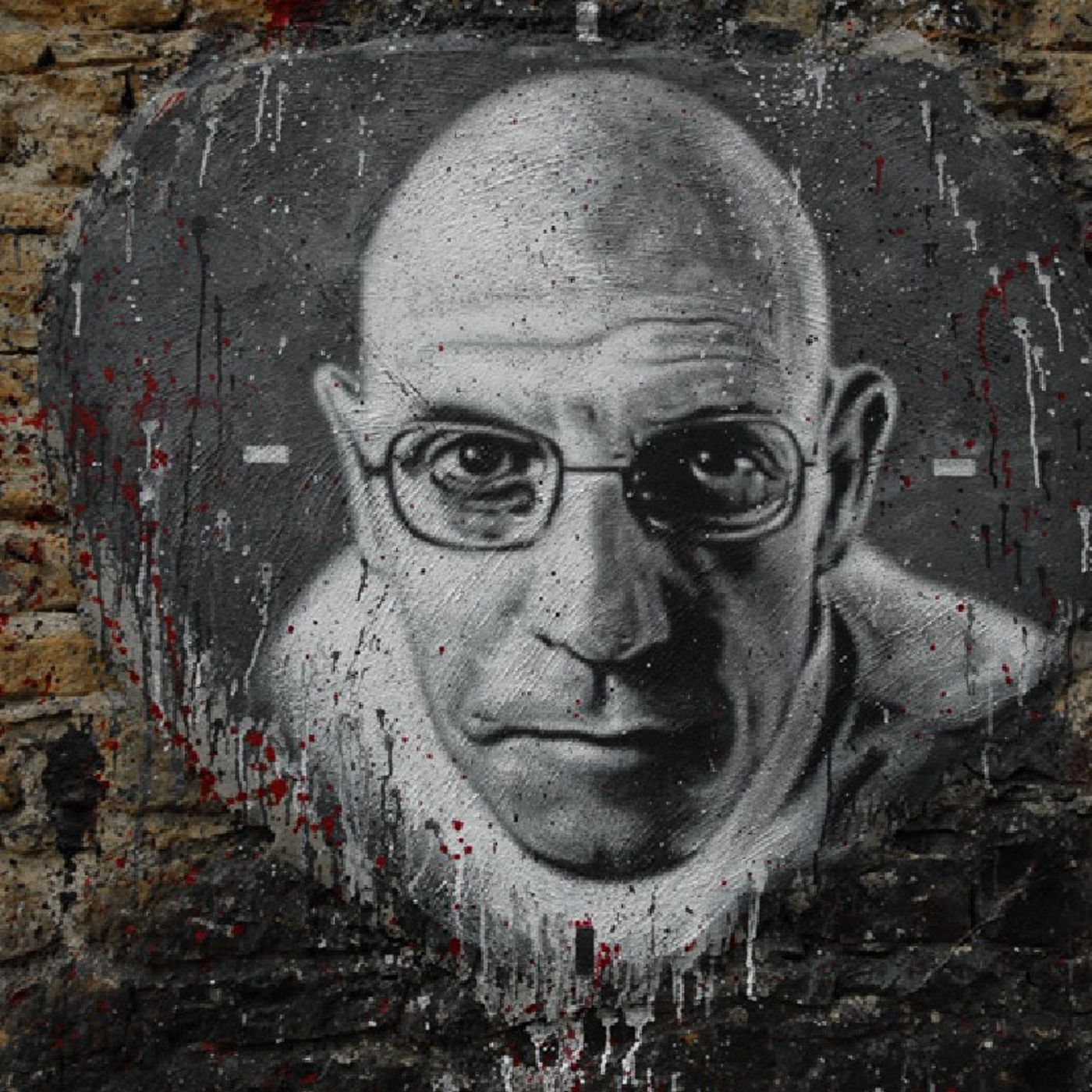
This chapter explores Michel Foucault's influential analysis of power, contextualized within the 1968 French student protests that critiqued traditional authority and capitalist society. Foucault moved beyond viewing power merely as state repression or a Marxist class tool, arguing it is a fluid network embedded in all social relationships and institutions like hospitals, schools, and families. He examined how these institutions normalize behavior through rules, shaping desires, habits, and even bodies to fit productive societal norms. Foucault further analyzed modern governance through concepts of biopower—the regulation of population life (health, mortality)—and biopolitics, the state policies managing it, which can range from public health benefits to oppressive controls. His Panopticon metaphor, describing a prison where inmates self-regulate under potential surveillance, illustrates how modern disciplinary power operates through internalized observation, a dynamic extended today via digital monitoring. Ultimately, Foucault presents power as an omnipresent, relational force that defines normality and social order.
Welcome to the Poodcateso Cilogi Gieta. Before starting this interesting chapter about the power and the work of the French, Michefe Foucault, I remind you that you can subscribe by a euros in a month and so that help the project continue growing. If more dilation we start with this chapter. If someone is authorized to take us through the semantics of power, it is, as already named, Michefe Foucault, a philosophical philosopher and psychologist that influenced notably his work in the 70s, entering in reality in a theological or academic way, practically all the participants who globalize the family of human science. In addition, if we contextualize the thought of Foucault in historical myths, we have to move to one of the most iconic events of the second half of the 20th century, in this case the largest French or largest of the 68. In synthesis what is said as the largest French was a series of students' protests in a very multitudinary reality that were born in France, especially concentrated in Paris in the months of May and June 1968, from there its name. This series of protests and demonstrations were initiated by students groups that had critical positions towards capitalist system, also the imperialism of the time, the authority and the society of the growing consumption. In fact, student movement turned around to a speech that was desautorized by political institutions and social networks that at the time, such as the government, the indicators or even the university. The 68 students also joined the group of workers, most of the indicators and also the French Communist Party, although it is true that these two last people who were named had more laborations and did not coincide in all the replacements of the students. However, the union of all these social actors originated the largest general that has lived in France and even in the European Union, being supported by almost 9 million workers. According to this, the largest French was basically characterized by being a movement of centralized and unorganic, that is, without a clear leader. And many reflections that emerged in the scene of this movement had to do with the power, the study of this episode. The power in general of political parties, for example, of the companies, schools, the states and in general of the social institutions of the traditional. A power of rigid and vertical character that was seen as a obstacle for the freedoms and the advances of the societies. For the next, the main discourses that defended the student movement were built based on a critical, towards the authority and power in all social habits. Whether in the family, whether in the professional environment, the work, obviously, in the sexual etc. Therefore, in the age of 68, their pure reality, an authentic point of inflection, in terms of the work of the post-terior post-philosophical and sociological positions. Basically, and here there is a dual debate on the movement, whether it was beneficial or not, or that it symbolized, but in reality, in the age of 68, it started to break down with the context of the Cold War. A capitalism versus a Soviet or Chinese communism, and they considered positions and ideologies, related to a third political vial, which we have currently seen that, obviously, have failed to face capitalist realism and its reactionary age. But if it is true that human science was focused on this era, in concessions that still keep being victims and that they are giving us the understanding of what is happening, so basically, in the age of 68 and the current era, which is much more broad to the countries that not only are France, well, it made them arise new studies objects that had been forgotten by social sciences, such as being the body, the desire, the power or the pleasure among others. Foucault, therefore, was a thinker who reflected and studied a great amount of topics, but also that the main drag that characterizes this French philosopher is his elaboration of the power concept, which we can find in his works, "Vigilary Castigar", written in 1975, and the will to know the history of sexuality, volume 1, written in 1976, a year later, however, we have to recapitulate the pasts on power, to understand the importance of Foucault and his innovative vision on the concept. In this sense, the two main paradigms that faced the power issue in 1960 were the Marxist philosophy and liberal philosophy. On the one hand, the Marxist philosophy understands the power as a set of oppressive elements that basically help maintain or sustain the capitalist system of production, and therefore the domination of the capitalist forward to the class of work. On the other hand, the liberal philosophy is considered the power as an element in which individuals believe in the government or the state by the social contract, being this contract represented and sealed officially through the democratic vote in Spain, from where you can run this podcast for example, every four years. That is, here we see the power processes that, if it is true, not directly negated by Foucault especially the first, Foucault will be more and more, that is, the complement, mainly insists on the power of the Marxist philosophy. That is, the power of Foucault will redraw a new vision about this aspect, a new elaboration that will facilitate us to understand how our society is defined, what is considered normal or normal. Weird or daily. The French philosophy argument that power does not only exercise when the police, for example, reprise a manifestation, or the government prohibits certain actions against laws, obviously that is power, but there is much more. Why? Because power is intrinsic to social links and therefore is uncertain in all the relationships that we establish, bosses, employee, teacher, student, doctor, patient, mother, daughter, among others, propose us some examples. For Foucault, therefore, power is established through, as you can understand, also in intuition, of relationships that some people exercise over others in daily life. This power is dynamic and variable according to the role, that is, the role and the situation that you are occupying in a social position or in a concrete institution or in a situation determined by life. In other cases we are who exerts power, for example, if we were professors and we would exercise towards our students. In other situations we are in the extreme reset of power, that is, we receive power, we are in a position of subordination, for example, when we put the doctor in the role of patients and we usually get the authority of the doctor, because of that, it depends on our health. According to Foucault, according to the French, these relationships of power are basically changing and are flexible and are influenced also by relationships of knowledge. In consequence, the doctor, for example, is more knowledge about medical questions than the patient, what makes him a scientific legend, is spread by laws and practices that are accepted socially, that is, accepted and normalized by the rest of society. And also all this in tronca and [BLANK_AUDIO]
realiza en un lugar en un dispositivo de poder que tiene una arquitectura concreta y unas normas muy concretas y que está respaldado por la legalidad estatal como es un hospital. Por tanto, el médico ejerce poder sobre el paciente en este contexto determinado, en el contexto del hospital. Y lo mismo ocurre, por ejemplo, en el ambito educativo donde el profesor ejerce poder sobre el alumnado dentro de la escuela, otro dispositivo de poder similar al hospital y que surge en las sociedades modernas capitalistas. Pero la concidión de FUCO va más allá, va más allá de esto y nos habla y nos hace reflexionar profundamente sobre el proceso de normalización. FUCO usa, además, esta concidión de poder para entender, por tanto, como en las instituciones sociales, como en la escuela o hospital que ya os he nombrado, dirigen y regulan la vida de los sujetos y de la población a través de determinadas normas. Para el filósofo francés, básicamente los individuos somos un producto de la normalización institucional, ya que a lo largo de nuestra vida nos moldean múltiples instituciones, como puede ser la familia, la escuela, la iglesia, la empresa en la que trabajas y un largo accederá. Cada una de estas instituciones básicamente molde a comportamientos, molde a nuestros acciones, nuestros gustos, nuestros deseos, un objeto de estudio que hemos tocado bastante en el podcast, también nuestros hábitos e incluso nuestros cuerpos. Todo esto lo realiza a través básicamente de las normas que tenemos que interiorizar para formar parte de esta sociedad productiva, normas que si no cumplimos o no intervizamos, digamos de manera correcta, se nos penalizará. Es decir, se nos catalogará como no normales, como anormales, como algo que tiene que ser, o alguien mejor dicho, corregido. Mañamos ahora a dos concentros centrales de la obra de FUCO, el Vio Poder y la Vio política. Másicamente, el Vio Poder empezaremos por este y luego volvimos a la Vio Plítica, son dos concentros hermanos que nos intentan explicar cómo se utiliza el poder a gran escala y qué nuevas inercias hay en las sociedades modernas y que hacen fluir el poder de una manera muy diferente. Para empezar, el Vio Poder hace referencia a los intereses y las prácticas enfocadas en regular la vida biológica de la población que surge, como he dicho ya, en la época moderna, en el capitalismo moderno. Y la Vio política, por su parte, es el conjunto de políticas que van encaminadas o que tienen la intención de gestionar el Vio Poder. Por tanto, en la Vio política, digamos que inicia su andadura en las sociedades a partir del siglo XIX, cuando los gobiernos empiezan a preocuparse por la vida biológica de la población en su conjunto con el fin de que la que se trabaja ahora siga siendo produtiva. Prova de esto es el surgimiento de disciplinas como la demografía y sus herramientas metodológicas, los centros, los sensos, el control de crecimiento de la población, la talidad, la mortalidad e incluso la sociología que no tenemos que olvidar que en su genesis es una ciencia burguesa. Siguiendo con lo planteado, la Vio política no es mala por sí misma, simplemente es una característica histórica de la modernidad y la expansión del capitalismo moderno, evidentemente el todo sistema social egearse poder sobre esos sujetos y más sobre las clases sociales subordinadas, en este caso el planetariado. Por ende, aquí podemos encontrar diferentes ejemplos que pueden ser considerados mejores y peores sobre las formas de la Vio política, es decir, la que se trabaja ahora quizá en cierta manera y no de manera, digamos, altruista sino básicamente porque la Vio política busca la productividad y la optimización de la población se ha podido beneficiar de ella, por ejemplo, teniendo una mejor salud. Ahora los explicaremos. Por un lado tenemos los estados democráticos, los estados democráticos burgueses que pueden ser criticados de muchas maneras, pero por ejemplo en Europa muchos de ellos con solidar un modelo de estado de bienestar, con lo cual en estos modelos en concreto occidentales y privilegiados, se lo ahora, por ejemplo, un aumento de la calidad de vida de la población bastante alto, garantizando, por ejemplo, la acceso a sanidad y a otros cuidados. Por otro lado, también podemos encontrar ejemplos llenos de horror y sufrimiento, como por ejemplo el nazismo hizo parte de subvio política, que fue exterminar agrupos de población como judíos, gitanos, homosexuales, pensioneros de guerra, pacientes políticos, personas con diversidad funcional, en general, una gran gama de ciudadanos, ciudadanas y minorías. En la actualidad existen, evidentemente, situaciones donde la biodiopolítica es el eje central de ciertas acciones de los gobiernos. Un ejemplo actual de buena gestión política sería, de biodiopolítica, perdonar, sería la implantación, por ejemplo, de la vacuna contra la COVID-19 o las vacunas para prevenir enfermedades de todo tipo. Básicamente, y en general, los programas de salud pública para prevenir ciertas enfermedades se pueden considerar como acciones que, bueno, pueden ser beneficiosas y son beneficiosas para toda la población, es decir, sería una biodiopolítica que podría ser deseable, incluso podría ser instrumentalizada en un modelo postcapitalista, comunista o anarquista. Pero también existen ejemplos malos, como la prohibición del aborto legal, por ejemplo, a través de procedimientos médicos controlados, obviamente, este último sería yo que hubo un ejemplo clarísimo de cómo en la biodiopolítica puede ser nociba, pues en este caso, en el caso del prohibido del aborto, pone esta medida biodiopolítica, pone en peligro la vida de las propias mujeres a su vez que su autonomía, su derecho, etcétera. Pero hay mucho más porque la biodiopolítica y el de biopoder hoy juegan en un tablero, quizá bastante más diferente del que pensamos, un tablero que fuco ya anunció con su famosa metáfora del panótico. Una de las metáforas más famosas en el campo de la ciencia social es la metáfora del panótico. Dicha alegoria se utilizada, como ya os he dicho, por el filósofo Michefuko, para explicar cómo funciona el poder a las sociedades modernas a partir del siglo XIX y cómo es diferencia del poder feudal. La palabra panótico hace referencia a una cárcel, donde guardia básicamente está situado en un ator central y puede vigilar a la totalidad de los presos, de una manera simultánea, sin que ellos puedan saber si están siendo vigilados. Así que, por la mera posibilidad de poder ser observado y casado en cualquier momento y de manera inminente, pues básicamente todos los presos se comportan adecuadamente. En realidad esto hace que no haga falta ni siquiera la figura del vigilante ejerciendo una constante persecución y castigo, generando que el poder funcione de una manera, bueno, omnipresente, es decir, presente en todos los lugares. Según esta concepción, básicamente, la sociedad de disciplinarias ligadas al feudalismo, al época feudal, ejercían el poder a través de la persecución y el castigo, algo que resultaba ser un método bastante inficiente. Y es cierto, este modelo de ejercicio del poder resultaba poco perativo y escapa muchos factores en su control, además de resultar poco eficaz, improductivo y costoso, económicamente. Sin embargo, con la llegada del capitalismo y las sociales de control modernas, la manera de ejercer el poder obtiene unos resultados superiores. Pues el capitalismo en sí es un nuevo sistema económico que sustituye al viejo federalismo y que se caracteriza por tener que optimizar todas las esferas de la vida social. En definitiva, según FUCO, la prueba de esta optimización al ejercer el poder es el panótico. Si vivimos en una sociedad donde nos sentimos constantemente observados, porque hay camaras de vigilancia en la calle, reconocimiento facial, porque tu jefe puede ver siempre lo que está haciendo en el trabajo o porque nuestra ubicación queda grabada en nuestros teléfonos móviles, la mayoría de las personas evitaremos saltarnos las reglas. Queda claro que la noción de FUCO es mucho más que una metáfora, por tanto, o diseño arquitectónico. La actualidad del poder panótico es el mundo que genera el poder capitalista, es decir, la expresión más exacta de cómo se ejerce poder en nuestras sociedades.
de poder en otros episodios. Un saludo, hasta la próxima. [Música] [Música] [Música] [Música] [Música]
Podcast Summary
Key Points:
Michel Foucault's work redefined power as a pervasive, relational force embedded in everyday social interactions and institutions, rather than solely a top-down oppressive tool.
The 1968 French student protests (May 68) served as a key historical context, challenging traditional vertical power structures and inspiring critiques of authority across all social spheres.
Foucault introduced key concepts like biopower (regulation of biological life) and biopolitics (state policies managing populations), analyzing how modern institutions normalize behavior for productivity.
The Panopticon metaphor illustrates modern disciplinary power, where the possibility of constant surveillance induces self-regulation, a mechanism extended today through digital monitoring.
Power is dynamic and context-dependent; individuals both exercise and submit to it in roles like doctor-patient or teacher-student, shaped by institutional knowledge and norms.
Summary:
This chapter explores Michel Foucault's influential analysis of power, contextualized within the 1968 French student protests that critiqued traditional authority and capitalist society. Foucault moved beyond viewing power merely as state repression or a Marxist class tool, arguing it is a fluid network embedded in all social relationships and institutions like hospitals, schools, and families. He examined how these institutions normalize behavior through rules, shaping desires, habits, and even bodies to fit productive societal norms.
Foucault further analyzed modern governance through concepts of biopower—the regulation of population life (health, mortality)—and biopolitics, the state policies managing it, which can range from public health benefits to oppressive controls. His Panopticon metaphor, describing a prison where inmates self-regulate under potential surveillance, illustrates how modern disciplinary power operates through internalized observation, a dynamic extended today via digital monitoring. Ultimately, Foucault presents power as an omnipresent, relational force that defines normality and social order.
FAQs
Michel Foucault was a French philosopher and psychologist influential in the 1970s, known for his work on power, knowledge, and social institutions, which impacted human sciences globally.
The May 1968 protests were student-led demonstrations in France criticizing capitalism, imperialism, authority, and consumer society, later joined by workers and unions, leading to a major general strike.
Foucault sees power as intrinsic to social relationships, exercised dynamically in everyday interactions like teacher-student or doctor-patient, rather than just through repression by authorities.
Biopower refers to practices regulating the biological life of populations in modern capitalism, while biopolitics involves government policies managing biopower, such as public health measures or demographic controls.
The Panopticon is a prison design where inmates self-regulate due to potential surveillance; Foucault uses it to describe how modern societies exercise power through pervasive observation, like cameras or digital tracking.
Foucault argues institutions like family, school, and church shape individuals through norms, penalizing non-compliance by labeling them abnormal, thus producing socially conforming subjects.
Chat with AI
Loading...
Pro features
Go deeper with this episode
Unlock creator-grade tools that turn any transcript into show notes and subtitle files.
 PodcastTranscript AI