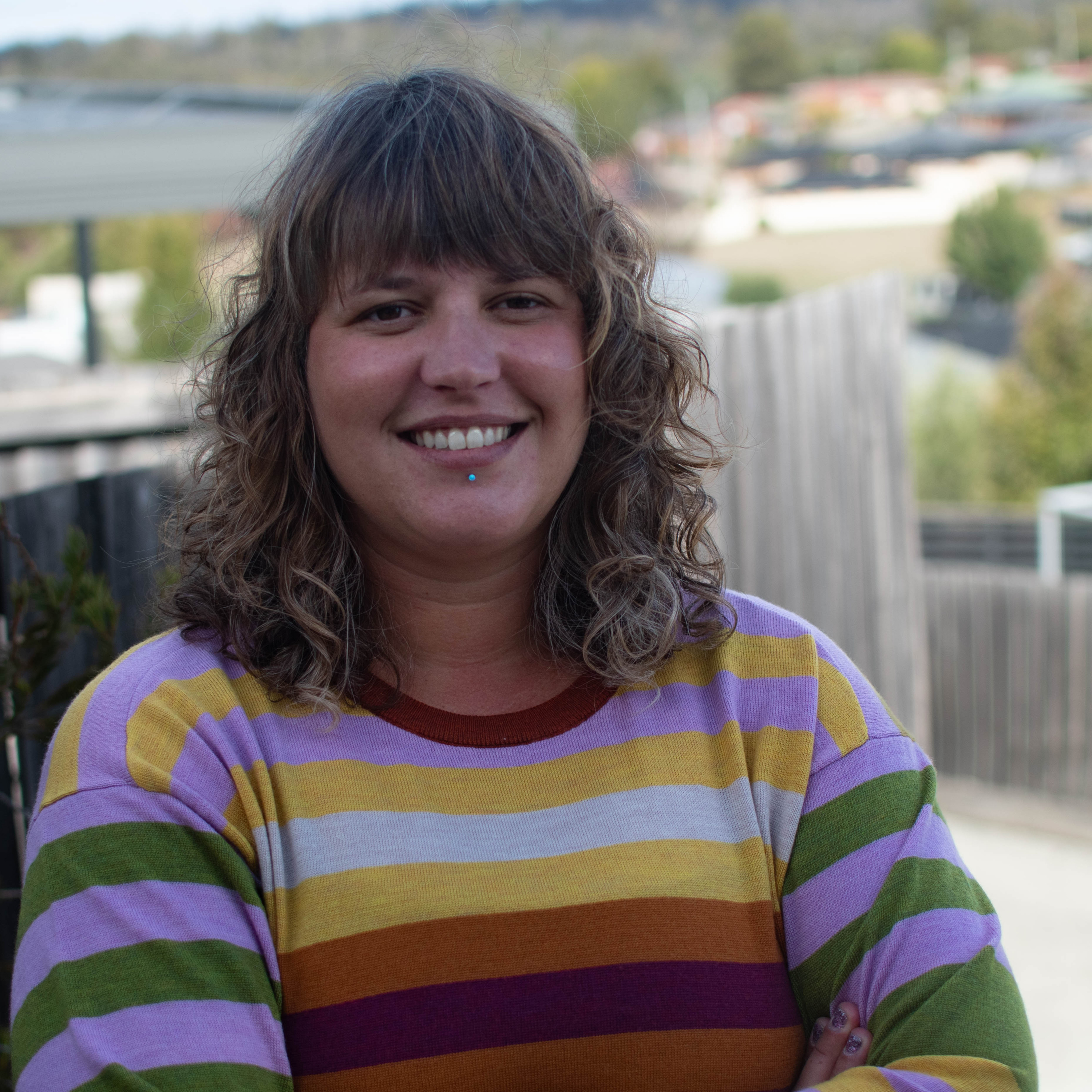
Mia from Bosnia-Herzegovina : Taking a chance on love and crossing continents
43m 26s
Mia's story traces her journey from a childhood in Bosnia disrupted by war to building a life in Tasmania. Born in central Bosnia, her early years were idyllic, but at age four, her father sent the family to Croatia for safety as conflict erupted. Growing up in Croatia, she excelled academically but was rebellious, often clashing with authority and her father. Despite life in Croatia, she maintained a strong Bosnian identity. At 18, she met Adam from Tasmania on MySpace, and they quickly developed a deep connection. After visits, she moved to Tasmania at 22, marrying him despite her parents' reservations, particularly her father's disapproval of Adam's non-materialistic lifestyle. Adjusting to Tasmania was challenging, contrasting sharply with her memories. Her family history is marked by her parents' cross-religion marriage, her father's wealth which aided their war survival, and the enduring trauma of the conflict on her aunt. Mia's path reflects a search for belonging, from her lost Bosnian village to a new home in Tasmania, shaped by love, war, and family complexity.
[Music] Hello listeners and welcome once again to another episode of 177 Nations of Tasmania. An 18-year-old Bosnian girl meets a man from Small Town Tasmania through my space. They fall in love quickly and at 22 years of age, she is on the other side of the world living in Lonsistan, Tasmania, where they have got married without telling her parents. Sounds like a story from a romance novel, doesn't it? But these are some of the events in Mia's journey from Bosnia-Hedda Govina to Tasmania. The whole story, of course, is a bit less neat and tidy compared to a romance novel, as you will hear. In brief though, Mia was born in the town of Novitlavnik in central Bosnia-Hedda Govina. At the time, it was still part of a fast, fracturing Yugoslavia. Mia was four years old when her father sent her, her mother and other family members away to Croatia to escape the impending fighting. So, Mia grew up and was educated in Croatia, but never let go of her Bosnian identity. Settling in Tasmania has been less than smooth at times, and in this episode you all hear how Mia cope with some of the challenges of being a naive 22-year-old on a very steep learning code. So, glad love to fear, as noise started onion. I was born in Trabnik, which is an old town close to Sarajevo, to give you a bit of a reference, middle of Bosnia. So, being born in Trabnik and then living in a village between Trabnik and Novitlavnik, will actually remember more from my first four or five years of life than I remember what happened yesterday. The memories that I have are quite clear, and I believe it's because of the place. The place that I grew up in is just like a little village in the middle of Norway. It's just a big long street where all the neighbours know each other and all the kids are constantly always on the street riding bikes up and down, and just remember the feeling of feeling free and the happiest I've ever been in my life. And everyone loving me and everyone paying attention to me, and just I've never ever in my life, and I've been to few places in my life. I've never had that feeling again, or feeling like I felt where I grew up in my first four years of life. So, the village, even though it's nothing special, there's a little town next to that village, which is what I said, it's called Novitlavnik. It's where my dad had his couple of cafes, and he was a bit of a, I guess, he was the man in town, and everyone knew him. Therefore, everyone knew who I was, and again, I didn't even have to be in the village that I grew up in. He went to Novitlavnik. Everyone knew who I was. Again, everyone was paying attention to me. Mum's a Muslim, dad's a Bosnian Catholic. They met Hitchhiking, and he was driving with his friend in this, you know, in brand new car, because he already had a little bit of money by then. My dad opened a cafe in Novitlavnik, called Grant. It was quite of a popular bar in Novitlavnik and Central Bosnia. He also had a business where he bought a lot of, you know, the flipper machines. Pimble. Yeah, Pimble. Yeah, flipper. We call it flipper. Yeah, so he bought a bunch of them, and he installed them in all different pubs and cafes around Bosnia, and then he would go from one town to another and collect the money. So, if you imagine today arcades, pretty much the same thing. So, he was in the 80s. He was the first one to do that, and he did really well, opened the bar, himself, grant, bought himself, you know. And he went out with his friend, and my mom was Hitchhiking with her friend, and he wasn't attracted to my mom, but he thought that she would be out of reach. So, I better try with the other one, because I'll probably have more chains. But I think he got Gatsy and said to himself, "Now I'll do it, I can do it." And he fooled her completely for the next 37 years. Oh, she would tell you the same. Because my mom is a Muslim, and my dad, a Catholic, and her parents, even though they weren't against Catholics or anything like that, it's still, there's a notion that you stick with your religion, you stick with your people. So, and him being, you know, wealthy and flamboyant, and, you know, they saw that he probably isn't the greatest fit, so she would hide from her parents and sneak out and, you know, go meet him, whatever. And she had only found this out in September, but she had a fiancé at that time. Oh, really? Which I had no idea. Apparently they were going for a long time, but my dad was apparently really pushy. And according to her words, he was more fun than her fiancé. A big mistake, don't go for fun guy. Go for super boring. Yeah, so she got pregnant, surprise, and her parents found out, and obviously the next step is marriage, I mean, or, but her parents even, they actually didn't want my mom to even, even after she got pregnant to go my dad like they would help her. They would help her with everything. Just don't go there. But she did, and don't take me wrong, like my parents eventually grit to love my dad, and he was a great support for them, and, you know, he can be charming and he can, he can fall you. In terms of things working out at the end, like in hindsight, you can now see that if my mom did not marry my dad, there is a potential that she could have been it. Because the village she was in was quite bombarded, quite a bit. There's another horrifying story to that as well. And if she didn't have my dad who helped with money, who helped with escape, who helped her family to survive during the war. You have to have money, like you can't do anything with that money, if you're stuck, there were stuck in tunnels for years and years, you know, just living in the dark and getting out when they need to get some supplies when it's safe. So you got to have money to be able to trade. And that was great. My dad being able to help out with that was a great deal to my whole family, I guess. So, you know, in a way, if that didn't happen, like there's a lot of other things that wouldn't happen either. Also, there's a, so in the war, my Muslim family pretty much stayed in that village that was shelled and there was, there's a lot of destruction there. Before the war started, probably like five hours before the war started, before they started shooting at each other. My aunt, my mum sister, she had her baby boy, I think it was a year and a half and she, so you've got one village and you've got another village that's like 10 minutes away. And her husband's sister lived there, so she gave the baby to her husband's sister for just to take care of him and have him for a little bit as you would. And in that time that he was over there, the war started and she didn't see her child for another year and a half. And that was quite traumatising for my aunt as it would be, you know, height and imagined hiding in tunnels, not knowing if your child's alive or not, your only son is he okay, like there's no telephone, there's no communication or whatever. But eventually you went into the end and set up a ceasefire where my aunt was able to have her son back. And even though that was fantastic, that was great. It left her traumatised for the rest of her life. She's been diagnosed with schizophrenia by polar, she takes a lot of medication, she's like a vegetable for the last 25 years. Educated woman, beautiful, but completely deteriorated after that. Her life was completely wasted to the point she couldn't take care of my cousin. My dad organised my mum and me to leave Bosnia in 1991, so just before it started getting really, really bad. What prompted him to make that decision was the fact that mum and I were out and we parked our car in one spot that was decided because the other spot wasn't available. And if we went to the spot first that wasn't available, it was bombed, 10 minutes after. So he realised this can happen any time. We were so lucky to escape that. I remember being in basements and listening. Like I can still hear the sound. Even though I haven't seen it, like I haven't seen people killing each other or haven't seen the blood. Maybe I have, but I don't have it in my memory today. I can remember the environment and the feeling and all of that. So dad arranged for us to travel to Croatia, which I remember yesterday was only four. I remember driving the car and just asking, are we there yet? Are we there yet? Are we there? And we got mum and I, we arrived in this spot in Croatia called Trogir. But it's an amazing place and because like I said before, my dad didn't have money. So we didn't have to stay in a refugee camp that was designated for everyone else. We stayed in a motel that was right next to the refugee camp. Best year of my life. Like not knowing what's going on obviously. So I can say that as we go.
because I had no clue. And I spent a year, I think, without dad. He was in the war, but I didn't really feel it or my mum was there, my aunties were there. My aunties actually lived my dad's sister and her family lived in Progir, then. So we were able to get help that way as well. But in that motel, we had UN soldiers staying there as well and me being a kid and cheeky and that loved me. And I remember they twist me around and buy me gum and all sorts of things. And the refugee camp was fantastic as well because there were so many kids there as well. So I'd spend my whole day just in the refugee camp. I didn't have to, but I did because I loved it. And people were playing sports and I managed to get myself, well, help mum's, you know, why I guess, and get myself a nanny by myself. (upbeat music) - So after my sister was born in 1992, my dad managed to come to Croatia as well and he bought an apartment in Zagreb, the capital, and we lived there ever since. I always had a sense of not belonging in Zagreb, always. Even though I had bunch of friends and bunch of, I'm an extrovert, I do enjoy socializing and all that sort of stuff. But I never felt like I belonged and there was often words coming from other bullies. There's always bullies. I come from Bosnia, I'm probably like a lower class or something like that. I don't know whatever they perceived that it is and usually comes from the parents and then kids here and then they bring it to school. But I always fought for my rights. Like, if it was a boy, I'd bash him straight away. I like him. (laughing) School for me was fantastic. I was a straight-age student, but I was also a travel maker. It was a maths gymnasium. It was the first school in the whole of Kroash, like the best school. Gymnasium is a high school. But it's all different subjects. - But it's more academic. - Yes, exactly. So with gymnasium, you can become a doctor, architect, dentists, pharmacists, whatever. Whereas you have other high schools, you have art or music high school or you have economy high school and you only study those things that are gonna lead you to one direction. - Yep. - I went to maths gymnasium, which is maths like four days a week and physics, three days a week. Whereas other gymnasiums would have only one hour a week. Mine was full on maths and full on physics, which I freaking hate it. And I had to go to this school because my dad thought that being amongst all the nerds will have, sorry, nerds, they were awesome, by the way. That it would improve my behaviour. My rebellious behaviour, that it's gonna tame me. But it did opposite, 'cause I just found an opportunity within an opportunity to do the trouble. Because everyone was just studying all the time and everyone was great at everything. And I suppose I just becoming a homo and autinege I just wasn't interested at that. Like I like studying, I like learning. But you know, I'm not to that point. - Yeah. - Luckily my class was the only class that I think in a whole generations of the whole school that was really alternative. So we had a lot of hippies and a lot of punk and heavy metal. Like all different kinds. And every other class, which is nerds, in my class, some reason it was everyone. So that was lucky. And then there was various incidents where I would get in trouble. But one of the main ones, and this was teachers' fault. Like, totally, I don't take any responsibility for it. That she would trust me to do such an important task of getting me to put everyone's grades into a computer system as they are recorded in the book for every classroom. And I just thought it's a perfect opportunity to change it all, and to give all the great kids bad marks and lots of attendance. So I would get them like low attendance. And then the kids who wouldn't do as good, I would give them all the A's and great attendance and all of that. And I thought it was great fun. No one's going to find out only the parents and they're going to have a laugh and all this other thing. And then I went to the pub after that was like mid-year. Everything was finished. So we were just about to go on a Christmas break for two, three weeks. And my, the president of the class gave me a call while I was having a beer in after school. That was the unusual thing. After school in high school, we all go to a pub and we have a beer. I'm unusual here, I know, but it was great fun. And he called me and I said, "Mia, okay, you have really done yourself now. I don't think you can get away with this one. I think you need to call your mum and dad." And I'm like, "What? What have I done?" The whole board was just talking about you and that you've changed everyone's records. And now they have to spend time as well of correcting all of their issues and all their reports. So they're going to decide what your future in this school will be after the Christmas break. So I spend the whole Christmas break, like, but I called my dad the same day and I said, "Look, dad, this is what I've done." And he was on a ski trip at that time and he said, "Look, I'm sorry, I'm in the middle of the ski lane. Contact here now. You've got yourself in this trouble again and you have to get yourself out of it 'cause I can't help you out." And I was like, "Oh, no. What am I going to do? No, I don't even have my dad's in the world." And then just waited until the semester started again and I had to go to the principal's office few times for a conversation to determine what my problem is. I made sure I looked like a crazy person, thinking that will get me out of trouble if he thinks that I'm crazy. But yeah, my dad did, so I haven't turned 18 yet by the time high school finished and I remember him and I driving in the car and he said, "Can I please stop?" That I've done absolutely everything wrong that I could possibly do and listed the things that I did and he said, "Can you please? Can you please just stop?" Yeah. And then I left. How did it all start this journey to come into Tasmania? Okay, wow. How did it start? So I was never into boys much. Like I had maybe, well, actually this is interesting. My first boyfriend, my first love was Bosnian. So I lived in Zagreb. I know this boy since I was seven, our families near each other and my auntie that lived in Troghier, she was a friend with his mother, like really good friend. So I'd see him sometimes in summer and the crush developed 11, 12, 13, 14, 15, 16, 17. Like I was all those years, I'm living in Zagreb, which is like eight hours from Novitravenik. He's there. But all those years, even we would lose connection and then, 'cause you didn't have phones up until certain stage where we could chat over the phone. But so I fell in love with Bosnian. My dad obviously wasn't happy about it. He read my diary and. Oh really? Yes, he could photocopied it as well. Oh, wow. So he could point out later on. Look, it's wrong in these days to think like that. But I suppose if you knew my dad, you'd see it as perfectly normal thing for him to do. And I was stupid enough to leave it and the matter as well was gone. So, and he was moving a house. So, okay. So, it's not like he was searching for it. Trying to excuse it. But anyways, he found out about all of that and he made it a little bit more difficult for me to pursue anything and plus like, I wasn't that interested. Like I liked school more and I liked party and just being with friends and being stupid and cause trouble as much as I can and see how far I can take it. And I suppose being in that scene, I told you before, I loved beer. And my friend in high school decided to open my space page for me. I was hesitant because I knew I wasn't gonna use it. But I wrote a little about me profile which was like, be in my life. I do anything for beer, beer, beer, beer. Anyway, Adam was on my space at that time as well and he saw that laugh and he sent me a message saying that he's thinking about coming to that area and travel and we just started talking. And I think second day I told him that we're soulmates. This is it, this is like we gotta be married. Like second day, wasn't it? Yeah, I'm pretty sure it was like second day. Or at least first week. I was at him and like, that's it, like I knew. You know, I had some things that you just, you just know, like I did not know this man. I saw his picture. It wasn't even a, you know, head on pic-challoc straight face to face but it was side on so I didn't even know what he looks like. But I just felt like there was something that told me that that's it. And six months later he came over and we spent two months together, Zadad. We went to split, he met my mum and sisters then. And then we went to Zagreb where he was supposed to meet my dad and my dad didn't like him from day one. Like he was, you know, not good for you. What was his objection? I think because Adam is a poet. Adam is a mellow soul. Like he does have a fighting him. He'll fight for his rights but he's very romantic and not into Adam doesn't strive to be the best. You know what I mean? Like he doesn't strive to be, he wants to be the best but he doesn't strive to be like a businessman with lots of money or something like that. Which I, coming from a father who thinks money is absolutely everything in life. That's all in matters. Everything that you do about life.
every choice you make has to be that how much money you're gonna earn. So suppose he saw through Adam what he was like, his mannerisms and things like that. So yeah, he decided he doesn't like him, which made me like him even more. And after two months spending together, I saved up money. I got a job and I saved up money for a ticket to Australia and came to the Adam for a month. I can remember while I was my uni break and Adam was leaving at Binalong Bay at that time. I landed in Tasmania, Lonsistan in 2006, 2007. I saw it and I was like, what the hell is this? Like where am I? Then I saw like these low buildings and there's so much bush around me and dead animals on the road and Woolies was like this derelict building, you know, the one in Keys Matters. Everything just looked like I was, this is like, I suppose this is like Bosnia, but just not that nice. That's what I thought anyway. And then we went to Binalong Bay and because Binalong Bay is a secluded and you've got this beautiful ocean and you know, you have things to admire too. So I was sort of separated from the rest of Tasmania and just to join my stay over there. I met Adam's family and they accepted me straight away. Normal family, normal people, you know, just the working class and just completely normal people, which was great. And then unfortunately I had to leave and then I haven't been back to Tasmania for another two years because it took us a long time to get visa sorted out. We did have a plan for Adam to come and work in Croatia trying to find a ways because Adam was studying to be a teacher back then. But eventually I decided, okay, it's probably better if I'm new and because it will be easier for me, I can finish for uni here and get my degree and get a job and I already know the language. So my dad wasn't happy about that obviously. My mum wasn't either. My mum wouldn't have let me but my dad kept saying just let her, because my dad did that my whole life. He would just let me do things and see how far I can take it. And I'm grateful for that I am. But you know why I'm thinking if he didn't do that maybe if he was a little bit more, if he was a little bit more not so casual about me leaving because now I have conflicted feelings. I feel like why did he let me leave even though he has no right to keep me but I'm conflicted and why did he let me leave so he can have this fabulous life with my mum and I'm out of the big child and I'm not causing trouble and all this sort of stuff. But yeah he wasn't he wasn't too happy. He wouldn't give me any money or support or do anything like that. I had $1000 when I came to Tazia and there was my Napa's money they gave it to me and yeah I was extremely appreciative of that and that helped me as well. And coming to Tazia Adam was a student as well so he wasn't earning that much money and I think it was still recession back then in 2009 like there was still things picking up. Yeah that's a world-wide financial crisis. Yeah that's right so coming here like we didn't have much money we lived in this tiny little unit and things just kept happening since then like I've barely had a chance to turn around. Even though we didn't get along like my dad and I there was always this love and hate relationship between us. We're quite similar but we're completely different you know a lot of ways and I told you before he used to call me a son all the I was his son he would talk me he would meet me this is my son Mia. He'd tap me on the shoulder and she'll be with me we'll be doing this things and you know he had all these planes and things for his son who never wanted to be a son just wanted to be a normal girl. So there was a lot of conflict but we were still tight like we would still talk to each other we would still confine in each other and things like that. I'm still struggling to decide why I have left and how I have left so young and a sudden because I had two sisters as well. Rena my middle is five years younger than me and Mirala my youngest she's 10 years younger than me so she would have been I think like 11 12 when I left and now I'm struggling with thinking how did I do that how did I leave my little sister so quick because it was all just just like two years you waiting for this Australian visa thing to happen and you know that it's going to happen but you never you know you don't get yourself ready to the point where you say oh you got your visa now you gotta go you know it was like oh my god I gotta go and like I got it I have to go and then I left and then I was here and everything happened just so fast and then I suppose maybe I thought okay well tickets will be cheaper and I'll be able to go back home more regular we tried for a couple of times that I'm an eye to go there and to visit but you know as you start working having kids and all that it just gets a lot harder and then we haven't been for 10 years until now last year and did you get married over there or here here we got married pretty much straight away but I never told my parents which was a shock to Adam's family and his mum in particular and I haven't told them for years and years and years and years until I was pregnant I think now people say why are you ashamed that's the first thing that are you ashamed it's gone I have no shame like there's no I don't feel shame that's like far from it it's not the shame it's it's this crazy thought of having compassion for my parents not to find out that I'm married because they wouldn't be able to be there so and to explain that at that time like no one would understand for years like that does just doesn't make sense but to me does like I I know how much suffering because they couldn't come over just like that like it was pretty much two three months after I moved in here we had to because of the visa conditions and I just felt sad for them that they wouldn't be able to be there whether they disagree with the marriage or not that's not the point I guess but I just you end then saying on the phone hey I'm getting married in two months I'm sorry you can't come you my parents I love you so much my sister's like you none of you can come but I'm getting married a marriage in a country is a big deal like you know I suppose it is everywhere but Slavic people you know I don't know if you've seen their weddings they're insane they go crazy so then it means a lot so I suppose there was a sense of protection that I had for them and I didn't tell them until I was pregnant with Ezra so and I just slipped it like I think my mum saw on Facebook that I have his surname and I was like oh since when are you me I'm already a William so yeah I forgot tell you we got married in like 2009 so but yeah then obviously they just they've accepted it because it was such a long time ago that they got too much about it when you first came here you're obviously pretty pretty young yeah like it and what was some of the biggest challenges for you just settling into a new place so being 22 and not so I did not know anything I was so sheltered my mum would not even let me go in the kitchen to learn how to make a coffee or or bread like she would still cut my meat on the plate she my mum being an educated woman and being controlled by her husband not because he's a controlling person no it's not that it's just that that's the way that was the way like a lot of men have an upper hand and her being educated and having option that if anything happens she still has her education behind her it was very important to her so me as her first child and I always showed an inkling that I like studying and I like learning and all of that so she encouraged me to study all the time she wouldn't let me do any housework anything like that so I came 2020 2009 I came here I didn't even know what a toaster is and I had to put toast in the yeah it was like and then I would under cook it and then Adam would complain and then I remember I wanted to make him a dish this fish Bosnian dish it's called livaccia which is like flour and eggs in this in milk baked in in the oven with milk and lots of salt so when you cut it like you have this bread that's already been soaked in milk and is sold and it's delicious some would people would say disgusting probably but I wanted to make that and I called my mom and I said what's the recipe and she told me the recipe but she didn't say to put the flour in because she thought that was common sense so of course I made the whole dish without the flour and you know being scrambled egg in milk I would need it but Adam was kind of not doing it because I put so much effort in and then I called my mom and I described her what has happened and she's like did you put flour in and it's like no like why would I I mean it's bread no I had no like I could laugh it enough I can't believe how stupid I was but it describes the way I was like I'm so sheltered I did not do the basic things so bad and Adam being a bit older than me as well and with a lot more.
living experience by himself. He had a lot of patience to teach me things and how to do it. But you know that was a struggle and then a struggle was living with a man who I don't really know more than what I've known him for those couple of visits and talking online for such a long time. Like we had a pretty good insight into each other but living again together is a completely different thing. Completely different thing. Okay, I can't stress that enough. Don't get married. No, I'm joking. But it was you know I'm 22. I have no idea what I'm doing. I have no job. I don't know if I can continue my university degree which I've started in Croatia and done for three years. Maybe everyone can imagine themselves in a situation when they feel just so stuck. They don't know what's the next thing and where their life is going to lead and especially when you saw hopeless and not knowing anything except the stuff that you've learned from books. So I had no life experience. Haven't had a boyfriend, proper boyfriend, ever in my life apart from Adam. So yeah, it was really hard and it was really hard on Adam as well because he had to deal with an adult child for a lot of years hence his wrinkles and gray hairs and vice versa. But yeah, he struggled. He did and I struggled with him because I didn't understand his reactions and his way of thinking because for my whole life I only knew one way and that's usually my way or highway. Because I was a lot like my dad and I was the eldest so I could say anything what I wanted and do whatever I wanted and push boundaries much as I want to until there's no help. And I suppose I tried the same with Adam but he was a bit more mature mentally stable than my dad I guess. So he's done he's done a lot of hard work and we had a lot of rough times together because of my not knowing and I can't say that he was perfect either I don't take him, he's not an angel. He's got a lot of traits that are just insanely ridiculous. I should have said to Ferliss News that the Adam is sitting right here. I'm not talking behind his back. So I found a job first in the first month coming here. I went to Red Herring Surf which being an alternative person. I'm not a surfer but I suppose I could be close and I went to Red Herring, had my resume out and yeah, I got a job, met my first bunch of people which were awesome and I still talked to them today. That was fantastic but then because I was only casual I had to get a job somewhere else and get a full-time position which was proud to do the jaws in one system which wasn't a very nice experience for me. It was run by a quite an older management team and you know all the respect for them and the work that they've done but they had some really bad ways of doing them as well. So I didn't like it. I didn't enjoy it whatsoever and then I got out and found more jobs enrolled in university finally and finished my university as a master of architecture which I had quite a bit of pressure from my parents to finish especially my mum. She never let it go. Every day we were talking she would treat it like we haven't talked for a year and then every day it's like when are you going to get to uni? Every single day I'm not joking. It's like mum it's only been a day. No things changed in a day but no. So I guess that being stuck in my head I felt obligated for my parents to do it to finish it for my mum. I liked it. I'm good at it. So that was lucky but whether I would be doing that now whether that was the right choice I probably I would say probably not. I regretted every day of my life that I did it. No I know it's a big thing to say but I do. Even though I'm good at it. I really am. So was it hard for me to adapt to Tasmanian culture and people? Yes and no. Yes because I often feel the people who don't talk much and that's a lot of Australians are quite brief and don't talk much and don't give out too much. I feel like a contrast that person all the way like I feel my now my I have to adjust towards them whereas I'm different. I say everything in anything in any situation. To me like yes I know it's it's not a great thing either but I like when people say hello to each other on the street and have a little chat and I love the fact that you have a neighbour that you can call themselves. I don't have any milk in my fridge. Can you I'll send my kid over? Can you put a little bit of milk for this morning? You know I love those little community feelings which has been really really hard to do here mostly because I'm not from here. I feel like there's already groups of communities that are already settled and been situated and they know each other. So to succeed and to develop myself where I want to be it's been a lot harder than it would be if I stayed home. If I stayed home I would have every single opportunity in my life to be able to do anything in architecture or any other aspect of my life whereas here I have had no support. I don't know anyone Adam doesn't know many people who wants to send me because he's from San Marys. So and I need to be here because of my uni and I need to get connections but because it's such an architecture in the whole world is just such a vain circle. And then finishing uni most of my friends left to leave in on mainland so I lost those connections if you know what I mean. So I got pregnant with Ezra and I was stuck I finished uni what am I going to do? Like I can't go work in retail I'm heavily pregnant. I've got skills you know great what I do already as a graduate because I did six years of two different types of studying like in Zagreb I did three years of studying one concept of architecture and then coming to Utah and studying completely different spectrum of architecture. So the challenge was yes I remember now I was pregnant with Ezra and one of my mates at uni said I'm leaving for London I used to work at this company people are consulting they're looking for someone with CAD skills and design skills which I like to have an interview I said well yeah that would be freaking awesome wow I was so happy but sorry to tell you I'm pregnant like no one's going to hire me being pregnant and he said oh that's right just come in and have an interview like you can't hear it so I did and it went great and I made sure to say look I am pregnant but I'm happy to come back to work straight away as soon as the babes out and then being all men they were like okay that's fine then I guess you know you'll come back live the baby that's fine will hire you so they did it was awesome working in that company it was called Bullock Consulting but now it's called 60 degrees the director of 60 degrees is a man called Chester Bullock I told you about him fantastic man he's a structural engineer and he founded Bullock Consulting in his garage in the I think it was like early 90s or late 80s or something lots of knowledge lots of experience but most importantly just a great human being he was like my second dad here in Tazzi he really took me out of his wing and under his wing and taught me a lot of things most importantly how to think practically and within budget which is constantly my like even though I've left Chester a while ago I still having been my head every day and I swear to God I mentioned him at least once or twice a week about something there's he's impacted my life and the rest of my life whether he knows it or not he doesn't know it I still call him boss so since since you've been living here how much contact if you maintain with people in Bosnia we still have properties there that my cousin helps run one and my mum and dad traveled to Bosnia regularly to fix up the houses that are on the property in that village Nomi Trabhnik I have lots of friends on Facebook that are from Bosnia because my grandmother was such a popular woman and such a great woman there's only one statue in the city Nomi Trabhnik and it's a statue of her yeah it's a statue of a woman with a with a crown my dad arranged that sculpture to be done in the name of his mother do your kids like are they interested in learning creation or no they hated it when I talked in Croatian yeah well you have to understand I was a working mum as well so it's not like I was home all the time where I could say okay well bad luck you know I'll speak in Croatian so what would happen is Adams is in Statenham dad and they speak English all day and then I come home and there's only a few things that you can fit in that time before they go to bed and it's usually just as easy talking in English then Croatian and then when I would speak with my mum and dad they would always tell me to shut up or stop being allowed or you know push me away in a different world so they don't have to listen to me but they've been to Croatia with us now and being there for the. three months, they've picked up on a lot of things, especially Swaywoods, which my parents, well, my dad loves it. (laughing) He's like, he's still struggles like, oh, how can you let your children sway, but then I love it as well. (laughing) We have a policy, you can sway as much as you want inside the house, inside the car, without our family, but when you go outside, you're not allowed to sway. And being from Croatian Bosnia, like my first word was a Swaywood. I was telling everyone off as soon as I could, so I'm not particularly strict about it, except when they're outside, but they've learned a few words, and they started picking up more, and then I think if we staged, they're probably a bit longer, they would actually be able to pick up, because I speak to my parents regularly, and they heed the accent, they heed the certain words, and they can repeat it, and then, but whether they're really interested in that, or they usually tell me to shut up or go away and complain about it, yeah. But I do play Croatian Bosnia music in the car all the time, and they're not allowed to complain about it. There was a lot of religion influence in my life, from the start, even though I never took on it, so I had a lot of religious influence from my Muslim grandparents, and a lot of religious influence from my Catholic grandparents, and my dad, he's neither or, so he's a complete atheist. So I suppose living in those two environments, it made me question everything that I do, and not knowing what to believe, and I guess from my earliest childhood, what I remember is that sense of not necessarily knowing who I am, and where I belong, but I'm very grateful for it, because it did, at the end of the day, make me think about different possibilities in life, and which directions are possibly taken life, in terms of believing, and who I am as a person, and what's important in my life. I do like Tasmanian people. I do like Tasmania as well, the nature, like I've accepted it. I've learned how to become a, and I don't think I would learn that if I stayed home, because I said, like, I'd probably end up being in Zain or I'm into this situation. But I have learned from, a lot from Tasmanian people, about the need to, you know, just take it a little bit easier, and you don't have to be so full on, and rushing. It's just, you know, just to chill out, and so I'm appreciative of that. And also, people are quite nice, like I don't know if it's genuinely nice, and not like I'm not, I believe always, that people are, and I don't have any bad experiences, I guess, apart from a couple of, you know, just standard whatever you're the human being goes through, I guess. But yeah, I just want to say that Tas is a fantastic place to live in. I wouldn't want to go now anywhere else apart from Bosnia. [Music]
Podcast Summary
Key Points:
Mia, born in Bosnia, fled to Croatia as a child during the Yugoslav wars, where she grew up but always felt a strong Bosnian identity and a sense of not belonging.
Her rebellious teenage years in Croatia included academic success but also significant mischief, such as falsifying school records, which strained her relationship with her father.
At 18, she met Adam from Tasmania on MySpace, quickly fell in love, and eventually moved to Tasmania at 22, marrying him without her parents' full approval, facing cultural and environmental adjustments.
Her family background involves a mixed Muslim-Catholic marriage, her father's wealth which helped the family survive the war, and the lasting trauma of the conflict on her relatives.
The narrative contrasts her idyllic early childhood in Bosnia with the disruptions of war, her complex family dynamics, and her journey to build a new life in Tasmania.
Summary:
Mia's story traces her journey from a childhood in Bosnia disrupted by war to building a life in Tasmania. Born in central Bosnia, her early years were idyllic, but at age four, her father sent the family to Croatia for safety as conflict erupted. Growing up in Croatia, she excelled academically but was rebellious, often clashing with authority and her father.
Despite life in Croatia, she maintained a strong Bosnian identity. At 18, she met Adam from Tasmania on MySpace, and they quickly developed a deep connection. After visits, she moved to Tasmania at 22, marrying him despite her parents' reservations, particularly her father's disapproval of Adam's non-materialistic lifestyle.
Adjusting to Tasmania was challenging, contrasting sharply with her memories. Her family history is marked by her parents' cross-religion marriage, her father's wealth which aided their war survival, and the enduring trauma of the conflict on her aunt. Mia's path reflects a search for belonging, from her lost Bosnian village to a new home in Tasmania, shaped by love, war, and family complexity.
FAQs
Mia met her husband, Adam, through MySpace when she was 18. They started talking online and felt an immediate connection, leading him to visit her in Croatia six months later.
Mia experienced culture shock upon arriving in Tasmania, finding the environment unfamiliar and less developed than expected. She also had to adapt as a young immigrant without her family's initial support.
Mia's father sent her, her mother, and other family members to Croatia in 1991 to escape the impending Bosnian War. This decision was prompted by a close call with a bombing incident.
Mia's parents met while hitchhiking; her father, a wealthy Bosnian Catholic, offered a ride to her mother, a Muslim. Despite family objections due to religious differences, they eventually married after she became pregnant.
Mia grew up in Croatia after fleeing Bosnia, but she never felt she belonged there. She faced bullying for her Bosnian background, though she excelled academically while also being rebellious in school.
Mia's father used his wealth to help her family survive the war by providing money for supplies and facilitating their escape. His resources allowed them to avoid refugee camps and stay in a motel instead.
Chat with AI
Loading...
Pro features
Go deeper with this episode
Unlock creator-grade tools that turn any transcript into show notes and subtitle files.
 PodcastTranscript AI