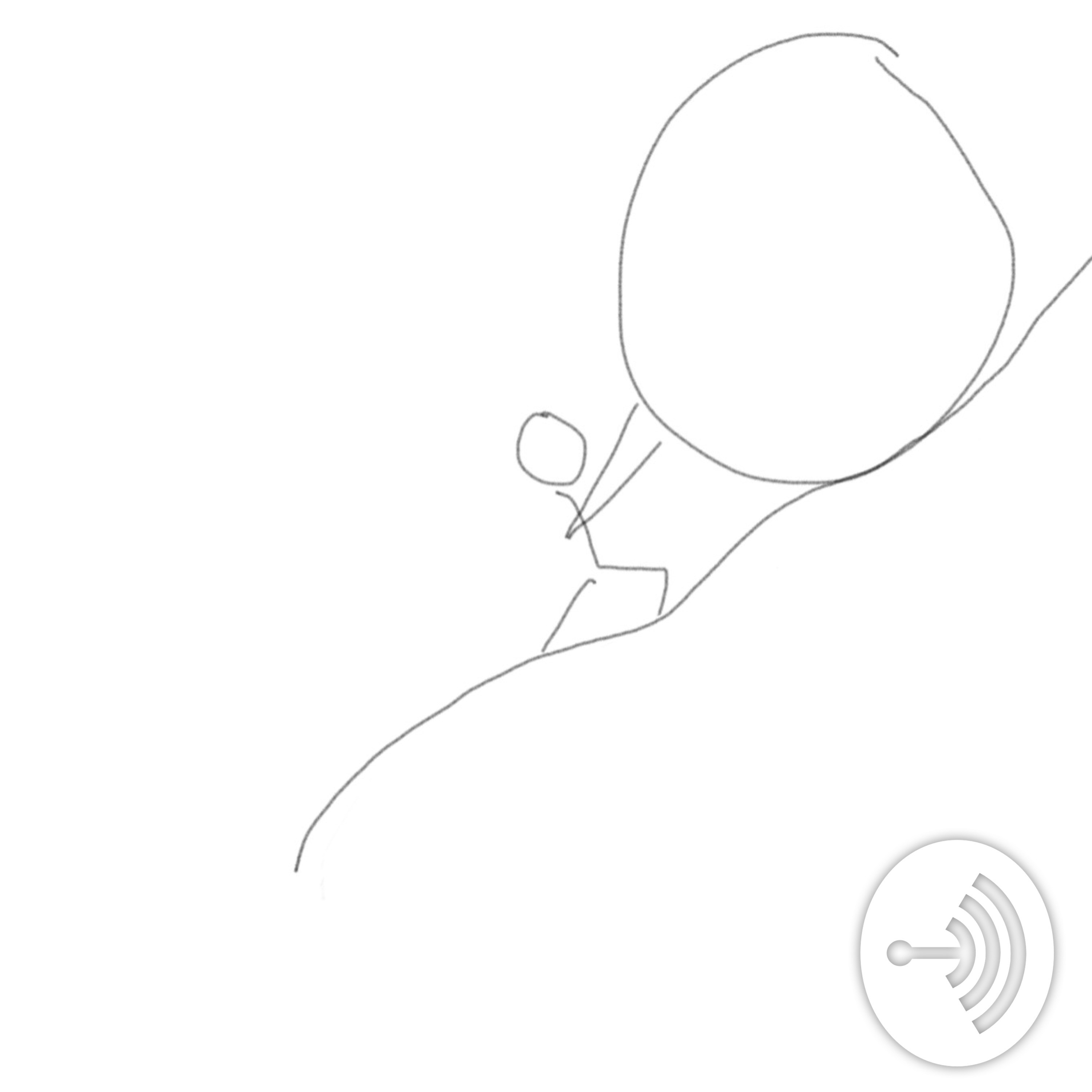
Speaker 1So, memento mori again, remember death, we can remind ourselves of our immortality, and as we've already established, the aim of this is to cultivate the art of living, which is to say, to cultivate virtuous souls. So, Socrates, in the famous Platonic dialogue, The Apology, which I share an excerpt of that with you on canvas, establishes that we should not fear death, and he explains why. He was just condemned to death, essentially, a little bit of a broad stroke here, for practicing philosophy, for going into Athens, as I already remarked upon, and encouraging people to care for their souls by asking them questions, by encouraging them to consider their thoughts, their beliefs, their actions, and he was condemned to death for this. The accusations primarily were that he was corrupting the youth, and that he was inventing gods. Corrupting the youth, of course, because Socrates had a following, that people would observe him, people would engage with him. He was popular in ancient Athens. We won't get into the potential political implications of that, because it's sort of outside the purview of this class, but we might think about the second condemnation or accusation, right, that eventually became a conviction. That he was inventing gods. Now, I like to interpret this in the following way. If we could argue for a moment that what we pay the most attention to are the things that we, in a sense, worship, he is guilty of that charge. If a society is worshiping fame, wealth, status, and instead someone comes along and says, hey, why don't you worship truth? Why don't you worship courage? Why don't you worship wisdom? In a sense, these are secular gods. These are human gods to an extent, right? And I mean that with the utmost respect to the fact that Socrates is literally answering what he believes to be a call from a divine god, right? So he's asking people to shift their attention, to shift their gaze, and for this he is accused and eventually condemned and convicted and sentenced to death. The section or the excerpt I share with you all on Canvas. It's his response to that conviction. And what he ultimately says is, I'm not too worried about it. What he ultimately says is, death is nothing to fear. What he truly fears is compromising his soul, compromising his virtue. What he truly fears is going against what he believes to be his calling, his vocation from the higher power that he received from the Oracle of Delphi to encourage people through philosophy as the art of living to care for themselves. Through his famous dialogue method, to engage with themselves. Questions make us reflect. Questions make us dive into ourselves. And that's what he was doing. Even when he was convicted and condemned to death, he literally was like, you know what? I'll keep doing this in Hades. And he says, I don't fear death. I don't know what's going to happen. He says it's going to be one of two things. Either A, it's Hades. Everyone there is going to be pretty interesting. He kind of even insults the Athenians who convicted him. He's like, they'll probably be more interesting than you guys. Whoever I'm going to meet in Hades. There's legends down there from Greek mythology, right? From Greek culture. Achilles. Homer, right? I'll talk to them. I'm still going to do this. Even if I die and that's option A happens, I'll be in Hades doing the same thing you just killed me for. Okay. Or option B, basically death is nothing. It's a long rest. That sounds kind of pleasant. So he's not afraid of this. Okay. Socrates as a philosopher, and we could say philosophy in general, thrives and aims to cultivate or cultivates actively wonder. Socrates famously said, all I know is I know nothing. And he was kind of comfortable with that, obviously. Right? So the idea with like the Socratic view of death is that it's nothing to be feared. And that recurs over and over. Again, throughout philosophy, the Stoics and the Epicureans, two schools we're going to focus on. We have been already, right? Echo that point. We have to get rid of the fear of death. Socrates in his apology, which, you know, that's not a great name. It's more like his defense, right? Literally. Oh, you're convicting me to death. Okay. Well, he at the end says, as I hopefully, you know, hopefully you make time to read this. Right? He at the end, he tells the people of Athens, well, look, I'm going to go die tomorrow. You're going to keep living. Which one of us is better off? Who knows? So think about this addressing of the people of Athens, but also he's addressing the idea of death. He would rather, once again, maintain himself, maintain his integrity as Socrates, as a philosopher. And when we get into the next dialogue, which is not featured in our work together, Crito, his friends come save him. He's in the prison cell and they're like, look, we can get you out of here. We can take you to another city. We have all the resources. We paid off the guards, this and that. And he stays. He spends the last moments of his life arguing with his, one of his best friends and with his other friends there too, as to why he should stay. He says, they have wronged me. Yes. I will not return that wrong. With another wrong. Because when we think about it, right, he will go against what he said in the apology as well. He said, to me, it is true that death is nothing to fear. Well, if I run away now, I prove myself incorrect. I don't live by my philosophy. That's a problem. And not only that, but I undermine the philosophy itself. If I say death is nothing to fear and I run away from death, I am fearing death. So a philosopher, we could say, I am fearing death. until his last breath. And as I said, that last breath echoes, right? In the book, which again, we'll refer to a little bit more, a handbook for new Stoics, Massimo Piucci really nicely characterizes a couple ideas from Seneca, a Stoic philosopher, right? Which highlight the sort of Socratic spirit in terms of how we should view death. Seneca, in one of his letters to his friend, Lucilius, says the following, or wrote the following. My counsel to you is this, and it is a cure, not merely of this disease of yours, but of your whole life. Despise death. There is no sorrow in the world when we have escaped from the fear of death. And then Piucci elaborates, further to achieving peace of mind, Seneca claims that a benefit of this thinking is a clear path for virtue. And then back to Seneca here. For the mind will never rise to virtue if it believes that death is an evil, but it will so rise if it holds that death is a matter of indifference. Now, once again, let's unpack this. For the Stoics, as I said, we need to figure out what we can control and what we cannot control. And we have to shift our focus accordingly to those things that are under our control if we want to lead a flourishing life. As I had with the Dermot Kennedy quote, right? In love and death, we don't decide. If we are choosing to live, and again, we acknowledge that life is fragile, but if we choose to live, death is largely out of our control. If we decide for ourselves, I'm going to continue in this life, which of course is what the Stoics, Socrates, among others, wanted us to decide. And then we use that to pursue virtue, right, to pursue a good life. Death really is out of our control. We may get sick. As I said earlier, we may have an accident, right? We may die of old age and the cause will, you know, we can't predict the cause quite clearly, right? So ultimately, if we can create a relationship to this fact of life, where it's an indifferent because it's out of our control, then it can become something that inspires us. Because what Socrates did, among other things with this example, was he was saying, I will not sacrifice my soul, my virtue, which is believed to be eternal. I will not do something I deliberately know to be false. And of course, this is a very extreme example. He's being convicted and condemned to death. So let's keep that in mind, of course. But we might think for ourselves, even when we, you know, we remark upon the simple practice of fasting, right? The virtue we're cultivating, perhaps, we might argue with fasting, is discipline. But the virtue we're cultivating is internal strength, the ability to engage in a dialogue with ourselves, where our mind, our soul, right? We could say, subjugates or is in control or is in governance of our body. We talked about this when we defined the soul, right? The soul is the thing we want to cultivate the most. Of course, cultivate a body. Socrates famously said, right? I'm not saying it's verbatim, but he said, "It's a shame to not see how strong your body could be." He himself was in the military. Right? So it's not that we ignore the body, but it's that the soul comes first. Socrates sets that example of the soul being the first priority. Right? And then Seneca, as we're saying here, in addition to what Socrates is saying, and this is something the Epicureans also agreed with, among other Stoics, Marcus Aurelius, as we'll see, spends much of the meditations trying to convince himself not to fear death. He's like, look, a lot of people have died before you. The world continues. He even lists people. It's a natural part of life. We have to make peace with it. And in making peace, we get rid of some fear. We prioritize, again, our virtue, a good life. And we don't stress so much about how long life will be. Now, of course, I think practically, it might not be the case for many of us that we think about that necessarily. Right? My grandmother now, God bless, is 92. I saw her yesterday. One of the things she said recently to me is that, you know, every day she wakes up now feels like a gift. That's a very philosophical thing to say. And it's a beautiful thing to say. And it's something that the reading from Pierre Hodeau, which I'll do a little lecture on as well, but it's certainly going to be shared with you on Canvas, he mentions that exact idea. Every day could feel like an unexpected gift if we keep in our minds that death is possible, or that death is inevitable, but it's imminent, which is to say, could happen. And that instead of allowing that to frighten us, we understand, as Seneca is suggesting, as Socrates is suggesting, we don't know. And either way, it's out of our control, so we have to learn to be indifferent to it. And not only do we have to, but we can. As Socrates is saying, it's either an afterlife in Hades, I'll enjoy that, or it's a long, long sleep. When we think about among many other things, right, among the many other, I think, wonderful things that a religious practice could potentially offer, it's this idea that we have to have, or we benefit from having, let's say, some idea about what the afterlife might be. But you never hear someone say I'm a person of certainty. They say I'm a person of faith, right? Faith involves wonder. I even think faith involves doubt. And that's not a bad thing. It takes courage, wisdom, and really, I think, in some sense, philosophy, to deal with the wonder and the doubt that involves being, you know, that is involved with being a person of faith. So, you know, similar to the Socratic, or let's say the Socratic stance towards death, and Seneca, once again, echoes that point. Epictetus too echoes that point. Once again, on canvas, we have the handout. When we read the Incaridian, he's telling us it's not death itself that scares you. It's your idea about death. He literally references Socrates. He's like, if death was so bad, it would have scared Socrates. Socrates was very intelligent. So if we learn to situate ourselves and visit the idea, and have it instead of frighten us, inspire us. If we can get rid of some of these fears by understanding it's out of our control, by understanding that our own deaths, we don't experience, because once you're dead, you're dead. It's either a move into a different life, right? We could think about some religions who offer, I think, various and wonderful examples of what might happen, or we can go with the other things, because again, that would be sort of Socrates' notion of Hades, right? The afterlife. In ancient Greek society, there was no heaven and hell. Everybody went to one place, and if you were really bad, you got punishments, right? Like Sisyphus, or Tantalus. Sisyphus is very popular. That's rolling the rock, right? But Tantalus is a little less popular, also terrifying. Basically, he was constantly hungry, and the gods would put like a branch with a piece of fruit close enough that he could see it, and when he reached for it, they would pull it away just so he missed it forever. The Greeks loved a good eternal punishment, right? Just forever. So that being said, everyone went to one place. So it's either an afterlife for him, or it's a sleep. And he was unsure, but he wasn't afraid of being unsure. So there's another sort of philosophical point to grapple with here, which is maybe memento mori and cultivating a non-fearful relationship to death also makes us more comfortable with the unknown. And guess what? That's super useful, because most of life is unknown. Socrates is this figure. If we can grapple with the unknown of death, we learn how to grapple with the unknowns of life. That'll decrease anxiety. That'll decrease stress. It'll help us live more in the moment. So death is nothing, let's say, to be feared. And I say that because I think a lot of these philosophies focus so much on this. Pierre Hadot in "Philosophy as a Way of Life" has a whole section about learning to die, and he says that philosophy, when we look at certain Socratic dialogues like Phaedo, is a training for death. Because we're supposed to, once again, subjugate this bodily existence we have to the maintenance and the attentiveness to our souls. The material world is going to be gone. That kind of cliche, or let's say that saying, right? You can't take any of this with you. But we focus on all these things we can't take with us, at the expense of focusing on our souls, which is what really matters, which is what really will create the quality of our lives, and which will really be the thing that, let's say, shapes the way we influence others. Which, again, is really what matters. The famous Athenian speaker and politician Pericles said, right, "What we leave behind in life is not. " Ah, I messed this up. "What we leave behind in life is not what is engraved in stone statues, but instead is what is woven into the lives of others." That's a soul conversation. Because, again, you could have the fame, and you could use it to weave goodness, and truth, and wisdom, and care, and love into other people's lives, or the opposite. So the fame is the worldly thing. That's not the thing. The thing is the soul with the fame. Or even this, again, we're all famous to some extent, everyone knows somebody, right? We're all known, we're all popular to some degree. The soul has to be the most important thing. The worldly, once again, is really, as we are, finite, limited, expendable. But our souls, those are the things that we actually lead our lives to. Those are the things that leave the world different as a result of our presence in it. So we have to be willing to see death, again, not as an evil, not as something to fear, but as something that is natural. Something that, again, if we make the right choice, right, to live a meaningful life, we might say, as I believe Socrates and the Stoics would encourage us, we need to cultivate that indifference to the fact that it's out of our control. As we should for the Stoics, cultivate indifference to all things out of our control. And indifference, let me try to define that a little bit, right? It doesn't mean we don't notice it. It doesn't mean we don't acknowledge it. It means we cultivate a healthy relationship to it. We don't torture ourselves over what we cannot control. We're able to see, okay, this is outside of my control. I might be able to influence it. And that's, I think, a part of what it means to be a good person, right? We take that risk. But if we and by that I mean, we spend our time, our attention, our energy to influence things, but we should know that influence is different than control. Because if we mix that up, we're going to be disappointed constantly, right? So we worry about the quality of our lives. And by worry, I mean we take action. We pay attention to leading virtuous lives. And the idea, once again, that it's likely the case that, especially, you know, for those of us who are young, I mentioned my grandmother was 92 because the unfortunate reality is the end of her life is closer. Generally, let's say, it is likely the case that the end of her life is closer than the end of my life. So it's more on the forefront of her mind. Now, I do this for a living, so obviously this is on my mind a lot. And I think that's a beautiful thing. But ultimately, a lot of us, especially those of us who are young, let's say, are not actively thinking about when our lives might end. And this is, of course, you know, this whole part of the class is suggesting that you think about it a little bit more. But I also think, to some extent, we feel the impact of knowing that our lives are limited. We are finite. We have expiration dates. When we're nervous about how we spend time in our day-to-day lives, when we're nervous about not having enough time, we wonder will we ever fall in love. We wonder will we ever do the great thing at work or the great thing with our talent that we think we could do. And we're afraid of not getting it done. You being afraid of not getting something done outside of like, maybe even not outside of this, but outside of like a deadline for this class, right? Your general sense of fear, which is so naturally human and can drive us to greatness, needs to be tempered with memento mori. Because it could drive you to greatness, but could also drive you to stress and anxiety and fear. So memento mori and a healthy relationship to death, where we don't fear it, not only helps us relate to time better, which we'll talk about more, but also helps us cultivate virtue. Thank you.
 PodcastTranscript AI