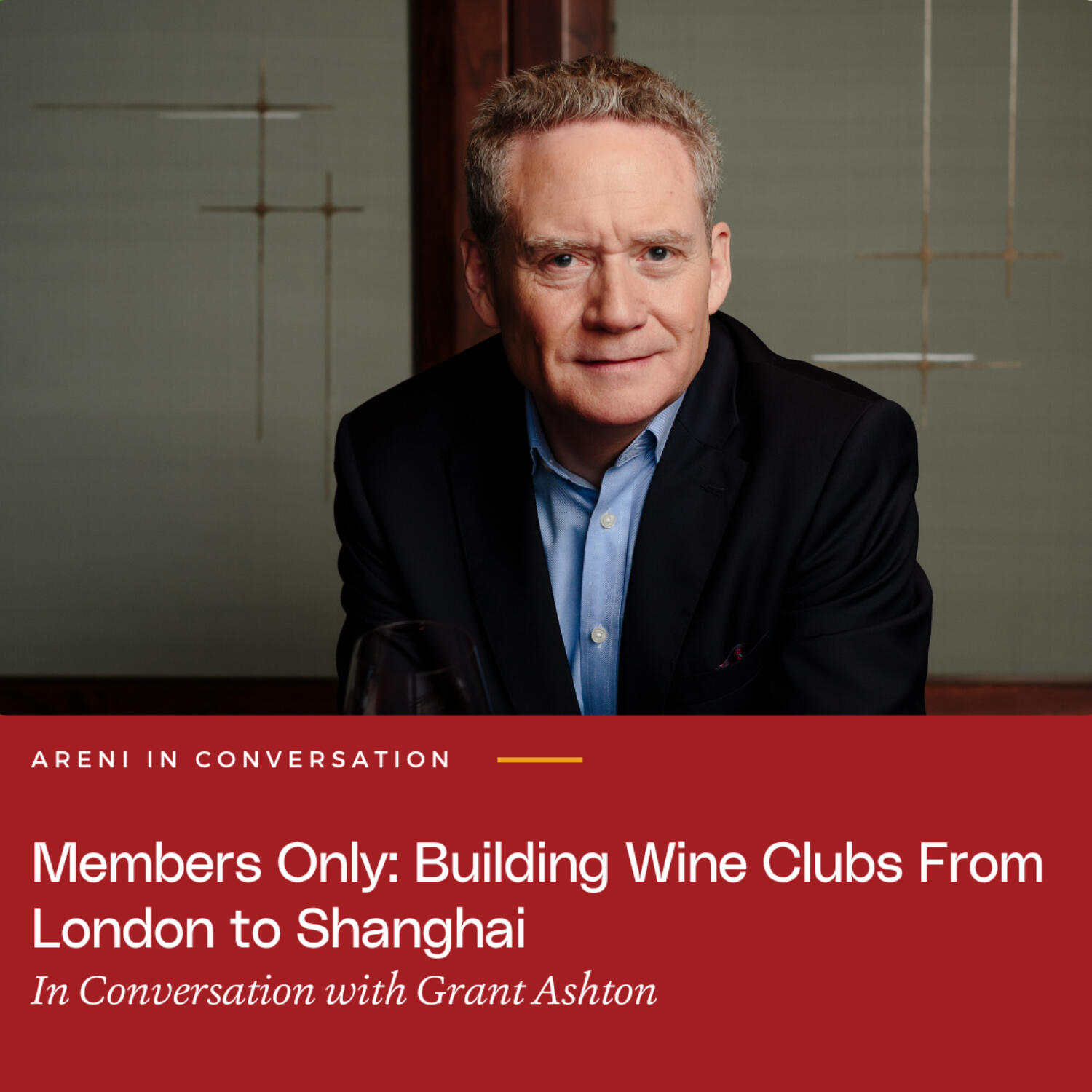
Members Only: Building Wine Clubs From London to Shanghai
57m 11s
67 Palmer is a global private member club network founded by Grant Ashton, originally inspired by the British tradition of elite, exclusive social spaces. The club’s core mission is to make fine wine accessible by using membership fees to subsidize pricing, directly addressing the crisis of rising costs and declining consumer interest. Unlike traditional restaurants, 67 operates as a member-focused environment where social trust, shared passion for wine, and flexible use of space—such as for meetings or personal enjoyment—create strong value. As the world’s wine market faces challenges from high prices, supply chain opacity, and aging demographics, 67 adapts by localizing its model to each city’s culture, from Singapore’s Chinese heritage to Bordeaux’s wine tourism. Clubs are designed with high member retention through personalized experiences, food innovation (including Michelin-star collaborations), and events, while actively recruiting younger, more diverse consumers through discounted entry and engagement programs. The model highlights a fundamental shift: wineries must move away from long-term, unapproachable aging wines and instead focus on drinkability, affordability, and consumer accessibility. Ultimately, 67 exemplifies a future for fine wine—one built on inclusivity, trust, and a deep understanding of modern consumer behavior, ensuring that the passion for fine wine survives in a changing world.
Welcome to the Erine Global in Conversation Podcast, where we talk about the future of FineWine.
I am Paulin Vigard, Director of Erine Global, and in the series we bring you conversation
with some of the most interesting and influential figures in and around the world of FineWine.
To talk about how the world is changing, how these changes impact the production, distribution
and consumption of FineWine, and how that creates risks to be managed, an opportunity to be seized.
The origins of private member clubs in the UK are deeply tied to the emergence of modern
urban elite culture in 19th century London. The most elite and politically connected groups
wanted something more controlled and exclusive than even the city's politically charged
coffee houses. Some were to discuss politics and manage social status away from public view.
So informal circles became formal memberships. At their core, clubs solved a very modern
problem. How do influential people create trusted space away from the state and the crowd?
Britain's empire, financial markets and parliamentary system all operated partly through this informal
networks. The Carlton Club, for instance, wasn't just a place to socialise, it was effectively
the birthplace of the Conservative Party. I didn't know anything about private member
club before arriving in London ten years ago, so when I had the opportunity to join 67
per mile, I jumped up the chance to study Britishness up close, while still feeling somehow at home,
since 67 years after all dedicated to wine. I've spent many hours there since, using it
as a second office, and my go-to whenever I have meetings in central London. Over the
years, I've watched a concept evolve and grow well beyond its London's walls. First in
Verbje in Switzerland, then Singapore and Hong Kong, and soon Bordeaux, Bun, Shanghai,
and Melbourne. 67 was also one of our partners for our later study, the new fine wine consumers,
how under 40s find their way into fine wine, and part of our results were collected thanks
to their team across the world. That same closed-door model built on trust and exclusivity is now
being tested against a very different generation of drinkers, ones who didn't grow up with
the same relationship to status, scarcity of fine wine itself. So it's with great pleasure
that I welcome Grant Ashton today, the tiredless founder and CEO of 67, to talk about the origins
of the club, his vision for success, and his views on the future of fine wine and its
next generation of consumers. Grant, thank you so much for sitting down
with me today. First question first, can you tell us about who you are and the role that
you play in the fine wine ecosystem? My name is Grant Ashton, I'm the founder and chief executive
of 67 Palmer. I fell into wine, as so many people do, after a first career which was as
an investment banker, so I ran the credit trading departments of various big banks like
Salomon Brothers and UBS. Mainly whilst I was a Barclay's capital, I and a bunch of my
friends started buying wine and appreciating wine. We collected a lot of wine, we ended
up the siding that the best way to lose some of the collection. We ran up huge amounts
of wine, was either to open a wine bar or to open a bottle shop or make frankly to sell
some of it, some of the wine merchants. Selling to a wine merchant will cost you 10, 20,
30%, if you can sell it at all. Bottleshops, it's a tough business, low margin. So we decided
to try and open a wine bar, not to the one we're sitting in here in Hong Kong and couldn't
find the right place, couldn't find it. Were you looking in London at the time?
We were looking, I started looking in Marolabone. So I basically wanted to sell through some
of my collection, so I and four friends tried to open a wine bar, you know, very small
wine bar in Marolabone, couldn't find the perfect location. Found this big old bank building
in Palma, number 67, and tried to open a very wine centric restaurant. That was the original
plan. However, the local planning and licensing authorities in Westminster in London said
no. Because the club is very close to the palace. So clubland, if you go back to the 1860s
and '70s, the London clubs were male only, and they were very much set up. A lot of them
around specialist interests. So you still have in London the Fly Fishers Club or the Farmers
Club or the Royal Aussamobile Club. You'd have the Royal Aeronautical Society. You'd have
all sorts of clubs that were set up either as social clubs, so you'd have whites or
drugs or prats or any number of clubs that were just social clubs. So I'm political as
well. So I'm going to do the Carlton or the National Liberal, which, you know, still
exist. And they too evolved over that period of time. Now they used to be, I think I'm
right as saying, 18200 clubs in London if you go back 150 years, 160 years. Most of them
died out, and they were, the function they performed was if you were a landowner, if you
were a gentleman in London, you kind of needed something to do. You had an income from
your land or your property or states, and they kind of needed something to do all day.
Yeah. This would be the late, right? That after the war, and obviously, you know, the
war had a pretty leveling effect on killing tens of thousands of young men. So the clubs
after the war, after the Great War were much, much reduced in terms of the number of people
who wanted to go to those clubs. And generally, things changed. So clubs in London, certainly,
went through a very poor phase in the, after the Second World War, in the 50s, 60s, 70s,
most of them merged or closed. So you had a huge amount of clubs that closed down. And
I think I'm right in saying that we, in opening a club, which is what the authorities finally
let us do. They said, you must open a club if you want to use this space. The light you
couldn't have a license for a restaurant unless it was part of a club. Specifically for
a club. So they specifically wanted to have in club land. They specifically wanted
to have a member's club and not open up more and more and more restaurants. And that's
the curiosity. Do you know why the Westminster kind of borrow? What's that like? What's the
benefit to them? It was a zoning issue. So you essentially, in the West End of London,
you have the kind of central economic activity area, I think it's called, which is around
Lester Square, around Mayfair, around that area, slightly north of where we are, is absolutely
saturated with food and beverage establishments. And essentially the growth, and you see that
we see this in other cities, you see this in Bordeaux and you see this in other in Tokyo,
for example, all the cities we are involved in doing things. The authorities are very
keen not just to have kind of sprawling mass of food and beverage everywhere. We see it
all over the world. So planning where you're going to go and what you're going to do in
a certain place. Typically a local authority doesn't want big hospitality in the middle
of a residential area. We've seen this in Melbourne, for example, where the authorities
turned down another club for doing a club in an area that was too residential, for example.
And that's the genesis of 67 very much was not being able to be arrested.
Yeah, the genesis was not a mistake, something that you had to do for licensing reason.
You didn't have the idea of, oh, we're going to do a club because, you know,
I'm not that right. I'm not that clever. I wish I were. No, I mean, I think the round to you is the
way clubs work and why they work. You basically have two types, two strict three types of club.
You can split them into being a socialized club. Are you joined? You pay a fee. You own part
of that club. You never really own it, but the members of the club own the club.
And the other type of dub is. proprietary club. So I, as the proprietary tour, I'll put the risk catalep, myself and my shareholders.
We will start a club and it's run for profit. So there's a socialized club, it's owned by the
members, not a profit. Some sort of cooperative of people getting together. And that for all the clubs used
to be, they used to be proprietary clubs. Now you have project clubs. And the other, the second
delineation, if you like, is proprietary clubs are either purely social clubs. So there's no unifying
factor to why you'd be a member of that club per site. And then you have specialist clubs. So you
make a strong case that the arts club in London and Dubai is sent around the arts. You'd say,
Season Vile is sent to around fine wine. You'd look at, as we talked about earlier, the Royal
Automobile Club or the Fly Fishers Club. Those are the clubs that are sent at around a common
thread, a common activity amongst the members. We are proprietary specialist use club. We all
love wine. And we bring together wine lovers, which I believe now, I would say that wouldn't
I, that it's a much stronger, more cohesive type of club because we have something as members of
the club. And I am a member of my own club that we're all interested in. We're all interested in
fine wine, which is why we join. Now, clearly within that club, we have restaurants, we have bars,
we have terraces, we have, in some places, we have a smokey room, we're smokers, good girls,
smoke, we have whisky in. Roof terraces, yeah. We have a bidule bar in Shanghai coming. We have
all sorts of activities within that club, but the core of what we do is fine wine.
So I mean, you, thank you for that long explanation and the, I mean, the history, the back story of
the club. If, I mean, what's the, I don't know, the elevator speech of 67 to present the club to
someone that has never heard, who's not British? So it doesn't know what a private member club is.
And who doesn't know 67? What's your way of presenting it in, you know, in a nutshell. Sixty-seven
formal is a club. It has a membership fee. We use a large element of that membership fee to subsidise
the pricing of wine, because one of the key issues you have in the fine wine market is in the last
20-something years that I've been buying wine. The pricing has increased exponentially, and that's
been a major barrier to entry or major barrier to people wanting to enjoy fine wine, because
it becomes, some of it is a pricing decision, you know, wine is a consumable.
At the end of the day, if I spend $400 on a pair of trainers, I will have a pair of trainers for
the next two, three years until they wear out. If I spend $400 on a bottle of wine, it is gone tonight.
Now, I will derive great pleasure from both, but my cost per use of my trainers is probably a dollar.
My cost per use of that bottle of wine is $400. So it's a very different decision. And
in relative terms, and I'm sure the report will say this as well, the absolute pricing of wine
in the last 20 years has outstripped inflation. It's certainly outstripped the demand, frankly,
because part of the reason there are going to be really dramatic for a second, why is there a crisis
in fine wine? Because pricing has outstripped demand, pricing has outstripped incomes,
and ultimately there's a very important reset needed. And by reset, there's multiple ways,
in which you can look at that reset, is it partly it's looking at the changes in demographics,
the changes in the consumer, which obviously your report goes into a lot, but also just in terms of
price. A cost of production of bottle of wine has probably doubled in the last 15 years.
It hasn't quintupled, it hasn't sex-tupled. Thus, when you have the current situation where
there is a lack of demand for fine wine, and the number of consumers is going down,
the price point of which they're consuming in this current market, this current 2026
market is lower. That's a real crisis, that's a real problem. So going back to your business model,
you have the membership fees that you pay your fee to join. That's the biggest share of your
revenue in the model. Membership fees are a large piece of the revenue model. F&B income is
high, but no in near as high as a standard restaurant. A standard restaurant you need to be making
a 70% gross profit on food and beverage. That's how it works. If you make 16, you go bust. If you
make 80, you're making a lot of money, but ultimately other people will come into your space,
and that you'll get driven down in terms of that margin. We get to somewhere 70+
by having a much lower margin on F&B and making up the extra percentage to rum. What is an F&B
operation? Very big restaurant, very big F&B operation, but ultimately if you think about a member's
club as being a very large restaurant with a lot of private rooms, lots of bars, and a big
private events program, and concierge services, and all the other bits and pieces that clubs do.
That's what a club is. As I say, it is centered around one thing, centered around wine. It brings
together within any city we are in. It brings together the 1,000, 2,000 up to 5,000 people who live
in that city that, number one, have the economic ability to buy a membership of a club and to buy
fine wine, but also who wish to indulge their passion, indulge their interest in a common
unit all the way. Lots of people that love fine wine have plenty of money to buy fine wine.
They drink it at home. And then you have me as well that also uses the space as my office when I'm
in central London, because that's what a club does as well is that it offers you a space.
When you have to organize a meeting in London, you don't have to wander for half an hour
away. You are going to organize the meeting. If you need to book a table, you always know you
will have your spot at 67. So you mention the different cities, just for people who wouldn't know
you and you started in London. When I arrive more or less, thank you for opening it for me,
so something like a bit more than 10 years ago in London. And I must tell you there's been so
informative for me just to sit at 67 and look at the British people. That was just amazing.
It was just my sociological research and then the, you know, do you think of these British people?
I mean, it's just a different, you know, how you have different capital, right? And one is your
financial capital, the social capital, so the way people interact slightly different, the French
people. And then even the cultural code or maybe the more different, like some sort of, how can I
describe it? Warm distance, if that makes sense. And also trying to understand British humor,
that I still sometimes can't get 100% at this. I'm not always sure. For example, when you're joking
or not, it's a very dry sarcasm. Yes. Now I sort of get it, but sometimes I'm like, I'm not sure.
I think what you're saying is correct. So I think there is clubs work very well in
ex-British countries, ex-British commonwealth countries because the concept of a club has been
exported in the 19th century, the 20th century to other places. In France, there is actually
now a growing club culture, but it has taken a lot of explanation. In fact, I could give you an
example. I was in Burgundy and explaining to a, in French, I won't do this in French, to somebody
about a club, and they said, what is this club? I said, well, it's got a bars and restaurants
and private rooms. Oh, it's a restaurant, but you know, not really, but because we know there's
a subscription. Why would I pay to be a member of a restaurant? Why would I pay to pay for food?
It's, yeah. And that was, that wasn't really interesting. And then I said, well, it's more like a
circle. It's a circle of friends. It's a secret circle. I'm like, no, it's not really that only though.
It isn't that way. So you end up with this kind of stuff. It's like a moussonics. Exactly.
It's not only that so if any of the day it brings together people
and what you were saying a couple of minutes ago, the world has changed. Even pre-COVID,
we were seeing people getting out of their offices, not beings. I worked in a bank for 25 years.
I sat behind a Bloomberg terminal on the register screen for 25 years. I didn't go out much.
I had to sit there and watch the market. That's what I did. People now, it's all on their phone.
So people are sitting in, and we go back 10, 15, 20 years. People were going to Starbucks.
They were sitting in Costa Cofi. They were sitting and having their meetings in coffee shops.
And that's where you've seen the big rise in clubs is, actually, if I have an important client,
if I've got even a business meeting I want to do. I probably want to do it over a nice,
a nice glass of wine or over a nice cup of coffee out of a nice cup, not out of a paper cup.
So to a great degree, what you've seen, especially post-COVID, is this idea of work,
home, and this third space, which is outside of the home, outside of the office, where people are
doing a lot of business. They're socializing. And that's the part of the role that clubs in general
terms perform. Because at four in the afternoon, there is no restaurant that wants to see you.
Yes. They want you gone. You've got to be out of there.
And sometimes you just want a cup of coffee and you stay for two hours. So in terms of,
you know, we're having you that you bring to the place to stay in the place.
On the beers, I don't mind. You can sit in 67-Bell Mal in any location and you can come in at
seven or eight in the morning and have breakfast or you can sit there and drink the free water
all day until midnight, one o'clock, two o'clock. And if you sit and drink free water all day.
That's fine. That's fine by me. Because you've paid a membership fee. I have
created this environment for people to use. And ultimately, yes, you will probably spend
some money on food and beverage or you go to an event or you do any of the number of the other
revenue streams that we would have. But ultimately, this sense of a space you can use whenever
you want to use it. No one's going to ush you out and say, can you leave now because we need to set
the tables for dinner. They will set the tables for dinner around you if you're in the dining room.
You just have to close your computer at 6 p.m. Which is a very good role. That's the role.
That's the role. But I guess what was also different between, you know, France and the UK,
not going to too many clichés, but it's just also the way the power is organized and how
is the elite group. And my understanding is that in the UK, the trade, people that were not
governmental members also had power and also organized it. I know you had private companies
that ruled the world for a few hundred years. And I guess they needed that space to organize that
and to have that place where in France, actually, I don't think we've organized the people who had
power. I didn't use those ones. It was more like dinners and things, but they didn't have that
dedicated space for this. The way London is organized with countryside house and people that came
into the city and needed a place to stay. I mean, there's no different reasons. I asked actually
chat GPT a definition of what 67 is. I asked it. I called him, but, you know, and it gave me the
following definition. 67.0 is not just a wine venue. It is part of a very old British tradition
using private space to organize social trust, cultural identity, and elite networks around a shared
world view. How fair do you think this definition is? It's very good. I mean, Blamey, I should
discuss the other cause of the problems of the world of wine is a lot of people who would
normally write that sort of copy. You know, we will find a situation very, very quickly where
lots of entry-level jobs writing that sort of copy. Well, yeah, that's very, very good job.
And that's actually goes partly to the core problem that my mind will have, you know,
trainee management positions doing that sort of work. I use AI all the time. I design
clubs. I could show you some of my projects that we're working on. It's all done on AI. So at the
end of the day, that means I need less people. That means I hire a lot less in the kind of 20-something
to 30-something range because I can do it myself. I've designed a whole fits out on
aeroplane the other day in four hours. So if that definition is somehow correct, and anyway,
67, as you've said, derived from that great British tradition of private member clubs.
And you are, where I was leading to earlier, is that you are now in loads of different locations because
you've got Verbians, Switzerland, you've got Singapore, Bordeaux is opening this year, Shanghai
will have been this year. You have born in the pipeline, and I'm sure you've got other project.
Melbourne. Melbourne, how do you adapt when you have something which has the name of its address
in Clubland, in London, in one of the most defined cultural code? How do you take that and
adapt it to different locations that don't have that culture? It's a challenge. I mean, it goes
absolutely. This is not a British club that we put into Shanghai. It is a Shanganese Chinese club,
which has a core of this service culture, of the core of fine wine in it. It's very much a Chinese
club. Our club we're looking at doing in Tokyo will be a Japanese club. The Australian clubs we're
looking at are in the Melbourne, we're opening, is a Melbourneian club. So how do you get to that
67 being a Japanese club? Is that in the partners that you bring in from capital to team or the
team will be Japanese? The team or in the main, the funding partners will be local. The membership
and the shareholders will be local. That's already the case. Every time you open a new club,
you have shareholders that are local. You open it to the local shareholders, right?
Because ultimately, opening a Hong Kong here would be an absolute classic example. We opened in Singapore
rather than opening in Hong Kong. That was the decision we made on economic reasons. But if we'd
open an expat club here, focusing on expats in Hong Kong, we would have gone bust. Because obviously
there's not very many expats today. The number is 438,000 expats left Hong Kong during COVID,
and many, many, many of them, most of them have not returned. So ultimately,
if you rely on an expat community that by definition is more mobile and often is on assignment
for a year or two or five, they often will go home. We are very much in Singapore as a good example.
We are 70% permanent residents of Singapore, like I'm as permanent resident of Singapore,
or citizens of Singapore. Because the citizens will never really leave. That's where they live.
So ultimately building a club that is very, very localized to its city, its identity. If you'd
go into the Singapore club, it's very much rooted in the kind of Chinese heritage, the Parallican
heritage in terms of its design in terms of the menu or the food we have on the list. Now,
the wine is international. There's no vineyard in Singapore. But ultimately, we localize all of our
clubs too. Business model as well. Do you have different business models? I mean, you must have
because Verbier and Bordeaux, for example, they will have a space which is open for non-members.
Yes, absolutely. Verbier now is actually only private. We don't let it get in. We did that to start
with. Bordeaux will have a public-facing element to it. Bones as well. We'll have a public-facing
element to it. That's partly because Bone is much more seasonal. And actually, so is Bordeaux
to a great degree. But ultimately, you have five, six million tourists a year in Bordeaux, and
hesitate to say it. You don't go to Bordeaux for the beach. You're not going to Bordeaux,
particularly for the architecture. You're not going there for the arts and culture, necessarily,
not that they exist. You're there for the wine. So ultimately, there's a huge tourist market that
goes to Bordeaux for wine. So actually, having a place with the biggest wine list, we will have five,
six thousand lines of wine in Bordeaux, there will be a thousand wines by the glass. And people
are in Bordeaux. They're there. It's wine country. That's why we are in a city like that, which is
smaller than we would normally do. That's quite a small city for us. Bone is even smaller.
Absolutely. But it's the same thing, right? There are two million tourists a year to go.
And it gives us the opportunity to have local wine makers as our shareholders. In those cities,
bone and in bone bordeaux. It gives us an extra layer to the events and the relationships
that we have in the world of wine because we're owned by the shuttle. Yeah, owned by the domain.
Actually, I'm jumping really back because at the beginning you said you wanted to open a wine
bar because you had so much wine yourself. How much of the wine that you sell at 67 today
is still part of your own collection. Zero ice foam. I sold the whole lot to the club
or rather I didn't. I sold my collection to a merchant in the end annoyingly in order to finance
opening the cup. In fact, I didn't I think I either owe you a few. So I'm not drinking your own
new election and I'm going to the clout today. I think there are three titles of Romany Conti
that I should do. I sold to the business and put into onto the list and various of
the shareholders in the business did supporters with putting wine into the business as I was.
I personally sold my collection out because fun enough builders do not want to get paid in wine
that'd rather be paid in hard cash. Weirdly. Hey listeners, just interrupting the conversation
for a few seconds. First, to let you know how grateful we are that you are listening to this episode.
Thank you so much. And also to kindly ask you to subscribe to our podcast channel on whatever platform
you are listening this episode on and to give us a cool rating. It's such an easy way to support
us and it really makes all the difference. Thank you. Now back to our conversation.
All right, so one question that I had is what what we've understood what you explained really
well is that a club is many things because of course you've got the membership fee which also
means that you need to create members benefit in order to attract and retain them. You have the FNB
part like any or normal restaurants with the bar with the restaurants. You have the hiring space,
the event. What part of that business is the most complicated today?
The two most complicated bits are the members and the food. How so? Because
as long as you have great simile and you have good promos wine,
the wine is a packaged product. So I'll answer this in a few ways.
We only buy wine either directly from the shuttle who often are our shareholders. We never
buy from auctions, ever, ever, ever, ever, ever. We make sure the distribution chain that we buy
from is absolutely trusted. So especially somewhere like here in Hong Kong where
and in China where the market in fakes is very, very well known, the wines of Mr. Corranoana still
rattling around the system. We would only ever buy from the big distributors. That provenance is
absolutely key to what we do. Not that complicated to do correct. And ultimately if I've got
good wine that's been stored in the correct conditions and it comes directly from shuttle
and it's not been sitting on top of the radiator and aunties' back living room for two years,
that business is actually relatively easy to deliver. Food, on the other hand, is very annoying.
There are many different ways to serve food or chefs. I would never cast a spurn on me
the chefs. I've been happy with the chef. But sometimes difficult to maintain and the turnover
in chefs can be complicated and that's sometimes the challenge. They are a specialist,
a specialist type. I mean, there are many different ways to get food wrong.
As you leave a steak on the path or you leave some chips on the path for an extra 10 minutes
by mistake, they go soggy. People will complain. So the delivery of food elements of it
is actually one of the most challenging, making sure that the food in a club rotates enough,
that you've got enough choice, that you've got enough change in the menu. Terribly difficult.
Ultimately, I have people in both Singapore and in London, they will come to the club four
times a week, five times a week. This is their space where they do what they love, which is fine
wine and eating. Also work and take the meetings. So this is where, outside of there, and if you think
about a place like Singapore, or here in Hong Kong, apartments are small. People are not
any more necessarily going to the office. A lot of people work remotely. Actually, working remotely
is a very small apartment here in Hong Kong. That would be depressing. So people come to our
space a lot. If I don't rotate the food and make sure that we have lots of specials, lots of
resident chefs we in Singapore, we have a Michelin star chef will provide the resident chef series,
so we would have a restaurant that will give us a menu to add on to our own menu. The rotates
once a month, so we'd have the most, we've had the most amazing array of one star, two star,
we have this winter, this autumn, we have a three star Michelin restaurant is providing us with
dishes for our menu to excite our members. That is our death in Singapore, three mission stars.
That helps keep the menu current. It means if you're in the club a lot, you don't just see the same
food over and over and over, but that is really cool. You've got to have the Scotch.
You have to have the Scotch. Food and you were saying the members are also the challenging part,
like recruiting them, or what's challenging about members? You have thousands of people that you
must make happy. And ultimately, if you have a bad experience for restaurants, you do not go back,
you'll complain, you may get money refunded, but you won't go back. If I or one of my team has a
situation where a member has a bad experience, they've paid a fee to be there. There's much higher
level of commitment to the individuals to make sure that we are delivering a high quality service
to them all the time. And with over 10,000 members that we're 11 plus thousand members by now,
there's an awful lot of possibilities to get it wrong ultimately. And also, I suppose you want to be,
I mean, as a member, you are engaged way more like it's your club, so you need to be known,
like I guess the personal relationship that you need to maintain is like having 11,000 people
coming to your house and you being the host and having peace, everyone. So yeah,
recruiting more of them, making sure they're happy, making sure that you're changing the experience.
As we've gone along, usually makes them happy is the same thing regardless of where you are in the
world, like the key to succeed with members. Is it the same thing? I think the delivery of good
F&B at the end of the day is a club centered around the beverage piece of F&B is really important.
I think that's making sure that members are engaged in terms of what the club does outside of
the pure gastronomic F&B experience is really important, the events program.
It goes back to what your report talks of, which is how do you engage with people?
For example, here in-- And how do you measure if what you do is successful? So that was going
to be my next question. How do you measure that sort of success? The amount of times they come
is important, the 12th time, four and a bit of work, do they just pop in and rush out? The
tuition rate, we charge annually rather than monthly in all of our clubs now. And managing the
balancing in many ways, the revenue stream from that membership base, which is very, very important
to the overall economics of the club with usability. It's terribly important. The degree to which
you can get a club wrong by having too many members is as bad a problem as having too few members.
Now, you'll make a lot of money if you've got 10,000 members in one location. You're making
a fortune. But actually, the history of success in this space is you have to make it usable.
Do you have like an ideal journey from a member? So, you know, in terms of
IDD, that's when the member will join, that's how they will evolve in terms of journey,
that's how the spending will evolve at the time with us. I would say the key, and this is the
same as the banks. So, what he does, the phrase gets them young. Every single
club. The biggest driver is recruiting younger people, because everybody wakes up one day
older every day. You know, six and a half miles, we've been open for ten and a half years
now. I'm 15 years, 20 years older than when I started this club. So the way I was used
is that we have to be very cognizant that you have to keep refreshing, renewing with younger
people. Now, by definition, the markup on the wine, the actual amount of money you're
going to make from wine is no different, whether I as a late 50s person buys it or somebody
who's 25 buys it. And the same thing for gender, you actually money doesn't have a gender
with a rate of female or a male that spend it, you don't. We spend all of our time seeking
younger, the easier it puts, young female wine loving and solvent for the four things you
need, because ultimately clubs do have a gender bias towards men. As your report states,
the degree to which the industry, the fine wine business loses women out of the interest
cool, if you like, for that asset class wants a lot of work, is incredible. Ladies are
the harder ones to attract in any club, and every single operator will tell you that.
And then it don't spend as much as men sometimes. I am. Do you know how, on average, how
long a member stay with you? I'm not sure you have enough data.
Okay. Yeah, if I'm honest, I mean, Singapore has been open for years, will be a five.
But in London, yeah. London 10. It'd be interesting to see how any of your members from 10 years
it goes used to have today. I mean, everyone. I've still a lot of there are still a lot.
Yes. There are people who will pretty much never leave. And what drags them back is the
low-corkage fees. The fact we let them store their wine on site. We create enough interest
and activity for them that this has become part of their social life. We have had multiple
marriages on the back of seven pound metal. We've married a few of them ourselves. So,
you know, we have a, in London, we have a, that's a cool KPI charm. We do. I mean, I, I
remember introducing one couple and they got married a few years ago. I've been delightfully
happy with being members of 67 pound malt. So, you know, we have a, a venue license as well.
So, literally, I think they got, they've got, they've got married in the club. So, they've
met, they've got married there. And I'm shocked. Oh, I'm okay any further.
No, no, we don't want to know. So, we're talking about the young consumers. And as you, you
were, you mentioned the reports. And, and we worked together. 67 was one of our, not
there when we did the new fine wine consumer report. If we talk about that report and the
result, were there any aspects that surprised you? Were you surprised by the study?
Unfortunately not. So, fortunately to somehow, like, it reinforced what I think I know, which
is that you have to find ways to engage with the younger consumer. Now, pricing helps us
with that. We have a lower membership fee for younger people. So, if you're under 30
years old, you pay half price. That's in order to engage with that young consumer to get
them into the venue and to get them to start to understand, you know, fine wine. Because
the traditional routes to fine wine are changing. And as we've said before, price point makes
a big difference. Just sheer demographics, you know, you look at the replacement rate
and have far below the replacement rate in terms of fertility. The East and the West is.
It's almost crazy. The amount of consumers that we're losing because they're just not
enough, you know, deep population. Yeah. Especially in Asia. I mean, deep, in some, 25% I think
China is going to lose its working age population by 2035. I recall that the fertility rate in
Korea is 0.69 or something, which is a replacement rate is 2.1. So, we're not even one in so many
of the major economies that that will make a big difference in 10, 15, 20 years time.
You've got a whole huge generation of people where it will be an aging population. You'll
have many, many, many less young consumers. So that's something that has to be worked
on really hard. Now, we're lucky in a way because we don't need very many people, very
deliberate. If I look at London, no, we, 4,000 members who look in Singapore with three
and a half thousand members, a typical site that might be 1,500, 1,800 square meters, you
know, it's a few thousand people. And in a city like Shanghai, 22 million. Yeah, you
have a larger pool with people. You don't need that many. But if you are looking at the
wider universe of fine wine, where I seem to recall, there are 1.2 million-ish wineries.
And if you say that the fine wine makes up 2% of that, if that's a lot, yeah, that's
a lot of bottles. Especially in a, in a, with a product that's, by definition, there's
always another vintage coming. Yeah. And the round's here is when you're losing consumers
due to price, when you're losing consumers due to all of the health, discussion around
wine, it's a real challenge. So you talk a lot about the issue of price. But one of the
issues that I see in the world of wine is a growing issue of visibility. So this is going
back to the equation of dreams, right? So you need to be visible by, let's say, a hundred
thousand people in order to be desired by 10,000 and bought by a thousand. And it seems
to me that some of the top wines in the world are less and less visible, like in shops,
on shelves, in restaurant wine list, and in consumer facing events, for example. And
private member clubs, like 67, they, oh, they offer them, right? But behind closed doors.
So to what extent do private member clubs participate in this visibility issue in your
opinion? To flip that round a little bit, you've
got the availability of fine wine. I think you'd be, there's a lack of availability, lack
of name recognition on so many wine lists. And bear in mind, I'm 200 plus days a year outside
of Singapore. And I eat out a lot because I'm in hotels, I'm in an aeroplane, whatever.
The biggest issue though, you know, I, I, for me, none of this is broken. It's just the
wrong price. Ultimately, if you go into a supermarket 20 years ago in France, you would
see all the big names would be there. If you go into a restaurant wine list, anywhere
in the world, you'd see lots of names you would recognize. Now they're not there because
the restaurant cannot afford to hold the stock. Because ultimately, I've said this many,
many, many times, the Robert Parker did a lot of amazing things for wine, but also he changed
wine. And he ended up in a space where we had this, what the French would call the
"pacarisation" divin, the "pacarisation of wine" and you ended up with these wines that were,
and this is, I'm using Bordeaux as my example, but it is very useful. But the reality is is
they created a consumer product you can't actually use. And this is nuts where essentially
you've gone from an early drinking wine that is relatively inexpensive to a, the vendor
guard, the wine you have to keep to guard for a long period of time. Where if I try to
sell you your laptop here, and I said, I'm selling you your laptop, you can't actually
open it for 10 years. And when you open it in 10 years time, half the functions won't
work. But in 5 years after that, you can go back to your laptop and a couple more functions
will work on your laptop. But we are 15 years in. Now in, another 10 years, you're going
to have an amazing laptop. But you're going to have to own this thing for 10 years. And
actually when you, when you use this laptop, you're going to have six or 12 of these laptops
sitting around for 20 years. And when you open it and use it, it's gone. You think about
the, that as a consumer product. It's bonkers. The problem is that when we, we went through
this crazy phase where everything was about the number of points it has. I'm very much,
you know, the same as my good friend, she joined us.
Johnson. So there's a five point scale. Good, better, better, best. There's only five points.
Is it great? Yes, it's five. There's not no need for this. I even saw a thousand point
scale on wines the other day. Why? It cares about the numbers. But the reality is we're
Bordeaux, especially in some other wine regions have done the same thing. They've created
a product which is untouchable for too long a period of time. And when interest rates
were zero, it didn't matter because it didn't really matter. If you left the money in the
bank, you heard nothing. If you bought two cases of X, Y, Z number one, you know, 10 years
later, you could sell one of those cases, knowing the other ones for free. That was what
people used to do with wine, historically. And there's batteries in my UK became what
still is the world centre for trading of wine because there was this culture of buying
two and selling one. But also, this consumer product is crazy. You can't have something
which at the end of the day is a consumable. You can't use. And ultimately, this is the
change we're seeing now as the next generation, the non-parker generation are taking over
you are making wine string younger. And that's the sort of thing that wineries need to
very cold as and off. When you look at what's my alternative, if my UK mortgage will cost
me five or six percent, if you can pound five or six percent for 15 years, you'll need
to have to do the maths. But you'd have to be making at least probably two X, three X
on that wine, just to break even. Because it drives non-use, it drives non-availability,
it drives the fact that restaurants can't afford to buy a case of wine for 2,000 euro
system in for 15 years. So Gwent, what gives you hope? You have to be hopeful, right? You
open that many clubs. The consumer that likes fine wine is there. It is there, but the
reality is the wine market needs to adapt. So give me three ways in which the wine world
should adapt. Like three things you'd be working on if you had a magic one. Okay, easy.
Understand the price at which the wine will go into the hands of consumers. All right,
so start from the consumer facing price. Get the price to a point again when someone
who in their 20s and 30s is prepared to buy it and consume it. Because wine sitting
in a dusty cell or somewhere is irrelevant. And actually there's no visible, you can
talk about visibility. There is no visibility on that. And nobody's buying it anyway.
Ultimately, so looking at the reality is bringing the price to a point where the consumer
wants to buy it is pretty much economics 101. If you're selling a product at the wrong
price and nobody wants to buy it, because that's how we've always done it. Oh, that's
because we have this crazy situation where wineries have got this sudden idea that they
should be making all the money. Ultimately that the consumer is going to buy and sit on
a product for 15 years because we're XYZ. Okay, price. Knowing the consumer. Ultimately,
look at the supply chains that's one of the best performing markets in the world, America.
Very, very simple B2C model. All the big wineries, fine wine wineries know their customer.
They have their list of people who buy their wine every single year. Then exactly who bought
it? That is completely an unathomable to so many layers of negation, of caughtier, of
mind merchants, of distributors in the supply chain for much of the rest of the world. Why
do you not know who your consumer is? Would a car company not want to know? That's why
they have a dealer network. You take your car back to the dealer network and exactly who
you are. They will do the servicing. They will make sure they will sell you the next car
because they'll make sure they give you a great customer service. On the servicing of
your car, you think, "Wow, I'm going to stay with XYZ brand because you know what? I've
always had good service out of this company and I'm going to buy the next car from them."
The wineries dump their wine into the market to effectively middlemen.
All right, so price. One last one. I guess it's kind of, it has
to be an availability. I mean, drinkability of the wine itself. Do not create a consumer
product. The consumer cannot touch for 15 years. That is bonkers. Even a consumer product
you can't drink for five years is basically bonkers. People sometimes despair of me and
say, "Why do you never buy from her? Why are you not laying wine down? Why would you?"
The availability will be there in 10 years, in 20 years. The winery is producing millions
and millions of bottles a year. So ultimately, they have to be in a space where either you
do as someone like Shutterlutter who has the financial ability to release wine when it's
ready or some of the Australian vineyards who do exactly the same thing. They do not release
straightaway or you make a product that drinks in a year or two or three. Ultimately, the
change in the structure of wine, the way I'm going back to that lighter, slurry style
in Bordeaux is a thing of beauty. It's really important that they get their mojo back in
terms of understanding what the consumer wants. Wine that drinks in five years, fine. Get
that. Wine that you can't touch for 20. No point. Because ultimately, unless it's tripled
in price, you might as well wait 20 years and do something else with the money. That
doesn't work. Not for the wineries. Grant, thank you so very much for that conversation
that was fascinating. You're very welcome. Great. Thank you very much indeed.
Thank you for listening to this episode of A Reigny Global in Conversation. A Reigny Global
is a think tank dedicated to the future of fine wine and when we not podcasting, we publishing
reports, white papers, articles and market insights. So if you are interested in the global
conversation around fine wine and what the future holds in terms of production, distribution
and consumption, head over to our website www.a reigny.global. That's A-R-E-N-I and subscribe
to our newsletter. All the links are in the show notes because whether you are producing
or selling fine wine, you need to know what's happening in the world so you can make informed
decisions. Until next time, cheers!
Podcast Summary
Key Points:
67 Palmer is a global network of private member clubs centered around fine wine, rooted in the British tradition of exclusive, trusted social spaces that evolved from 19th-century elite clubs.
The club model provides a sustainable, member-driven business where membership fees subsidize wine pricing, making fine wine accessible and reducing the high per-use cost barrier that has strained consumer demand.
As global demographics shift and younger consumers enter the market, 67 adapts by localizing its clubs to each city’s culture, offering tailored experiences and investing in fresh food, events, and younger demographics to maintain relevance and engagement.
Summary:
67 Palmer is a global private member club network founded by Grant Ashton, originally inspired by the British tradition of elite, exclusive social spaces. The club’s core mission is to make fine wine accessible by using membership fees to subsidize pricing, directly addressing the crisis of rising costs and declining consumer interest. Unlike traditional restaurants, 67 operates as a member-focused environment where social trust, shared passion for wine, and flexible use of space—such as for meetings or personal enjoyment—create strong value.
As the world’s wine market faces challenges from high prices, supply chain opacity, and aging demographics, 67 adapts by localizing its model to each city’s culture, from Singapore’s Chinese heritage to Bordeaux’s wine tourism. Clubs are designed with high member retention through personalized experiences, food innovation (including Michelin-star collaborations), and events, while actively recruiting younger, more diverse consumers through discounted entry and engagement programs. The model highlights a fundamental shift: wineries must move away from long-term, unapproachable aging wines and instead focus on drinkability, affordability, and consumer accessibility.
Ultimately, 67 exemplifies a future for fine wine—one built on inclusivity, trust, and a deep understanding of modern consumer behavior, ensuring that the passion for fine wine survives in a changing world.
FAQs
Private member clubs originated in 19th-century London as exclusive spaces for the urban elite to discuss politics and socialize away from public view. These clubs provided a trusted, controlled environment rooted in social status and exclusivity.
67 is a member-owned club centered around fine wine, offering a trusted, exclusive environment where members pay a fee to access private rooms, events, and concierge services, with wine pricing subsidized by membership fees.
Membership fees are the primary revenue stream, subsidizing wine pricing, while food and beverage income is secondary. The model emphasizes low margins on food and high value on wine, with clubs offering flexible access and private events.
Each location is localized with culturally relevant design, menu, and partners. For example, Singapore’s club reflects Chinese heritage, while Melbourne’s is a distinctly Australian experience, ensuring cultural authenticity and local ownership.
Younger consumers are critical for long-term sustainability due to declining demographics and generational shifts. 67 offers discounted memberships for under-30s to engage them and build interest in fine wine.
By subsidizing wine prices through membership fees, 67 makes fine wine more accessible, reducing the high cost-per-use that often deters consumers from trying it regularly.
Chat with AI
Loading...
Pro features
Go deeper with this episode
Unlock creator-grade tools that turn any transcript into show notes and subtitle files.
 PodcastTranscript AI