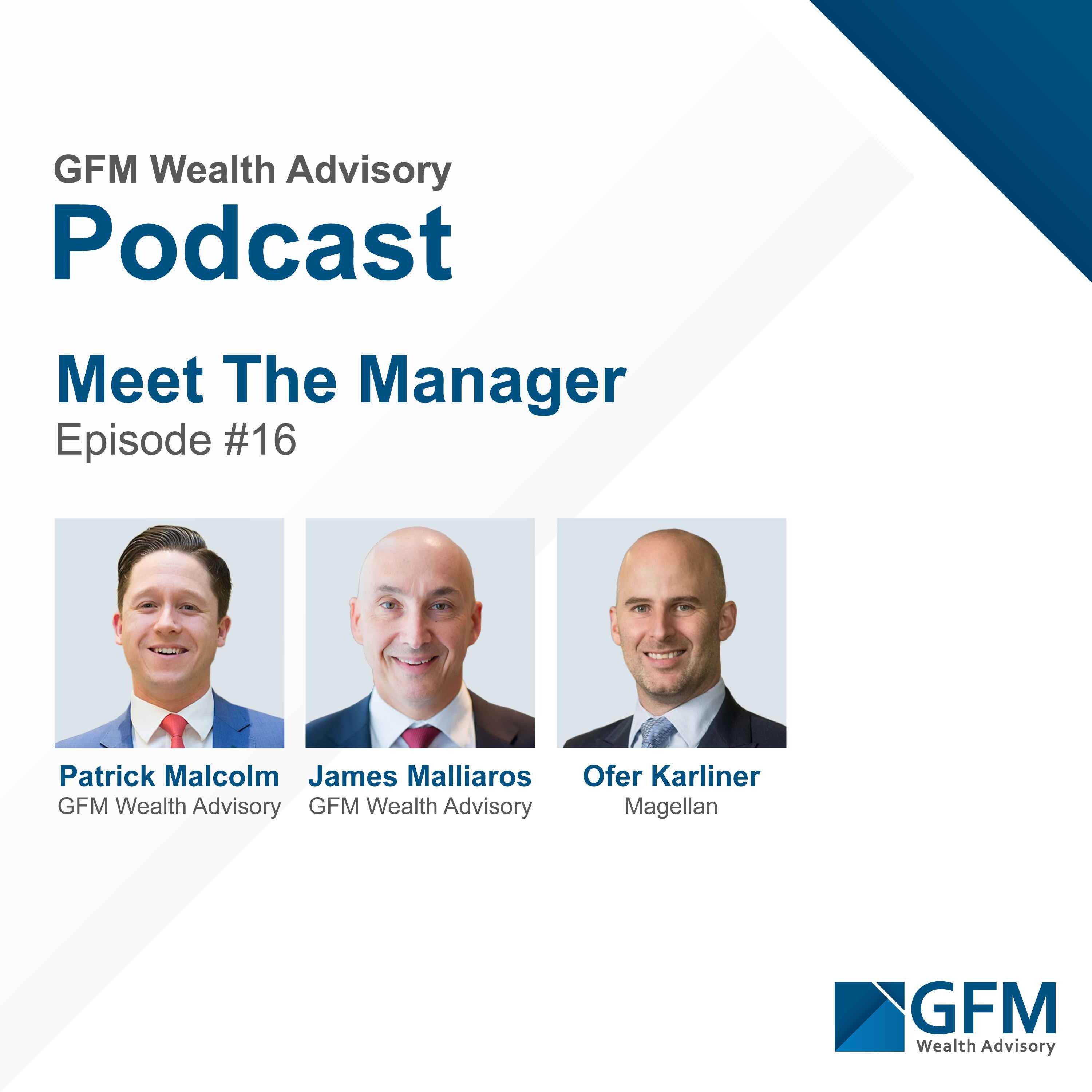
Offa Kaliner of Magellan Infrastructure Fund explains that true infrastructure investing is rooted in predictable, long-term cash flows, not just essential services. Unlike broad indices that include volatile or commodity-linked assets, Magellan applies a strict filter to exclude businesses exposed to price swings or sovereign risk. Instead, it prioritizes stable, regulated utilities with strong management, such as tower operators and gas distribution companies. Key growth drivers include electrification from electric vehicles, rising data center demand, and 5G expansion, all increasing pressure on energy and transport infrastructure. The fund targets a consistent CPI-plus-5 return by focusing on defensive assets and long-term structural trends. Notable holdings like Celinux and OpX offer strong value due to contractual durability, cost efficiencies, and growing demand. Social license risks—such as community opposition to new projects—are acknowledged as major threats, especially in areas with environmental or pricing concerns. The team maintains a long-term perspective, deliberately ignoring short-term market noise to identify undervalued opportunities. This disciplined, fundamental approach allows Magellan to deliver stable, inflation-protected returns through cycles of market volatility.
[MUSIC]
This advice is general and does not take into account your objectives, financial situations or needs.
You should consider whether the advice is suitable for you and your personal circumstances.
Before you make any decision about whether to acquire a financial product,
you should obtain and read the relevant product disclosure statement.
Welcome. My name is Patrick Melcom. I'm here for our GFM Wealth Advisory Podcast.
I'm joined by our Senior Financial Planner James.
Good to see you again, Patrick.
Welcome again.
Thank you.
We've done a few of these together now.
I think it's about maybe half a dozen.
Good team.
Yeah, I think so.
We bands up each other pretty well.
Good.
And we're joined by Offa Kaliner from the Magellan Infrastructure Fund.
Thank you for joining us, Offa.
Thanks for having me.
Sorry, just before we start to talk about markets, maybe just a little bit of your career
and how you found yourself into a very sexy pursuit of infrastructure investing.
Yeah, I started investing at a very young age.
My dad was really into it, even though he was an engineer.
So, yeah, with the Woolworths, Flop, with the Cumbank Flop, the Telstra Flop.
My mum, I want to be a middoctor initially.
My mum is a nurse, talking to me out of being a doctor.
You need to get doctors around the house, talking to me out of being a doctor.
But what else could I do?
What else do I love?
Investing was the answer.
I started off working consulting.
I was initially Melbourne and then over in the UK, I made my own consulting business.
I was working with a lot of large pension funds.
My biggest client was working at the private equity side.
I asked me to look at infrastructure investment.
And my little investment in Cybic, I was excited to look at these really high-mote businesses.
We were reliable cashflowers.
Yeah, structurally advanced companies.
And so when I came back to Australia, I actually made the choice that I actually want to work in this sector.
So I sought out work and do some work with the government.
Looking at toll roads, ended up going to a foreign active private equity for a while.
Before joining the buy side 15 years ago.
Interesting.
I think most of our clients know what infrastructure is.
And they've heard that they understand what kind of assets they are.
But what makes a business an infrastructure business?
And why do you find it so attractive?
I'll start with broadly speaking, people consider infrastructure to be something that's essential for the efficient functioning of the community.
I think water power, transportation, et cetera.
From a pure point of view, I'll be correct.
From the investment point of view, we don't think that's sufficient.
So, and Magellan, we think what makes a great infrastructure company is actually having that really reliable cashflow stream.
So we want the able to be very confident in the long term, predictable nature of those cash flows through time, through various market cycles.
To give investors the kind of returns they should expect that differentiated offensive kind of earns.
So the definition of infrastructure as being offensive is that, is that too simplistic?
Yes, and goes back to my earlier comment around the defensive nature of cash flows.
Again, most people go if it's essential service, then it's infrastructure.
What you want is those stable cash flows.
And what we're trying to achieve is inflation protection and diversification and defense.
So we strip out companies which have too much exposure to commodity prices, computational sovereign risk.
And the reason for this, you can have an infrastructure company.
They're emerging power generator.
You're producing electricity. That power is needed.
The problem is the price you pay varies tremendously.
The cap on prices in Victoria is around $23,000 a megawatt hour.
The floor is minus $1,000 a megawatt hour average is about 70.
You actually have to give it away.
Worse than that, you're paying people to take away from you.
You don't know reliably what you're going to earn over time.
So it luck was with commodity prices.
So there's certain companies that look a lot like infrastructure.
It's a capital equipment.
But their earnings are tied to commodity prices.
Again, you don't know what the commodity prices are going to do.
And therefore, you're not sure your earnings are going to be.
At certain points, the cycle act can work quite well.
They tend to be quite reciprocal.
They don't have to be defensive when you actually need them to be defensive.
And with that very tight definition, then they are defensive.
But you have to skip out all those companies that are more prosy
or more exposed to competition or sovereign risk.
So picking up on that, separating a great infrastructure company
from an average infrastructure company,
is it only around the predictability of the cash flows or is it more than that?
Yeah, I think there's a number of liars to it.
Getting the definition right is critical, absolutely critical.
Again, stripping out as companies would have undue influence.
So you think about sovereign risk, for example,
if the government came to fear with your property rights
and governments pry everywhere to do that,
you can predict your property rights in court.
That means you are protected.
You settle as a very good example with the browser than recently.
I wanted to do toll reform.
I thought the toll equalized the tolling system.
They had to work within the construct of the existing contracts.
We have a lot of confidence in Australia as a jurisdiction.
Finally, it has some great population dynamics.
But the government has done fortunate habit of interfering with property rights.
You can't be confident in returns you're going to achieve as an investor.
You've spoken about the reliability of cash flows from commodity prices
and your volatility in those from competition.
The additional liars as well.
So you want to be able to think about the management team quality
to these businesses tend to earn a lot of cash.
And what the management team choose to do with that cash
is really critical returns you can achieve as an investor.
In addition to pure valuation, which we use to start,
we have a bunch of quality screens and agency risks,
because it's one amongst us.
Just to pick up on this before you jump to the next question, James,
the difference between an actively managed fund like yours
and the index when it comes to infrastructure seems really,
really important with this definition.
There's a number of different infrastructure indices.
We think basically all of them are imperfect.
We have an accent of history of the S&P infrastructure index.
Over a third of that is an investible for us.
Based on your definition of infrastructure.
I think commodity prices.
I think commodity prices linked to both emerging generation
in sovereign risk territory that we don't find comfortable.
The weeks are a large part of the index.
I think 36% of the last count.
So it's not really a light for light.
What we look to do is try and achieve CPI plus five
through the investment cycle.
That's our internal metric.
Well-functioning infrastructure to achieve that through a cycle.
And that's what we've done in a bit more over time.
If we drill a little bit more into the infrastructure asset class,
you've written previously about difference between listed
and unlisted infrastructure.
What's basically the difference?
And how do you view each of those different types of infrastructure classes?
Ultimately, the assets are going to be the same,
whether it's in a listed construct or an unlisted construct.
It doesn't matter.
I'm a pure investment point of view.
You have two utilities.
There's exactly the same ones listed and unlisted.
The biggest misunderstanding is going,
"Unlisted is less volatile."
It's simply because you're not measuring it.
So if you measure every six months or every 12 months,
you're going to get by definition less volatility.
The underlying cash flows would be the same.
So we're having less experienced volatility.
What's simply not measuring it?
Listed markets have a greater or broader depth of opportunity as well.
We have a large number of listed companies that we can look at.
That volatility actually creates a new source as well.
I think for unlisted,
one of the issues you have,
you're kind of beholden to what's available at the time you're investing,
tend to end up with content-trade of funds going back in years.
It was renewables.
A lot of wind farms, a lot of solar farms,
in these unlisted funds,
now it's data centers of the range,
that's what's available at the time.
We have a broad range of opportunities in some of the best assets in the world.
Speaking up on that offer,
in terms of investing,
you don't look at the next six months.
You look at long-term structural trends.
So can you talk to us about some of the things
you're viewing as being attractive at the moment?
The most obvious one is the growing demand for electricity across the globe.
People think it's just AI and data send demand.
That is a very key component of it,
but it's not the only component of it,
but seeing huge trends to electrification,
broadly as a EVs alone,
a very significant increase in demand,
increasing electrification of households.
There's a huge wave of growth that needs to happen,
which even at zero AMs as well,
so you need to build up new renewables,
need to connect them, grid,
roof-up solar requires grid hardening,
requires different mechanisms to deal with that change in flows.
There's a massive cap X opportunity across the globe.
Data centers is on top of all that opportunity.
That's probably the biggest theme that we're seeing at the moment.
On the other side of it,
we see increasing government debt
and opportunity at a risk.
It can manifest in different ways.
For example, they're increasing taxes.
That's bad.
Ultimately, the flip side of that same thing
is there's been a wave of public pressure against all roads
being privatized in France,
and has been for about 15 years now.
The issue of the government can't afford not to.
They're so indebted.
They can't budget deficit over 5.7 GDP.
They need to find ways of finding additional revenue.
They can cut costs, but no one wants to do that.
You cannot in election year.
they're highly likely to come to 2032 and they can next concessions roll off.
The sessions start to roll off. They'll have to renew those money.
But that creates opportunities for investors like myself.
Further to that, clearly artificial intelligence probably the biggest investment story we're
seeing at the moment. I mean, you know, I'll be followed on from the tech blowing back in
the early 2000s. Now it's all about artificial intelligence. You've argued the real winners
are going to be the companies that supply the electricity rather than the technologies.
So focus a little bit about that.
Comes down to the investment fundamentals. There will be winners in the AI space who will make
an absolute fortune. Right now you're in an arms race between multiple providers.
Huge data center built-outs, different AI models competing with each other.
Most of them are not profitable. Where that actually lands, I don't know.
I think anybody should really do it at this stage.
What we do know though is that huge demand and power that's coming down the pipeline.
Means that utilities need to invest to supply that power.
And so almost no matter what happens, once you as utility invested that dollar,
you're entitled to return that dollar.
We're seeing huge uplifts in CAPEX programs. We've already seen electrification.
And we're seeing a second leg of it coming through from data centers.
And the great benefit of that is not only do you spend the money, you get a guaranteed
return on, you're growing your earnings profile off the back of it, but one of the big concerns
we've had of late is around social license risk of increasing costs of electricity consumers.
In the US, in particular, we're seeing things with large load tariffs.
If you're a DAS center and you want to connect, you'll put a pay for all of that.
You go pay connections, you go pay for these short-generation.
That means the cost to consumers is actually not rising as fast.
In some cases, decreasing as you build out more and more data centers.
It helps to leave you at some of the social license pressures that we're seeing.
Effectively, you're getting empty low-double-digit returns or very, very low-risk investment.
And we're not taking that risk of the bubble popping or being on the wrong
company that loses this kind of AI arms race.
The investment that's required in this around AI, EV and electrification generally
is, and this is, I guess, one of the really big things in market to the moment,
is the market underestimating or over-estimating that?
It's a tough question, though, that the amount of investment needed for electrification is huge.
I think that's probably not just AI, but electrification is huge.
And I think the market is definitely underestimated that.
And let me give you a case study of Australia.
So, Australian energy market operator is forecasting the by 2032. By 2034, my apologies. By 20 to 25% of cars will be EVs on the road.
That's a 34% increase in total load demand.
It's a 25% increase in peak demand.
You've got to build the grid for the peak by 2050, they're forecasting.
It's just people getting home from work and charging their cars.
They're not charging them 9 to 5.
They're generally charging them when they get home.
And they're already included in that.
Oh, we're going to push up the price at peak times to try and make people
charge a later in a day or a later in the days.
They're already trying to adjust that three years ago.
They're saying that's going to double peak demand.
And they're saying it's 25% increase because they're trying to load managers.
By 2050, they're saying it's 80% increase in demand.
Just from EVs.
That's from EVs aligned.
And to that, increasing household electrification, increasing industrial electrification.
And then you have data centers on top of that.
And all of sudden, we're in a situation where there's huge amounts of load growth coming through the system.
Need to build the grid for it.
So, certainly, I think people are certainly underestimating.
We'll be talking about this for years now about how much growth there is
and how sustainable that growth is as well.
And to your earlier question about the utilities can be the winner's here.
I mean, almost no matter what happens,
you've spent the dollar, you get to return that dollar.
And even if the dye center growth slows.
Or if it disappears tomorrow, you've still got so much growth coming through the pipeline
for decades to try and deal with these other issues you're trying to solve.
Obviously, we talk about the growth of the electricity grid and what's needed for that.
But if we sat here in 10 years time, given all we know at the moment,
what infrastructure theme do you think will be the winner?
Do you think it'll continue to be around artificial intelligence and the building out of the electricity?
Or do you think it'll be something else, maybe?
I think there's a few different themes playing out.
I think everyone is kind of across.
There's a growth in demand.
They're probably on a restaurant.
The growth in demand, electricity supplies.
Everyone kind of understands that needs to happen.
One of the things we see is people probably under a strain,
the impact of growing data demand, or things like mobile phone towers.
So just think about how you use your phone today,
versus how you used it 10, 15 years ago.
5G, obviously, in how that's growing.
I mean, I had a BlackBerry, I'm old enough to admit how excited
my BlackBerry has all the wheel.
I scrolled down and made it so excited to remain around the go.
We're now, you're walking a bus stop.
People include their phones watching a video or a TikTok or Netflix.
It seems huge amounts of data.
We're talking this morning to someone who has a camera in their fridge.
It's Wi-Fi connected.
But I can monitor it's in their fridge from home.
And so the guy with the shop's garden is doing eggs and milks.
That's exciting.
And I can turn on their dishwasher or their washing machine,
all that kind.
But all this needs to be. Which I like very much. addition to that.
And see that it densifies the network.
Okay.
And we've seen in the tower companies
all actually perform quite poorly over the last 12 months.
Down 20% to 30%.
Unusual for an infrastructure company.
A part of that is rising bond yields.
These are the most sensitive part of the space.
We're in.
Part of it is concern around road to device and satellites.
It's starling.
Yep.
And people concern that they will displace the need for towers.
Now, that's what Musk has said.
That's not the case.
They're trying to solve it otherwise.
But most obviously, the physics that simply doesn't work.
I think we're in a building.
The multiple floors above us.
That signal is to penetrate down to multiple over concrete.
Most are used to inside, not outside.
Yep.
We think it'll be complimentary.
There'll be some regional areas that'll be supported by that.
Email us in regional towers at the margin.
Ultimately, it's not a threat.
The market came to vital like it is.
And they got underlying cash flow.
Unlike cash yield of about 6.5%.
They're growing at the worst case.
We can count it with three and a half.
10% underlying.
You would probably upside.
Yep.
It's very attractive.
It's a very low risk business.
Yep.
They're getting to stocks now.
Can you give us a quintessential Magellan infrastructure stock
at the moment?
Offer that.
It's the characteristics that you're talking about.
Yeah.
So, I'm just talking about towers.
Celinux is probably what we see.
The biggest value opportunity at the moment again.
There's the second layer of misprice in there.
I can talk about in a second.
But it is your upslide.
I just took a tower operator and it's about 20,000 sites across Europe.
In 10 different markets.
It has been beaten up.
Well, step back in history.
It came, spun out of a company quarterburgers.
And it went on a massive debt-fueled M&A spread across Europe.
I roll up the sector.
It was very, very heavily geared.
Market loved it.
It was trading in same valuations and I view.
Every burger had it on a buy and we were like, it's way over geared.
We all wouldn't touch it.
Roll forward to last year.
The stock sawed off significantly of the debt.
It was increased massively.
Had new CEO come in to play.
In rationalised business, he sold non-corassity pay down debt.
I paid the first year in this year.
The stock back last year.
So they've actually erected a lot of the stock issues.
We see cash flow growth.
They're not in cash flow growth by about three times.
About 100 million by 2028.
It's up to you to double again over the next couple years after that.
As they, the large CAPEX programme rolls off.
What the market's focused on right now is consolidation in Europe
of top cooperators.
So in a lot of markets, there's four players.
And most of those four players are sub-economic.
What we've seen is underinvestment in networks.
But now they're starting to consolidate.
And people are going, well, actually, you've gone from a market of four potential customers
to play that's bad for you.
But we've been digging down a little bit.
And we go, we've met the company when he won times now over the past 18 months.
11 meetings with customers, former employees, suppliers.
And a lot of time.
And understanding this company.
The contracts that they have, first of all,
what's called all and nothing contract.
This is a critical infrastructure for the telco providers to use.
You can't, at the end, the contract life go, I only want these great sites here.
You have to renew all of them or none of them.
And if you renew none of them, you don't have a network ultimately.
But they've been a really strong contractual position.
And we're looking at France at the moment.
There's a potential break up of one of the telco players to be able to throw you.
They have effectively a veto right over that.
Because without the network, you actually have to accept the contract.
So we have a set of the table here.
What we have seen where this happened is actually because of the historic
under-investment in telco's in Europe, network quality is really poor.
You know, Italy, I've got, you know, buy bars, but I can't.
I make a phone call, send a text.
So in the UK, where we saw a merger, the Vodafone 3 merger,
one of the stipulations was we'll allow the merger to happen, but you have to go
and spend 11 billion pounds over the next eight years to upgrade your network.
We think that's a template for what's going to happen in other markets.
So there's a huge opportunity there to actually throw the business.
just to preserve the capital but to grow it over time. And we're quite confident in the long term
or here, the big markets we're missing here. And that second layer of value that you
was that? So the second layer, so I talked about that, the people concerned about the satellites
and the second layer of mispricing is really around the misunderstanding of this risk of
consolidation. So we do further into some of the stock stories, is there a particular holding that
maybe illustrates how you think a little bit differently to the market and the broader
index, where you've probably seen an opportunity that the market is clearly not, you know, not seen?
It'll gas is a really good example. It'll gas it's the Italy's largest gas distribution company.
It's spun out of a company called SNAM in 2016. So you know, price dropped a little bit after
that but then kind of went sideways for years. So this company, OpX, by about 40% between 2017 and 2024,
gets to keep about half of that for five years. And you try and record your model. Yeah,
market didn't care. It was yielding a roughly 8% per annum and that was growing. We had,
we considered to be the best management team in the sector anywhere in the world,
based in a lot of time, those cost programs, things like the advertising process.
Let me give you an example. These two send an engineer out to start to fix a pipe or a
copper pipe. You then have to send a inspector out to pick the work the engineer had done.
Well, they did. They built an app. The area engineer carried an iPad with them.
They did the work. It took both of them certain specifications. And the inspector was sitting
in the head office and go, actually, yep, I can tick off, say myself to trip out there.
So no trip out there, time saving, network down time saving, you know, through his problem,
engineer still on site, he hasn't left. Okay. Yeah, very simple things, but they accumulate to be
very, very valuable at the time. In 24, they bought the second largest gas utility in Italy.
They forecast cost savings of 200 million euros per annum versus $169 million
of topics for that company when they bought it. Almost the entire cost base has been ripped out.
They're doing that with that second, anyone. No kid can't last.
Simply through efficiency measures. Again, the best, the best magic tape by far in the sector.
Mark was a very focused and energy transition risk. Oh, Europe's going to see gas go to zero.
Yeah, yeah. The reality of that is they are very poor, but it was always net zero.
Like even the government's own forecast in Italy said, yeah, at worst case, you're looking
about a third reduction in gas usage by 25, yeah, worst case. So we were very confident in the
underlying demand dynamics for the business. We were happy to hold it with only 8% per annum and
that was growing very attractive rates. And last year, the stock was up 98%. Mark is finally caught
up and they got less concerned about the story. We took a long-term perspective on it. We held
it for a couple years before the market crepto suffers numerous examples of this. Or we will
hold things for a long period of time. We went to the market, catch up on the stands,
appreciate the value because we are long-term invested. Yeah, of course, interesting.
The most important things when you're analysing these businesses is it is it pricing power?
Is it regulation, management quality, capital allocation, areas to entry? I'm assuming it's all
them, but we've had a sort of weighted when there's some gating elements to it. So again, for us,
the areas to entry, most of the companies that we call economic modes have very strong economic
modes, very hard to replicate a utility. Does it make economic sense to replicate a utility?
We get a lot of work using the word monopoly here, aren't we?
Well, they are, they're regulated and upwards. That's fine. And the reason the regulation
exists is the same with toll roads. The regulation exists with consumers, of course,
because they are such strong businesses, such strong franchises, the same with their ports.
If you like that the companies buy that will as prices be higher. So they have very strong economic
modes. That gives a lot of confidence in their earning capability through time. So management
teams are critical to our investment, to our system of companies. Again, what management teams
choose to do with the capital and how they allocate the capital can really be impact on your
returns as an investor. We spend a lot of time trying to understand the management team's
motivations. We look at them reports, we look at their history of the quality factors of the
large quality factor we can see there. But again, there's more and more buffers here.
Well, I can't be any idiot. It could run because of the venture.
Some don't, and some of you all run it. But these infrastructure companies ultimately,
almost in all cases, such quality businesses that can withstand, or management team running it.
Okay, because we know there's risks and everything that we do in all sorts of investments
and that, you know, and you got to obviously manage those risks. But what are the biggest risks
you think in infrastructure assets? How do you manage those? There's a cause you to change
you view about a particular stocks. I mean, social license risks is probably the biggest one
that we face as infrastructure investors. We're seeing in our obviously with data centers,
you know, some suburbs around Melbourne and Sydney and things like that. It's happening everywhere.
I say even where we're seeing data centers, notionally approved in the US,
all of a sudden the community's up and on, and they have to get pulled. The social license pressures,
we saw New South Wales do a toll review, and I wasn't getting the strength, the contracts they
meant that, and so it was actually fine off the back of that. But if you use or damage that social
license, you can have very adverse consequences. The most obvious example of the moment is in the UK,
UK water space killer, where a number of companies, particularly privately run ones,
less so that the listed companies abuse their social license. They under-invested networks.
They dump storage, the tems towards the famous example. They dump two billion litres of raw
storage into the tems. They have all sorts of service quality issues, and the whole sector's come
on a huge matter of pressure. After the good actors, it's actually beneficial. Span Trent United
utilities have biased environmental ratings in the sector. They're very net top-class operators
in the sector as well. They've managed to benefit from that in terms of how the problem has been
under-investment in networks because of regulator as deemed we want to keep costs down rather than
allowing them to actually invest properly. There's been an acknowledgement now that that model is
broken. So they're allowing them to invest in multiples of what they were historically. So the
current regulatory periods are a big step up on the prior ones, so they'll benefit from that from
increasing investment. That's probably going to take 20 years of investment to direct
by those problems. Final question, offer. Markets are very, very noisy. They've probably never been
noisy out. How do you and the team avoid getting distracted by the short-term headlines?
In short-term, first of all, we always talk about value. We don't talk about it. We almost never
talk about quality earnings or get caught up in those kinds of details. You look at what
the outcome of that impact is to value over time. It's very easy for people to get very myopic.
The example I give to the team and people who want to speak to them is I used to cover the oil
gas pipeline sector, the stream sector in the US. I remember seeing their meeting,
it was shared with me without the investor, and every single question he asked was around
effectively trying to work out what the next quarter earnings were going to be or next quarter's
cash flow was going to be or next quarter's dividend was going to be. I was asking about the business,
I was asking about long-term value is strategic questions. It just shows how focus people on
that very narrow field that gives us an informational advantage. If you can look through that noise
over the long term, that means it's a mispricing opportunity to come from that. We tell the
guys to look at value. We don't, in a lot of times, do broker reports because I get to understand
what the market sentiment is. Obviously, we're in a live market, we need to understand what people
are thinking. We don't rely on brokers for our work with all ourselves. Beautiful. Thank you.
I really appreciate you joining James and I today to talk about Magellan's world of infrastructure
investing. Thanks, Robert. It's great. Thanks, Patrick.
[Music]
Podcast Summary
Key Points:
Infrastructure investing is defined by reliable, long-term cash flows rather than just essential services, with Magellan focusing on defensive, predictable businesses.
Companies with exposure to commodity prices or sovereign risk are excluded, as volatility undermines the core stability required for sustainable returns.
Management quality and capital allocation are critical, as strong leadership decisions directly impact long-term investor returns.
The fund actively differentiates from broad infrastructure indices by screening out high-risk assets and targeting a consistent CPI-plus-5 return through cyclical cycles.
Key growth themes include electrification (EVs, home charging), data centers, and 5G networks, all driving demand for resilient utilities and grid infrastructure.
Tower operators and utility firms like Celinux and OpX offer strong value due to contractual stability, cost efficiencies, and long-term demand growth.
Social license risks—such as community opposition to new infrastructure—pose significant threats, requiring proactive risk management and regulatory monitoring.
The team avoids short-term noise by focusing on long-term value, fundamental earnings quality, and structural trends rather than quarterly performance.
Summary:
Offa Kaliner of Magellan Infrastructure Fund explains that true infrastructure investing is rooted in predictable, long-term cash flows, not just essential services. Unlike broad indices that include volatile or commodity-linked assets, Magellan applies a strict filter to exclude businesses exposed to price swings or sovereign risk. Instead, it prioritizes stable, regulated utilities with strong management, such as tower operators and gas distribution companies.
Key growth drivers include electrification from electric vehicles, rising data center demand, and 5G expansion, all increasing pressure on energy and transport infrastructure. The fund targets a consistent CPI-plus-5 return by focusing on defensive assets and long-term structural trends. Notable holdings like Celinux and OpX offer strong value due to contractual durability, cost efficiencies, and growing demand.
Social license risks—such as community opposition to new projects—are acknowledged as major threats, especially in areas with environmental or pricing concerns. The team maintains a long-term perspective, deliberately ignoring short-term market noise to identify undervalued opportunities. This disciplined, fundamental approach allows Magellan to deliver stable, inflation-protected returns through cycles of market volatility.
FAQs
A true infrastructure business is defined by reliable, long-term, predictable cash flows that are largely independent of market cycles or commodity prices. The focus is on defensive, stable earnings rather than exposure to volatile inputs.
Magellan excludes companies exposed to commodity prices or sovereign risk and focuses only on assets with stable, predictable cash flows. Unlike broad indices that include a large portion of commodity-linked or high-risk firms, Magellan targets a more defensive and diversified infrastructure portfolio.
Management teams determine how capital is deployed and reinvested. Even with strong cash flows, poor capital allocation or lack of strategic focus can lead to underperformance. Magellan evaluates management rigorously to ensure long-term value creation.
The primary themes include electrification (especially EV adoption), rising data center demand, and the expansion of 5G and mobile networks. These trends are creating sustained demand for grid infrastructure and utilities.
Yes, infrastructure is considered low-risk due to its essential nature and stable cash flows. Risk is mitigated by avoiding exposure to commodity prices, sovereign risk, or competitive pressures, and by focusing on businesses with strong regulatory protections and long-term contracts.
Social license risk refers to community opposition or regulatory challenges that can disrupt operations. Examples include opposition to data centers or toll road projects. Magellan assesses these risks carefully, as losing public or regulatory support can severely impact long-term returns.
Chat with AI
Loading...
Pro features
Go deeper with this episode
Unlock creator-grade tools that turn any transcript into show notes and subtitle files.
 PodcastTranscript AI