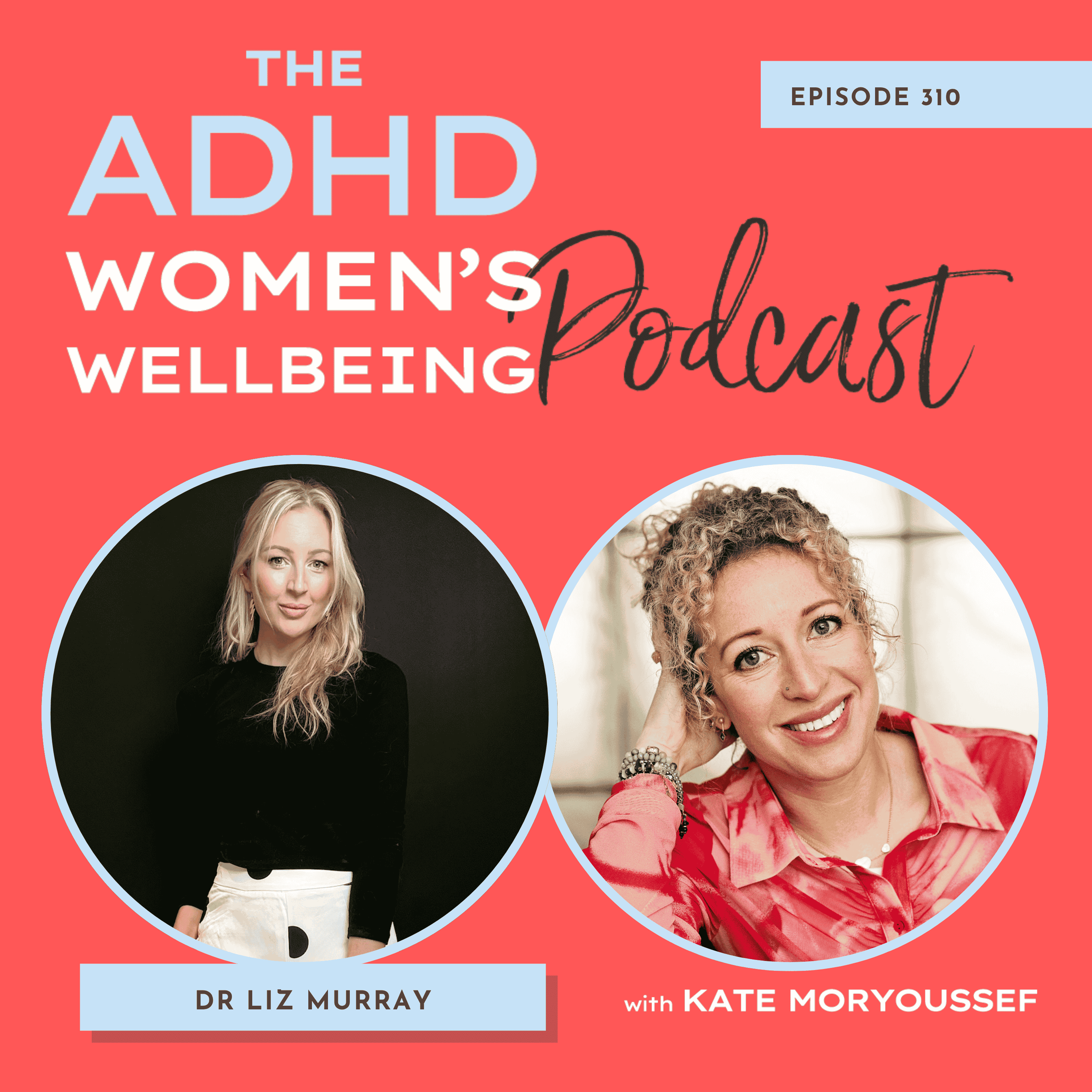
Medical Gaslighting, Women’s Health & ADHD: Why So Many of Us Are Dismissed
54m 48s
In this podcast episode, Dr. Liz Murray, a doctor, activist, and author of "Not Just Painful Periods," discusses her harrowing health journey that began in medical school. She faced undiagnosed endometriosis, recurrent miscarriages, and a hysterectomy, despite her medical training. Dr. Murray emphasizes how women, especially those with ADHD, are often dismissed or misdiagnosed due to a lack of holistic care. She notes that 40% of women with ADHD have severe PMS or PMDD, and there is a strong link between neurodiversity, connective tissue issues, and endometriosis. Her charity, Mortal and Strong, aims to educate patients and future doctors to improve the healthcare system. Dr. Murray advises women to recognize red flags like pain during sex or bowel movements and to advocate for investigations, even if birth control manages symptoms. She stresses the need for GPs to consider hormone sensitivity in ADHD women, as synthetic hormones can worsen symptoms. The conversation calls for integrating gynecological, hormonal, and mental health care to prevent organ damage and improve quality of life.
Welcome to the ADHD Women's Wellbeing Podcast. I'm Kate Moore-Yusef and I'm a well-being at Lifestyle Coach, the FT practitioner, mum-to-ball kid and passionate about helping more women to understand and accept their amazing ADHD brains. After speaking to many women just like me and probably you, I know there is a need for more health and lifestyle support for women newly diagnosed with ADHD. In these conversations you'll learn from insightful guests, hear new findings and discover powerful perspectives and lifestyle tools to enable you to live your most fulfilled, calm and purposeful life wherever you are on your ADHD journey. Here's today's episode. I'm here today with someone I think many of us will relate to and find incredibly interesting and she has a brand new book out on painful periods. Her name is Dr. Liz Murray and Liz is a doctor, she's an activist, artist and author and after working on the frontline during the COVID pandemic her 15 year battle with chronic health forced her to step back from a clinical role as a doctor where she utilised her experiences, both a patient and a doctor to become the founder of a charity called Mortal and Strong to provide education and support for people affected by life changing and curable health conditions. Dr. Liz is a fierce and passionate health advocate and has recently been awarded a British Citizens Award, People's Honours for Services to Health and is also an ambassador for the Patient Information Forum and her brand new book Not Just Painful Periods is out on, it's available now to pre-order and it is out on the 30th of April. So welcome to the podcast. Perhaps you can give us a little bit of an insight into your life before you know you were obviously trained to be a doctor that was your plan. What happened in between? Well firstly thank you for having me, it's great to be here and I'm hopefully I can share some insights that will definitely help your audience. My stories are really bizarre one that for so long didn't seem to make sense. The week that I started medical school to train to become a doctor I started my own health issues and very quickly realized that not only was I training to become a doctor but was also experiencing the patient journey simultaneously alongside. After I qualified to start working as a doctor I started trying for a baby. At this point I hadn't I'd had lots of health issues but no formal diagnosis, a classic tale of someone who'd been put on the pill for heavy periods seemed to have a lot happened to them but no real diagnosis, no one stepped back and looked at the full picture until I started having recurrent miscarriages and after three or four miscarriages I was diagnosed with lupus and severe endometriosis, stage four endometriosis and I had to have IVF. I ended up having six miscarriages in total. So sorry. Thank you. It was two or three years of the worst time of my life kind of hitting rock bottom, having those micro traumas of new diagnoses without any support, not knowing who I was feeling I'd lost control of my sense of self, my ability to pursue a career which I'd always been so passionate about and feeling isolated from the world that I thought I was destined to have and I think that's one thing which many people with any kind of diagnosis go through is that disenfranchised grief of suddenly everything you thought you knew or you wanted isn't going to be and you hit that diagnosis by all you can't work, your career plans, your abilities have a family, those things will seem like they've taken away from you and I tried to go back to work for the COVID pandemic but very quickly catching COVID meant I was off for months and realised I couldn't keep working as a doctor with the extent of my health issues. That's another story of whether of employing employees being adaptable to people with disabilities but that's a different conversation entirely but it did lead me on to recognising that my insights as both patient and doctor was quite a unique one. I had experienced the system as doctor but also as patient and I saw the pitfalls, I knew how hard it is for people to navigate. I struggled to get a diagnosis of endometriosis, I was gaslighted, dismissed for years, if I was struggling to navigate the system, what chance does somebody who's not medically trained have and that was quite alarming for me and quite concerning to realise that I would be sat in the patient chair with the medical knowledge, being able to communicate the best that I possibly could and still I was being dismissed, still I was experiencing what it was like to be gaslighted and experiencing those struggles and frustrations and the impact to myself, I ended up having a hysterectomy in my early 30s, I fortunately have got two children despite the six miscarriages in between but my journey could have been such a different one. Had I had the information, had I been equipped with the tools to be empowered over my own health, I was not given all the information and there's so much misinformation online on social media, patients becoming patient experts, dangerously crossing into giving medical advice and it's a minefield and that led me to producing the charity, Mortal and Strong, to help people, to help guide people through the impact of a life changing and chronic condition, whatever the condition and also to help navigate the system and how to get support, how to find the toolkits and aside from the charity I do a lot of work on women's health and menstrual health in particular because of my own experiences and one thing I'm very passionate about is recognising that newer diversity is a completely different experience, you cannot apply the same rules of support, information, education for any health problem without adapting it for someone with ADHD because their experience is entirely different. Yeah, thank you, thank you for sharing that and explaining that. I mean, it sounds absolutely horrendous and so traumatising, you know, what you went through and I just, you know, listening to you tell me that you had a hysterectomy in your early 30s, I just can't even imagine how it got to the place that was the last option and that is to a doctor who has vast medical knowledge, has a way of advocating for yourself above say, you know, someone who's not in the medical system. Tell me a little bit about your endometriosis diagnosis and how long it took and did you suspect it was endometriosis and did you face a lot of pushback from other doctors? This is something particularly which I right, I've discussed in my book because the irony being that even as a medical student, I can visually remember my notes for the exams and I remember writing, "Painful periods is synonymous with endometriosis and heavy periods is likely fibroids." That was the cliche textbook answer for any exam question and yet I was suffering with periods that were flooding, I was flooding every night, I was doubled over clots, pain to the point where I was nearly crutches because I couldn't physically stand with the pain. And yet it never occurred to me that I had endometriosis because I had always since my very first period had heavy painful periods and it's that culture of, "This is normal, you have period products that are designed for heavy flow so therefore you presume that a heavy flow is normal." I'd seen the GP for painful periods and it was the classic, I was 17, put on the pill for painful periods, not told anything else and so I just assumed that was normal for me and I came off it's my early 20s to have my first child, I didn't go back on it because as many women do I wanted to go natural without the pill, without any hormones and that is what destroyed my organs because that time that I was not on the pill it allowed the endometriosis to spread and within two years I'd gone from stage one to stage four endometriosis causing bowel and bladder damage that had I known that I was on the pill for suspected endometriosis or any kind of period disorder I would never have come off it and I could have prevented that organ damage and I think that's a common scenario for so many women. I mean it's so close to home it's painful actually listening to this for myself and for my daughter and there is this misinformation of like come off the pill let your body clear the system, get all this synthetic hormones out of your body, get ready to be child-bearing ready. five broids. I was told I had endemic traces
when I had a histroscopy, I'd never had any pain, I'd only had very heavy periods. So I was like, "Really? That doesn't sound right. No one ever query did, the surgeon never query did. I'm now on a really high days of progesterone, body-identical progesterone, to help stop the flooding. What alternatives do we have?" And this is the problem because one in ten women have endometriosis, but 90% of women at some point will have painful periods. And the commonest cause for those is actually primary dysmenorrhea. Just like the commonest cause for heavy bleeding is primary menorrhagia, which means that those symptoms are a dysfunction of the process itself. There isn't a disease process like fibroids or endometriosis happening. And that's one thing that a lot of people don't understand. And this is why GPs will start the pill because the commonest cause is something that doesn't warrant a laparoscopy and an investigation. So you start the pill, you're doing well, doing fine, leave it for a few years, sit back. And this is where the kind of the story of people taking ten years to get a diagnosis because technically you've gone for heavy periods, but you might not find out for quite some time because the pill is working. The conversation that needs to happen is find the pill is working. There are several things that it could be. Commonly it would be this. If things change or at the point where you then want to come off to try for a baby, that's when you really need to be mindful of the red flags and what to look out for. Other signs to suggest that something like fibroids or endometriosis is happening. And that's what's not being given to women is that information that if the pill's working and your symptoms are managed, then brilliant. You don't necessarily need to be always referred to a specialist to get that diagnosis because the GP can manage many of these things in the GP without coming to go to a hospital. If things change, if you start getting other symptoms such as pain or bleeding passing, urine, pain or bleeding or having a poo, pain during sex, those are the red flags that actually something else is going on. Or if the pill stops working, then we need to revisit the diagnosis. Then further questions need to be asked. There's nothing stopping the GP doing simple investigations without referring you to a specialist. So even if the pill is working, you could still have the conversation for, is it worth doing an ultrasound to check for fibroids so that you have some information before making any other future decisions later down the line? The GP has a lot of tools and equipment at their disposal to start those investigations early. I think some of the concerns is that everyone thinks that they have to immediately be referred to a gynecologist. And this is where we have this to your weight. Whereas actually the GP, a good GP, particularly a GP with a women's health special interest, has a lot of tools at their disposal to answer some of those questions. So there shouldn't be a sense of what's your weight and have fear. I know what the system's like, but I would always recommend finding a good GP with a special interest to answer those questions and to guide you through that time. I think when I look back at my own story, had I known that there was a potential for something going on, once I stopped that pill within a month or two of those periods becoming unhealthy and recognising what the signs of an unhealthy period are, you only need one or two cycles to realise something's not right here and that is enough to warrant. Going down the investigation ladder, the GP has kind of a flow chart of what to do next. So you don't need to wait for six months to a year of struggling with heavy periods. If you're having one or two cycles that are consistently not okay, that's enough to warrant that start exploring what's going on here. Yeah, and I think what's important to state in all of this is that the overlap, like we said at the beginning, the overlap that we know, and again, I say all the time, I don't think I've ever met one Euro-Divergent Woman that hasn't experienced a similar calamity of different symptoms and difficulties and health challenges and it's hit them at different times of their life and it's been catastrophic in some ways. It's just severely inhibited them in life, whether it's their relationships, their career, fertility, mental health and there's so much overlap. So if you go to a doctor now or a GP and I really hope that things are changing, if there's a way of a GP saying, "Ah, okay, so there's possible endometriosis here and heavy bleeding." What are the symptoms of going on here and how's your mental health been and what's your physical, have you had any physical pain and maybe a leading to hypermobility? What were you like at school? How have you been with French hit? What was your mum like? Did she have any mental health issues? Do you remember what your grandma was like blending it together because women's health, this has always been here. It's just been hiding in plain sight and it's just been everything's been separated, totally separated. So it's like, go to an endocrinologist, go to a gynecologist, go to see a physio, go to see the psychiatrist. And it's like, why are we not getting the glue here? We need the glue, we need it connecting much faster than it is and we need a system that understands that when we are seeing a woman or a girl present with ongoing gynecological hormonal issues, that there's other things that play here. It's never separate and a GP could do so much. They've got so much power. I talk about GP so much on the podcast, not to slate them in any way and not to like shame them, but it's because of what they can do to help of just what awareness and knowledge can do when someone comes in presenting with a constellation of different symptoms. I don't know enough about your charity, but is there anything within your charity that can help create better awareness within this landscape? Yeah, absolutely. And we have a medical school at which program, which means that we're taking awareness of not just the existence of the charity, but we're going to be delivering presentations to medical students or feedback of common issues and challenges that patients experience. It's one thing to be providing the support to patients, to know how to navigate the system, but one thing that the charity is very keen on doing is actually changing the system itself and in order to do that, it's delivering feedback to the doctors of tomorrow. Having those conversations and working with medical students, I do genuinely have hope that in future generations that kind of misogyny and have dismissal of previous generations. I think that it will slowly filter out and I think we are looking at a newer generation of more holistic, more holistically approached doctors who are also more in tune with what's going on in research and coming back to what you're saying about that overlap. I'm really excited to see that research and trials and now really honing in on trying to find and explore what their underlying connection is because doctors are scientists and if there is something that is scientifically proven, they're more likely to latch onto it and be in tune with it and this link between connective tissue issues such as pots and type of mobility as well as autoimmune conditions, neurodiversity, there is a clear distinct link now that is being recognised and trying to they're exploring what that link is which opens a whole new kind of territory for support because I've had a lot more conversations of the conversation is becoming more prevalent which is really reassuring because one would hope that we reach a point where if someone's given a diagnosis of ADHD, like you say there's this overall look you shouldn't just be given support and counselling for what the ADHD diagnosis is but if that person is menstruating you also need to be talking about the contraceptive pill, the impact on hormone treatments and options and their general health risks of other health issues because I mean 40% of women with ADHD will also have severe PMS or PMDD. There's a strong link of if you're ADHD you're more likely to have endometriosis so there is that distinct I mean I'm undiagnosed ADHD and I'm on the pathway waiting but I highly suspect I am ADHD and I have the classic triad of high-fimability joint issues endometriosis and suddenly it was like a light bulb moment of yeah there is definitely an overlap here and that sensitivity to hormones when you're ADHD is much more significant and I saw one of your other guests speaking about the fact that so many women are probably being diagnosed as with depression when actually it's likely a hormone issue it's probably ADHD women who are struggling with severe PMS or PMDD who actually needs the right counselling and support navigating their hormones not just being dismissed as being depressed because once you start to recognise that like you say you are doing well with a progesterone only pill I would never tolerate that because progesterone is my nemesis that would give me horrific anxiety but women need to be guided and and have the tools to let them go.
learn themselves what they work well with. Someone with ADHD is more likely to have severe PMS. They're just gonna struggle functioning right before their periods, their symptoms are gonna be more severe. And for some women, that is triggered by a surge or a drop in estrogen, whereas other women that might be the surge or the drop in progesterone. It's not consistent for anyone, but women need to know how to spot that within themselves so that they can make the right decisions for their own treatment. - And that's 100% that, I mean, how the first line has to be is that we have to understand this sensitivity to hormones, exactly like you say. I couldn't tolerate synthetic hormones, but body identical hormones have been fine. I couldn't tolerate small amounts of progesterone. I just felt rubbished, felt low and just lethargic. I kind of pushed through and it's kind of like, you go up and you think, oh my god, it's gonna be awful, but actually you feel better when you go on a higher dose. But because there's so many limitations on the NHS, like, you know, I went in, I talked about another podcast and I went in organs blazing to my GP. And I needed for him to prescribe me 300 milligrams of progesterone. I said, read the research, it's totally different to the, you know, the progestin, synthetic progestin. Anyway, he thankfully, after begging, he said yes, but he said, this is not on my back, like this is on you type thing. And interestingly, I had a student GP before him and they said, listen, are you happy to see a student? I was like, yes, had a whole conversation with her. She was so open-minded. She was so inquisitive, she was curious. She wanted to know how's it helping? Why is it helping? How did you know about it? Ask me so many questions. And where with him, because he was sort of probably late 40s, he's been a GP for a while, there was so much more resistance. He wasn't open-minded, but thankfully, I just went, I'm really sorry I'm not walking out here without that prescription because it's the only thing that's gonna stop me from wanting prescription sleeping pills and anti-anxiety pills, which I know won't work for me. Like I need this. It's the most holistic way I can feel balanced on my hormones and balanced mentally. And I think I scared him a little bit. But I went in there and I was like, I have to do this, not just for myself, because I have to then tell other women that we've had so much pushback and the research isn't there. And thankfully, it is, it's evolving. Every day, there's a new piece of research that's coming out that's maybe small or small trials or it's, you know, but we're still getting, we're getting a better picture than we had five years ago. - Yeah. - I mean, what's your experience as a doctor, but also as a patient? Being, and I know I understand that we've got this complex situation with social media and everyone thinking that they're a doctor and chat, G-B-T and all of that. But if it's patient, I'll use myself as an example. You know, I had gone down this route at the progesterone, you know, pushing my progesterone up after lots of forums and speaking to the specialist, private specialists. And they were much more open, but then going to the GP, and I had to say this is like, I'm the patient. Can you just help me? What's that pushback that we still have where the patient can't be the expert of their own life? - It comes down to a fundamental kind of law rule within medicine that patients cannot demand a treatment. And to do so immediately creates conflict. And in an ideal world, you should not have to get to that point with a good GP or a good doctor because good medical practice guides doctors that you're supposed to have a two-way conversation. Patients are allowed to have making form decisions about their care and their treatment. And that comes with a two-way conversation. Any kind of imbalance if the doctor is not listening to their patients and a patient is having to get to that point of demanding, something has been missed way further back in earlier conversations. If a patient is having to be forceful, it means they're not being heard. And that's something which I've talked a lot about. And we give a lot of toolkits on the charity website. It's called the ICE method of communication. Doctors have taught this, patients are not taught this. And I never understand why we never taught it to patients. But doctors have taught the a key toolkit in any conversation with a patient should include the patients. Ideas, concerns and expectation. What ideas do they have? What do they think is going on? What are their concerns? What are they worried about? And what are their expectations? What were they hoping for when they came in? So a patient goes in there, they think they might have endometriosis, they're concerned because they're worried about their fertility, their expectations, they might go in, expecting a referral to a gynecologist. And that's where the GP then has to guide the conversation and explain why a referral might not be appropriate at this point, but agree a plan with the patient. So the patient still feels hurt. So at the minute we can start you on the pill, we can arrange an ultrasound, if things are not progressing, then I will meet your expectations, then we can consider when it's right. Because if a patient goes in demanding something that is not medically appropriate or right, then it's the doctor's responsibility to have that discussion as to why. The problem being that we have, you probably had a new situation. So we have quite a few doctors who are too proud to admit when they're out of their depth or a patient is discussing something that sometimes patients are more adverse in research and they've done the research, they know what they're talking about and they come against a doctor who it's not their area of interest. Especially if the patient lives and breathes this condition every single day. And it's all consuming. Say something like, "Ello's done last or pots "or hypermability with this chronic pain, migraines "or endemic tracist where it's like, "I'm not getting the help where I need it. "I'm just gonna go down a rabbit hole "and go on Reddit, go on Facebook." And you're speaking to hundreds of people and then all of a sudden you're able to do this cross-reference of people's experiences. None of this is scientific, by the way. That patient then goes into the GP has eight minutes to basically say, put across their argument and again when you neurodivergent, that pressure can be really overwhelming for us to be able to get to our point quickly can be hard. We want to include all the information and the pressure that we haven't got enough time. And then all of a sudden we can come across as maybe dysregulated, emotional, we might cry, we might become aggressive. I'm just giving all these circumstances because we have lived and breathed that and we will have gone through hours at two o'clock in the morning scrolling. The biggest thing I find is the mums who are advocating for children. So you've got a 16 year old daughter who's going through all of this and you're dealing with the periods, the PMDD, the Gopher Bid suicidal ideation. Like you're dealing with all of this and you just want the doctor to know. You just desperate for the doctor to know. And you hit a dad end and you feel helpless and again it's like that's why I want the patient to be heard more. - Does two bits of advice that I always give is that prepare your ice ahead of time, particularly for new divergent. Prepare what your ideas, concerns and expectations are. And if you go in using this language, a language which doctors are, UK doctors are trained in this method of communication. So immediately they'll pick up the fact that you're speaking the same language. You're identifying quite clearly in that short space of time what your ideas, concerns and expectations are. If you then still meet resistance, it shouldn't have to be, but it's a technique which I've used myself in situations where this person's clearly not listening to me. You're still dismissing me. I've done everything to articulate what I've come in for and what I'm worried about. Is you can ask them to document your ideas, concerns and expectations. Because if you say, "Please could you document "that I came in worried about this "and I came in wanting to talk about this?" If you can do document in that in my notes, please. Something switches and immediately, if it's someone who to that point has been out of their depth and realizing that they're challenging you but they're not actually trained enough to challenge you on that particular topic, it can be a gentle reminder for them that they still have accountability in your care and sometimes they can go away then and ask for a second opinion. And several times I've used that. You don't need to be confrontational. You can ask it really politely and say, "Please could you just document that you're saying one thing "but I'm concerned about something else?" Ask them to document in your notes and immediately something happens and they suddenly think, "Oh, actually." And both times I've had to use it, they've actually gone away and asked for a second opinion and I've progressed forward and it turns out that they were out of their depth because they don't know about the condition or what it is I'm talking about. But we have this culture of some doctors are too rushed, they're too quick, we don't have that continuity of care anymore. And so if they don't need to immediately resolve it, there's this culture of, it'll be someone else's problem if you come back again. Yeah, I don't think that in itself just shows compassion.
it shows recognition, understanding, validation. Like, I don't expect any doctor to be like AI a robot. You know, there's only so much one human can hold in their head. They've also got life, bills, children, all of that. Like, they are humans at the end of the day. And I always think about that. But I think if a doctor turned around and said, "You know what, this isn't my area of expertise, but I really want to help you. Can you bear with me? I'm going to call you back tomorrow, or I'm going to look into this. Come back next week, I'm going to get a better picture." Because, you know, from a patriarchal perspective, women have historically been dismissed and gasslet and invalidated. And we've been told that pain is normal, suffering is normal. Just get on with it and stop moaning. And so with this is a systemic change in our society that is slowly, slowly catching on. And it's shown in the fact that we've got so little health research, women's health research. And so we're getting there, but it's still so embedded in our society. We see it pop up and I hear it about all the time. You know, people tell me, "Oh, my GP wouldn't listen. My GP won't give me, you won't refer me. My GP won't change my HRT." And it's like this gatekeeping that's making women very resentful, very bitter, very angry, which is not helping anyone. Especially if, you know, you're at war with autoimmune conditions. We know that's inflammation. You know, women who've got fibromyalgia, chronic pain, again, go back to sleep issues, migraines. This is so much of its emotional stress held in our bodies of maybe not being ever been listened to from a young age, not understanding ourselves from a young age, not knowing who we are from a young age. And it's so important that we as women understand this. We learn this language. We learn our emotional language. Because it does manifest in our bodies. Like, I really do believe that. So I want to share another podcast with you that I think many of you will really connect with, especially if you were diagnosed with ADHD later on in life. It's called ADHD aha, and it's hosted by Laura Key, also from understood.org. And you'll know those moments when something just clicks and you start to see your life through a completely different lens. Many of us have had this and we suddenly realise what's been driving us this whole time. And I've been listening to a few of the episodes of ADHD aha. And what I really love about it is how it captures those exact moments, those aha realisations where women begin to understand how ADHD or neurodivergence has shaped their life experiences, their relationships, their work, and often their sense of self. And each episode is built around those real candlestories from people diagnosed with ADHD, which is why I think it's so relatable to this audience as well, especially if you've spent decades wondering why things have felt harder and more challenging for you. I think it's the kind of podcast that helps you connect the dots even more and gently replaces the confusion with understanding and self-compassion. So to listen to ADHD aha, just search for it in your podcast app. And that is ADHD aha with AHAA. And I hope you find it interesting. I mean, as a doctor, is this ever a conversation that's ever had around women's health? There is a lot of changes happening at much higher levels now and there's a new CEO of the Royal College of Ops & Guiney and I can see she is on it and she is trying to address some of this patriarchal dismissal and gaslighting and it's becoming more recognised. And again, it's going to take time for that to weed out. But I think something else that doesn't go in our favour is that I cry nearly every medical appointment I go to and I am not phased by the hospital environment. I've worked there. But when I sit in that patient chair, I become emotional and I struggle. Let you say struggle to articulate what is going on and what I'm trying to get across. And something which I've recognised over the last year or so is that we are not just carrying with us in that appointment, what we're there for. We're carrying that past trauma, those micro traumas of being dismissed for years. That previous GP appointment where you were dismissed in the GP major grie, that sat with you at every future appointment because you're already expecting to be dismissed. You're already going in waiting for a fight and that is true for so many women. And so it is hard to then be heard and not be perceived as emotionally disregulated or it's just depression. Your pain is because you're depressed. No. No, you're depressed because your pain is being ignored. But the problem is we're carrying our past medical history with us. And that includes our encounters with previous doctors and services. And I remember turning up last year for a Guinean appointment. And when I found out that my regular gynecologist wasn't there and I was seeing someone different, immediate panic. I immediately felt my blood pressure go up. I started to get really anxious, really nervous because immediately I hadn't even seen who this doctor was. Didn't know the name, but immediately that fear and expectation of, I'm going to be dismissed. They're not going to listen to me. And I think, unfortunately, we're still a long way off that culture disappearing. Still very much fresh in everyone's memories because the majority of them are still experiencing it. But I can see and provide some reassurance from like a medical perspective that that culture is trying to be changed. There are high organisations trying to change that. And seeing the new generations of medical students, I think the future, I am hopeful for the future of medicine. And I think I am always cautious on social media particularly that we need to try and present a balanced argument so that because if we continue to feel this rift between patient and doctor, nobody's going to benefit. And so I do try to provide some reassurance and providing the tools of how to communicate better, how to present yourself better so that you give yourself a slightly better chance going in there and to give you some confidence. And I talk a lot about that in the book as well of how to go to a doctor and how to articulate so that you feel more empowered because we can need to stop this divide between doctor and patient because it's getting worse and patients are turning to AI patients are not going to the doctor and people's lives suffer ultimately. So it's this kind of, we're trying to improve the culture, we need to empower women so that they feel more confidence. And I think in recognising that as women, particularly women with ADHD, with past history of being dismissed, if we know we're going to go in and we're going to struggle in that chair, how do we prepare for that consultation so that we arrive earlier, we're already become a, we have it focused to the ideas, concerns, expectations when we walk in. How do we equip ourselves to give us the best chance so that hopefully that appointment is more successful? And in time you then have more successful appointments and you find someone that you can work with really well as a GP and things begin to improve. It's a slow, it's chipping away slowly at something which has issues everywhere. Well, I think that's what is so important and special about your book is that you're coming as a doctor, so we've got that validity and that credibility. And you're also coming at it as a patient who's gone through really traumatising situations and experiences and you've experienced it from both sides. And like you say, there's, I don't know when or how it's happened, but it's happened over time that there is this rift where there's maybe impatience from the GP because of the pressures there and there, but also maybe it's due to social media, like patients wanting to do the doctor's job and doctors kind of almost like dismissing people when they come in and seen a tipped-off video. I think I've got ADHD and it's like they probably just smack their heads, you know, again, oh my god, how many more, you know, a week do I have to have this? But it's, social media's opened up people's minds and it's been incredible for so many things. It's also been very damaging, but it's given patients a way to advocate for themselves and when they've never had the language, they've never been able to understand, they've never understood the nuances and that's what is so great about it. But you can do an Instagram video and in one minute explain one really severe, you know, part of having ADHD as a woman and you'd be like, oh my god, that's me. And in that second, you get that, you know, validation. But like you say, we need more resources and I'm so glad that your book is out to help create more of a communication sort of dynamic. So people can go in there and have, I mean, I've said to many of my people in my community, women in my community, print out things. You make sure you've got some research, you know, if you're asking for this or that, find some research, have it in a file, print out some bullet points that you've read about. So you're not under that pressure. Then you can even give it to the GP and the GP can read it. And it's like, oh, okay, tell me a little bit about writing the book and what gave you this idea that you really wanted to focus on, I guess, menstruation and periods. I think particularly from my own experiences, I often joke and say that there's, there isn't a women's health condition that I don't have, I haven't experienced. You know, I've had endometriosis, fibromyrosis.
brides, miscarriages, IVF, I've got Lycan sclerosis and I've experienced what it is to be dismissed, but also I've experienced the hard way what happens for a patient when they don't get given the right information. I resisted painkillers for so long because I felt like I was being phobbed off and this is a common experience for so many women with endometriosis even if you've got the diagnosis and you say my pain's really bad and you get given more painkillers and you immediately think I don't want to mass the pain I want you to fix the problem, but what's not always explained to women is that endometriosis has no cure and the pain is not proportionate to the disease activity so you could be in severe pain and it doesn't mean your organs are in a life threatening state inside. You might have a very small endometriosis lesion that's causing that severe pain because of other scientific factors going on and once women realize that they don't feel like they're being dismissed by being given painkillers they're more likely to comply with taking the pill with taking painkillers. It took me years for that light bulb moment to go and as a result I suffered pain needlessly and then when you look at what's circulating on social media in the lack of medically reliable information that's out there and endometriosis particularly is such a complex disease. The gynecologists call it the chameleon of women's health because it's so elusive it's hard to diagnose it manifests differently for every woman two women could have the same size disease but have very different symptoms and experiences and how they respond to treatment will vary from woman to woman. It's a disease that is unlike any other woman's health disease. It's lifelong it's incurable it can cause organ damage or completely destroy a woman's life but it doesn't need to and when you realize that with the right information so many more women could be supported that's why I chose to write the book and focus on menstrual health so that this is the book that would have changed my life had I had this information as a teenager this has got all the information that I would hope would help my daughter navigate her period menstrual health. This is the book that even if I'd gotten it in my late 20s when I started having miscarriages it would have guided me through everything for the IVF it would have stopped me from wasting 10 000 pounds on IVF that was never going to work but nobody told me but all that is in this book everything that I wish I'd known I've put in this book with the compassion and empathy of I've gone through it so I know what it's like I know how hard these hurdles are but here's some of the medical reliable information this is factual this is trying to translate that doctor speak to patients in a way that you can easily understand everything from your first period all the way through to menopause I'm now menopausal I'm in menopause I've had to go through so many of those challenges that I know how to relay the information to women at the different stages including neurodiversity because that has such a significant impact on a woman's menstrual health journey so many different areas if you've got endometriosis your experience is different if you've got ADHD PMS is different a healthy period will still be perceived differently for a woman with ADHD again that's something that is overlooked in so many places but I wanted to make sure this had everything in it and I enjoyed writing it I felt it was cathartic in some senses to be able to make what I'd gone through into something positive for somebody else to hope that someone else doesn't need to experience what I did the trauma that I did was avoidable and in those areas hopefully somebody else won't go through it with the information from the book listen thank you so much for writing this valuable resource it's going to be on both my daughter's beds as soon as it comes out honestly because I I battle with their pain and I have to say as a parent when I I don't fop them off I give them a hot water bottle and I give them neurofair and parasitimal a bath I try and do all the things but in part of me is like am I missing something here like it's should I be doing something more should they go down surgical investigation what am I not doing I should be doing I'm like what do I not know though and this is the problem you know we still don't know so much and I think your book is going to be very very helpful and I think like you say it shows up so differently when I found out it was just by the by it was literally the surgeon just went oh sorry a bit of endometriosis and did it and I was like what because I know that endometriosis meant to be very very painful and I'd gone in because of the heavy periods in the fibroids and then that was it it was literally like case closed and I say this in the book you wouldn't be given an incurable diagnosis of something else like diabetes or something else without counseling endometriosis should not be a diagnosis given off the cuff without any information and support it's such a life changing disease with so much impact women need the information to then know how to make informed decisions for the rest of their life and that's what's in this book it's that counseling that you should be given with such a diagnosis and it's interesting that you say about about your your daughter and the same my daughter is starting puberty and I can see the monthly cramps and I'm watching closely thinking those cramps are quite severe and extreme and it's that heart sink of I've just finished my journey with periods and I'm watching and I'm like I'm about to go through the journey again with her now knowing that at some point I'm going to have to advocate for her because I can see already her pain is disproportionate to what it should be and it's that heart sink of not only do you advocate for yourself but you're a parent and you don't have to advocate for your children as well and equip them with the tools to advocate for themselves. That's that's what I was just going to ask I mean from a holistic perspective what would you say sort of holistically are the key things that we can I can speak to my kids about my daughters about but also anyone that's listening would you say that food exercise I know that stress reduction is a big part of endometriosis do you talk about that in the book? Yep all the other options because I know that a lot of people there are some people who prefer to try the non-medical route first with anything like this and I do cover diet in particular endometriosis is not just a disease of hormones it's strongly influenced by your immune system and a state of inflammation and we know that diet has a big part of that there are anti-inflammatory diets out there and protocols and and someone who sits on the fence of nothing to an extreme I think balance is always really important but there are certain food groups which are a huge inflammatory trigger sugar caffeine that are the obvious ones that reducing those can immediately have a significant benefit for pain and hormone levels and the whole health system in general but there are other foods red meat certain estrogen heavy foods that if you start making some of those changes I know a lot of women who have improved their symptoms through diet alone there is something in there there is some research supporting some of those food groups but inflammation if you can reduce any level of information within your body your health will improve and this is the thing where endometriosis and some of these conditions have overlaps with other conditions if you've got endometriosis you're more likely to be diagnosed with another autoimmune condition and at the time I thought it was purely coincidental that I got diagnosed with lupus and endometriosis and then looking back when I started my medication for my lupus and got that under control my symptoms for endometriosis also improved no one put the tuner together they were being managed in completely different territories but now thankfully the science is now catching up and drug trials and research now for endometriosis is more directed towards what that information an autoimmune system is doing but if you've got other conditions any other health problem if that's not well managed your menstrual problems won't be well managed and if any status of your health if you've got ADHD if any part of your health is not under control it's going to affect your mood because our hormones very much influence our mood our ability to concentrate our ability to sleep they're all interconnected and to treat one in isolation you may as well you know be not trying at all you need to treat everything together in a holistic way yeah I thank you so much for saying all of that because I just hit inflammation and like you say that brings stress down it brings to our ADHD symptoms under control helps with sleep mood and all of that are joints and so if anyone that's listening to this and it has been quite maybe a triggering or overwhelmed conversation because we're talking about big things that has impacted probably so many of us throughout our lives but if there are little ways that we can make changes like you say the caffeine in the sugar, even if we just reduce our caffeine and just see what happens.
or we stop, you know, stop eating so many sweets and chocolate, we replace it with something else. Just see how that happens or taking a daily walk or just doing some breath work. Like find that little thing. - Yep. - To see if it makes a difference because this can be all encompassing and it can be so overwhelming that it feels like, or it's like how we meant to deal with this, especially when we do, you know, with our kids. The whole conversation I've just been thinking about, how can I relay this conversation to my girls where they won't just go, "Ugh!" and part of me is just thinking, "I'm just going to put your book on their bed and just let them, let them just open it up, I hope, and find some little tip bits themselves." Thank you so, so much for this conversation. It's going to be very, very helpful. And can people, can they contact you? Like, are you still working? Like, what's your, how are you helping people beyond the book and the charity? - Yeah, so. - That's quite a lot though, to be fair. - No. - Not to minimise what you're doing. Well, that's the thing, through the charity, we have a lot of support services that can help people with general problems and navigating the impact of disease. But for me as well, I'm doing a lot of talks and public speaking engagements this year. Anyone can contact me on my social media channels. I pretty much always try and respond and get through all of them. I'm not the fastest because there can be a lot, but I do try and respond to people and give general. I can't give specific medical advice, but I do a lot of talks and a lot of videos where I'm sharing this information in bite size chunks, which hopefully can help people. And I signpost as well to a lot of other reputable places to get the right sources of information. And that's why I'm an ambassador, but for the patient information forum, because they are the only UK's regulatory system that regulates health information online, so that if someone's regulated with the PIFTIC, it shows that they go through rigorous processes and they're not just sharing regurgitating AI-generated facts. So, Dr. Googl, they've gone through a proper process so that the information that they're sharing is reliable. And that's why I do a lot of work with them for that, because I do think that's important. And I think we are shifting to a point where online information is going to be more tightly regulated that people can't just give their own homemade patient information leaflets when they're not qualified, because people need reliable information. But yes, I'm very approachable on any social media channel. People can drop me a message, and I talk about this a lot on my channels as well. Okay, well, thank you so much, Dr. Liz Murray. Honestly, it's been a really eye-opening and very. I would say validating conversation, I think, for many of us, so thank you so much. No, thanks, Kate. Thank you for having me in any time, and anyway, I could help with the conversation. Please just let me know. Thank you. If you've been affected by difficult topics mentioned in today's episode, please do go to the show notes for links to helpful resources and support. Thank you for being here and listening to today's episode. I just want to remind you that if you are looking for more support on your ADHD journey, there are so many resources waiting for you over at ADHDwomenzwellbeing.co.uk. So inside the ADHDwomenzwellbeing workshop library, you'll find practical and compassionate guidance on topics such as nervous system regulation, rejection-sensitive dysphoria, perfectionism, emotional regulation, hormones parenting, and so much more all designed specifically for late diagnosed neurodivergent women. You can also explore my new book, the ADHDwomenzwellbeing toolkit, which was published by DK, which is also available in e-book and audio book, which is packed full of tools to help you feel calmer, more regulated, and more like yourself. And if you do crave a bit more deeper connection and on-going support, come and join us inside the more yourself community. It's a gentle space, the learning, reflection, and connection with other neurodivergent women. And you'll also find the recordings from our first ever ADHDwomenzwellbeing live event, which brought together incredible speakers and a room full of inspiring women for a truly special day. We have recorded it all for you and it's there to buy. So whether you're just starting your journey or looking to go deeper, there's something there for every stage. Just head to ADHDwomenzwellbeing.co.uk to explore everything. And as always, thank you so much for being here and for being part of this community.
Podcast Summary
Key Points:
Dr. Liz Murray shares her personal journey of being a doctor and patient simultaneously, facing chronic health issues like lupus, stage 4 endometriosis, and six miscarriages, leading to a hysterectomy in her early 30s.
She highlights the lack of holistic care and how women with ADHD are more likely to have severe PMS, PMDD, endometriosis, and connective tissue issues, emphasizing the need for tailored support.
Dr. Murray founded the charity Mortal and Strong to help people navigate life-changing health conditions, and she advocates for better GP awareness and medical education to address misdiagnosis and gaslighting.
She stresses the importance of recognizing red flags (e.g., pain during sex, bowel/bladder issues) and not dismissing heavy/painful periods as normal, especially for neurodivergent women.
The conversation underscores the link between ADHD, hormone sensitivity, and gynecological issues, urging women to self-advocate and GPs to consider underlying conditions like endometriosis.
Summary:
In this podcast episode, Dr. Liz Murray, a doctor, activist, and author of "Not Just Painful Periods," discusses her harrowing health journey that began in medical school. She faced undiagnosed endometriosis, recurrent miscarriages, and a hysterectomy, despite her medical training.
Dr. Murray emphasizes how women, especially those with ADHD, are often dismissed or misdiagnosed due to a lack of holistic care. She notes that 40% of women with ADHD have severe PMS or PMDD, and there is a strong link between neurodiversity, connective tissue issues, and endometriosis.
Her charity, Mortal and Strong, aims to educate patients and future doctors to improve the healthcare system. Dr. Murray advises women to recognize red flags like pain during sex or bowel movements and to advocate for investigations, even if birth control manages symptoms.
She stresses the need for GPs to consider hormone sensitivity in ADHD women, as synthetic hormones can worsen symptoms. The conversation calls for integrating gynecological, hormonal, and mental health care to prevent organ damage and improve quality of life.
FAQs
Her new book is titled 'Not Just Painful Periods' and focuses on painful periods and related health issues.
She founded the charity to provide education and support for people affected by life-changing and chronic health conditions, drawing from her own experiences as both a patient and a doctor.
She had heavy, painful periods, recurrent miscarriages, and was eventually diagnosed with lupus and stage four endometriosis.
It took years because she was dismissed and gaslighted by doctors, even though she had medical knowledge herself, and she was initially put on the pill without being told about potential underlying conditions.
Women with ADHD are more likely to have severe PMS, PMDD, and endometriosis due to a heightened sensitivity to hormones, and their symptoms can worsen around their periods.
She recommends seeing a GP with a women's health special interest and seeking investigation after just one or two abnormal cycles, rather than waiting months, to catch issues like endometriosis early.
Chat with AI
Loading...
Pro features
Go deeper with this episode
Unlock creator-grade tools that turn any transcript into show notes and subtitle files.
 PodcastTranscript AI