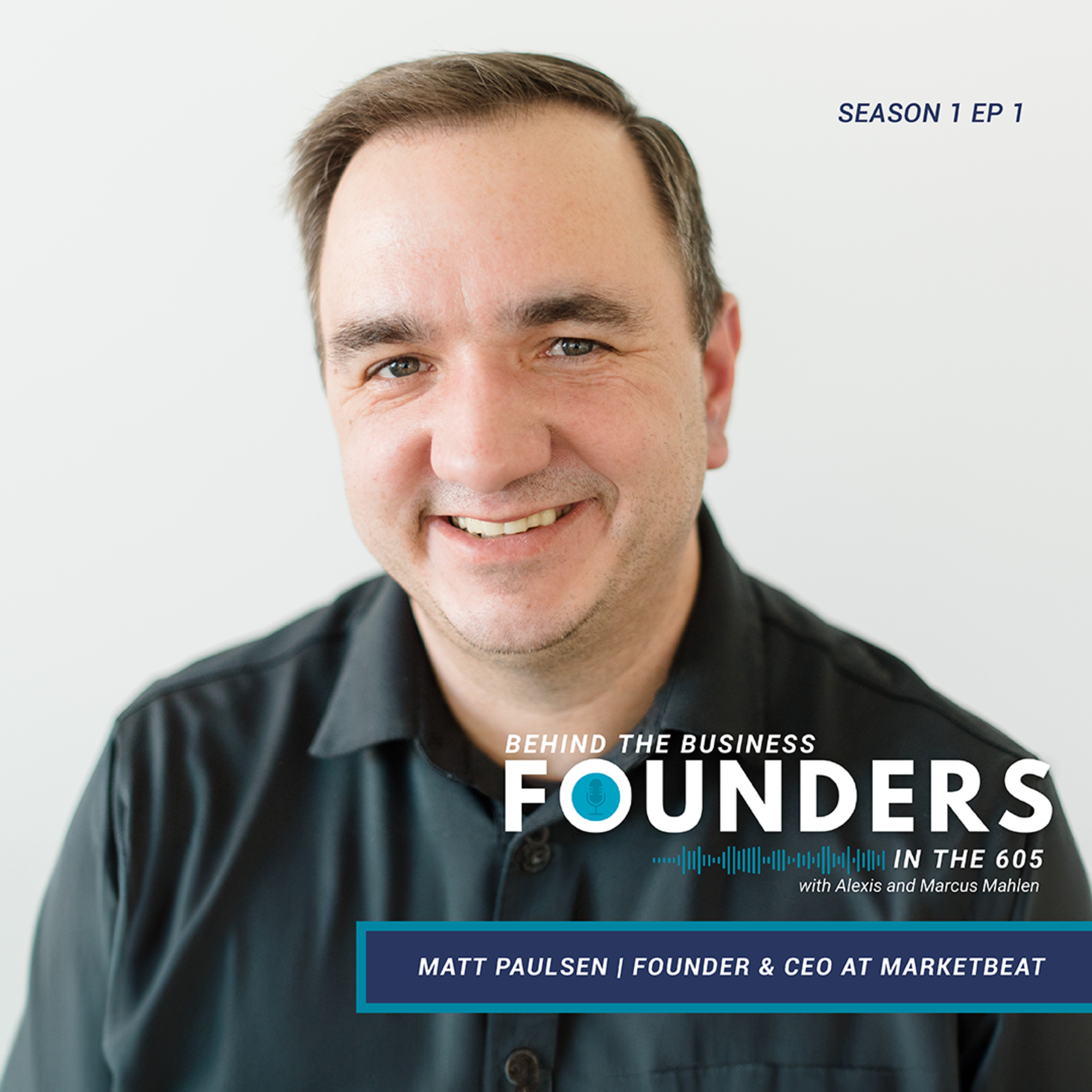
In the inaugural episode of their podcast, Marcus and Alexis Malin introduce themselves as commercial real estate professionals deeply rooted in the Sioux Falls community. They express their enthusiasm for sharing conversations with local business leaders, starting with their guest, Matt Paulson, the founder of MarketBeat. Matt shares his journey from a tech-savvy child in Mitchell, South Dakota, to a successful entrepreneur in the financial publishing industry. He discusses the rapid growth of MarketBeat during the pandemic when retail investors flocked to the stock market, significantly boosting the company's revenue.
The conversation touches on Matt's commitment to community service, his strong faith, and the challenges of balancing family life with business obligations. Additionally, he shares insights about investing in real estate with partner Kevin Tupi, emphasizing long-term strategies over quick profits. Matt's perspective on leadership, community involvement, and the importance of discipline in business decisions resonates throughout the episode, providing valuable lessons for aspiring entrepreneurs. The Malins conclude by encouraging listeners to connect with their work in commercial real estate and look forward to future episodes.
Transcription
9735 Words, 51117 Characters
- Super excited to start this podcast with my wife, Alexis. We are the mail-ins, of course. A little bit about me and my background, Marcus Malin. I'm a fifth generation South Dakota. Was born and raised in a webster, small town, USD, alumni, go kiosk. And I've been with NEICU Falls for seven plus years now. NEICU Falls is a full service commercial real estate brokerage firm. We help buyers, tenants, sellers, and landlords, lease and sell commercial real estate. We also do a property management division. I've been a partner with NEICU since 2020. We've got a full service team, and we are really excited and proud to be a part of the Sioux Falls community. - And I'm Alexis, a spear fish native and a USD grad. Again, go yotes. I have been with Lloyd Companies for a decade now, and I'm also in the commercial real estate industry, and a broker there. Lloyd Companies started over 50 years ago, and is a full service real estate firm headquartered in Sioux Falls with a strong presence throughout the Midwest. Together, Marcus and I have two young boys, Jack, who's two and a half, and Miles, who's eight months. And we're very proud parents. - And we took this on as a side project, because we have a lot of free time. - And in all seriousness, it's something that we get to spend time together. We enjoy talking to business owners and founders. We have a lot of these kinds of conversations organically throughout the community, through our day job, and through our community involvement. And we're just excited to kind of memorialize some of these conversations and allow other people to listen to them. (upbeat music) - We had a really great conversation this afternoon with Matt Paulson of MarketBeeat, most namely, I should say. He is extremely hardworking, driven, self-aware, acknowledges his strengths and weaknesses. And I think every time I see Matt, or I read one of his LinkedIn posts, or Facebook posts, or whatever it may be, I learn something new. - Yeah. So it's really neat to be in the room with him and continue to learn and grow myself. A couple of things that I highlight from Matt, specifically outside of the business world, are his commitment to his faith, family, philanthropy, and community involvement. - Yeah, all stuff that's important to us. Pretty cool to see another, you know, a business leader. And I don't only live that out, but talk publicly about it. - Yeah, absolutely. And a lot that we can relate to, as having two young boys, his children are a little bit older than us, but it's a good example for how we can continue to be better parents as well. - Yeah, yeah, for sure. It's funny because I often reference, not often, but there's been times that I've referenced Matt as the Zuckerberg of South Dakota. - I think that's a good reference. - And his, you know, obviously, MarketBeeat, and he brought up Zuckerberg in conversation, I didn't. And so, yeah, certainly not in reference to himself, but, you know, he's really a testament to the changes in technology too in the last, you know, 20 to 25 years. - Yeah, ever since. - Talking about dial up internet today, which is pretty cool. You know, there's a certain amount of the population that maybe kind of gets their start in coding or computer science that may not be able to translate that skill set to leading others. - Right. - And he does very well at that. And those are different skill sets. And, you know, he talked about how, you know, in college, you start coding and became good at that and turned into a new business, but, you know, probably like most others, he had to teach himself how to lead people and actually run an organization. Very different than, you know, sitting down and writing code. - Yeah, and now he talks about leading his company, his family, and different philanthropy and nonprofit organizations as well. - Yeah, yeah. A few of those of which I'm involved with, that him and I are both involved in downtown rotary and certainly we aligned with Start-up Sioux Falls and things like that. It's fun for me to have conversations with guys like Matt via, you know, this podcast or even if we sit down for a cup of coffee or a lunch because I get fired up about Sioux Falls and growth and business leadership. I probably come home and tell you stories or wild ideas I have and so. A lot of the reasons why we did this podcast is to have these types of conversations. So, I certainly appreciate Matt coming on and we'll look forward to the next. I think if this goes on for a long enough time, we'll probably have Matt back. - I would love that. - Yeah. (upbeat music) - All right, we're super excited for another episode of 605 Founders. Of course, Marcus Malin with my wife Alexis. And today it's pretty fun 'cause we have Matt Paulson. Matt, consider you a friend, certainly a colleague up here in Sioux Falls business community. And we're looking forward to this conversation. Matt Paulson, don't know how much of an introduction he needs to the Sioux Falls business community but CEO, founder of Market Beat. Correct? - Yep. - And several others. - And several other things. - Yeah. - That's the bio these days. Founder of Market Beat. - And a bunch of other crap. - Founder of Market Beat. - Yeah. - A bunch of other crap. Yep. I think when we got it first introduced, you were Falls Angels fun. Maybe first. - Don't fall. - To fall second on the version. - The co-chair of that. Got a venture capital fund called Homegrown Capital Now. It's kind of the adult version of Falls Angel Fund. You in real estate with Kevin Tupi. Started startups who fall was back in the day. Now on the chamber board. And then the enterprise institute board. And who knows what else? - Yeah, who knows what else? - I think I read 75 startups or so that you've been a part of, right Matt? - Yeah, invested in over the years. - So just a couple. - Yeah, and I mean, the range is probably it's little, it's $5,000. All the way up to like a million bucks. So quite the range in there. - Yeah, well, maybe we'll touch on a few of those. Maybe if we have time. - Absolutely. - Basically what you want to talk about. So awesome, what we're looking forward to having you, Matt. So we'll certainly get into the nitty gritty of market beat and your main business. But first of all, you're also a husband, a father, you're a South Dakota and through and through. Give us a little background on kind of your upbringing and where you're from. Kind of take us up to the days of DSU. - Yeah, so born and get us perk. We moved to Mitchell when I was, I think, four. 'Cause my dad got a job at the police department in Mitchell. So the whole family moved. My mom was a librarian at the elementary school. Both kind of blue collar, working parents. Graduated from Mitchell High School in 2004. And I went to Dakota State after that. Growing up was all about computers, of course. I think we were one of the first families that got cable internet in Mitchell, South Dakota. This was, I think, 1996, 1997. So we had fast internet before everyone did. And I was trying, like, everything online. 'Cause I was, you know, nerdy didn't have much friends and, like, loved computers. 'Cause, like, you know, there was, like, it was endless of, like, the things you could find on. You know, it's like a Yahoo directory back in the day. But, so I'm gonna build my own website and then built a, first, like, a personal website about me and then I built a website about SimCity 2000. And that went pretty well. Like, people actually went to it. And, you know, it's maybe like 100 people a day back then. But, so I put an ad on a website. And over a few months, like, it made me a thousand bucks. So, like, sweet, I can buy my own computer with this. And so, bought my own computer. And then, like, had even more time on a computer 'cause that I didn't have to share it. And, you know, learning some programming skills and coding skills. And, kind of, you know, got my fundamental tech skills from there. And, when I went to DSU, like, I was like, okay, I'm gonna be college kid now. What a college kid to do. Get a non-campus job or work fast food or whatever. And, like, so that's what I did. And, I was like, oh, this is kind of sucks. So, I need a new plan to make some money. And, that's kind of when Barkby got started in 2006. So, your computer guy, you know, self-proclaimed, what kind of computer were you using? This is the late '90s. I mean, yeah. So, the first thing we got was a Packard Bell 526. Gotcha. It was 133 megahertz, 1.2 gigabyte hard drive, 16 megabytes of RAM, RAM, Windows 95, I think second edition. So, then I got my own. It was 400 megahertz. It was like a cellar on 64 megabytes of RAM. So, it was a big upgrade. I was super happy about that. Nice. Just spent hours and hours picking it out and ordering it. And, yeah, it could do a lot more of that. Sure, yeah, let's go. I think I still have nightmares of the internet where you would just wait for it to dial in, dial in, whatever was the internet. And was your, why were you guys like the first step faster internet and Mitchell? Was that like kind of your parents? Or was that kind of you driving that? My dad got the hook up. Oh, okay, gotcha. You know, I don't know how he pulled it, like, how he did it. But like, he just knew a guy and like, hey, this place is going to have cable internet. And it's like, we're going to get it. It's like, sweet. Then, like, then you don't have to like get off the internet when somebody needs to make phone call. Right, it's just on all the time. And it is like way faster. So the things we take for granted today. Dial was, you know, 56 kilobits or kilobytes a second. And then cable internet was like 1.5 megabytes a second. So like, it was the first, like, I was the first kid and, you know, my neighbor, like in my city that have broadband internet, which was a lot of fun. That's incredible. It's kind of cool. Do you want to go through a talk a little more about your kind of foundation starting at DSU? And yeah. Well, I guess, do any of these websites still exist? Your personal website you build in the late '90s or your SimCity. I mean, are they-- There are copies of some versions of it on my hard drive. But they're not on the internet anymore. OK, gotcha. Thankfully. Thankfully. So no one can go out there. You know, they were in geosities initially. And geosities is long dead. But then I moved some of them to my mid-continent sites. So like, first we had, I think it was like, the internet was called at home and then mid-copat them out. But I was able to get a mid-com-- I knew my sites were still up. I couldn't access them. But a few years ago, I emailed a mid-com employee. I knew and said, hey, can I get a directory dump of my old website? I want to just see what's in there. And they're like, yeah, sure, here you go. And so I got some copies of those sites somewhere. Probably not anything I'd want to show off today. Sure. Not displayed in your new office. No. Something that's sitting a file. No. But there is inner new office. There is the Madison Day, the leader ran a paper or ran a story in a paper. I wrote the article and submitted it to them. They ran it when I launched back then. It was called American Consumer News, which was a personal finance blog as a student. And so they ran the story, like, top centers. I was like, oh, that's cool. So I got that printed off and got it in the office now. That's really neat. Yeah. Yeah, it's cool. So DSU was kind of a lot of the foundation, right? Yeah, that's kind of where this American Consumer News started. And learned to code at DSU properly. That was helpful. Learned different technology skills, needed some money. So I started a personal finance blog. It was also doing some freelance writing. I kind of worked together, figured out how to do SEO and get traffic to a website and make money with Google ads, kind of all those skills. So I had a personal finance site. I graduated 2008. It made me like $60,000 that year, which is great for a senior in college. I had the one personal finance blog. And I thought, OK, this works. I actually just like maybe launch a few more of these. And then one of those happened to be an investing website. And that investing website took off. And then later we renamed it MarketBeat, because the name sucked. And it's been-- yeah, MarketBeat since 2015 now. Yeah, DSU was a ton of help, though. They-- like, two things that were pivotable. Pivotable-- pivot-- I don't pivotable. Pivotal, yes. First thing was, three of the professors started this programming agency, and they gave me a job. So I actually got to write code on production websites and build websites for real companies that would actually use them. So I built a website for the Sioux Falls Stampede at one point when I worked there. Few other things like that were like Rosebud Manufacturing out of Madison, where it's like these are real business websites and obviously writing code in school or doing anything in school is very different in a real world. So like being able to do that was super helpful. Second thing, DSU had this thing called the Center for Technical Entrepreneurship, where they would-- like, you could submit a business plan, and the Lake Area Improvement Corporation would give you a little bit of money to get started. I think it was like $5,000, like they said, you can get a summer job. Or if you want to work in your business all summer, we'll give you five grand to do it. And it's like, sweet, I'm in. So I took the money and used it to buy ads and kind of grow the website. And it just kind of-- it started out pretty slowly. I mean, it got to $600, so $100 grand in 2010. But then after that, it got to a million in revenue in 2014. And then 10 million in revenue in 2020. And this year, I think we'll do $40 million in top line. Wow. Yeah, there's definitely a scale there. Yeah. $5,000 in seed money, really. They should have took some equity, but they didn't say that. I was going to ask if that was something. I have a question for you. I believe in-- maybe it wasn't 2008. You're going to have to correct me there. But you decided to go back and get your master's correct. Yeah, I got two master's degrees, actually. OK. So tell us what those are in. So first one is from DSU. It was a master of science and information systems decided I wasn't quite ready to be done being a college student, figured out that I could teach for a year and do the master's program and finish it within 18 months. I thought, oh, that sounds pretty cool. I'll do that. So I was making like 30 grand as a teaching assistant. I taught two classes, I think. Then took the graduate classes at night, finished that up. After that was done, moved to Sioux Falls. I was working for a web design firm. Jason, after my girlfriend, no wife, and run a business on the side. And that was kind of the status quo when told about 2012 when Michael was born. My son-- and that was kind of a pivotal moment, because I was doing my second master's degree at the time, which was through Sioux Falls Seminary. I was doing a master of arts and Christian leadership. I had my day job doing web design. And then I had my side business that was growing too. And then all of a sudden, September 5, 2012, three-pound babies born 10 weeks early, like, hey, you got a NICU baby now. Your kid lives in a hospital. You're going to be there 8 to 12 hours a day for the next three months. So that's your life now. It's like, oh, shit. Probably need to make some changes here. So I quit my day job when Michael was in the NICU, because I just didn't have time to do everything. And my business was growing. It's like, OK, so I'm going to just be at the hospital all day. And I'm going to have my laptop out. I'm going to work in my business, work on school stuff, and tell my day job, well, see you later. And it all panned out. So here we are. Which is very entrepreneurial of you, Matt, because I would say quitting your day job probably could have been seen as a little more risky. But it certainly paid off. You know. But at that time, it was 100 grand revenue or something. Or in 2010, you said. And so yeah, I definitely had some questions from my parents and other people. Are you sure this is a good idea? But having and going from part time to full time is just-- it tends to create some really strong growth, because you just never have enough time when you're trying to do too many things at once. Then you just focus on the one thing. And especially with having a kid like that, really gives you way more motivation. So 2013, the business more than doubled. And continue to grow from there. Well. Can we go back to the seminary portion and your commitment to faith, Matt? I think that's something you're vocal about. But I would like to dive a little bit deeper in that. Tell us a little bit more about your faith. So a group of Catholic was confirmed in the church. I'm in high school. In college, I started going to Baptist church. It kind of came to a maybe a little bit different understanding of faith and chose to get baptized as an adult in 2006. It was involved with a college group on campus. Moved to Sioux Falls. It was involved with the church group. And a head of friend, Nate Helene, who works for Sioux Falls Seminary. Right now, it's called Kairos University. But it was Sioux Falls Seminary and said, hey. You got a lot of free time. You want to come take a seminary class, like audit it for free. It's like, yeah, that sounds fun. So I took a class and another class. And I thought, well, when I'm taking these classes, I might as well take them for credit. And just in case I want to do something. So it went from one class to semester to two to three. And then three years later, it's like, oh, I've got a degree now. Awesome. Yeah, it was just like 60 credit hours. So it was a lot of work. But I really enjoyed it. And it's been helpful to me kind of ever since then, as a community leader and a church leader. And just having more of a background of history and understanding and ethics and all that stuff has been super helpful. You talk about on your website the time, talent, and treasure, which I know as someone else, that's a Christian that's really been drilled into me as well. And I would say Marcus, in addition. But can you allude a little bit more with your background and degree in seminary? How does your role at the church look currently? Right now, like in my church, it's very minimal. We were helping a church plant in Sioux Falls. And kind of our time there is done. And we kind of went back to the church we were at before. And like right now, kind of having a rest period in church leadership. And I think that that's good for a season. But I've been in a lot of different roles. But church websites, been a finance team, was an usher, did announcements. I've had all the roles, most of the roles you can have. And I was happy to do them. But I think at the stage in life, I think one of the challenges that I have is a church leader is like a lot of people that are church leaders, they're leaders at home and they're leaders at church. And then they just have a job. I get asked to be a leader in a lot of different settings. And it's tough for me to be a leader at home and then at Market Beat and then at Homegrown Capital. And then on the chamber board, and with startups too follows and then also still put energy into a church. I think I kind of have to make some choices. And with kind of my recent church stuff wrapping up, but it's probably time for it to break from that stuff. You bring up another good point, Matt, that I had on my list of questions to make sure to ask you, how do you determine the best fit for community involvement, whether that be nonprofits or whatnot, especially as a family guy, you have a full schedule. Yeah, I mean, we have two young kids, one of them special needs. So I am at home by 5 o'clock almost every night. Most it's one night a week, I'm out doing something for volunteer stuff or business community. You just end up saying no to a lot of stuff. You really have to be, especially if you're like a scene as like a doer and a person that gets things done. You are very in demand as a nonprofit volunteer. I could be on 10 different nonprofit boards right now if I wanted to be. That would all want me to find ways for them and help them out with XYZ. And I think what I've kind of landed on, at least for my current stage of life, is I am great in a situation where either I'm in charge or I'm definitively not in charge but have a very defined role. On the chamber board, I have a very defined role. You go to chamber board meetings. You help out with your one thing. And for me, that's community appeals. And then you hand out plaques. And that's your job. And everything else to somebody else's job. And totally cool with that. I get it. That's what it is. And happy to do it. Love it. Great time. And then when I started, startups fall as a standalone entity. It was me and Marine. And the money that I brought to the table for it. And that was it. We were in charge of it. It was all us. We're doing a CEO summit next week. That is me, Jody and Marine. And if we don't do it, it doesn't happen. I think the areas where I really struggle is when I'm kind of in charge, kind of not in charge, or I'm on a committee. And then I can give advice. But nobody has to listen to me. Those are situations where I struggle. Because I usually know, I think we should go do this. And then you have to sell people on your idea that maybe aren't as advanced in business or running organizations or even building audiences. Those kind of skills as you are. And I feel like, if I'm the expert, and I know what we should do, that should be enough. I hate having to sell people on my ideas in addition to that. And I think those situations, that's even happened in church where it's like you're on a committee, but you're not really in charge, that's kind of where I struggle. Good point. Well, of course, Lex Cairn in commercial real estate. So we'll talk about real estate, maybe towards the end. But one of the areas where you and I have intertwined a little bit is helping out with your church leasing conversations that we had, I don't know, four or five or six years ago. It's been a little while. And then on another note, I think I've kind of learned a lot through you, just even through Osmosis and Alexis Pregitz-Tarr, me saying this, but I kind of define this system, like family first, work second. And I call it extracurriculars third, which is a lot of like nonprofit organizational involvement. And I found myself this morning having make a decision on that front, and I chose work, and I had to move an extracurricular meeting to another spot. But you lead well in that regard, just kind of laying out what matters. And I think I've learned a lot from you on that front. Not easy to do, but if you kind of have that foundation and you stick with it, I think you make the right-- most of the time, you make the right decision for where to spend your time. Yeah, definitely when you become a parent, you have to make more choices than you did before, right? And it gets harder than you have a second kid, and it gets harder, and your kids grow up and want to do stuff, and it gets harder. And eventually, you just have to be very specific about your yeses and your noes and what you're going to be a part of and what you're not. And when you're in your 20s, it's easy to kind of have one foot in the door and kind of everything. And go to everything some of the time. And when you're in your mid to late 30s, when you have some more responsibility at work at home, you just have to have your priorities this stuff. I've got to get ever no document where it's like, here are all my priorities, and it's like work, market beat, church, chamber board, enterprise institute board, whatever startups you fall with needs, and just down the line. And like, when these things come into conflict, you've got to really weigh them against each other. I think these kind of conversations are helpful for us because having two young boys, and again, when you're in your late 20s, you are getting that establishment in your career. You are being asked to be on different boards or different involvement throughout the community. And then we had children. And boy, your priorities really have to change. Because like you said, we like to be home in the evenings now with our boys. And yeah, it's nice to see other community leaders and get direction from those that maybe have a little bit older children so we can see how they navigate those waters. It is kind of nice, though, like it's just an easy excuse to say no to say no. You don't have to think of a reason to say no to things. You just say, "Nagga kids, yeah, I'm sorry." I'm here, I'm seeing Jeff nodding. In agreement with all this. There will always be another community event next week that you can go to. There's a million things you can do, and there's always another one. One of the great things about Sioux Falls is there's never a lack of things to do. I wrote some of the doubt. A few professors started a firm, and then you worked for them. Yeah, so Josh Pauli, and then Wayne Pauli, and Tom Halverson, where DSU professors-- I was always a DSU professor. So they started a company called Logic Lizard, which is they were going to use student labor to do programming projects for companies. And Josh really did most of the work from what I can tell, but they hired me and a couple other people-- Gowne and Liz, who worked for me now. My friend Jeff worked there, too. And the way they set it up is they were going to do a programming competition, and then the winners got jobs. So I worked with the hardening competitions. I got the job, and it was very super useful to have that experience as a student, because normally you couldn't get it, especially as a sophomore. Right, actually building websites for companies that use them, and so you're like, in your head, you're not wasting your time. I mean, it's very applicable. Oh, I got paid, so. Yeah. Yeah, DSU has always had a really strong history of professors starting businesses. That's why I didn't know that. That's pretty interesting. So obviously, you gave a good background on market beat, very public business, and Sioux Falls. Tell us kind of that 2014 to 2020 run. And then I just watched this movie a few weeks ago. I can't remember the name of it, but it was about the GameStop on Netflix, do you know what I'm talking about? Yeah. So that-- Yeah, that was definitely an inflection point for us. So like, yeah, I want to just talk about that 2020 inflection point. I'll call it the GameStop period, maybe wasn't. But maybe you think of it as that. But yeah, tell us about how did that period in time like, really change your business? Yeah, from 2014 to 2019, we went from like 1 million revenue to like 5 or 6 million. So that was a lot of doing more of the same thing. Still very strong growth. Strong growth, for sure, but not like exponential. It was more like linear. So prior to few people doing it at time, kind of slowly built the team, had a remote team. But it was very much a lifestyle business where like, had a bunch of stuff that I wanted to do was like doing 1 million cups and all these community things. So that was kind of my focus. And 2020 things really changed with the pandemic. And like, with everybody getting free money and everybody being in the second home, people wanted something to do. And the thing that a lot of people chose to do was to invest in the stock market. Like, got my pandemic stimulus. I'm going to open a Robinhood account. I'm going to play in the stock market. Because I can't go to the casino and gamble. So I'm going to gamble on my brokerage account. So that really became a thing. And it really peaked in January, February of 2021, when some people figured out that like, there were so many people betting against EMC and GameStop that if they just kept buying the stock, they could force the short sellers to sell their stock. And that would-- or buy more stock to cover their positions. And then that would just drive up the price even further on those things. So MarketBeat was the website that ranked for GameStop, Short Interest, and AMC Short Interest so that we had like weeks went by where we were getting like a million people a day on our websites. And we were just printing money. It was great. Of course, you know, it slowed down. By summer of 2021, like, all that hype had died. And I was like, OK, we're back to Grombo now. And last couple of years, we've really scaled up the team. We've got a new office. We've scaled up our advertising budget. And that's really scaled up the business as well. You kind of built on that. So like, take your owner of MarketBeat hat off in 2020, 2021, put on your like retail investor hat on. Like, that was a pretty crazy time. I mean, you were involved in multiple ways. But like, I mean, it was really interesting. Yeah, I mean, in retrospect, it's probably the most obvious bubble of all time, right? Yeah, like, you know, I thought there was a bubble. But I also, I thought there was like a bubble in 2019 of like, because the stock market had just like gone up year after year after year since 2009. It's like this, these trains don't last forever. Like, when's the correction going to happen? So I figured 2019, like, we got to be due for a recession. And like, yeah, maybe there was a short one during COVID, but then no, it's like, we're full, full speed ahead on the economy. And it wasn't until 2022, kind of when that slowed down, but even that wasn't a truly session. But like, in our industry, it was. A lot of people, a lot of our competitors saw their revenue go down, like 40, 50% in '22 compared to '21. We were down like 20, 30%, but then in '23, like, we made up all those losses and beat our 21 number. And now 24 is like in great so far. Well, yeah. Well, I have kind of a pivot in this conversation, going back to reading your bio, Matt. At the end, you mentioned some dreams or aspirations or things that you see for the future. I wonder when you read it, because I changed the thing recently. OK, I read it this morning. I did full disclosure, that's what I was doing my prep work. But you mentioned running for elected office. Is that still in there? It's still in there, so I'm curious on that. The perfect opportunity to run for city council this year was up, and I did not buy it on it at all. So I think that dream has probably gone for a while. OK. That's so like a post-Sowering Mark Beat idea now, table. It's been tabled. OK, well. Although I am chair for a candidate, and that person didn't have an opponent, so now she's going to be on city council. We don't even have to buy ads or do anything, so that's nice. There you go. Your job's done. Yeah. Yeah, very cool. Well, let's talk about Mark Beat and the future. And I mean, I think you've talked publicly about how you've had offers to purchase, I think, or obviously you could pursue it on that. I would assume quite a bit. You've talked publicly about why you've declined those or haven't pursued them. What does that look like, moving forward? I mean, are you CEO of Mark Beat? And it's a rocket ship business for 10, 20 years, is it year to year? I see what happens when people sell their business. And I don't see a lot of great outcomes. The story is, you sell your business to get a boatload of money, and then you ride after into the sunset. But what really happens more often than not is the due diligence period on the sale was painted about the buyer will end up retraining and not give you the amount of money they said they did. And then you're stuck working for somebody else for three or four years, and then you're out, and then you got nothing to do. I have seen that story happen several times. The only time I didn't really happen is Michael Zurker and that's just because he got back on a horse and did the next thing. But what's Eric McDonald doing now? Not a whole lot. He's got a couple startups. They're not going super awesome. And yeah, what's John Meyer doing now? Running leadership's out the code. That's great. But it's not the same as running a business. And other stories, same kind of thing. It's like, I don't want to be that guy that sold his business and is looking back to the glory days and running the thing. Doesn't have a whole lot to do. Kind of bored, kind of unhappy. That just doesn't sound appealing to me, because don't need the money. So why sell the business? Love running a business. Love the team. Love the environment we've built. Just love everything about the business. And like, well, if I never sell the business and just like close the doors at the end of the day, my wife's going to be fine. I'm going to be fine. The kids are going to be fine. It's not a financial decision. For me, it's a lifestyle decision. Well, that's pretty wise. And I mean, it's cool to hear that. Obviously, local homegrown Sioux Falls company sells to go to Guy Sioux Falls guy. I mean, it's cool to hear the cheer kind of doubling down and investing in the future. And obviously, you still have young children. So you are synonymous. But there's also so much opportunity left. Because I think there's probably 15 million people in our market. And I've got four of them. And I want all 15. So I'm just going to keep going. I see the path to 50 to 100 million revenue. And why not go for it? Why not? So talk about you invest a lot of money into add spending. Talk like raw numbers. How much do you invest back in your business per month per year? I mean, it's a lot. Yeah, so in terms of advertising right now, it's about a million dollars a month. But we break even on that 90 days. So if I spend a million dollars in February by May, we've gotten that money back. Then anything after that that we make on the subscribers that sign up like during this month is gravy. And over the long term, and I say like two or three years, that long term what we call LTV to CAC ratio or lifetime value of a customer or two customer acquisition cost, like we're making back $6 or $7 for every dollar. We spend an advertising. And like, where else are you going to get that return? And so like, yeah, I'm going to pay all the money. Yeah, I can back into advertising because the return is fantastic. Then you must have a-- obviously, of a really professional team that's helping you understand that return. Yeah, that team is me. OK, sure, sure. But we have the data to prove it. So one thing that we've done super well compared to a lot of media companies and newsletter companies is that when somebody buys something because of our list, I know it. So I can say, Marcus signed up because he saw this Google ad. He went to this page. He signed up for the newsletter. He clicked on this ad. He bought this product for this price. And we got this commission on it. So I know that everybody that signed up for a specific ad during a specific month, we paid $x for them and we made $y back. So there's no question as to whether or not the advertising or any channel is working. And that's kind of like one of our magic secrets. Yeah. That is amazing. And also a little creepy. Yeah, you know, that's how these works. Yep. I know. I mean, Mark Zuckerberg isn't a billionaire because he's not spying on you. Right. Yeah. Good point. Yeah. I wanted to just have him to start up through falls a little bit. Yeah. Yeah. And, you know, I would say our paths cross there quite a bit for a while. Why did you start that? What kind of gaps did you see? And then how did that translate and what it is today? Yeah. My history with the entrepreneurial ecosystems who started in 2014 when one million cups started got involved that right away started doing some of my own events on like maybe like one million cups is off a week. So I was like, hey, anybody that's around. Let's do this event. And I love a good time. So I did that and got more involved. Like with Falls Angel Fund in 2016. I joined the Zeele board in 2017. So that'd be the Zeele Center for Entrepreneurship, which was the startup incubation center before I started to fall as became a thing. And 2018 was a really tough year for this startup ecosystem because like the bakery was around, but it was like not going well when it closed. The Zeele Center had turnover with staff and just didn't have product market fit. Like it was kind of a solution, but it wasn't the right solution. Didn't have, and then so like we had like an interim director like this not working, I cannot do what I want to do where I think needs to be done through the organizations we have today. So it's like I'm just going to do my own thing. And that was quite the unpopular decision at the Zeele Center, but it was ultimately the right move. So I did like the problem with the Zeele Center was there was no funnel to it. Like there was no way to like get people in the door. Like there's like we have all these people that offer services to businesses like Small Business Development Center and the SBA and Enterprise Institute and the Zeele Center and GoEd, but like you have to like know about these things to use them. And these organizations didn't really have a marketing strategy of their own network. So I thought, OK, what if we just became like the front end for all these things and like build a giant email list and build an online community and do in-person events and have speakers and then like we'll know who all the people that like could benefit from these services are. And then when they need help, we can say, oh yeah, go talk to this person. And you know that strategy was really effective. I think anyway, because we built a Facebook group of 7,000 people had some big in-person events. Couple hundred people would show up to them. The email list is 3 or 4,000 people now. And now that we have kind of a product offering that works, which is startups who follows the new built like we got a building down the street over there. That place is busy now. But it took like having the audience of people and then like having the right offering. And so like startups who follows had to become a thing. And then the zero center had to get replaced by the new building for like the stalwart. So like I can take a lot of credit for the audience building. But like to get us to move downtown like that took so many people Bob Munt organized kind of the whole transaction. But like so many different people had to be involved with that to make it work like. Because Southeast Tech took over the old zero center. And then but they needed money to remodel the building and get equipment. So like Stanford and Avera gave them money. The city gave startups who follows the building down town to use. We got like tenure release on it. Needed to raise money for the downtown building. Four through falls is involved. School district is involved. So you have like all these entities working together to like make this kind of transition happen. And man, Bob deserves a lot of credit for that. Yeah, I think this state legislator had to appropriate some funds to the Avera Stanford now medical building right now. They call it a health care simulation center. Health care simulation center, which I don't think that's open yet. Now they're going to do their ribbon cutting in a month or two though. So I'll get to go see it. It's coming up. I got a tour last fall and it was very under construction. But like the front part kind of looks the same. But like all the back rooms are very different now. That'll be fun to see that. But yeah, I mean, it never recapped that in person, I guess. But I mean, yeah, it took lobbying on the, it took lobbying in peer. It took lobbying to the city council. Not like paid lobbyists, but guys like you and other just business people that are. Yeah, I'm honestly like didn't think it was going to work. Really? And I'm surprised it did. Like, because you know, it's very hard to convince the, let's say, the powers that be in the city and do innovative stuff and I'm surprised we pulled it off. Yeah. No, lots of leadership there from Air 10 Haken and, you know, being real estate people. We always kind of looked at that building as like, gosh, that's a shame. That's like half occupied by the parks department. Yeah. And so it was really happy to see that. Five years. Yeah, yeah. We raised a million six to got it and make it cool like it is now. Mm-hmm. Yeah. That was a pretty cool process. Matt, you have a lot of creative strategies that you've worked on for through Market Beat, through your personal time. I think of like the holiday plaza, your Market Brew, all of those, which, which ones have been some of your favorite? I think my favorite one is the Market Beat Burger. We do with Chef Lances and, you know, there was some drama around that like there is with everything these days, but like, we had a burger with the Market Beat logo on it and I just thought it was cool and it tasted good and like, we just had a lot of fun with that. We tried that. Yeah. It was very good. Yeah. So when you go back to Chef Lances, does he still make the Market Beat Burger for you? They actually don't make burgers right now. Like they didn't even have an entry in this year's burger battle. Really? They've, you know, when they stopped doing lunch and became a dinner only place, like they've, they're really just like a nice dinner place now and like, my wife and I go there, we bring the kids and, you know, they're great, but it's a, you know, that restaurants changed a little bit in the last few years. Hmm. It's been a bit since I've been, uh, again, food is fantastic though, like, like half the time we want to go, we can't even get a reservation because they're just booked. Yeah. I've heard that from a lot of people. So. Well, maybe, uh, Sharapa place, you know, where you know offices needs us some sort of restaurant content that has a partnership with Market Beat. Get your share. Yeah. You know, the piece of business advice I get over and over again is don't open a restaurant. Yeah. I agree with that. Someone else can open that restaurant and you can. Yeah. I will be your best customer. Yeah. There you go. You can be a customer. The only people that should start restaurant businesses or people that grew up in it and it's like, you can't be like just a passive restaurant restaurant. Like that's not a thing. You've got a, like if you're, uh, you know, if you're Ken from, uh, yeah, Ken Bay Shore. Ken Bay Shore. Ken Bay Shore. Yeah. Ken Bay Shore. Yeah. From, uh, more reason. Minerva's in like, he is there all the time and like, that would never be me. So I got, I got other stuff to do. Mm-hmm. Yeah. Well, let's, uh, let's kind of wrap it up on real estate if you're with that. So, um, Kevin Tupi, who is, you know, of course, certainly a client of Alexis and her firm. You know, we all kind of intermingle in this, in this department a little bit. Tell us about the genesis of, of working with Kevin and, you know, for a guy that's, you know, life is, you know, revenue has been made out of stocks and bonds and, you know, financial news to, to invest in real estate, uh, was that challenging to make that decision? Was it, you know, was it an old brainer? Tell us, uh, tell us about that. You know, I, I love real estate, just as an asset class, um, but obviously I'm not a guy that would have time to like, go be a real estate guy. Um, so you know, normally the option or like, go invest in syndications, um, but honestly, like a lot of syndication deals are not good. And just in terms of fees and, uh, fees and more fees and like, you're, pay it, like, you're putting up all the money and somebody else is taking a good chunk of the benefit. And I just thought, you know, this is not appealing to me. If I'm going to go do that, I might as well go invest in a real estate investment trust, like public one. Um, but then the kind of the, the Kevin opportunity came along, uh, guy named Josh Sakko introduced us and said, you two are both really smart and you both do really well. You guys should meet and hang out. So Kevin, I had lunch at Crave, um, and he got the Mexican roll and, uh, yeah, he gets, I always get some Mexican roll, um, yes. Anyway, yeah, my go to order is that you can stir fry there. So we had lunch and, um, just jatted and like a little bit later, like he was going to buy an apartment complex and said, hey, do you want to buy five percent of it? And I said, ah, sure. Why not? Because it wasn't ton of money. I thought, okay, we'll see how this goes and, um, of course it went well and, and it's like, hey, I'm going to buy another one and then like, like, I got money. I'm in for another 10 percent and, um, you know, just kind of didn't ever stop like in 2020. I think we did like 17 transactions. It was wild. Um, yeah, 2020, 2021 would interest rates are super low. We went super hard and like, uh, some of the other people that invested Kevin, like, couldn't, like, just didn't have the cash to do it and I did. So like fine, I'm going to, I'm going to ride this thing the whole way and now we're, I think we've got 37 properties together, uh, we're 50, 50 and a lot of stuff and then like on some of the apartment stuff, like, I think I, you know, I'm kind of in that 20 to 25 percent depending on the deal. And, uh, so it got a ton of money real estate, uh, it's been super fun. Returns have been great, uh, tax stuff has been great as well because, um, you know, it's got, got a lot of income to write off and, um, that's been good. I keep trying to convince my wife to become a real estate professional, uh, so that would help. Yeah. Yeah. Yeah. I haven't quite persuaded to do that yet because I think I've got like three million bucks and like unrealized passive losses I can't use. That's like, the best thing you can do for a family is go become a real estate agent but have not persuaded her to do that yet. So are you and your wife Starbucks people? Uh, I am. My wife is not, uh, we own like 10 Starbucks is like one of our investments. So, you know, when we were eights, we're into threes and you could buy them at like five and a half caps. We did that often. So we've got 10 of them. Uh, we got several and Mitt and Sioux Falls. We got one in Mitchell one Fargo, one in Ankeny, uh, Iowa, um, you know, they're, they're like fine, but they're like, you know, high, very high credit tenant. So like, you know, make tiny money off of them, but they're also very low risk and they're 10 year leases. It's almost like a bond. Yeah. Yeah. Starbucks is, uh, yeah, used to be kind of Walgreens or McDonald's was the real estate class that, you know, kind of set the cap rates and now it's Starbucks. Yeah. Yeah. Interesting. What have you learned from Kevin? Uh, you know, we're, we're looking forward to having Kevin on the show, uh, you know, at some point. Yeah. We'll probably ask him the same question, maybe, uh, about what he's learned from you. But yeah, what have you learned from Kevin in terms of business ownership and, uh, entrepreneurship? You know, he and I are very different like I am more conservative. He is more borrow all the money you can and like, you know, leverage as much as possible. So that's, that's been an interesting balance. Uh, I think one thing that I've, we learned from Kevin is just like discipline on, on deals, um, you know, in, in my, the financial publishing industry, there's a lot of room to be generous. But in real estate deals like, that's not really the case. Like you're looking for max cash and your stuff all the time. Like, you're not giving people deals to be buddy buddy because like, they're, when it comes time for them to tell you something, they're not going to be buddy buddy either. So like, it's more of a, you know, you, you hold on to your assets. If you get the best interest rates, you can, you keep expenses as low as possible. Uh, and if you, you're going to sell something, you're going to sell it like at a premium or you're not going to sell it at all. And like, that's the, that's kind of the industry. So I've learned like just the old discipline from him, like, you, you can't give people a good, good deal just because you like them like, because like the end of returns not there. Mm-hmm. Yeah. And everyone has to have kind of equal skin in the game or however it's deluded via percentage shares. Yeah. Yeah. And it's, uh, well, one thing, you know, it's, it's, it's certainly think Kevin would say it would be, you know, it's, it's a long term, right? And that's, I think what you guys strategy is, is buy and hold long term and, and not sell. And if that's the case, it's a, it's a totally different outlook on that investment. If you're looking at it over the 20 year horizon, you know, absolutely. It's, uh, definitely not like sell it next year investments, but, you know, if you're, you know, Kevin's in his 50s, I'm in my late 30s and, you know, I think there's probably, uh, you know, at some point I might, you know, we're either selling assets when he's older or I'm buying them from him. So it's, uh, kind of a natural retirement plan for Kevin and natural investment plan for me. Mm-hmm. I'll find some guy and his, you know, 10 years younger than me that's doing well and sell them to him, um, or gal or whatever down the line. Yeah. Cool. You alluded to retirement. Yeah. What does retirement look like to you Matt? Oh, well, I mean, I mostly don't want to like leave problems for other people like to, to fix. So, you know, I think as like when I get into my 60s and 70s, it will be, uh, time to wind down and a lot of the less passive assets, um, but I mean, I don't see my self retiring. I will work until I'm dead, um, because I enjoy it. Yeah. Yeah. Well, uh, any closing comments, Matt, if not, uh, we certainly appreciate you coming on. Thank you for your leadership, your friendship. Yeah. Thank you. Awesome. That's great. Thanks for coming on Matt. Appreciate it. Yeah. Thank you. Yep. Thank you so much to our listeners. We look forward to hearing feedback on these podcasts and thank you for listening, as well as thank you to our partners at the Samson House, Jeff and Val Samson for producing and recording this episode. My day job is in commercial real estate. And so, uh, if anyone out there is looking to have a conversation about commercial real estate or services we offer, check out any isufalls.com. You can find more information out about myself. And if you want more real estate options, please go to LloydCompanies.com and you'll find my information, Alexis Malin, uh, on that website. And of course, thank you all for listening to us. We genuinely appreciate all that you do for us, um, just, um, just listening through all of these podcasts. And if you want more, please go to 605founders.com to see a full list of our current podcasts. Thank you.
Podcast Summary
Key Points:
Marcus Malin and his wife Alexis start a podcast to discuss business and community topics in Sioux Falls.
They interview Matt Paulson, founder of MarketBeat, discussing his entrepreneurial journey and insights on leadership.
The conversation highlights the importance of community involvement, real estate investment, and balancing family and work commitments.
Summary:
In the inaugural episode of their podcast, Marcus and Alexis Malin introduce themselves as commercial real estate professionals deeply rooted in the Sioux Falls community. They express their enthusiasm for sharing conversations with local business leaders, starting with their guest, Matt Paulson, the founder of MarketBeat. Matt shares his journey from a tech-savvy child in Mitchell, South Dakota, to a successful entrepreneur in the financial publishing industry. He discusses the rapid growth of MarketBeat during the pandemic when retail investors flocked to the stock market, significantly boosting the company's revenue.
The conversation touches on Matt's commitment to community service, his strong faith, and the challenges of balancing family life with business obligations. Additionally, he shares insights about investing in real estate with partner Kevin Tupi, emphasizing long-term strategies over quick profits. Matt's perspective on leadership, community involvement, and the importance of discipline in business decisions resonates throughout the episode, providing valuable lessons for aspiring entrepreneurs. The Malins conclude by encouraging listeners to connect with their work in commercial real estate and look forward to future episodes.
FAQs
The podcast is hosted by Marcus Malin and his wife, Alexis Malin.
Marcus is a fifth-generation South Dakota native and a partner at NEICU Falls, a commercial real estate brokerage firm.
Alexis works for Lloyd Companies, a full-service real estate firm in Sioux Falls.
The podcast aims to have conversations with business owners and founders to share insights and experiences with the community.
The guest mentioned is Matt Paulson, CEO and founder of MarketBeat.
Matt discussed his experiences in the business world, his commitment to faith, and his community involvement.
Chat with AI
Loading...
Pro features
Go deeper with this episode
Unlock creator-grade tools that turn any transcript into show notes and subtitle files.
 PodcastTranscript AI