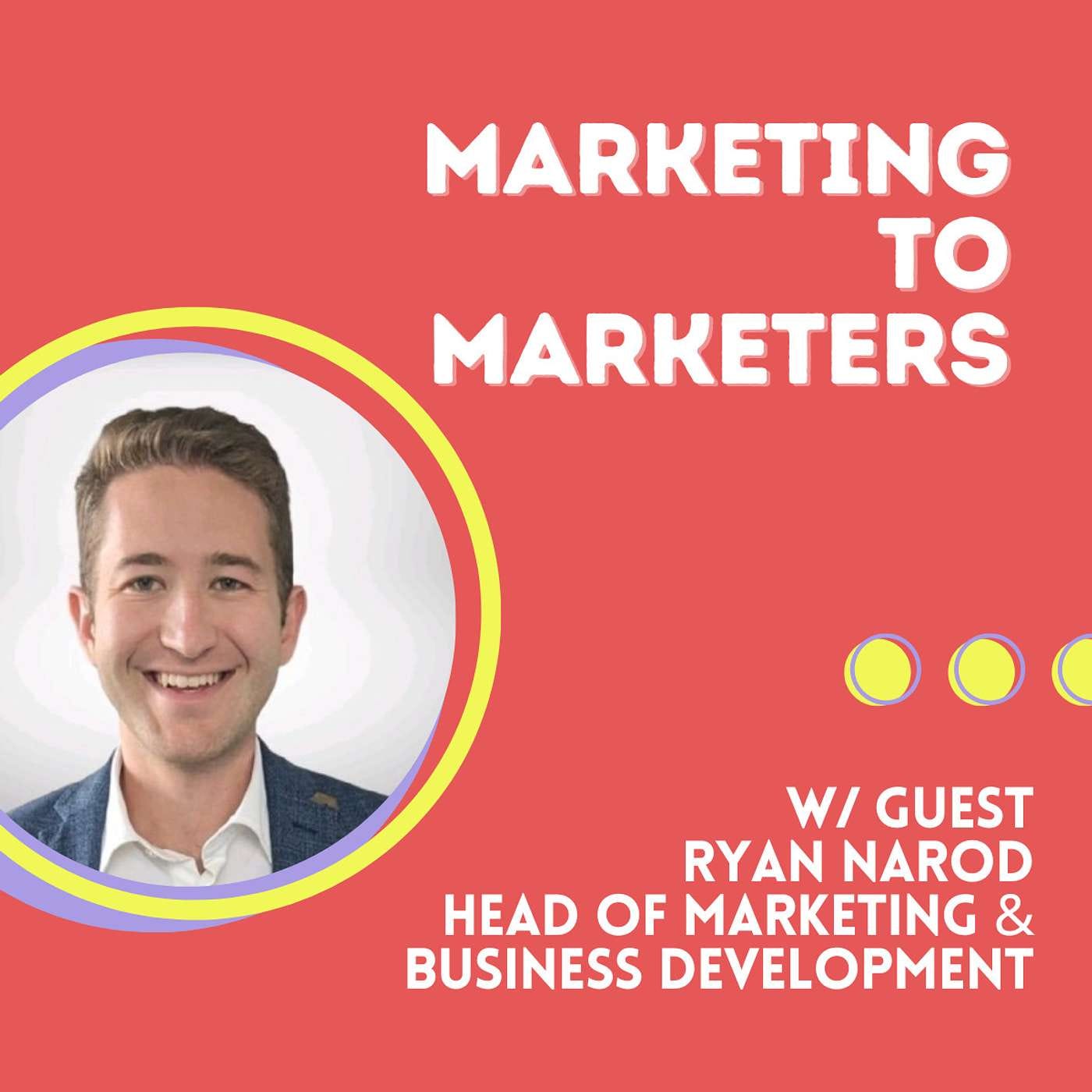
In der Podcast-Folge von "Two Pizza Marketing" begrüßt Melissa Moody Ryan Narod, Marketing-Leiter bei Mutiny. Das Gespräch dreht sich um die Prinzipien agiler, kleiner Marketingteams ("Two Pizza Teams"). Ryan schildert seinen Übergang von Google zu Startups, wo er Marketingteams von Grund auf aufbaute, und betont, dass kleine Teams Kreativität fördern. Ein zentrales Thema ist das Marketing für andere Marketender. Ryan erklärt, dass Marketer neugierig auf "hinter die Kulissen"-Einblicke sind und gute Marketingarbeit zu schätzen wissen. Mutinys Ansatz beinhaltet ein unkonventionelles Branding mit einem Waschbären-Maskottchen namens "Achoo", das aus einer spontanen Team-Idee entstand und den rebellischen Geist der Marke verkörpert. Ausführlich wird die KI-Bildungskampagne "Survivor" besprochen, die als unterhaltsames, an die TV-Show angelehntes Spiel konzipiert wurde, um beschäftigten Marketern praktisches KI-Wissen zu vermitteln. Ryan erläutert die Entstehung der Idee, die hohen Qualitätsstandards bei der Produktion und die Herausforderungen der Umsetzung im engen Zeitplan eines kleinen Teams. Die Folge unterstreicht den Wert von Autonomie, kreativem Freiraum und der Fähigkeit, mit begrenzten Ressourcen durch innovative Formate Aufmerksamkeit zu erregen.
Transcription
6335 Words, 32806 Characters
Welcome to Two Pizza Marketing, the podcast for small team marketers with host Melissa Moody and Ashley MacGovern. You might have heard about the Two Pizza Rule, which says the most agile effective team meetings are ones that are small enough to only need two pizzas for the meeting. Let's get into the Marvellous Mess, that is Two Pizza Marketing. Hi Two Pizza marketers, you're back with Melissa Moody here today with you. Very excited to introduce a guest who has just recently put out something into the world of marketing that I know you have seen that we're going to talk about that. He is head of marketing at Mutiny, he is a fellow ex-googler like I am and I'm very pleased to introduce you all to Ryan Narod. Welcome to the show Ryan. Happy to be here, thanks for having me. Yes, now before we turned on the recording, you and I actually explored what Two Pizza Marketing even stands for. So for our listeners, maybe they know, maybe they don't, but it means you have a team that could be fed by two pizzas or less because we need these teams that are small and scrappy. How does that hit for you? Like what teams are you working with now or in the past that sits that bill? Why are you here with us today on Two Pizza Marketing? Yeah, I love that phrase. I've never heard it before, but now that I've heard it, I can never unhere, I'm going to start calling myself a Two Pizza Marker there. But yeah, ever since Google, obviously that that was not a two pizza team, that was a thousand, filet mignon team is that on a term, ever since there, I joined a company called radar to the marketing there when we were 10 people also built was the first marketer and then built the marketing team from scratch. Up to maybe five or six people and then you need also joined would we were about 10 people was the first marketer and they'll now built the team to think they have 11 people. So we're still I think now we're we're a little bit past the two pizza stage, maybe we might need three or four, but still very much scrappy creatives and yeah, it's the only way. I think being the two pizza team actually forces creativity, which helps you kind of cut through the noise and innovative ways. You are my people you are my people the idea that not only are you on a two pizza marketing team, but you are building these teams from first marketer through the growth. That is a hotness and we love it that's why we that's why we do it we love it, but not only have you done it once you're doing it a second time you are a repeat two pizza fender and I'm here for it the first question I have to toss you because people hear the word Google you know they do this and they want to hear more. Did you leave Google for radar or you just walking away from Google because it for a certain reason tell us about that transition because going from massive you know fang big tech to a ground level startup is a huge swing tell me why tell me how yeah so. I am more so identify as a startup type person state before Google I have my marketing agency so that was the smallest of small startups it was really just like me my co founder and about their contractors and so you know took the role at Google because like why not right everyone dreams of working there so that felt like a no brain or it you know I think even though you're within. Google being a multi hundred thousand person or you're still within a product area or function and so I was in I was in the cloud business and when I joined cloud marketing was 40 people which you know still I think it's start of terms that's a big team but the 40 people scale to like three or 400 people in just two years so that was I think the journey of a lifetime and I think you know it's it was like dog ears there learned a time. I had a ton of yeah autonomy is you know fairly early in my career and you know Google I think one of the cool things is because you're so flush with resource you are powered to do things that you just can't do it an early stage and so if you need to hire an agency to go launch some sort of create a thing for you like that's within your disposal I remember. Signing Geos that were like million dollars here million dollars there so it was fun but but part of me I had this itch to I was like okay I you know they have these great agencies they write really great copy but like I want to write it myself and so I had this itch to just kind of get back into. Doing things myself not letting my skill set atrophy and you know when I had the opportunity to go start marketing team from scratch it felt like maybe it was slightly under qualified but that's that's how you grow and so I. I don't have first into that opportunity learned a lot over you know my two years there that's where I became one of me first customers and just through that relationship I knew you know it's not a matter of if it's matter when I go at mutiny and mutiny was my first time marketing's marketers so that was the next big career unlock for me. First one of our three Google to a startup was really like how do you go and build a function from the ground up the next one like how do you achieve excellence in marketing and you can do that by marketing to marketers. Let's peel the onion back on marketing to marketers I have been there we did it with gated as well I mean slightly broader group the B2B professional set but. Marketers are a wonderful thing to market to and they are tricky to market to tell me I mean I'm going to jump right the tactical what are some of the things you learned what if somebody out there's listening and marketing to marketers what do they got to know. I think the main thing is it it seems like an intimidating group to market to because the bar so high but I think marketers are genuinely I think curious about what's under the hood so you can be very meta in what you do you can we do outbound emails are automated and we tell people were like hey this is automated do you want to see how it works and people are just curious to engage with that kind of stuff. I think people marketers appreciate good marketing so you know I think a lot of our campaigns will talk about survivor in a bit but the leverage elements from B2C marketing and for culture like just the pattern interrupt what you typically see in the B2B world scrolling on LinkedIn and I think we built a would built a reputation as a B2B company playing the B2C playbook right and you know now a bunch of companies have. A bunch of companies have a cute mascot and all this kind of stuff but I like to think we were early there and we continue to innovate kind of bringing this sort of fun bold brand to B2B which I think even if customer the prospects are in market for solution they can at least appreciate what you're doing and one to learn and sort of replicate that for themselves so a lot of. marketing is not paid by our product it's. Here's how we think about marketing let let's share that with you let's be an open book built our community on that premise and we're here to build relationships for the long term and not necessarily just sell your product. I think anyone in market today can see that you're not going about it the same way you're not bringing the same old playbooks right you are you are leaning on inspiration from B2C you were leaning on even I will sell inspiration in the madman style like how do we stand out how are we memorable I mean there is so much unmemorable work in the B2B marketing space and you guys are really breaking that mold for sure. Specifically I want to ask you this is hilarious but I have to ask me if I'm curious and that's how this podcast goes talk to me about the raccoon there's always this desire to have a mascot right and their positives and negatives how do you guys actually view and use the raccoon and why does it make sense for you where it might not for other people. Because by the way for those listening the raccoon is the muni I mean let's call it a mascot right is that is that what you actually refer to a man. We do call him a raccoon mascot is name is a two and I shouldn't say his a two has no gender here we're name is a two yes they're name is a two of course and a true one of a sneeze like the Robin Hood movie. The sneeze and the story of how I should come to be maybe I'll share this is actually the people keep asking how did you come to be so true came to be because our early teen white camping. And like literally intense this would you know when it was just a few people and there was a team brainstorm on you know what should our brand be what should stand for you know people were sort of throwing out ideas like it should be bold and it should be spicy and it's rebellious and all this stuff and like suddenly a pack of raccoons around. And that came to be and then the team was like how what should we call the raccoon and one of our team members Stella she was like I have an idea and as she has the idea she start she likes third sneezing and she's like a two everyone's like that is a great name so that is how to the raccoon mascot came to be. Even though it didn't come to be as a result of this like mastermind branding exercise it actually feds really well right because mutiny as a brand like the word mutiny what it stands for is into rebellion against the status quo right it's a rebellion against martyck if you will right the martyck what is it martyck 7000 right now they're super super fragmented and what we're trying to build is. A growth engineering team in a box to help companies really unlock growth without having to rely on a bunch of engineers data scientists all the luxuries we had a Google right and so that's why mutiny stands for as a as a brand and as a name of the company and what better. mascot to represent that then a fiery raccoon digs and dumpsters and is the underdog and it's like it's sort of the underpinning of how we think about our scrappy marketing right like our early marketing was not hiring agencies that was like let me hire the random. graffiti artists to draw our logo that's literally who created it let me hire a rapper to make us a music video it was it was all these sort of like let's find local talent to do cool thing to think outside the box and the raccoons sort of fit fit really really nicely with that. I love it you've got a little band it as your mascot that's the way to go free shot of that that and as we hired people you know I think we created an early version of our brand off and you know what's what are the brand values what is it look like in market what is it not look like. And people have given it a life of its own so steward Hill House who I hired to from content he's incredible she. He went like kind of on his own and decided like he's gonna go come at this to this things on people's LinkedIn posts as a true the mascot and write like spicy things that and sign off saying like your favorite record mascot purple heart and like that's caught on and people are like ooh and now we see on LinkedIn people are like I can't wait until it's you comments on this post so you know I think we've just given people the freedom to. Take our brand and take a two and express a two in in their own ways and it's really cool to see. I mean it might be one of the perfect shining examples of two beats of marketing which is do something that's inspired by the real team being together and coming and unleashing creativity and don't overthink it right like you yeah like you said you could have done a. Three week brand design sprint to come up I mean God knows I love a good brand design sprint but also just as wonderful is to be momentarily inspired. I think it's something fun that makes people smile and move on right like keep go and do the work. To that I want to transition right into this campaign that you have done recently and I think anyone listening if they've been anywhere near LinkedIn and if they've had any relationship to meet me. Through newsletter or what or product usage will have seen it but I have been blown away by the survivor campaign now for those listening it's a set if you don't know it's essentially a whole content series around using AI in very tactical ways not. High level be asked but like tactical ways to use AI but it's presented in this reality competition all you inspired by the Jeff probes survivor so that was my dumb summary of it I have personally enjoyed many many of the actual content what you call episodes or sessions but I'd love to hear from you let's start at the very beginning. How is this how did it come up the first time who had this idea where did it come tell us. That wasn't a dumb synopsis at all by the way that's better than I would have described it but yeah we you know I think it all came to me and that we were one of the earliest companies to. We'll be talking about AI as a core pillar of our product and then you know Chad GPT came out earlier this year and now every company is an AI company and so we wanted to sort of the underlying business goal was like how do we make sure that we're still top of bind it in the AI conversation when everyone is calling themselves in a company and so. You know again marketing to marketers and realizing that the way we win as a marketing team is not by pushing our product or even our. You know direct use cases but educating marketers on how they could be successful in their work at their careers more broadly you know we we kept hearing from marketers over and over again that. AI is something that they feel like it's important for them to master but they didn't exactly you know they were everyone felt behind myself included right i'm like I see all these problems but. I feel like i'm still doing certain things the dumb way and so. What my belief was is that you know generalist marketers are it like it sort of pays to be a generalist marketer right like that's how you're going to. You know rise to leadership be a cm like you need to know a little bit about a lot of things and probably especially relevant for your two pizza crew and. AI can be the thing that actually helps you be a generalist even faster because you don't necessarily need to have a specialty and competitive intel like have AI help you there you don't necessarily need to be like. The world most experience of them planner how they I built you an event agenda and so we've been thinking a lot even before the idea for survivor in the game like how can we actually bring AI education to various disciplines of market that was like one idea that was like parked. In our heads the other one was every quarter or maybe twice a year we would do these like competition slash games so in march we did march badness so it was a. Bracket style thing it was limited to our customers but our customers loved it they competed for based on using our products and interesting ways they competed for you know to to sort of like win through the bracket and they were cool jerseys and it was all like basketball and so. People have like come to know us for these games challenges and so we were kind of thinking about like what is the new version of march madness for customers and someone on the team suggested survivor and. You know playing the game and we're all really big survivor fans so we we love that idea and so but at that time it wasn't necessarily like the thinking was that let's make that about AI and. As soon as it like clicked for me that survivor could be spelled with AI it like merged with that other idea that was parked and we were like let's do this let's go big all this right like let's bring. AI education the masses let's do so in like not a weapon or format let's do something really interesting and different let's game a fire and. You know let's make this bigger than you let's go partner with a whole bunch of companies to do this let's get a ton of distribution let's make this. Let's have like killer speakers in the beginning let's have in person events at the end like we were like let's go we're going to do this this is going to be big so a few of those ideas kind of clicked into into place at the right time and. That's how the idea was born I'm going to ask now tactically one of the things that I've always found is the challenge for marketing to marketers to circle back to kind of our earlier point is time marketers are have no time like none whatsoever small tangential story I was desperate to learn mid journey putting it off putting it off putting it off I finally got covid for a week and was like great I finally have the time to do mid journey. How did you crack through because I do believe you cracked through. That my message of you want to know AI you need it for your job but you don't have the time tell me about how you guys structured survivor to actually crack through because I think the way you structured it did break through that boundary of I need to learn it but I don't have time thoughts on that. It's interesting because as much as we complain we don't have time we somehow will have time to watch an hour of tiktok today right and it it brings me back another like little flight inspiration for this I was at Google in 2017 or maybe 2018 and there is this game called HQ trivia. And I don't know if you remember like every day at like 5 30 or 6 I remember sitting in my office everyone and by the way everyone complained how busy they were and all this stuff but five you know 5 30 or 6 whenever HQ trivia I was you look around and everyone was on their phone playing HQ trivia and it occurred to me to like nothing like that had you know had happened. No it has brought that to the B to B world so that was like another slight inspiration so people don't have time to go watch another brand pitching themselves on a webinar but do people have time to be entertained to play games to watch tiktoks to play HQ trivia like absolutely right so there's there's enough hours in the day if you can find the form factor that you know kind of breaks breaks out of the this is a chore type of thing and so that's that kind of why we you know why we made it what it is why it's game why we held the bar so high on like the type of content that that people are producing like we for every episode that we aired we recorded like triple the amount of content right so we we really did you know hold the bar really high for you know what what qualified to be to be an episode. That's very powerful just to hear that on the back end yeah it's not just push record figure it's fine and slap it out there you're really looking for the stuff that would catch eyes that would provide value. Tell me a bit about this is where it's a regular question I would normally ask later but I'm going to bump it up to here. On small teams who are thinking scrappy and moving fast things often become messy right we call it on this show we call it the marvelous mess because Lord knows two pizza marketers love it we we thrive on the mess. But I have to imagine in the production of this in the ideation to execution there was probably some and I want to know where did it get messy Ryan. Oh my gosh so many so many places to pick from I think the main thing is so and you need we operate on a quarterly cadence where we have quarterly company offsights where the whole company gathers wow we figure out what we're going to do this quarter and then we come out of the offset with OK ours we execute and then we show up at the next off site plan the subsequent quarter. So we are doing like just a time like literally we just planned or two for in November we come out of the off site where executing and then we plan our two wide fabric right so the reason I share that is because a lot of our projects are like bound to the confines of a quarter like you have to start it after the off site and finish it before the acts off site so. So we when we plan the timeline for survivor it was like within the confines and like to think about it you know a lot launch it promote it I execute it all within the cup of the quarter and we were sprinting we were sprinting really hard and. It was like the week before it was also supposed to start nothing was recorded like some speakers back down and I was like I thought to myself why are we like just because we are used to working within the confines of a quarter like that's the only thing forcing this time right so like literally maybe five days before the first episode was supposed to air. I pivoted it entirely we're we still did something that day but like we spread out the schedule like we bought ourselves an extra like two and a half months and it was like if we're going to do this we're going to do this the right way but it was having everyone's like peak stress that week because we realized we were being overly ambitious for what we could accomplish and it was purely based on like organizationally how were you still working. And I think the coupling that from what actually makes sense for a campaign like this was that was a big way to save saved survivor. That's extremely powerful the self manufactured deadline and myself I mean the organizationally manufactured deadline is so important to moving fast but that's interesting that you recognize that it was it was creating either what would be a less than excellent product on the consumer side or it was creating stress for the team. Interesting that's really fascinating how did you was it simply best searching out the deadline after that that you you know paste it better that it. Got you the ending you deserved I mean do you feel happy with that's actually maybe the more broad question how do you feel about how it landed because I'm pretty sure just this or that this week was the last session right wasn't. It's it's technically still not over so the last virtual session was was this past week that from being in the virtual sessions we have in person events next week in New York and the following week in San Francisco so still ongoing but you know really overall really happy with with how landed so nearly 5000 people registered. I think over 3000 people logged into play the game so really really highlight turnout rate for engagement you know fierce competition at the end leader board was like fluctuating we're watching in every day and. You know we had a grand prize winner walked away with over $10,000 so all in all was that was a tremendous campaign not just for a brand but for our pipeline I'll share specific numbers that probably drove in more pipeline this this quarter then. Any sort of like big campaign that we've ever around before right so when I put that into perspective you know our previous biggest spikes in demand were around funding announcements product launches this quarter we had nothing like external to the marketing team that we could leverage so it was like really like how can we manufacture. Excitement and demand and pipeline like out of thin air and what we were able to do is like you know three or four X our previous highest spike three. I mean we as leaders talk often about marketing as a revenue of focus really like that chief market for officer perspective where it's about driving revenue not just about pitching whatever the product is. And to have that example of market lead growth even if it's within a finite period or within a specific campaign very very powerful. Tell me a little bit about how your team you are leading this team and so bringing the team along getting them into action activating them to be their best selves and to really deliver. Did any tips and tricks for how that worked well was or anything that you feel as a leader you really had to do to unlock the potential of the team in executing this absolutely I think there's two pieces that are important to get right one of them is if the team is not bought into the idea you know it's you're just never going to get people full potential and so. Even though you know I was the one pushing for the idea it like it couldn't feel like a directive it had to feel like you know we like this is the idea everyone is excited about and bought in so we really approached it like when we were planning this we approached it for like a first principles like how do we. Find a campaign idea hug that like accomplishes all these goals so we wrote down what are our goals everyone through ideas at the wall we sort of like rank them and you know collectively we came out of that saying like this is the best idea that everyone is really really excited about so that's number one. Number two is creating like swim lanes and areas of ownership that align with what people are good at and that not just align with what people are going to align with what people are good at. And aligns with like the efficiency of the program and so that actually takes a good amount of calibration to get right and so you are lines in the sand I think we initially started with like you're in charge of the physical of that and you're in charge of the you know virtual of that and we realize like actually what's the physical event person doing four months before and like the virtual stuff is like 10 times bigger and so. We did like three or four configurations of like the swim lanes and we landed with areas that. We're very clear and everyone have their work stream. And in a line with like what are they good at and what are they passionate at and you know basically we would come to our team meetings and people would it wouldn't be like me saying hey what are you doing what are you doing people be like this is my area i'm in charge of. The speakers here's what i've got lined up here's what i'm doing next you know so everyone kind of gave a status update and we found that like we we finally calibrated on work streams that were usually exclusive and complimentary to one another and you know i'll line with what the folks in the team are good at passionate about. I love that also I love that you just dropped me see in there is I was the acronym me see what's it mutually exclusive and what's the second. Lactively exhaustive for actively exhaustive thank you for those of you listening to don't know that go look up me see it's a very useful acronym but exactly like looking at the team. Making sure that the overlap is not wasteful that's really powerful so here's a pop quiz question for you. The sessions were about AI the sessions were about you know giving marketers the tools they need to accelerate their expertise with the help of AI in the right ways and for certain use cases. What are some of your favorite ways that your team actually uses AI or you actually not just your team but you. Well i am so i'm in school I was more math than English reading so oh gosh just chat jpt and ai existed back back then I'd get I would fly through school. So I use i use a i actually for i think it's a writing assistant incredible there's a lot that it locks for both me and the team from a writing kind of creative perspective i'll share kind of a few use cases. One is just around content summarization and repurposing so we have a really simple flywheel now where we record a video content we throw that into AI it generates blog post generates clips that are that we can kind of splice out it's just saved us tremendous amount of time. I think that's one two is just like campaign ideation and so you know even in thinking about survivor like there's a million a i pons and so you know helping us kind of think through that right now we're running a campaign based on mean girls so the whole premise of it is. You know that phrase where you can't sit with us so we're talking about getting a seat at the revenue table and like this empowering headline of hashtag you can sit with us that came from chat jpt and some iteration on it with coming up with mean girls references so there's a ton of stuff you know both from. Writing like an ideation assistant and also and also kind of creative perspective and then obviously you know maybe a shameless plug but AI is always like under the hood we're using it inside of you need to go rewrite our website for a bunch of different audiences and so. And you know more than half of our pipeline comes inbound and you know while we're half of our focus is like how we increase traffic there's also you know dozens of experiments running every week on our site that are automatically kind of being recommended by AI to keep the conversion rate of our site where it is or even increase it such that you know the trap increased traffic. Coinsides with you know either an equal or higher conversion rate so we actually convert that into leads and pipeline consistently. It's a beautiful tie in that as you mentioned before everyone plugged AI into their product or let's be honest sometimes just into their marketing positioning your product was using it to drive the success of the product and the success success of your customers and so. To then tie that into the content you put into the world and the value that you brought to marketers I mean for folks who aren't listening if you haven't watched some of those sessions go pick the one that sounds best to you and go because they are tactically very valuable to marketers and as you said to the two people the marketing community specifically for those of us I have a good. Peer colleague who refers delicately to chat GPT as her intern so if your team is AI these are sessions you absolutely cannot miss. One final question for you before we wrap up which I hate to do but I know you're a busy guy the final question I have is we always ask our guests what is a tool that you are using personally that you find huge amounts of value and now I'm not going to let you say new neat self because. We can chat about that all day what's it tool besides your own that you find is really helpful for you and or your team to get your job done. Yeah so I'll share. For all that we use it you know that's been pretty transformative to our ability to generate inbound leads and that's we use Nevada for our interactive tours and so we should just have one CC and our website and that was like context sales and you know basically as soon as we turned on this alternative option to let people self navigate. Like more than doubled the amount of inbound we're receiving and we're able to convert those to meetings almost at the same clip as we're. We're able to convert demo or best meetings though you know that's been super effective as just like opening up a whole new kind of way to collect leads and honestly so been so simple to work with them that third third team is not sponsored in any way but like 13 went out and built all these tours for us and it's just been it's been really incredible to see the impact at that. That is a marvelous rave review that's exactly why I do this is because I think there are a lot of companies out there especially the ones that are growing and probably like you and I not necessarily investing in these traditional. You know sponsorship channels but having these honest unsiltered recommendations is important and so that's wonderful I mean I'm already hearing. Ideas you know I might go and poke around with Nevada myself and I bet our listeners are as well so well I want to wrap up I hate to leave it because you and I could probably chat all day thank you so much for your time today I'm sure listeners are appreciative where can they find out more follow you learn more about mutiny throw all your shout outs out now. You need you to come from you need or you can find me on LinkedIn it's pretty straightforward go check it out and don't miss those survivor episodes they are almost as good with a little bit less starvation and bug bites I suppose. Thank you so much for being here Ryan it's been a pleasure we'll talk we'll talk again soon. Thanks for having me. Thanks for joining us today two pizza marketers if you like the episode it would mean a lot to us if you take the time to leave a review. And if you have any questions or topics to suggest we're always happy to hear from you so send us an email at two that's the number two pizza marketers at gmail.com and until next time keep having fun and try to stay sane in the marvelous mess that is two pizza marketing. Do you want to amplify your podcast or LinkedIn posts with not tree now you can harness the power of your biggest supporters to boost your brand awareness invite your team members and friends and easily send requests to promote your content. Install the Google Chrome extension and easily share content in one place plan start at just five dollars a month but use code lift off to get a free month now. Check it out at get nut tree dot com did I mention this is built by your very own host Melissa moody learn more about it at nut tree.
Podcast Summary
Key Points:
Der Podcast "Two Pizza Marketing" behandelt Marketing für kleine, agile Teams, inspiriert von der "Two Pizza Rule".
Gast Ryan Narod teilt seine Erfahrungen beim Aufbau von Marketingteams bei Startups nach seiner Zeit bei Google und betont die kreativen Vorteile kleiner Teams.
Das Gespräch konzentriert sich auf Marketing für andere Marketender, wobei Mutinys einzigartiger Ansatz mit einem Maskottchen (dem Waschbären "Achoo") und kreativen Kampagnen wie "Survivor" hervorgehoben wird.
Die "Survivor"-Kampagne nutzte ein unterhaltsames, spielbasiertes Format, um Marketer über den taktischen Einsatz von KI zu informieren und so deren Zeitmangel zu überwinden.
Die Herausforderungen bei der Umsetzung solch ambitionierter Projekte in kleinen Teams ("Marvellous Mess") und die Bedeutung von Autonomie und niedrigschwelligen, inspirierenden Ideen werden diskutiert.
Summary:
In der Podcast-Folge von "Two Pizza Marketing" begrüßt Melissa Moody Ryan Narod, Marketing-Leiter bei Mutiny. Das Gespräch dreht sich um die Prinzipien agiler, kleiner Marketingteams ("Two Pizza Teams"). Ryan schildert seinen Übergang von Google zu Startups, wo er Marketingteams von Grund auf aufbaute, und betont, dass kleine Teams Kreativität fördern.
Ein zentrales Thema ist das Marketing für andere Marketender. Ryan erklärt, dass Marketer neugierig auf "hinter die Kulissen"-Einblicke sind und gute Marketingarbeit zu schätzen wissen. Mutinys Ansatz beinhaltet ein unkonventionelles Branding mit einem Waschbären-Maskottchen namens "Achoo", das aus einer spontanen Team-Idee entstand und den rebellischen Geist der Marke verkörpert.
Ausführlich wird die KI-Bildungskampagne "Survivor" besprochen, die als unterhaltsames, an die TV-Show angelehntes Spiel konzipiert wurde, um beschäftigten Marketern praktisches KI-Wissen zu vermitteln. Ryan erläutert die Entstehung der Idee, die hohen Qualitätsstandards bei der Produktion und die Herausforderungen der Umsetzung im engen Zeitplan eines kleinen Teams. Die Folge unterstreicht den Wert von Autonomie, kreativem Freiraum und der Fähigkeit, mit begrenzten Ressourcen durch innovative Formate Aufmerksamkeit zu erregen.
FAQs
Die Zwei-Pizza-Regel besagt, dass die effektivsten und agilsten Teammeetings in Gruppen stattfinden, die klein genug sind, um mit nur zwei Pizzen versorgt zu werden. Dies fördert kleine, schlagkräftige Teams.
Ein kleines Team zwingt zu Kreativität, hilft, sich aus der Masse hervorzuheben, und ermöglicht innovative Ansätze. Es ist schlagkräftig und kann schnell auf Veränderungen reagieren.
Der Wechsel erfordert den Wunsch, Dinge selbst in die Hand zu nehmen und Fähigkeiten nicht verkümmern zu lassen. Es geht darum, eine Funktion von Grund auf aufzubauen und durch praktische Erfahrung zu wachsen.
Marketingfachleute schätzen gute Marketingarbeit und sind neugierig auf die Details. Seien Sie transparent, unterbrechen Sie gewohnte Muster und nutzen Sie Elemente aus dem B2C-Marketing, um aufzufallen.
Das Maskottchen entstand spontan während eines Team-Brainstormings, als eine Waschbärenfamilie auftauchte. Der Name „Achoo“ kam durch ein Niesen zustande. Der Waschbär symbolisiert Rebellion und Schlagkraft, passend zur Marke Mutiny.
Die Idee entstand aus der Kombination zweier Gedanken: der Vermittlung von KI-Bildung für Marketingfachleute und der Liebe des Teams für Wettbewerbe und Spiele. Die Verbindung von „Survivor“ mit KI machte die Kampagne einzigartig und unterhaltsam.
Chat with AI
Loading...
Pro features
Go deeper with this episode
Unlock creator-grade tools that turn any transcript into show notes and subtitle files.
 PodcastTranscript AI