Marketing Deep Tech: How to Sell What Buyers Don't Know They Need
from Marketers of Technology
30m 16s
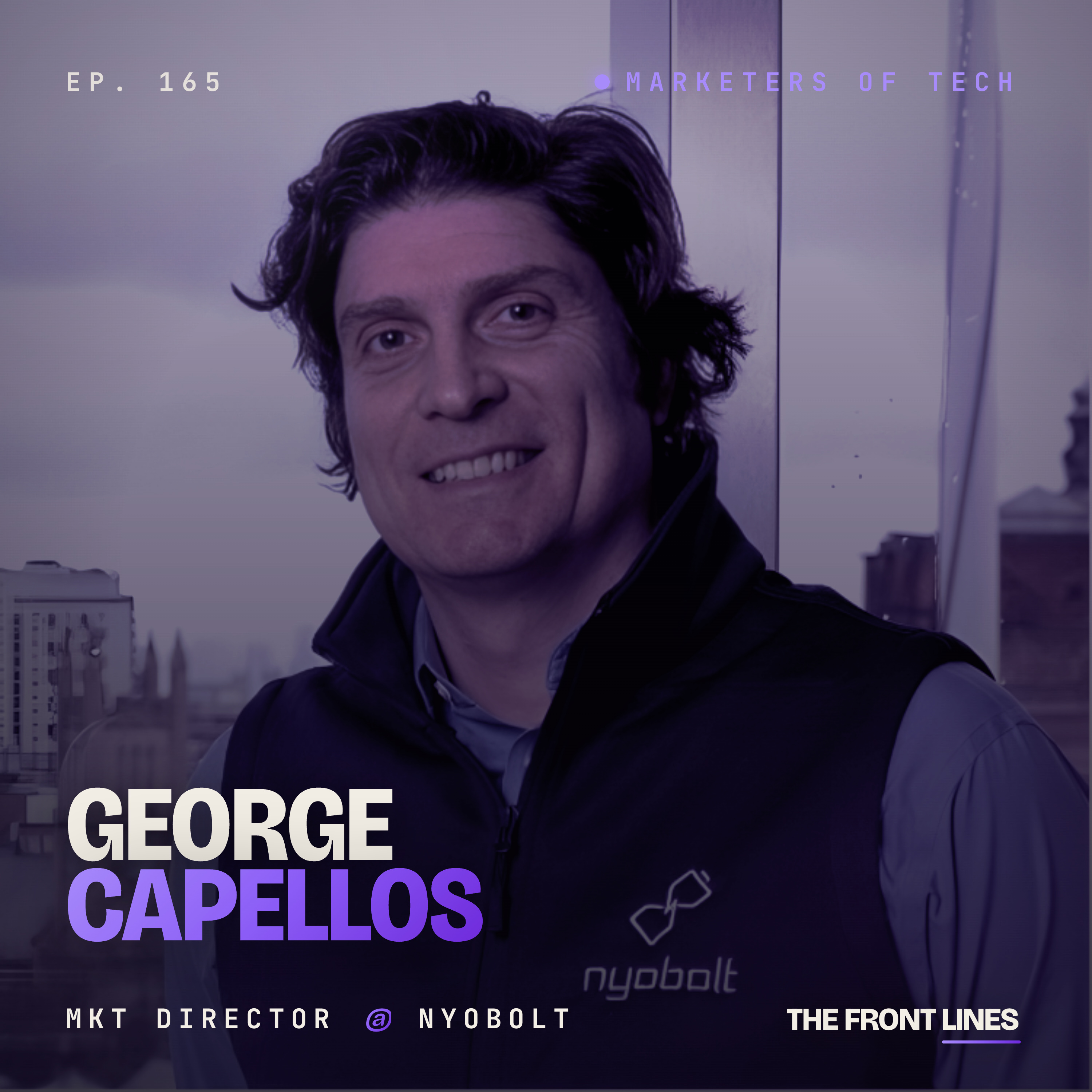
In this episode, George Capellos, Global Marketing and Communications Director at NIOBULT, discusses his role as a solo marketer for a deep tech energy storage company based in Cambridge, UK. NIOBULT specializes in high-power, fast-charging batteries for industries like AI data centers, electric vehicle fleets, and warehouse automation robots. The company was founded in 2019 based on research from the University of Cambridge and took years to move from R&D to its first customer, reflecting the slow pace of deep tech commercialization compared to SaaS. Capellos highlights the challenge of creating a new product category—since NIOBULT's power-dense batteries didn't exist before the recent surge in electrification. He relies heavily on AI tools like Claude to educate himself, generate marketing content, and manage global communications as a one-person team. The company has gained significant traction as outdated electrical grids struggle to meet modern power demands. Capellos shares an example of a customer who initially dismissed their technology but, after 18 months, urgently requested a massive order. He also notes the value of Cambridge's deep tech ecosystem and the importance of adapting marketing strategies for long sales cycles in this sector.
For a year and a half, we had told somebody you need us and they were like, "I don't understand. What?" And then they go, "Oh, no, I don't just need you. I need a ton of everything that you have." Welcome back to another episode of The Marketing Frontlines. As always, this show is brought to you by Frontlines.io, Silicon Valley's leading B2B Podcast production studio. If you're bringing technology to market and want to learn from your peers, we have a library of more than 1200 interviews with venture-backed founders and marketers where they talk all things go to market. Of course, if you want to launch your own podcast, we offer podcasts as a service to more than 80 tech startups. The idea there is very simple. You show up in host and we do everything else. Now, with all that said, let's jump in today's episode. Hey, everybody. Welcome to the show. My name is Andres Fugeta and I'm going to be your host for the day. This show is brought to you by Frontlines Studios, Silicon Valley's leading podcast production studio. If you're looking to launch your own show, we offer a full podcast as a service experience. You show up and host and we handle everything else. With that said, let's dive into today's episode. Because today I am joined here by George Capellos, Global Marketing and Communications Director at NIOBULT, a company that's pioneering in high power, fast charging energy solutions that deliver mission critical uptime for power demanding industries. And with that said, George, it's a pleasure to have you on the show, man. How are you doing today? I'm good. Thanks. Hey, Andres, nice to meet you and thank you so much for having on the show also. Now, for us, it's a pleasure to have you here on with us and just so that we can hit the ground running, George, would you be able to tell us a bit more about your background, what NIOBULT is in your own words and yeah, just how you came to become the Global Marketing and Communications Director. Sure. You make yourselves super fun. See? It's fun to see. You might think, but yeah, anyways. So I have probably about 20 years of experience in marketing started off like in events, finally enough and then, you know, worked my way up to where I am today. I worked in across different markets and countries also. I'm originally from Greece, so I moved to the UK. I worked at the UK. I went back to Greece. I've done a Stint in Abu Dhabi, New York, then back to the UK. So, you know, I've been around as they say, which is great. So that has given me a lot of perspective and a lot of context for global marketing and not just, you know, looking at things from a one-sided view, which I think is very important and critical for market years. And then I've now been in this role for a year and something, a year and a couple of months probably. It's a very interesting role, finally enough. Despite the fact that it sounds like a very fancy role, I am a one-man show. There is nobody else at NIOBULT that does full-time marketing. We are a B2B deep tech company and therefore, we know, we're not a B2C. We're not a consumer facing business that is running campaigns every single week. I Uber, you know, or deliver all guys like that. So our campaigns are much more planned out, way in advance, which is good. It helps a lot. So as a business, we're based in Cambridge, actually, finally enough. We're not based in London, which is interesting for most market years, who, you know, everybody wants to be in London. I've lived in London my whole life pretty much all these years working, marketing. I've always lived in London and this is where you, most of the times, get the jobs, the cool marketing jobs, as they say. But there still are some interesting jobs outside of London, as long as, you know, your network basically allows you to get there. And Cambridge is a very interesting ecosystem, which I think it's worth touching upon in on this show because for most people, especially people who don't live in the UK, they know everybody knows London, right? London is the place to be. It's like London and New York, all the big agencies, WPPs of the world, they're all based in London, all the big companies are in these headquarters, in these big capital cities, metropolitan cities, actually. But Cambridge, despite the fact that it's not very well known in the marketing world, has a very big ecosystem of, especially health tech and deep tech. And nowadays with AI exploding and making these organizations even more efficient and faster to move to production, right? Because that's basically one of the biggest challenges probably you have. It's both in deep tech and in health tech from idea, from ideation and R&D to production. It can take you years, unlike a SaaS company that, me and you go like, oh, this is a great idea. Let's get some coding, some vibe coding going on. And then in a week, we have a product and then in two weeks, we have a website and we're up and running and we could be making money. It doesn't work like that in deep tech and health tech. We're talking years. So NIOBOT for example was established in 2019, so that is seven years, right? We announced our first customer last year. So all of these years, we have been doing R&D and then it took us two years from the moment we started talking to our first customer, to the moment we actually sold them a product, but they actually got a product in their hand and they were able to place it in their own, applications and products, whatever that is. In this specific case, it's the robots automated warehouse automation robots for warehouses. So it takes much longer. But that said, with AI now, things are getting a little bit faster, a bit more efficient. And therefore places like Cambridge are very interesting because there's a ton of companies here, when I say here in Cambridge, not here, where I'm right now, but there's a ton of companies and all of them have a need for marketing. So it's basically what I'm trying to say, having worked in Cambridge for the past year or so, I have seen an interesting ecosystem that marketeers should pay attention to, right? Because we're sometimes you can be very narrow mind in terms of like, oh, I want to be London, I want to work in London, I should look for a job in London. So that's a little bit about Cambridge. The company itself, as I said before, we are deep tech energy storage solutions. And that means it is basically batteries, right? Okay. And it's technology, tech stack around battery and energy storage technology. So it's not as simple as, oh, you guys just build a battery. Now there's a lot of elements that go into the battery from the moment you have the annals and the cathodes, a lot of technical stuff that go inside all the way to having a pack. Let's call it a pack that somebody can use that can they can monitor the performance. So you need software that runs it. You need different electronics. So you need, it's a technology product of its own, right? Because a lot of people when they think battery, they just think those little things that we put in all of our devices. Yes, it's very, very different. That's, hence the reason why, you know, our batteries cost like thousands of dollars rather than like a couple of dollars. Plus a very interesting space. There's a lot of momentum around it. And I say a lot of momentum because again of AI. So whether we like it or not, and I know it's more than a buzzword now, because I thought it was a buzzword, but it's no longer a buzzword. That's a very important tool. And the reason I came on the show today is to give an example of how I have used it and how I've seen the benefit and the value it's had in marketing specifically, which I'll get onto as we go through this process. So you know, the company, as I said, is now gaining a lot of momentum, a lot of traction because the world is electrifying very quickly. So think of electric vehicles, think of AI data centers, think of humanoids, right? I mean, Tesla has come out and said, we're not doing cars anymore. We're building robots, humanoids. All those things need batteries. That's how they operate, right? And that's where we come in. And like I said before, the batteries that these applications need are more complicated than what the ordinary person might think of a battery, the definition of a battery. And therefore, that's where we come in. And that's why we can see a huge momentum in the market right now and a huge need for what we sell. Our technology. Right. Which is based on also a specific discovery that was made at the University of Cambridge. So we are also academia board, which is really cool because a lot of the people who work in the organization come from a very academic background. Right. So these are not typical corporate people that have just gone up the ladder. They literally come from a university where they were all in the lab and they go like, "Oh, you're a Rick a moment." And they're like, "Oh, maybe we should make a company out of this." And they were like, "Hell yes, let's make a company out of this." And today this company is worth a billion dollars. So clearly something went right in that lab. And now we are where we are today. So that's also another interesting fact about NIA board that we are a living example of academia being commercialized. Right. So going from academia to corporate world, very smoothly. I wouldn't say smooth, but in a way that proves that it actually works, you know, things that are happening in university labs can actually be commercialized and can become something. Right. That people will buy and people will use for applications. That's us in an archival. We're very diverse as a company. We have offices in the US and Boston. Specifically, we have offices and a factory in the UK because we produce some of our own pattern stuff. And then we also have some satellite offices across China, South Korea and Europe. What an interesting company to work for. Again, in terms of, from my experience, having worked in very big corporations. So think of Shell, think of Vodafone, think of Huawei. We're talking about behemoths of the corporate world, right? What is different where I am today is the academia background and the academia kind of influence that I've seen the organizations where
where a lot of the things that are said that done are not made up, because you know in the corporate world what I mean from my experience, a lot of the stuff, especially marketing was just like people just talking, right? Just making up stuff because we're justifying our role so we can have a salary. And again, you know, that's how the game is played, that's fine. I'm not opposing it or challenging it, that's how it is. But in this space, I have had to educate myself because the way things are operating, everything is based on academic research. So real stuff, which you also have to learn, enable to be a marketer and talk about it and then educating your potential customers about these things. So it's super interesting from that perspective. I've never had this experience before, but it does open your mind and it also challenges you a little bit, right? And you go like, "Oh, and I actually have to think a little bit more now. I can't just go like, "Oh, yeah, I can just black my way through this." No, you actually have to talk with people, read and understand how all these things work together so you can be able to sell them better to your potential customers. So that's us in a nacho, that's not about it. Like first of all, I'm like going crazy thinking about the sweet spot that you guys are in right now, being able to provide, like these, I don't want to say just batteries, but it's this energy solution in a time where everything is going to be powered and not just by fossil fuels, but being able to get these proper batteries to make everything work because the world is entering a whole new era of digital, as you said, the humanoid, the electric cars, everything's going to be electrified and it must be a very dynamic market at this point in time where I believe that it must be even fun at a certain point, because once you understand what you're selling, I just understand the academic nature that this is coming from because I had not talked to a company like this before, but then understanding it in order to be able to teach it to the potential buyer or anything like that, it must be crazy, man. So can you tell us a little bit more about that experience being able to convey what you're doing with Nile Bolt to the audience and to the potential customers? How has that been for you? Well, it's been unique because I haven't had the privilege of doing this. And a lot of people might think B2B, slow, how many customers, 10 customers, that kind of stuff, actually, it's the opposite because of what you just said. The need that the world has right now, which unfortunately are grids around the world, cannot cope with because our grids will build a century ago and they have not been upgraded. They were not run by Apple where every single year they would make a new model and they would put R&D money behind it. No, people like this is working. It's fine. As long as everything's working, we don't need to touch anything. And suddenly the world was going, we need more power and we need more electricity and the grids have gone like, we don't have that. We were born a hundred years ago and boy, we're dinosaur. We can handle this amount of traffic and the price. We're dinosaur. So that's why it becomes so exciting for companies like us who can come in and basically fill the gap that is between our grids and all these applications that are coming online from the DAI data centers to the electric vehicles, to the electric fleets, trucks, to electric trains, everything you can imagine that needs to run on electricity and power needs to have a battery unit inside of it. For backup purposes, for safety purposes, for just continuous operation, the grid alone is never ever going to be enough. It's as simple as that. So like I said, I've done a lot of educating and I've used AI. I won't lie. It's been a very useful tool, especially when you're a one man show. Again, it's the company's about 120 people globally and I am the single market here. So you can imagine I work across all times and hence the reason why I'm used to having a conversation at 930 at night because you're here and I have a colleague of mine, Texman go like, hey, can you send me that slide because I need you for monthly and like, yes, okay. Well, my two kids are inside and watching TV. So, you know, it's I'm used to it and therefore having AI has also helped me be able to respond to things much faster, learn things much faster because I have conversations with it, right? It has learned. So I use cloth specifically. This is not an advertising forum through I think by any chance, but I started using the beginning. I saw a different switch at the Pt and I just went all the way through it and now I actually organization is going on a team account because what happened is different people were using it and then I'm through pick called us up and like, you know, you have like a lot of people using it. Basically, everybody's paying a single subscription. Why did you just a team account and everybody, you know, benefits and then you have one central database, but your company's using it. So this is using the same time, which is again, super interesting. So I've used it extensively and it's helped me a lot to educate myself and be able to create marketing materials, which in the B2B space as you can imagine is PR is comms is a lot of press releases LinkedIn is a very powerful tool. I am an avid user of LinkedIn where we connected also and like, you know, I've gone, we've gone from 11,000 followers to 15,000 in a year on a corporate account for a B2B organization just because it's a very important do for us and we're hammering down every single day. I'm on it putting stuff. But again, Claude is my ally because it helps me create content very, very quickly. You'll give it stuff and most importantly, once it gets to learn your company, it literally will ask you, so who do you want me to be your CEO? You or your CC by name that it knows every single person in the organization, right? And it will ask you, what voice do you want me to use for this post, which person do you want me to represent? Of course. So that has been very helpful from my perspective. And like I said, I think one of the challenges that we also have as an organization is we have created a new product category. So our products didn't exist before. Yes, people think of them as batteries, but they're different than everything else that is out there because our technology is more about power density. So what that means in very simple layman's terms is most batteries will give you mileage and inverted commas, right? They'll give you duration. We're not about duration. Think of us like a red bull shot. Okay. When something needs a very, it's an application that draws a lot of power very quickly, I AI data centers because that's what data centers do when you and me are prompting Claude, that is a little spike on the grid because it goes like that, right? But then you multiply that by billions of people using it and those data centers are getting hit and they're going crazy. So because of these things, our technology is very much in need at the moment. And it's a product category that didn't exist before because the world was not as online as it is now. And when I say online, I mean, all these electrified applications or applications that need power like the human or it's like the warehouse automation, like the AI data centers, like the electric vehicles that didn't exist five years ago, six years ago, it didn't even exist. So therefore we have a new product category, which means I have an additional challenge of not only just raising awareness and going like, oh, hi, we're nighbolt. Talk to us because we're interesting. It's also like, oh, we have this product and people are like, so what do you guys do? And then you have to explain to them what you do and they go, but why do I need this? Oh, oh, oh, oh, I see now. Now I know I need this because five years ago, none of this existed. So that's why I need this. So as the world has evolved and has electrified more and more, suddenly there's a need for new products. And we are one of those new products, which means that I also have an additional layer of complexity where I also, I'm creating new product. So right now to give you an example, we're trying to figure out how do we reposition our company so that we can talk to our customers in a way that they understand us even better because it's a new product category. Right. So you have to bridge the old and the new in a way that people understand because otherwise they won't even open door. They don't know they need this product. All right. You need to educate them that no, you need this product. Trust me. So we're talking to a customer right now who a year and a half ago, I can't name names, but you know, they're pretty well known out there. A year and a half ago, they were like, yeah, that's okay. We'll be okay. I think it was like three weeks ago. They were like, yeah, hi. We would like to put in a bit of an order like about a grid bird down. If Mike did she, like, seven zero's, they were like, oh, okay, Chris, you did the round the blocks for a year and a half and you figured out that you needed us because there was nobody else. So you have those things. So you can imagine like for a year and a half, we had told somebody you need us and they were like, I don't understand. Why? And then they go, oh, I know, I don't, I don't just need you. I need a ton of everything that you have and you're like, oh, my God. Wow. So it's interesting, but it's also complex because you know, and imagine you're the CEO of a company and you talk to somebody a year and a half ago and you know that they needed, right? You've got things. It goes like and your data goes like, you need this, but they don't understand because they go like, why? Right? So imagine the market here going like, you need this and they go like, why? Why do I need this? So it's, I would say very, very interesting as a space to be in challenging, but at the same time, it's a great challenge. And I hopefully I think it's also testament to the work that I'm doing, which again, like I said, the have help. I'm not doing everything by myself, but it's a testament to if this can work, then hopefully
marketing could be attributed part of the success and be like, yeah, we, you know, we had this guy and he helped us build up brand and position ourselves in a way that people were buying a product like cupcakes. No, that really is like while I'm hearing you out, I am so impressed about the fact that you're like, I'm understanding it correctly because you have to create the necessity for somebody or a company that does not even know that they need that. And you have to perform like the education from the most fundamental part, like from the beginning and right from scratch with them and have them understand and get to that. You wreak a moment like, Oh, I do need this product, even if it's a year and a half later that they come to understand. So it's a really long sales funnel. But George, I'm also very curious because now that I've heard more about the context of what Nile Bolt is, I understand the research and development that it took five to six years to get the product ready for the companies that might need it. And nowadays, now that you guys are practically full throttle, how is the frequency or the cadence that you're being able to obtain new customers that are working with you guys? Is it just one deal per month or are people being a lot more open and looking for this? So my main target, which is MQLs, marketing qualified leads, which means basically bringing people on the website and then submitted form, Hey, we're interested in this. Your product, can we please have more of a conversation this year alone? I've had like 24 or 25 on the website, which as you can imagine in half a year for what we do is quite a lot. But in terms of how that progresses, it's a much longer story. That's the reality of it. It takes a long time to get there. But again, we're building hardware, right? It's like until the moment somebody realized they need your hardware, it will take time. But once they realize it and once you're in with them, that's it. Like think of your Apple products. Once you're in, you're locked. Yeah, it's like they are subscribed constantly. Yeah. That's basically it. That's exactly what it is. So again, I think the cadence won't change. What has changed is we are seeing a constant flow of MQLs coming through because we are raising our profile constantly through comms, through social media, through events, the traditional channels, right? But we're doing it much faster and much more efficiently. So I'm moving at the much faster pace. I'm somebody would say you're moving almost like a beat to see pace, but I have to because that means then we can get more interesting. I totally understand. And what is another question I do have, George, is the fact that in terms of those MQLs that you obtain, are you looking for those and are you driving that traffic? Or is that just organically coming from the other advertising that you're doing? Because I also imagine that there must be a lot of word of mouth, like public relations and networking that you should do that it should also drive sales for now. It's 50 50 because obviously we have a little question that says where do you hear from us, but everybody has and it's mandatory to have to fill in. So I'm seeing a 50 50 split, which is basically 50% network, which again is somebody read about us somewhere and they said to somebody, Hey, you should check these guys out. So they go like, Oh, word of mouth. And the other 50% is events, social media, LinkedIn. I do LinkedIn advertising, right? NPR and press when we put our appressally. So obviously you see a huge spike on your website traffic, huge. And also we because I specifically monitor our references on LLMs. So I have a whole AI report that basically looks at a specific prompt and how I rank as a company across Gemini, Claude, Proplexity, ChatGPT and which other one, which other LLM. I'm a kind of thing. There's one more LLM that we monitor and making sure that we're constantly in top 10. So when you ask it, which are the top 10 companies in the world that produce this product, we're basically number two, number one, number three on all three LLMs, which it's an accumulation of the work that has been done in marketing. But we see huge spikes when you do press releases because LLMs look at the news and they go, Oh, these guys and then they put you in their responses. And that has been your doing George, understanding how the LLMs work and wanting for NIOBAL to appear in them has that been what you've been also taking care of as global head of communications and marketing. Yeah, yeah. Of course. I mean, to be honest, it's it's part of the strategy in terms of how we position ourselves, the content that we put out there, how we talk about ourselves. So therefore all of these tactics that we use are clearly indicating and driving LLM responses with our name referenced inside of it. Wow. Now I'm just impressed, man, by the nature of the business, the moment in time where you guys are, where it really feels like it's something that's going to come to fruition beautifully. And it really is crazy how you have been able to position yourself as one of the leaders in a product that nobody understands that they need and that they're just learning about now. It really is crazy. And George, I'm noticing we're almost at the end of the episode here, but I do have one more question for you, man. Yeah. And that is as the global marketing and communications director at NIOBAL, what would you give to any marketer in the technology space or in any space really as the number one advice for them to keep going and to grow? My first advice to anybody would be make sure you have a product manager in place that becomes your go to person for everything you need to know about the technology and the product. Right. And I don't have that right now. So what I'm doing, I do the rounds with engineers and I have constant conversation and I tap them up and I become I harass them. But that's how I learn, right? Because you get different responses for different people. So it's very important as a marketer in this space, learn the technology by talking to anybody. You can talk anybody, even the salespeople will give you a different spiel than the engineers. But in your mind, you have to collect all that information and make sure that you put it together in a way that is cohesive and then obviously validated with the right people, all the powers that be the give you the responses. And number two is being inquisitive, right? Don't be scared of AI because there's a lot of scared mongering. Oh, you will take our jobs. It's a tool. It's like Excel. It's like PowerPoint. It's a tool. It's got down fast. It's very good, right? If you know how to use it, being inquisitive and use the tool, like don't be afraid to use this tool. It has a ton of information. It also hallucinates. You need to cross check it. That's why you still need a human being, right? Exactly. Like I every week, I say, please get me all the news for this sector, right? And it goes like, oh, it gives me the news. And there's some piece of news from 2020, 25. I'm like, but I just told you that I want last week's not 20. So you need to check it. A human element is very important. But as a market here, being inquisitive, don't be scared about it. Use it to as much as you possibly can learn it because it becomes your right hand, right? And that goes not just for AI, just being inquisitive as a person, like half-combo say, ask why? Like why is this happening? Why are we doing that? You know, that critical thinking, have it. It will help you. It will help you also network because when people, when you ask questions to people, you look interested in the product in their work. And then people go like, oh, this guy actually wants to know more about my work. You know, sometimes you have these engineers who sat in the corner. Nobody talks to because it's just like coding, you know, living in the main eggs. But suddenly it comes and goes like, hey, talk to me about your work. They find that interesting. So then you become the person that everybody thinks, hey, George is cool. He wants to know more about us. So let's give him the information when you need that help. They go like, yeah, yeah, I'll give you help. I'll give you some of my time because you showed interest in my work. So that's what that's the inquisitive nature, right? Of always constantly going around like a busy bee and asking people questions and finding out what's going on. What about this? What about this? Don't just sit there and and do your thing. Oh, I'm just doing marketing. No, try and get more out of everything, even in big corporations, which of course you're very small, coag in the machine, but being inquisitive, never stop being inquisitive. Now I love that. And really that takeaway is just, it's so real because I have to make sure that we stay curious. And that curiosity with which we approach things is genuine. And what happens is what you just mentioned, people feel that you're interested. And that makes them interested in you and be able to help you out with what you need or understand what you're trying to learn. Which really just makes companies as a whole come together a lot more. And one is a professional. You just keep on training yourself up to be better. And it allows you to just develop and grow a lot more. So really appreciate that insight, George. And yeah, we are very happy that you were able to hop on the show with us. Tell us everything about now your story and what you guys are up to. It has been a complete pleasure. So thank you very much, man. Thank you so much, Andreas. Have a good day. No problem at all, YouTube and into anybody who is here listening to us as well. We hope that you keep returning to these shows to listen to all the different personalities that we're bringing on and all the different industries that we're learning about. So if that said, have a good one. Well, that's all for today's episode of Builders brought to you by the front lines. If you want more amazing content like this, visit frontlines.io where you'll find the library of more than 1500 interviews with founders, marketers, and other GTM leaders. Where we unpack the tactical lessons from their journey. And of course, as always, if you do want to launch your own podcast,
Love to have a conversation with you. Visit frontlines.io/podcast as a service. Mention that you listen, mention you love the show, and we'll give you a 10% discount. Thanks for listening. We'll catch you in the next episode.
Podcast Summary
Key Points:
George Capellos, Global Marketing and Communications Director at NIOBULT, is a one-man marketing team for a deep tech energy storage company based in Cambridge, UK.
NIOBULT creates high-power, fast-charging battery solutions for power-demanding industries like AI data centers, electric vehicles, and warehouse robots, filling a gap left by outdated electrical grids.
The company commercialized technology from the University of Cambridge, taking years to move from R&D to first customer, and recently gained momentum as global electrification needs exploded.
Capellos uses AI tools like Claude to accelerate content creation, educate himself on complex technology, and manage marketing across time zones, growing LinkedIn followers from 11,000 to 15,000 in a year.
A key challenge is creating a new product category; customers initially didn't understand the need, but after 18 months of education, one major client urgently requested a large order.
Summary:
In this episode, George Capellos, Global Marketing and Communications Director at NIOBULT, discusses his role as a solo marketer for a deep tech energy storage company based in Cambridge, UK. NIOBULT specializes in high-power, fast-charging batteries for industries like AI data centers, electric vehicle fleets, and warehouse automation robots. The company was founded in 2019 based on research from the University of Cambridge and took years to move from R&D to its first customer, reflecting the slow pace of deep tech commercialization compared to SaaS.
Capellos highlights the challenge of creating a new product category—since NIOBULT's power-dense batteries didn't exist before the recent surge in electrification. He relies heavily on AI tools like Claude to educate himself, generate marketing content, and manage global communications as a one-person team. The company has gained significant traction as outdated electrical grids struggle to meet modern power demands.
Capellos shares an example of a customer who initially dismissed their technology but, after 18 months, urgently requested a massive order. He also notes the value of Cambridge's deep tech ecosystem and the importance of adapting marketing strategies for long sales cycles in this sector.
FAQs
NIOBULT is a deep tech company specializing in high-power, fast-charging energy storage solutions. Their batteries are designed for applications that need a quick burst of power, such as AI data centers and warehouse robots.
Most batteries focus on duration or mileage, but NIOBULT's technology prioritizes power density—delivering a lot of power very quickly, like a 'Red Bull shot.' This makes them ideal for applications with sudden high-power demands.
The product category didn't exist before because the world's electrification needs—like AI data centers and humanoid robots—are relatively new. NIOBULT created a solution to fill the gap between outdated power grids and modern high-power applications.
The company focuses on educating customers about why they need this new technology, often through marketing materials and direct conversations. They also work on repositioning to bridge the gap between old and new concepts.
George uses Claude, an AI tool, to quickly create content and learn about the company's technology. It helps him generate marketing materials, understand the product, and represent different voices within the organization.
As the sole marketer for a 120-person company, George manages global tasks across time zones, often working late. AI helps him respond faster and handle the complexity of educating customers about a new product category.
Chat with AI
Loading...
Pro features
Go deeper with this episode
Unlock creator-grade tools that turn any transcript into show notes and subtitle files.
 PodcastTranscript AI