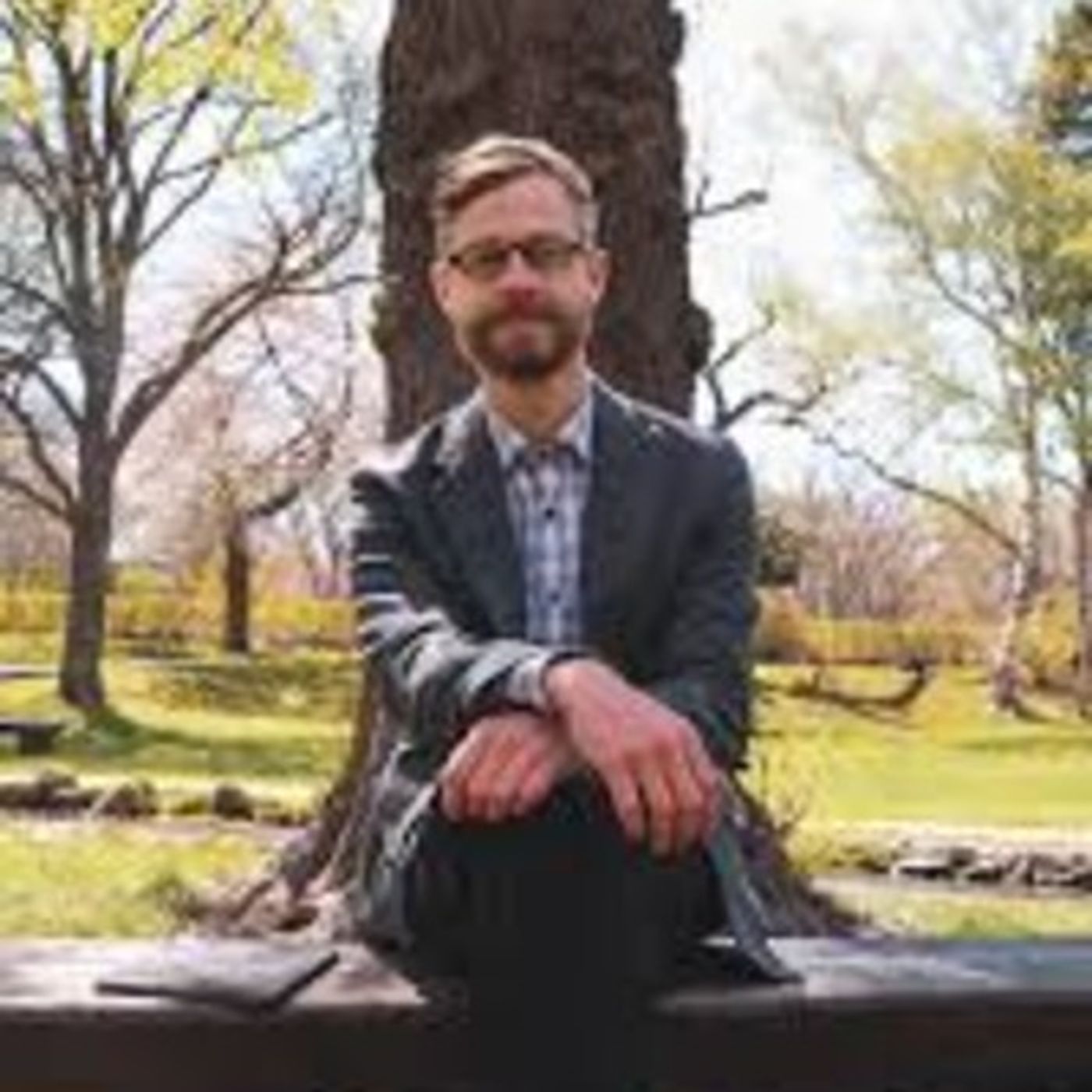
Mark Miller, a leading cognitive scientist and researcher in 4E cognitive science and predictive processing, presents a unified framework where the mind functions as an epistemic agent—constantly generating predictions about the world based on internal models. Rather than viewing perception as passive reception, he argues that we actively construct reality through predictive models, which are shaped by experience, evolution, and learning. This perspective bridges cognitive neuroscience with early Buddhist teachings, particularly emphasizing the role of mindfulness in organizing perception correctly. Illness, delusion, and suffering stem from model drift—when our internal beliefs no longer align with reality. Key practices like body scanning, gratitude, and loving-kindness are not just spiritual exercises but tools for strengthening belief systems and improving cognitive flexibility. Miller highlights that emotions are not fixed or universal but emerge from our generative models, shaped by past experiences and expectations. He critiques outdated views of brain areas as emotion loci, advocating instead for a dynamic, constructed model of internal experience. Crucially, he underscores that while scientific models may not be "true" in a metaphysical sense, they can be deeply useful for mental training—much like Buddhist practices. Debates, diverse perspectives, and emotional regulation are vital for maintaining healthy cognitive function, as they prevent model rigidity and foster adaptability. Ultimately, true liberation lies not in escaping suffering but in mastering one’s epistemic system—understanding oneself as a dynamic, self-organizing agent capable of continuous learning and growth.
Hello everybody and welcome to the Secular Donma Foundation podcast with me Dave Smith.
I usually don't put a trailer or an intro at the beginning of the podcast, but I wanted
to, with this person here, Dr. Mark Miller, because I think he's such an important voice
and somebody who's maybe not heard of so much, he is in the sphere, in the ecosystem of
John Verveiki, somebody who's made a big dent in my mind and somebody who's culturally
very relevant in his work on the meaning crisis, and I was able to get in touch with Mark after
having seen him talk with Verveiki on some YouTube videos and also a podcast.
Who is Mark?
He's done a lot of things.
He found his PhD in Master's Degree in Philosophy from the University of Edinburgh.
He studied under the legendary cognitive philosopher Andy Clark, where he focused heavy on the embodiment
and predictive brain.
Today his work spans across multiple prestigious global institutions.
He is the senior research fellow at the Manash University Center for Consciousness and Contemplative
Studies in Australia.
He's an instructor in a postdoctoral fellow at the University of Toronto within their psychology
and cognitive science departments.
And he also acts as a visiting researcher, Hokkaido's University Center for Human Nature,
Artificial Intelligence, and Neuroscience in Japan.
He is also the lab manager for U of T's Consciousness in Wisdom Lab.
That's a mouthful.
This guy is very busy.
He's worked alongside where I found him his collaborator and teacher Dr. John Verveiki,
where he works on the cutting edge of 4E Cognitive Science and Predictive Processing,
exploring how our brains act as an active prediction generating engines rather than passive observers.
Mark is dedicated to bridging rigorous computational neuroscience with ancient contemplative wisdom.
In my mind he is a secular Dharma phenomenon and I hope you enjoy our conversation
and I suspect there will be more so without further ado here is me and Mark.
Thanks y'all.
Alright, this is Dave Smith here with the secular Dharma Foundation.
Here talking to Mark Miller, how's it going Mark?
I'm very, very well excited to be on the pod.
Nice yes me too. So let's dive right in.
I guess what I want to do is set it up a little bit if I do because we are the secular Dharma Foundation.
And what we do is we dialogue at the intersection of sort of Dharma practice,
early Buddhism, cognitive science, psychology,
and just seeing how these worlds come together and we smash them together, what happens.
This is my home, this is my home, this is where I live, that's awesome.
Yeah, so I have no agenda, but I have watched quite a bit of your stuff
and I just want to start off with and we might probably spend the whole time here.
This concept of the thing that you are and that we oftentimes think about,
you know, we talk about something like happiness or meaning or we create these ontological claims
of these things that we want to be concepts that are kind of murky.
And then we think we need to like merge ourselves and force ourselves into these terms
that aren't purely defined.
And I see what you're saying is you're kind of going upstream a little bit and saying,
well, okay, let's just put that on pause for a minute.
But what is the thing that we are?
Yeah, it's understanding the equipment, but how do I want to ask this first question?
You talk about the thing that we are as epistemic.
Nice.
So there's a knowing capacity to that.
Yeah.
Which to me is early Buddhism on 101.
But what it's just unpacked a little bit, what is the thing that we are?
How do you know it's epistemic and sort of what's going on there?
Yeah, dig it, dig it, thank you.
Yeah, right.
So one of the things one of the things that we're excited about is just like you say,
don't start at the ho hum psychological explanation.
Don't start upstream where you're already starting to think about,
well, look, we know it's good to be resilient or we know it's good to read five books a day
or body scanning.
Body scanning is good for you.
That's the newest one, which is about publication out on body scanning and liberation
looking at early on teravodin texts.
You don't want to start there.
I mean, we have lots of evidence, you have psychological evidence that these things are good for you.
The problem is is that we don't know why they're good for you.
So you can, you can get, you can get, you know, you can get positive correlation.
Body scan, body scan increases interceptive capabilities, lowers anxiety.
Oh, why?
We still don't know why, not, not exactly.
And if we don't know why, then you're missing the part of the story that's going to tell you
how you might best apply it or what other things are going to be like it.
I mean, you're missing a lot of them.
Well, you don't have much understanding.
It's hard to have wisdom if you don't have understanding.
So what we do is, as a part of my research is, is like you say, going farther downstream or upstream.
And thinking about, well, what, what about the shape of the cognitive system itself?
We just start from the shape of the cognitive system.
Just start.
What does that mean, the shape of the cognitive system?
Is that, are we talking about the equipment now?
Yeah, equipment.
Right.
So can we give, um, what do we think about, um, sort of computational explanation?
Can we give of the equipment itself?
What's the equipment doing?
What is the equipment doing?
Yeah, and how is it organized?
Is if you look at the, if you look at the shape of the,
doesn't have a desire that, that they have a, uh, an ultimate concern.
Right.
So some wonderful work is coming out right now.
I don't know if your listeners are, are priced in this, but we're really in.
Well, we're in a golden age of a number of things.
You know, um, we're in the golden age of psychedelic research.
Um, I think we're in the golden age of secular Buddhism.
And we're definitely in, in a new golden age of cognitive science.
We're in a real company and revolution.
Some of our, some of the ideas, um, that have, that have held sway for a couple of hundred years.
They're being overturned in real time right now.
One of those is.
Yeah, how does the, how is the basic operating system work?
How does the basic cognitive that, and that includes the neural architectural process?
How does that actually work?
And we're getting, we're getting this wonderful inversion story right now.
And it, the best way to see it is something like perception is no longer thought to be a passive process.
We're waiting for information from the world to come in and then we're interpreting it.
But rather, it looks like the brain and nervous system are radically proactive.
They evolved to build for themselves from the top down what we expect to be happening next.
So the, the sort of lovely take home from that is you don't see the world.
You see your best guess about the world, which makes this a neuroscience of emptiness really because it says, well, this is all a fabricated.
This is all fabricated. Of course, it's rich and, and, uh, and luminous and brilliant.
But it's also generated, indoginously, it's generated from the inside out.
So are you saying this?
So we, we think about this in the world that we live in.
And we think about the world that which is really out there.
Yeah.
And so what you're saying, and this is more of an early boot of getting, if I, we're interested in like, we're creating the world that which is really out there.
We're making our best guess of what that is.
That's right.
And then we're trying to see how we might fit into that.
That's right.
So here's the thing.
Now there is a world out there.
Totally.
There's a world.
There's a world out there.
I believe you're in Canada.
Right.
I have a mom.
Um, you know, uh, there's a world out there.
But the experience that we have of that world isn't the product of the world out there.
Just imprinting itself on our senses.
No.
It's almost entirely an interpretive fabricated process that generates that reality.
And that's all endogenously.
It's endogenously created.
We take the best models that we've generated.
That's what we are.
Now, this is why we come back to epistemic here.
We are epistemic agents.
First of all, we're epistemic organisms.
That's just maybe maybe all of life.
If you think about like this is, is epistemic at its face, which is like this.
If I'm going to make a good prediction about what happens next.
Then I have to have a good model of who I am and who you are and how the environment works.
The first, the modus operandi of the brain and nervous system is to figure out who I am, who you are and what this is all about.
That's the core of the thing I am is to figure out what this is all about.
Because if I don't have a good model, I'm not making up predictions.
You make, you don't make up predictions, then your perception drifts away from real world stuff.
And if that happens, you die. So our ancestors who's model drifted away from reality, they didn't persist.
How beautiful is that that right at the heart is a drive to know.
First and foremost is to know.
Just the people don't epistemic what we're talking about the epistemological knowledge.
Knowledge, knowledge.
How do you know exactly which we all look at call information, but information is not knowledge and knowledge is not wisdom.
Indeed, indeed.
But I would say this isn't the, this isn't the knowledge gaining part of the mind.
strong what he is.
it the mind is an is an apprehension engine. That's what it is. That's what you are.
So it's just making best guesses all day long and and figuring out how it works. All you are is
you're just set up to figure out how it works to what you are. It's what you are. Isn't that
wonderful? Because now we have a contemplative tradition. You have a contemplative tradition
that's saying, look, if you don't take that seriously and you don't do it because you can do it
worse and you can do it better. You can figure out how it works poorly, echo chambers, filter
bubbles, parasitic ideologies. There's lots of ways that we can be tripped up about organizing
how we think it is. And there's lots of recursive feedback loops here because once you expect it
to be a certain way, we can get into that. We can get into that. You confirm it. Classic suffering.
But imagine that you imagine that you have a whole tradition that says, if you don't do this
well, you're going to be in tremendous pain because it's what you are. And what I'm going to do
is I'm going to lay out a path. I'm going to lay out a path. I'm going to lay out an apt path
for how to do this well. And what is the this? It's what you are. It's not. So this isn't just for
I don't know. The South Indian continent or something. I mean, it's if you're alive, if you are
sentient, then doing epistemology well is dead center. It's at the very, it's the beating heart.
I was so happy to hear say that because in many ways, not the two by own horn, I kind of assumed
that was the case all along as a diver practitioner. I kind of was like, I thought that might be what
was happening. I didn't, but through to hear it come this while of this conversation, you're like,
actually turns out dude was right about that too. So I'll tell you, I'll tell you, um, does, does the
science, does the science, um, does this science do something more than what you've already discovered,
like from the Dharma? Yeah. Like not necessarily, but what it does do is it, it's like a secondary,
it's like a secondary point where you don't, you don't start, you don't start from the psychology,
you start just from the shape of the architecture. It's the shape of the cognitive architecture itself.
The very first lesson you learn is the way that the system works is it has to ascertain
real world stuff. It has to figure out how to and we've done now like 15 years of pathology research,
using the same framework to model depression, addiction, anxiety, trauma, PTSD,
depersonalization, derealization, OCD, now schizophrenia autism, one of the major things you see,
like, like a fingerprint of pathology is a divergence of your world model from real world
in variabilities. So the more your model drifts away from the real world, no wonder conspiracy theories
are comorbid with mental illness, because the farther your model pulls away from the real world stuff,
the sicker we get and the closer it comes and it can never be perfectly close to joking was right.
I mean, we're looking for good enough. We're looking, we're looking, we're looking for better and
better and better and better and better and like, like they say in the Zohar, like choose the lesser
darkness, the closer the closer the model gets to the world, the more healthy. We're looking for
gradual cultivation, classically gradual cultivation. Hey, it's fabulous, isn't it? Isn't it just
ripe? It's just ripe to, it's just ripe to dharma geek about, yeah. Well then I'll, I'll even
divert from the secular for a minute and bring Paul Tillock into the conversation. I don't know how
much you know about him. No, his definition, he's a Christian existential writer, kind of controversial,
wrote a book in the 50s called The Courage to Be. Great book. And his definition of religion is
ultimate concern. And, and so it seems like that's our ultimate, ultimate concern. And to some degree,
I mean, just personally, I would even be happy to say that my, I'm epistemic, but to some degree
that puts me in the position of I have to at least struggle with, and it's in my best interest
to struggle with what religion might actually be. Yeah, I love that. One of, one of the things that
we're very interested in is, and we didn't, we, I want to present this in the right way. We're not
using this framework to validate spiritual or religious ideology. I get that. But, but in fact,
we go the other way around, but it is, it's amazing how you start just from, just from the
computational level, just let's just think about information, dynamic, self-organizing dynamics in
our kind of system. How does that work? How does it work over time? Okay. And then you, and then you
just take one more step and say, what could we do that would make that kind of system well? And
what could we do that would really, really fuck that system up? Just start there. What could we do?
And the answers are things we already know. Like, when you look at the bad ones, you're like,
yeah, okay, I knew that already. But the good ones, the good ones turn out to be native to all of
our religious and spiritual traditions. Like intellectual humility is one. Humility as a virtue
for our kind of system is a superpower. Because humility means that you have a sufficiently high
level prediction in your model that all of the rest of your predictions are only relatively true.
Right. And you should always be on the look, on the look out for updating, optimization,
improvement. So another way to say that was that allows you to be very adaptive.
That's it right there. Is it lets you update? That's your, you're right on it. You're right on
the pulse. The thing that's so well-being inducing from that is that you can update super optimally.
Now, the cost is, if you're humble, then you have a little bit of uncertainty about your own
models, which means it's more costly to be you. You have to be in a position where you're like,
oh, I'm not sure. I have to bear, I have to bear the uncertainty of existence to be there.
But the payoff is that you are open-minded and curious and playful in a way that allows you to
be constantly learning at your edge. So you're already prime for always being willing to get
a model or an update, your system update. You're like, I'm open to having a better version of
what I already have. You're on it. I have goosebumps. Awesome talking with somebody who's just like
right on exactly right. You'll know those people because those are the people that like if you correct
them for the way they pronounce something or if they use a word that's like a bit dated and you're
like, hey, check the word. These are the kind of people that are like, oh, that's very interesting.
Tell me about that. What's the etymology that you're worried about? Wow, fascinating. They didn't
know. I didn't know it had that kind of pressurization in it. Knowing what you don't know is in your
best interest. Then we're back to Socrates, right? I know exactly. I mean, wisdom is knowing that
you don't know. Once you start looking, it's everywhere. What I'm going to know, I'm going to go
back everything we just said and throw a bunch of early Buddhist terminology at it, particularly
some poly and just see what happens. Let's do it. And I heard John say this, and I've been
obsessed with John Vivek you for a long time. And I was like, I'll take this Mark Miller. I
actually like you a little bit more. So I'm obsessed with the meaning crisis. And I'm obsessed
with episode 10 in the meaning crisis, Buddhism and parasitic processing, where he references one
of my primary teachers and one of my good friends, Stephen Bachelor. Stephen Bachelor really influenced
my idea about 15 years ago and his re-understanding of the four noble truths. Or this problematic
term duke, I'm sure you've come across a time or two. And John's explanation, I think, is great. He
says it in a more direct way that Stephen says it, that the equipment, and this is what this is
right out of the suit, the equipment, the five aggregates, the equipment. The same equipment that
allows to adaptability and flourishing is the same equipment that leaves to maladaptive behaviors
in human suffering. So for me, that's where the Buddha starts. He's like, listen man, like this can
go a variety of ways if you're not careful. That's right. That's right. Wonderful. So just think,
just think. So one of the things, so this is going to answer your question, but I just want to
come at it a little bit to the side. One of the remarkable things about the propagation of this
new framework throughout the sciences of mind is it's offering what many think could be the first
unified theory of the mind. So we're always looking for that. We don't even have that yet.
No, no. I mean, the brain is like alien technology. It's so complicated. It's just shockingly
complicated. I teach introduction to cognitive science at the University of Toronto. Basically,
I have a full year to tell the students like to have a pit the definition of mind that you
could say right now. No, no, no, I don't know. I don't have that. Yeah, so that's awesome.
The unifying, the unifying quality is remarkable. So here's one place where you see the unifying
quality. We use that siloed research agenda is looking at, let's say, perception,
dreaming, hallucination, delusion, mind wandering. Okay, these seem like different factions where we
wanted to, you know, you're going to have different scientists specializing in these different
things, but you make it such that what perception is isn't the passive interpretation of the world,
but rather we're using the model of how we know how the world works in order to indulge into the
generate that's great for yourself from the top down. What we expect the next moment to be
and our experience of the world is not the world,
but our expectation of the world.
Our experience of the world is our expectation of the world,
built from the constellation of beliefs
and models that we've constructed over our lifetime,
and maybe lifetimes, or I mean,
there might be like a phylogenetic quality here
where we have ancestral dynamics, okay?
We're using that to create for ourselves reality.
Now, the difference between delusion, hallucination,
and perception is just model aptness.
It's the exact same mechanism
we're just talking about drift from reality, okay?
- That's really helpful, actually.
- Now you're talking about the hardware itself,
so the bad spot is, the hardware itself is prone to delusion
if it's not cared for well,
and it's baked right in.
Perception is delusion.
It's just apt delusion.
It's just good delusion.
It's just rich world revealing hallucination.
It's the best assessment that I can come up with right now.
- Okay, so the same machinery is what leads us
totally to delusion, but on the side of it working well,
the remarkable thing is you might think,
well, this sounds like we're one step removed from reality.
In and away we are, but in another way we're not
because reality is so massively, massively complicated
that you cannot comprehend.
You cannot comprehend reality.
So you needed to have a system that was able to reach
through the unbelievable noise of existence
and grip the thing that matters to you.
Apples and snakes and people who love you.
And this system is that,
because what it does is it effectively allows you--
- Is that what perception does?
Is that a function?
- The function is to reach through the noise
to the thing that matters.
Now, the problem is is what you grip--
- But what if I don't know what matters?
- Indeed, indeed, that's the rub.
That's the rub.
Where the system reaches through has everything
to do with the shape of the model.
And the model can be poorly shaped
or it can properly shape.
And there's lots of meta-skills in that.
And when you look at it like that,
all basically all of the meta-skills
that you would want somebody to have
so that they're reaching through
to the right sorts of things
are native to the contemplative traditions.
- Yeah, well-- - That's what they are.
- I will pull this off my shelf.
I don't know if you read mindfulness
in early Buddhism by Seifu Kwan.
Like I said to you, the people that you want to--
- No. - His assessment is
the whole goal of mindfulness in early Buddhism
is to get perception organized in a correct way.
- Right.
- He thinks that's all it for.
- I have no notes.
I have no notes, done.
- Right. (laughing)
- And so, interesting about the poly is that, you know,
there's a, and the poly language,
the suffix of a word that anything that ends
in N-N-N-A, N-A, N-A means to know.
- N-A means to know. - N-A means to know.
Vinyana consciousness means to know.
Veyna means to feel and to know.
Three of the five aggregates are about knowing.
Wisdom, Panya means to know.
So the Buddha's, just as you say,
it's all a knowing, and Panya means to fully know.
And then the weird thing is,
the task of the first noble truth, Dukaparing Nya,
there's that Nya again, the task is to fully know,
I'll steal from John Verveki here,
not to fully know your autobiography,
but your owner's manual.
That's task numero uno.
And if you don't get that one down,
you might as well just dump the whole rest of the damn project.
- That's fabulous.
The knowing quality there is fabulous.
And again, poly is full of Nya.
Anytime you see N-N-A, you know that's what he's talking about.
Nya.
- I feel like I'm having this conversation a lot recently
'cause you know we're doing this genre research,
so we're doing G-Studies. - Yeah, exactly.
- Yeah, we're doing EG studies on retreating,
but also on monastics.
So then we're speaking more in spaces
where people are interested in altered states.
- Yeah.
- And what if in altered state then really?
If we go back to where you just talked about perception,
what are the characteristics of an altered,
and what makes one stay altered in one state not altered
if it's just about perception?
- Yeah, it's good.
- Well, I think the answer is something like an altered state
is gonna be when we enter into,
we enter into a particular kind of self-organizing regime.
The perceptual system gets reorganized temporarily.
I mean, it's gotta be temporary if it's an altered state.
It can't be a persistent state.
It's gotta be temporary.
And it's gotta be enough of a reorganization
of the perceptual dynamics that you can say,
"Hey, that's different."
You know, I've temporarily entered in a new state.
- So if it knew.
- Yeah, right, like Jonah's such a good example.
Like you learn to be able to control attention in a way
that you can really start messing around
with how the model is generating this experience.
Like you can, for instance, you can,
what we think is happening,
one of the things is happening in Jonah
is that this predictive model that we're running
that creates our reality, it's temporarily deep.
That means we're always using all the things
that happened to us in the past to generate
and create what's happening now.
But that's in the context of all the things
that we expect to be happening into the future.
So it's a temporarily deep model.
Of course, it would have to be, if it's anticipatory,
then it has to take into account
all of the things that are gonna happen next.
- I got you.
- When you're practicing Jonah,
and actually not just Jonah,
late-stage-shamata and all sorts of,
all sorts of the--
- What about insight states, like Samani or--
- Of course, and I'm just gonna say--
- Inside states as well.
There's a number of states where concentration
is gonna be pooled either on an object,
well, a present-centered object in such a way,
that the temporal depth of the model gets distorted
or disrupted temporarily, and that's what we see in Jonah.
You pour so much attention,
you turn the volume so up on a particular object
that basically what you do is you remove
the attentional resources that are keeping the depth
up and active.
And so you temporarily lose it,
so this timelessness that you're getting is
because you've temporarily removed the potency
from this part of the generative model.
So that's an altered state
'cause that's not the ordinary way you experience the world.
You wouldn't want any, you can't do anything from there, right?
And literally, Jonah's a good one
because you enter into a pocket,
and then you exit the pocket,
and you can look back and say,
"Well, look, I was just in a very different state."
Well, then you get into the whole attention conversation.
I'll go ahead.
No, well, the reason why I brought up, Jonah, though,
was because we're increasingly invited into discussions
where people want to talk about the role
of peak experiences in altered states and liberation.
And I think they expect us to be cheerleaders
for some of these things.
Like, yeah, if we can hit these altered states faster, harder,
let's see if we can come up with a new topic
that backs us into it faster,
that then we'll have the story,
but we end up being the sober,
we're the sober dharma scientists on the panel
being like peak experiences are nothing compared to knowing.
It's all about what you learn.
It's going to learn in those matters.
Yeah, you're preaching with the choir now
because I'm very suspicious of these kinds of things.
The term we use in my kind of cohort of meditators
called state chasers.
Right.
Where they think that they're going to have
some experience and that's going to mean something
on the outside of that experience.
The learning is everything.
Now, that doesn't mean that you can't have changes
in state that you learn from, of course.
I mean, that's what the Buddha was doing with John
and probably was shifting between John
is then looking, learning.
But it's the apprehension that matters there.
Not just about the reputation because I work with a lot
of people with trauma.
I'm also, I'm in recovery.
I was a drug addict for a long time
and I have a highly traumatized brain
and have a meditator that was not always easy.
And the most difficult negotiation
is the attention negotiation.
Because when you ask me to pay attention
to a singular object, I do so at the expense
of ignoring everything else.
And that is a risky proposition for somebody
who's afraid of the world.
And a lot of times--
Right, because vigilance, because vigilance comes down.
And also, you become hyper-bonerable.
That's right.
And you just come to that out of a coolodosses
illuminated mind, an over-forced attention triggers fight
and flight.
Yeah, because you lose awareness.
So that's really amazing.
No, actually, there's some really nice--
there's some nice research.
If you know Michael Graziana, he's an attention researcher.
And he tells a story that I think is very convincing,
very useful for garment teachers, too,
where attention and awareness are really
two different resources that are probably showing up
in the brain, lots of overlapping network stuff.
But they might be sufficiently separated in the brain.
And one of the reasons--
actually, there might even be a story that the hemispheres
are the way they are because we need attention
and awareness, collaborating.
You need an attention, typical food
from non-food-related things.
And you need an awareness to watch the horizons
so you didn't become food.
Right.
And over-fixation on food makes you food, right?
But over-facination with not being food means--
Starvation.
--you don't get any food, right?
So again, sure, let us say, optimal balance
between attention and awareness turns out to be critical.
That's a big conversation.
and I think I'm very well, not well-confident.
crafted conversation.
I don't know if you're familiar with it.
The person I like in this conversation
is work of Amishi Jha.
Are you familiar with her work on attention?
- No, well, maybe, maybe the name sounds familiar.
- She's been on it, she's talking quite a bit stuff,
but her basically says, we used to think it was two.
We used to think it was OM, you know, FA OM,
focused attention, open monitoring was kind of the general thing.
And she said there's a third one actually
that's called, she called it goal oriented attention.
For what purpose, I'm paying attention to this object,
but for what purpose am I paying attention to this object?
So she's saying in the context of a present moment,
I have like my flashlight.
So if I put my flashlight on,
I get the salient quality of what I'm seeing
at the expense of everything else.
If I turn my flood light on, I see everything else
at the expense of being able to see
the salient qualities of things.
And then the third thing is, for what purpose
am I engaging in this in anyway?
And she's talking about the intentional systems,
all actually not being separate,
but actually being part of an integrated system,
which I thought was interesting.
And from my first person's user experience,
this whole attention awareness thing is really tricky.
- Yeah, yeah, that's true.
Yeah, that sounds very interesting.
- Yeah.
- I'm wondering about one of the,
one of the, one of the descriptions
of the relationship to be attention and awareness I like
is that, again, I think this is Michael Graziano.
The tension is like punching out parks in a factory
and awareness is the quality controller,
making sure that the thing that you're punching out
is apt.
- So they're both super important.
- Yeah, and I like that starting there
then it looks less like we have a tension deficit disorder
as a society, but we have an awareness deficit disorder
because we have so much powerful attending happening
that we're disrupting our capability of being aware.
And without the quality controller,
quality controller is actually the one that gets rid of,
it's like Jupiter or something that gets rid of the asteroids
so that they stop grabbing your attention here
and there and here and there.
- So you're also saying back to that,
that in all of these things, what really actually matters
that does the heavy lifting is developing
that knowing capacity.
That's really what we really should be focusing on
rather than trying to find these singular skills
we want to silo out and master.
- Yeah, I mean, I mean, if we go back,
if we go back to the framework that we started with,
I think it's very interesting to start thinking about,
well, doesn't give us, doesn't say anything
about what liberation looks like.
- Right, that's a good question.
- I mean, what's happening?
What's happening in liberation?
What's the super special knowing?
And you know, you don't want to be too reductionist here,
but it's something like the shape of the generative model
is the way that it is not just because of the life
that you've lived, but like Carl Friston,
one of the big drivers of this view,
potentially the driver of this big view.
He goes so far as to say,
you don't have a generative model.
Generative model, here's a technical term,
it's the model that you have of yourself in the world
from which you're generating predictions,
from which you're generating your reality, okay?
You are a generative model, your brain,
nervous system and body are the way that they are
because they reflect the consistencies in the niche.
You fit the niche like a lot to a key,
you're upright because that's the best expectation
your biosystem could have to manage
the kinds of opportunities that were available to you
when those pressures are around.
So you are the shape of the world,
you are the generative model, okay?
So you just have to think, you're this, you're this ancient,
you're this ancient bundle of beliefs,
and we're gonna call them beliefs.
- Okay, good.
- But I mean in your hands. - That's good, yeah.
- Your hands shape is a kind of belief.
It's the belief that this shape,
hand is the best one for my niche, carved out
over millions of years under selective pressures, okay?
We call them beliefs.
So you're an incredible ecosystem, tapestry of these beliefs
running from very, very ancient to very, very,
to right now, we've never met your generating beliefs
in real time about me right now.
But at the deepest part of this generative model
are foundational beliefs that you solidified as an organism
a long, long time ago,
and they're things like if I get it and you don't,
that's better, you know, or that I persist,
I persist as a single bounded thing over time.
If you didn't have an herb belief
that you're a single bounded thing persisting through time,
you would have never been motivated to act on the world
in ways that make you persist over time.
We don't need that hard driver the way we did
when we were a single cell organism
or as a simple mammal.
A lot of these are outdated or models that still run,
and we know they run, we know they run
because we look at the way that we behave
and the way we act and the way that we're surprised
when people die or were surprised that we get old,
we're like, oh my god, I got old.
And you're like, I don't know how to mist.
- Yeah, could I like what you're saying?
- Please.
- If that is to say that I also have some explicit beliefs
and implicit beliefs,
like so there's language and certain things
that this is where therapy might come in handy,
we probably need to know what some of our beliefs
might actually be.
Because I'm operating from a belief model
of kind of what you're saying.
And I don't know what I believe.
- Yeah.
Oh, that's gonna be a mess.
- Yeah, so here's the thing.
- So belief and beliefs are,
'cause people in the abdominal world
like to dismiss, oh, if it's not a belief,
they like to dismiss the whole belief system thing,
but if we're saying it's correct, man, I need to really,
if I'm that systemic and I'm operating under beliefs,
I need to know what the hell they are.
- Hey, this is critical.
Let's talk about this.
So, whoa, your system, the shape of your system,
the belief of your systems is paramount.
And oftentimes, it's transparent to the agent.
You don't know what the operating system is doing.
You don't know what beliefs are.
Because actually, unlike agent level beliefs,
we're like, I believe in Santa Claus.
I believe it's nice to have a beer on Friday.
Those are agent level beliefs you could have.
But the reality that you're experiencing
is constituted by the system's beliefs.
This is the product of your beliefs.
And now, if that sounds spooky,
it doesn't really.
- Good, but if anybody thinks it sounds spooky,
just think of the difference between your friends
that are pessimists and optimists.
If they have the exact same party experience,
invite them both to your house party.
They have very similar data sets.
And then you ask them to tell you about their reality.
Then you know, you know the reality that they're living
and it's very, very, very different.
They're selectively sampling the world experience
that they're having carved out from the system's beliefs.
The pessimist systems beliefs are like,
this will never work right.
This is a place that's fraught with misery.
And all you're doing now is self-reporting,
self-evidenceing for misery.
The optimist is like, this is pure land.
It's beautiful.
Look at us getting along.
Look at us making it work.
Two very different realities.
And that's because of the shape of the beliefs you have.
And you're right.
So something that comes right up front and center
when you think like this is that beliefs are so important.
Belief hygiene is something I find myself talking a lot about.
I love that word.
I love you.
Oh my god, that is so.
- How to believe well.
Let's look.
Now I'm not going to say you should believe this or that.
I have a few things that I think you should believe.
Okay.
But mostly I'm interested in starting a conversation
about where are you getting your beliefs from?
And is that a good place?
And what would it mean to be a better believer?
What does that look like?
'Cause I'll tell you doom scrolling
and getting your news from, I don't know,
Joe Rogan or something is not the optimal way
to inform good belief structures.
I mean, Joe Rogan podcast is amazing.
Like, you don't want to go there to like get paid.
- Go through them that day, you know.
- I don't know, like overall.
You don't have to be like,
this is where I'm going to get informed about the world.
- Yeah.
- Because that's not the end.
The end there is going to be like.
- Well, I have a kid.
- You have kids?
- I do, yeah.
I've got a three year old daughter named Grace
and we're pregnant right now.
- Oh, good for you.
I'm a little bit of heavy.
I got a seven and a 13.
- Oh, nice.
- But my seven year old, I talk about this,
it is kind of a little bit of a more of a trauma therapy,
attachment kind of lens on these things.
But like, he believes, I believe that he believes
that the world is going to meet his needs.
So he goes out of the house and he believes
that the world is here for him to live well.
So he acts as if.
- And I bet it meets him.
It probably raises right up to meet him.
And then you have somebody who has a different upbringing
and they believe that the world
isn't going to meet their needs.
The world is not interested in me.
I don't actually fit into this world.
There is that self-fulfilling prophecy thing
starts to become a little bit more important, doesn't it?
- Self-fulfilling prophecy is, is. - That's real.
- It's completely native to this view
because think your world isn't what's out there.
It's your expectation.
So if you have a strong expectation,
you will self-evidence for those outcomes.
So you'll be looking for the evidence for them.
And when there's so much diversity of data,
the likelihood that you can self-evidence
for beliefs that you have is very high,
especially with the internet.
So one of the projects I give my undergraduates is,
I get them into groups,
and then they make up any conspiracy if they're there,
they want them.
be super zany, okay? And then they have to go find the the subreddit forum and you can find it
and you can make up almost anything and then you can find confirmation evidence for it. That's
everywhere in this. Now that's a trap, but there's some good stuff too. Like the power of gratitude
or let's go let's go deeper since we're in a Dharma podcast here like empathic joy, the Brahma
Vaharas. They work like this too. They totally work like this. Start practicing joy for other people's
wisdom progress and now everywhere is wisdom progress. You do that an hour a day. You're stepping
out into the world and being like, where did all these wise people come from? I'm in the park.
This mom is like bringing her son to like the edge of difficulty and then like sitting with him
in it. Like when did parents become this? Suddenly you're living in a world that makes some sense.
So you're getting a perceptual, you're getting a perceptual database upload. And it's there. It's
there. It's all over the place. This is why you can have monks say, this is pure land. Don't you
know? Why don't you know that? And you're like, no, but look at all the problems and they're like,
yes, yes, yes, I know there are problems. But look, like really look, look at what I just got
done teaching the truth. You would love this. I think I teach a style of practice that not a lot
of people know called met of a person or where I blend the Brahma Vaharas with the foundation
of mindfulness or the insight. The only way it should be done. And thank you, sir.
And that can drive dry insight, dry insight without love as a as a strengthening and protective
feature function is is banana pants. See, I learned this right from the get go from Steve Smith,
who was actually the last western or dain by Mahasi Sayedau. And this practice comes from deep
from the Sagan Hills in Burma. This is like ancient authentic lineage of stuff where it's like,
you know, you're you're you're seeing what's arriving. There's that ease that metafield. I call
it, you know, the medicine, you know, and if you can, if you can set a base of kind friendly.
No, it does everything works from there on. You don't have to do anything else. You don't need
to teach anymore. If you're if you're if you're in love, then the program unfolds spontaneously,
and beautifully, and you don't have these dark night. No, the Buddha said the Buddha said,
if you're going to go out to a haunted forest, loving kindness is your honor guard, right? Your
honor guard that you take with you. Who would go who would go to a haunted forest without their
honor guard? Who would go to a forest of thieves without their honor guard? And then you find
people doing these late you find people doing these late state practices and they don't have loving
kindness as their honor guard. I think like wild. Yeah, well, we'll have to talk more about that
because the day you're I'm on I'll get on my soapbox real quick here. Yeah, let's let's talk
about emotion. Yeah, nice because I know you've done some study in that in the affective side
through dimension. Now, I'm I grew up actually down the street from Dan Goldman. So I've
been deep in the emotion conversation for a long time. Um, you know, you have kind so I'm kind
of more from the Goldman Ekman school. Yeah, the constructive emotions, destructive emotions.
And I know that someone who's been really and I've heard you mentioned her name. Where do you
sit between the Ekman and Linda Feldman Barrett? Because she's been very critical of Ekman in a way.
I thought that was kind of a bit unkind. Um, what's what's she critical about? I don't know the debate.
She kind of says he doesn't that a lot of his she's kind of debunked all of his stuff and she's
kind of gone out of her weighted a bunkit and it may or may not be true, but it was it was interesting
to be like, why is she so hot on the bunking Ekman? Like she's like, do you know one example?
It's like an example. She she debunks universal emotions. She doesn't believe the universal
emotion. That's right. Yeah. She doesn't believe in the facial expression stuff. Some of the stuff
she doesn't believe and I thought I don't have a dog in that fight anyway. Um, but uh, but where
where do you where do you let me think you you are? I'm strongly I'm strong. I'm strongly in Lisa
Feldman Barrett's camp actually. Okay. Um, so um, you don't think there's universal emotions that we
share. No, no, like anger is not a universal. So are the people who just don't have anger?
Well, so I think the the right direction of fit for the conversation isn't to start from
do we all share something like anger? It's something it's something more primitive than that.
Okay. Um, Lisa Feldman Barrett's research program is based on the same framework that I'm
proposing here. Okay. And uh, according to that framework, one of the things that she's derived
is that um, this old idea that we can that we can somehow from the psychological level upstream
or downstream, whichever you want to call it. Okay. Where we're just looking around and making
ontological categories. And then we're going to go fishing in the brain to try to find the patterns
that relate as if as if the brain is so simple that there's going to be locations where we can go,
oh, there's the love area. There it is. I knew it was there and we share it with rats because we
both have the love area. That's a debunked. That's that's a debunked old and very and actually quite a
a dangerous view, I think, to hold still about the brain. And we're still doing it. So I still go
to conferences where people like the amygdala is the fear area. Yeah. Brain doesn't work like that.
The amygdala plays at least a hundred and Louis Paso in his most recent book says it plays at
least a hundred and fifteen different operations depending on which networks it's it's softly
assembled with at the current time to say it is this area as a problem. Much of neuroscience has
gone backwards. They start from a phenomenon because it's too complex. The brain's too weird. So
this is the best we can do. Start with the phenomenon. We get a grant. We do FMRI and then we say
there's the circuits and then we hypothesize that and actually it's bad science. So what Lisa has
put pressure on or actually more than that. The theory that she's helping to establish and fill out
is that rather than thinking about it that way, emotions are just like reality. They're constituted
they're constructed by our generative model. Sure. Okay. And they're built from that sort of
constructed theory of emotion. They're built from all of the things that have happened to us
in the past. The ways that we expect this particular change to move into the future.
So the same way as I'm as I'm perceiving the outside world by by making my best guess about the
outside world. My internal world is also my best guess over my internal world. The generative
model is doing the same thing. Both are constructed. So is there a part of the brain that we all share
that's the anger part of the brain? No. I don't think so definitely. I don't think Ekman saying that.
I think he's more talking about this. There are more like you should learn about emotions in
biology class, not psychology class. They're really a feature of the somatic experience. So
so in that that system is great from a contemplative model because a) what he's saying is we're not
always emotional and we're mostly not emotional. Right. Do you think a couple of yeah so that's
an interesting interesting way like are we always emotional? Do they come do they come do they arise
dependent on causes? Do they go latent? Like what's going on there? So a couple of things that are
that are really interesting. So one that could we have shared experiences? Yes because the generative
model could be conditioned in similar ways for for huge numbers of us. So that might be the case.
So that's what the direction of that I was talking about. We might still have lots of shared
experiences, lots of shared styles of processing, but that won't be because we have some
area that does that. It'll be because the generative model is shaped in a similar way between us.
Okay. Let's leave that off the table for a second. Two big points that I think are worthwhile
bringing up here. One is are we always emotion? So it's very important to figure out what we mean by
emotion there because if what you mean is is affective processing in the brain and body. Sometimes
are always it's always there's no such thing as cognition or perception without affect. So every single
yeah definitely yeah definitely every single so we have this old ontological category where we say
this thinking and feeling and then we want to put them against each other. We can't do it but there
no there's no perception without feeling. Perception is feeling. That's what it is. So it's
laden. It's laden. It's it's wedded. Perception, action, cognition and behavior are they're wedded.
Pulling them apart is an is an old idea and it's not respected by the actual neurophysiology.
So no one to be with a term chitta. Right. Indeed. Indeed. The last thing I wanted to say though was let's see if I can resurrect it. Ah. Um an important I think I think this is this gets said this
gets said a lot but I think it could get said more that there's actually like Ekman is still free to propose models that are useful for the contemplative.
In a way that even if the science shows otherwise is is invulnerable to criticism and actually that's what you see when you put Buddhism and dharma beside each other.
The dharma program is not about getting a good clear metaphysics of the mind. It's actually a satireological. It's about what we're talking about what true. That's right. That's right. So when I talk to like
for instance brother faplin about dharma and science at club village he's just like you know we don't care if the map turns out to be true.
If it's useful and it gets you out of suffering that's the thing we're care about. So the ontological categories we're coming up with are useful for training the mind.
and they've been proven to be useful for training the mind. Now, because our
introspection is very powerful as contemplatives, the likelihood that our map overlaps with
something that we're going to derive from cognitive science, neuroscience, is very, very high,
but it's also accidental. And I don't think people notice that. That it's an accident, it's high,
it's a hyperbuelly, but it's completely accidental. And it's orthogonal to the point.
So you can have a map, and if it's useful, use it in the Dharma. But that's different from doing
the science. And maybe there's a little across from there too. No, that's good because I think what
the reason why I think Ekman and Goldman in their work with the Dalai Lama was so essential.
Well, I'm trained in a program called Cultivating Emotional Balance, which blends these two. Yeah,
they're great because they work. Yeah. Now, we might go through to go actually, it turns out
the science on the emotions isn't actually correct. It's like, yeah, but it still works.
Right. So that's kind of the beautiful thing, I think, in the conversation, is like even the
Buddha. It doesn't have to be quote unquote, scientifically, typically proven to actually have
satirialogical value. And that is just an interesting framework to just struggle with, I think.
What's the Buddha say? Something like, I keep trying to take the arrow out of your heart and you
keep asking me what's it made of? Exactly. So let's put the horse before the cart here. Can I
get the arrow out of you? And then can we then have some metaphysical discussions about what's the case?
Yeah. But people really get dug in on that stuff. Yeah. Yeah. And Lisa's, that's her.
She's very, very intelligent and she's very, very good at what she does. And
one of the things that she does very well today is sniffing out this bad science and then putting
pressure on it. So for what it's worth, you know, especially, and now, if model updating is healthy
for us, and we've already established that, yeah. One of the things, maybe we can talk about this
a little bit here too, is debate turns out to be very good for us. We want conflict, we want fight,
we want infighting, we want multiple perspectives because homogeneity can lead to model drift.
So actually, they've shown that when you, this is so cool, if you oversimplify a city,
like if you make it too easy to get from point A to point B, depression and anxiety go up.
But if you add a bunch of like provocative art installations and guerrilla gardening things,
and you make people live beside each other that have problems with each other. They do well.
Depression and depression and anxiety go down. Yeah. We're back in fighting. Back to the belief thing
is that it matters so much because if I believe that the world isn't going to meet my needs,
I kind of live into that belief and that perception and I'm looking for evidence.
And then that's when that's that's unwell for my system.
That's amazing. All this stuff around the secret and setting intentions and belief behave become,
they have some real traction here in the science. So here's a good, here's a good sports example.
So you know, there's a thing called the hot hand phenomenon, where if your team is one
a couple of times, you think they're sure to win the next time. Okay. Now statistically,
it's a stupid thing to believe because a different game on a different day with different players
and a different stadium, the statistics between games can math doesn't act. No. Okay.
But then you actually look at the stats and it exists. Okay. So if you win a bunch of times,
you are statistically more likely to win. So why? Okay. So here's the reason why. You win a couple
of times and then team starts expecting to win because you up the level of expectation.
A team that expects to win sees more opportunities to win. They see more opportunities to be reckless.
They see more chances to break through. Yeah. A team that expects to lose sees the court
as a place of defense on their back foot. They don't see reckless opportunities.
Now the thing is that they're not being biased. The world that's being generated for them
is the world that produces winning or produces losing and that has everything to do with expectation.
And you can hack that. Yeah. You can hack that by waking up in the morning and being like,
like, do gratitude. Do do do ten minutes of gratitude practice first thing in the morning
and you'll get your system on the lookout for where it's working. So you get a personal edge.
Completely. And we can show. Are we are we talking about constructive delusion now?
We're we're talking about useful we're talking about useful pressure on the belief system.
It's not I don't think it's rose tinted glasses and I'll tell you why. Yeah. We're so
evolutionarily speaking. We're like we're like a sponge to negativity and we're like Teflon to the good.
And you've got to go you've got to go. You think that's built in or you think that's cultural.
It's built in it's built in because classic Rick Hanson that's correct. You think the negative
attention bias really real. Yeah. Yeah. Big time. Big time. And the reason the reason is because like
if if you if you miss a tiger tail sweeping behind a tree. That's a problem for you and your
family. Yeah. If you miss somebody smiling at you or complimenting you. You'll catch it. You'll
catch it the next time round. Okay. So one it one costs more. One costs more. Okay.
Yeah. Like the snake. The rope is a snake one time in your dead. So you might as well even if
you're wrong 99 times it's worth it. The cat that the cat that jumps from the cucumber looks stupid
but it lives that that's why they're here. They're the fruit. They're the fruit of billions of years
of successful procreation. They're optimized to their environment jumping at cucumbers as an optimal
as an optimal reaction. You have to go a long direction in the you have to go a long way in the
direction of gratitude before you're standing upright. So this isn't rose tinted glasses. The
fact is you have billions billions of bits of information coming into you in a day and you are
selectively sampling some subset and all we're saying here is you could selectively sample the
parts that are working a little more than you are and the world would open up as an opportunity to
increase and define your edge. So you got to cultivate that though you have to really
totally have to and you're pushing against you're pushing against talpus of karma. You're pushing
against a long time of the opposite which is why it's hard. Well I know we're coming up in time
there's one question I definitely want to ask you. Tell me. With five all the other ones.
What do you think the Dharma world is not talking about but should be?
So it's a good question. The importance of establishing a good view. I don't know if right view
is getting talked about enough. Well two things. Love and kindness and vipashana. The brum of
Ahara's in its application of vipashana. That's all I do. Then we got to be best friends and
I'm going to come down and do a retreat with you because that's the next question. Yeah.
I have stuff in the calendar. We'll take it offline but I want to put you in front of the room so
bad. Let's go. Let's go. I'm 100% and that has to be done. I'm such an advocate of that approach.
Same way I teach. Yeah. I think view. View is the big thing right now. Yeah right view is like
just that word needs to just be gone. There's no such thing as right view.
Interesting. Is there? So I'm thinking about it. I'll tell you how I'm thinking about it.
I'm very interested. I hope no views. I cannot be refuted.
But yeah, so then the view is over. The view there. The view there is that having established
no preference. The world is light. I'm I mean. That's not necessarily a good idea either.
I'll tell you I'm comfortable. Sorry. I'm going to be good. That's okay and then you kick it
back to me. I'm thinking about this in terms of some of the dark network that we're seeing coming
out of Willoughby Britain. Sure. And I'm looking at where meditation is hurting people
and where I see it doing its most harm is where the view isn't yet established. I mean to say
you're still prone to either the parasitic ideological aspects of this thing or your
or like for instance, nihilism can eat the same food as insight. Right. Well that's that's
a seal of problem. That's an ethics problem. Yeah, but the but but from what we've been saying here,
the shape of the generative model is in a way of view. It's the way that reality is given
moment to moment. So right view could also be right shape of the model and the model can be
shaped in different ways. And if the model shaped well, the way that it meets and digests volatility
is very very different. So for instance, the Christians who went to the ghoul egg in Alexander
Sulginitson was a story where a Christian comes to the ghoul egg and everybody else is starving and
dying and he's putting on weight. He says he sees him out there cutting wood. He's taken a shirt off
in winter and he's bigger. He's bigger and just just going for it. And he said the reason
looked like he had such a deep faith that suffering would bring him near Christ would bring him
near God would give him an opportunity to serve. But this was just put right on the path. It was just
the path in front of there was no despair here. This is God has sent me here. This is a good thing for me.
Talk about a powerful a powerful shape of his generative model to be able to to be able to meet
and digest the uncertainty they had found himself in. And I'm that's that's an open question. I'm
very interested in what is it that we're establishing as we're learning and growing and
practicing that conditions the shape of our reality generating matrix such that we become increasingly
able to eat more and more of this volatility, ultimately, you know, being able to drink samsara
to say, hmm, this place is lila for me now, you know, the Wheel of Sharp weapons doesn't touch me,
I can, I can eat all of it, I can eat all of it. And I think there's loads of, there's loads of
technologies that we have in the Dharma that are meant to establish that right view,
their right view of the world, for instance, that suffering is natural. So the resistance to that
is problematic. That being viewed is what I mean. Yeah, by fully knowing duke, by fully knowing
the generative model. Right. I can proceed accordingly. Right. And I can continue to optimize and
update. I'm not just, it's not a fix. I'm not, not right view is not static, it's a moving target.
No, no, and there, there, there too, right view includes things like humility. I think, I think,
how do you view, how do you view the world as a place of learning? Oh, think about how powerful
that is. If the principal A is to learn, I mean, then your bullet proof, because now you're in prison
saying, well, now I'm learning, now I'm learning some things here. And I'm in, I'm in, you know,
I'll give you, I'll give you a last really wonderful word you love. Polly word, apalopana.
I'll do learn. I don't know. I don't know. I don't know. I want to know on a t-shirt.
Well, I should let you go. It's about that time. Thanks, brother. Yeah. I'll be in touch.
I mean, I, I, I, so much more, I want to talk to you off the, off the pod. If you want me to come
on yours, let me know 100%. I'm around. I got kids, and I teach all the time, but like, I'm,
you know, I'm just one click away. Let's, let's do that next and then let's do, let's do some teaching
together. Yes. I, I, yeah, totally man. I got you. Awesome. All right. Another me, Mark.
Cheers, bro. Nice meeting you too. Okay, bye-bye.
Podcast Summary
Key Points:
The mind is not a passive observer but an active, predictive system that generates reality based on internal models, aligning with both 4E cognitive science and early Buddhist concepts of epistemic awareness.
Our experience of the world is shaped by our cognitive models, which are constantly updated; when these models drift from reality, it leads to mental illness, delusion, or suffering, highlighting the importance of belief hygiene.
Contemplative practices like mindfulness and loving-kindness are not just spiritual tools but scientifically grounded methods for refining our cognitive models, enhancing emotional regulation, and fostering wisdom through self-awareness.
Summary:
Mark Miller, a leading cognitive scientist and researcher in 4E cognitive science and predictive processing, presents a unified framework where the mind functions as an epistemic agent—constantly generating predictions about the world based on internal models. Rather than viewing perception as passive reception, he argues that we actively construct reality through predictive models, which are shaped by experience, evolution, and learning. This perspective bridges cognitive neuroscience with early Buddhist teachings, particularly emphasizing the role of mindfulness in organizing perception correctly.
Illness, delusion, and suffering stem from model drift—when our internal beliefs no longer align with reality. Key practices like body scanning, gratitude, and loving-kindness are not just spiritual exercises but tools for strengthening belief systems and improving cognitive flexibility. Miller highlights that emotions are not fixed or universal but emerge from our generative models, shaped by past experiences and expectations.
He critiques outdated views of brain areas as emotion loci, advocating instead for a dynamic, constructed model of internal experience. Crucially, he underscores that while scientific models may not be "true" in a metaphysical sense, they can be deeply useful for mental training—much like Buddhist practices. Debates, diverse perspectives, and emotional regulation are vital for maintaining healthy cognitive function, as they prevent model rigidity and foster adaptability.
Ultimately, true liberation lies not in escaping suffering but in mastering one’s epistemic system—understanding oneself as a dynamic, self-organizing agent capable of continuous learning and growth.
FAQs
Being an epistemic agent means we are fundamentally driven by a need to understand and model the world. Our brains are not passive observers but active prediction engines that generate reality based on internal models. This is central to both cognitive science and early Buddhist teachings on perception and awareness.
Perception is not a passive reception of external stimuli but an active, top-down construction of reality. The brain generates predictions about what will happen next and adjusts its models based on feedback, meaning we experience the world as our best guess—shaping it from within rather than seeing it directly.
Mental health depends on how closely our internal world model aligns with reality. When the model drifts away—such as in depression, anxiety, or psychosis—it leads to delusions or misperceptions. Stronger alignment correlates with well-being, while model instability causes suffering and distress.
Both emphasize the importance of understanding the mind as a system that constructs reality. Practices like mindfulness and loving-kindness help refine our internal models, promoting clarity, adaptability, and emotional balance—mirroring scientific findings on cognitive flexibility and self-awareness.
Humility allows the mind to remain open to new information and model updates. It reduces overconfidence in existing beliefs, enabling better adaptation and preventing blind acceptance of false or harmful worldviews—key traits in both cognitive health and spiritual development.
Emotions are not universal biological signals but are constructed by our cognitive models. They emerge from past experiences and expectations, shaped by our internal generative model. This view aligns with Lisa Feldman Barrett's research and challenges outdated notions of fixed emotion centers in the brain.
Chat with AI
Loading...
Pro features
Go deeper with this episode
Unlock creator-grade tools that turn any transcript into show notes and subtitle files.
 PodcastTranscript AI