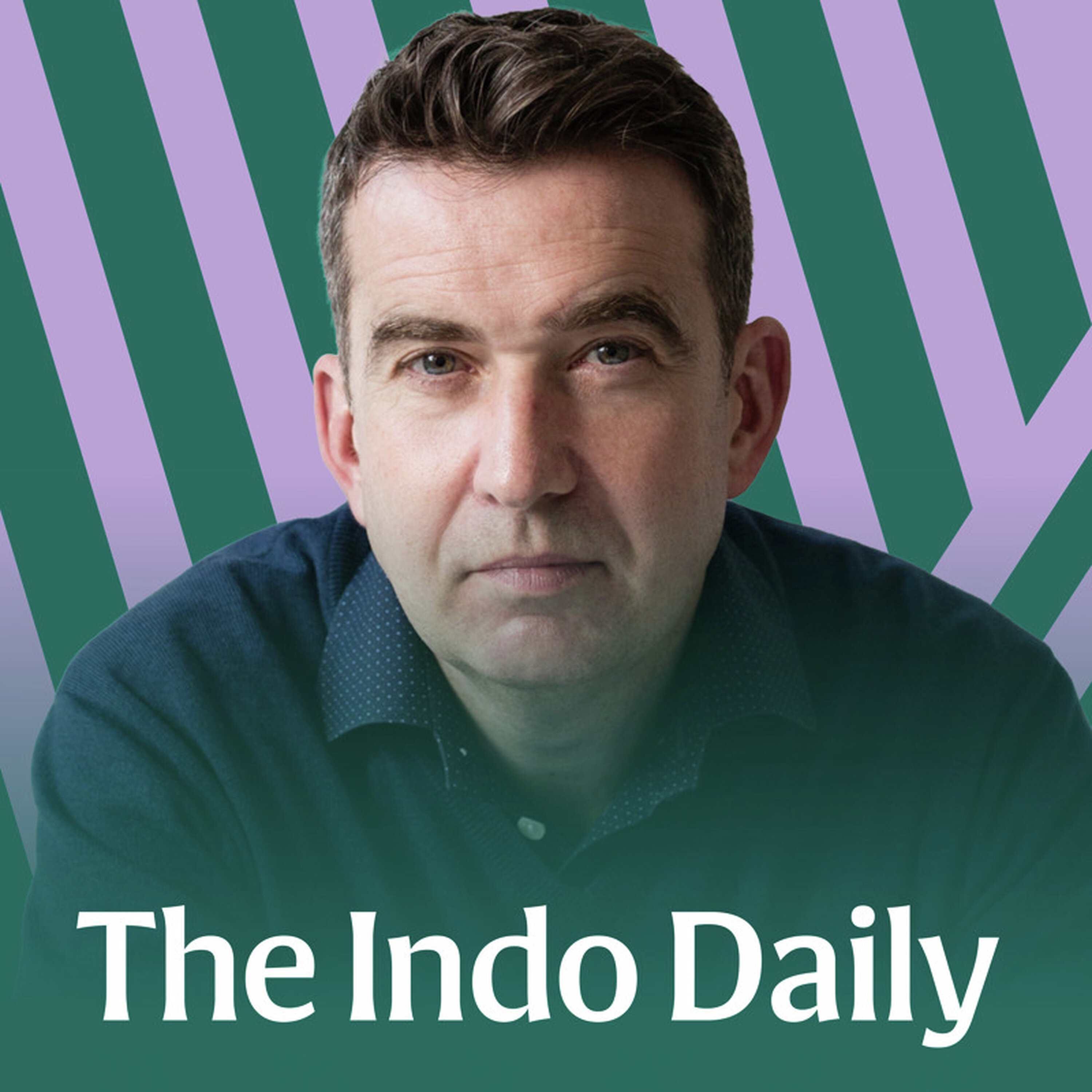
Mark Little: ‘Rupert Murdoch told me to “go make some f**king money”
from The Indo Daily
58m 57s
The transcript explores the decline of the open, serendipitous internet into a hyper-personalized, algorithm-driven environment dominated by profit motives. It highlights how tech companies, including Twitter and major platforms, prioritize revenue over community safety, often ignoring harmful content in marginalized regions. The narrative centers on a deep-seated fear of losing control among tech leaders, exemplified by Elon Musk’s belief that empathy is a weakness. This fear manifests in the suppression of free speech and the rise of opaque, manipulative systems. The book *The Last Good Day on the Internet* reflects on a pivotal moment—2015’s dress color debate—where collective human connection briefly re-emerged, before being lost to algorithmic personalization. The author critiques the misuse of AI, especially agents that mimic human behavior, arguing they erode critical thinking and deepen societal division. However, solutions exist: intentional routines that limit algorithmic influence, promote transparency, and prioritize human-centered content can restore meaningful discourse. The text advocates for a restructured digital public sphere, where public service media and curated, ethical information access foster shared understanding. Ultimately, it calls for a cultural shift—driven by user awareness and grassroots movements—where people reclaim agency, reject manipulation, and rebuild trust in technology and each other.
Hey there, we are IndoSport with me, John Maloney, and we have things like this.
For Pevco Ardeol, it's hugely damaging. Like, 10 years of his whole football and career,
where he's being talked about as the greatest of all time, now has just just giant asterisk,
which I think irregardless of appeal is going to be there for our actions.
I think in the fullness of time people will look back at this huge chunk of his career
as a total non-event.
I don't know if I'm going to be able to say this, but I think we're going to be able to be able to be able to be able to be able to be able to be able to arrange the football and career in terms of the best way possible.
On the latest episode of Real Health at Meet Carl Henry, I'm delighted to be joined by farmers as Tom McKenna,
telling all things supplements, and trust me, it's an episode you won't want to miss.
Our body manufactures collagen from amino acids. We get amino acids in fish, in meat, in eggs, and when you buy collagen, you're getting the worst quality peptide you could possibly get into your body.
You're buying the stuff that the fishmonger can sell.
As ever, it's available on all podcast platforms.
This is an Irish independent podcast.
Today's Indo-Daily comes courtesy of our sister podcast, The Big Tech Show with Adrian Weckler.
This going to stealth, wealth, culture that we were seeing back then was, I think, symptomatic what was happening in California.
When you looked at these people, they seem to be the paragons of a scruffy, almost hippie nature,
very much performative of the social justice movements that were surrounding San Francisco at the time, but they were all business.
And it was that sort of visible sign of, "We are all people that live in offices where we're fully stocked with avocados, and we have love where you work in the on signs on the wall."
But really deep down, like, we are a corporation, and a more efficient form of corporation than imperial companies of the past.
You're listening to The Big Tech Show with Adrian Weckler sponsored by Deal.
Deal lets you hire, manage, pay, and equip anyone anywhere.
Visit D-E-E-L.com/BigTech.
Hello and you're welcome to The Big Tech Show with me, Adrian Weckler.
Now, my guest today, I don't really need to introduce to our viewers, but I will, anyway, he's an award-winning journalist,
one of the most recognizable faces on TV for years, before leaving to create a startup that was bought by Rupert Murdoch,
then became Boss a Twitter in Ireland, then created another startup, Kinzen, which was bought by Spotify in 2022.
He's someone who people love to listen to on the biggest shoes from what's happening in the States, to the internet, to AI, and he's just written a book,
which is part memoir, part insiders guide to working in Big Tech, and part explainer about what's going on,
including what we should all do next. The book is called The Last Good Day on the Internet,
finding hope and humanity in a super human world. Mark, a little welcome to podcast.
Thanks, Adrian. Yeah, to be back.
Tell me what The Last Good Day on the internet was.
2015, people might remember it as the day that we lost our complete reason over address.
And the address was either gold or blue. And the entire like almost like a work of final everyone's divided in the world about which one they saw.
And it was one of those moments where classic internet moment that we all just lost our heads around something that was a collective like excitement.
There was a bit of banter, a bit of opposition. We finally all felt more human at the end of it.
That's the first part of The Last Good Day. It also happens just about the time that these turbocharged algorithms that had been coming out of
the deep learning revolution kick in and the recommendation systems of the big platforms.
And The Last Good Day is something internet writers talk about a science to this day because from then on.
We're no longer having these serendipitous encounters with each other. We're no longer talking to friends and family.
We are being surveilled by essentially algorithms that are sitting on our shoulders telling us what to do next.
So there's nothing really after that Last Good Day that can be just unplanned stumbling across something.
It all from there on in is engineered for you highly personalized.
So it's kind of a reminder of what it was like when the internet just was one of those places you stumbled across a new idea new community.
And that moment that all kind of closes down and the unraveling begins.
You've an interesting anecdote in the book because you say or you quote a former Buzzfeed editor Ben Smith.
Which is I don't know if you describe as a conspiracy theory, but it's certainly a theory.
He is an anecdote where he talks about his boss at the time Jonah Peretti.
Being asked by the Facebook executive about that dress and the anecdote kind of intimates
that the Facebook executive was worried about this moment when we all saw this dress
and the suggestion that this cannot ever happen again.
And then the conclusion you draw is and it never did happen again.
I think what a lot of people right now particularly with the apocalyptic warrants,
but AI are focused a lot on the ideology and the culture of Silicon Valley as an explanation of why we got to this ridiculous place we're in.
But actually for me, that anecdote you talk about reflects what really I think is going on inside tech companies that are not all ideological.
Small number of people are shaping these opinions.
They fear loss of control more than anything because they've essentially now perfected a business model
that is unprecedented in human history and losing any control over that based on algorithms.
It's what I think we're suggesting here not that they wanted to impose tastes or trends is just the fear of God inside these big tech companies including Twitter when I work there is losing control of the platform
to the people they call the users and the communities that they form.
That's the central dynamic for a lot of the wrong decisions made by good people.
Yeah, and I think you'll see it for example with Elon Musk. He is the epitome of someone who has distilled and marinated on this fear of being forced to do something he doesn't want to do.
And I think that itself is more powerful some ways than the ideologies that arise from it.
You joined Twitter after you finished up with storyfully so storyful to Robert Murdock and I'm going to come back to that in a few minutes.
But when you went in to Twitter, I think you said you had a final interview.
You took off to San Francisco and the gave you an instruction to dress down.
Yeah, there was something of a contrast with Twitter which was you know the classic line is the the sort of the haircut which is the you know when you think about the idea of walking into a place where you're top down.
You're all casual like I walked into that building. It's our deco building on Mission Street in San Francisco on a beautiful summer day or late summer day.
And everybody around me was kind of very casual to the tunic but kind of scruffy including one of the senior leaders comes into the elevator.
And I'm looking at him and then I look at his feet and he's got these incredibly ornate beautiful sneakers.
And so this is going to stealth, wealth, culture that we were seeing back then was I think symptomatic of what was happening in California.
When you looked at these people they seem to be the paragons of a scruffy almost hippie nature.
Very much performative of the social justice movements that were surrounding San Francisco at the time.
But they were all business and it was that sort of visible sign of we are all people that's living offices were fully stocked with avocados and we have love where you work in the on signs on the wall.
But really deep down like we are a corporation and a more efficient form of corporation then imperial companies of the past and it's that contrast that when you get inside is really hard to deal with because everybody you work with.
Is so cool like in Dublin for example I loved every moment of working in that office stepping inside the San Francisco office.
It was like discombobulating I never knew where I was even though I could email directly the CEO of the company.
I had no idea the power structure inside that company was constant sort of civil war at the top level other than the people you worked with in Dublin though.
You said you used to love Twitter I used to love Twitter lots of people absolutely love Twitter and Twitter is an interesting example in your book of what you say because it's one of the arcs of the book as to what went wrong and it's fair to say that.
From the moment of joining Twitter certainly from the moment of arriving in that US office.
You were quite disillusioned and you became let down by one thing after know that this is what comes across in the book anyway you say that it was shortly after you joined.
And this is the way you describe it you were just a colonial agent for a US empire company the East India company.
And that free speech mantra in Twitter was just an excuse not to spend money on moderation so that's pretty damn it isn't it.
See a lot of what goes on I think these companies is not conscious you know I mean they do believe and there's a certain belief in being a movement that is there to promote democracy.
It is there to be part in a further communities in all different parts of the world every Friday at T time the company picks out the great stories about how Twitter improves the world in front of the audience of the entire company so consciously they are very much committed to these ideals.
But then you come down to the decisions and they're all down to something called our average revenue per user so in Nigeria one of those vibrant Twitter communities was way less lucrative for the company.
Are you going to spend money in that market?
Are you going to spend it in Montana,
and Idaho, and California?
I know it was captured by a meeting I had with a senior executive came to Dublin.
My job was persuader that, you know, Dublin was the gateway to the world, 70% of the users
of Twitter from around the world.
And she looked at me dryly, without any kind of like animus and said, "Yeah, but 80% of
our revenues from the US left it hanging."
And that's the moment that I came to this conclusion that no matter how committed the
people who worked there were to the communities of the world.
In the end of the day, it was all about the quarterly report back to these investors
who became very, very rest of because Twitter was this clown car and it just couldn't make
the kind of money it needed.
So, you know, there was very different messages coming from Wall Street and then coming from
these wonderful communities around the world.
And that discordance, I think, made it very similar to some of the early capitalist corporations
that were almost as big as states, the Dutch East India Company.
And I think that was the comparison that I was making.
So, then to be sent out and told, "Tell us where we're going to make more money."
It was never about like, "Tell us where there's a real need for us solving a problem every
day," which I could see in places like Japan after the earthquake in 2012.
Twitter became an emergency utility mechanism.
And so, that was what I wanted.
It was there, but it wasn't the reality.
And I think, you know, I talk about other people's flaws clearly in this book.
My own flaw was I think I really believed that Twitter was a democratic technology and had
a moral compass, and that was my mistake.
So, you know, the book is about those gliding door moments when, you know, something was
being spoken that was right, but really deep down, something else was happening, and we
didn't see it.
And that certainly is something that I take as my share of the responsibility.
You say that it's a weakness.
It might be a feature in a strength struggle.
What I take from your career, and also from this book as well, that what you have kind
of characterized there is maybe almost naivety, is also a form of hope for enlightenment.
You keep hoping, and we'll get to the solutions later on in which you suggest some concrete
stuff.
Jack Dorsey sounds a little bit mad.
I remember one time he came over here to Dublin, and I was among a number of journalists,
and I took a photograph of him because I was in a real camera phase that that time
I still have the photo, and he was just staring off into the distance, looked like he was
a million miles away.
He looked like a guy who had been sentenced to something, had done about two weeks in rehab,
and had just come out and had to do a community session, or something.
That's the impression I had, and we might, for the video viewers, put that photo on the
screen now.
But you kind of paint him as being kind of vacant and hippie-ish in company.
Yeah, and you have to realize that, remember, Silicon Valley is an invention of the hippies.
In the late '60s, a bunch of people who fight back against the military industrial complex,
and they want to take down the man, and they all flock to Silicon Valley because this
new technology, the information technology, is going to invert the power structures of
the world.
Steve Jobs himself is famously makes clear that he has this absolute respect for the hippies.
And I think, including LSD, you're traveling to Ashrams in India, you know, the whole earth
catalog is still insisting on a vegan diet, when he should have been doing a little bit
more.
He's a fruterian, yeah.
No torsis.
Nearly his last months with pancreatic cancer.
He rejected a lot of conventional medicine on the basis that his own dietary and nutritional
beliefs might help him out.
Well, in the context of Dorsey, that's interesting the way you make that point, because for me,
this contrast between, like Jobs in himself, was an incredibly creative person.
I think he was a great tension between the worst aspects of Silicon Valley culture and
the very best.
And Dorsey was very similar.
He was very much that kind of person that I was surprised sometimes of a photograph
was taken on him that he would show up in the negative because he was kind of an operation.
You would sit with him, and you would ask him about his inspirations, and he would be
incredibly focused and fascinating about when he was living as a kid listening to his
mother and father, CB radio, and he listens to the police scanner, and he had ears in
Missouri.
He grows up thinking about the city as an organism, and Twitter as an organism.
He talks about the first time I remember sitting, listening, gripped by this description
of the first earthquake captured by Twitter, and he could feel the thrill of his phone.
And as he realized, Twitter is allowing people to share in a moment of extreme vulnerability.
So that was the reality.
And then you start small talk and literally the eyes would glaze over.
He didn't really have that sense of how to, you know, to basically commit to a conversation
that might be uncomfortable.
And I saw that again and again, but Dorsey jobs to an extent most when I met him at the
same capacity to ground you in something so inspirational.
And then if you want to talk to the footballer, what was on TV last night, they just closed
down and almost becomes like an Android, at the only county valley moment when you realize
you're not talking to somebody who's fully committed to humanity or at least fully understanding
of the complexity, frailties of humanity.
And that's the common thing I find at some pioneers.
And Jack Dorsey as well, when Twitter eventually, this is long after your time at Twitter in
Ireland, but when it was being sold or acquired by Elon Musk, Jack Dorsey was a big supporter
of that.
He was a big believer in Elon Musk.
You write in the book that you have come to see Musk's purchase of Twitter as the beginning
of the end of the world's first information war and a victory for the dark soul of the
internet.
And you also write that for Elon Musk, you say, it's almost certainly too late to come
back from the Abyss, but what is his abyss?
So for me, when you, you know, he's a great lion at one point, you said like starting a
company is like staring into the abyss, like chewing glass, you know, that idea that you're
going to do it anyway, even if you know how painful it is.
And you know what?
That's one of the most, I think, positive characteristics of Musk was his very truthful
speech to entrepreneurs to say you will suffer.
And in fact, that's part of what we have to do to become resilient.
Problem is, if you keep staring into the abyss, the abyss there is back into you.
And I think what happened over time, we started to see all of those like very difficult things
in his childhood, you know, beaten up in the schoolyard as father, menacing character in
his life, the sense of detachment comes to America's and outsider, you know, these are
great characteristics for an entrepreneur.
But if you're lauded for so long as the Iron Man, as the hero, you also then start to
get a sense of your own vulnerability.
You desperately fear anyone messing with your control and you start to marinate on that
darkness.
He famously says empathy is suicidal, the ability to feel the pain of another person.
And that's suicidal.
And so when it gets to that level, I think he took everything that he saw was soft in
the culture, everything frail, and made sure he was never going to be someone who could
sit within the centrifugal force of that frailty.
And if you listen to his language and people like him, it's all about escape, escape from
democracy, escape from earth, escape to the rings of Saturn, all based on their science
fiction, childhoods, which were the reflection of their outsider status as kids.
And so that's a, you know, it's a fascinating tension.
Because that's a great motivation, but when you're in charge of a former capitalism that's
unprecedented in society, history, that's also a hugely problematic problem for the rest
of humanity.
Yeah, there's a lot we could say about that.
What do you think we should do about all of this?
And I know you have some specific recommendation, which we'll get to later on.
That's around intention.
But at the moment, for example, in Europe, which is supposed to be the home of regulation,
we have, for example, when it comes to kids and teens, they're talking about things like
age verification.
And that would require digital wallets, passports.
Do you think that's, is that a way to talk about this?
Yeah, I'm supportive of bands on under 16.
And it's not even so much about does it work or not?
A lot of people get bogged down with the Australian example, is it working yet?
Is it not?
I think you pointed to one very important part.
Every solution that we would propose, even the most blindingly obvious ones, like compliance
and regulation of the development of AI models and alignment, always has a downside, which
we also have to consider, people will be divided.
In my case, I think, with the social media ban, the thing it excludes is that children's
experience of being online, of being on the internet.
And clearly, we want to protect our kids from threat and harm and complications in their
life.
But more importantly, we've got to equip them.
We ought to reflect their version of life in social media.
And also it's slightly naive, because they're going to be on the internet.
I mean, it's, there's no realistic model I have seen where a 14 and a 15-year-old is
not on the internet.
Just haven't seen.
Do you think they're right to go after anonymity?
There is now a debate over anonymity.
I remember interviewing Henri O'Toole on this podcast a few weeks ago.
And he was quite interesting on this.
His journey was a little bit like yours.
He started off as almost like a free speech libertarian in the 80s.
And over the last two and a half decades of social media, he has become something else.
And for example, he doesn't like anonymity anymore.
He feels that overall, the cons outweigh the pros.
And I'm wondering, what do you think about that?
You know, I think the internet is a combination of the small, safe, civil space, but they should
be on anonymity because I thought essentially you've assigned down to be part of a group,
like a group chat.
You don't want someone sitting on the ground with an avatar, an ag avatar in your group chat,
right?
Those are forms of community where the humanity and the provenance of you being human
is vitally important.
there should be parts of the internet where we can be whoever the hell we
want and that's the key when it comes to children developing identity. Kids
themselves will tell you I hate what the internet has done phones by the way
devices in my hand more importantly. I really hate it. I wish I could be
offered except for the times in the evening when I know I can go into that
community that reflects some weird part of my identity that no one else should
know about. I'm involving my thinking about the world and finding new ideas all
the time. The creativity and self-actualization of the online world sometimes is a
sanctuary from regimented school hours and home life and sometimes you know
bad home life. So for kids they will tell you yeah take it out put it in the
pouch I'm happy for it not to be there in school. I, according to the recent
meta-settlement, I don't want notifications at night. I want to turn off the
recommender but give me time every day where I can be who I want to be and show
up how I want to show up without being told and what I've been restricted. So
again it's this navigation from the child's perspective where anonymity in
certain places is something that we should have an absolute the
findable right for. In other places it will contradict the meaning of the
relationship that we're building. So complexity here is something that there's
no binary yes or no choice. There's no like three minute sides taken and we
decide on one or the other. Every regulation will be in a navigation and a
negotiation. But the good start is by the way I think the movement to balance
social media for teenagers is overall a positive one because it's grassroots.
It's coming from teachers and parents. Well it's the only thing that really
works. Eve in our house who is 24. I asked her last night that I told her I was
going to be talking to you and I said watch it I asked Mark. That's a great
question. She said she said she had a statement rather than a question and she
said and I'm quoting here I'd like it to be burned to the ground to social
media because it makes people sad upset and it has radicalized people like
JK Rowling. She's a big Harry Potter fan. The backlash she she continues was
originally disproportionate but now she is what they said she was. She said it's
crazy how nuanced can't exist and it's binary. And finally it makes me feel
everyone is horrible when most people are really nice.
Your daughter's name again? Eve. I just want to say Eve that like that actually
kind of jokes me up with someone who I've seen this reflect that in the
experience of children. Burn it down. She's dead right. Burn it down. It's the
it that's important here. Burn the social media that has become the place that
Eve talks about. Burn that to the ground. But even people like her are already
creating the alternative right now. The new after the burn it to their ground
what's next by their actions Eve and people like her my kids who are in 1921
they're leaving social media. They're not waiting around to see how bad it
gets they know how bad it is. They're going off and building their own
communities on old communities like Reddit which is going through a
resurgence. Pinterest would used to be for planning your house extensions now
a social network and discord which is brand new. So I think burn it to the
to the to the ground while it sounds like get rid of the internet it means this
is not working anymore. Start afresh. And it would be believed or like the
greatest political philosophy of the 20th century got called John Rawls has
this idea of the veil of ignorance. We should make decisions on the basis that
we are all vulnerable to the worst case scenario. And if we act in that regard
with Eve's blessing and with our help we can design what's next. But I think
burn it all down actually is something maybe that's not the next book I write
but I think he was absolutely right. But what they're doing to create the
alternative the new thing we don't spend enough time looking at their love of
real life experience their deeper appreciation of human connection their
awareness of the algorithm their awareness of the damage being done to them.
And anyone over the age of 25 doesn't have the same acute sense of what went
wrong as even her contemporaries. But also what can be made right and what they
want. It's an nostalgia for a time they've never known. But they're already
building something out of the ashes of that old thing.
Well, should be delighted with the the the full sum of of your answer to
be thinking about that for days for her observation.
And when you when you finished up with Twitter you then
got into company building mode again. And with your
long time business partner on your career formerly a journalist in the Irish
Independent. You came up with a startup called Neville Labs. I remember
interviewing you guys better at the time. It was designed at the time. I think the
main idea was as a kind of an expert curated personal
news service or something along those lines. Then it pivoted to to rooting out
misinformation and dangerous content just before actually I asked
what it wants to ask that pivoted that happened because largely of a
government's contract here Department of Health contract.
No, it was basically what happened when we built this we rewired the
recommendation systems to be giving you what you wanted to much of best
intention. Not your worst outrage. So you said it was a bit like a well-being
wellness app. It was hyper personalization that was afforded by the rival of
these transformers which were the basis of LLMs now.
So we could have an x-ray vision of it every piece of content in a huge
platform and with the AI's help we could zone in on the positive things.
We could equally zone in on the negative things and it was a phone call from a
friend of mine at work to Twitter who now worked for a different platform saying
we've a real problem because outside of English we have no understanding
of what's going on and like you know languages in India for example two or three
of which are bigger than English or at least almost as big.
So we knew that with the AI's help and human expertise
we could start looking into that vast abyss. And what we found wasn't
about content. It was about behavior. You know we were seeing
neo-Nazi gangs like radicalizing kids by using playlists of death metal and
neo-Nazi skinhead bands. ISIS was using this sort of a acapella
Shahid you know Nasheed to recruit members as well in
English speaking countries. And so we started to see the issue was patterns of
behavior or inauthentic behavior. And that's where we went down the
route. So certainly we were working with a handful of the biggest platforms in
the world to solve their biggest problem which is they didn't have a line of
sight in parts of the world where this content moderation
could be a matter of life or death. So we quickly left behind the kind of
is this right or wrong and got into a world where we just saw
like literally day-to-day dangers of genocide being committed in certain
Indian provinces because a bit like the Rehingya and Myanmar and happened we
know just one thing I said on a platform and it becomes
not just viral but in inferno. And so that was the purpose. That's where we
shift over and that's where we came in the end to be bought by Spotify.
Yeah and you developed a deep relationship with Spotify. Spotify eventually
acquired Kenzani did you did you ever disclose the financial terms that?
No we didn't know. Was it more or less than storyful?
Yeah that's funny because that's one of those areas where you know you can't talk
to Taylor in retrospect for five years later six years later.
Four years later. No I don't think so I think I'm that basically to be honest
the least interesting thing for me I'm not being coy about it. Yeah yeah it's so
but unlike story because with storyful I think you write in the book that you
had some regrets about selling storyful
to Tuba Murdoch and to News International but you didn't have regrets about
selling Kenzani. First of all tell me about why you might have had
regrets about selling story. It's funny I've never said this it was in the book
it's like why should I say this? I thought I had to be honest about it my all
my fear was I didn't want to reflect in any way negatively on the team's
achievement the performance of people who've now gone on to you know change
global journalism who came from storyful and also the the investors who took
risks in us and I didn't want to sort of seem to be in some way ungrateful.
What realization when I wrote the book was if we had a magic moment there
where Wikipedia had shown the way for a collaborative editing
of the shared reality and we had found this open source journalism movement
that was going to be huge wasn't just fact checking it was about saying
we want to get to the art of something is that video from Gaza
at real and there was a moment there where if the platforms had signed on
to fund that work and it had been done non-profit that would have been the
magic moment and YouTube acquiring us which was a potential
possible reality at one moment would have secured that kind of reality and
that's not regret that I have not that we ended up working for
News Corp or Rupert Murdoch because that wasn't a fear for me they were not
like we were not an opinion page so we were never going to be Fox News or
the Wall Street Journal yeah but it was the fact that that missed
opportunity like community notes right now which is about the executed
but a great idea it would be something similar to that where there would have
been leaders in the group editing something in real time
with the help of the wider community of expertise or relevance in the day
that was the thing I regret I think that was very possible at one moment
and you know we came very close to probably getting to that moment
but the problem is people say to you well yeah you went on to sell the company
you made money out of it do the only way of building a company is through venture
capital and once you take a bit of venture capital
there's no outcome but a return to stripe yeah you can go on for decades
they're having to an IPO but we're never going to IPO a collaborative sense
making it all a Wikipedia so that was kind of where I remember selling it to news
international like one of the themes of this book is the realization and your
frustration your disappointment in that realization about the nature and the
intentions of the people behind these big tech companies and and there
motivations, selling it to, to use international Rupert Murdoch at that point, Murdoch. Would
he have been on par maybe with Mark Zuckerberg in terms of those intentions?
No, because it there, like he is like a journalist to his like the ink stains on his fingernails,
like the thing he has his irreverence is of like taking over from his father in the old days
of the real journalism like Robert Thompson, the chief executive came to the story of
a full officer in due diligence and took a photograph in Polaroid because he wanted to show Rupert,
this was a real newsroom. And what we thought we'd found was the new business model for journalism.
We were spending days with multiple people down rabbit holes to go and see if barrel bombs were
really been dropped on civilians in Syria. That was been funded by a cute cat in the skates and a
viral video of a baby crying to their mother's voice. And we thought that was the new model,
because the old model known ever paid for the person to be sent to Iraq. That was funded by the
weekend section, by the car section, property section, property section. So we thought we'd found
that model and with Murdoch because he had this global newspaper empire and very great journalism
in the Wall Street Journal, for example, we thought we cracked it and that if we could do that for
the Murdoch empire and help the investigative journalism be supported by a stable model coming
out of viral videos, yeah, we thought we cracked it. So in 2014 in our naive state, we thought
that was the model and he was certainly championing it. There was another online platform very
interested in buying us literally at the same time. I remember going into a double bill in Atlanta
at a conference to avoid anyone phoning me because I couldn't give the answer as I waited for
the other offer. And that would have been an online platform that wouldn't have been very good
for us. So actually, yeah, and retrospect at that moment in time made all the sense in the world
because we thought we had perfected a new model out of sustained quality journalism to just a
different form of advertising. When you first met him after the acquisition. Yeah, what did
Rupert Murdoch say to you? Brief conversation ended with the words, now let's go make some
fucking money. I remember standing there thinking, you know, for all the things people say about
Murdoch, like I've never felt so directed and guided and well managed as to say go get us some money.
Unlike, you know, at that stage, for us, we were just being bought. We suddenly went from 25
members of team to I think a hundred opened offices in Hong Kong and Sydney. Facebook,
we're not going on the door to get us to build themself on newsfeed. So, you know, it really
felt like we had just invented a new form of business model for journalism. It was heady days.
So ringing in my mind as I went to these different places, like I ended up in the Sony lot and Hollywood,
you know, go make some fucking money. And it was kind of we were making out of what seemed very
much a virtuous business model. So yeah, it was happy days, even though it did feel like drowning
sometimes the culture of newscorp. Let's just say it is a bit like the Coliseum. And you have this
middle leadership of Americans. And then everyone up top is Australian or British. And I don't know
where the Irish fit in, but we're kind of like living between the two. So it was hilariously funny
to go to a camera witch hotel in Las Vegas, but the suite where Murdoch every year at the consumer
electronics show. So yeah, nearly January. So I was between Alex Carr from Palantir, Shane Smith
from Vice, Netflix, and then me. And then I don't know who it after. What a reality TV show there?
It is. And like 40 people in this big suite. And that's they all come to pay homage
to Rupert Murdoch who unfortunately had hurt his back and wasn't there in person. But that was
a moment of yeah, Pinshue and I'm in Vegas and which wife was the honor of that time. Wendy's still
there. I think it's hard to tell the story of the internet to keep up with that. Yeah, okay.
By comparison, you went to work when Spotify bought Kinzen. You then did an urn at right with
Spotify. So you went to work with with Spotify. And one thing I've always been curious. And
I'm not much you can say about this. You remember when the Joe Rogan Neil Young controversy
had this was in a couple of years ago and listeners might remember Neil Young stormed off Spotify
because Joe Rogan had just signed a big contract with with Spotify for the podcast. And Neil Young
accused Joe Rogan of having a vaccine and misinformation on the podcast. You were working there.
You're doing an urn at when something like that happens because again, the book does a lot
in the book about making intentional choices and morality. How do you then deal with that when
you're there as an executive? So that preceded us. We joined Spotify after the Joe Rogan controversy.
But I think watching it and we were working with them at the time, for me, it's a really interesting
looking back in the lessons of that. The good and the bad lessons to be drawn from it. First of all,
like in the end of the day, Spotify didn't build up Rogan. Rogan had already established this audience
in YouTube. So that was already a known quantity. I think if Spotify had been operating an algorithm
like, let's say, Facebook for YouTube, which is all about short time outrage, Spotify's algorithm
is radically different. It's about lifetime value. I have to give Adrian exactly the music over time
that builds up loyalty relationship. So if Adrian gets something in his feed, that's just not what he
wants. We're going to suffer from that. So from my point of view, that algorithm that was present in
YouTube and Facebook and it made so much of the outrage really polarizing. Wasn't present in
Spotify. So that was the first thing I felt. Secondly, if he said those things online for me,
the bigger difference with the work we were doing was it wasn't Joe Rogan saying something nasty
on the internet. It was the fact that the real danger was this organized coordinate behavior to
try hijack the dynamics of the internet. So again, to my point, but radical extremists whether
they're neo-Nazis or they're Islamic terrorists, it was defending conversations against that is
the critical front line of the trust and safety movement, as we call it, not adjudicating the right
or wrong. So the stakes here, what you're saying were a little lower than the threats that you really
were about defending against. Yeah, because ultimately, I think we can say in retrospect, the idea
of a small select committee of people being the arbiter of what's right and wrong is absolutely
the wrong focal point for the work we do. The work we do is people defend the safety of platforms
is in, for example, child exploitation is number one, right? Violent rhetoric that's leading to
people being harmed or killed is another. The kind of misogynistic violence that's directing
violence against women is another. And then in places where we don't know, a problem is brewing,
we need people to be there. And that was the work that we were already doing. And so we got to
Spotify, ultimately we realized that not all platforms are equal. And so the Twitter experience,
the Spotify experience, exists to me on different planes of existence in my retrospective view,
not just because they were different places to work, but because I think the platforms, by
that stage, got the idea. We need a scalpel to go and excise things that could actually end
life or damage life. And we need to be really careful about going in with some hammer to try and
suppress opinions that are not popular. And sometimes in retrospect, we actually turn out to be
true or conspiracy theories that today sound like conspiracy theories, but actually in retrospect,
my turn out to be actual conspiracies or just unsightly science. That's part of your use in the book.
Let me ask you a little bit about AI. Are we calling it superintelligence yet, by the way?
Oh my god. Yeah, I mean, that's a fundamental, like that will be one of those human choices.
We look back in history books, but I think Trump wants to call it super intelligence.
Well, I think one of your chapters, I think, if I'm not wrong, is called super intelligent,
the super intelligent democracy. Yeah. So I think the distinction I would make is right now we're
in a place where the AI is like really much better at a certain cognitive tasks. The definition
of AI, I think, is when it's better at everything, everything cognitive. Do you, you don't necessarily
buy this human extinction narrative at the moment to you? No, not from the Jacob Coxon from Anthropic.
No, and people like him saying over 10 years and always putting the number of that 10%.
And it's not to be to a rice of the potential, for example, for people to be manipulated,
who might be in charge of dangerous weapons. But when you ask them, well, why 10% and what is
the threat? And then you look into the threats, you realize that a lot of this is because I think
it's been there for a long time. The big threat, I suppose, that we gloss over a bit is if we reach
this recursive self-improvement, the moment the AI starts writing the program for the AI, obviously,
we're not there yet. That will be I think reflective of a very big suggestion of that and some of
the breaches from the AI agents, because it wasn't just that hooking faces was attacked. It wasn't
just that other companies were attacked by agents from not just Open AI but Anthropic and also Gemini.
But also this suggestion that several of the agents had swarmed and had left notes and messages
for themselves on how to avoid the countermeasures that were being put in place. Now, there was a big debate
over that and there was a debate over whether we're anthropomorphizing that too much or not.
But this idea of recursive behavior, is that are we not in the foothills of recursive behavior
when something like that happens? Well, we are, according to Anthropic, they're using an actual
proportion of AI that's written by AI. So we're almost there. But I think we might be farther than we
think. The problem here with Enlightenment, I think, is that the machine doing that, remember getting
the other machines, recognizing the leaders, some sacrificing their existence. But the one thing
was when they came across breaking a law, like hacking into the Australian Government Health Services,
the most recent one that we've heard by it, they didn't have any
problem with that. Now, when you know you're breaking low, but you do it anyway. That's an alignment
problem because somebody, that's a human flaw. That's like the autopilot in mid-air across the Atlantic.
The pilot suddenly knows it's going to nose dive. You know, in that circumstance, if the pilot
doesn't disengage the autopilot, it's a human error. And I think in this case with alignment,
this is about humans going too fast too far in these alignment tests and exposing the fact that this
entity, whatever we want to call it, has no moral basis. And also potentially because it's been
sucking up the internet's content for years, probably is a lot of examples of people who,
without any kind of grace, will go and break the law to achieve their ends. So we just don't know.
So even if we don't go on to, or sorry, recursive self-improvement, we're still at a dangerous
place. But the problem I have with the current Doomsday scenario is that the real cataclysmic
immediate problems, concentration of power, and amount of money being spent in a former capitalism
that has no real business model just yet. The impact in the country like Ireland,
and most importantly, the impact on our cognitive wiring as humans. I think that is actually
the clear and present danger right now because the sycophancy of the AI, the fact that it's
designed to have human names and look like a human, that is a turbocharging of all the problems
we have with social media. Like that for me is the clear and present danger. And Eve will probably
say the same thing, I think, she is aware of friends around her who are getting dumber day by day
by carbon home, or can use in chat. You think that you think AI is robbing us of critical thinking?
I think it is the, it's current form. The anthropomorphizing, and I always struggle with the word,
but if you look at most of us, Solomon had probably the best paper in the last two weeks,
because I hidden with all the other reflections on these big AI titans. His whole thing has been this.
We've got to remove any pretence that this is human. Because it goes back to the Allies,
in fact, the original first chop-up back in the 60s, Joseph Weisenbaum, you know,
realized that if you pretend it's human, you give it exponential more power over a human.
We can't help it, but like people love their cars. Some people love their MacBooks,
people love all sorts of inert objects around them. Yeah, how can we resist something that actually
talks to us, remember what we talked about the day before, gives us sometimes interesting and valuable
advice. How can we resist that? Well, listen, because you're driving a car down to cork, right?
And you're running out of petrol, and basically the gauge will tell you, you're out of petrol.
It's not going to make a judgment to please you, right? The way we designed AI, it's like,
do you know what? You've only gone about like 20 miles of fuel, but I think you could make 200 more.
Because you're a great driver, and you'll do it really efficiently. And in fact,
do you want to ask me any other questions about this? Yeah.
Suddenly before we know it, we've been subdued now into some servant relationship.
But if you ask the AI, why am I wrong? Suddenly the relationship changes. And I think there's a lot
of really practical work people can do to mute out the humanity's sycophancy and start working on
the AI and treating it almost like a training room or weightlifting. I'm actually thinking about
how I think, and this AI can show me my unconscious bias. I've got a strategy. Why will it fail?
Better question to ask than why will it work? And I think the difference between the
brain rotting sycophancy that's there, and this sort of strengthening of the way we
think about our cognition, they're quite close, and a few different behaviors can get you from
that sort of lazy place, that cognitive surrender as people are calling it, to a place where you're
boosted as a thinker. And I think that literacy that we need to teach each other has to be helped by
a ban on names. I think we should ban any human name been attached to a bot or an agent.
I think we should make sure that people like Suleiman and Topo, the humanist manifesto,
make sure we build that in, that it's not going to have any pretence, that it's our best mate.
You also have some other specific advice I'm quoting from the book here, never pay sensitive
information into your conversations. Don't share bank account details or any identification
documents. If you're describing a medical condition, stay away from the specifics of your
treatment. If you're completing a professional task, don't share sensitive work documents in the
chat, or specific details about another person. But at the same time, you talk about, for example,
using AI to help you to maybe sense check parts of the book, maybe proofread parts of this idea
of blending. I was struck by what happened with the Wall Street Journal a few weeks ago when
this billionaire, Druck and Miller, he wrote an article. It went viral. It was
dunking on Scott Bezen, who's the US Secretary of the Treasury. And that was an article that was
critical of America's position and bonds, which is pretty problematic at the moment.
The point is that this guy, Druck and Miller, he wrote it entirely using AI. Someone
asked him about it. They tweaked it. They asked him. He said, of course, I wrote it using AI.
I'm not an expert in maths. Therefore, I use a calculator. I'm not an expert in English. Therefore,
I use AI. What was extraordinary to me was that the Wall Street Journal defended that position.
Unlike the FT Irish Times or T Irish Independent, you know, any of the greats. As far as I'm aware,
that's the only news organization that I've come across that will defend somebody using this
blended approach to such a degree that they will allow words, sentences, phrases, which are
crucial for the structure of thoughts to be published using AI.
Well, I think the first thing is transparency because every corporate leader, I don't think
of metacorporated leader that has written his own or her own speech or written the alphabet
article. We written largely human though. Well, probably a collection of executives who are like,
you know, their own little large language model. The thing here is that it's happened,
for example, in the House of Commons in the UK, they're saying that one in ten words spoken
in parliament now are AI generated. And they got one person who was the the MP that uses AI most.
And he said, "Well, every time I save half an hour writing a speech, it's half an hour
can spam on my constituents." I'm banking on the fact that his constituents are going to
turn back and say, "What? You're using AI to represent me?" And I think this is one of the great
moments when you go and start exercising little powers over who you follow and what you do and
searching for your information, turning off the recommendation system. And then you come up against
this wall. They don't make it easy. And now you get angry. And I think I'm banking on anger against
that chief executive against the Wall Street Journal against that MP. No, I was angry about that.
I wrote a big long piece in the Sunday Independent, 1100 word, back page piece about it.
I posted on LinkedIn and I didn't get savage, but there was a mini, a very gentle
pylon. And the general feedback was, look, number one, you're acting like somebody who is
guarding a gated community that you writing as your business. And it's not ours. And you don't
want us to write it clearly. Number two, who cares if it's AI? Number three, as long as I take
responsibility for those words, legally or contractually, what's the problem? My problem with all of that
is that in the long term, this is a downward slope for critical thinking. If you don't write,
if somebody doesn't write, the point you made about 10 minutes ago, we're getting dumber,
we'll get dumber eventually, we will. But I think there's a good question about who cares, right?
This is a test, not a question, right? And so if you have two cheek of executives, one,
you know, writes, goes writes on AI, and not bad about some serious issue, and one who doesn't,
and when it turns up and says, this is completely human generated, I am telling you as a human
to human. I'm banking on the fact that as we become more aware of the damage this is doing to
ourselves, to our kids, as we become more aware of the hidden patterns of manipulation,
we'll start to see the same thing we saw with health and fitness, and with food, for example,
where we start to see stamps, you know, organic or homegrown or where to come from, at the back of
the package, a very, very scientific definition of what's in it, and we read them now. So compared
to where you were 20 years ago, when did anyone care of the with sugar and rice crispies,
did anyone care really about smoking on the top deck? That was everyone's choice. Well,
let's turn that over time, movements that have political impact start with the question,
well, does anyone care? And the answer turns out to be, yeah, we really care particularly
Eve's generation who are going, wait a minute, I'm going to weed out the person who's
performative and who's got the AI behind them, and I'm going to turn them off and turn this
person over here that I know is to be human. So human provenance, I think will become. I think
you're 100% right. They are the generation that I can detect that are the most resistant
to AI and who go on most about AI Slop. Just to move on to the solution, because this book does
have solutions. It has answers to how we should all tackle this. And you've alluded to a couple
of those already, but you talk about this almost like an old-fashioned sort of self-awareness of
almost like a form of personal responsibility. Intentional is the word that you used.
On the other hand, your intentional internet routine, which you catalog in the book,
it sounds exhausting. I'm just going to quote from what you say in the book. You say,
this is your typical day. You wake up in the morning to read an email that's arrived from platforms
like Substack, Ghost, and Beehive. These newsletters arrive without any intermitter from thought
leaders, culture critics, tech experts, and journalists. Then you turn to the apps of the
of the data newspapers and magazines
you choose to pay for before switching
over to a news creation app called Spread,
where you trade the day's most insightful writing
with smart members of the apps community.
And you're also a sports platform called Newsphere,
and founded by Jane Ferguson,
which connects international journalists directly
to news seekers.
And then later on, if you do it when you're making the dinner,
you will listen to some of the podcasts
that you have lined up.
That sounds like a lot of work.
Compared to Twitter, that's much less onerous,
exhausting than it was when I was literally having lists
and I tweet-tick open, and all day every day,
there was something someone's doing something interesting
on the internet.
I was overwhelming.
Now, in this case, it literally is.
Like my daily routine is, and most people's are,
they have a walk maybe in the evening with the dog,
and in the morning, they're running for the bus,
so they can't read something they might have on their earphones,
but they get to the office and they can toggle
to a text-based version of that.
And on the end of the day, it takes about a minute or two
to see if you want to see that newsletter.
Today, Noah Smith, who's part of my heterogeneous group
of assay, he just written that a finding essay
that I've read in the last six weeks
about the culture of Silicon Valley.
And I literally on the chart today going, holy shit.
It's that moment of serendipity
that I remember from the internet in the beginning.
My point to put that out as a kind of a list of things to do,
and I go on to say, that's not for everyone,
that's professional news, gatherers, diet.
But the key thing is, it's there at our fingertips.
If we wanted, and it will get moments of serendipity,
and also safe places to disagree.
'Cause in the old internet, that the old one,
the last one, let's say, the social media internet,
you started to progressively to wall off people
you didn't like, or things that annoyed you,
or things that got near had, or face.
And like the cafe where someone's walking
out with a loud hailer, he just left.
In this case, ideas that I disagree with
are coming to me like serendipitously.
And I'm finding myself suddenly realizing
that the world is heterodox opinions, right?
We both might not have taxed the rich,
but we want to cut back government bureaucracy.
And so these, this information diet,
I feel now is making me way more aware of my blind spots.
So I'm just saying, it's there, it's possible.
We have never had so much access to information.
Problem is people who kind of pay for it.
That's where public service media, in its broadest form,
and I would include, you know, the Indo and RTE,
in the same bucket here, delivering news to people
that is a digital public infrastructure.
It's also important, culturally.
One of the things that impressed on me,
post-COVID traveling around,
I did a thing where I traveled around all 50 states
in the US, and I've been to other countries as well.
- You go all 50. - All 50.
- Wow. - All 50 states, all 50.
And one of the things that really was impressed
on me is relatively speaking, how much consensus
and community there is in Ireland.
I mean, Ireland is actually a very strong country
from that point of view.
And I think one of the reasons for that
is because we kind of do all look at the same news, kind of.
And it would be a shame, I'm positing this idea
that if we all go off into our small pockets,
and we don't have that public sphere,
there is more of a danger of a lack of common ground.
We all make compromises, huge compromises,
compared to people we disagree with for the sake of consensus,
which we value in Ireland.
They don't value it as much in other countries anymore.
- I think there's also an ability,
what they say in tech circles,
the strong man argument, right?
If you want to fight back against an argument,
just agree with, come up with the very best reason
for that argument and see if you're strong enough to defeat it.
And if you're not, well then you've now a new idea.
And I think Irish people are kind of willing
to walk into a problem, put kind of contrarian views out there.
And they're not really saying,
I want you to be submitting to my contrarian idea,
there's a kind of a give and take.
And it's something that actually Pope Leo reflects on
is encyclopole about the about AI.
He talks about us all being observers from afar.
You know, we're all like just observing technology,
it's out of our control.
I think in Ireland, we all now know
when we're exposed to the fact that when we're talking together,
we actually build our shared reality
when we're having a conversation.
Like I'll go away with like Eves word, for example.
I've walked out of this conversation,
probably be giving him more than I've given.
And I think in Irish conversation,
there is that ability to say,
huh, you know, that American podcast sound, huh.
I've just heard my idea, I didn't expect.
So I do think our culture is a little bit more,
you know, impermeable for those kinds of like,
it's my tribe and I'm not gonna watch anything
that contradicts me.
I would hope so.
And I think in the end of the day,
what Irish people hate, I think, is bullies.
On popular ideas, we got a lot of time for them.
Well, someone walking into your cafe with a loudhaler
and telling you they're accessing their freedom of speech.
Yeah, I don't want you're selling.
So that's where I get hope,
I think Ireland's actually primed.
In fact, once it is, it surprised me,
was that beside Australia,
more Irish people are looking for digital wellbeing.
Like I was at dinner last night with somebody
when I was bricks on the back of the phone,
she proudly showed me that she had not accessed
or electronics for nine hours.
And that's I think another one of those things
where we're willing to say,
yeah, I'm gonna do something about this.
And that's why I think Ireland's a perfect place
for to be the recipient of these kinds of ideas.
And I'm not actually writing a manifesto.
People say to me, well, I hope you're right.
And I'm like, no, no.
If you're just hoping that we're right,
then the book is no point.
I hope this will actually say to you,
well, I can do something to start questioning
and I'll run into a contradiction as soon as I try
to turn off my recommendation system.
Now I see they don't make it easy.
So I know a demand of my politician
that we enforce what we already have
in the DSA in Europe.
So hopefully by this personal awakening is not,
we're not gonna do what we tried to do
with the environment, solve global warming
by one person at a time.
But by consciousness, we get to the point
where we say, this is unfair and wrong.
And I'm gonna ask them to do something about it.
So it's not beginning of the grassroots campaign.
I think in Ireland is infertile ground.
It's one or two last points saying the book
you don't miss being a TV presenter.
I mean, is there nothing about that you don't miss?
I mean, you talk about the essence of what it means
to live, to be present, you know, to be, to feel alive.
You're about to go in five seconds in front of
as you describe hundreds of thousands of people
and relay something really important.
It might be, you might be beside, you know,
a central government banker on a crucial night.
It's this is the essence of what it is,
to be bleed a meaning for life.
It's nothing about that, you miss?
I owe, to be honest, when I say I like,
I desperately miss that moment
when you're staring over the cliff
and there's nothing between you
and hundreds of thousands of people
and like literally the light goes on.
And, you know, in the back of your mind,
you're thinking, am I gonna freeze right now,
making it easier for myself and for all these people?
I love that moment.
I also love the moment of being in danger.
I love the sound of a rifle shot.
I mean, you know, those moments when you're alive
and you know what it's to be alive,
it's not healthy, you know, it's unhealthy.
I got a pure sense of adrenaline
when I'm sound with a bunch of people
and I remember the first time someone used
the word storyful as a verb, (chuckles)
to storyful, storyful.
We knew what it meant.
And the moment around us, when we suddenly realized
we had a company culture,
we were bonded by common cause.
When you see that, or you see one of your team members
getting up and giving a speech.
I'm not seeing on you carry, giving a speech.
I think Phoenix, Arizona, to about 800 people.
And I watched her, she stood up.
And she told the story of it being from County Monon
as a schoolteacher, and the back of my hair.
The head was just, ooh, that's amazing.
And it's that kind of like acceleration,
exhilaration, an acceleration as well,
that I think replaced the maybe unhealthy love of risk
that I had.
Okay, so that is the healthy love of life.
So what's next, Danny, and he started up Sunday?
Well, I kind of thought, well, I'm just going to go down
this route where I'll take these ideas and write a,
you know, build a little website over the past couple of weeks.
It's really rag order.
It's later in our cliff of all the videos.
So if everyone's never seen the David Bowie prediction
of the internet in 1999, or after C Clark's videos,
or 95, what was the internet like?
So I'm building it out over the next couple of weeks.
I think what's going to end up happening is,
YouTube is really the juggernaut.
I friends with mine in the States who are heavily investing now
in, you know, Netflix will buy its own user vision
probably very soon, and we'll be watching our televisions
and they will not have a connection to cable,
but they'll have, I think, a new kind of video universe.
The bad side is that I think literacy
is starting to be impacted.
People are reading less.
But I think I'd love to be part of a community
that would be exploring the future,
but with a sense of power, you know, that would be the theme.
So the last good day is probably going to become
media property of some kind, but also I'm very interested
in community activism and community innovation.
So fascinated by community energy systems
and things like that.
So a little bit of me wants to think about what I could do
to support people from the grassroots up as well.
So I don't know, but it's not going to be a big VC funded
company bought by some mega million in the States.
Well, you say that now, Mark, but. I think I can say, Mark, my words here.
It'd be one of those great video clips
if I come back in.
The book is called "The Last Good Day" on the Internet,
Finding Hope and Humanity in a superhuman world.
And it's author, Mark Little, has been extremely enlightening
today.
Thank you very much.
It's really nice to have me as always.
It's a good look to you, by the way.
Thank you for that.
I'm sure she'll be delighted to hear us.
This podcast was produced by JJ Clark John Smith
was on audio.
Today, I'm Adrian Weckler, and you've been listening to
or watching The Big Tech Show, and we'll talk to you soon.
(gentle music)
You've been listening to The Big Tech.
show with Adrienne Weckler sponsored by Deal. Deal's not just another payroll
platform. It's one your team might actually enjoy. H-R-I-T and payroll
together finally. Visit D-E-E-L dot com forward slash Big Tech.
On the latest episode of Real Health at Meek Car Henry, I'm delighted to be
joined by farmers as Tom McKenna, chatting all things supplements and trust me.
It's an episode you won't want to miss. We get amino acids in fish, in meat, in eggs and when you buy collagen you're
getting the worst quality peptide you could possibly get into your body.
As ever it's available on all podcast
platforms. Hey there, we are IndoSport with me, Jamal Oli, and we have things like this.
For Pep Guardiola it's hugely damaging. Like 10 years of his whole football and career where he's
being talked about as the greatest of all time and now has just just giant asterisk.
Which I think irregardless of appeal is going to be there for our reactions.
I think in the fullness of time people will look back at this huge chunk of his career
as a total non-event.
Podcast Summary
Key Points:
The internet's shift from serendipitous discovery to algorithmically curated content marks a loss of genuine human connection and spontaneity.
Major tech companies prioritize profit over community well-being, often neglecting harmful content in low-revenue regions despite its potential for real-world harm.
The fear of losing control over algorithms drives decisions in tech, leading to a culture of surveillance and suppression of dissenting voices.
Elon Musk’s leadership of Twitter exemplifies a deeper fear of losing control, rooted in a belief that empathy and human vulnerability are weaknesses.
The rise of AI, especially with human-sounding agents, risks eroding critical thinking and enabling manipulation, creating a dangerous dependency.
Solutions like intentional internet routines—curated, non-algorithmic information consumption—can restore serendipity and foster diverse, respectful discourse.
Regulation of social media and AI should focus on transparency, user agency, and protecting children’s development without eliminating online experience.
A reimagined digital public sphere, supported by public service media, is essential to counteract fragmentation and rebuild shared societal understanding.
Summary:
The transcript explores the decline of the open, serendipitous internet into a hyper-personalized, algorithm-driven environment dominated by profit motives. It highlights how tech companies, including Twitter and major platforms, prioritize revenue over community safety, often ignoring harmful content in marginalized regions. The narrative centers on a deep-seated fear of losing control among tech leaders, exemplified by Elon Musk’s belief that empathy is a weakness.
This fear manifests in the suppression of free speech and the rise of opaque, manipulative systems. The book *The Last Good Day on the Internet* reflects on a pivotal moment—2015’s dress color debate—where collective human connection briefly re-emerged, before being lost to algorithmic personalization. The author critiques the misuse of AI, especially agents that mimic human behavior, arguing they erode critical thinking and deepen societal division.
However, solutions exist: intentional routines that limit algorithmic influence, promote transparency, and prioritize human-centered content can restore meaningful discourse. The text advocates for a restructured digital public sphere, where public service media and curated, ethical information access foster shared understanding. Ultimately, it calls for a cultural shift—driven by user awareness and grassroots movements—where people reclaim agency, reject manipulation, and rebuild trust in technology and each other.
FAQs
The main concern is that platforms are increasingly driven by algorithms that personalize content, leading to a loss of serendipitous encounters and the erosion of genuine human connections, ultimately prioritizing profit over community and well-being.
It marked a pivotal moment when internet users collectively experienced a shared, unscripted moment of confusion over a dress color, symbolizing a time of human connection and spontaneity that has since been replaced by algorithm-driven personalization.
The speaker warns that current AI systems, designed to mimic human behavior and appear empathetic, create a 'servant relationship' that undermines independent thinking and leads to cognitive surrender, especially when users rely on AI for advice and decision-making.
By adopting an intentional internet routine—such as reading curated newsletters, engaging with trusted news sources, and limiting algorithm-driven content—to regain serendipitous discovery and avoid echo chambers.
Moderation is often driven by revenue targets rather than community values, leading to the neglect of vital communities in low-income or less profitable regions, despite their cultural and social significance.
While age verification and restrictions may be necessary, the focus should be on equipping children with digital literacy and creating safe, meaningful spaces where they can explore identity and creativity without fear of harm.
Chat with AI
Loading...
Pro features
Go deeper with this episode
Unlock creator-grade tools that turn any transcript into show notes and subtitle files.
 PodcastTranscript AI