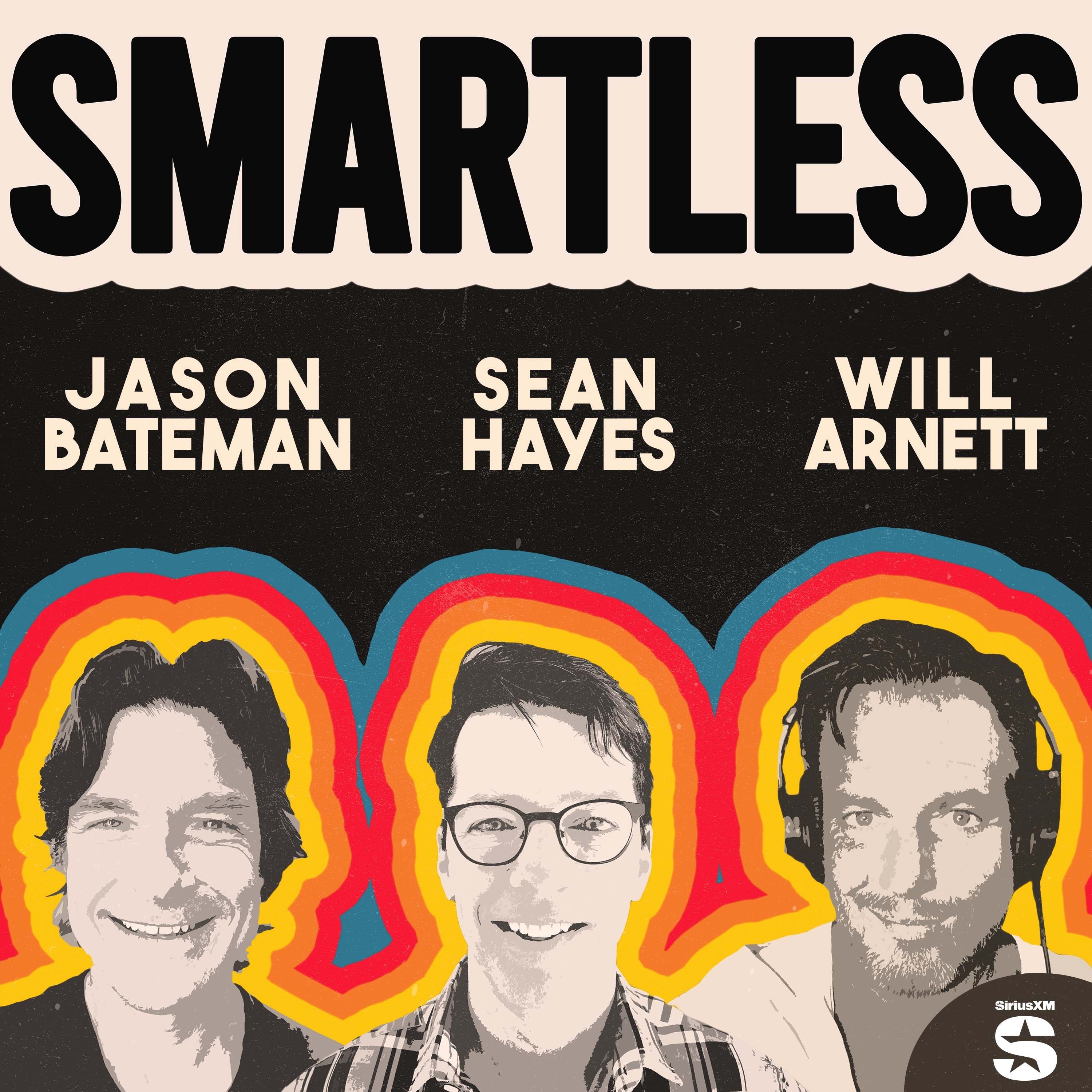
In this episode of "Smartless," hosts Jason Bateman, Sean Hayes, and Will Arnett welcome musician Marcus Mumford. The episode begins with lighthearted chatter about the hot weather, their nearby apartments, and haircuts, before transitioning to the guest reveal. Marcus, born in California but raised in London, discusses his musical journey, from early exposure to classical music and records like Blood on the Tracks to learning drums and guitar. He shares personal anecdotes, including meeting his wife Carey Mulligan at Bible camp, where she gave him a 9/10 in her journal despite him being younger and shorter, and reconnecting years later when she left a note at a Laura Marling show where his band performed.
Marcus candidly reflects on the overwhelming success of Babel, admitting it fueled feelings of impostor syndrome and led to unhealthy coping mechanisms like drinking, which he eventually quit. He also discusses his vocal care routine, including working with a vocal coach and using straw exercises, and emphasizes the physical demands of performing. The conversation touches on the "Train Tour" documentary, which featured a house band and guest artists, and how parenting has made him more intentional and grateful, leading him to prioritize family while fully committing to work. The hosts engage warmly, sharing their own experiences with voice loss and stage mishaps, and the episode concludes with playful banter about accents and upcoming plans.
(upbeat music) - Is everybody keeping cool today? It's a really hot outside. - Super hot. - Sticking so much. - It's really hot. - It's like, you just wet looking at it. - I'm just so hot right now. - It's so gross. - Oh, is there a back end to your fucking joke? - No. - You just want to start a shot? - Yeah. - Just want to say hi, it's hot outside. (laughing) Cold open is this? - It's a hot open. - Welcome to "Smartless." (laughing) - Smart. (upbeat music) - Smart. - Blast. - JPM across the street from you. - Yeah, no, I know. - What do you mean? - So wait, so you're up top, right? - Yeah, my top. - All the way up top. - I'm at top. - Did you ask, what was the question? - Sorry. - Okay. - So I think I can see you. You can see me. - I'm not in my window. - Wait, are you being serious? - You can see the scaffolding. - Yeah, what's going on up there? Are we doing a black bag on this scaffolding, this blowing in the wind? - No. - Okay. - 'Cause I'm on the south side of the building, south side of your building. - Yeah, that's what I'm saying. It's on the south side of the building, way up there there's like a little black bag. - No, 'cause the whole building is netted, so I don't see that. - Oh, you don't see through the netting? - No, I don't. Anyhoo, so we're neighbors. We've never lived closer to one another. - I know. - Actually, no. That when you lived in my house with me and my wife. - That was so fun. - Why does my youngest daughter look so much like you? - This is before the kids and the God, your floors are so creaky. And I was just always like, at night, just like, I didn't want to make a sound as I interrupt. - Snuck around. - Snuck cigarettes. (laughs) I was smoking back then too though, wasn't I? - I'm sure we're, mm-hmm. - Hey, why is your hair so cut? - Yeah, look at that. - I just had a little trimsky. - Is Eli with you right now? - No, I didn't see Eli. I went to see my boy, my guy Kevin Woon. - Do you get, you know, my kid? - Are you in a fight with Eli? - No, no, I just haven't seen Eli and-- - What happened to Eli and you? - No. - Well, I love Eli. You know, if you're like-- - Now Sean also has a personal hairdressant. - Sean, you've got a new person. Who's your person? - Yeah, his name is Markov. - First tag relatable, you both have personal hairdressers? - No, it's the, no, it's not personal. - Personal hairdressers. - There's like a full-time employment in jerk. - Kind of. - That on the payroll, no. - Who cuts your hair? - Whoever is heading the hair department on whatever project comes with. - That's what you lie. As a matter of fact, she just left the apartment. She is the key hairdresser on the, oh, oh, yeah. - And she came over to the house, huh? - Yeah, so that's how she did. - You're not even in the cast this time, you're the director, so she had to kind of, the director said, "I don't do it now." - No, I'm not saying that's so aching, man. - Oh, this is so collude, I'm doing one small scene. - The director, one at me, his legs are broken, so he couldn't come to me, so I had to go to the director's apartment down in fancy part of Pete Manhattan. - Okay, so Sean, you're enjoying your new hairdresser? - I am, he's really, really good in Marcos, yeah. - So much so that you won't take your hat off. - Yeah, take your hat off, let's see. - Well, no, it's too much of you. - Yeah, well, it's just, you know, I'll look like, back on, back on. - Like, Will said, I look like a page boy. - I didn't say that, I just said it. - You said I look like a page boy, and I said, and I said, were you going for what scientist, mad scientist, 'cause you're hair-- - My hair was longer, 'cause it was all sticking out, and you said, "Did you just say to them, "give me the mad scientist?" - Yes. - And so Will, you've got to, - That's why I cut my hair 'cause Sean shamed me. Is that true, or is it just like a summer sort of, or you as a swim team? - It looks good, short, like that, Will. - You know what, I can't believe that you would habitually chew gum on a fucking podcast. - I know. - I mean, nervous. - I'm nervous. - Just, just, by the way, it's not loud the way I'm doing it. - You've gotten better at that, but it still sneaks through, and I'll bet you all speak for Rob and Bennett right here. It's getting annoying, having to mute your microphone every once in a while. - Bennett and Rob, tell me, is it true? - We tied you down. (laughing) - You know what, you know what, Bennett and Rob love me. - I have a special relationship with Bennett and Rob. - Who we love. - And Nick and Tane. - You know what? - Our coffee chats, real hyper today. I think it's my fault. - It is, I love it. - It is, I love it. - Having one now, to him, having the rare 1p in coffee. - Yes, we're on real Regis and Kathy Lee areas. (laughing) - We're lucky. Lucky if you associated. - All right, do you want to get on with it? - Yeah, I mean, I don't know. Do you want to tee up your intro? - Yeah, how about you guys, how about, let's have an official guess session here. Okay? - Okay, you guys can guess it. All right? - Yeah, great. - Joining our nonsense today is a fellow who's not yet 40, but is already approaching the 20-year mark with his band. - Oh. - Okay, they are Grammy winners. They are known and loved worldwide. He was born in California but raised in England. He's got three children with his wife who has been a guest on this very podcast. - I know who it is. - Let's fucking hear it. - It's Chris Martin. - No, no. - It's Marcus Mumford. - Bingo. - What? - What about that? - How about that? - I don't know that. - How did you know that? - Because you know what? - You know what? - Smart person. - I liked my hints. Can I get on with my hands? - No, your hints were terrible. I didn't know we were born in California. - Well, but his band sounds like a family law firm especially as a person. - No, no, you didn't even say personal injury. - It does sound like it sounds like a plumbing company. - Mumford and Tom. - It does. - That was on purpose, right Marcus? - No, but Marcus, I knew I was just talking about I'm so excited for the doc and I was just talking about you 10 minutes ago. So we can come and see it. - Yeah, are you gonna come? - Yeah, man. - Are you gonna come? Aw, sweet. - It's just down the street. I might be working, but I might be able to make it. I think my wife will be there, which that's all anybody ever cares about. - She's my date. - Yeah. - Have you ever guessed a guest from their law before they've done the reveal? 'Cause I was really, they freaked me out, man. Your guys freaked me out, they're like, don't breathe. - Oh, really? - Until they reveal. And I wanted to laugh 'cause you were very funny. - Did they make you think that we're prone to rage? Like if we hear it. - No, they just, no. They made me feel, you know, in a very polite way, like I would ruin the entire show. - Fire. - Fire. - Fire, this is a queen. - The whole surprise thing is so, no. It's such a waste. It just saves us from doing homework. And the audience already knows who it is. We're the only two dicks that don't know who the guest is by the time the episode is up. - And Daryl referred to me as the dick. - But listen, it's fun. We're having fun. Okay, Jason? - Yeah. - Look into it. - Okay. - Marcus, welcome to "Smartless." It's a fabulous time. - I'm so, I'm genuinely so on, I was early on "Smartless." I was very early. - You came, you came to the show in LA. I remember you and I, we went to an early screening of "Mistro" together. - We did. - Yeah. - And you said, and it was right after our show and you said, I came to the show and I said, "Inel, I was so surprised." - It was the night you guys were filming and it was really hectic. And was it, you mean like a show? - Yeah, in the dark? - Yeah, yeah, the one downtown. - Yeah, yeah, yeah. - At the theater, I can't remember what it was called. - Or a friend, I didn't want to bother you 'cause it was super hectic, but yes, I came to the show. And I've been, I've been this show for a very long time. - It's crazy. - You're ready for notes, do you have any notes? What would you have got for us? - Yeah, how would you change it? - We're looking to improve. - You know what? - You know what? - The hashtag was a low point, I think. - Yeah, it's all low points. - It's all low points. - What we do is, we establish the bar low early, right? - And then everything feels like a win. - The only way is up. I love it, it's just so cozy, I love it. - I tell you something, Mark, to what's interesting, you brought up something and we're about to tap into a runner thematically, is that you told me that you were at the show, and I vaguely remember at the time sort of saying, I wish you had said hi, and then you just mentioned, we was hectic and you didn't want to say hi. You came to our show and didn't come backstage and say hi, Jason has thought of this. - Hold on, hold on, this is, we're not talking Broadway theater. - Yeah, well, let's do it, right? - You need your opinion on this. - It's a J. - Yeah, it's a J. - I went to see, do you know who I went to see last week? In Exeter was Tim Key. Now, do you know Tim Key, he's one of my favorite comics of all time, I think he's a genius. And I went and watched his show and, and was about to leave and thoughts myself. Now, he knows I'm here, he helped with the tickets. It is rude to leave. - Well, that's different. - If someone has helped you with the ticket. - Amen. - Without saying a great show. - So how about this, right? So you are a musician and you are in live venues and theaters. And so, there are some famous people that come see your shows. - Oh, okay. - Here we go. - Does the same rule apply there? Are you aware who's in there? Are you offended if they don't come back and say, hey, great show. - No, culturally very different in music. - Very different. - Very different. - See, so more of a rock and roll guy at heart, guys. - Wait, what's your position, Jason? - Are you a no-show? Are you a no-show at the show? - I think it's presumptuous for people in the audience who are famous or even pseudo-famous to think that, oh, they'll be welcome backstage just because you share fame to come say hi. It's just like, it's so arrogant. Like, just gonna hell out. And let people rise. - Yeah, more like you probably want to see me 'cause I'm really famous, so I'll bless you with my breath. - Oh, right. - Yeah, and let you know how great I think you were. - Right. No, no.
to talk about how great the program was or the light. - Right. - Or find something polite to say. - There's that famous clip from them, a Donna documentary, "Truth or Dare," where Kevin Costner comes backstage. Did you see that? - Oh really? - And she goes, "Yeah, I thought," and she just spent three hours. She's drenched in sweat, performing for 5,000 people. And he goes, he says, "Yeah, we thought it was really neat." - Yeah, yeah. - And she turns to the camera. She goes, "Anybody who calls my show neat has got to go." - Right in front of him. - No, she, he laughed and she goes, "Ah." - Like that and camera. - My favorite backstage moment like that, when I was invited very, very explicitly invited backstage was after Kendrick Lamar played Bonnevary. And there was this sort of message that came down from one high that Kendrick would like to see you. And when Kendrick calls you, come, right? - Sure, sure. - Because he's the king. - I learned that lesson the hard way. - And it was, and it was like, "You can go in now." And he took off almost all of his clothes, as I walked in. - It was amazing, we had a whole. - It sounds more like Boneroo, if you guys. - Yeah, we'll be right back after these messages. It was amazing and I thought like the gumption, you know, the gumption to be like, "Yeah, come on back after the show." And it'll be the very moment when I take all my clothes off and I'm just down to my undies. - It's gone fast. - I don't know, I can't feel confident. - But aren't you comfortable with that? Like, even on a TV set or a film, so whatever. People knock on my trailer door. I'm like, "Come in, I'm dressing, I don't care." - Right. - It is a dressing room. - Yeah, yeah. - Yeah, that's true. - You know, Marcus, you bring up Tim Key, whom I also adore and he did that incredible film with your wife, Dead, The Ballad of Wallace Island, which I love that film, that I did see. Brilliant, brilliant film, wasn't it? We're not gonna get into Kerry's career, but I mean, I'm good. - Good, 'cause I haven't seen a lot of it, but that one I've seen three times. (laughing) Well, I love that one so much. - So mean, too. You guys, I urge anybody to see The Ballad of Wallace Island, it's such a beautiful little film. It's so funny and poignant and just a beautiful, beautiful film. - Well, I've got so into Tim's podcast. He's got like a radio for, it's not a podcast, it's a radio show in the UK on public radio. And I got so deeply into it in COVID that when he wrote to Kerry with a script, I was like, "Absolutely, you have to do this, maybe." He's, well, we're having Tom Baston together, off phenomenal. Tom Baston. - Tom Baston. - Amazing, too. - Yeah, I'm so amazing. - And just for my sister, your wife is Kerry Mulligan, just soaked for Tracy, my sister in case she doesn't. - Yeah, hi, Tracy. - Tracy almost crashed. She was trying to look at you. - She was driving. (laughing) - Hey, Siri. (laughing) - She was pulling in a collar with Gonson and with her phone in her hand. - Wait, so Marcus, getting back to that for one quick second, she can't possibly see all your shows 'cause you were playing almost every night. - No, she actually broke her records. - So are you allowed to not see all of hers? - Yeah, yeah, she came on tour. I think she, in one year, maybe was at 48 shows and I watched two. Not the whole thing, top and tail. - Yeah, she really, she really, you know, she says she likes our band, our recorded music. (laughing) There's some caveats. At first time she saw our band play, she thought we were quite shouty and to be fair. I think she's right about that. But then, you know, she's put up with it for a long time, but then yeah, she doesn't feel like if she's on the road, she has to come to every show. - Wait, Marcus, did you guys meet at Summer Camp? Am I right about that? - Yeah, we met at Bible Camp. - Yeah, but I'm really, I was 10, she was 12. - What? - Nice one. - Oh yeah, nice. - So you guys, now she started to tell some of the story, I think everyone was talking about her. - Oh, that's right, I'm not about her. They were pen pals, right? - Yeah. - You guys have pen pals? - Yeah, and she still has the journal entry from the day we met where my cousin was there, who was two years older, he was age appropriate for her. And he got a eight and a half out of 10, but I, who was definitely not underlined boyfriend material, got a nine out of 10. - Wow. - Go figure. - So then what made you not boy from material 'cause you were just in? - I was two years younger, and I was also a foot shorter. - Oh yeah, it wasn't because you were some, it wasn't because you were like, wasn't 'cause you were a monster running around and being a penis. - No, well, as she did write in her journal that I was a bit aggressive on the soccer pitch. - Yeah, sure. - That I'd gone in a bit heavy on some of the titles, which would be, which lines up. But then we stayed in touch as kids, I guess, and then we reconnected in our 20s and just loved that. - And did you late, number, you still a heavy tackler? - Or, I mean, it's. - Yeah, well, yes, yeah, yeah. It's one of the few times I'll drop a C-bomb in earnest. It's a co-ed soccer. In the States, particularly I lived in Denver, and I used to play co-ed soccer. And, you know, you can't retaliate, or at least where I come from. You know, women tackles you really hard. You can't retaliate, so, yeah, I get it. Yes, the rage comes out on the football field sometimes. - Oh, God. - It's a big, big game on right now, Willi. I bet you can. - I know, I know. - I know, guys, whoever organized this. - I know. - I can't believe we've done this. - I know, I know. - I'm wondering if we've done it. - I've got it too early on. - I've got it on top. - I just turned it on. - I don't spoil it, right? 'Cause I haven't what I'm gonna watch it work after work. - Yeah, yeah, yeah, yeah. - It's really intriguing right now, by the way. It's really intriguing. Red and intrigued. - I haven't got a live feed, 'cause I was thinking about it, and then I didn't press record. - Should we take a break and record? - Are you in the UK? Marcus, are you in the UK or are you here? - Yeah, and so I thought on Champions League final day, we'd be safe to do a chat. Five or six turns out it was an early kickoff. Five o'clock. - But do you honestly wanna take a two second break and go hit records? You can see the second half? - I'll. - Do it on your phone, yeah, for sure. - No, no, no, no. - No? - Don't worry about it. - It's fine. We have a fairly new management team last couple of years, and they haven't managed this for a long time. They haven't managed, sorry, band management. - Oh, okay. - They haven't managed our band through a World Cup summer. And it's a big deal trying to manage our band during a World Cup summer, because if there's any kind of, we tend not to play on England days, because they're big days. I take this stuff very seriously. And I sat them all down for the third time, in a bath, we delayed the announcement of our tour, because they hadn't yet announced what dates and days the group games were gonna be. And so, business wise, it was almost a disaster. But we waited for so long, because we waited to announce the tour so that we knew we weren't gonna be on stage when England were playing, right? And I sat everyone down. I said, "Look, guys, management's going great, you're doing a really good job." But just so you know, we've had this conversation now three times, I'm deadly serious. If you double book us when England are playing, everyone is fired. Everyone is fired. And I think they got the message pretty clear now. And I think I'm gonna manage to sneak to a couple of games. - What is that? - I think summer. It's a big summer. - Yeah. - So, let's go back to being a kid. And we're right in there around summer camp. - Where did you grow up? Jason said you grew up in California? - No, I was born in California. - You were born, yeah. But evacuated to England at six months old. - Oh, so not even, I grew up in London. - What were the conditions under which you were born in California? Why is that? - My parents were working there for a couple years down in Anaheim for a church. And so I was brought, I popped up along the way. And then they came back home to plant church in London from the Californian one. - Got it. - And then at what point then was music introduced to you? - Yeah, I mean, it was the kitchen. My mum listened to a lot of music and had a vinyl collection that I was allowed access to quite early on. And then we would listen to music. - And what were some of those vinyl? - What was a lot of classical music and a lot of choral music 'cause she was in a choir at university and stuff. - That's cool. - And then the only two kind of pop records she had or non-classical records were blood on the tracks. - Amazing. - And house the rising sun by the animals. - Wow. - Wow. - And so I played them to death. And then we leaned heavily into the greatest hits by Bruce Springsteen. That was like the family call record. - But then so that explains that you don't have an aversion or rather you have an attraction to or an ability to incorporate these other instruments and instrumentation around your music. Some people call it folk. I know that that's not really accurate. But the fact that you can work in all these different sounds and your music, your sound, the band's sound is so full and varied. - Agreed. - Does that have some roots in the classical music that you were all those multiples? - Yeah, maybe. I think that's partly a reflection of the taste that amongst the band members. Like me and Ben and Ted all have real different tastes and music and it covers most genres. Ben, Ted's the bass player. He's the best guitarist in the band by a long way. He plays jazz and blues and kind of studied it. But plays the bass in the band, which is very kind actually. And then Ben grew up playing lots of classical and jazz on piano and saxophone. He was a better drummer than me at school. And then I, you know, yeah, we cover most of the genres together. And I think we've always felt like whatever instruments suit the song that we're writing at the time. So we leaned heavily into electric guitars and stuff on the third and fourth records And now I've kind of come.
back more to the Q6 stuff and it's just fun, man. Yeah. We love it. We'll be right back. And now back to the show. What about you playing so many different instruments? That's not super common, right? I mean, what the key is learning three chords on lots of instruments. Yeah, but I mean, there are be playing drums is so not the same as playing a guitar. What's more difficult? It seems like the drums would be very difficult to master or is it just. Well, I mean, that was my instrument at school and I took it fairly seriously and you know, did the grading system and and that started with pots and pans in the kitchen with my mum and that. And then and then and then I played all the way through high school. I played at college just for the year that I'd lasted at college and then and then got hired as a drummer in a band for Lauren Molling. So I quit college for Lauren Molling, yeah. So I quit college, go play for Laura and that was my first job in music and that's really nice. And so I got hired as a session drummer and I still like to play drums for people when I get the chance honestly because I'd love it. But then and so and then I learned open tunings on the guitar so that I could play it like a percussion instrument really without having to read I can read drum music I can't read, you know, other music. Oh really? Drum music look like. Yeah. Drum music. Exes. It's still on a stave. Yeah, there's X's and there's not some crosses basically. And so like the snare is an X and the kick drum is a. Yeah, the kick the kick the bass drum goes at the bottom and then the snare is like two down, you know, where the C would normally be and the high hats are on top and they're normally X's and then the cymbals are on top of that. They stack it. So you know, you know, the, you know, the note, you know, like there's this align. Yeah, yeah. And then then the black dot. Yeah, instead it's a line with an X and that's percussion cymbals for cymbals is an X. Yeah. Huh. Wait, Jason, well did you guys ever, did you ever try to learn an instrument or no? piano. I played as a little kid and then when I got too big to be pushed around, I said I'm out. Yeah, sure. I understand that. So you always had a great attitude is that we're consistent. No, it was, it was, it wasn't, it wasn't. I wish I had, I wish I had stayed with him. But you know, it's like, my, my parents, like they said, you know, it's like it's a form of discipline. You're going to have to do your practice for an hour every single day. Yeah. So they made it fun. Exactly. Like that. That was a problem. Like, you know, they should have made it fun. Like any kid, you're going to try to cheat and not practice. And so they set up a tape recorder that I had to put on the, on the piano and press record during my, during my one hour practice to prove that I was practicing. Of course, it was the same, same music that I was practicing each and every week. So you just mean the same record at once and just turn it around. And they bought it. You're not getting any better by Friday each week. Yeah. That was your audition for It's Your Move. That sounds like the thing in your character. The show Jason did when he was like 15. It was so funny. Mark's that played over here. It was a brilliant show where he just played a kid who did shit like that all the time. I wish, yeah, I wish I had. I did a couple of instruments here and there during school. And I wish, I just wish I'd stuck with it. It's one of the, like, I wish I'd, I can play four chords on a guitar really sloppily. I just, but let me ask you this, Marcus, to that to Will's point is like, once you, once you learn and become proficient as you have in so many areas of music and not only music, singing, singing and all that, is can you, you don't listen to other music the same way? Yeah, that's where as somebody, whereas somebody like Will or Jay, who love music, yeah, they, you have a different appreciation for it, not that you don't. If you know it, but you know, it's just a different year. We had this, we had this conversation the other day, we had a party at home. It's Kerry's birthday. And, and someone came and they were like, there's no music. And I was like, yeah, we, we don't really play music, music as bad. We don't, I can't do background music. Because if music's on, I want to, like, lean in and listen to it. And I can't switch that part of my brain off. So then Kerry doesn't like having music in the house because I just, I just stop having a conversation. Like if music comes on, I just, and she'll be like, you've gone. I was like, oh, sorry, let's listen often. And then when you listen to it, do you, do you analyze it? The chord progressions, the melodies? Yeah, yeah, normally, you know, and if, and a lot of the time, then they'd sort of store it to try and copy it, you know? Yeah. Yeah, sure, sure. Yeah. Who, do you listen to a lot of new music at all? Yeah, yeah. I listen to probably mostly new music, actually. And if I'm on my own, that's when I listen to music. And how, how are you finding the new stuff? Is somebody, is somebody giving you tips on like, oh, you should check this out? Or, or how about the sum, you know, all those streaming services they like, they figure out what you like. And then they send you suggestion stuff. Do you find that helpful? Do you, do you follow some of those sometimes? Some of my favorite music I've found on, on TikTok when I was on it. Yeah. And now I'm not on it. Yeah. My, my, my new music has dried up a bit, actually. I was, I was enjoying that. There's a, there's an amazing British band called Divorce. Great band name. Yeah. It was good. It became my new favorite obsession. I was completely obsessed with them. We got this come on tour with us, which is fun. Wow. But I just found the algorithm, you know, fed them to me. So you found them and said, hey, let's get these guys come on tour with us. Yeah. And then we ended up recording a song together. Yeah. I love that. Well, you did, you, you had to cut yourself off from TikTok. Is that what I'm sniffing out? I did. Yeah. I just, I just, well, I did it ahead of putting out the new record because I just wanted to be insulated from how other people felt about it because I knew how I felt about it. Yeah. Yeah. Yeah. Yeah. And I didn't, and I didn't need some like comments somewhere, spoiling my experience because I was happy with it. Good for you. Yeah. And I couldn't change it. It was done. Yeah. And this is the first time I've ever put a record out where I genuinely have not read a word about it. And I feel free. I love that. It's cool. It's cool. I mean, it's a privilege, obviously, but it's, it's, it's cool. So other people do our socials and stuff. And, you know, we send stuff over and we think about it and we're intentional about it. But I don't have to do any of it or be on any of it, which is cool. You must come across, you must come across bands and stuff when you're, when you're touring, too, or if you do a festival, do you like all of a sudden, do you find yourself coming out? Wait, what is that going on over there? And like, and hear somebody that way, does that ever happen? Yeah, yeah. And, and a lot of the time, it's just recommendations from mates, you know, they're like, you should listen to this. And sometimes when we're discussing who to come on the road, one of us will pipe up with it, something we've been listening to, you know, because we're very intentional about who comes out and supports us on, on tour. Because that, those are the shows I go to now. Yeah, yeah. And I'll go, and every night I don't like playing a show without watching the support band first, because it just gets me in the mood and it makes me feel what the rims like. Yeah, of course. Yeah. There's a new English band that I've been obsessed with, Westside Cowboy. Have you heard these guys? Yeah, yeah, yeah. Oh, fucking good. Yeah. Didn't they support geese on their, oh, did they? And I think they support, yeah, them and Darvelis. So, so that, I found, I found Darvelis through geese, because I knew he was on the road with, with them. And I'm like, you know, the rest of the internet obsessed with them. And, and yeah, that's how I found Darvelis. So a lot of the time, it's just like who's playing with who and these little communities that pop up, you know, which we were part of when we first started as a band. And that's really how people discovered us, because they'd come to a Laura Marley show. That's how Carey found out about that. She booked a ticket to a Laura Marley show. And then we started shouting sort of an hour before Laura went on. And, and then she was like, oh, Mumford, I knew your kid called Mumford. And that's so, that's a little new way. Yeah, yeah. She left a note with our tour manager. She didn't come back, said. She, no, she left a note. See, that's class. That's really class. Wait, so she, I've embarrassed. She probably told us to say, I apologize for forgetting. But what, so what did, on the note, did she say, hey, so I did know this guy named Mumford. I forget his first name. We, is his net. We know what, we were both, I guess, on Facebook for like a six month window when I was still at college and we connected there. And then this was like a couple years after that when we'd started the band. And I was still playing in Laura's band. And so she left a note with our tour manager with her email address on it. Wow. But so knowing that it was you, once she saw you on stage, maybe. Yeah. Yeah. Yeah. Yeah. Yeah. She's great. You know, it's great about this, Marcus. She bit also emailing out the phone number. Just another layer. You know what I mean? Just low play real classy. Yeah. She's got skills. Well, she's a classy broad. Yeah. Yeah. Classic broad. When did you know that music might actually be a path towards a living for you as opposed to just fun? Still not convinced. Still in some stay in the rest of development. Sean, that's a TV show that was on. I got to write that. I got to write that. For Sean. I think I know how he's playing now. Was also good band. I think it was like, it think it's like I was at college. I got offered a job playing music. I wasn't having a great time at college. So I stopped and took a sabbatical. Where'd you got to come? I think Edinburgh. Okay. And I think in my head, I'm still on my, until quite recently, I've been on my sabbatical from college. Sure. Sure. I think we've been thinking that you would probably go back. Yeah. And what would you have studied if you'd gone back? I was doing classics. I was doing Greek and Latin. What literature? To do what? It's unclear, you know, it's not a vocational
- You were just reading? - Reading? - It's what, it's what a lot of lawyers end up doing. - Yeah, oh. - Classics in the UK, particularly, is seen as like a good, honest, old school degree to do if you're doing something. - But what do you do with that? - Like, I don't understand. - You said lawyers, yeah. - Oh, lawyers. - Well, what's cool about it as a-- - Can I remember a parliament? - Yeah, a lot of those, a lot of prime ministers do, but I wasn't on that track. What's cool about it is it gives you access to poetry, and philosophy, and storytelling, and language, and linguistics, anthropology, ancient history, all these things that you study through the original languages. - Jason, you're drooling. Your mouth is out of your drooling. - So it's really geeky, and you get your geek goggles out when you're talking about it. - I bet it helps you when you write lyrics. - And then if it swims and it's how I got introduced to poetry is how I fell in love with words. Honestly, and then I started reading T.S. Eliot really pretentiously as like a 17-year-old. - Yeah. - And suddenly words had a new depth to them. And you know, he was a classicist too, and the references, a lot of classical references, and I'd sort of read a bit of Homer, and then switch over to Eliot, and be like, "Ah, cool, look at the way they've joined up and referred back to this." - Can you just see 17-year-old Marx just writing a bicycle through some field, and then just like dropping into a field and reading poetry? - Yeah, with a bag hat and a basket on the bike. I was that guy. I was sat on the train to Edinburgh. - Yeah, I wear Vic Fabric. - And a collar that I cut the collar off my shirt, because I'd seen the assassination of Joseph James and just got deep into poetry. And honestly, until this last record, I've been in denial about that too. Like, you know, I've been in this process of being like, "This is kind of who I am now. This is what I do." So for price fighter, I'd go and sit in the coffee shops in Hudson, New York, because we were recording with our indecent at Longponder. And I'd sit in the coffee shop for two hours every morning. I'd do my artist's sway, like, morning pages. And I'd sit and read poetry, like a real twat. And just really lent in to my, I guess, my identity at this point. And it helped me write lyrics, you know? - Let's hit Babel for a second here. So what did the incredible success of that album do for you as, like, personally? Like, was it jarring to sort of have that next step of success and recognition and treasure? And like, was it, did you adapt well to that? Was it a fun thing or was it a bit disruptive? - That's a great question, actually. - Thank you. - Finally, the ones. - I don't, I don't think anyone, unless you may be one of Simon Cowell's projects. I don't think you're trained, you know, to have that kind of level of success. We started playing music 'cause we loved playing. We loved each other. - Right. - And it was just fun. And we got free beers. And then suddenly, we were playing 250 shows a year. And then suddenly, you know, the first record starts getting, gaining some pace. We took six weeks off tour to make Babel, which our producer at the time was really frustrated about. He's like, why do you have shows put on the other side of a recording process that's really dumb creatively? But we rushed it. And I think we got it right, but it was pressurised. And then, and then the success of that record around the world really, and particularly in the States, just opened us up to a world we weren't like ever anticipating or planning for. And yeah, it's, I mean, I don't think unless you're a kind of pop project, you're even imagining it. And then suddenly, the shows are all selling out and you're moving into bigger spaces. And fulfilling lots of your dreams as a kid, like to headline Glastonbury, we only did only two records, you know. I remember getting to the end of the set. We basically had to play the whole of both records to fill the time. And I remember getting to the end of the set and just being like, we just need more songs, man. That's all we got. We need more songs, because he watched Springsteen play for three hours and he's playing like just hit off the hit. Yeah, yeah, yeah. So, yeah, I wasn't, I wasn't really prepared for the success of that record. And I think we reacted to it a bit by making a record on the third one that no one was expecting from us. No one particularly wanted, but we loved it. And it took us into bigger rooms as well. And that was how it went widescreen. And then, and then the fourth record, and then we had a long gap before the fifth and sixth records. Yeah, how long was that gap? That was like on paper, it was seven years. I mean, we were touring for two of those after Delta came out and then COVID happened. Yeah. So we were apart as a band for maybe three years, yeah. That's a lot. What was that biggest adjustment there when that, when that first wave of big success came in? I mean, obviously most notable would be the bigger crowds and the sellouts and probably nicer hotels and you're flying from city to city instead of the buses, maybe, or like just silly things like that. But it must have been pretty heady too, right? You're watching people sing your songs on mass. And probably getting some feedback is to how you're affecting people and changing their lives a bit. And probably a week or more insecure person would probably buy into that a lot and kind of own a lot of that. I bet you sort of deflected a bit of that and tried to keep it all about the music and keep it simple. And I mean, but you tell me, it drove a bit of my shame narrative that was already there that I've looked at a little bit. I drank a bit more than probably I should have. Like imposter kind of stuff? Yeah, a bit of that, yeah, a bit of that for sure. And I did, I went in a bit and on stage you'd be very out and give yourself completely. And then I, my friendship circle shrunk a bit. I think, yeah, I did use booze particularly as a bit of an escape. And then, and then really throughout it. Oh, honestly, my marriage has just been the best thing about everything. So, but I think as we get older, it's sort of naturally and in a very healthy way. I think most people that circle get smaller. You figure out more accurately who you are and what the proper fits are for you. And that usually equates to a smaller, more specific, more precise experience with people, right? You're not out there shopping as much for-- Yeah, and I think I recognize the idea of capacity. Because for a few years there particularly, I was spread really thin. I mean, you guys must find this with your jobs as well. You meet so many people and a lot of them you love. And then you want to be friends with. And then you connect with other people. And then I found myself getting spread really thinly and not being very good friends to my friends. Right, right. And then that shrinking happened a bit. So, in a kind of healthy way, I think. So, I guess, yeah, I think you're right. It's partly growing up. But yeah, I suppose I dealt with it all in a bit of unhealthy ways. Then I stopped drinking booze more of choice than necessity, although, you know, we could debate that. And then, and then replaced it with ice cream for a while until I was told, you know, I wasn't losing it. Anyway, it was really confused about that. We have similar paths in that way. I did the same, I did that route, too, where I was, it was like an ice cream based diet after I quit booze. Yeah. Well, because you miss the sugar. I remember. Yeah. I miss it, too. Wait, Marcus, you know, I'm always kind of interested in it. Probably get an hour at least. I'm like, I'm starting to shake. You know, I'm always interested when, when people like you who have bands and you, I mean, you tell me, have you, did you have vocal training or know any, or how to use your voice? Or because when I go, for example, I mean, massive depeche mode fan, they came out on the podcast. It was really wild. I'm also a huge fan of yours. And I love all kinds of music, too. And I went to go see Dave Gahan sing. And I can tell right away, oh, he didn't warm up. And then after the first couple songs, his voice kind of opened up a little bit and then it was great. And it was great from the beginning, too. But just kidding. Reach out and touch faith, bam, bam, bam. And then did you do, did you have any kind of training or did you realize when you were touring, like, oh, shit. I don't know how to take care of the kind of athleticism of my voice. Yeah. I was convinced for years that whiskey and cigarettes really helped. Yeah. Right. And then just recently, I've started-- actually, Brandy Kala introduced me to her vocal coach, Guy called Rob Stevenson, who's totally changed my world and given me some education on stuff. We're like, it's a muscle and you have to warm it up. And I've been lucky and I watched friends around me get affected by the polyps thing and losing their voices. We've never-- I don't think we've canceled a show for my voice in the park. It's amazing. Which has been cool. Like, the only couple of shows that I remember cancelling with, because Ted had a brain hemorrhage. Oh, jeez. Which wasn't funny at all. Get up. But now is quite funny, because he had to wear a hat for a while. But he had, like, glassed and brie two weeks after getting that surgery, like a legend. And I think we canceled two shows for that.
But we've just been lucky, and my voice has been resilient. -Amazing. -But I think recently I've realized it's a muscle now I start, and now I have a full routine and I look after it and my quit smoking and all that stuff. -Yeah, good, good, good. And we will be right back. And back to the show. What does that mean about the pubs? Because I had pubs removed from my vocal cords, but it means you're weak psychologically. -Oh, damn it! -Yeah. -It's the piano lesson thing. It's because the parents were right. It was hard to develop, and I wanted to show you that. -No, but the doctor did say that I wasn't using my voice correctly, because I was screaming in bars and smoking cigarettes and stuff. And he said, "I just erected that. Is that what happens to musicians or to singers that don't know how to warm up correctly? Or you can create polyps on your vocal cords?" -Yeah, I don't know. I honestly don't know. -I think the wear and tear of it, can't. -Is it? Is true? -Yeah. I know that, like, going out after show, I just don't ever do that anymore. Because talking in loud rooms after shows is the thing that is worse for your voice. -Right. -So after a show, I don't go on voice rest. I'm not, like, precious about it. -Right. -But I don't go out. And I stay away from loud plays. -Well, you also have a wife you love in three kids that you've got to go spend time with too, you know? -Also, I've just become quite boring and munkish, you know, on the radio. -I've just said, "Amanda ever developed pups?" -Oh, boy. [laughter] -I'm screaming. -That's your date. That's your date. -I know. Make cancel on you. -I love her more than anything in the whole world. -I lost the voice two days ago, actually, a little bit. -Really? -Yeah. -Too bad you found it. [laughter] -Well, have you ever checked in it? Go ahead. -Okay. -I lost mine two weeks ago. -Yeah, it's still weak. I still -- Like, if I ever did theater, I'd have a real -- I would need to take real lessons about how to use my voice. -I mean, no, done theater. -No. I mean, tiny, small room stuff. But, like, if I ever did it, you know, here in New York, I'd -- -Jay, I was thinking of the same thing when I -- Yes, I didn't fully lose it, but I was really close and I thought, I was just thinking about you, Sean, and about how -- You've been -- You've been basically on stage for the last three years. -Yeah. -It's kind of straight. -Yeah. -Organ. -Marcus, you must have the same thing, I thought. I'm going through this thing of, like, if I were in a play right now, I'd be fucked. I want to be able to do it tonight. -Yeah, yeah, yeah. Yeah, you really have to take care of it. -And Sean, do you do, like, a full hour every night before you? -Yeah. There's songs that I'll sing to warm up. Like, if I -- I know if I'll sing all by myself and if I can hit that high note. -Oh, by myself. -Then I can do the whole show. -Sick. -Yeah. -It's funny, and you usually do it through tears, right? -Right. No, that's the song because that was the one-man show. So I would sing all by myself to warm up. -Marcus, do you have a go-to little thing that you do for warm up? Like, a little scale thing or something like that? -Yeah, I do. It's called the Penguin Noise. It's a lot of this. -That's good. -Really? -Yeah. -And then vocal straws. I use straws. It's about like -- I mean, we could get tekkers if you want. But it's about getting your larynx to drop back down. Like, they're putting your tongue at the back of your throat. -And opening your palate with a straw? Literally with a straw? -And then the straw helps with back pressure. So you blow bubbles into a bottle through a straw. And then the back pressure helps open that up and easel that out. It's like a little reverse massage. -Do you ever accidentally throw up? -Do you ever accidentally throw up and you do it? -I can't eat like four hours before we go on stage, because then bits come up, yeah, yeah. -Yeah. -No. -Because it's all quite shouty, you know? -Yeah, yeah, yeah. -That's why I'm -- -Jason, you accidentally throw up after a lot of big meals, don't you? -Oh, I don't -- darn it. -But I hold his hair. I hold his hair. -I've got to get it out inside ten minutes. Otherwise, it starts to absorb the fat. -Oh, God. So, Marcus, Marcus, we're a month into your tour. What is the -- what will have been the most important part of your prep to go on some long tour? Like, do you have to get, you know, your family stuff all in order so that it can withstand you being gone so long? Do you have to get your body in order so it can withstand the hours and that, like, what is prep for a long tour? -I have been trying to -- I got to a point a couple of years ago. I was like, "There is an element of physicality to my job that requires me to train a bit." -Yeah. -So, I have been working on that and trying to approach it more like an athletics program and everything else will follow if I can do that stuff well. -What are we looking at? Cardio, we're pushing weight. -Yeah, all that stuff. -All of that stuff. -Yeah, really? -Yeah, and then we have a little gem on the road that helps. There's a lot of cards like singing, it turns out the singing playing guitar and stamping like this with your feet, which you must remember, Jason, from that video. -Oh, yeah. -Jay was in the video. -I'm so fun. -That stuff turns out is some sort of cardio. I used to think it was enough to -- -Yeah, it's exhausting. -Oh, talk about how did that happen? How did Jason -- -How did Jason Bateman end up in the video? -Less disdain. -No, I spit it out. How the fuck did Jason Bateman end up in the video? -It was off -- -What was it? -Sam Giants, wasn't it? -He called you off. -Oh, yeah. -Or was it Sadekis? I think maybe I was doing the horrible bosses at the time. Maybe it was -- I bet you Sam contacted -- I didn't know Sam, so he wouldn't have contacted me. So it would have been probably Sadekis or Ed or Will. -Yeah. -And then they -- I don't know how they got to me. It must have got a lot of passes before they got to me. But God, that was so fun. -Probably my favorite music video we've ever done. Because I don't have to do anything. -Really? -And I just got to watch you guys do it. -It was absolutely amazing. -Fortay killed me on that. -Yeah, well, Fortay was actually with the kiss. -The kiss. -The kiss, the hard kiss. -All right, so that brings us to Sam, that brings us to the doc. Let's talk about the doc. Let's talk about the train tour. Let's talk about you arranging for those other groups. Because you spoke earlier about picking the bands that you guys are interfacing with. So just -- Well, let's go in order. What's it like traveling on a train that long with that many people? -It's really exhausting. I don't recommend it. It's very confined. It's not being on a submarine. It's worse than a tour bus. -Right. -It's a really -- -So tell the audience what the basic concept of this thing. And it was inspired by this happened at Woody Guthrie and gang, right? -Yeah, I think they did it. Basically, someone came to us, you know, I don't know, in 2011, and said, "We have access to a bunch of vintage rail cars. Do you want to go on tour on a train?" -Yeah. -And we, at that point, were like, "We've just done a tour of India." -Yeah. -Before we had any reason to do a tour of India. You know, we'd toured on a narrow boat. We liked booing up our own festivals. It was just like fun ways of making the shit feel slightly different and discovering bits of the world you might not otherwise. So we were feeling adventurous. And we'd said, "Yes, we did it with Edelsharp and the Magnetic Zeros." -Greetings. -With all Chromeds to show. And it was the best week on the road we've ever had. And we made a film and it won a Grammy. And we were all very happy. It was great. And so we thought, let's run it back slightly differently. Let's hire, like, let's get all of our favourite musicians together as a house band. And then every night we'll get special guests to come on stage with us. -Oh, wow. -So we had Laney Wilson, Darius, Rucker, Maggie Rogers, and Noah Khan. -Wow. -And we learnt their songs the day before. -Wow. -And performed like the house band for them. And it was really fun. And we did it. Yeah, we traveled by train. But that's not really the audience participation part. Because obviously it was just us and crew that went on the trains. But it was only five days. So it was manageable. But it was exhausting. -Well, you've got Sam and his gang with the cameras in their documenting the, yeah. -Yeah, so Sam made this film for it. Which I really love, actually. I don't enjoy the process of making music films. I think, in general, they're quite boring. And I don't really watch them for pleasure. But this one. -This one. -It's a reality show, right? -Yeah, a little bit. And yeah, I find it quite hard to relate to a lot of them. Obviously, the Beatles one is my favourite at all time. -Right. -And I watch that many times. But other than that, I don't get a huge amount of enjoyment from watching. This one, especially not our ones. But this one I actually think he did something really beautiful with. And the people involved were unbelievably kind with their time. And we made it kind of like a socialist enterprise. Or everyone got paid the same. And whatever cash that was left in the pot after very expensive trains. We just shared out. And then our friends really gave us their time, you know. And they're phenomenal musicians. -It's a really cool. -I was going to say for Tracy, but she knows. Because she met Sam when we went to her Sam Jones, the same guy who did this part on the road. Special that we did. So we all know Sam. -Yeah. -It's a process. -Yeah, that's so cool. I didn't know he did this and I didn't know anything about this. -And I made a film with him before he made the documentary about the new basement tapes thing that we did with Elvis Costello and Jim James -Oh, I know about this. All of this. Yeah, and Giddens. We took all Bob Diggies.
Dylan lyrics that T-bone Benet had like pilfered off Dylan and asked if we could record music for them. And Dylan amazingly said yes. They were literally from shoe boxes and the big pink from the '60s. And so we wrote music to all these unused lyrics, which was really fun. And Sam made a documentary of that. So I'd worked with him before. And obviously he shot our Rolling Stone cover, which I hate, but he also made that hopeless wonder of a video that Jason was in. So we'd worked with him a bit before and he came on and did it and it was sweet. - And he also made the Wilcoe duck, I'm trying to break her heart, which is also amazing. - Yeah, it's so great, it's so good. - I want to see that doc, you're just talking about it. I want to see that one where you guys with the Dylan duck. - Oh, it's sweet. Yeah, it's a lot of good. - Yeah, it's good, too, actually. - Go on, Johnny. - I was just going to do my standard, do you have any one show or one fan interaction on stage that just went horribly wrong or something that went horribly wrong on stage during a tour? - Yeah, recently, we started the price fighter tour in Australia and we played a song for the first time and it went so badly wrong, we stopped halfway through and we didn't start the song again. - No way, I bet we love that though. - Oh my God, I love that. - What did you say? - I said, that's live music folks and we moved on. And I wanted to fall through the floor so badly. It was the worst, I think it was the worst moment I've ever ever had. - Wait, why did you stop? - Oh, it was just a disaster. Everyone was in the wrong key and all the time and it was just a disaster and would have required a full rehearsal to do it and I thought that was probably pushing it so we just stopped and moved on to one there. - And you just thought, we'll get this, we'll get this, watch this six, seven, eight, awful. It was awful, it was so horrible. - But I'll bet you the audience loved it though, like kind of like a blooper, you know? - It's so cool, I think, you know, my wife says things because I forget lyrics a lot. When I get nervous, my memory goes and I forget lyrics sometimes and she would be like, "That's the bit people love." That's the life bit is different to the record. - I toured with Kenny Rogers when I was in my early 20s as a Christmas elf and his tour and he would forget the lyrics all the time and whenever he did, he would just hold the microphone out to the audience. - Oh, you got to know. - I thought you, I thought you, I thought you'd go, "Hey Santa, the lyric is, "Shuffle over like a little helpful "health. "Have you ever done that on stage though?" Wait, because that terrifies, especially with the one man show, have you ever forgotten yours? - Yeah, yeah, there was one, just, I just did it. There was, it's terror, absolutely terrifying. There is one part where the line is, you know, I say to one of the characters, I say, "Are you gonna be here?" No, how long are you in town for? And he says the weekend, I say, "Can we get together and discuss this one thing?" He says, "Sure." And then I say, "Your last name is Dupain." And in one night I go as one of the characters, I go, "How long in town for?" He goes, "The weekend." And I go, "Can we get together?" And I go, "Uh, and I go, and then I go to myself." I go, "Wait, how long are you in town for?" To the character. And I go, "I just told you, I'm in town for the weekend." And it bought me time to think of what line was next. - Did you get that? - Yeah, thank God. And do you think people noticed? - No, they don't fucking know. - It's certainly the stage manager that was asleep in the wings, not throwing you the line, didn't notice either, right? (laughing) - Right, yeah, it just was. - It just was. - Living day lights out. - Yeah, it is pretty good. - All right, before we let you go, 'cause we're two minutes over here, I wanna know how being a parent has changed the way that you listen to music or write music. Yeah, yeah, I'm assuming they go with you a little bit, but it's gotta change the way you are as an artist, as a musician. - Yes, yeah. - Yeah, I think it's been a healthy, I think it's been a wonderful antidote to my narcissism, because you can't just be the said, I mean, you probably can, but I found it difficult to remain the center of my universe with these little ones around. And it puts everything else in perspective in such a helpful way for me. - Amen. - I found it, yeah, like, so if you're asking about how it's affected my work, it makes me more intentional when I go to work, and actually scheduling-wise, I just want our team to pack as much as they can into as short a period of time as possible. So I'll go away and I'll work really, really hard for whatever period of time I'm away, and then I'll come home and sooner than I would have if the schedule had been more easy, you know? - And I would imagine when you do come home, that is the thing you were most addicted to completely indulging in, right? You're rationally excited to just like dive headfirst into family. - Yeah, I want to get home, you know? Like, one of the guys really likes doing the day, I just want to get home as soon as possible. I don't care which flight it is. And then hopefully be there for the school run the morning after, because, and that's why, that's why dropping booze for me has been so helpful. It's just made my life more functional. Get up early. - Because I get home, I'm not dusty, you know? I'm like, it's just being like present as far as you can, in an accelerated manner, it feels like. So it's made me more present, I think. - Yeah, yeah. - And then more grateful when I get to go and do my work, and go and play these shows, I just feel grateful for it. I mean, this season of "Grastitude" with the band that I'm just really enjoying, 'cause I'll go away and be like, I've got to make the absolute most of this, 'cause it's awesome. And it's amazing, it's such a privilege, and our audience have been so kind to us and continue to grow, and that's just felt like wild. And so I wanna be really good. I wanna be really great at that, and that takes time and attention. That obviously is a cost-balance, you know? But I'm just attacking it. - Well, you are. - Well, yeah, you sort of value, sorry, James, just gonna say, I've gone through that too in the last couple of years. It's like, if you are gonna do something that's taking you away from home and the kids and all this stuff, it's gotta be valuable, you know? - Exactly. - And if you're gonna do it, you do it wholeheartedly, and then you go, 'cause you really just wanna be home. - Right, yeah. - So it's gotta be meaningful. - Well, we're grateful of the time you do spend away from them, 'cause you are incredible at it, keep going at it, and we'll see you for the doc downstairs. - I will see you, James, with my wife. - The woman he'll be with is my wife, and I want a full report, Marcus. (laughing) - Just take some pictures of me. - We'll just call it. - I'm really excited to see you guys. - Yeah, thanks so much for having me. - Oh, thank you for doing this. - Oh, man. - Yeah, thank you, such friends. - Enjoy the rest of your day. - Enjoy the game. - Thank you, see you guys. - Okay, bye bye. - Peace, bye. - That was Double M, as I like to call 'em. - Double M's. - I call 'em M&M. - It was great. By the way, wasn't that crazy that at the beginning, we were talking about our hair, and you said, "What's the name of your new hairdresser?" And I said, "Marcus." - No, it's not Marcus. - Marcus Mumford. - Yeah, I just don't think. - And then the guess name was Marcus. Well, it's M-I-R-C-O-S, so it's the same. - I get what you're going with this, Sean, but, you know, it's not, it's not Marcus Mumford. - That crazy. - That's it's not crazy. - No. - I think that's really wild. - I mean, what are the odds of that? - What are the odds? - He's great though. I mean. - Sean, you see, what are the odds? - He is great. That I didn't, you know, I never knew anything about him. - I like, I really like his flavor of British accent. - Yeah, me too. I noticed that too, and I like that too. - It's their loading. - Yeah, it's nice. - It's calming. - They're definitely different regions of-- - Oh, the wrong accent. - Oh, which ones are there, Jason? - There's a, there's sort of the aristocratic sound. There's the liver padley and there's the slightly Scottish. There's the Welsh, right? Will, will, will, you're, you're the guy over there. - I'll tell you. - I'll tell you. - Right? And like, I wouldn't be like-- - You're okay. - You're okay, you're okay, you're right. You're all right, Jason. - Yeah, see, you can't just do a regular British accent and if you're going to play a character, it's got to be region-specific. - Yep, there's, yeah. - He's such a nice dude. I'm really excited for the, for the doc. I can't wait to see it. - Yeah, I didn't know anything about it. - Yeah, yeah. It's going to be really-- - We're timing going to pick my wife up and what are you going to wear? - Well, she's spending the night, so I think we're going to, hang on. - We're going to be, we'll just get ready together, you know? - By the way, by the way, I was just talking to her right before this. She says hello, Jason. - Oh, yeah. - I'm not spoken to her yet today. - You guys really do-- - Can I tell you some time? - We can decide if we want to cut this. I said, we're doing dinner at Sunday. It's because I'm not sure, and if we don't do dinner, I go, well, we can get dinner. It goes, no, if we're not doing dinner with all of us getting together, I'm doing a full moon women's circle. L-O-L holds your tongue. (laughing) - Full moon. - Yeah, there is some kind of a full, full, full light bulb up in the sky coming up here soon. - How about that? Wait, and what are you doing in the circle? - I'll call her. - I don't know. - Maybe I'll do that. - Yeah, we'll trim this. - All right, who's got a buy? Anybody got a buy? - Wait, didn't I try to say something last week? - You know what, you know what? - If we ever did a week where we didn't throw out a buy, we would have to call that the buy. - Bye. - We include the buy.
- Bye. - We can be good. - Bye. - We can be good. - I don't need to keep saying it. - Bye. - Smart. (upbeat music) Smart. (upbeat music) - Smartless is 100% organic and artisanally handcrafted by Rob Armjurf, Bennett Barbaco, and Michael Granterry. (upbeat music) Smartless.
Podcast Summary
Key Points:
The hosts (Jason Bateman, Sean Hayes, and Will Arnett) open with casual banter about the heat, their proximity as neighbors, and personal grooming (haircuts) before introducing the guest.
The special guest is Marcus Mumford of Mumford & Sons, revealed through hints about his band, Grammy wins, and wife Carey Mulligan.
Discussion covers Marcus's background
Marcus shares stories about meeting Carey Mulligan at Bible camp when he was 10 and she was 12, reconnecting later, and her leaving a note at a Laura Marling show where his band performed.
The conversation explores the impact of Babel's massive success, including feelings of impostor syndrome, increased drinking, and a shrinking social circle, which he later addressed by quitting alcohol.
Marcus discusses his vocal care routine, including a vocal coach, straw exercises, and avoiding loud environments post-show.
The "Train Tour" documentary, made by Sam Jones, is highlighted, featuring a house band with guest artists and a socialist payment structure.
Parenting has made Marcus more intentional and grateful, leading him to pack work into shorter periods and prioritize family time.
The episode ends with the hosts reflecting on Marcus's accent and joking about their wives' plans for a "full moon women's circle."
Summary:
In this episode of "Smartless," hosts Jason Bateman, Sean Hayes, and Will Arnett welcome musician Marcus Mumford. The episode begins with lighthearted chatter about the hot weather, their nearby apartments, and haircuts, before transitioning to the guest reveal. Marcus, born in California but raised in London, discusses his musical journey, from early exposure to classical music and records like Blood on the Tracks to learning drums and guitar. He shares personal anecdotes, including meeting his wife Carey Mulligan at Bible camp, where she gave him a 9/10 in her journal despite him being younger and shorter, and reconnecting years later when she left a note at a Laura Marling show where his band performed.
Marcus candidly reflects on the overwhelming success of Babel, admitting it fueled feelings of impostor syndrome and led to unhealthy coping mechanisms like drinking, which he eventually quit. He also discusses his vocal care routine, including working with a vocal coach and using straw exercises, and emphasizes the physical demands of performing. The conversation touches on the "Train Tour" documentary, which featured a house band and guest artists, and how parenting has made him more intentional and grateful, leading him to prioritize family while fully committing to work. The hosts engage warmly, sharing their own experiences with voice loss and stage mishaps, and the episode concludes with playful banter about accents and upcoming plans.
FAQs
The guest was Marcus Mumford, the lead singer of the band Mumford & Sons.
He was born in California but moved to England at six months old and grew up in London.
They met at Bible camp when he was 10 and she was 12, became pen pals, and reconnected in their 20s.
Studying classics introduced him to poetry, and he began reading T.S. Eliot as a teenager, which deepened his appreciation for words and influenced his songwriting.
He wasn't prepared for the level of success and used alcohol as an escape, but he later quit drinking and found healthier ways to cope.
He learned from a vocal coach that the voice is a muscle, uses techniques like the 'Penguin Noise' and vocal straws, and avoids eating four hours before shows.
Chat with AI
Loading...
Pro features
Go deeper with this episode
Unlock creator-grade tools that turn any transcript into show notes and subtitle files.
 PodcastTranscript AI