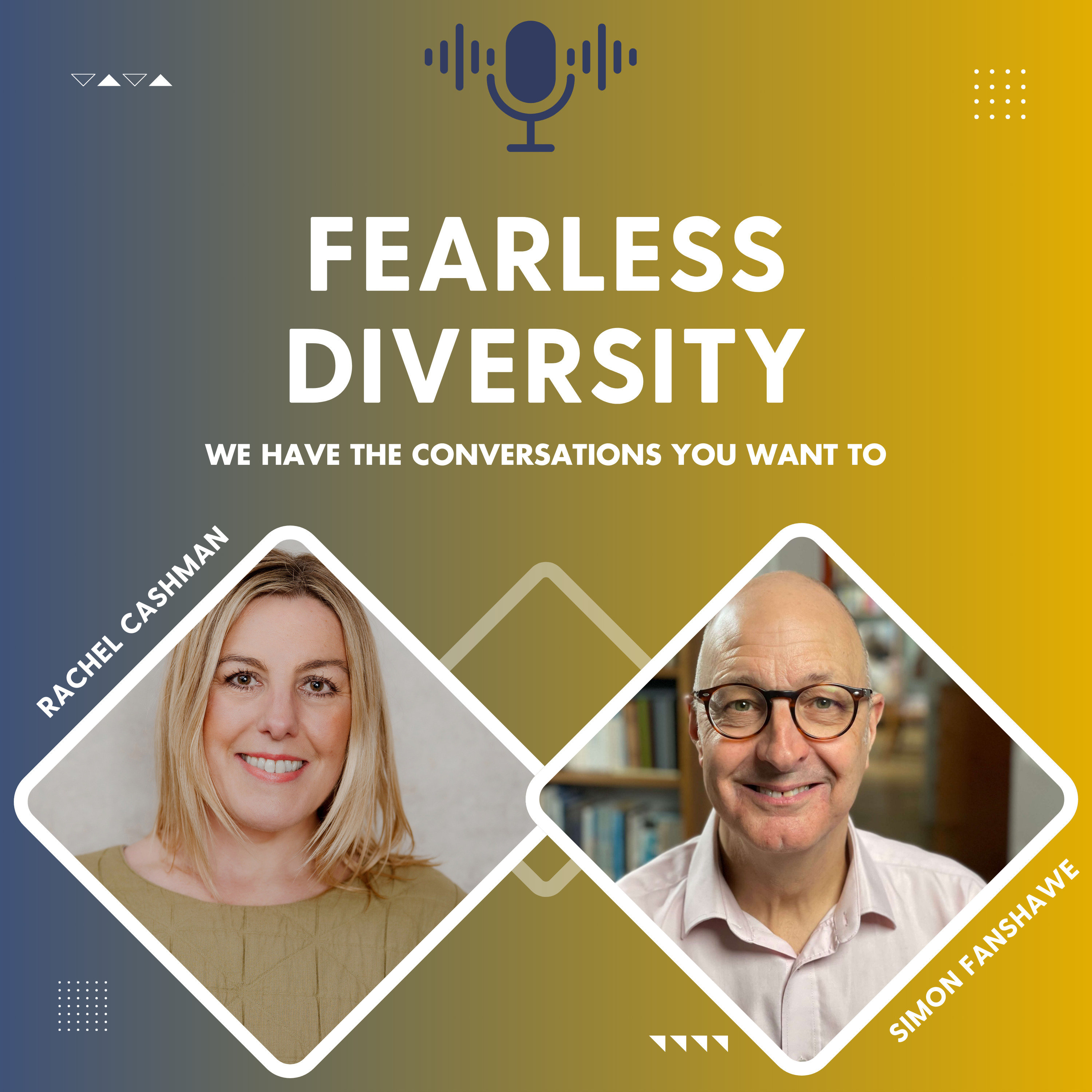
In this episode, hosts Simon and Rachel address the disturbing attack on Jewish people at Heaton Park and the subsequent mosque arson in Sussex, framing them within a worrying rise in UK antisemitism and community tensions. Rachel, personally connected to the Jewish community, expresses fury at the predictable silence from certain pro-Palestinian activists following antisemitic violence, contrasting it with their consistent public demonstrations. Both hosts condemn chants like "from the river to the sea" as calls for violent eradication, often used by marchers who, they argue, are emotionally driven but disconnected from the slogans' lethal meanings. They criticize the political class for failing to provide clear framing and enforce laws against incitement, creating a permissive environment for hatred. The discussion acknowledges the legitimacy of criticizing the Israeli government but warns against the oversimplification of the Israel-Palestine conflict, where misplaced moral certainty and a desire for a "right side of history" narrative ignore profound complexities and fuel division.
[Music] Hello and welcome to another episode of Fearless Diversity. I am Simon Fanchill and under the moniker of the Diversity Disadistitent and you are. I am Rachel Kashman, the Fearless Facilitator. Hello Rachel. Now we have decided to see if we can talk about in a useful way what happened at Heaton Park last week on Yom Kippur when two Jewish people were killed for being Jewish and a number of people were injured. And it was a deeply, deeply disturbing incident. And when we talked about it at the end of last week, Rachel, you particularly were feeling very, very vulnerable and emotional about it. And I just wanted to say too that we are recording this before we put it out on Tuesday, October the 7th, which of course is two years since Hamas's attack on Israel. So one way or another, this is a pretty rich time for conflicting emotions. But it might be good to start with you explaining what it was that sat at the root of the particular emotion that you were feeling last week. You know, and I think it was anger I felt when we spoke on Friday morning about what to discuss this week. And you'll recall Simon, I came on the call with you and went, well, we've got to talk about this. You know, I was very like, you know, we need to Simon, we need to talk about this. And one of the reasons why I felt so strongly that we needed to have a conversation is because I am not Jewish. I'm married to somebody who is. I have extended family who are Jewish. I have friends who have lost people on October the 7th, two years ago, who were, whose members of their family were taken hostage by Hamas. I have other friends from a completely different part of my life actually, who are connected with another family, where the father was taken hostage. And the mum and two daughters were shot dead and their dog was shot dead in the sitting room on a Saturday afternoon on that day. So I have felt this sense of injustice actually for the last two years about the way we have allowed the discourse on this issue to grow in this country. And one of the things that infuriated me was so fucking predictable on the Friday when we spoke Simon. I could have named you the celebrities and the people in my social media feed who have been chucking out pictures of, you know, the pro-Palestine marches, but particularly the footage of singing, you know, from the River to the Sea every Saturday for the last two years. The same people who proudly signed the petition to protect Bob Violin and protect Nick Appet Glastonbury. And this was, we'll know, we talked about the swastikers on the tents at Glastonbury. I could have drawn you up a list of those individuals and they were the exact same individuals whose social media feed was suddenly silent on Thursday and Friday after what happened in Heating Park. And a couple of days later, I was so predictable, it was so obvious, they did this. Well, it's perfectly possible to hate what Israel's doing in Gaza and feel sorry for the dead people in Manchester. I just feel that all of that, what aboutery, we hear the silences, right? People affected see those silences. And I feel a level of disdain and disgust at the conditions within which the conversation since October the 7th has occurred. Almost leading up for me, there was an inevitability that something like what happened in Heating Park, synagogue would happen. And then of course, we've had in Sussex where we live, we've had the Peace Haven Mosque be set alight this weekend as well. So you've got these tensions, you've got these community tensions that are not being managed well. The framing from the political class is not well and you're still for the avoidance of all doubt, not that I should have to say this. But for the avoidance of all doubt at the top of this show, let me say, criticizing the actions of the Israeli government is entirely legitimate. And we can criticise the actions of our own government here in the UK, but it doesn't mean we hate the United Kingdom or we hate the people within the United Kingdom. But if you are chanting from the river to the sea every Saturday outside Waterstons in Brighton or in Trafalgar Square, by singing that song you are calling for all of Israel to be wiped off the map. That's what that song means. If you are chanting globalise the Interfada, you are calling for Jews across the world to be wiped off the map. And you know, Israel is a country of 10 million people of which three quarters are Jewish. And I don't, you can unpack what has been going on, but there's something about having that chucked in your face as somebody, and I'm not even Jewish, but has you know, relationship to the Jewish community. That was all, it's just this rise of anti-Semitism. And you know, I'll pause there, Simon, and as loads more I can say, but the rise of anti-Semitism and how that's affected our family and others that we know. But I just think they're in a very dark place. A couple of things to say is that my put it's interesting that we both have personal connections in a way to this, in the sense that I am married to a practicing Muslim. You have no part whatsoever either personally or in terms of his faith in, you know, Hamas or terrorism or whatever. He has no truck with what he feels as a distortion. I don't think I'm speaking out of turn here. He would say I think that's a distortion of faith. And it's not to him, it's not Islamic. So that's one thing. So I'm very struck by that because I'm I'm having to think, well, where does that put him and does that put him in a position which is old for him to somehow deal with. That's one thing. The second thing that I'm really struck by, I went to a debate last night, just let me pursue this thought. I'm a man, Edinburgh, on the Edinburgh Union. They've started an ad reunion like the Oxford Union came to June. And they had a debate on assisted dying. One of the things that struck me was I was listening to the debate. I was thinking, I feel like I've changed my view on this. But the reason I've changed my view on it, I think is that previously I was very moved by those emotional stories. So everybody's got those stories. They go, you know, my mother, she was ill for some years, died in terrible pain. She lived also pain at the last, you know, weeks of a life blood. Endless stories like that. And that's the justification for giving people a compassionate way out and a softer death, if you like. And I was really, so I was struck by that, but at the same time, what I was really struck by was this doctor on the other side of posing it. And she was talking about the notion of public morality. And she was talking about how it spoke to our values. The reason I was thinking about that was the third thing I wanted to say, which was that I think when people go on those marches, and they shout from the river to the sea, or they shout, we globalize the interferer. I think when they chant those slogans from the river to the sea, or globalize the interferer, I don't think they've really internalized what that actually means. I think what they're doing is, and I had an argument with a friend of mine in May, and it very nearly broke us apart. We did find a way back, but she was absolutely I've been on these marches. It's so great to see the passion of these younger people that really care about injustice. And then it turned out she'd been chanting these slogans. And when I pointed out to her, I thought actually they had a really quite profound and violent and destructive meaning. She was very dislocated from that. And so what I was what I mean is that was stuck last night by the degree to which political expression seems to be so dominated by notions of emotion, not passion, not not an argument of passion for a cause, but actually completely defeating kind of rational analysis, if you like. And so that was the notion of public morality and being that being substituted for these kind of bizarre notions about being on the right side of history or, you know, that there's a sense of iron clad virtue that seems to surround these things which defies real argumentation. I remember I mean I get letters the whole time from you know members of staff or students demanding that the university disinvest from Israel and does this that the other. And I got one the other day and I said look we've got a process here and we talk about our investments. We've got ethical advisory committee on investments. We have a series of ethical principles and so on and so forth. There is a process and you are one of the voices in that process. So this furious letter of action genocide is not a matter for argument. Do you not mean and so what I'm trying to unpick here is everything you say I hear. I'm not sure the problem is you've got so many people on those marches who actually that's not what they're doing but the tone and the direction is actually set by people who are genuinely malign. yet, and so there's two things I'd say on that. On the marches themselves.
My, who I'm irked with at this point, you know, - Erked. - What a great, what a great, - Or a great, or a great, or a great, - Other people will have a different view, right? But for me, I'm not saying people should not march in support of the Palestinian people. Like, hello, I've been to Ramallah, right? Like, as, you know, so I'm not, like just some ignoramus sat here in Brighton, saying you must never march. I mean, I, what I've supported a two-state solution, my whole life, that means the state of Palestine and the state of Israel, by the way. You know, two states requires two states. And, but I am really angry with the political class on all sides of the House of Commons, because I think there is so much more they could have done to frame this. So why were political leaders not standing up much, much earlier on and saying, "Freedom to protest is a fundamental right in this country, but some of the things that are being acted and said on these protests, what these songs mean are, and that is an incitement of violence to eradication to hatred. The police have the powers to intervene when these songs are being sung, but not when people are peacefully protesting. Where was the conversation, the framing, and the education piece about what it means? Because if you're Jewish, you're not comfortable walking through certain parts of the United Kingdom on a Saturday. And the second thing I'd say is that this, and almost like hatred's okay, if you're, if the person you're hating is Jewish. So there is a women's group in Brighton. I won't name them, but there's women's group in Brighton. And they are anti-Semitic. There are people that are leading that group that are anti-Semitic. And if they listen to this, they will hate me saying that. They know I've said it to the face and don't do anything that I wouldn't, you know, I've written to them because at the time of the 7th of October, they have on their social media posted, posted information about women across the world being raped and murdered, but they refuse to say anything or do anything in support of the Jewish women that were raped and murdered. And when talent, they went, oh, we forgot. Oh, we weren't able to. They made all these kind of melee, mouthed excuses, right? If you are a woman who is associated with the Jewish community or part of the Jewish community, you can see through that bullshit, actually. You can sense, feel the tone or as Emily Maetless called it the other day, and the coldness that arrives when you say you're associated with the Jewish community. That is the anti-Semitic conditions that are being created. One of the reasons why this resonated also with me is because as you know, we went to see a racist at Heating Park this summer. And we actually went past the synagogue because to get to our gates where we had to queue up for tickets, we were in those streets in that area. So I was watching it on the TV and it was strangely reminiscent of just a few weeks ago. You think this is a war in a faraway land, which will have frankly less influence on the state of Britain or the UK than the war in Ukraine will have. And yet somehow, and it's a war between Israel or the Israeli government and Hamas, let's characterize it that way. And there's guilt and innocence on both sides. And yet somehow what has been attached to it is this extraordinary level of asserted moral value. And then, I mean Matthew Sidero, a piece in the Times this week or the end of last week, can't remember. And he went, it must have been this week Monday. And he went on the demonstration 'cause he went on Sunday, so it must have been this week. And he taught to people. And he said, he's questioned was to people. He said, "Do you think Hamas "there's any responsibility for what's going on?" And these people turned on him. And what was interesting was that they attacked him. They said, "You're a bad faith actor. "You know, you're disruptive. "What are you doing here?" In other words, there was no sense of, I don't mean to be even handed. It's even handed, sounds weak. There was no sense of perspective, let's call it that, on the conflict because these people were utterly, utterly convinced. And actually, what I think is also odd is that you do sometimes find that when I've been in conversations with British Jews actually trying to criticize Israel. But I think it's slightly different. There's a defensiveness when you talk to British Jews about certain British Jews about Israel. There's an offensive of Israel because of the habit they have got into of Israel being attacked and singled out like it appears no other country in the world. But there's an aggressiveness on the side of the Hamas Probeciani whatever you want to call them. And these are slightly, they're different in tone, is my point, really. And I don't want to say they're both the same because I don't think they are the same. I don't think Islamophobia and anti-Semitism. I don't think they're the same. I think there's something different going on on both sides, isn't there? And I just feel like it's become dearer to be pro-Palestinian and to go on the marches. And to make Jewish people feel uncomfortable, I feel like it's like the in thing to do. I feel like people actually are getting a bit of a kick out of it. Like it's like you're somehow, your moral virtue resides on whether or not you have been on one of those marches. And I find that just so because what that does is it completely a it fails to understand that Hamas are a terrorist organization. And so you're not thinking about the kind of the detail around that. You can support the Palestinian people. Whereas if I keep marches by the way for the Palestinian tribes who are fighting against Hamas and their own country because you're not doing that. But what's interesting is that this is, you know, I genuinely think I'm related to the realities of the creation of a two-state solution or whatever. It appears to be, as I keep in using this, we're dislocated from the two things. And it is something around the Omnichols. And I remember reading a piece a few years ago where somebody had said that all the way through a certain phase on the left, everybody, not everybody, the vast majority of people saw the rightness of the anti-apartheid struggle. And, you know, there was a legislative framework there in which black people were deprived of the vote and education and so on and so forth. And that was a struggle that has appeared to literally have history on its side, if you like. It was on the right side of history because it related back to slavery and the whole notions of racial inferiority and so on and so forth. And one of the things that was once apartheid ended, what this piece was arguing was that people had transferred their energy. They wanted to find another cause where they felt there would be such moral clarity. The trouble is that the recent moral clarity between Israel and Palestine, it's a much more complex situation. You've got Palestinians in the Kinesit, you never had black people in the apartheid parliament. Yes, you've got laws whether a differential citizenship and so on and so forth. Yes, of course, you've got a kind of siege, kind of security siege around Gaza. See, there are all sorts of things that are more complicated than ever they were in Renaissance Africa. And it feels like people wanted to put this energy somewhere. They wanted to be morally right. They wanted to find a place to put it. And they put it there, but they failed to observe that actually there's a lot more complication to it. And we have a civic and community and as business leaders and as political leaders. You have a responsibility. So only this morning I have been reading about the anti-Semitic doctors in the National Health Service, who've been saying things about the refusal to treat Jewish patients, who've been the language they've used about Jews in their hospital, about their colleagues and about their patients, and the General Medical Council and the Medical Tribunal Service, don't think they've done anything wrong. They've done nothing about it. They haven't disciplined those individuals. And the Secretary of State has intervened. Yeah, let me just say, Dr. Rame Al-Adwan, I apologize if I don't pronounce her name correctly. On the 30th of July, she claimed that the Royal Free Hospital in North London would serve as an Jewish community was, quote, "A Jewish supremacy cesspit." Now that seems to me, I'm sorry, I just wanted to actually give you the quick, 'cause that is so heinous the thing to say it seems to me, that it is staggering, isn't it, that somebody somewhere couldn't draw the line and say, "Well, that's not acceptable." And they, but they have been absent. And so, why throughout all of these series, I've talked about the role of silence and silence being dangerous. This is an example where I think silence is dangerous. Only a couple of episodes ago, I said the words, and there was a clip of me that we put out on social media saying, "Words are not literal violence," right? And then the last week, I've actually been reflecting on that, because of the comments I've just made about the songs and the chance that we've heard. And I think I still agree with that. Words are not literal violence. However, context always matters, and there are certain things, we've talked before about whether somebody's intervention is careless, thoughtless or vindictive. I would add a fourth, which is incitement, and there are rules and laws around incitement, and there are rules and laws around racism. And it seems to me that too many people who are responsible in the state sector and in the political class, for designing the rules and enforcing the rules, are prepared to let them slide when that incitement or that racism affects Jewish people, so that hierarchy of race kicks in yet again. I was asked yesterday, actually, to keep up with your.
trying to see if we can get some events around kind of conflict on campus, how we create dialogue. And I was having a really good conversation with something yesterday who was really challenging me and I, because I was arguing, actually, yet if people decide they want to chant from River to the Sea or they want to chant globalized into Fardor, they want to chant, you know, Gays or Sinners or, you know, women should be in the home or anti-abortionist murder. They want to chant those things. My view, I think, is still we should not actually stop people because, as you just said, there is a difference between the expression of albeit nasty views, which have a horrible effect on some people who hear them and any form of incitement. So I think if you stand up and you say, "Oh, Jews should be killed, all Gays should be put in the gas chamber," whatever, that seems to me to begin to cross the line. So my view is on the conflict in campus, because this other person would say, "Yes, but, you know, there'll be people who hear those things and then they'll feel really upset and what about their nature, feelings of belonging to the institution and all campus." And so I was saying, "Look, the deal is, we have to allow those things to be said in the public forum. We don't allow them to be said in the seminar, because in the seminar, what we do is argue research opinions, we produce evidence and so on and so forth." So if somebody says in a seminar room, "Black people are less intelligent than white people, go hang on a second here's the evidence," actually, you're simply that, you can't prove that case. But in the public town hall, whatever, the town square, rather, you should be allowed to say those things and our maturity has got to be an our ability to deal with it, not actually deciding to stop them saying it. And I don't think the police should be arresting people. I'm not convinced by banning Palestinian action. I think actually, you just create kind of mini martyrs. So I don't think they should be panned and I don't think you should stop people saying those things. I think you learn to deal with the consequence and make that socially unacceptable to do those things whereas at the moment it appears to be socially acceptable. And I think so a couple of things on that, I think it's because it's become socially acceptable, it's become more and more intensified and it's become more and more threatening. So it's reached a level. So you know, you know, you know, apparently 21% of Britain's age between 18 to 24 say that the state of Israel does not have the right to exist anymore, according to a Sunday Times poll, you know. So we've allowed us, we have created these febrile conditions that have allowed these sites, these sorts of views where, you know, the next generation are talking about the eradication of a state. And we've allowed that to cultivate in this country because we've not done what you've described. Where have the politicians been on a Saturday? Where have foreign secretaries been? Where have home secretaries been? When these things have been said and done, they've just allowed the marches to go. So we go from, we oscillate. We oscillate from one extreme to the other. Have the protests do whatever you want ban the protest. And we also oscillate, can I just finish this point in oscillation? Because the other thing that politicians do is they oscillate from, give me the Muslim vote, give me the Jewish vote, bollocks to that. What they actually should be doing is saying we are putting country before our individual political interests. Therefore we have a moral and ethical responsibility to lead the fabric of the United Kingdom. And the fabric of the United Kingdom is one that is built on diversity. It is built on difference. And part of that difference actually is education, information, understanding. So where are the things around shared understanding around what from the river to the sea means? And you will know that when my family was affected in school, by what was described as one of the worst episodes of anti-Semitic bullying they had seen in a school, the police actually said it hit every, every criteria for hate crime. And it was recorded as a hate crime. When the school and the local authority were offered from the community security trust, they were offered support and information to do anti-Semitism education, you know, and work with teachers to how to run assemblies. The school and the local authority said we'd rather not. We don't think there was a problem. We disagree with the police. I think there are several strands in there. One is that, I mean, I still maintain that we shouldn't ban marches until they become inciting. And I don't think we should ban language until it becomes inciting and so on and so forth. And I don't think we should ban policy in action because I just think it doesn't do what people think it's going to do. However, what we need to do is what you're suggesting I think, which is we have to find mature responses to when the results of those things happen. The other thing, of course, which is so poignant about a heat and park and these kind of antisemitic instances, is that anytime you go to a synagogue, anytime you go to a cinema where a particular film is being shown, anytime I've been invited to the Jewish Film Festival, which was started by a mate of mine who lives in Brighton. There's security. In other words, the thing about heat and park, which was so tragic, was it was expected. And it's expected because the, you know, doesn't it say? Does it? There's a bit of a history here. You know, Jews have been putting up with this for a very, very, very long time. And yet somehow no one can quite say so we've got all this sort of, you know, anti-Islamophobia, we've got to be careful about Muslims, X, Y and Z. And there's an enablement, it seems to me, of the separate religious practices, whereas what happens with Jews is certainly there's an enablement of them in the sense that there's, they happen and they're at the mosques and things. But there's something in the public discourse which apparently privileges the practice of Islam over the practice of a number of, of, of, of, of religions. And I noticed interestingly that today the leaders of the Sikh community have objected to the notion of having a legal definition of Islamophobia because they think that that will mean that their criticism, for instance, of the ritual slaughter of animals in order to eat meat, those criticisms, which they would make a seat of Muslims, that those criticisms sort of be then characterized as Islamophobia. So you've got a whole mishmash here where criticism is rarely scored antisemitic, but it's a system of how mass is called anti-freedom and, you know, genocide done. And so it goes on and people are just failing to grasp the accuracy that he's needed in enabling people to have dialogue and difference as opposed to characterizing, you know, the false dichotomy of good and evil between these two tribes. And we also need to think about the extremes. So, you know, you're absolutely right in terms of the levels of security required at venues for Jewish people across the country. But if you hear some of the stories of young Jewish children going to school over the last two years, where it has become the norm for them to be spat at on the way to school, to be abused on the way to school because they're Jewish. And this is somehow just being considered the kind of acceptable consequence in the United Kingdom of Netanyahu's actions, right, that we should allow our ten year olds to go to school and be spat at by members of the public because of who they are in a way that it doesn't feel like we would find acceptable about any other group within our country. Although it does happen, doesn't it after, I mean certainly it happened after 9/11, it happened after 7/7, was the, you know, Muslims would then say if they were identifiable in any way or people who actually weren't Muslims or somebody thought that Muslims, you know, they would, they would similarly experience. And it's this notion of collective guilt. This is what I find so aggravating as you said earlier on. If I criticize the British government, you criticize the British government, I'm not told I hate this country or this country has no right to exist, etc, etc. And yet, I mean, it's the thing that my husband gets most angry about, or not most angry about, it's one of these things, very angry about, is the misrepresentation of his faith and something like that happens. And I've often said to it, well, okay, but you've also got to deal with the fact that leaders of too many prominent Muslims express views that don't shine with the laws or the values of Britain, particularly equality for women and for instance, you know, freedom of inequality for gays and, you know, for human rights, for women against. So you've got a contradiction here. One, you've got this process where people are being attacked to things that are really, I mean, why should I mean, Tracey Ann Urbanman was on Trevor Phillips the other day. And he asked her about, you know, the responsibility of British Jews for Israel. And she said, I will not be put under a purity test as a British Jew. Why have only got to justify the behavior of the government of Israel, just because I'm a Jew? I'm British. We don't go to dinner parties and we're not, you are right, are not held to account for the actions of Kierstarma when we go abroad, right? We're not abused. Thank God. Thank you. You know, we're not abused for the actions of Kierstarma, Rishi Sunack Boris Johnson, whereas if you're a Jewish person, you're somehow told that it is your fault that Benjamin Nessie is, Benjamin Nassie Nahu is, in my view, he's behaved like a maniac, right? I have no track with his actions on what he's done, but I certainly don't want to be living in fear that my husband might be going to religious sites in London, Jewish religious sites in London in the next few weeks for various events. And I know I'm too scared for him to go. Yeah. Equally, what's quite interesting here, what you've said is illustrates something that just needs to be done.
underneath what you said, which is that Muslims are held responsible for a faith and terrorism that uses the faith as its justification. Jews are held responsible for a country. I, Israel. And for a government, they're held responsible for the actions of the government of the country? Well, I think they're held, I think that's the problem actually. They're not just held responsible for the actions of government. Somehow that bleeds over in whole Israel, as you said before, whether or not Israel should or shouldn't exist. But the thing that, the thing that I was going to say was that, so that's different, I think. I mean, there is a difference here about how people are then characterizing it. And then what you get into is the expression of religious freedom. And people start to defend the practice of certain Muslims as if, and I say carefully, certain Muslims, as if those should be protected, even though they do appear, like in relation to women engaged, to sit out with what would be broadly said, I think, the accepted values of Britain both in terms of its law and its social morays. Whereas interesting, the thing about Israelis are Jews in Britain is that they're not held accountable in relation to their religious practices. I mean, very few people are kind of saying, well, you mustn't circumcise or you mustn't have kosher food or, you know, it's not that is it? So there's a difference in character here somehow. And I'm not, one can only feel that I don't know, I don't know, what is that difference in character about? But it feels far more, I think, it feels far more sinister and blamered and it feels almost like we might dislike some of these other things, but we understand they, they have an ethical, religious spine, if you like. But because we're holding you Jewish people to account for your country, your people and your government, you are somehow even more accountable and therefore deserving of the abuse, because you can somehow control it. It's almost like you should be able to control what your Prime Minister does. And what's interesting, of course, too, is that when you talk to Jewish people in a way that's open and safe, many, many, many Jewish people I know. I mean, I think almost all the Jewish people I know would be as critical of yet net now as you and I might be. And the Muslims that I know, I remember saying there were different kind of cascading Muslims on the mainstream, but they would be very, they wouldn't, you know, you wouldn't, they wouldn't feel accountable for Iran and the Theoroktheocracy there. So I have a, my history teacher, the great Oliver Ranspossum, who is a global expert now on, on, on, has been for many, many years on conflict resolution. And he has done many, many, many hours, he is decades of work in the Middle East and he's been very in behind the scenes. He's been involved in so many of these attempts to create dialogue. And one of the things that he points out, which I think is fascinating, is that if you get a group of Palestinians, so you've got a group of garrisons, you put them in a room with a, a subordinary, you know, a group ordinary garrisons, ordinary Israelis. And he put them in the room and you go, okay, everybody, you know, what we're going to do and you do a bunch of stuff to create dialogue. And everybody says, do you know what, this is mad. We shouldn't be bombing each other's buildings, we shouldn't be blowing each other up. This is crazy. Let's do state solution. Let's do this. Let's do that. Let's do the next thing. And actually, the dialogue is very powerful. And you can see it in East West Ivan Orchestra, which is a barred, barred, barren boy orchestra, the dialogue is very powerful. What Oliver says is really interesting, is that the problem comes, that when you go back to where you've come from, you don't have that voice. I'm picking up on your point about being held accountable for. Yeah. They don't have the structures to create the same international or kind of what's the word when two countries talk to each other. There's no structure there to replicate the dialogue that you've created between the people. And that that is the constant problem with the attempt to resolve the conflict. And then I'm struck with that in so many situations where you will get Christians and Gays or you know, set the guns Christian to Gays or you get a feminist and anti-femist or you get you know, you're Chris, Chris Kirk types and you're you're you're Democrat Charlie Kirk biggest one. Chris Kirk was a gay journalist who was wonderful at Gays a million years ago. They're a cook of course isn't my head, but you can always get those people together. And yet in terms of the tribes, the institutional pressures to maintain their separateness, you can see it in Hamas and Netanyahu, they are both having interest in maintaining conflict. And that's why I've ordered people ever break through that. And that's why I think you have to also, if you're sitting listening to this, I do it what our listeners to listen to this episode and think well that was just a bloody big rant. They had to they spattled on for an hour and I didn't get anything out of that other than the thing to that, that listening to Rachel Swear a few times and Simon try and you know kind of a piece or a little bit. You know, and I think what you've just said really hits the mark about the look as of control you have as an individual. So if you're a chief executive of a company or you run a community centre or a local charity in the United Kingdom at the moment and you know that you're going to have you have Jewish people in your community and you know that you have Muslim people in your community and others as well, you're a bit multi-faith. Looking at the frameworks that you can use to apply that curiosity, that empathy and that humility about the others that you're interacting with becomes really, really important and it doesn't need to just be in a work context. You know, I know that this is a type of conversation that people avoid at dinner tables. They will avoid in their gyms with people. They're avoiding on social media. So creating that type of framework that you've described, recognising you're not going to change the world. You know, you are I alone, I'm not going to solve the Middle East peace process, you know. But you know what? Creating the framework based on curiosity, humility and empathy to have the conversations within your sphere might actually make all parties in their day-to-day lives feel better and more willing to talk to each other and feel safer. In my book, oh, bug, bug, bug, bug, bug. Well, I mentioned very reasonably priced and not because it's been remained at a light you'd know, it's still in circulation. It's on my book, it's somewhere up there. Good. Well, in the book, I tell a story that happened a long time ago now in 2012, but it was in Bradford and the synagogue was basically facing closure and it was leaking and they did not have any money. And curiously, the people helped them to raise the money actually in the end from I think the National Lottery was the local mosque. What was really interesting was that it turned out that there was a planning application to which both the mosque and the synagogue were objective. So that brought them together, a ransom. There's nothing to do with it with some kind of I don't know what somebody wants to build a supermarket or whatever that it was. I think I don't know what it was. And that shared connection of what they then discovered was the secretary of the council of the mosques discovered that the mill where his father had worked after emigrating from Pakistan in the 1960s was run by a Jewish descendant of the Joseph Strauss who was the rabbi who founded the Bradford synagogue. What I love about the story is and then they kind of collaborated and though answered the correct dialogue and then the Christians got involved and then everybody brought fruit and vegetables and children that had lovely time. What I think it just endlessly endlessly illustrates is notwithstanding that you can't solve those problems. You don't have influence on the government. What you can do is find common cause which is not about the things you don't agree about but it's about the things you can agree about. So there are commonalities to religion and there are commonalities to living as religious groups within the UK or whatever or whatever or whatever and it's the ability to somehow explore those. And I think what I find most distressing about the lack of dialogue around Israel and Palestine and Gaza is the absolute refusal even in the prospect now of a peace agreement just because it looks like it might be brought about partly by Trump or mainly by Trump and his administration. All the lefties are going yeah well it will be awful. You know it will all be Israeli with this but they're discounting you think hang on a second. I thought what you wanted out of this was an end to the war and less killing of verb-pubbling Gaza because if that's what it achieves frankly hurrah you know I think where you you can't influence the governments but what you can do is influence something else which is the public morality around living in Britain that we commit to ourselves that we will get on that we will actually no matter what we will find ways of getting on and you know I think in a way we have to kind of lower the temperature to the state where it's absolutely just interpersonal you know and and somehow those people on that demonstration because the thing about that demonstration those demonstrations is that the vast majority of people on them are obsessed about people dying that's really what that is. Which is understandable but they're chanting calling for people from the Jewish community to be killed. I know but I don't as I go back to this I don't think they recognize the some I don't think they I mean I know people have told them and I know they know but they go no no no it's a metaphor when we say global as the interfered with that I actually mean that what we mean is that the press people should be liberated and you go but that's not what the singing what the singing is they radicate my husband and his family from the planet they do but somehow what's difficult about dialogue is to find the things where so if we could
say, right, that's what we really want is peace. So if they really, really want peace, but we want just people on those demonstrating, saddening peace, now dialogue between Israel and Gaza or whatever it is. But all I'm saying is that we need to lower the temperature to the extent where actually the only way forward in that kind of intense atmosphere, I think, is for individuals to desperately try and have conversations about things they can agree with. Even frankly, if it's like you want to cross-sons, should we go for coffee? Do you not remain? I do. You've got to take it right down somehow. And I think that level of personalization, and you know, I've got two examples of that. So I, you know, got a message from a lawyer I know who is a Muslim lawyer who has, is a big supporter of a Palestine state is, you know, it's probably beat on some of the marches, sent me a message following what happened in Heaton Park, because we have always had that type of dialogue. The two of us have always had that conversation. We recognise that culturally we might start in different positions, but fundamentally we want the same thing, right? Or we might have had different family historical experiences, but fundamentally we want the same thing. And I find responding to that much easier than I do responding to the people who I've seen put up from the River to the Sea, who then have gone silent on their socials for 24 hours, who might then like my picture of a donkey, even though they've seen that I've put up a picture of Heaton Park synagogue or reference something, you know, it's very interesting. The silence you get from people, or we'll just ignore that post from up because it's a bit too difficult for us to have to accept. We might have been, you know, doing that. And I'm quite bitter about that actually because I just think, get a grip. I think I'm too old to want to look virtuous in other people's eyes. I don't, I think I've reached this, I don't think I really care about that. I don't know whether I have done, but I don't think I've ever seen being virtuous as something to celebrate. I think it's egotistical bollocks actually, whereas I think being pragmatic is something I've always celebrated. So then, so then you've got to pull that back. So one of the things I'm struck by, for instance, is this notion of people always talking about being allies in my world, in the diversity world, oh, we've got to be allies, women, male allies for women, or, you know, straight allies, LGBT people or whatever. And I don't like that concept. And the reason I don't like it actually is really simple. I don't want allies. I want people who are doing it because they want to do it for themselves. In other words, the reason I want to fight racism is not because of my husband who's black. It's because I don't want to live in a world where there's racism because I think that would be a nicer world for me to live in. I don't want to live in a world where there is discrimination against women or gays because I don't want to live in that world, not because it affects me. Do you know what I mean? So somehow we've got to try and get the conversation off that big virtue. And I do think leaders play a real, real, real role in that. So in the last kind of 72 hours, I cannot tell you, we are really lucky. We didn't record this podcast yesterday. In fact, I sent somebody, several people, what's that message yesterday? Because somebody in the government said something and I did something and I just, you know, it just crossed the line for me. And I was like, do you know what? We're really lucky we're not recording our podcast yesterday rather than this. Because you were just furious. I was just furious. And I just would have been incomprehensible on it. And I just would have been slagging the government off and slagging all politicians off. But I am, I feel really, really, really let down now by what I think in all across the political class, so not just the current government across the political class as a whole, I feel really let down now where I think they behave like a bunch of virtue signaling children rather than adults who want to know any party who actually want to run a country to govern a country for all its people. And the complexity and the trade-offs that that involves, actually. And that means you prepare to criticize people who use, you know, rather than saying we want the Islamic vote, we want the women's vote, we want this vote. You just get sensible about what you're doing to criticize. Are we descending though into kind of bland kind of generalizations? What, what do people need to do? They need to, they need to go on those marches and shout for peace, not for conflict. That's one thing. You know, they need to try and find dialogue at all levels. And the other thing they need to do is call out the people who are malign on those marches. If you, if you really are saying, oh, I didn't realize with the river of the sea mend, you really realize, I don't, I didn't realize what the global interfered with me. You need to call out the people who were using it then. You need to say, is that Angela saying, that makes me uneasy? I don't like that. I don't think that's the right slogan. I think the right slogan is peace in the two-state solution now. Thank you very much or something. Yeah, absolutely. And then how you, and then I think the other thing is that they also need to be a little bit more vocal about the destruction of things like memorials to hostages. You know, these are, yeah, because. Terry down the posters. Terry down the posters and, you know, burning the ribbons and, you know, it's just, you know, because that is a level of, um, distinct for people that is just unprecedented. And it would be, I think it would also be useful if people get out of the habit of isolating and holding Israel to, Tracy and Open, of course, the purity test, holding Israel to the purity test. I was just looking up civil wars that are going on in the world at the moment. So, darn, Syria, Myanmar, Yemen, civil conflict and Haiti, mainly gangulated. So, darn, 150,000 people have died. Eight million are displaced and 3.5 of million have fled. In Myanmar, 82,000 people have died. 3.2 million people are displaced. I could go on Yemen, 150,000 people, 277,000 people dead from famine. Now, these, these are UN figures that I've tried to source kind of figures that will, you know, be, so they may be half of that or whatever. But the point is that there is conflict all over the world. And one of the things I think people need to ask themselves is, why are you singling out Israel? What is your motive in singling out Israel rather than saying the Israeli government is behaving in a appalling way as is, by the way, what's going on in Sudan. So is it what's going in Iran and so on and so forth. So that would be my one thing is stop singling out the Israeli government or Israel as a country. Number one, stop associating all Jews with Israel and all Muslims with terrorism because those are equivalents that seems to me. And the third thing is to create dialogue with people around things that you can agree about. Try getting on. See how that goes. As opposed to thinking, I'm going to stand on my soap box. I'm going to be standing on my moral corner because I'm going to decide that you've got beyond the pale. But just for a moment step back. And I mean, you know, I go back to my Stonewall experience this the whole time. How far would we have got in achieving a quality for lesbians and gays if all we've done was pointed at people in the church or pointed at people who took view that homosexuality was sinful and told them they were bigots and they were nasty and we didn't like them and could they go away. We just simply wouldn't have built the force that we needed amongst the public opinion. I agree. And I think, you know, they're really good specific tips for people to do kind of in wider society, you know, and they can also be applied to their workplaces. I go back to what I said earlier on where I think you need to approach this specific issue with curiosity about others. So I would suggest, for example, and funnily enough, my husband went for a drink with somebody at the weekend who was a bit in that kind of emotional place that you've described. What do you mean I'm just singing a song? It's got no relevant, you know, to and my husband said to him, we'll read this book by David Badil, which is the Jews don't count book because that will help you understand what it feels like to be a Jew living through this. And equally, there will be other texts that we can read in relation to other religions and other groups. To be curious is my first thing, be curious about the others, be curious about others and don't just be strident in your moral surety. And the second thing is who attack that curiosity with empathy and humility. I'm not saying be empathic to Benjamin Netanyahu, but be empathic maybe to the people who have been affected, the Jewish people in Israel and across the world who have been affected, you know, I, one of the reasons it struck me so much is I will never forget hearing from my friend when she told me that a close friend of hers, historical close friend of hers, had been shot dead and her two daughters and the dog. And it was when she said about the dog for me actually, you know, and the dog while sitting in their sitting room watching the TV on a Saturday afternoon. And if you can't condemn that as well as, that's all one's asking is condemn that as well. I'm equivocal in the condemnation of that, right? Because there is no one
world that you should hear that story and go, yeah, but what about the problem is too. Of course, if you ask people on that side to condemn antisemitism, they have to condemn antisemitism that is practiced by Hamas, Hezbollah, the Iranian Theorocracy and so on and so forth. So that's why they pull back from it, I think, because they can't bring themselves to do that. But it seems to me you need to be somehow even handed about that. Have we sorted this out? Should we be in charge of a peace plan that brings Gaza and Palestine and Israel together? No. We will also be told that we haven't covered enough about Islam and we haven't covered enough about the burning of the mosque in Sussex and other issues. And we are not denying that those issues are appropriate to be discussed on this podcast. We wanted today though to really explore the particulars around the exponential rise in antisemitism in the United Kingdom. And the worst thing is too that if you are Jewish, you're you're going back to this thing that this was expected. Yeah. That actually the level of threat around just being Jewish. And let's be clear, the guy who was peculiarly named Jihad killed them because they were Jews. And there is no getting away from that. And you are 10 times more likely if you're Jewish to be at risk from a hate incident than if you are the next religious group down that gets targeted. And that's Muslims. So, you know, we got a real problem here that we actually need to get to grips with and not somehow excuse ourselves and decide that we're going to take a side. I think the thing that we are what to do is I don't want to take a side. I don't want to take a side. I don't particularly want to look virtuous. What I'd quite like to do is find a way of getting on with people I don't agree with. And if you are a leader of people, so if you're going into work, if you're going into a community centre, you're running your kids' football club on a Sunday, we can't football club in all those things, you were undoubtedly have within your community, people that you may not know feel affected or affected have some experience because they may not be so comfortable and confident about talking about it. So, this thing about the incurious and empathic in a humble is part of being so to create the conditions for safety, for people to be able to express and live and feel safe in the community that they're in. Can I, can we not be humble? Can we just ditch the humble? I would you like being humble because you were at your stage this being kind of? I don't think I'll do it. It's a bit like having a bit of a conversation. Humility is not something I've ever really heard about you. And there's a woman who something that throws away the entire last 50 minutes of conversation by being so dismissive. I mean, I love you to, to bits, but have that behind you on a train when you've been in the bad mood and you've not known I was there. And you've not been very humble about real travel at that moment. Oh, completely not humble about real travel. It's a whole other thing. We're dangerously getting into, you've had different territory here. Thank you for listening. We hope that you've enjoyed exploring this stuff with us. And I don't know whether, well, I think we've reached some conclusions, but well, I think we've had some explorations. And that's what we want to do on this podcast. We want to have the conversations that you want to have. So I hope you enjoyed the exploration. And here from you, drop us a line, comment, share, enjoy. And we'll see you next time. Hit care. Bye-bye.
Podcast Summary
Key Points:
The hosts discuss the recent fatal attack on Jewish individuals at Heaton Park on Yom Kippur, linking it to a broader rise in antisemitism in the UK.
Rachel expresses anger and vulnerability, criticizing the selective silence of some activists and media figures regarding antisemitic violence, contrasting it with their vocal support for Palestinian causes.
Both hosts analyze problematic slogans like "from the river to the sea" and "globalize the intifada," arguing they are often chanted without understanding their violent implications or the incitement they represent.
They critique the political and civic failure to properly frame the discourse, manage community tensions, and enforce laws against hate speech and incitement, particularly when targeting Jewish people.
The conversation explores the complexity of the Israel-Palestine conflict, warning against oversimplified moral narratives and the dangerous transfer of activist energy into a cause lacking the clear moral clarity of past struggles like apartheid.
Summary:
In this episode, hosts Simon and Rachel address the disturbing attack on Jewish people at Heaton Park and the subsequent mosque arson in Sussex, framing them within a worrying rise in UK antisemitism and community tensions. Rachel, personally connected to the Jewish community, expresses fury at the predictable silence from certain pro-Palestinian activists following antisemitic violence, contrasting it with their consistent public demonstrations. Both hosts condemn chants like "from the river to the sea" as calls for violent eradication, often used by marchers who, they argue, are emotionally driven but disconnected from the slogans' lethal meanings.
They criticize the political class for failing to provide clear framing and enforce laws against incitement, creating a permissive environment for hatred. The discussion acknowledges the legitimacy of criticizing the Israeli government but warns against the oversimplification of the Israel-Palestine conflict, where misplaced moral certainty and a desire for a "right side of history" narrative ignore profound complexities and fuel division.
FAQs
Two Jewish people were killed and several were injured in a deeply disturbing incident at Heaton Park on Yom Kippur, which is being discussed as an act of anti-Semitism.
The phrase 'from the river to the sea' is seen as calling for the elimination of Israel and is interpreted as a chant that incites violence against Jewish people, making it highly offensive and threatening to many.
Protests featuring chants like 'from the river to the sea' or 'globalize the intifada' are linked to a rise in anti-Semitism, creating an environment where Jewish people feel unsafe and targeted in public spaces.
Political leaders are criticized for failing to clearly frame protests, distinguish between legitimate criticism and incitement, and enforce laws against hate speech, thereby allowing anti-Semitic conditions to worsen.
Examples include anti-Semitic comments by a doctor at the Royal Free Hospital and cases in the NHS where Jewish patients faced discrimination, with authorities often failing to take disciplinary action.
Personal ties, such as having family or friends impacted by violence in Israel or hostage situations, deepen emotional responses and highlight the real-world consequences of polarized discourse and anti-Semitism.
Chat with AI
Loading...
Pro features
Go deeper with this episode
Unlock creator-grade tools that turn any transcript into show notes and subtitle files.
 PodcastTranscript AI