Speaker 1The New Yorker Radio Hour is a co-production of WNYC and The New Yorker.
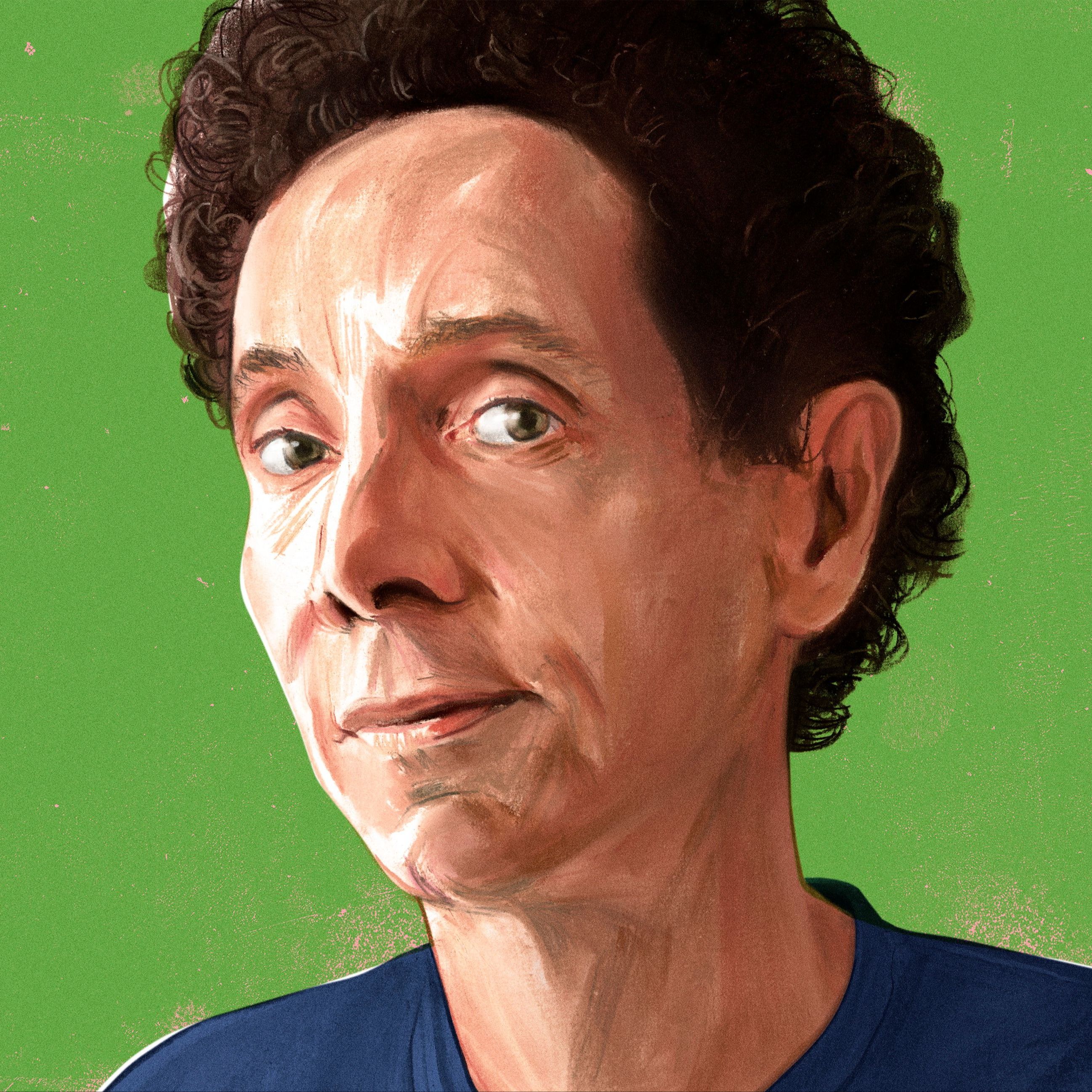
Speaker 2Welcome to The New Yorker Radio Hour. I'm David Remnick. I'm kind of shocked to say it, but Malcolm Gladwell has been a staff writer at The New Yorker for 30 years. We got here at just about the same time. And in his reporting for us, and in a shelf of best-selling books, Gladwell takes ideas from the social sciences and other fields and applies them to topics that most of us had never really thought about. You could almost call Malcolm Gladwell a genre unto himself. But we don't often think of Malcolm Gladwell tackling the news, writing about what's in the headlines every day. And that's exactly what he does in his new book. And I'll tell you, it's not easy to read. The book is called The American Way of Killing, and Malcolm's subject is gun violence. He looks at the mass shootings, suicides, and vast numbers of deaths and injuries in this country. And I could rattle off the statistics, but by now, you know them only too well. One unbelievable data point. Firearms have been the leading cause of death among American children since 2020. We don't lead the world in gun deaths, but among the wealthy nations, we're an outlier, and to a stunning degree. Malcolm Gladwell tries to understand why that is in his newest book. We spoke this week. It's good to see you again, David. It's been way too long. Your new book is about guns, gun control, or the lack of it, and so on. What are the origins of your interest? I always have suspected that some of it is the fact that you're Canadian. Yes. And come from a place that doesn't have this madness.
Speaker 3I think the longer I stay in America, the more baffled I am in some ways by it. I mean, a lot of this book is concerned with the question that the conversation about guns in this country is dishonest. And I use that word, I pick that word with great deliberation. What do you mean? What I mean is that it's not that it's wrong. It's that people aren't arguing about the things they should be arguing about. But I'll give you one that I spend a lot of time on in the book. And that is, this country is obsessed with homicide rates. And I have all chapter pointing out that that's the wrong thing to be obsessed with. It didn't tell you anything. Why? Because a homicide is a function of two things. It's how lethal your wounds were, and also how quickly you got to the hospital. If you were to shoot me here in the heart, I'd be at that hospital three blocks away in five minutes. I'm going to make it. If you do the exact same thing to me in the Hudson Valley where I live, I'm dead. Right. Right? The level of violence is the same in those first two instances. But in one case, I'm a homicide, and in one case, I'm not. And that has to do with my access to health care and a skilled doctor and such. And one of the things that has happened in America in the last 40 years is the level and quality of medical attention that's being given to gunshot victims has gotten so much better that we have become blind to the extent of our violence. If we held the level of health care constant from 1960 on, we'd have 75,000 homicides a year in this country. We have like 20,000 now, whatever it is. It's still an enormous amount. And what you need to talk about is how many times do people shoot each other? That's what you should be talking about. Don't talk about homicide. Let's start with the beginning.
Speaker 2Yeah. The Second Amendment is one single sentence. A well-regulated militia, comma, being necessary to the security of a free state, comma, the right of the people to keep and bear arms, comma, shall not be infringed. Period. Period. Why is it written like that? What was its original meaning? And why are we— Why are we so fatalistically attached to it?
Speaker 3Yeah. That sentence is written in a time closer to Shakespeare's time than our own. We don't write sentences like that anymore.
Speaker 2At what point historically does the intent change?
Speaker 3The key guy here is this guy named Carl Bogus. This fantastic legal historian.
Speaker 2Again, a Gladwellian name, if I've ever heard one. Carl Bogus, a real person?
Speaker 3If my name was Carl Bogus, I would be so happy. The brilliantly named Carl Bogus. And he does what apparently no one has ever, before him, no serious historian had ever done. When the Constitution is drafted, it has to be ratified by the states. And the key state is Virginia. Right? Virginia is one of the largest states in the Union. All L's, all guys are from Virginia. Like, Virginia needs to sign on. They had someone transcribe their entire—the entire debate they have in Richmond about whether they're going to ratify the Constitution. And what do you discover when you read these debates? That they are upset. Obsessed with the Second Amendment. And they're obsessed with that militia clause. Why? Because militias are the means by which they keep their slaves in check. Most of these people live in communities where the slaves outnumber white people 10 to 1. In some cases, 20 to 1. You can't police this. So they have—from time to time, there are these slave uprisings. And they're terrifying to the planters. So they institute this system of militias, which go around the South and patrol the South. And everyone volunteers for the militia. So the Constitution comes along, and these northern states are threatening to take away, to nationalize the militia. And they're like, no, this is terrifying. How are we going to stay safe otherwise? So they're desperate for the Second Amendment to reflect the fact that they continue to have a right to have armed militias to keep their slaves in check.
Speaker 2That's what it is. It's not a kind of uniquely American culture that has to do with the frontier and the wilderness. No, no. And it's not the revolution.
Speaker 3It's not the Revolutionary War. The militias fought so badly in the Revolutionary War that Washington all but gave up on them. The idea that this is sort of an integral part of America's fight for freedom is nonsense.
Speaker 2So let's talk a little bit about the scale here. I think many Americans would agree we have a mass shooting problem, although we clearly don't all agree on the cause or the solution. Between 1966 and 2023, there have been 184 mass shootings in this country. 184. A total of 1,342. But you point out in that same period, the number of gun-related deaths in general is 2 million. That's with all the improved medical care that you've talked about. What's driving the number?
Speaker 3I have a whole chapter in the book about the difference between instrumental and expressive violence, which is an incredibly important distinction. There are two categories in which a homicide falls. One is instrumental violence. That is to say, I shoot you. I wouldn't kill you in the cause of some other goal. You're wearing a Rolex. I want your Rolex. You struggle. Okay, I shoot you. I take your Rolex, right? I'm robbing a bank. I kill them. I'm defending my turf in the drug trade against some rival gang. That's instrumental violence. Expressive violence, on the other hand, is the violence that comes out of raw emotion. It comes out of a sense of injury, of personal antagonism. Or mental illness. Mental illness. It's not planned in the same way. It's impulsive. And if I thought twice, it's about I wouldn't do it, right? Or had the capacity to think twice. And where the injury of the other is the point. The assumption always is, when we discuss gun violence, that much of it is instrumental. Almost none of it's instrumental. I mean, I put it in a book that, like, if you watch Law & Order, it's all instrumental murders. I was murdering someone because I want their apartment. I want their whatever. No, that never, ever happens. No one gets murdered over an apartment. Violence, overwhelmingly, going back hundreds of years, thousands of years, people murder each other for expressive reasons. We get into an argument, and I pull a knife and stab you. That's the story of murder in the medieval, you know, or hit you over the head with a something or other. In America, it so happens that the availability of guns has meant that arguments are more likely to be lethal. And we have a whole series of conditions in which arguments are allowed to flourish and persist. How did this
Speaker 2issue get so politically proven? Polarized. Supporting gun control was more bipartisan in this country in the long ago late 60s. There was real support for it. And it seems people reflexively support the gun policy now of their side. Republican, Democrat, left, right. Why did that happen?
Speaker 3I have real issues with some of the strategic choices made by the gun control community. I have a chapter talking about assault rifle bans, which I think are just as stupid. It's just a waste of time.
Speaker 2I mean, when we got rid of AR-15s temporarily.
Speaker 3And the only reason people are in favor of those bans is they never read the fine print of the bans, which don't ban anything. It's an absurd piece. It's an absurd sideshow.
Speaker 2Before you piss people off accidentally, make sure you're pissing them off on purpose. Yeah, exactly. So explain what you mean.
Speaker 3Assault rifle bans don't ban assault rifles.
Speaker 2Well, we had, we're an AR-15s ban for.
Speaker 3What you have in an assault rifle is a category of gun control. Relatively light weapon. And it's easily accessorized. When we ban assault rifles, what we do is we ban a series of cosmetic add-ons that we don't like. Such as? There's a certain kind of handle that people in Congress are upset about. Or there's like a, there's a little thing that would hold a hand grenade. You can't have that. Not to mention, of course, you can't get hand grenades. And I mean, it's just all the stuff that makes it look dangerous and military. We say you can't have that. You can have the assault rifle, but you can't have any of the gizmos that make it look scary. an assault rifle ban is. It's a complete waste of time. And by the way, in mass shootings, assault rifles are often used in mass shootings, but the most lethal weapon in mass shootings is a handgun. Really? Yeah, absolutely. We have very, very good data on this. So even if you were concerned about mass shootings, which I think are another kind of side road we get derailed on, it doesn't make any sense. It's like, the problem is guns. If I wanted to murder you, David, I couldn't bring an assault rifle into this office building. They would see it. It's large. I would bring a handgun and conceal it on my person, and I would pull it out right now and shoot you. In this instance, a handgun is infinitely more lethal than an assault rifle, right, by virtue of its portability. Why we have this kind of notion that just because a weapon is large and scary looking, it is more dangerous to us than one that's small and concealable
Speaker 2is crazy. I'm speaking with Malcolm Gladwell and his newest book is The American Way of Killing. We'll continue our conversation in just a moment. This is the New Yorker Radio Hour. ¶¶ I'm David Remnick, and I've been speaking with Malcolm Gladwell, one of the best-selling nonfiction writers of our time. In his new book, Gladwell looks at the problem of gun violence. It's called The American Way of Killing. Here you are. You're sitting with a New York. Upper West Side. Upper West Side. Every tiresome. Every tiresome cliche. Yeah. And I'm sitting across the table from the Canadian equivalent, who lives in a, you know, swell town in the Hudson Valley. And so our political views on this align, and they're probably pretty expected. What I hear from people elsewhere in the country is you don't understand. This is part of our culture. It's hunting. It's in the. There's a family element to it. And I'm not being mocking. I'm just being. Trying to be descriptive here. How do you approach that part of the problem? The American-ness, the frontier-ness, the sport, aspect of it.
Speaker 3Reporting this book, I talk to God knows how many people who are engaged in a meaningful way with gun violence prevention. It is astonishing to me how little they talked about gun control. I'm just doing two episodes of my podcast on what's going on in Baltimore, which has experienced over the last three years one of the most profound drops in homicide in history. Why? Baltimore is doing a strategy where they sit down and they say, okay, you can identify looking at police records and doing network maps the portion of the community at any given time that's at risk for being shot or shooting. It's relatively small. It's 1% population. So then you follow those kids. And when one of them has an argument and shoots somebody else, you go see the family of the. and friends of the kid who got shot. And you say, dude, don't retaliate. We got this. We're watching you. Don't do anything. Because that's what it is. It's just these endless cycles of retaliation and revenge. And so they. They're. They have these meetings every week where they go through names of people. Billy's friend just got shot. Can someone go see Billy? Does anyone know Billy's dad? Or. Joey just shot somebody. They're going to come after his family. Can we move the family to a hotel for two weeks until things calm down so they don't get caught in a crossfire? So effective policing. Intelligent policing. Not just with police, with like community leaders. Send the pastor to his house. Pastor knows that family for years. The kid's desperate. Tell him, we'll get him new housing and some. You know, grief counseling because he's lost so many friends over the last. Maybe that helps him. Quite recently, Baltimore had more homicides than New York City. It is one-tenth the size. Right? They're going to get under a hundred this year. And that's without gun control in the way that you and I mean it. They're not even talking about guns. Right. Not even talking about guns. Would they love for there to be fewer guns? A hundred percent. They would give their eye teeth for fewer guns. But it's not going to happen. Not if you're Maryland. Are you kidding me? Someone's just. Someone's just. Someone's just. Someone's just driving guns up from North Carolina every day. It's like, why are we engaged in this fantasy that we can wave a magic wand and remove all the guns tomorrow and everything will be fine? In the meantime, people are dying. And so what they're doing is saying, I'm not waiting for this political miracle to happen. I'm going to solve the problem at its root here, which is. Why can't the political miracle
Speaker 2happen? The statistics show, polls show, that in fact, for all the talk of guns being part of the American fabric and all the culture and all the rest of it, among so many people, people want it. They see the effect of guns in our society. You think it's worthless at this point to approach things in a national legislative sense?
Speaker 3Not worthless. You should simultaneously. Or futile. Not futile. I wouldn't even go that far. I'm saying we should simultaneously try to do that. But if that effort takes 40 years, then it's not helping us now, is it? No, and in the meantime, tens of thousands of people are dying. It might take 40 years. If you want to wage battle on matters related to the Constitution and those kinds of deeply rooted. We're talking about 50-year increments between defeats and victories, right? I'm fine. Go ahead. Wage your 50-year battle. But I can't wait. The idea that that's what any campaign against gun violence ought to be in its entirety
Speaker 2is nonsense. There's a fascinating thing in this book. You compare the police departments of Los Angeles and Berlin. Yeah. Similar-ish size. Populations. Yeah. L.A. has 8,500 police officers and Berlin has 18,000. Yeah. What do all those extra police officers do in Berlin?
Speaker 3Well, a Berliner would reverse that question and say, how on earth do you cope in Los Angeles? By the way,
Speaker 2the debate, of course, on the left here was for quite a while that there should be fewer. Which was an idea
Speaker 3so complexly, completely at odds with any kind of empirical understanding of what police do. I can't even, I can't even utter the phrase to fund the police without nearly blowing a gasket. So, Western Europe and the United States as a share of GDP spend roughly the same amount of money on public safety. In Europe, they spend most of that money on police and a little bit on prisons. We spend most of it on prisons and a little bit on police. There is a lot of there is no universe in which our use of resources makes more sense than theirs. Why would you rather the crime happen because you didn't have enough cops to catch it and then put the person away at great cost for 40 years than to do the reverse? And also, there's a really brilliant paper by two socialists, by the way, at Harvard, Christopher Lewis and Adana Yusami. They wrote this really fascinating paper where they argue very persuasively that the level of police violence, of brutality, by police in America is a function of the fact that we have too few police and not too many. Our assumption is when we see police beating up people or whatever, the things that American police do do in greater numbers than their European counterparts shoot people with all those kinds of things. We're like, oh, that's because we've got too many cops. Uh-uh. The opposite. They chart the relationship between how many cops you have and how many incidents of police violence you have. And it's an inverse relationship. The countries with tons of cops have almost no examples of police brutality. The places that have almost no cops have a lot. Why? It makes perfect sense. When you are outnumbered, how do you project power? By using force. And what's called the militarization. Exactly. Militarization is a response to the fact that you are scarce in number and you need to make a splash. I mean, Foucault could have told us this, right? So the people who said to fund the police because they're too violent have it absolutely backwards. Fund the police because they're too violent. They're outnumbered. I had a great. And how to reform the police. Well, I think any kind of. I had an incredibly fascinating conversation with.
Speaker 2I mean, in other words, if the mayor of New York were sitting across the table from you, if Azar Mamdani were sitting across from you, and or Jessica Tisch who's the police commissioner, what would you urge them to do?
Speaker 3New York is unusual in that it is closer to an adequate number of police officers than most American big cities. But they would still want, if you ask Jessica Tisch to wave a magic wand, she would say, could you take money away from the prisons and give them to the police? She would say that is absolutely the best trade you could do. So I talked to a guy who used to be a police chief from a big city in Colorado. And he was talking about, you know, you look at your shifts and you can see shift by shift how long it takes for your officers to respond to a shooting, say. And the sooner you get to the shooting, the better chance you have of apprehending the shooter and also of saving the lives of the person being shot, the life of the person being shot. And he can look and just say, well, you know, at this time of night on a Tuesday, I just don't have the cops to cover it. They're coming from the other side of town. That person's going to die. We're not going to catch that. He's like, really? Or I can't do the community outreach work. If I have enough cops, I can listen to the community. I can hear what their concerns are. I don't have, these guys don't have to be in their squad car all day long racing from one crime scene to the next. I want, I want my police officers to know everyone in their precinct, with all the trusted people to have the kids so the kids can talk to them all these things they
Speaker 2want to do you write about disruption and de-escalation how does that work in real life
Speaker 3well i was i was talking to jens lubbock when i did that new yorker piece i called up that guy jens lubbock and he was talking about he did a lot of work with the police in chicago and he's like you know if you ride around at night with police officers a lot of what they're doing is de-escalation he's talked about one night he was out with a cop and he sees a very very large guy screaming at the top of his lungs and physically assaulting a woman who's clearly his wife or girlfriend yeah cop stops goes over there says the guy go home calm down tells the woman come with me what he did did he prevent a potential homicide maybe you don't know where that argument's gonna go right that was his point that this is what police work is and the more police you have to engage in that kind of soft intervention the better off your community is going to be a lot of times when people argue for more police what they want is more arrests and more kind of top down kind of aggression because that's the most politically appealing way to make that argument
Speaker 2but we're never going to get down to european levels or canadian levels no matter how good the policing gets until there are just far fewer guns no
Speaker 3i went to see a guy named david kennedy a couple days ago like a week ago who's for years been one of the most important figures in gun violence prevention in this country he's a professor at john jay and one of his comments was the fundamental misunderstanding of kids is they carry guns not because they're predatory but because they're scared they're scared of course and by the way correctly right and in a world where the police are in to their eyes absent and unconnected with the community who's left to defend themselves they are right the one of the baltimore meetings i was i write about it i have in my podcast they're talking about they go and see a kid who's uh they think is at risk for retaliating a friend of his gets murdered and it's the latest in a whole chain of people he's lost and he's really really really really upset and they go to him a police officer and a pastor go and talk to him and one of the first things they say is you have to trust that we can take care of this ourselves we know who the shooter is that's the first threshold he thinks he's on his own right he's got to carry a gun because he thinks they're going to come by and get him you know as you know in anticipatory retaliation like that's the kind of dynamic there you have to establish that the legitimate organizations are strong enough and effective enough the kids don't have to be scared my friend
Speaker 2it's always great to see you malcolm gladwell thank you thank you david
Speaker 1malcolm gladwell's new book
Speaker 2is called the american way of killing he's also the host of the podcast revisionist history and you can find many years of gladwell's writing for the new yorker on our website and you can subscribe to the magazine there as well you know how to do it newyorker.com one word newyorker.com i'm david remnick that's our program for today thanks for joining us see you next time the new yorker radio
Speaker 1hour is a co-production of wnyc and the new yorker our theme music was composed and performed by meryl garbus of tune yards with additional music by louis mitchell this episode was produced by max balton adam howard david krasnow jeffrey masters louis mitchell jared paul and ursula summer with guidance from emily botine and assistance from michael may david gable elliot right and alejandra the new yorker radio hour is supported in part by the charina endowment fund
 PodcastTranscript AI