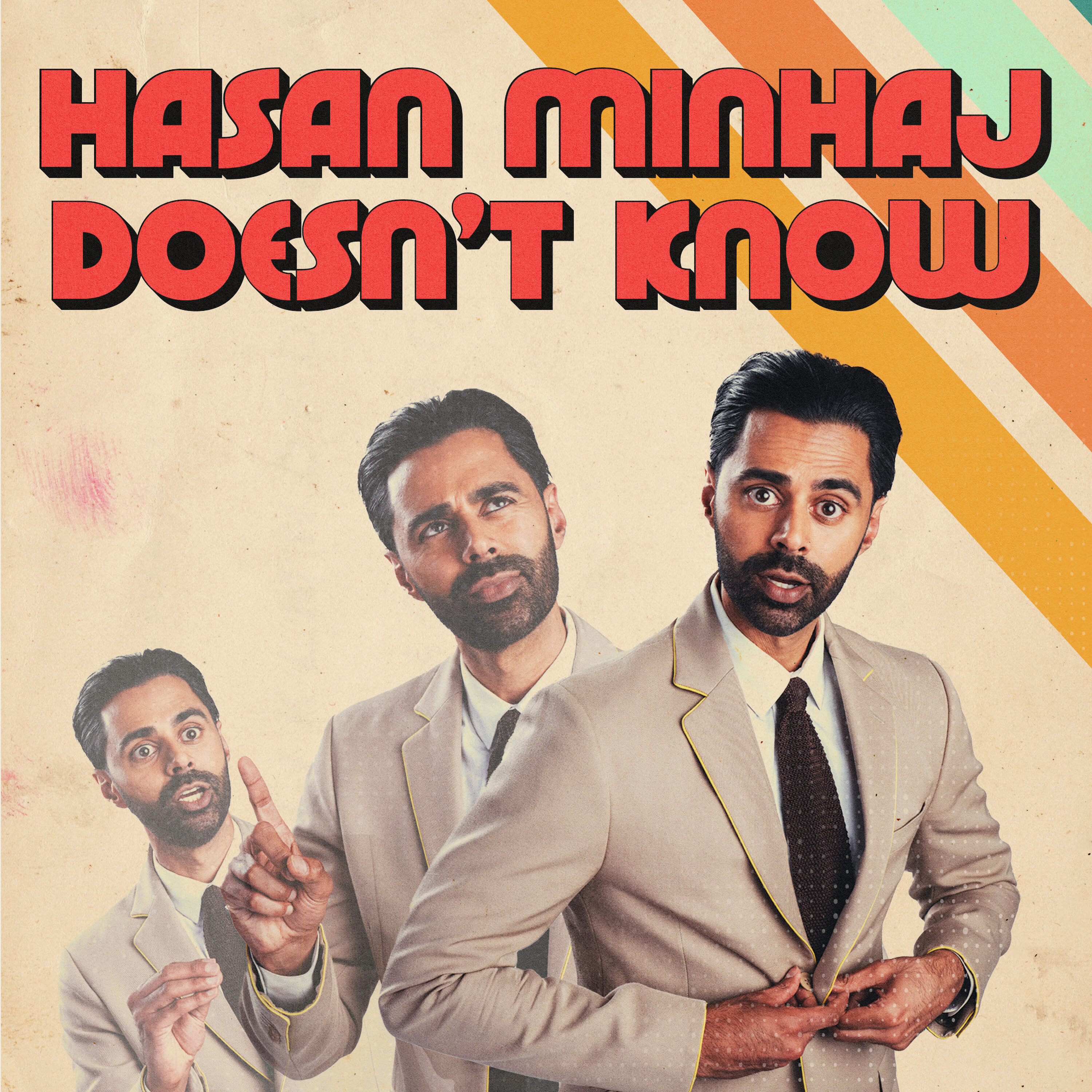
Malcolm Gladwell Doesn't Mind Being Wrong | From Hasan Minhaj Doesn't Know
62m 56s
In this interview, Malcolm Gladwell discusses his approach to popular nonfiction, describing his books as a "gateway drug" that allows readers to engage with complex ideas without requiring academic expertise. He contrasts writing with podcasting, noting that audio storytelling lets him recede and amplify other voices. Gladwell reflects on the criticism that his work makes readers "feel smart," defending it as a noble calling that provides access to intellectual play for those with busy lives. He also addresses his willingness to publicly change his mind, citing his revised TED talk as an example, and argues that admitting error builds credibility rather than undermining it. The conversation touches on the challenge of crafting memorable titles, with Gladwell citing "Silent Spring" as ideal due to its oxymoronic tension. He reveals a chapter from his upcoming book that analyzes the grammar of the Second Amendment to argue that Supreme Court interpretations are linguistically flawed. The interview also explores why middle-aged men become fascinated with historical narratives, linking it to a longing for lost masculinity. Finally, Gladwell shares a story about Air Force leaders who publicly admitted responsibility after a mass shooter with a military background killed 25 people, highlighting the value of accountability over reputation management.
As America marks its 250th anniversary, we're looking back at two and a half centuries of rebellion and liberty through the eyes of the heroes who defended it. "The whole thing about this country is freedom. If we're not careful, we could lose that." I'm JR Martinez, a U.S. Army veteran. On Medal of Honor, Stories of Courage, we bring you the defining moments of valor that went above and beyond the call of duty. Listen to Medal of Honor, Stories of Courage, wherever you get your podcasts. [Music] Pushkin. Hey everyone. I recently went on the podcast to one of my very favorite comedians, Hassan Manage. And we had so much fun together. I thought we'd drop our conversation into the revisionist history feed. My only regret is that we didn't talk more about basketball since he's a fanatic, and I'm kind of a fanatic too. So have me back, Hassan, and we can correct the oversight. Here you go. Enjoy the conversation. "Last thing, and I don't know if you got your pep in your step to do this, but you are very famous for giving people blurbs on the back of their book." Oh yeah. Now, first things first, what is a blurb? Because it sounds like a slur that you would hear in Harry Potter. You bloody blurb. Two cents, three cents endorsement goes on the back of a book, which says, "I read it, I liked it." You should read it too. Do you mind giving a blurb for this interview here, right here, Kim? Oh my God. You're the master of blurb. I've seen you blurbs on many different books at our times. Hassan got me to cry. I wasn't expecting it. I wasn't expecting that to happen. Anyone who can make their guests cry deserves a shout out. I would listen to Hassan doesn't know on a regular basis or now. How are you? Prepare to be dazzled. Maybe no other writer epitomizes popular nonfiction like Malcolm Gladwell. He literally made nonfiction popular. Millions and millions of people have read his books, and that has gotten him in trouble with two groups. One, snobs who hate popular things. And two, people impacted by some of the ideas that Malcolm Gladwell helped make popular. So I sat down with Malcolm to talk about the incredible new season of his podcast for Visionist History and the profound impact that it had on him. Shook me. Shook me. Why his books have had such a wide appeal? What my books do is allow you to play with the role of ideas. And we get into his hot take on working from home. I'll never live that one down. I also asked him about that blink cameo in White Lotus. Was that a compliment or a sneak dis? I mean, Mike White, what are you doing here? Are you coming from my boy Malcolm? And more importantly, are you casting me in season four or what? Because I am available. Do you prefer writing books or do you prefer podcasting? Well, I like them both. Because they're so different. It's like saying, do you prefer chicken to shrimp? I mean, I like them both, but they're hard to compare. Because there's things you want to do with podcasting that you can't do with writing and vice versa. The thing I got tired of in writing books, not tired of, it's too strong of word, but I wanted to get away from was I didn't like the insistence of my own voice. So the thing that's lovely about podcasting is or the kind of narrative audio storytelling that I do is that I get to recede and what I'm doing is collecting other people's voices. I mean, your books have permeated culture in a way that is so it's so Hudson, new, stand deep. Like there is not a year that I have traveled where I have not seen a Malcolm Gladwell book at an airport in the United States of America. Did you see the cameo of Blink season one of White Lotus? How do you feel about that? That was hilarious. Shane was reading it. This is a moment. I did love that. I love that show. How did you feel about the way Mike White described this moment? So this is what Mike White said about it. Blink just felt like such a normy book. It seems like he's stoking his curiosity, but it hasn't gone very deep. Gladwell is the kind of writer that makes you feel smart while you're reading it, whether you are or aren't. Oh, I love that. That's a very sweet thing to say, don't you think? Some people think of this as a diss. I don't think so. I see this as a compliment. So he was writing that. That's why Shane is reading the book in it. But I think I'm like, hey, you create egalitarian, accessible stories that people can read. Yeah. But I think if I may be reading too deeply into that, but the way I would phrase it is, most people as part of their daily lives don't have a chance to engage in the world of ideas. People's lives are full. They have kids, jobs, responsibilities. They're not reading the Journal of the American Sociological Society at night, right? Or they're not getting exposed to the latest theory about this or that and the other. There's no place for it. And so they don't get a chance to quote unquote, if feeling smart means being able to play in the world of ideas, they have limited opportunities for that. What my books do is allow you to play with the world of ideas. I say, I'll go out and find cool ideas for you, arrange them and let you just indulge in them. See whether you like them. Try them on for size. Reject them if you want. And that's the thing that books have been successful because people have a, they recognize the fact that once you leave college, you don't have easy access to it. Right. You just hours and hours of kind of free, open, guided time to explore big ideas. To explore big ideas. I have the luxury of doing that for others. And that I think is a, I think of that as a, a noble calling. How do you feel when people put what you do on this huge pedestal that you go, these Malcolm Gladwell books are these seminal books for intellectualism? Do you feel like that's too big of a title? Because I had this with, with my Netflix show as well with Patriot Act people feel like these infotainment shows are the same thing as being deep experts. Like if you watch Patriot Act and you see our episode about fentanyl, you're not a fentanyl expert. I'm not a fentanyl expert. Like I, I'm literally reading off a prompter and I learned about this like a month and a half ago. Yeah. I mean, I think, um, I do think that's too much. Um, but I think we're not what, to the extent that what people are doing when they say that is expressing their enthusiasm, I'm happy because what they're, what they're really saying is, wow, I got to play in this world of ideas and it is way more fun than I thought. That's cool. That's what they're saying. Yeah. I'm not saying that a moment in time because usually what happens then is they feel emboldened to go on on their own and discover other stuff. And so the, the moment when they think that, you know, outliers was the be all end all. It passes because they then start to discover on their own other ideas that complement their understanding of the world and they fall in love with some other thing. I'm, I'm the gateway drug. I am not, I'm not the addiction. Is your, is your dream that it gets them on a path to being like, I need to access scientific research. I want to be getting a full PDF. I want to be the first thing you read, not the last thing you read on that subject. I think one of your greatest gifts is probably your gift and ability to passionately tell a story. I feel like you could tell a story literally about anything and get me engaged. Like, could you do a revisionist history about W2s and W9s? Like, like, how would you attack that? Like, give, give us a little bit of that Gladwell juice of like, how do you take these very mundane topics and make them super duper interesting? You know, that's a tough one. I have to look into it a little bit. I've been doing this version of this right now because I've been working on this project about American gun violence. And I want to tell a story about American gun violence and not talk about guns. Not at all. You got to talk with guns in some sense. I'm interested in exploring all the peculiarities of the way Americans think about gun violence. That aren't the ones we normally think about. And so there's one where I do an entire chapter on the Second Amendment, which is all about the grammar of the Second Amendment. And understanding in the 18th century, if you wrote a sentence like that, which is, it's a sentence that begins with an absolute clause and then has the operative clause. And the absolute clause is what's called an initial being clause, particular kind of absolute clause. And initial being clause is loom really large in the grammar of the 18th century in a way they don't know. And so the whole thing is all about 18th century grammar. And I, it is like, I don't know if I pulled it off because no one else is right. It's a draft. No one else has read it. But essentially, this is like a fuck master flex. Can we get a bomb on this? This could be the next, this could be the exclusive. This is your Jay-Z-Hot 973. This is me. This could be the next book. Well, this is a chapter in the next book. We'll just drop a bomb on a flex. Go ahead. Did a bomb just drop? We're going to do it in post. But it's possible I did not succeed in this. But I got so deep into 18th century grammar. And what's interesting about it is that you realize the whole point of going on is incredibly nerdy grammatical path. It's the main thing.
make you understand that when the Supreme Court passes opinions on the Second Amendment, they are making shit up. They have no clue what they're talking about. And anyone who knows what they're talking about is like, "Oh my God, this is nuts." To pass a ruling about gun rights based on our understanding of the Second Amendment requires that you interpret the Second Amendment because it's a sentence that actually makes no sense. It's a pre-modern sentence. It's like not a sentence we'd ever write today, right? And they presume to interpret the sentence without knowing anything about linguistics. In particular, without knowing anything about historical linguistics, that's ridiculous. You can't read a sentence from 1783 or whatever it was. In, as someone living in 2025 and makes sense of it, you've got to talk to people who knew what the way people phrased things in 1783 got it, right? And they didn't do that. They just thought, "Oh, I can pull out websters, dictionary out of the shelf and just tell you what the words mean." This is, if you did this for a paper in college, you would get a C-. You are very good at coining particular terms that catch like wildfire, tipping point, for example. Obviously, you're a super popular book that came out in 2000, tipping point, I read it, many people read it. What is it about certain terms that make them just catch on like wildfire? Like, I'll give you an example. You know the term bucket list? Okay. That term came from this movie. There was a movie called The Bucket List with Jack Nicholson and Morton. It starts with this. It does not predate this movie. I remember that movie. Yeah, like in social lexicon. It's not crazy. But my question is, is how do you know that something is going to catch like that? You don't. I mean, how could you know? I mean, you can sound good to you. But picking a title is pretty big. Like picking a title, you know this. You're sitting with this PDF. You're reviewing it. You're revising it. It's like naming an album. You go, "Okay. This is the phrase." I mean, I have a theory about what a title, what the perfect title is, although none of my books have ever had the perfect title. The perfect title is a oxymoron. So there has to be some tension between the two kind of operative words in the title. So the famous environmentalist book for the 60s, Silent Spring, is to mind my perfect title. Silent and Spring are in opposition to each other, right? It's an oxymoron. No spring of silence. And she's giving us, she's, that with two words, we instantly know that there's stakes. Something has been, right? We, she's taken two very, very, very familiar simple words. And by pairing them, I just created this whole understanding of what's going on, right? So that's what I've always strived for. The title of my podcast revisionist history is not quite that, but it's a, it is, the tension is that that term is something that's usually used as a term of disparagement. And so I am suggesting that it is something that's usually disparaging is actually with listening to. Can you help me coin some terms, these things that I've been feeling? As a comedian, I use comedy as a way to, in a healthy way, channel my ADD and internal feelings into something that is useful and possibly provides people joy and comfort. Can you help me come up with a term that describes the urge that men above 40 have to want to engage in devour history? You know how like dads who are 44 years old and they're like, I'm super into Ken Burns now. What is that? So true, by the way. Yeah, the bad term I have is dad's Dalja, but that like that, it's not, it's not singing. It's not singing, baby. Help me make it sing. I can know. Do you know what I'm talking about though, right? I know exactly what you're talking about. It never occurred to me till now. It makes me happy that you have identified this thing. And what's right about this is that it is absolutely the case that like there's a moment when they're all, when this species of dad is like, they're all, there's suddenly it's all about general pad and it's like species of dude. It is a species of heterosexual man. Second, well, second world war is certainly all the way back. I'm going to keep giving you the exposition. Hopefully the sparks something. I'm talking about a type of guy. See here's what happens is in your childhood, your teens, your 20s, your 30s, your like, how does the world work? Okay, shit. That will hurt me. All right. What is a bank account? Wells Fargo. Got it. This is a checkbook, checks are stupid. This is a credit card. Holy shit. Interest rates are high. Finally got a job. This is how you talk to people. I think I'm awkward. I should probably go to therapy. You do all these things. Then you come of a certain age and you're like, whoa, I kind of get the world. And then you're like, how the fuck did we get here? Yes. And then you dive into civil war by Ken Burns. That's right. It's like, but also it's about theness of what's that word? What's that word? Because it is. You're also harking back to, at the moment that you've been getting to lose your grip on your own masculinity and to kind of physical force. You're harking back to a time when those were the things that matter the most, right? It's like, it's like, you know, it's, it's, it's testosterone. It's like, oh no. It's something. I mean, I don't know how to do it. But it is, but that's part of it. It is longing for, not just longing for a lost era, but it's longing for a lost version of yourself at the time when you could no longer be a soldier. You are starting to end up indulge the stories and lives of soldiers, right? You don't do it when you're 25 because you realize, oh, that's me like being slaughtered in the trenches or whatever. But when you're 45 or 50, it's safe. It's like, oh, no, I wouldn't, I wouldn't be called up if we went to war. But now I can kind of, I can stay home and watch the saving private Ryan for the third time. Sorry. I'm just like, I'm just still dwelling on testosterone. Okay. Let's move on to the next concept because I don't want to dwell on this. What I love about you is that you are willing to be proven wrong. And you talk about this in Revenge of the Tipping Point. Dude, your TED talk was nuts. How did you feel about that TED talk where you basically were like, my bad? I know. Thing is, it's a flip side of what I was saying earlier. Because I don't have it, because I get such delight in personal delight in finding out the something I thought was one way is another. It never occurs to me that there's any public cost to speaking about that out loud. Right? It's like, it's fine. Like, and if you're someone who likes my writing, you're used to that. And you're, you understand that what the game we're playing here is, we're playing in the role of ideas. Ideas change. So we're going to, every now and again, we're going to pull up stakes and we're going to move forward. You know, I got to give you credit, man. It was really, it's very cool of you to say, hey, I was wrong about this. And then also add that into the blockchain. Because we also live in a society where it's denied, denied, defend, denied, denied, denied, denied. I don't understand this because my understanding, there's a whole series of cases where the perception of people at the kind of, who have public roles and the perception of the rest of society are completely at odds. I honestly don't think the average American is at all distressed to learn that an author whose books they've read would stand up and say, you know what that 25 years ago, and I wrote about that, I've changed my mind. I think I was wrong. I think most people are like, oh, that's great. You know why? Because the common experience of most people in the world is that you have to change your mind all the time. Anyone who's had kids, all you do is change your positions. Used to be, you're going to bed at seven. Then all of a sudden at 7.30 and you're forced to confront the fact that the body of work that was, of parental work that was devoted to seven PM was a bedtime has gone out the window and like, there's no going back. Yeah, that's it, right? So we're, but like, but this, there continues to be this perception among people in the public eye that if I do that, I'm somehow jeopardizing my credibility. Which is so unsensical to me. Why? Wouldn't it jeopardize your credibility if you refused to change your mind in the face of a rapidly changing world? Like that's credit. That, someone who's like saying the same thing today as they said 25 years ago, that is a threat to their credibility. I think that is a byproduct of people saying in certain particular circles, you cannot say you're sorry. That will fuck up with your credibility. That's because I think people have noticed some of the most powerful people on planet Earth are psychopaths that do not apologize. And we live in their ecosystem. The shrapnel of their ideas affect us. Yeah. Elon Musk, Donald Trump, etc. Right? They're ideas that they then push notification to the entire world and we have to deal with them. Yeah. I interviewed these two people, two of the most impressive people I ever met the other week. Former Secretary of the Air Force and former Chief of Staff of the Air Force. So Secretary is a political appointee, Chief of Staff runs the place. They knew each other. They were friends. And when they were both running the Air Force, there's a mass shooter. I forget where. [BLANK_AUDIO]
home. It goes in and kills 25 people in like a church. Yeah. They get a call early in the morning. That guy is an ex-air force person. And then they get another call. And by the way, he was drummed out of the air force dishonorably for committing some kind of act of violence involving a gun. And it was your responsibility to notify the FBI so that he would be on a list that wouldn't allow him to buy a gun and you didn't do it. Right? Like shit. My institution screwed up. And as a result, this guy went out and killed 25 people. So they have a meeting. And everyone in the meeting, all the top brass in Washington there, tells them, go slow. Let's work this out. There's maybe a way, some loopholes. And they're like, no, we screwed up. We're going to just hold a press conference and say we screwed up. And so they go, they say we screwed up. They go towards towards Congress and they say we blew it. We made a mistake. Like we've got to have better. We're going to find out all the people who are accountable. We're going to fix this thing. And then there's a funeral for some of the people killed by that shooter. And the guy who's the chief of staff of the air force puts on his uniform flies down as a Texas, flies down to Texas and attends the funeral of the people who were killed because of an air by his institution. I said to him, Jesus, like, did you, what did you think was going to happen? I didn't know what was going to happen, but it was my responsibility to go. And I was so, it was so anithetical to everything about the way public servants behave, popular expectations in popular culture. And it was two, these two incredibly decent people. Who by the way, they weren't personally responsible. It wasn't like they personally didn't report it. It was like something they run an organization with like a hundred thousand people. But they took responsibility. They took the hate before Congress. And then the guy puts on his uniform and flies to Texas and goes to the funeral. And goes up to the guy who just was one guy there who lost six children goes up and gives the guy a hug. Right? Just like. And so you were blown away by the empathy, the humanity. And by the fact that he didn't, he was not afraid to say, I fucked up. Right? And he said at the end of the day, they were way better. They were way better off for doing that. He said, when they went toward for Congress, everyone was expecting them to deflect, deny and delay. And when he said, don't know, we screwed up as the first thing out of his mouth. He's like, they were completely shocked. Right? And it's like sometimes the hardest thing is not just the best thing. And maybe it's so refreshing because people and especially adults in corporate American and their day to day life hear it never hear that from those who are in power, from their manager all the way up to the sitting politician or beer. Why is it? I listen to that story and I was like, how can you listen to the story and still believe it's a good idea to. Well, I mean, this is such an inspiring thing that you're describing. Just so our listeners are aware, can you describe what you talked about in Revenge of the Tipping Point and in your TED Talk in regards to the broken Windows theory that you had in the 2000 book? In my 2000 book, 25 years ago, I was trying to describe why crime fell in New York City so dramatically in the 1990s. And I spent a lot of time arguing that it was the result of what was called broken Windows policing, which was this idea that relatively trivial signs of disorder are sent a signal to would be criminals that behavior misbehavior is possible, more than that. Almost welcomed, right? No one's in charge. That idea was then taken by the NYPD and that was the basis for the stop and frisk program where the NYPD went out and over the course of many years stopped hundreds of thousands of young black men on the street looking for weapons because that that was broken Windows policing. It's like, all right, if we crack down on gun carrying, we'll send a message that people will. I at the time, like many people in New York thought that stop and frisk was a really good idea. It's like, yeah, that's a good extension of this idea. That's the way we keep the crime right down. A court stepped in and threw out as unconstitutional stop and frisk policing. NYPD went from stopping hundreds of, not millions of young black men every year to almost none. And what happened? Crime continued to fall. So if you wrote up, if you were endorsed stop and frisk and then you were suddenly faced with the empirical reality that once stop and frisk went away, things did not get worse, but rather better, you have to reexamine your position, right? Got it. Wait, it didn't work the way I thought it was going to work. In my heart, when I read that court case that threw out stop and frisk, I forget when it was 2000 and something. Like many New Yorkers, I was like, this is the end. It's all coming back. Oh, you thought New York would turn into Gotham City. Oh my God. I thought the crime was coming back. And so did I mean, if you read editorials and all the papers in New York and nearly arts, when that court decision went down, everybody was like gloomy and dooming. We're bringing back the battle days. Didn't happen. The reverse happened. Crime acceler- the crime drop accelerated. Right. So I just gave a tent talk when my book came out. My last book remains a tipping point where I talk about this. Uh, Rajas said, uh, I was wrong. You know, and I, I have to, I have to take ownership of this. And here's the thing that I have come to understand about that explanation I gave of why crime fell in New York. I was wrong. I wrote a book that was read by a ton of people, millions of people in 2000, arguing that the way to explain New York City's crime drop was essentially some version of aggressive policing. How did you feel when you found out that, oh, the NYPD used your book as literary or intellectual justification to stop and frisk. I mean, there were many. I wasn't the sole source of there, but I'm sure it was a fact. But he was a videography, right? Yeah. But no, my book became part of this kind of zeitgeistie discussion. Discussion about how aggressive policing was the way to cure crime. Um, I mean, I think, if I live think back to that time, I think I was flattered. How could you not be? Because we were in the middle of this extraordinary urban experiment where New York goes from being one of the most dangerous big cities in the world to one of the safest. And the idea that I was part of a movement that kind of helped justify this crackdown on crime was like, maybe feel good. And then I find out whoops. At the end of the TED Talk, a woman comes on stage and thanks you for your meoculpa. And then you guys get into an interesting discussion about the way your work was interpreted. For it, did you ever think about what if they got it wrong? What if it was wrong? And innocent people were going to have to experience this. What were your thoughts about that back then? Well, I wasn't thinking about that. After that experience, how do you now see your work in the way it's received by others? Do you want to put addendums that, hey, this could change? Or has it fundamentally, how has it changed the way you approach your work? Well, the over the course of my career, I think one of the changes that I've made is I have slowly come to the understanding that if you are going to play this game with ideas, you have to not temper your enthusiasm, but temper your certainty. You have to make it clear that this is what we're talking about right now. And that ideas by their very nature are based on evidence and evidence changes. We learn more things. Criminology is a great example. Criminology, not 25 years. The field of criminology has, I mean, it's so much has happened. We know so much more. I mean, we were in retrospect primitives in 2000. We know like 100 years of advances in understanding of happening in the last 25 years. So we need to be remind people, this is a knowledge is a moving target. And I think I need to do, I've realized I need to do a better job of communicating that just because I'm saying this now doesn't mean it's going to be, I'm going to be saying the same thing in generation now or five or even next year. By the way, by the way, hey, I've been caught in comedy crime before as well. Yeah. As a grifting charlatan. I think the adjustment that I've made is you have to lead with, I don't know. That's what I, I make it very clear on our little microphones here. Just in case if anyone is using microcontent as a way or vessel to truth, I just want to make it very clear that the title of the show is "Hasam and Hush" doesn't know. Don't get me started on what happened to you, which I'm still angry about. No, don't don't. I think it's more tiresome than people who fact check stories. These are not, like, you weren't writing a history of your life that was going to be published by Harvard's University of Press. Yes. That was condensing many stories into 70 minutes. Yeah. Like, that's, you're a performer. Forget it. Say, do we forget what a performer is? Like, part of what's funny about comedians, like the universe of good comedians is that when we are listening to you, the thing that draws us to you is, is the idea that you
You guys have a distorted lens. That's what we don't have. We don't have a distorted lens. We don't see the comic possibilities in looking at the world from a slightly different angle. And the delight we get from listening is, "Oh, that person's not looking at something straight on. They have this completely, you know, this surprising wacko never would have thought about it in a million years' perspective." That's the punch line. It's what a punch line is. Right? So like, to fact check a story like that is to essentially undermine the very basis of what we want in a comedian. And if you're getting your history from a comic's routine, then you're so intellectually impoverished. I have no time for you. I'll come and don't do this. I put out a 23 minute YouTube video about this. You can see it in the window below, but it's fine. It's okay. It drives me crazy. It's so Malcolm, it's okay. I'm a race-braiding, baiting, drifting Charlotte's in. It's okay. Meanwhile. And then you can make funny jokes about it and then you can sell out the people for who the stuff does matter. Get a pass. Okay. Right? The politicians who are telling bullshit stories, they're not comedians. Right. I didn't vote for you to look at the world from a 45 degree angle. It's okay. Right. Malcolm, you can put on comedy jails. Get my sentence. Don't worry about this. I do not want my comics to be like, drilly relating the facts of the day. Okay. Understood. You want your comics spicy? You want your comics lying to you. And that's okay. I got to give it to you though. But again, you and I, we love a hot take. Literally, and you're, you know, you have revenge at the tipping point and then CBS Sunday morning does a story on you. And you've got even more spicy takes. Let's take a look. You should never go to the best institution you get into. If you want to get a science in math degree, don't go to Harvard. This is nuts, so. Well, no, that's, that's part of a complicated argument from my book, David and Goliath, which just says you should never, if you're interested in succeeding in an educational institution, you never want to be in the bottom half of your class. It's too hard. So you should go to Harvard if you think you can be in the top quarter of your class at Harvard. That's fine. But don't go there. If you're going to be the bottom of your class, no. You're doing STEM. You're just going to drop out. I get it. Now you're triggering me because I was pre-med and I was in the bottom third of my class. They did the whole thing. Look to your right. Look to your left. Two of you won't make it. You were one of those two. I was one of the two. Yeah. And we don't have to get into this because now you're triggering me. But let me just say Malcolm, if you do get into Harvard, you got to go to Harvard. You have to. You know, if my daughter's knock on wood, get into Harvard and I don't think they're going to be in the top third of their class, I'm going to say don't go. It's too hard. It's crazy hard. Do you know what smart those kids are? I know people who went to elite public high schools like Stuyvesend in New York. And everyone in Stuyvesend basically has an IQ of 180. So the dumbest person in a math class in Stuyvesend can have an IQ of 100 and whatever, 70. So they think they're dumb because you measure your, that's how you measure your intelligence by looking around the room. They're not dumb. They're in the top 99.99% of humanity, but they are misled by the fact that they happen to be in the most extraordinarily selective group of individuals in the city of New York. Don't do that to yourself, right? Or you should because I'll tell you why. Both Ted Cruz, Ted Cruz went to Harvard. And then Donald Trump went to Penn. So my point is is that there are idiots that go to these institutions. And if they can spin it into a win, so can you. If you get into Harvard, go. Take your shot at going to the league. If you get drafted, if David Stern gives you the call, I went to UC Davis, unfortunately. And the crazy part is I got him to UCLA, but I didn't go. I went to Davis instead. This is a long story for another time. I got scared. Your family's from Sacramento, where they Sacramento Davis, I grew up in Davis and I went to UC Davis. You got, you do want to go to UC Davis? Now I met my wife there. Now I met my wife there and so it was the biggest blessing of all and it was wonderful. But you see, it's like sub-recamp. It's like, Malcolm, I get it. What were you doing? I know, I know. I got shook. I got shook. That is madness that I didn't go to UCLA. Yeah. I know. I know. It is a regret. Were you like an ag major? I was a pre-med major. And I ran into somebody when I did my campus visit that said, hey, STEM at UCLA is really hard. You shouldn't go here. Oh, I see that. So you were thinking. And that's what got me to not go. Now look, again, I met the love of my life, the mother of my children at UC Davis. Let's take that reality to the side. Everything else, UCLA, the wooden center, the history, Kareem Abdul-Jabar. And you're in the middle of LA. I know what this would. You're in the middle of LA. I should have gone. And so Malcolm, if you get a call from Adam Silver that says we're calling you up to be one of the 400 players to play in the league, you got to go to the league. And if you can't cut it fine, but you got to go to the L. Let's look at another one of your crazy spicy tastes that I don't know how you thought this was cool. Let's take a look. It's not in your best interest to work at home. I know it's a hassle to come to the office. But like, you know, if you work, if you're just sitting in your pajamas and your bedroom, is that the work life you want to live? Is that the work life I want? Answer, yes. I've got so much trouble for that. Can't believe you dredged that one up. It's one of the top videos of you, Malcolm. What am I wearing? Am I like some stuff? You're wearing like a great shirt. What I'm going to do here is that you're telling people to not be bums, be in their pajamas and work at home and you're wearing a goddamn hain's tee here. Here's what I should have said. I should have said two things. Uh, no, one thing. It depends who you are. If you're, if you're 25 and you're trying to enter a new field and trying to master it, you shouldn't be at home. You got to go to the office because you got to learn from other people and it's way, way, way, way easier to learn from other people when you can see them face to face. Uh, if you're 50 and you got three kids at home and you got an hour and a half commute and you're really good at your job and experienced why are you coming in? That make any sense. You can be way more productive at home. Pense who you are. What I was reacting to, I think, in that was this widespread belief that everybody is better off just working from home. I don't think that's true. I do think if I had worked from home in my 20s, I would not be here. You would never have heard of mountain level. Here's my subway take. I'm Karim now. I 100% disagree. I'm not here to tell anybody how they should live their life. I used to work at office max for many years. I'm not trying to brag, but I wasn't a great employee and I truly did not care because my first name isn't office and my last name isn't max. Whatever you can to do you protect your own, get the bag and take care of your family, do your thing. Yeah. No, that uses a much more evolved position than mine. But I do, I was simply trying to explain if you've never, if you're young and you're trying to, like I said, master something complicated, it can be hard to understand how much richer the learning experience is when it's in a social setting. Right? That's all. You're trying to be a journalist. So when I started out in journalism, I got a job at the age of 23 at the Washington Post and I was within 10 feet of four or five of the greatest journalist of my generation. And I didn't know anything about journalism. And I was four year round. I mean, man. I mean, Tom Kutters. Bob Woodward was greatest investigative reporter of the 20th century was as far away from me as you are. There was just a series of kind of Steve Call who was like a legend. There was a guy next to me called Mike Isikoff who was another legend. And I list, I spent like six months, my first six months almost doing nothing, but saying there, just eavesdropping. And like it was a masterclass. All he's saying is I didn't know how to ask a question, how to get, how to interview someone who didn't want to be interviewed, how to frame idea, how to extreme it. I could go on and on and on, how to process things on the fly, how to write. I just watched them. You picked up a ton of game from these people in person. Yeah. Really no athlete would ever say you can master a sport by yourself. Ever. They would, they would never say, oh, I, I got drafted by the Nixon. Who's I'm going to do in a work from work from home over the off season? No, they would never say that. Like no, if LeBron wants to spend the off season by himself, do absolutely. He's the top of this game. But if you're a rookie, if you're 19 and you just got drafted out of wherever, Kansas State, no, you show up with your peers and learn from them. That's what, that's all I was saying. I don't think that's, I do not think that it's a controversial take. And I was speaking from my own personal experience because I had become aware, acutely aware in later life, just how much I learned in those early years in journalism. You know, Malcolm, you were able to pick up game from some legends at some gradients institutions, but a lot of people who have jobs, their coworkers are a bunch of bums. And so they just want to say, piece out Carl. Yeah. I'm going on. No, no, no, you're more of a cynic than me on this. I actually think that if you're, if you're motivated, you can always find in any setting somebody from whom you can learn. And that's part of, that's another thing that is useful about going in your early years in going to the universe and the universe. Is making those kinds of social?
There's 10 people around here. Who's the one that matters and that I should be attaching myself and learning from? That's a really, really important skill that you can't learn by yourself. We've had an amazing conversation, but we haven't even gotten to, I think one of your best pieces of work. I'm talking about the podcast revisionist history. Yeah. Season 11, ladies and gentlemen. Okay. Season 11 of revisionist history is about the Alabama murders. Now that's the title of it. But give me the details of what launched this story about this particular situation in Alabama. Friend of mine, Steven. I was talking about a year and a half ago when he goes, "I have a friend named Kate, who has the most interesting job in America." He's a talk to her. I was like, "Okay." And I did this thing, which I've started to do more and more and more, where I find someone interesting and I just sit down with them for as many hours as they can tolerate and just talk to them. I have no agenda. So Kate was someone, Kate Porterfield, was this really extraordinary woman whose job it was. She's a trauma expert. And she started out by treating people who've been, we started working at the torture clinic, the Bellevue, treating people who've been tortured around the world. I'm just a world-renowned torture clinic there. Then she went on and she spent a lot of time in Guentanamo Bay, working with people who've been tortured by the CIA. And then she got involved in criminal cases, capital cases, where she was brought in by, usually by the defense, in a death penalty case, to try and understand the life and the trauma of the convicted killer. And so, incredibly interesting. So I sat down with her, we met five times, each time for about three hours. And in the fourth time, fourth visit, fourth session, she started talking about a case she had just finished working on, by the guy named Kenny Smith. And I was just floored. I was like, oh my god. That's what I. So in, in our like 20, I was like, oh, that's what I want to talk about. Yes. Kenny Smith was a guy from Florence, Alabama, the northwestern corner of the state, who had been convicted in 1988 of murdering the wife of a preacher. And it was a murder for hire. And it had been sentenced to the death by an estate of Alabama. And it had been living on death row for 40-odd years. And she got involved in that case, just as Kenny was about to be executed. And so I just said, oh, I wonder about telling that story. And it is the most. I think it's the best thing I've ever done. It was the most emotionally powerful thing I've ever done. We ended up doing seven episodes. We ended up expanding it. So Kate, who plays a central role in the story, doesn't even appear until episode five or six. Isn't it? It was two men that were. Two men, two, yeah. Not a guy as well. The premise of this thing is so interesting. It almost sounds like a prestige show for FX, which is there's a wife, there's a husband, there's a murder for hire, the men assault in beat said wife, but then the husband kills the wife. We think. We think. And then it's specifically about the two men that were part of this murder for hire that are then given the death sentence. And what's really fascinating about it is you think this is almost like true crime, but it's actually an analysis about how crazy Alabama judges are. Why are they so crazy? Well, why is Alabama crazy? I mean, Alabama is the weirdest state in the union. I think that's beyond dispute. Also one of the most fascinating. I mean, I say that I actually love Alabama. I go there, I've done so many stories there. I go there all the time. I find it absolutely riveting place. The great curse of the United States is, of course, the legacy of slavery, which has persisted. That curse has lingered longer in some parts of the country than others. And Alabama is a place that is still kind of struggling under the weight of that legacy. Now this case involves everyone's white in this case. So it's not explicitly about the relationship being black and white people. But what we're describing is a brutal and unfeeling system of punishment that arises in response to the kind of racial realities of the state. So we have this. What we're documenting in this series is the unrelenting, tireless, relentless desire on the part of the state of Alabama to find a way to murder these two guys, to execute these two convicted murderers. What's so interesting about it is this is an analysis on capital punishment. Yeah. So the jury is actually against the death sentence. The judge is for it. But just for our audience before they dive into the season, can you give me the history of capital punishment in America? What's the history of capital punishment in the United States? Yeah. So it's compared to our Western European peers. America was very slow to kind of dial back capital punishment. It's a pretty big deal in this country up through the 70s. And then the Supreme Court says we've looked at the way capital punishment is being used in the States. And we think it clearly shows signs of racial bias and arbitrariness. You know, you got two people convicted of the same crime. One's getting executed once a night. You can't do that. You got to have some kind of rigor. They put a pause on it on death penalty, public support for the death penalty plummets. And people think it's going away. And then it comes roaring back. Not everywhere, but particularly in the South. One of the states in which it comes roaring back is Alabama. And Alabama does this thing to ensure that they will to retain their right to execute whoever they choose. They give the judges what are called what is called override. So the only one of the state in the Union does it remotely like this. But in the state of Alabama, if you are convicted of a crime in the jury votes for life without parole and not the death penalty, if the judge wants, it's not been changed. But for many years, if the judge wanted to, the judge could override the jury and just say, I know you wanted life without parole, but I think this person should be killed. And which is like a really, really weird thing where they basically throw out a judge basically gets to have a super veto on a jury, which is nuts. Nuts. But just have two questions, follow up questions. The first is, is that up until the 70s, they were like, no, we cannot kill people. We are against the death penalty. What was it about the Supreme Court that lifted that ban? So everyone's doing it. The Supreme Court says, stop. And then the Supreme Court comes back a couple years later and says, you can proceed. So long as you ensure, they're speaking to the states, that there's some rigor to the process. You got to have standards. You have to say, you know, and what are the, what are their standards here? They're like, look, you can't, the guillotine's got to go. We can't have a firing squad. Some states, by the way, have the firing squad, right? There's a big, I didn't get into it, but I interviewed all these people about, you know, one of the standards is, the method of punishment must be neither cruel nor unusual. And so you get into these big, definitional things is lethal injection, for example, cruel. And there's a big argument that it is, because you suffer, actually, you think you're not suffering, the lethal injection you are, then the electric chair was clearly cruel. You did suffer. So there's a big argument, one of the reasons that Utah brings back the firing squad is that it's an argument that it's more humane than lethal injection. Actually, if I had to be executed, I would choose the firing squad over lethal injection. It's that bad, lethal injection. Yeah, we talk about that in one of the episodes. So take me through the mechanics of lethal injection. How does it work? It's three drugs. It was dreamt up by this Dr. Noclehman in the 70s, on the back of a envelope. It's never been subjected to any kind of scientific protocol or medical analysis. It's the random dude in response to a request from the Oklahoma State legislature, which wanted to start putting prisoners down the same way they put down horses. And so the guy says, "Okay, here's what you should do. Give them a sedative, like a barbiturate, then hit them with a paralytic that basically kind of freezes you." And then hit them with potassium chloride, which will stop their heart. I think basically it's position is, "That should work." And everyone was like, "Okay, let's do that." And Reagan, funny enough, was a big proponent of lethal injection. Reagan proponent of it. And so lethal injection, which spreads throughout America, and then throughout the world. So in many countries now that have euthanasia, legalized euthanasia, they're using the lethal injection protocol. Well, we have a whole episode of the podcast where this really brilliant anesthesiologist, from Atlanta named Joel Zivett, does all these autopsy of people who have been executed. He finds that they're lungs.
are filled with blood, frothy blood, and realizes what's happening is that the barbiturate that they get at the very beginning is given in such a high dose that it's turned their blood acidic and it's burning up their lungs. So what happens is your lungs are on fire, which is, as you can imagine, quite painful. Because you've been giving a paralytic, you can't cry out in pain. I mean, the way you describe it in the podcast is horrifying. This is the poll quote. The last thing that you may know is that you're on fire from the inside and the blood is filling up your lungs as you die. Snassy. The whole point of this is no one who's involved in the death penalty game is even remotely interested in trying to prove that this is a quote unquote humane method of. They don't, you, when Joseph did the analysis of autopsy's to figure out what was going on with lethal injection. lethal injection had been used in American prisons for close to 50 years. So for half a century we've been doing this and no one bothered in 50 years to ask the question of how exactly lethal injection was doing its work. That's the level of kind of moral callousness that we're talking about. It just felt like it was common knowledge when Reagan was like, look, they use it on horses, but now horses are people. Yeah. So it'll be the same. Yeah. But we go into this in some detail and it's the most horrifying part of what is a very long and horrifying story. It's just like nobody gives a shit. Well, there's an interesting philosophical discussion to be had here with, I call them the revenge heads, the petty police. There's two camps. There's one camp that's like, there has to be a more humane way to have justice and to understand that you cannot just kill human beings. And there are people that are like, good, good. There's a lot of that. No, but for real. Yeah. Good. Yeah. There is that strong, which I don't understand. How do you react to that sentiment? It seems peculiarly American. It seems peculiarly medieval. It's part of this weird thing about this country, which is that we are simultaneously the most sophisticated country in the world and also the least. The larger point of it, but this is that if you compare the U.S. to say Western Europe or parts of South Asia, East Asia, that we're very interested in the severity of punishment. And they're interested in the certainty of punishment. So if you think about deterrence about the attempt to dissuade someone from committing a crime, the certainty of punishment, how likely are you to get caught? The severity of punishment, how much you'll suffer if once we catch you. And the salarity of punishment, how quickly it happens. In Europe, they are super focused on certainty. If you murder someone in Europe, it's almost 100% certain you will get arrested or someone will get arrested for that homicide. Certainly super high, but they go really easy on severity. Prison sentences are a fraction as long. Most people don't go to prison in room. We do the opposite. We have very low certainty. The chances of getting arrested for a homicide in this country are less than 50%. In parts, in certain neighborhoods in this country, they're below. On a Southside Chicago, it's like 15%. But if you get caught, you will throw away the key, right? So this is part of that same dynamic. We decided we're going to put all of our eggs in the severity basket and make, we want to make punishment as horrifying as it sounds to try and dissuade you from committing a crime. The European said, "That's, don't put your emphasis there, put your emphasis on certainty. I happen to believe the European approach is far superior." Why do you think in America there is a obsession, particularly with the severity and the feeling of, "Hey, look, if you kill these bad people, we're talking about criminals, we're talking about murderers." If you kill them, now you just have good people left. That was kind of the conversation I had. I had with different friends and people in the office before you came in. "Hey, how do you feel about this?" And there was, again, a camp of people that were like, "This is barbaric. All of this is barbaric. The Green Mile Electric Chair is barbaric. Firing squad is barbaric. Lethal injection. This is nuts. It's all crazy. I'm not with this." And then there's people that are like, "Yeah. I'm not with this." This is a total digression, but my brother was a principal in elementary school. And he was, his great struggle was ensuring the quality of his teachers, right? Because it's a big difference. And he would always say, "You cannot fire your way to a better school," meaning that like, you think, your first thought is, "Oh, I'll just get rid of my bad teachers and how are good ones." And he's like, "This isn't working that way." And if you're just getting rid of the bad ones and quote unquote, "hiring good ones," you're not solving the problem that made the bad teacher bad, right? You have to look at yourself and say, "Am I developing people properly? Am I supporting them properly? Am I putting them in the right place?" Those are the questions you've got to start with. You can't just like go in there and really really get rid of people. And I think there's a version of that with, that's what's not happening in people who are obsessed with killing off murderers. They're not asking the harder question, which is, "Well, it doesn't help." You're just going to, if you don't solve the underlying conditions that create this, you're just going to get another crop taken or place. You have obviously a high level of empathy and curiosity. And one of the ways that you showed that is the way you end season 11. There's a really powerful moment where you speak to the therapist of the man who was sentenced to death, and you do something that is extremely rare and podcasting. You literally are quiet and choked up and silent for a minute. Now remember, this is a medium where you have to keep yapping, but you are so emotionally moved that you cannot even speak. Why did you choose to end the podcast in this moment? Because we'd been on this, I'm going to get an emotional embedded all over again. That doing that show was the single most. There are very small number of events that I've been a part of in my life experiences that have shaken me emotionally, death of my father, number one by far. I'll never get over that. Birth of my children in a positive sense. Doing that show was like up there and that shook me, shook me. And still does. It was incredibly hard to write, to report, to like the number of times I found myself after conducting an interview where I couldn't function for the next like. And it's seen the most honest thing to do at the end of the show to communicate the fact that this tore me apart, right? Because what I wanted to do was the whole idea was it was a show about people who looked at these two kids from this little town, Northern Alabama, who do something insanely stupid when they're 19 years old. And we're written off by the state of Alabama and by the rest of society. And the series of people come and see in them some element of humanity. Go to the trouble of investing in these kids who society has thought were worthless and finding something of value in them and learning how to love them, right? And I mean in one case, this guy, we talk about in, I think, episode three, this lawyer visited this guy in prison, drove two hours each way once a month for 20 years to visit this kid in prison, one of like one of the murderers in prison, just to spend time with him. And that like just tore me apart, right? I just, it just, and I needed at the end of that of the show to kind of just to tell people that like it's okay to like, it's okay to, it's okay to fit. It is okay to open your heart to someone who society, to someone who society has given up on. Thank you for sharing that. Appreciate it, man.
It's a very powerful moment and something to think about. And it's a very, what I thought was so amazing about it is it's a very real thing that there are people, these two men obviously did something wrong. But for you to explore the complexity of despite the fact that people make mistakes and do things that are horrible. There are still human beings and we're so much more than what the state was thinking where they would literally kill people from the inside as if they were animals. And so I just thought that was a really powerful moment and thank you for sharing how those interviews moved you. Do you hope that it makes us as a society more empathetic or it makes perhaps America reflect on our own internal empathy? That's always the hope with these things. It's very difficult to measure the impact but I think all you can do is join the chorus of people who are insisting that we be more human. I've got to somehow end on a positive note. We got to button this thing. How do we do this? I didn't bring us down a notch. My ability to kind of like inject a downer note to any room I appreciate it. It was a rare podcast moment and I think an amazing counterweight to the never ending blabbering that we have through laugh mics. It was a really human beautiful moment. And so like I said, everyone please listen to season 11 of revisionist history. This thing, and I don't know if you got your pep and your step to do this, but you are very famous for giving people blurbs on the back of their book. Oh yeah. Because it sounds like a slur that you hear in Harry Potter. You bloody, blub. Two. What is a book? Two cents, three cents endorsement. Goes on the back of a book which says, I read it, I liked it. You should read it too. You mind giving a blurb for this interview here, right to your camera? Oh my God. I've seen your blurbs on many different books at a time. Yeah. How are you? Can you also add a parenthesis that I didn't bully you into crying? ♪ Hurry right away, lonely days don't fit me ♪ If you haven't subscribed to Lemon Out of Premium yet, now's the perfect time. Because guess what? You can listen completely ad-free. Plus you'll unlock exclusive bonus content like Hallibary on how to be a good partner during menopause. Or Mady Hassan on the dumbing down of media. Clips you won't hear anywhere else. Just tap that subscribe button on Apple Podcasts or head to LemonOutofPremium.com to subscribe on any other app. That's LemonOutofPremium.com. Don't miss out. The whole thing about this country is freedom. If we're not careful, we could lose that. I'm J.R. Martinez, a U.S. Army veteran. Listen to Medal of Honor, Stories of Courage, wherever you get your podcasts.
Podcast Summary
Key Points:
The podcast features an interview with Malcolm Gladwell discussing his career, writing, and podcasting.
Gladwell views his books as a gateway for readers to explore complex ideas in an accessible way.
He emphasizes the importance of changing one's mind publicly, citing his own TED talk correction as an example.
Gladwell discusses the challenge of coining memorable terms, using "Silent Spring" as a perfect title example.
He shares a chapter from his upcoming book analyzing the Second Amendment's grammar to critique Supreme Court rulings.
The conversation explores why men over 40 develop an interest in historical narratives, linking it to aging and masculinity.
Gladwell recounts a story about Air Force leaders publicly admitting a mistake after a mass shooting.
Summary:
In this interview, Malcolm Gladwell discusses his approach to popular nonfiction, describing his books as a "gateway drug" that allows readers to engage with complex ideas without requiring academic expertise. He contrasts writing with podcasting, noting that audio storytelling lets him recede and amplify other voices. Gladwell reflects on the criticism that his work makes readers "feel smart," defending it as a noble calling that provides access to intellectual play for those with busy lives.
He also addresses his willingness to publicly change his mind, citing his revised TED talk as an example, and argues that admitting error builds credibility rather than undermining it. The conversation touches on the challenge of crafting memorable titles, with Gladwell citing "Silent Spring" as ideal due to its oxymoronic tension. He reveals a chapter from his upcoming book that analyzes the grammar of the Second Amendment to argue that Supreme Court interpretations are linguistically flawed.
The interview also explores why middle-aged men become fascinated with historical narratives, linking it to a longing for lost masculinity. Finally, Gladwell shares a story about Air Force leaders who publicly admitted responsibility after a mass shooter with a military background killed 25 people, highlighting the value of accountability over reputation management.
FAQs
It features defining moments of valor from heroes who went above and beyond the call of duty, as narrated by U.S. Army veteran JR Martinez.
He likes both because they are hard to compare, like chicken vs. shrimp. He enjoys podcasting because he can recede and collect other people's voices, whereas writing emphasizes his own voice.
He sees it positively, as his books allow readers to play with ideas and then explore further on their own, making him the first step rather than the final authority.
He dives deep into peculiar angles, like analyzing 18th-century grammar to reinterpret the Second Amendment, avoiding obvious discussions about guns.
A perfect title is an oxymoron, like 'Silent Spring,' creating tension between two opposing words that instantly convey stakes.
He believes most people change their minds often in life, so admitting error is relatable and actually enhances credibility, unlike stubbornly sticking to old ideas.
Chat with AI
Loading...
Pro features
Go deeper with this episode
Unlock creator-grade tools that turn any transcript into show notes and subtitle files.
 PodcastTranscript AI