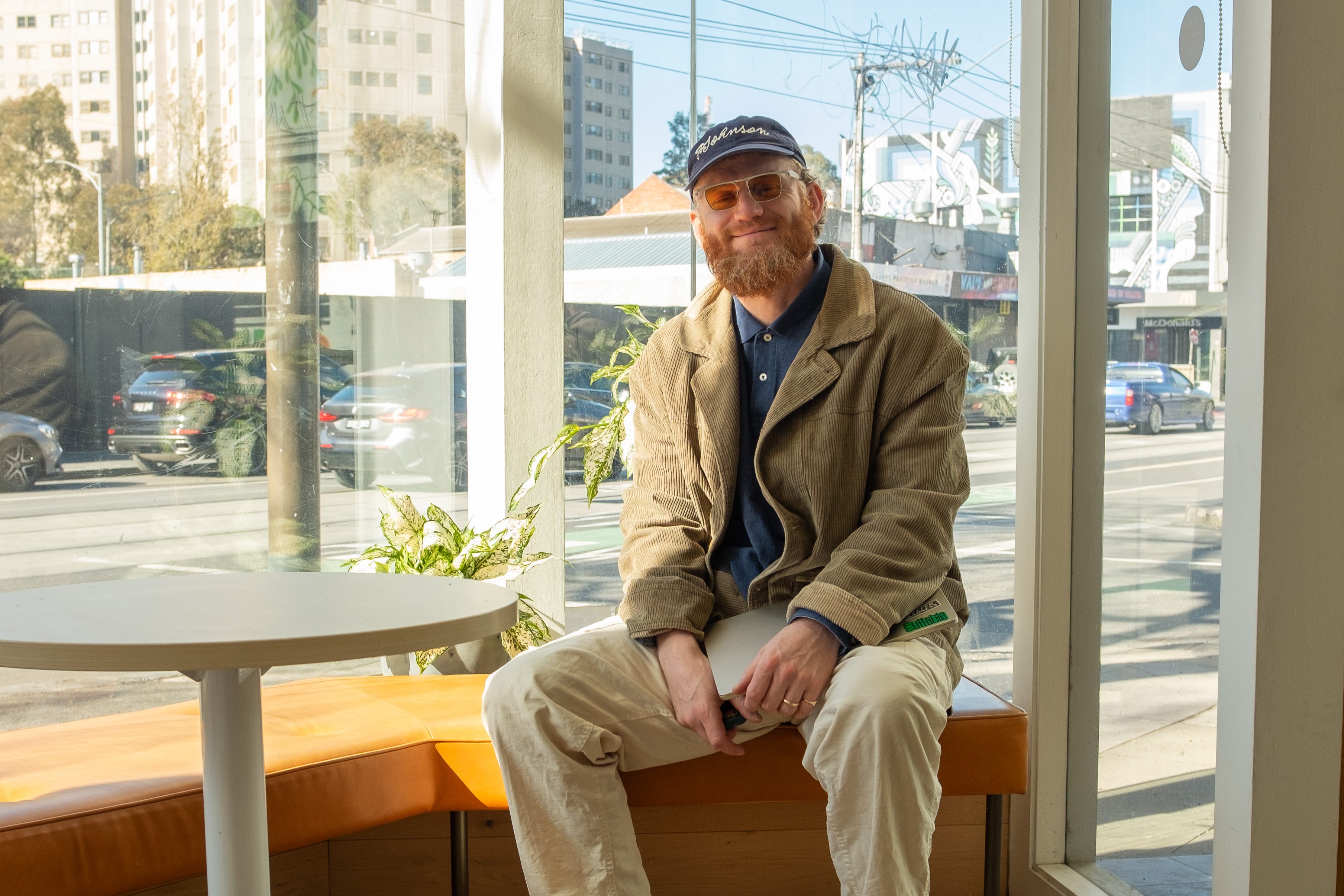
'Making something people actually want to click on still takes a good idea'; Cuttable founder Jack White on the Meta opportunity
from Unmade: media and marketing analysis
39m 0s
The transcription highlights two main segments: an upcoming keynote by Adam Skinner on integrated retail media strategies, and a podcast interview with Jack White, co-founder of Cuttable. Skinner's presentation will focus on using digital channels to increase in-store traffic, drawing from his extensive industry experience. The interview details Cuttable's evolution from an AI prototype within an advertising agency to a standalone platform designed for social media-native brands. It enables instant ad creation by automating strategy and production, targeting small to medium businesses that handle their own marketing. White explains the decision to pivot away from large clients toward more agile brands, emphasizing the platform's unique blend of advertising expertise and AI technology to deliver scalable, effective ads without human intermediaries. The discussion also covers the challenges of merging advertising and tech cultures and the competitive landscape of AI-driven ad tools.
Podcast Edit by Apes Audio Adam Skinner, the global managing director for Epsilon Retail Media, will lead Epsilon's stage sponsor keynote at Remade in Sydney on September 23rd. Titled Retail Media Without Borders, Global Insights Driving Local Success, Adam will show you how to blend on-site and off-site digital marketing channels to not only drive growth, but also, and more importantly, drive more foot traffic to your bricks and mortar stores. Pulling from Adam's 20+ years of experience in the retail, leisure, media and technology industries in Australian and US markets, this session is a must-see. In this episode, I'll be chatting with Jack White, one of the co-founders of AI-powered advertising agency Cuttable. Now early last year, I was in Melbourne and managed to catch up with Jack for a sneak peak of Cuttable before it launched last June, but since then, the company has changed quite significantly. Jack and his co-founders, Sam Kruegerberg and Ed Ring, built out a team with both advertising and tech power, they've gone through two rounds of fundraising to a total of $10 million, and their focus has shifted from the big brands to the brands doing it all themselves. Think Founders Building Ads, marketers stuck in front of a blank page, teams with no time or budget for creative agencies. Jack White, thank you for joining me today. Thank you Lauren, for having me. So why don't we start with, I guess, an explainer for those who may not have heard about or seen anything from Cuttable? Can you tell us what it is and how it works? Yeah, so Cuttable is an AI advertising platform or an AI ad platform, so I should say. And we're purpose built for the 97% of brands who have grown up and built their brands in social media. So not in TV, not in print, they don't really care for 15s and 30s. They totally have built their brands within meta, understanding what meta requires from brands in terms of content. And so we've built it for the creative variation that meta is demanding of brands these days. So we'll probably hear a lot about meta-same, we need more creative and creative volume and creative at scale, creative variation. These brands are living in that every day. We've spent the last 12 months prototyping and working with some of the biggest brands, some of the smallest brands in the country. And these smaller brands have built their brands in meta in social media who live in those platforms trying to hack and figure out how they get that algorithm, how they hack that algorithm to get their brand, saying to get their brand bought. So what we're doing is taking essentially the best of advertising, what worked for the last 50, 70, 100 years, bottling that up and reapplying it for social media and it's only possible because of AI. So in short, we're an AI ad engine for brands that are looking to build their brand in meta. Yeah, I'm excited to get into this a little bit more. I want to ask what the typical turnaround time is, sort of from asset upload to a ready to run ad. What's that timeline look like for one of the brands using the platform? So if it's a brand that's already onboarded into cutable. So the onboarding is super quick, right? Like once the brand puts their website in, links their social accounts. The onboarding can be done really quickly, but we do a white glove onboarding at the moment. So our team, our strategist, designers, will check the account to make sure that that account is set up for that brand. We're moving to kind of get that into a full automation. But at the moment, we're sort of, we're making sure we're kind of giving clients the best landing and experience when they get into the platform. But in terms of from upload of content to ad, it's literally minutes. So we use cutable ourselves, obviously. You could be on a shoot, you could take photos or videos from that shoot, drag and drop it into cutable and start making ads instantly. You can connect to Shopify and once that is connected, our cutable will pull all the products in, pull the ingredients, the stories, the price, and you're ready to go and start making ads instantly. So in terms of like the turnaround, once you're onboarded, a brand can literally be on a shoot, live, grab some content off their, off their phone, air drop it to their laptop, drag and drop into cutable and start pumping out ads instantly. So it's pretty funny because that was the vision when we said out to, you know, 12 months ago was how do we get a brand to jump in and go from, you know, strategy to output instantly, which has been pretty remarkable that we've, yes, started, we've built that now. Yeah, I remember when we met up right before I suppose cutable launched about 12 months ago, it sort of began as an AI prototype within the confines of Sunday Grave, you're advertising agency, right? Was there, I guess a particular moment where you thought this was bigger than being just an offering within an agency when it sort of became its own? Definitely. It sort of, it did happen. I'd love to say it was really planned, but it happened more organically. We were building it for our clients and we were building it because we knew what was being demanded of brands by these social platforms who are essentially all in an arm wrestle for our consumers attention. And the thing that they need to get that attention is content, content that's engaged and it hooks people in and it works. So we were building that to service our brands and to service the philosophy in Sunday Grave in that we can do a big shoot, three minute film, cut it up and allow brand to kind of repurpose that throughout the year. Where it started to shift is when we started to get brands outside of, you know, Sunday Grave outside of our network when we were showing it the prototype too. You know, it was a prototype. It was basically if you had duct tape, you know, you know, in tech, that's what it was duct tape together. We had freelancers building it for us. It was very much a prototype, but it worked and it was creating, you know, beautiful ads, but it was a bit of manual work involved. I think when it shifted was, honestly, it was a conversation I had with our co-founder Ed Rink who used to be a client of mine when I had a production company back in the day. And I said to him, it was a pretty dumb question, but how do you get money into businesses? Because I knew he worked in investment. I said, I think I'm sitting on something kind of interesting here. And this was before open AI had, you know, launched. We were trying to automate and build in machine learning, but AI wasn't accessible to everybody. We couldn't use it in prototype at our sales. So it felt a long way off. And it was, I think, Ed's reaction to what we put in front of him that actually opened my eyes up a little bit to realize actually we're seeing on saying a little bit bigger than we thought. And then obviously the chance encounter with Sam Krunenberg, who's the our other co-founder and now the CEO. He just exited his last business, thankfully. And we're sitting around with a bit of a bit of time on his hands. And I think again, with his reaction to it, I think having been in that world before building a SaaS product that, you know, scaled to, you know, a couple of billion dollars, he realized what we were sitting on to. And I think for us, it was more, we were doing it for creative integrity for our brands. So how do we deliver craft at scale? And that was what we'll focus on as ad people. And Ed and Sam were looking at it more from that kind of the lens of actually, there's something we can really scale. And Sam's actually had spent 12 months working with AI building children's books. So he knew what was possible with AI. So it was a, honestly, I'd love to say it was this really, you know, planned thing from the start, but it happened quite organically, which I think is kind of nice. And yeah, so it did. Yeah. But yeah, in terms of whether it was actually able to go beyond where it was, was when I opened AI kind of started to launch and we could actually access it ourselves. And I could, you know, myself having no experience with machine learning and AI, I could jump in and start prototyping. I could start to see where it could go beyond, you know, someone with a tech experience. So I started prototyping with comms planning and seeing how AI could actually replicate a comms planner, which is starting to be a lot more complex. And I started to open my mind a little bit more about how far it could go. Well, you ever know of us about stepping away from that safety net, I guess, that you had within the agency or based off the reactions from Ed and Sam. Was it clear that this was something you knew you had to go all in on? Yeah, I, like, I knew advertising. And that's what I was growing up. And that's what I knew. And it's like, what cutable is doing is advertising. But I, you know, leaving the safety net of someday gravy in terms of the people I'd worked with, my brother who is my business partner there and also a partner in cutable, it was daunting going into working with, you know, my first meeting with Kyle and Silla who are first highs as engineers. It was, I think, a bit of a shock for all of us realizing the disconnect in language we're using. Interesting. Yeah. Do you have some examples? Oh, God, yeah. The amount of words that I would throw around that make no sense. You look at an engineer puts things in code, right? Like, this equals this. So when you do this, it should equal that. And I'm sitting there going, brands that that needs to have more purpose and we're, it's lacking it. It's lacking craft to this. And they're going to find that. And I'm like, oh, perp. Okay. And so we spent months, months debating and finding shared language. And then as you scale, you kind of build that problem bigger because you're hiring more ad people, more tech people. But I think it was daunting. I think as well. I have, I had the, the, the backing and support of you know, my brother as well who's the partner in Sunday gravy. But it was, it was definitely scary leaving an industry I knew and all I knew because I started advertising when I was about 19. I was cleaning my dad's eyes.
He was out here at an agency at 17, which I put in my resume, but it was also really exciting to move into a space and work. And, you know, I think in the last two to three years since we've all partnered up, I probably learned more than I have in the entire time. I've spent an advertising in terms of how businesses operate, how to scale a product, how to work with teams. I think working in advertising, you create a very, especially the agency's I was working at, you don't realize it, but over time, you create a way of working that when you sit into another business like tech, you have to re-learn so many things, even how you talk to people. Tech and advertising, you know, with advertising, you're trying to perfect it and get it done. Whereas with tech, you're trying to learn, optimize and learn. So there was a huge learning curve too for me, but it's been an incredible experience. Yeah. So, although obviously there are, I guess, some of those differences between the tech and the advertising worlds. We are on the flip side, seeing them come together more. We're seeing the use of AI, everyone's talking about it in advertising, where we've got several AI-powered creative shops launching similarly to Cutable. You know, you've got the likes of Plus or So Studios. You've got I Candy, which just watched the film production agency. There's other AI-ad platforms like icon.com, adcreative.ai. What makes Cutable different or what separates it in this industry that's increasingly adopting and using AI? Essentially, I think so Paul Arena, who's our strategy lead here is X, Oglebian, Hen, I worked together with Team It Up Your Way. I was chatting to him the other day about it, because someone was asking him what's the difference between Cutable and the AI sort of companies that seem to be launching. And I've got to be honest, I'm not super across a lot of them. I do know, like I've seen, I used to work back in the day, I worked with Howie, and I worked with Huanghui's developed Plus also. Huanghui's a freelance, I actually back in the day on a very early prototype of Cutable. I read the press release, and I think what they're doing is sort of, it seems from where I sit, a lot of those are working with the large enterprise brands, creating efficiencies, and it's humans using AI tools, which is super interesting, because it's a new technology. But it's essentially just kind of shifting the work with a big brand into a kind of another tool, but it's still humans in the loop. What we're doing is no humans in the loop, so from your brand's website going in through to publish to meta, a brand can do that on their own. And I think what we're building is for, we're building for the 97% of brands, we're not building it so much for the big brands who have kind of spent their careers making TV. It's we're building it for the small to meeting businesses, we're charging 500 bucks a month instead of 500 bucks an hour for a creative director to manage an AI tool. So it's, I'd say we're probably not in competition in any way. It's to some of the companies that are getting launched like that. But then you've got the on the flip side you've then got the tech bros launching AI ad makers and I think their problem is they don't understand advertising. So there is an insane amount of skill craft. It's there is a reason why the best agencies were the best agencies of the year up because they're the best methodologies, the best people, the best approach to the work. And that still stands AI doesn't change that AI enables it to happen faster. Sure. But that's why we've hired people from TBWA from MediBank from BBDO to come in and help us decode this industry with all Spanner careers in and partner with the best tech people, literally not just the country, but in the world to take that industry and enable that workflow from strategy all the way through to publish to meta. What you a human would do at the best agencies, but I'm mocking that for every brand something. I've seen the brands overseas that have said that they're an AI ad maker, but from what I can tell. They seem to be copying and pasting existing best performing ads and saying you can have that existing. But it sort of feels like a bit of a counterfeit. You're just kind of copy and pasting another ad versus creating something new and that's what matter want they want new ideas they want created variation not a repeat of another ad. So we are taking the best of the industry, we're leaving some parts out, especially some of the tone and the language that was sort of worked back in the in the 90s and early 2000s when you broadcast your message. We're applying those the methodologies though that worked the kind of look proof methodologies that have worked in advertising forever to the modern era and to these modern brands that are building their brands for social media. And as you say you're going for the sort of 97% you're not necessarily going for the huge enterprises. I know when you sort of soft launched I guess last year you were working with the likes of Medi Bank, Wes farmers, Nandos. And you have walked away from them and now you're sort of focusing more on the small and medium businesses. Can you talk to me about why you decided to do that sort of walk away from that that revenue that those big brands were bringing in and tell me about the kinds of people that you are meeting with now. Yeah, it's sort of like it's funny. It's sort of something we haven't talked much about but it kind of goes against everything I've ever like weren't in advertising. I think my dad when he was back in the day he fired Jenny Craig or Jenny Craig was about to fire him and he fired Jenny Craig and he still talked about it up until like the day past was like this you know moment he couldn't believe he fired that client Harold Mitchell retained the client and grew his business off it and it was this story that dad always told. So firing a client or I shouldn't say fire but letting go of an account is something that you know you're really doing advertising you sort of. You hold on to them as for dear life but I think for us was we're working with both ends of the spectrum so working with these big amazing brands like you said before many back Nandos one pass we're working with these big amazing brands. But they have a very set way of working you know they've got big infrastructure they've got look look look legal they've got compliance they've got layers of approvals they've got agencies and meeting they've got a way of working right and that's that's that's and it works. The smaller brands don't and we're also working with them they don't have components and have media they do it all themselves that I guess for the 12 months we spent we're our team made over 10,000 ads and we're making really high performing ads for some of the biggest brands. But it was this the smaller brands were working with the needed more is they wanted that vision faster whereas the big brands were kind of happy for it to sort of you know don't publish to matter send it to out you know send it to our media agency. But for us it's hard for us to learn what works and what doesn't for as the smaller brands were they're completely different you know they've found it a brand or they've got a small marketing team who are literally not just not just say come out with the brief they're writing the app with you know chat you be too or free and they're using canvara and cap cut they're doing their best to keep up with this volume and pace and they they are struggling because they're not advertising so for us it with after the I think was about nine months of sort of I'd say you know research development prototyping working with these different brands we saw the need for our vision was bigger with these smaller to medium sized brands who wanted the entire vision and they wanted it now and for us that was also just a more exciting. Product to build you know something that Sam out my co founder and our CEO Sam said the other days like you know look down the street is like a little is amazing small businesses they sort of make life interested you know and I think that it's not just about you know the scale we can get from these small to medium businesses it's also the passion they have for their they care about their brand they they are literally spending their nights and weekends making ads so for it's this the relationship you have them is different they they need what we're doing is really good. They need what we're building and we're building it for them I think for the big brands we were doing a really good job working with amazing clients Joe for one pass who is at the cutting edge of where the industry is going Tim farmer from did is the same but unfortunately for these bigger brands they're you know they've got 180 page brand guidelines that say your logo has to be here the small burns just don't give a shit where your logo sits that at works make more of it and for us that's a more exciting space to plan to be honest I think the more I look into you know and the more I work with these smaller to medium size businesses and we're different we're not having lunches like we used to it sort of I work with the men in terms I can read notes from a sales call. But there will be a big shift in the next 10 years I think a lot of brands we know today and the ones the brands that we kind of have grown up with I don't know if they'll be around because I don't think they're adapting to social media the way these small to medium size businesses are there sort of I think they're still there still playing the TV game resizing and recoding for social media these small businesses don't even watch TV they don't care for it they don't care about the media plan they just care about what works and I think that's a remote space for a. A tech startup that's building out to plan so yeah that's sort of a bit of a backstory but look it was a hard decision we had a good revenue we nearly hit one one moon and I R. But we made the choice to to hand back some of the money to the bigger brands and essentially we had all the pieces that we needed to to for our vision built we just needed to plumb them together we did the time to do it it was a we spent a week over in San for and listen to the founder of Jolingo and one of the talks with square pegged to us there and it was I think that talk that helped it helped us open our mind a little bit to go actually we've got everything we need we need to pick a side now because we had everyone asking for we've got agencies and big brand small brands we just needed to pick a side and really go focus on all that and I think yeah we did spend that 12 months research and trying to figure out where to best play and it was there was a very calculate decision that we had to yeah to go those small to medium businesses
really needed that vision. - On that point about agencies, I know when we last spoke about this, you were hoping that agencies could potentially be a client of Cuddleball. Is that still the case? Is it sort of any small business rather regardless of if it's sort of brand side agency side or is it are you focusing solely on the brand side at the moment? - No, we've got partnerships with agencies too. It's probably more of a mindset. It's a bit of a mindset shift. Like as part of last year, we met with a lot of agencies. We kind of, I think from that also gleaned that a lot of agencies are stuck in the old way of working to, you know, in that why do you need so much creative iteration, why do you need the volume? I was kind of a little bit blown away, but some big agencies not really understand how social media works. And I know that sounds kind of bizarre when meta is literally kind of out, you know, the spend globally is probably more into meta than TV. But a lot of agencies are stuck in the old way of making ads, matching like edge once, you know, do your TV recut it for social. So then they don't I don't know if they're, I don't know, I don't know if they care for social media. They still call it below the line some of them. So I'd say for agencies that wanted to work with us, it's more of a mindset in that create what works. Don't worry about where the logo sits, you know, like when we met with agencies, they were like kind of like, yeah, but can we move the logo? It's like, well, why do you need to? It doesn't matter. Just get essentially the way credit the meta algorithm works is it rewards volume. The more ads you put in, the met the algorithm basically thanks your brand, like thanks your brand and pushes your ads further, reduces your cost per click. You get a better shot at finding that the right creative to find that audience. If you put one ad in like we used to it's TV and it doesn't get a click, the algorithm will just bury it. So for us, it's about creating the volume and learning. And that's what we're doing. We're working with brands that are really binding to that methodology because that's what they're trying to do already. And I think agencies, some of the ones we've met within the past haven't really, I don't believe that they care for it. They still call it below the line. They treat it like catalog. They just pump their direct mail in there. Like if they treat it like an old junk mail. Now you guys have also been very busy behind the scenes. So you raised $5.5 million last year. You've just announced another $4.5 million this week. It's one of the largest in Australian startup history. Can you tell me what you think is sort of driving that momentum? I think like, I mean, I actually wasn't aware of it being one of the biggest until this week until I was told by I think they have asked it. But look, if you look across across the globe, it's I think AI has a buzz. Obviously, everyone's trying to figure out and figure out how to use it. I think where we're finding traction with VCs and investors is the team we're building to. Like this team that we've got is 50, 50 advertising and tech. You know, we've got some of the minds of both industries that have come together to solve not not a not a vanity problem. We're solving a giant problem that people have. These algorithms are the social media companies in an arm wrestle for our attention. The thing that stops up someone from or creates someone to leave one platform and move to the next is shit content. YouTube just said recently in a in that half year, statement that they're going to deprioritize and help not monetize low quality content. Like there is a demand for better content better and that means better ads more tailored. It doesn't have to be a perfect ad. It's just more relevant, more insightful, right for the person who's scrolling and sees it. The problem is huge that these brands are facing. We've never seen more brands start up. Thanks to things like Shopify that allow people to come up with an idea and start a business. So there's more businesses launching who are then falling into this huge problem. I think well, place to solve it because we've got this incredibly smart team that have come together and spent 12 months now. Not rushing, but really figuring out where to best place ourselves and where to best. How to best apply this insane technology we're building. So I think the last 12 months, like it's been really hard. We've thought we've looked at merge two industries together, two schools of thought. And we've spent weekends and nights just going back and forth, working with different brands to get there. And I think we've come out of those 12 months with the visions been built. And I think we've shown that and people are I can see that yeah, that not just the problem we're solving, but now the people we're working with are basically saying to us every time we meet them that you are you're literally going to, if we're out of client that I was saying, I'm going to be able to reclaim my holidays because I used to spend all my holidays just making ads. And now I just hit a button. It says, "Genro ads." And I can then hit the other buttons as published a meta. And it's of literally a standard that an agency would, the best agencies would struggle to do with this scale. So yeah, there's a lot of excitement around OAA, but I think our team, I think it's the team to be honest, the team that we've got who have built. Like something that I still kind of can't believe is real. I mean, you've hired some pretty impressive talent over the past 12 months. You mentioned Paul Arena from Ogle V before. You've got Sam Air who joined from MediBank. Most recently it was, I believe, Helen Crossley from Metta as well. You know, a number of staff who worked with Sam at his previous company, a Cloud Guru. It obviously seems like it's been a bit of a priority for you. How have you been able to sort of scale and build that team up so quickly? I mean, is it because of that funding that you got last year? I mean, yeah, of course. The funding, the funding helps. I think we've got an incredible, you know, VC partner in SquarePag, who is our, you know, the lead lead. VC, we've got Rampersan as well. And now the brand fund have joined as well and a lot of other investors. But I think it's like that I've always kind of with the agency as well over my career of realise that having come from TBWA and Clams, you know that the best work is created by the best people. Getting those people to come and work with you is a different story. But the industry for advertising has shifted to the point where people are feeling a little bit kind of unsure about where it's going, you know. The amount of work that people have asked of at agencies is huge. Working for a global network that just wants profit, it doesn't have that same desire. So people are more interested in a startup. I think we're lucky in that people are more interested in startups. I think as well what we're the vision and what we're building towards is really interested people. It doesn't mean that they're not taking a massive risk. Like we've had people who have left a huge, huge jobs and cushy jobs to join this, you know, pretty insane idea and build it with us. But I think when you've got the co-founders like Ed and Sam that are sit alongside you, it starts to feel like a pretty safe bet to, you know, like Sam's done this before. When we're in meetings now, it's amazing because he sort of talks out, he talks about it like it's this movie he's saying. He's like the way the next two weeks are we going to play out. And so there's a confidence there I think that people have knowing that that guy has done it before. We can get behind him. I'm fortunate that Sunday Gravium and Aunt my brother is such a well-respected creative that I mean, I've sort of flown under the radar and under his wing my whole career. So I don't think people like Paul Arena and Sam are just coming for me. They're kind of because they want to do something different too. And I think everyone that works at Cardinal works like a founder. They all have a stake in this thing and they work like it. So I don't know. I think people do it because it's a more interesting way to spend your career. But also it is a huge risk and I don't look at it lightly. I know when we had our Christmas party last year, meeting all the partners like they're all invested to watching their partners care about this thing on the weekends. I think that's the thing. I used to work at big agencies and I realized after a while that I would just be replaced so easily. And I was. What I left clams, I was like, "Don't want to give a shit." You just replaced you. The next person comes in and I didn't like that. And I think when you're placed in a start-up like Cardinal Paul Arena joined because he knew he could shape it. Same with Sam Air, they're shaping the business. And when you're working at a big company, you can't. It's like spinning over huge cruise ship. You've got to speak to a million people where you turn. And we can make decisions and move fast. And I think that's what people are excited about. To recap, I suppose. Over the past 12 months, you've been in quite a deep build mode. You were once working with those bigger brands. Now you've sort of shifted that focus. You've got a great team now. I want to focus on what's changed. So over the past couple of weeks, you've sort of relaunched and you're really doubling down on meta as you've, I guess, teased a couple times throughout this chat. Can you tell me sort of more specifically what that looks like compared to what Cardinal was 12 months ago? Yeah, so I guess what we were 12 months ago, we had the prototypes that we'd been building that out. So we had a really amazing video engine. And then what we had was the vision essentially of going from the brand brain through to strategy, cons planning, creative development. And then essentially in the creative development phase, the vision was that we would be able to go in and select the videos, find the image. And pieced together, not just generate something from scratch, which I think a lot of the other AI add company center to do is just generate something. We're using the brand's content at the moment. So we're taking their existing footage, we're selecting and chopping it up, putting that into ads, and then essentially a land of to publish to men. So what's changed in the last 12 months is it was on a piece of paper, probably 12 months ago. And now you can use it. I think when we met though, we had the video engine and we'll be able to, we're able to do it.
generate a lot of ads at scale and there are you know, of a quality with that you would be able to get from a great video editor. Essentially what's changed though is we've been able to build out that vision. What we said when we first met SquarePak we want to we want to create a platform that's as easy to make an ad as it is to play some song on Spotify. And to be honest, I mean Spotify DJ makes it pretty easy because you don't have to do anything but then essentially what you do in cutables you it can it will auto generate ads for you whilst you sleep. When you wake up you have a dashboard you log in and there's drops of ads you can click in and you can scroll through 20 video ads that have been created for you 916 11 static post copy written for matter and all you need to do is hit publish. That to me was the vision of we kind of that we set out to do 12 months ago. The differences were built it and you know we've still got work to do. There's more we want to build in there's you know it will get bigger and stronger but yeah 12 months ago we were very well we'll get coming together with a prototype we'll figure it out work with the you know lots of different brands to kind of tease out and figure out the best way to stitch it all together but the difference is now we've done it and I think we are slowly on boarding brands to ensure we get the right feedback right and we're building it for their brands that join so we're kind of really listening to every brand it comes in it's sort of the difference is one more 12 months ago is we'll make the decision on what to do and we'll kind of should we did this should we do that and what's really nice about building with these brands now is that they're telling us what they want and we we're listening to that group advice and feedback we get from our customers and the team are shipping features for them literally like every day yeah so you see this focus on meta as more of a long-term play don't you? um yeah I think what we'll definitely I think for us we'll expand into the into the other platforms for sure I think cutable has video launching really soon so it will chop up your videos and be able to drop it into and create ads using your videos so we can soon move into you know into YouTube and when our brands are ready but to be honest with we're focused on meta because it's where most of the customers media budget goes it goes into meta so you've got Instagram, Facebook, Marketplace so we are spending more effort there because that's where our customers budget goes but the capabilities we've built extend into the other platforms so we've got videos so we can repurpose UGC video which works beautifully for TikTok but at the moment the focus is meta because it's honestly it's where about 80 to 90% of the budget of a cost of these customers we're working with goes so that's the focus but we'll expand into the other platforms um over definitely over the next sort of 12 months are there any concerns about how this will work when meta sort of brings in more of the AI capabilities within the platform itself I know that that that's a big thing that they're doing at the moment is um you know aiming to automate ad creation targeting small businesses as well what's the reaction to that is that a concern for cutable for you guys not no not really it's definitely like look it's definitely top of mind right like it's an insanely smart company I don't know but I think it goes back to it goes back to I think what makes cutable um unique and why we'll solve this problem better than anyone is that at the end of the day what people click on is a good idea people respond you know this David Ogleby said adds it's just the truth well told right people burn back said in a hundred years time from now with all the duck I can't I won't oh miss quite it but it was like when a hundred years time from now with all the technology it doesn't matter the idea is the most important thing now that is not exactly what he said but it's the idea that matters and that is the thing that we are focused on and everyone you see you open LinkedIn and people upload up you know this i created this in chat to be teen 30 seconds and everyone will slam it right and be like oh it's got no idea and that's because the person didn't give it an idea now all the other platforms are short but they will be able to put ideas into it but a good idea that cuts through is hard like I've worked in advertising my whole life and it's hard to make a good ad it's hard to get a client to buy good ad and it's hard to get them to publish it and to do that you need to understand advertising you need to understand how insights connect to creative ideas how a headline connects to that image and how those two come together to create a beautiful ad and I think that's sort of I guess been out tassel for the last 12 months is this tussle between do we launch what do we perfect it and we're at this perfect balance now where we have got a beautiful ad making machine that we can build on look I think meta will do something incredible no doubt but it comes down to taste as well now are you on a path to profitability if not already there can we touch on that at all? profitability do you want to like about working at a tech startup is you don't have to worry so much about profitability just yet it's different to advertising I think look for us know what we're if we're worried really about profitability we wouldn't have gone on hide people from WPP and MediBank and BibiDio and at last year you know we would have tried to just just do it ourselves sounds one of the best engineers I've seen so we could have probably done it ourselves but our thing was no we've got to we're going to invest hard in the team and have the best team build the best product and we are well in our way to do that we've got that product ready to go it's in people's hands they're using it some brands have used it and made double the amount of sales they made on the campaigns they rolled out last year without cutable so it's working it's making the money it's saving them time so profitability is going to come but it's not the focus right now the focus is building the right product with the right team for these customers yeah so what's next for cutable I heard whispers about a potential US expansion yeah so definitely I think you know cutables doesn't like it's not Australia specific this problem that we're solving it's every brand is you know feeling as meta as a global platform you can switch your ads pretty quickly to you know a US customer these brands that we're working with here is selling their products in the States so for us it's a pretty natural progression too to go over to the US and help those brands because there's a lot of brands over there that need it so yes we'll be heading over there very soon and setting ourselves up which is exciting I think like yeah as I said it's a it's a problem that we've you know we've built we've built it here because we've got the amazing team but it doesn't kind of it's not Australia specific it's it's very even bigger there so for us it's it's a natural you know jump to jump over there and and and and set up in an America and we're ready to go there so it's exciting. Now my final question which we ask all guests on the Unmade podcast is where do you draw the line? Just draw the line at shitheads and look I just it's sort of been one of it we had this candle internally of like death to shitheads because people don't you think about where people are watching ads these days they're on the toilet they're on the tram that they are doing something else usually they're scrolling and they're watching something for a relief they're watching something for a little moment a break social media is it gives people enjoyment it gives people dopamine and ad coming into that you don't get a warning coming up after the break here's the ad the ad comes in there is no break it's there and so a shitheads these days is an ad that interrups that feed and doesn't feel at home in that feed it's not about a perfectly designed ad that doesn't kind of look right it's about an ad that just fits in in the environments and and so for us it's about I draw the line at shitheads are the ones that tell people how to live their lives and what to do society doesn't want that anymore we've got so much information coming at us we can see presidents fighting in the overlaufer's live we're watching wars play out we're seeing cat videos and people falling in love all in one all in a couple of scrolls and an ad coming in there and telling you how to live and what to do it's sort of interrupts you and pisses you off so it's about feeling at home in those feet so shithead is where I draw the line of yeah don't make crappy traditional shitheads and stick them in people's social fees because I don't just they don't want it thank you so much for chatting with me today I'm excited to keep an eye on cuddle and and see how you continue to grow I think what you guys are doing is amazing so congratulations on the recent fun raising and yeah thanks so much thanks so much for having me thanks a lot on made podcast edit by aes audio.
Podcast Summary
Key Points:
Adam Skinner will present on blending on-site and off-site digital marketing to drive foot traffic at the Retail Media Without Borders keynote.
Cuttable is an AI advertising platform built for brands that have grown on social media, enabling rapid ad creation from content upload in minutes.
The company shifted from serving large agencies to focusing on small and medium businesses that manage their own marketing.
Cuttable differentiates by automating the entire ad process without human intervention, leveraging advertising expertise combined with AI.
The founders recognized the platform's potential beyond their agency after reactions from co-founders and the advent of accessible AI tools.
Summary:
The transcription highlights two main segments: an upcoming keynote by Adam Skinner on integrated retail media strategies, and a podcast interview with Jack White, co-founder of Cuttable. Skinner's presentation will focus on using digital channels to increase in-store traffic, drawing from his extensive industry experience. The interview details Cuttable's evolution from an AI prototype within an advertising agency to a standalone platform designed for social media-native brands.
It enables instant ad creation by automating strategy and production, targeting small to medium businesses that handle their own marketing. White explains the decision to pivot away from large clients toward more agile brands, emphasizing the platform's unique blend of advertising expertise and AI technology to deliver scalable, effective ads without human intermediaries. The discussion also covers the challenges of merging advertising and tech cultures and the competitive landscape of AI-driven ad tools.
FAQs
Cuttable is an AI advertising platform designed for brands that have built their presence on social media, particularly Meta. It automates the creation of ads by leveraging AI to generate creative variations at scale, enabling brands to quickly produce and publish ads directly to social platforms.
Once onboarded, brands can create ads in minutes. Users can upload content, such as photos or videos from a shoot, drag and drop it into Cuttable, and start generating ads instantly, with no manual intervention required.
Cuttable shifted because smaller brands need faster, more flexible solutions and are more agile in adopting new technologies. They often lack the resources of large enterprises and benefit more from an automated, self-service platform that delivers high-quality ads quickly.
Cuttable is fully automated with no humans in the loop, built specifically for social media-native brands, and priced accessibly. It combines advertising expertise from industry veterans with advanced AI to replicate proven ad methodologies for modern digital contexts.
Cuttable started as an internal tool at the agency Sunday Gravy to serve clients. It became a standalone company after positive reactions from co-founders with tech and investment backgrounds, and the advent of accessible AI technologies allowed for scalable development beyond agency confines.
The team encountered communication gaps between advertising and tech professionals, requiring months to develop a shared language. They also had to adapt from a perfection-driven agency mindset to a tech culture focused on iterative learning and optimization.
Chat with AI
Loading...
Pro features
Go deeper with this episode
Unlock creator-grade tools that turn any transcript into show notes and subtitle files.
 PodcastTranscript AI