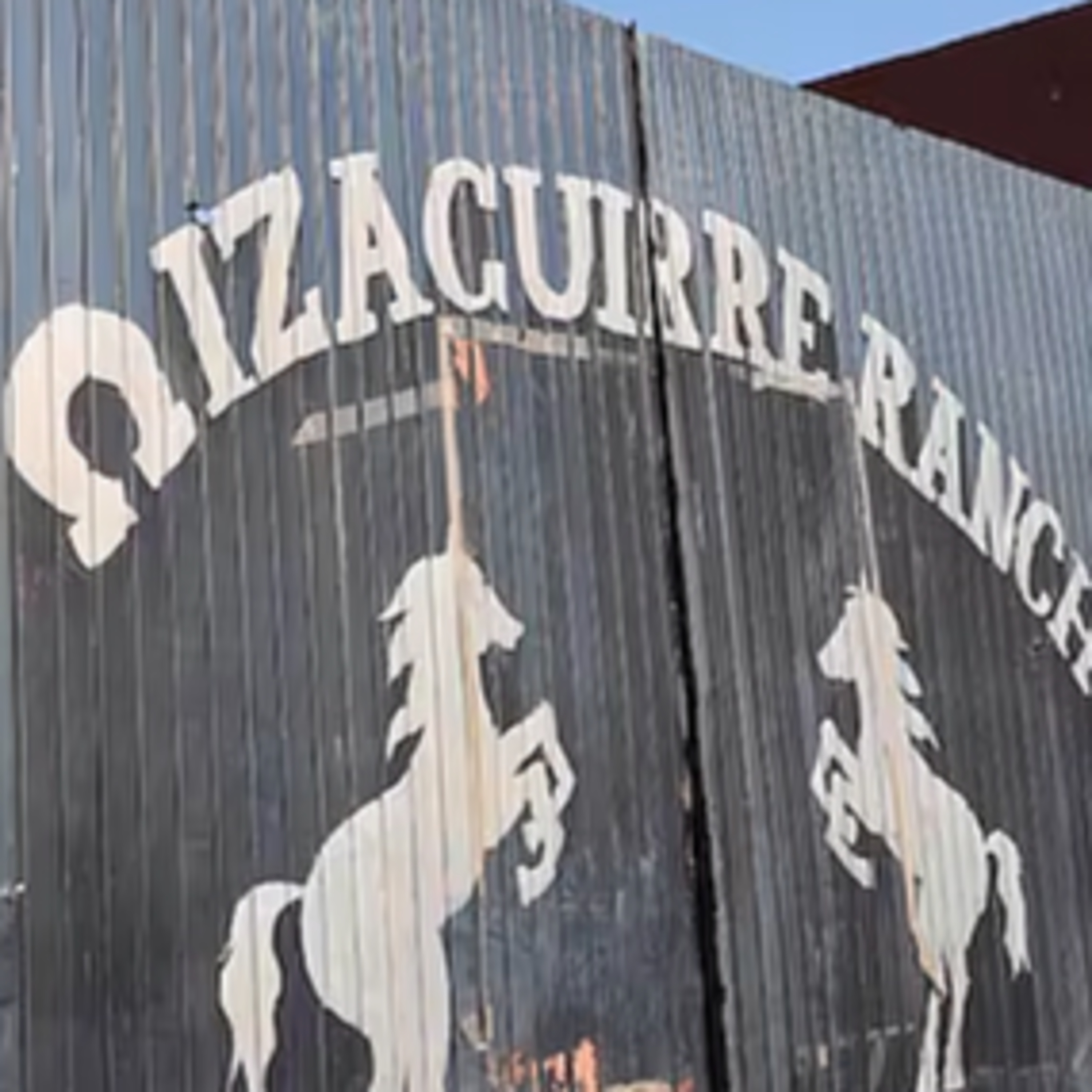
The Narco Talk podcast delves into the world of cartel hitmen, particularly focusing on CJNG's training camps like Iseguiri Ranch. The camp operates as a severe, secretive facility where recruits undergo rigorous training involving discipline, physical exercises, weapons mastery, and psychological pressure. Recruits are subjected to harsh conditions, drills, and tasks under the supervision of figures like El Sapo, shaping them into soldiers of the cartel. The former recruit's firsthand account sheds light on the brutal rites of passage, including executions and loyalty tests. Survival in this environment is linked to advancement within CJNG, with failure often resulting in death. The podcast highlights the enduring impact of the training, emphasizing that those who pass through CJNG's School of Terror are marked for life, with memories of violence and discipline haunting them.
Transcription
1803 Words, 10814 Characters
Hi, this is Mika Trevino, and thank you for checking out the Narco Talk podcast.
Today, we're diving deep into the chilling world of cartel hitmen with Making of a Sicario,
CJNG's training camps. We'll explore how these secretive facilities operate, who runs them,
and what it takes to survive the brutal process of becoming one of CJNG's feared sicarios.
Stay tuned, it's going to get intense.
The Making of a Sicario, CJNG's training camps.
There's been a media frenzy over CJNG's so-called terror ranch, officially known as Iseguiri Ranch,
located near Tuchilan in the state of Halesco, about an hour from Guadalajara.
Sensational headlines have shamelessly compared it to Auschwitz, the Nazi extermination camp
where approximately 1.1 million people were systematically murdered. But let's be clear,
while Iseguira Ranch is ruthless and unforgiving, it's not a death factory. This isn't Auschwitz,
this is CJNG, and reality is gritty enough without hyperbole. What follows isn't speculation,
it's the real story, told first hand by someone who survived Iseguiri Ranch and lived to talk about
it. The dirt road snakes through the Halesco Highlands, leading to a compound few outsiders
ever see. Here, young recruits enter the world of the cartel Halesco New Generation, CJNG,
not simply as criminals, but as so-called servants of the people.
This remote training camp is a crucible of discipline, fear, and indoctrination,
where men leave behind their old identities to be reforged as soldiers of the cartel.
One former recruit, barely 18, recounts his time inside Iseguiri Ranch,
his story is neither regretful nor apologetic, rather, it is a stark,
matter-of-fact glimpse into a system designed to churn out CJNG's next generation of warriors.
The School of Terror When I joined, I was 16, the former recruit says,
by the time I left, I had been trained by ex-special forces from Mexico,
Colombia, and even US Rangers. They called it the commander's school.
It was the last step before becoming a true leader. From the outset, strict discipline and harsh
conditions set the tone. Recruits were stripped of personal belongings, subjected to invasive
searches, and made to stand naked while being assigned sleeping spots on a bare floor.
They checked everything, clothes, backpacks, even our wallets.
Phones were destroyed on the spot. We were only allowed to keep a single number to contact our
families. Daily routine. 7am wake-up calls, immediately followed by punishing exercise,
laps around the ranch, push-ups, ab workouts. Anyone who lagged behind was beaten with wooden
boards. Sparse meals, food was served twice a day. Recruits with money could buy snacks from the
handlers. Everyone else went hungry. Weapons training. Drilled first with paintball guns,
then advanced to real firearms. Commands came in numerical codes.
12 met fire and engaged the safety. 22 signaled a magazine change.
Government surveillance was ever present. Almost every day, a drone flew overhead,
he recalls. When we heard it, we rushed inside. The cartel didn't want the military to see how
many of us were actually there. Trial by paintball, the test of courage.
Within this brutal school, one of the most feared rites of passage was the test of courage,
a punishing set of paintball. Gotcha. Battles conducted over three consecutive days,
with almost no protective gear. "The only thing we had was a mask," the former recruit explains.
"Two rules. First, if you took three shots in the mask, you were dead and had to throw
yourself on the ground immediately. If you didn't drop, or if you moved after going down,
an instructor would shoot you at close range, yelling, 'The dead don't move.' The second rule
was that you could never stop or back down. Just keep moving forward."
How it worked.
Teams of five faced off in a clearing. Commander's shout, 15, meant advance straight ahead,
firing relentlessly at the person in front of you. If you eliminated your target,
three hits to their mask, you immediately targeted the next person. Again, never slowing,
never retreating. Losing teams' penalty, they stripped off their shirts and were forced into
a second round. The final match had no tangible prize, only the honor of being declared the bravest
and most skilled. The injuries were severe. By the end, almost everyone's body was riddled with
welts and bruises. The paintball rounds hit hard enough to break skin. I got hit behind my ear,
and it tore the flesh open. We were all sore and covered in marks. They called them the marks
from the school. Even our handlers carried these scars, they'd been through the same.
Weapon assembly. The legend.
Another torturous phase involved mastering firearms under intense psychological pressure.
Recruits were locked in a small room and forced to memorize a legend, a specific mantra or script,
that accompanied the breakdown of each weapon. They gave us a note with the exact words we had
to say when disassembling the guns. We sat on the floor, head down, reading it over and over.
If we looked up or moved, they hit us. Once a recruit claimed to have memorized the legend,
the real drills began. Empty the weapon. Instructors removed live rounds,
but made it clear they were watching every move. Recite the legend, the recruit repeated the
memorized script word for word while breaking down the weapon, naming each piece in order.
Punishment for mistakes, if you skipped a line or misnamed a part, you got beaten on the spot.
Reassembly, you had to put the weapon back together without error.
We did this for every type of weapon they had. AR-15 rifles, AK-47s, Beretta 9mm,
Colt .38 Super, Glocks. Sometimes they'd randomly slap or kick us, yelling, "The soldiers are
coming! Hurry! Your teammates are leaving you!" The whole point was to see if we could assemble
and disassemble under chaos. El Sapo, the man behind the training.
Overseeing much of this was El Sapo, known to recruits as 90. For many recruits,
his reputation alone was terrifying. According to multiple sources, his real name is Gonzalo
Mendoza-Gaitan, originally from Miwakan, and he is approximately 34 years old, as of 2021 reports.
He is the brother of Abundio Mendoza-Gaitan, alias Elguero Abundio, a regional CJNG leader
arrested in January 2012. Following his brother's detention, El Sapo rose to prominence,
taking control of Porta Vallarta, one of the cartel's key financial strongholds.
A May 2019 U.S. Drug Enforcement Administration (DEA) report describes him as a trusted associate
of Nemesio Oseguera Cervantes, alias El Mencho. It even portrays him as second in command within
CJNG's hierarchy, though those rankings may shift depending on which source you consult.
Close-up image of Gonzalo Mendoza-Gaitan, alias El Sapo, senior CJNG figure, clearly showing
his facial features. The photograph captures his intense gaze and confident expression.
He gave speeches, telling us we weren't hitmen, we were protectors of our families,
the former recruit recalls, then he'd hand out 5,000 pesos to each of us.
Sapo's Guard
Ex-military from Colombia, Guatemala, and the U.S., a multinational cadre of hardened fighters,
stationed at a ranch near Las Palmas, fortified with falcons, lookouts, and roadblocks.
We trained for everything. Ambushes, roadblocks, air defense. If the government showed up,
we'd burn trucks or fuel tankers to block roads. After Mencho shot down the helicopter,
we learned from that, RPGs, miniguns, convoy maneuvers. There weren't just two miniguns,
there were many. 90 had his own too.
Life and Death in the Camp
Violence was not confined to battlefield drills. Recruits were forced to partake in
executions, a grim final exam in loyalty. They made us dismember bodies, he says flatly,
three men had stolen weapons, we were told to cut them up and break their bones,
if you refused, you died too. He estimates at least five people were killed during his two
months' stay. One was a woman, they severed her head and put it in a jar, she'd stolen from
the cartel, her baby was crying in the background while they did it. Drugs were supposedly off
limits for recruits, only commanders had permission to partake. Any loss of control was dealt with
swiftly. A guy freaked out on drugs and fired his gun by accident. They tied him to a truck and took
him to 90. He lasted barely two days. Graduation or Death
A system of violent meritocracy governed who advanced. If you stood out, you got sent to
work directly under 90, El Sapo. Others were shipped to active war zones. If you survived and
proved yourself, you might earn 80,000 pesos a month and get a month off after every two months,
but failure usually meant death. When the former recruit was deployed to Suckatecus,
the government launched a major offensive. They bombed our safehouses, one strike hit our admin
house where they kept our pay. People assumed we'd never see our money, but the cartel still made
sure we got paid on time. That's why people stay loyal. Their mission was clear. Take Harris,
clean the plaza. If we succeeded, we'd become commanders or plaza bosses. We failed. I ended
up back home with my family. A final reflection. Now at just 18,
the former recruit considers how close he came to a permanent life of violence.
I wonder what would have happened if I'd stayed. Maybe I'd be dead, or maybe I'd be under another
commander. Who knows. He can't shake the discipline forged at the camp. It was worse than any basic
training. I was side by side with cables, rangers, navy seals. I figured they'd use me as a test
dummy. He survived. Many did not. People say recruits commit suicide. I doubt it. The only
escape was forward. The last thing they told me was that I was young, but wise. They called me
L. Liston. For those who enter CJNG's orbit, there are three paths. Command, war, or death.
He slipped away, but the lessons of 90, along with the bruises, scars, and that unrelenting
discipline remain. They may never truly leave him. He escaped the camp, but freedom is a
relative concept for those who've passed through CJNG's brutal rite of passage. For L. Liston,
the war isn't just a memory. It's etched into his flesh and burned into his mind,
a shadow trailing every step forward. In a world shaped by men like El Sapo, survival itself becomes
an act of defiance, because once you've trained as a Sicario, you never fully escaped the School
of Terror. Thanks for listening to the Narco Talk podcast. I'm Mika Trevino, and this was
making of a Sicario, CJNG's training camps. Don't forget to subscribe, leave a review,
and follow Cartel Insider for more exclusive content and deep dives into the hidden world
of Mexico's drug cartels. Catch you on the next episode.
Podcast Summary
Key Points:
Description of CJNG's training camp, Iseguiri Ranch, and its brutal procedures.
Training regimen at the camp involving discipline, physical exercises, weapons training, and psychological pressure.
Involvement of key figure El Sapo in overseeing the training and operations of the recruits.
Summary:
The Narco Talk podcast delves into the world of cartel hitmen, particularly focusing on CJNG's training camps like Iseguiri Ranch. The camp operates as a severe, secretive facility where recruits undergo rigorous training involving discipline, physical exercises, weapons mastery, and psychological pressure. Recruits are subjected to harsh conditions, drills, and tasks under the supervision of figures like El Sapo, shaping them into soldiers of the cartel.
The former recruit's firsthand account sheds light on the brutal rites of passage, including executions and loyalty tests. Survival in this environment is linked to advancement within CJNG, with failure often resulting in death. The podcast highlights the enduring impact of the training, emphasizing that those who pass through CJNG's School of Terror are marked for life, with memories of violence and discipline haunting them.
FAQs
The Narco Talk podcast delves into the world of cartel hitmen and specifically explores the making of a Sicario in CJNG's training camps.
CJNG's terror ranch, Iseguiri Ranch, is located near Tuchilan in the state of Halesco, about an hour from Guadalajara.
A significant part of the training at Iseguiri Ranch involved a punishing set of paintball battles known as the test of courage.
El Sapo, also known as 90, oversaw much of the training at the camp and was considered a senior CJNG figure.
Advancement in the camp was governed by a system of violent meritocracy, where standing out could lead to working directly under El Sapo or being deployed to active war zones.
Recruits in CJNG's training camps faced the options of becoming commanders, entering active war zones, or facing death as potential outcomes of their training.
Chat with AI
Loading...
Pro features
Go deeper with this episode
Unlock creator-grade tools that turn any transcript into show notes and subtitle files.
 PodcastTranscript AI