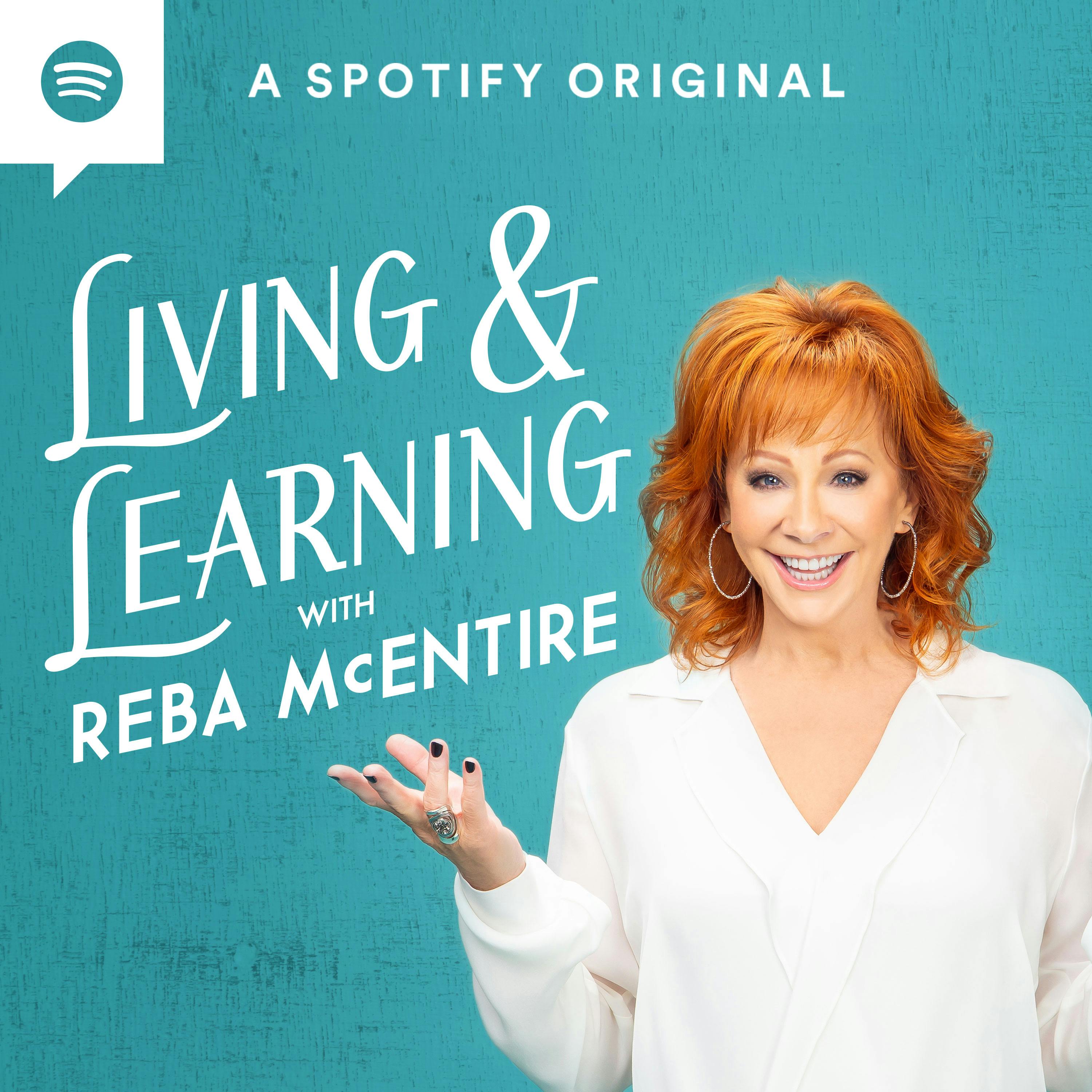
In this episode of "Living and Learning," Reba McIntyre welcomes country music star Mickey Guyton for a heartfelt conversation. The discussion opens with Mickey sharing a personal crisis: her 10-month-old son recently suffered a severe health episode, his third trip to the emergency room, which led to ICU care. She describes the terrifying experience and expresses relief that he is now recovering and gaining weight. The conversation then shifts to Mickey's groundbreaking career, including being the first Black female artist nominated for a Grammy in the country solo performance category and performing at the ACM Awards. Mickey reflects on the decade-long wait to release her debut album, "Remember Her Name," which she says is rooted in self-acceptance after years of self-hatred and struggles with identity. Both artists bond over their experiences with industry pressure, with Mickey recalling how she finally stood up to her label to find her authentic voice, leading to collaborations with female producers and songwriters. They discuss the cyclical nature of country music and the need for greater inclusivity, with Mickey urging male artists to use their platforms to uplift marginalized voices. The episode also features a playful charades game celebrating iconic country women, and Mickey praises her husband's unwavering support. The conversation ends with mutual admiration and a call for collective action to create a more diverse and welcoming country music community.
I'm so good. I'm so good. I've been trying to keep my cool. I was going to try to keep my cool getting to finally talk to you. Wonderful. That just went away right now. I love you. I love you too. I'm so excited to get to visit with you and learn more about you. I'm so excited to talk to you. How does it feel to own your own building? Well, it felt really good. Oh, you sold it. No, I lost it in the divorce. Gosh, dammit. I'm that person. Yeah, I got the house and he got the Starstruck building. I will never go to Starstruck again. Oh, no, no, no. It's a great. I love that studio. I loved that studio. I recorded lots of hits in that studio. So we'll free and go for it. Oh, I love that studio. Sorry. That was the worst question. Well, welcome back to Living and Learning. I'm Reba McIntyre. And I hope all of you at home are doing great and enjoying these conversations. It really means so much to know y'all are tuning in each week because I'm having a blast. I'm getting the visit with people that I have known for years and some people I'm just meeting. So it's really wonderful and fun for me. I'm glad you're here because today's episode is one I know you're going to love. Our guest is one of country music's most powerful voices right now. And I just feel really lucky we got her to come on the show. She's a four time Grammy nominee and her debut album. Remember her name is out right now. Mickey got in. Welcome to Living and Learning. Hi. Mickey. Happy to meet you. Finally. I don't know why we hadn't met earlier. I know it's criminal that we haven't. Yeah. So before we go any further, I have to know how's your son doing? He is doing so much better man. That was truly terrifying seeing him like that. I bet it was to let the audience know we were scheduled to do this podcast earlier. And I found out that morning that you had had to take your son to the emergency room. Yes. So I'm so glad he's doing better. That was his second time. Oh no. His third time going to the emergency room. No. Yeah. And that's when they finally took it sent him to the ICU. I mean, it was. I tried to downplay it online because I didn't want people freaked out, but it was really bad. Oh, every mother, every mother was there with you for you in spirit because nothing more frightening. I mean, you can go to the hospital all you want, but you take a child. That's a different situation. Just watching him there and him having no strength to even cry. Oh, it was bad. Well, my heart goes, I was praying for you. Thank you. But he's better. He's gaining his weight back. Excellent. Thank you. How old is he? He's 10 months. Oh my gosh. I remember when I was pregnant. I was like, Oh God, nine months. This is going to be horrible. And it went by like that. And now your child is 10 months. It's just it's criminal. Yeah. I didn't have Shelby until I was almost 35 years old. And I would have hung by my toenails to have that child. And I had, you know, I had to go on bed rest. I was in the hospital twice. Oh, it was worth it. He's a great young man. So I'm so happy for you. Well, I had Grayson at 37 and I'm just, I still can't believe I did that. Yeah. It's the greatest achievement and accomplishment I've ever done in my life. 100%. People don't understand when you say that, but literally everything that you do and have done has led up to that beautiful baby, you know, absolutely, absolutely. I've been training on Shelby. I've always said, I look Shelby, I'll always love you. But I want people to like you. So act right. And I'm on train on you every day of your life. Yeah. You just might as well get used to it. Yes. That's what I do with Grayson. I literally take him everywhere. That's good. When I did the rock and roll hall of fame, like he got a picture with Paul McCartney Oh, that is so cool. Yeah. I love it. I don't know if everybody knows this, but we're on the same record label. Universal music group in Nashville. Yes, we are. And I was at the Rhyman Auditorium to announce my return to Universal on the same day that you made some major waves with your first live performance of what are you going to tell her? That was such a love. I love love that song. Thank you. Thank you. Thank you. What, what do you remember about that day? I just remember I had written that song maybe two weeks before that day. Wow. And I remember I played it for Cindy Mabe, the president of UMG, and I played it. And she is, you know, she is the one. You bet. And I remember every woman that heard it, especially in the work filled just sobbed their eyes out. I did too. Yeah. And so when it was time to perform the song, Cindy asked me to perform the song. I'm like, man, I'm about to sing this song in front of a whole bunch of male radio program directors. Like, this is it. This is my career. This will be my last hurrah. I'm going to take it. I was just prepared. That was the end of my career. Oh, oh, it wasn't. No, that was huge. That's such a wonderful song. Well, you've made a lot of first this past year, well, the past few years. Yeah. At last year's Grammys, you made history as a first black female artist to be nominated in the country solo performance category. That's crazy. And then you were nominated for three Grammys this year. And you were also the first black female artist to perform at the ACM Awards in 2020 and the lands. You co-hosted with my buddy Keith Urban in 2021. Girl, you've been busy. I have been busy. I have been a busy new mom. It's crazy. Yeah, you have. Well, yeah, all that plus being a new mom. Well, first of all, congratulations on all this incredible recognition and a huge milestones. Thank you. Does it feel like? Finally, the music business is listening to you. There's a part of me that's like, uh, praise God. What are the circumstances has been really hard for me? You know, it's the world has been shut down. There's been so much division in our country. And on top of that, you know, the struggles with women on country radio. So it feels good to have the recognition. But we're still nowhere near where we need to be for equality in this beautiful genre. For me until I am seeing that it's really hard to truly celebrate any of it. Totally. Totally get it. You know, the country music business is very cyclical. At one point, it's all male. And then here comes all female. And then it'll be very traditional. Then it'll be very contemporary. And then, uh, I don't know what you call where it is right now. I've been waiting for that to come back. I don't know. What is still right here? Yeah. But it will. It'll happen. It's just, it's just cyclical. Yeah. It just happens like that. I've been in the business since 1974. Wow. That's when I, well, kind of 75 was when I first got signed to Polygram Mercury Records. But I've seen it go, you know, in and out up and down. It's just, it's just so funny. People kind of get tired of this and they go with that. Well, in the 90s, you know, that was when I was listening the most to country music. When I was listening to you and and Martina and Faith Hill and Patty Loveless and Leon Rhymes, like, and Trisha Yearwood, like it was the best vocalist of our lifetime in that, in that time frame. And so I missed that. Like that was country music for me. And when I don't see it, I don't hear myself. And I, I missed that. That was a good years. That was totally good years. Yes, they were. Does he love you? Hey, Mickey, one of these days, we're going to have to sign that together. You just let me know. Okay. All right. I got you. How did it feel to film your own television show? Because I watched it by the way. Did you? Yes, I did. I loved me some Reva. So I really, yes, how did it feel? It felt great. The Reva TV show was so much fun for me had nothing to do really with music. It was down to earth, people that were from Texas, dealing with normal, everyday problems, and how they solve it. I loved that show. And what I really enjoyed the show so much, I told the writers and the showrunners, one of my favorite shows is Andy Griffin. Andy of Mayberry. And in each episode, they would have a teaching experience. You know, it wouldn't be like, okay, do this or do that. Now, Andy would relate to OP and a problem and talk to him about it. I raised my child like that. So that's what I wanted to help out people who were watching the show, even the example of what to do in everyday life. You did just that. Well, thank you. I loved that show. I did. I really did. Well, tell us about your debut album. Remember her name.
What does this album mean to you? - This album means the most to me. Remember her name? I mean, this was a decade's worth of work in an album. There are so many life lessons in that time. You know, there's lessons of self acceptance. And for the longest time, I hated myself. - No. - To be perfectly honest, yeah. - Wow. - Yes. There were horrible conversations I would have to myself. That were awful, that you wouldn't wish that on anybody. You should never be that horrible to yourself. And I was. I wished I was different. I wished I was a different color. A lot of things in that time frame. And I had to learn to love and accept myself and all of my flaws. And that's really what this album is. It's me doing that. And then finding purpose within that and seeing where we've misstepped and hopefully trying to ush her us into the future of love and acceptance. And that's what this album is. - I've always said everybody wants to be loved and accepted. - That's it. - And if they say, oh, not me, I think they're lying. - They're lying. That's all we've wanted. That's what we've wanted since we were a little kid. - Absolutely. So for you to make that huge step into country music, where it's predominantly all white, how in the world do you have the guts to do that? That takes a lot of strength, girl. - I think I was crazy. I was naive. I knew it was important because I love country music. And the only reason why I felt even brave enough to do it was I did a little Google search to see what other black women in country music have made any kind of a splash. And at the time it was Reese Palmer. She had a top 40 on country radio. And Linda Martell is still the highest charting black female in country music. And that is what gave me the strength. I was like, well, they can do it. I can do it too. - Yeah. - It's been hard. - Being naive is a blessing. - Yes. - When I went to do any Get Your Gun in 2001, Mickey, I'd never even been in a play before. (laughing) And I just wanted to be any openly. - Yeah. - And so when I was doing interviews for it, they said, wow, aren't you a little nervous about doing any Get Your Gun? And I looked at them kind of puzzled and they said, you know, since you've never been in a play before. And do you know what? I never thought of it. - Wow. - I just wanted to be any openly on that stage. So being naive is good. It gives you a lot of, you know, ignorance is bliss. - Yes, it is. - I'll tell you what. I walked in there and, you know, I'm from the South. I'm from Waco, Texas. So when I moved to Nashville, I felt like I was in Texas. So it didn't feel any different for me. - There you go. Now, there's some more similarities about our career. I was signed to Polygram Mercury in 1975, but I didn't end my first number one hit until '83. So that was eight years, almost 10 years. And you've been signed to Universal for a decade and you're just now getting a release your debut record. We know a little bit about waiting. We must have a lot of patience. - We have a lot of patience where a little, you have to be insane to wait that long. - Gotta won it. - Most people would have packed up and left, but I knew, and you clearly knew too, that what you were doing was too important. What you represented for women in that time, your hair, you, your personality, your voice, like that was so important. And it still is, you know? And it's cool that we stuck with it, right? - You bet. The deal with me, I didn't know anything about the music business. I'm from a rodeo ranch and family in Oklahoma. So I had no idea. I was so stupid. I thought that when you get a song on the radio, you absolutely automatically. - Oh, you made it. - Well, you get a tour bus and you're rich. - Yep, that's what I thought. I thought if you had a music video, you had a tour bus and you're. - Oh, there you go. Well, that didn't happen either. (laughing) - Tell us about that. - I'm so glad that you did have that won't too to hang in there. - And I also read that you had a struggle with producers, early on telling you not to sound too pop or R&B. - Yep. - I had people telling me what to record and what to sing 'cause I didn't know any different until I learned, but it took years. - Yep. - And so on my kind of country, they were giving me songs that called for an orchestra and I said, "Hey, I want to still guitar and a fiddle." And that was when Jimmy Bowen said, "Well, woman, go find your own songs." And so I did. Did you feel a change when you stood up for what you wanted to record and what you wanted to say? - Absolutely. I was signed in 2012. - Yeah. - And in 2017 is when I finally. No, 2011 was when I got signed. And in 2017 is when I finally stood up for myself. And I had to tell good old Mike Duncan over there at UMG that I wanted to work with Cindy. And I told him that I need him to give me a chance to figure out who I am as an artist because everyone was constantly telling me who I should be. And it's confusing. - Yeah. - And it doesn't work. It doesn't work. You know who you are more than anybody else. And when I finally did that first of all, when I had the meeting with Mike, I was terrified to stand up for yourself. As women, we're taught to respect our elders. Respect those in authority. And I viewed Mike almost like my dad or my uncle or something. So I was scared that I was going to disappoint him. And I kid you not. I went home after that day and I slept. I couldn't get out of bed for three days because the anxiety had built up so much. I was like sick. I couldn't. I was so sick and I never. I didn't know what that was. And I was like, "That's anxiety." I was like, "Wow." - It was like a release of it that I needed to get through. And now here I am. I trusted my gut. I found myself a female producer. I found myself female songwriters because who knows more about a female than a female? - Yep, absolutely. - We wrote some of my favorite songs. And I'm right with men too. It's not limited to, but I just had an understanding and a common ground with women. - Yeah, yeah. But all of those things, all those struggles, they're great milestones. And when you listen to your inner voice, I call it my voice from God. It's just God telling me what to do and go for it. It always works out the best. - Yes, it does. I mean, when you think about it, I'll ask you this too when you were first starting out and everybody was telling you what to do. Was there a voice in you that was almost screaming at you to say, "No, you know what's best for you." And I kept ignoring it. - It wasn't until I kinda got fed up. And then it was like, "What is it really?" - Yep. - And then the voice came out and said, "We'll do this." - Yep. - I said, "Okay." Then I stood up for that. And that's when confidence builds. When you're right on anything that you come up with yourself and they go, "Yeah, that'll work." Then you go, "Okay, well, okay, I've got another idea." - Yep. - "Hey, you know what, yep." - That was what happened. - And they're like, "Oh crap, there she comes." - And now you can't shut me up. (laughing) (upbeat music) - So what was your very first time behind a microphone singing? - Oh my God. - I think I was probably like 11, and I think I sang, didn't we almost have it all by Whitney Houston? - Oh wow, you just picked the easiest one to sing, huh? That's great. (laughing) - I loved Whitney Houston too. - Oh, me too. - I think I sang that one. I was maybe like 12, maybe. It was so bad. It was so bad. - Oh, doubt that. - I can promise you. - So when did you get into country music? - I've been into country music. And since I was about 10. - Okay. - As soon as I heard Leanne Rhyme sing the National Anthem at a Texas Rangers baseball game, I was like, "That is what I want to do." - I'll be doing. - So blown away by her. - Where'd he go, Leanne? - Yep. And this is before Leanne was Leanne. She was just a girl from Texas. And my grandma also was a huge fan of Deli Pardon. So anytime we would go over her house and we lived in Crawford, Texas. She lived in Riesel, Texas. I would go into her house and you know what VHS tapes is she have hanging on the back of her door. And she would have Kenny Rogers, Deli Pardon, do it. And she would have Southern movies like Still Magnoia's and Fried Green Tomatoes. And that was kind of what I listened and watched. - That's wonderful. - I miss Southern movies, by the way. - I do too. - I do too. - I agree. Well, how did you get from Texas to Nashville? You went through Los Angeles. - Yes. So I, when I was graduating college, I was like, okay, so I wanna do something with music. What is that going to entail? And how do I get there? And so I had, you know, I picked out all the different cities of music. And there was New York. That's impossible to make it as a 18 year old at the time. And then I thought of Atlanta. That didn't seem right. Nashville, there was absolutely, there wasn't even Darius at that time. And so I just picked LA. I was like, you know what? It's the Sunshine State. I'll go to college out there. And I'll see if I can, you know, pick up music or whatever. And so I was out there. I did a little bit of acting, which I'm horrible at. And I would send background vocals for people. - Uh-huh. - Good deal. - Yeah, that's what I did. - And then you came home to Nashville. - And then I came on to Nashville. It's how I came on to Nashville.
is one of the movies I did, which I'm embarrassed, 'cause it was a really bad movie. I did this movie with Nick Cannon. It was the first movie I ever did. The only movie I've ever done. I had a tiny, tiny little part. And I became friends with Nick Cannon's DJ, this hip-hop DJ named DJ D-Rick. And I ran into him at a mall years after I did that movie. And he said, well, he said, you sing, don't you? And I was like, yeah, I do, actually. And he was like, well, what kind of music do you sing? And I'm thinking, I'm going to tell this hip-hop DJ, I sing country music, and he's going, what is he going to do for me? And I said, I sing country music. And he was like, I know somebody. So he introduced me to Julian Raymond, who works over at Big Machine. And Julian introduced me to my management, introduced me to some different writers. And I started writing country music, and I got to Nashville. Wow. Whatever God has for you is for you. I can say that for sure. Oh, I love it. You got to write that down. Getting a little serious here. How would you like to see country music transform? I would like to see country music transform as being more inclusive. Like right now, I mean, I've seen you talk about it as well. Like right now, there's only one side of the story being told. And it's through men. That's all you're really seeing. And there's so many amazing artists that are black, that are white women, that are Latino, that are even in the LGBTQ community that have a perspective of country music that I think is really important to be told. The end of the day, like you said, we all just want to be accepted. We all want to be heard. And that's not limited to all of these different people. Country music is an incredibly beautiful genre. With some of the most beautiful songs ever written, the most talented songwriters in the world, not in the country, in the world, are right in Nashville. So true. And so often we're limited to just sing one type of song right now for the last 10 years. Mm-hmm. That is so true. And for me, there's a place for that. But there's also a place for so many other great versions of country music. And that's where I would love to see some change. Yeah. I love hanging out with younger people who love music. So when I'm getting my hair and makeup done, Neil Robinson, I'll say, okay, what are you listening to now? 'Cause he is a music junkie. He'll say, okay, listen to this song. I've never even heard of the artist before. And sometimes I have, but I hadn't heard the album cut of this artist. And so it's good to keep an open mind and listen to new stuff out of your wheelhouse, out of your box because we do get so focused and stay just down that one trail. Open it up. Open it up. And so often the songwriters that are writing these songs, they're getting all of their inspiration from all of these different genres and bringing it into country. Mm-hmm. That's good. And it's great. So why don't you bring the same people that you are grabbing it from into country music? 'Cause that is the difference. You know, I was just at lunch with a friend of mine, a lot of friends of mine. And I was sitting across the table from Bruce Green, who is a very talented artist, painter and a sculptor. And he did a beautiful statue of Red Steagall who discovered me. And it's at Caltown in Fort Worth, Texas. And I was telling him how much I enjoyed seeing that. And then I got telling him that I was gonna interview you today. And he said, you know, that's the same situation in the artisan community. It's kind of strictly white people in it. And he said, and I don't know why, why aren't we open to all kinds, male, female, black, white, green, purple, whatever, it doesn't make a difference. If you've got the talent, welcome, come on in. Let me listen, let me see what you can do. It's kind of like open-marked night. Everybody, come in. Let's hear what you have to say and what you have to present to the world in your craft. - I saw this Buzzfeed article where there are these different men and you know, male dominated industries. And that includes in the film industry. And they show like 25 times a man has put his neck out there for a woman inequality. And they showed all these different actors that had roles where they said, I'm not signing that contract until you give my co-star the same deal. And that is how you push things forward. We've talked about these issues with equality for a long time. You know, there's so many different, you know, we have changed a conversation that's talking about this. But at the end of the day, it has to come from the artist to see that change. And I believe, I truly believe this industry that they're not all of them, but a lot of people in this industry have always wanted to see this change. But what happens is we get so caught up in our daily lives and the cycle and we just, before you know it, 10 years have gone by and you're just like, where did that go? - Oh, that is so true. - It is. And I don't think it's necessarily intentional, but now we have a moment. And now it is time for artists. Like I don't have some major platform. I've got like a few thousand followers, whatever. But the little platform I have, I have used to show other artists and other types of country music because it's important and the traction that has gotten from that. Those artists now are getting opportunities and going on tours like Brittany Spencer, she went on tour with Brett Eldridge. Brett Eldridge asked for this black woman to be on his tour. So it's there. It's just we've got to get out of our little boxes. Destroy the box. It's, the box doesn't exist. Let's start. Good people and good music truly should win and hopefully one day country radio will take a moment or maybe some of these male artists that have had like 20 number ones can say, hey, I do want this to be a number one, but why don't you give Kaley Hammock that chance? Why don't you do, you know, red head, let's get that song as number one because it's important and she's important and that song is important. That is why that's where we can see the change and that's why we are still where we're at. - Wow, you're not only a great spokesperson for women, you're a great spokesperson for everyone. - That's what I try to be. - That gives me encouragement. That opens my mind up to more things to do and I've been in the business for 46 years. So thanks. You're so welcome. I'm just here, you know, trying to usher us along. - There you go. (laughing) (upbeat music) (upbeat music) - Okay, so let's have a little fun here. Every episode we play a game on the show that lets me get to know my guest a little bit better and I heard that you love charades. - Yes, I do. - Okay, all right. Well, of course, because this and everybody can't see what we're doing, we're gonna play a modified version of charades all centered around the incredible women of country music and in honor of your album, we're gonna call it, remember her name? - Oh, good. - Okay, so here's the rules. No singing songs because that'd be too easy. You can talk about their hair, where they're from, what they sound like, and what they look like, all that kind of stuff is fair in the game, okay? So, all right, Mickey, you take a second to think of three famous country ladies and then we'll switch off, okay? - Okay. - All right, I've got my three, so I'll go first. Okay, all right, first up. This Kentucky-born redhead, tried to think about the king of rock and roll, his hometown and the queen of talk shows, but they just couldn't focus on any of them. Most recently, she sang about a famous coal miner's daughter with the CMA's newest female vocalist of the year. Do you remember her name? - I mean, isn't it you? - No. - Candy hammock. - No? - Okay, I don't know. - Could you love her anymore or love her any? - Jesus, where is my mind? - Patty Lovelace. - I didn't know her hair was red. (laughing) - That isn't her brown? - Well, it's kind of a strawberry blonde. - Oh my gosh. - I think so. - Okay, you're turned. - Let me see if I can do get one. - Okay, this woman, she's known for a certain asset. Tiny waste. - Dolly Parton. - See? (laughing) - Okay, I'm next. Okay. "This Texan made country music history in 1996, "become in the youngest female country music star "since Delta Dawn." - Oh, that's me and Ryan. - Absolutely. - Yay. - I knew that one. (laughing) - This woman is an excellent cook. Has one of the best voices in country music. - Trisha Earwood. - Yep. - Well, she is a great cook. (laughing) - And she keeps promising me that she's gonna teach me how to cook something. - Can she just invite us over? you say you're not.
can't cook either. Well, I try my boyfriend Rex Lynn. He can cook. Why cook? Yeah, let him cook. That's what I do. But we love to get in the kitchen together. We have a blast. So what are you like? The sous chef or the wine? Wine texture. Yeah. I hold a glass of wine while he cooks. That is me too. That is me too. And I love Katty. Loveless. I can't believe I didn't even. Well, the red hair thing. That kind of got its off tracks. That really, I just got me off track. I was like, wait. I was like, why not? I'm like, sorry. Okay. All right. It's my turn again. Okay. Last one's really hard. Let me see if you can get it. Oklahoma native is a survivor and has some really fancy credits on a resume outside of music. Remember her name? Say it over time. This Oklahoma native is a survivor and has some really fancy credits on her resume. Oh, jeew. Yes. That was a trick question. Before the fan sales, I was like, wait, Carrie. Yes, you do. Okay. Let me think of one more. This woman is also married to a famous country singer. She's tall, gorgeous. Faithful. Yep. Yep. I love Faithful. Oh, thank you. Speaking of marriage, your husband has really been one of your main supporters on all this journey that you've taken. Yes, he has. Well, in that great to have a partner that understands and is encouraging. You know, we've gone through a lot in our marriage and our life. And he had been telling me that I needed to not only embrace who I am, but fight for marginalized people and country music for a long time. Yeah. I didn't hear it for the longest time. Yeah. And then one day I heard it and it changed everything. And he's so supportive of me. The best dad, I just, I'm really, really, really, really lucky to have someone like that in my corner. Well, would you please tell him, thank you for me? I will. I will. He'd really appreciate that. Because the courage and the strength that he gave you, you are projecting all of that to give me more courage. So thank you. Thank you both. Thank you. You should check out his Twitter. He is like my keyboard lawyer when I get patrols coming for me. Okay. I will. I'm so funny. I'll do it. I'll do it. Yeah. Mickey, thank you so much for joining me today. Thank you so much. I feel like we've known each other forever. I know. That's weird. I'm such a, I'm such a fan of you. You represent what has been needed and still is needed in country music. And you've shown artists that we can expand past just music and and do everything. You've done that. And I just thank you for, for always being such a supporter of women. And and the thing that you said that women have to truly support each other and every meeting of the word in order to get out of where we are. And it's so true. So true. It is so true. Thank God we have men that will help us and encourage us also. Yes. We all have to come together and do it together. Perfect. Thank you. Nice to meet you. Nice to meet you. And next time we get together, we'll just sit over a cup of coffee or glass iced tea and get to know each other better. How about that? I would love that in your boyfriend's and cook for us. Thank oh, I like that idea. Well, I'd like to thank Mickey Gotten for being on the show with me today. I learned a lot. You know, it's unfortunate that we always stay so focused on our own careers that we forget that other people do need help too. So Mickey, thanks for that. What a wonderfully talented, warm-hearted person. And I wish all the best to her. Streamer album, remember her name here on Spotify. Mickey Gotten, you won't be disappointed. Well, thanks for listening to Living and Learning with Riva McIntyre, a Spotify original production. Our lead producer is Dylan Rupert. Our executive producers are Gina Delvack, Yossi Solic, Danny Trebatch, and Justin Macintosh. Editing by Cheryl Crosby, original music by Doug Seismore. Special thanks to Leah Edwards, Robert Adler, Casey Simonson, and Kyla Canaro. I'm your host, Riva McIntyre. Follow us only on Spotify.
Podcast Summary
Key Points:
Reba McIntyre hosts Mickey Guyton on "Living and Learning," discussing personal and career experiences.
Mickey's 10-month-old son recovered after a severe health scare requiring ICU care.
Mickey highlights her historic achievements as a Black female country artist, including Grammy nominations and ACM Awards performances.
She discusses the struggles of waiting a decade to release her debut album, "Remember Her Name," and the importance of self-acceptance.
Both artists share experiences with industry control, emphasizing the need to stand up for one's artistic identity.
Mickey advocates for greater inclusivity in country music, calling for more diverse voices (women, Black, Latino, LGBTQ+ artists).
They play a charades game centered on famous country women, bonding over shared love for the genre.
Mickey credits her husband's support and stresses the power of women supporting women.
Summary:
In this episode of "Living and Learning," Reba McIntyre welcomes country music star Mickey Guyton for a heartfelt conversation. The discussion opens with Mickey sharing a personal crisis: her 10-month-old son recently suffered a severe health episode, his third trip to the emergency room, which led to ICU care. She describes the terrifying experience and expresses relief that he is now recovering and gaining weight.
The conversation then shifts to Mickey's groundbreaking career, including being the first Black female artist nominated for a Grammy in the country solo performance category and performing at the ACM Awards. Mickey reflects on the decade-long wait to release her debut album, "Remember Her Name," which she says is rooted in self-acceptance after years of self-hatred and struggles with identity. Both artists bond over their experiences with industry pressure, with Mickey recalling how she finally stood up to her label to find her authentic voice, leading to collaborations with female producers and songwriters.
They discuss the cyclical nature of country music and the need for greater inclusivity, with Mickey urging male artists to use their platforms to uplift marginalized voices. The episode also features a playful charades game celebrating iconic country women, and Mickey praises her husband's unwavering support. The conversation ends with mutual admiration and a call for collective action to create a more diverse and welcoming country music community.
FAQs
The guest was Mickey Guyton, a four-time Grammy nominee and country music artist.
Her 10-month-old son had to be taken to the emergency room for the third time and was admitted to the ICU, but he is now doing better and gaining his weight back.
Her debut album is called 'Remember Her Name'.
She became the first Black female artist to be nominated in the country solo performance category at the Grammys.
She found inspiration from Black female country artists like Reese Palmer and Linda Martell, thinking if they could do it, she could too.
She stood up to UMG and asked to work with Cindy Mabe, seeking a chance to figure out who she was as an artist instead of following others' directions.
Chat with AI
Loading...
Pro features
Go deeper with this episode
Unlock creator-grade tools that turn any transcript into show notes and subtitle files.
 PodcastTranscript AI