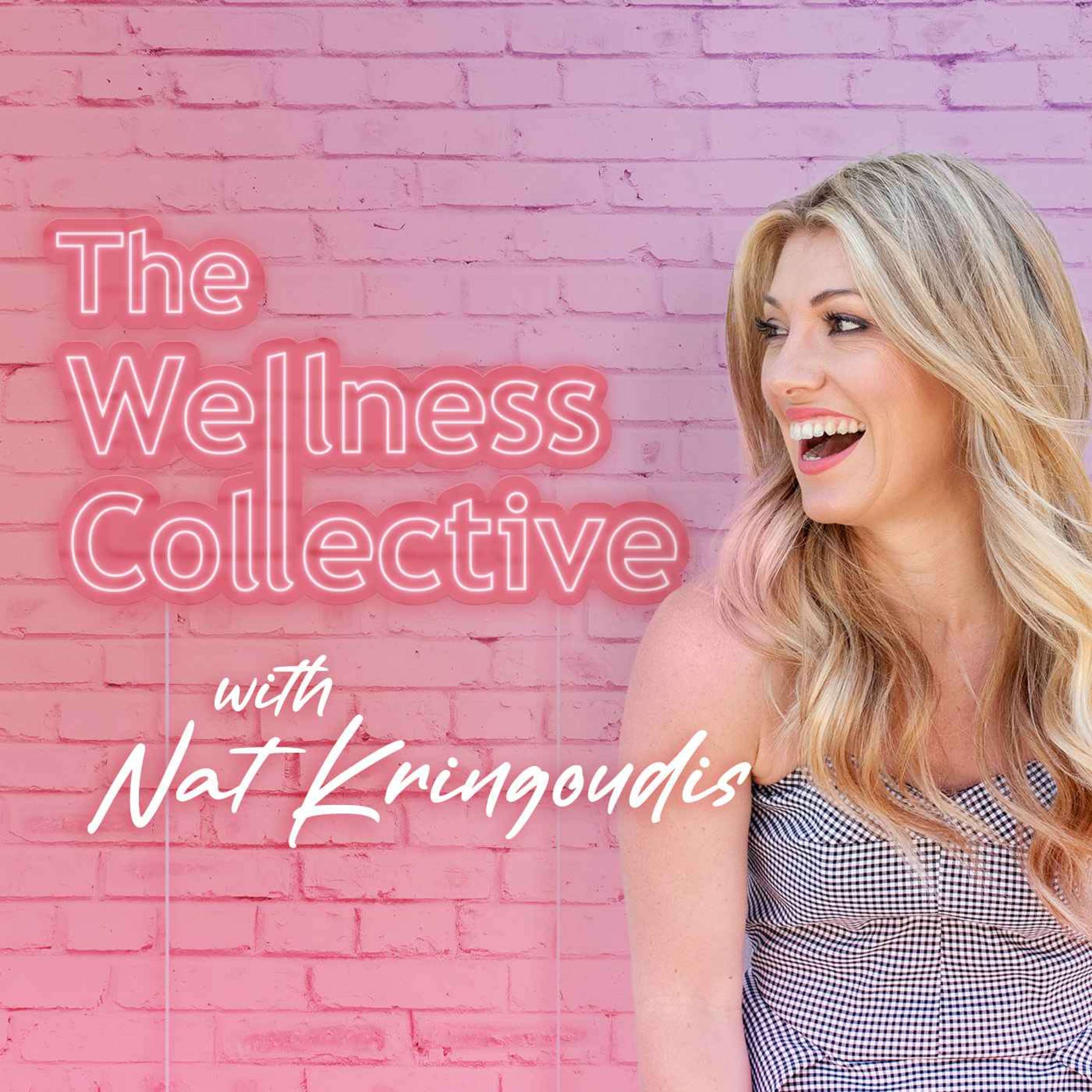
Makeup’s Dirty Secret: How Your Beauty Bag Disrupts Hormones & Makes You Sick! | Kasey Giarratana
from The Wellness Collective with Nat Kringoudis
30m 31s
In this discussion, Casey Giratana, founder of Ziley Organics, shares her personal journey with PCOS and endometriosis, which began in her early teens. She emphasizes that many women are unaware that ingredients like fragrance and phenoxyethanol, commonly found in beauty products, can enter the bloodstream and disrupt hormones and gut health. The beauty industry’s lack of regulation allows these “dinosaur ingredients” to persist due to their low cost, making it challenging for small, values-driven brands to compete. Casey highlights the vulnerability of teenagers, who prioritize TikTok trends over ingredient safety, and advocates for the 80/20 rule—using clean products 80% of the time while allowing 20% flexibility to reduce stress. Ziley Organics started with a viral lash serum but aims to expand into a full range of safe, aesthetic products. Casey recounts a negative viral campaign against the lash serum, which she overcame by transparently communicating with her loyal customers, reinforcing trust. She is excited about peptides as a biomimetic, safe ingredient for hair and skin growth, with new products like a peptide-powered hair serum launching soon. Ultimately, Casey’s mission is to empower women to make informed choices without sacrificing style or well-being.
I've suffered since I was like 13, 14. As soon as I started really going through those big hormonal shifts, it was horrific. I literally looked at my beauty cupboard and was like, "Okay, cool. So I can't use anything." Toxic load, maybe is a little bit of a woo-woo term, but that is what women kind of need to be considering. The teens don't care what's in the know. They just care what's on TikTok. What they put on their skin every day is going to end up in their bloodstream, is going to impact their gut health, is going to impact their hormones. Excited to have Casey Giratana from Ziley Organics here with me today, Casey. This is going to be fun. It is. Thank you so much for having me. For those that don't know Ziley Organics, let's tell everybody what they're missing out on. So Ziley is a beauty brand that is focused on creating beauty products that don't create, that don't contain hormone-disrupting ingredients. So it stems from my experience with PCOS and endometriosis, and understanding that so many women with the same issues. And I mean, we have hormone issues throughout our entire life. We really don't catch a break. Would be experiencing so many symptoms that may be exacerbated by what they're putting on their bodies every single day. And so that's where I came up with Ziley. It's such a big undertaking to create what you've created. And we can talk a little bit more about the evolution of Ziley. But let's just talk about the PCOS and endometriosis for a second. What age were you diagnosed with both or either? Because it's not always a straight line. I was diagnosed with PCOS or it was kind of thrown around, but they don't really know one really knew how to diagnose it, I feel. I feel like it's a lot more common these days. More commonly discussed, more commonly diagnosed. But I've suffered since I was 13, 14. I was like, as soon as I started really going through those big hormone shifts, it was horrific. And then endometriosis was much later. It took a lot longer diagnosis, which is a common theme for many women with endometriosis. That would have been in my mid-20s, only like five to seven years ago. So I mean, I think it's such a common story that there'll be evidence of some type of hormonal issues, especially as teenagers. And it actually is quite difficult to diagnose. Yeah, teenagers. They're already having more than likely having irregular cycles in ELA. And then they go through a phase that mimics PCOS as well. So there's a lot of, like you said, shifts that are happening that make it really hard. And it's often the time that a teenager will be put on birth control, which is another whole story and stress at that point in time. For the person that's listening that doesn't understand the connection between what we're putting on our body and on our skin and absorbing. And hormones do you want to give a quick rundown on that? Yeah, I mean, I think I don't think many women understand that. And I think that was my biggest driver to create Dali because I would have thought I was, I mean, I'm not, I have a health science degree, but it's really, it's nothing. It's not applicable to this. But I've always been very self-motivated to learn about whatever it is. And particularly if I'm experiencing it, I'm the kind of personal delve deep into it. So when my naturopath first mentioned going into my beauty cupboard, having a look at my beauty products and looking through the ingredients for, which like those certain ones that I remember stood out to me that she flagged with me, that have kind of like stayed with me. So it was fragrance, which is like my biggest no-no. And Phenoxyethanol was one. Both of those things, I don't know if you've ever looked at your beauty products, but they are in everything. And that was my experience. I literally looked at my beauty cupboard and was like, okay, cool. So I can't use anything. I've just, there goes all my money. I've literally gone to start from scratch. And I think it was understanding that it just didn't click to me. I was very young. It didn't click to me that what I was applying to my skin, enters my bloodstream and can impact so many of my bodily functions, like particularly gut health, which the correlation between gut health and hormones is like, I mean, I'm sure you talk about this all the time. So yeah, I went other people talk about it. So you can knock yourself out and I'll just listen. Yeah, I just, I think that was like a really big moment for me where I'm like, so many women would have no idea that what they put on their skin every day is going to end up in their bloodstream, is going to impact their gut health, is going to impact their hormones. Like, it's just not talked about. It's not, I still don't think it's very commonly talked about. And I think women are really vulnerable because we're marketed to, as everything's fine, everything's safe. This is for you to feel good, look good, everything. But in, in real life, they have no idea what they're applying is just absolutely ladening their toxic load. And they're just burdening their body with every day. Like, I thought about how many products I would apply every day and I would say from like, you know, shower to skincare to make up, I'd be getting into like 30 products plus. And if I'm, every time I'm doing that, I'm just adding toxins onto my skin and into my body at, at terrifying me. I think it's a very important conversation to be having. Absolutely. And I think, especially for teenagers, we can dive into in a minute. But I think the majority of women subscribe to the idea that surely if it was that bad, you would not be able to buy it over the day. There's a lot of brands who continually kind of say that, you know, like we wouldn't be able to sell it if it wasn't safe. But I think there's a lot of legalisms. I'm going to be very careful, what I say about this, but it's not a holistic view. It's not a optimal view either. It's like, okay, you're not going to get sick, diagnostically sick by putting that. But it's also only looked at in one product, not that you're applying 30 products with the same ingredient and what does that mean. And I think toxic load maybe is a little bit of a woo-woo term. But that is what women kind of need to be considering. And I love to live by like the 80-20 rule, you know, like stress is bad as well. So you don't want to be trying to be absolutely perfect with everything that you're doing. But you know, 80% of the time you want to be empowered to choose products that you know aren't going to impact your health or your hormones. I think that's, it's really interesting also that the beauty industry isn't regulated still to this day. So there's actually no big guy going, oh don't use that. What about when you're looking at ingredients, why is it that we are using these known endocrine disruptors, ingredients, fragrance, chemicals, why are they in the products in the first place? They're kind of dinosaur ingredients. It's a lot easier for a lot of people who've been in the industry for a long time to opt that way. And that's been a massive wrestle for me, especially because I am not a chemist. So when I meet with chemists and I'm like, I don't want to use any of these ingredients. And they're like, why? And I'm like, I feel almost offensive being like, well, this is like, you know, I'm having to educate them on our values as Zali and why they're it's important to us. And I'm having to kind of convince them that we can still create epic products without these. And even do some of the work to provide suggestions on what else we could substitute it for. But I think one of the biggest ones is commercial. It's the cheap ingredients. So for big businesses, everything that they do is commercial. It's not really a lot of them aren't value driven. And it also makes it really hard on small businesses. Like our product costs are really expensive because we are choosing to use really hard to source really expensive preservative systems instead of going with the classic, you know, phonoxyethanol. And yeah, it's really expensive for a small business. It's crazy though, because often the price point of a lot of these brands is not low. Is they still have a high price point? Yeah. Obviously they're making a lot more in their margins. Yes. I think people also think, oh, they're the cheaper nasty products. They wouldn't be in some of the bigger brands, the bigger names, the more actual fact they more than likely are. Yeah, they are. And I think that something that I'm working on at the moment is I would love to create a bit of an easy cheat sheet, kind of like what my naturopath gave me all those years ago. So that customers can be empowered to do that work themselves. And if there's something that Zali doesn't sell, but they still want to make a conscious decision on the products that they're using, they can kind of take their cheat sheet, have a look at mech or aware of they want to go. And see if they're really, you know, some of their favorite brands are safer options for them to use. I think it's important also the team, let's circle back to the team conversation because the teams don't care what's in them. No, they just care what's on TikTok. Yes, they want to use whatever one else is using. They want to use what looks cute, smells good, and is trending. And that's really tricky. And I'm sure, especially for you as a mum of a teenager, I don't envy how to navigate that. It's pretty interesting. She's quite empowered. Okay. She's, I don't know that she actually knows what it means to struggle with fertility. She came to me many years ago. She was little, oh, you know, there's ingredients in that that make you infertile. And I said, yes, I'm aware of that. Not, it wasn't actually what I was using, but there were certain, there were certain products within a brand. And I said, yeah, I'm really aware of that. Does that worry you? And she's like, well, that's terrible. Like, why would we be doing that to ourselves when there's alternatives that don't? And from then on, she actually is, I don't know why. She's quite driven, but I know that she's not necessarily like all teenagers. And to your point, there are some things that she just wants to use. Yeah. And so I think having the conversations, allowing them to make informed choices and understand what products are clean and what that means and what the alternatives are. And then I say to her, you know, if you did this 80% of the time, then the products you absolutely love. We can fill in
20% of the time. And I do that. You know, I can have peace of mind going, well, I do the majority of you with that in mind. But I have this red lipstick, let's just say. It is absolutely not clean. And every time I wear it, someone says to me, what's that lipstick? And I'm like, you don't want to know. Yeah. We're human, you know? And the stress of that becomes kind of productive. Absolutely. I think it's so, like I follow and I'm friends with a lot of people who aim for the 100%. And I see the way that they live life. And I admire what they're trying to achieve. But I also wonder if they really know that it is. Stress is a huge impactor on health. And I do think it's more detrimental if you can let it affect you in that way than letting the 20% slide. So that drove you your story, drove you to create Zali. Yes. Tell us about the evolution of Zali. Yes. What did you start with? Where are you at now? Yeah. It's a funny story because I think most people, if you've ever heard of Zali, would think of our viral lash serum and think we're a lash serum brand. But that is so far from where we initially wanted to be. It's as I've kind of touched on and why we started. And so far from where we want to end up and it's been both amazing because we've had amazing growth and people know us and they've had amazing results. And that's been incredible for the business. But my bigger mission for Zali and the community that I want to build is around the value of our products and what they do for you without having toxic ingredients in them. And so we're actually-- it's a very exciting stage at the moment for Zali. Not only are we releasing new products at the moment, we've got a huge rebrand happening. And that's about really shifting away from being a lash serum brand and really understanding our customer and what they'd like for us. And I think one of the biggest things, once I understood, I guess, what the products that I could use that were going to be safe for me, finding them, they weren't at Mecca. Particularly 10 years ago, they were not at Mecca or Sephora where I loved to shop and they weren't cute. I was like on-- They weren't. You're right, they were not cute. No, they're not cute. They got like trees on them. And like, it's not what a young girl wants to eat. It's not what any woman-- I'm a classic woman. I love a cute beauty product. I like having something that's aesthetic and Instagramable, like whether it's a lip balm or even just when I'm doing my beauty. It's a bit of self-care and I love romanticizing things. So if I don't love what I'm looking at and it looks crap and it doesn't function as well as it could, that also inspired me. I'm like, you know, we can do both. Like we can do the incredible ingredients, the safe, the natural, the organic ingredients, whatever that is. And we can be trendy and aesthetic and like we can marry that. And I don't think anyone's done that really, really well. And I think that's where Zali's going to sleep right in, especially in 2026. So I love that. It's also OK to be known for a hero product, like the Lash series. Yes. I think that a lot of brands would love to have that problem of a hero product. Yeah, it's a great problem. Speaking of problems, you also ran into problems when you had the Lash series because there was some negative attention that was created about it saying that there was problems with it and the ingredients were questionable. And we don't need to go into that. I think a lot of my followers reached out and said, oh, did you know that this is the case? And I was like, let me find out. I had my suspicions that that's probably not the case. What would drive somebody to go and create viral content in a negative context towards a particular product to me? That was disturbing. I was like, doesn't that just involve a DM exchange between two business owners in the background? But I think the reason I want to bring that up is how can something like that have an impact on your business? Did it have an impact on your business? Yeah, that was the worst experience I've had since "Oning Zali". And in a way, it's been great because now any problem that comes up, my husband and I, like, well, it's not as bad as that. We can handle this. But no, that was really, really horrible because on one hand, I didn't want to give it any more fuel. But on the other hand, I'm like, I actually, when something's online, you can't control who's heard that. Who knows your side of the story? And unfortunately, I wasn't allowed to. I tried to comment, I was blocked. So I was only able to tell Zali's side of the story and the truth to the people that came to us directly. And thankfully, it actually showed how many people connected with me. Sometimes when you're a brand founder, although you're talking to a camera, you don't really know who's connecting with you on the other side. You don't think anyone's watching. You're actually talking and then sometimes there's. Someone says, oh, I loved what you said the other day. You were watching. Yeah, it's cute. Cute, terrifying. Yeah. But no, the beautiful part of that was so many people were like, I trust you. Like, we love your brand. We know, you know, we've seen. Like, I really gave the people in our dams and in our emails, our side of the story and whatever they needed to feel reassured and they all rallied. And that was really beautiful. And actually, we had so many people see straight through that marketing tactic. Right. And say, I'm not even a customer, but now I am. Right. And you've got my support and that was really beautiful. But I just think it's sad because I just think it's. I don't think you have to operate that way. It was very transparent, the intention behind it, because, like you said, if that was a genuine concern, a DM or an email would have resolved everything immediately. But yeah, no, I think it taught me a lot of things. I grew up real quick in terms of business. I'd only been. We'd only been running Zali for two years. So I had to learn some hard lessons real fast and had my lawyer on speed dial real fast. But I'm glad I went through them and I went through them when I did and we handled it really well. And Zali's still here and still thriving and I'm really grateful for that because there was a time where I thought, "All right, it was a short-lived ride, this is it." But no, it shows if you're genuine with your customer and if you know your stuff, you know your product and you know how you operate your business, customers will see that too. And yeah, we learned how to communicate well with our customers. I think that's super important that in those moments and it's not just in this situation, but in any situations because when we put ourselves out there, we open ourselves up for all sorts of comments to come at us. But I think if you know your brand and there's the values and the integrity there, people, your audience, the ones that supposed to be your audience will still be there. There's nothing like your audience rallying around you also just to help strengthen your belief in what you're doing as well. So often these hard things that challenges that happen make us actually, you know, I always say, all publicity always turns out to be publicity because if you are showing up and you're being authentic all the time and you genuinely are on this path and you have this mission, people know. So I think it's just important because we, yeah, I think it's important to be transparent in those things and just literally, you can't hide. - No. - It has a brand only you can't hide. - And at the end of the day, like, I can't hide if there was something really wrong, we would have been forced to recall a lot of consequences would have happened. So the proof's in the pudding, absolutely. - One of the things that I want to talk about is peptides because I remember when we were first you and I were first talking and I'm like, what are you most excited about in terms of ingredients? And you were like peptides and I'm like, oh, okay, I don't think people realize, it's fairly, well, relatively new, you tell me, is it a peptide's new ingredients into skincare? - I would say they're kind of a trend at the moment. Both supplementation and skincare, it's like kind of the fun buzz word at the moment, but for good reason, like peptides are incredible and I think with a lot of brands being more conscious of the ingredients they're using, they are looking for safer options and peptides are that. Obviously you would know they're biomimetic, so they work with your body rather than against it and the results that they can achieve, whether it's like for us personally, obviously, lash growth, hair growth, we've got a hair growth serum launching, I can say that next week now, 'cause by the time this is, which has been like our most requested product and that is literally it's called the peptide powered hair serum because it is, it just harnesses their power to grow and retain your hair. So I think it's only the start to be honest for peptides, both skincare and supplementation and I am excited actually, 'cause I really believe in what they can do for both results but also health. - Yeah, it is exciting. I know that they're in the lash serum in the brows. - Yeah, remember they are any of your other products? - They are in the hair. - A lot of products to come. - Right. - Yes. - Well, what is it that they offer that say a brows serum that doesn't have that? What's the difference? It depends on which peptide and for what purpose. For example, the peptide chain that we have in our lash serum is obviously for lash growth. But then we've also got peptides in our hair grows serum that are around scalp health. Like there's so many, I'm not a scientist, so I'm not gonna try and speak super scientifically but they serve so many purposes and they, like I said, they just work with your body. I like to think of them in my super non-tonic way as like little communicators to your skin and your hair and they kind of tell it what you're wanting to achieve depending on the peptide that's being used. So like there's certain peptides that are like grow, hair, grow, hair, don't shed, you know, things like that. So that's how I do it. - So they're not like an active like a retinol or something that's a bit more potent or, well I guess maybe there are peptides for that [BLANK_AUDIO]
well, but you can't compare those things. They do different, they have different actions, right? - Yeah, again, I'm not, I'm not, I'm not the chemist, so I'm not gonna dive too deep into the science of it. But I think, I think what people don't understand is there are such powerful natural ingredients, like you speak about retinol, where you have a product coming out that utilizes the power of the couturel, which if you look at the clinical data behind the couturel, it literally is on par with retinol for the exact same clinical results. And yet people always go for retinol, which you can't use during pregnancy, is comes with a lot of skin sensitivity. So many people actually experience adverse reactions from using a retinol when the couturel was sitting right there. It doesn't come with those sensitivities, it's safe for you, during pregnancy, like this. But it's just not known. And I think as soon as you label it natural, people are like, "Oh, it's not gonna be anywhere near "as a palliative." - They're like, "That's cute." - Yeah, I think also the funny thing about natural, I always say this, I had to go and study for many years. Both biochemistry and understanding also medications and ingredients, equally as much as herbal medicine, plant-based medicine. If you don't know or understand the interactions, then fair enough you don't know or understand. But the point is that there's a reason why there are warnings or that there's someone prescribing these things that you probably shouldn't just go out there and do yourself, because they are potent. They can be really potent. So I laugh when people are like, "Oh, it's natural, "it doesn't work." 'Cause that's not how it really works. And a lot of things are based off natural ingredients anyway. - Yes. - Exactly right. In the past, the problem with the natural side of things is to your point. It was brown packaging with leaves on it and it wasn't appealing. And even sometimes the way that the formulations felt. - Yes. - Or even I remember when I used to use the natural shampoo and conditioner. - Oh yeah. - 20 something years ago and it was like washing here with morning fresh. (laughing) - It was terrible. - Yes. - Whereas we've come a long way. - Yeah, come a long way. - Yeah, from a packaging perspective, how important has that been in terms of creating sustainability, looking at long-term effects of the packaging? Is it something that Zali did? - Yes, it is. - Yes, it's, do you know what? My primary focus is, initially when I conceptualize a formula is actually like how that formula being a beauty product is gonna go ending up in our waterways. So I think that's something that a lot of brands don't consider as well. So there's a lot of ingredients we won't use even if it's potentially safe for our skin. Ending up in the waterways and the impact on marine life, we won't use it because that's a value of ours. But I think e-commerce in general is a really tricky industry. I think one thing that's really hard as a small business is to be really sustainable is not commercial. And so that is a really hard thing to juggle. But I think it's something that every year we kind of pick something that we're like, okay, we need to improve this process. We have a lot of reusable, recyclable or biodegradable packaging, but we can always do better. And I think e-commerce has an industry really needs to be better. - I hear you when you say that we have people comment to us with our products about sustainability in the packaging. And we're like, if we were to create what you're looking for, it doesn't actually exist. - Yeah. - If it did, it would drive the costs even more. And it probably wouldn't perform. - Yes. - Because that's the juggle, right? Like if we're using these actives, we have to use a certain standard of packaging and the packaging has to be coded because it can't be exposed to light and all of these different things that I think the consumer who cares about the environment I can so appreciate. There's a real balance as a business owner. And obviously you know that really well. - I think it's important to talk about, because I think people will quickly dismiss something without really understanding what actually goes into the process of that and why you're using certain packaging. I don't think anyone's got it perfect. None of us do. We're all just trying to constantly go, okay, where am I at now in my business? How can I, which is the next thing that needs to be looked at? I think the main thing is that there's an awareness. - Yes. - And we're always trying to, you're always saying you're trying to do better. For the person listening, who is the ideal customer? Are they the, have you figured that out? Are they the teenage up? - We're not quite yet because I don't know. You tell me. - Do you know what I feel like? What's hard is currently, what our data tells us is it's women across all ages. And for me, when I think about that, I think it's because it's kind of what I touched on earlier. Like when do we get a break from having a hormone or a health issue or what? If you're a teenager, you're going through puberty and maybe experiencing breakouts and all of these different things. And you hit your 20s, you're probably coming off the pill or maybe prepping for a baby and then you realize, oh, my fertility's not optimal. And the same thing travels into your 30s. And then you're going through children and that's a role-coster on its own. And then you're like, cool, I'm done having kids and then pairing menopause here. And then menopause, we don't catch a break. Any woman who is a little bit conscious about what her products may be doing in that journey, I hope has found Zali. And I think that's something we're really working on at the moment is really connecting with that woman on that journey and being like, yeah, we're here to take the work out of it because there's enough pressure on you trying to figure out how to navigate all of this. I want you to be able to use Zali with zero worries about what's in our products. You know, it's going to work and you know, it's going to be good for you. I think it's important to be able to have those brands that we can trust. And then you can just like set and forget. Yes, honestly. You know, like having to go through every ingredient every single time. Yeah, like grocery shopping is such a task for me. I don't know if you're the same. I feel like every time I stop pick something up, I'll flip it over and I'm like, all right, what do we got? And I want to take that out of beauty. There you go, I do what I want to know at the supermarket yesterday and she wanted to create cook brownies and she was wanting to buy a packet mix. And there was a woman standing there and she goes, oh, these ones are on special and I didn't want to be rude and be like, hell no, like that. I can tell you we're definitely not buying that. And I said to live, can you just reach up to that one, like that one box on the left. It's on its own. I'm pretty sure that's going to be the one. It's the loan right around this. I think you're right. It is hard, especially cosmetics and skin beauty. Sorry, I should call it because you do look at a product and there are sometimes 40 ingredients. Yes. It's overwhelming. It's so overwhelming. So I think to have trusted brands and I think it's a great thing that you are educating the audience and that they trust you. That's hard to build, but once you have it, there's a reason that you have it. What kinds of things have your customers given you feedback on? They typically see changes with when they switch from using maybe a conventional product to a cleaner beauty product. Yeah, it's funny because it's kind of a mixed bag and as someone who's like so invested and so heavily involved in the product development, sometimes I'm like, oh no, don't say that. So there's all the positive. So particularly women with sensitive skin, I think they don't understand that fragrance and even if they're using natural, some products that are really heavily laden with essential oils and things can be quite aggravating to their skin. So when they switch to a really gentle product, like, for example, our Milky Clanders, extremely gentle, non-stripping, it doesn't have any really harsh ingredients that are going to irritate the skin. Their skin really settles and so they're kind of shocked by that because they think, wait, my skin's clean, it doesn't feel stripped and my skin's calm down. Like, they're just kind of shocked by it. I think they underestimate natural products. But then there's the other side where sometimes you're not going to get the exactly kind of talked about, they feel a bit different because we can't use the same polymers and fillers and things that other brands use that gives you the feel. A common thing is like, oh, I don't like the smell. I'm like, it doesn't have a smell. We don't use fragrance. And that's good. If something smells like bubble gum, it's not good for you. That's not how it's meant to be. It's unnecessary. You're paying for that as well. And it's not good for your skin or your health. So there's a bit of a balance between, they're like, love it, but they're also like, what is a smell like this? Yeah, that's so funny too. And I think sometimes it's the, figuring out a combination of what works for you and how you can see those same results with different products as a little bit of trial and error. The Milky Cleanser, by the way, is Olivia's favourite. Just let you go. - I love that. - Yeah, she stole that way back when. Looking ahead, what is next for Zali? I know you've got some pretty exciting things on the horizon. - Yes, we can. - What can you tell us? Maybe not everything, but something. - I can say that we'll look very different. We'll feel very different, but we will be a lot more connected to our customers. And I think people are going to love the feel of Zali. It's going to feel like it's own person for the first time. We're not going to be lost in a sea of brands that look very similar. But we are also bringing so much value in terms of product. And in my opinion, some of the best products that not only Zali's ever brought out, but I think are on the market are coming. I will talk about our hair serum, because honestly, I'm the most excited for that. Not only is it the most requested, but it's taking me over two years for a reason. It is so, the ingredients in this formula are so clinically powerful and incredible for hair growth and health. It's going to be our next viral lash serum. - So really exciting. - We're going to be known as a hair grow serum brand. (laughing) You're going to just be known as all the hair growing things brand. - Yeah. And more. - Casey, thank you so much. This has been. a great conversation. I think a really important one. Thank you for creating a brand and doing a lot of the heavy lifting because it means that we can have peace of mind and we can go on, put our attention into something else rather than sitting there and reading and scanning the backs of labels. So thank you so much for being here today and I look so much. Thank you so much. Thank you. I really appreciate it. [Music]
Podcast Summary
Key Points:
Casey Giratana founded Ziley Organics after her own struggles with PCOS and endometriosis, driven by the lack of safe, hormone-friendly beauty products.
Many beauty products contain endocrine-disrupting ingredients like fragrance and phenoxyethanol, which can enter the bloodstream and negatively impact gut health and hormones.
The beauty industry is largely unregulated, and brands often use cheap, harmful ingredients for commercial reasons, making it expensive for small businesses to produce safe alternatives.
Teenagers are especially vulnerable, as they prioritize trends over ingredient safety, but education and the 80/20 rule (80% clean products, 20% flexibility) can help balance health and enjoyment.
Ziley Organics evolved from a viral lash serum into a broader brand focused on safe, aesthetic products, overcoming a false controversy about its lash serum through customer trust and transparency.
Peptides are a key, safe ingredient in Ziley’s products, offering biomimetic benefits for hair and skin growth without harmful side effects.
Summary:
In this discussion, Casey Giratana, founder of Ziley Organics, shares her personal journey with PCOS and endometriosis, which began in her early teens. She emphasizes that many women are unaware that ingredients like fragrance and phenoxyethanol, commonly found in beauty products, can enter the bloodstream and disrupt hormones and gut health. The beauty industry’s lack of regulation allows these “dinosaur ingredients” to persist due to their low cost, making it challenging for small, values-driven brands to compete.
Casey highlights the vulnerability of teenagers, who prioritize TikTok trends over ingredient safety, and advocates for the 80/20 rule—using clean products 80% of the time while allowing 20% flexibility to reduce stress. Ziley Organics started with a viral lash serum but aims to expand into a full range of safe, aesthetic products. Casey recounts a negative viral campaign against the lash serum, which she overcame by transparently communicating with her loyal customers, reinforcing trust.
She is excited about peptides as a biomimetic, safe ingredient for hair and skin growth, with new products like a peptide-powered hair serum launching soon. Ultimately, Casey’s mission is to empower women to make informed choices without sacrificing style or well-being.
FAQs
Ziley Organics is a beauty brand focused on creating products without hormone-disrupting ingredients. It was inspired by founder Casey Giratana's personal experience with PCOS and endometriosis.
Ingredients applied to the skin can enter the bloodstream, impacting gut health and hormones. The cumulative 'toxic load' from multiple products can burden the body, even if individual ingredients are deemed safe.
These are cheap, commercial ingredients that are easier for large brands to use. They are often called 'dinosaur ingredients' because they are traditional, but safer alternatives are more expensive and harder to source.
Teens often follow TikTok trends without checking ingredients. Casey recommends empowering them with a cheat sheet to make informed choices and applying an 80/20 rule—using safe products most of the time while allowing for occasional non-clean favorites.
The founder faced viral claims about questionable ingredients but was blocked from commenting directly. She communicated her side to customers via emails and DMs, and their trust and support helped the brand thrive.
Peptides are biomimetic ingredients that work with the body to promote results like lash and hair growth. They are a safe, trending alternative to harsh chemicals and are used in Ziley's serums.
Chat with AI
Loading...
Pro features
Go deeper with this episode
Unlock creator-grade tools that turn any transcript into show notes and subtitle files.
 PodcastTranscript AI