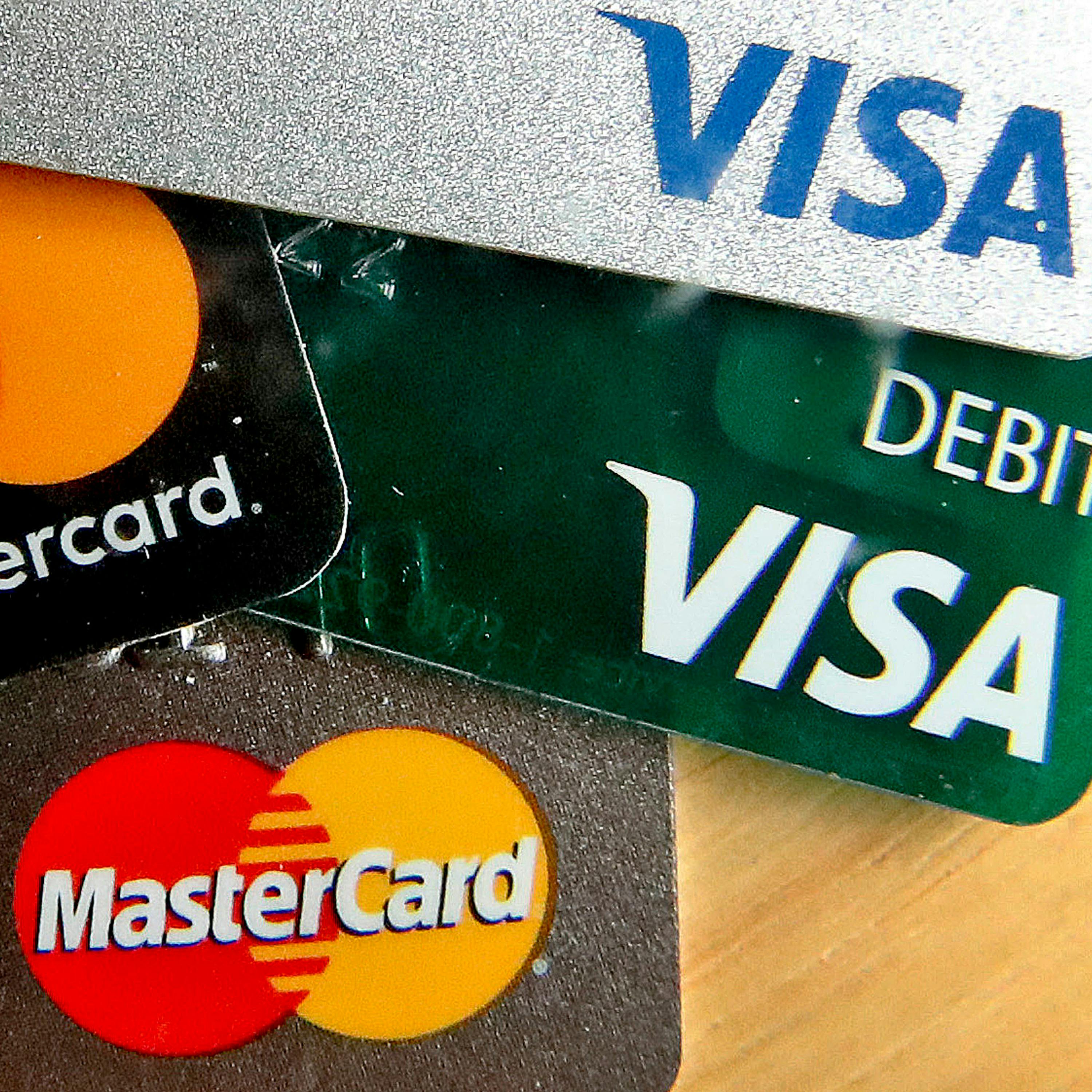
AI can fix healthcare. I'm Henry Blodgett and this week on my show Solutions I had a fascinating conversation with Dr. Bob Wachter, author of A Giant Leap, How AI is Transforming Healthcare and what it means for our future. Dr. Wachter was not expecting to be an AI optimist. What convinced him? Follow Solutions with Henry Blodgett wherever you get your podcasts to hear more. This week on Network and Chill, I'm taking you inside my sold out New York City Book Tour stop for my brand new book Well and Doubt. I sat down with the hilarious Heather McMahon for a night of laughs, real money talk and honest financial truths. We're getting into everything the book covers from how to actually build wealth, how to protect it, and how to stop leaving money on the table. Whether you've already grabbed your copy of Well and Doubt or you're still on the fence, this episode will show you exactly why everyone's talking about it. Just listen wherever you get your podcasts or watch on youtube.com/yourrichbf. Crazy that they hand out credit cards to 18 year olds. Interest, Ray, Cardinal, Joe. Paper, flights, degrees. Pretty credible. Americans are in serious debt. Together we own nearly $1.3 trillion in credit card debt loan and our average balance around $6,500 each. Owing that much can get really scary and overwhelming. I know firsthand that you can make your way out of it but it can be really hard. Spent about 15,000 on furniture when I moved into a new place and I'm still paying that off. I didn't know what a credit score was. I didn't know what my credit report was. I had no idea what it would affect in the future and that credit card ended up in collection. I landed up having around $24,000 in credit card debt within two years of being grad school and it has ruined my life. I am now donating my eggs to be able to pay off that debt. I'm John Blanhill. It's explained to me from box. And this week, how did we get in so much debt? And is there a way to work the cards instead of the cards working us? For a lot of people, getting your first credit card is a right of passage into real adulthood. When Angel Savilla was 18, he walked into the credit union where he had an account and asked about getting a card. And they essentially just handed me one. It took no time at all. The woman is really friendly and she brings me these forms and I sign away my life and not knowing what I'm signing. And it really only took about I think 15 minutes and I walked out with a credit card and I felt empowered. I was like, wow, that was easy. Being an adult is great. Do you remember what your credit limit was when it was for your first card? The first card was $1,500. It felt like I could put all of the little expenses on there. All of the $2 and $3, McDonald runs or coffee shop runs. Everything that adds up really quickly that you don't realize, I was like, oh, you can easily just throw that on the credit card and I'll pay it next month. Woo-hoo, swipe. I was working at a coffee shop at the time, I think. And I mean, I was making I think eight bucks an hour. I later got a raise for ten bucks an hour. And this was 2005. My rent was $450. Let's stop in Marvel at that for a second. So I was doing fine for a single person, but I wasn't bringing any type of extra income in and I definitely hadn't learned how to save you at either. So I'd buy myself lunch every day. And I'd treat my friend to coffee. Like, no, I've got this one. Swipe, swipe. Later on in the year when Christmas time came around, I was like, oh, I've got Christmas gifts for everybody. Swipe, swipe, swipe. Stuff like that where I thought I was just being this really great, generous person. And I was, but I was just digging myself into a hole. Woo-hoo, swipe. I was getting bills and I'm paying the bills minimum balance, thinking that I'm going to be able to make a fatter payment later on down the line in some weeks I'd have over time and it had a little extra. But it was slowly, slowly creeping up higher and higher above my head. And were you like, wait, this isn't just a thing that I can do. So I was reaching the higher end of my credit limit and I needed more because I wasn't able to pay it off. And I had luckily seen like a newscast where they were talking about credit cards and they're like, you can easily call them and ask for more. So I did that and they gave me more. Yeah. How deep did you get into that? So about $3,500, something like that, which at this time I'm like 20 years old and that's an unattainable mountain that I can't, I can't summit. I was compartmentalizing the feeling of being overwhelmed by my debt and just shoving it away. And I started college at the time. So for those four years, I just didn't even think about it because now I've signed up for all these student loans. So I've got an additional load of debt. I'm like, you know what? Just put it all in the back of your mind. Some day you'll be a millionaire and you'll pay it all off. I get a wake up call when I try to apply for an apartment and I am denied, which is super confusing. I was like, what happened? What's wrong? And I was told that the reason was because my credit score was too low. I'll be transparent. It was 490. Oh, okay. At this point, I'm like, oh my God, if they're denying me for this apartment, they're going to deny me at the next one that I apply for. And so I ended up having to move in with a boyfriend at the time who I'd not been with that long. So I got put in the situation that I didn't really want to be in because I needed to place the live. I'm working at a restaurant and there's one of my co-workers who's a real estate agent and I see him just slinging all these homes and I'm like, well, I want a home someday. And now knowing that my credit is bad enough where I can't even get an apartment, I'm like, how do I repair this situation? He actually put me in contact with a loan officer who was great and she sat me down. She printed out my credit report and she like used a highlighter lined by line. I'm like, what are these? Why are these here? Can you pay some of these off and it will help increase your score? And there's a bunch of like $15 charges from the leftover that my insurance didn't cover for therapy sessions for two years. Oh wow. They were mailing the wrong address and she's like, can you pay these off? So I start with those. I start with an old Verizon bill that had gone to collections because the account had closed and I didn't pay it off. So that's kind of how I began knocking things off and chipping things off of the list. I was also advised to open a secure card, which is the type of credit card where you put forward your own money into an account that pulls up on your credit report as if it was the bank's money and it looks like you're being given a loan at credit card, but it's your own cash and it helps build your credit. So I kept that secure card for a few years, maybe like two years and after that time, I think I was up to the five sixties. So we're making progress. Yeah. And I know like when you're paying off debt, a lot of it comes down to sacrifice. Are there changes that you made in like your spending habits? Or you're like, okay, I can't do this thing anymore. Well, I learned that all of the little expenses, the five and ten and $15 expenses add up very quickly. So those kind of took a cut back not as many McDonald's runs, not as many lunches, bought while at work, maybe pack my own lunch and take it to work and then less Christmas gifts for every what. I have a huge family. Take you, I have 12 siblings. Woo! Yeah, you're making some cards. We're going to make some cards this year. Yes, handmade gifts. I wasn't buying new clothing. I wore the same clothing for like six years and my friends dubbed me having the worst style of the entire group. But I needed to cut back on these things so that I could have money to start making payments toward all of the items that were needing attention. How's your financial situation now? Yeah, it's way better now. I was able to qualify for my house. I had a credit score of $6.98 when we closed, which was in April of 2020. Oh, that's awesome. Yep, and since then, I think the highest it's been, you know, fluctuates, but the highest it's been has been like $7.60. Okay, that's good. That's like, you went from, wow, you've, you started from the bottom now we're here. Yes, oh my gosh. Do you still use credit cards or have you sworn them off? I have three credit cards currently. I really only ever use one of them and I keep that balance low. How do you feel about the idea of giving 18-year-olds credit cards? If you're lucky enough to have parents that will set you up for success and give you that knowledge so that you know what to do when you get it, that's great. But maybe the people handing out the credit cards should find out if you have that knowledge first before just giving you free reign to dig yourself a hole that's going to affect you in the future. So if so many of us find ourselves in this hole, why is the system set up like this? That's next. Support for Explanant to Me comes from Shopify. Every worthwhile journey starts with a handful of what ifs. But one day you'll be able to look back and realize that all those what ifs were small steps toward turning your dream into a thriving business. Shopify says they can help you get there. Shopify is the commerce platform behind millions of businesses around the world and according to Shopify data, they power 10% of all e-commerce in the US. You can start off with your own design studio and choose from hundreds of ready-to-use templates to make a beautiful store online. You can make it an efficient well-oiled machine with help from AI tools. They say they can help you with writing product descriptions, page headlines, and even enhance your product photography. You can connect with customers through an easy-to-run marketing campaign built through Shopify. And if you just need some advice, Shopify says they offer award-winning 24/7 customer support. You can turn those what ifs into a thriving business with Shopify today. Sign up for your $1 per month trial today at shopify.com/explainant. Go to shopify.com/explainant. That's shopify.com/explainant. Support for the show comes from Rocket Money. Have you ever felt pretty good about your finances only to realize you've been paying for a monthly subscription you completely forgot about? And that it's quietly cost you a stomach-turning amount of money? Rocket Money wants to make sure your stomach turns no more. Rocket Money is a personal finance app that helps find and cancel your unwanted subscriptions, monitor your spending, and help slow your bills so you can grow your savings. You can use the app to consolidate your checking, savings, loans, and investments all into a single dashboard to give you a clear view of your financial picture. Set budgets and goals, get personalized insights and regular reports, and receive real-time alerts for large transactions, upcoming bills, refunds, and low balances. You can use automated savings to help you grow toward goals with adjustable amounts and frequency. Set it and forget it approach. You can let Rocket Money help you reach your financial goals faster. You can join at rocketmoney.com/explainant. That's rocketmoney.com/explainant. Rocketmoney.com/explainant. I'm JQ. This is explainant to me, and we're talking credit card debt. And so is President Donald Trump. I'm asking Congress to cap credit card interest rates at 10% for one year. And it turns out that cap is one of the few things Trump, Bernie Sanders, and Josh Hawley can all agree on. You know who's not into it? Banks. So how did credit card interest rates end up being so high in the first place? That's a question for Sean Vanatta. I teach financial history at the University of Glasgow, and I'm the author of a book called Plastic Capitalism, which is a history of the credit card industry in the United States. Where does that story start? So it really starts in department stores. You can think about big city department stores, something like Macy's in downtown New York, and it really starts at the turn of the 20th century. So these are huge kind of palaces of consumption. They're in part marketing themselves on the availability of credit. Why pay cash? This popular store affords you an opportunity to make your selection of its immense stock of wearing a peril at any time you wish and to take advantage of our liberal credit system, paying the account by the week or month. Add for the national outfit and company, 1910. You initially get something called like a credit token. They eventually are cards that have your name, your account number, your address, and boss on them. And this connects with a kind of mechanical billing system that then creates your bill that goes to your house. Department stores, after World War II, begin to expand outside of the central cities. They begin to compete with small local merchants. The modern department store with a great variety of merchant dyes from all over the world. One of a million bargains at Albert's during their anniversary sale. And so what begins to happen in the 1950s and then the 1960s is banks get into the credit card market. And they do so because they're making loans, they're dealing with businesses. And in this case, small retailers who feel the competition from the department stores that can offer credit. And what the banks do is they go around to the small stores and say, listen, we can pull you all together into a centralized credit plan and then you'll be able to offer credit that competes with the department stores. The bank americaard will soon be coming to southern Ohio as another service of the citizens national bank of ironson. At the same time, there's the development of what are called travel and entertainment cards. So you have business executives who need to win and dine clients who are traveling all the time. For them, it's cards like diners club and american express. Wherever business takes you, diners club can help. American express. It's the only credit card you really need for travel and entertainment, which are really built on enabling you to to more easily manage your expense account to entertain clients to impress people that you have, you know, a gold american express card. In the 1950s and 1960s, banks are increasingly looking to consumers as a new source of making loans, making home mortgages or auto loans. But if you're the biggest bank in chicago and all of the affluent customers are moving out to the suburbs, you have a problem. Banks under state laws in some states couldn't build more than one branch. So all the biggest banks are built in the city center where the businesses are. And so banks like continental illinois, like the first national bank of chicago all begin to see credit cards as a way to attract these affluent customers to get them to continue to do their banking with central city banks. And so it's really about kind of like suburbanization. It's about white flight out of cities that is part of what striving banks into the credit card market in the 1960s. You know, at the moment when credit cards came out, were there any rules around the types of interests that could be charged? In the 1960s, when a lot of banks really get into the market, one of the reasons why banks find credit cards attractive is because it's a new technology, it's not regulated. Banks were charging very high rates on credit cards. Consumers would tend to pay between one and a half and two percent a month. And you know, like people are not very good at math. So that just that seems cheap, right? Two percent. That's great. What happened is in 1968, Congress enacted something called the Truth and Lending Act, which says you have to present interest rates as a simple annual rate. It is the purpose of this title to assure a meaningful disclosure of credit terms so that the consumer will be able to compare more readily the various credit terms available to him and avoid the uninformed use of credit. And so all of a sudden, then people are saying, oh, I'm being charged 18% or 24% and that is a huge shock. And so what happens is the states tend to limit rates to between 15 and 18% the rules in each state are kind of different and kind of complicated. And so as banks are developing their sort of credit card networks, they begin to mail cards across state lines. And there's a big fight centered around a bank called the First National Bank of Omaha, which is still a going bank in Omaha, Nebraska. But the First National Bank of Omaha begins mailing cards into Iowa and they're mailing cards into Minnesota. And the interest rates in Nebraska are not especially high, but they're a little bit higher than what's allowed in Iowa and what's allowed in Minnesota. But from, you know, a consumer's perspective, if you live in Iowa and you only ever use your card in Iowa, why would you expect that Nebraska interest rates are what would apply to you? And the state attorney general's and individual consumers begin to sue the First National Bank of Omaha saying that they're charging too much. And so this kind of creates a whole slew of legal cases that end up in the Supreme Court. Oh, yay, oh, yay, oh, yay. First of Omaha claims our main office is in Omaha, Nebraska. We can charge the Nebraska rate and go anywhere in the country and charge that rate because we're located in Nebraska. The Supreme Court says, well, you know, the law is pretty clear. The Omaha bank for the purposes of this statute was located in Nebraska. Therefore, authorized the charge in Nebraska, 18% rate. The bank is in Nebraska. So the transactions are in Nebraska and so Nebraska law applies. So the Supreme Court rules that it's where a bank is based that all of this is factored on, now where the customer is. That's right. A bank can then locate itself in whichever state has the most favorable regulations and then solicit card holders across the country. South Dakota didn't have any restrictions on credit card interest rates. City bank relocates to South Dakota and then is able to charge whatever interest rate they want. Delaware and Axel law that enables the same thing. So most big banks actually move their credit card operations to Delaware and that in turn leads to things that we recognize where it's really hard to get a card with a decent interest rate and banks have the freedom to change those rates as they will. I'm curious when I don't pay my credit card in full and I got to pay that interest, what does that interest go? What's it spend on? It goes to the banks. So the first thing is that credit card lending is consistently one of the highest profit areas for banks and you see that banks that specialize in credit cards make much more money than banks that don't. So part of it is just like profits to stockholders and then there's all sorts of things like credit card points which help, you know, the most affluent people just get further rewards right for spending money. They were all ready going to spend. A lot of it goes to advertising. So a lot of the interest that you're paying as a consumer just goes back into a system that advertises to you again the credit cards that you're using to go into debt right. So there's this kind of security to it where you are paying for advertising to encourage you to do the thing that you probably don't want to do. But the banks would say if people who have lower credit scores, if we're going to grant them credit, they're riskier. And for the most people to have access to credit, we need to charge them higher rates. What you see if you look at US history over the last 70, 80 years is the economy runs on household borrowing, right. Mortgage is car loans, credit cards now, buy now, pay later. You see that household debt goes up and up and up and up. You add student loans into that mix. And people feel, you know, they feel that precarity, they feel that risk, they feel the weight of all of that debt. But it's the most affluent, the people who have access to the airport lounges, who have the high points cards, who get all the benefits and the rest of us pay all the costs. There are some benefits the rest of us can access. If we know how to play the game, that's next. Support for this show comes from I Am 8. If you're having a hard time finishing your day strong, then you might want to check out I Am 8's daily ultimate essentials. It's a daily all-in-one wellness drink that gives my body the support it needs without juggling a bunch of different supplements. I Am 8's daily ultimate essentials is a go-to, forgetting the benefits of 16 different supplements in one tasty drink. Co-founded by David Beckham and crafted with insight from experts at Mayo Clinic, Cedar Sinai, and a former NASA chief scientist, it can simplify your wellness routine and make it easier to support your health. This drink is loaded with 92 nutrient-rich ingredients, such as vitamins, minerals, adaptogens, co-Q10, MSM, and pre-pro and postbiotics. It's designed to help you feel good from the inside out. Plus, it's vegan, gluten-free, and non-GMO, so you can feel confident about what you're putting in your body, making it a solid choice if you're focused on your health. Feel your best self every day with I Am 8. Go to I Am 8.com/explained and use code explained for a free welcome kit 5 free travel sashays plus 10% off your order. That's I M #8 H-E-A-L-T-H.com/explained. Code explained for a free welcome kit 5 free travel sashays plus 10% off your order. I Am 8 Health.com/explained. Code explained. These statements have not been evaluated by the Food and Drug Administration. This product is not intended to diagnose, treat, cure, or prevent any disease. Hey everybody, Estet Hurnton here. I wanted to let you know that Vox Media is returning to South by Southwestern Austin for live tapings of your favorite podcasts. Join us from March 13th through March 15th for live tapings of Pivot, Tephy Talks, Professor G's Markets, where should we begin with Esther Perel and the special live taping of today explained, hosted by yours truly. The Vox Media podcast stage will also feature sessions from Brunei Brown and Adam Grant, Marcus Brownlee, Keith Lee, Vivian 2, Robin Arzone, and more. Visit VoxMedia.com/SouthBySouthWest to pre-register and get a special discount on your South by Southwest Innovation badge. That's VoxMedia.com/SouthBySouthWest. Hope to see you there. It's explained it to me. I'm JQ. So if you have a credit card, interest rates are just going to be a fact of life. And you got to build a credit score if you want to get a loan for a car or to qualify for that dream apartment. So how can you make that little piece of plastic work in your favor? I think of credit card rewards as a way to earn a little bit back for every dollar you spend. Sarah Rathner is a credit card expert at Nerdwallet. 2018 was the year where I went to Australia, New Zealand, and Japan all in one year. Oh, that's cool. And that was all on points and miles. So my honeymoon to Hawaii was done mostly on points. At my peak, my husband and I were taking international trips around every nine months or so. Oh, okay. All right. That does sound nice. I probably need to learn how to utilize my credit card points. Give me a rundown on the types of things you can earn using a credit card. So typically you can earn cash back, which is basically what it sounds like. It's cash back in your bank account or cash off of your next credit card bill. So that is pretty straightforward. If you have a credit card that offers 5% cash back, for example, that just means for every $100 you spend using that credit card, you'll get $5 worth of points. And with those points, you can literally get $5 taken off of your statement. So you pay less on your credit card. This cash back is generally paid annually, but some cards may pay cash back on a monthly basis. Travel rewards are a little bit more nuanced. Typically you earn these rewards, and then you can redeem them toward travel expenses in different ways. So if you had like an airline or hotel credit card that has like the brand or the airline on the card, for those cards, you would redeem for plane tickets, things like that, or you would redeem for hotel stays or room upgrades. So there are lots of different ways you could redeem these types of points. So if I want to maximize my credit card rewards, what's your advice to do that? So it depends on how much complexity you're willing to handle when it comes to your credit card. At the baseline, using a card that earns say 2% cash back everywhere you use the card is a great way to begin earning rewards in a way that for many people is the most sustainable because it's the most simple way to earn rewards. But you can also maximize this by having multiple credit cards. It doesn't have to be 20 credit cards at once, but even two or three different cards earn different rewards rates on different what we call spending categories. And that could be broad categories like gas, groceries, restaurants, travel. Sometimes you might pick a card that earns the exact same rewards rate everywhere you use it. And that's the simplest thing and those make a great foundational card. And then you could add on to that with cards that earn maybe 3% 4% or more in these very specific categories. Right now this card gets you eight times on dining. This one will get you 3% cash back at gas stations, but you also get some great rewards such as 6% cash back at US supermarkets and also 3% cash back on transit. So really the key is finding the card or cards plural that match where your money is going so you can earn the most possible every time you use any credit card. What about for people who it's like, I got this credit card debt like what do I do? Is this a game they should be playing or is it like worry about that once we have some other things under control? I'm going to say this very clearly. If you have credit card debt, don't play the credit card points game. At least not right now because the amount of interest you're paying on your credit card debt is going to wipe out the value of any rewards you would earn as little as a few months. One thing I do like to use points for is travel, you know, if there's an emergency family trip, I can go ahead and use those points or you know, when my friends have destination weddings, my first thing, I'm like, all right, I'll book this flight to Mexico using points. We had listeners call in about points for travel as well. Hi, I'm calling about the credit card podcast coming up. Me and my wife ended up using it for our wedding where you spend everything you know exactly going to on the credit card, pay it back immediately and all those points afterwards help pay for the honeymoon, pay for flights degrees from the west coast. Yeah, I was pretty incredible. If travel is the main thing I want to use those points for what is the best way to go about getting them for anybody that's relatively new to this, I like to recommend that they have a specific trip in mind. So if you know where you're going to go in six months a year and you also know what airline you're probably going to fly, where you're probably going to stay, whether or not you'd need a rental car, you can begin to build your travel itinerary and then match credit cards accordingly. So maybe a specific airline card has a good sign-up bonus, a hotel card could get you, you know, enough points to stay for a couple of nights in a specific city, maybe there are free night awards you could tack on to that. If you're a little bit more advanced at this, then you can treat your travel rewards points almost like a travel savings account, where you have points and miles saved up with a couple of different loyalty programs. That makes it possible to take these last minute trips without having to go into debt. Okay, so you have your card, you start gathering these points, is it better to save them up or should you just go ahead and use them? Spend your points frequently, like, you know, once you've amassed an amount of points that you need to book a trip, because point values can change over time. Sometimes rewards programs will change their terms and conditions, making it so that the points that you have can no longer be used in specific ways or their values are different. So you want to save up enough for your dream trip, but don't hold on to them indefinitely. I'm curious how many cards do you have? Like, how do you keep it all open? Oh my god, I honestly don't know. I probably have, I would say anywhere between like five to 10 open cards right now. If it's a card I don't use very often, oftentimes I wait for the annual fee to get posted to my account, and then I decide, do I want to keep this card or not? And that's sort of my trigger for getting a new card, or, you know, do I pay the fee and keep holding the card open or do I downgrade the card, do I close the card? That's it for this week. If you like this podcast and want to help support it, you can do that by becoming a Vox member. You'll get to listen to this and other Vox shows with zero, count them, zero ads. Go to Vox.com/members to learn more. We're working on an episode about spring cleaning and minimalism. Is there something that you just can't get rid of? What is it and why do you hold on to it? Or can you just toss things out and not feel a thing? Tell us. Give us a call at 1-800-618-845 or email
[email protected]. This episode was produced by Peter Balladon-Rosen. It was edited by Avashai Artsy and Ginny Lotton. Fact checking by Melissa Hirsch and Engineering by Patrick Boyd. Our executive producer is Miranda Kennedy. I'm your host, John Philan Hill. Thank you so much for listening. I'll talk to you soon. Bye!
 PodcastTranscript AI