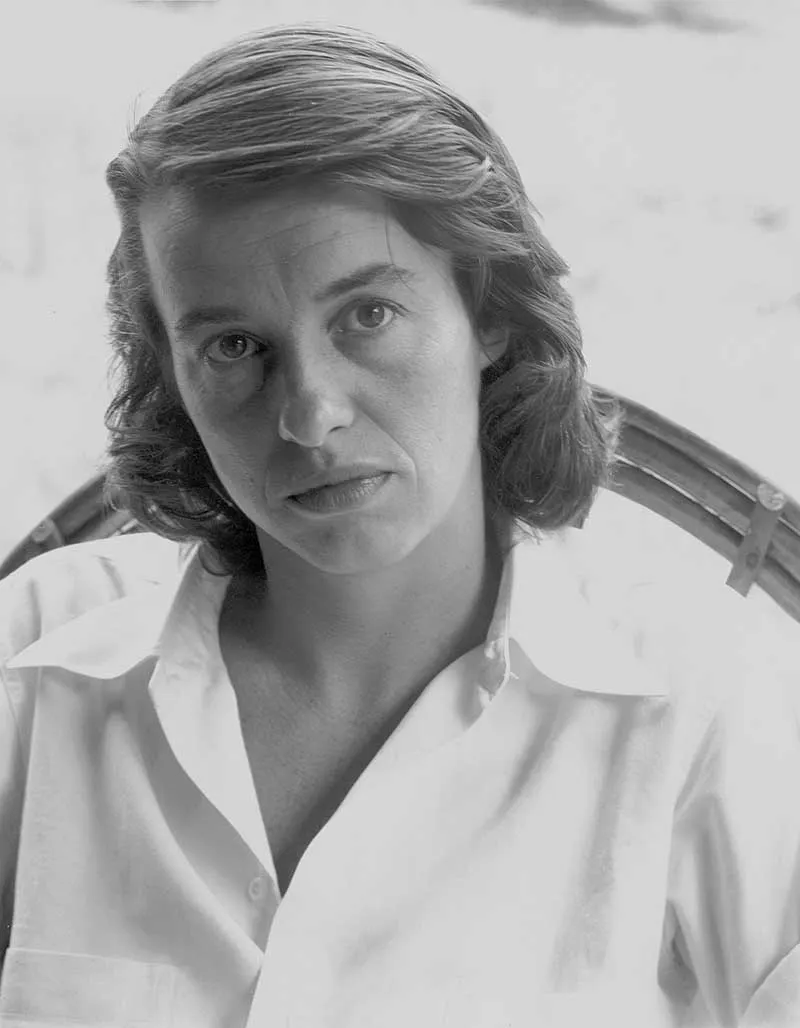
M.C. Richards's "Wrestling with the Daimonic," read by Phil Ford
57m 56s
This transcription blends promotional content for two podcasts—"Somewhere in the Skies" and "Weird Studies"—with a full reading of Mary Catherine Richards' essay "Wrestling with the Dymonic." The essay, delivered as a poetic lecture, delves into the daimonic as a primal, ambivalent force that can be both creative and destructive. Richards draws on etymology to link the daimonic to destiny and direct knowing, contrasting it with intellectual understanding. She shares personal vignettes, such as a spontaneous song of coldness and a dream of a teacher's kiss, to illustrate encounters with lust, anger, and inspiration. The essay emphasizes that these forces must be engaged through inner imagination, meditation, and dialogue rather than acted out destructively. Richards references Jung's transcendent function and Rudolf Steiner's sculpture of man between Lucifer and Ahriman as models for achieving balance. She concludes that wrestling with the daimonic is a hazardous but necessary journey toward wholeness, where one must hold opposing energies in creative tension. The overall message is that such encounters shape personal destiny and require conscious risk-taking to foster growth and transformation.
[Music] Spectorism Radio My name is Ryan Sprek. When I was 12 years old, my father and I stared up into the night skies and we saw something extraordinary staring back and whatever it was, sent me on a search to find answers to the UFO phenomenon and beyond. And that search continues somewhere in the skies. Coming to you from Spector Vision Radio, this summer in the skies podcast features conversations, interviews and roundtable discussions with scientists, scholars, historians, pop culture figures, and prominent UFO researchers. We also hear directly from you the listeners about your personal UFO sightings and encounters. Lastly, we bring you fascinating and engaging case histories. Each week is something different and truly unique. Somewhere in the skies doesn't seek to just entertain. We seek the truth. We bring new questions and theories to the table. We bring new voices to the discussion and we attempt to possibly find some answers to those mysteries that lay somewhere in the skies. New episodes are every Monday through Spector Vision Radio, on Spotify, Apple, or wherever you get your podcasts. Welcome to Weird Studies, I'm JF Martel. Starting May 7th on Weirdosphere, I'll be teaching a course on the philosophy of Jill Deleuze, or perhaps it'd be better to describe it as a course on philosophical practice as conceived by Deleuze. Over five weeks of lectures and discussions, we will explore the nature, meaning, and purpose of philosophical thought using Deleuze and Gatari's final opus, What is Philosophy as our guide. I've taught many online courses in the past, but none has elicited from me such shivers of anticipation. To learn more about this course on philosophy as a creative practice, go to weirdosphere.org. If you're a patron of Weird Studies, make sure to use the discount link posted on our Patreon page, and thank you for your support. Try as we might, we were unable to record and edit an episode for this Wednesday, April 22nd. Life gets busy for us this time of year, and a combination of travel, teaching, and writing obligations has forced us to delay the release of episode 211 until Wednesday, April 29th. On the bright side, the delay means we can tell you what the next episode is about a week ahead of time. Episode 211 will be on Stanley Kubrick's classic horror film, The Shining. We discuss this film, albeit obliquely, back in 2018, in our episode on Rodney Asher's documentary, Room 237. Since it's my favorite film of all time, The Shining deserves more from us. And so we've decided to correct this, as the caretaker says, and devote an entire episode to one of the strangest and most wonderful works of cinema ever made. But today we offer you Phil's lively reading of Mary Catherine Richards' essay, Wrestling with a Dymonic, which we discussed in the last episode. I read and loved Richards' essay before recording that show, but it wasn't until I heard it read by Phil that I realized just what a brilliant piece of writing it is. It was, after all, based on a talk Richards gave. Something comes across when it is spoken, and my buddy Phil, if I may say so, was able to channel that Dymonic energy with gusto. Are sure that you will enjoy it as much as I did? I leave you now and Ford and Richards' magic hands, and bid you farewell until this time next week. [Music] Wrestling with the Dymonic by Mary Carolyn Richards from her essay collection, The Crossing Point, published in 1973 by Wesleyan University Press. Dedicated to a drawing, The Devil as Horse by Carlo Pizzner, Spell-binding grace and haunted inwardness, exquisite leap of pride into the ecstasy of matter. Silken and alert, a golden darkness, self-suffering of the Dymon, caught, arched, unbroken out, your dark fires make Arias to light. My dear friends, we are embarking upon a hazardous journey, wrestling with the Dymonic. I think we should acknowledge that people have come back from these encounters, limping. Think of the Old Testament story of Jacob who wrestled all night with an unnamed being. He would not let it go until it gave him its blessing, which it did, but he had been maimed in the process. Let us have a moment of silence together before we set out. I would like what follows to have the flavor of a poetry reading rather than a lecture. These will not be poems in the usual literary sense, but rather poems of living and wrestling. I have enjoyed composing them. They have engaged me deeply. There are too many. This is the way with demons. They tend to be mule-ish and unable to budge, or overly spirited and unable to be still. You may find yourself wrestling, not only with your Dymonic, but with mine. It doesn't feel right for me to talk abstractly about the Dymonic. Others would be better prepared than I to give the theory of these dark encounters. I say dark, not as a value, not as evil or foreboding, but as not light. That is not conscious in an ordinary sense, though deeply conscious in an unordinary sense. I would rather share with you the wrestling itself. And so I call my presentation "Outs with the Dymonic." I hope it will be a true witness to creative process and person. If we want creative forces to play, we have to open doors and live at risk consciously. 1. Scene 1. I am rushing to the mailbox surrendering to a sharp irrational desire for the beloved. There will be no male for me. Why am I hurrying and hoping and desiring? What force carries me out to the road, while another voice says, "There is nothing." That desire is real; the hope is real. The empty box is real. Aroused by the cold spring wind I burously sing," it is cold. And life is cold. And life is cold. And life is cold. And life is cold. Cold, cold, cold. I let my voice out of the song into a kind of gasp and scream. I am not in anguish. I am wrestling. My voice sounds full. Seen too. I sing it again, and add a line. I can feel the anger beginning to rise. Worms. Concern for myself implicit. Who is cold? Who is angry? Who is singing about it? Making a song spontaneously in the living moment. The voice is very connected with release of energy, release of feeling, very connected with the demonic, with sexuality and aggression and power. Physiologically I'm sure, as well as psychologically and spiritually. It is the wrestler singing. A beginning. I was born near Hell's Canyon in Idaho. Where the snake river digs the deepest chasm in America. Maybe that's why I seem to have had such a lifelong running contact with breakthroughs from the depths. And it's from these depths, they say, that the star lights of heaven are most visible, even by day. Isn't it remarkable the help we get from coming to know what a word means? This "diamond", "diamonic" gets us into the heavens and the underground, both more than human, less than human realms. Divine, that's agreed, little else seems clear. That figures since we're in the land, not of brain, but of stars and chasms. Dark, in any case, as outer space seems to be starward. Some say diamonds are earth spirits, others say angels. But best is tracing of diamond to its root, which brings us into meanings of destiny and of knowing. The root image is to stand. Something about the "diamonic" stands within, unfolds as fate. Something about knowing stands likewise within, perceiving things and beings, their posture, stands.
gesture from the inside. Knowing is not from the head, not smartness, nor intellect. Too much evidence to make that a controversy. Knowing is direct perception. Intuitive? Let's wait to decide all that. In any case, it is direct sense of what something is, who someone is, which is never the rigid outside of appearances as the organ I sees, but finer, much finer knowing, what makes something tick, how things stand. The one who knows has special powers, attracts special trust, special awe. Knowledge abused makes bad magic, bad medicine. Glorious to find the root of Diamond in both destiny and epistemology are lives, character, and our ways of knowing. Here is a poem of mine, wrestling with Diamondic knowing. It is called Dream, Pentecost. Pentecost, you will recall, is the occasion fifty days after Easter when the Holy Spirit appears to Christ's disciples in tongues of flame above their heads, and the men begin to speak in languages they did not formerly know. Dream, Pentecost. The dark red hollow of my mouth, a room, a black tenibras room, a hellish trist, the dead of night, infernal aura burning within the walls, drapes sinks, rugs, tables, chairs, curtains, and toward each other we step my teacher and I into the center of this distance. I am in a dark chamber with my teacher, who is short and somatic, and in tweeds, and his hair is dark and curly, and close to his head, his nose is arched, and in the grottoes of his eyes, flash golden fires, his face is all a curl with flame, and force, and smiles, and lifelines folding into flesh, and the ruddy dark look of his blackness and his gloom, and the fiery essence of his dark power and the reeds of his wrinkling features fathomless where they start. I am in a dark chamber with my beloved teacher as never before, he kisses me full upon my mouth, a full kiss that has no passion in it, and in between my lips his absolute black tongue passes like the deft head of a snake lifted by muscle, slipping and stealing dark and purposefully between my lips. I was astounded. The dark chamber, my teacher, my lips, the dark gliding penetration of the tongue, the contact, a picture and a sensation and a portant I cannot be rid of. What speech presses he into me? What illumination just dates behind those walls? The gliding mind and the womb of the throat, the stealthy assured pressure, knowledge enters the dark cave where self is rooted in the bite of the teeth, is spread through the skull in branching aisles. The clean, un-psychological, un-passional entrance of my teacher's speech into my mouth port ends, by Lucifer's light knowledge finds its orifice. The female organ awaits by destiny, the tongue that speaks in it. All parables of love and genesis, the word sounds down the forming scale and spirit flutters up from the ground. About two. We have somehow to listen to it speak. What is it saying? Not to substitute feelings about it or thoughts about it or reactions to it for the real contact, the fire, the ice, surrender, knowing by the feel of it. We contune in sometimes, in meditation, in quiet, the stillness, the empty mind. What does sexuality say when left to speak for itself? I want you. I don't know why. I am unconscious. I want someone more than myself. I want to be known. There is this way forward to one another. Sexuality, not obsessively genital, but distributed throughout the body of our clay, love-making, making love, creating love. As we speak to one another, look in one another's eyes, touch, say hello and goodbye, eat, walk, sleep, come together, part, making love as if it were something real that could be made, like a cake or a painting or a garden or a poem or a cup. I sometimes have this sensation acutely that I have spent a day making love, offering myself to be known, making myself visible, drinking in the presence of my friend, finding him, knowing him, or her, or them. What does aggression say? I've got to move, to move outward. I've got to experience myself moving and powerful. I've got to wake up out of this sleep and this impotence. I've got to bloom and show myself and gun this motor and see what it can do. I've got to feel myself doing as much as I can do. Full steam ahead, get out of my way. I'm somebody. Rage. I'm tired of being cold and turning away, turning in on myself cold. I want to flare out first into flame, consume what restrains me. I refuse to take on another's form. I refuse to be programmed. I refuse to bank my fires. Impulses, which may in human beings generate love and will, are inherent in these uncanny voices. They cannot do it alone. We cannot do it without them. Out free. The path then may also be to awaken the diamonic, as resource, to hear its voice, to know it. Does an encounter with lust, hostility, anger have to be acted out in order for awakening to take place? I'm not sure about this. It seems to me there is enough acting out in our lives, through childhood and youth and the middle years, to draw on when we are ready to begin. I myself work with these sources very often by means of inner living pictures and acting out in living inner experience, like an inner theater or stage. Theater, I, there's the rub. This word too bears a clue. Same root as theory, a theory, a seeing into, a vision. For what can be seen into is not the object, the idea, the eye dose, the form, which invisibly is its reality, keeps it together, makes it what it is. True seeing is not by the physical organ eye, but by the inner eye of imagination and insight. All the worlds of stage in that all the worlds and inner vision, all the world takes place upon an inner stage as well as an outer one. The outer boards decay and are renewed. The inner spectacle is like a vasty seed bed for our daily doings, the scene. An example from theater may be helpful here. Consumed in jealousy, a fellow strangles Desdemona before our eyes, but not physically. The experience is enacted in another realm. Wrestling with the diamonic in the imagination permits us to work with the essential form of the unearthly fire by suffering it through in imaginations, insight may come. We make contact, feel the strength of the adversary, rest, digest, and feel ourselves different for the next encounter, and each night we dip back into sleep for refreshment and reworking, and in daily worldly practice we see how far we have come. Sitting loose, keeping it loose, not tiring ourselves out, not trying to win, keeping the contact, feeling the mutuality of our encounter, again, holding before our awareness the meaning of the word "adversary". The one toward whom we may turn, the one who stands beside us, the one without whom we are not whole. Inner development may help us to work for transforming contact in the inner realm through meditation, an inner dialogue, through prayer, and worship. Encounters with the diamonic are meaningful in terms of personal destiny, personal biography. They are not random thrusts from impersonal instincts. They are meaningfully connected with where we are in our lives, with our karma. Karma is the complex and subtle fabric of our inner forming, its causes and purpose. In my own life and study I have found that one does not go very far into one's deep wrestling with the diamonic without developing a sense of journey, which is bound neither by birth nor death. But wait, let me tell you what I dreamed recently. My dream will witness as my words may not. I hit her.
heard that there would be a storm. I was in a kind of little village near the sea, though not within sight of the water. I was worried, though no one else seemed to be. I went out to where I thought the sea was, by a house, but there was only a puddle. I had to go over a high dune to get a view of the waves. I walked up to the top, and to be sure the sky over the water was an ominous grey. More remarkably, a kind of black machine with insect legs was flying over the sea, dropping lightning bolts out of its belly. An amazing sight, the lightning zigzagging and bright jabs, like deformed suns rays, high over the water, while the black box with its open underside flew steadily toward the land where I was standing. I went back to the village and told what I had seen. Again, my agitation seemed disproportionate. Harmless lightning far out to sea, nothing amiss not hitting anything. Then suddenly the attack began. From somewhere, was it overhead? Came pointed assaults, not a random scattering of darts, but each one directed personally at some one particular individual in the group, not lightning, but long tubes with heads ejecting in our midst. The head, the face of a particular person, a person's head showing at the end of a gigantic long tube like the arm or leg of an octopus, a penis, a snake, a cannon, a mouth, a windpipe, a gorge, a jack in the box, jack in the pulpit. The many cables from the one umphalus each one carrying a special relevance for some one of us? Pulpit. Latin pulpitum. A scaffold. A stage. Out for. How about making masks of diamonic forces? Anger, lust, power, and wearing them, feeling the being? Then how would I move to the next mask? What is the gradient? From anger to what? More anger? Forgiveness? By means of what? What is the resource for change? Is it built in? The meristem, the child and man? When I was younger people used to tell me I ought to grow up. I always replied that I hoped to, though I wasn't sure how it was to be done. How does one grow up? Who is growing up in me? Who is wrestling? Who is dreaming my dreams? What do we do when we don't know what to do? When we have no resources, are undone? Do we ask for help? Sit still, press on into the dark, take a bath? Who is the person within me who is receiving the attack of lust or ambition or hostility or inspiration? Yes, inspiration without human judgment is diamonic, potentially destructive, hazardous. What is judgment and where does it come from? Is it a sense of proportion, of measure? How much and when? Proportions and time, rhythms, growth and change at the right time? Meditation is a measuring, comes from an ancient Iranian root, meaning a grain measure. Remember the story of a Zen priest who asked his disciple ten questions, heard the answers, and told him to go away and come back in twenty years. In twenty years, the disciple returned. The master asked the same questions. He gave the same answers. Excellent. Explain the master. You pass. Always remember the double nature of the diamonic, creative, destructive, depending. Doesn't always have to be creative in order to be creative, if you know what I mean. About five. What keeps one from falling into one extreme or another, losing oneself in diamonic possession, congealing at the wrong time, exploding at the wrong time? What is the inner gesture of balance? It is the center point, the fulcrum, the ridge pole, something different from ordinary consciousness or unconsciousness. One speaks of the transcendent function, which mediates the relationship between unconscious and conscious. His wonderful lecture by that title, the transcendent function, was published by the Student Association in Zurich, 1957. I recommend that you look at this if you don't already know it. However, another kind of picture is personally more helpful to me. It is the picture of man, free in his inner spiritual activity, to transform what-young acknowledges to be mechanical procedures in the unconscious and conscious. Man, working on himself, to free his initiative, to begin to free that inner fountain which can create future actions free of past patterning. Another great researcher and teacher of our epoch, Rudolf Steiner, carved out of wood a remarkable sculpture, which he called "representative of man." In this sculpture, the figure of man stands between two diamonic figures. His left arm is raised, his brow is noble, his mouth compassionate, his torso steady. Lucifer above, intense, winged, and falling. Aramann below, the gesture of his body, the beautiful tensions of roots, claws, vines, gnarled earthly forms, and earthly entanglements. They are, as it were, man's right and left hands, polarized forces. Man needs them both, but he stands, a pivot, a fulcrum, a human being. The weaver who holds the threads in his own hands, it is a mystery to be contemplated in this great artistic work. Let me conclude this bout with a poem written by Alfred Barnes, an American who has lived for many years in Dornach, Switzerland, where this great sculpture stands. The poem is called "Trion." Two partners on the way, I have to take, with them as partners then, you see me whole, and fitted to the task and claim I make to work the minds of Solomon and Saul. The partners are to me both day and night, between them I could never singly choose, as they augment each other dark and light and turning to the one myself I lose. They are like pillars to the right and left, on which an arch is raised and this am I, a keystone without which these two were clapped and separate, alone I too must die. My eye is like a rainbow of one piece, a meeting place, my claim on life, my lease. Beginning again. In early February, at Pendle Hill, there was a planning session for this conference. I was asked to explain my approach to our topic, which at that time was phrased as "positive dynamics of evil." First I passed around paper and colored crayons and asked each person to make, without thinking about it first, marks on the paper which would contain for him the feeling of evil. They were for ourselves, not for the group. I wanted two things. First to help people get in touch with themselves and their own relation to the subject, intuitively, before they started listening to me, so that they would have a base in themselves, a fulcrum, a point of balance to help them weigh my words. Second to touch with their feeling, the inner gesture, the motion of the energy. What kind of energy does evil have for you? Faint, passive, aggressive, circular, dispersed, pressing hard, skittery? What kind of color? Black, pink, violet, red, white, puke? I didn't say all this then, not wanting to organize the approach too much. Some people made symbols, like dragons, conceptual rather than kinetic. And that was valuable for self-knowledge too. Finding out what we are starting from in ourselves, our assumptions, our spontaneous bias, what we bring to a topic, the shape of our inner ears. All this needs to be mapped eventually, slowly, gradually, frankly, unemotionally, in the sense that we do not totally identify with our emotional reaction, though we may indeed nash our teeth or ache with unshed tears or gasp with wonder. There needs to be that place, free of thinking, free of emotion, free of purpose, that creator being in us, who flows from source in dialogue with the past, with patterning, affectionate toward bias, but free of it, or growing free through conscious inner activity. The creation of this new form in ourselves, this new man, this bud at the end of the branch, this head at the tip of the phallus, this inner sculpture and genesis is deeply connected in my knowing it, with the Christ's mystery, the Christ impulse. It has something to do with the mysteries of initiative and the higher ego of man, something to do with loving the adversary, something
to do with incarnation and resurrection, a new kind of spirit knowledge which connects spirit in man with spirit in universe. The mystery of the ego, the fulcrum, the ridge pole, the center, the free initiative, love and will is connected with the formative acting of the Christ being in the double realm of earth and spirit. He was born on earth. He descended into hell. He rose from the dead. He spent time in the desert. He was betrayed. He was crucified. He wrestled with the diamonic. He was tempted by spiritual power as well as by earthly. Should he be a magician? A worldly regent? Should he save himself? My dear friend's conference on religion and psychology, I sense such a deep and important truth here. I must give it this emphasis. So be it. I want to tell you of one moment that this knowing befell me. As you know, I work in the arts, with clay and with poetry, and associated with theater and the movement arts, and go about the world claiming that life itself is the greatest art. The dialogue between my life of work and my personal life has been continuous and deeply engaging, often severe and hazardous. First I wanted to be a boy devoted to brightness and athleticism. Then I wanted to be a woman, loved by a man. Then I wanted to be an artist, outreaching my trained intellect. Then I wanted to be a whole person. And what was that? My work in the arts has reflected my explorations and my relationship to form. At first I was afraid of form and felt that I couldn't make form unless the lines were clearly marked. Then I became experimental, though full of self mistrust and secret envy of people who seemed to know what they were doing and had unclettered walls and tidy houses. Then I began to affirm all forms as language, as communicative, attuned to the satchness of the mirrored breath upon glass. Ah, a marvel. Any stain, mark or mood, cure and chant, man. Say yes, yes to what we behold. The unfolding of my question this year is, what is form? That has been my stance. Not held in consciousness, but somewhere as it were behind the brain, deeply gestating in all my blood and being. On Palm Sunday weekend I was at the Camp Hill Village for mentally handicapped children at Beaver Run near Potstown. I had taken pots for my most recent firing to show my friends there. Dance, pots and ritual pots, inspired by the book Black Elk Speaks. On the wall of the room where my pots stood, there hung a new painting by my friend Carlo Pizzer, who had been director of the Camp Hill movement in America. The painting is of St. Paul. It is called Paul Waking and it shows two faces. One is the manly face of Saul/Paul as he might have looked on his way to Damascus. To his left, outright, shines a face of raying light, eyes deep in the abyss. The left eye of Paul and the right eye of the Christ being merge in the center. Paul's hand is raised as if he were both shielding his gaze and looking into some new distance. A powerful painting for me, quite amazingly free of its pigments. I sat together with these pots and the painting, in deep listening and moved by some unknown, unexpected force to look with Paul's awakened double eye. After hours of wrestling with roused negative feelings and picking my inner way among pitfalls everywhere, struggling still to see the face of the being with whom I was wrestling, I tried out, stormily, I know that the answer to my question, what is form has something to do with that painting with Paul Waking? Footnote. It turns out that the actual title of this painting is Peter Waking and it depicts a similar though different waking by Peter after a dimming of his consciousness during the events on Golgatha. Because Paul's experience bears such potency for one who, like myself, must be sometimes taken by storm across the abyss, taken into the new, I leave my mistake to make its contribution with Carlo Piznor's consent. And footnote. The forming of ourselves to live and work in the world whatever we do has something in it that is called forth and clarified by this unfolding of inner form toward the pivotal figure of man, the marriage of heaven and hell, the keystone in the arch, rainbow man, all the colors of the spectrum destined to stand thus, to know thus, a double realm, a form within. This last bout has taken quite a different direction than I expected or wanted. I feel some anxiety when I talk about these things, and I would rather avoid it. But instead someone in me decided to wrestle. What I meant to do was to tell you the stories and jokes that I told the planning committee after they had done their crayon exercise. Interruption. Last night a neighbor's barn burned down. All the cows trapped in their stanchions burned alive, the farmer's shock. I can't stand it. It's too much. I have to stand it. It's here. It's happened. I have to stand it. But it's not human. It's not fair. It makes no sense. Those helpless beasts. Exactly. It is not human. The diamonic is not human. Injustice is not human. The world is not human yet. That's why we have to wrestle and recognize the diamonic forces at work in life. We have to stand it. We have to stand firm and weep and gnash our teeth and bear the paradoxes of God and work to form the world from within. The center also evolves. What each one of us does moves the great sea helps in the great inner ecology of unfolding worlds. We have to develop resolute hearts and eyes that see through the veils. That's what I think. A clairvoyance suitable to the knowing of our modern age. The stories. These stories help me to live my life. I chew on them like spiritual cudd. They help to attune me to the diamonic. I share them with you here. Briefly. One. A Jewish rabbi was traveling by foot from one Polish town to another. It was a long way. Darkness fell and a storm blew up. The rabbi lost his way, struggled on knee-deep and mud until quite utterly exhausted and mired in the black impenetrable glue. He fell down, beard and all, into the muck. Hopeless. Helpless. He raised his eyes to heaven and cried out, praised be the Lord, the devil is on earth, and doing his work beautifully. Two. There is a wonderful legend in Jewish hasadism that in the beginning when God poured out his grace, man was not able to stand firm before the fullness, and the vessels broke, and sparks fell out of them into all things, and shells formed around them. By our hallowing we may help to free these sparks. They lie everywhere, in our tools, in our food, in our clothes, in all the deeds of earth. Three. This one is a joke, about the one-legged whore who charges extra. Four. This story comes from Lawrence Fender Post's book The Seed and The Sower. It is a scene near the end of the title story. The hero, handsome blonde and gifted, is suffering guilt and woe because he has betrayed his dark hand-acapped brother. He stops in Palestine on his way to the war in Burma, and visits the place near M.A.S. where Christ appeared to his disciples after the resurrection. He has a vision of Christ appearing, and the disciples come toward him. But Christ says, "One of you is missing. Judas. Where is Judas?" Here I am, Lord, Christ the hero, in anguish and horror, and he comes forward out of the shadows and falls a Christ's feet, covered with shame. Christ lifts him up and kisses him and says, "Beloved Judas, I could never have done it without you." Five. In a time of personal ruin, I was lying in the bathtub, wrestling tearfully. In the midst of total inner disorder, wrestling with the Lord's injunction to be perfect, even as your Father in heaven is perfect. I would never make it perfect. How was I to understand the word perfect and pure of heart? What means pure?
"Pure, pure pure apple juice." I began to sense a clue. "Pure apple juice is made from the whole apple. Bruises blemishes skin core the whole imperfect works. Pure apple juice is not pasteurized, refined, filtered, non-entity. Bruises blemishes worms and all. To be perfect is to be whole, a paradox even as our Father in heaven. Behemoth and Leviathan, Christ and Satan, thank you, dear angel, dear diamond for sweating it out with me here." Isn't this story connected with our conference theme? Our common concern over a bland goodness that is estranged from vital connection with the creative destructive sources of our inner darkness, our unconscious life and will? Our psyche feels unrest. It is hungry for life, for danger and magic, for creative communications. We search for something that feels real. In our search we turn to sex, to drugs, to war, to violence, searching for contact, for release. In our compulsion to think of ourselves as good, we rationalize and justify all our behavior, or we are self-accusing. Evil is unacceptable to us. Evil is the unacceptable. How do we come into dialogue or a relationship of some kind with what we regard as unacceptable? This is the first step in wrestling. To stop calling things good or evil. Stop judging. Stop saying war is bad. Violence is bad. Lust is bad. Anger, greed, gluttony, envy are bad. Stop saying they are good. Stop identifying with them. Stop accusing and justifying. Let be. Let some distance develop between oneself and these experiences. Some emptiness. Then perhaps the next step will be to make the relationship human and personal. War in me, lust in me, anger in me. What do they want? What are they saying? Do I want to hear what they are saying? Can I bear anxiety, hunger, pain? Can I bear uncertainty without an irritable reaching after fact and reason, a negative capability as the English poet John Keats called it? I would like to ask you now to do a short exercise in unacceptable ability. To put our hands into the sea. To begin to wrestle. Please take this moment to make contact with yourself in some experience that seems unacceptable. Do something. Think something. Feel something. Shout something. Picture something shameful. Nasty. Evil. That's all close our eyes and do it. Okay, that's done. The devil is in our midst. Part of our meeting for worship. About six from my journal. Note in New York Times March 21, 1971, from an article on African Christianity. Quote, "Africans do not view the problem of existence of evil in the same way as do westerners. There's no dualism, no concept of the devil as a force in opposition to God. Even the evil spirits are ministers of the supreme being." I have a strong self-negating diamond in me. Face it. Get the feel of it. Who is it? Who is sabotaging my positive acts? Let me see your face. Tell me your name. Apologizing, dragging its feet, a strong negative counterpart to my positive prayers. It throws up roadblocks. Roots becomes discouraged, loses its nerve, is weakened by self-doubt. Aha, so this is part of it too. Oh, my negative self. You are abhorrent to me, unacceptable. But so are my bright gifts, abhorrent and unacceptable to it. A joyful impulse crumbles in self-reproach. Sometimes it has the face of a witch who keeps going yakety-yak, big mouth, saying how it all is, how it all should be, lecturing me and everybody else. She is bothering me right now, and I don't like her or her tone. Arrogant and presumptuous and intrusive is what I feel like calling her. Stop telling me what to do. Yak yak ugly teeth like a cartoon of the nagging wife, a black witch in touch with the spirits. Invite her in. Sit with me at table. Oh, my horror, my despair. It's no sin to be a black witch. Invite her in. She begins to relax, to breathe, to ease off the strain in her face muscles. Her mask peels away like dry onion skins flakes off. We appear to be sitting in the kitchen of detes and my old sixth floor walk-up apartment in New York City, sitting. I'm nice to her. She weeps angrily coughs, curses, like in a convulsion, stamps her feet, a pool on the floor. Tears reflecting the sky. God help her, kiss her and love her. Like the hideous bride and chaucers, wife of the baths, tail, she will transform. There's a lot of my mother karma in this witch, sarcastic, critical, demanding, perceptive, warm, hilarious, doing for others. A lot of my father karma in the fear, sense of isolation, shyness, seriousness and good faith, pacifity, doesn't like to quarrel with this witch, prefers to let her rule the day. But that's not fair to her. She can't help herself. She needs me to help her now. I will talk with her. Risk her tantrums. Hold her. Give her something to eat. We will try to get on together. I think this evil witch has possibilities. She needs a friend. That's for sure, whether she knows it or not. Then there's the white witch, too, in her flowing robes and stars in her crown, harassing me with visions and ideals, always pressuring in some high-minded way, never satisfied. I salute you, O goddess, but you are not me. You are not the way. Are these like double shadows? One dark. One light. Help me sit at table with my fears of the dark side and my fears of the light. My negative soul is sorry for its black hardiness and coldness. My light diamond is heartily sorry for its fervor and greediness for good. Help me to be healed of one-sidedness. That's what the word sin means. To one side, missing the bull's eye, the center where dark and light are suffered through. Perhaps when I am on friendly or terms with these diamonds working in me, I will be better able to cope with them in others, hopefully. Oh, bless this day of the negative truth that devil is on earth and doing his work beautifully. I feel curiously relieved as if a burden has been taken off my back, a big sack, a garbage mister glad bag full of deformed critters, off my back, set on the ground, out they come, cursing and stretching and drooling and capering, a lot of sass in that bunch, a lot to carry around all tied up. Let them out. They may change their ways in the open air and a more wholesome environment. Better keep my eye on them. My yoke is easy and my burden light, Jesus said. Stretched in the four directions, the cross, embracing depths and heights, its crossing point is his wounded heart, pressing on. P.S., there is help to be gained from the little critters, mouse, worm, cricket, all the littlenesses of life bringing their valentines of whiskers and slithering and whistling to the worried realm. The little diamonds, elves, fairies, dwarves, gnomes, trolls and salamanders, they're part of it too, but be careful, their moods are changeable. "Outs 7, if we can't love our failings, what shall we love?" said to me by charity James, in conversation. About 8, an incident from a dark time in my own life, when I was in the diamonic waves and determined to get the good of them, lonely to the core, thanksgiving day, homeless and in crisis, out of my head with woe and desperation, sick abandoned, awake. I walked like a crazy woman through the backroads of the country, babbling to the night and
the stars, at wit's end singing to the future as if I were its court-fool, come in, baby, come on in, I called. I had chosen to surrender, to go all the way, to the bottom of the lost demented night. And when I thought I would faint with tension and inner chill suddenly, they're opened at the bottom of the long-cold shaft, a kind of dawning space and place. There were people, "Oh, my dear Christ," I said to myself, "here everybody is. Loneliness turns out to be the place where everybody is. The place of greeting. The great grand central station and central park. The waiting room. The intersection. The abyss. The fountain head." Everybody was there. All the people from the midnight cafeterias and cheap hotels where I had been wandering earlier, the bust terminal waiting rooms, the streets and kitchens. It was a moment of dreadful ecstasy. It changed everything. I could not any longer live as if I were alone, because I knew now that I was not. The common rooms are inside. I could not be intimidated by the contemporary jargon that describes reality in terms of ordinary physical appearance. I knew now in conscious inner experience what my intuition had hinted to me all along that we are present to each other and connected in the deep realms of our being, and when we deny it, we crucify each other. To love is to consent heart-feelingly to this interdependence, to make of ourselves apt vessels for its expression, to let this truth be lived through us, to stand out of the way. And ending. We choose to wrestle with the diamonic because it will increase our self-knowledge, it will help our growth and creativity, and it will enrich our lives and capacity for good. Our picture of life will change. Holness will become a suffering through of both dark and light, and the meaning of judge not will become clearer. Truth will include not only the shadow, but the dark unknowing out of which consciousness and creativity come. The dark in both senses is source, dark as the unacceptable, and dark as intuitive. Our sense of fact will enlarge to include all the facts of our destiny, dark and light. As our sense of fact expands, our epistemology will develop to include consciously the realms of spirit-knowing. Imagination, inspiration, intuition. In tune with this, life is asking us to develop a language true to the facts. This means that we may sacrifice our one-sidedly intellectual language for a language more adequate to the resonances of the double realm. This is a subject in itself. I wish only to touch here upon some implications which arise when we acknowledge the diamonic as source. Most important is the concept of the wrestler. An inner man stands as an arch between the polarities of being and transforms them, integrates them. He rides and guides the fires. The devil as horse may carry us, but the reins are in our hands. It is very important that we grow toward being able to surrender to the dark, not to be overwhelmed, but to contain it, like a vessel, to give it the shape of our awareness and our warmth. The vessel is alive, a living vessel, a living form, a living intentionality to use Rullo May's word, a living person/form, a living person/heart/form, a living person/heart/ warmth/sense revelation/dassine/thought/divining/present/form. Like beings change by being invited to circulate and breathe and dialogue with us. And we come closer to source through them. We seek to fill the earth's spirits, aramon, feces, with consciousness and caring. The fallen angel Lutzifer, addicted to ever-expanding possibilities, we seek to rescue by filling consciousness with the form of man's being. "Restling, unto the day is the evil thereof. Ressling relevant to the day. Not solutions for all time, but for this time. We must wrestle with temptation to become absolute. We must learn to live in the mystery of time and unfolding. Within the individual a moral source may wake. It is a birth in the depths. Powerful forces work against it. And so we wrestle." And isn't it remarkable that we do so? Continue to do so by some flow of courage and love of life. This is how I find our human sweetness, our saltiness, neighborliness, pluck and good cheer. They are all part of our depths of being, our divine source, our diamonic, if you will. A few scenes I cherish. Christ eating fish with his buddies on the beach. Christ drying his feet in Mary Magdalene's hair. Christ having a favorite disciple, the disciple whom Jesus loved. Christ impatient with his mother and brothers when they disturbed him at his work. Christ jemple with the exhausted disciples who were too tired to keep the watch in the garden before his arrest. The fallen, the criminal, the unfaithful, the foolish, the barren, the blind, ill, demented, violent. These are the Christ in each of us. If we do not love them, we do not love him. I was a stranger, he said, and he knew me not. The stranger within who is unacceptable, the unknown God. I was the stranger, and he knew me not. Must we not take this counsel seriously and reach out our hand to the one whom we fear? To see in the dark takes new spirit, slash eyes. It is difficult work to contain reality and not to falsify it. We need to be both vulnerable and unwabling if we are to be open to contacts with the spirit world both dark and light. But when we can do this, each receiving and offering helps to befriend the realm, to be able to say yes and no to it, and we ourselves are befriended. I had a dream in which a tremendous fire was raging clear across the full widths of the horizon. It was burning steadily toward the house where I lived. A woman neighbor and I packed our suitcases and ran away. One person remained behind. He did not run away. He was a friend, the director of a craft school where I sometimes teach in real life. This friend remained, and the fire swept through the landscape, through the house, through the pottery vessels, through the man. I could see the flames coursing through everything, but nothing was being consumed. After the fire had swept through, I returned, and the director said, "Everything is still here, only the color is deepened." And it was so. He was intact, and the pots were richer, deeper, more lustrous in their colors. It seems right somehow to set ourselves in motion, this June 1971 conference of friends, with an inner picture of the friend, who stands in the house of self, and ripens through the flames. He is there for us, even when the fire is too strong, and we have to run away. [Music] Specterage and Radio.
Podcast Summary
Key Points:
The podcast "Somewhere in the Skies" explores UFO phenomena through interviews, listener stories, and case histories, aiming to uncover truth.
"Weird Studies" announces a course on Deleuze's philosophy starting May 7th, and delays episode 211 on *The Shining* to April 29th.
The main content is Mary Catherine Richards' essay "Wrestling with the Dymonic," which explores the creative and destructive nature of daimonic forces.
Richards uses personal anecdotes, poetry, and dreams to illustrate wrestling with daimonic energies like desire, aggression, and sexuality.
Key themes include the daimonic as a source of knowing and destiny, the importance of inner theater for transformation, and balance between opposing forces.
Summary:
" The essay, delivered as a poetic lecture, delves into the daimonic as a primal, ambivalent force that can be both creative and destructive. Richards draws on etymology to link the daimonic to destiny and direct knowing, contrasting it with intellectual understanding. She shares personal vignettes, such as a spontaneous song of coldness and a dream of a teacher's kiss, to illustrate encounters with lust, anger, and inspiration.
The essay emphasizes that these forces must be engaged through inner imagination, meditation, and dialogue rather than acted out destructively. Richards references Jung's transcendent function and Rudolf Steiner's sculpture of man between Lucifer and Ahriman as models for achieving balance. She concludes that wrestling with the daimonic is a hazardous but necessary journey toward wholeness, where one must hold opposing energies in creative tension.
The overall message is that such encounters shape personal destiny and require conscious risk-taking to foster growth and transformation.
FAQs
It features conversations with scientists, scholars, and UFO researchers, along with listener sightings and case histories, aiming to explore the UFO phenomenon and seek truth.
It explores the nature and purpose of philosophical thought using Deleuze and Guattari's 'What is Philosophy?' over five weeks of lectures and discussions.
Life got busy for the hosts due to travel, teaching, and writing obligations, pushing the release to April 29th.
It focuses on Stanley Kubrick's horror film 'The Shining,' dedicating an entire episode to the film.
The essay explores encountering and wrestling with the dymonic—a creative and destructive force—through personal experience, inner theater, and imagination.
It describes a dream where the speaker's teacher kisses her, passing a black tongue into her mouth, symbolizing knowledge entering through a dark, spiritual encounter.
Chat with AI
Loading...
Pro features
Go deeper with this episode
Unlock creator-grade tools that turn any transcript into show notes and subtitle files.
 PodcastTranscript AI