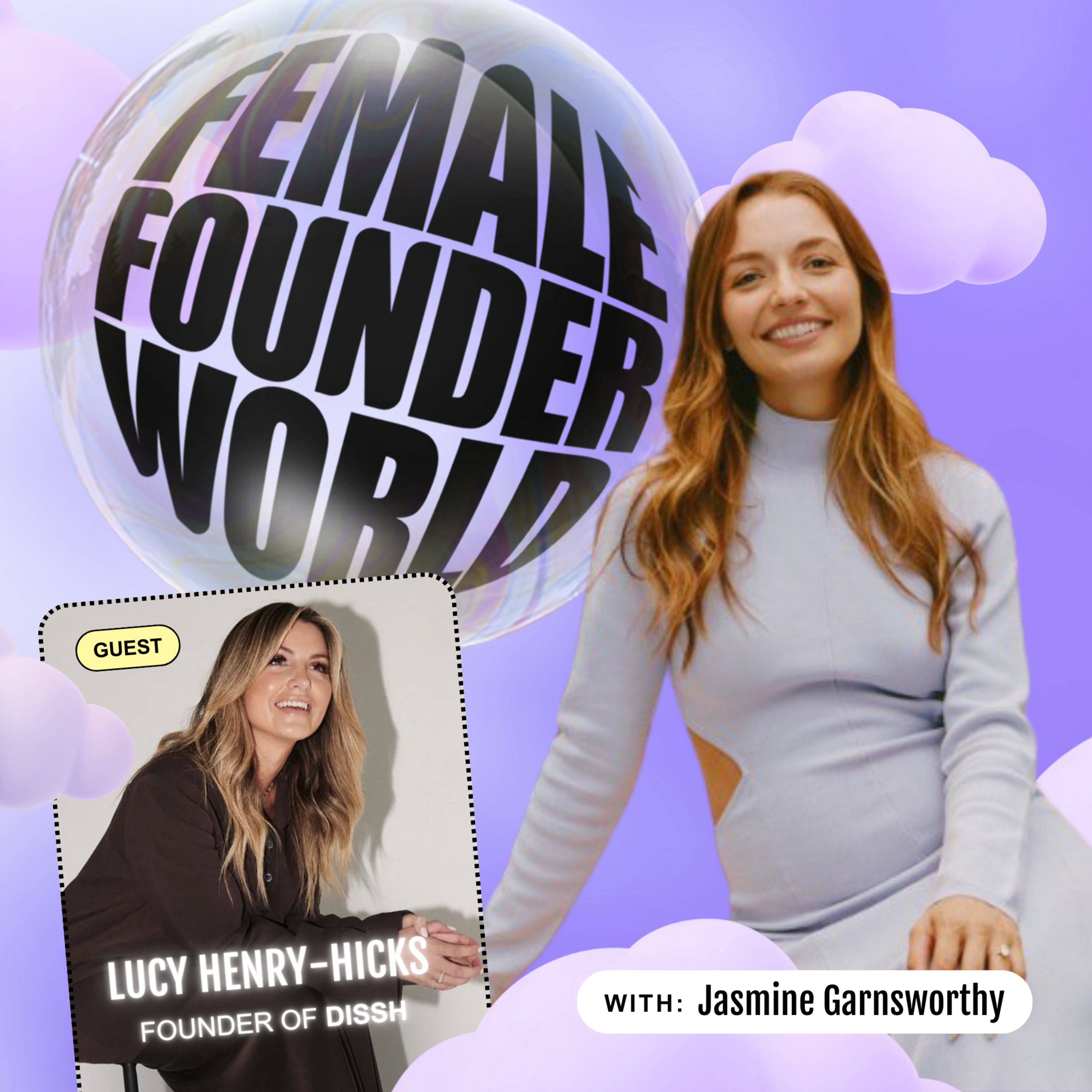
Lucy Henry-Hicks Made $90 Million In the Fashion Business Last Year (ft Dissh founder)
40m 21s
In this interview, Lucy Henrenholt, founder and CEO of Deish, discusses the brand's evolution from a multi-brand retailer to a vertical brand specializing in neutral, effortless clothing. She highlights significant milestones, including achieving $150 million in revenue, expanding to 14 boutiques in Australia, opening a store in Los Angeles, and launching a partnership with Selfridges in the UK. Lucy explains the strategic shift was driven by industry changes, a desire for creative control, and personal alignment with design. She emphasizes understanding customer nuances in different markets, such as the US and UK, through travel and research. Additionally, Lucy shares insights on balancing business growth with motherhood, stressing the importance of support systems and flexibility. The conversation underscores the challenges and successes of scaling a global brand while maintaining a focus on core values and customer connection.
Hey, business besties. Welcome back to Female Found World. It's Jasmine and the host of the show. And today I'm chatting with Lucy Henrenholt, the founder, CEO and creative director of the dish. Welcome. Thank you. I've been wanting to talk to you for a long time. But I think we have been trying to do this. We've been in the DMs trying to organize this for such a long time. But I'm and it's so funny that we've like landed in LA at the same time and doing it here, rather than in Australia. But here we are. For people that don't know Deish, I don't think there's anyone listening that doesn't know Deish honestly, but what are you guys doing? What are we doing at Dish? We are a vertical, a sterling vertical brand. We love our neutrals, we love our effortless style, parallel clothing is what we do best. And we have 14 boutiques in Australia and we just open up first one in the US. Amazing. Yeah. I want to run over a couple of milestones that the business has hit that is public that we can share. You hit $150 million in revenue last year. Yeah. But those 14 Australian boutiques that you mentioned now, one in LA, over 250 permanent staff, 450 including Catrols, which is wild. What other milestones can you share about this business that you've built? We recently, this year we launched, partnership with Selfridges in the UK. So we've just sort of started moving into the UK market. There's a natural organic flow into the EU as well as the UAE, which is starting to sort of build for us. So one of the greatest milestones that we're able to sort of get excited about is that we've been able to take this Australian brand to the global consumer and we're actually telling us that she likes it. So we're excited about that. It is such an amazing story. I've got this timeline here when you joined the business and through to what's happened over the last kind of just under 10 years, since you've been part of Deish and I want to start in the early days. And then we're going to get into the tactical stuff about what's been growing this brand and your experience of growing this brand is a founder as well. But you joined in 2006. Tell me the story behind that. Yeah, I joined in 2006. So I finished school basically. I went to uni for a couple of years. I come from a family of retailers. And so my mum had actually opened the first dish store already when I was in high school. So I had sort of been in and around the business from day dot. And then when I went to uni and enrolled myself in I think it was economics at the time. Thinking that maybe I wanted a career outside of fashion. I think it didn't take me long to realise that it was in my blood. And that's what I wanted to do too. So yeah, it wasn't long before I joined in the retail business with mum. And then yeah, we've grown it together from there. Wow. And you started as a buyer and then kind of like worked your way into bigger roles. But when did you kind of take over as the like CEO director? When did that happen? That happened probably pretty early on. I. There was a big shift in the at the time we were a multi brand retailer which were leading with stores. So this was like back in the early days. This was before.com. And it was about 2011, 2012 when really there was a big shift array from stores into online. And we launched our.com then. So that shift in the industry and I guess strategically and tactically what it meant to lead a retail business changed. And that's when I started to lead the business because we went from I guess marketing ourselves with storefronts to needing to understand Facebook and Instagram ads and really had a run in e-commerce business which is different to a storefront. As someone who like I'm a dish customer, I've been a dish customer for ages as someone who's like been following the brand. It's like the surprise when I was looking at the timeline. It was like really early 2019, 2020 that you moved from this multi brand retailer model into the dish that we know today. Can you talk me through that decision and what what happened? Yeah. There had. It was there was a period of I guess slow trade from a business perspective but then also a great co-founder relationship story of a breakdown. I think after working together for a really long time you know in the family business with mum it was time for me to do my own thing and then I'd been coming for a while. So we got to the point where change had to happen and that that was sparked by me saying hey I'm going to go do my own thing. And through my time I had seen retail from a lot of different angles. I'd seen multi brand retailing with we'd launched a vertical brand or in house brand within that retail mix during that time. So I'd learned how to design and design from scratch. And so I was at the point of my career where it was really about kind of stepping back and saying okay what part of this am I in love with? What do I really want to do for the next 10 years of my career? And for me that question was quite easy to answer at that time. It was I love design. I love taking something from inception into reality. I love having that creative control. And so for me I really wanted to start a vertical brand that emulated and reflected my personal style and my values. So that conversation was I've got to go. But that was also replied with or my time here is done too. That was that was mum's reply at the time. So then we were in a position of okay well what do we do with this? Well I want to understand practically like how you do this. Like it feels like there must have been a lot of unravelling of what the business looks like and then clarifying about what the future of the business was going to look like as you made this switch. I just want to understand what that looks like. Yeah I think the unravelling is the process of stepping back and going what's working here but what's not working here. I think the industry at the time was going through another big shift. And that was around really the idea of multi-brand retailing as we knew it was on the decline. Like I'm we've seen that across the world. Departments towards struggling or multi-brand retailers are struggling with margins because it's very difficult that model obviously to be profitable. And we were a symptom of all of that. We're experiencing that. So I think the industry was shifting and then on the other side of things I think vertical brands for the first time with the internet have the opportunity to go global. So there are scalability but also their ability to become DTC retailers themselves was new and available. So once where brands needed to rely on retailers to meet consumers now they didn't. So there was a stepping back and I guess looking at the retail landscape as a whole and going where is this heading. But then also how does this align with what I'm feeling personally and what I really want to invest my time and energy into because I think that's probably also where I was at personally. I really needed to be in love with whatever it was that I was going to put the next 10 years into. And that was also a learning retail is not for the faint-hearted. It is not complicated but it is incredibly demanding and you got a love, love, love what you do. The reason why I like wanted to ask that question is because I think there are going to be a lot of people who are listening who are in this position of okay maybe my business is kind of working but maybe I see a bigger opportunity over here or something that feels more aligned over here and I want to make the switch to get there and so I'm always curious when I talk to people who made that really hard decision and it worked out for them and how you make those tough decisions in the business and then execute on them. So that's just like the background of why I want to dig in here. Yeah I think that's it and it's a really I think great like a topic to discuss because where I was personally is leading up until that point there probably had been maybe three or four years of I feel like change needs to be made. Yes. This isn't a lining with me anymore. This doesn't feel good but I'm going to keep going because this is the path that we're on and so what I've also learned about myself is I can really be out of alignment for a certain amount of time before that my own inner consciousness will push me in the direction that I need to go. So I got to that breaking point of like hey like this isn't working. I don't want to be doing this anymore. This wasn't feel good and that was a real catalyst for like being changed needs to be made and there was a lot of risk at the time and there's a lot of unknowns and a lot of uncertainty which I'm so grateful that I was doing business coaching in personal development at the time because I think it helped me really kind of get comfortable with the leap into the unknown and I had those sort of tools in my toolkit how to like manage my mind through that but I absolutely felt uncertain and unsure but I also knew that well I can't keep doing what I'm doing and my heart needs to be in it so I have to take the risk. Then in 2021 you launched into the US taking an Australian brand and then launching in the US I think that some brands kind of think that the US is like Australia but just bigger and it's just really not and so I'm curious about how you made that a success because it clearly is a success you've got a store in LA I lived here for 10 years and saw people wearing digital the time and I feel like it's just an amazing Australian international success store right now. What did you do to make that launch work? Yeah I believe at the heart of it it's understanding the customer right and I mean that applies for all regions always and that can be challenging for Australian based businesses and brands because we are so far away from everything. Yes so far away. We are so far away. We're so far away. So I had the good fortune of having travelled here to the US to the LA specifically a lot through my early years in fashion on buying trips and through various roles at different times and then in 2018 I made the decision to actually come and move here for a little while so I was here for maybe like six to 12 months and again just like understanding the customer and the nuances about the market and how it was similar but also how it was different that's been key and I've applied that same I guess understanding to our launch in the UK and that's that sort of served us well so understanding customer is really important and how you I guess get closer to her through travel or any other
opportunities you have, I feel like that's like the most important thing you can do. How is the customer different between Australia, the US and the UK? Very, and it is similar and different. Yeah. I think there is a likeness about consumers globally in more recent times because of things like Instagram and these global platforms where we're all being influenced by each other, which is great in some ways, because I think like trend and trend and what feels good creatively, I think is very global now because influencers, I mean, you'd be the same. Like we probably follow girls from the UK or the US or Australia that all were inspired by, but I think there's absolutely some tactical and strategic nuances about how consumers behave, how they shop, what their drivers are, some of that's driven by climate, well, a lot of that's driven by climate, but then I think just like cultural norms also like influence that and I think that's what you've really got to kind of get under the hood of when you're entering into a new market and really understand because that that should influence your strategy. There's one part of running a business that tapped GPT or Google just can't solve for me and that is business finance. It is one of the most gate-capped areas of business and yet it is what separates running a thriving company from really just having a very expensive hobby. Every founder at every stage of business deserves to feel confident managing your money and that's why FEMA Founder World is partnering with Mercury to bring you cash camp. It's a free three part live workshop series designed to teach women in business the financial skills that we need to scale. Across three virtual sessions, you are going to learn how to build a pitch deck that attracts investors, how to understand the different funding options that are available to you to help you grow your business because it is not just about fundraising and getting investors and finally how to forecast cash flow and plan for long-term financial growth and stability. Each session is led by an expert founder or operator from the FEMA Founder World community and it'll be delivered in our simple, easy to follow no fluff format. If you haven't tried Mercury yet, they are the banking platform that every founder seems to be switching to right now. It's simple, intuitive, refreshingly modern and just nothing like the business finance tools that so many of us business owners are used to. Head to FEMAFounderWorld.com and click on cash camp to join the workshop series or click the link in the show notes. Mercury's a Fintech company, not a bank, for important details, check the show notes. In 2022, I'm going to go through your timeline a little bit here so we can get the full picture of how this business has just grown and how you have grown and then there's some stuff I want to dive into more specifically. But 2022 became a mom and now that I'm so visibly pregnant and we have our big Fintech Founder World Summit recently and the amount of people that came up to me and asked me about building a family while building a business and advice. I don't really have any advice. You just need a lot of help and I've got nothing to give you because I'm just in it figuring it out. But you have two kids now. You built this incredible company. You're living across the US and Australia and I am curious about your perspective on doing both of these things at once and the advice you have for the woman who's listening who is nervous about starting a family because she wants to build her business. Well, it's a big one. And if I'm completely honest, I think my feelings about this change daily, like I have days where I feel so empowered and so capable and then I have days where I'm like, "This is just way too much." Yeah. But there's more empowered days than there are too much days and I think the advice I would give my younger self before having a family was would be, I think it's a hard one. The oldest much as you can before family. Like I really honestly think if you can have those like hyper-focused years before you enter motherhood, it is really helpful. But on the same moment, you will figure it out and you can do it. You do need a lot of help and a lot of support and finding your voice to ask that help and being really comfortable with that help. I think it's also really important. Don't think that you're going to do it all by yourself. Like that, I think is really important advice because I remember when I was in that position and I would look to these other founders that I was inspired by and you're not seeing the behind the scenes, right? You're just seeing the front and it's like how is that actually lighting up? Like how is she making all of that fit in? And I think the reality isn't the truth is there is there's a lot going on behind the scenes to support her on the family front and on the business front to make it possible. So true. And it's messy. Yeah. So true. The other thing that I say, I was just literally the guest that came in before you talking to her about this and she said, you also just need to make sure that you're having like before you have kids have kids with somebody who actually wants to be a parent and wants to like step into that role so that it's not defaulting to you for everything because that just won't work or you need to have that good support system, whether it's paid, whether it's family, like people that you can trust to step in and look after because you can't be there all the time and you need the flexibility of it to day care is just not enough on its own. No. And I mean, like to just to talk to our situation, my husband had a business that he started in his 20s which he built from the ground up and we got to a point where after the birth of our first child, we had to make a decision and it was my business or his business because we couldn't raise children and have two businesses. So it was he actually exited his business to be able to support our family more but also to come and work in my business. Yeah. So I guess the complexity of that in a relationship is being too and these are the big these are the big decisions I guess that are going on behind the scenes to like make it all happen. I also think that him coming into the business into Dish as well, it's kind of like at least you're all like pulling in the same direction rather than having these two like competing things which I think can be really tough. Totally and we've like that has been absolutely our experience like even just to understand each other's pressures and like when pressure is on because he's in the business now with me, he knows like if I've got a big week because he understands what's happening in the business at that time. So it's all of that I guess like Un said communication that's going on between us now because we're really like on the same page and that's been really like helpful to I guess just yeah navigate and make sure that things are smooth running smoothly at home and and in the business. I want to talk about launching into the UK and launching into self-reaches and what you guys did to support that. We we self-reaches reached out to us around if we were interested in taking on a pad in a pop up capacity so that was really around like testing like peripheral concept like is there a market here for Dish. We had had some early science the year before some before so that would have been 24 that we were getting some interest from on our own website so I think we all felt like yes there was interest from the UK customers so we said that would be a great opportunity obviously self-reaches as an incredible department store arguably one of the best so we're not the best in the world so we jumped on that and then we sort of built out our marketing strategy around that so okay we're going to launch wholesale for the first time in self-reaches we actually currently didn't have a wholesale business at all so we were we're learning how to wholesale but also do that in the UK which is on the list out of the world and so yeah then we built out the marketing round that so what was our influence is strategy going to be what was our paid media strategy going to be and or anything else that we we needed to support the retail operation of that pad in self-reaches so that was the launch plan and then the idea really has been around just like allowing this to be a great learning opportunity so we're just learning learning learning fortunately it's been a really big success and we're staying in self-reaches and that's now a long-term partnership but we also gave ourselves a bit of the permission slip to sort of say like let's just see and if we don't get it right first time then that's okay too I'm really curious about why why you went down the route of opening up all of these boutiques and stores rather than going into retailers margins big on huge rightly did a see can't compare with wholesale and that's why ddc will always be like our primary channel especially ecom.com versus stores so that's hugely integral to our business model and I guess the control like the creative control of the brand but also the product lifecycle too as soon as you start to partner with wholesalers the bigger that partner is and the more the larger percentage that is of your revenue stream then they start to dictate the terms to you around lead times and markdown and consolidation strategy and then that's sometimes a messy place to get into because you start making decisions maybe that so retailers more than what's in the best interests of the brand and your all business so that's really important to us that we we don't lose that control. something that I think you've just done so well and I think it speaks to or like it ties into this conversation about the stores I walk into a dish store and I it just it feels like it feels like dish I see a piece of clothing it looks like dish like if I see a piece of content online like you have such a strong brand and I want to know like what your process is of creating and then externalizing that vision of what the brand is and then just like protecting it as you grow because I think as [BLANK_AUDIO]
business gets bigger and like you've got 250 something permanent staff and it can get diluted, I think a lot of the time and you haven't, it's actually gotten stronger. I appreciate it. And so I want to know how do you do that because I've got a tiny business and I struggle with that in my little team of making sure that anything that is published or that is created is reflective of what the brand vision is within me. Yes, I appreciate that. I probably feel like we've made some compromises along the way and that's the perfectionism within me. But it is probably one of the greatest challenges because you can't be everywhere. I think what has been most important to us through the growth, through our growth journey and what I am committed to holding true to is that the creative vision is more important than anything and that we're not going to lose sight of that in favor of trade and targets. And so that's also an easy place to get into, right? Like you're chasing growth for growth sake or because there's a number that you've agreed at a board level that needs to be met. But in order to do that, we've got to make some creative compromises along the way. So often I guess staying true to the creative path can maybe be like slower and more resource-heavy, but my view is like that's the long game. I think if you want to take the express way, like you get absolutely do that, but sometimes those are not always work out in a long, long time. Yeah. Lastly was a pretty big year. You brought in investment for the first time, I think, was that the first time? Yeah. Tell me the story of how that happened and why now is the time to do that for dish? Yeah. So yeah, I confirmed. Well, I sold 40% of my business to a Australian-based investment retail group called BBRC. So that's headed by Brett Blundey who is as Charlie in retail magnet. He's been doing it for a really long time. What drove me to that decision was we had early success in the US and that was building and building quickly. They understood that for us to take this brand globally, we were going to need partners who had walked that path before us. So while he, while this investment firm at a Australian, well they started in Australia, they're actually global. So they have experience with global business, US, UK, Europe. So I wanted to partner with people who could share those lessons with us rather than us making those expensive lessons ourselves. And then also I guess on a personal level, I was starting my family and growing my family. So I, we as female founders need a lot of support. And so up until that point, I have been driving pretty much every part of the business creatively and strategically. And certainly on the international expansion side of things, it was my understanding of international markets that was allowing us or helping us to get this cut through. So I understood that for the business to keep moving forward while I was taking some mat leave or taking a little bit more of a step back, we really needed to support the executive team within the business with, you know, people have been to much longer than I have to share that wisdom and to help guide. And so that's been the experience so far. And I'm so grateful for that. And I think the investment I read there, AFR, I'm sorry about it, it was like a 40 million dollar investment, right? 90 million dollars. 90. Yeah, I'm looking at my notes and I'm like, is that a 40 or nine? Once that is signed, seal delivered, the press goes out like, does your day to day change? Are you able to take more of a step back and bring in more support? Like did that actually eventually? And how do you feel about the decision now that you're kind of like a year later? Yeah, for me personally, it did change because and I'll talk candidly about I guess like how I feel differently. And I think that is really what the key driver for me was I, my family's livelihood was in the business. I even though I was supporting our lifestyle and my business was supporting the future of our lifestyle and not lifestyle in a what's the word? Grand family. Yeah, you're supporting your family. Yeah, it's a bloody family. And so for me, I, that was all every time we took a big risk and we were about to take a really big risk. We wanted to be US, we wanted to open stores internationally. Like these are big financial risks. I wanted to feel like I had myself my own back and that we were secure as a family and that we could then take some bigger leaps of faith, knowing that yeah, that financially we would be fine. And so I think for me personally that has made a big difference. I think that we are now in a position where we can sort of separate our personal wealth from the businesses success and that's a great place to be in. I want to talk about the way that you've been building the business and the kind of like CEO you are. You are not like I'm not following your daily vlogs on TikTok and I'm not like getting your LinkedIn posts like you're not a forward-facing founder and so many are now. First of all, why and what is your point of view on building in public? A couple of things. I think for me at the moment my focus is growing the brand and the brand is dish. The brand isn't Lucy and it's really important for me that those two things are separate, especially if you are looking to bring in partners into a business. It's really important that your personal brand and the brand that you're building are separate entities because it's important to me that dish will live on well into the future without me. I'm not creating a brand that is only me. I'm creating a business that I want to see here in 10 years, in 20 years and 30 years no matter what I'm doing. So that was really important to me and for that reason I've separated my personal brand from the dish brand. I put all of my creative energy and vision into building that dish brand. So that dish brand is a reflection of me and my values and my creative style. So then I guess it leaves Instagram a personal platform to me and for me like it's just focused. I'm like I'm raising two kids. I'm running a business. I don't need or feel driven to post on Instagram personally. When I think now it really is a business platform. That's this primary object totally. Yeah. I do. I find it like actually quite refreshing to hear someone say that because there is a lot of pressure. I think yeah to show up and like you said it's like and I do think there is an opportunity there especially if you're like starting now you're scrappy. Your bootstrapped you are someone who embodies your customer and so therefore you can embody like personify the brand for them but I so I understand that as well but it's really refreshing to hear someone who's just kind of said no I'm not doing that. I've got no like I'm not I'm not re interrogating that every week like that's just not what I'm doing. That's not the strategy. There's no guilt around it and just feels so confident in that decision as well and it's obviously worked out so well for the brand that it's nice to have that example out in the world. And everyone circumstances are different and I get that and I think for me it's just like I'm super discerning with my time and really like really focused on like what's the objective here. So like if I can't clearly say like investing two hours a day in social media is going to get me extra time if I'm not clear on what that is then it's like I know for right now but that doesn't mean it's a no for ever. It depends on like what what my next my next career is or what I'm going to do next and if that changes then I'll be all in. Let's talk about marketing a little bit more. I want to know what is the engine that's driving dish on the back end from a marketing strategy perspective. Yeah so we're still probably 80% social ads or social it's three Instagram and TikTok still Instagram is the biggest platform for us compared with TikTok I think that just relates to our consumer age we are definitely more and millennial so socials are a big part of our strategy and then influences probably second to that yeah also a huge part of our strategy and those two things working hand in hand has been sort of key to driving successful campaigns. What advice do you have for someone who's trying to figure out ads right now? It's getting more complicated absolutely I think it is getting more complicated we are what we're doing and I think it's paying off but we are getting into the psychometrics of consumer behavior and really trying to get under the hood of what's driving consumer purchasing behavior and who our customer is at a really granular level I think that's helping us become more targeted but also to be much more discerning with the type of content we're creating and the real why behind the content like what is the intention with this video and what is it here to say I think that is really important because there isn't the same I guess probably scope of opportunity that they used to be it's becoming more expensive so you need to be like really clear with what you're doing and what you're putting money behind interesting on like a super practical level what does that mean are you doing like where are you getting those insights and like how are you tumbling that into creative? Well there is tools now so we I need to remember that actually the platform but our digital marketing agency actually has a bespoke tool and they're actually capturing data, audience data for us and we're grouping them into customer segments and then we're really going granular on those segments so like who is she, where is she, what is she wearing but look like brands but it's even more it's more granular than that now like you can get a lot of information on the customer herself so we're really looking at that then we're also matching that with what type of
that customer is responding to and why. So is it a creative, is it a video that is shot in this particular format? Does it have a particular, say, audio behind it or a song? They'll leave in, there'll be differences in the tempo of the song that will influence whether that ad has a better thumb stop rate than something else. So we're really getting into the granular on that, which is good for us because we're really like thinking long and hard about like, yeah, what are we trying to do? What mood or what feeling are we trying to win, Boak? And is that aligned with our brand and our vision for our brand? Is that something that we want to put out there? Before we started chatting and before the mice came on, you said that you're working with a US agency and it talked about the decision around doing that. I'm curious about why. - Yes, we did. There's a ironically, actually, my brother owns a digital marketing agency in LA and he's been there, partnership has been, I think, key to our success as well because they were based in the US and that was from the get-go part of our entry strategy is to be working with the US-based agency. At the time, there was a lot of Australian brands that were utilizing their current agency structure which were usually Australian-based agencies to market into the US or market into other global. I have, I feel that it's the best strategy is to work with an agency that's on the ground in the market that you want to be pushing into. So understanding the customer again, the closer you can get to it and the more intimately you can understand her then the more success you'll have. - I want to now talk about hiring a little bit. So you've got this big team and I can just imagine from when you joined the business I'm sure it was not 400 and something people that were working for you. How do you think about finding talent and what makes a good hire? - We're very focused on culture and what I mean by that is we will hire someone for a culture fit almost sometimes for more so than the skill set or the experience. And there's been many, many times where we've sort of trained someone into the role because we feel like they're the right person for the role. So that has been sort of key to our hiring philosophy from the get-go. Like I'll share a couple of examples like our CEO who is actually now acting CEO. She's supporting me while I've been having a step back after having my son. She was the store manager at one of our stores like 10 years ago. So our head of people and culture. So she sees overseas, those 450 people. She was also a store manager at one of our other stores in the early days, but culturally very aligned with the values and the vision and understood what we were trying to do. And I think I was able to train them up into those roles. So I think that is really important. Culture is really, I think what in my opinion makes a business scalable and able to grow. How do you as a leader and a founder, like up level? I'm just like looking at journey over the last 10 years. And like I'm sure the person that came into the business is not the person that I'm talking to right now. You mentioned like you're working with coaches in the beginning. What else are you doing to become this version of yourself? Yeah, I did a lot of coaching in the early days, which I loved and I still do. Like I need to hold myself accountable. And I need to think at the top, you need to keep pushing yourself because if not, it's easy not to write because you're the one pushing everyone else. So who's pushing you? So I think having people to hold you accountable is really key. I have as I've grown, my business has grown. And that's something that I say all the time. Like I think that's sort of also fundamental to all business success. Like it's a personal and spiritual journey arguably. It is a reflection of you. So it will grow as deeply or as quickly as you grow. So you're almost mandated to keep growing. Like you have to keep growing. If you want this baby of yours to keep growing, the same way we want to be the best parents that we can be. Like we want to be the best partners that we can be. We're going to learn those skills. It's the same with business. So I do that. I'm still encouraging. I take it deciding to partner with a VC. And it's not even VC really. It is like a, it's a business partner. That was also around growth. Like because my partner, he's 62. He has walked this path before me. He's grown global businesses. He lives on the other side of the world now and overseas. I think 10 different boards. And so for me, it's like he's a huge exporter. And to be in close proximity to him and to just learn through observation and through conversation is also, was also really at the heart of that decision because I was sort of looking at myself going, well, how do I keep up leveling myself? So yeah, just finding those expanders wherever you can find them. Have you had kind of like formal mentors as you've been building the business or has it been less formal? Less formal, like, yeah. Yeah. I think for me, I've been lucky enough to come from a family of retailers. So I guess I've always had that on call. Not that our business models are the same or that how we do things is the same. But there definitely has been line of communication. Like, hey, I'm thinking about this. What do you think about this or was this a shit idea? But no, so I haven't really seek that formal mentoring, necessarily. But I think it's a great idea if you can find the right person. The last thing I want to ask you, Lucy, is for resource recommendation. Something could be a book. It can be a habit that you have just something that's been helping you as you've been building the business and up leveling. And that other people who want to follow the path that you follow should go and check out. This is probably the opposite in some ways. But for me, like, meditating, like, number one, like, if I didn't do that, I wouldn't be who I am today. And I would not direct my energy with the same level of intention and focus that I do every day. And I really believe that that's what grows the business. So my commitment to that, to taking that 10 minutes and just taking a step back and being able to climb up on the balcony and, like, oversee, see clearly what's happening in the business, what's happening in my family and how I need to, or how I can best show up for that day and doing that every single day, I think is that approach of, if you can be one percent better every single day, it's the compounding effect of that, ultimately. So it's every morning, 10 minutes before you say your day. Yeah. And it was, like, before the kids, before kids, it was nice and structured. Like, it worked hard when it was quiet. And now it's like, get them out the door. And sometimes it'll be 10 minutes, at 10 o'clock once everyone's out. Yes. And in the most random of places, but I have made the commitment to fit it in regardless of what's happening around me. I said that was the last question. But have one more that I'm just curious about. I'm always so interested in how different business owners structure their days and their time. And I know it's a little bit different because you've got a little one now and your spending some time there. But what does your day look like? Are you going into an office? Are you at home? Like, and how has that shifted over the last couple of years? Yeah, a lot, definitely. Help me plan my day. Yeah. Before kids, I was in an office all the time. Yeah. Like, every day, nine to five kind of situations. Yeah. And I loved it. I think for what we do, especially in my role, it's very creative. And that creative synergy happens, or happens best in person. So I would get a lot from being in that environment. I would become inspired. It would be my way of transferring my vision down to the team. It would all happen in person. Then we had COVID and then it also became a mum. And so I had to learn these new skills of like, how do I lead if I can't be there all the time? And how do I, how do I communicate that vision? Again, if I can't do that in person. So that has been like a big learning for me. Like, how can I be most influential and most effective when I'm not there all the time? How? Tell me, like, honestly, I'm fully remote. It's tough. Yeah, it is tough. I've started sending, like, we, I'll, I'll, I'll, I'll make a point of sending more emails with my thoughts on why something should be the way that it is. I will take the time to, I think, do videos and voice notes. Like, they'll be, yeah, sometimes I'd be like, oh, like, can I be bothered to have that conversation? I'm like, no, like, I need to be bothered to have that conversation. Because you would, if you were sitting next to them at a desk. 100% yeah. And it's so easy to just put it on a list. And so not by now, by almost force myself sometimes, if I see something, it might be an ad that's not quite right or something that we might not be aligned on. I'm like, no, like, you need to stop and communicate this now. So I'll, yeah, voice notes are great. And so now my day is probably two to three days in the office and then one to two days at home. But every week's different, like, we're over here at the moment for six weeks. So it'll be all remote for six weeks. And I'm still learning at how to structure the full remote really well. So that, again, it's like effective and efficient time. Lucy, thank you so much for coming on female founder world and new year busy person. And you mentioned expanders before. And I think you are an expander for so many women in business. And so it's like very, very cool and very inspiring to hear a story. Thank you so much for having me. I just wanted to end the show with a quick shout out to all of our paid business besties subscribers. For 12, 99 a month, we get access to a weekly life call with mentors who we hand pick from this podcast community. These are founders who have been on the show, experts and operators that are helping to build their businesses. And we want to give you access into a small group setting on life calls every single week so that you can get the mentorship and advice that you need to take your business to the next level.
level. In addition to the live calls and the community, you also get access to a big database of workshop recordings, group coaching call recordings, templates, contact lists, and just all of the tools and resources that you need to make this business a success. Head to bestie.femafoundable.com or the link in the show notes to sign up now.
Podcast Summary
Key Points:
Lucy Henrenholt transitioned Deish from a multi-brand retailer to a vertical brand, focusing on design and creative control.
The brand has expanded globally, with 14 boutiques in Australia, one in the US, and a partnership with Selfridges in the UK.
Key milestones include reaching $150 million in revenue and adapting strategies to understand and serve diverse international customers.
Lucy emphasizes the importance of personal alignment in business decisions and the need for support when balancing entrepreneurship with motherhood.
Summary:
In this interview, Lucy Henrenholt, founder and CEO of Deish, discusses the brand's evolution from a multi-brand retailer to a vertical brand specializing in neutral, effortless clothing. She highlights significant milestones, including achieving $150 million in revenue, expanding to 14 boutiques in Australia, opening a store in Los Angeles, and launching a partnership with Selfridges in the UK. Lucy explains the strategic shift was driven by industry changes, a desire for creative control, and personal alignment with design.
She emphasizes understanding customer nuances in different markets, such as the US and UK, through travel and research. Additionally, Lucy shares insights on balancing business growth with motherhood, stressing the importance of support systems and flexibility. The conversation underscores the challenges and successes of scaling a global brand while maintaining a focus on core values and customer connection.
FAQs
Dish is a vertical sterling brand that focuses on neutral, effortless style and parallel clothing. It operates as a direct-to-consumer retailer with boutiques in Australia and the US.
Dish expanded by opening its first US boutique in LA and partnering with Selfridges in the UK. Key milestones include reaching $150 million in revenue and growing to over 250 permanent staff.
The transition involved shifting from a declining multi-brand retail model to a vertical brand, driven by industry changes and the founder's desire for creative control and alignment with personal values.
Dish focuses on understanding local customer nuances through travel and market research, adapting strategies based on climate, cultural norms, and consumer behavior to ensure successful launches.
Lucy recommends building a strong business foundation before starting a family, seeking ample support, and ensuring a reliable partner or help system to manage both roles effectively.
Dish prioritizes DTC to maintain creative control, manage product lifecycles, and ensure higher margins, though it selectively engages in wholesale for strategic market entry, as with Selfridges in the UK.
Chat with AI
Loading...
Pro features
Go deeper with this episode
Unlock creator-grade tools that turn any transcript into show notes and subtitle files.
 PodcastTranscript AI