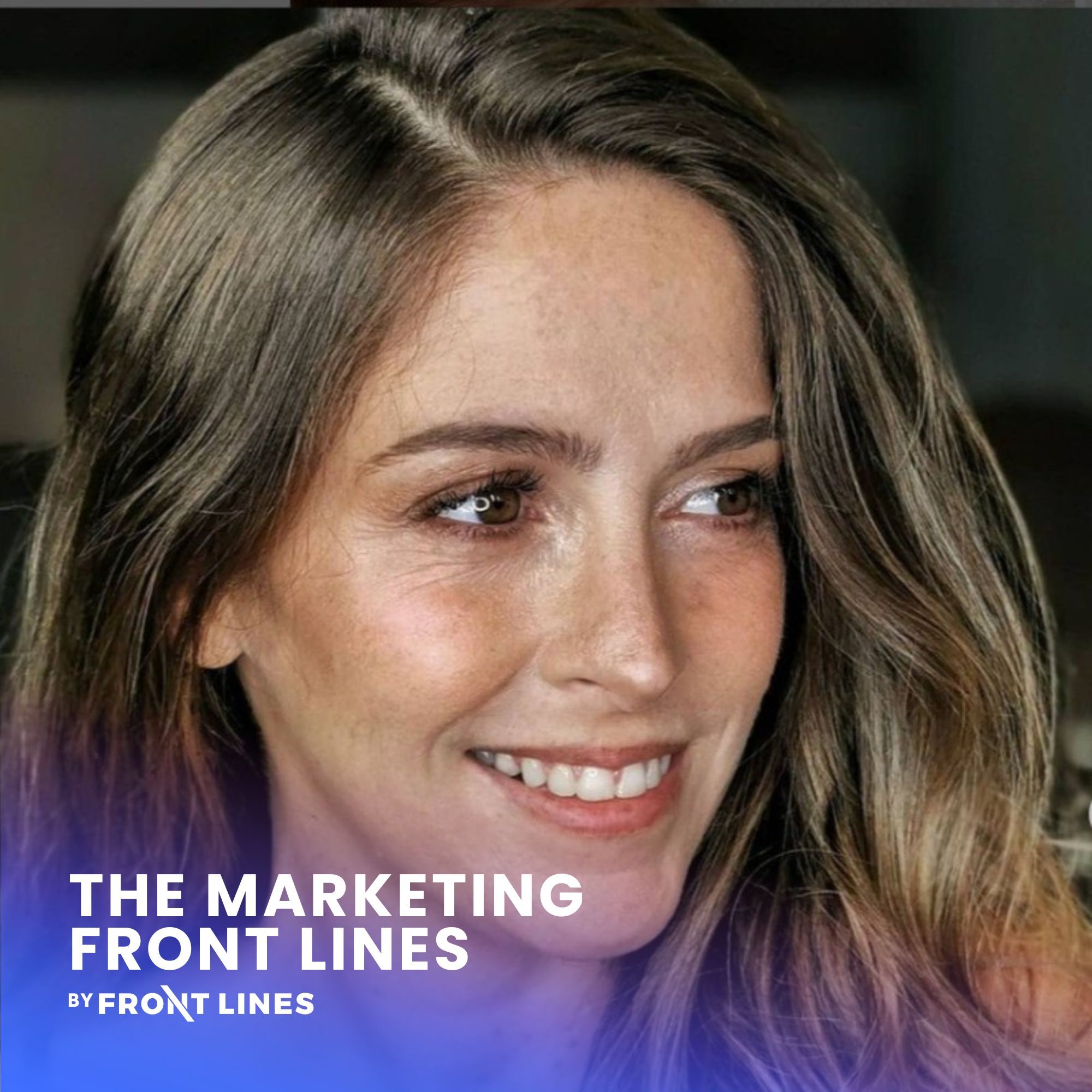
Long Game Marketing: Building Trust in High-Stakes B2B Sales
from Marketers of Technology
25m 14s
Diana Robba, Head of Marketing at Xane, shares her journey from brand PR to leading marketing in the cybersecurity space, focusing on securing IoT devices at the firmware level. She emphasizes a human-centered, trustworthy brand approach to combat the perception of cybersecurity as dry and technical. Her strategy centers on thought leadership, content repositioning, and community engagement—resulting in rapid growth in organic traffic and brand visibility. Early wins include 300%+ increases in non-branded search volume and significant thought leadership gains through high-value blog content. She prioritizes human-led community research before automation, ensuring messaging resonates with CISOs and technical decision-makers. Marketing execution balances in-house expertise—such as hiring AI growth managers—with strategic agency partnerships for brand overhaul. A central challenge is managing long B2B sales cycles, where trust and authority build over time, not through quick wins. Diana advises new marketing leaders to focus on sustainable trust and long-term brand equity rather than fleeting trends, aligning marketing with company OKRs to deliver measurable, lasting growth. Her experience underscores the power of content, community, and consistency in building authority in a competitive, regulated tech landscape.
This is Marketing from the Frontlines, where we speak with B2B Marketers who are in the trenches, bringing technology to market.
Here's your host, Brett Stapper, CEO of Frontlines.io.
Hey everyone, and thanks for listening. Today we're speaking with Diana Robba, head of Marketing at Xane. Diana, how are you?
I'm very good, thank you. How are you?
I'm great, and I'm really excited for this conversation. And how we like to kick off these conversations is a really big, heavy question.
And that question is why and how did you end up in this world of marketing?
So marketing, it's been quite the journey, like very exciting ride.
It's basically a ride that started nearly 10 years ago. I come from brand PR and journalism.
So really like positioning brand was always like a very big passion of mine.
And the marketing really closed the circle for me. Like it started as a very much the PR and brand positioning adventure.
And I really like pivoted very quickly and happily into marketing to really like understand how to position brands like to the market basically.
And in your first marketing role, take us through your first marketing role.
So yeah, I started my marketing journey as a localization manager and marketing manager for the Italian market at Wix.com.
So yeah, that was my first role. I really like took over like the whole account of marketing activities like for the Italian market and it started from there.
I went into SEO team lead. So I started like leading a team for like SEO organic growth specialist.
Then I went into international organic growth lead. So like blogs, SEO content, all the type of like organic growth that you can kind of strive towards for international markets.
And then they went into the international growth role at Wix for basically like growing Wix in all the markets around the world.
And yeah, Wix exists in 21 languages and like almost countless countries.
So yeah, that was that amazing. I also see that you were an editor at no camels.
I've always just loved the name of that brand. It's good. What does that experience like?
It really like enabled me to see and dive into like unique technologies, like different kind of technology like from start.
So the way like big companies, no camels. Obviously the name like brings the bell of the country that actually is not just like about camels.
So I was like, your role as an editor in Israel for this platform. And so yeah, it was really like about kind of understanding what type of technology like innovative solutions like companies could have and really like looking forward to contributing to the planet in different ways through like technologies and how companies do that and writing about it, which was really cool.
That must have been so much fun. It's just incredible. The innovation that comes out of Israel, this tiny country, just all the big, especially in cybersecurity, you know, all of the innovation there, all the other innovation that comes, it's just incredible.
I went there, read that book, start up nation years ago. And I mean, like Israel just had to go and it was one of my favorite trips of my life. It was just amazing.
Yeah, yeah, it's a tiny country like big technological impact of various kinds, yes, for sure. Yeah, it was a very good bootcamp.
I can imagine. Yeah, did you grow up in Italy then or did you grow up in Israel?
Yeah, actually I was born in Texas, but I grew up in Rome that started working in Israel, basically my whole career, all my like sort of professional path has been in Israel until like Italy most recently, I moved back to Italy a year ago.
So I went from the cyber nation back to Italy, where I was raised to actually work for cyber companies.
Italy right now, you know, I don't talk to too many B2B enterprise technology companies from Italy. What's the texting like? So I'm in Rome right now, when we look at Milan, for example, like Milan, there's actually quite a vibrant, very hectic texting there, like a lot of big brands, a lot of really like innovative solutions, usually Rome is more, I mean, not like fashion is also in Milan, but like Rome is more the political capital, of course, and like kind of the text is more like up north.
But Italy is really like driving forward, and I think it's also the role of many like kind of talents young people like made senior that are really coming back to the country to try to actually like push it forward.
So it's a very interesting time to be here. It does so happen actually.
Nice. It's always fun to be part of those ecosystems, especially when they're early days, I feel like it's a very fun to be part of. Yeah, for sure. Now if we look at the company, let's talk about what you do exactly or what we do at a high level, you're keeping in mind that it's the B2B marketers listening in, what does the company do and what market are you serving?
So it's actually a cyber security company for IOT basically we secure connected devices at the moment, like over like one billion devices, like globally, it's a cyber security company for embedded system. So for IOT and embedded systems, we basically make sure that first of all like devices at the firmware level, you can scan and analyze the threats that can potentially harm them.
And then actually neutralize those threats. It's sort of like it's building the new system of digital life, everything that is digital and is based on a device, you kind of like secured from the inside out and make sure that it's protected already from when it's created produced at the firmware level.
So it's like neutralizing any like potential hacking attack that could actually like affect those devices. So it's sort of like a lot of industries you can think about like automotive healthcare, industrial IOT, it's, I mean, most of the industries are based on digital and it's ensuring that those digital systems are actually protected.
So that's what it does. So what I actually do like it's rebuilding really the brand and growing the brand from the inside out just as the product does in a way to make sure that all the different like kind of clients, the B2B industry really understands the value of like protecting those devices at the firmware level.
And their security posture is always like kind of in short and we have the technology is kind of like enable that and protect them before they even like kind of going to the let's call it battlefield before they go into the ground.
They're actually like making that journey already protected from the get go.
How do you think about building a brand in cyber security and I go to black cat every year I go to RSA every year and I walk around it just seems like everyone is kind of saying the same thing even though the products are different categories. It's a lot of the same messaging and a lot of the same branding even a lot of the branding looks the same. So how are you approaching of building a brand that's different.
Absolutely so first of all when we think about like B2B and as well like the kind of cyber specifically there's a lot of this sort of austere kind of even conservative approach to it and at the end of the day we're going to always need to remember that we're speaking to humans and even like when we actually look at these objects.
These objects like it's ensuring their protection and security is really key and it's usually done in a sort of i'm not even saying I mundane but like old school way and eventually you're still looking at humans like and the objects that these humans produce.
So you kind of want to position the brand putting those humans and their needs at the really like front center and making sure that when they're actually produced like these objects and these devices on scale that you're actually protecting them not only like protecting them like I mean.
Now a day we're looking at an industry that would be like heavily like regulated also like kind of monetary pay like penalties if you don't secure it already like their mixes regulations coming like you know US cyber trust mark CRA like cyber resilience act in Europe and that is coming and like enterprises will be a very heavy price if they're not actually compliant with those so we're kind of like stopping this issue like from the outset to make sure that actually these devices are protected and also compliant with this regulation.
But at the end of the day I look at this brand as a brand that needs to make you feel safe like as a company going into the field with whatever device are actually creating but also there are a lot of creative opportunities like there is sort of this i'm not saying like boring but like this kind of very serious tone that is usually revolves around the world of cyber and it really doesn't have to be we make sure they really like devices are secure but also that we create a branding that is.
Compelling appealing seductive like it's sort of like making cyber security sexy again to sound and the struggle is an interesting one but it's a very cool challenge I think.
This show is brought to you by front lines media podcast production studio that helps be to be founders launch manage and grow their own podcast now if you're a founder you may be thinking i don't have time to host a podcast i've got a company to build well that's exactly what we built our service to do you show up and host and we handle literally everything else.
To set up a call to discuss launching your own podcast visit front lines dot IO slash podcast now back to today's episode.
Makes me think of this company that I had on called tonic AI their base here in San Francisco and their whole tagline is the fake data company and the founder and all the team they were hats that say you know fake data this is synthetic data platform their ex Palantir guys you have selling to organizations like Palantir it's serious stuff but they've had a lot of fun with the brand and he says.
There's been a very little if any blowback at all and he said that you know the biggest concern for them is not that someone will see them you're having fun with their brand and not work with them it's the risk that no one's going to even know that they exist in the first place like that's the biggest risk so I think there's a lot of people in B to B you are kind of rethinking that and getting away from the boring stuff and having a bit more fun with their brand.
Absolutely yeah I very much agree with that really resonates with me I mean I think like with the size.
like of course our audience is very specific when we look at the end to end like kind of be to be like audience there of course is CISOs is a engineer security officers as CTOs is like it's people that know their stuff you know like it's very like technical know how and technical knowledge but at the end of the day kind of creating that sentiment will come from a lot of different kind of sources and I think the reputation that your brand builds in making yourself like trustworthy and building an authority.
for yourself and also getting value to what they're actually looking for. I think it's very,
very important to build a successfully. Totally agree. And I know you just joined a few months ago.
What were your first few moves? What are you trying? So it's been really like building from the
bottom up. What I mean by that in like a more kind of specific, like tactical level, it's starting
from content creation and really like rebranding what the content strategy was, what the brand marketing
strategy was, rebuilding the actual team, like rebuilding like really all the different objectives
and what type of driver marketing can be in order to actually, you know, get into that pipeline,
like making sure those leads like are generated, but really like the first steps I did was a major
like overview or redoing, like kind of restructuring of everything that was our content strategy.
Not like promotion, but like value creation, like thinking about how you actually look at SEO,
how you look at geo, how you look at like obviously positioning yourself in terms of AI,
but really like wrong the product perspective with how the product is actually marketed,
really rethink of all the different bases on all the different sources. And that for me really
starts with the content part, like the website, the content you create, how much you create a bit,
what are you actually saying? It's really been like kind of rebuilding a break by break from,
especially the content perspective, but then with the overall strategy that also touches into
like geo and that community building as well. So I would say those three pillars, like rebuilding a
SEO and brand geo, like tackling and also building an actual community. And what have you done so
far to build that community and what have you learned from those efforts? I know that's, you know,
probably somewhat early on. So feel free to talk us through your about the aspirations of what
you're going to try to achieve on the community side. On the community side, I have to say that
especially it's very, very early on is we're literally in the middle of it, but to really understand,
like the forums that are like speaking about cybersecurity, like a crowd, what type of
conversations are there? Like Slack, LinkedIn, X, where is this audience? What are the issues that
are actually affecting it? Like at the moment, the most obviously building a team like hiring,
and obviously we can tap into the whole agent's automations and whatnot, but at the moment,
I'm keeping that aspect still extremely human. Also, until I think the automation is so satisfactory
that agents can potentially take it over, but at the moment, I'm keeping that aspect human, but
really like a lot of kind of research on what those communities need to be. So like where they are
and how we want to like place our messaging and kind of bring like value there. So it's really been
a lot of sort of research on Slack, LinkedIn, X and all the right communities for the sort of CISO
crowds. When you think about engaging with CISOs, how do you stand out with them? Are there any
things that you've seen or works so far or anything you've tried that's not working? I know CISOs
are very much bombarded these days. That's right. I have to say, I will have a better answer for you,
I think in a few weeks about that. The successful engagement in that sense, I mean, I have the
strategy layout and the first step taken, but is it working? Has it failed? Has it succeeded?
I think that's something that more like Q3 would bring for me in terms of actual responses on how
that went. But yeah. Not in the parts here. Everything that's happened, so it'll be fun.
This one we can talk about the plan, then next we can talk about learnings from the plan and
results from the plan. Exactly. Yes, it's a bit like how must you want to produce, which I think it's
in parallel and like the strategy above the production. I think the strategy like being laid out
is like the first step to actually the successful implementation. So on the moment to have the
strategy very clearly laid out and the first steps in that strategy, but the actual results,
I think it's a bit early to tell when it comes to community specifically. When it comes to the other
areas that I mentioned to you, I think they're already like very, very good results that I saw.
Like you unpack some of those results and you don't have to give us exact numbers unless you want
to, of course, but if you can unpack that for us a little bit, that would be amazing. Yeah.
When it comes to, for example, just like pure organic traffic, like let's talk about non-branded,
you know, like eventually I also think it's super, super crucial to affect the branded,
like the sort of branded search volume, how you actually grow the brand, like through that various
channels, also in people's minds, they actually search for you more. But when we speak about the
purely like non-branded, like let's take an actual storefront and make sure it's doing what it should
do, like both for like Google, but also for AI engines and LLMs. And that's a whole other
topic to discuss. But that is actually doing what it should, that you're actually bringing value
and the content is put on. I think like we already saw like pretty much like 300% like growth
in like organic traffic, non-branded, just like month over month, just like I joined and already
started touching things and affecting things and working on really the content, like the results
were super, super quick. And then eventually like I want those, not just tripled, but I want the
400% like in just a few and a half. And I think we can really, really get there. We also started
working really, really heavily on like thought leadership. So to really like kind of boost like
thought leadership and really create like authority when it comes to like cyber security, IOT,
and the whole kind of like a security field. And when it comes to that, like both in terms of
the blog, both in terms of the organic traffic like from our site, we really saw like 200, 300%
like growth already month over month. When it comes to successful results, I really believe in
blogs being like a youth growth engine. Of course, there's a lot of debate over there. Like now,
obviously content is also served in other ways. But I think like having a very high value blog is
also like a youth growth engine there. And I think one of the first things I did like really just
like stepping in the door was taking it tearing it apart like content pruning and clustering
and everything and really shifting it from being like a promotional platform to actually like
an authority platform, like a kind of content value, like authority, like really pushing the
thought leadership. And then that one already created like huge results that we could already see.
And eventually like, you know, the lead generation part, it's another huge part that I really,
really worked on inbound email like understanding whoever was already and existing a kind of
community audience at least that we had and really understand how to talk to them like a lot of
kind of trials and error than really like tailoring messages to those. And eventually that pipeline
started like kind of catching up very quickly. So that was another one.
This show is brought to you by the global talent co a marketing leader's best friend in these times
of budget cuts and efficient growth. We help marketing leaders find higher vet and manage
amazing marketing talent for 50 to 70 percent less than their US and European counterparts.
To book a free consultation visit global talent dot CEO.
What about building out the marketing team and the decisions to okay hire this person in house
full time versus using agency partners? So I think that one is a very like interesting balance
to strike because I believe I started hiring really and building a team of like experts
like in a way moving from the kind of generalist. I really wanted like people that not only have
ownership and clear goals and KPIs. There are also like kind of experts in their fields.
And then that one is being like grown from the inside out in terms of performance,
a growth managers, a CEO managers. I think also like a huge role that is super important these days
will also be the LLM brand manager. And that's another one like already at weeks. I started
creating roles two years ago of like an AI growth manager before like AI was even a thing.
I think it's super important to keep those in mind. But we also work with a lot of external agencies.
Like now we're really like rebranding ourselves. Like we're launching an entirely new website.
An entirely like new brand identity, visual identity. And for that, we actually use the very
significant substantial like kind of contributing support of an external agency that is really,
really top notch that did an amazing job for us. And in kind of setting us off the ground,
I think that would be very, very helpful. And it will prove very helpful. But at the same time,
I also believe in kind of nurturing talent from within. Like actually having like people that
really understand the brand, know your brand and kind of growing those expertise from within
the company. I'm a firm believer eventually, no one knows your brand better than you to some degree.
So I think it's really a balance to be found. We think ahead for the rest of 2025,
which is flying by what's a big challenge or a problem that you're setting out to try to solve
and overcome. So I think it's really, I mean, I wouldn't call it obviously like a problem or
the really, really cool challenge of positioning this brand in the right way. Like I can really
bring in value to that audience and enterprises. And the challenge is really to create a very successful
like flows, like really generate those like qualified leads down the pipeline that will eventually
like kind of from the top of the funnel or the way down to the funnel.
that will be going through that journey very successfully.
So I think that's really an important one.
And in life, I mean, it's a very quickly growing company.
Like we kind of grew in revenue, like 450% just like year over year.
And I think it's really like in a way the sky's the limit there.
Like I think we can even like double it.
These days like cyber is super super key.
And we're seeing what's happening around the world
with like cyber attacks and whatnot.
But I think really the challenge to be solved
is to make sure that in a very, very like competitive like landscape
and a landscape that it's actually highly, you know,
suspicious, intelligent, like inquisitive.
And that's absolutely right that we really like build that trust.
And that trust is eventually, it's a long game.
I think it's very easy, like in B2B market
and sometimes to go like for quick wins.
And so on.
And it's almost like going on a date and can't close it right after the date.
You know, like you can't really have a relationship right after that dinner.
You know, it's a long game.
And I think like playing the B2B long game
is a bit like the biggest challenge.
And knowing what that long game actually looks like.
How long is that game?
Like there's so many marketing programs that just get destroyed because of that.
You know, I think because executive leadership or whatever it is
that's kind of forcing them to generate short-term results.
I feel like that comes at a cost.
And you know, the reality is for B2B.
Yes, long buying cycles, it takes time to build trust
and get through those cycles.
So they got a lot of marketing goes to waste because of pressure.
Absolutely.
Yeah, I completely agree.
It's also, I feel that there's always like a very big importance
sort of underpinning pillar that always served as sort of lighthouse.
The guy in like the guiding post of everything, which is OKRs.
It's always been for me, I have to say like my best friend is OKRs
in the past like five, seven years.
And really everything is kind of like functional to that.
But sometimes those OKRs when it comes to really like position of brand
and let it turn into a very, very fireball like tangible revenue growth,
which is eventually what I want.
I want like marketing to actually bring like 15% more like revenue growth.
And I think you can really do that.
It's really tight to where it came from, especially in the B2B marketing world.
Like it's how do you actually get into that year?
Like what actually generated someone, especially that's why I go back to the whole
like branded search volume.
Like why did someone search for you more than they did like six months ago?
And not always you can actually find the exact trace, but sometimes you can.
And it's you have like very good sort of let's say hypothesis about why that happened.
But you can't exactly always like pin it down specifically.
But the overall work and how all those different pieces of the puzzle
and the paid and your panic and the elimination.
And they kind of all came into play to make that possible.
Like to kind of really get that brand equity,
you know, like kind of gain it like vis a vis like everyone else in the ecosystem.
100% agree.
Now final question for you since we're almost up on time here.
What advice could you have for other marketing leaders
who are just now coming into their roles?
So I think marketing, it's a huge, exciting and I mean,
I always found very inspiring like field, the ecosystem,
world cosmos, whatever you want to call it.
And it's very, very easy to really get like kind of tangled
into the small pieces, not to connect to the really like big picture.
And indeed, like kind of strive for the quick wins.
They're easy to see.
And in a way, sometimes almost like the ego,
the self-awareness need that, like, you know,
you kind of need that like quick win to really taste it
and kind of getting you to move forward.
But it is really a long game.
Like eventually like authority and trust will always kind of win the day.
Well, as like trends are sort of fading,
like trends are extremely like temporary.
Whereas instead like actually building the authority and the trust,
it's like what you call also an organic like the EAT
and then it goes into many other areas to really like kind of
playing that long game of trust and authority.
I think it eventually wins the day as a marketing leader.
100% agree and love that advice.
We're going to wrap here before we do.
If there's anyone that's listening in that just wants to follow along
with you and your journey, where should we send them?
So you can contact me for sure on LinkedIn.
Bio means you can also prove to me like by email.
So it's dianna.xane.io.
So yeah, LinkedIn and email very much like welcoming
and happy to receive any questions and follow up.
Incredible. Well, thank you so much for taking the time.
Thank you for having me.
Great to be here.
This episode of category visionaries is brought to you
by Frontlines Media, Silicon Valley's leading podcast production studio.
If you're at V2B Founder looking for help launching
and growing your own podcast, visit frontlines.io/podcast.
And for the latest episode, search for category visionaries
on your podcast platform of choice.
Thanks for listening and we'll catch you on the next episode.
[MUSIC]
Podcast Summary
Key Points:
Diana Robba’s marketing journey began in brand PR and journalism, evolving into a focus on brand positioning and digital security through roles at Wix and in Israel’s tech ecosystem.
She now leads marketing at Xane, a cybersecurity company securing IoT devices at the firmware level to protect industries like automotive, healthcare, and industrial IoT.
A core brand strategy is to make cybersecurity feel safe, human, and compelling—shifting from technical austerity to a more engaging, trust-driven narrative.
Early success includes 300%+ growth in non-branded organic traffic and 200–300% growth in thought leadership content, driven by content pruning, rebranding, and value-focused positioning.
She emphasizes building community through human-led engagement on platforms like LinkedIn and Slack, researching audience needs before scaling automation.
Marketing decisions balance in-house hiring of specialized experts (e.g., AI growth managers) with strategic external agency support for brand repositioning and visual identity.
A major challenge is navigating long B2B buying cycles and building trust over time, requiring patience and alignment with long-term OKRs rather than short-term wins.
Her advice to new marketing leaders is to prioritize trust and authority over trends, focusing on sustainable, organic growth that aligns with long-term brand equity.
Summary:
Diana Robba, Head of Marketing at Xane, shares her journey from brand PR to leading marketing in the cybersecurity space, focusing on securing IoT devices at the firmware level. She emphasizes a human-centered, trustworthy brand approach to combat the perception of cybersecurity as dry and technical. Her strategy centers on thought leadership, content repositioning, and community engagement—resulting in rapid growth in organic traffic and brand visibility.
Early wins include 300%+ increases in non-branded search volume and significant thought leadership gains through high-value blog content. She prioritizes human-led community research before automation, ensuring messaging resonates with CISOs and technical decision-makers. Marketing execution balances in-house expertise—such as hiring AI growth managers—with strategic agency partnerships for brand overhaul.
A central challenge is managing long B2B sales cycles, where trust and authority build over time, not through quick wins. Diana advises new marketing leaders to focus on sustainable trust and long-term brand equity rather than fleeting trends, aligning marketing with company OKRs to deliver measurable, lasting growth. Her experience underscores the power of content, community, and consistency in building authority in a competitive, regulated tech landscape.
FAQs
Diana started in brand PR and journalism, with a strong passion for brand positioning. She transitioned into marketing to better understand how to position brands in the market, beginning her career as a localization and marketing manager at Wix.com.
Xane is a cybersecurity company that secures IoT and embedded systems by scanning and neutralizing threats at the firmware level, protecting devices before they are deployed in industries like automotive, healthcare, and industrial IoT.
Xane focuses on making cybersecurity feel safe, human, and appealing by centering on end-user needs and creating compelling, trustworthy content—challenging the industry’s typical austere tone to make security more relatable and engaging.
She has rebuilt the content strategy to focus on thought leadership, increased organic traffic by 300%, and launched a community-driven approach to engage CISOs and security professionals through research and value-based interactions.
She builds internal expertise by hiring specialists with clear goals and KPIs, while also partnering with top-tier external agencies for major brand launches and identity repositioning.
The challenge is building long-term trust and authority in a competitive, intelligent, and skeptical market—requiring patience and consistent value delivery, rather than quick wins.
Chat with AI
Loading...
Pro features
Go deeper with this episode
Unlock creator-grade tools that turn any transcript into show notes and subtitle files.
 PodcastTranscript AI