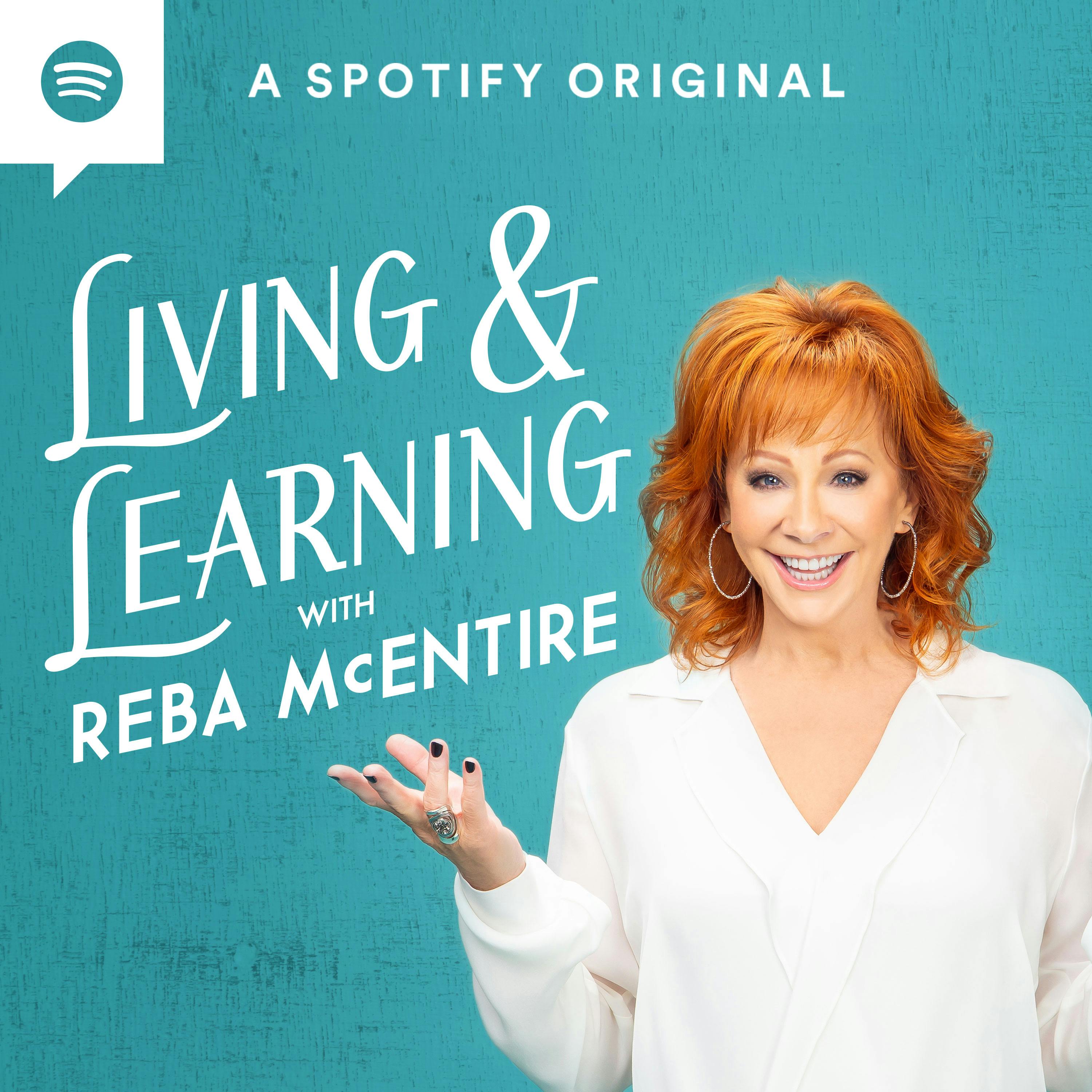
In this podcast episode, Reba McIntyre interviews Keith Urban, covering his personal and professional life. Urban opens with a lighthearted observation about Australia's "yeah, no" expression, then discusses the pandemic's impact—feeling grateful for family time while acknowledging others' suffering. He talks about finishing his album during lockdown and his love for binge-watching shows like "Ozark" and "Peaky Blinders." Urban shares the story behind "Wild Hearts," a song he initially passed on but later rewrote to reflect his own journey, starting with seeing Johnny Cash at age five in Brisbane—a moment that sparked his desire for his father's approval. Reba relates her own experiences seeking parental validation, noting her mother's unwavering support and her father's tough standards. They discuss early performance memories, from Urban's shopping center theater gigs to Reba's club singing and Broadway run in "Annie Get Your Gun." Urban highlights key achievements: marrying well, getting sober, and his enduring passion for music, which he says he'd pursue even on a street corner. Both reflect on the fleeting nature of fame, with Urban recalling his "Oliver" experience teaching him about temporary popularity. They play a game of "two truths and a lie," revealing Reba's 43-person family vacation and Urban's cat stories. The conversation closes with mutual admiration, emphasizing happiness, good company, and music's healing power. Urban promotes his 2022 "Speed of Now" world tour, and the episode ends with production credits.
One thing that definitely is unique to Australia is they have this tendency to say, yeah, and no, for the exact same question. So we're going to go to the beach with it later. Yeah. Yeah. Yeah. Yeah. Yeah. Yeah. Literally. It's so confusing. Yeah. No. Well, welcome back to Living and Learning. I'm Reba McIntyre. You all know my charming guests today. He needs no introduction, but I'm going to tell you a little bit about him. He's famous. He's great guitar player, absolute stunning vocalist, sexy on stage, super duper entertainer, his single wild hearts off of his album. The speed of now part one is out right now. Welcome to the show. My friend Keith Urban. Wow. How about that? Thank you, Reba. A little urban at the end. I like it. Remember the first time I said, you're Keith Urban. You said, no, I'm Keith Urban. Thank you. Welcome to my show. Thank you, Reba. Nice to be talking with you always. I don't want to talk business yet. I won't talk about the family. How's the family doing? Family's good. How about you? How you guys? Yeah, everybody's good, pandemic, other than people getting sick and unfortunately, so unfortunate. A lot of people died. I totally enjoyed the time off and being with family and friends and just kicking back. How about you? Yeah. Our experience was similar too. I think it's that dichotomy, isn't it? It's the juxtaposition of knowing the reality that some of us are in and the reality that a lot of other people are in and trying to reconcile those two things. Not forget what other people are going through, but also not miss the grace that we've been given at this time as well. Wow. I couldn't have said that better. Thank you for that. Were you itching to get back out there to perform, or were you kind of okay with it all? A bit of both, actually. Yeah. A bit of both. I mean, we were finishing up our album and the biggest panic for me was I hadn't finished my record and being a collaborative person, you know, with co-producers, musicians, engineers, et cetera, et cetera. I was like, oh, so I can't do that with anybody. Okay, for how long? What, you know, yeah. So, you know, and I think like a lot of people, I might, he was, he was my pandemic plan, which is going to put on my sweatpants, get some popcorn, sit on the couch with the family and watch Netflix until this all blows over. That was my plan. I did get to watch a lot of Netflix. That's for sure. Yes. Yeah. Absolutely. I loved it all. What did you watch other than the Tiger King? What did you watch in the pandemic? It was like mandatory viewing. I have not watched the Tiger King, but I did watch Nicole shows for sure. Absolutely. Another way to go. Non-perfect strangers. I had no idea where that was going at all. Right. And at the end, wow. So I'm not going to blow it for anybody else, but if you hadn't seen it yet, go watch it. It's incredible. Yeah. Rex and I we love to watch television and we will binge watch and we're ready for our favorites like Ozark and Peaky Blinders to come back out. Yeah. Love those. Hey, so are you one of the people river who are frustrated at the ones that only stream weekly? Yes. I'm spoiled rotten. I want to see them all right now. Then you got to wait. Yeah, we're an instant gratification society. We are. Absolutely. Hey, how did you enjoy co-hosting the ACM's with Mickey? I loved it. Mickey's just was super easy to host with. You know, it would have been nice to build some people as you can imagine right now. I mean, you had a similar experience with Daria Salo. You had some people. You had a few more people than we did, I think. We did. It's had started to open up a little bit after you guys did it. You hope we're the guinea pigs to try to figure out how to do it. And we were all sitting there watching how you're going to do it. And then we had a few more when Daria and I got out there, but I'm glad that this year that they kept at the CMAs, the tables out front where everybody can be more conversational every year, make it every year. Yeah. I'm with you. That looked like it was a lot of fun. I loved your performance at the CMAs. Thank you. Walking down the street on Broadway and making that turn, it was incredible. Well, as you can imagine, River, that was a 315 AM call time. I was wondering when I definitely wouldn't have for that street to be shut down. No cars anywhere. What time did that have to be? Yeah. Well, I got there at 315. I think we shot about quarter to four. Wow. The beautiful thing and you can relate to this too. There was no in front camera shot. It was all behind. Yes. I looked exhausted, but nobody knew. Tell me about Wild Hearts. Wild Hearts is a song we wrote. It was actually a song already written and I got sent the song Jennifer Wayne and Brad Terese and Eric Pasley wrote the song. And I got sent it. And I loved the chorus of the song. But the verses didn't speak to me. And so I listened to the song a few times and I was like, no, it's not for me. I mean, you get you get sent songs all the time. So you have a certain way of listening and reacting to a song that you didn't write. Yeah. And I just thought, no, it's close, but not there. And so I passed on the song. And about two weeks later, I woke up one morning singing this song in my head. And I was like, that's a really good song. So I went back and listened to it again. And I thought, oh, it's just not personal for me. And it should be because it's about following your dreams, you know, against all odds. And all of us in Nashville know that really, really well, you know, coming to a town where it's full of dreamers and everybody's trying to make it. And so I called the writers and asked if I could rewrite the verses to make them more personal to me. And luckily they agreed. And so I wrote the first verse and the second verse. And the first verse, I remember sitting there at the kitchen table one morning, kids were gone, Nick was gone. I drank this really strong coffee. I was like, all right, so where does my journey begin? And the very first thought I had was my mom and dad taking my brother and I to see Johnny Cash when I was five years old. That very much felt like the first part of it. So I wrote down, saw the man in black spotlight in the air, heard a thousand screams of so my daddy stare. And then we were often running on the song. I love that. So five years old, you saw Johnny Cash. Yeah. Wow. That'll stay with you. I don't know that I ever saw Johnny Cash in concert. Yeah. And I never did after that. Where was he playing in Australia? He was playing a place called Festival Hall in Brisbane, my hometown, which was an old boxing hall, which was perfect for Johnny Cash show, 5,000 people, all wooden hall. Just a beautiful, sweaty, perfect place to see him. But what I remember about it, obviously, was my first concert, five years old, my first concert. Wow. What I remember was faint images of all these people outside. All the audience was gathered outside, waiting to get in. And it was so loud because everyone was smashed. You know, these are hard cool working class hammered Johnny Cash loving people. Yeah. And you know, my dad fit right in. And there we were in this incredibly rowdy, noisy thing. And we went into the hall. You know, you don't remember much at five, but the things I remember with that, because everybody's huge and tall around you, going into the hall and the deafening roar of the hall when this guy can come on stage. And I'm like, what is going on? And all the other lights are down and this guy walks out and stage over. And the next thing I remember was this big spotlight coming across the top of our head, because you know, you're five years old. You've never seen that beam going through the smoke and everybody's smoking back then. So that beam is strong going up to the stage. And I would say the thing that probably hit me the most was at some point, I'm quite sure I looked at my dad and was mesmerized of how he was looking at this guy on stage. Yeah. And I'm quite sure, even at that age, I was wondering, how do I get my dad to look at me like that? I'm very, very sure that that was a strong catalyst for what I ended up doing. Amazing. Isn't it incredible how we pull and crave their approval so much. Keith, when Mama passed away March 2020, Susie and I were cleaning out mom and daddy's house. And I was sitting there and I told Susie, I said, well, the pandemic had hit already too. I couldn't go back to Nashville. And I told Susie, I said, you know, I've lost my want to to go back on the road and sing anymore. She said, why? I think because I was doing it for Mama because when Mama took me to Nashville in 75 January, I kept messing around. We'd stop, you know, every 20 miles. She said, if you don't want to do this, we can just go back home. Just forget about it because I was going down to cut a demonstration tape. She said, but if we go and do this, I'll be living all my dreams through you. And I said, well, shoot, why didn't you say that? Let's go. And so when Mama died, I'd kind of lost my want to. And about three months later, I was ready to go back and record because I knew she wanted me to
And I was listening to it, but I always was craving that approval from daddy and that look it from Mama that wink that's a yeah, you did good. And did you get that from her at an early age? Oh, always from her. Not so much daddy. I probably had won several awards by the time I got you did good from daddy. His bar was way high. And um or probably more his ability to express it, yes, that true. That's very true. But then when I finally got it from daddy, it was kind of like that's what I've been waiting on. Right. So you know, it was just kind of weird. I had gotten it all the time for Mama. Yeah. Mama would whip anybody if they said anything bad about her kids right around. She was on our side constantly. And if you'd become that same mom, oh, definitely, definitely. I am Shelby's a number one fan, but the first one to correct him and make him tell the line. I parent a lot like Mama did. If we ever do anything wrong, she pulls us aside, not in front of anybody and corrects us and tell us, you know, what to do the right way. Excellent. How have the world have you juggled a career and marriage, living in Australia, United States, back and forth, and you guys being so popular and busy? How do you all do it? Well, I mean, we live in Nashville. That's been home for me for 30 years now. I've lived in America longer than I lived in Australia. I was 23 when I moved to Nashville, so it's crazy. We have a place in Australia, but we don't live there. We go down to visit next mom and my mom both live there, next sister, brother and all their kids. My brother and his kids. And so we got lots of family down there, but it's a long way, you know. Yeah, it is. You've done that flight before. Yeah. Yeah, half. You can meet somebody and break up on that flight, Reba. I was, I was turned Australia, and they wanted me to come back to LA during the Alma awards. And I was going to sing a duet with shit, tonsini on short roll roll. They were a duet team from Brazil. And I did because we had a single out. I went in, did rehearsals, sang on the awards show, got on the plane and did the red eye back. Oh my gosh. We really didn't miss a step because we just slept on the plane the whole time. Yeah. But it's rough. What's been your best achievement, your biggest achievement to you? There's a, there's a lot of things. I mean, marrying the right person was massive. Marrying for the right reasons. Getting sober 15 years ago was a big turning point in my life. I, I never had specific goals. I just wanted to live in, or when I was a kid, I went, I just want to live in Nashville. Want to write songs, make some records and hope the radio plays them. And if the radio plays them, some people come out and see us play our own music instead of these covers that I'm playing every night. That was it. That was the goal. Yeah. When were you first on stage? Well, I started playing guitar when I was six, and my mom saw an ad for this theatre group that was performing at the shopping center during school all of the days. And so I went and tried out for this group at seven, and they took me. And we were performing, you know, things, plays and whatnot in these shopping centers, which was great, because I was getting stage experience from that age. I mean, you must have started young too, River. Well, my first experience in front of a live audience was when I was probably four, five years old. We were at the Cheyenne Frontier Days rodeo, Cheyenne, Wyoming. And we were all staying at the old frontier hotel. And everybody congregated down in the lobby during those days, you know, didn't have televisions in the room. And all the cowboys and wives were down there. And one of the cowboys got paid to get my older brother to get up and saying, you ain't nothing but a hound dog. And one of the cowboys fished in his pocket and gave pay quarter. So I dragged pay over on the side and I said, hey, well, I want to some of this action. What can I do? And he said, you know, Jesus loved me get out there and saying that. And so I got out there and I saying, Jesus loves me and they fished around in their pocket. They gave me a nickel. What's the deal here? Wow. Jesus does love you. Thank God. He does. Praise the Lord and send the money. Exactly. The first time I was ever behind a microphone, though, was in the first grade Christmas program singing away in the manger. Oh, beautiful. But I was singing in clubs at 13 and learning if a fight broke out on over here, then you go over on this side of the stage to divert attention and it's a lot of big educations when you're singing in clubs, dance halls. So you were preparing to work with kicks and runny even at that age. It's amazing. Exactly. Exactly. And I still have not had enough training yet to put up with those two, their characters. Keith, what are your favorite venues to play? Mine is Caesar's Palace and Las Vegas. I love to play Caesar's. Yeah. I love to play Vegas. Yeah. That room is amazing. The Colosseum there at Caesar's Palace, where you guys play, we've been doing some residency there as well. That is. Yeah. The most perfect rooms isn't it sonically the stage where the audience is how big the ceiling is just everything. It's just perfect. I do love it. And unfortunately, this is our last time going in in December and I'm going to miss it tremendously, but they've really treated us well. Yeah. I do love it. Yeah. Us too. Now, it says you are the only country artist to sing in the Olympics opening ceremony. How do I miss that? Well, Ali, were you there? No, everybody participated from wherever they were, you know, we're from and we all did it Greenscreened and then sang a piece of of Imagine that Hans Zimmer had done a reworking of it. Amazing. And we sang that. Good deal. Did you see the Olympics at all, Rita? Not in. I did not. What's your favorite sport? Well, that's a good question. I like a lot of them. Gymnastics, swimming, long distance running is crazy because it's amazing what humans can push themselves to do. It's unbelievable. When I watched the Olympics, I liked the winter sports, the winter games when they ski and then they're carrying their rifle and then they get down on their belly, their stomachs and they shoot and then they get back up and put their gun on and they ski around again. Yeah. I love that. It's more of a dare, isn't it, than a sport? I mean, it's a, it's insane. It's, it's hard to be able to be able to possible. It does because keeping your arms steady and still after you've been skiing and you're so tired and you lay down in your, your arms, they have to be shaking. You must have grown up shooting, you know? No, I did not until I got the part for Buffalo girls with Angelica Houston that I got to learn how to shoot because I was going to play any Oakley and then I went on to play any Oakley and then to get your gun. But that he didn't keep guns around the house at all. We lived on eight thousand acres in Oklahoma. We were ranchers, but I think the only time mom and daddy ever used the gun, they needed to kill a deer for food. And daddy couldn't hit it and mama shot it. She got it. Rock and roll. Yeah. That's what I thought. And he gets your gun. How was Broadway, by the way, River? I was, I'm always fascinated how you'll maintain your voice and yet still have to do all of the, all of the other things outside of the show, but also take care of it and find that balance. Right? Mm-hmm. I absolutely loved it. I did eight shows a week for six months and right in the middle, I had to run to LA to shoot the pilot for the Reba TV show. But I never lost my voice. I took care of it. I stayed in, but we walked to and from if the weather was good, I would walk to and from the theater each night, each performance and kept in shape that way. But my gosh, there was a lot of dancing and running around and changing costumes and wigs and things. The camaraderie, I absolutely loved it. Have you ever done a play? No. I was Oliver in the school production of Oliver in the eighth grade. There you go. And I'm not sure if I was any good at acting, I think it wasn't a big pool to draw from when it came to small blonde headed boys who could sing. It was very small. But I tell you what, here's the thing I learned from that, separate to the acting, was actually to do with fame. Yeah. And so in the eighth grade, I'm not the coolest guy in school by a long shot. I don't really play sport. I'm the geeky kid that plays guitar in the music room at lunchtime. I don't have a lot of friends, but I'm just awkward and be shy and awkward. And I get the role of Oliver. And suddenly I had all these girlfriends, I'm like, this is amazing. I like this thing and the play ran for like a week at school. And as soon as the play finished, all the girlfriends finished. It was over. Dead, back to life as I knew it. And at that age, I was like, oh, God, this thing is just don't get, don't buy into that cruelty. And that's a good thing to learn in the eighth grade.
I'm talking about the little taste of fame when I first recorded, I thought, I didn't only think about music business, I'm from a rodeo ranch and background. Listen to country music all our life and our only vacation was going to the Grand Ole Opera in Nashville from Oklahoma. So I thought when you recorded a song and it got on the radio, you're instantly rich. You get a tour bus and you go on tour and you perform in front of thousands of people. Yeah. And it didn't happen that way. No. I was six years before I got a number one record after I got with Polygram Mercury Records. So was yours fast? Did you jump in there and… Oh, no. It was definitely not fast, especially because, I mean, I look back and think, yeah, no wonder, I mean, lobbing into Nashville, talking the way I do, looking the way I did, playing music the way I did. It's just everything was like, what is this guy doing here? It's blind faith and just following the music and believing in myself undyingly was it. Yeah. Here's the big thing. I didn't have any plan B. I had no plan B and Luke Holmes wrote that great song doing this. And I said to him at a night, I said, gosh, you have such a great way of stating these things that so many of us feel, and like many of us, we get asked in interviews, what would you be doing if you weren't doing this? And I love that Luke said, I'd be doing this, I just wouldn't be. I wouldn't be in the arena. I'd be at a corner bar somewhere or I'd be on a corner. Oh, wow. Yeah. Playing for change. I'd be somewhere. I mean, this is all I know how to do. So I feel very, very blessed that I get to do it. Where I get to do it. I agree. 100%. So what's your goal? Another day, what you want to award? So what do you want to win next? I'm going to tell you my answer, but I want to hear yours first. What's next? What do you want? Here's the, first of all, I mean, look, I've never, I have no clue how you win something. I know that I love, and this, this is literally ground zero for me. I make music, eat either works or it doesn't work. But that's the truest truth I've ever realized and the longer I get to do it, the more I realize how true that is because I haven't got a clue what people will respond to, what they will, what they want. So I just make music and it does what it does. Yeah. That's all I know. So I don't really have goals of winning things, just finding new ways to connect with everybody and express this thing inside me that wants to come out. That's it. I love that. When I first got started and got to start going to the award shows, like in '81, I lived for award shows, I mean, the CMAs and then the ACMs and then Music City News award show. I lived for those. And then like the guy the other day, he said, you've won these awards. What do you want to win next? And I said, I don't care that I win anymore. And that's very unusual for me because I'm a very competitive person. Not that I'm devious and I'm going to win no matter what. It's just a lot competition. Yeah. Peking, I used to run out of the house after release from chores, saying anything you could do, I can do better. Right. And we throw rocks, do chin ups, pull ups, foot races, rope something. We were just very competitive. My dad's a three time world champion, stairroppers. So came by it honestly. But I told him, I said, what I want, I want happiness. I want to be happy with friends and family that I love to be around. And I don't care to be around people that make me anxious or aggravated. Willie Nelson said that thing about all the green apples in the bucket. And if one turns sour and rotten, then all of a sudden everything else will. I want to keep the bucket full of nice ripe green apples or red, but no rotten ones. Just around great people. That's it. And I think the pandemic has brought a lot of people to the place of assessing their life and the people around them. And the big question I think people talk about, what do you want to do? What sort of job do you want to have? What are this? What? What? Why? Why? Why do I do this job? Why do I like this person? Why am I doing this? Because that's for me, that's the single most important question, you know. Why do I play music? Because it's just organic. Because like I said, I'd be playing in a street corner somewhere. That's why I do it. I don't do it for where it's taken me now. I've just had this intense love and passion and drive to keep doing it and try and get better at it. And the end result was doing a podcast with you, Reaper. Which is crazy. It's true. But you got to understand I grew up in Australia and I'm going to the CD store and there's a, there's a Macinty CD, you know, and, and I'm like buying your CDs. I know. I'm doing a freaking podcast with you. It's crazy. It's crazy. I love it. I love it. It's almost like our music is the conduit to help people. I always thought it was really cool thing that if people, when they're coming into our concerts, if they could just dust off the trouble, the worries and come in and have just a great time of guilt free, worry free, fun time. And then when they leave, if they have to pick it up, go ahead, pick it up, go home and deal with it. But maybe they're recharged and they're in a better position now that they can handle those worries and troubles a little bit better. But music is so healing. Yeah. Okay. I mean, that's why you do what you do, right? I mean, you, you talked about doing it for your mama and you keep doing that. I mean, I, I still, my dad passed away five, six years ago and I, I'm, I feel like I'm still trying to get his approval. Yes. Yeah. And I, I got it years ago. I got it a long, long time ago, but it's, it's, but it's what drives me. And I'm, and I think making a connection with the audience is the other thing that drives me. I come out on stage and because I grew up playing in the clubs in Australia, this is what I'm used to walking out of stage and seeing. All right. What do you do? Why do we, why should we care about you? What do you do? You know? And that's what I'm used to. That's what I know. And that's what motivates me is walking out of stage. And I always say, my job is this because I still play to the reluctant boyfriends. That's what I like to call him. The guys who've been dragged along to this gig and they're like, ah, I see, seems to like him. All right. I gotta put up with this guy for a minute. And you do it every night. I'm sure. I love it. That's wonderful. Stay tuned after the break. We'll be right back with more. All right. They got a game. They want me to play here. It's called urban legends. Oh, okay. I'll say a prompt. And then we each come up with our own set of two truths and a lie and try to guess which is the lie, aka the urban legend. Here's the first prompt while on tour. I go on stage and start naked with my hair on fire. Well, that's true. Obviously. You know, of course. Thank you, Keith. Give me a little credit there. All right. Now, you say a truth or a lie about you going on tour while on tour. I like to make sure I have a coffee set up where I can be like my own barista because my wife got me a barista course for my birthday. I'm going to say that's true. That is true. Okay, while on tour, my dressing room is a replica of my living room here in Nashville. That might actually be true. False. Ah, I go in. I wouldn't surprise me, Rita. Maybe pop and drape, but that's it. We did that a couple of years. Well, see, I thought that you're living room in Nashville is pipe and drape. So that's, that's what threw me. You're fast. It's just such a road queen. All right. Let's go to another subject. I just love your Adelaa pipe and drape, which sounds like some duo performing just off the strip in Vegas. Hey, all we're pipe and drape. I said, when I go and see, that's a great name for a duo. It's a great name for duo. All right. While on vacation. Tell me something outlandish. Wow. Okay. I'm struggling to make something up for vacation. I can't make anything up. That's hilarious. Okay. I'll do. I'll go first. Give me one while on vacation. I like to take at least 23 people with no 43 people with me on family vacations. True or false? Well, that sounds false. It's true. 43 people. 43 people of the family and their significant others and their children and grandchildren to Atlantis one year for vacation. Wow. Yeah. That's awesome. I had to go to a psychiatrist after that. Yes.
And that was the last one too. That's a really good idea to do that. I mean, we've taken like maybe some play dates and their parents, but 43 is a, that's a commitment. You would need a road manager just for the vacation. Yeah, I wish, wish we'd, wish we'd have been that smart to do that. Are you a good organizer, Reba? Um, yes. And I love to plan. I really am. Excellent. I love details. Right. I write lots of notes. I'm getting older, so I forget where the notes are. So we start over again. It's right to note to say where the notes are. Exactly. Okay. So anything about your own vacation? When we're on vacation, we, well, when we go on vacation, we have a dog and two cats and weirdly enough, we always take the dog and the two cats on vacation with us. False. Yeah, it is false. That would be a nightmare. I'm going to take 46, 47, 43 people, 43 people and the dogs, yes, a cat because I'm in the dog. Yes, but the cats, terrible skiers. Are your cats the kind that look at you like, couldn't care less about you? Were they affectionate? We have two cats in Nashville. And Davin with us five years, and I swear one of them, every time I see him, the cat goes, who are you? Like every, what's wrong with this cat so strange? Yeah. And the other one's totally different. The other one's kind of just in, yeah, in different. The other one is in different. But when we were in Australia, we went down to Australia because Nick was filming non-perfect strangers in Australia. It was the only place you could film during the pandemic, so we went down there last year and filmed non-perfect strangers. So while we're there and we suddenly realize we're going to be here for quite a few months filming this thing, Nick said, we should get a cat and I'm like, we don't live here. We're going to do with a cat. She's like, wow, let's just get a cat and then we'll find somebody who can take care of the cat when we go so and so. We went to the rescue and we found this cat and he's like the best cat in the world. It's cool, chill, jump up on your lap, happy to see you. Everything these other two cats we have are not and I wish we could bring that cat back with us. But we found a lady to take care of him when we left, but he's the coolest. That's sweet. That is so sweet. Well, Keith, I've taken up so much of your time and I can touch you forever because I'd love to hear about Jimmy Bowen and all the recording back and I just, I have so many questions one day. We'll sit down and have chat. That's a dinner. That's a dinner or a lunch. We will definitely do that. We'll tell all the family high for me and I appreciate you taking the time out to visit with me. I've totally enjoyed it. I hadn't left this much in a long time. You need to get out more. That's true. That's true. From your mouth to God's ears. All right. You take care. Tell all the family high for me. Love you too. Bye. Thanks everyone for listening. I had such a wonderful time today, vision with Keith. Now his tickets for his 2022 North American leg of the speed of now world tour. They just went on sale. So be sure to get out there and get your ticket and see Keith on the road. Come back here next week for another episode of living and learning only on Spotify. See you next week. Well thanks for listening to Living and Learning with Ribbon McIntyre. A Spotify original production. Our lead producer is Dylan Rupert with producer Baron Farmer. Our executive producers are Gina Delvack, Yassie Solick, Danny Trebatch and Justin McIntosh. Editing by Cheryl Crosby. Original music by Doug Seismore. Special thanks to Leah Edwards, Robert Adler, Casey Simonson, and Carla Connero. I'm your host, Dribbon McIntosh. Follow us only on Spotify.
Podcast Summary
Key Points:
Keith Urban discusses his Australian upbringing, including the unique "yeah, no" expression, and his early life moving to Nashville at 23.
Both Urban and Reba McIntyre reflect on the pandemic's dual nature—enjoying family time while acknowledging global suffering—and their experiences with time off and Netflix bingeing.
Urban co-hosted the ACMs with Mickey Guyton, and both praise the more conversational seating at award shows like the CMAs.
"Wild Hearts" was originally passed on by Urban, but he rewrote the verses to make it personal, inspired by his first concert—Johnny Cash at age five in Brisbane—and his desire for his father's approval.
Reba shares her own story of seeking parental approval, noting her mother's constant support and her father's high bar, which she eventually met.
Urban highlights major life achievements
Both discuss early performance experiences
Urban loves performing at Caesar's Palace in Las Vegas, calling it the perfect room, and mentions his participation in the Olympics opening ceremony singing "Imagine."
Reba reflects on her Broadway experience in "Annie Get Your Gun," maintaining her voice through eight shows weekly, and Urban shares his eighth-grade "Oliver" experience teaching him about fleeting fame.
Both agree on the importance of happiness and surrounding oneself with good people, with Urban noting he'd play music anywhere, even a street corner, and Reba prioritizing family and friends over awards.
Summary:
In this podcast episode, Reba McIntyre interviews Keith Urban, covering his personal and professional life. Urban opens with a lighthearted observation about Australia's "yeah, no" expression, then discusses the pandemic's impact—feeling grateful for family time while acknowledging others' suffering. " Urban shares the story behind "Wild Hearts," a song he initially passed on but later rewrote to reflect his own journey, starting with seeing Johnny Cash at age five in Brisbane—a moment that sparked his desire for his father's approval.
Reba relates her own experiences seeking parental validation, noting her mother's unwavering support and her father's tough standards. " Urban highlights key achievements: marrying well, getting sober, and his enduring passion for music, which he says he'd pursue even on a street corner. Both reflect on the fleeting nature of fame, with Urban recalling his "Oliver" experience teaching him about temporary popularity.
They play a game of "two truths and a lie," revealing Reba's 43-person family vacation and Urban's cat stories. The conversation closes with mutual admiration, emphasizing happiness, good company, and music's healing power. Urban promotes his 2022 "Speed of Now" world tour, and the episode ends with production credits.
FAQs
Australians often say both 'yeah' and 'no' in response to the same question, which can be confusing to outsiders.
Keith enjoyed time off with family and friends, watching Netflix, but also felt the dichotomy of others' struggles. He was anxious about finishing his album without collaborators.
The song was originally written by others, but Keith rewrote the verses to make them personal, starting with a memory of seeing Johnny Cash at age five in Brisbane.
At five years old, Keith saw Johnny Cash perform at Festival Hall in Brisbane, an old boxing hall, which left a lasting impression on him.
Keith cited marrying the right person, getting sober 15 years ago, and achieving his goal of living in Nashville, writing songs, and making records.
Keith loves playing at the Colosseum in Caesar's Palace, Las Vegas, calling it the most perfect room sonically and visually.
Chat with AI
Loading...
Pro features
Go deeper with this episode
Unlock creator-grade tools that turn any transcript into show notes and subtitle files.
 PodcastTranscript AI