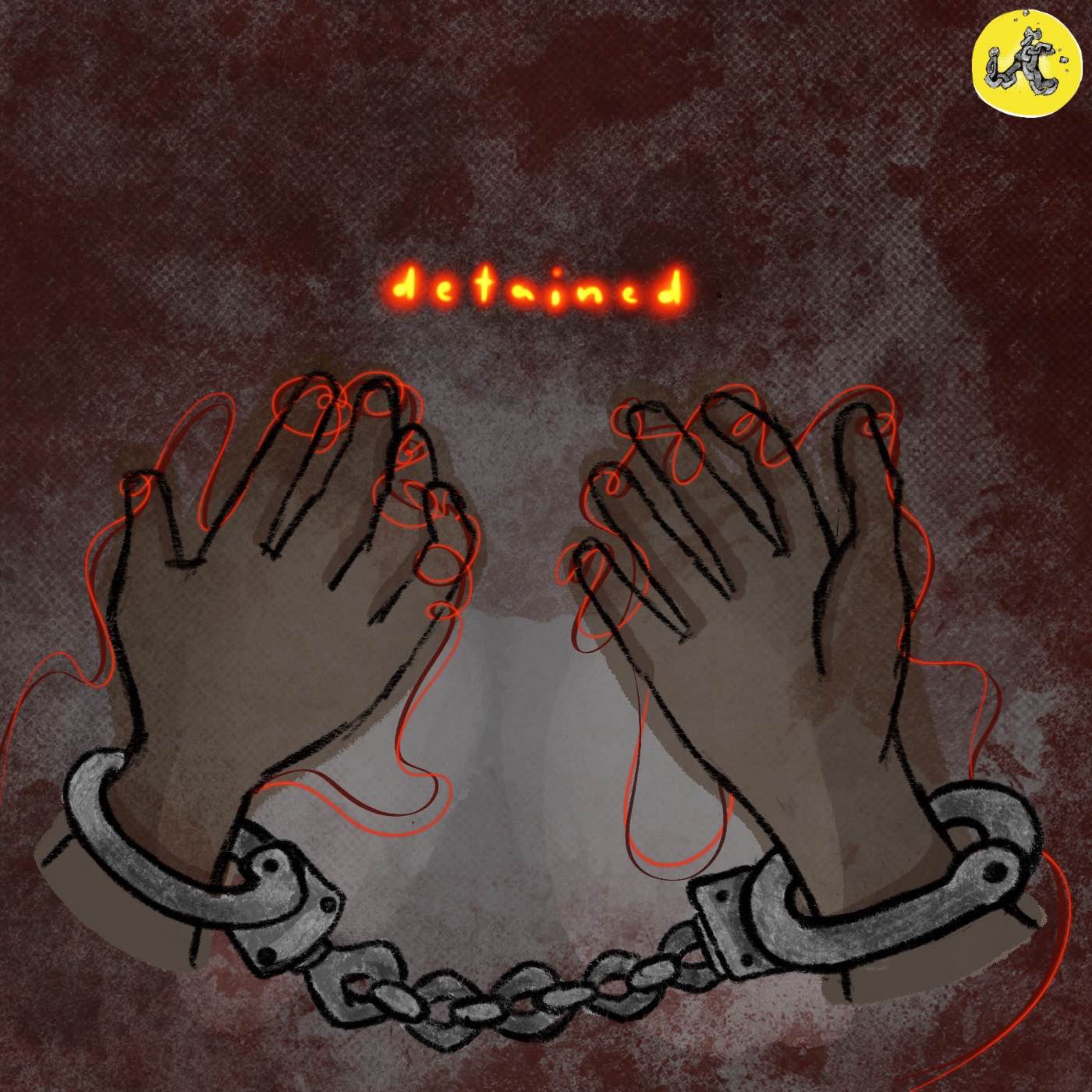
Flower shares a deeply traumatic journey through the UK immigration system, beginning with fleeing persecution in her home country. She entered the UK through a sham marriage for survival, found temporary stability, and built a life including a child and a nursing career. However, when her son’s application revealed the marriage was not legitimate, immigration authorities initiated persecution, leading to her imprisonment and subsequent detention. During detention, she faced extreme emotional distress, including seeing her son cry, being isolated, and having her phone monitored. She suffered severe mental health impacts, including PTSD, with minimal access to therapy or long-term support. Her community rejected her, her family distanced themselves, and she faced ongoing rejection and stigma. Despite legal appeals, she was denied work rights and public welfare for years, with deportation threats maintained for up to a decade. Even after release, she struggles with trust, self-worth, and functioning as a parent or member of society. The story underscores systemic failures in how the UK handles asylum seekers and detainees, emphasizing the lack of rehabilitation, dehumanization, and economic injustice. Flower’s experience serves as a powerful call to re-examine the ethical and human costs of immigration detention and to envision a system rooted in dignity, support, and shared vulnerability.
Welcome to the first of our podcast series, Immigration Detention, The Hidden Costs,
brought to you by the Unchained Collective, where we will be hearing conversations between
those who have spent time indefinitely detained on administrative grounds in British Immigration
Detention Centers.
The aim is to raise critical awareness through the powerful voice of experience of the destructive
impact of immigration detention on many levels, on individuals, families, communities and
society at large.
Discussions encompass the ongoing harms of being dehumanized and criminalized, the stigma
and rejection individuals face upon release into the community, as well as the economic
impacts of the system on individuals and society as a whole.
However, these conversations importantly also demonstrate the strength and powerful resistance
of those targeted by this system.
A crucial question is raised - why is this system that destroys lives, wastes public funds
and fosters division in our society allowed to continue?
Can we envision alternative ways of being together in our shared vulnerability?
Can we build a society where everyone has the right to breathe?
Ultimately, these powerful accounts serve as a collective call to action.
When future books chronicle the history of systematic incarceration and torture sometimes resulting
in death of predominantly non-white individuals for crossing borders, what role would you like
to have played in that history?
This is a question, this podcast series, compels you to ask yourself.
All these women, all these people, they have passed through a lot of trauma before even
coming to the UK, so kind of detaining them is kind of re-traumatizing them again.
They would be walking up and down the corridors in the night, here they are boots, you know,
thumping on the floor.
You couldn't sleep because they would be taking people to deport them in the night.
The whole idea of a detention system, but they didn't tell me why I was detained.
It's based on past experience of colonialism.
I still don't know why they detained me.
The extension made us to be a net set from each other.
Nobody wanted anything to do with me because they felt I might have committed a crime.
I'm being labeled as a criminal, so I don't have any freedom.
The web stage of money involved in running this whole institution
and you just feel losing my identity, having to get adjusted through, you know, being called
out through a number.
I feel like I've made just a number.
You are unwanted, you feel like you're really not like a human being.
Everybody's men and women, to be behind bars, is an economic West, is a human West.
We need to counterbalance the negative rhetorics that come in out there that immigrants are
nothing but a board and two society.
And this hatred to hate other people who are not English, knowledge they say is power.
Ignorance is a very big disease.
They want to silence us.
It takes courage for us to be here.
I refuse to let their system break me.
I don't want to be a victim rather I want to be a victim.
Welcome to this podcast series.
The hidden cost of immigration detention brought to you by the Anchained Collective.
In this episode, Flower shares her experience of confusion and trauma while navigating the
process of claiming asylum, prison and the immigration system.
She speaks of the loss of trust in family and friends and rejection from the community.
Alongside the ongoing impact of trauma, the lack of clear pathways of support for those
who have been through detention highlights the need for long-term mental health support
regardless of citizenship status.
Hello there, how are you?
I'm alright, thank you.
Good to see you.
Thank you.
You say your name is Flower.
Yes, I'm Flower.
Oh, nice meeting you.
Once again.
You're welcome.
Thank you very much.
Yeah.
Would you please mind telling me a little bit about yourself and why you are here today?
My name is Flower.
I was facing a lot of persecution and abuse in my country, so I fled to the UK.
I was coming here for safety and everything else.
But things in turn out the way I imagine had no idea about the asylum system.
So 2009, I got myself involved in a sham marriage just because I was trying to survive things
we had.
I was living literally from one house to another and I had to get into some relationship just
because I was trying to survive in the UK and I was very scared of the police.
I was very scared of everything I lived in fear.
I couldn't even hear anyone knock at the door where I was living.
And that happened for years.
That's why I made that decision to get myself to do a sham marriage.
And then after doing the sham marriage, I was given five years to stay in the UK and
to me, it was freedom, I was so happy, I was so pleased with the outcome and I kept chasing
my dreams because I've always wanted to help people, to support people.
But I didn't know where to start from.
I had to go and start from the college.
So I did access to nursing.
Yeah.
So I kept my head.
I put away my trauma because there was a lot of trauma involved.
And I decided to actually carry on pursuing my dream.
I ended up being in this and during that time, I got pregnant, I had my son and yes, so
things were going well and I was happy.
The moment that I put in my son's application, because he wasn't the father of my husband,
the home office picked on that and then they started persecuting me.
So that is where I found myself in prison.
And it was a very difficult time because the immigration officer, they came about six
of them and my son was there, traumatized crying, mommy, mommy, and so they followed me
to my son's nerves with that morning, I can remember it clearly.
And I felt, I felt like I was just going to, I don't know, I don't know my feelings at
the time, it was so traumatizing for me to see my son go through that because it wasn't
about just me, it was about the neighbors, the community, what they were going to think
about myself and my son and my family was going on.
And yeah, so they took me to court and when the news got to my workplace, they didn't
take it well, they didn't really fire me, but they did say that I did not report to them,
and I was going to court proceedings.
For that reason, they reported me to the NMC and the NMC stroke me off, so I wasn't allowed
to practice as a nurse in the UK even though I studied here.
So prison life was hard and after prison, I was definitely hoping that life was going
to be a little bit better, but they kept sending me letters while I was in there saying
that I have no other reason for living in the country so I have to be deported.
Right, while there, I lost my state of mind, I wasn't mentally, I wasn't stable, my son
was outside crying and the only person who was looking after my son, my cousin, the
home office went after her just because they wanted her to give up on everything so that
we can be easily deported.
And finally, she was so scared that she ran back to my country, so she left the country
and left my son in the middle of nowhere.
So I had to bring my work colleagues to support me, so there was one very nice one who took
my son, looked after him, but at the time, we agreed that she was going to keep my son
for six months and I was detained so after my. it gave me two years imprisonment, so I
was locked in for two years in the prison.
So after the two years, I did a year in, I was supposed to do another year in the community
where the probation officer will support me. So I did one year in prison and I was there
for an extra two weeks before going to the detention centre. So when I got to the detention
centre, I felt like there was a bit of hope, but it wasn't true. It was the same as prison.
It was even worse because I didn't know when I was going to be released. It was the worst trauma.
So my friend who took my son and kept him for six months, she was already requesting that
I should take my son. So I was very traumatised that day. I remember just sitting outside
of my bedroom in the detention centre crying and the officers came.
I had a little bit of support, but I also found out that they got into my phone to really see
if I'm not just playing, if I'm not just lying. So they saw the messages that my
colleagues sent to me regarding, regarding my son. So when they saw that then they came and started
attending to me because they realised I was saying the truth. And while in the health care system
wasn't good enough, I was suffering mentally. And every time I explained my symptoms, I had
the centre therapy to talk to me, even without prescribing medication. And it was after a long while
that they realised I was actually suffering and then they put me on metal as a fine for
and they kept increasing the dose because it was that bad.
So you stayed in detention like for how long were you in detention?
I was detained for three months and I was hoping to be released. But the first reason they gave me
was that I don't have a place to live. But my husband right now, so he was the one who was supposed
to bail me out. I asked him to give me his address, he gave it to me, but because the probation
was working with the home office, they kept saying that his house is not big enough. And he had a
two bedroom flat. They went in there to check, I had a son and he has a daughter. So the daughter
only visits during weekends, she sleeps there during weekends. And my son could stay in a bedroom
and my husband and I take a bedroom. But the probation officer wouldn't allow that to happen.
At some point, they even said my address is not showing on the map, they don't know where it is,
so it's not in the UK. So I was really frustrated and finally got a friend who is married to a
British citizen and they went out to check on the basement that they had. That is when they finally
accepted that address. I can live there and I'll be safe there. So when I started living there,
I still requested because my husband wrote to them a letter saying that he was actually going to
take this very seriously. Yes, my son had sat at school in September, so that's when they allowed
me to stay with my husband. So that's how you came out finally? Yes, I finally got my bill.
Okay, so after you came out, what are the effects all these experiences that had
on you, the impact on your mental, physical, for example? The first thing is I couldn't trust anyone
because I wasn't sure. I wasn't sure about the mood to trust because while I was in prison
and detention, all my friends denied me and I know that the effect on my family as well was
big because it's a big shame in my culture to be in prison. Myself personally, I suffered a
lot of trauma just thinking about what people were going to say to me and the rejection,
I didn't have enough support from the government in any way. I was never giving the 40 pounds.
Housing, it was my fiancé at the time but now we are married. He was the one supporting me with everything.
Yeah, very moving, you know, what you have told me already.
So also, how has this impacted upon you your relationship like with your family,
your own family members? I don't really, we don't really talk because I think there's that
division of she's been to prison. So there's a lot of stigma and cultural shock,
cultural problems around there. They're not just accepting that and it's still living with me
right up to now. Yes, what about the community interacting with your community? How has your
life been on that side? I go to church but I keep it quiet because I am aware that if they know
about my situation, I might not be accepted. So there's still that bit of me that hasn't recovered.
So I'm not fully free to say my story and yes, it's something that I'm working on,
building my confidence back, building my self-esteem. Yes, feeling human again because
all of that was taken over the years. Okay, what about concerning employment?
What have you been through? Has it been easygoing or is it still hard for you, you know?
It took me four years to be given a work permit. It took the home office four years to make
a decision. When I went to court, the home office, the judge granted my appeal but the home office
rejected it and they also had to appeal against the approval. So I went back and the only reason
they gave me was because I was pregnant at the time. When they saw that I was 16 weeks pregnant,
that's when they said, okay, we're letting her. And yes, unfortunately, I lost the baby
because of stress and pressure. I couldn't, it was just hard to go through about the immigration
and so I was pregnant 16 weeks later. I lost the baby because of all this trauma. So at the moment,
like I said, my pin was taken. I studied in the UK. I was hoping for normality but obviously that's
never going to come back. I'm not going to be the person that I wish to be. Four years.
Before I got my work permit, I went through, it was hard. My husband and I couldn't cope.
We're just literally begging from here and there because I had my son with me, remember? So it wasn't
easy to be in that situation and my husband was just working 37 hours a week and he also has a
daughter. So it was, it was hard. It must have been terrible for you going through all this experience.
What about your access to public welfare, social support?
Even at the moment, I'm not entitled for anything, even though I've been given two and a half years.
Really? To stay, yes. I'm still restricted. I think he's going to go on for about 10 years,
I was told. Yes. And before that, because I was giving a deportation letter for myself and my son
at the time. So they're still saying that they have to review, review everything about me,
every two and a half years. They just, yes. So they still have to review things before we can,
so we're not free free. Oh, well, you have to understand from your explanation.
I'm so sorry to hear your story. And I mean, it's really a terrible experience.
Yeah. How do you feel mentally now?
Still, because there's no clear pathway for rehabilitation when you've been to places like this,
especially when the probation, what I found that is that they had opportunities for
British citizens. But once I hear that you're a foreigner, they don't have much going on for you,
because the home office says that you're going to be deported. And clearly, there's no funding
to support you. I had to find one myself. When I came out, I contacted my GP and they actually
diagnosed me with PTSD at the time. And they put me on a waiting list and they said mine was going
to contact me. So I waited for a few about six weeks and nobody contacted me. So I had to go and
start looking for them myself. I was
ringing and saying "I need help, I need help, I need support, I need support" and they
asked me if I could go to their office to do that. It was one hour session, spoke to the
person face to face and she discharged me after about six or seven months because they
can't really carry on looking after you for a long period of time. So when she discharged
me, she did say "I could find another charity or another organization to support me mental
because she acknowledged that I wasn't stable and I had to look for another organization
but it wasn't easy to get them. I was giving a court date, went to court and they made
a decision on my case and when I finished the court and I knew it was going to be a positive
outcome that is when I started feeling like I'm recovering, that is when my peace was restored
and slowly I could feel better within myself because it was a very big part of me, the
fact that I wasn't able to work, I wasn't able to do anything, it was just me in the
house sleeping and even with the kids around me, my stepdaughter and my son, I couldn't function
properly like a parent, so everything was taken away from even to function as a wife,
it was just so hard and that would cause problems because just the fact that people around
you are seeing that you're not yourself, it's not good, so yeah, I lived it, I went through
it, but I'm here now. Anyway, it's been interesting to listen to your story and it's really hard,
I can understand what you went through. And I wish you the best and hope things will,
you know, at least things will improve for you, you know, as time goes on, I hope there
will be, you know, better ways for them to handle this matter. Thank you very much. Thank
you. Thank you. Thank you. Bye.
[Music]
Podcast Summary
Key Points:
Flower’s experience highlights the re-traumatizing effect of immigration detention, especially when individuals are detained without clear reasons or due process.
The system fosters deep stigma, leading to rejection from families, communities, and workplaces, with cultural shame reinforcing isolation.
Detainees face significant mental health crises, including PTSD, with limited access to long-term mental health support and delayed or inadequate treatment.
The immigration system undermines trust in institutions, with individuals like Flower being subjected to surveillance, breaches of privacy, and forced dehumanization.
Systemic barriers prevent rehabilitation, as support is conditional on citizenship and probation officers often neglect foreign detainees.
Detained individuals suffer economic and social marginalization, including years-long delays in obtaining work permits and denial of public welfare.
The lack of clear pathways for rehabilitation and release perpetuates cycles of trauma and instability, even after release.
The podcast raises a moral and societal question about justice, human dignity, and the need for systemic reform in immigration detention practices.
Summary:
Flower shares a deeply traumatic journey through the UK immigration system, beginning with fleeing persecution in her home country. She entered the UK through a sham marriage for survival, found temporary stability, and built a life including a child and a nursing career. However, when her son’s application revealed the marriage was not legitimate, immigration authorities initiated persecution, leading to her imprisonment and subsequent detention.
During detention, she faced extreme emotional distress, including seeing her son cry, being isolated, and having her phone monitored. She suffered severe mental health impacts, including PTSD, with minimal access to therapy or long-term support. Her community rejected her, her family distanced themselves, and she faced ongoing rejection and stigma.
Despite legal appeals, she was denied work rights and public welfare for years, with deportation threats maintained for up to a decade. Even after release, she struggles with trust, self-worth, and functioning as a parent or member of society. The story underscores systemic failures in how the UK handles asylum seekers and detainees, emphasizing the lack of rehabilitation, dehumanization, and economic injustice.
Flower’s experience serves as a powerful call to re-examine the ethical and human costs of immigration detention and to envision a system rooted in dignity, support, and shared vulnerability.
FAQs
Flower experienced severe trauma, including PTSD, loss of self-esteem, and deep feelings of isolation and dehumanization. The constant uncertainty and trauma of detention significantly affected her mental health and ability to function as a mother and caregiver.
Her son was deeply traumatized and her family faced stigma and rejection. The community, including neighbors and friends, distanced themselves due to cultural shame and fear of judgment, making it difficult for her to reintegrate.
She was removed from practice by the Nursing and Midwifery Council (NMC) after being involved in court proceedings. This was due to her participation in asylum claims and court cases, despite having studied and worked in the UK.
She was placed on a long waiting list for therapy and received no timely support. When she eventually accessed care, it was limited and she was discharged after only six months due to lack of long-term funding and system support.
Flower was detained for three months, with officials citing lack of accommodation. Despite her husband providing a viable address and family support, they rejected it and claimed her address was not in the UK, delaying her release.
Stigma from both family and community members leads to social rejection and isolation. Cultural beliefs about being in prison or being an immigrant create deep shame, making it hard for individuals to rebuild trust and relationships.
Chat with AI
Loading...
Pro features
Go deeper with this episode
Unlock creator-grade tools that turn any transcript into show notes and subtitle files.
 PodcastTranscript AI