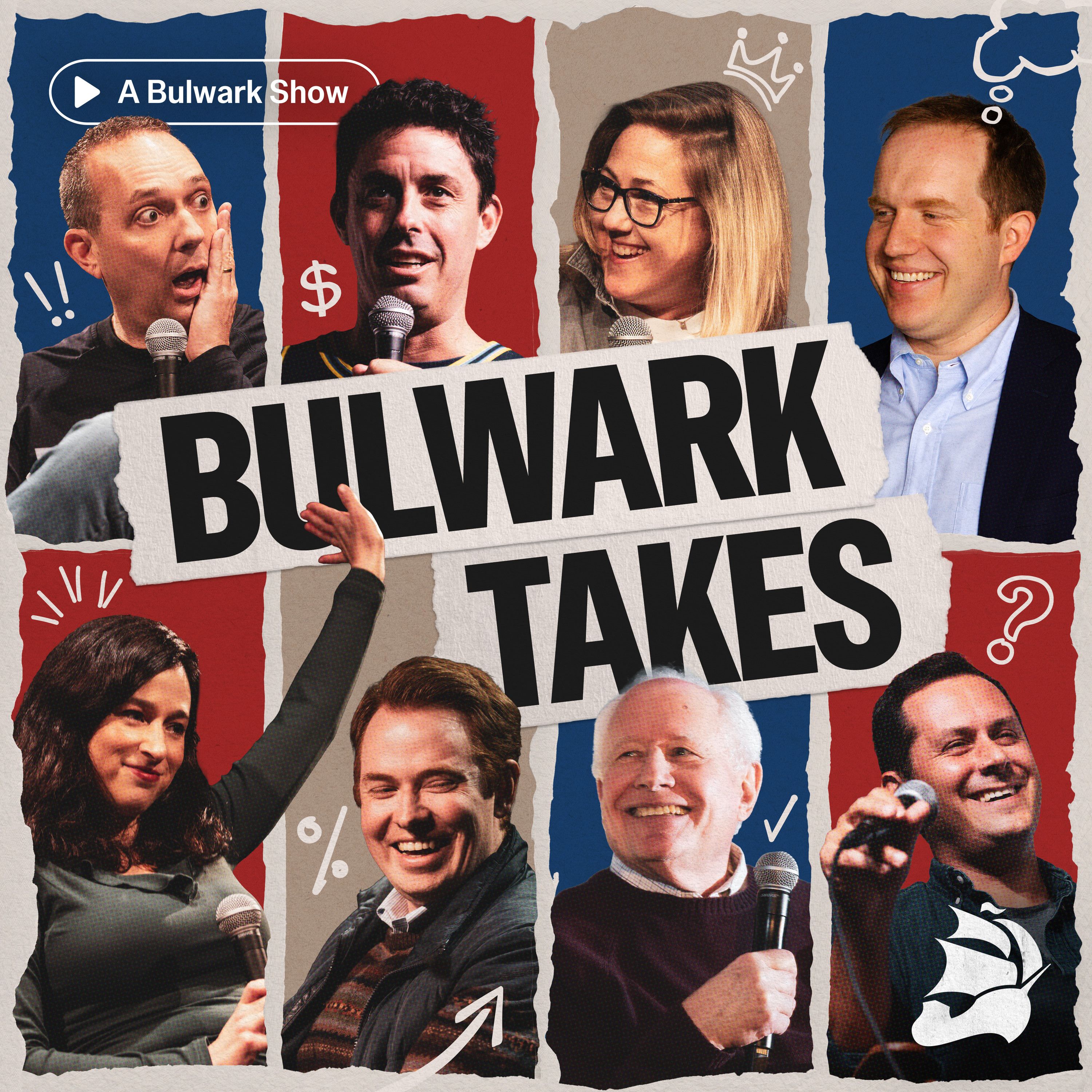
Ben Parker and Sarah Longwell discuss key strategies for Democrats to govern effectively after a Trump administration, focusing on building broad voter trust through economic reforms like raising the minimum wage and restoring healthcare, rather than pursuing high-profile impeachments. They caution against the “rally around the flag” effect by targeting figures like Pete Hegseth, whose policies on the Iran War are widely unpopular, to highlight Republican mismanagement without inflaming voter defenses. The conversation also explores how political evolution—such as in AOC’s journey—shows that outsiders gain deeper understanding of government mechanics over time. A central theme is the need for Democrats to use positive, emotionally intelligent messaging—rooted in love, sympathy, and hope—instead of fear and anger, which aligns with the public’s desire for healing and unity. They emphasize transparency, advocating for direct communication from leaders to counter disinformation. On universal healthcare, they see it as a politically viable goal, though it requires trade-offs in immigration policy. Accountability for past abuses is critical, but must be balanced with a focus on rebuilding trust and improving lives. Personal reflections reveal Ben’s passion for cats, his appreciation of fiction and audiobooks, and his belief in democratic values over partisanship. The discussion closes with a note on the importance of inclusive, non-polarizing political discourse and the value of listening to people’s lived experiences, especially in focus groups, to shape effective policy.
Hi, I'm Ben Parker from the Bullwark welcome to the AMA the ask me anything with our publisher our Fearless leader Sarah Longwell Sarah. How are you ready to answer some questions? What's up, Ben? I don't know. We're like not evenly matched right now. I feel so much taller than you. Which is not what it's like in real life. No, in the case. That much different in real life. Okay. We got a bunch of questions that people already submitted. Thank you to everyone who submitted a question on sub-stack. A couple of people sent theirs in through email. We might get to some live questions later. You did mention to me just a couple minutes ago that you want more fun questions, questions that aren't necessarily about politics, but are about some fun stuff, some stuff Sarah likes. I just thought if we're going to do an ask me anything. I do talk about politics on the pods all day every day. It's about some stuff we never talk about. Yeah, no, I think we should talk about stuff you never talk about like Kenyan or I don't know cats. Okay, we have some good stuff. Let's go ahead and kick off with a question from sub-stack from Kim Z. Assume we're going to start off with politics. Assume Dems take control of the house and start oversight. What do or don't they need to do to make sure this process highlights the incompetency and corruption of this administration, but doesn't trigger voters to rally around our publicans? I assume she means like swing voters here or feel defensive of previous votes that they've taken. What do you think about that? Love that question. And actually JBL and I did some of this on the secret pod today where look, I think that my biggest piece of advice is not to impeach Donald Trump because that does create the rally round Trump effect. We've seen it now like a lot of different times. And I think Trump would love nothing more than to have an enemy, right? Something that he can really to create, get people back on his side, right? I think we should impeach Pete Hegseth. I think we should. And because that you can make about the Iran War. Like you can make, like you dare Republicans, a vote for Pete Hegseth is a vote for this war. And so I think we should jam them up in some of the places where they're deeply unpopular, however. And this is really important. You got to also do some things that people want to see to I think because part of I don't have this fully fleshed out yet, but part of it is if you think about, let's assume a dem wins in 2028, the number of things that they will have to do to try to help rebuild in a sort of a post Trump world. I think that there's a way that Democrats can get a jump on some of that, some kind of a reform package that includes a lot of popular economic things that Democrats do. Like this is sort of the moment. Democrats are, they've been living for this, things like raising the minimum wage, very popular right now. You know, like some of the just the populist economic things, restoring people's Medicare, who Medicaid, who have lost in rural areas, things that they can crow about. This is just very important. They need to focus on things that make people want more of it in 2028, not less of it. So when you say the top three things that I would do out in peach I accept over the war, I might do our boy over at DOJ. Like if we're going to, if we get to keep in peaching, if the first one is successful, you know, you go after, I'm sorry that I'm blanking on his name. Top Blanche. Blanche. Thank you. Do Blanche at DOJ over the Epstein files? Do you do RFK Junior? Well, so I just, so on with JVL and we were talking about this, I was kind of like, I would love to do RFK over the measles. I think there's only, we have to see what the appetite is and how much we're really going to, because I do think you need a reform package in their 10 very popular economic things that Democrats can, can try and push through that make people see them as the party that is thinking about their material well-being. Yeah, I think the RFK thing is also something that you can accomplish just as well through positive legislation, right? Some of these boards that he's fired all of, or, you know, the expertise is hollowed out. You can say, like, well, we're introducing a law that'll put that all back and make sure you can't do that again. You don't necessarily need impeachment as much, but I don't know, that's, I don't know if that's right. Okay. Sarah B says, "I am fortunate enough to live in blue, New York, but a group in Michigan, and I'm wondering how Abdul-Elsaid were governed if he's elected to the US Senate. The evolution of AOC has been so interesting to watch. I believe that he might follow a similar trajectory. Thoughts?" I mean, my thoughts are basically that outsiders, when they become insiders, have a tendency to shift, right? Because what they quickly see is that, you know, being sort of angry from the outside is easier than having to work the levers of government. And, in a lot of ways, that's a good evolution to go through, right? It's good to sort of get in there and say, "Oh, okay, I've got to build public support for this thing," that I said, not just public support, but, you know, internal support from other senators. And I've got to figure out how to build coalitions. And I sort of think that is, that's democracy. And so it is a, watching AOC has been really interesting, because she goes from somebody who, and I think she still has pretty much roughly the same principles, but her understanding of the mechanisms of government now are so much more nuanced. And she's quite good actually at explaining to people what they are. And so I just think it causes you to sort of grow out of the part, right? It's just all that you campaign in poetry, you govern in prose. Yeah. A lot of times when you run for the first time, you don't even know what the prose are. And I have seen some people that make them worse and other people that make them better. And so we'll see. But AOC, it's absolutely made better. Yeah, no, her evolution has been really interesting. We do have one question from you, too, that it's a fun question. So we've done a little bit of vegetable time for some candy. I don't know, is it jolt chick or jolt chick says, "What was your batting average in softball?" I have no idea. You know what? Here's what I'll tell you about my softball career. The best player on our team played the same position as I did. So I mostly DH, I was a second basement. I was off in a backup second basement. But I was, my hitting was always the best thing. And so I was, I often was a cleanup or a designated hitter. But I don't remember what my batting average was. No, that's fun. I think this next one also counts as a fun question because I love the pulled back the curtain on the focus groups questions. And I know you do, too. This person's first name is TP and last initial S, we're doing first grade style names here. So TPS asks, "Do you ever go back to people who are previously part of a focus group to measure change over time? Do we ever repeat the same people in the groups on purpose?" We do. Although we don't do it that that often, although often when I do it, so we went back, for example, to people who didn't vote for Kamala Harris or like people who we were leaners who then we knew like didn't vote and we asked people who didn't vote why not, like why they ultimately couldn't get there. And these were people who were undecided who then didn't vote. So we do follow up, especially after an election where we've had interesting cohorts in the, we have in the past done things where we follow the same cohort over time. That is interesting. Like we'll take, we took a group of undecided women in Pennsylvania and we had, we met with them kind of every other week or something up until the point of election. There were some downsides to that. Number one was that they developed a group, like an in-group relationship, right? They got to know each other, yeah. They got to know each other and they were, it was changing what the relationship of the whole thing was. They were enjoying seeing each other. They would tell stories and that was great, but it wasn't giving us what we needed qualitatively to like understand. We could see that that dynamic was getting away from something that was really useful. This one is a pretty straight up question also from Substack about the book, about how to eat an elephant. Peabody J asks, what can each of us do personally to fight the right-wing anger-tainment industry? This is a really hard thing and I really struggle with this too, but you can, this is in the book, to the extent that there is a place to end about sort of feeding the good wolf, part of it is like, do not become them. This is my number one thing. You know, there's this Nietzschean quote, stare into the abyss and the abyss looks back at you. Trump wants to turn us all into monsters like him, right? He wants to bring out the worst versions of ourselves, the parts of us that hate and live in fear and what I try to do is resist that. I fail. We all fail sometimes, but over and over, I try to reinforce almost as a mantra. We don't want to be what they are. We are not trying to be a mirror image. Like, I understand, we want Democrats to fight harder. We want there to be a big broad coalition that doesn't, isn't at each other's throats so that you can sort of overwhelm the bad guys on this side, but you want to do it without the same vitriol, without the lying, without all of the things that make MAGA so toxic and terror us apart as a country. You know, you want to fight lies with truth and you want to fight evil with goodness and like, sometimes it's that basic and I try and I believe all of us should try to do that. I think that's right. And, you know, you're not going to convince anyone by screaming at them. I think it's part of what we've learned.
This is a question speaking of screaming from Michael H who left it on Substack. This is a question that Harkin's back to the Rick Burman section of the book. What does a flag's Democrat look like and sound like today? I've heard you talk about this a lot, like even just around the office, about which part of the flags acronym people should use and when. He says I would love to hear some examples of how Democrats should be using fear, love, anger, greed, and sympathy when crafting their narrative. Yeah, so this again is that, you know, my the guy that I worked for when I was sort of coming up in in communications world, and he and I, we disagreed on a lot, but like I really learned a lot from him about how people communicate and about how it works. And he had one of these things that he always talked about was flags that there were five dominant human emotions, fear, love, anger, greed, and sympathy. And this is, let's just take Trump. So I think that the way to think about messaging is always contrast, right? You want to say them bad, we good, right? Like, and John Ossoff does this. Yeah, I feel like he really follows this pattern. When he gives his speeches, it's one of the reasons I'm so enamored with him, like I joke about how he's been lifting weights and whatever, but he really does do this thing where he tells a story and he says they have greed. They're greed, right? They're corrupt. They're greedy. Your life is getting worse. And so he is saying, there have greed. You should have anger about their greed. And, you know, I think that I think that whoever runs in 2028, I do think there should be somebody in the mix. There should be love. And the love is love of America, love of her people, love of wanting to make people's lives better. I think that Trump would do this. And I think we all found it pretty repellent, but he would be like, I love the poorly educated. You know, I love women. I love, you know, and but people like to be told that they're being prioritized. That's why America first, which has its roots in horribly racist sort of 1930s propaganda, is still so effective because it's saying to you, Hey, Mr. and Mrs. American, I'm prioritizing you. And people like to be prioritized and they like to be loved. And they like to be told that you're going to make their lives better. Like we even greed. Part of it is, I don't think it is greedy for people to want to have their material well-being improved. But that is part of what you're doing, right? You are saying to them, your life is going to get better. You will have more money. You will have a better job. You will have more upward mobility, like using people's anger at the elites, their love of something better, their fear of it getting worse for them. That is like, those are all things that you just, but think about people like like having emotions and that you are trying to tap into them to reach them. And how can you pull out the best stuff? And because Trump does it the other way. Trump takes fear and anger and weaponizes those all day long. How can I make people fearful of their fellow countrymen? How can I make them angry and hateful at their fellow countrymen? And so you got to realize as a leader, you have the opportunities to do a lot of directional things. Where do you, where do you take, because you're going to make people fearful. That is just part of what you are doing as a politician. But what are you making them fearful of? Because if you're making them fearful of their fellow countrymen, that is divisive and bad. But if you're making them fearful of what AI is going to do and then you are presenting the solution to that, that's good politics. Cool. I like that. Okay. We have one more question and then a special announcement. I didn't tease a special announcement. So if you're tuned in right now, you get to hear it. It's going to be exciting. But first, another question from Substack, Alicia P asks, "I'm an academic librarian wondering if I could lead a book club with how to eat an elephant. I am not a communications professional. What questions of framing could you suggest to introduce this book to non-bo work people? And do you know of any other groups that are starting book discussions with your book?" I don't know. Here's one thing. I saw somebody sent this to me the other day. There is a guy who, so a bunch of people have done reviews. They'll do like these video reviews of the book. And so one thing I might encourage you to do is obviously people love being in person, but you could start an online video zoom conversation about it. But there's this guy who does an online review. He's a professor somewhere. And he does this incredibly thoughtful, earnest review of the book, but the whole time his cat keeps getting in front of the camera. And it was one of the funniest things I have ever seen. I got to share it because he starts by being like, "I'm sure she'll never see this." But I watch the whole thing being like, "I love this guy!" And his cat, when it was such a thoughtful review. Anyway, I think people, I would love it if people were able to self-organize, especially in the book comments and things like that. There's a lot of ways that this community can do that because I do think I have gotten a lot of this. It's the reason I did the AMA that there's sort of an appetite for people who want to talk about the things in there. So, hey Ben, also, if the chat, if people are asking hard questions or even mean ones, throw them at me. I'm not, I'm not, go ahead. I'll take them. We have people who are putting together a list for me. So I'll look for those. I'll look for some mean ones. But in the meantime, maybe they can throw some mean ones in there and highlight them for me. Thanks guys. In the meantime, if people want to hear more about your book, I'm sure it will be a topic of discussion on October 18th at the Bullwork Live event in Charlotte, North Carolina, which unfortunately is already sold out. But Secretary Mayor Pete Buttigieg will be there with us. Maybe he'll have read the book. I hear he reads a lot. And if you're a Bullwork Plus member, even if you're not there, you'll look at the watch because that's the big exciting announcement for the first time ever. We're going to be live streaming this event. Sarah, how excited should people be? I know, leading question, whatever. I mean, well, we're going on the tour. I'm excited about it. I'm excited, you know, me and Pete, if you remember, I've had, and is ignominious. What's the word? I just, me last time I met Pete, I sort of fell apart in the face of meeting Pete. He is one of my favorite politicians and communicators. But so I'm excited to get to redeem myself in front of him and show him that I'm not a weirdo, who can like hang out and talk normally. But I think it's going to be a really fun show. We're going to be down south in places, a lot of the places we've never been. But I'm like, super, I'm interviewing Pete and I can't wait for it. It's going to be great. I'm just going to say, Pete, why do you have all the best words? Yeah, exactly. So that's going to be live stream. So you can watch that. Unfortunately, tickets are sold out, but you can get tickets to the show in Atlanta two nights later on October 20th with you and JVL and Sam and Tim and a bunch of other Gold work friends. So those tickets are still available at the bulwark.com/events. Let me see if we have-- You know, while we're, yeah, do you get some questions? And I'm just going to say one thing since, you know, people are on now. We're talking. I just want to say thank you to everybody who ordered the book. You know, it was number two on the New York Times bestseller list. It stayed on the list for a while. We're still selling a ton of audible people like a lot of people are listening to it, which is, which is nice. But I just have been overwhelmed both by how many people came to the book talks and the events and how well the book is done. And I know people are reading it because of all the reviews that people are leaving on Amazon and Goodreads and whatnot. And I just can't tell you how much I appreciate it. Okay, here's a good one. This comes from someone in the YouTube questions asking why did the bulwark hire a former Trump administration employee? Sarah Matthews? Sarah Matthews, yeah. Yeah, I mean, well, first of all, I don't know if-- Sometimes I think people maybe don't know the bulwark origin story that, look, at some point we were now a long time ago, but people were Republicans. Now most of us were out on Trump from the jump. Like I tried to fight Trump in the 2016 primers, although I didn't really have a way to do that at the time. And you know, I went and grabbed him and like I met JBL and, you know, Weekly Standard got shut down and Ben you built the original when we first started the bulwark. But you know, I met a lot of people like part of my journey in 2020, actually like 2019, 2020, 2020, every time somebody would abandon Trump, who knew him, they would do it, they would find us, like they would come to us to help because they were looking for sort of a middle space, a safe space, like who are people who will understand and help me as I try to extract myself from Trump's orbit. And so, you know, Olivia, I'm sorry. Olivia Troy, yeah. Olivia Troy, Elizabeth Newman. Elizabeth Newman. There were a lot of people from the Trump administration that we helped sort of not just get out, but also then tell their stories publicly through Republican voters against Trump. We turned a lot of them into ads. And so we got introduced to Sarah Matthews sort of after, right after sort of the January 6th committee stuff. And I just, her story sort of resonated with me that she was somebody really, really young. She'd grown up in a conservative family. This is sort of how I felt about
myself she was there and uncomfortable like obviously I never would have worked there but I was also older like I had seen enough to know like this was horrible from the jump um but she wanted out and she wanted to fight and this is where I do appreciate somebody who says I see now I see that it was wrong and I want to make good like I want to do better I want to I want to fix it I want to do my part uh to try to help things and that's who she is and not everybody's like that but I think when you have that you should nurture it and um I do try to find homes for a lot of these types of people people who who got out um I do think anybody this time or like I feel a real difference to people who are in Trump one and people who are in Trump too because people who are in Trump too said uh I would do that again yeah right like he tried to overthrow the government and I'm still gonna go work for him like yeah I have no more grace for that um but I I I do think that I do for I do for some of the people especially the people who did the right thing um and told the truth about January 6th because every time somebody does it you have to realize they are very much the exception to a whole bunch of people who are doing the wrong thing and so I think that there's um I think that there's a sense sometimes from people that everybody who um you know is kind of like a never-trump or that there's like a an ulterior motive but I will tell you it is deeply unpleasant to extract yourself from your previous tribe um and I'm not saying everybody needs massive plots for doing it but I don't think you should assume that their intentions are terrible because the fact is like if they wanted to make money they would have stayed like if they wanted especially now right like totally because now it's just pure corruption and you can sell access and everything else and so I do think people should uh at least recognize that that those people were trying to they were making a kind of sacrifice yeah I mean Sarah's great and she she's written very clearly about how like she was con in that sort of Trump one kind of like I feel like I can still do good here if I just like focus on the good stuff and she was out of January 6th and like she's fully on board and you know politics is about addition not subtraction like you know I think it's I think that's a great answer uh fun question from I'm terrible pronunciation it's a sorry Donna I think are you a cat person or a dog person cat person sorry this is this is controversial but um I I had to my soon as I got engaged to we got two cats we named them um Calvin and Hobbs because that's a Bill Watterson went to Kenyon so Calvin and Hobbs and then when they passed away during COVID or just after COVID um because not at the same time that we waited a little bit and then the boys like that was the time we were like do you want a dog and the boys said no we want two more cats and they wanted a boy and a girl that they could name Harry and Hermione but we ended up getting two boys and one was red so now they are Harry and Ron that's so cute does it surprise people who know you that you're a cat person because I can see people being a little bit a little bit surprised by that uh I don't know you know um I don't I don't I don't don't you don't want to really I'm literally you can ask me all the questions about dsa and any of that but I can't go into the dog stuff where I just feel like I'm really getting trouble uh but I'm a cat person okay here's a question from Rich on sub stack Sarah what are your thoughts on universal health care it's the thing that I have changed my mind about the most um less politically and almost more as an adult consumer of health care um and a business owner um I think that I do think it's going to require a bit of a grand bargain I do think as a political matter it's probably an idea whose time has come and I actually um I wouldn't be shocked if some Republicans started talking about it too um you know Obamacare covered a lot more people but it also made it a lot more expensive for the people who were able to pay and as a result it is one of the things that comes up the absolute most in the groups and again you really know you have a problem when something is hitting people among on a bunch of different factors and so for health care it is both its cost both as an employer and as just a user but also it's not easy to use like it is increasingly very difficult as a service um and even when it's gotten sort of and part of it too is like technology is changing it where you could see like search light put out something on this that I thought was really compelling but you could see how urgent cares as they populate places and people are able to get a certain basic level of health care and I think that it should just like you get born and you are born with uh health care uh like I I think there are certain things that and but here's the thing and this is uh what I think people should should understand is that there will have to be part of a bargain and part of that bargain will be the bigger social social safety net the more Americans are going to be hostile to people coming in the country for the first time this is why you look at the the socialist countries in Scandinavia whatever the do democratic socialism they don't let outsiders in right like you get it but people they don't let people into their countries they don't do a lot of immigration um and I think there will have to be some trade-offs there um but I do think it is an idea of some kind of basic coverage is an idea whose time has come and I think it will be more popular with voters now than it was 15 years ago yeah I think I think on the as a political question it's certainly uh I think a lot of people warned back like during the Obamacare fights like this is just opening the door to universal health care and like as a policy matter I don't know that was right but I think as a political matter that's kind of been born out like people wanted an option that was accessible and easy to use and affordable at Obamacare wasn't that but like kind of was a step in that direction uh we have another focus group question here from Austin from Atlanta he says you ended the uh Paxton Tolerico focus group pod with I really think we can get some of these people why try to court voters who still think in 2026 that Paxton is quote the lesser evil well it's Texas um and I do think that um a big part of political analysis is understanding just the reality of the places that you're running in and um it's very difficult for a Democrat to win in Texas uh a Texas a Democrat hasn't been elected to a federal office in I don't know when was the last time uh that you'd have to effort that but yeah I've known it very long time um and so I think that uh you if you're going to win in Texas you need three things to happen you need Tolerico to turn out all the Democrats that are there uh right overperform with Hispanics uh you need independence disinfected independence to break uh like seven to three his way and you need a lot of Republicans to stay home and some to cross over uh and vote for you and so I think the fact that in in our polarized society listening to so many Texas voters Republicans Trump voters say that they under no circumstances will vote for Ken Paxton is music to my ears now I think if the question is sometimes people gets stuck in this binary like well shouldn't we focus be more focused on turning out Democratic voters in Texas than in trying to persuade people and like it's always a little bit of both but also in a place like Texas you just have to do persuasion you have to because you're so outnumbered with right leaning voters um and so you know that's just what has to happen and I think also though I think it can like what was exciting to me listening to the focus group was how many of these Texas Trump voters liked Tolerico like said like yeah I know he said some crazy things but like he seems really nice he seems like he cares about me he seems like he loves Texas in the country like okay um and look it is hard to build a coalition out of people that you really dislike that you feel like made really bad mistakes before errors and judgment like that's a part of the human condition where you're like I don't want this person in my coalition but this is again a big part of my book is do you want to be right or do you want to win and you said this before Ben and it's just true winning is a is a game of addition and so I think for people who do a lot of you're not in the coalition and you're not in the coalition um that that's a mistake um because like you know it's like it's like you have to like go to a party with the person in the coalition you just have to be like did you vote for the same person I voted for great yeah love that we have that in common and we don't talk about anything else um okay this is a question uh just from me my prerogative of being on live stream what was your favorite and least favorite part of writing the book um my favorite part of the book was um well my favorite part was honestly I was working with JBL and a lot of people you know I um I couldn't have done the book without a lot of help
from people 'cause I was also trying to run the companies and podcast and do the things. And so you helped me, JBL helped me. But like one of the most fun things, and I have my producers for the show, but we had to do so much going back through the focus groups. And that was a trip, man. It is a trip to go back and see what people were saying at different times and be like, oh, I remember this person. - Like what, I'll give it an example. Yeah. - I mean, well, so I'll give you an example. There's a guy who we knew was in several of the groups who was a voter for Ron Johnson. And, wait, who's the Democrat? It was like a-- - No, no, no, no, no, no. It was a, oh no, it was a Kamala Johnson voter, right? Like, whatever. And that person's gonna be a straight ticket. Now, like, I guess I mean, when you would go back through two, the other thing is it refreshed your memory about people, and then those people come through again, sometimes when you screen for groups, and you see them and you're like, oh, I see how this person has changed. I don't know, man. So the most fun part was obviously like working with my team who I love and going through the focus groups and getting to put it all together. 'Cause that's what I really wanted. That was the part, like I couldn't help writing it. I desperately had stuff I wanted to get out there. My least favorite part is that writing a book is super, super hard. And it takes a lot of time. And the hardest part was actually living in the old focus groups, writing analysis from things that had happened seven, eight years ago, and then doing analysis from today. Like keeping it in my, like straight in my brain, what are we talking about? And I feel like people who've come to me over the last year have seen me. I just feel like I used to be much sharper than this time. I feel like I was constantly trying to be like, this is now, and that was then, and you can't let those, that analysis cross. And that was hard. - All right, we're just gonna do a few more of these. 'Cause this is fun. This is a great question that just came through from Smotwani. Have you asked the focus groups what happens after Trump? - Yeah. You know, if you're asking MAGA audiences, you know, some of them, if they still love Trump, would joke about like, well, Trump's gonna run again. Mostly though, people are starting to want to move on from Trump, and they don't want Don Junior. Like, I ask because JVL is always like, it's gonna be Don Junior. I ask about Don Junior, and I ask about Tucker. And it's a weird thing. Like, there's kind of a JD Vance cohort. There's a Marco Rubio cohort. And then there's kind of a field, but the field tends to be Tucker or Megan Kelly. Like, there's definitely in that right wing MAGA ecosystem they're now used to electing people who are not politicians, but who are entertainers, and they want to be entertained by the people who are going to own the lips the most and be the most aggressive. And so like, they're still real appetite for that. And so I think you're gonna get a world where the JD and Marco end up kind of fighting over the America, or sorry, the MAGA establishment. And Marco probably appeals more to like people who like the party more than they like Trump. And JD Vance is trying to be the bridge. And then you're gonna have sort of the real America first has never been tried. Because I hear that different, I hear those different streams in the voters. I will tell you, we ask, if you're asking about Dems, controlling for, I mean the bloodlust, like the appetite for like how are we gonna put all these people in jail? Like what does accountability look like? How are you gonna do the sort of truth and reconciliation? How are these people gonna be punished? And I think that's gonna be one of the biggest challenges for a democratic politician is to both calibrate for genuine and necessary accountability so that it doesn't happen again with like I've gotta get to work on doing things that improve people's lives 'cause that's why they elected me. And that's gonna be tough. - Yeah, so just staying on that for a second 'cause I think this is super interesting. What's your advice for how if we do get a democratic president in 2029, they should do that? How should they, I mean, first of all, what should they do as far as accountability? And then how should they talk about it if at all? 'Cause this is sort of different questions, right? - Yeah, I mean, I think that you get the most credibility for reforms raining in the federal government when you control the federal government. And so because it takes a lot of, like again, there's sort of almost a self-sacrificial way in what you're saying, this other side broke all of these rules, all of these norms, they did all this corruption. And you're like, and I think that Democrats what they should do is they should hammer them. And they say, we are here and we're seeing all the things that they did, and so we need to pass rules so that the Republicans can never be this corrupt again. But you're gonna have to pass them and like sort of rein yourself in when you do that, or at least talk like you're raiding yourself. And you should say, I don't want a Atari jet. And so we are going to make taking a presence from foreign leaders illegal. Like there will be enormous appetite and even some bipartisan appetite for Republicans who are looking to distance themselves from Trump with things like that. And I don't know that that is gonna satisfy the people who want to see like Don Jr. in jail. But I think that, but I do think they should prosecute some people. And I think that, but like, you know, I think that there should be somebody at the DOJ who says the way that they weaponize the Department of Justice, here are the things that they did. We are going to be completely independent and let me show you how. And this is one of the things I really talk about in the book that's really important. I think from here on out, I was talking about this with Weisman on Illegal News the other day. People want more transparency than they get from the government. And the Democrats and they come in there are gonna have to think like, you can't have like a Mueller investigation that happens behind closed doors anymore. The appetite for somebody who comes out and briefs the public regularly is how government is going to have to start to operate. They want people want to hear from their president regularly. They want to hear from, they want to hear why decisions are being made. And I think part of the collapse of the media has led to voters wanting to hear directly from the people who are in government. And that's gonna be a new feature, or should be a new feature of how the next Democratic administration offers, which is like maximum transparency, constant communication with the voters. And I think that they will, they will get further and not be the right-wing infotainment media will not be able to frame them up the same way if they're out there telling their own story first. - This next question is super long. So I'm gonna bridge it a little bit, but it is super interesting. Just in case you're just tuning in now, the big announcement we had earlier was that if you're a bullet plus member, you get to stream the your conversation Sarah with Secretary of Mayor Pete Buttigieg in Charlotte on October 18th. So sign up for a bullet plus if you're not already so you can watch that conversation. I'm so excited to see it. This question from Kim on Substack. If you, she's got some bullet points here, okay? So strap in. If you had the power, magic wand, would you go back in time and change the 2020 results? So Trump won. I keep thinking about all the things he might or might not, that might or might not have happened. She says no big lie, which means no January 6th, no voter suppression. Trump continues to mishandle the COVID response and voters remember who was president during COVID. He doesn't get thrown off Twitter, so he doesn't build truth social, no doge. There's no project 2025. He's not president during the 250th anniversary of the World Cup in the Olympics. Maybe he gets tired of being president after a second term. She has a couple of other things, but maybe a random event as well don't happen. He would have done horrible things, but she says like keep thinking they wouldn't have been as bad as what we're actually seeing. - Man, that's such an interesting question because presumably if you didn't have the interregnum of the Biden years, and Trump had to preside over the post-COVID-inflationary environment, and he still had a lot of holdovers of normal people staffing the government. I think you're probably right. It would have ended up being slightly better that way, but I mean, who can tell with that counterfactual? - I will say I gotta add one thing, which is Mike Pence would have been vice president. - Yeah, well there you go. - They're not JD Vance. - Not JD Vance. I could see that being the better of the outcomes. I mean, it's hard to argue that Trump getting four years in the wilderness to like break a bunch of laws and rebuild his strength and then come in with much stronger and with the cabinet of syncopates and people who are totally unqualified for their positions, I think has put us in a worse position. On the other hand, you might have ended up with that as people feeling better about Trump at the end of all of it in a way where I don't know. I sort of, I always feel grateful that we got to see the true nature of a lot of things because I think it will make our, like a. bone that breaks and then heals, I think it will make us stronger to know where all of our vulnerabilities are and Trump has sort of shown all of them and to know how important leadership is and how bad our leaders can be, I don't know though, that's a tough one. I think you're probably right that it would have been better to get eight years, but you know what have been really better for it to have be four years and for him to never have been able to be reelected again. That would have been, that would have been better, no question. Okay, we've got a bunch of, I think we can do a lightning round in the last few minutes here. So I'm just going to read a bunch of these Vanessa from Substack, what's your favorite restaurant in DC? Oh, man, shoot, what's my favorite restaurant in DC? Man, I can tell you we order from Mama Lucia's all the time because I have children, that's not my favorite, but it is the one that we certainly spend the most money at. Oh, oh, no, my favorite restaurant in DC is Parkway Deli, oh yeah, this is where I go to. Oh, the one in Silver Spring. So it's, it's a, yeah, I think it's like at the cost of, is it right over the border? Yeah, yeah. It might be right over the bike right over the border. It does. It has the pickle and the beet bar and like they're pickled beets are my favorite. It's the best Jewish Deli, the best mozzarella soup that you can find. It's like DC has a stunning lack of sort of New York style Jewish delis, but that one is the best. And we go there all the time. I don't know if they're watching right now, but I actually, there are two bulwark plus members who live very close to me who like were friends and we actually have an ongoing project of finding the best possible soup in DC and Parkway Deli is next on our list. We love that place. Okay. Yeah. That was a very lightning run. I saw that one down. Sarah from Katie and Subsec, what was your favorite city on the book tour? Well, my favorite stuff on the book tour was probably going to Kenyan because that met a lot to me emotionally. Let's say though the Seattle show was off the chain. It was like 850 people and it was a funny place. They haven't this third story books, which was really cool, but it was in like a, it's a, it's a two story almost like library bookstore, but then it has a food court in it. And so they clear out the food court and so like people went all the way back to the dumpling place, but people were rowdy in that one. I got, we got worked up and sweaty, JBL was there was so, so fun, but I don't know. They were all great. They were really great. Also like when I did Nellie that was in an actual bookstore, sorry, go ahead. No, what was the best non-political book you read or show you watch this year? That's from Jake. My favorite shows this year were Widows Bay and Slow Hourses. I've read a lot of books, I read a lot of fiction. Reading fiction actually really helped me write my own book. I read a ton of Ann Patchett, who is one of my favorites. I read a ton of Barbara King's solver. Those are some of my favorites. I'm reading the new book by Wally Lamb right now and it is really, really dark and sad. But yeah, I, I think fiction is the thing that is most good for my brain. I also listened to a lot of audiobooks now. I was so glad. Look, you know, honestly, one of the reasons I didn't make number one is because so I'm going to give them all the audiobook and not the hardcover. But I'm so glad that people are buying the audiobook because JVL and I, you know, people are used to listening to our voices. And I think people have really loved the audiobook, like they're used to that format of listening to us. And it makes me, I don't know, it's nice that people wanted to hear me read it to them. I love these words. Yeah, you actually read it. Yeah, I did. What does Bill Crystal like in person? No. Okay. This is true. Bill Crystal is the nicest person I've ever met in my life. You can back me up on this pen. He is a lovely, lovely, wonderful guy in a way that is different than a way a lot of people are in DC, especially people who have been at his level of fame. He is, he is charming and he is not the remotely a narcissist. He is incredibly supportive of all of us who are younger than he is, but he also is like a riot. He loves, clearly loves being around young people, but he like takes his shoes off and like in his bombas socks, like he's always like shuffling around the office coming up behind people at their desk being like, what you doing there? Working hard or hardly working and, you know, people love it. He's a great, great human. I work with Bill every day on the morning newsletter on Morning Shots, which is free if you want to sign up at TheBullwork.com. And we, the thing that we always argue about, like just the whole team that works that are every day is what the headline should be. And very often, it's like, you know, a bunch of us throwing out ideas trying to figure out which is the best headline and Bill just making jokes. This all happens like over Slack, but it's just like trying to make us laugh every morning. It's great. I was like, every time I say that I hate Slack culture, he's like, I love Slack. Slack is so fun. It's just where I tease everybody. Yeah, exactly. Okay, last question from the lightning round and then we'll wrap it up here. Are we going to get a JVL moderated focus group? Yeah, probably, you know, we're almost at 50,000 copies sold and that was my line. And so, you know, if you guys get it over 50,000, I'm going to let that guy moderate a focus group. I am going to sit there with my hand on him though, because he can't like yell at anybody. That is not what happens. I think people think he like his idea of moderating focus groups is that he like tears off his shirt and bust through the window like the cruel aid man and is like, I'm here now to yell at you. And I'm like, okay, well, that's not, it's not actually how these things go. You know, if he sings plus money, right, but I do sort of, I will, I want to set him up and I want to let, um, what to figure out. It'll be interesting what the screen is on that group, like what kind of group we're trying to have JVL talk to, um, because if I just put him in a group with rural mega voters, like he will lose his ever loving mind. But I think that's what the people want. Uh, and it's okay. It's okay. He needs to see it for himself, uh, what it is like and how you maintain your composure while people say things that are difficult to hear. Uh, I can't wait for us to get the email from the focus group, like screening company, like, Hey, you can't treat people like that. I know. I know. I've only had half an eye on the chat, but I, um, uh, I do think that there are some good questions in here that are harder and more controversial and I want to answer them. But there's one, there's one that I saw and I'm sorry that I, I'm trying to find it again. Um, oh, I love this one. Well, hold on. Sarah Longwell supported a political party for decades that she thought, that thought she wasn't fit to have kids due to her sexual orientation, has she ever reckoned with that? Never. Never. I've never thought about it. Um, I didn't, I didn't write a whole couple of chapters in my book. You know, I will say, um, this isn't even a play to sell books, but like I did write in the book all about my political journey, um, and I think that it is strange that this is such a, um, such a point of criticism, also like a newly one, but one of the things that you get a lot is like, have you reckoned with this? And I think that for people who've just found out about us and missed the first, I don't know, three or four years of the bulwark, all we did, it's like, I know, I know, I know it's been eight years, but the first four years were basically all of us being like, wait a minute, what is happening? And, and this is not what was, this is not how it was supposed to be. This is not what anybody told me, uh, in terms of like, this is like, this isn't what I said, I believed. This isn't the, and it's not like, it's not like people today saying, I didn't think he was going to do mass deportations when he told, said the whole time, I'm going to do mass deportations. It was, it's like being in a, something where they were like character matters, um, you know, uh, America having serious people and showing leadership in the world is really important. Um, our values are pluralism, our values are the constitution. Like, I'm the first principles person. I think even, even like talking about me as a partisan Republican is a little bit funny. Because both Tim and I were the same type of Republicans. We came into the party because of John McCain, like that was our age. We thought John McCain was a very interesting person who was devoted to the country. I think both of us looked at 2008 between Obama and McCain and said, either one is great. Uh, like we were that kind of person. I also think some nice people are like, you built this. And I'm like, uh, like, especially the Bush years, like, I don't know, I was, I was one, I was a two thousand, when they, the planes hit the twin towers, I was 21, um, and so I was 25 for Bush's first term. And I didn't work for George W. Bush. Also, this is the other thing. There's a lot of weird things going, like floating around out there now that people are putting in either like, I worked for Liz Cheney or like, I did Kamala's, they listened to you. This is like some of these, they're like, they, they took, if did they, because I, if you go back and listen to me in 2024 or 2023, I was like, you guys can't run Biden. You can't run Biden again. Uh, he, if you run Biden again, you're going to lose. Um, and then I was freaking out because they didn't run Biden, Sarah. Yeah. Right. And at the very end, right. He has to have a health event on stage. People who say that that Donald Trump won because of Liz Cheney, I'm like, Donald Trump won because Joe Biden ran again for office at 82 years old, had a health event on stage and then Kamala Harris, who they showed no confidence in, gave no good jobs, like hadn't built up at all, had to run a campaign from scratch and people are like, show
He took your advice, and my advice was do more media. If you go back and listen, you'll hear my advice. It wasn't, sometimes people play this clip of us where she's giving a speech, where she's talking about lethality and the war, and we're laughing about it because of how intense and not like a regular Democrat it seems, but it's not like we told them how to run. And in fact, all we said was the thing that I kept hearing in the focus groups is people don't know anything about her. People feel like they, because part of what happened for Kamala is that she ran as a pretty progressive person. It's not that she was-- Especially when she ran for herself, like in 2020, right? Yes, that's right. Somebody says no, sir, your advice was a sideline, Tim Walsh. No, my advice was to not pick Tim Walsh. Tim Walsh was a terrible vice presidential pick. And I stand by that. So listen, trust me, they didn't listen to me about anything, and also I wasn't giving them advice. I wasn't talking to them. When I ended up talking to the campaign, it was when they called me and they said, hey, we're coming to Pennsylvania, your home state. And we'd love for you to moderate this conversation between Liz Cheney, Kamala Harris. And I was like, oh, you guys are doing that? Sure, I'll come help. Anything, whatever you guys need, I'll help. But I was also-- and this is for people who are also new-- part of that was because not even my bulwark work. I have spent-- I've raised and spent-- many tens of millions of dollars over the years recruiting Republicans to make testimonials about why they're voting for Democrats. That's all I've done. Republican voters against Trump, Republican accountability project, Republicans for the rule of law. A lot of my early work was leveraging a lot of the Republicans I knew to help raise Republican voices against Trump. But I have done nothing but work at the local level and spend money on ads to get Republicans to endorse Democrats. That's the work that I've done. And when people are like, you're a strategy lost in '16 and '24, I'm like, well, I wasn't doing anything in '16 and other than freaking out and having my first kid and couldn't believe where things were going. And then in 2024, people didn't want Joe Biden to run again. It wasn't because Kamala Harris was too moderate or too progressive. It was because people were like, I don't know what she stands for. And Matt about how much things cost. And she says she's not going to do anything different than Biden. That's the analysis. My problem with the more sort of DSA types who are after us is not their political ideology or their opinions. Their analysis really doesn't make any sense. There's not a single piece of empirical data that the Liz Cheney stuff mattered. And I will just tell you that all I have done since the bullwork was just another project. The bullwork was a project of us figuring out how do we get more people who are disaffected, Republicans or centrists or people who lean right to vote for Democrats and to make Democrats less scary or not to make Democrats, but to get them to feel like there is a permission structure for them to vote for Democrats. And that has been at the core of all of our work. And I know that people want to be mad. And I think it is very strange. Five weeks out from an election for people to be focused on me. But I guess people have decided I'm a big enough deal that they come after me. And like, that's their braggative. I think I'm a weird target, but have at it, I guess. - I think JVL put this really well like years ago. We were talking about like, what is the bullwork what are we doing? And you know, he basically said like, right now, the left right divide stuff doesn't matter really nearly as much as it did. And it's all about like up down like authoritarian or democratic. And like we are 100% in the pro-democracy. Like if you look at the bullwork, it's people who used to be Republicans, it's people who are like partisan Democrats. It's just all people who like value democracy and think for themselves. And is that something we should apologize for? Like I don't think so. I don't think I don't know why that would be like a, like a thing that, oh sorry, sorry we think for ourselves. I don't know. - Yeah, yeah. And that's the thing. Our audience, the ones who are like with us, that's why a lot of the attacks don't make sense 'cause anybody who's actually listening to us knows what's happening. So this guy asked one that I, this is worth answering. You said that he would have voted for Ted Cruz over Zoran for New York City mayor. So why should we listen to you about what you think about Democrats? Great question. Did Ted Cruz was he running for mayor of New York City? Or were we screwing around on a podcast? (laughs) Here's, this is, this is like. This is like, this is like insane stuff. We were people keep like sending me, like putting on the internet like a clip of me saying, oh, Ted Cruz, Cuomo, Mamdani. First of all, Tim had just had Mamdani on the show. And Tim and I were in a, we were not even in an argument. Like Mamdani had been a bit, Tim asked him the river to the sea question. He didn't just about, he went on and disavowed it like a week later, which made a big difference. And I think people, at the time, like, there were all of Mamdani's old tweets, which are pretty, there's a lot of tough stuff in there to get over. And I think that that was like, sometimes when people see the clips, it's like, they do it with the today brain as opposed to the brain of the day that that was. And so that was like my first introduction to Mamdani was him not disavowing that on our podcast, like on our platform. And so, and I was like, I was frustrated by that. And so I put like, anybody who listens to me, knows how much I hate Ted Cruz. Like that's why Tim asked me about the Ted Cruz thing is because like, I hate Ted Cruz. And so I was joking around by putting him there. But I was frustrated in my first sort of outing with Mamdani, and I got to say, and I say this all the time. Like I was right about federalment from the jump and other people were wrong. My first blush impression of Mamdani did not take into account what a good communicator I think he was. I talk about everybody's always like, who are the best communicators in the Democratic Party? I got four. He's one of them. I talk about him a lot. And so, you know, - I know you said this, but yeah. - Pete and Asaf. And because part of it, I mean, I can go on a whole long thing about this, but they're all doing something very different. And, you know, what I admire about Mamdani besides what I think it's just, and this goes to something that I talk about a lot, which is like loving people, right? And this is, so I have a red line in politics, guys. I have a red line in politics. And that is violence. It is saying that anybody else doesn't have a right to exist. I am a pluralist. I believe in liberal democracy to my core, which means no violence. And so, like, I thought when people are committing violence against each other, like there's two sides. And like, I'm not siding. I'm against people being violent. And I hate violent rhetoric. And like, I think talking about annihilating any group of people, I'm against all of it. And so I was upset at that moment. And I have watched him, though, lead with a lot of love. He makes people feel like he cares about them. And he makes people feel like he wants their lives to be better. And I do think that that is the thing that politicians often lack. And this is where sometimes people hear me, I'm like, I don't think his bespoke policies. Like, they're really not for me. I don't think they're, like, the ones where it's like, you know, we're gonna have five grocery stores and you're, you know, they're gonna be owned by the city or whatever. Yeah, that's all right. That's all right. Yeah, like that's not gonna work as a policy, but he's doing permitting reform. He's doing things to try to make things more efficient. So like anybody who just uses those, I mean, look, we live in a little bit of a cliff economy where people are just trying to like get at you with something from, at some point. And I mean, that's just the game, I guess. But what I count on is the fact that we have a pretty deep community who listens to me all the time. And they don't always like every take that any of us have. But they believe I'm being honest with them. And I'm talking about like that, you know, JVL, who was like the biggest Federman stan. Like he's there to tell you, my bad fam, not a good take. And that's what you get at the bulwark. And so a lot of these people who, you know, try to say Sarah would vote for Ted Cruz. Like, there is nobody who listens to me at the bulwark. Who thinks that's true for five seconds. Or like, or like Sarah, Sarah will go back to being a Republican as soon as Donald Trump has gone. I'm like, I don't like, or even Sarah doesn't want Abdul to win. I'm like, I literally, not my organizations that I work with to do advocacy work. I'm spending money right now to get Abdul Sayed elected in Michigan. What are you talking about people? And so like, whatever. If people want to doubt my intentions or be like, these people were Republicans. Or even like you guys lost all the time. Dude, we won in 2018, we won in 2020, we won in 2022. And but for Joe Biden and that health event, if Democrats are just done, when I said that they should do the whole time, which is Joe Biden should step down and they should have a primary and run somebody else, I don't think Donald Trump would have won again. But that didn't happen. And I think that it is bad analysis and quite silly to try to say they followed our strategy. We didn't have a strategy on media company. My only strategy, as it always has been, is to find Republicans who are voting for Democrats.
and that, you know, worked once. No, actually worked way more than once. I'm getting frantic Slack messages that you had a hard out three minutes ago. So here's what I'm going to add. - Hi, I'm having fun, this is good. - We should do it, we should do this again, but we should be just Sarah Reed's mean tweets. We should do like a whole video on that. We'll get a whole bunch of them together and we'll just put a corner in the machine as Javier would say. - Yeah, there was a trans military person though trying to ask a question. - Oh, I'm sorry. - And I wish I couldn't find it, but I just want to say, I can't remember exactly what your question was. I want to say this, thank you for your service. Buck Donald Trump for demonizing you as somebody who is a patriotic American who is trying to defend this country. And I think the question was like, what can you do? And I do think that people who put their lives on the line for the country who made a specific sacrifice have the ability to be incredible advocates. And also like reach out, send me a note. I actually think we should be doing more conversations with trans people to sort of talk about this stuff. I have a whole book called Trans America or a whole chapter in the book about it. 'Cause it's obviously, it's a very, like it's a complicated topic for all of you. Although I don't think it has to be. And, but we should, like I would be not just welcome, like I would, I think more of those conversations with people who are, 'cause this is one of the things I say in the book is, if you're a lesbian or you're part of the same alphabet soup community, people call me and they'll say, well, what do you think about the trans XYZ? And I'm like, but specifically about the experience. And I'm like, I can't speak to that. It's not the, I will tell you that I think one of the smartest, most sophisticated, pragmatic politicians in the country is Sarah McBride, who I've gotten to know some, and who I think is just really good. And not just on trades. I think she is an exceptionally good legislator and communicator, and people should pay attention to her for not. She is the congresswoman from Delaware, the trans congresswoman from Delaware. She's excellent. - That is, that is really interesting. - Yes, I don't know the thing I'd say, what are you getting for index locks as well? - No, it's like people are still, there's a couple of people still doing that. Why would you vote for Ted Cruz-Oversauron? I wouldn't, guys. Why would you, you can calm down now. You can, I understand that sometimes people have difficult times with joking. They don't always know about me in Tim's dynamic, but, you know, I think that, also, is that the, is that like, that's your main op-o on me? Is like us goofing around on a pod? Come on. - I, the only other thing I want to say to the person who's commenting is, if you're still on the service, they're actively trying to get good people out, especially good people who they have something they can hold against, like if you're trans, or if you're a minority or whatever. So it's like, stay in if you can, because we need good people to not just leave. Okay, I'm really getting for index locks now. Sarah, we will do a new tweets video. I'm committed. Thanks for being the AMA. And thanks to everyone who made a question. Appreciate the questions, guys. Thanks for reading the book. I wish I could do just like a big book club with you all in person. But, you know, thanks for leaving reviews. I really appreciate it. Thank you, guys, you're the best. Our community's the best. We love you. Love. - Love.
Podcast Summary
Key Points:
Ben Parker and Sarah Longwell emphasize that Democrats should focus on popular, economically focused reforms like raising the minimum wage and restoring Medicare to build trust and avoid alienating voters.
They argue against impeaching Donald Trump due to the risk of triggering a "rally around the flag" effect, instead proposing to target figures like Pete Hegseth for accountability to highlight corruption in foreign policy.
A key insight is that political evolution—like in the case of AOC—shows that outsiders becoming insiders often grow more nuanced and effective in governing, learning the mechanics of power and coalition-building.
The conversation highlights the importance of using empathy and positive messaging (e.g., love, sympathy) over fear and anger in Democratic campaigns, contrasting with Trump’s manipulation of emotions.
The authors stress that Democrats must prioritize transparency and direct communication with voters to counter right-wing infotainment and build public trust.
They suggest that universal healthcare is a viable long-term goal, though it requires trade-offs such as immigration policy and will need bipartisan support.
A major challenge for post-Trump governance is establishing accountability without fueling further polarization, requiring both strong reforms and a commitment to truth and reconciliation.
Ben expresses a personal fondness for cats and shares anecdotes about his family’s pets, while also noting the value of fiction and audiobooks in shaping his own political and personal growth.
Summary:
Ben Parker and Sarah Longwell discuss key strategies for Democrats to govern effectively after a Trump administration, focusing on building broad voter trust through economic reforms like raising the minimum wage and restoring healthcare, rather than pursuing high-profile impeachments. They caution against the “rally around the flag” effect by targeting figures like Pete Hegseth, whose policies on the Iran War are widely unpopular, to highlight Republican mismanagement without inflaming voter defenses. The conversation also explores how political evolution—such as in AOC’s journey—shows that outsiders gain deeper understanding of government mechanics over time.
A central theme is the need for Democrats to use positive, emotionally intelligent messaging—rooted in love, sympathy, and hope—instead of fear and anger, which aligns with the public’s desire for healing and unity. They emphasize transparency, advocating for direct communication from leaders to counter disinformation. On universal healthcare, they see it as a politically viable goal, though it requires trade-offs in immigration policy.
Accountability for past abuses is critical, but must be balanced with a focus on rebuilding trust and improving lives. Personal reflections reveal Ben’s passion for cats, his appreciation of fiction and audiobooks, and his belief in democratic values over partisanship. The discussion closes with a note on the importance of inclusive, non-polarizing political discourse and the value of listening to people’s lived experiences, especially in focus groups, to shape effective policy.
FAQs
Democrats should focus on popular, positive reforms like raising the minimum wage and restoring Medicare and Medicaid, rather than targeting impeachment. Highlighting unpopular policies like the Iran War through accountability measures can pressure Republicans without triggering a rally-around-Trump effect.
Impeaching figures like Pete Hegseth could be effective in exposing deeply unpopular policies, but it’s not the only path. A better strategy may involve positive legislation—such as restoring public trust through transparent, evidence-based reforms—that build public support without fostering division.
She believes that new political leaders evolve from outsiders to insiders, gaining a deeper understanding of governance. AOC’s journey reflects this growth—her shift from passionate advocacy to nuanced policy knowledge shows how political experience improves one’s ability to build coalitions and govern effectively.
Democrats should use love (love of America and people), sympathy, and anger at injustice—rather than fear or greed. Messaging should contrast the current administration’s negative actions with a vision of a fairer, more just future, leveraging emotions like hope and solidarity.
She supports universal healthcare as a long-term goal, believing it aligns with public interest and improves access. However, she notes it requires a political compromise, including stronger social safety nets and potential trade-offs on immigration policies.
They do follow up with participants, especially after elections, to track shifts in attitudes. However, they’ve found that repeated interaction can create group dynamics that distort the data, so they balance in-group bonding with objective analysis.
Chat with AI
Loading...
Pro features
Go deeper with this episode
Unlock creator-grade tools that turn any transcript into show notes and subtitle files.
 PodcastTranscript AI