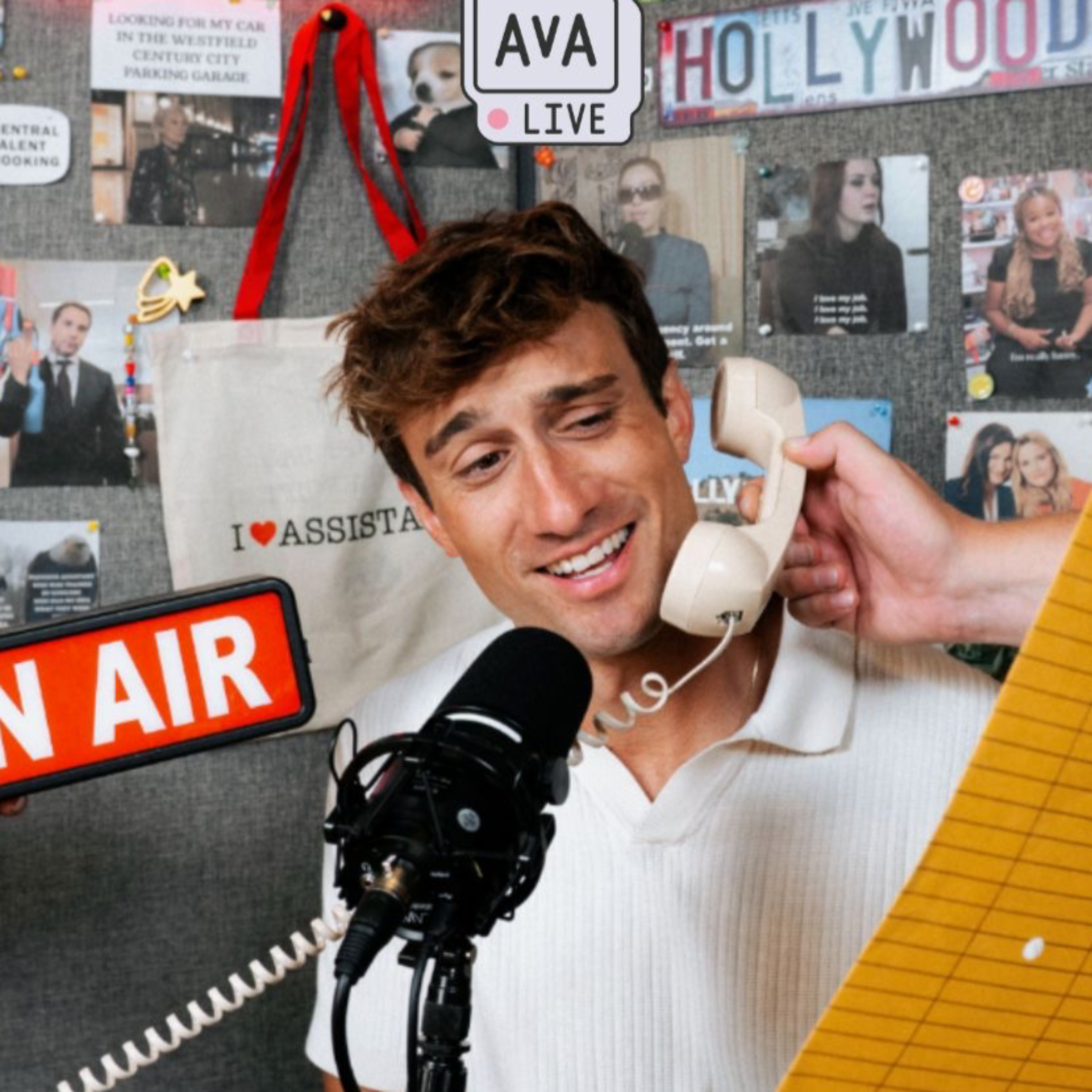
Live Nation's Big Creator Bet, Artists vs. The Record Industry, WME's next gen program & SFK
51m 28s
The episode explores the dramatic shift in entertainment through the launch of Skydance, a new conglomerate formed by Warner Bros. and backed by David Ellison, which unites major media assets including CNN, CBS, and Harry Potter under one entity. This consolidation sparks alarm over monopolistic control and its impact on jobs, with over $6 billion in cost-cutting announced and thousands of employees at risk. The narrative contrasts this with a growing creator economy, spotlighted through Live Nation’s Creator Nation initiative, which supports diverse creators through flexible, non-exclusive partnerships. The episode emphasizes that success in this space is rooted in authenticity, business mindset, and long-term vision—not just follower counts. It also highlights systemic issues in Hollywood, such as gender inequity in leadership at Skydance and exploitative record label practices. Through personal stories from artists, assistants, and creators, the show underscores the importance of access, inclusion, and community. A key takeaway is the need for industry transparency and empowerment, especially for young and underrepresented talent. The episode concludes with a call to action: follow your passions, build meaningful connections, and support platforms that uplift creators across all backgrounds.
It is Tuesday, October 6th. Welcome to episode 27 of Baby Alive. Hopefully we make it to 30. So last Friday, I was driving my car up in Burbank. Beautiful 110 degree fall weather in LA. Out of the corner of my eye, I saw the Warner Bros. Water Tower. There was white smoke rising through and up. The Water Tower, I thought that could only mean one thing. David Ellison has decided the name of his new $111 billion baby. In that baby's name, Skydance. Let's go back to that previous picture that Ross. I want to talk about something that happened about 15 minutes ago. The Water Tower at Warner Bros. Lot is being repainted with the Skydance Corporation below the iconic WB, also my initials logo. Look how they massacred my boy. But we're going to talk quickly about the name and what else it owns. The name Skydance, one removed from Skydnet, should have just went with that, owns everything you see on the screen and more. I think maybe I'm crazy, but I don't know if one man should own CNN, CBS, and SpongeBob SquarePants, but that is another thing. I think what's really concerning for a lot of people you see names like CNN up there. You see the iconic titles. The Harry Potter franchise is like Titanic, like news and coverage and studios and MTV and many more all under one umbrella of Skydance as of this morning. The deal is done. There was 11th hour pushback, but they decided on that name Skydance. But we're going to talk about the name and I think we have someone here next to me. Pah, it's me, it's me, Skydance. I am VAC, I never left. And you know what, I am the richest in the world. I basically own everything now. I don't know how rich you are with that debt you got taken on. It doesn't matter, it matters the count of things that I own, things in my pocket. Where did you get those glasses from? You know, I got them from Sheen actually. I love that. I love. We got to up our budget on set. That's right. So let's start with the name. So Skydance, I think there was a backup name that was decided or that you maybe have leaked that they could run. Yeah, there it was. So I actually overheard that David Ellison and David Zaslov were talking on the back plot and they wanted to call Skydance actually. They wanted to call it the Mojo Dojo Casa. Isn't that crazy? That's crazy. Why would they ever call it that? But it didn't inspire me to start a game. So I'm going to read you a quote. You're going to have to tell me who said it. Either Ken or David Ellison. Yeah, I did not approve this. So let's fight. Wow, look at that picture. That's beautiful. Wow. Gorgeous lab. Cool. Good hit, man. All right, first up. Gold's Jim. Go to the gym. I always thought that this would be our house. Who said that? That's got to be David Ellison on the Warner Bros. Lot tour on the back of the little trolley. No, you wish. That was in fact, Ken. Got it. Same, same, but different. Ready for the next one. This one is harder. OK. I'll take a high level high paying job with influence, please. That was also-- that was David Ellison. I would say at the Wizarding World of Harry Potter, trying to bribe the sorting hat saying, give me Dumbledore. I want Dumbledore. Wrong. Well, actually, that was another Ken. David actually does have a high paying job already. He had one as Larry Ellison's kid. Wow. No comment on that, but he did make 150 million bonus by the deal closing this morning, which I just read, which is pretty crazy. Clock it. Clock that. Talk about clock it. Are we done or is there more? We are done. Well, thank god. OK. I don't want to get canceled for that. Don't want to start any beef. But there was actually a lot of beef going on in Hollywood. Bloomberg throws a little thing called Bloomberg's screen time. They had big names there, execs across the business. And a little background here, Sharon Waxman. She started the rap. She used to be at Washington Post, New York Times. Essentially accused Matt Bellany, founder of Puck, as well as host of the town, great show. We love who loves to turn up a little drum on the industry of insider trading, said that he knew that there were moves happening from Warner Bros. TV execs, and she pretty much called him out. And how did he, in typical Bellany fashion response? He clocked her. He hit him with a little bit of a-- it's called reporting, Sharon. I don't think you can come back from that. I think that I wonder where those like counts go up to. But yeah, a lot going on. But I think there is a more serious aspect of what's happening, obviously in every corporate headline. There's humans that are affected. People's jobs are being lost. They've already announced, Skydance, hate Conn at that, that they're prepared to cut over $6 billion in cost. And within those cost, thousands of employees will lose their jobs. People's livelihoods will be on the job market. And I saw this LinkedIn post this morning about 42 minutes ago from RJ Lerese, who was on this very program before we even called it AVLive. The first show who talked about that human layer, the layer of employees, the people that were laid off. You said the companies call them synergies inside that building. The synergies are human. You're young, Brent. I mean, how do you feel, obviously, being in the-- you know, you work here, but you have friends in the job market. Yeah, I mean, as a young person and an entertainment, and with so many of my friends also wanting to get jobs and don't have the ability, this is not the way to foster an industry that grows with the people and allows for it to continue on for years and years and years, especially with so many people having creative passions. Yeah. I mean, well, as much as we do joke around the program, there's a lot of people out there listening to this that are affected. We feel for you. We hope we can help do our part to shine a light on the jobs that are available. And it'd be cool to see the companies that get launched out of something like this. Yeah. And consolidation, fragmentation, there's cool companies that pop out. So I wanted to end it on a more serious note. But Brent, thanks for joining the show. You're welcome, SkyDance. Can we create a close-up of Brent, real quick? Get a close-up. Wow, it's beautiful. Check the fit. Check the fit. Where are the jazz hands? Right there. All right, get back to me. Brent. Get off of me. Brent, we'll see you later. Thanks, Brent, for joining. Got a quick interview. Up next, one of the big headlines I saw this week is to work at Live Nation. Was it Live Nation's taking a big bet on the creator economy? It feels like every single traditional company is doing so. And so Scott and Alexis Fisher are leading that charge, the Mary Duo, and now leading creator nation. And we have them joining the show on AVLIVE. Let's pull them up. We got to get the headset on. Give us one second, here. We got them going. Brent, how are you? How are you guys? It is great to see you. I don't know if you can see all the memes behind us. We may have a couple of you. We'll see, but where are you at right now? We're in the Live Nation headquarters of Beverly Hills. That's, I recognize that place spent a couple of my formative years in those very walls. But I tried to give a quick intro on the deal that just went through. But would love to hear more about yourselves before we dive into the business by the deal. Sure. Hi, guys. I'm Alexis Fisher. I own a talent management company called Timeline. We also just launched Creator Nation. And we're excited to be here. Yeah. And I founded one of the earliest creator management companies 15 years ago. So was in the space from the beginning. And now we're excited to launch Creator Nation, which we can get into. And before we get into that, though, together, but you were competing with companies. I read an interview. What was that like? Yes. So we are married. Because people might, you know, someone's like, are you related or your brother and sister? Do you think we look alike? No comment. I knew you're married. We've got to figure it out. But yeah. So so married, we met because obviously we were in the same industry. And I actually wanted to acquire her company at the time. And we went to dinner. And she was basically like, I will never work for you. But this could be a date if you want it to be. And I was like, perfect. And the rest of the history, we obviously were friendly competitors for eight years. And now we're finally kind of on the same team doing something together. I love it. And I want to talk about why Live Nation. I think I, as I mentioned, worked there. There's such a focus on music. But there's been more into media into the now the creator industry. Why were they a partner you wanted to do this with? Well, obviously, the relationship started for me, two years ago, when they acquire timeline. And just throughout the last few years, Michael has been such an incredible supporter. And obviously, it's such an innovator. And just like a true entrepreneur at heart. And he really understands the future of the business and the creator space. And there's so much demand in non-traditional touring and marketing and obviously creators in general. And so for us, it was a perfect synergy. To kind of bring it all in-house here. And Michael is a founder's founder. Like he is so, and it's still at his level, which is so impressive. And he's driving forward every day. That to have that support from a fellow founder to build something new is kind of like irreplaceable. Yeah. I was going to say, Alexis, for you too. What was that first call? Like, how do you get connected with Michael? And what was that process like of selling the company there, which then obviously led to this? Yeah. For me, obviously, I was in the creator space for so long and still obviously I'm in it. But I was like, what is the future? What does that look like? What's the next space that everyone's going to really be in? And I really felt like the future of non-traditional touring was going to be such a big piece. And I felt like there was a gap in the market for people who didn't really come from the traditional music space. If you're a manager, it's really hard to know how to even get in touch with someone at LiveNation. A lot of the creators don't have touring agents. So I wanted us to be a resource for the creator economy as a whole so that they were able to have the same opportunities as artists would. And for me, doing that here was the perfect way to do it. And then we've kind of just double tripled down on the creator economy as a whole. And obviously, there's so much more expansion happening. And. We have a lot of really exciting things coming up. >> Yeah, let's talk about those things coming up. Revenue streams. I think that's what's most interesting. For us, media, we've expanded in a lot of different areas. IRL being one of them, we have a couple of events coming up. I know the power of meeting fans where they are in person, but for you, where do you see the most opportunity, revenue-wise for creators right now? >> It was really about building a platform in the creator's face. It hasn't really existed where you can support creators across any different element of what they need at the different time because, obviously, a lot of it started in management. There's standalone brand agencies, but creators need different things at different stages. We know that live is a huge thing that's honestly only really been more viable in the last few years, and we did some of the earliest creators, tours, and live events like 10 years ago, which doesn't even count at this point. Live consumer products, content, being able to offer things to creators at all those stages, and then obviously be a platform behind brand marketing services to bring creators more brand deals as a separate business, and then, obviously, on the talent management side as well, to have talent for companies. >> Within that, there was also a quote that I was reading article about making it essentially to comparison to a menu, a restaurant menu that everyone likes that. >> That keeps fooling me. >> Most of it's like business jargon when these things get announced. It felt very real in the way that you approached it, but why not be completely exclusive? Because when we're being approached by management companies, by agencies, it has to be exclusive. We own it all feels very much like we're an asset, being bought or partnered with a management company. Why was it important for you all not to be, not to have a total exclusivity when you're working with a creator? >> To be honest, I feel like that's such a dated approach in my personal opinion, and kind of like Scott just said, I think creators need different things at different times. It is not a one-size-fits-all bucket when people just use the term creator or influencer. It's so big and broad. And that's generally not what it is to us. We've been in the weeds with creators hand in hand, kind of doing the roadmap of this space. And for us, it's about having resources for their teams. For us, it's not only just about the creator, it's about the backbone of the creator. And having teams being able to tap into different resources at different times for what each individual creator needs. And so I genuinely don't think that exclusivity and owning someone or having something as a blanket term is beneficial to the teams or the creators. >> And we really want to be the best partner to creators and support them however we can and however it makes sense. And from running a management company, there were so many creators that I love that I wish I could just do a product with them or just do one venture with them or just do a thing with them. But you're limited as a manager, being able to do that. So we love the fact that we have the platform now to support creators across a bunch of different places. >> And you said there were things that were antiquated. One of them being these vanity metrics. Everyone was chasing who is the biggest reach of followers. It's been moved a lot into the world of niches, we're in the very, very niche industry. But I think there's a lot of power in that. What do you look for in creators, both of you, specifically that give you the green light that make you want to invest in them? >> Yeah, genuinely for me, it's about having creators identified themselves as CEOs like that treat us like a real job. And it's not about how many followers you have out of gate. It's not about the resources that they currently have. Because so many of these people could be from the middle of nowhere in the US and could have such a drive, so motivated, so hungry, but just need the teams and the resources to help support them. But the number one thing is it's like you need to care as much as we care. And if you can treat it like a-- >> More. >> Yeah, more. >> But if you want to treat this like a real business and want to be in the weeds of it, and I used this example yesterday at Ad Week, but it was like a house doesn't get built overnight. You need to put in like the blood, sweat, and tears and step-by-step build a real business. Those are the people that I want to get behind. >> And it's honestly across all niches. Like because we're going to be in the brand partnerships business, the talent management business, the live business, it can be anything from a nurse to a state home mom to a top five YouTube creator. Like it really will run the gamut based on how we can support them and how they'll be involved with our companies because we're going to kind of do a bunch of everything with everybody. >> Yeah, and from a traditional landscape, what interests me most coming from the traditional world is that as a creator, a lot of my peers who are building companies are building outside the traditional systems. They're taking a bet on themselves, usually bankrolling it, self-funding, a lot of the risks they're taking. Why then do you think it's the right move for a creator to then go back and partner with a traditional company like yourselves back by even more traditional company like Live Nation? >> Yeah, we're set up as a joint venture with Live Nation. So we have our own team, our own structure around initiatives, priorities. So we're built purposely for the creator space. We're obviously backed by a Fortune 500 public company. But we're directing what makes sense at the right time based on what we've experienced for the last 15 years of a creator's need. And to be honest, like the traditional business has caught up in a really great way. I think in the last few years, the major agencies have actually done really well for creators and we are excited to partner with them and support them and be hand in hand with them. I think as a creator now, the agencies have gotten so adept at doing what they do. C-A-A-T-U-T-A-W-M-E-R-I-C. We want creators to know that there are great teams out there that they should partner with. If they happen to be with our management companies, we want those management companies to prioritize working with the agencies because there's value in those kinds of partnerships. But obviously every creator is different. Everyone's going to have a different kind of appetite on the types of businesses they want to work with. But we do see the value and it's all kind of becoming, you know, it's all becoming the same thing. It's all kind of just the entertainment business. >> Yeah, exactly. And I think that's what we're fusing a lot of traditional and creator. And the last question we're really about a minute, people are calling the creator economy a bubble. How do you foresee that unfolding in the next couple years? >> I don't view it like a bubble at all. I think that if you're the entertainment industry in itself is based off of creatives. >> Yeah. >> And I think the creator economy is obviously showing that they're equally, if not more competitive, than some traditional talent. And we view a lot of them like athletes, like traditional actors, you know, there's real, real businesses behind it that are making multi-millions of dollars a year. And I think it's very quickly catching up that it will all become one in conversation. >> And we've also just, we've been hearing it's a bubble for 15 years. Like I remember literally managing a YouTuber back in the day and people telling me, hey, that's not a real thing, it's a bubble. And the bubble continues to grow. So it's like, at a certain point, it's just all going to become entertainment. >> I think the bubble is about to burst. >> Well, I love it. >> [LAUGH] >> First, it keeps getting bigger. Never burst as long as you have. >> That's what I mean, it's all going to be more. >> Yeah, it's one thing, yeah. >> Exactly, it's conforming to one. And we appreciate you both. Best of luck in the venture, we're excited to track it. And hope to have you on in a couple of months and talk about a little update on how to unfolds. >> Awesome, thank you. >> Bye. >> We'll see you. And if that interests you, that interview, if there's actually a hiring spree happening right now, Crater Nation, we just posted four of these jobs, social content producer, recruiting manager, marketing and comms director, social content coordinator, all on our job board at abl.com. Go check them out. >> We have a segment from Friend of the program. Kyra Jo talking about the leading ladies of entertainment. Take it away. >> Hi, I'm Kyra. I'm an ABA student ambassador. And today I'm going to tell you about this week's leading ladies in the business of entertainment. First, the women in film organization is giving the inaugural Vanguard Award to Pamela Abdi for her work as co-chair/CEO of Warner Bros. Motion Picture Group. She oversaw films including Barbie, Sinners, and Dune Part 2. Beth Deara, Ujo, and Jemma Chan are also being recognized for their work on Josephine, highlighting their director/producer partnership. And WIF says women's representation is backsliding, making the honors a great opportunity to look at how women in Hollywood are supporting the next generation and changing the industry from within. Next, Abdi is actually leaving Warner Bros. as the merger with Paramount closes on Tuesday. Skydance announced top leadership and women are noticeably unrepresented. Dana Goldberg is the sole woman among the top motion picture and content executives, Robert Beckham Ball and Melissa Zuckerman hold corporate marketing and communications roles. With Skydance about to take up so much of the entertainment industry, that's a little bit scary. Lastly, Tina Randolph-Cautigenis and Alicia Reed launched Women in Vertical Media, the first professional alliance for Women in Vertical Entertainment focused on economic equity, representation, and leadership. The founding leadership includes women. The founding leadership includes women in talent strategy, development, and partnerships at companies like Crazy Maple Studio and Good Short. See you next week, AVA. - Thank you, Kira. We hope to have you in studio next week. Even the future. The first time I was ever on camera, I was about last year, maybe a year and a half ago over the summer for a program called WME's Next. We wanted to bring on the architect and the head of community at WME. General English, she's joining the show. General, how are you? - Hi, doing well. Thanks so much for having me. This is a treat, for sure. - A treat, the treat is ours, as people know. And I don't know if you do, I was an employee at WME. And the first time I was on camera was for the WME Next program. Tell us a little bit about it and a little bit about yourself. - That's beautiful. Well, okay, Next is an incredible initiative that WME has gotten behind for several years now. And it was really the agency's response to the millions of questions you get. How do I get started in this industry, right? It's hard, especially if you don't know someone. So Next is this incredible program. It's entirely free and entirely virtual. And it's designed to give anyone
who's interested in learning more about this industry, a little bit more knowledge about how it works, but from a business point of view, not always necessarily the talents on screen, but really what's required on the back end. - What do you think is so unique about the program? And I guess what are the biggest lessons that you hope young people take away after going through it? - Well, I think any person, right? Like it's young, it's anyone who's ever been curious. And I think that's what makes this program so unique. It's not like a entry level, you have to go through a specific internship program to have access. It truly is open and accessible to anyone, wherever they are in the world. And I think that's what makes this learning community so unique. You can literally join in. It's a self-paced curriculum. You go through the program, but then you have live touchpoints. And you're literally interacting with learners from all over the world. So I think for anyone who wants to understand this industry, but also talk about it with people from around the world with different entry points and different levels of experience, this is a really cool community to be able to step into, for sure. - And for, yeah, I know we talk about that as broad scope for anyone really looking to break in or educator or upskill themselves. But I think a big cohort you focus on, we focus on our students. How do you think if you're talking to a student right now, what advice would you give to them? Or how should they think about breaking into the industry? - Gosh, it's such a good question. I get inundated with so many requests for generals, with so many resumes, with so many CVs. And what I find is people typically lead with the organization first. But I think it's incredibly important. This business is relationship oriented that you lead with the person. Like, why are you reaching out to me or have you just sent this generic email to everyone that you could find that has W and me in their job title. And I've worked in a lot of different places and spaces. And it's always fascinating. I get excited when someone really reaches out to me, specifically, and has expressed an interest in understanding what it means to do community impact inclusion work as opposed to, I just want a job at W and me. That's like, that's really what I think it is, person over place. Like if you can land the connection on a personal level, then look, like, that's half the battle. That's how people will leave remembering you. I get so many generic emails and DMs and LinkedIn messages, just saying the same thing over and over. But I think you had mentioned the places you'd been, Cisco Lockheed Martin, we did our research, discovery, Academy, and now WMe, did I get them all my head? I think I did. But the role you're in has to come from a place of passion, inclusion, impact, diversity. Was there something in your life that, or hurdles you ever came or things you saw early in your life that made you pursue this path? Yeah, it's interesting. I always like to share that I am the daughter of an artist, my father and a therapist, my mom. And I think growing up in that environment, in a predominantly white community, you get encouraged early on to both ask a lot of questions and understand why things work the way they do. But also be really creative with how you're presenting solutions. So for me, it was just like a big part of my upbringing to be insanely curious about how the world works and then insanely creative in terms of figuring out how to find solutions or change the things that I believe in. But my career has definitely been all over the place. As you mentioned, tech, defense, before pivoting into entertainment. I also run a book publishing house. So I've worn a lot of different hats, both in this industry and professionally, both in the US and internationally. And I think that's the other thing that's worth noting when you have the opportunity to explore the world, especially with content as a tool to help with that exploration. It also just drives down the importance of really thinking about inclusion and impact in community in a different way. Because to me, content, entertainment, it starts a conversation, but it's meant to be carried on by the community, by the people who are absorbing it. So there's naturally a marriage between the entertainment world and community work. Yeah, the work you've done is a through line, again, through that impact of community and inclusion. To end this interview, I do want to ask you point blank, where does entertainment and Hollywood specifically have room to improve, especially as it relates to inclusion and diversity? Yeah, I think the answer is always around access. And that's part of what Nexus is solving for is access to anyone, no barriers to entry. I also think we all have a responsibility to sit here and say, what door am I able to open or close to provide that access, right? And if you sit in that and say, I can open this door, I would follow up and say, why not? So I think really progress and the biggest opportunities about inclusion in general in this industry, it's about just candidly thinking about how you can let more people in, how you can encourage yourself to learn more, how you can broaden your network to do so. But it's really, it comes down to access and not being gatekeepers candidly. What you're doing is amazing. It was an honor to be asked to do it. That was the first time I'd been back at the WME office in eight years, and a special moment. I think what you're doing is amazing. We're trying to do our part here. And I urge everyone to listen to those words and do theirs outside. But I believe next starts October 12th, how can people find it? - It sure does. Next starts October 12th, you can find all the details on our WME community Instagram page. That's the easiest way. Really excited that our client, Idris Elba, is going to be a huge part of this year's cohort. So if you wanna learn about the industry from Idris, that would be great. And you all of course are in it again this year. So I'm super excited. - I love it. Well, thanks so much for joining the show. So now we'll see you at next October 12th. - Sounds good. Bye, y'all. - Bye. Unless you've been living in Iraq, you know way have missed a song called Mr. Record Label, which talks about one artist problem with the record industry. If you don't know who he is, we got a little clip we're gonna play from Scott Helman. - This is on from Singer's songwriter, Scott Helman. And the name of it is Mr. Records Label. It's a great song, song on Instagram. It's a catchy, biting commentary on the music industry. But true take on how the industry often exploits the artist, it depends on Mr. Record Label. It's Scott Helman. And it's the 420 catch of the day on K-Ride. - Let's go! - Let's do it! - Let's go! - Go! - Scott Helman, welcome to the show. How was the experience watching that back? - I honestly couldn't hear the audio, but just the video itself was enough to get me fired up, man. - What was that moment like hearing that song? I don't know if that was the first time you heard it on the radio, but what was the moment like hearing that song on the radio for the first time? - I think that might have been the first time. It was either that or a serious accent, but that one was crazy because that was like, you know, I mean, it's like the biggest rock station, one of the biggest rock stations in the world, but like, you know, I'm Canadian living in LA and it's like having that song being played on the radio station of the city that you live in, I feel like that's always been a crazy experience, like just, you know, like I'm in LA right now and it's like, it's just was wild to hear that. So yeah, it was super cool, man. - That song, you look at the lyrics, you hear it, I heard it everywhere for the past couple of months and I think I dropped a comment on your Instagram, I was like, you got to come on the show and within a couple of minutes we organized it. But I want to hear where that song comes from. So tell us a little bit about yourself about the record deals, maybe you sign, what was the inspiration behind Miss a Record label? - Let me try to think how to shorten this to be palatable, but so basically, so I'm from Canada, I'm from Toronto originally and when I was 15 I got what's called the development deal which like, I mean, from my vantage point it seems like record labels used to do that a lot more. Mostly I think because now the idea of development is something that is so, not primarily but so fundamentally an online thing, it's going viral content, you know, that's really the driver now. But when I was 15, I'm 30 now, so 15 years ago, like, you know, you couldn't just go, I mean, you could but that wasn't the main vehicle yet. I think there was still, you know, the idea of like, hey, let's find talent, let's invest in talent, let's put them in rooms with cool writers and you know, build a project and obviously there's varying degrees of that and there's different shades of it. But so that was kind of my start to the music industry and then, you know, I met really cool collaborators and you know, just was kind of, you know, free to experiment but also I had like, you know, mentorship but I also did know that there was this like, kind of massive company behind it that was expecting things and hoping for things and had their own motivations.
And so I kind of, you know, I was stoked. I was 15, I had a record deal in my mind, right? And so, you know, I put together a record that I'm still super proud of, called the Gusta with people I still collaborate with now. And I will say one thing, like, you know, I know I have a lot to say about labels, but just specifically within this back time in my life and, you know, the short period of time afterwards, I do still feel like I fought for and had people advocating for my fight to, like, keep my voice and be an inner songwriter and make records that I believed in. And while, like, commercial success and radio and the pressure of, you know, comparing yourself to other artists was always a part of the. It's all, I mean, it always is, but when there's a big, when there's a big company investing money, that those conversations are always going to be a little bit different and maybe a little bit more intense. But I still feel like I really got my voice through. And then, yeah, you know, experience has happened and time went on and I started kind of seeing the holes in the model. One of the holes that really was big for me was like, I think the industry just changed. Like, it flipped after a short form content took over and I feel like it was happening slowly. Like, it was fine. There was, there was like things going on but then when COVID happened, I was like, oh, like, this is different now. Like, there were kids down the street for me that were going, like, crazy viral and building all this, like, inherent equity and having so much leverage all of a sudden. And I was like, oh, that's so sick. I want to do that. And one thing that I remember happening that was really frustrating was, you know, it was COVID. There was no touring. So I was like, the only way to continue to build and grow my career is to, you know, try stuff online. And we had a couple things kind of start the spark. And I just remember the label being like, I didn't get a million views. So, and so that was my kind of first frustration. And then, as time went on, I just felt like, I felt and feel deeply still that the onus to build equity in an artist project, I guess you could call it, is more and more on the artist. Like, it used to be like you needed and almost like the model was built in a way where the record label was there from zero to 100. Which is why these deals were so like all inclusive. These like 360 deals were talking about that. Not to interrupt, we would talk about it. I think what's important is unpacking that a bit. So where do young artists go wrong when they're signing these deals? And what does walk us through what a record deal typically looks like in a 360 model? - Well, I mean, a 360, well, a record deal is, I mean, I think the way to understand a record deal is to compare it to a publishing deal. And if you understand how songs are split, it's clear, like a record deal is in my mind of a company acquiring a certain percentage of ownership of your masters. And I think that the way it should work is that you get something in return and you typically do. So you'll get an advance, you'll get marketing spend. You know, they'll help you do things financially that you maybe couldn't have done before. And the agreement is we both see, we both see projected future value in these masters. And so we both think we're going to be able to make money. 360 deal used to be the model because, and I think it still is in some ways, it's still the offered model is basically, we're going to own not just your masters, but your merch, your touring, sometimes your publishing, it's a very comprehensive ownership of your project. And I think like I said now, because artists, because it's not even just that they are, but they're being asked to build all this leverage. Like, I don't think, I think it's really a typical for artists these days to get signed without a certain level of something going on that they built themselves. Like when I-- - Do you think that's coming? Just Roku, do you think that's coming more and more from short format? Do you think that's a problem? Like how viral can you be on short form? Is that why, is that where record labels are essentially saying, that's what I want to bet on? Because they can go viral on a platform. Versus their music's great. Do you think that's happening? - I think there's like, I think it's like a mystery box. Like I think that there's examples of artists that are super viral, that are amazing and make great music. There's examples of artists that are super viral that I don't, I don't think have nearly as much like projected longevity. I also think there's so many artists that aren't viral and that don't have crazy viral content that are amazing and we're missing out on, sorry, my dog wants to join. And then I also think that there's the same on the other side. But I don't know, that's a hard question to answer. But I do think that it's hard to know if it's bad or good because in one sense artists have so much power now because it's like we have to build all this equity. So it's like once you get in the door, you have leverage because you built something. But on the other hand, people that can't like afford whether it's time labor or financially to spend six days a week banging out like four videos a day makes it so that the entry pool is very different now. And like when I got offered a deal, I had like two videos on YouTube and they had like 100 views. And I just don't think that that happens anymore. And I think that's sad, I think that's sad. But I also think like the question may have to ask ourselves is like do we want to go back to a model where massive mega corpse were coming in and scooping up young artists with nothing going on and offering them the world and then locking them into like crazy deals, you know? - I mean, I still think in some way that does still exist in a different way. But I want to hear from you though. - Yeah. - Why do you think? - No, no, no, no, no, this is really important because I think this song is struck such a nerve in our community of artists, the people behind the scenes. In the last minute, why do you think this song is struck such a nerve? - I think at the end of the day, no matter what the model is, artists are a very specific and special breed of human beings that exist in society and in culture and no matter how far back in history you look, we're integral and we're specific. We don't do the same thing that others do. Artists are specific, we have a specific role. And I think that the blurring of that is bad and I think that the problem that what I want to empower people to understand is that record labels are not artists. Some of them are great, some of them aren't, tons of amazing people work out record labels. But I was at a bar and silver like I had just got dropped from my deal. I had some drunk in our guy talking in my ear about what I need to do to be an artist, how I need to do art. And I think that's bad and I just was frustrated. I was frustrated at feeling like my agency as an artist had been taken away, which I didn't really get into, but it's not relevant. I just think that matter what the model is, if you're walking into a record label, they have great ideas, but they're not art. They're marketing, they're content, it's great. But at the end of the day, I think artists really need to remember that. And as this industry changes, which it's going to, especially with AI now, I just feel like, I just wrote this song about being frustrated myself. I didn't know it was going to connect this way, but the fact that it's given me a platform to just reiterate, like you have more power than you think, and you do something that no one else can do. I think those are the two real pillars of that. - And it comes from such a place of authenticity. Scott, thanks for what you're doing. I think you're speaking for a lot of people in a positive way that makes people feel seen and heard. I think the industry's long viewed artists as an asset, and hopefully that changes through narratives of, and songs like Mr. Record Label. Thanks for joining Navy Live. Say hi to your own. - Thank you so much for my rambles, but I appreciate you. And it's great that you're giving platforms to artists to talk about all the things. So thanks for having me. - Thanks so much for joining the show, Scott. We'll see you on the radio. - I'll see you soon. Yes, sir. - Bye. - Bye. - Talking about the music industry, we were down at ACL. My boots are finally dry, but we caught up with an unsung hero named Kevin and Ross Rolotate. - There's 5,000 plus burgers being sold out here every day. I'm Kevin Noonan. I am the senior food and beverage manager for C-3 presents. We have over 60 vendors. Just about 600 feet of food for the 75,000 people. Great local Austin restaurants out here. 100% of them. Chicken tenders and fries are still like number one when you think of universal items. Kimchi fries from Chilantro, it's these loaded fries. It's perfect with a couple beers. It's up there. I know I look young and spried, but 15 years ago, the three.
Charlie's of C3 have an assistant and I was the assistant to the assistant. Got lucky and worked at a golf course, ran into one of the Charlie's and wasn't knowing and persistent and asked for a job and got an internship. And I said, yes, everything. It was awesome. I like to think I still have a little bit of that joy inside me 15 years later. You know, we had a saying back in the food court, comfortable shoes and a winning attitude. Don't be afraid to get your hands dirty and your ego is not your amigo. Any job is good job. We love you, Kevin. We just dropped another round of unsung heroes in our Instagram featuring artists like It's Murf. We got Bunt. We got a bunch of others rolling out, including Steve Aoki, which we're going to post this week and all the unsung heroes of ACL. One of my very song heroes and closest friends, Serena Kerrigan, AK, SFK, she'll tell you what that means is joining the show to talk about. I'm not sure yet. She's coming on. Bring her up. Oh, yes. Oh, my God. Look, I brought Pablo. I'm not sure I'm coming to talk about, we're talking about our love for docksons. I haven't met Pablo yet. How's Pablo doing? 10 weeks old and he's a cancer and he's a star. I think that you can get a representation, don't you think? I think that's the point of this episode, right? Where's the other one? Maybe we'll bring the other one. The other one you couldn't afford. Sorry. I know. Our budget's not big enough for both. Serena Kerrigan, Steve. Last time I saw you, we were in a minivan in Wyoming where good friendships rise. Do you remember the very first time we met? No. I'm sorry. We have a picture. Let's pull it up. Oh, God. Be, uh, I'm excited to show you this one. Yeah. Do you remember this? Oh, my God. It was the first night we met and I got a bone to pick from you with you. Okay. 88% of your followers thought you were better dressed in your own jacket than I. I'm shocked. I got 12% of that vote. Me too. Honestly. Like, I think you're, you really tan. I also had a beard. Someone pulled it up this morning. I'm like, holy hell. I also had a bob, so I had a bob. Oh, you did. I had a bob. I had a bob as well. I had a bob. There's a picture somewhere floating around me with Bob. But before we get to off track, tell, tell us a little bit about yourself. I'm Serena fucking. Kerrigan. Am I allowed to curse? You can do whatever you want. This is YouTube. Yeah. This is, this is my show. Um, I just came out with a book called Let's Fucking Gay. Oh, you. I come prepared. Love that. As a good assistant would are you still do so consider yourself an assistant? I'm, I'm a, I'm a lifelong assistant. I'm a career assistant. I was just with someone who was saying that like, oh, it was my manager. She was saying how your account, like when she came into Hollywood was just like her favorite thing ever and still is. They call me the fake Hollywood therapist. I'll take whatever I can get. But Serena fucking Kerrigan, who are you? Let's fucking date. But that comes from a place brand that you created called Let's fucking date. It does. Um, I, we sort of are finally 29, um, as a video producer, put my job in 2020, started it in Instagram live dating show called Let's Fucking Gay, dated 50 men on Instagram live. I have dogs. I'm sorry. You got it. And I really took off. It's like cementing me into this like dating guru expert and I decided to finally write a book and it's number one on Amazon dating, that dating section. I was the best seller in Toronto. Okay, Canada. But if you are a woman specifically, men can read this too. But it's really further heterosexual female. If you are looking for a love, look no further, this is going to change your way. Do you think more assistants should date each other? What is the policy at these agencies? I haven't written ours yet. So funny. I think it's great. I think that work. We need to find some romance in the workplace. That's how people used to meet the issue is that like if you break out, then you're stuck with them. That's true. You guys, you guys leave. But yeah, I agree. I actually wanted to talk about your content creator career. We pulled a picture. I think of your first video you ever made. Ross, let's roll it. Yeah. Where was that? What camera was that? Handheld, probably like a Sony. Those are coming back. People are all about this now. I know. Look at me. A vintage, adorable. I don't know. You still love doing, recording everything. I mean, that was like, look at me. I was the content creator from the job. But I really love writing. I'm writing a movie right now. So maybe you can help me hook it up, get it sold. I'll try my best. I'm out of movie guy. But what's the movie going to be about or whatever you can share? It's about influencers. Like a double worse product influencer or back. I love this. Maybe. I think that. I think, you know, yeah, making content creating. It's the best thing ever. So why do you think? Why did you jump into it? I think what's so interesting now is like your career is risen. You built a media platform. Why do you think your content is risen? It was so many people. And why do you think it's people could jump more into making content themselves? I think it's because I want to create value, like give value to my viewer consumer, not just like, you know, what I'm wearing, but which, by the way, incredible value. Obviously, we love, you know, creators across the board. But I really like at the core of all the content that I make, I just want to empower people that like we're going to die one day, do over the plot, do whatever I created you have. It's only cringe until you start monetizing it. And then it's not cringe at all. I love that. You just have to go for it because none of this fucking matters. No one's going to remember us one day, which is like hard to believe. Unless like we got like a statue of ourselves somewhere in Central Park, which we could talk about. But at the end of the day, it's like nothing matters. So do that crazy. I mean, look at what you built. Look what I built. We knew each other when we were like drunk 20 something year olds. And now we're like running full loss empires. Now we're drunk 30 year olds. But why do you think you're, but again, you picked a lane and you're focused on a certain group of people you named them us to focus on young people want to break into entertainment. People are creating content a lot of times and we had on to start the show, the duo leading live nation's new bet on the creator economy. But why do you think it's important to focus on a certain cohort or group of people? Well, because it's like with my book, for example, I specifically picked, I was going to write it very general for like a whole audience about dating and then I realize, you know what, no, I can really only speak to women because I am one and like we're dating men. And by really like getting really granular there, well, I might have been excluding some people. It's like you either stand for something or stand for nothing kind of like you have to, it's okay to niche down as long as you're really passionate about what you're talking about and you fuck with what you're creating other people are going to follow suit. And I think that that is something that I realized I was like, sometimes like, I don't know, like I'm like, I like should I make this video or should I write this forever? It's always like, well, I want to consume it. And if as long as you want to consume the content that you're making, someone else is going to love it too. I love that we always say make content for the first 10 people to follow the account. They're out there somewhere, a couple of us struggling to assist in to have risen. But I want to move on to us being in October. We pulled up a Halloween costume of yours, not going to cancel you on air, but it's iconic. Where did this come from? Oh my God. That was no Halloween costume. I used to be an actress and I'll play an actress beauty in the beast. I was aluminum air, the candle stick, and I slayed. Are you going to bring it back for Halloween this year? I showed. I was like, I was thinking of doing the Timothy Kylie costume. What do you think? What are you going to be? I mean, I am going to be whatever this character is right here. I seem to find some kind of L.A. They all melted with our weather. All right, we also have a next picture up. Oh my God, someone did some digging on your team. We did. Was that the first time you manifested a book? What was your dream when you were younger? Your dream role? I want to hear it. What was my dream when I was younger? Yeah, to be a writer, to be a star, to be the main character. I love that. I did all those things. What have you learned about yourself the most throughout this process, though? Because I think it's going to be pretty weird seeing yourself, you know, in videos. I mean, I'm assuming like in the rise of what you've done. What have you learned about yourself throughout your career? Great question. A couple of things, one, you know, follow what you really love to do. And I always love talking about dating. I wrote down my first kiss, my diary, my first hand job, like everything. I just like, I always love talking about dating. And so I really just follow that as I'm in or start, oh my, my dogs, can you, I'm so sorry. Wait, I think we should do something for the first time in AVA history. We're going to, I actually also have docks and let's do something. For the first time in AVA live history, we got a door that's about to be open. And we have two crazy docks as well that are going to be entering. Show me, you got to show us yours. Wait, I think we got another camera angle on. Ross, switch it up. Oh, oh, special guests. Hi guys. For the first time in AVA live history, we have dogs, where are yours? You got to pull them up. OK, hold on, I have one. This is iconic. The other one is like, that's bear, bear say hi. Oh my god. Oh, and Pancho. Pancho, bear. This is huge. Wait, there's another one down there somewhere. Oh, there's Cobb. There's Cobb. Pablo. I don't know if he doesn't know his name yet, Pablo. We're working on this. This is absolutely unhidden. So hopefully you came for some career advice. We'll turn the brightness up. Wow. Oh my god, that's the cutest thing I've ever seen. Do you think they should date? Absolutely. I mean, I think Pablo's gay, so it works. I mean, Pancho. Perfect. We'll bring him over. OK, OK. Boys, come here. Well, Seria, thanks for coming on the show. This was the most unhidden interview we've ever had. They actually welcome up here. That's crazy. Listen, if you're listening, follow what you always love to do. Like, what were you doing when you were five years old? Follow that path. Hopefully, unless you want to be like an astronaut. But typically, I think that the little version, younger version, if you speak to who you are. And if you can follow that, that's your new star. We think I'm going to find a poet. Let's go. Well, we'll clip that. We got two doxins. I think they had their little camera shot. But they said hi to Pablo and Pancho. And Seria, thanks for joining us. - It's the best. - It's the best.
we've ever done, I appreciate you. We'll see you out in the streets of wherever we meet up next. - Can we? - I don't know. - We're finishing the show with a very important note about the panel that we're doing on October 18th. So when I was a student, when I was an assistant, there wasn't a lot planned for us. And so I decided early on about a couple of years ago in this account, but I was gonna start programming events for students, for young dogs, apparently, but also assistants to bring them out in real life. So October 18th, we're taking over the Wiltern 750 people, 10 top names across entertainment, and hosting panel style conversations as well as networking. We're gonna drop some more tickets and some more announcements of who the guests are. But what you've all been waiting for, the September assistance of the month, can we give a little round of applause here? To our September assist of the month, congratulations. These were voted on by your peers and maybe even your boss. Starting off, Joseph from CAA. IFA from the team, Rachel from WME, Solay from UTA, Tuan from Lead, Zachary from DDA, Claire from the team, and Katya from CTA. Wanna give a big shout out to our September assistance of the month. Next week, we will return to the same day as usual, a Wednesday show. We're excited to have you back. Same time, different place, same place. We'll see you then. [BLANK_AUDIO]
Podcast Summary
Key Points:
Skydance Corporation, named after a proposed alternative "Mojo Dojo Casa," has been acquired by David Ellison and David Zaslov, integrating major studios, networks, and franchises like CNN, CBS, and Harry Potter under one umbrella.
The consolidation raises concerns about overcentralization, with critics warning that one entity could control vast entertainment assets, including media, content, and even children’s shows like SpongeBob SquarePants.
Skydance’s acquisition reportedly includes massive cost-cutting—over $6 billion—and threatens thousands of jobs, highlighting the human cost of corporate consolidation in the entertainment industry.
A growing creator economy is being championed by Live Nation and Creator Nation, with a focus on non-traditional creators, flexible partnerships, and inclusivity, rather than exclusive ownership.
The creator economy is seen as a long-term, resilient force, with success based on passion, authenticity, and business acumen rather than vanity metrics or follower counts.
Entertainment industry insiders, including artists and assistants, express concern about exploitative label practices and the erosion of artist autonomy, especially as short-form content and viral success shift power dynamics.
A segment highlights the underrepresented role of women in leadership at Skydance, contrasting with recognition of women in film and creator spaces, underscoring ongoing diversity challenges.
The show emphasizes the need for accessible entry points into entertainment, with initiatives like WME’s "Next" program and the September Assist of the Month promoting mentorship, inclusion, and community-driven growth.
Summary:
The episode explores the dramatic shift in entertainment through the launch of Skydance, a new conglomerate formed by Warner Bros. and backed by David Ellison, which unites major media assets including CNN, CBS, and Harry Potter under one entity. This consolidation sparks alarm over monopolistic control and its impact on jobs, with over $6 billion in cost-cutting announced and thousands of employees at risk.
The narrative contrasts this with a growing creator economy, spotlighted through Live Nation’s Creator Nation initiative, which supports diverse creators through flexible, non-exclusive partnerships. The episode emphasizes that success in this space is rooted in authenticity, business mindset, and long-term vision—not just follower counts. It also highlights systemic issues in Hollywood, such as gender inequity in leadership at Skydance and exploitative record label practices.
Through personal stories from artists, assistants, and creators, the show underscores the importance of access, inclusion, and community. A key takeaway is the need for industry transparency and empowerment, especially for young and underrepresented talent. The episode concludes with a call to action: follow your passions, build meaningful connections, and support platforms that uplift creators across all backgrounds.
FAQs
Skydance Corporation is a media and entertainment company that owns major brands such as CNN, CBS, MTV, and the Harry Potter franchise, among others. It has consolidated a wide range of studios and content properties under one umbrella, raising concerns about corporate overreach and the concentration of media power.
Concerns arise because Skydance’s ownership of diverse entities like CNN, CBS, and MTV could lead to conflicts of interest, reduced editorial independence, and a lack of diversity in media narratives. Critics also worry that one entity owning such a broad range of content may stifle competition and limit public choice.
Before settling on Skydance, the company considered naming it 'Mojo Dojo Casa,' a name described as absurd and not inspiring. This alternative name was reportedly discussed between David Ellison and David Zaslov, but it was ultimately rejected.
Skydance has announced plans to cut over $6 billion in costs, which will result in the loss of thousands of employees. This has raised concerns about the human impact on workers and the sustainability of creative industries amid corporate consolidation.
Creator Nation is a new platform launched by Alexis Fisher and Scott Fisher, which focuses on empowering creators through management, live events, brand partnerships, and media. It is a joint venture with Live Nation, combining Live Nation’s resources with a creator-first approach.
Creator Nation believes exclusivity is outdated and limiting. Creators have diverse needs at different stages of their careers. The company supports creators across various stages—like content, live events, and brand partnerships—without locking them into one model.
Chat with AI
Loading...
Pro features
Go deeper with this episode
Unlock creator-grade tools that turn any transcript into show notes and subtitle files.
 PodcastTranscript AI