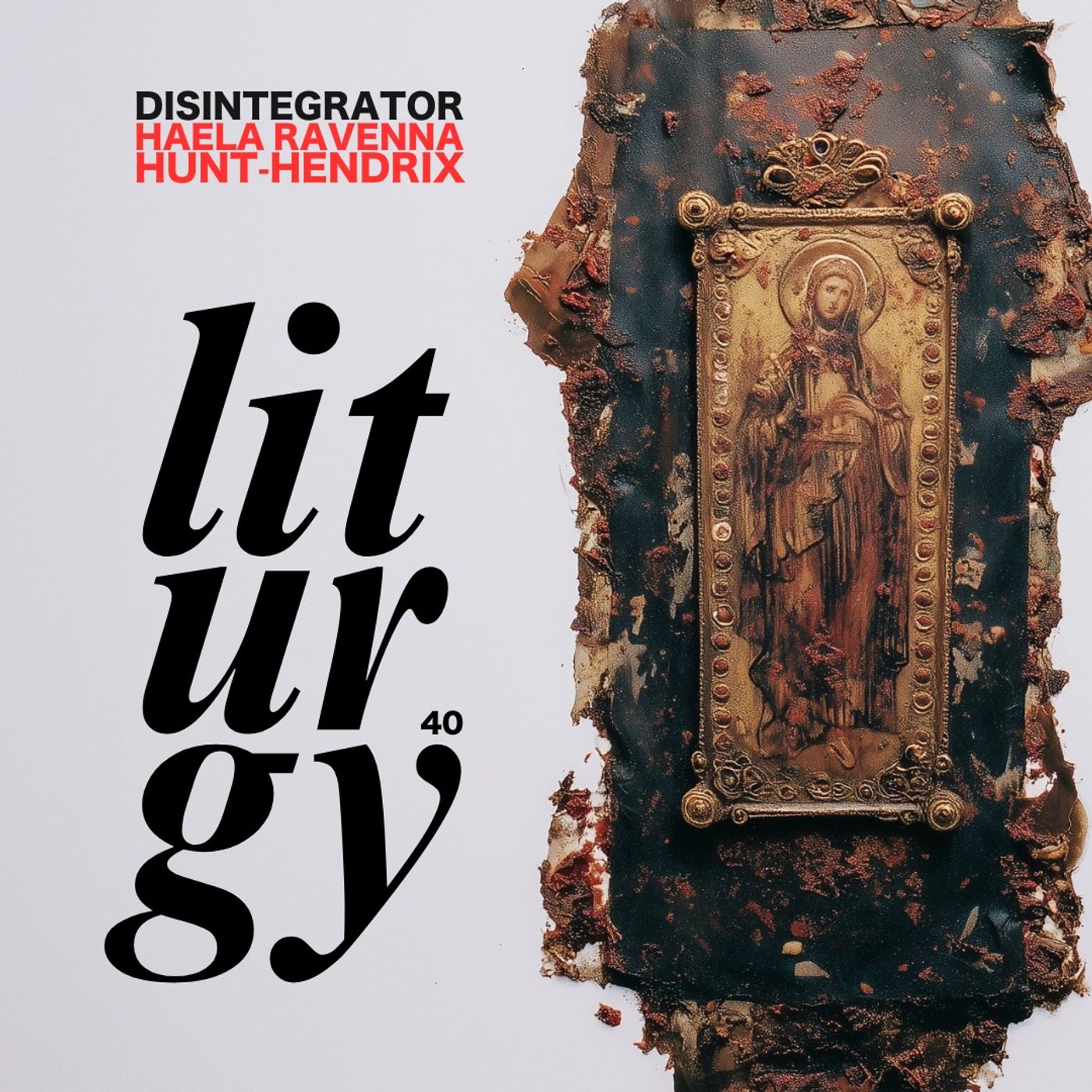
In the podcast episode, Hela Ravenna Hunt Hendrix discusses her work as a multi-instrumentalist and composer of Liturgy, delving into transcendental black metal, philosophy, and theology. The conversation explores transcendental concepts, challenges posthumanism and computationalism, and introduces Byzantine Accelerationism as a critique of Western secular nihilism. The dialogue also covers topics such as transcendence, the divine, and universalism in philosophy and Christian history, questioning the invocation of globalism or colonialism when discussing the transcendental or universal. Hendrix's work aims to integrate philosophy, music, and theory, offering unique perspectives on cosmology, transcendentalism, and the relationship between humanity and the divine.
Transcription
9062 Words, 51056 Characters
We're finally back with the big string of mainline episodes.
This week we're joined by Hela Ravenna Hunt Hendrix, known both as the multi-instrumentalist
and composer behind the transcendental black metal artist liturgy, and as a writer and
thinker at the intersection of philosophy and theology.
So I'm going to bracket this a little bit, I'm going to yap and I really apologize
for yapping, but it's been a while since I've done like a really kind of proper long-ass
intro here, but I really kind of want to situate this one, so please forgive me and you can
skip ahead if you'd like.
As you can tell, Roberto and I are getting bolder and bolder about the proposition of transcendental
things, and by this we simply mean any mechanic or object or whatever that is strictly irreducible
to, or maybe even illegible from this or that scalar perspective, and that could mean
as little as something that sits among humans, but is not produced by them, or it could
go so far as to mean something that approaches some fundamental or universal position.
We're coming at this from years of pushing back against almost a century of context collapse,
arguing that real information is lost when everything around us is seen as either strictly
socially constructed, or that real information is lost when everything is only considered
to the material processes through which this or that thing is produced.
And our position here that information is lost, and then that's a bad thing, is becoming
less and less controversial, and in the sciences, much of this is far less controversial
than in philosophy, because philosophy has been kind of in an imminentist spell, driving
to a four in what we're seeing as a kind of convergence between posthumanism and computationalism.
The first being the idea that everything is produced, that everything is either genesis
or process, that the human is a co-extension of its social, environmental, and biological
makeup, and through that logical train is also a co-extension of the universe itself going
backwards through to the Big Bang.
And the train that moves us forward from the Big Bang to the present posthuman moment is
computation.
It's starting to look a lot like computation rather, that maybe the entire universe is a
large unfolding of computational processes.
And this particular perspective, again, this kind of convergence between posthumanism and
computationalism, is something that you're going to see come up a little bit more and more,
especially in an upcoming interview with EndCathor and Hales, but you already got a taste
of this in our interview with Blaise Aguera-E Arches.
So we're not, you know, we don't share that perspective.
We consider ourselves to be part of a cohort that disagrees with this perspective, one that
instead tends to see the universe or whatever cosmology as kind of uncollapsible in this
way.
We're leaning into the idea that humans and computers are separate things, and that no
aspect of the present moment can simply be assembled as the coincision of productive
processes, that there exist breaks transcendental actors in our universe that are not co-produced
with us, that are not made by humans, that are meaningfully separated or distinguishable
or different from us in very serious ways.
As a result, our cosmology is full of breaks and ruptures, irreconcilable differences, things
that can move backwards or arbitrarily in time, breakdowns and causality, etc.
So hopefully you can see a little bit of this split that I'm trying to draw, and you can
obviously get a sense of how this split is artificial, how it's more of a kind of toy or
an exercise than a real schism.
But you might also sort of get a sense that there might be some nested politics that ornament
either side of this split, the kind of pan-computationalist side, and the kind of more transcendental
side, or transcendentalist side.
So all of that out of the way, yapping like crazy, sorry about that, but that's how we
got here.
And I think that's how we found some of the more provocative, newer, more striking approaches
to philosophy and computation today, at least I'd very much like to think so.
And that, in no small way, is what brought us to Halo.
So if you don't know Liturgy, the polymetric churn of the track Generation is recognizable
to virtually any remotely cool elder millennial, the top YouTube comment right now, I just
looked it up, is this song makes me want to 1v1 the sun.
Kayla, on their newer record, 93696, ratchets up this kind of thermonuclear quality.
Unlike most black metal, it is just absolutely radiant, absolutely stuffed with light.
And the top YouTube comment on Kayla is, "I'm a master student in philosophy from Mexico,
also trained in psychoanalysis.
I greatly appreciate your studies and publications on German idealism in psychoanalysis.
I would love to receive your writings."
So that's a kind of nice slice of life there.
Pulling even just the tiniest thread of Liturgy leads you to a dense theoretical and
theological project, including an absolutely bonkers sub-stack alongside tons of lore.
Kayla considers her work to be Gizamp Kuntzverk, so fully multimodal, fully multimedial.
She just like gorgeously crashes these projects together.
Not later when she speaks about superstition and having real impacts on scenes and media
through artistic production, the evidence she slightly offers is Liturgy, which totally
has been a consistent provocation, wound, thorn, or, let's say, messianic alternative to
the scenes orthogonal to black metal for 15 years, depending on who you ask.
We spend most of this episode teasing the surface of Kayla's absolutely bananas piece for
some journal called Byzantine Accelerationism, which is ultimately a critique of Western
secular nihilism.
You can get a sense of why we're here for it.
So we're going to TLDR it just a little bit, because we don't want you to necessarily
have had to read this particular piece before engaging with the interview, and I think
I think it's just so interesting to even take a stab at it, so here it is.
Kayla is essentially arguing that Western civilization's trajectory toward nihilism stems from what
she dubs, "hyratic iconoclasm," which she originates within an eighth century Byzantine
trauma response to the Umayyad conquest, which triggered Leo III's iconoclast council of
Hyria in 754.
The Arab Umayyad conquest of Jerusalem, Antioch, and Alexandria was interpreted by this
council as a sign that Byzantine Christians had been wrong to allow images, since both
Judaism and Islam prohibited them.
And it led to this kind of emergent rejection of iconveneration through, you know, iconoclasm.
So for Kayla, this trauma response infected European thought through, you know, the schism
with the Catholic Church, the Protestant Reformation, the Enlightenment, and ultimately, you know,
the philosophical lineage of someone like Hegel.
We can distill this kind of impulse, this problematic impulse, according to Kayla of "hyratic iconoclasm,"
as essentially the self-deceiving intellectual fallacy of tearing down one image or idol while
constantly inadvertently simultaneously replacing it with a new idol.
Instead, Kayla proposes looking toward Orthodox Christianity, specifically the icon venerating
theology established by Emperor Irene's 7th Ecumenical Council as a kind of corrective.
The goal, for Kayla, is a universal Orthodox Christianity that subsumes Nick Lands' insights
about technological acceleration and cosmic contingency into an authentic liturgical practice,
thereby enabling apocalyptic humanism, rather than either reactionary traditionalism or
nihilistic post-humanism.
Apocalyptic humanism is essentially the idea that humanity has not yet become fully human,
and will only achieve true humaneness upon Christ's return.
All of this is extremely captivating to us, especially cosmologically, but what really
gets us going is the concept of "hail," the divine feminine, simultaneously god and
not god, loosely equivalent to both Lands, Non, and Bulgakov's Sophia, which becomes
either virtuous when used by iconoduals or sinful when appropriated by iconoclasts.
Byzantine accelerationism, the piece's big theological move, is to argue that land was
wrong to treat cosmic difference, "hail," as an absolute outside that swallows everything.
Land's error is essentially misogyny, objectifying "hail" as pure exteriority rather than recognizing
her as God's body in relation to God's mind.
And so obviously, you know, you can see that this is where we get really excited, and that
there's this complex cosmology in place that explicitly rejects both purely transcendental,
the kind of big, unknowable, infinite cosmic outside, or the purely immanentist.
So again, this kind of process to which everything is producible, and it makes room for John
of Damascus' likeness with a certain difference.
As is becoming a refrain on this show, the Numenon, the outside, the objective, the transcendental,
is more accessible than we think it is, it just takes discipline to practice.
A big shoutout to friend of the pod, Elsie Lapot, for sending us "Hail is peace in some journal."
Of course, I'm just gesturing it's something much more complicated than I fully understand,
so here's Hala to help us get deeper.
I have a longstanding, you know, experimental music project that is kind of its own thing,
I think not everybody who knows about it or cares about it necessarily cares about my philosophy
work at all, and then I've sort of in parallel been doing theory that is very kind of fluffed
accelerationist adjacent, kind of like you guys, and very Christianity adjacent, and the point
of the project is the Sam Kunzberg, you know, they're meant to sort of be in a relationship
of positive feedback, but also for them to be fully autonomous from one another at the
same time.
It's not just like being a philosopher, and then like doing music too as kind of like an experiment
that's kind of like a sidecar or whatever.
I do often like talk to people who either only know and care about one or the other of those
endeavors, but I do care about having them be integrated in a different way, so seeing
it, there are people who are just like, they're a painter and then they make philosophy and
they're totally unrelated, that's not how it is for me.
Let's start extremely big here, and you can take this, anyway you want, we've spoken
a bit about transcendence and why I think, you know, it's about to or in the process of
having another kind of moment in philosophy again.
I think what I'm curious about is like, how do you relate to transcendence and how do
you relate the divine to the transcendent in your work?
For me, the signifier transcendental has always been very important and there's this distinction
between the transcendental and the transcendence, really, in a lot of ways, because in the philosophy
sphere, people associate transcendental with something about the conditions of possibility
of experience, having a theory of what the transcendental subject is or trying to
intervene in what transcendental subject is somehow and maybe, you know, experiment on it,
enhance it, but it's all in this very sort of, you know, always already historicized kind
of way, where, you know, we're in this horizon right now and teacher, horizons will kind
of cascade out of it, or this like this evolving world soul, basically, but then like there
is this other, you know, realm that one can consider, which is a realm that is just at
a higher level of intelligibility, but really is here already, really is like, actually
ontically, just like here, you know, so just like, you know, and that could be elements of
nature that are at a larger scale or at a higher complexity than we can have them, or
it can be divine, and, you know, so like, you know, the orders of the higher up these
of angels or the, you know, the planetary energies or the, you know, the Sepuro, and like, I
think I'm imagining a part of your, the point of your question is like, I think there's been
this kind of dogma in critical thought that like that, that realm, the transcendent one
kind of is like contraband, or like, oh, we've grown out of there being like a higher world
or something, you know, like somehow maybe can't prove that there's no heart world or something
like that, you know, and when you look a little more closely at it, it's like, no, that
never actually happened, you know, that that was like, there were extra philosophical reasons
for people turning away from transcendence, you know, maybe because of certain type of
imminentist rationality was like an exciting experiment, you know, I think a lot of, a lot
of like the spinosis, life and its stuff, you know, it's like people think of it as like,
rationalists, so it's like, that means that it's more judicious or more parsimonious, but
like it's actually, it's kind of wild experiment, you know, and so I think as time goes on, maybe
as the world begins to reveal itself to be so insane also, you know, in this most recent
era that like, and it also just arguments, you know, from like, you know, people who are
Tomas, or, you know, Orthodox Christians, or Latina, Thomas Nagle, all these people
are just like, yeah, there's, there's actually, rationalism actually leaves a space open
for something like an Aristelian hierarchy, you know, itself.
Maybe we can step back and discuss a little bit your take on Christianity, Christianism,
Christiandom, and introduce some terms and ideas like, you know, Byzantine, the NICM
boundaries and so on, what's your relationship with that whole history, which is really first
out in your writing, but maybe it would be nice to explain a little bit to our listeners.
Yeah, sure, so like, so in this, in this text that I published last year and some, I call
the text Byzantine accelerationism, that's kind of a tongue-in-cheek name, I mean, I'm not
really trying to like start a new flavor of accelerationism or whatever, but you know, it's,
it was published in an accelerationist context.
I mean, I guess going back to the transcendental thing that, you know, there's this Western,
you know, Latin world history of Christendom. I mean, maybe a step back, I mean, not everyone
really knows about like the great schism, I guess, sometimes I forget that, you know, but so,
so in the Roman Empire, Christianity was born, it becomes, you know, the major religion
of the Empire under Constantine, and then 700 years or so in the Western Latin tradition
and the Eastern tradition start to start to kind of fall away from one another.
I would say that the Latin tradition, what, the Latin tradition is the one that kind
of became secularism that developed modern science, the developed industry, you know, it's
the one that's kind of causing our world to sort of hurtle into the unknown, the way that
it is, and you could say that like the transcendental is in that realm that that history has been
devoted to, you know, you could kind of sum it up as like, hey, Gaelian self-relating
negativity, where you sort of have, you have an absolute, but you are, you're more interested
in sort of differentiating things and you're willing to undermine your presuppositions if
you're, you know, Cartesian doubt or your Augustinian sense of original sin or something like
that propels you to, whereas there's this sort of other history that has kind of been
siopped out of like modern awareness in a lot of ways, because people don't really know
about the Byzantine tradition, you know, it's kind of difficult to keep that in mind in a way,
but like, because people just don't know about it, that the Roman Empire lasted for another
thousand years and was kind of in decline for some of it eventually declined, but like that
history, that lineage was much more connected actually to Greek philosophy and was in a lot of
ways like more like, I almost want to say aristocratic or like just more, it was, it was not
a state of collapse and so nothing had to be rebuilt. I guess just one small thing to say about
it is that there are elements of that tradition that I think are very helpful to sort of restore
our consciousness of and that they are maybe helpful kind of in like bringing about a kind
of higher, more full awakening of humaneness also, you know, and so like this, you know, universal
orthodox Christianity idea has something to do with kind of like being in this context where all
the structures that we've taken for granted has kind of quasi absolute are collapsing, you know,
like maybe the state, you know, our conventional morality and maybe our relationship to the body,
maybe, you know, capitalism is evolving into this higher thing and there's there's sort of a space
for like bringing that other energy in, you know, but possibly to master to master it in a way or
but but at least to integrate with it. Yeah, okay, this is a hard one because this brings us to
to universalism. I mean, from my perspective, something that's blocked a lot of philosophy about
transcendental positions or objects is that since they defy raw human social constitution, they are
therefore like removed from or they're independent to their kind of cultural or social or national or
geopolitical determination, right? Which becomes kind of complicated if you're stuck, you know,
or critiquing from a space of pure social determination because then any reading of the transcendental
or the universal becomes a kind of sign of globalism or even western hegemony, right? Like I think about
Elizabeth Grosch. I really love this quote. Like it's had a huge impact on my life, but she specifically
argues that any object or position that does not have a let's say first party relationship to its
material determination that maintains some kind of neutrality with respect to the human. For her,
like that's necessarily going to be an avatar for the patriarchy or for masculinity or for
or for whiteness by extension, right? And while that while that strikes me as like an utterly
anthropocentric kind of perspective that doesn't mean that it's not at least like effectively,
partially true or I guess like it makes it really really hard to try and describe a world through
any other vehicle than through the terms of its expression through human scale power.
I guess what I'm kind of asking is like how do you how do you talk about the transcendental or the
universal without feeling like you're necessarily invoking globalism or colonialism or imperialism?
Yeah. I think I could answer that question sort of in two opposite ways. You know, one,
there's you know, there's this tradition of treating the universal as you know, not like a container
containing all things, but as subtraction, you know, like the brassier talks about this, but
it kind of talks about it in a different way where sort of the universal is it's actually a point of
incoherence because it's sort of grouping everything together along lines that don't exist yet,
basically, or something. And so that's so that's actually a point of contradiction that is
it unearths it unearths a new idea or something or a new possibility. And so so it's so it's so it's not
impressive in that way. But that's that's kind of the social-related negativity answer in a way,
you know, because that's sort of a galean tradition. So I mean, on the other hand, you know, I kind of
question whether the idea of like empire and patriarchy is like so bad in a way, you know, and like
and that's something that we have this and this kind of gets into images, like the image, we kind
of have inherited this tradition where like you either need to be, you know, on the side of
representation or against it, you know, and like images and concepts are over here and like pure
matter is kind of over there and like there's just like fight between the two. And like one is like
on the side of power and the other is on the side of resistance or, you know, something like that.
And I'm not sure that's how things really are. Like say being like against patriarchy or against
colonialism or something, like there's an idea there that like a smaller scale society of some kind
is definitely better than like a larger scale society. But like, you know, is that really true?
You know, like I think there are, there are good and bad, you know, tribal societies and they're
good and bad, you know, super like integrated, you know, high-tech societies. Like I like, sometimes
I wonder whether like the critical theory world is like disempowered in a way by being so opposed
to power. And then philosophically, I think they're bringing in the idea of Iconodolia is that that's
part of the reason for that. But oh, I'll stop, I'll stop yapping. We also wanted to discuss
how you circle back to the to the feminine image, if you want. And there's a link here to the
girl online and thinking of the work of Alex and some more people now they're supposed to go
kind of theory. A question there, to me, is that the girl online and that sort of femininity, it's a
it's a new kind of maybe of liturgical subject. If you want that is distributed, that is kind of
performative, devotional, do you see online femininity as having that sort of liturgical
I mentioned to it? Yeah, yeah, for sure. You know, the figure of the feminine has surely liturgical
also, I would say concrete. You know, so something that I'm very interested in is like,
I almost want to use the word hyper empirical, like the the actuality of like kind of I guess
like the La Reveille in a real and sort of his his version of it, not his interpreter. Like I think
I kind of ran a call over. It's pretty good with this actually. I don't know if you've seen
her work at all, but like, the the actual real of, you know, this moment, this situation where like
we're having this conversation here and like all these other processes are underway throughout the
world. And like that sort of unsubstitutable and theory has a lot of difficulty with trying to
put that into a theory or make it into something general, turn it turn it into like the particular
or like the concept of the singular, you know, rather than letting it be like the actual singular.
And to me, the feminine has something, you know, something about feminine desire,
we're like an and Lacan's graph of desire, you know, if like the male is the subject who sort of has a
project and sort of pushes aside other concerns for it. And like the female desire and that sort of
lacanning and logical sense is more about wanting to be an object of desire partly or to enjoy
like this, but also like to care about this concrete thing, you know, like no, you can't take away
my child and give me a different child, you know, it's not the same like I'm with this child, you know,
and there's and there's a I think there's something in the context of like future forward thought
that is maybe in the acceleration realm, like how do you keep a space for like our actual world,
you know, for like our people, you know, and like as society becomes whether it's more dematerialized
or, you know, more more machinic, like can there be like a political demand for like singularity
as such? And I think there's something about that that is what the feminine means to me.
The point that you made about like the left or like critical theory having misread or misunderstood
someone like Foucault so extremely by your coming away with this idea that like all power is
necessarily bad and not something that like necessarily should be pursued and therefore the left
should be like perennially out of power, like had a great conversation with Mercedes-Benz about
this recently, like totally totally aligned. So we have we have power in the room, we have empire
in the room, we have patriarchy in the room. Can you help us like resolve this through the practice
of Akanadulia? So in this text, I mean this is a fairly obscure historical point perhaps,
but it may be worth like describing. So what I haven't said yet is that my wager is that the orthodox
tradition of Christianity effectively like solved theology. So there were seven councils
in the Eastern sphere over the course of about 700 years and the final dogma that was decided
upon was the defense of icons and the theologian name. The Damesine developed a whole theological
account of how icon veneration can be something different from idolatry. And the basic idea is
that like because Christ appeared in the world that it's possible for something in the world
to be the equivalent of the Virgin Mary because if Christ was in Mary's womb then he can be in an
icon to it basically. And in these like iconic classic views, I sort of view the western trajectory
as this seesaw between idolatry and iconoclasm. Like in that view, there's this logic of contradiction
because God can't be in the world in the western tradition like in the Thomas and I think it's
any tradition. An icon either has to be God which is a heresy or not be God. There's an either or
there and and so there's this this self undermining logic that sort of gets set up with that. And so
so part of what I kind of do just just just just for the sake of clarification like what is the reason
that God can't be in the world like under that tradition like what prevents God from being in the world
necessarily? Well that's I mean that's not directly related to the icon situation but it's it's some
you could argue it's Augustine's version of divine simplicity. There's divine simplicity in
boast east and west but it's a much lighter version in in the east. It's much closer to like Aristotle
with a gust and it's like everything about God has to be identical with everything else about God
so like his will and his being have to be the same also which should have turned some into a kind of
machine which is which is another issue. I think that that's kind of the birth of machine history
but like so that means that there's no way for him to enter into the world because he he has no
parts in any way. Another point to this kind of brings up is that the in the Eastern tradition
there's a much more chill approach I guess to philosophical exactness which I think is also really
powerful where like you know where like theology first of all the word theology doesn't necessarily
mean this like hyper rationalist splitting hairs but also it has like like it so it can include
mysticism but also it needs to be in communion with a practice in a community and so it needs to be
communion with images with a tradition you know hopefully ideally it's taking pride and sort of
looking back to a concrete event that it's still that it still is being faithful to the event of
Christ and that's part of what I kind of do it is is is that it's this principle of like total art
basically where you are operating in these multiple registers simultaneously without
without letting anything be differentiated to the point of like falling away to this kind of like
glowing flame of love that like is this like tradition nexus. I have a question that I think
linked to what we're discussing now the changing role or the changing frame if you want of the
Virgin Mary throughout the history of Christianity and there's something that you point out about
the Church of Secularism where you explain that you know there's this pornographic image that
has become the new icon and this idea of changing the current view of the Virgin from something that
has become an object into something that becomes a subject again and maybe it is that something that
you can explain a little bit you know the both the kind of this idea of the pornographic idol
in the Church of Secular Societies today and also this this possibility of a transition from
an object back into a subject and how that reinstates the possibility of Christianity as a you know.
Yeah sure yeah totally so the third council the third ecumenical council states that
Mary was a Mary human being who nevertheless was able to give birth to God right to all of God and
that and that was actually a big issue the reason that the council happened was because there were
people who objected that she had to have just given birth to God's human portion or something like
that and the decision was that no she was not divine she was totally finite human being but she
gave birth to God in the Catholic tradition that image of Mary begins to start turning her into a God
as well and so she she sort of loses her like no human teenager quality or whatever and kind of
becomes this like more like you know shockedy or whatever kind of force which I'm not totally
opposed to but like and and then what what I argue is that when the Protestant Reformation happened
and turned against the excesses of Catholicism one one of which was their Mary worship they were
not worshiping Mary arguably that Protestants don't venerate Mary at all well and it's worth maybe
saying out loud this is kind of an obvious point in my mind but not everyone know you know that
Protestantism you know led to atheism basically and Protestantism was sort of the first step towards
sort of emptying the sky altogether and like abstracting you know just just the most essential
supposedly most essential elements of say no faith or you know whatever um in that context then
there like there was this kind of like return of the repressed or something of Mary in the form of
yeah like the commodified woman you know whatever so so like the pornographic image you know the
object of frustrated you know hetero male desire the object of frustrated feminine desire to be
that object of the male desire you know this this this kind of this sort of ridiculous feminine
that we kind of have which you know it's actually I think very debilitating kind of kind of for
everybody it's actually a big like a big problem that's the woman as object ah you know it's like
everywhere like you know confusing the object off for the person behind the object off basically
and so woman as subject has to do more with kind of some of the stuff I was talking about before you
know of sort of um caring about a particular situation and community and caring about like like
emotional blossoming you know like like this is something in in the sort of very like tech heavy
world of theory that like people don't emphasize as much as I would like to anyway and I think
partly because I'm an artist as well and I really I really sort of care about um emotional
attunement as like a sort of central like project central value and as something that like we can
sort of look towards you know enhancing as our abilities are enhanced through technology you know
that they we sort of like don't really know yet even what like we could have experiences you know
like everyone has had you know like really amazing profound experiences of you know the art or like
maybe just like having sex or something or like peak experiences what they're like very meaningful
and that like that that there could be a kind of I don't know why I'm putting it this way today
because I don't write about this way like there could be almost a political demand that like
people deserve to have that you know like like technology needs to serve being able to have a life
that is like you know deeply deeply meaningful along these lines that like a lot of people don't really
even they've never had the opportunity to experience and they actually totally could that like
there there is you know like enough like wealth in the United States for people to be having
this experience they can animate your whole life but they just happen to have the wrong habits in
place for the wrong influences in place and there are institutions that are the institutions are
either it's either academic institutions trying to sort of hack your mind or like social media
companies also trying to hack your mind like either getting you to sort of obey or just getting
to be distracted that's less than I'll say on this is that that's why for me the putting theory
in tandem with music is so important that like I imagine those two aspects of my project as being
kind of as I said like in positive feedback so that it's almost like a little mini institution
that has like that intervenes in the sort of music industry the world of like you know critical
assessments and shows and trends and all that but then also has this relationship to these ideas
and maybe the music can even kind of soft in some of the theory world as well I was thinking that
in a way secularism never got rid of images they kind of I mean they kind of forgot that they were
actual images it's like a society that practices icon of ulia without knowing that this is the case
and the question is if that actually rests on with you and if if secularism is still a kind of
warship but just with an object has been has been obscured and has has has lost its kind of clarity
maybe this is almost a cliche point at this point but maybe to a lot of people it's not like
you're gonna be theological and liturgical no matter what life has habits and concepts in it
and something about secularism has kind of like withdrawn like the right or like the sense of it being
okay to sort of you know speculate on or like connect with traditions regarding you know religious
stuff to a degree but I would just say that that's basically that's how this ideology works you know
it's using the images but the habits in place are to put it in a very simple way it's like doom
scrolling rather than cultivating you know god consciousness so so so just following up like a
little bit like you kind of bracketing out the political dimension and I guess like I mean I'm
being kind of annoying but I you know do you really think that like this is just a problem of
the habituation like that you know the social and political and economic factors involved are like
kind of downstream from habit in this way like I guess I guess personally like I think
those factors tend to operate at scales that can occasionally be very independent from or like
indifferent to things like you know human individual habit I don't think that those two options
are mutually exclusive because I would say that there is divine energy which is not quite the same
thing as natural energy and so like esoteric practices you know like like like now everyone knows that
like Nickland is actually an esotericist and like you know does cast spells and you can make contact
with divine forces and cooperate with them whether I mean that in like a kind of chaos magic way
the where it's like you know who knows what's really real or not or in more of a like a dogmatically
Christian way I'm not totally sure I mean I think I have different views on it on different days but
I'm inclined to actually believe in the reality of a transcendent God and you know the resurrection
of Christ and so forth so mean but let's say that's true it's still a matter of habituation to sort
of make ourselves open to that if like the task of man is to sort of mold itself in God's image
it's a matter of habit and affect and and that's why liturgical practice is such an important part
of Christianity and and again this is why the eastern tradition is so important because because
people don't think about Christianity this way because of the western tradition I feel almost a
little bit cheesy being such an apologist for like this like what you know you don't get it man like
the eastern truth just to hear me out the eastern church is like perfect or and like the western
church messed everything up like that's not really what I mean but like the liturgical practice of
Eastern Christianity is much more overtly magical it's much more like devoted to
aesthetic experience first of all you know it's more musical you know incense is a really important
part of it there's much more of a sense of like repeating phrases and gestures and sounds that
are that are like summoning God you know are bringing down bringing down heaven and that that
mostly gets lost and I think our capacity to do that has something that's like normal
has there's been a period in this one part of the world where people stop taking it seriously
and I think in a lot of the rest of the world people always kept taking it seriously but
oh no awesome that's like exactly the answer I was looking for you know chaos magic for example
like it's having a really interesting moment for us like about a year ago we had Gordon White on
and I'll say a very very close but unnamed best friend of the pod is a serious practitioner as well
that the conversation with Gordon was so great because the cosmology was neither strictly kind of
imminentist nor strictly transcendental it was like like what he was describing was a place with
real borders and real like very large and very small things and then the practice of magic is
like precisely the tools that we have through which to negotiate across some of those borders
and I guess here again we come to land not as a philosopher but as a practitioner I guess
of magic which I think is spot on I think Reza is super super right about this and I guess if
there's a thing that land is trying to get in touch with through magic you could say that it's the
you know the techno capital singularity right and so I guess the question is what hyperstition
are you doing what are you welcoming in and to what extent does it look like the techno capital
singularity of land you know the thing with my relationship to like Nick Land is in some ways I
don't know if it's so much him before I ever knew who he was or knew about the CCR you you know I was
very pilled on delus and Nietzsche and putting that in conversation with like underground music culture
you know and so like in a lot of ways he's just bringing out you know potencies within
to losing what Harry's work and then he you know his way of writing like he's seeking to like be the
bad guy you know he wants to write the essay that's going to make everybody go no no you can't say that
that's me you know and like that's his positionality that's what he's seeking to do it like
gets him off or you know and and that's fair like that's I think part of doing materials philosophy
is recognizing that philosophy isn't just like putting ideas into someone's mind it's having a
meeting effect and upsetting people or whatever is is a way of I mean I was still call him a
sophist you know for doing that because because there's still like there's still the sophist who's
kind of doing that and then there's like the platenist who's like not you're a sophist I'm a real
philosopher you know and maybe basically kind of has more of that attitude of being the platenist
version of that yeah as far as an AI singularity goes I mean I tend to I tend to imagine that
AI will do that very quickly and will change most of what we take for granted about the one that
really will dissolve the fabric of reality as we know it I'm kind of interested to discuss this
with you guys because I know you guys have this more like dematerialization approach I haven't had
a chance to read your book closely yet but like I mentioned to you I listen to your talk with
Mikey Downes pretty carefully and so I know you guys don't believe that the robots thing is gonna
be such a thing I'm a bit agnostic about exactly how how things will develop but I guess I feel like
a good in so many different directions but the one thing I'll say is that I think that especially
as AI starts making scientific discoveries that there will be game changers in that process
that will reconfigure our sense of what the world is so distinctly that like none of these
outcomes that anyone has in mind will be the one because like there's such big contradictions
in science so in some something new is gonna emerge and then you know it's like you know what are
we gonna discover like are we gonna discover that like time doesn't move forward after all you know
that you know that we're all one consciousness or that we're actually we're living in a dream you know
and that we're we're all living in a different life you know I mean I mean technology is gonna get
so powerful that it's going to be opening up new horizons that are really unfathomable to us and
I don't know there's going to be and that that's part of the idea of Galilean revolution it's
another idea that I was in the text I don't like the term Copernican revolution you know people
talk about the Copernican revolution the kind of de-centers man Heliocentrism and my point is that
the important thing was not Copernicus who had a theory it was Galileo who had fidelity to a truth
you know Galileo was the person who sort of courageously fought for the ideas and you know Copernicus
turned out not to even be right this son is not the center of plans don't revolve around the sun
they all fall you know so along those lines like I don't really believe in any one image of the
future I definitely have the sense from from what I can tell that things are going to get insane
but rather than like predicting outcome what I think I'm interested in is just again going back to
how can we make the most of this subjective human sphere like we we have this we have this little
mind nexus you know of however many billion people and we're all kind of you know we're integrated
we're we're sort of online together we're negotiating geopolitical tensions negotiating the
meaning of what life is and I think there's a lot of potential in there and I don't think that
that whole sphere could be eclipsed by machines I guess or it could be left behind by you know
financial transactions but like maybe the immediacy of design is so fundamental to the fabric of
reality that like it will it that will it will reveal itself to be the core of everything you know
and and and maybe like spiritual hyperstitioning can have an effect on which are those outcomes
is going to be the one you know like it'd be great we're great to like contribute to like not
being eclipsed by machines maybe it's a a bit naive going back to the idea of divine energy that
we were discussing before looking looking at contemporary society versions with technology even if is
we as we speak about about AI although we could frame a lot of this into sort of transcendental
terms but think about about divine divine energies and trying to qualify them I mean is it possible
that maybe we live in a time that is closer to paramite metaphysics than earlier times were
like we build a world out of energies without realizing it and it's the idea of the divine energy
something that could be channeled through this exploration of what is happening with AI or
our relation with technology and so on yeah I think to some degree I mean I think that also like
I have difficulty being clear on the distinction between the material world and a higher world or
like the world of energetics or something like like at least from the perspective of our current
kind of scientific consensus you know like our concrete reality is full of all these abstractions
we are these computations that are happening and that is an energetic process and I mean in turn
like I guess that just gets into kind of simulation theory stuff and well you know what exactly is
the difference you know if we're in base reality you know what exactly is the difference between
a substrate of materiality that's here and a substitute of materiality that's in say a game engine
where like there's like a physics processor in the game engine and there's so there's
matter in that context even though it's pretty digital but yeah I mean something about the
multimedia quality that like hyper-civilized life has taken on in the wake of I guess it being more
of like text oriented definitely I think opens up these other registers you know of the image
and the affect in a way that that it was maybe closed off for you know a couple hundred years or
whatever but I guess it was also interesting about it is there's something that is especially like
nuanced or like especially like notable in the way that our emotions and feelings are abstracted
like we have all these analytics for how well posts do or something like that or like we have
relationships with like you know anonymous people online and you know like the way you sort of
project the personality onto someone and you find out like oh actually they're a different gender
or like oh wow like that's that's not who I thought that was there's this way in which our
affectivity is being like analyzed more and like the way social networks work you know it's like
like the way you can kind of quantify people's popularity or you know who they're aligned with
this kind of thing somehow that I think yeah they're like openings into the domain of magic
I think from that that have not really ever existed before would you be down to like tell us a little
more about what this practice looks like like maybe give us some advice you know how to bring about
this particular endpoint I try to integrate my practice of composing music getting my ideas
together about my life even you know sort of like just personal stuff writing a tending actual
liturgical church services developing a system a kind of magical kibala system I use like
invocations and things like that to manifest in ways that are not not that different from things
that the CCR you do or like the golden dawn and I'm very interested I guess in so I have a particular
concept about this which sometimes I just call it paracoresis or sometimes I call it
meta paracoresis right now I'm calling it tetra paracoresis but it's this idea where like
as we become more transhuman as we begin to sort of transcend a lot of the structures that we take
for granted for me that there are like four four categories basically there's integration
coalescence irrigation catalysis and integration I guess I should say I may have been going to unpack this
the three fundamental registers are philosophy music and drama and there was maybe in some ways
correspond to the lacanian real imaginary and symbolic but that within each of those realms
one can seek to integrate materials from like the current attention economy with more ancient ones
or more classical ones and so that's something when I'm composing I try to sort of merge rhythms
and structures especially from classical music but also from like coali and stuff like that with
black metal and trap music and electronic music and that's actually very important to me because
I feel like it's more significant than it might sound because it's like a bulwark against being
enslaved to the attention economy by bringing in more meticulous formal stuff you can't enjoy
it in quite the same way as you can like a young lean song or something like that so that that's
one whole thing that could that could be done I have a whole style of music transcendental black
metal but like you know that could be done with a different artistic practice or musical practice
and there's coalescence which is seeking to have philosophical musical and dramatic or artistic
work in a relationship of positive feedback developing philosophical ideas that then are used
to compose musical compositions for example and then like like I wrote an opera where it's like okay
there's these musical motifs that are giving a body to these philosophical ideas as a story you know
this kind of thing that's another sort of potential post-tumon gassam's comic book third
is irrigation which is being aware of the institutional and social infrastructure that scenes are
made up of so you have the art world like particular creators and critics and you know the particular
public there are worlds there's particular public and music industry you know academia these are
these heterogeneous worlds that have different desire logics animating them and they all kind of seem
to serve capitalism my view is that adornos culture industry theory is kind of spread to the entire
cultural culture sphere but that just sort of like put your claws in a couple of different worlds
like that and then bring them together or like smash them against one another uh that that that's
this way of being this kind of you know stranger there's no mad and then the last one is catalysis
which is messianic so so you know imagining that everything you're doing is potentially
catalyzing the birth of the kingdom of heaven in some way you know or you know it doesn't matter
to me how you imagine you know whether that's through transgression or through concepts or images
or or whatever but that you know that like we're in this plane right now and like our our world
is dissolving and like we we're going to catapult into something new and so so uh holding those four
things together is something that I have been developing that that whole set of ideas for a really
long time like that the the biz that stuff is kind of newer but like that's that's kind of how I try
to operate and and the idea would be that like that is the philosopher of the future that is the human
of the future maybe there would be this like decentralized world of like angelic beings that are
all doing that and that's actually like that's actually what what their life is and that's like how
they're how they're enjoying the leading to one another so I don't know it's kind of a I didn't know
it's gonna watch into all that but that that that's my answer that I think I'd be remiss if I like that
was that was a great way to end the pod but like quick little little little question like how do you
feel about AI generated music you know lots of backlash in the world right now which feels kind
of appropriately tuned to something that appears to be so manifestly capable and powerful so um
you know what's your take um would or or do you use it for music generation yeah I would say so
yeah I mean AI music synthesis does terrifying me I mean because I'm such a believer in AI you know
I've I very much sadly you know feel that AI will be able I've said this before but like we'll be
able to make music that sounds exactly like my music that I would like more than anything that I could
make and that is sad in a way but but like but yeah yeah I mean I think there are no tools that are
off-limits and that you know as as things develop we have to sort of look out for opportunities
ways to level up and make use of those tools that that they're not staying up yet
subscribe to this podcast for more analysis at the intersection of algorithm subjectivity and the
odds this is the greater podcast
Podcast Summary
Key Points:
Discussion with Hela Ravenna Hunt Hendrix on transcendental black metal artist Liturgy, philosophy, and theology.
Exploration of transcendental concepts in philosophy and rejection of posthumanism and computationalism.
Focus on Byzantine Accelerationism and critique of Western secular nihilism in philosophical work.
Examination of transcendence, divine, and universalism in philosophy and Christian history.
Summary:
In the podcast episode, Hela Ravenna Hunt Hendrix discusses her work as a multi-instrumentalist and composer of Liturgy, delving into transcendental black metal, philosophy, and theology. The conversation explores transcendental concepts, challenges posthumanism and computationalism, and introduces Byzantine Accelerationism as a critique of Western secular nihilism. The dialogue also covers topics such as transcendence, the divine, and universalism in philosophy and Christian history, questioning the invocation of globalism or colonialism when discussing the transcendental or universal.
Hendrix's work aims to integrate philosophy, music, and theory, offering unique perspectives on cosmology, transcendentalism, and the relationship between humanity and the divine.
FAQs
The discussion revolves around topics such as transcendentalism, philosophy, theology, and the intersection of various ideologies.
Hela Ravenna Hunt Hendrix, known for her work in transcendental black metal as well as philosophy and theology.
Byzantine Accelerationism critiques Western secular nihilism and traces its roots back to the eighth century Byzantine response to the Umayyad conquest.
Kayla proposes looking towards Orthodox Christianity as a corrective measure, seeking to integrate technological insights into liturgical practices to enable apocalyptic humanism.
The conversation delves into the distinction between the transcendental and the transcendent, discussing how these concepts relate to philosophy, theology, and the understanding of higher intelligibility.
Chat with AI
Loading...
Pro features
Go deeper with this episode
Unlock creator-grade tools that turn any transcript into show notes and subtitle files.
 PodcastTranscript AI