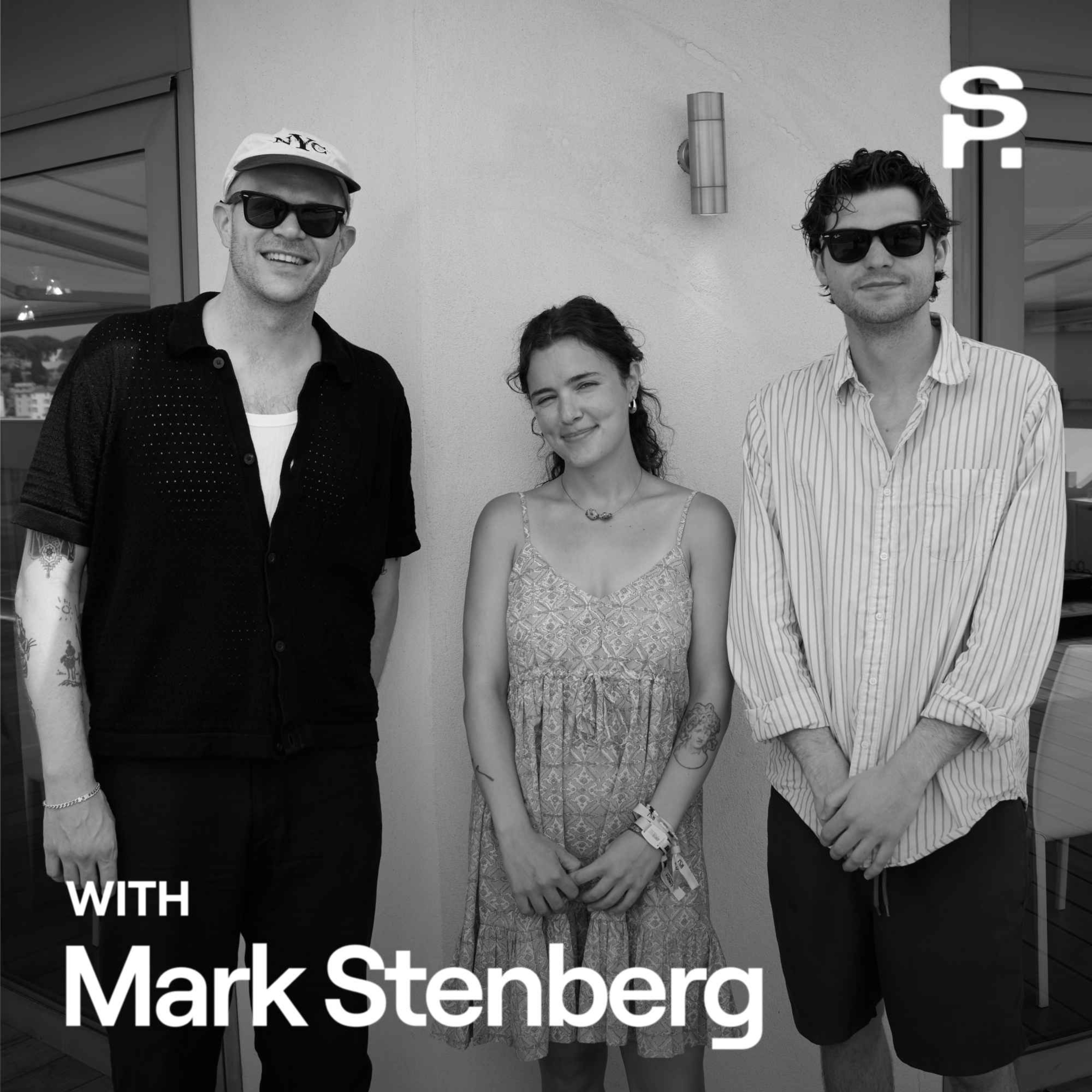
In this podcast episode, the host and a reporter discuss the reporter's second year at the Cannes Lions festival. The reporter's primary deliverable is to generate 15 story ideas by networking through meetings, dinners, and panels, focusing on creators, podcasts, and streaming as converging subjects. A notable conversation involves Dan Gardner from Code in Theory, who introduces DOMA, an AI agent that could represent brands or publishers in text group chats, potentially changing how consumers interact with media. The discussion highlights a shift in festival focus from creative work to business models, with AI driving a "fear of being obsolete" (FOBO) across agencies. While AI dominates conversations, major firms like OpenAI are absent from public events, despite their influence. Behind closed doors, many question AI's high cost and low ROI, with some predicting rollbacks if financial obligations aren't met. The episode also notes a lack of presence from gambling companies like Polymarket, despite their growing role in media and sports. Overall, Cannes is described as a venue for consensus-building on existing trends rather than introducing new innovations, where participants align on shared sentiments to guide industry direction for the coming months.
[Music] Arks Demberg, welcome to another special episode of the Side Projects podcast. Good to see you again, actually. In Can. In Can. We had to throw away our fuck Mary Kill questions because I saw that you had a list on your Instagram. That was a company called the news movement that's really branded to caliber. They sent that to me and they're like, "We're sending this to a bunch of people." Then I looked at the thing and I was the only one on it. I was like, "Did no one else respond or did you lie to me or why am I the only person who filled this out?" Interesting. All right, so we were talking about this as your second year coming to the Can. In the Can. As a reporter working in the industry, what are you looking for here? What is standing out to you? What's the main goal or purpose? The main, deliverable that I have to have at the end of the week is literally just a list of story ideas. I basically split my time between singing for my supper a little bit at the ad weekhouse, moderating panels, doing programming, house stuff, social video. Then any second that I'm not doing that, I'm supposed to be taking meetings, resources, getting info. In a Can that looks also like dinners and happy hours and blah, blah, blah. It's basically the whole remit. It's just like, "Go socialize with a million people and don't sweat it, but at the end of the week, have 15 stories." It's very fun when you're here and then on Friday when you're editor is like, "Where's the list?" You're like, "Oh shit, what did I talk about with anyone?" I've tried to be a little bit smarter about that this year. I would say the main subjects that I came into, I can really try to talk about and hear about. We're creators, podcasts, and streaming, which in many ways are kind of one thing or converging into one thing. So, having a lot of conversations with creator people, streaming folks, and podcasting a little bit, but again, you talk to one person and they can just speak to all three of those things depending on who they are. So, having a million conversations and writing a newsletter at some point, yeah. Well, you don't have to give away your story ideas, but are there any interesting themes or conversations that you've had with people that have started to emerge at all? I was going to shout this one guy out to a stagwell brand called Code in Theory. Are you familiar? No. I don't know that many agencies, honestly, but they're a transformation agency and they work a lot with publishers, they do really cool projects. Their CEO is this guy named Dan Gardner. Every time I talk to him, it reminds me of getting a little misty eyed, but when I was in grad school, I studied media innovation. But the benefit of being in grad school is you get to step back from the real world and just like smoke up and you hit a. Take a chop. Just fucking trip and just think about what if we get really crazy and hypothetical about what if we completely redid this? And every time I talk to him, he is like two years ahead of where everybody else is. And so we are having a really crazy conversation. I mean, it's not crazy, crazy. But like, timeout agents, there was some agents, but he was like. Well, that should be agent. Yeah, I was like, "Agentic buying was definitely the buzzword of the year." He was showing me an app called DOMA that basically is like you invite an agent into your text messages. And like, I've heard of things like that happening before, but he was like the next level of it is that this agent is going to be a representative of a brand or of a publisher or and then we were like, spitballing. It's like, could even be like a creator. Like if you really had an. So basically, acts as like an LLM, it trains on a corpus of data that relates to that brand, to that publisher. And then they're there with you in the group chat, like engaging with you as that brand or as that publisher or whatever. And we were talking about it from the perspective of like news media companies, like, is there a world in which you invite the New York Times into your group chat? You know what I mean? And then like, it chimes in with relevant articles if y'all are talking about, you know, the big trade that happened in the NBA, it sends like an athletic article that, you know. So I was like, really what it is is like, everyone talks about AI and is very concerned about it, that's understandable. But this is one of those like consumer behaviors are going to change how should publishers show up to meet those consumer behavior changes and like, could an agent in your text messages like be one of those. And I was like, that's the kind of shit that is fun to talk about. Very, Domo Arigato. Very fun. I think it's Domo or Doma. Yeah, it's one of those two. And it's like, I want to get to know you Mark and you're like texting with this thing. It's weird. Yeah, what I also am hearing a bit is like, no one and we were talking about this a little bit before, like talking about the work and the creative is kind of like a little bit of an echo where it disappears a bit like a yawn, whereas what the festival is more focused on now is like business models more so like either the business of advertising, obviously like ad tech has really taken over. Yeah. And you think about the creative or it's like quite literally an afterthought. I will say and like there, so I cover media. We have folks on the team who are here who cover agencies, who cover creative, like they're spinning all day at the ballet. Like I'm not like the best person for it. Like it wouldn't really reach me anyway. But I did have a conversation with somebody, a French woman who works at Bayer, the like pharmaceuticals company. She's like chief AI innovation officer or something like that. And she used this phrase fear of being obsolete, Fobo. And she was saying that like last year the talk and the concern as it relates to AI was about creative. Like could you use Sora to make a super bowl ad when people revolt like blah blah blah and it was kind of limited to the creative. And she was like this year, the whole agency model is coming under fire at threat of being replaced by AI. Right. And the agency's every job, every industry is like being, but she was like put a word to this concept of everybody has this dual cognitive dissonance of like I need to use AI, but I'm concerned about it and this sort of fear of being obsolete thing that she talked about was interesting. But the way that she was like the scope of what it will make obsolete seems to have expanded from last year to this year. So that was like the one interesting inside. I thought I got as it relates to agencies, but I wanted to ask you guys this, like what do you feel like is the conversation around creative as relevant as it used to be or as per
vasive as it used to be or like has it just gradually been sort of relegated to the Palais and I feel like it's like sort of the fig leaf now that like justifies everyone getting here, but it's like 10% of the conversation. Yeah. I don't know. I mean, it might be 5% of the conversation. What's a few things? What's interesting to me and like one of the things that we've been talking about is I think last year a reporter from AdWeeck had this really interesting story that we did kind of like in the back of our minds known a bit as we like toward the work in the basement that a lot of the submissions were either backed up by faulty data points or they were resubmitting old work or they were using AI generated images in their case study videos, which I'm sure some of that exists, but it like this was a bit more flagrant. And anyways, now they're passing far more rigorous standards for work submission. So I believe I heard something that there's like 8,000 less entrants this year. So it's like there's less work submitted and more rigor, but I also feel like people are like a bit more timid about it. Some extent. So I don't know. I'm really interested in how that has like, I don't know, either warped people's perceptions of the work or just had people kind of step back. But yeah, I don't really know what else I'm seeing from a creative side. A lot of it speaking up the data like on some panels I've heard. And I guess at that point, like some anxiety around data and metrics and how like data makes a lot of companies and agencies feel more risk-averse. And they don't want to reach these KPIs. But other than that, like I haven't even seen, I usually have never seen any of the work that wins, which I think, I mean it's a global festival, but I don't know, what are you seeing? Well, yeah, I mean I think a lot of it is sort of in that zone of like data plus AI anxiety plus like what is the role of agencies and creatives when like more and more of this can be automated? Like, I think we went to a talk at UTA and they were talking a lot about like, you know, the data can be like a great jumping off point, but it can't sort of be like the main thing that you're using to like decide whether or not to execute on something. And I think like to your point about like maybe the concern is like less about like the AI doing the creative, but like it's sort of the rationale for like why you're working with this agency at all. And like if the agency and the AI are both going to pull on the same data and they're both going to kind of give you the same recommendation based off of that data, like what is the point of using in aid? Like, you know, like I think like sort of more of like the human discernment and like the quote unquote taste that everyone is fucking talking about, which I feel like maybe we can talk about as well. But like I feel like that has been much more of a talking point that I've noticed, which has been percolating I think like beyond can too of like people talking about like the importance of being critical and having a discerning eye, I think like some of that maybe still remains to be seen in panels in general, but like I feel like I've been seeing a lot more of it. And even the data that's in the basement, like that people are using like Eli has some fun creative examples of like some of the things that people are using.
people are using to quantify success, but something else that's come up is like, well, just because something hits whatever, 90 billion impressions, what does that mean in terms of impact? Or whether people remember it, and so I think that's been maybe more of an open discussion than in previous years, but those are maybe my takeaways so far. - I will say, as it relates to AI, I heard something that was like, I'm sure you guys have all read about this too, but first time I heard somebody in a position of power like admitted to me, like privately, was like, this is the year where everyone is having the conversations behind closed doors about how expensive AI is, and how little ROI they're seeing from it. And he was like, nobody wants to say that out loud because then they look retrograde and like AI negative, and that doesn't like trend well in the market, but he's like, everyone is having that conversation this year. And I was like, I kind of was like, it feels like this is AI almost is too big to fail. Like can we actually turn this back? Can we actually turn it down in any capacity? And he was like, 100%. Like if there's one motivation that's like more powerful than like, that keeping up with the Jones's mentality that like spurs AI adoption, it's like a fiduciary obligation. So it's like, I think people are starting to have those conversations about like, okay, actually by the end of the year, if this doesn't make sense on the PNL, we're walking it back. Which was like, I was like, hell yeah. - I was like, yeah, yeah, bringing my pitch fork. I was reading an article because there's like a big market drop off right now. It's like more pronounced in Asia, but they were calling it Bloomberg called it a chip wreck, which I thought was pretty smart. - Yeah. - I wish I came up with that. That's kind of the stuff I wish people would say out loud. You're like, you want something like this, which I know is all primarily about the pomp in the circumstance and the free fucking shit that's gonna end up on the great Pacific garbage patch. But like, I would want someone to say something a bit more provocative. - Yeah, like. - I think like, open AI has been hosting some stuff. Like there is sort of like a presence here of like, AI companies. Like have you seen any of that or like bumped into any of those people? Like, what's their pitch this year, I guess? - That is such a funny question because I was at this dinner last night where I specifically, and you are right, like I was lamenting that I was like, why isn't open AI on the beach? Why isn't it on the-- - Yeah. - Show yourselves. (laughing) - You're so lyrical to the industry that you're so lyrical. - Show that for you, Lolo. - Yeah. - You know, and it's like, I had the same thing when I was-- - Show you Lolo. - It's like, say I'm Altman, you know, come out here and put the sunscreen on, let's talk. They weren't at South by either. And I'm like, you know, I guess just these companies don't feel like they need to do much consumer marketing. So many of them are like, incubated inside of Google or inside of Microsoft. So it's like, they don't need to do this sort of awareness campaigns that maybe, but I'm like, what about it? I guess Anthropic is backed by Amazon, I don't know. So, but it feels like they are the subject of every conversation. - Right. - And yet they are not here. And it just feels like a weird disconnect for me. And until your point, Claire, like, there are representatives from Gemini floating around. And like, there are folks from co-pilot having conversations. But I'm like, I wish that the AI firms were here in a very public facing capacity. Because like, we are all operating under their shadow. And like, this is me being a journalist. And like, I don't, they don't have any like, commercial responsibility to be here. But I do feel like if you are integral to this industry and you are on the tips of everyone's tongue in every panel, doesn't it benefit you in some capacity to have a presence here? Kind of bums me out. But you're seeing them or you're hearing about them. - Well, no, I bet I think like only in the way that you sort of describe of people being like, yeah, I was at a dinner and someone spoke to me about something. But yeah, it's like all happening and sort of like-- - It's like Wizard of Oz type shit. - Yeah, very cold. - Like they walk among us. - Yeah, exactly. Like I've heard maybe like some people being like so and so from open AI was here. But like to your point, I don't think that they have any kind of public facing thing. Like I haven't heard of anyone saying like, I'm taking a meeting with someone from there. Like an official type of meeting. I think that they're just sort of like, maybe out and about attending parties and mixing and mingling. But that's, I don't know, my understanding. - Yeah. - But I agree. Like I think that it would behoove them, I think, to take charge of the conversation too in some ways. Because like I find it a little interesting that they're like not interested in like trying to pitch something. Like I don't know, like it's just interesting to like let it spiral out on its own without like-- - Well, but I feel like they, to your point on the, is it too big to fail? - Yeah. - I feel like maybe there's a sense of safety and like wow, the government has invested so much in us. And like, you know, the S&P is so concentrated in our evaluations that like maybe we can become a bit complacent. Now who's to say? But the one thing that I'm curious, and maybe it's just like the regulatory environment here, is like given how much, when we spoken about this when you came on the podcast before, given how much gambling companies and now prediction markets prop up media entities, in the States especially. I'm surprised there's no, I mean maybe there, again, maybe there's Steve from FanDoules out and about with the Lanyard and the this and the that. But I see so much polymarket and they just had Rick Rubin on, they got future, like they're spending a lot of money on advertising. Some of it has been exposed to be fake advertising. But given its role in American media and like sports in particular too, which is big here in Cannes. I'm surprised I'm not seeing anything like that. I don't know. - That is such a good point. I guess maybe if I'm like, y'all probably would know maybe better about this than I would, but like the companies here, it is more B2B and that is more I think B2C. Like they're not trying to reach us as potential gamblers. They're trying to reach us. They're trying to reach us as like marketers who have like budget to spend or something like that. So like, but I bet that's a really good point. I bet they're here next year. It might just be a little too soon. But like to your point, like the amount of money that they're throwing around. But it's also like a vice. I don't know that they're like welcomed in. I don't know. They're really breaking down. Like I guess gambling has been really normalized to the point that that's maybe like a bit of a moot point. But I wonder if it's, I don't know, if it would feel odd. - Probably. - That's the point of them being here, I guess. - Yeah. - I bet they're here next year. But that is really interesting. - Big odds on that. Good odds maybe. - You saw that I think meta is building internally. Prediction market. - No. - I just read it last night. - Yeah. 'Cause Mark Zuckerberg, any time anyone does something, he's like, "Yeah." - Build that too. (laughing) I'm like, "Hey, over here, we have that." They've like built everything that anyone's ever done. - I mean, imagine all the data that they have access to to be able to, I don't wanna make any speculation. But do something that could be unfair. Not, it'd be overly unfair. - The thing with them is always like, oh, they have this built in distribution of, however many people are, two billion, three billion people are on Instagram. What's up in Facebook? - Threads. (laughing) - Threads, that's another billion. - That's gotta be a bunch. - Yeah, Threads is filled with gamblers. - Yeah. - Do you think Cannes a place where like, it's at like the forefront of trends in industry shifts? Or do you think it's more of like, is it a lagging indicator? Is it more of like a lead generator? - Such a good question. I was like trying to write something about that in my newsletter this morning, and I like wrote and deleted a sentence like eight times. - That's workshop. - It was like, there are not new things introduced here, but this is I think the point in the year where the object of Cannes like consensus building of like, what do we think about the stuff that's out there? And what are we gonna do about that for the next six months? It was like, CES in South by, like you introduce a bunch of stuff and like, you know, I feel like Cannes situated in the middle of it, 'cause every conversation I have, honestly this one included, is like, what are you hearing? What am I hearing? What are you seeing? And we're all trying to like bring our cards and show and compare and being like, okay, so we're all in agreement. This is the thing everyone's talking about. This is the new sentiment that has emerged. It's a lot of like, you show me yours, I'll show you mine consensus building. I don't feel like it's like, which is like a natural instinct for like, any block of entities, like we wanna have like a position as an industry. And I think maybe that's like what gets accomplished at Cannes, but y'all have been here more than I have. But for me, it's really like, everyone's trying to be like, do you think what I think? Yeah, kind of thing. Yeah, well I think that's interesting, 'cause it's also sort of consistent with something we were talking about with Bendiz yesterday, where he was sort of talking about last year and like the AI anxiety last year in particular, that like when everyone arrived early in the week, it was kind of like a lot of anxiety about like, oh, like what are we gonna do? This is gonna really change everything. And then like by the end of the week, he was like, it was a lot more positive. People are like, we're gonna figure it out. It'll be okay. Like not everything is as crazy as it sounds, but like I think it is also to like, your earlier point kind of like, you have people sort of talking on main stages publicly about things and then saying something a little bit different maybe or something like a little more nuanced after a couple of glasses of rosé. So you can also kind of like figure out like, okay, like what's the public consensus and what do we feel about it? Or like what do we like sort of low key have a concern about still or like maybe we're like, I don't know if AI can do that, but I'm worried about this or whatever it is. So I think it's sort of nice to be able to also get like both an understanding of like, what's the like on the record read and what is the sort of more,
or like, I don't know, like I'm not ready to come out publicly with my take yet, but like here's sort of what I'm thinking, feeling, et cetera. - I will tell you like just on that, like this is such a like a micro, this is relevant to so few people. (laughing) Well, welcome to the podcast. (laughing) But like the fact that like now every panel is videotape and recorded means that like to your point, like people on panels that's theoretically like their public position, but you could get like people being candid on panels. - Yeah. - And especially if it's like off the record or Chatham House rules, - Yeah, the rate moderator. - But now it's like everything is recorded and on the record, so if you're saying it in a panel, that has to be like a PR approved statement, like more so than ever. So I think there is a greater gulf between what people say in the official formats and then what they say like at the Carlton when they're drinking. - Yeah, I know exactly. - Which is like, I guess it's good to be here, but then to me it's just like, then what's the point of the panels? - Yeah. - It's just the leadership and like everyone's just getting their clips to put on LinkedIn, but it's like that to me, just devalues it even more 'cause I don't think that this is how you genuinely feel. - Well, it's interesting too, like I wonder, 'cause like it's an interesting, I don't know if this is the right use of this word, but like metatextual analysis, but just throwing that out. But I do think it changes to your point, like the register of like what you're going to the panel and necessarily to experience. And like Collins House has obviously been here for a decent amount of time. And like I don't know that they record video there. I don't think that they do in any official capacity, but like these panels are like situations that are supposed to be a little bit more like off the cuff more casual. Like you can't, you famously cannot wear your can badge at the Collins House, like trying to kind of create a space where it feels at least like a more real conversation is happening or I saw the strategist/creator, Rachel Lowe and Steen was also doing like a more casual off the cuff, quote unquote, candid thing. And I wonder if that will start to happen more. So, or like in a more like sort of like, we're not gonna record this, this is sort of like, sort of like somewhere between a happy hour and a panel, you know, which I think is what some of these events are sort of trying to be now, but I don't know that anything has been like successful to the point where I'm like, okay, I think I walked away from hearing those people talk and I feel like they were both being about as honest as you would be in front of like a group of people, you know. - I just don't know what the incentive would be to do that sometimes. - Well, I mean, I think. - Except maybe, you know, in good company. - Well, yeah, but I think that to that point though, like I feel like more and more people who are like, creators/strategists are here, not including ourselves necessarily, but like, Emily Sundberg, or like, I mean, that's a big example, but like, - Rachel Cardin. - Eugene Healey is here, Rachel Lowe and Steen is here, but like people who's sort of like, business model is also based off of like the fact that they're supposed to be like honest brokers, you know. Like they're supposed to be authentic, they're supposed to be real, and it's like, it's hard to sort of take up that mantle if you're like, talking crazy at the ballet. Do you know what I mean? So like, I think that like, I wonder at one point, does like the creator shift start to also inform the programming, do you know what I mean? - Yeah. - What do you mean the creator shift? - Well, like I feel like this year and last year, it was like, there's so many more creators that can, and like, I think that is true, and like they're on the panels, but they're not necessarily doing the programming. Like it's Emily Sundberg at Yahoo. It's like, you know, I mean, Rachel Lowe and Steen, I think is sort of doing her own thing, but I think she was brought here by someone else maybe. But like, I wonder at what point, like, a bigger creator or something, it's like, okay, I wanna go here, I wanna do my own thing. Like there's enough maybe brands or like, other people to network with that like, I can see the value of coming, being sort of someone on the ground, you can be sort of like, the honest voice, if here's what I am seeing in the room, and I do think like Emily's doing that too, and like, some of these other creators, I've seen like Rachel Carton and stuff too, but like, I think there's probably a demand for something along those lines. Like I feel like we've talked about this on the podcast for at least two years. I don't think we're that out of sync with people, like I mean-- - You don't crash out of me now. - Hopefully not, I think our desires are that out of sync. - God, we're all here with you. - No, the same page. - No, no, no, I know, but I'm just saying, like, I feel like your question was like, what is the value, like what is the sort of incentive of that? And I do think like increasingly there is an incentive to like, at least selfishly, if you're someone who's like making your name off of being authentic, like to want to do that. Some place here. - Well, you always get the real article on this podcast and your conversations with you Mark, so thank you for stopping by. - Yeah, thank you. This is the nicest venue I've ever podcasted. Our nicest Vista. - Wow. - I'm gonna talk about it. - All right, thank you. - Thank you. (upbeat music) Thanks for listening to this episode from the Side Projects podcast. Our show is produced by Jamila Jalow and it hosted by me, Clara Malley, Eli Williams, and Trey Taylor. If you like what you hear, please subscribe and rate us five stars. It helps us reach more people and spread the good word. See you next time. (upbeat music)
Podcast Summary
Key Points:
The podcast discusses the second year of a reporter attending the Cannes Lions festival, with the main goal of generating 15 story ideas from meetings and social events.
Key industry topics include creators, podcasts, and streaming converging into one space, with AI agents like DOMA potentially acting as brand representatives in group chats.
There is a shift in focus from creative work to business models, with AI causing "fear of being obsolete" (FOBO) across agency roles, not just creative tasks.
AI is described as "too big to fail," but behind closed doors, many discuss its high cost and low ROI, with potential rollbacks if it doesn't make financial sense.
Major AI firms like OpenAI lack a public presence at Cannes, despite being central to conversations, creating a "Wizard of Oz" dynamic.
Cannes is seen as a place for consensus-building on industry trends rather than introducing new ideas, with participants comparing notes to align on key sentiments.
Summary:
In this podcast episode, the host and a reporter discuss the reporter's second year at the Cannes Lions festival. The reporter's primary deliverable is to generate 15 story ideas by networking through meetings, dinners, and panels, focusing on creators, podcasts, and streaming as converging subjects. A notable conversation involves Dan Gardner from Code in Theory, who introduces DOMA, an AI agent that could represent brands or publishers in text group chats, potentially changing how consumers interact with media.
The discussion highlights a shift in festival focus from creative work to business models, with AI driving a "fear of being obsolete" (FOBO) across agencies. While AI dominates conversations, major firms like OpenAI are absent from public events, despite their influence. Behind closed doors, many question AI's high cost and low ROI, with some predicting rollbacks if financial obligations aren't met.
The episode also notes a lack of presence from gambling companies like Polymarket, despite their growing role in media and sports. Overall, Cannes is described as a venue for consensus-building on existing trends rather than introducing new innovations, where participants align on shared sentiments to guide industry direction for the coming months.
FAQs
The primary deliverable is to generate a list of story ideas by networking, taking meetings, and gathering information from conversations, panels, and events throughout the week.
The main subjects are creators, podcasts, and streaming, which are converging into one area, leading to conversations with people from all three fields.
Agentic buying involves AI agents representing brands or publishers in group chats, like the DOMA app, where an agent trained on brand data engages with users, potentially changing how publishers meet consumer behavior shifts.
The festival now emphasizes business models, ad tech, and the threat of AI replacing agency roles, with creative work becoming a smaller part of the conversation compared to previous years.
'Fobo' stands for 'fear of being obsolete,' describing the dual anxiety agencies feel about needing to use AI while fearing it might replace their roles, with the scope of potential obsolescence expanding this year.
AI companies are not publicly present, likely because they don't need consumer marketing due to backing by giants like Google or Microsoft, but they are the subject of many private conversations and panels.
Chat with AI
Loading...
Pro features
Go deeper with this episode
Unlock creator-grade tools that turn any transcript into show notes and subtitle files.
 PodcastTranscript AI