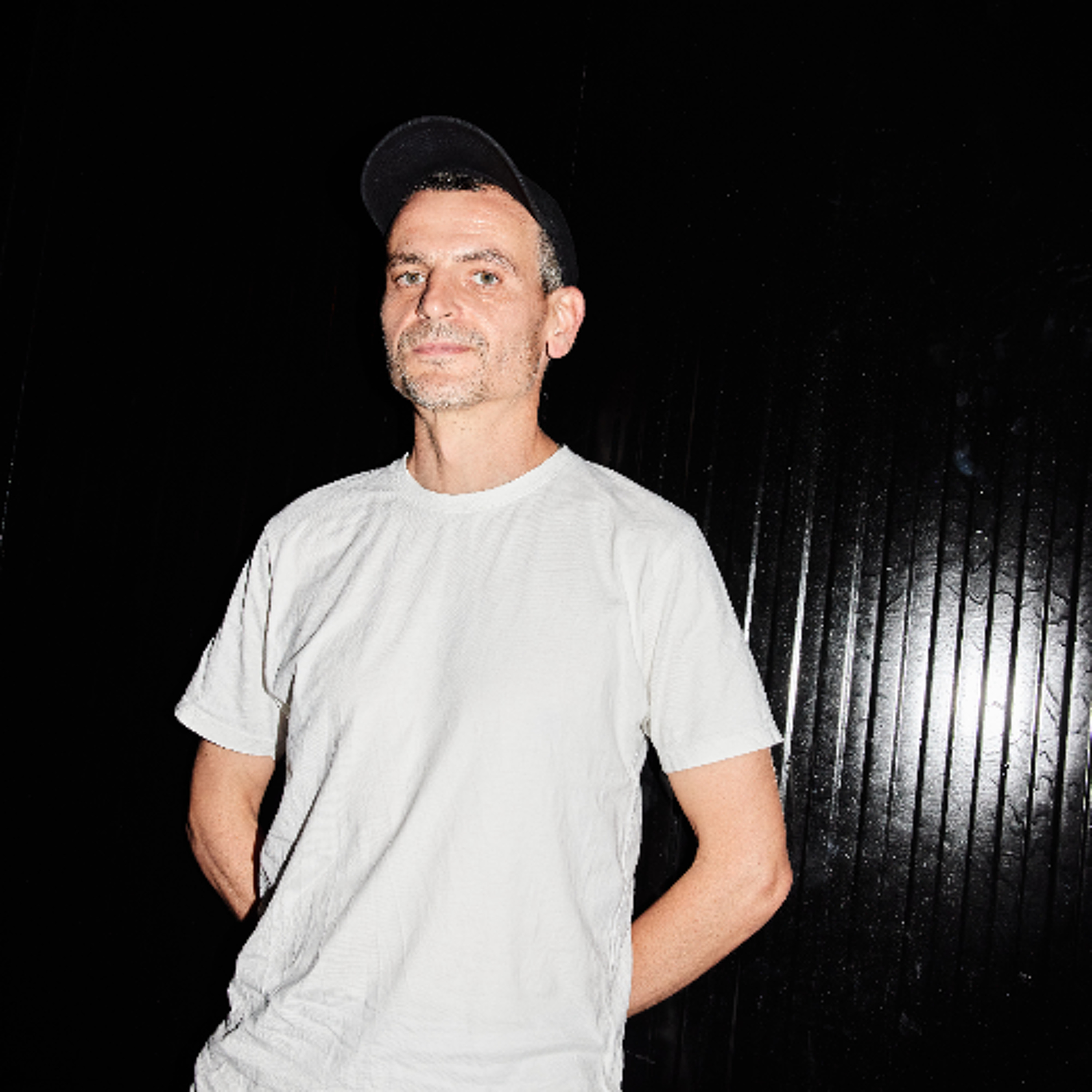
In this interview on Radio Primavera Sound, San Barca discusses his music and latest album, "Stochastic Drift." He is often described as making dance music without bass drums, a label he finds fair but limiting, as he doesn't exclusively avoid kick drums. Barca emphasizes the importance of context in his work, considering where his music will be played, from clubs to broader listening environments. The album's title, "Stochastic Drift," relates to its creation during the pandemic, a period of uncertainty that led him to explore unpredictable sound processes. The tracks are arranged chronologically, reflecting a shift from deliberate, structured ideas to more experimental and unfocused compositions. Barca expresses a preference for surprising listeners, challenging predictable formulas in dance music to create engaging and unexpected experiences.
You're listening to Radio Primavera Sound, proudly presented by Kugra. Hello. And welcome to LINE NOISE Live at Primavera Sound Festival. It gives me great pleasure to say I'm here with San Barca, aka Barca, who has made one of the albums of the year in Stochastic Drift. How are you doing? Very good. Did I say the name right? Because I just occurred to me. You did, yeah. OK. Now, as we were just talking off Mike, I was trying to explain to my wife what it is you do with your music. And I came up with the description that's quite often used, which is you do dance music without bass drums, which is probably something you've heard many a time. Is that a bit limiting? But is that kind of a fair description? I would say that's what I've been best known for over the last sort of five, seven years or so. It's not the only thing I do. I don't hold any grudges against kick drums. Actually, it's not quite true. I find them a little bit pushy and obnoxious sometimes. But yeah, that's a fair description. I've heard worse. Another thing I was trying to sort of talk about was where to listen to your music. Because it combined, again, I was talking about going to see you tonight. And it kind of combined element of the club and it combined elements that you might expect to hear outside of the dance loop. Do you think of environment when you make music? I do a lot. Actually, that's one of the main parameters especially for mixing and once an initial idea is sort of emerged, I'll think about where it's going to be useful where it's going to be presented in the best kind of context. Context is quite important. I think with the earlier experiments with the Beatless stuff, I was planning to play stuff in Burkheim. And that was my testing ground for these for debiasing and less so with utility. I was more imagining that as a sort of listening album. I mean, it sounds strange to call music. Listening music is what you do with it. But yeah, I wanted to sort of have a bit more of a broad place to put the album. So that, yeah, I think I wanted it to work in a lot more places than just in a club for that album. But yeah, I think a lot of decisions are made based on where I think it might be played or might be used. It's interesting because stochastic drift, for me, feels very warm, almost Mediterranean. But you live in Berlin, right? Which is just not warm and Mediterranean. I do. We have to fantasise about warmth. Yeah, I mean, it's-- Berlin can be quite warm, I guess. Yeah, I guess there's a stereotype of cold gray. And then the winter, certainly, is. But there's sunshine for some months of the year and the summer. Not quite like Barcelona, but it's-- yeah, it's not as bleak as the stereotype, I'd say. Stochastic means-- and I obviously had to look this up-- having a random probability distribution or pattern that may be analysed statistically, but may not be predicted precisely. How does that relate to your work? Well, the album was-- it was started in 2020, by the being of the pandemic. And the intention was, at that point, since it was unclear how long lockdowns might be going on for, it was started as a sort of follow-up to utility. And then as time went on, all sorts of changes started happening, the club, which was my sort of stability, was closed, and they turned that into a gallery space. I was asked to do an installation in the-- it was a studio Berlin exhibition. There was 100 artists doing exhibiting work there. And I did an automated mechanical piano that I put in the downstairs toilets of the Burkine. And that was supposed to be a couple of months to turn into eight months. And the label was put on hold. So the album plan was kind of shelved. And in any case, I didn't really know what I wanted music to do at that point. It didn't make sense to do dance music. It seemed like a bit of a tease to indulge in that line of work. And yeah, just it seemed like everything was collapsing or everything that I felt was stable and predictable had gone completely off the rails. And so it was actually quite difficult to finish the record. I got into lots of different sort of sound processes, started exploring a bit deeper than mechanical music ideas that I've been playing with. And all of this was kind of leading to just-- yeah, it was quite exciting. I was making music that I wasn't expecting and didn't sort of plan to make. But these tracks were coming out. It was quite difficult to see what the-- because at the end, the label manager, Joachim, had small town super sound. He picked out this selection of tracks from what I've been doing. And it spanned the whole time from the beginning of the pandemic until six months before it was released. So it was a really broad range of stuff. And so we spent quite some time trying to sequence the tracks and trying to find the right order. And in the end, what made the most sense was to kind of organize the tracks in a chronological order. Because then there was this sort of arc that we both noticed of the start being sort of quite deliberate ideas and quite sort of-- yeah, quite sort of sharp and on the grid. And then as sort of time went on, things got a lot more unpredictable and unfocused. I don't know, maybe that's not the right framing. But it took its own direction. My studio time was kind of changed a lot in those years. So yeah, Stochastic Drift fitted as a title for this kind of process of going off course and dealing with uncertainty was the theme that I kind of retroactively observed about the music. So I could talk to you for ages. But I've got one last question for today. If you want to come back sometime, that would be very welcome. But why really wanted to ask is do you like sort of slightly unfooting people with your music? Like they think they're going to get something and they get something a bit different? I love that experience myself when I listen to music. I think-- yeah, I guess people have their own biases towards what they want to hear. Some people like to have their predictions confirmed. Some people like to know when things are going to happen. And there's great formulas in dance music for this kind of predictive way of composing, but or predictable way of composing. But yeah, I like to be surprised. So I kind of try to sort of put some of that into the music. It was an absolute pleasure to speak to you. You're playing in one hour at the warehouse. It's going to be. Yes, looks like it. It's going to be amazing. Thank you so much for coming along. And hope it goes. Thanks for the chat. Thank you. You're listening to Radio Primavera Sound, Broughtly presented by Cougar.
Podcast Summary
Key Points:
San Barca is known for creating dance music without bass drums, though he views this description as somewhat limiting.
He considers the listening environment important when producing music, aiming for versatility beyond just club settings.
His album "Stochastic Drift" reflects themes of unpredictability and change, influenced by the pandemic's disruptions.
The album's tracks are arranged chronologically to show an evolution from structured to more experimental sounds.
Barca enjoys surprising listeners by subverting expectations in his music, valuing unpredictability over formulaic compositions.
Summary:
" He is often described as making dance music without bass drums, a label he finds fair but limiting, as he doesn't exclusively avoid kick drums. Barca emphasizes the importance of context in his work, considering where his music will be played, from clubs to broader listening environments. The album's title, "Stochastic Drift," relates to its creation during the pandemic, a period of uncertainty that led him to explore unpredictable sound processes.
The tracks are arranged chronologically, reflecting a shift from deliberate, structured ideas to more experimental and unfocused compositions. Barca expresses a preference for surprising listeners, challenging predictable formulas in dance music to create engaging and unexpected experiences.
FAQs
San Barca is best known for creating dance music without bass drums, though he notes this description is a bit limiting as he explores other styles too.
Yes, he thinks a lot about where the music will be played, using context as a key parameter for mixing and presentation, aiming for versatility beyond just clubs.
The title reflects the unpredictable, off-course creative process during the pandemic, dealing with uncertainty and changes in his studio work and life.
While Berlin has a stereotype of being cold, he notes it has warm periods, and he often fantasizes about warmth, which may subtly influence his sound.
The album started as a follow-up to 'Utility' but evolved unpredictably due to lockdowns, with tracks spanning from deliberate ideas to more unfocused, experimental sounds over time.
Yes, he enjoys surprising listeners by subverting expectations, preferring to create unpredictable experiences rather than confirming predictions.
Chat with AI
Loading...
Pro features
Go deeper with this episode
Unlock creator-grade tools that turn any transcript into show notes and subtitle files.
 PodcastTranscript AI