This episode of the Come Follow Me podcast for teens examines Genesis 24–33, centered on the theme "Let God Prevail." It explores Jacob’s journey from supplanting his brother Esau to becoming Israel, learning that God’s blessings come not through force but by yielding to Him. The discussion highlights the importance of covenant marriage through the examples of Isaac and Rebekah, who trusted God over distance, and Jacob and Rachel, whose love required patience and effort. In contrast, Esau’s marriages outside the covenant brought grief. Listeners are encouraged to prioritize God in relationships, seek temple marriage, and trust that putting God first brings clarity and peace. The host acknowledges that life may not unfold as planned but assures that faithfulness leads to ultimate fulfillment.
Welcome to the Come Follow Me Podcast for teens and for parents of teens. A podcast to supplement your weekly study of the Come Follow Me curriculum with thoughts, ideas, principles, stories and questions all geared towards helping teenagers better follow Christ through their teenage years. Hey everybody, welcome to another week of our Come Follow Me for teens podcast and study. This week we're going to be taking a look at Genesis chapters 24 through 33, let God prevail and let me apologize a little bit in advance for my voice. Just getting a little bit over a cold which is problematic for individuals that do podcasts. I've come to find out but hey this is mortality and it's full of ups and downs, good and bad health and sickness and so we're just going to keep pushing through. Before we get into this week's study just a quick reminder if you're a parent or a youth leader that's joining us for the first time listening today, I create a simple weekly teaching guide for every Come Follow Me lesson and you can grab this week's guide for just a dollar ninety five at my website JoshDowns.com or from the link in the show notes. I'm also just a quick note for those that have joined the Come Follow Me for teens membership subscription. You may have noticed there've been a few changes to the layout of the menus. A few other things have been added. It's kind of going through a big refresh right now so if any of you ever get lost you can't find what you need. Just reach out to me and let me know but I've tried to make it really streamlined so you can just get this week's lesson boom all the materials there. The study guides just a quick overview so hopefully you're finding everything quickly and just in one place. And as members you should also be seen a link at the top of the membership sign and page where you can download an app to access all the membership benefits right there from your phone. Give it a try. Let me know what you think. I'm definitely working to make this as helpful as it can possibly be teaching every one of you. Now with this week's study the theme is Let God Preval and you're going to see that theme really all throughout the entire Old Testament. I have loved this since it was taught to us by President Nilsen. Here is the background of this week's study. How do you secure for yourself a blessing from God? You might say that the account of Jacob, grandson of Abraham and Sarah is the story of a man who learned the answer to that question. In a culture where the firstborn son received a birthright blessing Jacob was born second, grasping at the heel of his twin brother Issa. The name Jacob means supplantor, one who replaces someone else. And Jacob lived up to that name by trying more than once to supplant Issa as in herder of the birthright blessing because Issa was unworthy of it. The result was discord in the family and Jacob had to flee for his life into the wilderness. Years later God commanded Jacob to return home. On the way Jacob in humility against sought a blessing from God. The scriptures describe this time as a wrestle for Jacob and he declared that he would not give up except how blessed me. Then came the lesson and the blessing. God changed Jacob's name to Israel, meaning among other things let God prevail. Israel learned that to receive God's most valuable blessings, his covenant blessings, it's not necessary to supplant someone else. His blessings aren't purchased or seized or won. He gives them freely to all who live up to the name of Israel, who let God prevail in their lives. Isn't that really what a lot of life comes down to? It's just letting God prevail in the struggle that is within each and every one of us. We're going to see that especially through these principles today, that theme. To begin with, I want to kind of focus on an overview of several of these chapters, primarily chapters 24 through 29 and the stories of Isaac and Jacob and how similar they are in certain aspects, especially as it relates to marriage. As you go through and study these chapters, I'd invite you to watch for what you learn about the importance of the marriage covenant from the stories of Isaac and Rebecca, Jacob and Rachel, and also Esau as well. He's mentioned in their in relation to this topic. I'm just going to highlight a couple key verses from each of these chapters. The first one involves the story of Isaac and Rebecca from chapter 24. It starts out in verse 1 by reading, "An Abraham was old and well-stricken in age, and the Lord had blessed Abraham in all things. An Abraham said into his eldest servant of his house that ruled over all that he had, 'Put I pray thee thy hand under my thigh.' And I will make," with Joseph Smith, "changes that translation by the way to under my hand. It makes a little more sense, doesn't it? And I will make thee swear by the Lord. It says, 'The God of heaven and the God of the earth, that thou shalt not take a wife unto my son of the daughters of the canonites among whom I dwell. But thou shalt go unto my country, and to my kindred, and take a wife unto my son Isaac." And what follows after that is the beautiful story of how Abraham's servant finds Rebecca and how he prays to be led to her and that the one that would come and offer him water and all his camels after his long journey would be the one for Abraham's son. And how Rebecca is the one that comes out and does all that. And they have this exchange and the servant is introduced to her family and in a rather remarkable act of faith, Rebecca leaves her family and her home and all that she knows to follow Abraham's son as she trusts in the Lord and the Lord's plan for her. The next story is about Jacob and Rachel. We see that unfold starting in chapter 28 and the beginning of that story reads, "An Isaac called Jacob and blessed him and charged him and said unto him, 'Thou shalt not take a wife of the daughters of canon.' Kind of the same instruction that his father gave regarding who he should marry. It really becomes clear in studying these two stories. One of the principles that is taught very powerfully through them are the blessings and the potential difficulties that can come to us through those we choose to marry and the manner in which we choose to get married. Abraham gave a strict command to a servant to not find a wife for his son among the canonites among whom he dwelt but instructed a servant to travel to his home country where his kindred live, where those that believe the same way as he believed and believed in the same God lived and take a wife for him there. Now the reason for this instruction is because Abraham knew how important it was for his son to marry someone again that believed in the same God that he did, that had the same faith that he had, that could be a part of the same covenantal relationship with God that he had had. And just how important was it for them to marry in the covenant? Well, apparently in order to find the right girl, they would have to travel over 500 miles to find her. That was not an easy journey. They would have to travel from Bershiba to where they lived at the time to Huron, which was about 500 miles away. Young people, I might pose the question that comes out of that to you. Where might you have to go? How far might you have to travel to find the right person? Where will they most likely be? And where will they most likely not be? The servant, as I mentioned, is led to find Rebecca and Rebecca is led by God to leave her home and to find Isaac. When we trust in God, he will help you to find the right person no matter how far or how long it takes. I believe that. And I think it's needed more in the world today than ever before. And the world today there has been a probable decline in both marriage and dating. People are giving up on being able to find the right person for them, even though everybody wants to find the right person. And I think a big part of what is missing is God in the equation. We put so much faith in everything outside of him that we fail to trust in him that he can help individuals find each other. A lot better than any dating app that's out there, that's for sure. Now the story of Jacob and Rachel is kind of similar, but at the heart of finding the right person in this story is the element of effort and work that it is going to take for Jacob to find Rachel and to have Rachel. Isaac also instructs his son to marry in the covenant. As the scriptures read in Isaac called Jacob and blessed him and charged him and said unto him, thou shall not take a wife of the daughters of Canaan. So Jacob also travels a great distance and is led to find Rachel. However, in this case Rachel's father will not give her away to marry Jacob unless he agrees to work for him for seven years. That's a long time to which though Jacob agrees to serve Rachel's father for seven years. And in what is probably one of the most romantic scriptures I think in all of scripture, listen to how these seven years are described. The Jacob had to wait and work for Rachel in verse 20 and young women, especially I would encourage you to mark this verse. It simply reads, and Jacob served seven years for Rachel. And they seemed unto him, but a few days for the love he had to her. Isn't that just the cutest? That's the kind of love that you want to find in Rachel.
relationship, some of those willing to go the distance to work as long as is required to marry the right person in the right way by the right authority. Abraham, Isaac and Jacob all knew how important it was to marry someone in the covenant, and knew of the effects that it would have if they didn't. He saw on the other hand wasn't quite as committed to marrying in the covenant, and it contributed, I think, to him losing his birthright, taking a much different path in his life than his brother Jacob did. Plus, not to mention the heartache and pain it brought to his loved ones, to his parents. As it says in Genesis 26, verse 34, "And Esau was 40 years old when he took to wife Judith, the daughter of Barry, the hidite, and Bashamath, the daughter of Elon, the hidite." Which in verse 35 were a grief of mind unto Isaac and to Rebecca? Esau's parents knew how Esau's relationship and marriage outside of the covenant would make it so much harder to keep his relationship intact and his covenants intact with God than it would had he married inside the covenant. If you look closely, you can see from the scriptures as well as just through life that who you marry is one of the most important decisions that you will ever make because not only will it drastically affect this life, but it will also drastically affect eternity. I remember a story told by Elder Hales once when he was with President Harold B. Lee and one of the ceiling rooms at the Salt Lake Temple. Presently pointed out the mirrors on both sides of the altar and one of the ceiling rooms and how if you look down one way through the mirrors, you can see that you had been living for an eternity prior to this point. And if you look at the other way, it reflects an eternity yet to go. He said, "You know what is that? The focal point of all eternity? The altar of the temple and the covenants that you make there. That's says a lot about how important that decision is. President Hinckley taught that this will be the most important decision of your life, the individual whom you marry. Marry the right person in the right place at the right time." He said, "There is no substitute for marrying in the temple. It is the only place under the heavens where marriage can be solemnized for eternity. Don't cheat yourself. Don't cheat your companion. Don't shortchange your lives." Now I grew up listening and hearing all those quotes as well and I got to tell you that puts a lot of pressure on a young person to make that decision correctly. So young people, if you're feeling that pressure, know that that's normal, know that it's okay. But we also need to balance it just a little bit. One of the reasons being is that we live in a much different time than they did back in the Old Testament where dating and finding a person to marry is much different today than it was then. Yet these principles and the significance of marrying in the covenant today are just as true and important as they were then. A temple marriage and a covenantal relationship is a wonderful goal and standard to have in your life as a young person and it should be your standard and goal to have. However clearly in the world today, like back then, a temple marriage will not always happen naturally nor easily. But it is something you guys that you can cultivate happening in your life by living in the right way and dating in the right way. It is something that you must always have as a goal for yourself because it can be so easy to fall in love with someone that can't offer you those things. It can't offer you a temple marriage or worse, maybe doesn't even want one. I mentioned before I'm sure how one of my sisters went through an experience where she fell in love with someone that couldn't take her the temple and really didn't want to. And it was heartbreaking for her to end that relationship, but she had long ago made up in her mind what she wanted for herself, for her future, for her family. And she knew that that person couldn't provide that. And as hard as it was, she had to let him go and she did. And she's so thankful that she did because she found an amazing man that was able to offer her all those things and treats her so well and they've built a beautiful life together. And I'm not going to pretend to say that you should make or you will make every decision right. That's not the world that we live in, but the best counsel and advice that I can give you to help you prepare for marriage and to make sure that you do marry the right person in the right time and in the right place is to follow one simple rule as best as you can. And that is to always strive to put God first. Present Benson taught it powerfully and it's become my most favorite quote of all time that has directed my life more than any other quote I've ever read. And he taught it this way. He simply said, "When we put God first, everything falls into its proper place or drops out of our lives." And then in connecting this to marriage specifically, he said, "If someone wants to marry you outside of the temple, whom will you strive to please? God or immortal? If you insist on a temple marriage, you will be pleasing the Lord and blessing the other party. Why? Because that person will either become worthy to go to the temple, which could be a blessing, or will leave, which could also be a blessing. Because neither of you should want to be unequally yoked." He said, "You should qualify for the temple. Then you will know that there is no one good enough for you to marry outside the temple. If such individuals are that good, they will get themselves in a condition so that they too can be married in the temple." I've always tried to teach my kid something that my father taught me as a young age and it's the principal of the triangle. How a triangle represents every single relationship that we're in. One side of the triangle represents us. The other side can represent anyone else that you want to put on it. A brother, a sister, a parent, a spouse, someone you're dating, a friend, it can work in any relationship. At the top of the triangle always needs to be God. And as you look at that triangle, you'll notice one of two things happen. The closer both people draw to the top of the triangle or to God, the closer they draw to each other. And therefore the opposite is also true. The farther one or both move away from God and the farther apart they grow from each other. That is an absolute truth. I have seen over and over my life. When you're in one of the places I saw the most powerfully taught was on my mission. I spent just a relatively short amount of time with each of my companions. But because of our focus in teaching and testifying of Christ and doing everything that would draw us personally to Him, those individuals have become some of the very best friends I have ever had. As much as if I had known them my entire life. And the only thing I could equate to why that happened so quickly and so powerfully was because God was at the focus of our relationship and everything that we did as companions. Now just a quick word of caution and maybe again a little more balancing. I would love to say that all of you listening by putting God first, dating right, getting married in the temple that you'll go on to have a wonderful relationship, a wonderful marriage that a temple marriage is always a guarantee of a happy and wonderful life. You'll stay married that you'll raise a wonderful family and pass out of this life surrounded by children, grandchildren and even great grandchildren. Like I know we see at times in individuals and that we want for ourselves. I wish I could say that all of you will live to fulfill your desire to experience and live and love the law of eternal marriage. But the truth is that your path will not always go the way that you think it will, the way that it should or the way that you want it to. And you'll have to learn to be okay with that. It's very possible that you can marry someone who at the time was right but because of free agency they might make choices that cause things to no longer be right or to just fall apart. That's one of the lessons I think I learned from Jesus calling Judas as an apostle. At the time it was certainly the right call to make and so was Judas. He was in the right place but he made some choices because he had his agency that destroyed his relationship with Christ. And some of you might experience things like a very painful divorce due to the poor choices of a spouse. Some of you might not have the opportunity to get married for one reason or another. Some of you might not be able to have children. Some of you might lose a spouse to an illness disease or some other premature death. Remember what we studied last week. The Abrahamic tests that we talked about in our last episode. You could easily be tested in any of these ways. And if that happens to be a part of your story, my invitation to you would be to continue to strive to put God first no matter what. Always. And trust that everything will work together for your good. That things will come together and be okay in the end. That this life isn't the place for everything to come together and to be made right and for happily ever after to be pronounced. That comes at the end of the story, at the end of the conflict, at the end of the fight. That's present packer Todd. It comes in part three or act three of the great play that we are part of. If any of you have not read the story and talk given by President Dieter Eiff-Outdorf titled The Story of Great Ant Rose, I would invite you to read it. It will help put a lot of these kinds of things together.
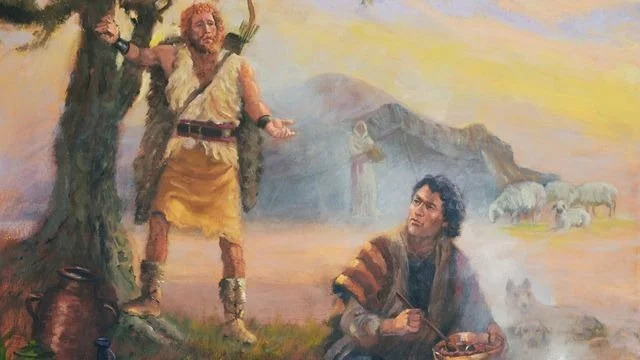
things in perspective for you and help you to still choose to live a life full of gratitude, patience, and joy, regardless of your family circumstances. And probably is another one of the very best guiding quotes that I can give you from Elder Holland as it relates to dating especially and future relationships. He said this, "Do you want capability, safety and security in dating and romance in married life and eternity? Be a true disciple of Jesus. Be a genuine committed word indeed, Latter-day Saint. Believe that your faith has everything to do with your romance because it does. You separate dating from discipleship at your peril. Jesus Christ, the light of the world, is the only lamp by which you can successfully see the path of love and happiness." I just love that quote, which is a perfect reflection of what, again, President Benson taught that if you put God first, everything will fall into its proper place or drop out of our lives. I bear testimony of that truth. I have seen it. I have experienced it. I have lived it. I'm not in that perfect place yet where all the things have been made right in my life. I'm still divorced. I'm not married. And I've learned to be okay with that and to trust in the Lord, to trust His timing, to take the opportunity I have, to work on myself, to get better, to heal some things so that I can be the best version of myself for someone else. When that time comes, if it comes, I've learned to be okay to just completely turn it over to God and know that one day everything will be made right. Now some journal discussion questions for you to consider might be one. Why do you think marriage in the covenant was so important to Abraham, Isaac and Jacob? What dangers are there and what blessings are put at risk when someone marries out of the covenant? What is it about marriage that helps us learn to become more like Heavenly Father? Why is temple marriage so important to you? How can our love for God affect our love for those we marry? What do you personally like most about Elder Holland's quote about romantic love? How have you seen someone's love and relationship with the Lord impact their love and relationship with someone else? How can you apply this principle right now, in dating, if that's the place that you're in? To apply this principle, I invite you to write down why you have a goal, especially you young people for a temple marriage. Why is it so important to you and why are you not willing to settle for anything less? Now, we spend a little time on that one, but I hope you see why. It is one of those decisions that will affect everything, not just in this life, but we'll have a ripple effect throughout eternity. The last two principles we're going to look at today are a little quicker, but some of my favorite as well. Principle two, we're going to focus a little bit more on the story that is in these chapters between Jacob and Esau. They were twin sons of Isaac and Rebecca, and Esau was the older twin. It was born first, and therefore he held the birthright. The birthright was a special privilege and responsibility given to the first born son in ancient times. This birthright included spiritual leadership in the family and important covenantal blessings, and also the bestole of physical properties. And we're shown in a few of these verses in a particular story what it was that Esau was willing to trade for this birthright that was his, specifically verses 29 through 34, which reads, "And Jacob sawed potage, and Esau came from the field and he was faint. And Esau said to Jacob, 'Feed me, I pray thee, with that same red potage for I am faint,' therefore was his name called Edom. And Jacob said, 'Sell me this day thy birthright.' And Esau said, 'Behold, I am at the point to die, and what profit shall this birthright do to me?' And Jacob said, 'Swear to me this day, and he swearing to him, and he sold his birthright unto Jacob.' Then Jacob gave Esau bread and potage of lentils, and he did eat and drink and rose up and went his way, thus Esau despised his birthright. Now although the story is a short one, it encapsulates a principle that is it really the heart of life and at the heart of God's plan for each of us. The birthright belonged to the firstborn again in ancient times and came with great privileges and promises. In fact, it often included all that their father had. And it really is symbolic of our spiritual birthright, of all that God desires for us to have. It is symbolic of all that is being given to Christ and promised to us as we become joint errors with him, joint errors with Christ. We also through our covenantal relationship with God are promised that we will be given all that the father had. That is the blessing of our birthright from God. I don't think we have begun to scarcely scratch the surface of how incredible this blessing is and how available it is to each and every one of us. However we like Esau will at times be tempted to trade our birthright for something of infinitely lesser value, something that we probably want in the moment. That's the key. Esau came back from hunting. He was very hungry and he saw that Jacob had been making some potage and asked Jacob for some. Jacob offered it to Esau if he would sell him as a birthright. And honestly for all we know, Jacob like any brother might have just been plain with Esau a little bit teasing him a little bit. But clearly Esau didn't value his birthright much and was willing to let it go for some potage. And so that is exactly the deal that was struck between Jacob and Esau. And as it concluded, we get that phrase thus Esau despises his birthright. Although Esau was hungry, he had a choice in that moment. He didn't have to give up his birthright. He could have got what he wanted in the right way by well, if he had to making his own food being patient and waiting for it until it was done and then get it. Or he could choose to give into his physical appetite, get what he wanted right then, but give up his birthright in the process. Esau of course gave into his physical appetite and lost his birthright. In this story we see a choice that each of us will make multiple times in our own lives. Do we give in to physical appetites and passions and temptations, cutting corners to get what we want now while potentially trading the riches of eternity for it? Or do we choose, will we choose to exercise patience to get things in the right way and in the right time? Young people please remember this principle because you will often be tempted to trade your integrity to get something quickly through dishonesty. You will be tempted to trade love for lust. You will often be tempted like Esau to trade what you want in heaven for something you want now on earth. In the doctrine of Covenants the Lord was disappointed with many of the early saints because they were not prioritizing those things which were of the most worth. They were seeking for the things of the world over seeking the riches of eternity. But of them the Lord says that they have eyes full of greediness. Basically the Lord is saying that these early saints were desiring the things of the world now instead of seeking out the things of heaven which would come later. They were despising their birthright. The question that each of us must learn to answer is can we learn to let go of what we want sometimes now no matter how enticing it might be and instead choose the things of heaven even if they are not immediately realized. Young people, God's greatest blessings won't be given in this life but they will come after this life and they will be given to those who choose him and the riches of eternity over choosing the world and the riches offered now. Those who choose their birthright over potage and that choice is placed before us daily. Will we choose the things of the world or the things of heaven? The natural man over the man of Christ, temporal versus spiritual, temporary versus eternal. Lane up for ourselves treasures on earth which moth and rust, death corrupt and thieves can break through and steal or lane up for ourselves treasures in heaven which will last forever. Please remember, try to remember this principle and try to resolve to always seek the things of heaven and not to let the things of the world fill your eyes with greediness. And remember that as immediately gratifying as something like potage might be to fulfill a particular physical hunger, in the end you'll only be left with temporary fulfillment at best and the sorrow of lost blessings in eternity. As the Savior taught to the woman at the well, whoever drinks of this water, the physical water of the world, they'll thirst again, it'll never be enough, it will never fully satisfy, but whosoever drinks of the water that I will give him, it will be a well of water springing up inside of him unto eternal life. When that choice is placed before you, what are you going to choose? The potage of the world to fill a temporary physical hunger or an eternal birthright that will last forever. The temporary water of the world to quench an immediate thirst or the living water of Christ that will be a well of water inside of us for a while.
forever. Temporary pleasure or eternal joy. The truth is, again, in balancing this principle out, yes, at times we will be Jacob and we will choose our birthright over the world. But you know what? You and I will also be Isah. We will also choose at times the temporary physical pleasures of the world and trade away our birthright, maybe even despise it a little bit by choosing the things of the world and by choosing sin. But you know what? That is why I am so grateful for the principle of repentance and please don't ever forget about that. Thank goodness. We don't have to make that choice right every single time. Thank goodness we don't just have to make that choice once, but we have the opportunity to make it again and again and again and again and to get better at making it each time as we come into Christ as we repent and as we choose Him. That's really the choice that's placed before us, choosing the world or choosing Christ. The more we choose Christ, the easier it will be to let go of the pottedge that the world offers because we'll see it for what it is. Temporary at best. Elder Richard G. Scott said, "Think of the long view of life, not just what's going to happen today or tomorrow. Don't give up what you want most in life for something you think you want now." Elder now president, Dalin H. Oaks summarized the difference between Jacob and Esau an identified a valuable lesson from Esau's mistakes when he said, "The first born Esau despised his birthright. Jacob the second twin desired it. Jacob valued the spiritual while Esau sought the things of this world. Many Esau have given up something of eternal value in order to satisfy a momentary hunger for the things of the world. I just invite you to consider this principle and once again consider the importance of putting God first in seeking for the riches of eternity over the riches of the world. You can probably see how this fits with all the things we've been talked about prior to this with marrying in the covenant. It comes down to that choice. Do I want to choose an eternal inheritance? My birthright or choose something that will be temporary at best here on earth." Some journal discussion questions for you to consider, "What do you consider to be some of the riches of eternity that we should be seeking for? Why do you think it's so easy to lose sight of the riches of eternity and focus instead more on the things of the world?" How like Esau might we despise our birthright and show that we do so by being so willing and quick to trade it for something we want now? How can we develop more of a sense of appreciation and protection of the birthright that the Lord offers each and every one of us? How have you felt or experienced the invitation to trade the things of heaven for the things of the world? And what things of the world might currently be filling your eyes with greediness that you might need to be a little on guard for? To apply this principle and invite you right down, "What are the riches of eternity that you want?" And they're a part of your birthright and that you're not willing to trade for the things of the world. And how can you remember these things when those moments of temporary temptation come? Now for the last principle today, we're going to take a look at kind of the theme of this week's study, which is Let God Prevail. And can you see why it's the theme of this week's study and probably out of the way of every week's study? We talked about it already in choosing who to marry and when to marry them and where to marry them. Will we choose to let God prevail or not? We talked about not despising our birthright over the things of the world and letting God prevail in that. Well, there are two experiences that Jacob has that really illustrate letting God prevail in his life as well. Two very spiritual, monumental experiences that are recorded, one in chapter 28 and one in chapter 32. Throughout all these chapters, Jacob has some very deep and personal experiences with God, but in chapter 28, he has a dream in which he sees a ladder connecting earth and heaven and angels ascending up the ladder and ascending down it. And he sees the Lord standing at the top of the ladder and promises Jacob that Jacob will be blessed and that he will be prospered and kept safe and led where he needs to go. Jacob wakes up and there he calls that place the house of God and the gate of heaven because of that experience that he had there. On another occasion, he seeks a blessing from God and the scriptures describe that he has a wrestle with the Lord until the blessing is secured. And as a part of that blessing, as was referenced in the introduction, the Lord changes Jacob's name to Israel because he has prevailed with the Lord. Now there is great significance for all of us in the name of Israel and being a part of the house of Israel. As present Nilsen so powerfully taught, with the help of two Hebrew scholars I learned that one of the hebraic meanings of the word Israel is let God prevail. Thus the very name of Israel refers to a person who is willing to let God prevail in his or her life. Of that concept he said, it stirs my soul. The word willing is crucial to this interpretation of Israel. We all have our agency, he said, we can choose to be of Israel or not. We can choose to let God prevail in our lives or not. We can choose to let God be the most powerful influence in our lives or not. In our language I think what that means is to let God win, to let him win. Well, to let him win in what? To let him win in the struggle inside us. There is without question a war going on inside each of us that causes a person to choose worldly potage over our eternal birthright. Good over evil, right versus wrong, light versus dark, to choose the world over Christ. It is the natural man versus the man of Christ that is happening in every single one of us. We all carry with us inside what we what the scriptures referred to as weapons of rebellion. And like the anti Nephide Leehyes in the book of Mormon, we must come to some point at some point. Let God prevail in this battle by choosing to stop fighting against him and to lay down the weapons of our rebellion, whatever they might be. As it says in the book of Mormon and Alma, and these are the names of the cities of the Lamanites which were converted onto Lord. And these are they that laid down the weapons of their rebellion, all their weapons of war. And they were all Lamanites. Their swords represented their lives before the gospel and before Christ. They represented their anger, their hostility, their hatred towards others, and all the terrible things they had done in the past. They didn't want to be tempted to return to their old lives. So they took those things and buried them. And regarding what that means, Elder Anderson taught that for saking a sin means we will never repeat it, never return to it, not in action or in word or even in our mind. For saking means that the sin is totally in our past. To forsake a sin will mean more than just letting the remorse and sadness that it is brought to us and others, but we have hurt. It will mean being certain that we don't put ourselves in the same position that brought the sin before. It will mean associating with trusted friends and family who will help us in moving forward. For some it may mean changing friends, perhaps changing our employment or what we do with our time. It will mean being very open and honest with trusted companions as we go forward. We never want to return to the sins of our past. To lay down our personal weapons of rebellion is a choice that each of us will have to make at some point. It's not an easy choice because the natural man will fight to keep these weapons because it is his purpose to fight against God. As the scripture says for the natural man is an enemy to God and will be forever and ever, unless he yields to the enticings of the Holy Spirit and put it off the natural man and become a saint through the Atonement of Christ the Lord. In other words, we must choose to let God prevail in our lives. Like it or not, there is a part in each of us that is fighting him. Some of you may remember that the story or recall the story of the Old Indian chief that told his son that inside every one of us there is a war being fought by two wolves. One that represents everything that is good and one that represents everything that is evil. And when his young grandson asks him, grandfather, who will win? His simple answer was the one that you feed. And that's really at the heart of what it means to let God prevail. We can choose to lay down our weapons of rebellion, whatever they might be. We can strive to stop using profane language if needed or stop watching spiritually desensitizing and offensive shows or replaying a spiritually offensive and desensitizing games, listening to vulgar music, immorality of any kind, habits that are offensive to God and to the Spirit, preoccupation with money and success or power or anything else that might be holding us back from feeding the good that is in us and being fully committed.
and converted to Christ. We must choose to allow God to prevail in our lives and surrender to Him. President Nilsson speaking on this taught that the question for each of us regardless of race is the same, are you willing to let God prevail in your life? Are you willing to let God be the most important influence in your life? Will you allow His words, His commandments, His covenants to influence what you do each day? Will you allow His voice to take priority over any other? Are you willing to let whatever He needs you to do? Take precedence over every other ambition? Are you willing to have your will swallowed up in His? He said it takes both faith and courage to let God prevail. It takes persistent, rigorous spiritual work to repent and to put off the natural man through the atonement of Jesus Christ. It takes consistent daily effort to develop personal habits, to study the gospel, to learn more about Heavenly Father in Jesus Christ, and to seek and respond to personal revelation. And then He added this, "The only way to survive spiritually is to be determined to let God prevail in our lives, to learn to hear His voice, and to use our energy to help gather Israel." In the same talk, I remember President Nilsen just sharing a simple personal story of how one of the wives of his grandsons was struggling spiritually, because her father was approaching death and regardless of all the fasting and prayer and priestable blessings, he wasn't getting any better. And when they reached out to him for help, and in response to that plea for help, he said he was impressed to give them only one word, and that word was myopic. To which the person that was requesting help admitted later was devastated by such a simple response, I think she was hoping for a lot more to maybe have the profit of the Lord promise a miracle for her father. But after time had passed and her father ended up passing away, as President Nilsen tells the story that word myopic kept coming to this person's mind. She eventually opened her heart to understand more deeply that what it meant was near-sighted, and her think he began to shift. She said then, "Myopic caused me to stop, think, and heal. And that word now fills me with peace. It reminds me to expand my perspective and seek the eternal. It reminds me that there is a divine plan, and that my dad still lives and loves and looks out for me. Myopic has led me to God. Letting God prevail in our lives often requires us taking a broader perspective when it comes to life, being too near-sighted about the things that happen in life can cause a lot of heartache, a lot of disappointment, a lot of hurt feelings and anger and frustration with God. But when we take a bigger approach and learn that all things aren't happening to us but are happening for us, we can learn to trust him and let him prevail in our lives. That has been a life-saving truth for me. I know whenever I get caught up in those feelings of why isn't this happening the way I want to or why has this happened to me and why do I have to go through this or that? Whenever I've taken that near-sighted approach, it has led me to feelings of frustration and grief and fear and disappointment, discouragement, anger, all the things I don't want to feel. All the things that are kind of causing me to hold up my weapons of rebellion and cause me to want to fight against God. But when I take a broader perspective and know that this life is not meant to be perfect, this is where we'll be tested, this is where we're meant to pass through very difficult challenges and come out the better forum and that God is there with us as we go through them. It helps me to be more patient, to be more understanding. It helps me to surrender more to God and to trust that He's not doing things to me, He's doing things for me. And I believe He always has my best interest in heart and He has yours as well. Some journal discussion questions to consider might be, what are some of the weapons of rebellion that that we have in our lives today? What is one weapon of rebellion that you know you've need to lay down and bury for a while but have struggled to do it? What can help you to have the desire to lay it down and to bury it? How can the scriptures and the words of living prophets motivate us to lay down our weapons of rebellion? What does it look like in a person's life to lay them down? What will it look like in your life to lay them down? Why is it so important to let God prevail in our lives? And what lies this Satan like to use to get us to try to keep those weapons every billion close instead of burying them away from us? To apply this principle, I invite you to write down how you can better let God prevail in your life. And what is a wrestle that maybe you are having currently in your life, that you can work on surrendering to God and letting Him win? And that's it for this week. Guys, I hope those three principles have been helpful. Just again as a reminder, if this episode has been helpful today, I'd invite you to share it with somebody that maybe you think can need to hear some of these principles or would benefit from hearing some of these principles. Also, this episode has been helpful to you today. One of the best ways that you can support this podcast is by joining the monthly subscription. For five dollars a month, you get every teaching guide, every object lesson, every early access episode, and several other things all in one place. And you can check it out again at my website, JoshDowns.com or or access the information in the show notes as well. Please remember as always, you guys, that person is greatest and most blessed and joyful whose life most closely approaches the pattern of the Christ. This has nothing to do with earthly wealth, power or prestige, the only true test of greatness, blessedness, joyfulness. And so close a life can come to being like the Master Jesus Christ. He is the right way, the full truth, and the abundant life. And He invites us all to come follow me. So let's follow Him better this week and as always, become a little better as we follow Him. Until next week, everyone, thank you for listening. I'm JoshDowns and you've been listening to come follow me for teens.
Podcast Summary
Key Points:
The podcast focuses on Genesis chapters 24–33, emphasizing the theme "Let God Prevail," illustrated through Jacob’s transformation into Israel.
Key stories highlight the importance of marrying within the covenant, as seen with Isaac/Rebekah and Jacob/Rachel, contrasting with Esau’s choices.
Practical advice for teens includes prioritizing God in relationships, preparing for temple marriage, and trusting God’s plan despite life’s challenges.
Summary:
" It explores Jacob’s journey from supplanting his brother Esau to becoming Israel, learning that God’s blessings come not through force but by yielding to Him. The discussion highlights the importance of covenant marriage through the examples of Isaac and Rebekah, who trusted God over distance, and Jacob and Rachel, whose love required patience and effort. In contrast, Esau’s marriages outside the covenant brought grief.
Listeners are encouraged to prioritize God in relationships, seek temple marriage, and trust that putting God first brings clarity and peace. The host acknowledges that life may not unfold as planned but assures that faithfulness leads to ultimate fulfillment.
FAQs
The podcast supplements weekly study of the Come Follow Me curriculum with content aimed at helping teenagers better follow Christ during their teenage years.
Weekly teaching guides are available for purchase at JoshDowns.com or via links in the show notes, with a membership subscription offering additional resources.
It refers to learning to receive God's blessings by humbly seeking Him, as illustrated by Jacob's transformation into Israel, rather than trying to supplant others.
Marrying someone who shares the same faith ensures alignment in covenantal relationships with God, which is crucial for eternal blessings and family harmony.
Put God first in all decisions, strive to qualify for temple marriage, and trust that He will help guide you to the right person in His time.
In any relationship, as both individuals draw closer to God at the top of the triangle, they also grow closer to each other, strengthening their bond.
Chat with AI
Loading...
Pro features
Go deeper with this episode
Unlock creator-grade tools that turn any transcript into show notes and subtitle files.
 PodcastTranscript AI