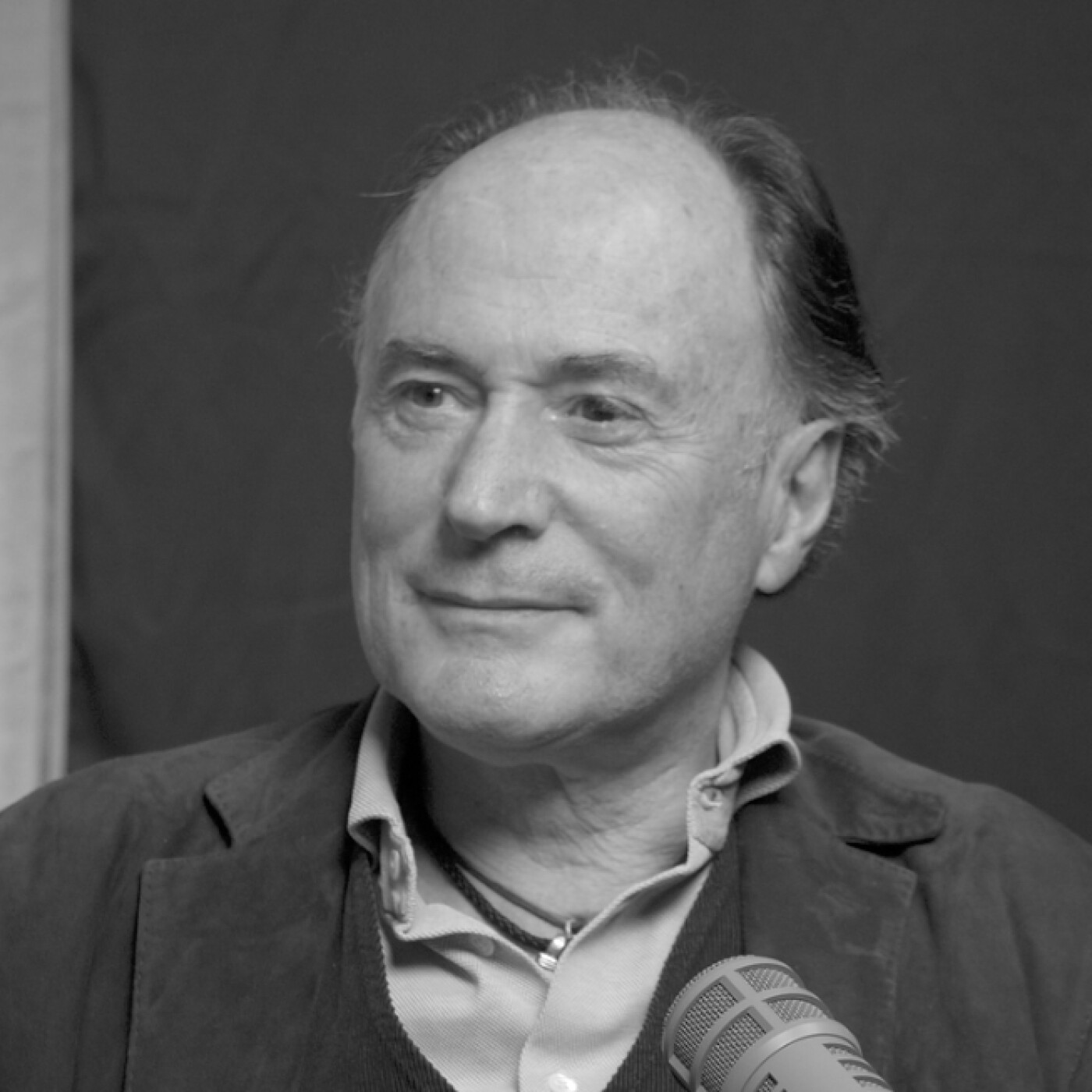
Les 5 mécanismes psychologiques qui empêchent d'être heureux - Thomas d'Ansembourg - Dialogue #179
39m 24s
The conversation delves into the concept of overcoming mental barriers to personal growth and change. It stresses the need to break away from ingrained thought patterns and belief systems in order to achieve a better understanding of oneself and the world. The speakers emphasize the necessity of reevaluating one's approach to life and relationships to bring about positive transformations. The detrimental impact of focusing on pain and suffering, as well as the tendency to dwell on negativity rather than positivity, is discussed as a significant obstacle to personal development. Overall, the conversation advocates for a shift towards introspection, open-mindedness, and a focus on what is working well in life to facilitate growth and meaningful change.
Transcription
8246 Words, 42790 Characters
[Music]
How much do we believe that we are not made for being on this Earth?
That we have to find our way and suffer that it is natural.
Here is an idea that blocks us and Thomas in his book and my guest today
shows us very well all these blocks that prevent us from knowing us.
Hello, I am Fabrice Middhal, author of a number of books that we encourage you to read.
I am Gipersensim, founder of Resaud, the main community of medicine in the world of francophone
and you will see in this episode you will discover how to free yourself from these blocks
that prevent you from being yourself.
Hello Thomas.
Hello Fabrice.
I am really very happy to see you again to talk about what blocks us and what prevents us from moving forward.
We would like to change everything but often we do not get there.
And your big idea is that we do not succeed to change because we always try to do the same thing.
It is not necessary to change from approach to change, is that?
Yes, clearly.
I like this formula of Paul Vaslavic, the father of the systemic analysis,
who told us if we do what we have always done, we get what we have always obtained.
And it is similar to the Palisade, when we hear it like that,
but it means that if we are going to get something else in our life,
in a relationship ourselves, in the relationship of water, in our community,
if we have a community, our children, our children, our work colleagues,
and the society, and if we are going to get something else, in relation to our relationship to the planet,
and the resources, and climate, it is not small games.
We need to do otherwise.
And often we will agree that we need to do otherwise.
But how will we do otherwise if we think the same way?
It is just impossible.
So the only way to do otherwise is to revisit the system of thinking,
which is equivalent to what we have done here.
And so, tonight, in what is called the chair of the discernment
or the interiority, to realize that when I think like that, I act like that,
and I get that.
Does that convince me?
Does that convince the human community?
Does that convince the planet?
If the answer is negative, it is one of these questions.
It is more than that that I learn.
It is learned.
In pivoting, it is a sort of internally pivoting,
to learn to free a new neuronal human,
and say, "I am going to think as much as this,
I work to think differently, I will opt to do so differently,
and I will get a better result, more profitable for me, for the others, and for the planet."
It is a work of pivoting, interior, and elevation of the level of consciousness
in which we are invited by today's circumstances.
So it is enough, like that, it is simple, but it is enough,
because if I want to change, for example,
I want to stop reading alcohol, I want to change from medicine,
and I want to stop fighting with my wife.
We are going to have the impression that it is by doing this effort that I am going to get there.
In fact, you show me that I am prisoned of mechanisms,
that if I do not question them,
my efforts, too intense that I will try to put in them,
will not work.
Yes, clearly.
If we want to make a trip, I like the image of the trip.
We need two things.
We need to defer our love,
which retires us to the door.
And the love is sometimes a bit gliant,
it is our pleasure, often our habits,
our self-s Automatism, our projection, our system of thinking, our beliefs,
our old programming, and we need to defer these love.
It is not very comfortable.
It is the work that we can learn to do.
It is a part of work.
If I do not do that,
which is considered to defer what is blocked,
what is missing, on which we will come back right away,
my little boat is free from the door,
but I do not always know where I will go.
Iris will turn around and I will not do a very good trip.
We could do another work that is completely spiritual.
I learn to raise my hand, to get out the car,
and to capture the soul, I am in the meditation, the spirituality.
I want to go there, but I do not have a lot of love.
And my little boat is going to break the neck,
and I am going to listen better to the door, obviously.
We need to do the two phases.
And I learn to defer what is blocked,
and I learn to open the inspiration of the direction where I want to go.
And to capture what traditions we call,
and to capture what traditions call, most of the time,
the soul, which is a boat that can, I believe, assemble us.
And so double work, comprehension of what is blocked,
and fast, to stop to go to a speed,
and on what I am then, to go to that.
It is rare that we are sent to this double work there.
In fact, what you say, raise your hands,
it is going to come out, I like this formulation a lot,
of the uncomfortable one.
In fact, we are all without realizing it.
That is what it is about, we are realizing it.
So we propose that it is always essential,
deculpabilizing, with the best intentions in the world,
we are surprised to know how uncomfortable it is.
Because, as it is known, even if it is uncomfortable,
we do not envy that there is another possibility.
That's it.
It's all done.
And it is so responding.
It is surprising.
And well, even if I was taken in,
I stay in comfort, because it is known.
It is still reassuring.
It gives me a certain balance.
It is the idea to change, I am scared.
Is it better?
Is it going to be worse?
Is it going to be worse?
I still have a malgré tout réussi à voir.
And this prilosité plombe,
a lot of our existence.
If we know that it is beneficial,
there is a certain kind of comfort.
And to go, it is an adventure,
obviously, towards a greater comfort,
with the passages, the transitions,
which they are not necessarily comfortable
to go to another consciousness.
If we know that it is beneficial, we will do it all.
And that is why I want to contribute.
But don't you feel that it is a sublime life,
to work, to find a choice life.
And it works.
It is not a wasteful thinking.
As I said in English, it is not a little bit worse.
It is an implication to open a space inside,
where I see every day, in my work,
at least for me.
But in comparison with people,
how well the risks are made?
And you know, it is something, obviously,
since the time you learn meditation,
when we learn to do this silence inside, how well it is,
it is all of life.
It is a wealth of extraordinary fecundity,
we need to learn to have recourse to it.
The first mechanic that blocks us,
it is really true,
it is the culture of the pain and suffering.
Without us having to tell you that,
we are also vibrated to the idea
that it is normal to be painful.
Yes.
And that is paradoxical,
because I do not see it at all.
We do not see it at all.
You will explain what we are talking about.
We will not talk about happiness and all that.
But you show us very well that we have all integrated into the background,
we are still not there to laugh.
That is surprising.
It happened to me even when I was in therapy.
I had a lot of time.
In therapy, I arrived one day in therapy.
And I said to myself, "What do we continue with this therapy?"
I thought it would have been vaccinated by the happiness.
So he learned a crazy source.
It was a psychoanalysis,
so he was not causing it.
But he told me more,
I think that I had to integrate a small sentence
in my childhood,
which works as a vaccine.
The happiness is present,
a painful relationship to endure.
And that there is a part of me who does not believe
and who risks to sabotage the thing.
And this small sentence,
this vaccine is not there to laugh.
And I grew up in a family.
With good parents,
present, attentive,
and so a lot of respect for them.
Every time,
as often at the time,
I heard this sentence around me,
not only in a family,
but also in a family.
We are not here to laugh with variants.
We are in a wave of tears.
When we are surprised with this small sentence,
it is clear that we are going to the happiness
as every human being thinks.
But every time the first person who has more time
prevents us,
is us,
by the mechanisms of sabotage,
which are today well known in psychology,
but not yet all known by the world,
which is more than time that the world knows.
Be careful.
We bring in mechanisms of sabotage,
we do not believe that we have access,
to good and deep states.
And we do not talk about pleasure,
material,
we play without it.
We talk about a state of interiors,
restable and transportable
through circumstances.
And, indeed,
this culture of the pain,
makes us see if,
it is the opposite,
rather than the opposite,
which is a complete mistake of perception,
because if we look at the planet,
there is a side of tragedy.
Of course, there is still infinitely more beautiful
and good things that happen,
than tragic things.
Moreover,
the train arrives when the train arrives,
of course, at the end of the day.
That is the objectivity.
Moreover, in fact, there is our good health,
that in fact, there is a handicap or a bad health.
Moreover, people who are good,
who are the war.
There are wars, obviously,
not in danger,
but with objectivity and its change.
Completely the dynamic that I see it
since I accompanied people to invite them to do this shift.
Contemplate first what goes well,
before you are full of what is not going to happen.
You will see that your energy changes completely.
I find the great idea of this culture of pain
is that if I am convinced that I am not there to laugh,
and that in any way, the human heads suffer like that.
Well, I kiss the arms, I resign.
So we really do.
That's why it is really a lie.
First view,
okay, we could say,
is it true or not true that life is hard?
But in order to repeat all the time that life is hard,
we resign.
And it is above all that you want to show.
It is that we can not change for good.
If we are absolutely convinced that in any way there is nothing to do.
And that happiness can fall on me,
it is for those who are for others.
In any way, I do not deserve it.
In any way, there is a way of form in me.
So all the time,
of the first stone.
Yes, of course.
And that leads us in human relations
to resign, as long as brutal, aggressive.
And it is enough to look like parents.
They are in relation with children.
The aggressiveness comes very quickly.
As if we completely lost it.
Why did we put children into the world?
If we take back with a little priority the reason
for which we put children into the world,
it is not for this day or the day.
We put children into the world, in principle,
to sing, to transmit life, to create a family,
and to honor the living by dedicating small beings
to enjoy the pleasure of being in life.
I think that's the goal.
In any case, that's why I have made children.
I have three daughters with my daughter Valérie.
And that's why we loop the goal.
And we call ourselves because we are not there to give up.
And we take care of it.
And the reproaches, the criticism, and the peaks come quickly.
And if it is not in the family life, it is in life at work.
The sarcasm, the agendas to hide, the comments to the better.
What is all this tension?
If we forget the meaning of life and the meaning of living,
through the difficulties,
unfortunately, the encodage, we are not there to worry,
it comes to us, not bad, with the risk of resignation
that you will remember.
Yes, and suddenly you tell me, we amplify the opposite of reality,
instead of seeing each other, we can solve them.
Exactly.
And because we are at the bottom of another theme,
it's like we are cut off,
because we don't have the right to take care of oneself,
because we are cut off from all the way.
So suddenly, this system is fixed.
Yes, that's true.
We receive an aggression,
whether it is a conversation or a partner.
We answer two more strong aggressions.
We hear a new voice, we tell three more people.
It is an habit, it is a programming.
It is more than trying to get out of it.
We see that it is mortified to do this type of reaction.
We need to know how to bring pacification into our human mind.
And that is what it takes.
It should be taken from the material, as it is written and calculated.
You say something that I also find very impressive,
because at the bottom, our fascination for the catastrophe,
we see in the media and all that,
you say it comes to the difficulty we have
to prove that we feel alive.
And so I find that at the beginning,
"Ah, yes, I didn't do anything just that."
And it is very fair.
We feel alive.
Because we don't have our life in us.
So, we feel a bit alive when we see dramas,
which, at the same time, we cry, we discourage.
And so, it is really a vicious circle.
Terrible.
But yes, it is clear.
If my life is ambiguous,
that I do not put it in question,
that I do not feel for interrogating women or women alone.
I do not copy women and women,
but my sister-in-law, if I don't do this job,
I'm disheartened.
I'm in a comfortable mood.
I lie down to say things briefly.
I go back to the house tonight.
And then I say to myself, "I am going to light up the lamp."
The light that tells me all kinds of tragedy,
there are evils brought by signs of action
and or wars.
And suddenly I feel alive.
Because I am not dead.
By an effect like that of...
Differentiation, instead of feeling alive,
because I am alive.
But, inversely,
since the morning, I have been singing for a long time.
I am living.
I wake up.
My heart, I am feeling.
I have been able to kill myself all alone.
I have what I want to cry.
I have a job.
I have an apartment.
I am in a city that is in peace.
The climate is rather good.
There is more or less enough for school to rest.
Thank you for your life.
And if I live in it,
it is not of angelism.
It is simply that I look at what there is rather than what there is not.
Well, I am much better removed to transform things that are meaningful,
that need to be transformed,
that need to be radically revisited.
Because, first of all,
our depth of what goes well.
And that is a key.
So I see the benefit every day in my company,
people do this most shift to accept
to look at what goes well.
And not to resign.
And feel that life is present and alive.
A caricature is this old couple
who lives in the constant flames.
It exists, we know.
I think everything.
And this is a mode of life.
Here we are.
This is bad for feeling alive.
But is there no way to feel alive?
No way to feel alive.
Otherwise.
When I was busy with the street youth for 10 years,
I was busy with the street youth.
In the delinquency.
The little criminality, etc.
This was an experience that allowed me to see
that I wanted to focus on human beings,
while I was sleeping in my work at the time.
Well, I was able to see young people who are lost,
who are in the city.
They have no idea what the city is.
The reality is the sharing.
Well, what do they do to feel alive?
They take risks.
They run on the shops.
They pass through the roof.
They will make a case or a vehicle in a house.
Because they are afraid of death.
When I told them that I would take risks.
"Ah, because I feel alive when I take risks."
"Ah, yes, yes, yes."
Do you not want to feel alive otherwise?
Do you want to feel alive otherwise?
Do you want to feel alive otherwise?
Do you want to feel alive otherwise?
Do you want to feel alive otherwise?
Do you want to feel alive otherwise?
Do you want to feel alive otherwise?
Do you want to feel alive otherwise?
Do you want to feel alive otherwise?
Do you want to feel alive otherwise?
Do you want to feel alive otherwise?
Do you want to feel alive otherwise?
Do you want to feel alive otherwise?
Do you want to feel alive otherwise?
Do you want to feel alive otherwise?
Do you want to feel alive otherwise?
Do you want to feel alive otherwise?
Do you know this piece of work that you never say that you are happy?
It's like the crime of common rights.
If you say that you are happy, then you will say, "Ah, but all the people who suffer in the world of which law, you can say that you need to be happy."
I assume that you will say that you need to be happy.
I assume that you will say that you will say that you need to be happy.
I assume that you will say that you will say that you need to be happy.
I assume that you will say that you need to be happy, then you will say that you need to be happy, then you will say that you need to be happy, then you will say that you need to be happy, then you will say that you need to be happy, then you will say that you need to be happy, then you will say that you need to be happy, then you will say that you need to be happy, then you will say that you need to be happy, then you will say that you need to be happy, then you will say that you need to be happy, then you will say that you need to be happy, then you will say that you need to be happy, then you will say that you need to be happy, then you will say that you need to be happy.
I assume that you need to be happy, then you will say that you need to be happy, then you will say that you need to be happy, then you will say that you need to be happy, then you will say that you need to be happy, then you will say that you need to be happy, then you will say that you need to be happy, then you will say that you need to be happy, then you will say that you need to be happy.
And I am going to show you that it is not something that is all about the central ego, but it is the only way to be able to help the world for good.
And it is not an actual ego, but it is not the difference between the insufficiency and the idea of being able to perceive that there are some catastrophes, I am well aware of that, but there are also some marvels, and I am aware of that.
And I am also aware of that. I would like that all children who go to school start the first hour of teaching to contemplate the beauty of the world, the beauty of nature, the beauty of a wild fish, the beauty of a bull, which speaks in the middle of the sky, the beauty of a flower that pushes a champignon that emerges, and that at first the life is oriented towards the marvel of the world in which we are.
Then we go to the mathematics, the history and sociology, all these things, of course, but first it is to realize that it is a privilege to be alive.
We can say, it is the real way to do the history and mathematics.
Because mathematics are of the marvels. Historically, it would be really interesting to see that all human knowledge is first of a question of an marvel.
When we learn it, we take the marvels, but it is like that, that things have started especially for mathematics.
It is fascinating to see this history of mathematics.
But we will not go to the second stone, which is closed to us, it is the habit of force.
Well, it is also not seen at all, when it goes well, it goes well, but since there is a problem, then we have to go back into conflict.
And that is a great play that you try to describe, how it is taken from that.
Yes, it is a reptilian programming, and perhaps not the old one, which makes it a different style, which did not necessarily come between humans.
Rather than being in collaboration, listening to the empathy, the attempt to understand it mutually, what happens most of the time when we do not agree.
And I invite the people who listen to us to verify that it would happen to us not to agree with someone.
Observe what happens to you, do you agree with your friends, your children, your work colleagues, your partner in a project?
Is it circulated in you? Is it a deep empathy for the other?
No, it is a great curiosity for human rice, which is that on games we can be very agreeable, and on others not at all.
So, is it a condition of the difference? Well, most of the time, these three questions are the answer.
What circulates in us, when the difference appears, is rather a small secretion of adrenaline, a small cardiac agitation, and one wants to find the fastest way possible.
Gourdin, of Cromagnon, to say, "I'm right, bang!" and, besides, you adore, "re bang!"
"Oh, good, good, good, good, I'll go into my throat."
There is "gourdin" where there is "grote", but there is no one to understand.
What does that do if it is a programming?
It is just an habit, we can change the habit, it is more than time that we change the habit.
And I said, "It's a reptilian habit, it is possible that, indeed, our ancestors of the "grote" are saying, "Oh, the world is not so sure, it is better to fill the doubts, and rather, in the submission in relation to these big bets that circulate."
And then, after that, it became, "No, come on, we have copied, what do we see? We are not agreeable, we are not going anywhere."
Instead of meeting each other. But wait, we have not evolved since thousands of years.
We are going on the moon, we cross the moon under the fog, we cover the planet with an Internet, it is fabulous in the order of the "fair"
but in the order of quality of being, we have not done a step on the plan of the resolution of conflicts.
It should be the base of the education when it comes to conflicts.
And, of course, there are conflicts. We know it and we listen.
But look at the majority of the emissions of the television, we look for the conflict.
We are shocked by the confrontation, which is going to die in this affair.
It is pathetic, it is pathetic.
So what should we do? What is the change?
What is it? What is the change? It is not...
It is not to say, "We are capable to act like that, but we can free ourselves from this mechanism."
Of course, there is a capability. It is a programming that transmits like that.
We just need to see it and we need to do a small task.
It takes us to do a programming.
It is a good news. Because it is a programming, it is programmable.
Because it is an habit, we can create new habits.
But, again, it is to do this pivot that I have vocated at the beginning.
At the same time, to observe, I have no more desire for this aggression.
I have no more desire for this opposition, this reaction.
I do not want to work like that.
I would like to listen to the position of the other without imposing me,
to recognize that he has the right to think otherwise,
and create a mutual listening space.
And that is what it takes.
When I do not agree, I say, "I do not agree with you."
I do not agree with you.
I want to listen to the respect for my posture.
The minimum is that I listen to the respect for the brain.
Tell me your posture.
And I listen fully without interfering.
And I create a space of listening that will be the most part of the time in return to say my position.
And it does not necessarily mean that we are going to agree.
It means that we will take a deep deep respect for our humanity.
And what I observe is that, apart from that, this deep respect for the quality of the relationship
is that, often, we will approach you.
And find, very often, a third voice that is even more rich than the one I had in my head
or the one you had in your head.
Suddenly, a fecundity will happen between us,
which is called collective intelligence.
And we will find a third voice that will be even more satisfying.
But that is a demand to revisit our old path
and to come out of this culture of forces,
domination, submission, aggression, emissions, manipulation, seduction,
power.
These are the various encodations,
which make the time of defeat, little by little, in return.
In fact, the way to get out of force is already entered into the listening.
Yes.
And, in a way, defeat this mechanism,
what will be a mechanism?
So, I am in the submission, the struggle,
because you are very well described, the power.
Yes.
The listening is clear.
And the listening is clear.
It is surprising to see in the videos that I have read.
I read the residential videos of five days,
during the first two days, the people are constantly realizing
that they do not know how to listen.
What is still not heard, we can learn how to listen.
The worst is that they do not know how to listen.
How do you want to improve a part of you?
Which you do not know that you need to improve.
I do not teach to people.
That's why, in the exercises where I realize,
we do not agree, let's try and talk about us.
I would like to listen to the respect for my posture.
Well, the minimum is that I am born for the tie.
It means that I listen to you and I like to do it.
Because a level in a thousand words, listen to it.
It is there.
Listen to it.
It is there.
Listen to it.
When you speak, I am with you, not with my counter-agmentation.
And with my desire to retort.
Here, it is of egoism, but of a prayer.
I am lying in my ego.
No, when I listen to you, I am full with you to see.
What else do you have other human than me?
Do you think?
And or?
And when do you think?
I try to relate to the other.
And I am quickly able to be in this kind of part of ping-pong-stupid party
which does not allow the real meeting.
I think that we are really a century
who must learn to discover the meeting.
It is an unknown planet and remains to discover.
The meeting will be between two beings
and between the thousands of beings.
Yes, that is something.
In fact, what our work invites us to discover
is that we have forgotten the relationship.
In fact, we do not know how to enter the relationship.
In fact, we listen to it.
I mean, it is not to talk about it.
But listen, it is not just passive.
No.
Listen, it asks us to put another one.
Yes.
And that, as we want, in the duality,
a little idiot, whether I am active or passive,
we have the impression that the listening is passive.
But in fact, we will have to succeed for a long time
to enter into the listening.
That it gives us a lot of attention, curiosity,
because if we listen to it always, I listen to it.
It is not to listen.
Listen, it is to say, I am with you.
I can ask you a question.
I really enter into the line.
There are many facets of wealth in the listening.
Clearly.
That is what we call active listening.
I am active with you.
It is absolutely nothing passive.
And of course, that is what it takes.
When we see in a debate for this malicious caricature,
political zone, which is there in the face of the other,
when we talk about it, the other is not to listen.
It is to prepare its counterattacks.
It is just nothing to see.
It is clear.
And it is to see, to see, to see,
milliliters of evolution
to have, on this planet, at this point,
it can evolve.
It is time to put the encounter in the heart
of our education of our apprentices.
Third stone.
The attitude of science.
So there, too, it is the same.
It passes completely unconsciously.
We do not realize.
It is the people who listen to us now.
I do not have a attitude of science.
But what do you want?
What do you think of me?
In fact, it is very, very mechanical.
So we do not realize.
But most of the time, in front of the other,
we have a attitude of science.
So we want to glue it back.
We want to impose it in front of him.
Is that it?
Yes, it is very large.
And this is the reflection of a deep inner security.
Many people suffer from a lack of being,
of trust in oneself,
which is caricatured by the hypertrophic ego
who takes all the place, which is a lack of real trust in oneself.
Where the super timidity, which we put in return,
and between these two extreme of courseurs,
there is a lot of difficulties.
Most of the therapist and companions
will confirm that 90-90% of the population
lack of a juste being,
allowing people to live in the trust.
I am not afraid of criticism.
I can hear it.
I try to put myself in question.
I am not destabilized by what others say.
And so I live in the first learning of trust.
How do I do that?
How do I pass this confidence to this confidence?
First, obviously, in observing that I am stuck
by the trust.
We can't go out of a trap.
It's not that we are taken in.
And so I stop to consider that life is like that.
That life is a trust.
And that it will take me to the first trap.
We are not there to worry about the trust.
I put myself in question.
I put myself in question.
But I want to have confidence, authenticity and simplicity.
I really have the guts to show my vulnerable point
when I follow it.
I need to accept that my vulnerability
is not my strength.
I can be very powerful at the moment.
But I also have a vulnerable point.
And I am like that.
And I want people to appreciate me like that.
And if they don't appreciate me, it's not serious.
This work is absolutely necessary to do it.
Otherwise, we kill ourselves in life
or bring masks and weapons,
and it makes fights, necessarily.
And then the world,
it is time to understand that the ego,
the world is surrounded by ego in collision or friction.
And to understand its ego,
it is not a personal development game.
It is the basis of being together.
It is a game of social development, durable.
And it is time to figure it out in our new school program.
The fourth point is what is called the separation and the division.
How is it made up of the separation and the division?
We are petrified by a culture
that is to put things in very Cartesian cases,
cases with labels
and often think of a binary division.
Well, it's bad, it's not fair.
We are companions, citizens.
We are intellectual, we are human beings, we are animals, etc.
These cases are extremely reductive,
because obviously that human is infinitely more rich than that,
and that the cursor can go to the right side
of making infinitely more varied and poetic
than this poor binary division.
Here is the first example of thinking of a binary division.
We need it.
It is one of the first learnings that we do in the work.
It is to stop putting things in our position
but to transform the choice of choice by E and E.
It changes absolutely everything.
I give an example simple.
The people who realize that they need to change life,
which was my case,
because I wanted to leave my life of jurists
and little by little they had to leave their life behind.
Well, I had to lie between the need of freedom,
to create what I want to put into my sensibility,
but also the need of material security,
which was nourished by my job of jurists.
So I can move my life in either one, or the other.
Either I create freedom and I use my sensibility and so on,
but I will die in the end.
Either I have my security of jurists, I gain my life,
but I miss to die.
So you come to the small sentence,
we are not there to laugh.
So I am not the good one.
Because we are not there to laugh.
So there are a lot of tensions that are created like that.
I need to get out of it and enter into the conscience.
And I need to make the saying that I want to have,
and to make confidence that little by little
I find a material security.
I replace the either by E and E.
Here is the first example of the habit of division,
where we need to get out of it.
Another habit of division is the one who creates a very individualist,
and divisant, "Yah, Je, me, me, and you, to you."
And we are often intense.
And the game becomes very fast,
and the "tue" is used as a threat.
But my God, this is pathetic.
We have absolutely forgotten us.
The us, all of us.
The us who makes us build a bridge to see the village of Voisa,
the us who makes that when it comes to the advantage of the world of Simec,
when the others build it.
But its great, we are going to help.
The us who makes us happy to be on the planet,
and therefore we need to avoid the us of such religious confession,
facing each other from another confession,
of course, in the mistakes or from the political parties,
or from the parties,
or from the parties in the enterprise.
We need to be careful of one of the same companies
where everyone should put together.
This is marketing, this is the Bacophys.
And finally, the last manifestation,
in the sense of this culture of the division,
the division of the Morsellemant,
is this prétension to the sealant,
to the human being, to be the aura of nature,
and to be above the nature,
and to have the power to be able to be able to be the gasp,
with the catastrophes that we know.
It is a complete aberration,
because obviously we are not in nature, we are here,
and it's our mother, our rich, it's our matrix,
and indeed, if we taboo it,
we taboo it, even.
We absolutely need to find the belonging,
the inclusion, and the humility of making parties
of this great network that we call nature,
and which has made life appear,
it is truly a work of discernment, which is urgent to do.
The last point, one of the most essential points,
is to do more than four.
It's really our own strength, we run all the time,
we have the impression that we have to do without the aura,
and that you also show that this is what prevents us to change
and to find ourselves.
Yes, that's the culture of struggle against time,
and the privilege to do things more than to be,
and I don't say there are things to do,
I personally do a lot,
but I want to be able to be full of habits,
why I do the things, the first quality,
for me, and I see that people who are tired of doing everything right,
we absolutely need to find the feeling of being,
of existing, of living, to belong to a living world,
and that life has the meaning and the gut.
And that's why it asks us to learn to slow down.
We have, since childhood, been precipitated in the relationship for a long time.
It's terrible to hear that, at school too.
We are late, we have to go faster.
We move on to the rhythm of this way.
We brutalize the level of conscience
and the gut, the flavor of life.
A lot of people have lost the flavor of life,
because it is very fast.
How many of Bernat today, and Ramassé,
in the formations, sorry, for the bad Ramassé,
but I see people arriving in a state
where we really have the impression of having to go to Ramassé
to find the meaning.
And...
Everything that you often find very strong on the question of doing,
is that we do, thinking that it's like that,
that we will be accepted, recognized.
I would say even more that it will slow down.
The big force is this idea,
that makes it possible to do it right,
because it is formidable to do it,
but if it is to do it as an illusion of being,
but there, at the end of the world,
it is that we are doing, by cutting ourselves,
to avoid injunctions, and more I am far from me,
at least I feel good, because there can be a fact that is passionate.
But it is a fact, actually, that is not done in the function of injunctions.
It is a fact that it is much more spontaneous, free, and happy.
So we are cut to do it there.
Yes, yes, of course.
It is a very subtle language.
I told them, I grew up in a family with good parents,
but I have still been quite quickly understood,
my sensitivity has allowed me to quickly see if I do it or not.
If I do well, you are good at it.
If I do well and you are good at it, you are good at it and you are good at it.
And it is gone.
I am going to do it, do it well,
a lot, a lot, a lot, a lot, a lot, a lot, a lot, a lot.
And I broke the burden like that, when I was a jurist,
I was working as a madman.
So it is really that, I think,
it is not that you, I think that we are,
but we have all been taken by this idea.
That is right.
And that is completely different.
In fact, when you reflect once you have seen the process,
it is just a finger.
Yes, it is just because, in fact, it is completely a finger.
Yes, yes, everything has been done.
As parents, we have taken care of ourselves,
because of our anger, because our child is not well,
we are reassured when he does a lot of things,
but it is not for that we want to have a,
we have lost their relationship with him.
That is it.
Well, we finally believe in this thing.
And so really, it is a kind of,
it is really, there is a side almost,
the addiction of this illusion.
In any case, there is a belief that we,
even if I do, if I do well,
and so it is a system of belief,
that is, it has made an impression,
and that is imprimary.
And if I do not work at all with that,
and well, I would like to be like a kind of mayonnaise,
a Pinocchio, which is manipulated by the unconscious,
where the work of new interiority
for this defect, little by little of that,
and realized that
it is a wonderful thing,
because we are creators,
we are happy when we create, when we participate,
when we take part in the projects,
when we put something in place,
it would not be what would prepare a joyous meal for friends,
or for the family,
or put a link on the table with a lot of people
to take care of life.
At all times, you create,
we rejoice, and we are singing.
So we need to verify
why I do the things.
It is to interpell in therapy,
I was very, very happy,
because I was running all the time,
against time.
And at a moment,
I heard a small voice saying,
"You will not win, your course is lost,
and lost."
Your course is lost and lost.
Stop running against time.
It took me a lot of time.
And I did not think
to work with me,
but, effectively,
working in this area in therapy,
I followed me.
There is a part of me
who is in the pleasure of giving,
to contribute,
to take part in the society.
And this is my singing and singing.
And I have the energy for that.
But at a moment,
it seems that I have no more time to give
in the joy of giving,
but in the fear of losing it,
the other's look,
the appreciation,
the validation,
the fact of being given,
and the fact of being given.
And as I always do,
in my behavior,
the shift is inside,
between the moment where I give,
to give, contribute,
to participate,
and not to live.
And the one where I give,
in the fear of losing,
the other's look,
there is a major shift in energy,
that most people do not see,
and I had to do a lot for the time to see.
Or that's what I said today,
do things for the joy of the effect,
and if there is no more joy,
stop.
But again,
I had to ask you a question,
come back inside yourself,
and ask yourself,
do I always follow you on the axis of my soul?
Are I my red thread?
Or do I not follow me for a long time
of my soul?
Do I not let it slip on its pivot?
Is it not the time to give it its place?
Its place?
Its place?
Is it my soul?
The less I talk about,
the anger that happens around me.
It's the work of discernment,
in which the chaotic period
that our person invites us to find
a hidden and perspective
that we talk about,
that faces the life of the sense and the taste.
The importance that you show,
is that for the life,
you find the sense, the taste,
that we find joy,
in fact, the path
asks to take consciousness
of these five stones
that we,
that we bring,
far from our own place,
our own happiness.
Yes.
Yes, that's what I called it,
motoblock mechanisms,
because therefore,
I am inside without seeing them,
its motoblock in my evolution process,
but its motoblock also
is the whole society,
if someone moves,
the society,
it blocks, it encourages,
it approaches,
its voice,
there is a systemic effect,
well-made,
there is a contagion.
And it does well for everyone.
I give an example simple,
on this one of the stones of the rapporteur,
the stones of the iron,
a mother comes to me,
and one of the themes that I explore,
is our rapporteur.
And she says,
"I come to this subject, particularly,
because there are several months,
my hand, from the height of these seven,
it is planted in front of me,
in the corridor that puts us in the field,
in our apartment,
and she says, "Mom,
I do not call myself "tépeche-toi".
(laughs)
And the mother had tears in her eyes,
and at the same time she laughed,
of the humour of this small hand,
saying, "I had all of a sudden,
in the face of a good master,
so I was the mother,
the disciple,
all of a sudden,
this hand said, "Mom,
you run too fast."
"Mom, you forgot,
without the life."
"The feeling of the life,
it is not about being thrown out,
being on the foot of the window,
I am going to do this,
to be prepared
for the competition of the hand,
the feeling of the life,
is to be deeply loved."
And since,
is it not done for the mother?
(laughs)
And so that is the rapporteur
who pushes us and the hand said,
"Well, at least the mother,
read it,
read it in the message of her son,
you adult,
you leave it on the side,
like all the others,
like the titanic crazy,
who do it on it.
His name is Bergen.
We young people,
we will bring a rapporteur
more sweet,
because we need to respect
our rhythm.
And this mother,
actually,
puts in question his rapporteur
and creates a family climate,
infinitely more sweet,
where he takes the time
of the quality of the relationship.
"That's the most sweet,
don't push me,
do your field,
do your duty, etc."
"That's how you feel,
how you are going to life."
And indeed,
the temperament changes,
and the fingers are made,
because there is a link.
That's the two ways
of the communication we see.
The link,
first,
the result,
then.
It's not that we are fish
of the result.
It's just that we have observed
with a little repulsion,
that when we are only
busy with the result,
and that the relationship
does not drop,
X, M degree,
it moves the life,
and it's not all satisfied
on the result's plan.
Obviously,
when we learn
about the quality
of the link,
of the good mutual understanding,
in the return of the mutual values
for which we live,
the structure,
and the case of the owner,
well, most of the time,
the result,
it is a way
much more satisfied
and just.
I ask people
who will listen to us
about the word
but to do the experience,
the link,
first,
the result,
then.
And I think
it changes completely
the life.
Thank you very much.
It's a
such a great pleasure
to hear.
Thank you very much.
Thank you Fabrice.
Thank you very much
for following this episode.
Do not hesitate to subscribe
and watch my other channel.
I asked Fabrice
in which I answer absolutely
to all your questions
about the art of life,
about what our existence is.
And do not hesitate
to stay up to your questions.
It's always passionate about you.
Well, I hug you
and I tell you
next week,
next Sunday
for a new episode.
I hug you.
Podcast Summary
Key Points:
The conversation revolves around breaking free from mental blocks to achieve personal growth and change.
The discussion emphasizes the importance of reevaluating one's thought patterns and belief systems to bring about positive change.
The culture of pain and suffering, and the tendency to focus on negativity rather than positivity, are highlighted as hindrances to personal development.
Summary:
The conversation delves into the concept of overcoming mental barriers to personal growth and change. It stresses the need to break away from ingrained thought patterns and belief systems in order to achieve a better understanding of oneself and the world. The speakers emphasize the necessity of reevaluating one's approach to life and relationships to bring about positive transformations.
The detrimental impact of focusing on pain and suffering, as well as the tendency to dwell on negativity rather than positivity, is discussed as a significant obstacle to personal development. Overall, the conversation advocates for a shift towards introspection, open-mindedness, and a focus on what is working well in life to facilitate growth and meaningful change.
FAQs
We struggle to change because we often try to do the same things repeatedly without altering our approach.
To break free from these blocks, we need to revisit our way of thinking and pivot internally towards new perspectives.
There is a cultural inclination towards perceiving pain and suffering as normal, which can hinder our ability to embrace happiness and change.
Focusing on catastrophes can create a vicious cycle where we seek drama to feel alive instead of appreciating the positive aspects of life.
Some individuals engage in risky behaviors to feel alive because they lack a sense of purpose and fulfillment in their daily lives.
Appreciating the beauty and marvels of the world helps us shift our perspective towards gratitude and away from negative patterns of thinking.
Chat with AI
Loading...
Pro features
Go deeper with this episode
Unlock creator-grade tools that turn any transcript into show notes and subtitle files.
 PodcastTranscript AI