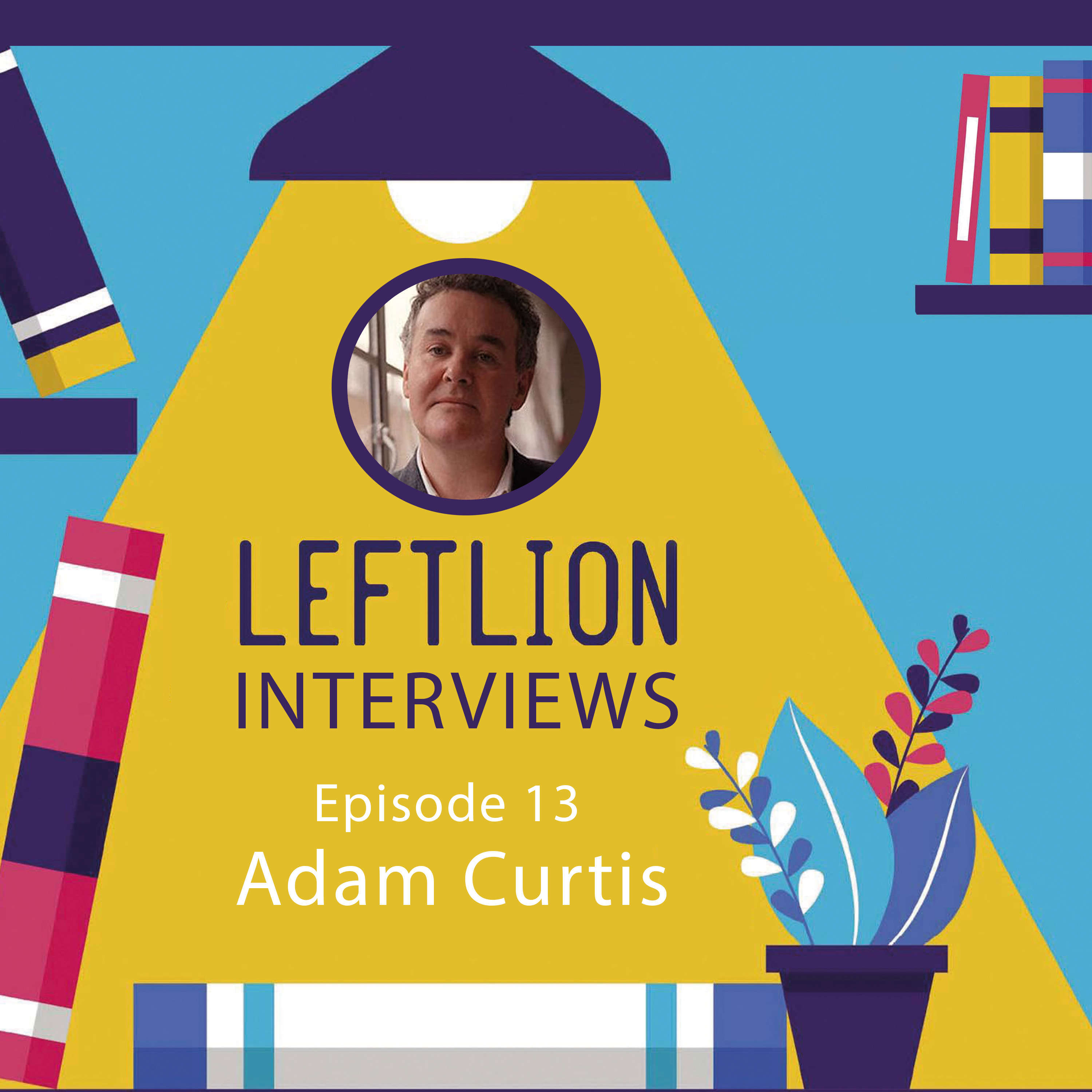
Hello and welcome to episode 13 of the Left Line Interviews Podcast. I'm Adam Pickering,
I'm an environment editor and sometimes writer of other bits and bobs and long time left
liner and today I'm so excited to be speaking with legendary journalist and documentarian
Adam Curtis. So Adam Curtis has done all sorts of stuff including more recently working
with Massive Attack. He's got a very distinctive style and very distinctive narration style
but he's all about music, all about bringing experimental approaches to documentary footage
that comes from the BBC archives. Today we're mostly talking about Shifty living in Britain
at the end of the 20th century which is his latest work, a five part series which you
can currently catch up on iPlayer release in June 2025 and as Hart Shifty argues that
Britain has lost our shared reality, we've become atomised, social media and technology
has made us live in our own little bubbles and we've had our whole sort of systems of
power and collective responsibility and ownership taken away from us essentially by capitalism
and the financialisation of the system. So it's really about a country trapped in our
sort of own memories and struggling to imagine a new future so that's mainly the focus of
what we chat about today. There is some cause for optimism, it's a really interesting chat,
we touch on creativity, journalism and the role of culture. We talk about culture wars,
we talk about flags, we talk about all sorts of stuff so I really hope you enjoyed the
chat today and get stuck in to Shifty if you haven't already watched it.
Hi, this is Safi from Left Lion, Nottingham's iconic culture magazine. Each month we publish
a beautiful free magazine that shines a light on the art, music, food, literature and more
that makes Nottingham such a vibrant and creative city to live in. It's a bit unusual for a
local print magazine to exist these days but we've managed to keep going for over 20 years
giving the city's artists, photographers and writers a platform to publish their work.
We distribute 15,000 copies in over 300 venues across the county and you can find Left Lion
in every local library, every castle rock pub in all active Nottingham leisure centres
and all the best bars, cafes and hangouts in Nottingham. If you're ever in town at the
start of the month you may have seen our Left Lion bike rolling around the streets. In line
with our pledge to be a carbon neutral company we deliver our magazines on foot, by electric
bicycle or where strictly necessary by van. You can also read the full magazine and lots
more for free at leftline.co.uk. Check out the events listings on our website to find
out what's going on in Notts and if you'd like to permit your business or organisation
with us please visit leftline.co.uk/advertise.
Welcome Adam to the Left Lion podcast. It's nice to sit down for this chat with you. Let's
get straight into it. So before we get started you're here to chat about your latest series
for the BBC Shifty living in Britain at the end of the 20th century. What's it all about
in your own words and why did you give it that title?
Well I think it's what it says on the tin. I wanted to do, I mean I think what I wanted
to do is look at the roots of, there's a great confusion at the moment, not just politically
but socially as well. There is a sense that a lot of what people feel and the organisations
that run them and help them explain why they feel have become unmoored. They don't really
describe the world as we are experiencing and feeling it so we feel a bit unmoored and
lost at sea. I don't know if you noticed this but especially with a lot of social media
it's very ahistorical. It's as if something just happens and then two weeks later something
else happens and you've forgotten the previous bit that happens. It's all like it started
yesterday which is partly why I think people feel so unmoored. It's as if you're suddenly
dropped into something and I just wanted to point out that no there are roots to all this,
there are reasons behind all this, there isn't one, there is a whole collection of roots
that have led to and streams and forces that have led to this and I just wanted to go back
and explain those and show those so people could understand a bit more but I wanted to
do it in a way that dealt with not just high politics but also dealt with the way, the
roots of why people feel as they do, how they became a bit isolated but in the process they
felt empowered which was good but then when things began to go a bit wrong they felt a
bit lost. I wanted to just show that as well as explaining it. So I made it in this particular
way where I was focused not just on the political events which I was but also on moments that
showed you in a heightened way or in a slightly dramatic way the way people's feelings began
to change and the way they their thoughts and feelings about themselves and the society
they lived in, moments of experience. I just wanted to try and weave those together. It
was an interesting exercise in trying to put high politics and just the detail of emotional
experience together.
Yeah and having watched an awful lot of your work over the years and this follows a thread
really from you know the power of nightmares and that kind of era through to I guess very
pertinently the hyper normalization and how we've kind of lost that sense of shared meaning
and knowing what's going on and anyone really being in control but you do have that kind
of way of offering those little windows through the archival so your work is based on for
those who don't know based on archival footage via the BBC really isn't it? And yeah those
little kind of vignettes into just life and how the average person sees things and experiences
things are important to your work really aren't they?
Yeah I mean I think that's true of society as a whole now. I mean one of the really good
things about the rise of I suppose you could call it individualism but more the sense that
we should be encouraged to be confident individuals and that we shouldn't just live in a society
where a patrician group tells us what to feel and think. One of the good sides to that is
that what you feel and how you experience the world becomes more important. I mean you can
see this not just in television but you can see it in novels and in films but what I think
was interesting which is what I was trying to point out in the series is that that was
great and it led to some wonderful experiences, wonderful moments and a sense of confidence
but it also et away at a sense of any shared experience and that's great when things are
going really well and I think somewhere towards the end of the 90s. This is before the attacks
in September 2001 but somewhere towards the end of the 90s a sense of apprehension and
anxiety about that isolation began to come in and I finished the series really at the
beginning of the new century because I was just trying to show how the harbingers of
what was to come were already forming then and I thought I'll stop there because I'm
trying to make you look again at the past rather than come right up to the present day.
I do think it's a really interesting phenomenon of our time is that we can never go back,
we can never become people who are told what to think and what to feel by patricians. We
don't trust them any longer and it's quite obvious. I mean I know very well that most
people outside the BBC know full well that most of the journalists don't really know
what's going on anyway, that we're all a bit lost in terms of what's actually happening
and what might happen tomorrow. So our traditional role has been slightly lost, we're all in
a state of unknowingness about what's going to happen tomorrow and I wanted to show the
roots of that because I think it is the real problem and part of that problem is this sense
that if you are an individual and you don't want to be told what to do and you don't want
to join groups and when you don't want to be thought of as part of a social class, then
you tend to eat away some of the old ideas that held society together. It's incredibly
liberating but the problem with mass democracy is it depends on the idea that people have
a shared sense of purpose together, that they don't join a political party but they can
be part of an idea that will go on past their own existence, which gives you a sense of
purpose and meaning in your life. It's sort of what religion used to do but that has gone
and when things began to go a bit bad towards the end of the 90s you could see it starting
to eat away at that. I don't know what you do with it because you either can find a way
of somehow uniting that individualism with a sense of shared purpose or you've got to
do which is what I think then happened after the end of my series, you get a new system
of management which is really what social media is all about. You become a node in a
complex system of feedback, call and response, at which point you still feel you're an individual
but actually if you look, if you reflect on what's happening which is more and more people
are doing, they begin to realise they've become part of a new system and quite what the dimensions
of that system are, we don't know because we've become so historical and so anxious
about the present day that we don't reflect on it and I think that's a really interesting
outcome of that empowerment. It doesn't mean that that sense of individualism and confidence
is not still there, it's just something eats away at the other support systems that make
the society hold together and I think that's a really interesting problem which you see
politicians struggling and Germany struggling with at the moment.
Yeah, absolutely. I'm touching on lots of things I'd really like to get into with you
later about journalism, about the transfer of power and about democracy and what that
really means today but just to kind of keep it on the local and you know, left line is
a Nottingham based publication and you made a few visits to Nottingham's Willerton Hall
meeting a taxidermist and chatting to him about the exhibitions and stuff and those exhibitions
actually really haunt my youth and you know, I've got very stark images of some of those
taxidermy pieces in my head and I'm sure they do many other Nottingham people and I'd also
spotted Castle Donnington nearby in there as well and I'd just like to know a bit more
about your sort of journey with uncovering and selecting that footage, your footage in
general and what those inclusions are sort of trying to say or show.
Well I spent, I mean, I wanted to actually include what happened to politics, what happened
to journalism but I also wanted to include what happened to people, just moments of how
society was changing and how in the details of what it was changed and the BBC archive
was just full of odd programmes. I mean most, a lot of them are crap but every now and then
you stumble across something really odd and there was this great film, I think it's early
80s made about, it was about animals and our relationship to animals but there was a great
section on it set in Willerton Hall as they were preparing this new exhibition of stuffed
animals and in their new environment and I think you could argue, I think you saw the
early environmentalism coming in because they were going to be presented in their nice habitats
and I don't know whether the people who made the film realised that it was sort of odd
and sort of deadpan funny as well as interesting because it was about this strange sort of frozen
relationship we have with nature. What I thought about it was very interesting, it was a moment
when the person who took you through it all was trying to reanimate our collection with
nature because that was a good thing and people were beginning to feel, I think in the early
80s, that we lost that connection with nature but they were doing it in this frozen way.
I mean there is this extraordinary scene, he goes into some strange back room in Willerton
Hall, opens up a freezer and starts to bring out frozen animals of all kinds and it's
just very strange and it made me think that in a way part of the thing of our time which
was happening from the 80s zombies is that as the Cold War came to an end and things
began to change, I mean just as stature came in and things began to change for good or
for worse, such you whatever you think but there was that feeling that things were beginning
to just begin to rumble a bit and become slightly uncertain. What you also see is a class trying
to hold on to things and I put him in, A it was lovely and it was beautiful and odd and
beautiful details, but it was very much a sort of symbol of this desire of a sort of
an old slightly penetration class who would tell you about the world holding on and trying
to freeze the world and hold it together at the very moment at which its foundations were
beginning to rock a little bit and I thought he was a sort of a good symbol of that and
it was also just a wonderful scene and to do it in an old, I don't know, it's Willerton
Hall, Jacobian, it's very old. It was a wonderful symbol of an old, old country still trying
to hold itself together and its nature together. At the very point actually at which the nature
all around us was beginning to become unstable too, so I thought it was a rather interesting
symbol of our times and it was very funny a man in a white coat bringing up frozen ferrets
from a freezer. Yeah, that's right. If somewhat triggering and upsetting, but it was also
deadpan funny as well. Yeah, it's funny, yeah, it's nice to kind of get that insight as to
why you placed it there and yeah, it just, it's so. There is a sort of hidden lore in
television which I was taught very early on, because I used to use the trash programs,
is that people who think they're funny aren't funny on television. You can spot them a mile
away and then you just turn them off. People who are really serious about something can
sometimes be sympathetic but they can also be terribly funny and the man showing you
these things including I think as far as I remember it was a shot of a, it was either
a ferret or a, but it had been connected with an artificial hand holding it and I just thought
this is weird, but he didn't see it was weird, he thought this was very serious. That's terribly
funny. Without in any disrespect, it's just funny and this is, it's one of the fun, I
mean there aren't very many laws in television, but that's one of the fundamental laws. If
you think you're funny, you're not. It's as simple as that and if you don't, if you're
really serious about something incredibly detailed, it's terribly funny.
Yeah, absolutely. Well, I could probably be hilarious in that case because I could get
very serious and as people who know me will know, I could get on my soapbox about all
things, environment and how it's been commodified and externalized into this thing that just
isn't counted in our current economy, but I like that you've brought us to this point
on. I think one thing that sticks out to me about a lot of your work and a lot of times
in shifty is how odd and funny people from the past can seem. We've totally transformed
in just those sort of few short decades. I was stripped by that civil servant who says,
"Oh, I'm just waiting to be measured up for the old box before clarifying it."
He was like a ghost from the past in a funny sort of way. I don't know if he was like
from another. It is this fascinating time that actually human beings aren't fixed, that
if we went back 200 years, the people we would meet wouldn't be like us at all. We wouldn't
connect with them because somehow the way we understand the word outside and the way
we appreciate each other and what we think of as funny, it just wouldn't connect. I put
a couple of things like that in there. We're like ghosts. There's a woman there with her
dog called Bruno who was undergoing an intersex process. He was transforming from a male dog
to a female dog. It's an intersex situation. He to me, I thought it was a very interesting
symbol because his owner is sitting there in a very nice sort of almost 1970s wallpaper,
perfect haircut, a sort of fixed old world. Her dog, Bruno, sitting next to her was becoming
this fluid creature who was like transforming from one thing to another. To be honest, every
now and then he'd look at the camera and look completely confident. I thought this is a
very good symbol of our time. She's the ghost of the old world, like that guy you were telling
me about who's depressed and doesn't really want to do anything. It's an old world and
yet Bruno was sort of seeing the future as which is sort of a fluid, ever-changing world
because actually that's how we think of ourselves these days. I think a lot of journalism hasn't
quite kept up with is that we're very fluid and movable and sort of fluxy in the way we
think of ourselves and think of each other, which I rather like and I think that's the
modern way. So if you went back 200 years, they wouldn't be like that at all. But the
other interesting thing about those films is it does make you think about what someone
in 30 years' time will think about us. Yeah. They spent all their time on these phones.
How boring. It'll be like that. Yeah, I wondered if you thought that kind of whole thing was
a bit of a blip. But I do like you've really elucidated what you mean by that ghost of
the past thing and thinking about it growing up in the 90s. I was born at the end of the
80s. The people that was often growing up around and you could sense that. We used to go to
Trent Bridge, Cricket and there was just this whole crowd that were really something from
the past. But then there was this whole kind of feeling of change going on. And then obviously
you had that kind of optimistic, you know, economic booming through the 90s and labor
coming in. And then I do remember, you know, you mentioned 9/11. And I remember coming
home from school that day. And it was like everything had just changed and stuff started
getting weird then. And when I was a younger lad, I'd be getting into conspiracy theories
and stuff before I kind of realised the madness all that led to. And yeah, it's really kind
of that. But the ghosts of the past. The anxiety came in then. Yes. The other one I thought
was really interesting was Ozzy Osbourne. Yeah. I was from what I've always rather liked
him. But it's what he says he's quite perceptive about what was lying underneath. He said,
well, I like taking drugs. It's really good fun. I really like it. But it is quite odd
that I like getting fucked up on drugs. But it is quite odd that everyone in a society
wants to get fucked up. There must be something wrong with the society. And I thought, yeah,
Ozzy, you're right. And this is again, it's the fluidity of our time is it's really good
fun to take drugs and to be completely munted. But if you've got a whole society where everyone
does that, it is quite odd. And as he was, as I was reading that, and I put it into the
film, I was thinking to myself, it is quite interesting because you can almost begin to
see the death of that thing is that people are taking less drugs now, they're drinking
less that they're, and I don't think I'm just being a journalist looking for trends. I think
it is a fundamental thing. I think it's changing. And people will look back a bit like Ozzy
Osbourne in 30 years time saying, why did they do that? Why did the hundreds of thousands
of people lie in a field in a completely comatose dribbling state, listening to karang metal?
You know, we will seem strange and absurd, is what I'm saying. But at the same time,
you have to recognise that it's really good fun. And that's one of the things I was trying
to get into the film subtly was a sense of two perspectives on our time. This is what
it was like to live through. And it was wonderful and exciting and sometimes very frightening.
But also, I just wanted to get that sense of pulling back a bit, maybe a bit from the
future and realising they were quite weird, you know, that lot. What was going on then?
And I thought I wanted to just combine those two because I think that's that feeling of
shiftiness and haziness at the moment that's in our heads. I'm trying to express that.
Yeah. And it does leave you wondering sort of, yeah, who is in control? Who are the adults
in the room? I mean, maybe it's the genders who, like you say, are sort of rejecting,
you know, the digital world. I mean, optimistically speaking, some of them are and some of them,
you know, doing it for their own well-being. I sense there is a change. I don't know. I
just I can't explain it any more than that. But, but it, yeah, it's there's an absurdity
to our time. That's what I was just get at in a way that it's fun. And it's, oh, but
look at it. We are quite weird. And I do think we'll be looked back at as this strange moment
from the end of the Cold War, until some other sense something comes along. Well, you know,
we're that moment in the eye of the storm when everything is a bit quiet. And actually
no one knows what's going on any longer. So we all take drugs. We've got no idea about
the future. Some the boring liberals will go, oh, it's all nihilistic and it's terrible.
No, it's not. It's just what happens when no one knows what the future is. And no one
and and the past doesn't seem to have been right if it's led to this. People are confused.
Ideally, it's a, ideally, it's a moment of great freedom, but it doesn't feel like that.
People feel anxious. Yeah, I think you highlight something, you know, I think a lot of viewers
may view, see your work is sort of quite dark and nihilistic. And, but you've described
yourself as an as an optimist in the past, and you mentioned about, you know, that we're
in that kind of, we're in a kind of clearing in the forest looking for that kind of next
path, maybe. And I wondered if you had a sense of kind of where you felt that pathway, are
there sort of things happening now that you think may kind of give birth to that kind
of new web managing things and relating to each other?
I don't know. I mean, I every now and then I look at something and I think, well, maybe
that's the way out, but then it somehow gets possessed by what I call the doom police. So
for example, the climate change movement. I've always thought, okay, maybe environmentalism
is going to be the next thing, but then somewhere in the nineties, it got possessed by a strange
alliance between scientists and the old patrician class who just said, no, no, no, all you have
to do is dial down the temperature and everything will be all right. We can go back to what we
were before rather ignoring the other aspects of the climate change movement, which is
well, it's a kind of society that produces this problem. So maybe we need to change the
whole nature of the society. At which point, what was an exciting idea that actually you
could take the climate change movement and turn it into an engine to re-engineer society.
So it didn't create these things, but also in other ways to create a better society that
disappeared to be taken over by the what I call the doom loop lot, the doom loop police,
who are sort of somewhat narcissistic, I might say. I've always puzzled by this idea that
there is an upper middle class who tend to dominate in these arguments, who believe that
even though Britain is no longer great and we don't have an empire anymore, somehow we
are going to be the privileged group who will see the end of the world. And I think that's
a narcissistic hangover from the empire. And as soon as we get rid of it, the better because
what the climate change movement needs to become is a radical dynamic idea of how you
can change society for the better. And I sort of still have faith in that idea, but just
the sense of apocalypse eats away at that. And it is something to do with a class that
used to think it was in power, becoming depressed and anxious. Yeah, it's, it's, and I think
that's terribly sad. I mean, I'm trying to answer your question about what what could
be a way out. And I used to think it was that, but I think they've become such they've got
such a grip on the climate change movement, that it's, I mean, if you look at all the
novels about time, it's, it's just peak dystopia. And I don't think that's right. And in that
sense, I am an optimist because I am critical of that kind of bourgeois, what I heard described
the other day as bourgeois eschatology, that somehow, wow, okay, it's the end of day. It's
not the end of days. What it is, is you've got a serious problem and we should use the
imagination, the politics and the technology to transform not just the climate, but the
whole of society. That would be great. It'd be fantastic. But they won't do it.
Left Line magazine is not even free printed culture guide. We aim to shine a light on
the city and its culture, each month bringing you between 40 and 56 pages of independent
local events and culture based journalism. Every month we distribute between 10 and 15,000
copies for free and over 300 venues across the county. For example, you can find copies
in every local library, every castle rock pub in all active Nottingham leisure centers
and in many other places besides in line with our pledge to be a carbon neutral company,
which is delivered by our team on foot, by electric bike or, if necessary, by vehicle.
You can also read the full magazine online for free at leftline.co.uk/magazine. If you'd
like to promote your business or organization with us, please visit leftline.co.uk/advertise.
And if you'd like to pitch us a story, please email
[email protected].
You've kindly opened the door to me. Hopefully I can inject some optimism into the conversation
and kindly open the door to me, plugging my own CIC that I co-direct Green Hustle. We're
really about trying to turn that environmental, you know, the doomsters and I have collaborated
with people like the jailed, now jailed Roger Hallam and people involved in the global Citizens
Assembly that happened around COP26. And I've worked with some of those characters and had
some, you know, differences and ideas along the way. Really, what we try and do with Green
Hustle is empower a diversity of approaches. And it's a really, really diverse festival.
It's in the middle of Nottingham. It's free and we have a community food kitchen and we
have free haircuts and stuff and you can rock it without paying a penny. And it's really
about, I think, and I think maybe this is a bit of what we do at left line and a bit
of where I see things maybe needing to go is, you know, social media has given everybody
a platform, but maybe not everybody knows how to use it and not everybody knows how
to feel comfortable in their own skin telling their own story. And I wondered, you know,
this also passing through, I'm speaking to you from Auckland, New Zealand at the minute
because I'm trying to be on holiday, but, you know, one last little interview to squeeze
in and I've passed through China in transit on an auspicious, the auspicious day where
Xi Jinping was standing alongside Putin and King Jong-un and having this summit and the
biggest ever military parade was the same day. It was just, you know, funny sort of timing
and I wondered if, I don't know, there's something in that kind of personal and community level,
you know, the multiplicity that breaking down of that hegemonic top down centralized power
and whether, you know, there's maybe something in that inspiring and enabling, enabling sounds
quite patrician in itself really, but, you know, more of a kind of bottom up grassroots
approach. And then, and then, you know, that's the kind of local sort of level stuff. But
then at that top level, like, you know, it's China are posturing towards invade invading
Taiwan, many speculate and, you know, there's this big potential, is it going to be a big
bloody showdown as, you know, with this end of the Western and unipolar sort of power.
And, you know, what does that mean for us? Do we need to accept that we're going to,
you know, a future of kind of, maybe not more clarity and a sort of shared story, but actually
one where we have to live with a whole diversity of approaches and different people kind of
having their say rather than journalists and Well, the truth is, you don't know what's
going to happen. And neither do I. You've got no idea where there's going to be a war
with China, or whether what you saw parade was a rury take like a ruritanian country
from the 1930s of lots of fantastic displays of an army that hasn't fought a war since
1947. And actually, they didn't even win the war. It was the nationalists who really won
the war against Japan. So you don't know, you've got no idea. The tendency is to assume
the worst at the moment, because if you can't imagine a better future, you always tend to
imagine the worst. And that's the problem with a lot of the radical movements at the
moment is because you're leaving one period, which was really the period of mass revolutions
led by patrician groups. You could be right that we are heading towards as kinds of societies,
which becomes much more fragmented, much more niche-ified to use a contemporary word. But
to work, they will need some shared ideas that also allow them to feel that their individuality
and their separateness is maintained. That's the key thing. And no one knows how that's
going to happen. I haven't seen it yet. It may happen. At one point, I used to think
that the internet would give us that. Remember all those early ideas of democracy, the internet?
I don't think that's going to happen any longer. I think the internet's got taken over by private
equity firms. And it's fucked in that sense. It doesn't mean that those ideas of distribution
power downwards can't work. But what it needs is a sense of a story and an idea and an imagination
of what might be achieved in the future. Because that's what gives people two things. It gives
them a sense of something to strive for. But it also gives them something almost like a
benchmark against which to measure the seriousness of any threat, is if you're trying to achieve
this and this happens, how serious is that problem? You only know it if you know what
you do want to achieve. Do you see what I mean? You need a measure of what you want in the
future in order to judge the problems of now. You know, if you want to build, if you want
to build some gorgeous new society, then the problems of Angela Rayner and her house will
see minuscule. At the moment, it seems like the biggest thing in the world because there
is no other ideas around. So things rush in and fill up a vacuum. I mean, I think that's
possibly the first that's what I tried to say in the power of nightmares is that you
had a serious terrorist threat to America and to us. It wasn't that it didn't exist.
It was it was serious and it was a serious threat, but it wasn't something that was going
to bring Western civilization to its knees. And yet, if you remember back to that time,
that's what all the journalists, all the think tanks, all the politicians, when they've got,
they ran away with that idea. There was no sense of perspective. There was no sense of
putting things in a context. And that's because actually at that point, it became quite clear
that those in charge had no really idea of the future and what a number of politicians
at that point did. And this wasn't a conspiracy. It was what was offered to them out of that
chaotic moment was that if they didn't have a positive idea of the future to offer you
any longer, they replaced it by saying, Oh, the future is dark. Everything is frightening
in the future. But I, because I'm a politician or a journalist or a terror expert, can tell
you what it is that's coming out of the darkness better than you can. And therefore, I can tell
you how to prepare for that. At which point, you got a positive idea of the future replaced
by the darkest idea. Because if you have a politician who says that, you start imagining
the worst. I mean, I've always thought this was the wrong, that that was the other problem
with the climate change movement, when they introduced this idea of what was it? Well,
you had to imagine what's going to happen. It had a phrase to it. Because by the time
it actually happened, it would be too late to do anything about it. Yeah, I described
it as the portion of principle. And I always thought that was one of the stupid ideas that
you could possibly introduce into a political and social movement that was trying to build
a positive future. Because the moment you come up with this idea of the precautionary
principle, it opens the gates to imagining the worst, right? And if you imagine the worst,
you destroy any confidence in a political or a social movement, a political and social
movement who wants to change the world has to have confidence. And to do that, it has
to imagine a positive idea of the future. When you introduce ideas like the precautionary
principle, what you're introducing is dark horror and a lack of confidence into those
movements. And I would argue that's where it got stuck at that moment, because you then
got a culture and a politics that just spent its time and saw its role as being to imagine
the horror of the future. And that tears away at any idea of transforming society for the
better. Sorry, that's my rant. But I really believe one. Well, yeah, I've rewatched the
power of nightmares and you said it was about the it was a means for politicians to sort
of find a way of controlling and exerting power again in the absence of any kind of
real power over the levers of society and monetarism coming in. And I love the sequence
in shifty where you've got atomic kitten, make me whole again, Tony Blair walking into
it like the editing was just brilliant. No, I can't remember where the black and white
scene came from. But then that the from the what's it called great expectations. That's
it. Yeah, yeah. Yeah, I just I loved all that. But then, you know, it was quickly followed
up by, you know, all this optimism of walking into down the street, and then they handed
over all the control over to the Bank of England and couldn't really do very much anyway, because
you didn't trust politicians. But that's what I try and do is I try and do it in ways that
surprise you. So you, right, you make jokes, because that was a joke, right? And then you
switch it by going, no, that was really serious what he did. It wasn't one of the shocking
things ever. And actually, in a funny way, what you can see happening now here in America,
and this is not pro Trump at all. But but what it's what politicians are, if you do
want to change the world, you've got to take power back from the lawyers, the think tanks,
all those experts who've who've been delegated that power, and the banks of England, because
they have no interest in making society better for the rest of the people. They just they
see their job. And anyway, you can't blame them because that's what they were told to
do is to hold it steady. Just just don't change anything. Just keep it. And so when actually
history and the gears of history roar on, and you can't hold things steady, they are
lost, but they're still in control. And that's the problem that you know, the politicians
are help helpless at the moment, because they gave away so much power, and they were persuaded
to do, as I try and show in the series, but by being told that that if everyone's a bit
self interested, then they must be self interested away as well. So therefore, they should give
away power. Well, that's a pretty good view of human beings.
And they've kind of ceded the, you know, any sort of a sense of having a vision or a moral
purpose. I mean, you know, Kirstama was obviously a, you know, a human rights lawyer and stood
down, you know, McDonald's in the McLeibald trial and things like that, but seems to
come as a blank slate. And, and, and, and, you know, I don't want to get into party politics,
but I thought there's an interesting kind of paradox with the, you know, it seems
like a bit of a tick box thing at the minute, but, you know, you talked about AI recently
and the fact that the people who are sort of trying to sell AI are often the ones saying
this could destroy human civilization forever. And, you know, really kind of amping it up
on the fear front. And I think there is still a kind of there is a still a techno utopianist
sort of thread and you've got like, you know, we're a couple of years away from Ray Kurzweil's
singularity where everything's supposed to sort of exponentially grow. I suppose this
brings us onto, you know, what, what, what the hell is Stephen Hawking doing as well?
And, you know, these, these kind of scientists and technologists and that kind of thing that
seem to lead us down this kind of dark path, you know, maybe talk about Stephen Hawking's
many features. I always thought he, why put him in this? Because in a funny way, there
was a certain similarity between what was happening in politics. Mrs Thatcher came in
and was one of the great believers in the rationality of economics, that it really was
a scientific way to transform society. And she brought it in. She introduced this economic
theory called monetarism, which said that rationally, you just squeeze the money supply
and the economy, inflation be squeezed out and Britain would become great again. She
actually went around saying Britain could become great again, which, you know, a harbinger
of what was to come. Actually, very quickly, it went completely out of control because
an economic system of money is so complex that you cannot just run it on those rational
scientific lines. Stephen Hawking, in a funny sort of way, had this utopian dream, too,
that you could actually, I think it was called the theory of everything, that we were now
at this point at which physics could somehow, through mathematics and the rationality of
mathematical language, explain the universe to us and unite all those theories that didn't
seem to quite join up together. And his whole career was based on this idea. But yet, every
time he tried to do it, to justify and to explain it, he had to come up with more and
more weirdly absurd notions of multiple universes or multiple realities. And what's interesting
about the way people see science today is they've lost faith in it as a thing that can
create a better world. And that you can go back to the problems with nuclear power, pollution,
all those things. But they've lost faith with this idea that you can use it to engineer
a better future. They have become fascinated with it as a strange, mad image of alternative
universes. And in a way, that's sort of where politics has become. If you look at what, where
politics went from the post-Second World War idea that you could apply a rational system
of government to make a society better. And in many ways it did, from 1945 onwards. It's
now at a point where the people we have who are called politicians actually seem to be
absurd alien figures who, who live in a universe that we don't actually, that doesn't correspond
to the way we think and feel. So you have Donald Trump, who is a very strange figure.
And I'm not sure he's a politician. He's something else. And you have Keir Starmer, as you say,
is a blank slate. He's like a sort of strange alien figure walking among us with a strange
certainty that you could somehow still fix the system to a rational, a bit like Mrs.
Thatcher did. But yet all the outcomes are absurd. And we have become fascinated by these
figures, rather like we've become fascinated by science, as some strange alien, almost
absurd way of, of dealing with reality, which we know in both cases, both scientifically
and politically, they're absolutely nothing to have nothing really to do with the way
we feel and experience the world in our daily lives. And we know that. And we know that
they know that we know. And that's a toxic little circle. And I think that's true about
science as well. I mean, no one takes it seriously. They love, they love the absurdity, right?
But no one takes it seriously is a thing that can genuinely deal with the world. And this
goes back to climate change, because they also know the scientists seem to be completely
failing to actually do anything about it. Ever since the Rio conference in 1992, they've
constantly talked about degrees and centigrade and all that. It's never happened. And they
know it hasn't happened. But they still have these absurd conferences. Sorry, I'm just
feeling very pissed off with Thatcher.
Well, same. And it's why what we do really is about bringing the love, joy, creativity,
like just bringing a wholesomeness in the sense of sort of belonging and an ownership
to it really. But right, I want to try and, you know, before we run out of time, squeeze
in topics such as nationalism. And, you know, there's a whole point of there's that there's
relating that locally through and to getting to chatting about journalism a little bit.
But there is one thing on the environment that I wanted to bring up because I'm reading
this fantastic book memoir at the moment recently released by a woman called Kate Wilson, who
was kind of at one of the many women in particular at the butt of the spy cop scandal, which
was uncovered in Nottingham, where the largest ever preemptive raid on environmental activists
took place at the recently closed Iona school, who were part of the climate camp movements
that for really first light, some of the first things I saw on TV related to climate and
characterize the news because they were planning to raid and Brackcliff on silver. Obviously
it's come out that, you know, all along all this police resource was going into, you know,
targeting so many of these left-wing groups and really doing them over and, you know,
and abusing women. And it's just just a kind of little detour that I wanted to sort of
raise. You know, it feels like one of those stories that could could be in a future documentary
of yours about how kind of climate went wrong and how the state sort of, you know, targeted
all the wrong people. And yeah, I think that, you know, the power of nightmares, watching
that again just really reminded me how, you know, the state, well, not just the state,
but the system generates these kind of fantasies of who the issues are. But to bring it back
to, I wanted to put that out there, any thoughts welcome, but I did want to bring it back to
the bit, you know, on the troubles and then in shifty, which was again, a big part of
the sort of backdrop I grew up in. And I actually eat that footage from that drama I found out
contact. I had to look at whether it was factual or fictional, the shooting, the, you know,
so called, well, you know, terrorist IRA, and the way that was depicted, I didn't know
if it was an actual real footage or not and knowing you, but and there's a word you bring
it back to this unionist kind of youth club or you dance where they're using a word that
I don't think I'm in a position to use, but it's recently, you know, directed by Irish
Republicans and Catholics that recently reappropriated it by kneecap. And then you kind of hold up
the mirror showing the skinheads like rollicking around in a nightclub, fighting each other.
And I thought I'd just bring us onto the debate currently around flags and asylum hotels and
wondered sort of to what extent you're, you know, what we're seeing is a genuine sort of
working class revolt, whether there's anything sort of positive, is it real patriotism or
is it a new dangerous nationalism that's serving the interests of the sort of ingrained powers?
Well, I think, I mean, I think what you're seeing is, is something rushing into full
of vacuum. You've got a system that actually doesn't work any longer, and also doesn't
seem to care about many of the people who are at the sharp end of some of the economic
ever since 2008, really what you're seeing, that I still think that the economic, the
global economic crash of 2008 is on a level of the First World War, having its massive
effects on the world. It's spreading everywhere. You can argue that the reason Russia turned
towards its own nationalism is because the oil prices crashed after 2008, which left Putin
in a terrible state. He'd kept Russia going through consumerism. It had massive effects
everywhere and we are still feeling that effects. They went down the austerity route that cut
services right across the country. No one has done anything really to deal with that
ever since then. None of the politicians do. They are helpless in the face of an economic
system that does not start again. It hasn't started. And a technical economic system of
measuring through bond yields, what a government can do and what can't do, they are trapped
and stuck in that vacuum, in comes something else, which is a nostalgic nationalism.
I think what you could argue is that if you look historically at Britain, you had a very
confident, patrician class who grew up with the empire and then when the empire declined,
the attitudes and the structure of that class still continue for quite a long while. You
can see it in the BBC. This is what I was tracing in Shifty. The confidence of that class began
to decline and they clung on and they look for technical ways. Mrs. Sacha tried it through
managerism. They tried it through managerialism. All those HR theories about how you can manage
systems. They are all rather bleak, horrible, but then bleak, but they are horribly unemotional.
They have no sense of why you are being asked to do something. There is no idea of the future
built into that. So when that system collapses, which it did after 2008, they have nothing
to offer. In there, rushes an old nationalism. I don't think it will last because I think
what is needed is almost, you need to sort of almost to realise that what you are seeing
is the final end of the collapse of an empire. That is why I put that one in Northern Ireland.
It is the last bit, really. You can argue Scotland and Wales, but really Ireland is the last bit
of the empire. So it is still there. We still have this nostalgia for it. What is waiting
is a new mythology in a funny way about a Britain that doesn't have an empire. It can
be federalised. It can be all kinds of things, but it needs a genuine mythology. I think
in a way the idea of mythology has to be recaptured from the right and transformed into this idea
that you can have an imaginative story about the kind of society you want to create together.
That is what is waiting to be done. I think possibly someone has got to go back into Britain's
past, back to what, Tyler, back to all the old ideas of radicalism, but togetherness,
and recreate it in an exciting new way. I don't know why. I just feel that is coming.
Because if you don't, then you get this vicious nostalgia for the last vestiges of empire,
which is what you are seeing today. It will go. Because it can't survive in that form.
But you can't – well, it is really a question of whether nations carry – I mean, this
is where it gets cosmic – is will nations carry on? Or, given the ability of small groups
to live in together using the internet, maybe that is another future. I don't know. But
the real question is, if you are going to have nations going on, you have got to have
a mythology. What Britain is waiting for is a mythology that admits that you are moving
forward from an empire. At the moment, we are still trapped in that. I mean, I give you
Willison Hall. You have got the old things all around you. It is very difficult to escape
from it. Now, possibly nationalism is over. I mean, nationalism was really only invented
in the 19th century. That is where its real strength comes from. And it is full of its
own strange myths. It is really peculiar. I mean, a lot of these countries we have were
only invented after the First World War, Lithuania, all these places. Even Italy – I mean, Germany
only existed from the late 19th century. I mean, I think the real question is, can you
go beyond nationalism? Or, if you can't, how do you create a mythology of the nation
you live in that responds to really everyone's needs and everyone's feelings and gives
a positive idea of the future, rather than a doom-laden nostalgic fear of the future,
which is where the old imperial mythologies have led us. And that is a long way round
to the flags, because that is what they are.
Yeah. To try and skim over a couple of points, of course, some people are quite excited by
the sort of nationalism offered by Reform UK and Richard Tyson just yesterday said, "Well,
he sort of aligned himself with the idea of national socialism." I do not know where
we have heard of that before, but in the Nottinghamshire in particular, you have got the Reform-Blood
County Council, which is just, you know, and I am just going back to Williston Hall. I
dispute that, you know, it is actually a major ongoing cultural export for Nottingham, because
it is obviously Wayne Manor these days as well. I do not know if it was in one of the
– Oh, yeah, of course it is.
Yeah, that man films. So, we have had a little kind of stab at that. And now we are in the
U.S. Congress, because the Reform County Council has banned local journalists from Nottingham
Post and the BBC's local democracy reporting service. So, you know, in the context of journalism
being under threat and so forth, I will not ask you specifically on that, but you describe
yourself most often, it seems, as a journalist, rather than a sort of documentarian or artist.
And, you know, it is moving away from that sort of investigating and there is less resource
going into it, is not there. And it is more into, you know, there is a lot of opinion
pieces and that kind of thing. And you have mentioned that trauma zone was part of the
reason you left out the narration was because you actually just wanted to situate people
in that world. And I like that you sort of trust your audience to think for themselves
really. But just to get a bit of – end on a bit of a kind of more of a personal note
maybe about what journalism does for you, you know.
Yeah, you've described yourself as a journalist first and foremost. And, you know, I think
at Left Lion, you know, we're a community-led culture magazine, most of our contributions
are from volunteers and, you know, I'm a volunteer section editor for the environment
side of things. And I think, like, for us it's not just about telling stories for and
about local people, but actually about the good value of enabling more people to tell
stories and write and the kind of good of journalism. I personally feel like I'm hugely
anxious about the world and always have been, but have found a lot of solace in being able
to sort of describe it and finding my voice as a journalist myself has really helped me,
I think, on my own journey. Does that kind of, you know, taking part in – I did describing
what's going on or being a part of solutions. Does that sort of resonate with you as, you
know, all this staring into the abyss of how things went so wrong and how things are breaking
down that is often quite sort of dark subject? Does that give you a sort of sense of – does
that resonate with you? Does it give you a sense of calm or give you a better kind of
anchoring or do you think it gives others a better anchoring on what's going on in
the world and helps on that sort of spiritual level that we're, you know, all many of us
are struggling with?
What I think is the problem is that the imagination about what could be achieved in the world
has been co-opted by the DOOM police. So what they always imagine is the worst. Now that's
not to say that there are not serious problems, but if you co-opt something like imagination,
then what you remove from or sense of moving on from this is the ability to imagine something
positive. You just – it's just closed off. And why I was talking about, in a way, the
problem with the flags and you're right, they want to go back and recapture things like
– wait, I mean, it leads ultimately to things like national socialism and sort of old ideas,
old nostalgic ideas, which actually carry within them their own darkness and their own
sense of despair about being able to change the world.
A political system has to have – and journalism too – has to have – has to use imagination.
That's what mythologies really are about. They're not necessarily a bad thing. A lot
of them are bad, but they're not necessarily bad because what myths are is applying an
imaginative idea to what the future could be and what we are as a group. At the moment,
you have a class who is trying to rule society without imagination. You see that in the economics
of Rachel Reeves. You see it in Cammie Badenock. You see it, in a way, I argue, in Farage.
There's no imagination there. There's just a – he touches what he sees as rationally
the buttons that will achieve power and will destabilise the other parties. What's missing
is an attempt to make people look at the world afresh, that we can be more than this, that
we are not just frightened creatures who hunker down and allow the worst – and imagine
the worst is going to happen and that freezes everything. That's where we are at the moment.
People like Farage are trying to, in a way, play on that and make it even worse, while
people like Rachel Reeves and Starma and the present Conservative Party are actually frozen
in immobility because they just trust the rational figures and they trust that that
system of economics will work when, in fact, it's bust. What we're waiting for is someone
who can actually take that uncertainty and explain to people why they feel like that
and in whose interest that uncertainty and fear is. Because only then can you actually
begin to move forward because it gives you confidence. You go, "Oh, I know. I can see
why I feel like that." At the present moment, people feel anxious and frightened, but they
also have no idea why they do that. If you ask them, they don't really know. They just
know that they have a sense that tomorrow is going to be darker than today and that's
terrible. It's really terrible and you're just waiting for someone and that's why imagination
is necessary because you have to imagine something beyond this because you know it. You know
that in 100 years the world is not going to be like it is today. You know it. Why accept
this idea that somehow everything is going to be worse, rather than just saying, "No,
tomorrow is not going to be like today. How can we actually take this chaos and shape
it and shift it and imagine something else?" It's called inspiring people and that's what
you're waiting for. It's someone who can do that, but it's got to be done in a way that
doesn't make people feel like they did in the past that they were just being told what
to do by an old patrician group. It's got to be something that genuinely comes out of
people's experience and that's where art comes in, which it doesn't do at the moment. It's
part of the Doomloop experience. It has to transport people. You have to actually, not
just inspire people, you transport people into something else so they can transcend.
They have an idea that they can transcend today. I'm very conscious that I'm sounding like
it's religious and maybe that's what's going to come. Not an old kind of religion, but
some new kind of religious sense that you can be more than this. I've always been fascinated
by the notion that there are other ideas of freedom than the very narrow individualistic
one we have at the moment, which is you live inside your own head and what you think and
what you feel is that's the world, plus a few of your friends and Taylor Swift. That's
it. Actually, there is this idea, which comes out of our old religious ideas, is that if
you live inside your own head, you're just trapped by the most absurd random feelings
and thoughts, which are so narrow because actually your experience, given the complexity
of the world, is so narrow that actually if you could actually give yourself up to something,
to some idea, you would be liberated from that narrow, self-obsessed, ridiculously
anxious feelings and you would find yourself transformed and transported to become something
that you feel more powerful because you're part of something. And that requires imagination.
And I wonder whether that's coming. It won't be like anything you can imagine. It won't
be like some old kind of religion. There is someone out there on the edges who will
say, no, we've got to imagine something that's sort of almost beautiful, that makes people
want to give themselves up to something. I used to think it would be through nature,
but I don't think it is because it makes us be grabbed by a pessimism.
Well, I'm simply going to have to invite you to Nautilion for our festival on that front.
You've said that we live in the ideas of others and that you do believe in ideas. And I think
it's a nice note to kind of start to draw to a close. And I think that Nautilion's got
the most amazing, really tight-knit, strong, creative community. You have said that there's
sort of liberal classes of sort of, you know, buried themselves and hidden themselves away
in culture and given up on trying to change the world. But what would you say to anyone
wanting to get into this kind of mode of investigation, living in other people's understanding, seeing
the world through other people's ideas, getting into journalism and documentary making or
storytelling today? How would you, do they go to the BBC and ask for a, you know, a five-hour,
five-episode? Well, you can, but I suspect that the one place I really still like and
I still feel is the wild west of cultures is YouTube. I think TikTok has become completely
formalised and totally, it's almost as predictable as a BBC news story. You can tell what exactly
what's going to happen within the next two seconds. YouTube is still sort of open and
wild to an extent. I mean, I know who owns it. I know about algorithms, but there is
a sense. What, the point about now is that no one is going out and actually exploring
the world as it is. I mean, when I made that thing called trauma zone, I used a load of
material which they're called rushes. They're the original shot material before anything
is edited that sits on the tapes that the crews went and shot. I can't tell you how refreshing
and liberating it is when you look through that stuff because what's happened is the
camera person films the reporter, does what's called the GVs for the story, but it's then
in some place for the next three days and then it's gone film it and they start to film
it like you and I would do it looking around and it's so liberating and out of that I created
something that actually I found with a lot of people said, oh, it made me actually look
afresh, not just at Russia, but the whole way you could see the world. Everything is so
formalized in our journalism, especially television journalism. You can just tell exactly what's
going to happen within a few seconds. What I would encourage people to do is go out and
start filming like those people do and realize that actually the more you just film and record
what fascinates you in the back of your head. Don't try and think it too much. When I'm
making a film, when I'm editing especially, I will let my imagination drift and just
try things out. Like when you said you liked Tommy Kitten over Tony Blair, I just tried
that out and it made me laugh and it didn't actually mean anything at that point but then
I thought, oh, I could use that. It's funny. Let your imagination rip. Go and film things
that just capture your imagination and often they will then guide you because you've actually
filmed something that at the back of your head excites you. You will find that actually
they might be the building blocks of a new kind of storytelling and that's what we're
waiting for because all the stories we're told at the moment, they're not really stories,
they're just exercises and saying the same old thing again and again and again. Yeah?
Like, you know, it's just, it's got repetitive. Use your imagination and imagination is almost,
it's not a technical thing but it's allowing, it's aware, again trying to free your head
of the expectations and the anxieties you have. What interests you? What is it that
grabs you? Just go and film it and then start building something on YouTube. That's what
I would do. I wouldn't, then you can, then you can come and take over the BBC. That's
fine. That would be brilliant but it's not, they're not going to let you in until you
actually go and do something that really surprises. I mean, the point about people who run television
is that they're not actually bad people. They're just completely amoral. They're own, if someone
comes up with something that's really good, they'll let it in. But if you try and tell
them it's going to be good, they won't believe you. So you've got to go and do it. And YouTube
is a very good place to go and do it. I know it's difficult and I know it's complex and
I know the algorithms mess around with you but that's what I would do if now and go and
record the present day in an imaginative way. It's not being done. It's just not. I agree.
I think they've managed to kind of hold the space a little bit there at YouTube and it's
less so, you know, it's less the focus of all algorithmic, you know, demerism than many
other platforms now. I think it does have that sort of spaciousness about it. And well,
I was going to say, I think that is that levity that you bring to the big, I think there's
a, there's an old samurai saying in Haggakuri about like treating matters of great importance
with great likeness and treating matters of small significance with great, you know, with
great importance or something. And I think it's that, you know, sometimes you've just
got to bring a bit of fun, a bit of joy. And yeah, just go out and I think that's a great
point. And so just to finish then, and I think people would love to know, are you working
on anything next? Is it so you seem to ask where, where are you kind of, where do you
think you're, you're heading creatively? And, and is there anything else you'd like to
leave our listeners and readers with?
Well, what I'm doing at the moment is I've been given, I had this guy called Phil who
went and found me all those unedited rushes in Russia. He's since over the last three
or four years been going around all the BBC offices all around the world digitizing the
original raw material from everywhere. So I've got, I'm not going to switch with the
camera and tell you, but I've got drives just full of thousands of hours of this material.
And the obvious thing to do, which is what the BBC would like me to do is a sort of an
imaginative history of the modern world from the middle of the eighties to how we got to
here now, which I would like to do. It's so I don't not quite sure how to do because you've
got to have a, you've got to have an imaginative idea and go back to imagination, which makes
people sit up and be surprised. That I think that's what I would leave your audience with
is look, everything journalistically and actually novelistically and in films is so predictable
now. It's so formalized. You can just tell exactly what they're going to say by the,
just first 10 seconds almost, and you go, Oh, yes, one of them. It's like the Mona Lisa.
You see the man who used to go, that's Mona Lisa. You don't look at it at all. That's
where it's got to find a way of imaginatively surprising me. And the other thing to remember
is that actually isn't very much journalism at the moment. What journalism has become
because of the internet is columns. Everyone writes a column now. No one actually goes
out there, go out there and make something really imaginative and realize that actually,
and I know this full world in television, there are no rules. There's just none. And
do the very thing that isn't really people don't do now. Surprise me. Make it in such
a way that I really don't know what's coming next. Tell me a story. You got to tell a story.
You can't just have a pinion. Pinion is boring. Tell me a story. I always tell stories. Then
I rant on the top of it. But tell me a story and the way you do it really just surprised
me. And you know, I love it when you've got a movie. You don't know which way it's going.
And the movies that work at the moment, I don't know if you saw Sinners, those movies
work because you really don't know which way it's going to go. And I tell you, people
love that. They really like it. Well, that unpredictability is kind of a reflection of
the world we live in, isn't it? It's real and it's kind of, yeah, more believable than
something that gives you a kind of heroes journey sort of. Exactly. That's exactly right. Every
age has its own realism. I don't mean by that is what is actually physically real. What
I mean by realism is every age has a way of writing, describing, editing that portrays
the world in a way that reflects the way ordinary people, millions of people actually
experience the world in their day-to-day existence. That's realism. Charles Dickens did it. Zola
did it. What the way we experience the world now is in this jumpy, jerky, anxious, odd,
fluxy, hazy sort of way. Present-day journalism and present-day novel writing is not describing
that. And that's why people have detached from journalism. It's not because of the internet.
It's because the journalism doesn't actually, in the way it's made and the way it's written
and the way it describes things, it doesn't actually reflect the way we actually experience
the world. It's a map that we, patrician elites, create now, no longer describes the territory
that people live in today. And that's, you've got to go and write a new map, but actually
does describe the territory of people's existence and feelings.
Well, I hope, thank you. Yeah, I hope everyone's found this conversation surprising, imaginative
and weird and unexpected. And yeah, thank you. Big thank you, Adam, from LeFly for giving
us your time. And yeah, great, great to speak with you.
Thank you. Very nice to talk to you.
Well, that was Adam Curtis. I think that was a really, really thoroughly amazing chat.
He's a big hero of mine, so I'm really pleased to have had the opportunity to speak with
him and great to have so much time to go through all of Adam Curtis's kind of thinking and
how we think we need to approach the future and understand our present.
So you can catch it with Adam Curtis's series, Shifty on iPlayer at the moment. Five hours
of glorious editing, music and delving around into the psyche of Great Britain. So yeah,
go and check that out. Do stay in touch. Check out our recent podcasts such as that with
the dear England and Sherwood writer, James Graham. And yeah, stay tuned for future LeFly
podcast followers, sharers, like us up. Thanks very much and have a lovely day.
 PodcastTranscript AI