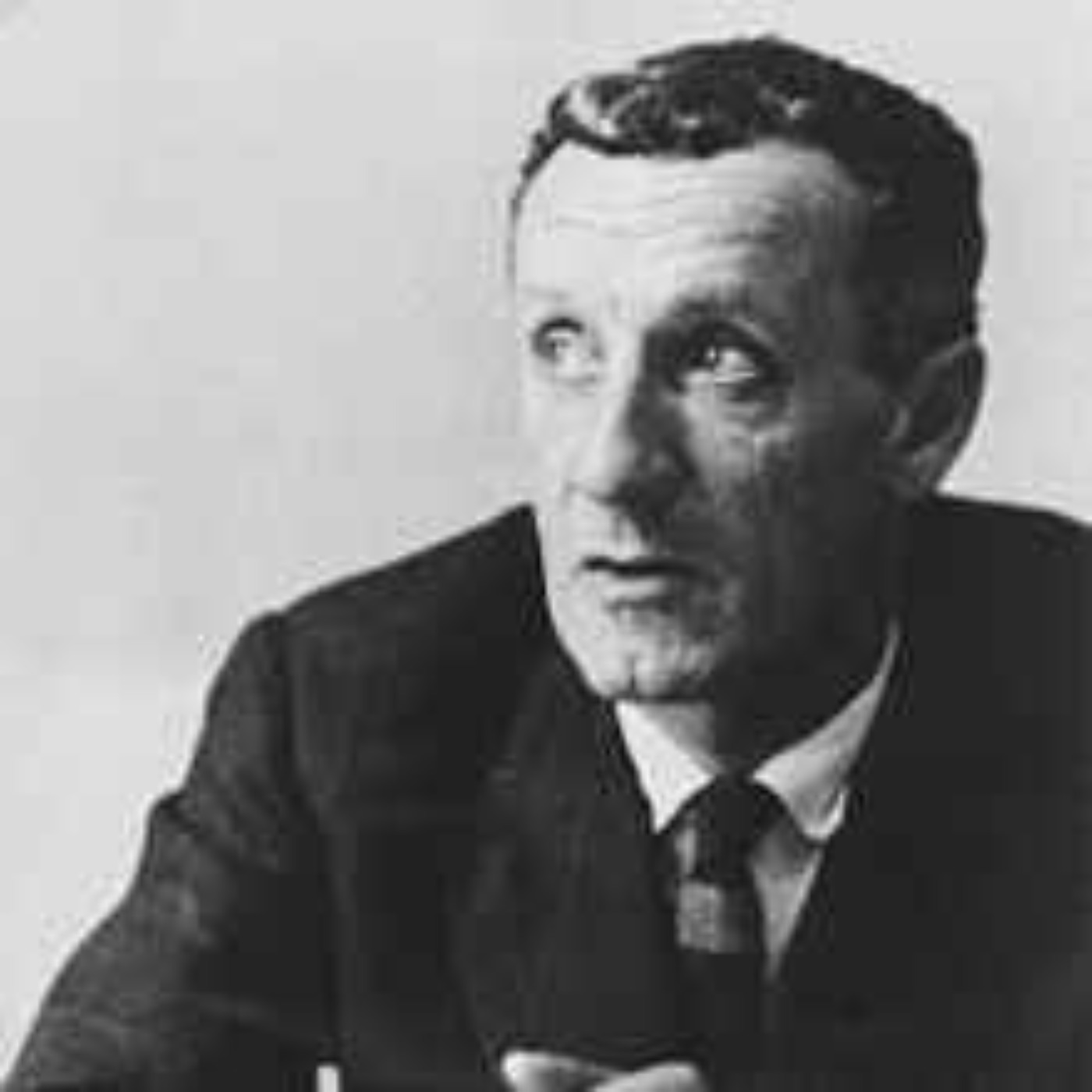
Lecture 11- Merleau-Ponty - From the Body to Habit
28m 18s
In this lecture, Merleau-Ponty’s phenomenology of perception is explored through his analysis of the phantom limb and related disorders, challenging the dualisms of empiricism and intellectualism. He argues that both physiological and psychological accounts fail to capture the lived experience of embodiment, as they treat the body as an object or a set of representations. Instead, the phantom limb reveals an ambiguous "presence-absence" that cannot be reduced to either nerve stimulation or memory. Merleau-Ponty introduces the concept of "being-towards-the-world," where the body is fundamentally oriented through habitual projects and pre-reflective engagement with the environment. Disorders like anosognosia show that the body operates antipredicatively—prior to explicit judgment or sensation—and is only understood when its habitual functioning breaks down. The body is not a thing but a dynamic activity, defined by its temporal and spatial orientation, as well as its capacity for reflexivity (e.g., the touching-touched double sensation). Habit formation, illustrated by the blind man’s cane, demonstrates how the body incorporates tools into its perceptual field, extending its agency. Ultimately, Merleau-Ponty argues that the lived body is the ground of all perception, existing as a holistic, active, and meaning-giving entity that resists reduction to objective or subjective categories.
Hello folks! In the last lecture we examined how Meloponti pursued the objective of displacing the twin approaches of empiricism and intellectualism, irrationalism. Meloponti suggested empiricism and intellectualism are more broadly modern science and psychology, or any cause them, two monsters born from the dismemberment of the human being, precipitated as it was by Cartesian philosophy. The phenomenology of perception aims to begin and renew philosophy by turning to the immediacy or the primacy of perception itself. Throughout phenomenology of perception, Meloponti's method is to invoke empirical and rationalist approaches in order to show their inherent limitations. To reveal that taken on their own terms, they are insufficient for illuminating the very thing they are trying to explain. The body are human embodiment. Meloponti, as I mentioned in the last week's lecture, sees all understanding as bodily understanding. His phenomenology aims to make manifest, to make appear, that very embodiment. In this lecture I want to look at one famous and very specific topic which Meloponti tackles, and that is the phantom limb. Although Meloponti tackles a number of what were didn't called abnormal psychologies, his approach to the phantom limb provides us with a very acute sense of how he proceeds in an overall way. Basically, if we can understand what he's doing with the phantom limb, we can get a sense of all the other phenomena he tackles in phenomenology for perception such as sexuality, language, time, space, and what we will look to in the latter part of this lecture. Habit. Part 1, the strange case of the phantom limb. In the preface-toe phenomenology of perception, Meloponti tells us that the body is, and I quote, "that which produces the natural and antipredicative unity of the world and of our life. Being apparent in our desires, our evaluations, and in the landscape we see." The term that is important in this quote is antipredicative. What does Meloponti mean by this? Well, it is self-explanatory in a way, and it means four, and predicative implies, well, predication, or in logical terms, and affirmation, or judgment, or denial regarding a thesis or proposition. What Meloponti is driving at is that the domain of phenomenological inquiry must proceed, objective knowledge. The antipredicative is that, which remains before predication, or in other terms, he's asked us to grasp how the pre-reflective or pre-conceptual understanding, which accompanies every human thought, gesture, and expression. In phenomenology of perception, Meloponti looks to the case of the phantom limb to make explicit the antipredicative nature of the body, that is, the way the body is thinkable in terms of the immediacy of its bodily perception. But why turn to a case of the phantom limb? In phenomenology of perception, one of the key things to understand is that Meloponti tends to go through both empirical and rational approaches to show their insufficiencies in explaining their object of inquiry. As such, the body from Meloponti exceeds the ability of either empiricism or rationalism to account for the lived experience of that body. And throughout phenomenology of perception, Meloponti attends to lacune evident in pathological disorders in order to shed light on how our body's function. For example, in phenomenology of perception, we find, amongst others, Meloponti addresses the phantom limb prosopagnosia, aphasia, and anosa-ganosia. Specifically, with regard to the phantom limb, we all probably have a sense of what it means and how it operates. A phantom limb is the experiential phenomena of retaining the sensations of a limb after dismemberment or amputation. Now, while we might have all our limbs, we can still get a sense of what this might be like. How we can think into that situation, even if the experience is not directly experiential. This is obviously because we have a sense of the what it is likeness to do things with our limbs. But we can certainly imagine the presence or felt absence of a phantom limb. Indeed, we know from experiments that it is possible to induce the sensation of a phantom limb for fully-limbed folks. Meloponti takes the sense of the phantom limb as a costly present absence awareness as very revealing. It reveals that the psychological domain, in some sense, intermingles with the empirical domain, in this case, sensation. Attending to the peculiarities of the phantom limb is also revealing. Phantom limb experiences can remain under sedation. In addition, emotional events can trigger the feeling of the phantom limb long after the traumatic event of its loss. In some instances, the phantom limb may very well diminish over time. Or even through psychic acceptance of loss by the patient. But from Meloponti, none of these peculiarities legitimate a psychological explanation, or at least we can act ground and explanation of the phantom limb exclusively to psychological explanation. After all, in some cases, the severance of the nerves from limb to brain can abolish the experience of the phantom limb, which would suggest that at the very least that sensation is unnecessary, if not sufficient condition of the experience. So with us, according to Meloponti, discern both the necessity of psychological and empirical accounts, but also their insufficiency. Not dinner we left with. From Meloponti, the phantom limb confronts us with a pathological condition that cannot have either an exclusively psychological or exclusively physiological explanation, which should be clear. Meloponti is not doing a diagnosis here. This is to say he is not offering a conclusive judgment as to the key causal factors of a phantom limb as an illness. Rather, he is simply making explicit an aporia or a lacuna, which psychologists or even cognitive scientists will invariably find themselves confronting. The physiologist is limited to explaining the phantom limb as the byproduct of the continued presence of nervous stimulation, which should not occur, but inexplicably does. Conversely, the psychologist theorizes the phantom limb as the byproduct of the presence of a representation, so a memory or a positive predication or judgment. On both these accounts, we either have or have not sensations or representations of the body in any given situation. From Meloponti, however, to psychological, the experience of the body in this way is to treat the body as an object far as psyche or consciousness. We become as he famously puts it, and I quote, "imprisoned in the categories of the objective world in which there is no middle term between presence and absence." For the psychologist, at least when informed either by empirical and rationalist constraints, it is not obvious how the same abnormality can be conditioned by physiological processes, and at one at the same time, derived from the personal history of a patient, where a patient might report their volition's intentions and desires in agency and memories. As Meloponti puts it in his own terms, it is difficult to understand how, and I quote again, "objective processes like nervous influxes, which belong to the realm of the in itself and cogitations, such as accept and refusal, awareness of past and emotion, which are of the order of the far itself." The difficulty is how to do both. How do both seemingly oppositional theories explain the phantom limb? From Meloponti, we need a deeper common ground that encompasses both psychic and physiological facts. Here we can see Meloponti and the Hegelian tradition, where both the far itself and the in itself, must be thought concurrently. Modern psychology and modern physiology from Meloponti are the empirical science of the body, have a distorted view of the immediacy of perception, associated the operator on an abstraction. The distortion comes about because the object of study is thought about in such a way which still limits a direct relation between stimulus and perception. For example, while we could say that we have stimulus all the time, say feeling a feather tickle the soles of our feet, it is not possible to say that such a stimulus will always produce the same effect. The feather might tickle, it might irritate, could itch, or after we become habituated to it, we might not feel it at all. In the same way, a foe who will leave new trains away, a port stactor filter out the sounds of trains and planes. But what is the problem here really? Meloponti's idea is not so much that we do not experience sensations or that we do not have cognitive content, rather it is a problem of representation. The ghost of Descartes remains, a clearly mind and body are intermingled in some way, but what has to come to occur is that the mind becomes representative of our relation to the body. Meloponti turns to the fantasy
a limb because it shows at some level a combination of both physical and non-physical. After all, it is a phantom limb. Neither a purely physiological count nor a purely psychological account of the phantom limb. Those justice to its phenomenal experience are the primacy of its perception, because it is intrinsically ambiguous. But Mediponte does not want to leave things as they are. There must be a method that are a third way whereby we can explain how this strange experience can come to pass. It is not enough just to say that there is a mixture or intermingling of the cyclical and physical. As then we are still into the main of Descartes who conceive the boat as fundamentally different substances, part two, perceptual being in the world. Merluponti attempts to reconcile the physiological and psychological pictures in following high-digger ones being towards the world, that is, beings' existential immersion in the world. To elucidate what he means by being towards the world, he looks at another psychological disorder, anosaugnocia, which is the refusal to accept a disability. Anosaugnocia occurs when a patient retains a sense of a limb but refuses to acknowledge his absence. For example, refusing to acknowledge a paralyzed right arm. This two could be felt as a sort of phantom limb in that it has felt in a different way, like a lung-cold snake Merluponti mentions in the phenomenology of perception. As we saw, well, physiology would explain this type of phantom limb by the persistence of what is called interoceptive stimulus or internal bodily sensation. Anosaugnocia, too, conceived physiologically, is the absence of a representation that should be given. Psychology would explain the paralyzed limb as a memory, a positive judgment of perception, but anosaugnocia, though in itself, is a failure to perceive, to repeat physiologically, anosaugnocia is the absence of a representation. The representation that should occur but does not. Psychologically, the phantom limb is a representation of an actual presence, as the memory of what the limb had once been. The reason for all this for Merluponti is that the thinking these terms amounts to thinking in terms of either presence or absence, in which something either is or is not. To think in this way is to impose upon our bodily being towards the world a more than thinking that does not derive from the inherent and biggest form of the body. In the case of the phantom limb consciousness of the limb is unclear, and the presence of the phantom limb, accordingly, is not the representation of an absent arm, but an ambivalent presence or a felt absence. The refusal to grasp a phantom limb has to do with how our sensations and psychic content are always already bodily oriented. Our body is because it is primarily oriented towards the world. Our body is operate, therefore, in an antipredicative sense. We have no explicit awareness of our body when we act, because to exist at all is to be in the first place immersed in a world. It is to lose oneself in the projects and dispositions and habits which animate our immersion in our environment. The eye that exists in the world is always already committed at world. As Barilo Ponte says, and I quote, "It is precisely with my customary world arouses in me habitual intentions that I can no longer, if I have lost a limb, be effectively drawn into it. And the utilizable concept precisely insofar as they present themselves as utilizable, appeal to a hand which I had no longer have." In other words, in being drawn by the world towards my habitual projects and intentions, a patient knows his disability insofar as he does not know it. But conversely does not know it insofar as he knows it. It is this peculiar paradoxical, sometimes contradictory, entwining of ignorance and knowledge which expresses, for Barilo Ponte, a much more accurate or fateful rendition of our being towards the world, denies of the abstract oppositions of blind mechanical instinct are expressly conscious and distinct knowledge. It is neither voluntary nor involuntary. In contrast, it is from Barilo Ponte, the claim, as he puts it, that I am conscious of my body via the world, which is a claim that affirms our primordial lived experience. Barilo Ponte is no ocean of the body as thus theorizes a comprehensive, holistic living body. The body does not psychically, physiologically apprehensive impressions in a wound to wound relation. Without really instruct our bodies to do things, nor do we monitor or check our bodies as they engage with the world. For example, I don't customarily have to check I have a head or hands before I go about my business. Rather, the body expresses sets of complex dispositions and projects immersed in the world. Really, what Marluponte is saying is that the body understands itself as pure activity. He says, and I quote, "I cannot understand the function of the living body except by enacting it myself and except insofar as I am a body which rises towards the world." What an osuagnosia, the phantom limb, bought reveal as a phenomenon, there cannot be understood merely as a combination of the psychic and the physical. Rather, the body is all the intelligible as the live body. Are the interactivity of a body rising towards the world? What is primary is not the subjective, not the object of world, but is primary is the encountering of the world, the encountering of a situation. If we had a phantom limb, we grasp the sense of how the absent limb might reach towards a doorknob. This shows that the body is continually reacting to the world prior to any immediate sensations or cognitive ordering. The paradox of perception then is that the body unperceives its vital functioning. It is only when a breakdown, a trauma, occurs that we get a sense of how the body functions in an antipredicative sense, in a preconceptial sense. The body is continually interacting with its environment in terms of projects and tasks it might accomplish. To do this, the body is unperceived because it is dispossitional. That is, to say, it functions in terms of habits or skills. Part 3 - The Formation of Habit The reason Merluponte pursues pathological disorders is because they reveal something essential about human experience, something which we would not have access to in the everyday run of the things. They reveal the necessity of understanding the body is inherently active. The body must be understood in a vital sense from the perspective of living itself. The live body is antipredicative, pre-objective, pre-psychological. It is not classifiable either by a third person objective causal processes nor by the predications of psychic content, judgments and representations. The body itself then is oriented. It is located and anticipated of all the possible tasks and carry out in particular space. In addition, the body is also intrinsically temporal for Merluponte, existing between the sedimentations, memories of past activities, as well as potential ranges of possible actions. Therefore, the body is not reducible to an object. We cannot understand the body as a thing, no more than we can understand the mind as a thing. An example would be Merluponte's accounting of the touching touched. This occurs when I have a perception of my left hand touching my right, which simultaneously touches an object. Basically, we have the same hands simultaneously touching in two different ways as subject and object. This reveals a double sensation, one that resists explanation in simple psychological or physical terms. Similarly, if we joined our hands together in a prayer gesture, we might grasp the essential reflexivity of our bodily perception, where the touching touched makes manifest the body's ability to occupy the perspective of both perceiving object and subject of perception. If we pass in term thing, it might be helpful to comprehend what the body is not. In a phenomenological sense, again following Hydrogar, the object shows itself only as it is, whether as we perceive it from different perspectives, or if we consider it as a set of properties. If the object did not present itself to us in this way, then it would not be a thing. Conversely, from Merluponte, the body is not intelligible as a thing. As at the body is only intelligible as activity, definable in terms of what it does or what it is about to do, and hence in terms of what it is not, are available possibilities. As Merluponte puts it, and I quote, "The body, therefore, is not one more among external objects, with the peculiarity of always being there. If it is permanent, the permanence is absolute and is the ground for the relative permanence of disappearing objects, real objects. The presence and absence of external objects are only variations within a field of primordial presence, a perceptual domain over which my body exercises power. The body's orientation towards the world is the form of our perception of the world, as in all bodies negotiate their location and time and space. This does not entail that we can experience the body as a particular thing, the body experiences itself in ways that are not reducible to all other things. Again, we can see a Kantian transcendental logic behind us. It is not not so much that we experience this or that particular content just since
or as most significant from Eulopante is that we have a body. The body is a number of formal tasks. It locates and is an enduring backdrop which enables all experience to take place. Also, the body is actively adapting to its immediate spatial coordinates, as well as anticipating future and recollecting past events. Furthermore, Ian, if we don't think of it that much, even if it is not explicit on the horizon of our felt sensations or our psychic horizon, the body can also be distinguished by a type of recursiveness or better reflexivity, which continually negates its ambiguous perceptions. But what unites all of these fundamentally ambiguous perceptions, the answer for Eulopante is habit, habitual body. Our bodies are repositories of habit, which we have acquired through the course of our life, as he suggests. And I quote, "The cultivation of a habit is indeed the grasping of its significance." He continues, "The blind man's stick has ceased to be an object for him, and has no longer perceived far itself. His point has become in the area of sensitivity, extending the scope and act of radius of touch, and providing a parallel to sight. In the exploration of things, the length of the stick does not enter expressly as a middle term. The blind man is rather aware of it through the position of objects, than of the position of objects through it." Eulopante here is making explicit the operation of habit. By habit, the blind man's cane no longer is a static object. A thing that is only itself, rather, the cane actively demonstrates the body's adaptation to things and possible tasks. We could say the cane becomes part of the living body, because it incorporates itself with the perceptive intelligence of the blind man's cane. Again, the blind man's activity is not intelligible without embodied activity. His example makes explicit bodily intelligence or motor intentionality. As we mentioned, it is not enough to simply say that the body might interact. We need to transcend the subject object distinction in order to show that the body is intentional itself. What Merlupante really wants us to grasp is the body is not an abstraction, as in something detached from the world. The intertwining of intelligence and body are inseparable from their inception. A habit is the means by which the body contracts disposition's powers, abilities, tendencies, tendencies towards. This habit takes on a metaphysical era from Merlupante, because we are effectively habits all the way up and all the way down. Habit is the activity which is human cognition as much as the activity of nerves and cells and muscle memory. Any perception which we have is more or less habitual, acquired through mimicry, adaptation flexibility, cultivated through interaction, honed in whatever environment we happen to occupy. Without these anti-predicate backgrounds of habits, we would not be able to sense or feel at all. The body then is constituted as habits and habits are changes which remain the same as Felix Robinson put it. They are also anti-predicate, conceived as our second nature. Those are habits both of the present and anticipative of the future, as well as recollecting of a past. Put more in-game terms, what the body is is the skills and practices, whereby we retain past experiences or memories, which are reanimated and recontextualizes our body, occupies an environmental context. All going well, past skills, our dispositions towards, our practices put at disposal of the present body to navigate its invorings. It might remain somewhat counterintuitive to us to think of the body as not something which we are encumbered. However, it is only intelligible as activity in its own right. The body is constantly remolding and adapting itself to the world, in which it is immeasurable, operating through the constraints of habituation and sedimented experiences, but also remaining open to emerging spaces and environments. We must realize that the body in itself has its own traditions and history, our historicity, as much as it is open to new possibilities. As embodied beings, our relation to the world is always one of activity. The body in its most visceral existential nature is one of natural possibility and mortality, movement, as much as it is of habitual disposition. A simple example demonstrates this, when we are taught to drive, it is in a specific space in time, say two years ago in Manchester. The skills and capacities we acquire in attuning our bodies to how the car or works are essentially transferable. When we drive years later, after our initial lessons, we do not need to drive in the same way. Our bodies are regulated to driving by acquired habits, but they are also adaptable to newer contexts. In essence, this means that the body is actively relational, it exists in relation to movement. Thus, the body is also essentially not static. Our body being constantly surges towards things of this world. One of Merlot Panties, or own examples, shows what is at stake here, and I quote, "The bench, scissors, pieces of leather, offered themselves to the subject as poles of action. Through their combined value, they'd eliminate a certain situation, an open situation moreover, which calls for a certain mode of resolution, a certain kind of work. The body is no more than an element in the system of the subject, and is world, and it has to be performed elicits the necessary movements from him by a sort of remote attraction." From Merlot Pantie then, the body is always active in attempting to cope with the arrangement of his context of involvement. This would even be the case when the body is still. When we are still the body, as a sense of the distance between me and the desk or chair, within the room in which I am sitting. The body is the origin of all understanding, since it always is attuning itself to the context in which it is evolved, by getting a sense of what is possible within that context. For example, when we sleep, our body is habituated to dimensions of our bed. If we are habituated to sleeping in a double bed, our body adapts to the length, breadth, and dimensions of the bed. It is quite possible to imagine though that if we stay in a friend's house in a single bed, we might roll out, since the body is not acquired a sufficient degree of habituation to the new bed's dimensions. The most elementary point here is that embodied beings are constantly regulating themselves in relation to sets of possible tasks. Habit becomes important because it orientates the body to a world in both general and in particular ways. The spaces and environments which we inhabit are not abstract and disinterested spaces, but wholly vibrant, lived spaces. The body always remains sensitive to its specific history of networks and practices, as well as adapting to new situations. Malopant is a famous example of the phantom limb demonstrate this. If one who has an arm amputated walks towards a doorknob, the absente arm reaches to open the doorknob. This shows us how the body is always already encountering the world prior to any of our efforts to objectify it or efforts in our part to cognize it. That the body encounters the world in terms of possibilities, entails that it is most fundamental aspect as habituated action. As embodied humans we encounter the world as the intersection between received practices and a virtuous base of possible movements. This shows us that the body is constantly reaching out towards the world, surging towards the world. And more significantly it demonstrates that humans as embodied beings are recalcitrant to mechanistic reduction. The body is always in some way in transcendence or in excess of its purely mechanistic features. The body, considered optimally, is the body engaging in transformative possibilities. The body is always the body emergent.
Podcast Summary
Key Points:
Merleau-Ponty critiques empiricism and intellectualism (modern science/psychology) as inadequate for understanding human embodiment, advocating phenomenology of perception to return to the "antipredicative" immediacy of perception.
The phantom limb phenomenon reveals the insufficiency of purely physiological (e.g., nerve stimulation) or psychological (e.g., memory/representation) explanations, as it involves an ambiguous "presence-absence" that resists binary categorization.
Merleau-Ponty introduces the concept of "being-towards-the-world" (influenced by Heidegger), where the lived body is oriented through habitual projects and dispositions, not as an object but as active, pre-reflective engagement with the environment.
Disorders like anosognosia and the phantom limb show that the body is "antipredicative"—it operates through habits and skills, not explicit cognition or sensation, and is only revealed when breakdown occurs.
Habit formation, exemplified by the blind man's cane, demonstrates how the body extends itself into tools, integrating them into its perceptual field as part of the "lived body," which is fundamentally temporal, spatial, and reflexive (e.g., the "touching-touched" double sensation).
Summary:
In this lecture, Merleau-Ponty’s phenomenology of perception is explored through his analysis of the phantom limb and related disorders, challenging the dualisms of empiricism and intellectualism. He argues that both physiological and psychological accounts fail to capture the lived experience of embodiment, as they treat the body as an object or a set of representations. Instead, the phantom limb reveals an ambiguous "presence-absence" that cannot be reduced to either nerve stimulation or memory.
Merleau-Ponty introduces the concept of "being-towards-the-world," where the body is fundamentally oriented through habitual projects and pre-reflective engagement with the environment. Disorders like anosognosia show that the body operates antipredicatively—prior to explicit judgment or sensation—and is only understood when its habitual functioning breaks down. , the touching-touched double sensation).
Habit formation, illustrated by the blind man’s cane, demonstrates how the body incorporates tools into its perceptual field, extending its agency. Ultimately, Merleau-Ponty argues that the lived body is the ground of all perception, existing as a holistic, active, and meaning-giving entity that resists reduction to objective or subjective categories.
FAQs
Merleau-Ponty argues that both empiricism and intellectualism are insufficient for explaining human embodiment because they treat the body as an object, missing the immediacy of perception.
The antipredicative refers to the pre-reflective, pre-conceptual understanding that underlies all human thought, gesture, and expression, before any logical judgment or predication.
He uses the phantom limb to show that neither purely physiological nor purely psychological explanations suffice, revealing the ambiguous, lived experience of the body that exceeds objective categories.
He sees it as an ambivalent presence or felt absence, rooted in the body's habitual orientation toward the world, not as a mere representation or neural persistence.
Habit forms the body's repository of skills and dispositions, allowing it to adapt to the world without explicit awareness, as shown by the blind man's cane becoming an extension of the body.
It reveals the body's reflexivity, where it can be both subject and object of perception, resisting simple psychological or physical explanations.
Chat with AI
Loading...
Pro features
Go deeper with this episode
Unlock creator-grade tools that turn any transcript into show notes and subtitle files.
 PodcastTranscript AI