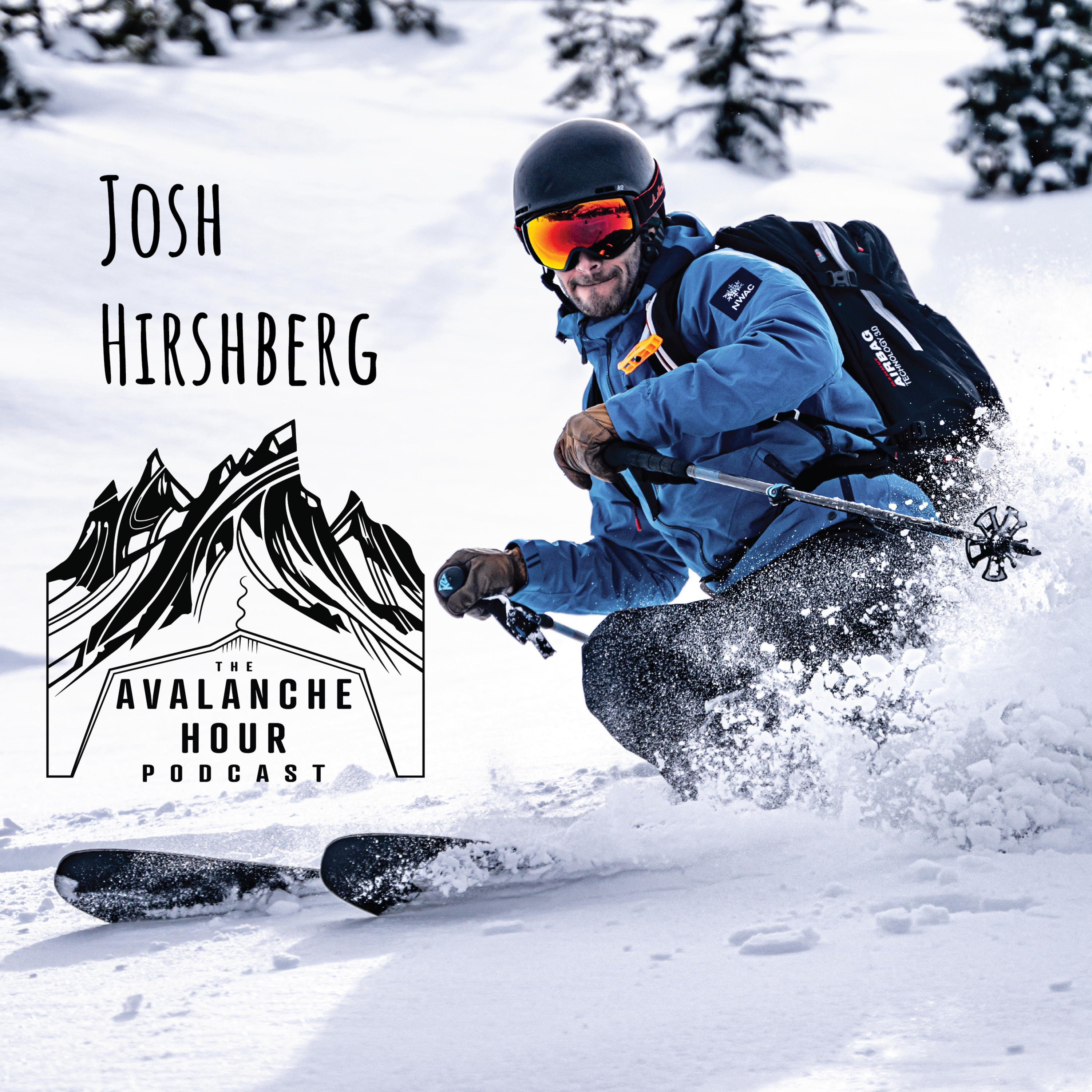
Layers of Life and Learning: Lessons from the Mountains with Josh Hirshberg
80m 5s
This transcription is from an episode of the "Avalanche Hour" podcast. It begins with promotional content and introductions, notably announcing Brooke Moushend as a new guest host. Brooke shares her professional background in mountain safety and avalanche forecasting. The main segment features an interview with veteran forecaster Josh Hirschberg. Josh recounts his entry into snow science through a formative avalanche forecasting course at Prescott College in Colorado, which set him on his career path. He details his professional journey, including roles in Colorado's San Juan Mountains and his eventual move to Washington to work for the Northwest Avalanche Center (NWAC). He emphasizes the importance of early mentors and peer collaboration in his development. The conversation also touches on the distinct characteristics and challenges of forecasting in the Cascade Range's maritime snowpack compared to other regions. The episode underscores the podcast's mission to strengthen the avalanche community by sharing knowledge and personal stories from within the industry.
(upbeat music) You know, I think early on I really compartmentalized like I had a lot of my life that was really about being in diverse spaces, but that wasn't my mountain life. Like it doesn't always have to be like Mohawks and leather jackets. And I was like, "Teeze, is that a debris pile? I can't tell, I pulled out the binoculars, looking closer and I kind of, I was like, "Oh, wait, I gotta like channel promo here." And the more I looked, the more I saw. This is Josh Hersberg, you're listening to the "Avalanche Hour" podcast. - You are tuned in to another episode of the "Avalanche Hour" podcast, your source for great conversations within the snow and avalanche community. I'm your guest host, Brooke Moushend. The "Avalanche Hour" podcast is proudly presented by Vizan "Avalanche Control," safety through innovation. With additional sustaining support from Gordini, in business for the love of snow since 1956, a Vermont-based family-owned outdoor brand committed to building responsible, purpose-built gloves and gear that keep you outside longer. And open snow, the essential weather app for the mountains. Compare it 10-day snow forecasts in your favorite locations, read expert analyses from their team of local forecasters, track storms with 3D weather maps, and much more. Get started with a free trial or receive 50% off their premium subscription by going to open snow.com or slash by. And enter the promo code "Avalanche 50." The goal of this podcast is to create a stronger community through the sharing of stories, knowledge, and news amongst people who have a curious fascination with "Avalanche." (upbeat music) - Hey everybody, this is Caleb here, just jumping in for a second. I wanted to introduce a new guest host, Brooke Moushend, and Brooke, we're very happy to have you as a guest host on the podcast this season. Brooke and I met, well we met briefly at ISSW last year, but we got to know each other a little bit better down in Argentina this summer. We were able to link up for a couple ski tours down there and had a great time. Brooke stayed much longer than I did. She spent like, what did you, there's like a month and a half or two months down there, Brooke. - A little over three I think total, but kind of popped around a bit. - Amazing, yeah. Brooke loves adventures, she loves getting out in the snow. Brooke has worked as a ski patroller at Mayameth Mountain. She's worked for Yosemite Search and Rescue Yosar. She's been a "Avalanche" forecaster for the Sawtooth Avalanche Center. And these days is an "Avalanche" forecaster for the Eastern Sierra Avalanche Center down on the East Side. - Brooke, what did I miss? I'm sure there's a lot that I miss, but filling some blanks for us. - Yeah, basically I just have spent a good amount of time trying to pursue time outside and time in the mountains, learning about snow and spending time on rocks. So I spent a good amount of time down in Yosemite doing a whole array of jobs for the park service, starting, working for concessions there and working on weather stations before working on search and rescue and kind of made my way up to Mount Rainier with the climbing ranger thing briefly and just have kind of tried to find my way into the mountains as much as possible with her work and for play. So lots of time outside and looking forward to spending more outside and continuing to learn. - Excellent. Well Brooke, tell us a little bit about why you're excited to be a guest host on the podcast and who you are thinking about interviewing for this season and then maybe tee up this great episode with Josh. - Yeah, I was super stoked and honestly, didn't really have any expectations when you brought up the topic of being a guest host when we were skiing. I think yeah, we were skiing around Cattae D'Roll for like a day and you're like, we think we got off the lift and you're like, would you want to be a guest host? And I was like, me? Okay. But what makes me excited about it, I guess, is the fact that I feel like I started listening to this podcast quite a while ago. And while I'm a forecaster, I'm a young forecaster and I'm still pretty early on in my career and I feel like listening to this podcast really had an impactful effect on me and people that I ended up emailing or getting to know in the industry or just ideas that I wouldn't have otherwise come about as like a younger person in the snow industry. And it's pretty cool to be involved with this podcast now. I think we talked a bit about their oral history that comes with like being in the mountains of the stories the people who came before you and how magical it is to kind of get to hear those words from people. There's nothing quite like being there but getting to hear about it, you know, hanging out with the folks who actually were and learning what they learned through that is pretty special. So it's pretty cool to have a podcast in our small industry that gets to document all this stuff and I'm really excited to be a part of it. Well, we're happy to have you super grateful for your involvement. So this interview that we're teeing up right now is with Josh Hirschberg. Like I guess I didn't mention you had worked as an intern for N-Wack, right? Is that where you first met Josh? Yeah, I think I maybe initially met Josh at a little scoop talk actually in 11th, but we first got to get out together and chat when I became an intern at N-Wack before, this is before I started broadcasting at the Saatuth and got to work with Josh and Matt Promo and Katie Warren 'cause I was in love with as well. And first got to know Josh there and kind of stayed in touch and yeah, when we were chatting about folks to bring on, I was, he came to mind for me and I think he was on your mind as well and it seemed like a pretty serendipitous time to be able to chat with him. And yeah, I'm really excited to have Josh on. He has a lot of experience in the industry has been in it for close to 20 years. He's what we came up with in his interview and it's pretty cool to see the mountains through Josh's eyes. He has a pretty unique take on both just humans as well as avalanches and so. I'm excited for folks to see his lens on things and his take on the longevity of forecasting for him and for others. Excellent, well let's just jump right in with your interview with Josh Hershpert. Here we go. All right, Josh, well thanks for being on here today. I was stoked when you agreed to be on the podcast. And I guess we met, you know, a handful of years ago but really started to get to know each other a bit when I was interning it in Wack and you were one of the forecasters in Leavenworth. Yeah, tell us a bit about where you're tuning in from like today and how things are going up in Washington. Yeah, so I live in Leavenworth, Washington. If you're unfamiliar, it's east side of the cascades about two and a half hours from Seattle. And right now the rain is winding down. It does rain here even though we're on the east side. But yeah, it's a good December. We have snow and towns, snow in the mountains, shaping up to be a good winter here. Awesome, yeah. And like everywhere else in the cascades, I'm sure you're getting plenty of preset but hoping for more snow than rain. No, no, that's, yeah, we, you know, it wouldn't benefit of being on the east side of the cascades as it does stay colder and drier over here. And we do get more sunshine, which is nice. Part of what drew me here when I moved to Washington. Yeah, and why don't we just like start from the beginning and go back and make your way over to Washington. You started out like kind of like dipping your toes into the snow science side of things back when you were in school at Prescott, right? Could you tell us a bit about your time there and some of your experiences that made you want to turn looking at snow into more of a career? Yeah, I, you know, before Prescott College, I think I took a Greyhound bus to Colorado when I was like 20 with my snowboard and literally stepped off and found a place to live in a place that would give me a ski pass. And so I ski bummed around Colorado for a few years after dropping out of college and eventually went back to Prescott College, which is in Arizona. And real small college, really unique place, quite a few of us in the avalanche industry went to school there and maybe even took some avalanche in snow science classes there. I actually went going there, wasn't intending to have a degree in snow studies, but that's actually my minor there. And I, my first year, I already had some backcountry ski experience had already taken a recreational level one. Of course, I grew up skiing in New Hampshire. And so my first year of Prescott took, which is that's how people say it, they're Prescott, not Prescott, like Biscuit. And there was, there are these really cool block courses, which are month long at the beginning of every quarter. And one of those block courses was an avalanche forecasting class. And I thought, I don't know, I already know about like, basic avalanche stuff. I guess I could take avalanche forecasting, that sounds cool. And so it was a month long immersive. We were based in Silverton, Colorado, in the San Juan Mountains. And had some really amazing instructors there, Jerry Roberts, who was a highway forecaster for CIC at the time, as well as Ann Mellick, who was a Prescott college graduate. And later on, ended up being co-worker of mine. But yeah, amazing experience. Some of the people who were in those class, in that class with me,
in the industry and you still keep up old friends. Awesome. And who are some of those folks that were there with you that have still made their way to stay in the industry now? Yes. I mean, that class was, there were less than 10 of us in the class, maybe eight. One of those folks was Chris Marshall, IFMG ASKieGuyd, and just all around awesome, awesome person, Mike Brahmberg, who's a really close friend, and he's also IFMG8Guyd and owns a ski guy company in Rebelsdok. Can't think of other folks from that class, but three out of eight to go on into the industry from one class, I think that's pretty interesting. And one of the really fascinating things about that class specifically, we were in Silver 10 for one of the largest avalanche cycles I've seen even to this day. We watched a D4 size avalanche run, we got dusted by it. You know, that was the close call for sure. Yeah, but it definitely made a huge impact. And yeah, later on, it ended up working in the San Juan Mountains too. How would you describe the environment that people like Ann and Jerry Crete created in that class for you all like to learn in? Was that one of the more like performative environments that you spent time in as an early snow professional or someone who's curious about snow? Yeah, I mean, at that time, I had not experienced anything like it. I had a pretty basic recreational level one. This is like before, Ari, I had a few years of personal backcountry skiing, but that class, you know, this was 2004. So this was before the pro-rexplit in the US, there wasn't a lot like it, you know, for someone just coming in without with a bit of recreational experience and a little bit of mentorship. So it was kind of incredible. Jerry was someone who had been around since the real early days, even at that time. I think when he was instructing us, he was probably in his mid-50s at least. So he was of a different generation. He learned from people like Ed Luscia-Pel. Yeah, it was a very, it was not standardized by any means, but Jerry had been running that class for more than a decade at that point and was an amazing instructor. She had gone to Presky College and taught for Prescott and other courses as well. And it was super immersive. Jerry's primary jobs with the highway, you know, kind of kept him busy with that. And sometimes we wouldn't always know more than a day or two ahead of what we were going to do. And especially because we were there during a huge storm cycle and pretty impressive avalanche cycle. So just kind of like riding the coattails of them and seeing the highway operations, getting to tour in that terrain and that snowpack, which is not a simple one. But having amazing guidance and being able to do it safely and in a really positive learning environment made a really, really big impact. And a lot of us went on to do other classes or do internships or work in the industry. Awesome. Yeah, it's wild how those early experiences, your first couple of mentors can have an impact on you like that. And so from there, I think you were saying that you went over, got some experience over and crested but and then made your way over to see C I see. Yeah. So I spent time living and working in a lot of the mountain towns in Colorado, but actually right out of or during Prescott, the following winter after that course I was talking about. I set up an internship, two internships, actually an Aspen. And so I spent five years in the Aspen Roaring Fork Valley. So I initially had an independent study with Aspen Expeditions as well as what at the time was the Roaring Fork Avalanche Center kind of modeled after the Crestibute Center. And this was at a time when the C I see was very different than it is now. And the Roaring Fork Center later got absorbed by C I see becoming the Roaring Fork office. So yeah, I interned for those two locations, tailguiding at Aspen Expeditions and then helping observe and kind of a practicing writing forecasts at the Roaring Fork Center. And the two mentors I had Amos Whiting at Aspen Expeditions who's now owner there and Brian McCall who is the forecaster. I learned so much from them and you know, those internships were just that first winter, but both of those turned into jobs, falling seasons and I continued to be engaged and I learned a ton from both of those folks and then all the other people that I encountered through those jobs. And so yeah, first five years was there in Aspen and then moved over the mountains to Crestibute, which is, you know, if folks know that area, it's close by, but a world way. You can't really just drive there very easily and Crestibute was also a really formative time. You know, I really saw moving, not just moving there, but the point I was at in my career, I had been working for at least five years, really started to have a bunch of peers that we could grow together with, still sought out mentorship, but especially my time in Crestibute, folks like John McKinnon and Mike Brahmberg actually was living there at the time, my old, old classmate from Presky College. So we had a great crew of folks there and it was a really good time to kind of push like, what have we learned and what can we do with it? You know, sometimes see some of those limits. Yeah, for sure. I think nowadays we talk, there's been a lot of attention on the word mentorship and what that means and how to find it and all these things, but I think there's somebody you said about having peers that you can push yourself with that you can learn with to together. And so after you're over, you spent a lot of time over at CCAC and got some experience there and then a job got posted over in Washington, right? How did you hear about the NWAC job and get involved in making your way over there? Yeah, so this was kind of like fast forward to 2018, 17, 18, that winter. I had been in San Juan Mountains for about five years at that point. That's where I forecast for CIC and then I was guiding there and I should say I haven't mentioned, but throughout all this time teaching and education was a really big part of my work as well. The one thing I really haven't done is skip patrol. I have been around explosives with being helping out with the highway in the 550 corridor in the San Juan Mountains, but I had come to Washington for quite a while. My aunt has been in Seattle since I was a kid and you know started coming here, I guess, mid-2000s to recreate like ski the volcanoes in the spring and head friends in the city. And I always thought actually I think my ski guide course was on Stonclaw Me Pass. That was the first I really skied in the cascades in the mid-winter and that was quite a lesson. But I always thought despite the challenges of that course and those days on Stonclaw Me Pass, I always thought the cascades are really cool and such a different mountain environment than what I was used to. Most of my experience in in bigger mountains was in Colorado, although I had taken trips elsewhere. But I always kind of felt like, oh, like NWAC just didn't really seem accessible. It had been entirely meteorologists doing that lunch forecasting. And so by the time 2017-18 rolled around, things were shifting around at my current work situation and I was starting to think about like, okay, maybe there's other opportunities. And an old friend, a force McBrighain actually was working at the NWAC nonprofit. And he reached out to me and was like, hey, we have a position, we want you here. And he's like, you should apply. It's, you know, just keep your eyes out. And so I started inquiring a little bit more because I thought, really, like, you know, I'm not a meteorologist. He's like, no, no, no, we want someone like you. So it went through the whole process. And yeah, this was the first that NWAC had hired forecasters who were practitioner-based that were not. You know, I've done some weather forecasting, but I am not a meteorologist. I'm not, I don't have a degree in it. I haven't had extensive, you know, college classes in it. So it was the first that NWAC was hiring folks like me. And both myself and Dallas Glass got brought on in that wave. And now we have, gosh, there's 11 total forecasters. And we have nine of us who are kind of more field-based, based in a specific region. And generally from a practitioner background, some folks also do have master's degrees or research background as well. Yeah, that's how I ended up here. And it was a big shift, like moving to maritime snowpack. And yeah, just jumping right into the, actually, the middle of the season, which was kind of interesting in a mountain environment. I really didn't know. Snowpack, I didn't know. There's a lot of really quick learning that happened. And it was super exciting to be involved. I've been here since the 1718 winter. Yeah, and a lot of change over it and WAC in that, and that amount of time as well, right? It hasn't been too too long, but I'm sure it feels like it's been, it's been a, oh.
good amount of time over there. - No, no, that's, yeah, you're right. There's a lot of, the first few years, especially, there was so much change and we've brought on a bunch of allent forecasters. The last three, four have felt kind of more, there's more stasis or more stable. It's been nice to kind of reach a bit more of an equilibrium and still see the growth, the places we could grow, the growth that could happen. Always feels like we could have more folks for sure. We have a very large area we forecast for. - Yeah, I'm sure like one of the biggest in the country. And you mentioned, I just want to go back to this point when you were first talking about your first experiences in Washington and taking a ski guide course up on snow, snow call me fast, that's where I took mine too. There's some interesting conditions and you talked about the wicked learning environment and you mentioned it again when you moved to Washington. If you want to like elaborate a little bit more on that for folks who haven't spent a good amount of time up in the cascades. - Oh man, yeah, snow call me fast. It's an amazing place. There's incredible terrain. It can be pretty busy, especially these days. But if you're there on a weekday, I find it's one of the easier access kind of like, I wouldn't say low elevation, but like there's complex alpine feeling terrain, not very far out of the trailhead. And sometimes even you're in the trees and you're just like, "Oh, do I need a rope here? "Do we put boot crampons on?" Like what are we doing? There's a lot of really steep cliffy terrain. You can certainly get a wide range of snow conditions, including conditions where you do need crampons. And there's amazing kowars and steep terrain and just lots of easy access into more complex terrain and the alpine environment where you'll have people out skiing, you'll have people ice climbing. Something that we deal with as forecasters is like we have all sorts of recreators. There's people just going for a walk in the snow and wandering into avalanche paths there. So my experience specifically, just having not known that terrain, it was a lot of what we call here green out, where you're like in the forest and can't see anything. And then you break out and then you're in the white out, you can't see anything. And we had a lot of snow, we had some rain, really great experience overall. But certainly challenged me, especially as a moderate experience in my career at that point. Yeah, and I think talking about the diverse user group that you all have up in the cascades and particularly in that zone, but in most of the state, something you wrote and that we talked about earlier was more of seeing avalanche forecasting through a harm reduction lens, which is more of like a public health term for folks who haven't heard of that term before. Do you want to kind of explain the concept a bit of a bit and kind of how you see that more like bidding into your role as an avalanche forecaster? 'Cause I thought that was quite an interesting take on things. Yeah, I think the idea of harm reduction is essentially, like people are out there doing things and life is risky and some people might choose to do activities that take on a certain level of risk and a harm reduction approach is educating people around what those risks are, maybe taking measures to reduce the potential impacts. And then ultimately, you know, it's up to the individuals. I don't actually have a ton of experience in harm reduction work outside of this, although some of other parts of my life do kind of blend in. You know, people like Kelly McNeil might be able to speak to it better as like an idea. But yeah, I think in terms of avalanche forecasting, you know, this might be opposed to an idea of in theory, oh, our job is to save people's lives. That's not actually what we do. It could be, the work could be framed that way, but we're communicators, we're risk communicators as public forecasters. And so we merge the science, the snow science of knowing what's on the ground and the likelihood of avalanches and of course those consequences. But then we have to communicate them to the public of really wide range of users. And we don't have a lot of control in that, right? We just are able to tell them where it might be dangerous, what kinds of avalanches they might encounter and how they might be able to avoid triggering or getting caught in those avalanches. So yeah, I think that, you know, I really like and I was really psyched to see when the ideas of harm reduction started moving into our industry and the research because it made me think of other realms like, you know, friends that are engaged with like needle exchange programs and there's other, you can find other examples of harm reduction, especially in the public health world. - Right, yeah, I feel like the concept of harm reduction was introduced to me in a public health class of more trying to mitigate the adverse effects of taking risks in other parts of your life. Just doing the thing that you wanna do in the safest way possible, not telling folks how or why they should or shouldn't do something, right? And I think something interesting that you said when we were chatting about this like initially was you said that, you know, like forecasting is kind of like the merging of science and communication in decision making and the problem really comes from where humans actually interact with the avalanches. Like humans are the problem, avalanches aren't exactly like the problem either, but it's that point of like where they interact. - Yeah, yeah, I mean, if you can't tell, like I love thinking about big ideas and big concepts and yeah, you know, the avalanches are this natural phenomena and there's a lot of things that fascinate me about them and that's what's kept me going for so long, I think, with this work. But really it is that place where the avalanches and humans collide, like that's when we have problems or that's when we have concerns for what the danger is. If those avalanches are just out there happening out in the wilds of the mountains, which we have a lot of in Washington. But if there's no humans, it's like, okay, you know, that's a phenomenon that's happening, but then it becomes how do we put out information to let people know what those risks are, where that danger lies and depending on what people are doing, of course, you know, mostly we do talk mostly to recreationists, but there are some other times where other considerations come up, where there's impacts to just people in town who might not be aware that they're putting themselves in harm's way. But yeah, I like thinking about that stuff and I also really enjoy the longer I do this, the more that I see, I'll be able to recognize patterns that I've seen before, right? But the more I realize, like, seeing things I haven't seen before and the kind of time scale that we're working on is so much longer than anyone person's life, and even longer than, you know, the people I learned from and my life together. And it's just, I really enjoy thinking about that, especially when we're in the midst of these bigger avalanche cycles and learning the history from people who've seen more than I have. Yeah, it's a really fascinating endeavor. - Yeah, it's one of the most wild things to be able to see the same path run, you know, tens or if not hundreds of times in your life, and every time there's something new to notice and there's something new to look at, it might run pretty similarly a lot of the time, but there's always something new to notice, huh? - Support for today's episode comes from SafeBack. Whether you work in Avalanche Rescue, whether it's risk of second avalanche to run out or just have strict weight requirements for what ends up on your back. Our friends at SafeBack have been cooking up some exciting new Avalanche Backpacks with their partners that we are really excited about. SafeBack's air supply for snow burial called SBX is designed to keep avalanche burial victims breathing without the need for a mouthpiece. Their fan-based system runs for 90 minutes, creating enough airflow within the snowpack to delay exphyxia, supplying the face with fresh air while also pushing away the CO2 Dave X-Hail. SafeBack's first partner outside of Norway is Colorado's own raid research this season. Raid has expanded their light and fast pack line to integrate SBX. These avalanche packs weigh in at 1,680 grams without sacrificing the functionality of their original bag design for ski mountaineering. Back in Norway SafeBack has also been collaborating with local leaders in SART to design and build a workhorse avalanche backpack for foot-powered rescue ops, now only available to pro groups and pro form orders. SafeBack's mission is to get you back safe from the back country. Join the pro form at safeback.no/pro. That is safeback.no/pro. Yeah, you said that you've been in this industry, I think you told me over the phone, like what about 20 years or something like that, maybe more than that? Very close to 20 years. Yeah, I started my internships were the 0405 winter. So this year is 19 years, I guess, the math's right. I mean, and that's a pretty long time and that's awesome to talk to someone as someone who's newer as a forecaster in this industry.
been around and been doing it for that long, it still can talk about avalanches with the same amount of joy in their voice and spark their eyes. And I guess like what are some of the things? I guess we talked a bit about, you know, always being open and noticing new things and just this geologic time scale that you like that you see the mountains through. But what are some of the other things that have some of the other like strategies that you've employed or anything like that that's kind of made this like a feasible venture for you all these years? Yeah, yeah, how do I keep going? I mean, sometimes it feels hard to stop, you know, I do, I am really passionate about my work, whether that's been teaching, guiding or forecasting in the last, you know, five plus years, it's mostly been forecasting, you know, especially in the forecasting realm. One of the most important things is being able to take time away from the job because the snowpack never stops changing and the weather never stops, even if it's high pressure, you know, it seems a little counterintuitive. But it is super important to be able to have that downtime and that took me a long time to figure out, I still struggle with doing that. Sometimes certain weeks it's like, oh man, I've just been working nonstop, even the times I wasn't officially working. But yeah, being able to check out when I lived in the San Juan Mountains ice climbing was an awesome way, although not without its own risks, but or avalanches for that matter. But yeah, doing a different activity, I do photography and art, but even just going to ski at the ski area, working at a ski area has never really been my job. Certainly not in the avalanche industry, so I love just riding lifts and doing a bunch of laps and especially big powdeys at the ski area, like, you know, it's not my job, I can go and recreate. But it is hard to not have the work brain on, you know, especially when I'm out in the snow. You know, other things to think about this a little bit, but I think always finding looking for the areas that I can grow into professionally and those places that really pull me where I'm fascinated and I feel like I haven't given as much attention to. It's a tough line of like, how do you keep going? And like I said at the beginning, in some ways, it's tough to think about real solid career that isn't what I'm already doing, especially the work outside, the problem solving and decision making, and the teamwork and collaboration that we have in the avalanche industry. I mean, that's a really incredible part of the work. Yeah, and I think one of the, I mean, there's so many things that are great about this industry and the people who work in it, but I think one of the special things about it is that we have folks from all sorts of different backgrounds and with different life experiences and values that work in our industry and it could be really nice to work with a broad range of folks that have really different experiences and different snow packs or just views on life, right? And that's where I think a lot of the learning comes from is of course like going into the mountains with different people and seeing the snow through different perspectives, but oftentimes it's these conversations that we have with our co-workers who see things a bit differently than us. It can kind of keep us curious and keep us looking at things through like a new lens. Yeah, that's cool that you say that because I think when I first started, I probably didn't have that perspective in a lot of ways, both in the way that you meant it, but also in a broader sense. I think initially it was really helpful to like I kind of gravitated towards other ski guides or to other avalanche educators. And then as I grew more as a professional, I really, especially now, I really, really appreciate what you were speaking to of working with and learning from people of different backgrounds than me. And I mean that, you know, professionally within the industry, like I, you know, I've never patrolled. I love forecasting with people with a strong patrolling background and how we approach maybe the same problem and how our different experiences might lead us to problem solving. I really learned from that, you know, on a broader sense as far as diversity, I think like the obvious thing is the ski world and avalanche industry is like has really suffered from a lack of diversity in, you know, people's backgrounds, whether it's racial diversity or economic background or, you know, a whole host like sexual orientation. And it's super cool to see, you know, 20 years later where things are at, where we still could have a lot more diversity in our industry, but that there are really active efforts to open those doors to folks that maybe wouldn't have them open as easily. Certainly something I'm super passionate about, especially being around for as long as I have, I, you know, I think early on I really compartmentalized, like I had a lot of my life that was really about being in diverse spaces, but that wasn't my mountain life. And in my mountain life, I didn't really find that. And it's cool to see those things coming together in the last, especially since 2020. But yeah, and what are some of those other parts of yourself that you felt like maybe weren't as well integrated as Josh the avalanche professional? Yeah, I mean, to some degree, I think it was, you know, my way of like having an off season and kind of checking out for a little bit of like, oh, I'm going to not be in the mountains. I'm going to travel or go spend some time in a city, you know, for me, like I kind of grew up around punk rock and art and activism. That wasn't things I found in the mountains, but I always really found myself in the mountains and like the core of, you know, what I feel just kind of most at peace, like being in the mountains. And I, but I always felt like I needed all those things. And for a long time, I think it was sort of this discord of like, oh, well, I got to go to the city or somewhere that's not the mountains for these other parts that I enjoy. But yeah, maybe it's also just getting older and seeing things with a broader lens. But yeah, no, I spent a lot of time activist circles, queer communities. And also just making my own visual art, primarily photography. Awesome. Yeah, I think something that I noted in your in your bio like a while ago, and the one that you sent in, you know, everyone who has like a guide bio or like a forecasting bio is like, and when when I'm not in the mountains, this is what I enjoyed, I enjoyed doing. And from yours, I always thought it was like quite, it was quite like a good point and like a thing to chat about. Because I think the last, the last sentences, when he's not working or spending time in the mountains, Josh and Joy is making photography and art, spending time with his son, and supporting diverse communities, which is that last part is not something you really read in a guide bio or a forecast or bio, or I don't know if I ever have, which is quite cool. And I think for folks who maybe are like less, less familiar with like what punk rock is about or like what those sort of like social environments are like, like what are some of the core values that imparted on you or that is like how you see or why you enjoy those spaces. Yeah, I mean, my, you know, my experience, I guess is my own and maybe not the same that everyone else has. I think like punk culture can definitely have an element of elitism and white supremacy and things like that, like a lot of dominant culture has as well. But kind of the end of it, especially connected in with activism and social justice that I really was drawn to in a lot of different places, but also like while I was in school, you know, generally kind of like seeking a collective liberation that like we are all trying to get free, right? And some of us have a lot more barriers than others that there's a lot of different things acting on us that are oppressive, societally or maybe interpersonally, but that we all can work together to help each other get free. Yeah, I mean, I really, I appreciate those ideas, you know, it's always, it's hard to balance all ends of life, especially like with a career in avalanches, it's, you know, pretty all consuming for a good part of the year, but I do try to put my efforts into some of those, but also like I find, you know, you mentioned like parenting, I do feel like that is an extension and I really try to approach like my relationship with my son from a perspective of like liberation and inquisiveness and curiosity and creativity and yeah, and Zeke Zeke's your son. He's eight now. He is, yeah, he's eight and a half, yeah. And what is your what is your time like to to together look like when you guys get to spend time together? Do you get to go into the mountains or make art together? Yeah, both, yeah, we, I you know, I think like a lot of, I love just asking questions and being curious and that's why I love working in the avalanche realm, right? And so I find, you know, the lens of like hanging out with a kid, even even at eight, but like especially when they're younger too, they're just always kind of, they have this innate curiosity and I don't know, maybe it's just him, but I feel like most kids are that way. And so yeah, we spend a lot of time doing art, working on all projects at home, love doing a lot of outdoor activities like biking, swimming, there's, we're fortunate to live really close to nice swimming holes on the river here. And yeah, of course, like time in the snow and skiing. And really like I just try to expose him to as much as I can and then let his curiosity's innate.
interest really drive the way. But yeah, Legos is a big activity. It's amazing. I forgot how fun that is. It's pretty cool. Easy to forget stuff like that. And it's nice to be around a kid who who reminds us that there's always something new to notice. There's always something to be curious about. So it's a pretty great lens to have on like the world. And now that we're on like the topic of things outside of avalanches because everyone who works in the snow also has a different part to themselves. You're saying that you spent some time over the summer taking some classes over in like Seattle and kind of came back a bit more to art after a knee injury a couple of years ago. Yeah, that's right. I think it was actually the winter that you were entering with NWAC 23. Yeah, I've always been fortunate to not really have many injuries skiing. But yeah, it had pretty significant one. And that put me out for half the season. And of course, surgery and recovery and all of that takes a while. But it was an opportunity to return to other things that I had other parts of me that I haven't neglected as much. So yeah, I had a couple of photo shows and started taking some classes and just exploring diving deeper into photography, but also graphic design and other forms of art and also how I can work in that world too, which is something that I have done in the past a long time ago. Yeah, it's always good to have these other pursuits that make us feel like we're expressing ourselves and aren't directly related to going skiing. You're looking at snow or writing or things like that. But on the same topic of talking about things that make staying in this industry for so long like a challenge, I think the last time we were able to see each other in person was actually at Matt ProMomo's Memorial this past spring. And we were chatting a bit about how, I mean, that was a huge loss for the avalanche community at large and many, many other folks. But we were chatting a bit about how that was a challenge for you and how it maybe changed your perspective a bit on things at work. And if you would care to elaborate a bit more on that for folks. Yeah, Matt was an amazing person and that was a huge loss to the avalanche industry, to NWAC, to his family and to outdoor community in general. Yeah, Matt and I had a really interesting relationship because he lived in Levenworth. We were the two forecasters based here. And we worked most closely with each other of anyone in NWAC as far as like he was the person I worked with most directly and vice versa. We basically more or less shared responsibilities with the zones that we forecast and the zones that we did feel work in. And you know, our day-to-day experience was the most similar of anyone. No one else was really based here working here. So yeah, I'd never dealt with that level of grief, especially in a workplace environment. And that was pretty interesting. Yeah, and surprising and illuminating in ways, obviously not fun. One of the biggest things is like knowing his family, knowing his son. We were both parents. And that hits in a really unique way. I hadn't thought about before and hadn't had to deal with for sure. Yeah, you know, I think Matt, one thing I was just thinking about this the other day, we've been having some pretty good storms and our first decent sized avalanche cycle. First time we hit high this season really. And I was out driving the highway to corridor. And you know, just search. I knew there were avalanches. I was searching for them. And one of the things about Matt was like he had this incredible almost savant like ability for observations like being observant in all realms. And that's why he was super visionary with his ski lines like anyone who knew him or knew what he did in the mountains. Like he would, he had a lot of first descents. And he would see descents that seemed almost improbable. But he knew they would go or he'd research it enough to figure out if it would go. And he was similar with avalanche observations or even his ability to find buried surface horror. It was wild. We all, I think we all kind of knew it and joked about it and whacked. But like he would find buried surface or and you'd go out to the same area and be like, I don't know, I'm really not seeing it. But then he's got the photos. He's got the oves. And like, yeah, it was pretty amazing. But yeah, I was this other day looking for avalanches and pulled over on the side of the road. And I could barely see up into the Alpine. This one area where where we actually get views occasionally into up elevations. And I could make out like a slate. I'm just staring into white basically into a big circ. And I could make out like slightly darker white. And I was like, Jesus, that a debris pile. I can't tell. I pulled out the binoculars looking closer. And I kind of I was like, Oh, wait, I got a like channel promo here. And the more I looked, the more I saw it. And I was like, Oh, yeah, no, there's definitely there's like I could make out three, four, five debris piles and some big ones, even D2.5. So it was just a cool reminder. And it also was a good point of recognition of, you know, his passing was in March of last year, this past March. And in some ways, it feels like it's been a long time. And sometimes, you know, doesn't feel like it's that long ago. But to be able to be in that place with it. And appreciate, you know, his level of observance and what he brought to his workplace and what he brought to our connection versus like, you know, when things were way harder to deal with. And I was like deeper and grief. So, but yeah, and I mean, it was great to see you and talk to you during those times. And, you know, all of our colleagues and it really definitely brought people together. And I think, well, it's really sad and unfortunate to lose folks. It also can make us appreciate what we have, I think. Yeah, yeah, grief is, you know, it's a different animal for everyone. And no one in the avalanche industry this year was too far from grief. There was a lot of loss. But it is nice to be at a point when you, you know, when we lose, when we lose folks, like especially folks we got to work with or spend time with in like the mountains, it's nice when you start to be able to see them out there in like a nice way, huh? I have like a very like distinct memory, like the first two times I got the Forest Service Truck with Matt, like in town, and we drove up highway two up the Tom, Tom water. And then it was like almost completely socked in. And he was like, oh, I think there's probably a couple of really big avalanches. We should, we should stop by bet we can see them. My bettle, like it'll clear. And it just was a total milk, milk bottle. And yeah, he was able, we like saw like some of the weirdest slides that that had gone, gone off. And it was just, you know, one of those primo things. You're like, all right, this is just what Matt does. So yeah, it's nice. It's nice to be able to channel that and to be able to think about about those things and bring them with us as we move as we move forward. It's always always good and important to give space to talk about those things and to be able to to kind of smile while while you get to, well, you get to remember them. I was really, I like that he summed it up. It's really nice. Yeah, I mean, yeah, you've been in this a lot longer than me, but grief is one of those things. I think the older you get and the more you deal with it, it's something you just kind of learned to learn to befriend and like away and like just accept, accept for what it is. And it's hard to move, to move past with any kind of like, fast forward button. So you just have to take what you can get when you can get it and keep walking uphill on like the skin track, huh? Yeah, yeah. I mean, it's interesting because Matt's death was probably the most directly I've dealt with grief. I mean, I've unfortunate not to lose too many people in my life, but I've definitely had like all of us. I've had friends who have died in the mountains. I've had, you know, family dying, but that was a really particular one and an interesting hard for sure. And I think, you know, I talked about it before a little bit, but like the combo of while I was, you know, I was the year out from my knee injury, but not from recovery. I was just kind of getting back to normal at that point. And I think the combo of like having a major injury and then dealing with grief of losing someone and then having to keep going back into that environment, right? Like the like work was the place that reminded me of that loss. And that was a really interesting thing to deal with that I hadn't experienced before. Yeah. And do you feel like during that time you were thinking about like the long, like the long Jeviti of your career, if you wanted to change things up or things like that, it was kind of just a, you were just trying to grit your teeth and get through it and make it through the season. It seemed like it was a pretty hard end of season for free folks at NWAC. Yeah, certainly. I mean, yeah, it was like the last month or so, you know, I think in some ways that was the thing that was somewhat fortunate. It was we only had a month and things kind of tend to wind down here in the spring, not always in terms of like just the avalanche cycles. But yeah, I think we all were just feeling like had her heads down just trying to finish out the season and be done with it. And it it didn't feel great, you know, it kind of felt like, oh, this is
not really tenable, it's not really something that could be continued on end if we didn't have this break of the season ending. And at the same time, it was really nice to just be done. And then have our personal time and come back in the fall for most of us. I personally, yeah, definitely brought up. I think it brings up a lot of questions. And like you said, everyone deals with grief in different ways. I personally found it super hard to go to work. And especially to be motivated to go in the mountains. Also, there wasn't a lot of powder at that time. You don't have that inspiration either. We had some good spring powder days, but not as many. Yeah, it was really hard to do fieldwork for me. I found just hard to be motivated during that time of like a media grief. Yeah, it's hard when your skis feel like lead weights on like your feet and you're still trying to go off the skin track. Well, it seems like during that time and that compounded with things with your knee. It seems like you spent some more time exploring more of your creative pursuits. And it sounded like you had a good summer hanging out with Zika as well. And I guess like thinking back to all the things that you brought up of why you want to stay in the industry and what's made it possible for you to still be doing this nearly 20 years later. Do you want to talk about some of the other ventures that you've dipped your toes in or maybe spent a lot of time in, but don't spend as much time doing now. I know you took quite a bit of time to be an avalanche instructor earlier in your career and went down to South America to teach some courses. Yeah, so teaching avalanche courses was really big as far as the amount of time I was working. For most of my career for a couple of years when I was working for CIC, I didn't really teach as much because yeah, the forecasting is pretty full time as well as here at NWAC. You know, I might get to teach like one recreational course in a winter or I do, I love to stop in to do just like a little guest lecture to pro courses or instructor training courses. Those are really easy lifts for me, but I don't have the availability to be a full instructor for pro courses or as many rec courses. But yeah, so I started teaching avalanche courses. Well, the very first avalanche course I helped out with was the Silverton avalanche school in 2005, I think, and then probably in years after that. And then right away, as soon as I moved to Aspen and started interning and then guiding there, you know, Aerie started just over the mountains in Crested butte, and so this was like 2006, mid-2000s, and it was still very kind of like homegrown based in you know, central Colorado, although it was really expanding. And so right away, I got introduced to Aerie curriculum and started teaching those courses. And for quite a while was in, you know, what a lot of people might describe as like the Aerie bubble. But I also started at the same time I was teaching in other contexts. So I taught for Prescott College teaching the same avalanche forecasting class that I took as a student for a couple years. And then yeah, later on, got an opportunity to go to Argentina and teach avalanche courses down there, which I think as my claim to fame, I think could be that they were the first Aerie courses in South America. And now there's tons of them down there. It's great. There's instructors who are based there, which is really awesome. And I really enjoy teaching. Did you teach avalanche courses in Spanish or are they in English or a bit of both maybe? So at that time, my Spanish was not good. I could understand pretty well and I could get around on my own, but definitely not proficient enough to just teach a course all by myself in Spanish. So most of those were two professionals. At the time, those were, you know, it was before the ProRex split. This is 2008. We did some rec one courses, but there's quite a few rec two courses for the ski guide program at Las Lenas, Skiria. If anyone's been there, it's super rad terrain, and they have a pretty cool. It's a little more like European style, like off-piece skiing, but sometimes kind of more within the boundaries, sometimes outside of the boundaries. Sometimes it's unclear like what's controlled, what's not, at least at that time. So I was teaching a bunch of ski guides, and most of them worked in North America in our winter. So most of them were proficient in English enough that I could just teach in English. Also, I had never been to Argentina and the Castajano down there was like kind of unreal, even if you're like good with other Spanish. It's a different beast. But then I also taught down in San Martín de los Andes, which is kind of near within the lakes region of Patagonia. That was a mix. There were actually some FMGA guides there. They were a handful in Argentina at the time and some other professionals. We did do one rec one course, and there were some local ski patrollers as well. So yeah, and some of those courses we did have one or two that were with co-instructors who were like fluent in Spanish, who were from there, who I had previously taught actually in previous years. So that was the very beginnings. And then now there's an amazing program down there that's there's instructors who live in Argentina and Chile. Yeah, you might know more. You were just there. Yeah, I mean, I'll just have to say that I agree with your take on like the Argentine Spanish is a bit of a loop when you're used to other Spanish. But yeah, it's quite cool. The presence and the popularity that the Avalanche Ruralde has gotten down there, I was able to kind of like go stir, I guess, like shadow, Avalanche course. When I was down there with the local Avalanche Center in Barri Loce, which is new as of three years ago, there's a public center and yeah, it seems like it's come a long way, like especially the past decade or so. Yeah, building the community and building the awareness to use the product. It's quite cool to see the mix of the systems that they have in their forecast and things like that. That's so cool that you got to interface with them. I would love to go back and yeah, just see where things are now. And it's such an awesome place to explore the mountains, but also really amazing culture. And like you said, the Spanish too. I love speaking the Castigiano, but it's like, I feel like I'm just always kind of like hanging on so fast and so many words that or at least pronunciation that's not the same in other parts of Latin America. Right. Yeah, and it's hard to go from Chile and Spanish just over the border back to Barri Loce. And there's all sorts of really fun new ways to learn a language. But yeah, it's a great time down there. And it was cool to get to see everything for the first time this year. But back to your time as an instructor. So back here in the States, it sounds like you get to teach some, you've taught some pro courses in like the past and things like this. Do you have any like wants or needs for the future? You see yourself like stepping more into a teaching role in the future or I certainly would love to, you know, like we were saying before, I think just the amount of time within the winter months can be so limited. And yeah, it's been a little while since I've been out of the, whether it's like instructor training or as as frequent recreational instruction. But yeah, I would love to do more of that. I do miss those days. I have to say I don't miss the like doing crazy amounts of level ones every winter. I do think there's a limit to the repetition. And I think it's important to know where your limit is and not be burnt out on it. But I still love teaching just basic rec ones. I taught a intro to back country skiing last year, which is kind of like, you know, not within official curriculum, but it's just getting people moving. For the folks who need the skills, the movement skills and just the real baseline skills to then be able to go into an avalanche course. And yeah, I love working with folks of all levels, whether it's just going out to ski an objective or to learn about avalanches and how to make decisions to stay safe. I really enjoy education and both being in it as a student as well as being instructor. And I think regardless of your role, there's always learning happening. And that's, you know, that's another part of forecasting that I think is so fascinating. And I do get some of that out of forecasting. And I think having a background as an educator is really important. Certainly you can be a backcountry public forecaster without having ever taught avalanches courses. But I find I draw on my experience as an educator, knowing how I teach people to think about decision making and to think about the problem of avalanches and to
kind of manage risk in the mountains. And I take those, and I use that same, I kind of flip it around, and I use those same terms and those same ways that we might talk about and teach people about avalanches in how I communicate the danger of the day and the risk of the avalanches to the readers. So I found that super helpful. And I think as a forecaster, we do a lot of things, but communication is so critical because you can be great with the science, but if you can't communicate it to people, it's not going to be received well. Totally, right? I mean, it's quite easy to make something complex sound complex and writing, but to make something complex sound simple and be able to be understood and retained and applied is that's where the art and the magic of writing comes in, right? It's not about making, you know, all of the layers sound super complicated. It's about giving someone something to take home and be able to understand and use in their decision making for like the day. And on the same topic of trying to communicate and decision making and like the mountains, we were chatting a bit about like Anstant Claire and her in her survey and Laura McGuire and some of the more academic sides of the avalanche industry that have been in inspirations like to you. Do you want to like elaborate a bit more on either of those? Those two folks, especially are pretty cool examples for me personally, because I do personally know both of those folks, but also the work that they're doing, I think is really important in our industry, you know, for Anne's work, especially looking at how we can be effective with communicating in an avalanche bulletin to a wide range of readers and users. You know, that work is really critical, like just seeing how effective are we? How are people absorbing the information that we're putting out there? And is it as we, as the forecasters intended? And then who absorbs things in in which ways and her work, both at SFU and now Alaska Pacific University has been really awesome and it's been informative to me and I'm really excited to see where that work continues to go and I think it can be really helpful, especially for public avalanche forecast centers as we continue to evolve our products that we put out to the public. A cool note with Anne is we first cross pass in Crested View. I think myself and John McKinnon, we're teaching level two course. This is before the pro-rex split and Anne was a student and that's kind of how I first knew her and then we kind of cross pass and next thing I knew was like, oh, she's doing a master's and then I think I ran into her skiing at Roger's pass when she was forecasting up there and it's been really cool. I got to talk to her at SFW. It's been really cool to see her trajectory and very inspiring. Yeah, that's like to a point of what we were talking about before with education and also what you're saying about this collective liberation within punk rock, education is one of the best ways to give people the tools to be free and to pave their own paths and it's cool to see folks that we've worked with and we've educated and see what they're doing with that knowledge now. Yeah, certainly. That's one really interesting thing I noticed early on with the avalanche industry and the research end is that and I think it's still fairly true that the problem we deal with, like people interacting with avalanches and how do we make better decisions and how do we communicate these things and how do we teach people about them. There's so much to it. There's a lot of complexity, right? There's the science. There's the decision-making. There's the social science and there's a lot of opportunity and I think Anne's a great example like she came in with a background in I believe anthropology or other social sciences and you know it's pretty easy to find places within the industry and within the research that haven't been investigated and you know that's certainly something that she did and continues to do. And you know Laura McGuire, it's pretty funny. I first met her because she I think it was the Leavenworth ski swap and I was like as usual I had like a bunch of different gear, I had a bike there and she ended up buying a bike for me and then later on I was watching a talk. I think it was this is probably COVID is so it was over Zoom or something and I've seen this person talking about decision-making and I don't know where I know them from and then I realized I was like oh that's the neighbor who bought the bike for me. Oh cool and so we see each other around she's down in Wenatchi now we were just texting recently but I really love her. She does some super deep research in decision-making outside of our industry but she's also been within it too and how she brings these really complex ideas of how we make decisions especially as experts and professionals. Down to pretty concrete like if you ask her like so how does this relate to what I do? She can give really concrete examples and you know I've taken a couple things away from our conversations. One is that surprises are really important like especially as a professional you know having expert intuition or recognize recognition prime decision-making like having that base of experience to make intuitive base decisions on when we get surprised that's really important because that's some gap whether we've even if maybe we've seen that thing before but it's not been notable or we've never seen it and it really sticks out to us. That's something I learned from Laura's like if you're surprised take note of that and and dive into it further especially like when you have the time like really come back to that and and investigate like what was it about that thing that surprised me whether it's a layer I saw in the snowpack or the way we decided on an avalanche problem of the day or just my conversation with my touring partner. Another thing that recently I was listening to actually I think it was her avalanche hour podcast interview. She was speaking to how we have these formalized processes like you know walking through the conceptual model of avalanche hazard or if it's a form or checklist that you fill out for your job. We have these processes that are calcified and official and you know they're standardized that we that are repeatable but there's a lot and those things are important but the thing that stood out to me that shoes thing is that there's a ton that we do as professionals that is our work and our job that is equally critical like I can wake up in the middle of the night and hear rain on my roof and in that moment of like oh I'm awake I'm going back to sleep and I remember that in the morning and that's a cue to me that like oh it was raining hard enough I could hear it on my roof and I know what that relates to in the mountains or just you know you're driving I'm going from my house to the forest service to go pick up the truck and I notice how the the snow is super dry and it's blowing over like the bumper of my car or something just these little observations like that is going into my decision making for the day and the way she put that it really stood out to me and I thought that was really cool. So interesting because I think a lot of people who maybe don't work in this industry professionally or maybe kind of tangentially know what an avalanche workcaster is or what what we do and their image of where we get our information is usually in a snow pit right it's like that's that's where you that's where you know what what's going on in like the snow you have to dig a snow pit and it's not that a snow pit it's not a good tool or not a good way to get data or snow pack tests aren't good ways to get data but so much of what you can learn about what's going on is you know these little moments of the snow that's blowing over the over the hood of the truck or you know hearing the rain on on your roof at night you don't need a weather station to to know that it rained in town. So yeah that's really cool to hear I mean what's so cool about this podcast and this this community and like kind of the crossing over of them is there's all these folks doing kind of new things in like the industry because they're like you said there are a lot of these things that haven't been explored yet and haven't been explored to the depth that like they can can be so it's quite there's always something to learn from from other folks in like the industry. February 2021 avalanche cycle and really just the storms during that month were really notable and kind of back to this idea of notable surprises there were probably quite a few during that month so that's partly why this avalanche cycle stands out and I'm pretty sure when Dallas Glass was on Alan Chowright I think he talked about at least one avalanche if not part of this cycle too I think all of us who were working at NWAC probably won't forget this cycle for a while so per usual we had some high pressure during January it's pretty common every actually every winter I've been in Washington I've seen that and so we had a crust we had
had a little bit of snow that fell on top of it and we had a week layer that developed. And around January 30th, it started snowing. And we had some pauses in February, but not many periods that were very long without snowfall. And for the snowfall wrapped up right around end of the month, February 28th, March 1st, there was some snow that went into March or rain, I should say. At total, this is for Stevens pass, which is not, we got some decent snow there, but it's not the highest precip part of the cascades. But precip totals till the end of February were an early March were 13 inches total of snow water equivalent. And it started gradual. I think the last seven inches fell between the 27th of February and March 1st. So that's a lot of water. Some of that was rain, especially at lower elevations, but was still snow for sure at upper elevations. And we had quite a bit of wind coming in at the end of the month. And so we saw right away we had a persistent week layer. And you know, we were seeing avalanches at that interface, which was more or less a new old interface for a little while. But pretty quickly, we came in older interface and we knew right away like this, this layer, I believe it was the January 30th layer, at least at Stevens pass. That was going to be a problem. And it kept, we would see repeat avalanches on the same slopes. We'd see slopes that had an avalanche going down to that layer. And it eventually turned into a deep persistent slab was deep enough. And we had numerous periods where we were at high danger. We actually had one day, the 22nd that was forecast as extreme. And there were D4 naturals that occurred during that day. There was a highway path called Gainer, which is part of Rock Mountain that I don't know the exact history, but it hadn't run large for quite a long time, a number of years. And that avalanche kind of like kissed the white line of the road. I think it was a D3.5 to 4. I can't remember exactly, it was big. And it brought trees down and kind of pushed some broken trees like just into the white line. Didn't really affect the roadway or hit any vehicles. And there were, yeah, there were numerous very large avalanches during that period. And this is around February 22nd. And then for a lot of us, we were like, well, okay, that was the big cycle, I guess. But then it kept snowing. And the big question was like, well, can we see more of these? And anecdotally, what I came away with was we had this very weak layer that kept getting loaded. And it kept having inputs. And it seemed like as long as those inputs kept up, the instability maintained. And we didn't know this. We didn't have the awareness in the moment. But in hindsight, this is what we could look back and see. And this is a big thing I took away from it. And then in the end, I think some of the last couple inches of water equivalent came in. We had seen more of these D3 to D4 avalanches. And we knew another cycle had occurred. And the big question was, okay, we've got another two inches with some wind. What's going to happen now? Is it just done? Or are we going to see more? And sure enough, we probably missed an extreme day on the 26th of February. We had high danger. But there was another D4 natural that came off of a similar feature on rock mountain near Highway 2. And took out power lines. It didn't reach the highway, but it obliterated some very old tree. 70 to 100 year old trees. And it, the roadway, there was like a quarter mile of roadway that was just covered with like fur and handlocked bowels. And it was, you know, you drove through and you're like, what just happened here? Because you couldn't actually see where the avalanche was. But Harlan Shepherd, DOT Forecaster, that spring went in and cut some cross sections of those trees. And you could see the rebound wood from previous avalanche cycles that were known all the way back into the 70s from some of those trees that cut taken out by that avalanche. And pretty impressive. And then outside of my forecast zone, we also knew that there was lingering instability both within the Steven zone and other places. And we'd get these every once in a while. We'd get a report of someone heard like a huge avalanche or the DOT, they were flying around to do control work with the helicopter and saw a natural that seemed to occur that day after, you know, after previous cycles. And so there seemed to be this lingering deep slab instability that was just kind of like teetering. And probably one of the most significant near misses in recent history in Washington was, so chair peak, which is near snow-quelling pass in the Alpine Hall kind of valley corridor near Alpine Hall, ski area. The run out of that is source lake, which is a super popular spot. Like you can get there without snow shoes. Many people do. It doesn't take all that long, even in the midwinter. And there's lots of people that recreate around there. It's very common area. It's also complex terrain. Tons of different avalanche paths come together. And so on March 1st, I believe it was, we think it was, you know, after daylight, no one really witnessed this, but chair peak ran really large. And if it had been four, five hours earlier, there were lots of people that were in that run out that day. And, you know, huge near miss. It could have been multiple people killed by this avalanche. It was an unsurvivable avalanche. D4, I believe, natural. That photo, Bryce Hill, has an amazing photo of it that was on the cover of swag. It's been on Intar. So yeah. And this wasn't just happening in those zones. It was the entire region was experiencing this widespread, very large natural activity, high danger to extreme danger in places. So really notable. And back to that surprise, I kind of spoke to it before, but I would say my biggest take away was seeing this weak layer that seemed to, if we continued the inputs, it seemed to just keep producing avalanches. And that was really impressive to see. And a good reminder that just because we saw one big cycle, doesn't mean there's not going to be more, you know, with another couple inches of water weight on it. And that was the kind of thing I had not seen like that before. And I think had a unique opportunity to experience that here in the cascades because of the amount of snowfall and water weight that we do get. I'm often looking for those opportunities to learn from other people. And I think that's one of the amazing parts of our job is, yeah, we think about snow and we're really passionate about the science and being in the mountains, but it's also about working together and teamwork and camaraderie and learning together. So if you're out there, I want to learn from you. But also I think, you know, if you're like a newer professional or growing professional, like continuing to look for those mentors is really key. But I think also like the ways we can learn together, whether it's peers learning together or, and I'm always looking for those opportunities to provide that opportunity for other people. So just for people to learn from my experience. But thanks for being on here, Josh, and thanks for your time. And yeah, really looking forward to getting this one out to folks to start off 2025. Yeah, thanks so much, Brooke. It was great to talk to you. Thanks for having me on the show. Yeah. Yeah, I hope it snows more than it rains up there. Well, thanks for tuning in today, folks. And I hope that you enjoy hearing the bits of knowledge and experience that Josh had to share with us in his episode. Music on today's episode was provided by Ketsa. You can find more of Ketsa's work at their website, ketsa.uk. Artwork for the podcast is created by Mike T. You can find more of his artwork at miketea.com. This episode was produced by Cameron Griffin. You can find us at the Avalanche Hour podcast on Facebook and Instagram. Be sure to subscribe, rate, and review the show on whatever podcast platform you listed on. And be sure to tell a friend. Send any feedback you might have for the Avalanche Hour podcast at gmail.com. We're trying to find out more about our listener base to try to see what we can do better. You can find a listener survey through a link in our Instagram bio or on our website. And if you happen to fill it out before January 15th, you'll be entered to win a few awesome prizes from Gordini and Arva. Thanks for tuning in today folks. I hope that you're getting ready for more snow to fall and getting excited for what it's falling on, whether that's for a stable snow pack or for some exciting Avalanche. Be sure to be safe, have fun, and get some snow in your face sometimes.
and make sure to tune into the next episode.
Podcast Summary
Key Points:
The "Avalanche Hour" podcast introduces Brooke Moushend as a new guest host, highlighting her extensive background in ski patrolling, search and rescue, and avalanche forecasting.
The episode features an interview with Josh Hirschberg, an experienced avalanche forecaster, who discusses his career path from early education at Prescott College to his current role at the Northwest Avalanche Center (NWAC).
Josh reflects on formative mentors, the evolution of avalanche forecasting, and the unique challenges and learning experiences presented by different mountain environments, particularly the maritime snowpack of Washington's Cascades.
Summary:
This transcription is from an episode of the "Avalanche Hour" podcast. It begins with promotional content and introductions, notably announcing Brooke Moushend as a new guest host. Brooke shares her professional background in mountain safety and avalanche forecasting.
The main segment features an interview with veteran forecaster Josh Hirschberg. Josh recounts his entry into snow science through a formative avalanche forecasting course at Prescott College in Colorado, which set him on his career path. He details his professional journey, including roles in Colorado's San Juan Mountains and his eventual move to Washington to work for the Northwest Avalanche Center (NWAC).
He emphasizes the importance of early mentors and peer collaboration in his development. The conversation also touches on the distinct characteristics and challenges of forecasting in the Cascade Range's maritime snowpack compared to other regions. The episode underscores the podcast's mission to strengthen the avalanche community by sharing knowledge and personal stories from within the industry.
FAQs
The Avalanche Hour podcast features conversations within the snow and avalanche community, sharing stories, knowledge, and news to build a stronger community.
Brooke Moushend is a guest host on the Avalanche Hour podcast with experience as a ski patroller, avalanche forecaster for the Sawtooth and Eastern Sierra Avalanche Centers, and work with Yosemite Search and Rescue.
Josh Hirschberg is an avalanche forecaster for NWAC in Washington, with nearly 20 years of experience, including work in Colorado and as an educator in snow science.
He began with an avalanche forecasting class at Prescott College in 2004, which included immersive training in Silverton, Colorado, during a major avalanche cycle, leading to internships and jobs in Colorado.
Sponsors include Vizan Avalanche Control, Gordini gloves and gear, and Open Snow, a weather app offering snow forecasts and expert analyses for mountain conditions.
The Cascades have a maritime snowpack that is colder, drier, and receives more sunshine compared to other regions, presenting distinct challenges and learning opportunities for forecasters.
Chat with AI
Loading...
Pro features
Go deeper with this episode
Unlock creator-grade tools that turn any transcript into show notes and subtitle files.
 PodcastTranscript AI