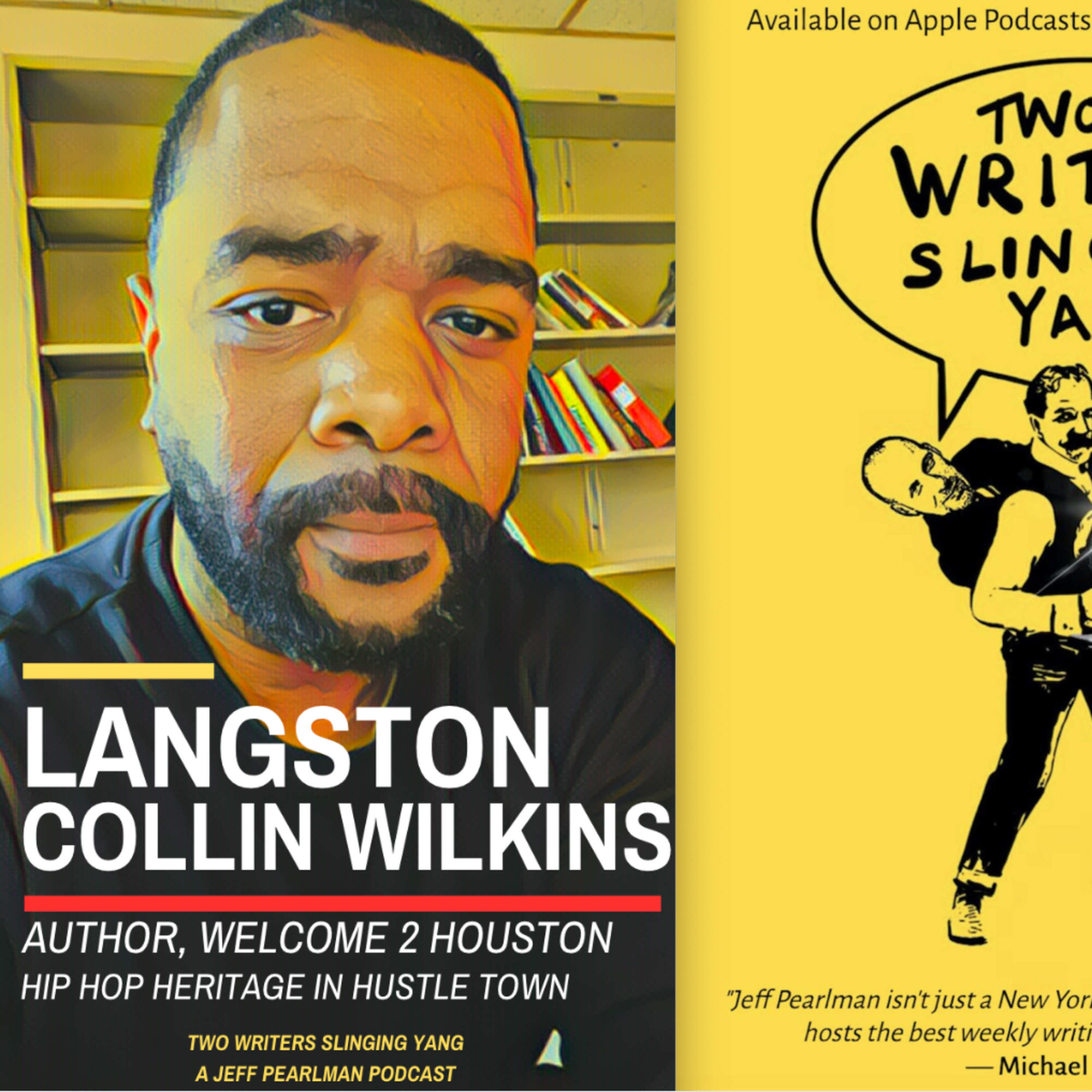
Langston Collin Wilkins: University of Wisconsin folklore professor and author, "Welcome 2 Houston: Hip Hop Heritage in Hustle Town"
44m 36s
The speaker opens by criticizing the political climate, citing examples of politicians and media personalities prioritizing self-promotion over substantive discourse, which leads to public cynicism. The core of the text is a podcast conversation with folklore professor Langston Colin Wilkins. They first discuss the noticeable lack of political protests or commentary at recent university commencements, attributing this silence to widespread exhaustion, anxiety over backlash, and poor mental health among students and faculty following years of social and political turmoil, including COVID-19 and the 2020 upheavals.
The dialogue then focuses on Houston hip-hop as a cultural heritage. Wilkins argues that despite its commercial success, hip-hop is a legitimate form of folklore and heritage, as it is born from specific local environments, communal experiences, and is passed down through generations. He contends that Houston's scene, while historically influenced by West Coast hip-hop, developed a unique, hyper-local sound and narrative style that remains undervalued nationally. The music's authenticity stems from artists translating their lived experiences—addressing local landmarks, slang, and community life—into a sound that resonates deeply with local audiences and has subtly influenced the genre's evolution. The discussion highlights the tension between hip-hop's mass-market perception and its roots as a place-based, folk tradition.
Do you know why so many people struggle to take politics seriously? For me, one of the biggest reasons is the deflating bullshit. For example, in the early days of this Trump presidency, both Chuck Schumer and Hakim Jeffries were peddling books. Literally, democracy is crumbling and they're hawking shit. Then more recently, you have Jake Tapper on CNN with this level of nonsense. We'll back with breaking news in our politics lead and a brand new excerpt from my upcoming book with Axios' Alex Thompson. It's called "Ariginal Sin." I'm not sure if you've heard of it. It's on Biden's decline. It's called "Ariginal Sin." I'm sure you've heard on May 20th. That's Tuesday. "Ariginal Sin." That's coming out in three weeks on May 20th. That's just 19 days away. In one week and one day, coming out in just a few days comes out Tuesday. You will not believe what we found out. And I gotta be honest, at times it makes a guy wonder, why am I wasting my energy? If the people I'm voting for and the people I listen to, if they're all just trying to make a buck, what's the point? What are we doing here? My name is Jeff Perramin. I'm the New York Times bestselling author of 10 books in the host of Two Riders, Sing and Yang. The podcast where one writer me talks writing with another writer every single week. And Taze Guest is Langston Colin Wilkins, a assistant professor of folklore at the University of Wisconsin, an author of a riveting book, Everybody inherits the hood, place identity, and hip-hop heritage in Houston. This is episode number 416. Let's sing some yeah, dad, your podcast sucks. And Kpop Nation hates you. Okay, Langston, first of all, thank you for doing this. I appreciate it. I always look behind people when I have them on this podcast and I see you have, I mean, you have the requisite books, but you have a very empty bookshelf next year book. And I feel like you're not really working hard to impress people. Like usually people have very bound books and you can tell their books they've never read, but they look really good. And I'm sitting at empty shelf with some like figures you bought at the mall, you know, figurine shop. What's going on here? Why aren't you working on this one? Yeah, yeah, yeah. So, well, a few reasons. I have two offices here on campus. So I didn't have enough stuff books otherwise to fill the shelves in both offices. And two, as soon as I got here three years ago, I had a baby. And so I spend little time in these offices. So I haven't had a chance to refill them up. So yeah, and I'm also, yeah, I don't really, I have to work hard to put on for folks. So yeah, what you're seeing is I'm not very, I'm not into decorating like that. So someone need to work on it. All right. Next time we'll work on that next next episode. Let's have better. All right. So, so I have a lot of things I want to ask you about. And you are the author of Welcome to Houston, Hip Hop Heritage in Hustle Town. But I have something on my mind. And I thought you'd actually be a good person to ask about this. And this literally just came up today. I was talking with a friend of mine, a writer named Jonathan Eyeg, who are a really great Martin Luther King biographer. And his daughter just graduated from Syracuse. And my daughter is just about to graduate from UC San Diego. And he said he went to graduation the other day. And he was shocked that there were literally, there was not one mention of what's going on in America right now. Not one protestor, not one person with something on the top of their hat. The commencement speaker didn't say anything about anything. You work on a campus. You work at the University of Wisconsin, your own festering college. How do you explain this? Yeah, it's, I don't know if I can. You know, I think for one, I think everyone's overwhelmed. And that's, you know, students, faculty, administrators, the like. I think everyone's nervous about saying anything because no matter where you land on the political spectrum, there's going to be pushback and criticisms or worse more. And, you know, also, I think, yeah, I think people are just, I can just speak for myself, you know, it's, it's hard to figure out what you're allowed to say, you know. There's lots of pressure on faculty, right, to not say anything that violates and jeopardizes the university's standing. And I understand that. And student-wise, yeah, I think everyone's trying to figure out where they stand with things. And, you know, I think, there are students who avoid, try to avoid confrontation. And it's just, it's just any number of things. And I've seen this in my classes this year where where I'm trying to talk about serious factual historical things, right? And I just can't get any discussion. Whereas a year or two ago, it was nothing but discussion. So, yeah, I think it's just hard for people to figure out what to say, when to say, and how to deal with the varied responses to it. Again, my daughter goes to UC San Diego and there were tons of protests all over campus and there were arrests and blah, blah, blah. And I said to her, is it possible that students put so much into that, like through everything they had into that and they just feel like they can't do round two. Like there's just no energy for round two. I think, yeah, I think I can see that. I think, you know, and I'm looking and thinking about these students, I think they're absolutely exhausted from everything that happened last year. And there were significant protests here on my campus, but also just coming off a COVID, coming off a 2020, coming, it's just they've been immersed in political and social upheaval. And, you know, I can see them and I've talked to students about this. They're exhausted. A mental health is not strong. And so, yeah, I think you're on point there. Yeah. All right. So, I think I mentioned this to you. I am working on a two-pocket sugar biography that's coming out in October. And you're over a book about about Houston hip hop and the origin of Houston hip hop. And one of the guys I spoke to at length was Scarface, who knew two pop pretty well. And I'm going to be honest, as a guy from New York who lives in California, my Houston hip hop knowledge is pretty mid-level. Obviously Scarface, Travis Scott, Mike Jones. I mean, there are a lot of them. And I wonder, like, do you feel like American music fans, American hip hop fans are starting to understand Houston hip hop and the origins of Houston hip hop. In the way, it took them time to appreciate maybe the origins of Atlanta hip hop, where it takes time and suddenly it's like, Oh, this is something. Or do you feel like it is still an undervalued resource in America? Yeah. Yeah. Both. I think, you know, there's been lots of books and other media about Houston hip hop to come out in the last few years. I'm seeing more discussions about the overall impact on hip hop and popular culture in general. But still, I think people are undervaluing and underselling how influential Houston's been to the hip hop landscape over 30 to 40 years. You know, the sound of hip hop now, being much slower, being more atmospheric and psychedelic in some ways, I think that owes it so owes a lot to Houston hip hop, you know, and I don't know if that's being discussed enough. But, you know, like I said before, thankfully there are a number of people coming out and trying to educate the masses about the influences. Houston's been so, the scene has been so independent for years. And so we're not tapped into the culture industries in the ways that, you know, LA and New York are. And even Atlanta is, you know, as well. And so, it's going to take a kind of a gorilla and kind of a ground level movement, right, to make the masses know and understand the impact of Houston. So yeah, yeah, we're getting there. You know, obviously I wrote about a lot about the mid 90s East Coast West Coast situation. Yeah. And what was really interesting to me is there's a lot of cross-pollination where East Coast hip hop really influenced West Coast hip hop. But then there was this reverse cycle, where a lot of West Coast music was impacting East Coast. And I wonder like, do you feel like Houston was under the radar of it all and being impacted by neither? Or do you feel like both or infiltrating Houston? Like do you feel like these sounds of East and West impacted Houston or Houston more impacted the sounds of East and West later on in music's development? Oh yeah, great questions. Both, you know, I think if you look at the Houston sound in the late 80s, up until like 88, you know, I think it was largely influenced by what was going on the East Coast with was a little bit of the electro sound from the West Coast. But once NWA hit in 88, Houston became firmly against Rapp City, I feel, you know, and then by the time I came of age in the mid 90s, I mean, my whole school, all of us were in the two-pock, all of us were into that West Coast stuff. So, you know, thinking back to the East Coast West Coast thing and you know, think about this a lot. Houston was firmly, I feel like a West, if we had to line up behind one side, Houston was a West Coast city. And I think, you know, we took those West Coast influences and generated our own sound, which later on influenced the international, international hip hop landscape. But yeah, West Coast influence on Houston is very large, it's very large. A lot of times.
times when you see that someone is a, and I say this with all respect, when you see someone who is an academic, right? And they wrote a book. You're like, uh, what is this going to be like? You know, it's very sterile and it's very like, you know, it's just a little stiff, but this book is fantastic. And like, you're just a hell of a writer. And um, you're out, this honestly, boom, boom, boom, boom, hip hop has not been readily understood as heritage, even though its constitution reflects the powerful intersections of place, identity and performance. I posit that this has been the case for multiple reasons. First, the lack of hip hop heritization is a byproduct of popular music contested status in the heritage landscape. Conventional definitions of heritage have historically made little space for popular music forms. The mass produced mass marketed and translocal nature of perceived popular music forms run counter to the unofficial attributes of heritage forms. What do you mean by that? Yeah, no, great, great question. I think this has been a personal battle for me, um, being a trained folklorist and being grounded in concepts of tradition and tradition for a lot of us looks a certain way, right? Um, you know, I think hip hop culture is, it hasn't, uh, or at least hip hop music, I'll say that, um, it hasn't been understood as a form of heritage. I think people see it as, you know, a commercial music product, right? That's purely grounded within, uh, you know, major corporations, you know, and because of that, they don't recognize that these music, whether they be from, you know, LA Gangs rep or Houston, screwed in Chopped or East Coast Harcourt music, they're grounded in local environments and people generating sounds based on, uh, their experience and turning them into, you know, musical styles and musical cultures and then passing that culture on and passing it down to, um, proceeding generations, right? And so in that way, it's absolutely a form of heritage, right? You know, if you go to Queens, New York, you know, um, they have a very distinct and important hip hop heritage that can be denied. Um, LA has it as well and Houston has it too. And so, yeah, I think it's because of, um, that statement was trying to ground hip hop as a form of folk music, not folk in the, you know, uh, genre sense, but it's a form of folklore. Yeah. And so I think that's what I'm trying to communicate there. Do you think the artists themselves see it that way? Like, do you think if I were to ask Scarface, do you consider this sort of folk music, not in the Peter Paul Mary sense in the obviously in the, like, do you consider your music to be that? Do you think he would agree with you? I think so. I think so. You know, if, you know, if he broke the, uh, the term down a bit, yeah, because, uh, you know, Scarface and Scarface is the person who got me interested in hip hop and really led to me doing all this stuff. I mean, he would probably talk about the artist, K Reno and others in Houston who he was listening to in the early 80s, right? And he will also talk about the ways in which he generated a sound him. The ghetto boys that was passed down, um, throughout the 90s and into the 2000s. And in that way, yeah, it's certainly a form of heritage and a form of folklore. So for sure, first, I just want to say ghetto boys vastly underrated all time hip hop artists. I totally agree. Yeah. Totally agree. I remember a kid as a kid listening to ghetto boys and me like, oh, it's just so good. Um, and number two, I remember early on in my career as a writer for the national tendency. And I did this story. I was in Nashville about the crossing effects of hip hop and country music. And Nashville had a very poor, not existent at the time. Hip hop scene still doesn't have much. But you know, do you feel like in Houston, Texas, in Texas, hip hop artists are at all impacted by the storytelling history of country music, or are they just totally different lanes? Yeah. That's, that's a great question. I, I have to think about this some more, but I feel like they're totally different lanes. However, I think there's something in the, the soil or the ground in Texas that generates a certain form of storytelling that's impacted the various music that I have taken root there. So I think they probably have common inspirations. But I think, and this is me growing up in Houston and being a music fan, and I feel like they have distinct lanes there. Yeah. I remember I wrote this story. It was like 1995 and I interviewed a, um, a country artist. I don't even remember his name anymore. He was big at the time. And he's like, rap music is just a passing thing. Nobody's going to be thinking about rap music in 10 years is going to be long gone. And I was like, yeah, you might be wrong in that one. So here we are. Right. Here we are. You're heard about, uh, about here in Clark. You're on here in Clark's sense of inner city, suburbia. It's disrupted by multiple, multi-dimensional effects of racial segregation and economic inequality. By the entrance to the neighborhood, visitors are greeted by a sign reading, welcome to hear him, Clark, that is surrounded by several working-age black man perched on upside down milk reeds, drinking beer to make the day go by faster. Is a place where solidly middle-class homeowners can live next door to renters who struggle to keep the lights on. Where many youths overcome the neighborhoods underfunded educational institutions, graduate high school and make it to college, there are many others who succumb to the effects of educational inequality and drop out of school. The crime rate is higher than average. Therefore, the police are a constant presence, whether on the ground in cars or flying overhead in helicopters. It's interesting because being a white suburb and I writing about two-pock, one of the, you know, criticisms I'll get and understandable. And questions I'll get is, well, you didn't, you didn't grow up in it. So how are you going to understand it? And you didn't grow black. How are you going to understand what it's like? And which is a fair, which is a fair point. You just do your research and try your best, but it is a fair point. This is going to sound way overly simplistic in the question. But what is the impact on the music itself in growing up in this environment and not just telling the story about something you read, but telling the story of something you experienced? Yeah. Oh, no. That's a, that's a great question. You know, I, I think the experience, and this is true for Houston and I'm just speaking for hip-hop. This is true for Houston and other locales and other scenes and artists. You know, I think it gives the music a certain authenticity. And that's the word, you know, I debate all the time, right? But, you know, part of the inspiration behind this book was, you know, me trying to trace why I can hear Houston in Houston hip-hop, right? And what that means. I just think, you know, growing up in those environments and taking those experiences and internalizing those experiences and then crafting song and albums. I think it's, yeah, I think it gives the music a deeply immersive and experiential quality that you can get at least musically, right? If you didn't grow up in those environments, I think that's the reason why the Houston and other locales, you know, audiences and other people aren't making music feel like this is their music, right? Because it's made from their experiences, even if they're not artists themselves, right? And so it's, it's experiential music is music that's made communally. So the artists themselves are making this music and they're taking other people's stories, they're taking their own stories and they're taking this sense of communal experience and transforming it into musical product. And so, yeah, I think when you hear the music, you hear the life of these various neighborhoods. So that makes sense. Wait, so can you, are there, like, you hear a Scarface song? I don't know. Yeah. Like Joan's song. Yeah. Is there stuff about their storytelling and the way they tell a story through music that says Houston, besides naming streets and naming familiar landmarks, that differentiates it content-wise. I'm not talking sound-wise. Okay. I don't know. NWA back in the day telling a story about Compton. You know, like, is there, are there specific, specific things they are doing as Houston artists that scream, this is Houston? Yeah. Oh, yeah. Sure. I mean, yeah, of course, outside of saying the street names and the name of the city, I mean, I think Scarface, for instance, throughout his music in the 90s, you know, referencing the Slab Car culture, which was born in Houston, Texas, and as part of the hip hop scene there. Talking about hyper-local things like Timmy Chans, the local Asian fusion restaurant that's throughout all these neighborhoods. Yeah. I mean, the music is made for the locals, right? I mean, even if it branches out and it reaches international audiences, all of that hip hop music Scarface Houston beyond is made speaking to local audiences. And I think that's less true now because of technology and what it's done to the musical landscape in general. But traditionally, hip hop music in general, it's hyper-local. You don't even have to name the city's names to understand where the music is coming from because it's so distinctly local. So yeah, I would say yeah. Do you think if you're just driving around or you're listening to a shuffle on you or whatever? And some guys from Houston, do you feel like your 85% can figure out he's from Houston without the landmark nods? I think so. And usually that happens for me. I can just be listening to some random artists. And I'm like, oh, he's talking about this restaurant or this grocery store or he's talking about this car or or
Or and maybe more so, he's using the slang and the language from Houston. Yeah, absolutely. I can tell. I mean, honestly, I'm such a big hip-hop fan. I can tell when someone's from Brooklyn versus Harlem, right? I mean, because that music is, I think again, I mean, let's say, Houston, but Oakland and Fresno. LA, because that music is so grounded in place and space. Yeah. I feel like, to me, the most obvious sound is now that, especially having worked on Tupac, to me, Bay Area, early 90s is very obvious. Absolutely. The yay area, for sure. Yeah. All right, so wait, you're you and you're this guy, you're from Houston, you get your BA from Texas. You might have been getting a PhD in folklore from Indiana in 2016. You're you. This idea comes in your head. What is like the motivation for doing it? Like why even go through the hell of writing a book? Yeah, yeah, well, because I didn't know I didn't know what else to do. I mean, honestly, honestly, I since I was a kid, I've loved hip-hop. That's all I really, really cared about. And so I went to grad, I graduated from the University of Texas and English. Wasn't sure what to do with that. I was like, many kids, I thought, okay, I can be a lawyer, but I decided against that, which was smart. So I was like, hey, I can go to grad school and thinking I can study hip-hop. Which I was grateful able to do. And so, you know, I know. How does that wait? You got your master's in African American studies from Indiana. You actually focused on hip-hop. Oh, yeah. I did. Indiana University. How does that happen? How do what is that just happen? Like how does that happen? It so let me say Indiana, the Department of folklore and ethnomusicology along with African American studies, they've had at least a hip-hop class since 1997. They're one of the early adopters of hip-hop in the academy. And so, you know, I got there and there was already this space for someone to study hip-hop. So yeah, it was nothing. It was just being in the right department at the right school. And I got nothing but support to do that. What did you do? Like, what was that? I mean, what was that like? I'm actually fascinated. Sure. So when I got there, you know, I was very young and I was, you know, and I'm still having a two-pock head, but, you know, I was thinking I was going to write something on two-pock, you know, something, you know, just like academic on two-pock. That turned into a thesis which focused on two-pock and a number of other gangster rappers and, you know, looking at the relationship between kind of the violence, the hyperviolence in these communities and the levels of violence and the gangster rap music. But the Folkler department or Ethnusicology, right, that feel requires fieldwork. So you know, I would, in order to get my PhD, I was going to have to go out there somewhere in the country and immerse myself in a hip-hop community and write something based on that. And so, you know, I spent much of my time, you know, developing or training in terms of the method and how to properly represent communities and traditions and how to really understand from a sociological anthropological standpoint, you know, what's going on in these neighborhoods and then I went to fieldwork and I produced a dissertation that eventually turned into the book. So, it was a long haul, but yeah, it worked out, I guess. Wait, I didn't really. So your book is based off of your dissertation. Yeah. And did you know when you were working on your dissertation, you were going to want to make you the book? No, not necessarily. I think that's the ultimate goal for most humanities academics to take their dissertation and turn into a book. But I wasn't sure, but that was only a requirement for me if I was going to go directly into academia, which I didn't. And so I was just, I completed the dissertation and at that time, I was just thinking, I need to do this to get to degree and then we'll figure out what to do with it. And so, no, no, yes and no, mostly no. I didn't know. I teach at a school out here in Southern California, Chapman University and I recently did a lyrics of "Tupac." The writings of "Tupac" as a class. Nice. Yeah. And I don't know. I think there's, they've been said, yes, yet, but who knows. But I think there's like, I don't know. I think like it's the most under tapped documentation of modern society that we're not studying nearly enough are the lyrics of hip hop because it's now become so universal that in a lot of ways, white kids in America are getting their education on black culture, black neighborhoods, what it's like to be black in America blah, blah, blah, blah, not from their African American history class in high school taught by the white teacher, but literally by listening to hip hop. Yeah. I just think it's invaluable. Yeah. Yeah. No, I, I totally agree. I think I'm glad you're pitching the class because I do think, even as they're listening, they need some framing, right? And some context for what they're receiving. But hip hop taught me a lot about what it means to be like a young black guy in America. Just listening to "Tupac" and "Naz" and all these other folks growing up, I was able to learn about or even compare my experience in Houston to Queens and LA and many apples or so, however, you know, these are as are from. And so I think it's absolutely kind of an ethnographic document of, you know, the inner city black life in America. And that's how I see it. And my class is that's how I present at the students, for sure. You have a really interesting resume and interesting background. So this was only five months ago. I'm fascinated by it. In 2020, during COVID, you worked as an instructor for university beyond bars, which is a non-profit working within carcerated and formerly incarcerated individuals. What was that? Oh, that was an interesting experience. So that was a course I taught on hip hop at a medium security prison facility in Washington state. And so, yeah, I went into the prison every week and taught a class on hip hop. You know, it was undercut and interrupted by COVID. It was one of the most impactful experiences I've ever had just working with those guys. They taught me, mostly, they taught me about hip hop, honestly. And so, yeah, it was amazing. You go into prison and you just, it's an hour, like, how was it? Yeah. Yeah, go into prison. It was one day a week on Wednesdays in the evening. So I would drive like an hour away from Seattle to go into the correction facility. Yeah, I would go through security, go behind the bars and they put me in the room with these about 20, 25 students. And for an hour, yeah, we would talk about hip hop. And we could just, so it was complicated because of, and I think the, I can talk about this now. Yeah, there was lots of scrutiny on the class from the prison officials. You know, I think they didn't trust me. They didn't trust hip hop. They were worried about what this class would do to the student population. So I never got like a computer which was promised. I never got even a CD player to play music. And so, I mean, what's the music class without music? And so we ended up mostly talking about hip hop from their own experiences. And they would talk about, and kind of grapple with the morality and ethics of some of the more harder or gink throughout music that they grew up listening to. So it was, it was an incredible intellectual and emotional experience for me for sure. You were like Johnny Cash walking to Folsom. They were like, ah, right. What's over this guy? Right. Yeah, that'd be cool. I'll take that. Um, wait, serious question. Um, she eats now. So you have young students at the University of Wisconsin. Um, you know, I'm sure majority of these kids are white just because it's a campus. Fast majority? Yep. How do you feel or what can you tell about these kids and their listening habits and hip hop? Like how many of these kids are impacted by hip hop and does it, is it just to entertain it to them or does it resonate with them? Yeah. So hip hop is the number one genre for these students by far. I think it, well, it competes with, you know, EDM and some of the more electronic stuff for the top reins. But, um, I think it's just music for them for sure. Yeah. You know, and so they get in my classes and, um, you know, where we're talking through things, we're talking through even more contemporary music that's still grounded in some really rough realities. And they're just consuming it and they're using it to party, but they're not making connections to real life. And, and I understand because, you know, even when I was younger and in college and stuff, I would do the same things, but I grew up in these environments. So I kind of understand. They don't, they don't get it, but thankfully, you know, that's what I'm there for to, to offer that context. And, and I think a number of them, athlete leave my classes. They have a better understanding and sensitivity, you know, from the spaces and places or for the spaces and places where these music come from. But, no, they don't, they don't get it. And most of them, unless they're confronted by these realities, they don't really care. We moved from very diverse Newark, New York to very white, Orange County, California. The number of kids through the years, white kids who my kids have heard you the N word is crazy. And not in the, not in the calling someone black, the N word, but just dropping it like to another white person, hey, my blank. Yeah. Yeah.
Yeah, that's certainly not something that would have happened when I was growing up. But, you know, and this is something I think about a lot. And this is where the industry comes in. And this is where hip-hop music as a commercial product comes in. Because I think the kids feel that this is music that they, you know, in direct ways, buy and they own. You know, it's their music. And whatever is said in that music, the coolness of it is theirs as well. And that includes the inward. And again, most of them are listening to this music, nowhere near other black people and not in the proximity of black people. And so they're not even thinking about the historic and very real and present connotations of that word. So again, it's just, it's her pop language to them. And they feel like they can own it. And there's no one around to tell them not to. That's what it is. I was a cliche white kid who grew up in a small, almost all white town. My best friend was one of the two black kids in my class. And he, it's basically your movie cliche. But he exposed me to public enemy. And I remember the first song I found love with hip-hop song was Blacksteam on the Hour of Chaos. I got a letter from the government the other day. I opened a Reddit, said they were suckers. And to me, I'm not even, I don't even think this is any kind of exaggeration through time. It was an amazing portal to understand something that I had no access to. Do you feel like the educational aspect of hip-hop is not, I don't know, what it was 30 years ago? Yeah, yeah. No, that's funny. So like Blacksteal, I remember reciting that, yeah, in a, in middle school in my like, oratory class. But yeah. So, you know, and this is where I'm actively trying to check myself and really consider, am I just being kind of an old head now? Like I'm criticizing the current music. I don't think so. I don't think the music today is that intent or is as intentionally educational as it was 30, 30 years ago, right? I don't think it doesn't appear to me that these artists are setting out to really communicate and critique and experience in the ways they were. And this is true for gangster rap, non-gangst rap or whatever, right? I think today, you know, again, they're out to reach the most and the most, the biggest audiences they can reach and they're doing whatever it takes to get there, right? And I think that impacts the content of the music. And it's not to say that they're selling out or anything like that. But I understand it, you know, hip hop is popular culture. It's pop music now, right? And so it's meant to reach diverse audiences in that way. But I think that's really challenged the educational and experiential aspect of the music for sure. It is certainly different. I'm a bomber. There's definitely no black steel in the hour of chaos coming out in 2025. I'm nice. I'd be shocked if something like that did come out in 2025. You wrote something in your book that actually kind of also blew my mind. I gotta say I'm being serious. I was like, this is a hell of a read, man. And you are a really, really freaking good writer for nothing. You can't hear from me, but you can straight up. I appreciate that. You wrote, um, restricted mobility, both social and physical has contributed to the high levels of place attachment among African American eustonians. And I think, I think a lot of people don't think about this. Like, basically, if you have money, if you're comfortable, you can move around. Right? I lived in New York. Then I go to California, I go to college and Delaware, I move around. And if you're poor and black in America, you are very attached to your place. So are you saying that actually has a direct impact on the resignation of hip hop on these people? Totally. That's exactly what I'm saying. Yeah. And so, yeah, you're, you know, when you're working to poor class in America, in general, right? I mean, you just have less mobility than metal and upper classes. And when you're black and, you know, there's, and you know, you know, that they're just parts of town that you just, you can't live in, you don't have access to, and you're not welcomed in, right? You know, you're stuck in place in many ways. And as you're stuck in these places, you know, and in some ways, in some instances, you know, for multiple generations, right? You know, you become attached to that place and not just attached. It becomes part of who you are, right? And so when you're making music and you're, you know, communicating who you are to the world, you know, your neighborhood is a way to do that, right? And so, you know, me be from harm Clark, you know, even I don't make music, but as I move around, you know, the world now, it's attached to me. And, you know, I, and in many ways, I tell people that's where I'm from because it's certainly a core part of my identity. And so I think you hear, and this is true for any hip-hop scene, you know, you hear so many references to space in place because, you know, space in place is a form of capital to these, you know, these youth, these black men and women because, you know, that's all they've had. And even if they don't own there, right? You know, they live there. They form bonds there. They socialize there. And, you know, they care that with them as they make music and as they travel the world. So, yeah, it goes back to, you know, these, these limits placed on, you know, your body and your movement, you know, by race and economic oppression, is there? Actually, it's actually interesting because in researching Tupac and writing about Tupac, he really tried hard to attach himself to Los Angeles. And I'm an LA rapper, but he really wasn't an LA rapper. In fact, he wasn't an LA rapper at all. But I really do think, and you actually just made me think this again, I think hip-hop artists in particular, it really helps them to be identified with a place in time, you know, like two short is Bay Area, you know, Nas is New York. And I think Tupac really desperately wanted to be an LA rapper. Yeah. But he wasn't. No. Does that matter? It doesn't matter. I think it totally matters. Yeah. And, you know, it's so funny you mentioned that. And just I turned on YouTube earlier and there was a new video debating on whether Tupac was a New York rapper or a West Coast rapper. You know, I think, yeah, I mean, place is absolutely important. And in order to, you know, build an audience and for people to respect you, right? By and large, historically, you need to be grounded in some recognizable space. And you know, when you're someone who kind of moved around like Tupac did and you were kind of placed lists in many ways, you know, it was. You know, it would be hard to be accepted into those scenes. And, but thankfully, he was such an amazing artist and person that, you know, it was fine. But yeah, is he Bay? Is he LA? You know, I mean, he didn't grow up in those spaces, right? And so he couldn't be of those spaces. Yeah, at least in terms of music. I mean, to me, in a way, weirdly, because they have much of a hip-hop scene, I kind of consider him a Baltimore rapper because you really cut his teeth. And by me, he started in New York as a young kid, but by, he's in Baltimore from middle school and much of high school. Right. I don't think anyone would make the argument he's a Baltimore rapper, but I do think Baltimore might be the Tupac. I don't know. You could make a case. He's a Baltimore rapper, I think. I think you could. Yeah, I mean, Tully, and I think, you know, I think those bonds to place form, right? Largely middle school and high school, right? Yeah. And if that's where he's spent most school in high school, then I mean, yeah, he's a Baltimore rapper, obviously, left and, and, you know, went to the bay. But, um, yeah, I would agree with that, you know, except, you know, he probably wouldn't have a, you know, but yeah, no, I think you make a good point for sure. Yeah. I mean, it's not hip-hop just teaching question. I, as I mentioned, I teach too. Yeah. I find one of the struggles nowadays is just, um, attention span and getting students to put down their phones. If the students have their laptops open, not like, I know, writing assignment, not going to whatever they go do and just sticking with the screen. Um, I don't know for you. Maybe it's not an issue, but like, if it is, how do you deal with it and how big of a problem is it? It's a huge issue. Yeah. No, I deal with it all the time. I, um, yeah, I taught a black street culture course this past, this spring, um, 50 students in there. And, you know, I could visually see people, I could see when they tuning, tuning out, right? I mean, and it was active, right? No matter what I'm talking about, and I think I'm talking about cool stuff. Right? There it's attention spans are just so short. And so, you know, I've had to make sure that my segments of the class are no longer than five to 10 minutes, you know, because after 10 minutes or so, they're gone, no matter what we're talking about. And so it's extremely hard. I mean, you know, I felt like I had a short extension span when I was in undergrad, but this is well beyond that. It's a problem that, you know, me and my colleagues talk about quite a bit here. So, yeah, it's widespread. It's actually crazy because you actually teach what have to be considered interesting classes. Imagine if you're teaching like mid 17th century folklore, like how we were, yeah, yeah. We're getting into the bad extension. Yeah. It's, I'm surprised that, well, you know, I'll be in there talking about, I mean, for instance, a couple weeks ago, we talked about East Coast, West Coast and the whole rivalry. And I'm thinking, okay, this is cool stuff, you know, but it doesn't matter. It doesn't matter. They're just on to the next, whatever is interesting them on their computers or their phones or even with their partner nearby that that's what they're on. So I have to, I bring them back in different ways. Yeah. Well, I want to ask you one more question. As a, as a hip hop guy and a hip hop expert, I'm calling you a hip hop expert. All right.
How do you, all right, like, how do you explain Tupac, like if you have 50 students in your class, I'm guessing 48 of them have heard of Tupac or at least know of Tupac. I was song of Tupac. And I feel like Biggie is known, but not in the same way, like not the same level. How do you explain one guy being this iconic iconic figure and one guy being this really famous, but I wouldn't say iconic hip-hop artist. Oh, yeah, yeah. So trying to, you know, set aside my fandom and put on my fan. You can be a fan right here. Well, you know, I, yeah, I think, well, there's a number of reasons. You know, I think, you know, Biggie, his output was so small, right? Compared to Tupac. I mean, we're talking two albums and a few other singles here and there are some free styles and that's it, you know, and so and Tupac, you know, was incredible. And, you know, I mean, a super hard worker. I mean, constantly putting out records and stuff. And so, you know, Tupac, even post death, right? There was a number of albums that come out. And so his, at least musically, right? He just had more to work with. But I think also he was such a dynamic figure as compared to Biggie. I mean, he was the, you know, I don't know, James Dean of hip-hop. I mean, he was just such a, he was the bad boy, also intellectual, also political revolutionary. I mean, all those things wrapped up in one, you know, as a folklorist. I mean, I think Tupac's death was my first moment where I thought about mythology and folklore and because there was a lot surrounding his death that I was all into and still am in many ways. And so there was, there's just so many storylines, right? So, surrounding Tupac compared to relatively few with Biggie. And so Biggie, yeah, I mean, such an incredible artist, incredible lyricist. But that's just kind of what he was. Tupac, for many different people around the world, was just so much more. So, and you can be a fan of Tupac without even really digging deep into his music because he was so many different things, you know. I thought, um, Shaqji once said the thing about Tupac, he said some guys wrap from their throats and some guys wrap from their tongues and he wrapped from the pit of his stomach. Yes. Yeah. I don't think you just meant sound wise. I think he meant literally everything. You know, yeah. Yeah. Yeah. Let me ask you a final question. You're you're a kid from Texas, but you're in Madison, Wisconsin. What is your worst experience with the cold snow winter of Madden? Oh, that's the hardest question. Part of it's just emotionally. Um, yeah, it's been rough. You know, I spent nine years in Indiana and I thought, you know, I thought Wisconsin was going to be similar, but it's not. It's so, it's so much worse. You know, last year, uh, there were, there was like a week where we got like six or seven days straight of snow and it was, and every day it was like six inches to a foot. And so like, I'm out there. My wife is out there with shelving snow literally all day, like all day. And that's when I like question my decisions. You know, I mean, I, you know, it was fine, but that was like, wow, I don't, I didn't know people live like this. And I don't know if I could continue to live like this, but, you know, I'm still here. Uh, but that was the rough. Wait, how old are you? I'm 41. Okay, so I'm 53. And I'm going to be the ghost of you future and say, he careful because you were ruined your back, shoveling snow. Yeah, yeah. Yeah. Yeah. Someone told me that I bought some super ergonomic dynamic shovel, which I think has helped. But, um, yeah, I had to learn. All right. Good tip. Um, well, like since seriously, first of all, thank you so much for doing this. Thank you. Look is awesome. Writing is awesome. You always look surprised when I say that. It's lovely. And what I, I respect your work so much. I mean, I think you're one of the best writers out there. So that means a lot coming from you. So that's what that is. Appreciation. Overreating me, but I appreciate it. Thank you so much for doing this. I really appreciate it. Thank you. I want to thank today's guest, Langston Colin Wilkins, for joining me at Two Riders Lyingying. You'd follow Langston on Instagram at Southside Super Villain and check out everybody in Harrods the Hood, place identity and hip hop heritage and use in wherever books are sold. If you have a chance and enjoy Two Riders Lyingying, please go to the vehicle of your choice and leave a nice review. I'd be really appreciative. Music is by the great MC Whiteout. Thanks again for joining me and remember, keep writing.
Podcast Summary
Key Points:
The speaker expresses disillusionment with politics due to perceived self-interest and commercialization among politicians and media figures.
A discussion with Professor Langston Colin Wilkins explores the absence of political discourse at university graduations, attributing it to exhaustion, fear of backlash, and mental health strains from prolonged social upheaval.
The conversation shifts to Houston hip-hop's heritage, arguing it is an undervalued but influential form of folklore deeply rooted in local experiences, storytelling, and community identity.
Houston's hip-hop scene, historically influenced by West Coast sounds, developed a distinct, hyper-local character that has significantly shaped the broader hip-hop landscape.
Summary:
The speaker opens by criticizing the political climate, citing examples of politicians and media personalities prioritizing self-promotion over substantive discourse, which leads to public cynicism. The core of the text is a podcast conversation with folklore professor Langston Colin Wilkins. They first discuss the noticeable lack of political protests or commentary at recent university commencements, attributing this silence to widespread exhaustion, anxiety over backlash, and poor mental health among students and faculty following years of social and political turmoil, including COVID-19 and the 2020 upheavals.
The dialogue then focuses on Houston hip-hop as a cultural heritage. Wilkins argues that despite its commercial success, hip-hop is a legitimate form of folklore and heritage, as it is born from specific local environments, communal experiences, and is passed down through generations. He contends that Houston's scene, while historically influenced by West Coast hip-hop, developed a unique, hyper-local sound and narrative style that remains undervalued nationally. The music's authenticity stems from artists translating their lived experiences—addressing local landmarks, slang, and community life—into a sound that resonates deeply with local audiences and has subtly influenced the genre's evolution. The discussion highlights the tension between hip-hop's mass-market perception and its roots as a place-based, folk tradition.
FAQs
One major reason is the prevalence of self-serving behavior, such as politicians and media figures promoting books during critical times, which can make politics feel insincere and profit-driven.
Students and faculty may feel overwhelmed, exhausted from previous activism, or hesitant due to fear of backlash, making it difficult to engage in public discourse.
Yes, despite growing recognition, Houston's influence on hip-hop's sound and culture is often underappreciated, partly due to its independent scene and lack of mainstream industry ties.
Houston was initially influenced by East Coast and electro sounds, but after NWA's rise in 1988, it aligned more with West Coast styles, later developing its own unique sound that impacted hip-hop globally.
Hip-hop is often seen as commercial music, but it functions as folklore by reflecting local experiences, traditions, and communal storytelling passed down through generations.
It adds authenticity and an experiential quality, as artists draw from communal life and local culture to create music that resonates deeply with listeners from similar backgrounds.
Chat with AI
Loading...
Pro features
Go deeper with this episode
Unlock creator-grade tools that turn any transcript into show notes and subtitle files.
 PodcastTranscript AI